
PODCAST · business
Next-Gen Network Heroes
by Selector
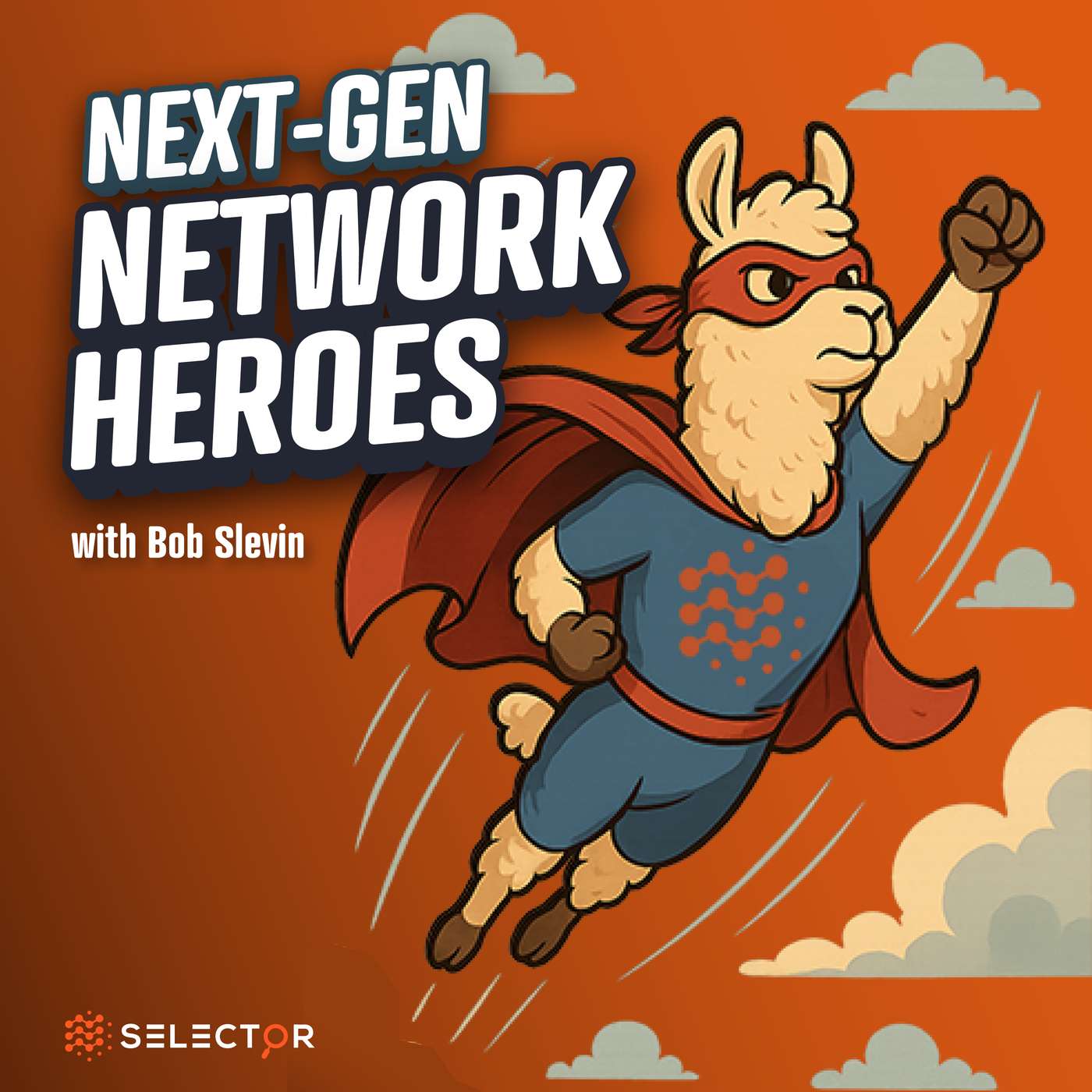
This is Next-Gen Network Heroes. Join host, Bob Slevin, as we explore how Network Leaders are the true superheroes- reinventing the network with AI, modernizing network operations, and leading the charge as networks move into the AI era. Next-Gen Network Heroes is sponsored by Selector, an AIOps platform built for network teams by network teams.
-
8
Securing the World's Biggest Machine: Critical Infrastructure, AI, and the Ethics of Innovation
What happens when decades of critical infrastructure experience meet today’s rapidly evolving AI landscape? In this episode, host Bob Slevin sits down with Ernie Hayden, award-winning author, former Navy nuclear officer, ethical hacker, and founder of 443 Consulting, for a deep dive into what it truly takes to secure modern, interconnected systems.Drawing on a career spanning electric utility SCADA networks to chemical manufacturing environments, Ernie explains why adopting a holistic lens is essential for both cybersecurity and operational excellence. By understanding inputs, outputs, dependencies, and system-wide relationships, organizations can better anticipate risk and improve performance. He also shares why regulated industries like power and nuclear have developed hard-earned practices that the broader business world would benefit from adopting.The conversation then turns to AI, where Ernie makes a critical distinction between AI as an analytical support tool and autonomous agents making real-time decisions. He outlines the risks of deploying agent-driven AI in high-stakes environments like power generation, where even a small mistake could have major consequences, while highlighting the immediate value of AI-assisted analysis. Throughout the discussion, he emphasizes the irreplaceable role of human judgment, especially in high-pressure situations where experience and intuition guide decisions no model can replicate.The episode closes with a look into Ernie’s work as a photojournalist and nature photographer in the Pacific Northwest, along with his perspective on why continuous learning and an innovate or die mindset have become essential in today’s fast-moving world.Takeaways:Adopt a holistic, systems-level view of your infrastructure. Don't just look at individual components — understand how every system communicates with and depends on others, and ask what happens when any one link is severed.Look to NERC CIP as a security framework, even if you're not a utility. These standards for cyber and physical security of the electric grid have proven themselves over time and can be adapted as a model for other regulated or high-risk industries.Draw a "digital fence line" around your critical assets. Think of your security perimeter not just physically but digitally — monitor everything that comes in and goes out, and treat both with equal rigor.Understand the difference between AI and AI agents before deploying either. AI that surfaces insights and recommendations for a human operator is a manageable first step; AI agents that take autonomous action in critical systems carry substantially higher risk and demand far greater scrutiny.Document AI recommendations and require human approval before any action is taken. Especially in regulated or safety-critical environments, every AI-generated recommendation should be logged, explained, and acted on only with explicit human authorization.Use AI as a powerful research accelerator, but verify outputs carefully. Tools like Perplexity are excellent for gathering information quickly, but hallucinations are a real risk — always validate AI-generated content before publishing or acting on it.Don't wait for a crisis to start thinking about innovation. Whether you're running a refinery, a data center, or a telecom network, the organizations that are not actively incorporating AI and modern monitoring risk being overtaken by those that are.Quote of the Show:"You just don't look at a bridge or a factory or a refinery. You look at it as a series of systems, and all these systems pile up and work together. And then what you're trying to do is understand how do they communicate, how do they support each other — and better than that, what if I cut those links?"Links:LinkedIn: https://www.linkedin.com/in/enhayden/ Email: [email protected] Photography Website: https://risingmoonnw.com/ Book Link: https://a.co/d/05Wa6Qk9
-
7
Bridging IT and OT: Lessons from the Factory Floor with Steve Goudreau
Everyone’s rushing to AI, but few have the foundation to make it work.In this episode of Next Gen Network Heroes, Bob sits down with Steve Goudreau, Director of IT at Ice Industries, to explore what it really takes to lead in today’s evolving technology landscape. With over three decades of experience, spanning military service, financial services, and manufacturing, Steve brings a grounded, people-first perspective to an industry often obsessed with tools and trends.The conversation dives into the critical intersection of IT and OT, the realities of implementing AI in manufacturing, and why strong data foundations matter more than ever. Steve also shares candid insights on career growth, mentorship, and the importance of staying curious in a field that never stops changing. Along the way, he brings humor, honesty, and a refreshing reminder: technology works best when it’s built around people, not the other way around.Takeaways: Start with the foundation, not the hype: AI and new tools are only as effective as the data behind them. If your data isn’t clean and structured, the technology won’t deliver real value.Bridge the gap between IT and OT: Real success in manufacturing happens when IT and OT collaborate closely. Aligning technical strategy with on-the-ground operations leads to better outcomes.Let interest guide career growth: The best career paths are built on genuine curiosity, not forced direction. Lean into what interests you, and the growth will follow.See challenges as opportunities: The toughest, least glamorous problems often create the most growth. Tackling them head-on builds skills that set you apart.Play the long game in your career: Short-term wins fade, but deep knowledge lasts. Invest in continuous learning that compounds over time.Stay close to the people doing the work: The most valuable insights often come from those closest to the action. Listening to frontline teams leads to smarter, more practical decisions.Don’t rely on AI without context: AI is powerful, but it’s not infallible. Human judgment and context are still essential to making the right decisions.Quote of the Show:“You have to see challenges as opportunities—not just for the organization, but for yourself.”Links:LinkedIn: https://www.linkedin.com/in/steve-goudreau-2b61a9/ Website: https://www.iceindustries.com/en
-
6
Why Building Less and Connecting More Wins with Bill Nielsen
What does it really take to thrive in today’s rapidly evolving IT landscape? In this episode of Next-Gen Network Heroes, host Bob Slevin sits down with Bill Nielsen, a seasoned DevOps and cloud engineering expert, to unpack the mindset and skillset required to build resilient, scalable systems and a lasting career.Bill shares how his “superpower” isn’t technical at all, but the ability to interpret what the business truly needs, not just what it asks for. From navigating enterprise-scale integrations to leveraging AI responsibly, he offers a candid look at the realities of modern IT. The conversation also dives into mentorship, continuous learning, and why the most successful professionals are both teachers and students at every stage of their careers.Takeaways:Focus on outcomes, not requests: Don’t just execute what the business asks for—dig deeper to understand the real objective and deliver a better solution.Master integrations over reinvention: The future isn’t about building everything from scratch—it’s about connecting systems effectively and securely.Commit to continuous learning (every ~12–13 months): Technology evolves fast. If you’re not actively retooling your skills, you’re falling behind.Use AI as an assistant, not a decision-maker: Leverage AI to refine thinking, summarize information, and spark ideas—but always validate outputs with human judgment.Balance experience with adaptability: Experienced professionals bring foresight; early-career talent brings agility. The best teams leverage both.Be both a mentor and a mentee: Share your knowledge openly while staying humble and learning from others—this is key to long-term growth.Experiment safely with new tools: Test new technologies in controlled environments before introducing them into professional settings—never risk sensitive data.Quote of the Show:“If you’re not retooling every 13 months, you’re becoming a dinosaur.”Links:LinkedIn: https://www.linkedin.com/in/williamnielsen/ Website: https://www.rsandh.com/
-
5
AI, DevOps, and Financial Services: Bridging Innovation and Regulation with Allie Holland
What happens when one of the most risk-averse industries in the world is forced to innovate at speed?In this episode of Next-Gen Network Heroes, Bob sits down with Allie Holland, a product and solutions marketing leader specializing in financial services at GitLab. Allie shares how her “superpower” of domain translation allows her to break down complex technical systems and connect them to real business value. With a background spanning DevOps, financial services, and global go-to-market strategy, she offers a front-row view into how organizations are navigating rapid technological change.Together, they explore the evolution of AI in financial services—from early back-office efficiency gains to more advanced, customer-facing innovation. Allie unpacks how firms are balancing speed with strict regulatory requirements, why the conversation around AI has matured, and how organizations are shifting from individual productivity gains to enterprise-wide transformation. The result is a nuanced look at where the industry is headed—and what it takes to innovate responsibly.Takeaways:Develop Your “Domain Translation” Skillset: Being able to translate complex technical concepts into clear business value is a critical differentiator. Focus on understanding both the technical side and the industry context so you can bridge gaps between teams and drive real adoption.Don’t Just Adopt AI—Apply It Strategically: Many organizations start by using AI to improve internal efficiency, but the real value comes when it impacts customers. Look beyond back-office use cases and identify where AI can create measurable external outcomes.Balance Speed with Compliance: In highly regulated industries like financial services, “move fast and break things” doesn’t work. Build systems and processes that allow innovation while maintaining governance, auditability, and security.Shift from Individual Gains to Organizational Impact: Early AI adoption focused on making individuals more productive. The next phase is about scaling those gains across the entire organization to drive ROI at a business level.Reduce Tech Debt Through Consolidation: Too many disconnected tools slow organizations down. Use AI and modern platforms to unify systems, streamline workflows, and eliminate inefficiencies caused by fragmented tech stacks.Ask Better Questions About AI Implementation: The conversation has evolved from “What can AI do?” to “How does it integrate, scale, and stay compliant?” Focus on questions around governance, audit trails, and long-term sustainability when evaluating solutions.Embrace Continuous Learning and Experimentation: AI is changing rapidly, and staying ahead requires constant curiosity. Experiment with tools, test different approaches, and refine how you work—just like Allie does in her day-to-day role.Quote of the Show:“Everyone probably has their own superpower—but how you harness it as the market changes is what really defines it.”Links:Instagram: https://www.instagram.com/running4rmhc/ LinkedIn: https://www.linkedin.com/in/alexis-holland/ Company Website: https://about.gitlab.com/ Ronald McDonald House Website: https://www.rmhcharleston.org/get-involved/
-
4
Why “People Connector” Is the Ultimate Superpower in Tech with Jason Gintert
Jason Gintert, Founder of Bits In Flight and Co-Founder & President of the US Networking User Association, brings nearly three decades of experience in networking to this conversation, offering a rare perspective that spans from the early ISP boom to today’s AI-driven infrastructure. At his core, Jason identifies as a “people connector,” someone who thrives on bringing individuals together to share knowledge, solve problems, and grow professionally. Through his work, he’s helping build communities where real conversations and meaningful learning happen, especially in an increasingly digital world.The discussion dives deep into the evolution of networking, from hands-on, hardware-focused beginnings to today’s software-defined, AI-enhanced environments. Jason shares practical advice for those entering the field, emphasizing the importance of fundamentals, continuous learning, and community engagement. He also explores the transformative role of AI in network operations, the shifting skill sets required of engineers, and why non-linear career paths can often lead to the most rewarding and unexpected opportunities.Takeaways: Lead with connection, not just expertise: Building relationships and connecting others can be just as valuable as technical skill. In many cases, the opportunities you unlock for others will come back to benefit your own career in unexpected ways.Leverage community to accelerate learning: Join Slack groups, Discords, and user associations to ask questions and stay current. These communities often provide faster, more practical insights than traditional learning paths.Focus on fundamentals early in your career: Certifications are valuable—but only if you truly learn the material behind them. A strong foundation will make it significantly easier to adapt as technologies evolve.Avoid shortcuts in technical learning: “Brain dumps” may get you certified, but they won’t make you effective in real-world scenarios. Skipping the learning process can lead to costly mistakes and gaps in your knowledge later on.Use AI as a force multiplier, not a crutch: AI can dramatically improve efficiency, but understanding systems is still critical. The most effective professionals will be those who combine strong fundamentals with smart AI usage.Stay adaptable as the tech stack evolves: Network engineers are increasingly expected to understand applications, automation, and APIs. Expanding your skill set beyond traditional networking will keep you relevant and competitive.Your career path doesn’t have to be linear: Be open to pivots—unexpected opportunities often lead to the most growth. Some of the most successful careers are built by saying yes to opportunities that weren’t originally part of the plan.Quote of the Show:“My superpower is being a people connector—I love bringing folks together who can help each other.”Links:LinkedIn: https://www.linkedin.com/in/jasongintert/ US Networking User Association Website: https://www.usnua.com/ Bits in Flight Company Website: https://www.bitsinflight.com/
-
3
Next-Gen Network Heroes Trailer!
This is Next-Gen Network Heroes. Join host, Bob Slevin, as we explore how Network Leaders are the true superheroes- reinventing the network with AI, modernizing network operations, and leading the charge as networks move into the AI era. For show notes and episodes, go to nextgennetworkheroes.com.Next-Gen Network Heroes is sponsored by Selector, an AIOps platform built for network teams by network teams.
No matches for "" in this podcast's transcripts.
No topics indexed yet for this podcast.
Loading reviews...
ABOUT THIS SHOW
This is Next-Gen Network Heroes. Join host, Bob Slevin, as we explore how Network Leaders are the true superheroes- reinventing the network with AI, modernizing network operations, and leading the charge as networks move into the AI era. Next-Gen Network Heroes is sponsored by Selector, an AIOps platform built for network teams by network teams.
HOSTED BY
Selector
CATEGORIES
Loading similar podcasts...
URL copied to clipboard!