
PODCAST · arts
Occasionally Philosophical
by Mark
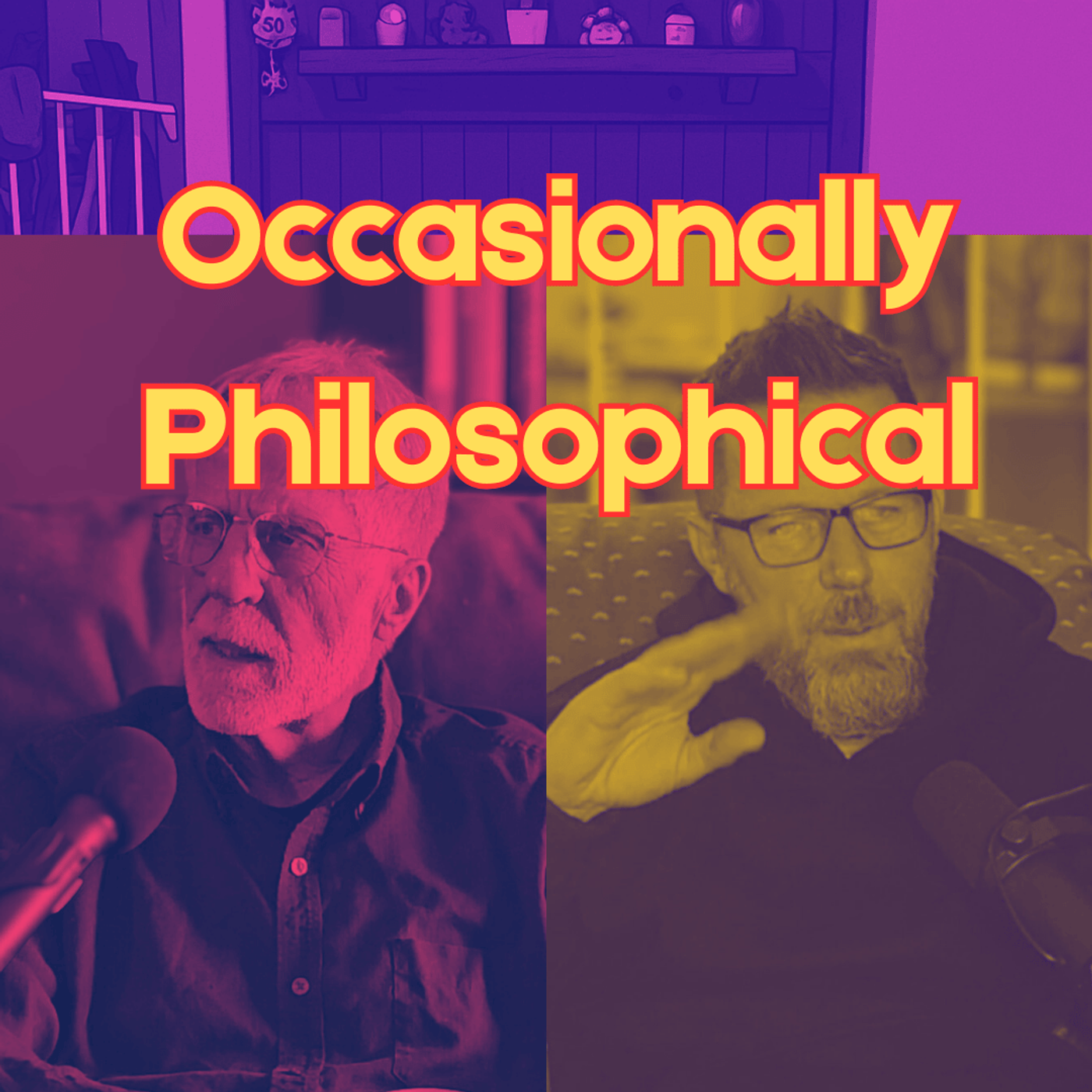
Occasionally Philosophical is what happens when a father and son (Doug and Mark) sit down with microphones and way too many questions about life. We’re not professors, we’re not gurus — we’re just two curious people who enjoy overthinking the world out loud. Some weeks we’re talking books and big ideas, other weeks it’s tech, society, or whatever strange thought popped into our heads over coffee. Expect a mix of laughs, thoughtful tangents, and the kind of conversations that might actually make you rethink things… or at least give you something to argue about on your next car ride. If you like big questions, bad jokes, and the occasional mind-bending insight, welcome to the family.
-
34
Your Reality Isn’t Real… It’s Algorithmically Designed
In this episode of Occasionally Philosophical, Mark and Doug dive into something most of us feel… but don’t fully understand:👉 How algorithms quietly shape what we see, think, and even believe.What starts as a simple conversation about TikTok feeds and targeted ads turns into a deeper exploration of epistemic bubbles, the attention economy, and the subtle ways our reality gets curated for us.If everything you see is personalized…are you actually seeing the world as it is?Or just the version designed to keep you engaged?🧠 What we explore:Why your feed feels “right” (and why that’s dangerous)How algorithms reinforce your beliefs without you noticingThe concept of epistemic bubbles and digital echo chambersAI, content loops, and the rise of “AI vs AI” informationWhy outrage, fear, and division get amplified onlineThe tension between staying informed and staying saneWhy real life (your immediate world) might matter more than the global feedAt the core, this episode asks a simple but uncomfortable question:Are you thinking for yourself… or being gently guided there?If you made it this far, you’re our people 💚Drop a comment — where do you notice the algorithm shaping your world?
-
33
Are We Solving Problems… or Just Creating New Ones?
In this episode of Occasionally Philosophical, Mark and Doug take on one of the biggest assumptions of modern life:What if technology doesn’t actually solve our problems… but just changes them?From cars and climate change to social media, misinformation, and AI, we explore the idea that every “solution” might come with unintended consequences—and sometimes creates entirely new problems.We talk about:Why we treat technology like a form of salvationThe cycle of problem → solution → new problemSocial media, loneliness, and misinformationAI, control, and the illusion of progressWhy “fixing the world” might not work the way we thinkThe deeper cultural beliefs (Mother Culture 👀) driving all of thisThis isn’t an anti-technology rant—it’s a conversation about how we use it… and whether we actually understand the systems we’re building.If you’ve ever wondered whether we’re moving forward—or just moving faster—this one’s for you.
-
32
You’re Not Seeing Reality — Algorithms Are Choosing It For You
In this episode of Occasionally Philosophical, Mark and Doug explore the uncomfortable truth behind digital literacy in the age of algorithms and AI.We’re no longer just consuming information—we’re living inside algorithmically curated realities.From personalized news feeds to TikTok and Google search results, what you see isn’t neutral… it’s tailored. And that raises a deeper question:👉 Are we discovering the world… or being shown a version of it?We connect this to the ideas of Edward Bernays, Noam Chomsky, Marshall McLuhan, and Neil Postman—and ask what happens when their theories meet modern AI and the attention economy.Along the way, we unpack:Algorithmic curation and “personalized reality”Why outrage spreads faster than truthThe illusion of objectivity in news and search resultsAI as both a tool and a potential cognitive crutch“Branding yourself” and the commodification of identityWhy debates feel like competitions instead of conversationsThe loss of real-world connection in a digital-first societyAnd ultimately:👉 How do you stay grounded in reality… when reality itself is filtered?If you’ve ever felt like the world is getting louder, more divided, and harder to make sense of—this episode is for you.
-
31
The GOAT Debate: Jordan vs Kobe vs LeBron (What Actually Matters?)
In this episode of Occasionally Philosophical, Mark and Doug take a break from heavier topics to dive into one of the most debated questions in sports:Who is the greatest basketball player of all time?From Michael Jordan, Kobe Bryant, and LeBron James to legends like Magic, Bird, and Kareem, the conversation quickly evolves into something deeper…👉 What does “greatest” even mean?👉 Do rings actually matter?👉 Are stats more important than impact?👉 Can greatness ever be objective?We explore the different ways people measure greatness — championships, individual stats, longevity, and cultural influence — and why every answer might say more about you than the players themselves.This episode blends sports, philosophy, and a bit of generational perspective to unpack why the GOAT debate never really ends.💭 What we cover:The “big 3” GOAT debate (Jordan, Kobe, LeBron)Why older generations choose different playersRings vs. stats vs. team impactThe limits of “objective” greatnessHow bias and experience shape our opinionsWhy the GOAT might not even exist yetIf you made it this far, you’re our people. 💚Drop your GOAT in the comments — and tell us why.
-
30
Why We See the Same World… Completely Differently
In this episode of Occasionally Philosophical, Mark and Doug step back and ask a deceptively simple question:Do we actually choose our worldview… or does it get built for us?What starts as a casual conversation turns into a deep dive into how our beliefs are formed—through parents, media, school, culture, and personal experience—and why we rarely stop to question them.We explore:What a “worldview” actually is (and why it runs deeper than opinions)Why most of our beliefs feel obvious… but aren’tHow different generations absorb completely different “versions” of realityThe impact of screens, media, and algorithms on how we interpret the worldWhy modern debates feel like people talking past each otherThe difference between perspective vs worldviewAnd how understanding someone’s worldview might be the key to real communicationFrom social media arguments to sales conversations to everyday disagreements, this episode looks at what’s really happening underneath the surface.Because maybe the problem isn’t that we disagree…👉 It’s that we’re not even operating from the same reality.💬 If you made it this far, you’re our people.Drop a comment—we’d genuinely love to hear your perspective (and your worldview 👀)🎧 Listen to the podcast:https://occasionallyphilosophical.riverside.com/
-
29
At What Point Does “Just Comply” Become Indoctrination?
In Episode 26 of Occasionally Philosophical, Doug and Mark continue their conversation about the tension between “live free or die” and “comply or die” in American life.What happens when obedience is treated as a moral requirement? At what point does “just comply” stop being practical advice and start becoming indoctrination? This episode explores protest, state power, fear, freedom, personal responsibility, systemic injustice, and the cultural stories that shape how we respond to violence.Along the way, they discuss:why compliance is necessary in society — but deadly when backed by unchecked forcethe shrinking sense of safety around protest and dissenthow hyper-individualism shapes blame, responsibility, and public reactionwhy two people can see the same event and come away with completely different moral conclusionsthe role of media, worldview, and “Mother Culture” in forming our beliefsThis is a heavy one, but an important one.Question for the comments:At what point does “just comply” stop being advice and become indoctrination?
-
28
Freedom on Paper, Compliance in Practice (Part 2)
This is Part 2 of our two-part conversation on compliance, authority, and the stories we inherit.In Part 1, we explored why “just comply” gets treated like a moral rule — even in a country that celebrates rebellion.In Part 2, we widen the lens:how stories spread depending on where you get your newswhat gets hidden when everything becomes “officer fear” and “split-second decisions”why accountability usually lands on the individual, not the systemand the uncomfortable reality that there have always been two Americas — one where liberty is assumed, and one where survival comes firstWe also push on a deeper question: if your rights exist “on paper,” but exercising them can get you killed… what kind of freedom is that?
-
27
“Just Comply” vs “Don’t Tread On Me” — America’s Contradiction (Part 1)
In this two-part episode of Occasionally Philosophical, Mark and Doug unpack a familiar reaction that shows up after state violence: “Why didn’t they just comply?”We’re not here to litigate every detail of a single incident — we’re here to examine the story underneath the reaction. Because there’s a tension baked into American mythology:“Don’t tread on me. Give me liberty or give me death.”…and yet: “Just do what the officer says.”So what’s happening psychologically and culturally when compliance becomes a moral obligation? What assumptions are quietly doing the work in the background — like “survival is conditional,” “authority defines safety,” and “if you got hurt, you must’ve done something wrong”?We also connect this to media ecosystems, fear-based framing, and the way opinions can feel personal… while still being manufactured by the narratives we swim in.
-
26
Why We Crave Certainty (and What It Does to Our Worldview)
In Episode 24 of Occasionally Philosophical, Mark and Doug dig into certainty—why it feels comforting, why it can turn conversations into conflicts, and how “feeling sure” isn’t always the same as actually understanding.We talk about:Why people get defensive when their worldview gets questionedThe difference between confidence and arroganceThe “feeling of knowing” (and why it can mislead us)How simple explanations can feel better than messy truthDunning-Kruger and why the loudest confidence isn’t always competenceThe modern twist: AI answers that sound certain—even when they’re wrong (hallucinations)The goal isn’t to “win” arguments. It’s to map the stories we live in—so we can spend less time blaming and more time solving.
-
25
Human Exceptionalism: The Story Behind Our Environmental & Political Mess | Ep. 23
In Episode 23, Mark and Doug dig into human exceptionalism—the idea that simply being human gives us a higher moral status than the rest of life on Earth—and how that “story” quietly shapes everything from environmental destruction to politics to the way we argue online.We connect the dots between Ishmael and The Arrogant Ape, revisiting the “Takers vs. Leavers” framework and asking a blunt question: If we stop seeing ourselves as the center of the universe, what changes?We also talk about:Why “progress” can hide the real costs (and how “solutions” can create new problems)EVs, extraction, and the unintended consequences mindsetPolitics, propaganda, and what people think socialism is (vs. what it actually claims to be)How arrogance blocks learning—from animals, from ecosystems, and from each otherThe power of different “stories” to shape the same event into totally different conclusionsDoug closes with a personal reflection about joy, music, and how he wants a world with more dancing and less fear—plus a quick look at the grind/hustle culture story we’ve normalized.If you’re tired of people talking past each other, that’s what we’re trying to do here: slow down, name the assumptions, and have a real conversation.👍 If you got something out of this, hit Like (it helps more than it should).💬 Drop a comment: What’s one “story” you’ve realized you were living in?🔔 Subscribe + hit the bell so you don’t miss next week’s episode.Next episode: The Comfort of Certainty — why we prefer simple answers over complex truth, and how that keeps systems in place.
-
24
The Fear Machine: How Media & Algorithms Keep Us On Edge | Occasionally Philosophical Ep. 22
In Episode 22 of Occasionally Philosophical, Doug and Mark follow up on the “illusion of choice” and dig into what we call the fear machine—how fear evolved to keep us alive, and how modern media, algorithms, and institutions can amplify fear into a tool for control.We unpack the difference between real, lived experience vs. manufactured panic, and how a constant feed of danger (crime headlines, culture-war narratives, “be afraid” advertising, surveillance paranoia) can change the way we behave—locking doors, avoiding each other, staying home, and slowly trading community for isolation.Along the way, we talk about:Fear as an evolutionary survival feature (and how it gets hijacked)“If it bleeds, it leads” and why fear spreads faster than truthThe culture of fear and how media framing shapes what we’re afraid ofSurveillance, digital footprints, and the unease of “everything remembered”Bureaucracy, rule-enforcement, and fear as social controlWhat a fearful society gains (predictability/control) and loses (freedom/community)If you enjoy these conversations and want to join the conversation: drop a comment with a story/topic you want us to unpack next.
-
23
The Illusion of Choice: Algorithms, Advertising, and Capitalism’s “Menu” | Episode 21
In Episode 21 of Occasionally Philosophical, Doug and Mark dig into the illusion of choice—how the “options” we think we’re choosing from are often curated, narrowed, and engineered by systems that don’t necessarily serve us.We talk about:Do we choose what we believe? Or do beliefs choose us… until a crisis forces a rewrite?How algorithms (YouTube, TikTok, Amazon, Facebook ads) quietly shape what we see—and what we think we wantThe difference between real choice and manipulationWhy capitalism benefits when you feel free… even when your choices are pre-designed“Choice” as 57 versions of ketchup, while the choices that actually matter (housing, healthcare, wages) stay constrainedThe takeaway: you may have choices—but don’t accept the limited menu you’re always being presented with.Next week, we continue the arc with a deeper dive into fear—and how the capitalist engine uses it.
-
22
Episode 20: The Stories We Live In (and How Confirmation Bias Locks Them In)
Episode 20 is us getting back on our original “vector”: how stories form, how we inherit them, and why they’re so hard to change.We talk about how people react to titles/headlines without engaging the content, how “Mother Culture” shows up as a constant background hum, and why two people can look at the same world and feel like they’re living in completely different realities. From Ishmael to propaganda and media framing, we dig into how narratives shape what feels “normal,” what feels “true,” and what starts to feel unchangeable.We also get into confirmation bias, why our personal experiences filter what we notice, and how building bridges between conflicting stories might be the only way to have real conversations again.Next episode: What does “choice” actually mean in modern society—and what choices do we really have?If you enjoyed the episode, drop a comment (agree, disagree, roast us—engagement is engagement 😅), and subscribe for more.Patreon note: We’re setting up a Patreon soon (yes, digital busking). If the link is in this episode, you’re officially a day-one legend.
-
21
AI, Education & the Illusion of Intelligence | Occasionally Philosophical Ep. 19
In this episode of Occasionally Philosophical, Mark and Doug dive deep into the rapidly accelerating world of artificial intelligence — not from a hype-driven tech angle, but from a human one.We explore whether the current AI boom is forming a speculative bubble similar to the dot-com era, including discussion of Ray Dalio’s warning that AI-related equities face a 65–75% chance of a major correction by 2026. But the conversation goes far beyond markets.We unpack:Why AI detectors are flagging basic definitions like photosynthesis as “AI-generated”The troubling reality of AI grading AI in schoolsWhy education may be reverting to blue books and in-class essaysHow large language models actually work — and why hallucinations may be a permanent feature, not a bugThe danger of offloading thinking to tools that confidently fabricate informationAI-generated voices, videos, and images — and how quickly reality becomes suspectOrwellian implications of AI photo manipulation and rewritten historyData centers, energy costs, and who really pays for the AI revolutionWhether AI will liberate us… or quietly reinforce inequalityThe difference between using AI as a tool versus letting it think for usAlong the way, we reference Ishmael, Manufacturing Consent, 1984, The Hitchhiker’s Guide to the Galaxy, and the growing need for AI literacy, metacognition, and skepticism in a world flooded with synthetic content.This isn’t an anti-technology rant — it’s a grounded, philosophical conversation about limits, responsibility, and what it means to remain human in an age of machine fluency.As always:Sometimes philosophical. Occasionally alarming.
-
20
If AI Does Everything, What Are Humans For? | AI, UBI & Work-Life Balance
What if AI really does take all the jobs… and not just the boring ones? In this episode of Occasionally Philosophical, Doug and Mark dig into AI as a “thinking partner,” how they actually use tools like NotebookLM, ChatGPT, and Claude to understand books, and where the line is between help and hallucination. From Melanie Mitchell and Hofstadter to weird new acronyms driving AGI dreams, they explore what the AI people think they’re building—and what that means for the rest of us trying not to lose our minds in late capitalism. Then the conversation shifts: If AI and robots do the “bullshit jobs,” what’s left for humans—UBI, leisure, art, or just a new flavor of grind? They talk work-life balance, burnout, T-Pain’s “clock into your dream” advice, indigenous leisure vs. modern hustle culture, and why chasing money without time might be the ultimate losing game.
-
19
Is This Table Even Solid? Learning to Question Capitalism, Media & AI
If you don’t question the obvious, you’re living inside someone else’s story. In this father–son episode of Occasionally Philosophical, Mark and Doug start with a simple question from Mark’s childhood — “Is this table really solid?” — and follow it all the way to capitalism, propaganda, AI, GTA 6, media consolidation, and why getting constantly interrupted makes you feel invisible. We talk about metacognitive awareness (thinking about your thinking), how parents can plant critical-thinking seeds with “silly” games, why capitalism is just one story among many, and how books like Ishmael, Propaganda, and Manufacturing Consent blew our minds. We also dig into AI in education, influencer culture, audience capture, universal basic income, and that depressing gap between worker productivity and wages (including Mark’s real-life dealership commission example). If you’ve ever felt like you’re stuck inside someone else’s narrative — economic, political, or personal — this episode is an invitation to start writing your own.
-
18
If It Bleeds, It Leads: Certainty, AI, and Your Worldview
Ever notice how the most confident take online feels right—until ten minutes later you find someone just as confident saying the opposite? In Ep. 16, Mark and Doug unpack why “authority theater” hooks us, how fear-based media warps our risk radar, and what AI is doing to our info diet. We move from Ishmael’s story-lens to availability bias and moral panics (satanic preschool myths, Pizzagate), then into AI: hallucinations (like the “Chomsky is dead” flub), model collapse (AIs training on AI output), and the emerging class divide between free, pro, and enterprise tools. We also talk reading in the phone era, ritual hunger in modern life, SNAP outrage vs. wage reality, and the difference between reacting and responding.
-
17
Is AI “Smart” or Just Confident? | Echo Chambers, Hallucinations & Hype
In this episode of Occasionally Philosophical, Mark and Doug unpack the AI hype cycle: metacognitive awareness vs. machine confidence, why chatbots “hallucinate,” and how agreeable assistant vibes can quietly steer your thinking. We talk real user pain (bad instructions, moving goalposts, and straight-up “it lied to me” moments), why echo chambers and epistemic bubbles supercharge AI-generated “slop,” and the weird disconnect between AI-everywhere online vs. barely-there IRL. We also hit education-by-algorithm (AI “guides,” pitch decks at 14, and whether we’re training workers or thinkers), the new AI bubble vs. lasting infrastructure, and a practical case for smaller, domain-specific models over one-size-fits-all chatbots. Question for you: Can creativity exist without consciousness? Drop your take below. If you’re new here, we’re a father–son show trying to stay thoughtful in a noisy world. Like & subscribe if you dig it. Topics: AI hallucinations, metacognition, echo chambers, epistemic bubbles, AI in schools, content farms, NotebookLM + Obsidian, specialized models, hype vs. help.
-
16
From Human Exceptionalism to Equality: Rethinking Masculinity, Media & Morals
In this episode of Occasionally Philosophical, Mark and Doug unpack masculinity in the post-#MeToo era: consent and power, the difference between egregious abuse and pressuring “scripts,” why patriarchy still shapes dating expectations (who pays, who “owes” what), and how media narratives polarize our judgments. We connect Ishmael’s “mother culture,” human exceptionalism, intersectionality, and the info-ecosystems that form our “pseudo-environments” (Lippmann/Bernays). We don’t claim to solve it—we try to hold beliefs loosely, unstrap from ego, and look for a healthier, empathetic masculinity. ➤ What we cover: consent nuance (Aziz vs. Weinstein), paying = entitlement scripts, representation vs. caricature, visibility ≠ “agenda,” exposure vs. empathy, and building bridges across media bubbles. If you made it this far, you’re our people. 💚 Drop a comment (we read them—even at 2:30 a.m. with coffee).
-
15
Unmasking the Red Pill: Masculinity, Media, and the Modern Man
In this episode of Occasionally Philosophical, we unpack the rise of the “Red Pill” ideology—its roots in The Matrix metaphor, its spread through the manosphere, and how social media algorithms fuel its growth. We explore the difference between toxic and healthy masculinity, why so many young men are drawn to reactionary movements, and how emotional regulation and empathy might be the antidote. Along the way, we reflect on media manipulation, the tragedy surrounding Charlie Kirk’s death, and what it really means to “feel” in a society that teaches men not to. Takeaways The Red Pill ideology often promotes anti-woke sentiments and male supremacy. Charlie Kirk's murder sparked various conspiracy theories and narratives. Gun violence statistics reveal a troubling trend in society. Toxic masculinity manifests in dominance and emotional suppression. Healthy masculinity involves emotional regulation and vulnerability. The search for a new definition of masculinity is ongoing. Media narratives often fail to provide constructive alternatives for men. Young men are drawn to the Red Pill due to a lack of positive messaging. Emotional vulnerability is often seen as a weakness in toxic masculinity. The need for silence and reflection is crucial in understanding oneself.
-
14
Why Humans Think They're Special: The Myth of Human Exceptionalism Episode 12
Are humans really above the rest of life on Earth — or is that just a story we tell ourselves? 🌍 In this thought-provoking episode of Occasionally Philosophical, Mark and Doug dive into the “myth of human exceptionalism,” exploring how our belief in human superiority shapes everything from environmental destruction to empathy itself. They share personal stories — from childhood moments of confronting cruelty to reflections on how society teaches us to see ourselves as separate from nature — and connect these ideas to Ishmael, The Arrogant Ape, and Becoming Animal. 🐸🐝 This episode challenges you to rethink what it means to be human, and whether it’s too late to unlearn the story that’s led us here.Takeaways Human exceptionalism is a narrative we create. Empathy towards nature can be painful yet necessary. Hierarchical thinking leads to societal issues. Unlearning human exceptionalism is possible. Environmental exposure shapes cognitive development. Silence is essential for deep thinking. Focus on similarities rather than differences. The differential imperative drives our need to distinguish ourselves. Cultural narratives influence our moral considerations. Hope exists in recognizing our interconnectedness. #PhilosophyPodcast #HumanExceptionalism #Ishmael #Empathy #Nature #Environment #TheArrogantApe #BecomingAnimal #DeepThinking #OccasionallyPhilosophical
-
13
The Arrogant Ape: Challenging the Myth of Human Exceptionalism (Occasionally Philosophical, Ep. 11)
In this philosophical discussion, Mark and Doug of Occasionally Philosophical dive into Christine Webb’s book, The Arrogant Ape: Challenging Human Exceptionalism. The conversation begins with a linguistic detour concerning the social implications of using the word "honestly" [0:47, 3:46]. The hosts then connect Webb’s work back to Daniel Quinn's Ishmael, exploring the dangerous "story" of human superiority that views the world as something to dominate, and which is arguably driving the ecological crisis [8:14, 11:38, 30:00]. They unpack the concept of human exceptionalism—the belief that Homo sapiens are the "paragon of animals"—and examine how this myth is reinforced across society and even within scientific research [14:01, 49:19, 50:06]. This involves a critical look at how comparative studies often fail by relying on a human-centric "ruler" and testing captive, stressed animals or human populations drawn exclusively from "WEIRD" countries [97:37, 87:32, 53:23]. Mark and Doug explore how intelligence should be viewed as an adaptive response to environment, not just our specialized form of reasoning [1:01:38, 1:02:04]. The episode argues that the goal is not to diminish humanity, but to recognize that other life forms are "exceptional in their own ways as well" [1:06:08]. Join us as we question our fundamental assumptions and explore the possibility that accepting ourselves as merely one part of Earth’s life may be the first step toward slowing environmental destruction
-
12
Sympathy vs. Empathy: Why the Difference Matters Occasionally Philosophical Ep. 10
In this episode of Occasionally Philosophical, Mark and Doug dive into the difference between sympathy and empathy—and why the distinction is more important than many people realize. We unpack: The struggles of working retail and warehouse jobs at Walmart & Amazon. Why companies keep employees part-time to avoid paying benefits. How sympathy can feel detached, while empathy connects us more deeply. The dangers of “too much empathy” and emotional burnout. The real path from empathy → compassion → action. Why dismissing empathy as “just a new age word” misses the bigger picture. Along the way, we touch on gun violence, poverty myths, and how systemic issues shape individual lives. We also reference Paul Bloom’s Against Empathy and Brené Brown’s insights into connection. If you’ve ever wondered whether empathy is weakness or strength—and why so many argue about it—this is the episode for you. 🔔 Subscribe for more thoughtful conversations on philosophy, culture, and the human experience. #Empathy #Sympathy #PhilosophyPodcast #WorkingPoor #GunViolence #Compassion
-
11
ChatGPT, Claude, and the Future of AI: Useful Tool or Dangerous Companion?
In this episode of Occasionally Philosophical, Doug and Mark dive deep into the promises and perils of Artificial Intelligence. From everyday uses like planning and problem-solving to the hidden dangers of “epistemic drift” and “affective capture,” they explore how tools like ChatGPT and Claude can both empower and manipulate. Doug raises serious concerns about the subtle ways AI can shape our thinking and emotions, while Mark frames AI as a neutral tool — helpful when used wisely, but never a true companion. Together, they tackle big questions: Can AI really guide our worldview? What risks come with relying on agreeable, sycophantic machines? Who decides the ethical “guardrails” that shape what AI will or won’t say? Whether you see AI as a revolutionary tool or a dangerous distraction, this conversation will challenge how you think about technology, humanity, and the future. ✨ Subscribe for more deep dives into philosophy, society, and the world around us.
-
10
Surviving the Struggle: Financial Hardships and the Cost of Poverty
In this conversation, Mark and Doug explore the multifaceted nature of poverty, discussing personal experiences and societal perceptions. They challenge stereotypes about the poor being lazy, emphasizing the hard work of those in low-income jobs. The discussion delves into the historical context of poverty propaganda, the financial struggles faced by the working poor, and the mental health implications of living in survival mode. They also touch on the impact of childcare costs, the hidden expenses of being poor, and the psychological toll of financial strain. The conversation concludes with reflections on the role of education and opportunity in breaking the cycle of poverty. TAKEAWAYS: -Poor people are often mischaracterized as lazy despite working hard. -Stereotypes about poverty are deeply ingrained in society. -The cost of living has risen faster than wages for many. -Childcare costs significantly impact low-income families. -Financial stress leads to mental health issues. -Everyday expenses can become burdensome for the poor. -Negotiating salaries is crucial for financial stability. -The cycle of poverty is difficult to escape without support. -Education can provide opportunities but is not always accessible. -Financial literacy is essential for breaking the cycle of poverty.
-
9
Lazy or Lied To? Exposing the Myth of Poverty and Propaganda
In this episode of Occasionally Philosophical, Doug and Mark take on one of the most damaging myths in American society: that poor people are poor because they’re “lazy.” We break down how this belief isn’t just wrong—it’s propaganda. Despite the stereotype, millions of people working two or three jobs still struggle to make ends meet, and nearly 73% of Americans live paycheck to paycheck. So why does the media keep pushing the idea that poverty is a moral failing? Drawing from Edward Bernays’ 1928 book Propaganda, we explore how powerful narratives are designed to shape public opinion. From the “welfare queen” stereotype to modern influencer culture, propaganda doesn’t just sell us products—it sells us entire realities. Political slogans, branding campaigns, and viral images all tap into emotions like fear, shame, and nostalgia, while distracting from the deeper truth: poverty is systemic, not personal. 🔑 What we cover in this episode: How the “lazy poor” stereotype took hold Why propaganda thrives on emotional shortcuts The role of media in scapegoating the working poor Bernays’ idea of the “invisible government” of public opinion How today’s influencer economy continues the cycle
-
8
When AI Tells You You’re Brilliant: The Perils of Agreeable Machines
In this episode of Occasionally Philosophical, my dad (Doug) and I dig into the strange ways Artificial Intelligence is shaping the world—and what it means for how we live. We talk about the idea of “AI psychosis,” where people end up validated or even radicalized by chatbots that are a little too agreeable. From stories of folks writing thousand-page “AI-assisted” philosophies to the temptation of using chatbots for companionship, we ask what happens when machines never tell us we’re wrong. My dad shares his perspective from decades of thinking about intelligence and technology, while I wrestle with what it means to live and work inside systems that push overconsumption, like my job selling cars. Together, we dive into the AI hype bubble, the rise of “AI slop,” and how propaganda ties into all of this—drawing from Edward Bernays’ book Propaganda and how it shaped the way we think about persuasion. We also talk about climate change, “accidental hypocrisy,” and the impossibility of being perfectly sustainable in capitalism. Instead of top-down solutions, we land on something more hopeful: the power of small, local actions that actually make a difference. We close with a listener’s question about stoicism, and why leaning on philosophy might help us stay grounded in chaotic times. If you’ve ever wondered how AI, propaganda, and climate change connect to the way we live day-to-day, this conversation between a father and son might give you something new to think about. 👉 I’d love to hear your thoughts in the comments—have you had any strange or unsettling interactions with AI?
-
7
Selling Smoke, Selling Beliefs: Propaganda Then & Now
Are your beliefs truly your own—or have they been shaped by propaganda, advertising, and hidden influences? 🤔 In this episode of Occasionally Philosophical, Mark and Doug dive into the legacy of Edward Bernays, the “father of public relations,” and how his ideas still echo in today’s influencer economy. From bacon breakfasts and cigarette ads to modern debates over White Fragility and AI bias, we explore how identities, opinions, and even “truth” itself get sold to us. Join us as we ask tough questions: How much of what we believe is authentic, and how much is manufactured? Can AI help us uncover bias—or does it just reinforce it? And what’s the first step toward reclaiming genuine dialogue and understanding? 🎧 Tune in, think deeper, and let’s challenge the stories we’ve been sold.
-
6
Why We Deny Reality (and How AI Might Make It Worse)
In this episode of Occasionally Philosophical, Doug and Mark take a raw, honest journey through some of the hardest truths we face today. It begins with a personal moment of denying someone’s lived reality, then expands into America’s deep struggles with race relations — from police brutality and microaggressions to the quiet advantages of whiteness. The conversation shifts to capitalism’s relentless drive for growth, wealth inequality, and why “enough” is never enough in our current system. Finally, the hosts explore the promises and dangers of artificial intelligence — from helpful tools and bias reinforcement to the unsettling possibility of AI leading people down destructive rabbit holes.
-
5
Beyond Ishmael: Romantic Myths, Capitalism Traps, and AI Bias
In this episode of Occasionally Philosophical, my dad (Doug) and I revisit Ishmael by Daniel Quinn — a book that really influenced both of us when we first read it. But this time, we take a more critical look. We talk about the way Ishmael romanticizes “leaver” cultures and whether it oversimplifies the evolution of society and human behavior. From there, the conversation opens up into a broader reflection on capitalism — how it shapes the way we live, the illusion of choice, and what it feels like to be trapped inside a system that defines so much of our lives. We wrap up by talking about our personal experiences using AI tools like ChatGPT. They’ve been helpful for things like writing emails or planning content, but they also come with real concerns: false information, overly agreeable responses, and how relying on them might dull our own thinking and emotional depth. This one was layered, honest, and challenged both of us to rethink what we thought we knew.
-
4
Mother Culture in the Real World
What if everything you’ve been taught about progress, success, and civilization... was just a story? In this episode, we dive deep into Ishmael by Daniel Quinn and explore how Mother Culture — the invisible narrator of our lives — still speaks through the world around us. From factory farms and environmental collapse to hustle culture, school systems, and the myth of human supremacy, we unpack the real-life consequences of listening to the wrong voice for too long. Featuring powerful quotes from the book, real-life examples from current U.S. news, and candid reflection, this episode challenges you to start hearing the stories you've been told — and maybe rewrite them. 🌱 “You’re not doomed. You’re just enacting a story that puts you on a collision course with disaster.” – Ishmael 📚 If you haven’t read Ishmael, don’t worry — this episode stands on its own, but you might just pick up the book after. 🧠 Stay curious. Stay questioning. Stay philosophical.
-
3
The Gorilla in the Room
Occasionally Philosophical – Episode 1: “The Gorilla in the Room” Welcome to the first episode of Occasionally Philosophical, where big questions meet everyday conversations. In this episode, we dive into the book that started it all for us — Ishmael by Daniel Quinn. This powerful novel, featuring a telepathic gorilla and a philosophical journey through the myths of modern civilization, reshaped how we view the world. We explore what drew us to the book, why it’s still relevant today, and how it led to the creation of this podcast. 📚 Topics covered in this episode: Why we started this podcast A summary of Ishmael and its key themes What "Mother Culture" really means A mind-bending reinterpretation of the Adam and Eve story What questions we’re asking — and why they matter 🔍 Featured Quotes from Ishmael: “You’re captives of a civilizational system that more or less compels you to go on destroying the world in order to live.” “There is no one right way to live.” 👀 Next episode: We'll dive deeper into Mother Culture and explore the ways her influence shows up in our daily lives — from schools and media to politics and beyond. 👉 Subscribe for more thoughtful conversations, and leave a comment to let us know your thoughts on Ishmael or your own philosophical questions. Let’s get occasionally philosophical — together.
No matches for "" in this podcast's transcripts.
No topics indexed yet for this podcast.
Loading reviews...
ABOUT THIS SHOW
Occasionally Philosophical is what happens when a father and son (Doug and Mark) sit down with microphones and way too many questions about life. We’re not professors, we’re not gurus — we’re just two curious people who enjoy overthinking the world out loud. Some weeks we’re talking books and big ideas, other weeks it’s tech, society, or whatever strange thought popped into our heads over coffee. Expect a mix of laughs, thoughtful tangents, and the kind of conversations that might actually make you rethink things… or at least give you something to argue about on your next car ride. If you like big questions, bad jokes, and the occasional mind-bending insight, welcome to the family.
HOSTED BY
Mark
CATEGORIES
Loading similar podcasts...
URL copied to clipboard!