
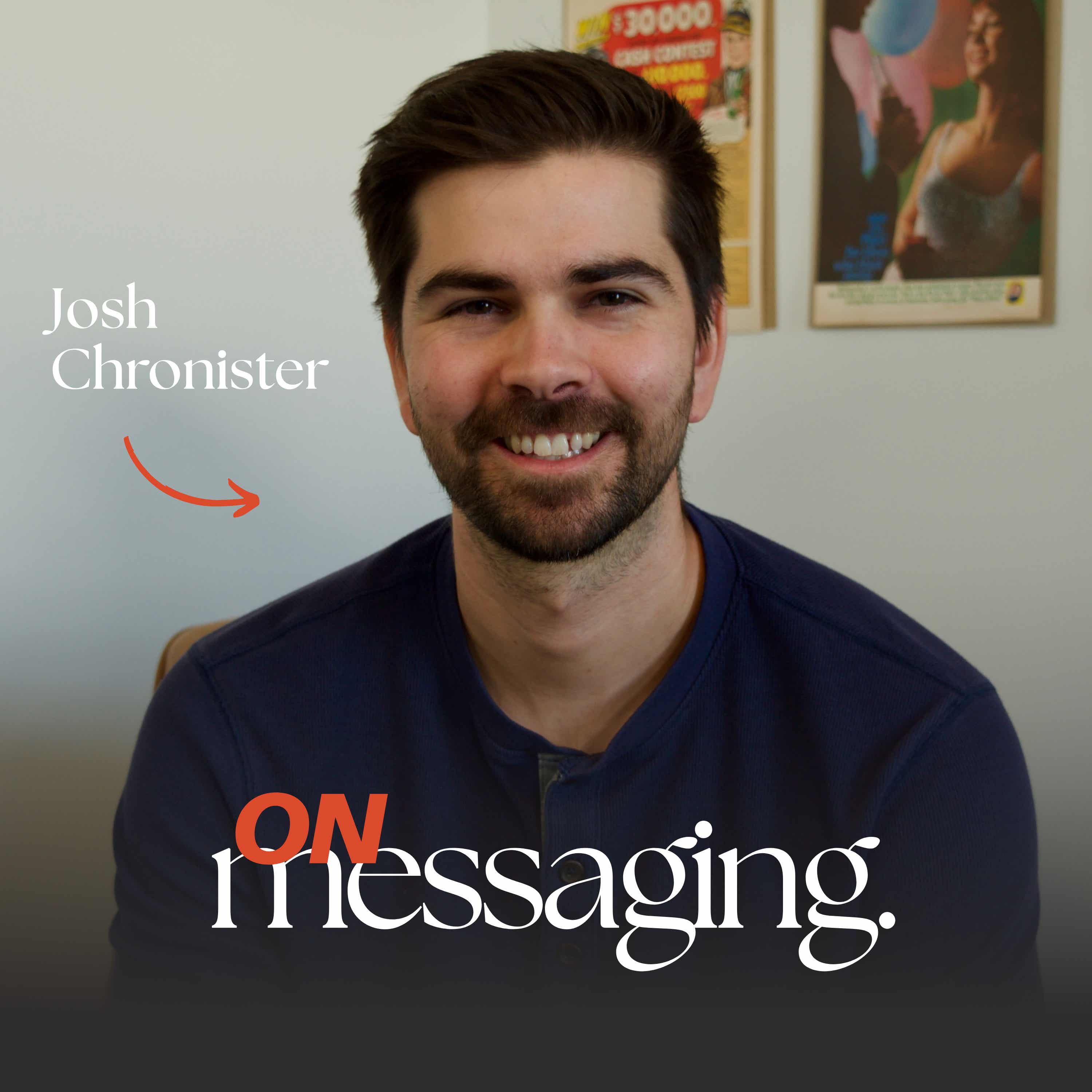
PODCAST · business
On Messaging
by Josh Chronister
Interviews with top product marketers detailing the stories, skills, processes and advice on developing high quality messaging.Hosted and written by Josh Chronister. onmessaging.substack.com
-
17
A Look Inside the Messaging & Launch Process Behind Vector's Product Launch of the Year Nomination
Alex Virden joined Vector as their first product marketing hire in April 2025. By October, she had pulled off a full repositioning, a pricing and packaging overhaul, a website redesign, and a Halloween-themed launch — all at a seed-stage startup with fewer than a dozen people.The launch generated a 41% increase in site traffic, $1M in pipeline, and a Product Launch of the Year nomination from the Product Marketing Alliance.Alex is full of PMM knowledge. I hope you learn from her as much as I did. Listen now on YouTube, Spotify, and Apple Podcasts 🎙️During our conversation, we discuss:* Why Startup Life Requires a Creative Outlet* The boo.o Launch: Results & Recognition* Choosing a Messaging Approach: Jobs to Be Done vs. Use Cases* Brand Tone and Product Messaging: Two Sides of the Same Pancake* What the Messaging Framework Actually Looked Like* Getting Messaging Adopted Across the Team* Customer Interview Process and What She Was Looking For* Talking to Closed-Lost Prospects* How They Tested the Messaging Before Launch* What Reactions to Watch for When Testing MessagingEnjoy 💛Here are my top takeaways from our conversation:1. When a messaging project starts pulling threads, let it. What started as a homepage refresh turned into a full repositioning. Alex could have scoped it down and shipped something faster. Instead, she made the case that messaging alone wouldn’t hold if the pricing, packaging, and product framing didn’t all tell the same story. Pulling that thread is what made the launch land.2. Start with pain, then product. During customer interviews, Alex deliberately separated customers from talking about Vector. She wanted to understand what was keeping them up at night before she ever brought the product back into the conversation. Feature requests have their time and place. But messaging research needs to get at the core problem first.3. Talk to all the customer. The happy ones and bad fits. Alex made sure to interview a mix: current customers across different levels of usage, closed-lost prospects, and people who never converted. Each group gives you something different. Your best customers validate. Your worst customers warn. Your closed-lost prospects tell you where the message breaks down at the moment of decision.4. Brand tone and product messaging should mirror each other. Alex described them as, two sides of the same pancake. At Vector, product updates, help articles, and marketing content all sound like the same company — friendly, down to earth, a little irreverent. When tone and messaging are misaligned, the brand becomes unmemorable. When they’re unified, even your release notes feel like part of the story.5. Messaging adoption doesn’t happen with a Slack message. The launch went well in part because Alex brought people along the whole way — listening to sales calls, crediting reps when their language made it into the messaging, keeping the founder aligned throughout. When the launch arrived, it didn’t feel like a product marketing initiative. It felt like something the whole team had built together.6. Test for the fans, and the skeptics. When testing messaging with marketers in the field, Alex wasn’t just looking for people who said they liked it. She was looking for confusion, eye rolls, and the gray zone — people who were uncertain or didn’t feel the value justified the price. That’s where the real signal lives.7. Be willing to make the big ask. The biggest lesson Alex took from the launch: don’t be afraid to recommend a pivot when you see one. Had she scoped this as a messaging project and nothing more, the launch wouldn’t have had the impact it did. Product marketers are often well-positioned to see the full picture. Trust that.Where to find Alex:* Alex’s LinkedIn* Vector’s websiteWhere to listen to On MessagingFollow On MessagingIf you’ve made it this far, thank you 💛Like this episode? Subscribing to On Messaging on YouTube and following on Spotify or Apple Podcasts go a long way in supporting the show. This is a public episode. If you would like to discuss this with other subscribers or get access to bonus episodes, visit onmessaging.substack.com
-
16
Danger Zone: Reducing Your Messaging to Fit Into Templates
In this episode, Devon O’Rourke, founder of Fluvio, shares why the push for ultra-simple messaging can actually hurt your credibility with technical buyers. We discuss:- Whether Gen AI is a strategic utility or a threat to deep thinking in product marketing- Why the trend of simplistic messaging is a danger zone for sophisticated tech products- Why it’s dangerous to solely rely on templates for product marketing activities- Why LinkedIn influencers could be guiding you down the wrong path- What makes a great product marketer- Why go-to-market should be treated as a cyclical, always-on engine rather than a one-time launch eventChapters:(00:00) Intro(00:42) Devon’s perspective on Gen-AI: Is it helpful or harmful?(03:57) Lessons from Amazon’s writing culture and the "PR FAQ"(07:09) How Fluvio uses custom GPTs for research and business development(11:07) The Danger Zone: Why simple messaging isn't always effective messaging(16:21) Escaping the competitive herd and finding your unique voice(19:06) The risk of reducing strategic PMM work to rigid templates(27:42) Defining the traits that separate a "good" PMM from a "great" one(34:58) Understanding Fluvio’s cyclical "always-on" go-to-market engine(41:14) The founding story of Fluvio and building a senior PMM consultancy(50:59) Where to find Devon and Fluvio onlineWhere to find Devon:LinkedIn: https://www.linkedin.com/in/devon-o-rourke-54028b34/Website: https://www.fluviomarketing.com/ Where to find Josh:LinkedIn: https://www.linkedin.com/in/joshua-chronister/ Newsletter: https://onmessaging.substack.com/ All On Messaging episodes: https://youtube.com/playlist?list=PLvzzQNjT_hfzRg4xGgHIqcOab9AdXxnpX&si=fhS4k_GINBvYOiai Resources mentioned:Books: Different: Escaping the Competitive Herd by Youngme Moon, Shoe Dog by Phil Knight, The Everything Store by Brad Stone.Tools: ChatGPT (Custom GPTs), Windmill (AI Management Tool).People: Liza Adams (Fractional CMO & AI Advisor).Subscribe to On Messaging:Subscribe, like, and share if you’re a product marketer crafting messaging in B2B SaaS. New episodes drop every other week 💛For inquiries about sponsoring the podcast, email [email protected]. This is a public episode. If you would like to discuss this with other subscribers or get access to bonus episodes, visit onmessaging.substack.com
-
15
How to Position & Message Yourself for PMM Career Growth w/Yi Lin Pei
In this episode, product marketing career coach Yi Lin Pei shares her framework for self-positioning and career differentiation. Yi Lin breaks down the concrete steps to shift from a tactical executor to a strategic growth driver, how to evolve your personal messaging to command executive presence, and why the most important communication skill might be asking "why" before saying "yes".Key Takeaways- Position Yourself Like a Product: Apply PMM principles to your career. First, define your "destination" (where you want to go and who you want to be). Second, understand why your "target companies" would care about and value you.- Shift from Executor to Growth Driver: To make this leap, you must first be exceptional at your foundational skills, like creating messaging that is human and differentiated. Then, focus on building cross-functional influence and thinking like a business strategist by tying your work directly to the company's P&L and growth levers.- Evolve Your Language for Leadership: To gain executive presence, you must change your language. Shift from talking about "tasks" and "projects" to discussing "programs," "processes," and "playbooks" that you are building to be scalable for the future.- Master the "T-Shaped" Framework: A "T-shaped" PMM has a broad range of expertise across core functions (research, positioning, launches, enablement) but also develops a deep, indispensable specialty in one or two areas, such as competitive intelligence or domain expertise in a technical field like cybersecurity.- Tell Your Story (to a 5-Year-Old): If you struggle to tell your own career story, Yi Lin suggests practicing as if you're explaining it to a five-year-old. This forces you to simplify, cut to the chase, and focus on the "why" behind your decisions, which is far more compelling than the "what".- Use a Consultative Approach: When pitching an idea to leadership, don't just present one option. Instead, offer 2-3 potential options, present a data-backed analysis of the ROI for each, and then give your recommendation. This changes the question from "Should we support this?" to "Which option should we support?".- The Power of Asking "Why": When a manager gives you an urgent, out-of-left-field request, pause before reacting. Instead of saying yes or no, ask questions to understand the "why" behind the ask. This diffuses defensiveness, builds curiosity, and often reveals the true priority (or that the request isn't the right one).Chapters(00:37) Why Yi Lin chose career coaching after a 2020 layoff(04:40) How leaders can make others comfortable coming to them for advice(07:59) Applying PMM principles (positioning & differentiation) to your own career(14:47) The 3-step process to shift from a tactical executor to a strategic growth driver(19:06) How to balance day-to-day tactical work with long-term strategic efforts(23:31) Defining the "T-shaped" product marketer(26:39) The importance of domain experience (and when broad experience is an advantage)(30:55) A simple exercise for PMMs to apply storytelling to their own accomplishments(33:12) Tactics to evolve your personal messaging for leadership and executive presence(40:22) The single most important communication skill for handling urgent requests(44:22) Yi Lin's answer to "What is living all about?"About Yi Lin- Yi Lin Pei is a product marketing consultant and career coach who helps product marketers grow in their careers and advises companies on building strong teams.- LinkedIn: https://www.linkedin.com/in/yilinpei/Subscribe to On Messaging- Substack: https://onmessaging.substack.com/#productmarketing #b2bmarketing #careeradvice #careergrowth This is a public episode. If you would like to discuss this with other subscribers or get access to bonus episodes, visit onmessaging.substack.com
-
14
From Competitive Intel to Killer Messaging: How to Differentiate Your POV w/ Talya Heller | Down to a T
Listen now on YouTube, Spotify, and Apple Podcasts!Episode 14: Talya Heller, Owner of Down to a T joins me to break down how to weave competitive intelligence into messaging that actually differentiates.Talya runs a product marketing consultancy called Down to a T focused on creating a differentiated POV coupled with customer centered sales assets.Talya is a former engineer, turned product manager, turned product marketer. She came highly recommended for the show and was referred to as, “the competitive intel queen” (thanks Michele Nieberding!). I love it!I’ve already taken some of what I’ve learned from this conversation and started implementing it in my competitive intel work as a product marketer.And I think you will too.During our conversation, you’ll learn:* Why 10-page messaging docs fail* How to adapt messaging for multiple personas* Talya’s go-to ways to mine customer conversations* How to create “champion decks” and persona one-pagers* A simple framework for using competitive intel to shape messaging* How to identify the real differentiators that make customers choose you* Why ignoring your competitors is the biggest messaging mistake you can makeIn our conversation, you’ll find:00:00 – Why ignoring competitors is the biggest messaging mistake00:45 – Welcome to On Messaging with Talya Heller, the “Competitive Intel Queen”02:00 – Talya’s career journey: engineer → PM → product marketer06:43 – Why she pivoted from product management to product marketing08:21 – Early impressions of marketers from the PM side09:44 – The #1 messaging pitfall: sounding the same as competitors14:33 – How much differentiation do you actually need?17:45 – Differentiation beyond product: experience, support, and community18:04 – Using competitive intelligence to shape positioning22:55 – Why no one reads messaging docs (and what to do instead)25:42 – Competition is emotional: avoiding bias in research26:09 – Where to research competitors’ ICPs and customers29:42 – How to position messaging across multiple personas36:12 – Equipping your champion to sell internally (champions decks & one-pagers)42:46 – Aligning sales and marketing on messaging and assets47:53 – Simple tools & playbooks for enabling marketing teams55:20 – Localization isn’t translation: global messaging mistakes1:01:18 – One piece of messaging advice to implement tomorrow1:02:36 – What living is all about1:03:22 – How to support Talya + where to subscribe to her newsletter Spill the TWhere to Find Talya:LinkedIn: https://www.linkedin.com/in/talyahellermba18/Down to a T Consulting: https://www.downtoat.co/Spill the T Newsletter: https://www.downtoat.co/newsletterWhere to Find Josh:LinkedIn: https://www.linkedin.com/in/joshua-chronister/Follow On Messaging:Subscribe, like, and share if you’re a product marketer crafting messaging in B2B SaaS. New episodes drop every other week 💛Thanks for reading On Messaging with Josh Chronister! Subscribe for free to receive new posts and support my work.Created by Josh ChronisterI interview the best product marketers and tech companies who create messaging that resonates with their buyers. Come learn from them, so you can hit ‘Publish’ with confidence. This is a public episode. If you would like to discuss this with other subscribers or get access to bonus episodes, visit onmessaging.substack.com
-
13
Stop Selling Features — Teach a Story Buyers Remember w/ Ryan Yackel | Databand.ai
Like this episode? Clicking Like and Subscribe go further than you know. Thank you 💛On the show today, I have Ryan Yackel, Chief Marketing Officer at Databand.aiRyan is a former sales engineer, turned product marketer, turned chief marketing officer. Also, a children’s book author with an animated version available on Youtube.This was a phenomenal conversation. Ryan came prepared with props, in the trenches product marketing stories, frameworks for narrative design and book recommendations. Plus we had a lot of good laughs.//During our conversation, we discuss* Why product marketers make natural CMOs, and why founders trust leaders with a product marketing background* How narrative design helps teams avoid feature dumps and instead tell a differentiated “old way vs. new way” story* Real-world examples of narrative design applied at Tricentis, KeyFactor, Databand, and IBM* The role of “sales narratives” in equipping reps to tell memorable stories instead of commodity feature checklists* How Ryan uses Google Gemini and Notebook LM to accelerate competitive research with frameworks like Obviously Awesome* Why AI is a useful starting point for research but dangerous to rely on for final messaging* The major shift in product marketing from startups (new logo focus) to enterprises (internal seller mindshare)* Three tactics for influencing large sales teams: AMA sessions, “What’s New” newsletters, and quick-turn collateral* Why “great go-to-market beats a better product every time,” with lessons from competing against HP Quality Center* Cautionary takes on PLG in enterprise software, and why not all SaaS playbooks translate to technical productsAnd so much more.//In this episode, you’ll find00:00 – The “secret sauce” in messaging: telling a story buyers remember00:35 – Intro to Ryan Yackel, CMO at Databand01:31 – Why product marketers make great CMOs02:17 – From sales engineer to product marketing leader03:43 – Why recruiters seek CMOs with product marketing backgrounds06:02 – Product marketing as the headlights guiding demand gen08:21 – Analogies that explain the role of product marketing09:36 – Narrative design: framework for product launches12:29 – Case study: Continuous Testing at Tricentis13:26 – Case study: Machine identity management at KeyFactor14:22 – Case study: Data observability at Databand15:30 – Bringing narrative design into IBM product launches17:44 – Where narratives live: sales decks, messaging docs, and pitches21:36 – Using reference points like Datadog to simplify complex products22:07 – Building narratives for multi-product organizations24:40 – Using AI (Gemini + NotebookLM) for competitive research28:05 – Prompt engineering for category deep dives (Collier Rosin Kranz example)30:12 – Framework mashups: April Dunford + corporate visions + AI research32:27 – The “Red Box vs. Green Box” exercise for sales differentiation36:35 – Teaching sales teams to sell stories, not features38:17 – How messaging shifts from startup to enterprise companies43:28 – Three tactics to win sales mindshare in large enterprises46:52 – AMA sessions, newsletters, and internal podcasts for sales enablement50:11 – Contrarian opinions: AI for messaging, PLG caution, GTM beats product55:46 – Why go-to-market strategy beats having a “better” product58:23 – Ryan’s #1 piece of messaging advice: define your secret sauce1:00:56 – What life is all about: gratitude, faith, and perspective1:03:38 – Where to find Ryan and his children’s book Pancakes and Mr. Bear//Where to Find Ryan (and more links):LinkedIn: https://www.linkedin.com/in/ryanyackel/* Why A Product Marketer Should Be Your Next CMO* Defeat Your Prospect’s Status Quo with Unconsidered Needs* How narrative design works in product marketing* April Dunford Books* My Book | Watch for Free//Where to Find Josh:LinkedIn: https://www.linkedin.com/in/joshua-chronister/Follow On Messaging:Subscribe, like, and share if you’re a product marketer crafting messaging in B2B SaaS. New episodes drop every other week 💛 This is a public episode. If you would like to discuss this with other subscribers or get access to bonus episodes, visit onmessaging.substack.com
-
12
Create Messaging Reps Use (And Customers Remember) w/Madeleine Work | Chili Piper
Like this episode? Clicking Like and Subscribe go further than you know. Thank you 💛Episode 12: Madeleine Work, Senior Product Marketing Manager at Chili Piper (https://www.linkedin.com/in/madeleinework/) joins me (https://www.linkedin.com/in/joshua-chronister/) to break down how to create messaging that reps actually use and customers remember.We talk about defining clear platform messaging, getting internal buy-in without watering it down, and why launches are never really one-and-done. We also dive into sales feedback loops, creative copy that still converts, and how Madeleine uses tools like Gong, Wynter, and Mutiny to test what’s working.//💡 During our conversation, you’ll learn:1. How to A/B test website messaging2. How to create continuous feedback loops3. Getting internal buy-in on your messaging4. Balancing creativity and clarity in messaging5. Why product launches are on going and why you should repeat yourself//🎙️ In our conversation, we cover: 00:00 – Teaser: How Madeleine crowdsourced and tested messaging across her company00:29 – Intro to Madeleine and what you’ll learn in the episode01:44 – From content to product marketing: how the transition happened03:24 – What she loved (and didn’t love) about content marketing06:01 – The challenge of getting 100% messaging buy-in06:55 – The collaborative H1 test: value, competitor, and persona buckets08:53 – Running messaging through Wynter and Mutiny12:21 – The importance of above-the-fold copy and first impressions14:08 – UI images in messaging: show, don’t tell15:10 – How Chili Piper defined its platform messaging15:59 – “Demand conversion”: the phrase they landed on17:47 – Messaging in a competitive landscape (and naming your competitors)19:32 – How they brainstormed the phrase “demand conversion”21:02 – Creativity vs. clarity: writing how you talk23:44 – “No more complaints about unfair lead distribution”: voice-of-customer in action25:18 – Marketing to marketers: easier and harder26:13 – Why marketers don’t click UTM links—but give amazing form responses28:46 – How Madeleine continuously refines messaging over time29:53 – Sales feedback loops and scathing voice notes30:23 – Refresh cadence: product pages, competitor pages, then restart31:59 – PDF collateral vs. web content: keeping everything updated33:35 – Launches Madeleine’s proud of (and what she learned)35:12 – Why no one noticed the chat launch—and how they relaunched it36:55 – The importance of repetition in product marketing38:33 – Using Gong to track if messaging is landing with reps40:04 – What living is all about: being a little uncomfortable41:28 – Where to find Madeleine and her “Madeleine Love” folder//🔦 Where to Find Madeleine:LinkedIn: https://www.linkedin.com/in/madeleinework/🔦 Where to Find Josh:LinkedIn: https://www.linkedin.com/in/joshua-chronister/ Newsletter: https://onmessaging.substack.com/ Spotify: https://open.spotify.com/show/3E1gduFoKQYHiLNmNLzeF4?si=c3e2bc4bd362490f Apple Podcasts: https://podcasts.apple.com/gb/podcast/on-messaging/id1787098696 //Follow On Messaging:Subscribe, like, and share if you’re a product marketer crafting messaging in B2B SaaS. New episodes drop every other week 💛 This is a public episode. If you would like to discuss this with other subscribers or get access to bonus episodes, visit onmessaging.substack.com
-
11
From Single-product Messaging to Platform-level Narratives w/ Emily Pick | Clari
Like this episode? Clicking Like and Subscribe go further than you know. Thank you 💛Episode 11: Emily Pick, Lead Product Marketing Manager at Clari (https://www.linkedin.com/in/emilypick/) joins me (https://www.linkedin.com/in/joshua-chronister/) to dive into platform messaging, tailoring narratives for different buyer personas, and how to create a unified message across multiple products. We also unpack the balance of feature-level messaging, brand consistency, and customer words.//💡 During our conversation, you’ll learn:Influencing the product roadmap as a product marketerWhy most B2B messaging gets stuck in feature-function battlesHow to create messaging for buying committees without losing clarityHow to transition from single-product messaging to platform-level narratives//🎙️ In our conversation, we cover: 00:00 – Nobody’s buying a product—they’re buying a solution to their pain00:29 – Intro to the episode and what you’ll learn from Emily01:23 – Emily joins the show and shares her love for messaging02:26 – Why Emily stepped away from business books and back into travel stories03:17 – Backpacking, Rick Steves, and what travel taught Emily06:26 – Travelers, chaos, and the joy of unpredictable experiences07:20 – Introduction to platform vs. product messaging07:56 – The history of Clari and their transition to a revenue platform09:18 – Defining your category: what Clari wants to be known for12:02 – Using positioning as the North Star for platform messaging12:42 – Positioning vs. branding: how Emily differentiates the two13:37 – Platform-first vs. product-level messaging strategy14:08 – Moving from product features to solution-based messaging16:01 – When product-specific messaging becomes important16:54 – Mapping solutions to pains and personas before products17:47 – Aligning product launches to the company narrative18:36 – Crafting baseline and higher-order product messaging19:37 – How Clari avoids building “off-strategy” features19:48 – How product marketers can earn influence on the roadmap21:29 – Bringing market research and analyst feedback to PMs22:57 – Owning collateral and influencing alpha/beta feedback loops23:12 – Building trust with PMs by being useful and aligned24:02 – When Emily starts messaging and enablement for new features24:32 – Using launch tiers and customer impact scores25:56 – Examples: low impact vs. high impact, and how timing shifts28:08 – Why Clari focuses on retention as much as acquisition29:32 – The cost of new customers vs. caring for existing ones30:30 – A call for PMMs to think beyond net-new revenue31:00 – Tailoring messaging for the full buying committee32:22 – Adoption depends on frontline users, not just executives33:18 – Mapping personas to solutions and jobs-to-be-done34:17 – Pre- and post-sale assets for each user type36:45 – Collaborating with customer education to drive product adoption38:39 – Clari’s position in a competitive space—and how to stay ahead39:39 – Winning with relevance when features are at parity40:57 – Creating preference without getting stuck in feature wars42:49 – Signs you’re losing a deal: when the buyer uses your competitor’s language44:34 – Selling against pain instead of relying on features45:55 – How Emily and team enable sales with messaging that resonates48:38 – Why customer words and Q&A insights power better messaging49:41 – Tools Emily loves: Laudable and UserEvidence50:49 – Letting Q&A fuel your copy and message refinement52:04 – Emily’s #1 messaging tip: replace jargon with customer language53:06 – What is living all about? Emily’s personal perspective55:22 – Where to connect with Emily online56:20 – Closing thanks and wrap-up//🔦 Where to Find Emily:LinkedIn: https://www.linkedin.com/in/emilypick/🔦 Where to Find Josh:LinkedIn: https://www.linkedin.com/in/joshua-chronister/ Newsletter: https://onmessaging.substack.com/ Spotify: https://open.spotify.com/show/3E1gduFoKQYHiLNmNLzeF4?si=c3e2bc4bd362490f Apple Podcasts: https://podcasts.apple.com/gb/podcast/on-messaging/id1787098696 //Follow On Messaging:Subscribe, like, and share if you’re a product marketer crafting messaging in B2B SaaS. New episodes drop every other week 💛 This is a public episode. If you would like to discuss this with other subscribers or get access to bonus episodes, visit onmessaging.substack.com
-
10
How to Align Sales & Marketing Messaging w/Gaspard Pastural | PurpleOceans
On the show today, I have Gaspard Pastural, creator of PurpleOceans and a B2B SaaS Product Marketing Consultant. 🎧 During our conversation, you’ll learn:- Why go to market isn’t a one time event- How differentiate with relevance instead of features & pricing- Why B2B websites should be consumption first, then conversion- Sales and marketing messaging should be aligned but not identical//In our conversation, we cover:00:00 – Why most B2B websites fail: lead gen vs. consumption01:36 – Gaspard’s LinkedIn writing process and content philosophy02:32 – The real goal of differentiation: be the most relevant choice04:15 – What “relevance” means in practice: use cases over categories06:06 – Why you’ll never out-feature the gorilla in your space08:05 – The risk of trying to be everything for everyone09:55 – How poor differentiation breaks messaging, positioning, and conversions10:55 – Marketing your difference (not just saying you’re different)11:56 – Sales vs. marketing messaging: aligned, not identical13:00 – The analogy of explaining your job to everyone at once14:07 – Three key differences: who, how, and intent15:34 – Sales is adaptive; marketing is orchestrated16:03 – Homepage strategy: guide consumption, don’t push conversion17:29 – How to enable sales without dictating scripts19:56 – PMMs as collaborators, not message enforcers21:21 – Messaging as a structural alignment challenge22:32 – Why your messaging must support the full buying committee24:48 – Persona-based pages and website structure as messaging tools28:08 – How PMMs can earn internal trust to shift company messaging30:25 – The power of step-by-step change vs. the one-big-pitch trap32:01 – Underrated GTM principle: reverse-engineer your launch33:56 – How to do message testing without budget (and what not to do)36:27 – Cheap, scrappy message testing strategies that work38:14 – Why content is a long-term play, and why sales is faster for insights41:17 – Final takeaway: reverse engineer everything to de-risk your work42:53 – What living is all about: “Having no regrets and being proud”45:36 – Where to find Gaspard online//👉 Where to find GaspardLinkedIn: https://www.linkedin.com/in/gaspardpastural/Website: https://gaspardpastural.com/ Substack: https://gaspardpastural.substack.com/ 👉 Where to find JoshLinkedIn: https://www.linkedin.com/in/joshua-chronister/ Substack: https://onmessaging.substack.com/ YouTube: https://www.youtube.com/channel/UCUdKBktrLJWzNMDS45fh_Bg This is a public episode. If you would like to discuss this with other subscribers or get access to bonus episodes, visit onmessaging.substack.com
-
9
7 Messaging Principles Every PMM Should Know w/Collin Mayjack | GoFundMe
On the show today, I have Collin Mayjack, Principle Product Marketing Manager at GoFundMe.Before joining GoFundMe, Collin worked in product marketing at Oncue and Dataro and is the creator of Holy Shift.//What you’ll learn:Why Collin believes clarity always beats cleverness in B2B messaging—and how to avoid “junk food” copywritingThe seven messaging principles Collin uses to drive alignment across product, marketing, and salesHow to translate complex products into human-first stories that resonate with buyers (and actually get repeated by sales)The secret to testing messaging without fancy tools—including Collin’s scrappy process using real customer callsHow to navigate internal messaging politics—balancing SEO, brand voice, and product truths without losing the messageA framework for driving influence across teams—even when you don’t own the pen or the processHow to write messaging that sticks: Collin’s 20-second talk track technique that sales teams loveWhy side projects are the ultimate messaging gym—and how they make you a stronger communicator at workA fresh take on feature vs. benefit messaging (hint: your buyers are smarter than you think)How Collin builds buy-in by leading with positioning before assets—and how you can do the sameAnd so much more.//In our conversation, we cover:00:00 – Intro: Welcome Collin Mayjack to the show01:33 – From pastor to product marketer: Translating complexity into clarity03:53 – Why side projects make you a better writer and messenger06:17 – The origin of Collin’s 7 messaging principles08:32 – #1: Clear is better than clever (and why most messaging fails here)09:57 – #2: Differentiate or die—how to bring product strengths to the surface10:55 – #3: Jargon is the enemy—cut through corporate fluff11:25 – #4: You can’t say it all—focus on what matters most12:24 – #5: Customers do care about features (with a twist)14:21 – #6: Talk to your champion like a human15:50 – #7: Good messaging flows from good positioning18:22 – Bonus: The best messaging is clear and clever—but clarity wins19:17 – How Collin tests messaging without fancy tools (and why he goes rogue)20:44 – Partnering with PMs to pitch new features to real customers21:43 – Using customer reactions to validate and refine messaging22:37 – Real-world naming feedback: letting customers vote live23:31 – Testing messaging in startups vs. larger companies24:49 – Scrappy tactics: using social, email, and founders to test ideas26:00 – How to choose the right customers for feedback26:58 – The politics of advisory boards and enterprise obsession28:11 – The PMM cheat code: bring the story, get invited to the table29:04 – Balancing product messaging with SEO and brand voice30:33 – Winning influence by starting with positioning, not copy31:31 – Using Emma Stratton’s VBF framework to earn trust and traction33:01 – The “mild sauce” effect: how messaging evolves through compromise33:59 – The power of pen-to-paper: why the strategist shapes the outcome35:45 – Influence, humility, and the politics of feedback36:43 – Why being likable matters more than being right38:10 – How Collin enables the sales team with clear, human messaging39:21 – “Tuesdays with Enablement”: internal sessions that drive adoption40:14 – How Collin builds 30-second sales stories that actually stick41:43 – The James story: an example of sales messaging that works43:07 – Talk tracks over taglines: why real talk wins43:49 – Being active in Slack and jumping on sales calls to support deals44:55 – Lightning round: One messaging tip you can implement tomorrow46:21 – What is living all about? Collin’s personal reflection47:00 – Where to find Collin and lift him up//👉 Where to find CollinLinkedIn: https://www.linkedin.com/in/collinmayjack/ Holy Shift Podcast: https://www.linkedin.com/company/holy-shift-pod/ 👉 Where to find JoshLinkedIn: https://www.linkedin.com/in/joshua-chronister/ Substack: https://onmessaging.substack.com/ YouTube: https://www.youtube.com/channel/UCUdKBktrLJWzNMDS45fh_Bg //🎙️ReferencedAlex Eaton: https://www.linkedin.com/in/alexeaton1/ Mark Huber: https://www.linkedin.com/in/markehuber/ Gab Bujold: https://www.linkedin.com/in/gabriel-bujold/ Zach Messler: https://www.linkedin.com/in/zachmessler/ Anthony Pierri: https://www.linkedin.com/in/anthonypierri/ Emma Stratton: https://www.linkedin.com/in/emma-stratton-punchy/ This is a public episode. If you would like to discuss this with other subscribers or get access to bonus episodes, visit onmessaging.substack.com
-
8
"How We Almost Botched Our Messaging..." w/Alex Eaton | UserEvidence
On the show today, I have Alex Eaton, Director of Product Marketing at UserEvidence.Before joining UserEvidence, Alex worked in product marketing at Help Scout and Lessonly.What you’ll learn:1. The 3 traits that separate great product marketers from good ones—and why “execution” is the most underrated2. How Alex avoided a messaging disaster at UserEvidence—and the simple question that unlocked the right positioning3. Why most messaging gets overlooked inside companies—and how Alex ensures people actually use it4. A tactical breakdown of messaging docs that get read—why yours should be under two pages5. The “gut tension” test Alex uses to know when messaging isn’t ready yet—and how to push past it6. How to tailor messaging for multiple personas without breaking consistency7. The role of customer evidence in brand messaging—and why UserEvidence leads with faces, not product shots8. How to enable sales without being the “messaging cop”—Alex’s exact approach to feedback, coaching, and internal buy-in9. What Alex learned from working with messaging consultants like Fletch—and when to bring in outside help10. The mindset shift from “being right” to “driving outcomes”—why collaboration beats ownership in product marketingAnd so much more.//In our conversation, we cover:00:00 – Intro & Welcome00:51 – What Separates Good from Great Product Marketers03:32 – How to Get Teams to Rally Behind You06:19 – The Anxiety of Surface-Level Messaging07:48 – Execution Over Strategy: Getting In the Weeds09:23 – How Alex Nearly Blew the Messaging at UserEvidence12:02 – The Phrase That Almost Made It: "Evidence-Based Content Platform"13:57 – The Simpler, Stronger Message: Customer Evidence Platform14:56 – Rolling Out the Messaging: Site, Deck, Personas, and More15:43 – Connecting Problem and Solution: From Evidence Gap to Platform Fit17:36 – Working With Fletch on Messaging: Why External Voices Matter21:37 – Simplifying Messaging for Global Understanding23:23 – Leading With Customer Stories in Messaging25:51 – Becoming the Best at Customer Evidence—In Their Own Marketing27:31 – Leading With Personas, Not Product28:26 – Why Real Faces > Stock Photography31:32 – The "Two-Page Messaging Doc" Philosophy34:06 – How to Layer in Nuance After the Message Sticks36:24 – Giving Feedback Without Micromanaging Sales41:43 – Enabling Sales to Use the Message Consistently44:53 – Tailoring Messaging for Personas Without Losing Focus50:11 – Final Takeaway: The Power of Gut Tension51:36 – What’s Living All About?53:13 – Where to Connect With Alex//👉 Where to find AlexLinkedIn: https://www.linkedin.com/in/alexeaton1/ 👉 Where to find JoshLinkedIn: https://www.linkedin.com/in/joshua-chronister/ Substack: https://onmessaging.substack.com/ YouTube: https://www.youtube.com/channel/UCUdKBktrLJWzNMDS45fh_Bg //🎙️ReferencedMark Huber: https://www.linkedin.com/in/markehuber/ Jillian Hoefer: https://www.linkedin.com/in/jillianmacnulty/ Evan Huck: https://www.linkedin.com/in/evanhuck/ Ray Rhodes: https://www.linkedin.com/in/ray-rhodes-a0672568/ Anthony Pierri: https://www.linkedin.com/in/anthonypierri/ Robert Kaminski: https://www.linkedin.com/in/heyrobk/ David Ogilvy: https://www.amazon.com/Ogilvy-Advertising-David/dp/039472903X Jason Oakley: https://www.linkedin.com/in/oakleyjason/ UserEvidence: https://www.linkedin.com/company/userevidence/ Lessonly: https://www.linkedin.com/company/lesson-ly/ Gong: https://www.linkedin.com/company/gong-io/ Help Scout: https://www.linkedin.com/company/help-scout/ Fletch: https://www.linkedin.com/company/fletch-pmm/ This is a public episode. If you would like to discuss this with other subscribers or get access to bonus episodes, visit onmessaging.substack.com
-
7
How to Get the Most From Every Customer Interview w/Shoshana Kordova | Peel Product Marketing
On the show today, I have Shoshana Kordova, creator of Peel Product Marketing.She truly defines what it means to be a curious product marketer and I think you’ll see what I mean throughout our conversation. This episode is for product marketers who…- Are coming from a writing or editing background and how that experience is a huge plus- You’re looking to run customer interviews that go beyond surface level- How to create messaging for very technical products- How to understand the core needs of sales and why they are asking for enablement- Why it’s about understanding the story first, then the telling- And how to break into product marketing at a high tech start upAnd so much more. //In our conversation, we cover:00:00 Introduction to Shoshana Kordova's Journey03:31 Transitioning from Journalism to Product Marketing06:13 The Importance of Research and Interviewing08:51 Understanding Messaging through Customer Insights11:32 The Role of Internal Stakeholders in Messaging14:19 Exploring Customer Needs and ROI17:03 Peeling the Onion: Digging Deeper in Conversations19:44 Crafting Clear Messaging for High-Tech Products24:57 Understanding Diverse Messaging Needs29:10 The Power of Visual Storytelling34:25 Crafting Compelling Stories in Marketing38:13 Mentoring and Building Confidence in Product Marketing44:59 Key Messaging Takeaways and What Living is All About// Find the full transcript at: https://onmessaging.substack.com/p/how-to-get-the-most-from-every-customer//Where to find Shoshana: Website: https://app.assetmule.ai/vVFtTvys LinkedIn: https://www.linkedin.com/in/shoshana-kordova/ How To Get Insights From Customer Interviews (Playbook #7): https://jetpack.productivepmm.com/playbooks/playbook-7-customer-insights-and-messagingWhere to find Josh:LinkedIn: https://www.linkedin.com/in/joshua-chronister/ Substack: https://onmessaging.substack.com/ YouTube: https://www.youtube.com/@OnMessaging //Referenced:Haaretz: https://www.haaretz.com/ Amanda Natividad: https://www.linkedin.com/in/amandanat/ Steven Dubner: https://www.linkedin.com/in/stephen-dubner-2a066578/ Washington Post: https://www.washingtonpost.com/ The New York Times: https://www.nytimes.com/ The Smithsonian: https://www.si.edu/ Marketo: https://business.adobe.com/products/marketo.html Hubspot: https://www.hubspot.com/ Gong: https://www.gong.io/ Peel Product Marketing: https://app.assetmule.ai/vVFtTvys This is a public episode. If you would like to discuss this with other subscribers or get access to bonus episodes, visit onmessaging.substack.com
-
6
An Accidental Marketer's Approach to Messaging w/ Pete McCarthy | Open Road Integrated Media
On the show today, we have Pete McCarthy, chief marketing officer at Open Road Integrated Media. Before joining Open Road, Pete led consumer insights at Ingram content group, co-founded a marketing saas, and led marketing at places like Penguin, and Random House.Pete’s been in marketing at start-ups, mid sized companies, large orgs, and as an agency owner.In our conversation he shares, 1. How messaging strategy varies across business sizes2. The method behind the right book, to the right reader, at the right time3. How customer relationships drive messaging4. The CMO’s role on messaging5. Why product marketers are positioned to be marketing executivesAnd so much more! //In our conversation, we cover:00:00 Introduction 01:44 Pete's Marketing Background13:17 The Evolution of Marketing Messaging22:20 Positioning and Messaging Across Business Sizes31:26 How Messaging was Created for Marketing Insights36:52 Building Relationships in Corporate Marketing41:19 The Role of a CMO in Messaging49:49 How a CMO Thinks About Data and Marketing Measurement01:00:01 Advice for Aspiring Marketing Executives//Where to find Pete: LinkedIn: https://www.linkedin.com/in/petermccarthy1/ Where to find Josh: Newsletter: https://onmessaging.substack.com/ LinkedIn: https://www.linkedin.com/in/joshua-chronister/ YouTube: https://www.youtube.com/@OnMessaging //Referenced:Emma Stratton: https://www.linkedin.com/in/emma-stratton-punchy/ Jess Johns: https://www.linkedin.com/in/jessjohns/ Open Road Integrated Media Inc: https://openroadintegratedmedia.com/ Ingram Content Group: https://www.ingramcontent.com/ Penguin Random House: https://www.penguinrandomhouse.com/ The New York Review of Books: https://www.nybooks.com/ Granta Publications: https://granta.com/ Amazon: https://www.amazon.com/ Google: https://www.google.com/ Yahoo: https://www.yahoo.com/ Marketing InsightsApple: https://www.apple.com/ Microsoft: https://www.microsoft.com/en-us/ Dell Technologies: https://www.dell.com/en-us Pixar Animation Studios: https://www.pixar.com/ GE: https://www.ge.com/ Costco Wholesale: https://www.costco.com/ Walmart: https://www.walmart.com/ Adobe: https://www.adobe.com/ Salesforce: https://www.salesforce.com/ This is a public episode. If you would like to discuss this with other subscribers or get access to bonus episodes, visit onmessaging.substack.com
-
5
How to Align Brand & Product Messaging w/ Jeff Chase | Vitally.io
Listen now on Spotify, YouTube, and Apple.On the show today, we have Jeff Chase, Director of Brand and Product Marketing at Vitally.io. Before joining Vitally, Jeff worked in product marketing and community at places like Plume Design, Verkada, Eero and Amazon. Jeff’s been a two time founding product marketer at high-growth B2B SaaS start-ups. In our conversation he shares, * His process to creating positioning and messaging at high growth start ups * The crucial role of customer conversations to develop messaging * Gaining buy-in from leadership for messaging and positioning* How to create effective interactive demos And so much more!Key takeaways from the conversation: Rethinking the Product Marketing RoleJeff argues that the term product marketing doesn’t do justice to what we actually do. In B2B SaaS, product marketers are core to go-to-market strategy, sales enablement, and positioning. The title “product marketer” might even be limiting our influence. Jeff suggests that the best product marketers today operate more like strategic advisors, not just content creators. So, should we be calling it something else? Time will tell or maybe a little debating will too…Creating Messaging and Positioning in StartupsStep one for building messaging? Talk to the founders. Not about what the product does, but why it exists. Focusing on the product's features will come later. You should aim to understand the founders' motivations, like:* Why they built the product.* How they plan to differentiate it in the market.* The pain points they identified.* Their firsthand experiences with these pain points.When you understand these foundational elements, you can grasp the essence of why the product exists. This is crucial for building effective messaging that highlights the product's differentiation, especially when entering an existing market. Jeff mentions, in competitive spaces, it's not enough to explain what a product is (like a CRM); you need to tell people why your product is being built the way it is.The Role of Customer ConversationsYou’re never done with customer research. Messaging should evolve as your customers’ challenges evolve. Jeff shares how he refines messaging at Vitally by constantly listening to sales calls, customer success feedback, and direct interviews.* Reach out to customers within 30 days of starting. Have open-ended conversations to reveal recurring themes and the specific language customers use to describe their problems and what’s been solved so far. This customer language is invaluable for crafting messaging that resonates authentically.* Look to ongoing conversations. These reoccurring conversations are essential for continuously refining your messaging and positioning to remain relevant and impactful. This feedback loop helps prevent your messaging from becoming stagnant.What biggest takeaway here? The importance of humanizing your message by putting yourself in the shoes of the buyer and understanding their perspective.Thanks for reading On Messaging! Subscribe for free to receive new posts and support my work.Gaining Buy-In for Messaging and PositioningRolling out new messaging isn’t about unveiling a finished product—it’s about bringing internal stakeholders along for the journey. Here’s Jeff’s process for getting buy-in from leadership:* Open the Conversation: Present your positioning and messaging not as a final decision, but as a starting point for discussion and feedback. Frame it as "here's what I'm thinking based on what I've heard," inviting thoughts and feedback to build something everyone can rally behind.* Proof Points: Support your proposed messaging with evidence like quotes from customer interviews and even relevant Reddit posts. Back this up with data from market reports and original research.* Balancing Perspectives: Recognize that founders and leaders have their own vision, and it's crucial to balance that with the realities observed in the market and feedback from customers. If these perspectives are too far apart, a foundational conversation about potential repositioning might be necessary.* Engaging Stakeholders Early: Don't present your messaging as a surprise. Involve key stakeholders from different teams like sales, customer success, and product early in the process to get their input and build alignment. This will helps prevent pushback later on. Getting buy-in from the sales leadership is particularly important as they are on the front lines and often have the ear of senior leadership.* Iterative Testing: View positioning and messaging as something to be tested and refined continuously. Use the sales team to test different messaging (talk tracks, slides decks, etc.) during calls and gather feedback on what resonates.Brand and Product Messaging AlignmentAt early-stage startups, your brand is your product. Often times, you’ll notice other companies rely heavily on abstract messaging without clearly showing the product in action. We’ve all seen it. Lazy category creation or buzzword messaging. By making the product essentially the brand, you showcase its value and differentiation directly. This provides a competitive advantage by reducing the time it takes for potential customers to understand what the software does and how it solves their problems. In a crowded market, this directness helps stand out and can accelerate customer acquisition by immediately addressing the core question: "What does this product actually do for me?" As the company grows and the brand becomes more established, the focus might evolve beyond just the product itself.Creating Effective Interactive DemosThe goal of an interactive demo? Get to the aha moment—fast. People don’t want a guided tour of every button; they want to see how the product solves their problem. Here are the three types of interactive product demos at Vitally.io:* The primary overall product tour: * This is the most in-depth demo and is designed for individuals who have no prior knowledge of Vitally. The goal is to easily educate them by providing quick, succinct steps explaining what the product is and what different features do. As Vitally is a sales-led product, this tour aims to give users a foundational understanding and vocabulary so they can have more informed conversations with the sales team.* Demos on how to use specific features: * These demos are more detailed-oriented and are created for their existing customers. The purpose is to drive self-service adoption of the different features within the platform. These demos might be harder to understand for someone who has never used the platform before.* Blueprints (dual use case for existing customers and prospects): * These demos came about as Vitally noticed their customers using the product in really great ways. The idea was to turn these customer use cases into interactive product demos to showcase how Vitally can be used or how a user could use it in their own context. These "blueprints" serve a dual purpose by showing prospects the power of Vitally and providing existing customers with ideas and templates on how to further utilize the platform.How to Know When Messaging ResonatesDirectly measuring the impact of messaging can be challenging.Here are a few indicators of success:* The sales team isn't reporting confusion or lack of understanding from prospects regarding the product's value proposition. * Look at business growth metrics like sales revenue increase, adoption of the featured product, customer retention, and competitive win rates. Success in these areas can indicate that the messaging is effectively attracting and engaging the right audience. * Another insightful metric for a customer success platform like Vitally is Net Revenue Retention (NRR), as it reflects both new revenue and the continued value customers see in the product. Ultimately, if sales isn’t complaining about the messaging and outputs from product marketing, it suggests what you’ve created is resonating, but that doesn’t mean you can’t make it better :) Noteworthy Quotes:"If you’re a product marketer and you're treating positioning and messaging as a check mark versus part of your process, then you're going to fail to evolve and grow your business.""If your sales team isn't complaining that people aren't understanding your message, then it's probably working.""In early-stage B2B SaaS, I think brand and product positioning should be one and the same, because you don’t have a ton of flexibility and time to speak on the airwaves.""When you're really building out an interactive demo, you want to get to those 'aha' moments as quickly as possible. People really don't want to slog through why your product exists—they need to see the value fast.""Great product marketers aren't just storytellers; they connect the dots between customer insights, competitive intelligence, and sales enablement to drive go-to-market success.""If you launch messaging and immediately get asked to redo it, that’s a sign it didn’t resonate. A good sign that it's working? Your sales team isn’t asking for changes.""To get buy-in for messaging, you need to take leaders along for the journey—not just suddenly drop a finished product in their lap and expect them to sign off.""When creating website messaging for a new product feature, don’t just describe the features—focus on the pain points you solve and why that matters to the customer."Thanks for reading On Messaging! This post is public so feel free to share it.In this episode, we cover:06:20 The Evolution of Product Marketing Roles 10:11 Creating Messaging and Positioning in Startups 16:05 The Role of Customer Conversations 19:11 Gaining Buy-In for Messaging and Positioning 29:07 The Importance of Sales and Customer Feedback 31:23 Brand and Product Messaging Alignment 35:45 Creating Effective Interactive Demos 43:11 Crafting Compelling Website Messaging 51:07 Measuring Messaging Effectiveness 58:05 Final Thoughts on Messaging and Life LessonsReferenced: Zach Messler: https://www.linkedin.com/in/zachmessler/ April Dunford: https://www.linkedin.com/in/aprildunford/ Julien Sauvage: https://www.linkedin.com/in/julien-sauvage/ Vitally: https://www.vitally.io/ Jellyfish: https://jellyfish.co/ Salesforce: https://www.salesforce.com/ Nike: https://www.nike.com/ HubSpot: https://www.hubspot.com/ Eero: https://eero.com/ Google: https://www.google.com/ Gainsight: https://www.gainsight.com/ ChurnZero: https://churnzero.com/ Navattic: https://www.navattic.com/ We’re Not Marketers: https://www.notmarketers.com/April Dunford’s Positioning Podcast: https://www.positioning.show/Created by Josh ChronisterI interview the best product marketers and tech companies who create messaging that resonates with their buyers. Come learn from them, so you can hit ‘Publish’ with confidence. This is a public episode. If you would like to discuss this with other subscribers or get access to bonus episodes, visit onmessaging.substack.com
-
4
Consistency & Storytelling in Messaging w/ Michele Nieberding | MetaRouter
Listen now on YouTube, Spotify, and Apple Podcasts!On the show today, we have Michele Nieberding, the Director of Product Marketing at MetaRouter. Before joining MetaRouter, Michele worked in product marketing Iterable, Qualtrics, and Cvent. Michele’s been named a two time Top 100 Product Marketing Leader by Product Marketing Alliance.Here are the key themes and ideas from my time with Michele:Defining the Difference Between Positioning and Messaging* Michelle emphasizes that messaging is what gets people excited to talk to you: "It's that first impression that can make or break the the conversation because if your messaging is really off or really incorrect, you turn people off from the get-go and that's a problem. And if it really resonates, those are the moments that people are like, 'Oh my gosh, I need to show my boss or my team or whatever. about this tool and that's when the conversations really get going.'"* She differentiates messaging from positioning: Positioning defines the strategy (where you fit, why you matter), while messaging surrounds that to communicate the story or narrative.* She uses the analogy of a Christmas present 🎁"Positioning is the core Christmas present that you're wrapping and then wrapped in a box of messaging and maybe on top is the bow, which could be like your tagline or your elevator or maybe some value props"Category Creation: A Hot Take* Michelle expresses a strong opinion against category creation, calling it a "waste of time" and "risky" 🌶️ She believes the rewards are often not worth the risk, especially for smaller companies.* She shares a story from MetaRouter: Initially built around "Customer Data Infrastructure (CDI)," a vague category, then narrowed to "server-side tag management" (too narrow), and finally settling on "data collection integration."* The problem with creating a category is that you also have to educate people about the category itself, in addition to your product. This requires significant budget and resources.* She uses the example of a company called Spekit that coined the term "just in time learning" which was not well received, and eventually pulled back to sales enablement.* Larger companies might be able to pull it off. Michelle believes Gong successfully coined "conversational intelligence", but even then, customers buy it to solve a problem, not just because of the category.Michele’s Product Marketing Bible* Let me introduce you to Michele’s "Product Marketing Bible" – a foundational messaging guide containing everything from elevator pitches and personas to use cases, stats, and customer stories.* This document serves as a single source of truth for all teams (sales, customer success, partnerships).* She does quarterly audits of the messaging, updating the document and holding enablement sessions to explain changes.* The messaging guide is a great starting place for training AI tools to help better know the product, market, competition and value props for future prompting.Thanks for reading On Messaging! This post is public so feel free to share it.Using AI for Messaging and Research* Michelle describes a powerful AI workflow using Perplexity and Google Notebook LM.* Perplexity is used for research (market trends, competitor analysis) because it provides citations.* Google Notebook LM indexes internal (pitch decks, documents) and external (websites, PDFs) information, consolidating it with the Perplexity research.* The mix of both AI tools is great for building battle cards quickly.* She also recommends "Prompt Genie" for generating better prompts for tools like ChatGPT.How to Craft Messaging for Technical Products* Technical messaging can fail if it doesn't clearly communicate the value and impact of the product. It's important to explain why people should care about the technical solution, avoiding reliance on buzzwords.* Storytelling is crucial, even in technical fields. Use customer stories or strong narratives to help explain the "so what" and why it matters.* Talk to subject matter experts (engineering, product) and ask questions to help build accurate messaging."If you're not saying the right things or using the right verbiage, especially in a technical solution, you can turn people off pretty quickly. There's like some big implications to to getting that right.”* She uses the example of a news story that went viral about Target exposing a teenager's pregnancy to her father based on her purchasing data. She used this story as a campaign about data protection and not letting Facebook WebMD your customers.Messaging for Multiple Personas* MetaRouter's users are often product managers and data scientists, while the budget holders are marketers.* Find shared pain points and unified outcomes between the different personas.* She recommends focusing on a "common enemy" to unify messaging to everyone. (Like making sure data is compliant)* Tailor specific language and benefits to each persona.* She advocates for quality over quantity, limiting personas to 3-5 max. Too many, and you won't be able to support them effectively.Knowing When Your Messaging Resonates* Personal validation comes from hearing positive feedback from the CEO, sales team, or customers who say they've seen the messaging "everywhere."* From a data-driven perspective, win rates are the most important metric. If deals aren't closing, there's a problem with the messaging."If sales isn't hitting their goals, I'm doing something wrong."* There's a difference between top-of-funnel and bottom-of-funnel messaging.* Top-of-funnel: Focus on who you are, what you do, and solving the right pain points.* Bottom-of-funnel: Focus on the technical details, how you're different, and customer testimonials.* Customer testimonials are not important until bottom-of-funnel.* Validating messaging is like tuning a radio. She says it's about finding the point where the message "sounds just right," cutting through the noise and static. These moments of clarity are validating and demonstrate the impact of product marketing.Quick Advice on Messaging* Clarity is key. Don't try to cram everything into your messaging.* Consistency is key. Use the same words your customers use. Repeat the message.* Don't be afraid to be creative! Elevate the core messages with creative campaigns. Find recent news stories you can tie a campaign to. B2B doesn’t have to be boring!What is Living all about for MicheleLiving is all about making the most of every moment. This means finding a balance, whether in professional or personal pursuits, that brings happiness and allows one to feel energized and purposeful. If that spark of life is lost, it is time to make a change.For Michelle, maintaining this spark involves:* Finding joy and meaning in work, even if it's challenging.* Having personal interests, such as golf, that provide enjoyment and teach valuable lessons like patience.* Embracing new experiences and being willing to learn, even as an adult.* Seeking activities that re-energize and provide a sense of accomplishment, helping to balance out difficult moment.Thanks for reading On Messaging! Subscribe for free to receive each new episode. Here’s what’s covered in our conversation: 00:00 Introduction to Product Marketing and Messaging 01:25 The Importance of Messaging in Product Marketing 02:45 Michele’s Definition of Messaging 07:26 Category Creation vs. Messaging: A Hot Take 10:07 Understanding Customer Perspectives on Categories 13:10 Maintaining Messaging Consistency Across Teams 16:17 Leveraging AI Tools for Messaging and Research 19:18 Crafting Messaging for Technical Products 22:11 The Role of Storytelling in Technical Messaging 25:20 Engaging with Subject Matter Experts for Accurate Messaging 34:26 The Impact of Targeted Advertising 39:06 Navigating Multiple Personas in Messaging 46:50 Measuring Messaging Resonance 50:04 Understanding the Messaging Funnel 53:32 Key Messaging TakeawaysReferenced:MetaRouter: https://metarouter.ioIterable: https://www.iterable.comQualtrics: https://www.qualtrics.comCvent: https://www.cvent.comProduct Marketing Alliance: https://www.productmarketingalliance.comTealium: https://tealium.comSpekit: https://spekit.comGong: https://www.gong.ioWe're Not Marketers: https://werenotmarketers.comClaude AI: https://www.anthropic.com/claude Perplexity: https://www.perplexity.aiChatGPT: https://chat.openai.comGoogle NotebookLM: https://www.notebooklm.googlePrompt Genie: https://www.promptgenie.comGartner: https://www.gartner.comForrester: https://www.forrester.comG2: https://www.g2.comTarget: https://www.target.comFacebook: https://www.facebook.comTikTok: https://www.tiktok.comOpus Clip: https://www.opus.pro/Instagram: https://www.instagram.comWebMD: https://www.webmd.comRiverside: https://www.riverside.fmCreated by Josh ChronisterI interview the best product marketers and tech companies who create messaging that resonates with their buyers. Come learn from them, so you can hit ‘Publish’ with confidence. This is a public episode. If you would like to discuss this with other subscribers or get access to bonus episodes, visit onmessaging.substack.com
-
3
How to Run Message Testing Like a Seasoned Pro | On Messaging w/ Gab Bujold
Listen now on YouTube, Spotify, and Apple!On the show today, we have Gab Bujold, messaging strategist and co-host of the We’re Not Marketers Podcast.Gab’s helped 30+ B2B SaaS worldwide nail their product messaging.Here are the key themes and ideas from my time with Gab:Messaging is a Long-Term, Iterative Process:* Messaging is not a "set and done" task, but rather a continuous initiative that needs to adapt to changing market conditions, competitors, and customer needs."Messaging to me is a long-term initiative because it's never a set and done thing, right?... Markets are shifting, new competitors are going in... There's always moving parts."* You need to prioritize your understanding of why customers buy, love, and stay with your product/service. It’s fundamental to messaging.The "Product Marketers Aren't Marketers" Debate:* Gab and his co-hosts (Eric Holland & Zach Roberts) on the We're Not Marketers podcast hold the controversial view that product marketers aren’t traditional marketers.* The origin of this belief stems from the observation that a PMM’s skills don’t directly translate to a traditional marketing role focused on lead generation.* Product marketers are viewed more as strategic thinkers, enablers, and business strategists."[Speaking about Eric] Basically, I very much believe that PMMs are not marketers... my skills from being a PMM don't really translate to the new role that they're asking me... So he just said, well I mean we're not even marketers and then it kind of just stick..."* The purpose of the debate is to remove the existential crisis in product marketing, define the role, give more influence and set up guard rails for the function, not to diminish or demean the role.* I argue the opposite, that product marketers are marketers, because they do the core functions of marketing ("4P's": product, price, promotion, place).* Gab’s counterargument is that “everyone does marketing” and the focus has been lost on the core principles. It was a fun little debate :)The Importance of Customer Understanding:* The process of building a strong messaging foundation starts with a deep understanding of customers.* Key questions to ask yourself:* "How are we bringing money today?"* "Why are we bringing money today?"* "Why do people love us?"* "Why do they keep staying with us today?"* This understanding encompasses customer problems, aspirations, fears, and frustrations.* Gab’s approach involves reaching out directly to customers to gain understanding through direct conversation. He emphasizes that it's not a sales call, but a genuine effort to understand them* Active listening and empathy are crucial.* The goal is to listen to understand, not to listen to fix.Thanks for reading On Messaging! Subscribe for free to receive new posts like this every 2 weeks!Message Market Fit (MMF):* MMF is defined as the "baby step" to product-market fit.* MMF is an indicator of whether messaging resonates with the Ideal Customer Profile (ICP) under current market conditions.* It is not a one-time event, but a continuous assessment that requires iteration."To me message market fit is kind of like the baby step to product market fit. It's an index that tells you if your messaging resonate with your ICP with the current market conditions.”* MMF is a sign to double down on marketing efforts and push campaigns harder.* The components to achieving MMF include: clear ICP, key messages, and the ability to test them effectively.* 30% of MMF is based on the ICP. If you get the ICP wrong, then your foundation for success is flawed.Message Testing:* Message testing requires more than just running A/B tests.* Key steps:* Ensure your ICP is clear. * Make sure you have enough volume to test, to reach statistical significance.* Categorize your data into qualitative (e.g., ICP alignment, differentiation, emotion, clarity, consistency) and quantitative (e.g., reply rates, conversion) components.* Gab uses LinkedIn Text Ads as a fast and cost-effective way to test messaging.* Message testing is done to see if the results match the hypothesis and to make adjustments based on the data.Differentiation:* The first step to differentiation is understanding the current market and context.* Don't copy competitors. Instead, develop a unique point of view that might be considered “unhinged” or “different”. Kind of like We’re Not Marketers. * Focus on your customers and why they choose you over alternatives.* The key is to offer a different experience, value, or product, not just a better version of what's already out there."The first step to differentiate is to understand what's the current state, right? What's your market? What's your context? What big shift happened? And then ensure you understand why would people go with you instead of going with the competition..."* Use questions during customer interviews to understand why customers choose you over alternatives to help identify differentiators.* “What are the 3-5 solutions you looked at before choosing us?”* Ask prospects “In what category would you put this product?” to gauge how well your positioning is working.Connection between Business, Product, and Positioning Strategy:* Messaging falls under the positioning aspect of the overall strategy.* Your positioning directly impacts how relevant your messages are.* Understanding your product strategy and what problems you’re trying to solve in the context of the market drives your messaging.* Business > Product > Positioning strategy. They should all flow together and align. This is where the concept of PMMs being business strategists originates. PMM are the most well-rounded department (or should be!) in the org. they know the market, customers, and product. The Power of "Without":* The word “without” in messaging adds definition and eliminates doubt to drive home the point of what a product/service offers and what problems it solves.* “Without” is a word that can be used in defining positioning, setting clear messaging and written in the actual copy for your audience.* Example from Freckle.io homepage: “It’s like Clay…without the learning curve.”Actionable Takeaways:* Adopt a long-term mindset when it comes to messaging, continuously refining based on feedback and market changes.* Seek a deep understanding of your customers through direct conversations and listening to understand (not to fix).* Prioritize message market fit as a crucial step before product market fit.* When testing messages, don’t start with A/B testing. Ensure you have a clear ICP, a big enough testing volume, and you’re categorizing data correctly.* Dare to be different by developing your unique POV. Don’t copy competitors.* Ask prospects “In what category would you put this product?” to gauge how well your positioning is working.* Leverage the word "without" in your messaging and copywriting to help your audience quickly understand what your product is and the unique value.Here’s what’s covered in our conversation:02:04 Are Product Marketers, Marketers?11:07 Messaging is a Long-term Initiative13:45 You Need to be Speaking with Customers17:16 How to Speak with Customer21:42 Listening to Understand: The Key to Effective Communication22:34 Junk Food Advice: The Dangers of Surface-Level Messaging24:35 Understanding Message Market Fit: A Crucial Step for Startups30:00 Running Effective Message Testing: Steps and Strategies36:49 Differentiation in Messaging: Standing Out in a Crowded Market49:55 Aligning Messaging with Business and Product Strategy55:24 Practical Messaging Advice: Context is KeyWhere to find Gab:* Website: https://pressxtomarket.com/* Message Market Fit Scorecard: https://mmf-scorecard-lp.carrd.co/* LinkedIn: https://www.linkedin.com/in/gabriel-bujold/* Podcast: https://www.notmarketers.com/Referenced:We're Not Marketers podcast: https://www.notmarketers.com/Eric Holland: https://www.linkedin.com/in/eric-holland-not-a-marketer/Zach Roberts: https://www.linkedin.com/in/zgroberts/Product Marketing Alliance: https://www.productmarketingalliance.com/Yi Lin Pei: https://www.linkedin.com/in/yilinpei/BizDev Labs: https://www.bizdevlabs.com/V2 Cloud: https://v2cloud.com/Mitch Solway: https://www.linkedin.com/in/mitchsolway/Lenny's podcast: https://www.lennysnewsletter.com/podcastMindstone: https://www.mindstone.com/Jonathan Hoffsuemmer: https://www.linkedin.com/in/jonathanhoffsuemmer/Message Market Fit Book: https://www.fltrd.in/bookRobert Kaminski: https://www.linkedin.com/in/heyrobk/Anthony Pierri: https://www.linkedin.com/in/anthonypierri/Fletch PMM: https://www.fletchpmm.com/Zach Messler: https://www.linkedin.com/in/zachmessler/April Dunford: https://www.linkedin.com/in/aprildunford/Freckle.io: https://www.freckle.io/Clay: https://www.clay.com/PowerBI: https://www.microsoft.com/en-us/power-platform/products/power-biThanks for reading On Messaging! This post is public so feel free to share it.Created by Josh ChronisterI interview the best B2B product marketers and tech companies who create messaging that resonates with their buyers. Come learn from them, so you can hit ‘Publish’ with confidence. This is a public episode. If you would like to discuss this with other subscribers or get access to bonus episodes, visit onmessaging.substack.com
-
2
Messaging Clarity: How to Be Perfectly Understood by Your Audience | On Messaging w/ Zach Messler
Listen now on Apple, Spotify, and YouTube!On the show today, we have Zach Messler, messaging consultant and educator.Before moving into being a consultant, Zach was heading product marketing at Appian. Zach’s been doing product marketing and messaging for over 20 years.Here’s what’s covered in our episode:01:17 The Evolution of Messaging in Product Marketing18:28 Understanding Audience Resonance and Feedback23:04 Distinguishing Between Messaging and Copy29:38 The Simplicity of Messaging30:56 Understanding Message Clarity32:06 Conciseness vs. Completeness in Messaging35:36 Awareness of Bias in Messaging38:57 The Key to Effective Product Marketing48:46 Flipping the Message for Audience Engagement50:07 Living with Purpose and LoveWhere to find Zach:* Website: https://zachmessler.com/* LinkedIn: https://www.linkedin.com/in/zachmessler/Where to find Josh:* Newsletter: https://onmessaging.substack.com/* LinkedIn: https://www.linkedin.com/in/joshua-chronister/Referenced:* We're Not Marketers: https://www.notmarketers.com/* Gomocha: https://www.gomocha.com/* Wynter: https://wynter.com/* The 4-Hour Workweek by Timothy Ferriss: https://fourhourworkweek.com/ * Message Clarity Workshop: https://zachmessler.com/message-clarity-intensive/* Zach Messler: https://zachmessler.com/Thanks for reading On Messaging! This post is public so feel free to share it.Created by Josh ChronisterI interview the best B2B product marketers and tech companies who create messaging that resonates with their buyers. Come learn from them, so you can hit ‘Publish’ with confidence. This is a public episode. If you would like to discuss this with other subscribers or get access to bonus episodes, visit onmessaging.substack.com
-
1
Welcome to On Messaging
Hey everyone, welcome to On Messaging. I’m your host Josh Chronister.Creating product messaging that actually resonates with buyers is one of the most difficult tasks of being a product marketer.You get it.A lot goes into crafting quality messaging, but you’re still left wondering if it’s good enough to push ‘publish’, and share across the company.This is the show for product marketers to learn how to craft messaging that resonates emotionally with the buyer, builds credibility, differentiates from the competition and gets in front of your ideal customer.Join me twice a month as I sit down with top messaging experts and in-house product marketers to dig into the stories, skills, and advice from our friends who are crafting messaging that resonates every day.On Messaging launched February 4th, 2025.Thanks for reading On Messaging! Subscribe for free to receive new posts and support my work. This is a public episode. If you would like to discuss this with other subscribers or get access to bonus episodes, visit onmessaging.substack.com
We're indexing this podcast's transcripts for the first time — this can take a minute or two. We'll show results as soon as they're ready.
No matches for "" in this podcast's transcripts.
No topics indexed yet for this podcast.
Loading reviews...
ABOUT THIS SHOW
Interviews with top product marketers detailing the stories, skills, processes and advice on developing high quality messaging.Hosted and written by Josh Chronister. onmessaging.substack.com
HOSTED BY
Josh Chronister
CATEGORIES
Loading similar podcasts...
URL copied to clipboard!