
PODCAST · business
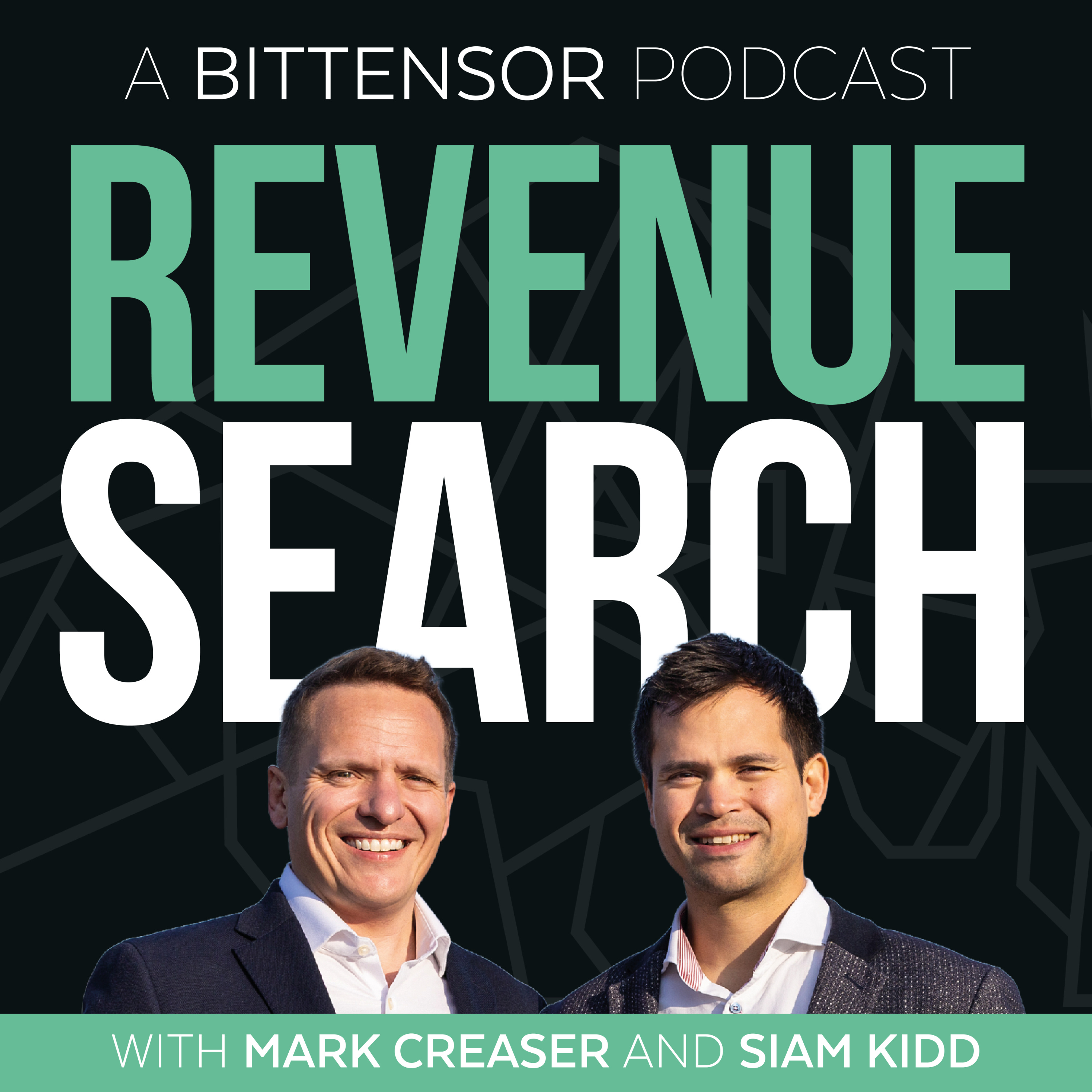
Revenue Search: Inside Bittensor
by Mark Creaser and Siam Kidd
The podcast for anyone building, investing in, or obsessed with Bittensor.Hosted by Mark Creaser and Siam Kidd from DSV Fund, Revenue Search goes inside the subnets to ask the important questions about revenue - not just hype. If you’re betting on the future of distributed AI - or building it - this is your signal.
-
67
Subnet Session with Koyuki from Vocence: Subnet 78
This episode, Mark discloses that DSV is already invested in today’s subnet, but they’ll still ask the awkward questions. They bring on Koyuki (“special k”) from San Francisco, who shares her background in AI (web2 + web3), how she joined the Bittensor Foundation/OTF as Head of AI, and then dives into her slides on Subnet 78, Vocence.Koyuki pitches Vosens as a decentralized “voice intelligence layer” on Bittensor, targeting the rapidly growing voice AI market and competing with incumbents like ElevenLabs by being more open, cheaper, and driven by Bittensor incentives. She shows that Vocence already has a live studio product (TTS/STT, voice cloning/design, text-to-music, API) and outlines how miners submit models that validators score across nine dimensions (script accuracy and naturalness weighted highest), with winning models becoming the new baseline for inference. On revenue, she describes a credit-based SaaS model (consumer + API, with enterprise as the big upside), plans for buybacks into a treasury, and an emissions burn condition if no model clears a defined improvement threshold. The discussion then focuses on the “Turing test” problem for voice agents—latency, filler words, interruptions, and overlapping speech—and Koyuki claims a new “style trajectory TTS” approach will make agents sound truly human soon. Siam offers a $5,000 wager that Vocence can produce a voice agent he can’t detect as AI by the end of the month, and Koyuki accepts, with some talk about testing via a phone-call scenario and adversarial off-script questions. They wrap by noting the prior Vocence slot issues/deregistration risk and arguing this time is different due to stronger leadership, a live product, faster shipping, and early traction.
-
66
Subnet Session with Bob Wold from Quantum Compute: Subnet 48
In this episode, Bob from Subnet 48 (quantum compute) gives a grounded overview of quantum computing: huge long-term promise (materials, batteries, drug simulation), but today’s machines are still “NISQ” (noisy, intermediate-scale, not error-corrected at useful scale). Subnet 48’s pitch is essentially “Airbnb for quantum computers”—miners run real quantum workloads, users submit quantum circuits, and the network executes them cheaper than traditional access. Bob shows OpenQuantum.com as the front-end marketplace, listing multiple hardware providers (IonQ, Rigetti, IQM, AQT) with current machines in the ~20–50 qubit range, and explains that most jobs on OpenQuantum are being executed via Subnet 48.The conversation then veers into the big scary question: quantum risk to crypto. Bob distinguishes SHA-256 (mining) from elliptic curve cryptography (ownership/signing) and argues the nearer-term threat isn’t quantum “mining Bitcoin faster,” but breaking signature security unless chains migrate to post-quantum schemes. He mentions industry roadmaps and research suggesting timelines could be tighter than people assume, and plugs Subnet 63 (Enigma)—a prize-driven subnet designed to incentivize public breakthroughs in cryptography rather than vague claims.
-
65
Subnet Session with Aldo de Pape from NIOME: Subnet 55
In this Revenue Search episode, the hosts sit down with Aldo from Subnet 55 (NIOME / “Neural Intelligence in Omics”)—a project tackling one of the messiest problems in biotech: how to make genomic/biodata usable for research and AI without turning it into a privacy and cybersecurity nightmare. Aldo walks through why the status quo is broken, pointing to repeated breaches and misuse across the industry (from direct-to-consumer testing firms to major institutions), and makes the case that “compliance” doesn’t equal “security” when hackers are actively targeting sensitive health data.NIOME’s approach is twofold. First, through the wider genomes.io ecosystem, individuals can store their DNA data in encrypted “vaults” where the user remains the owner and controls access—rather than handing away rights to hospitals or platforms. Second, the subnet’s core mission is to generate synthetic genomic / biodata at scale—so pharma, biotech, and researchers can train models and run analyses without exposing raw identifiable datasets. The roadmap is built around a structured series of predictive challenges (starting with cystic fibrosis / CFTR), with commercial interest already forming around bespoke challenges, licensing outputs, and data brokerage partnerships (e.g., bringing external datasets into the synthetic pipeline and sharing revenue when that data is used). The big idea: make biodata safe, precise, and scalable and use Bittensor’s open, inspectable “under-the-hood” model development to build trust versus black-box approaches.
-
64
Subnet Session with Jake & Alex from HODL: Subnet 118
This episode brings the long-awaited sequel with Jake (Investing 88) and Alex (Trusted Stake). They recap how the two teams teamed up to build Subnet 118 / HODL, a joint venture focused on making subnet investing less painful by reducing slippage, improving liquidity, and smoothing out the constant rotation/volatility that comes from trading directly against shallow alpha pools.The core product is the HODL Exchange: a secondary-market style, automated escrow/order-book layer that lets users buy and sell TAO ↔ alpha with far less price impact than the native AMM pools. Instead of “one big swap” causing huge slippage, orders can be partially filled over time by counterparties (including incentivised market makers / IMMs) who earn subnet emissions for providing fill volume, plus there’s a private-order option for direct counterparties. The plan is to introduce a dynamic fee model that charges a small share of the slippage saved (e.g., taking ~15% of the saved slippage so users still keep ~85% of the benefit), with fees after OPEX used for buybacks. They also discuss how this matters even more if the subnet cap rises and liquidity gets thinner across more subnets.
-
63
Subnet Session with Josh from Green Compute: Subnet 110
Revenue Search returns with the usual chaos and banter, then introduces Josh and the launch of Green Compute—a new Bittensor compute subnet designed specifically for enterprise-grade inference workloads. Josh shares his background building and selling GPU infrastructure in the UK since 2017, and explains that Green Compute plugs into an already-profitable compute business with existing customers, contracts, and deployment experience—so the subnet isn’t starting from zero.The core thesis: bring data centers to constrained renewable energy. Across the UK (and beyond), farms and renewable sites often generate power the grid can’t accept—so it’s wasted. Green Compute turns that stranded power (solar, wind, hydro, and especially anaerobic digestion / biogas) into usable AI compute, offering site owners far higher returns than exporting electricity back to the grid. Unlike “spot” compute markets, Green Compute is aiming at longer-term, high-volume enterprise deals that require symmetry (large clusters of identical GPUs, networking, CPUs/RAM/storage) plus real human support (sales + engineers) and predictable uptime—things many existing marketplaces struggle to guarantee.They also touch on tokenomics and onboarding: compute can be bought with fiat, but the goal is to push real-world customers toward paying via subnet alpha over time (creating buy pressure). Mining is gated by standards (e.g., high-bandwidth connectivity and matching hardware) to meet enterprise requirements, with a process for miners to apply and be verified—including the “green” power source. The team plans to update naming/branding and community channels shortly, with more details and access via the Green Compute website.
-
62
Subnet Session with Arshum, Dimitri & Max from Bitrecs: Subnet 122
Revenue Search returns with the usual banter (and a bit of tech lag) before welcoming Bitrecs (Subnet 122)—a small, doxxed team building an LLM-powered product recommendation engine for e-commerce, starting with Shopify. Dimitri (CEO), Max (CTO) and Arsham (CRO) explain how their widget boosts store performance by generating smarter “you might also like” suggestions, then cleaning messy LLM outputs with a consensus/ranking layer. They show live examples on real stores, including a unique feature: explanations (“reasoning”) displayed to end-users for why each recommendation was chosen.They also introduce Bitrecs V2, which separates the product into a fast Web2 inference layer (serving real-time recommendations) and a Bittensor “intelligence” layer where miners compete in a winner-take-all prompt-template (“artifact”) evolution game. Bitrecs shares business traction (~130 customers), metrics (avg ~$32/month ARPU, ~$75 CAC, ~1% lift so far with a goal of 2–5%+), and a clear growth plan: deploy a six-figure marketing budget, aim for ~1,000 stores, ship a self-serve API for non-Shopify/enterprise use, and (once trust + lift improve) transition toward performance-based billing / revenue share so stores pay only on measurable uplift.
-
61
Subnet Session with Jose from Yanez & Ken from BitMind: Subnet 54 and 34
Revenue Search is back after the Bittensor San Francisco event, and this episode is a first: a dual-subnet session with Yanez (SN54) and BitMind (SN34). Jose and Ken announce a partnership aimed at tackling the rapidly growing threat of deepfake-driven identity fraud—the kind of attacks that can bypass KYC, liveness checks, and even enable high-value social engineering scams.In short: Yanez produces high-fidelity, well-annotated synthetic identity/face data and attack vectors, and BitMind uses that to train and improve face-focused deepfake detection models via their subnet. They’ll take the combined “data + detection” stack to enterprise customers (financial institutions and identity providers), typically via licensing/usage-based deals, with both teams reinforcing that real-world revenue supports their subnets (including alpha buybacks into treasury) while keeping flexibility for future DeFi/treasury use.
-
60
Subnet Session with Seby from RESI: Subnet 46
This episode starts with Siam and Mark chatting about TAO going “more mainstream,” name-dropping Jason Calacanis’ interest and sharing Const’s reminder that TAO/Bittensor ultimately stands on Bitcoin’s groundwork. They briefly recap recent ecosystem happenings (Bitstarter’s TAO Ads launch for Subnet 21 and their upcoming San Francisco trip), then bring on a returning guest from Resi (Subnet 46) to share a major product expansion.Seby explains RESI as a real-estate “oracle” network: miners produce and the team verifies highly accurate property valuation models (already available via Chutes for cheap inference). The big update is RESI Finance, a lending/tokenization layer built on top of that oracle. The core idea: instead of slow/expensive “tokenize your whole house” structures, RESI tokenizes liens/charges (mortgage-like claims) because they’re standard, easier legally, and safer. They claim they’ve reduced tokenization overhead from roughly $2,000 and weeks to about $200 and ~2 days, with the fee covering real-world checks (title verification, signatures/DocuSign, notary, and recording the lien) before any tokens can be minted.They compare the model to Figure HELOC (a large mortgage-backed stablecoin business): investors deposit USDC into a vault and receive a receipt token, while homeowners borrow against home equity; loans are later bundled/sold (MBS-style) and fees/interest create yield. RESI’s version mirrors this: investors deposit USDC and receive an “rUSD”-style receipt token with target yield; homeowners either (a) sell small slices of property exposure and/or (b) borrow against tokenized property collateral at lower rates (e.g., ~5%). The “looping” concept is using cheap borrowing against a yielding property to lever returns (e.g., reinvest borrowed funds to lift effective yield toward 20–30%+), with the oracle’s live pricing enabling liquidations/risk control.
-
59
Talking Tao: with Mark & Siam
This hosts-only “Revenue Search” episode is a casual catch-up where Siam and Mark answer live chat questions and discuss Bittensor’s bigger picture. They explain that accepting fiat for subnet services doesn’t bypass alpha value—fiat typically routes into TAO and then through liquidity pools—and that long-term alpha appreciation depends on each subnet’s “alphanomics,” mainly revenue-funded buybacks and/or getting miners to lock up alpha (with Chutes and Hippias cited as strong examples). They then talk about why they pitch Bittensor as “not really crypto” to newcomers (it uses blockchain as a coordination/resource-allocation layer for AI), compare Bittensor’s growth vs Bitcoin, and touch on rehypothecation risks as markets mature.They also cover TaoFlow and subnet churn (registration cadence, deregistration “relegation,” and why they don’t want more than 128 slots yet due to chain bloat and diluted incentives), plus investing views like TAO vs a broad basket of subnets depending on how active you plan to be. A major section focuses on agents: Siam describes building his OpenClaw agent (“Gordy”) with SOPs and tools, and they argue agents will increasingly discover and use Bittensor services. That leads into Handshake as an agent payment/provisioning layer with “providers” (APIs/services) and “skills” (prebuilt workflows), plus efforts to reduce friction like gas issues. They briefly touch on Astrid Arena (agents competing in trading challenges), OTC/Bitstarter deal-making and onboarding new talent, and wrap with a few quick audience questions and upcoming Bittensor social events (London, then San Francisco).
-
58
Subnet Session with Tommi from MVTRX: Subnet 79
This session begins with Mark and Siam chatting about a proposed new Bittensor “shorting mechanism” aimed at punishing malicious or gaming subnets by letting markets drive their alpha toward zero and trigger deregistration—while flagging obvious risks like self-shorting by subnet owners and the broader concern that changing market rules can make the ecosystem feel less investable. They then bring on Tommi from Subnet 79 (rebranded from “Taos” to “MVTRX”), who explains they’re building a state-of-the-art exchange for Bittensor dTAO/alpha tokens, paired with a sophisticated sandbox simulation framework (C++/Rust) where miners can test trading algorithms under many parallel, realistic limit-order-book simulations before deploying to live trading. The core problem they’re tackling is that alpha markets can be illiquid and risky—especially during “black swan” events—so they want to improve liquidity, reduce slippage, and enable larger players to manage/rebalance portfolios more efficiently using advanced order types and a dynamic incentive model that shifts rewards/fees between makers and takers depending on market conditions (e.g., paying makers more during crash-like imbalances to stabilize markets). On monetization, Tommi outlines two revenue streams: (1) exchange fees from live trading (a steady flow) and (2) selling high-fidelity simulated high-frequency/L3 order book data (chunkier, periodic revenue), with an expectation of beta access for miners and broader user/UI growth later in the year; he also notes revenue would likely be split between buybacks (roughly ~25–50%) and ongoing development rather than burning.
-
57
Subnet Session with Roger & Patrick from Vericore: Subnet 70
In this Revenue Search session, Mark and Siam open with a quick macro discussion about escalating conflict in the Middle East, the Strait of Hormuz risk, oil spikes, and how that could affect inflation, rate cuts, and global “printing” dynamics—then pivot to why war-time social media becomes a firehose of fake or misleading footage, setting up the day’s guest: Vericore (Subnet 70). Vericore is presented as “community notes on steroids”: miners research specific claims and return an auditable evidence trail with semantic scoring (e.g., supports/refutes a claim, confidence, and left/right leaning), intentionally surfacing varied and even conflicting sources to break echo chambers. The team explains how evidence quality is judged (cross-source corroboration, source weighting/whitelisting for reputable outlets and academic papers, and plans to back-test research once outcomes resolve), and how the product can plug into agent “harnesses” via API/Handshake so bots (including OpenClaw-style agents) can use it as an honesty/unbias layer. On monetization, they discuss charging per API call, building a personalized “Signal” product, lead-gen around prediction markets, and exploring a prediction-market fund/competition where a large share (at least ~50% or potentially all) of profits loops back into subnet token buybacks—while noting current bottlenecks are API speed/performance and structuring the fund, plus balancing building real product vs hype.
-
56
Subnet Session with Mitch & Mikel from TAO Private Network: Subnet 65
In this Revenue Search episode, Mark and Siam open with TAO-market chatter and why decentralized AI ≠ generic crypto before welcoming the team behind Subnet 65 to unveil the TAO Private Network (TPN) and its premium consumer app, WhaleSurf—a VPN/proxy stack built on Bittensor that emphasizes difficult-to-detect residential routes, unlimited devices, and perks, targeting crypto and active traders who struggle with platforms flagging datacenter IPs (e.g., MEXC, Netflix, Amazon Prime Video). They contrast this with incumbents like NordVPN and Surfshark, outline a developer-facing SOCKS5/HTTP proxy API for agents (think OpenClaw) and scraping, and explain monetization: creator-led acquisition, a higher-price-but-better-routing pitch, centralized billing via Stripe, and future subnet buybacks rather than selling emissions; 2,000 paying users would cover OPEX. The hosts also push clearer positioning (“for crypto/traders” dog-whistle copy), suggest testimonials, and note perks akin to Revolut; launch status is iOS/Android now with desktop coming, and a temporary 70% “WHALEWELCOME” code is mentioned.
-
55
Subnet Session with Marc from Numinous: Subnet 6
In this Revenue Search episode, Mark and Siam swap notes on wrangling OpenClaw (shout-out to Mark Jeffrey successfully mining SN33) before welcoming Marc to unpack Numinous (SN6)—a forecasting subnet on Bittensor that rewards agent/miner code via category leaderboards (prediction markets, geopolitics, sports, macro) scored with Brier metrics and evolving from winner-takes-all to reward pools. He previews Eversight, a chat/UI and API for traders and hedge funds (think research companion for Polymarket) with subsidized API calls, planned buybacks and possible alpha lockups; integrations include Shoots, VeriCore, and future ties to Data Universe (SN13). A dashboard teaser shows top miners outperforming a Gemini baseline; Q&A covers event creation and horizons, anti-copy measures, and launch timing “this week,” all wrapped in the show’s usual banter.
-
54
Talking Tao: with Gustave from Mentat Minds
In this session Siam and Mark banter about experimenting with a Mac mini/“Claude bot” and runaway token costs before interviewing Gustave from Mentat Minds about their non-custodial way to allocate TAO into Bittensor subnets via themed index baskets (e.g., prediction/inference), a “Sum of Subnets” product, price-weighted entries with optional monthly rebalancing, and a 9% fee taken only from staking yield; they cover validator selection, user mix, roadmap (more verticals and curated third-party strategies), and address questions on licensing and fees, while the hosts share a portfolio philosophy favoring asymmetric, lower-price subnets near dereg floors and monitoring chain-buy flows for rotation.
-
53
Talking Tao: with Shak from Ridges
Mark and Siam return after a break with a surprise guest: Shaq from Ridges. They recap Davos/AI House meetings (Chris, Etienne, Max), then explain how they partner with Bitstarter to vet code and teams (Quasar as the first collab, later incubated by Const). They’ve been buying/minting slots—including freshly minted subnet 99 (“99 Problems”)—and are actively placing strong teams. Shak joins to unpack the Ridges × Latent Holdings move: not an exit from the tensor but a “full-stack” combo to speed shipping (tensor + incentives + product/GTM), keep beta quality high, and aim for an end-to-end “wow” launch that can go viral. Lesson learned: don’t run two-week “announcement of an announcement” hype cycles. DSV signals conviction with another 700 TAO into Ridges. The hosts then update on Astrid: they acquired and rebranded the TauFi bridge (“Astrid Bridge”), which earns ~$1–2k/day in fees; Astrid will use multiple incentive mechanisms (Bridge, Vault liquidity sink, and Arena) and gradually rebalance emissions as features harden. On network mechanics, they like the current cap + dereg pressure; new subnet price decay is now ~1.7 TAO/hour (so new regs about weekly), which keeps builders accountable. Exploit’s flagship event moves from the U.S. to a likely Canada date in Sep/Oct, with a smaller meetup still happening—DSV will attend. Quick shout-outs: Mark Jeffrey’s “State of TAU”; Synth’s API (they’re auto-trading Polymarket and adding equities—DSV’s wiring it up); Vericore (decentralized “Community Notes”); Shoots serverless compute showing solid payments/buybacks; LeadPoet passing 1M intent leads; and Score’s momentum (Sky Sports splash, Monaco demo, senior hires). They close by inviting subnet owners to come on Revenue Search and urging the community to funnel promising teams to DSV/Bitstarter.
-
52
Subnet Session with Felix from Tensorprox: Subnet 91
Mark and Siam kick off the first Revenue Search of 2026 and bring on Felix from subnet 91, Tensorprox. A decentralized “bouncer” layer that sits between clients and servers to stop DDoS and bad traffic while keeping legitimate requests flowing; it onboards in minutes (auto-detects ports), is paid in fiat, bills in 15-minute increments (~$0.07; roughly $200/month for 100 Mbps), and aims to be more resilient than centralized providers like Cloudflare/AWS via miners distributed across multiple clouds. Felix outlines target customers (infrastructure/GPU providers, web3/crypto projects, AI startups), referral-based sales, possible OpenAI marketplace distribution, near-term scaling (effectively unlimited with IPv6), and a plan to channel revenue—after taxes/OPEX—into TAO/alpha buybacks held in a treasury that stakes and shares rewards with loyal holders. Longer term, Tensorprox will add higher-margin app-layer security (WAF, bot management, data validation) and potentially host always-on services from other subnets; the hosts encourage outreach to subnets hit by DDoS.
-
51
Talking Tao: with Yoav, Garrett and Gyles from Tao.com
The hosts open with travel/gossip (Mark dialing in from Dubai) and a firm PSA about why they won’t confirm wallet/subnet rumours, They then bring on Yoav, Garrett and Gyles from Tensor Group to debut tao.com, a rebuilt Bittensor wallet (iOS live now; Android targeted for Q1) that makes onboarding dead simple: fiat/TAO toggles, in-app TAO purchase via Coinbase Pay (debit or Coinbase), one-tap staking (abstracts “root/validators”), biometric Secure Enclave keys, clean portfolio/history, and rich subnet pages (stats, team, roadmap, news, search/sort) designed to drive conviction; UK rollout awaits FCA tweaks while US users can update today, CSV export/desktop and Ledger-style “power user” features are planned, and subnet teams will be able to self-manage profiles and potentially promote content; the group discusses growth levers (recommendations, short founder videos, category labels, “did-you-know” hooks), a playful idea of tiny “starter alpha,” and a serious unmet need for institutional/custodial support so PLCs can hold alpha, with Tensor saying they’re self-funded (validator/mining), now raising to scale the broader tao.com/Tensor stack.
-
50
Subnet Session with Akshat from Dippy: Subnet 11
Mark and Siam open with a candid TAO update (over-levered loans due, price drawdown, macro notes on TGA and QT) then bring on Akshat from Dippy, who explains Dippy as an AI-friend entertainment app (~8.6M users, ~1 hr/day engagement) adding tap-to-video (not real-time yet) and imminently voice calls; Dippy now runs all text inference on Bittensor SN-4 (Targon) via a six-figure deal and is pivoting SN-11 into a fast, cheap media-inference “studio” (deterministic TensorRT pipeline), currently serving ~2% of Dippy images with plans to ramp to 100% and open a self-serve API; they’ll resume consistent SN-11 alpha buybacks by redirecting $5–10k/month formerly spent on centralized providers, outline 18+ moderation/privacy measures, note revenue of ~$40–60k/month while prioritizing retention and future in-message ads, and share a longer-term vision for interactive “generative worlds,” plus team hiring and platform constraints (Android feasible “Jarvis,” iOS restricted).
-
49
Subnet Session with Max from Score: Subnet 44
Mark and Siam join Max (Score / Subnet 44) for an update on Score’s shift from “just sports” to a broad computer-vision platform: they’ve built a new incentive mechanism that uses VLMs to generate pseudo-ground-truth and run twin tracks—an open, verifiable Hugging Face competition and a private client track—driving rapid gains toward a football “gold line” benchmark. Score’s first featured client, cricket strategist Nathan Leamon (Cards), explains how Score will replicate/extend Hawkeye-style ball-tracking from standard broadcast footage and power decisions from scouting/auctions through in-game tactics. Max outlines real-world uses beyond sport (petrol forecourts, retail, fruit grading, car washes), a 60-day trial motion to win enterprise data and contracts, and the upcoming “vision GPT” product where an agent reads video, recommends/dispatches models as subnet tasks, and ties revenue to ALPHA via a burn-and-mint “scoronomics” loop. The team notes a fresh DSV/Astrid-127 OTC with Score, and—crucially—Score’s first recurring five-figure invoice, underscoring real revenue traction.
-
48
Subnet Session with Rizzo from Talisman AI: Subnet 45
A lively Revenue Search with guest Greg “Rizzo” unveiling two big threads: first, Subnet 45’s partnership with Talisman to turn its crypto wallet into an AI-augmented “smart” wallet—miners pull sentiment/relevance signals (e.g., via Subnet 64 and Data Universe), users set voice/dictation trading triggers (DCA, limit/TP/SL, on-chain events), with security handled via smart contracts and ledger/iOS support; revenue flows from tool usage and a share of Talisman trading fees earmarked for buy-and-burn. Second, Rizzo + DNA are forming a community-driven, NASDAQ-listed Digital Asset Treasury (target size ~$300M): subnet owners can contribute ALPHA for locked 3–5 year treasury holdings and receive equity, easing sell-pressure; an “Avengers” advisory group of OGs will guide treasury deployment while validator ops and Subnets 20/45 serve as revenue-generating businesses. The session closes with Q&A on copy trading, detailed on-chain metrics/triggers, onboarding newer subnets, and candid takes on TAOFlow’s implications for research subnets.
-
47
Subnet Session with LeadPoet: Subnet 71.mp4
A live, on-location Revenue Search featuring LeadPoet, a Bittensor-powered subnet/product that automates outbound sales by crowdsourcing high-quality leads from miners, validating them, and selling them to clients—initially via sales agencies for scale. The model gates access by burning alpha, creating a flywheel (more demand → larger reward pool → tougher competition → better data → more demand) and plans to evolve from selling leads to booking meetings. Early pricing spans self-serve subscriptions, volume API, and enterprise deals, with strong emphasis on data quality, anti-gaming validation, and eventual conversion-based miner rewards via CRM integrations. Beta opens in December with an open-source qualification agent; early access targets January, with comparisons to Apollo highlighting fresher, re-validated data and broader coverage through permissionless miners.
-
46
Talking Tao: with Ala and David from Crucible Labs
After a short hiatus, Revenue Search returns with Crucible Labs: Ala and David explain why Crucible exists: do the unglamorous, high-leverage work the foundation can’t—validate and allocate, build research and investor materials (via Unsupervised Capital), ship a TAO-native wallet with an auto-allocator and Ledger support, and incubate/accelerate stronger subnets. A big theme is governance and speed: DTO changed incentives quickly by design; true decentralization is the destination, but right now rapid, iterative tweaks are vital to keep a permissionless system healthy. Their near-term North Star is onboarding capital and talent through clarity and tooling, not hype: make staking/allocating simpler, abstract complexity, and help investors and builders see where value accrues.They’re bullish that Bittensor is an “anything-incentive layer,” not just AI—and expect breakout products (e.g., dev-tools like Ridges) to pull mainstream attention and capital far more than explanations of emissions.
-
45
Subnet Session with It's AI: Subnet 32
This Revenue Search spotlights Subnet 32 “It's AI,” an AI-text detector focused on education. Founder Sergey demos a clean web app that flags AI-written passages, highlights “AI-impactful” tokens, and generates shareable reports; it also offers plagiarism checks, batch scanning, API/Moodle/Zapier integrations, with Canvas coming. Citing a new, large unified benchmark (to be presented at an AI-in-education conference), It's AI claims top average accuracy (AUC ~0.92) versus GPTZero and others. The team targets universities with B2B plans while running low-cost miner inference; early revenue (~$2k/mo) comes mostly from enterprise subscriptions. Hosts push a go-to-market pivot: niche hard into higher-ed, raise enterprise pricing, personalise outreach to ~4k U.S. institutions, and avoid “poacher vs. gamekeeper” branding conflicts with student tools.
-
44
Subnet Session with Taonado: Subnet 113
This Revenue Search features Subnet 113 (Taonado)—a non-custodial, Tornado-style privacy mixer on the Bittensor EVM. Users deposit fixed denominations (starting with 1 TAO, with 10/100 TAO pools planned), receive a secret note, and later withdraw to a fresh wallet to break linkability; miners simulate realistic flows to deepen the anonymity set and earn the subnet’s alpha. Revenue comes from ~2.5–5% mixing fees (plus gas) and “APY harvesting” by staking idle shielded capital, with an intent to auto buyback-and-burn the alpha. Contracts are a hardened Tornado fork, validation/scoring runs on-chain (no standalone validator), and the team is bootstrapping ~5,000 TAO liquidity to enable larger pools while advocating privacy-by-default across Bittensor.
-
43
Subnet Session with Tom & Will from Bitcast: Subnet 93
This Revenue Search jumps into a deep-dive with Bitcast (Tom & Will). Bitcast pitches itself not as an agency but a decentralised ad tooling layer that lets brands brief creators at scale, with AI verifying message-fit and rewards tied to real attention (watch time/eyeballs via official platform data), not vanity metrics. They share traction to date (hundreds of Bittensor videos, ~hundreds of thousands of views, big watch-time) and the blockers they’ve been fixing: a no-code miner (optional, 5% fee) to onboard non-technical creators, a social-proofed website + multilingual outreach, and a scalable “ad read” model where brands pre-fund a budget that creators draw down from—so spend can flex and is linked to measured outcomes. Near term, revenue supports the ALPHA token (currently buyback/burn), with ~40–50 TAO/month cited today and ambitions to tap much larger Web2 budgets.Will unveils Bitcast’s X (Twitter) integration: map a niche (starting with Bittensor) and compute an influence score using an endorsements graph (quotes/retweets/mentions; PageRank-style). A rolling top ~150 become eligible to mine; entry requires endorsements from those already inside, discouraging bots and low-signal spam. Quality > quantity: limited posts per brief, payouts weighted by who endorses your tweet, and brands can target specific niches/languages (e.g., dev-productivity, infra, other crypto-AI communities). Onboarding is dead simple: paste a wallet, tweet a one-time code, you’re connected. TikTok (different incentive design) comes next, followed by a self-serve ad portal so brands can set budgets, launch, and see results. Q&A covers collusion risks (mitigated by breadth/weights), creator incentives (APY/education; fiat off-ramps likely later), and expansion beyond crypto.
-
42
Talking TAO: Mark & Siam chat!
Siam kicks off by revealing a commissioned Bittensor artwork (“Michealeagτao”) he’s gifting to Const, then he and Mark run a no-guest AMA. They cover near-term market timing (expecting the bigger move into late-2025), the risk to compute subnets if TAO fell sharply (miner exodus) versus a healthier ecosystem at higher TAO, and how funding really follows credible, revenue-led plans (examples: Targon, sundae_bar, Shak recycling ~$1.4M into growth). A big chunk focuses on the TAO halving: pools fill more slowly so volatility rises for thinner subnets; historically halvings are “nothing-burgers” day-of, with the impact compounding over time.They dig into alphanomics: buyback-and-burn is simple but building a digital asset (alpha) treasury that compounds—and can be borrowed against—is often stronger. Siam runs quick yield math (e.g., Apex’s high APY) to show how accumulating alpha can 4–12× holdings over a few years even before price moves. They expect more “captive demand” models (hold alpha for access), validators and front-ends to package subnet services, and ultimately a power-law leaderboard (S&P-style concentration). DSV’s approach: partner for the long term, avoid short-term rotation, prioritize force-multiplying subnets (e.g., Hippius storage, LeadPoet leads) and real revenue. They close with basics on DSV (min ~$50k; regulated) and promise more Revenue Search sessions.
-
41
Talking Tao: with Victor Teixeira from General TAO Ventures
Victor Teixeira (General TAO Ventures) traces his path from Contango Digital’s $10M blockchain–AI fund to becoming a full-stack Bittensor operator — incubating or advising multiple subnets (e.g., 23, Red Team, TPN), running the Round Table validator, and mining across the stack. He spotlights Subnet 35 (“Cartha”), an FX perp DEX co-built with Taoshi (Subnet 8): miners are either LPs or trader-miners; trading generates fees of which 50% go to LP miners and 40% go to vote-escrowed alpha holders as USDC dividends (weekly), creating aligned “alphanomics” that reduce sell pressure and reward real usage.The broader discussion centres on revenue-first sustainability in the post-DTAO world. Buyback-and-burn isn’t dismissed, but Victor argues subnets should prioritise tangible earnings, robust VE models, and even prefunding/VC capital to bridge idea→revenue—plus new tools like lending against owner keys. With the TAO halving likely to thin liquidity growth per block, they expect more volatility (especially for smaller pools) and a premium on subnets that can fund OPEX, miner/validator sell-side, and sustain top-leaderboard emissions via real customers. For guest wish-lists to bring fresh eyeballs into BitTensor, Victor suggests Barry Silbert and Ejaz (Bankless)—and generally “everyone,” because mainstream adoption arrives when users benefit from Bittensor under the hood without even noticing.
-
40
Subnet Session with Brendan Playford from Gopher: Subnet 42
Gopher (ex-Masa) / Subnet 42 provides cryptographically verified, AI-ready data via a network of ~256 miners running trusted execution environments to scrape and normalise web/X/Reddit/TikTok plus large financial price feeds. Devs use a UI + API (credit-based billing) and a built-in vector DB to aggregate/search topics and power apps. Traction: ~77k users across products (≈54k on AI Insights; ≈20k on a new trading tool), ~$1M ARR, ~1k paying on the trading app launched ~2 weeks ago. That app ingests multi-timeframe price data, generates trade setups, and can execute on Hyperliquid; team claims ~65% win rate with ~1:4 risk-reward on internal accounts and will publish on-chain trading wallets.Strategy & token alignment: Gopher is migrating Masa to a Cosmos L1 (“Gopher”) focused on data aggregation/apps (Q1 launch target). Subnet 42 remains the data engine; enterprise and app customers pay fiat credits, and usage-based revenue from Gopher’s stack flows to SN42 for the data it supplies. The plan is for Alpha holders on SN42 to govern revenue use (buybacks, treasury, growth, etc.), keeping value with the miners who create it. Near-term focus: expand financial feeds (~100k assets), improve low-latency delivery (~26 ms), add social/news signals into trading, and explore a fund/vaults that trade the signals—while continuing to court market makers, prop funds, and other subnets that need dependable, verifiable data.
-
39
Subnet Session with Mog & Gareth from Vidaio: SN 85
Vidaio (Subnet 85) does AI video upscaling (SD → HD/4K) and compression (dramatically smaller files with similar perceived quality). Their consumer web app is live in beta—demo showed ~95% size reduction—with paid tiers coming (think ~$0.05/min, ~75% margins). Beyond creators, the big targets are streamers/broadcasters, legacy libraries, security/medical, and autonomous fleets—anyone drowning in storage/CDN costs. Near-term roadmap adds a streaming pipeline (auto encoding ladders + Hippius storage), plus R&D on colorization and selective video generation/inpainting.For enterprises needing NDAs and tighter control, Vidaio introduced an Enterprise Track: vetted “Elite miners” execute jobs off-subnet; clients pay fiat split roughly ~75% to miners / ~25% to Vidaio. Miners must post an AlphaBond—locking ~50% of their fiat payout equivalent in ALPHA until client acceptance—creating ALPHA demand/lockups while miners get fiat to cover infra (less sell pressure). Vidaio’s cut first covers OPEX, with surplus flexed between buybacks, product, and growth. Benchmark goals: surpass Topaz Labs (~$8.3M/yr consumer) and Visionular (~$10.5M/yr enterprise) while keeping the subnet as the innovation engine.
-
38
Subnet Session with Seby Rubino from RESI: Subnet 46
AWS went down, so we kicked it old-school on Zoom with Seby (RESI, Subnet 46). Quick refresher: RESI is building a real-estate oracle—unlocking U.S. property data and on-chain intelligence for lenders, DeFi/fractional RE, and proptech. Seby walked through fresh updates: a new white paper and alphanomics, DSV added to their OTC stack, V2 moves from APIs to scraping (cheaper for validators), V3 splits the subnet into data, inference, and storage (with Hippius) so prompts like “price this home from its inspection” fetch comps, analyze reports, and persist results. A public dashboard is rolling out, and go-to-market leans on IDX-style white-label portals for brokerages to drive viral distribution.On revenue, RESI’s already selling Predict CASA data packs via a paid funnel (Meta ads → two-call close) and tightening the machine with hires and higher spend; the Oracle appraisals target fractionalized/DeFi real estate at $500 setup + $100/mo. Alphanomics is pure-alpha (no new token): stake for pricing tiers, LP with alpha for deeper discounts, and a planned sidechain where gas/wrapped-alpha and LP incentives amplify buy pressure as builders launch on top. TL;DR—Resi’s shipping product, lining up customers, and scaling a sales engine to convert leads into buybacks while turning a locked market into composable, on-chain real-estate intelligence.
-
37
Subnet Session with Jill Kenney from sundae_bar - Subnet 121
Mark and Siam sit down with Jill Kenney, CEO of sundae_bar (Subnet 121)—a publicly listed (AIM: ESBAR) AI agent marketplace that lets developers list, host, and monetise agents while businesses buy ready-to-use or customised agents for workflows (HR, sales, ops, etc.). The twist:tsundae_bar uses its BitTensor subnet as a supply engine—briefs (from users/miners) are voted on, miners build against them, validators/humans quality-check, and top agents get boosted in sundae_bar's search. Payments are live, early agents/templates (e.g., from LETA and NAT) can be deployed now, and the platform is builder-agnostic (they aim to integrate more builders like AgentKit once stable). For enterprises needing ring-fenced deployments, bespoke off-market builds are on the roadmap.The business model is classic marketplace: a take rate on sales, ads/featured placement, and hosting/analytics fees—with a portion earmarked for alpha buybacks and an employee alpha treasury, reinforcing the subnet’s emissions flywheel. Because sundae_bar is a PLC, it can raise capital to accelerate growth while the subnet channels top dev talent into the store. Big picture: make agents dead-simple to find, test, and deploy so a solo founder or a KPMG-scale team can stitch together a digital workforce—today via templates, soon via end-to-end customizable agents that “just work.”
-
36
Subnet Session with Aurelius: Subnet 37
Mark and Siam sit down with Austin, founder of Aurelius (SN37)—an AI-alignment subnet built on Bittensor. In plain English: training gives models knowledge; alignment adds wisdom. Aurelius tackles the “alignment faking” problem by decentralising how alignment data is created and judged. Miners red-team models to generate high-resolution synthetic alignment data; validators score it against a living “constitution” (beyond simple Helpful-Honest-Harmless), aiming to pierce the model’s latent space and reliably shape behaviour. The goal is to package enterprise-grade, fine-tuning datasets (think safer, less hallucinatory chatbots and agents), publish results, and prove uplift—then sell into enterprises and researchers while exploring a token-gated data marketplace and governance over the evolving constitutions.They cover why this matters (AGI timelines shrinking, opaque lab pipelines), what’s hard (verifying real inference, building a market), and how BitTensor gives an edge (cheap, diversified data generation vs centralised labs). Near-term: ship a proof-of-concept dataset, harden LLM-as-judge, expand integrations (Shoots/Targon), and stand up public benchmarks (Hugging Face, peer-reviewed studies). Longer-term: Aurelius as a decentralised “alignment watchdog” layer that continuously stress-tests frontier models and nudges them toward human values—so the future’s smartest systems aren’t just powerful, but prudent.
-
35
Subnet Session with BitQuant: Subnet 15
BitQuant (Subnet 15 by Open Gradient) wants to be your on-chain “pocket financial advisor”—chat in plain English, get analysis, and execute swaps across supported chains—all powered by a BitTensor subnet of competing miners.Guests: Matthew (ex-Two Sigma) and Advait (ex-UCL founder; PhD track) from Open Gradient. Their bigger vision: an L1 (Open Gradient) for verifiable, privacy-preserving AI agents (TEE + zkML) running on-chain. Their BitTensor product line is BitQuant (SN15): miners compete to produce higher-quality quantitative analysis and trade guidance that the frontend at bitquant.io turns into simple, chat-driven actions (discover, analyze, swap, manage risk).
-
34
Subnet Session with Sam Forman from Swap: SN10
Mark & Siam clear the rumour mill: they have helped broker Subnet 71 for a new team (funding + intros + “stabilisers”), official comms coming from the team soon.Guest Sam (Subnet 10) then lays out SN10’s mission: kill the onboarding friction. Today, a typical newcomer wrestles with wallets, TAO, bridges, and hours of steps. SN10’s cross-chain swap fixes that.
-
33
Special AMA Session with Shak from Ridges: Subnet 62
In a live Revenue Search special, Shak (Ridges) explains how they’ll shift incentives from benchmarks to real user impact: the product itself will decide who earns emissions. Ridges V1 ships as a Cursor/VS Code extension on Oct 30, 2025, priced around $12/mo (with an opt-in data tier near $8). Under the hood, validators still run SWEBench/Polyglot, but an additional step silently swaps in challenger agents for a slice of users; miners get paid only if those users accept more suggestions, need fewer fixes, and stay engaged. Recent mixed-set scores dropped from ~88% to ~17–18% when Polyglot was added, then rebounded to ~41% by Oct 6—evidence, Shaq says, that iteration speed is their edge. A full platform rewrite lands this week (stability, parallel evals, dual-sandbox on device, limited internet excluding benchmark content) and USD payouts are returning to attract company-scale competitors. Goal: grow users fast, reach revenue > emissions (targeting by January) to both disincentivize gaming and potentially fund buybacks—while remaining far cheaper than rivals.
-
32
Subnet Session with Sportstensor: Subnet 41
In this episode, Revenue Search digs into Subnet 41’s Sportstensor with Leo and Stephen (Neuromancer). Hosted by Mark and Siam, this episode unpacks how their new mechanism rewards only winning, conviction-backed flow routed to prediction markets. They lay out a Polymarket partnership where Sportstensor builds a layer on top and charges a 1% fee on traded volume, using those fees to buy back alpha and, if needed, burn it. The incentive design is anti dilutive - miners never receive more in alpha than the fees generated by their qualified volume. The team cites real results from last year’s models, plus how they previously pushed roughly half a million dollars of volume to Polymarket. Expect plain talk on guard rails, why tiny or reckless bets do not count, and why opening mining to skilled traders beyond Bittensor matters. It is a candid strategy session on aligning incentives with truth seeking markets.• NBA season result cited: 14% ROI, with MLB averaging about 5 - 6% ROI• Partnership detail: route trades to Polymarket, charge 1% on volume, fees fund alpha buybacks and burns• Mechanism claim: anti dilutive payouts capped by fees, with proof over promises and skin in the game only
-
31
Talking Tao: with Bittensor Guru Keith Singery
Siam and Mark sit down with Keith Singery, host of the Bittensor Guru podcast, who admits he once rage-quit Bittensor, only to get re-hooked a month later. Keith talks about swapping a 12-year supply chain career for psychedelic soul-searching, mushroom experiments, and finally staking his future on open intelligence. He breaks down how capital really comes into the ecosystem, why one breakout subnet will change everything, and why he puts Ridges at the front of the pack. He doesn’t sugarcoat it: deregistration will shred 40–50 subnets, only the strongest teams will survive, and price charts are a distraction compared to what holders and builders are doing. It’s a mix of confession, comedy, and hard-earned conviction from one of Bittensor’s earliest voices.
-
30
Subnet Session with Hansel Melo from Void: Subnet 31
Void AI is building the on-ramps Bittensor was missing. Hansel Melo – an early miner turned multi-subnet owner (SN27 + SN106) – lays out how Subnet 106 bridges TAO and alpha tokens to Solana now and Ethereum next, so anyone can trade with Phantom or MetaMask and plug straight into DeFi.What we cover:The simple win for users: swap TAO and subnet tokens without a Bittensor walletWhy concentrated liquidity beats V2 pools for depth and slippageHow bridging unlocks composability across Radium, Uniswap, lending, and moreThe revenue flywheel: bridge fees, staking rewards, trading fees, upcoming ARB botWhere value goes: TAO buybacks + protocol-owned liquidity to deepen markets
-
29
Subnet Session with Investing 88: Subnet 88
In this episode we sit down with the team behind Subnet 88 – Investing, a project some call the “decentralized BlackRock.” Their goal: optimized trading strategies for any asset in the world, built on Bittensor.We unpack:How Subnet 88 combines miners’ allocation tables into portfolio signalsWhy they see themselves as a decentralized Wall Street – from TAO staking to U.S. equitiesThe roadmap toward ETFs, hedge fund partnerships, and signal provision
-
28
Subnet Session with Seby Rubino from RESI: Subnet 46
Mark and Siam sat down with Seby Rubino, the 25-year-old real estate prodigy behind RESI (Subnet 46) – the subnet aiming to be “Chainlink for real estate.”Seby’s building a nationwide property database on Bittensor – decentralized, cheaper, and more open than the monopolized data silos of Attom Data. That foundation unlocks everything from an AI appraiser to on-chain real estate lending and even a stablecoin backed by property values.We covered:How RESI plans to eat Attom Data’s market shareTurning property data into prediction marketsWhy early revenues from predictive lead-gen could scale fast to $100k+ MRRIf you want to understand how Bittensor could open a trillion-dollar market, this is one to watch.
-
27
Subnet Session with Mog & Dubs from Hippius: SN75
On this episode of Revenue Search, we dive into Subnet 75 – Hippius - with Mog and Dubs. Their team is taking on cloud storage with a decentralized model that’s cheaper, faster, and more transparent than AWS, Google, or Dropbox.We cover:Why decentralized storage has never really been solved – until nowHow Hippius uses its own blockchain to align miners, revenue, and token valueWhat enterprises and subnets are already building on HippiusThis isn’t just theory – Hippius already undercuts Big Tech by orders of magnitude. If you want to understand how real-world revenue models are emerging inside Bittensor, this is the episode to hear.
-
26
Subnet Session with Giga from Desearch: Subnet 22
AI agents are only as smart as the data they can see. Giga joins us to explain how Subnet 22 is turning LLMs into real-time operators – by piping in fresh data at scale.We talk:Why real-time search is the missing layer in most agentsHow Subnet 22 is already powering live customer deploymentsThe business case for 24/7 AI sales reps (spoiler: they don’t need lunch breaks)
-
25
Talking TAO: with James Altucher
James Altucher - entrepreneur, bestselling author, early Bitcoin evangelist, and founder of TAO X - joins us to unpack why Bittensor feels like “Bitcoin in 2013,” and how decentralized incentives could upend not just AI, but entrepreneurship itself. We cover the rise of subnets, the hard truth about alpha tokens, and why value capture - not hype - will separate winners from the noise.From codified buybacks and equity linkages to miner incentives and treasury strategy, James lays out the playbook he thinks will drive real adoption: make alpha a “ticket to value,” reward performance algorithmically, and communicate like a serious business - not a research project.In this conversation, you’ll hear:How to turn alpha from a memecoin into a “ticket” that unlocks real value (algorithmic buybacks, equity share classes, staking requirements)The treasury-company playbook for TAO: tokens-per-share, staking, validators, and why equity-like mechanics matterWhat risks could stall Bittensor - and how better incentive design and clear comms de-risk them
-
24
Subnet Session with Wouter & Egill from Zeus: Subnet 18
Zeus is building a weather API that outperforms anything that’s available right now now. Miners compete to forecast temperature, wind, rain, and humidity. Validators score them, and the best predictions win. Paid API access coming very soonFirst focus: energy and commodities 50% of revenue goes to alpha buybacks.Weather forecasting is a billion dollar market, and Zeus has got an edge. Listen to the whole episode to find out how alpha holdres can capture the upside.
-
23
Subnet Session with Fred from Polaris: SN49
In this episode of Revenue Search, we sit down with Fred from Polaris (Subnet 49) - a team building what they call the “Airbnb of compute,” starting from Africa and expanding globally.Fred lays out Polaris’ mission to make GPUs and compute power accessible for universities, researchers, and builders who can’t afford Big Tech’s pricing. We dive into:Why Polaris is focused on turning idle home GPUs into a distributed compute network.Their subscription-based model (instead of a race to the bottom on hourly pricing).The roadmap for revenue, security, and scaling into a full AI infrastructure layer.From bootstrapping with loaned GPUs to pitching a $1M raise, Fred is blunt about the challenges, the mission, and why accessibility matters.
-
22
Subnet Session with Atlas from Mantis: SN123
Mark and Siam interview Atlas, the founder behind Mantis (Subnet 123) - Mantis doesn’t just score miners on their raw predictions. Instead, it measures the information value of their embeddings - rewarding miners whose signals improve the ensemble accuracy of market forecasts. Atlas walks us through:How a teenager in Costa Rica went from mining Ethereum without home internet to launching one of Bittensor’s most ambitious subnets.Why Mantis is starting with BTCUSD forecasting but already expanding into forex and metals.The challenge of turning emissions into real-world revenue - from PTN integration to potential hedge fund partnerships.How verifiable, time-locked blockchain logging could make signals truly transparent.If you want to understand how Bittensor is spawning the next generation of quant infrastructure this is one to tune into.
-
21
Talking TAO: with Mark Jeffrey
Mark Jeffrey is one of the most trusted voices in the Bittensor ecosystem, and we talk to him about the rise of subnets, what the best teams are doing right, and where many are falling short. From buybacks and dev roadmaps to communications and narrative, Mark shares how he sees the ecosystem maturing, the signals that matter, and the catalysts that could drive the next wave of adoption.In this conversation, you’ll hear:Which subnets are setting the pace - and why others are lagging behindHow buybacks, dev execution, and clear comms can make or break subnet tokensWhat catalysts could reprice Bittensor from niche protocol to mainstream AI infrastructure
-
20
Subnet Session with Jose Caldera from Yanez: SN54
In this episode of Revenue Search, we sit down with Jose Caldera, CEO of Yanez MIID (Subnet 54), to unpack how they’re using Bittensor to stress-test the world’s anti-money laundering systems - by generating fake humans. No, really.We explore how Yanez helps banks and financial institutions meet regulatory obligations by attacking their fraud systems with synthetic IDs, where Bittensor fits into that data generation process, and why their $200B market is begging for automation. Jose also shares how much revenue they’re pulling in, how they plan to reinvest in their alpha token, and whether Yanez is just here to extract - or actually building long-term value into the network.It’s compliance, but not as you know it.
-
19
Subnet Session with Shak Hussein from Ridges: SN62
Can you fire your entire engineering team and replace them with agents?Shakeel Hussein, CEO of Ridges (Subnet 62), thinks so—and he’s not joking. In this episode of Revenue Search, we dig into how Ridges is building autonomous AI agents that could make coders 100x more productive… or just make them obsolete.We break down the $400B software dev market, why most AI coding tools are running at negative 500% margins, and how Ridges is playing a different game: model-agnostic, profitable, and scaling fast. We also get into miner incentives, enterprise go-to-market, and why DSV just made its biggest OTC investment yet: $300K split between alpha and market buys.Revenue, tokenomics, competition (hi Claude), and the end of software engineering as we know it - this one’s not to be missed.
-
18
Subnet Session with Tom and Will Blears from Bitcast: SN93
In this episode, we sit down with Tom and Will, the co-founders (and brothers) behind Bitcast - the Bittensor subnet that's turning content creators into miners.Instead of hashing or training models, Bitcast miners create YouTube videos based on sponsored briefs. Brands set the agenda, creators compete for watch time, and the best-performing videos earn alpha. We dig into how the system works, who the creators are, how briefs are scored, and what safeguards are in place against low-quality or AI-spammy content. We also explore:The economics of content-as-miningMultilingual creator campaigns validated by LLMsWhy their clients (like Chutes) are getting 1,000+ hours of watch time within daysHow podcast ad reads are now being monetised via pre-rollsThe roadmap for fiat payments, better creator onboarding, and cross-chain briefsTom and Will also drop hints about their agency model, how non-Bittensor brands might use Bitcast in the future, and why they believe they're disrupting $10K/month content retainers.
No matches for "" in this podcast's transcripts.
No topics indexed yet for this podcast.
Loading reviews...
ABOUT THIS SHOW
The podcast for anyone building, investing in, or obsessed with Bittensor.Hosted by Mark Creaser and Siam Kidd from DSV Fund, Revenue Search goes inside the subnets to ask the important questions about revenue - not just hype. If you’re betting on the future of distributed AI - or building it - this is your signal.
HOSTED BY
Mark Creaser and Siam Kidd
Loading similar podcasts...
URL copied to clipboard!