
PODCAST · society
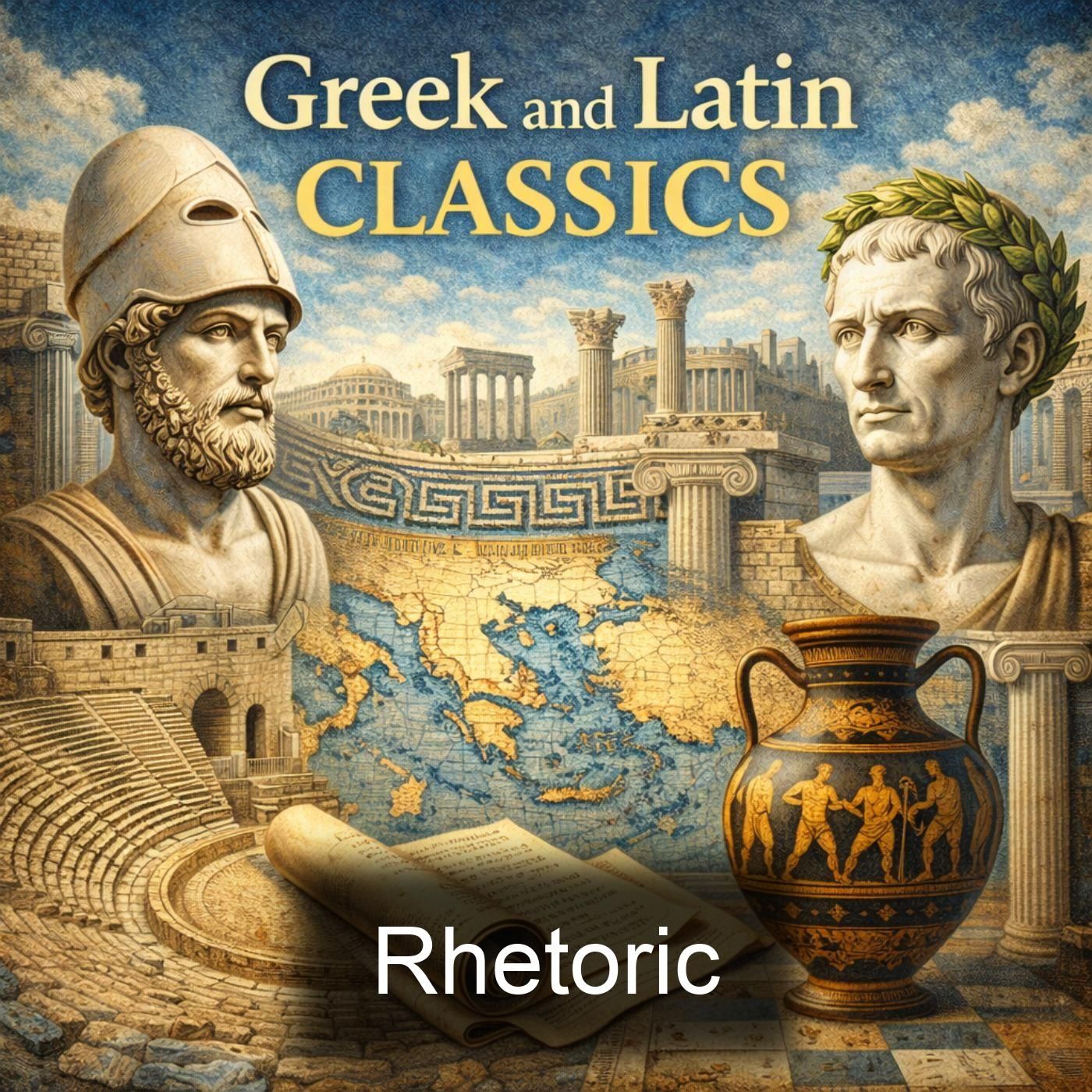
Rhetoric
by Aristotle
Explore the captivating world of Aristotles Rhetoric, penned during his time in Athens between 367 and 322 BCE. This seminal work is structured into three enlightening books. In Book I, Aristotle establishes the foundation of rhetoric, outlining its purposes and defining essential concepts while examining various contexts and types. Book II immerses you in the art of persuasion, emphasizing the three critical modes ethos (credibility), pathos (emotional appeal), and logos (logical reasoning). Finally, Book III navigates the complexities of style and arrangement, focusing on word choice, metaphor, sentence structure, and organization. Although it offers a glimpse into delivery, Aristotle encourages readers to turn to his Poetics for an in-depth exploration of that aspect. Join us as we unravel the timeless principles that continue to shape effective communication today.
-
9
009 - Book III Part 3 Chapters 15-19
Explore the captivating world of Aristotles Rhetoric, penned during his time in Athens between 367 and 322 BCE. This seminal work is structured into three enlightening books. In Book I, Aristotle establishes the foundation of rhetoric, outlining its purposes and defining essential concepts while examining various contexts and types. Book II immerses you in the art of persuasion, emphasizing the three critical modes ethos (credibility), pathos (emotional appeal), and logos (logical reasoning). Finally, Book III navigates the complexities of style and arrangement, focusing on word choice, metaphor, sentence structure, and organization. Although it offers a glimpse into delivery, Aristotle encourages readers to turn to his Poetics for an in-depth exploration of that aspect. Join us as we unravel the timeless principles that continue to shape effective communication today.
-
8
008 - Book III Part 2 Chapters 11-14
Explore the captivating world of Aristotles Rhetoric, penned during his time in Athens between 367 and 322 BCE. This seminal work is structured into three enlightening books. In Book I, Aristotle establishes the foundation of rhetoric, outlining its purposes and defining essential concepts while examining various contexts and types. Book II immerses you in the art of persuasion, emphasizing the three critical modes ethos (credibility), pathos (emotional appeal), and logos (logical reasoning). Finally, Book III navigates the complexities of style and arrangement, focusing on word choice, metaphor, sentence structure, and organization. Although it offers a glimpse into delivery, Aristotle encourages readers to turn to his Poetics for an in-depth exploration of that aspect. Join us as we unravel the timeless principles that continue to shape effective communication today.
-
7
007 - Book III Part 1 Chapters 1-10
Explore the captivating world of Aristotles Rhetoric, penned during his time in Athens between 367 and 322 BCE. This seminal work is structured into three enlightening books. In Book I, Aristotle establishes the foundation of rhetoric, outlining its purposes and defining essential concepts while examining various contexts and types. Book II immerses you in the art of persuasion, emphasizing the three critical modes ethos (credibility), pathos (emotional appeal), and logos (logical reasoning). Finally, Book III navigates the complexities of style and arrangement, focusing on word choice, metaphor, sentence structure, and organization. Although it offers a glimpse into delivery, Aristotle encourages readers to turn to his Poetics for an in-depth exploration of that aspect. Join us as we unravel the timeless principles that continue to shape effective communication today.
-
6
006 - Book II Part 3 Chapters 22-28
Explore the captivating world of Aristotles Rhetoric, penned during his time in Athens between 367 and 322 BCE. This seminal work is structured into three enlightening books. In Book I, Aristotle establishes the foundation of rhetoric, outlining its purposes and defining essential concepts while examining various contexts and types. Book II immerses you in the art of persuasion, emphasizing the three critical modes ethos (credibility), pathos (emotional appeal), and logos (logical reasoning). Finally, Book III navigates the complexities of style and arrangement, focusing on word choice, metaphor, sentence structure, and organization. Although it offers a glimpse into delivery, Aristotle encourages readers to turn to his Poetics for an in-depth exploration of that aspect. Join us as we unravel the timeless principles that continue to shape effective communication today.
-
5
005 - Book II Part 2 Chapters 10-21
Explore the captivating world of Aristotles Rhetoric, penned during his time in Athens between 367 and 322 BCE. This seminal work is structured into three enlightening books. In Book I, Aristotle establishes the foundation of rhetoric, outlining its purposes and defining essential concepts while examining various contexts and types. Book II immerses you in the art of persuasion, emphasizing the three critical modes ethos (credibility), pathos (emotional appeal), and logos (logical reasoning). Finally, Book III navigates the complexities of style and arrangement, focusing on word choice, metaphor, sentence structure, and organization. Although it offers a glimpse into delivery, Aristotle encourages readers to turn to his Poetics for an in-depth exploration of that aspect. Join us as we unravel the timeless principles that continue to shape effective communication today.
-
4
004 - Book II Part 1 Chapters 1-9
Explore the captivating world of Aristotles Rhetoric, penned during his time in Athens between 367 and 322 BCE. This seminal work is structured into three enlightening books. In Book I, Aristotle establishes the foundation of rhetoric, outlining its purposes and defining essential concepts while examining various contexts and types. Book II immerses you in the art of persuasion, emphasizing the three critical modes ethos (credibility), pathos (emotional appeal), and logos (logical reasoning). Finally, Book III navigates the complexities of style and arrangement, focusing on word choice, metaphor, sentence structure, and organization. Although it offers a glimpse into delivery, Aristotle encourages readers to turn to his Poetics for an in-depth exploration of that aspect. Join us as we unravel the timeless principles that continue to shape effective communication today.
-
3
003 - Book I Part 3 Chapters 11-16
Explore the captivating world of Aristotles Rhetoric, penned during his time in Athens between 367 and 322 BCE. This seminal work is structured into three enlightening books. In Book I, Aristotle establishes the foundation of rhetoric, outlining its purposes and defining essential concepts while examining various contexts and types. Book II immerses you in the art of persuasion, emphasizing the three critical modes ethos (credibility), pathos (emotional appeal), and logos (logical reasoning). Finally, Book III navigates the complexities of style and arrangement, focusing on word choice, metaphor, sentence structure, and organization. Although it offers a glimpse into delivery, Aristotle encourages readers to turn to his Poetics for an in-depth exploration of that aspect. Join us as we unravel the timeless principles that continue to shape effective communication today.
-
2
002 - Book I Part 2 Chapters 6-10
Explore the captivating world of Aristotles Rhetoric, penned during his time in Athens between 367 and 322 BCE. This seminal work is structured into three enlightening books. In Book I, Aristotle establishes the foundation of rhetoric, outlining its purposes and defining essential concepts while examining various contexts and types. Book II immerses you in the art of persuasion, emphasizing the three critical modes ethos (credibility), pathos (emotional appeal), and logos (logical reasoning). Finally, Book III navigates the complexities of style and arrangement, focusing on word choice, metaphor, sentence structure, and organization. Although it offers a glimpse into delivery, Aristotle encourages readers to turn to his Poetics for an in-depth exploration of that aspect. Join us as we unravel the timeless principles that continue to shape effective communication today.
-
1
001 - Book I Part 1 Chapters 1-5
Explore the captivating world of Aristotles Rhetoric, penned during his time in Athens between 367 and 322 BCE. This seminal work is structured into three enlightening books. In Book I, Aristotle establishes the foundation of rhetoric, outlining its purposes and defining essential concepts while examining various contexts and types. Book II immerses you in the art of persuasion, emphasizing the three critical modes ethos (credibility), pathos (emotional appeal), and logos (logical reasoning). Finally, Book III navigates the complexities of style and arrangement, focusing on word choice, metaphor, sentence structure, and organization. Although it offers a glimpse into delivery, Aristotle encourages readers to turn to his Poetics for an in-depth exploration of that aspect. Join us as we unravel the timeless principles that continue to shape effective communication today.
We're indexing this podcast's transcripts for the first time — this can take a minute or two. We'll show results as soon as they're ready.
No matches for "" in this podcast's transcripts.
No topics indexed yet for this podcast.
Loading reviews...
ABOUT THIS SHOW
Explore the captivating world of Aristotles Rhetoric, penned during his time in Athens between 367 and 322 BCE. This seminal work is structured into three enlightening books. In Book I, Aristotle establishes the foundation of rhetoric, outlining its purposes and defining essential concepts while examining various contexts and types. Book II immerses you in the art of persuasion, emphasizing the three critical modes ethos (credibility), pathos (emotional appeal), and logos (logical reasoning). Finally, Book III navigates the complexities of style and arrangement, focusing on word choice, metaphor, sentence structure, and organization. Although it offers a glimpse into delivery, Aristotle encourages readers to turn to his Poetics for an in-depth exploration of that aspect. Join us as we unravel the timeless principles that continue to shape effective communication today.
HOSTED BY
Aristotle
Loading similar podcasts...
URL copied to clipboard!