
PODCAST · health
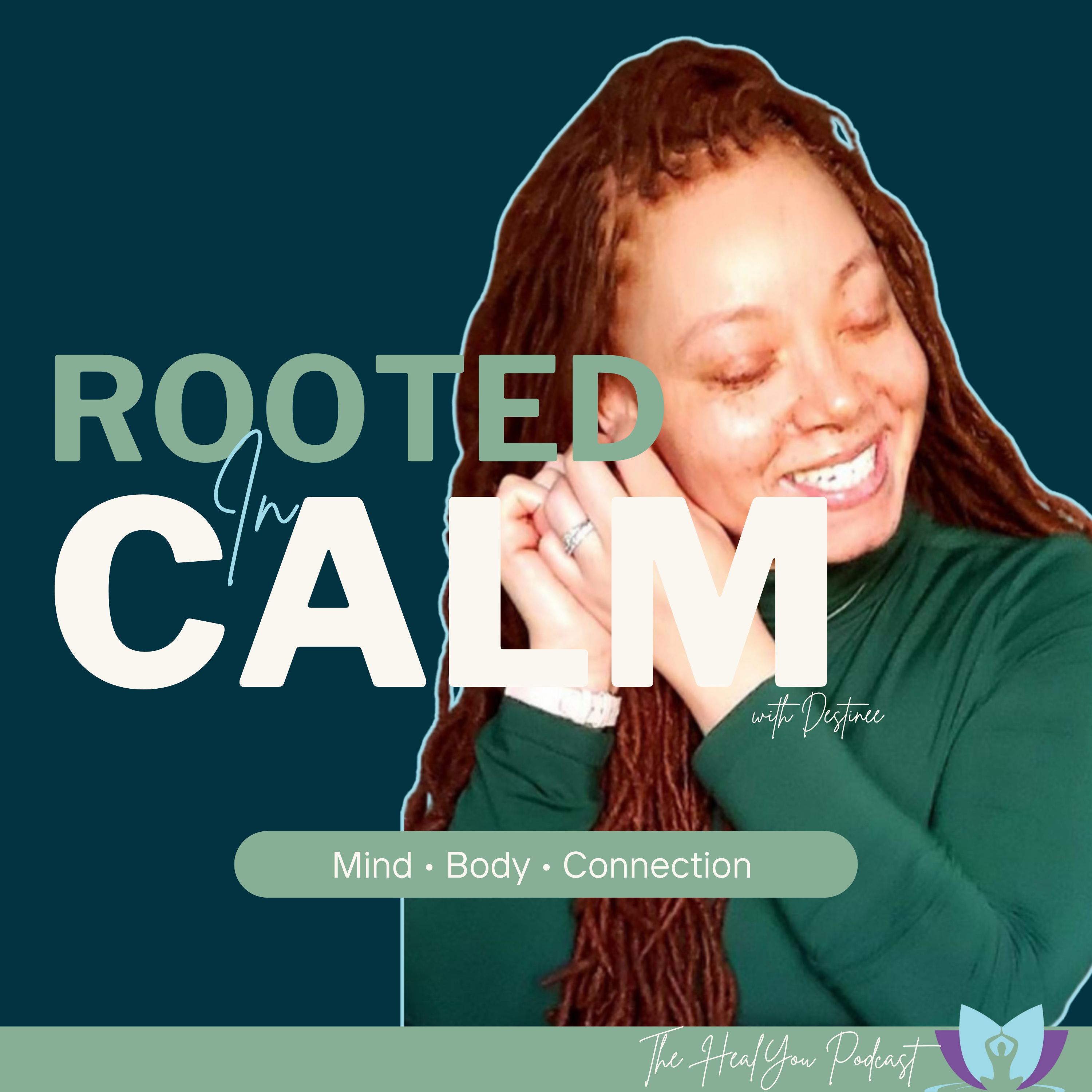
Rooted In Calm (The HealYou Podcast)
by Destinee, M.S., Integrative Nutritionist and Herbalist
Rooted In Calm (The HealYou Podcast) helps women heal stress at the root through integrative nutrition, yoga, CBT tools, and meditation. Hosted by Destinee — Nutritionist, Herbalist, Yoga Teacher, and CBT-trained specialist — this podcast blends science, psychology, and lived experience to tackle burnout, cravings, disrupted sleep, and hormonal imbalance. Each week, discover empowering insights, calming rituals, and stress-smart nutrition strategies to regulate your nervous system, restore balance, and thrive with resilience and confidence.
-
60
You’re Not Anxious — You Were Activated - Day 54 of 100 Days to Calm
If you’ve been calling yourself anxious for years, this episode may change how you see yourself.In Day 54 of Rooted In Calm, we break down the difference between identity and nervous system state — and why what you thought was your personality was actually chronic activation.You’re not broken.Your body adapted.And now, it’s learning something new.Continue the journey and download your free Stress Reset Toolkit at HealYouMD.com.This is how we stop normalizing stress — and start living rooted in calm.
-
59
Your Triggers Are Getting Quieter — Here’s Why - Day. 53 of 100 Days to Calm
If things don’t hit you as hard as they used to, that’s not random.In Day 53 of Rooted In Calm, we talk about why triggers begin to lose their intensity as your nervous system stabilizes — and what that actually means about your healing.You’re not “less emotional.”You’re more regulated.This is what growth feels like in real life.Continue the journey and download your free Stress Reset Toolkit at HealYouMD.com.This is how we stop normalizing stress — and start living rooted in calm.
-
58
Resilience Is Built in Recovery — Not Endurance - Day 52 of 100 Days to Calm
If you’re used to pushing through stress and calling that strength, this episode will shift how you see resilience.In Day 52 of Rooted In Calm, we talk about why true resilience isn’t about how much you can handle — it’s about how quickly your body can recover.You don’t need to endure more.You need to recover better.This is where your nervous system starts to feel stronger, not just busier.Continue the journey and download your free Stress Reset Toolkit at HealYouMD.com.This is how we stop normalizing stress — and start living rooted in calm.
-
57
You Don’t Need a New Personality — You Need More Capacity - Day 51 of 100 Days to Calm
If you feel like you need to become a completely different person to feel better, this episode is for you.In Day 51 of Rooted In Calm, we talk about nervous system capacity — and why consistency, calm, and emotional steadiness have nothing to do with personality.You don’t need to change who you are.You need to support how your body processes stress.This is where healing shifts from awareness to real change.Continue the journey and download your free Stress Reset Toolkit at HealYouMD.com.This is how we stop normalizing stress — and start living rooted in calm.
-
56
You’re Not Falling Apart. You’re Releasing. - Day 50 of 100 Days to Calm
Day 50 is a milestone.If emotions feel louder lately or symptoms flare when life slows down, that doesn’t mean you’re failing — it may mean your body finally feels safe enough to release.In this episode, we celebrate how far you’ve come and talk about what real nervous system healing looks like.Fifty days of choosing regulation over survival matters.Join the next phase of the journey and download your free Stress Reset Toolkit at HealYouMD.com.This is how we stop normalizing stress — and start living rooted in cal
-
55
Why Rest Feels Unsafe - Day 49 of 100 Days to Calm
If you finally slow down and suddenly feel anxious, this episode is for you.In Day 49, we explore why rest can feel threatening when stress has been your baseline. Stillness isn’t the problem — unfamiliar safety is.You’ll learn why your nervous system resists rest and how to teach it something new.Continue the journey and get your free Stress Reset Toolkit at HealYouMD.com.This is how we stop normalizing stress — and start living rooted in calm.
-
54
You’re Not Lazy — You’re in Freeze - Day 48 of 100 Days to Calm
If you know what to do but feel completely stuck, this isn’t laziness.In Day 48 of Rooted In Calm, we talk about the freeze response — the nervous system shutdown that looks like procrastination, scrolling, or losing motivation.You don’t need more discipline.You need regulation.Listen in to understand what’s happening in your body and how to gently rebuild momentum.Join the 100-day journey and download your free Stress Reset Toolkit at HealYouMD.com.This is how we stop normalizing stress — and start living rooted in calm.
-
53
Overthinking Isn’t Intelligence, It’s Stress -Day 47 of 100 Days to Calm
If your mind won’t shut off… if you replay conversations, overanalyze texts, and mentally rehearse everything you “should’ve said” — this isn’t because you’re dramatic or broken.In Day 47 of Rooted In Calm’s 100-day journey, we talk about why overthinking is often a nervous system survival pattern — not a personality trait.When the body doesn’t feel safe, the brain tries to create safety through control, prediction, and constant mental scanning. And when blood sugar is unstable or you’re running on caffeine and stress, cortisol rises and your thoughts get louder.This episode will help you understand why your brain stays on, and how to regulate your body so your mind can finally rest.TODAY’S RESETRegulate before you analyze.Eat. Hydrate. Exhale longer than you inhale.TODAY’S AFFIRMATIONMy mind gets quiet when my body feels safe.COMING UP NEXTTomorrow is Day 48, and we’re talking about why you feel guilty resting — even when you’re exhausted.Subscribe and join the journey!Healyoumd.com
-
52
Hypervigilance Isn’t Anxiety, It’s Survival -Day 46 of 100 Days to Calm
If you feel anxious in rooms where nothing is wrong… if you can’t relax until everyone else is okay… if you’re constantly scanning, anticipating, bracing — this episode is for you.In Day 46 of Rooted In Calm’s 100-day journey, we talk about hypervigilance — the nervous system pattern that keeps so many women stuck in alert mode, even when life is finally calm.Hypervigilance is not a personality trait.It’s what happens when your body learned that safety was inconsistent.In this episode, you’ll learn why your nervous system reads people and environments before your mind does, why “calm down” doesn’t work when your body still feels threatened, and how to begin teaching your system a new message: you are safe now.We also talk about why hypervigilance often shows up as overthinking, irritability, digestive issues, tension, and exhaustion — and why the solution is not more willpower.It’s more regulation.TODAY’S RESETNotice where your body stays “on duty”Choose one safety signal: food, breath, light, or stillnessPractice one long exhale and let your shoulders dropTODAY’S AFFIRMATIONMy body can soften when it learns it is safe.COMING UP NEXTTomorrow is Day 47, and we’re talking about overthinking — why your mind won’t shut off, and what your nervous system is actually trying to prevent.Each episode builds on the last.Subscribe so you don’t miss what’s next, and join the journey at HealYouMD.com. When you subscribe, you’ll receive a free Stress Reset Toolkit to support your nervous system along the way.Your body is not broken.It’s been protecting you.This is how we stop normalizing stress — and start living rooted in calm.
-
51
You Don’t Have an Anger Problem — You Have a Capacity Problem -Day 45 of 100 Days to Calm
If you’ve been snapping lately — and then feeling guilty about it — this episode is for you.In Day 45 of Rooted In Calm’s 100-day journey, we’re reframing anger.Anger is not a personality flaw.It’s often the final signal of nervous system overload.It shows up after:you’ve been hungry too longyou’ve been overstimulated too longyou’ve been under-rested too longyou’ve been saying yes when you meant noThat’s not you being “too much.”That’s you being out of capacity.In this episode, we talk about:why anger is usually unmet need energyhow unstable blood sugar lowers emotional tolerancewhy regulation has to come before communicationhow to respond to anger instead of shaming itTODAY’S PRACTICEBefore reacting, pause and ask:Am I hungry, exhausted, or overstimulated?Meet one need first.TODAY’S AFFIRMATIONMy anger is information. I respond with care.Each episode of Rooted In Calm builds on the last.Subscribe so you don’t miss what comes next, and join the journey at HealYouMD.com for your free Stress Reset Toolkit.You’re not mean.You’re maxed out.This is how we stop normalizing stress — and start living rooted in calm.
-
50
Why Valentine’s Day Feels Heavy (Even If You Don’t Want It To)
Valentine’s Day is supposed to feel romantic.But for so many women, it feels like pressure.In this episode of Rooted In Calm, we’re unpacking the hidden stress women carry on Valentine’s Day — even when they insist they “don’t care.”Because this day doesn’t just bring flowers and dinner reservations.It brings comparison.Expectation.Attachment triggers.Loneliness.Disappointment.And the quiet question many women don’t admit they’re asking:Am I chosen?Whether you’re single, partnered, married, healing from heartbreak, or simply exhausted from performing happiness, this episode will help you understand what’s actually happening inside your nervous system.We break down why Valentine’s Day can spike anxiety, irritability, cravings, emotional overwhelm, and even physical symptoms like bloating, fatigue, and PMS flares.We also talk about one of the most overlooked tools for emotional regulation on emotionally charged days:Nervous system nourishment.Because sometimes the issue isn’t your mindset.It’s that your body doesn’t feel safe.In this episode, you’ll learn:Why Valentine’s Day activates attachment wiringHow social media comparison dysregulates the nervous systemWhy single women can feel unsettled even when confidentWhy partnered women feel disappointed even when “nothing is wrong”How blood sugar instability amplifies emotional sensitivitySimple food and nervous system practices to stay groundedIf Valentine’s Day has ever made you feel reactive, overwhelmed, or unsure of yourself, this conversation will remind you:You are not broken. You are wired for connection.And you can support your nervous system through it.
-
49
Your Anxiety Gets Worse Around Certain People (And It’s Not In Your Head) -Day 44 of 100 Days to Calm
If you feel calm when you’re alone but anxious around specific people, you’re not being dramatic — your nervous system is giving you information.In Day 44 of Rooted In Calm’s 100-day journey, we’re talking about why your anxiety spikes around certain individuals, why your body tightens before they even speak, and what that reveals about emotional safety.Your nervous system doesn’t wait for words.It reads tone, energy, unpredictability, and past patterns. Some people naturally regulate you. Others activate your fight-or-flight response instantly. That’s not you “overreacting.” That’s your body remembering what your mind keeps trying to rationalize.In this episode, we talk about:why your nervous system reacts to certain people before you can explain ithow emotional unpredictability creates chronic cortisol spikeswhy you feel exhausted after certain conversationshow social stress drains your body physically, not just emotionallywhy your body relaxes around some people and braces around othersThis episode will help you stop blaming yourself for feeling anxious, and start recognizing that your body has been trying to protect you all along.TODAY’S PRACTICENotice who your body relaxes around.Pay attention to where you breathe deeper, speak easier, and don’t feel the need to perform.Then choose one way to spend more time in spaces that feel safe.TODAY’S AFFIRMATIONMy body tells the truth before my mind catches up.COMING UP NEXTTomorrow we’re talking about anger — why it’s not a personality problem, and why it’s often the final signal of emotional overload.Each episode of Rooted In Calm builds on the last.Subscribe so you don’t miss what comes next, and join the journey at HealYouMD.com. When you subscribe, you’ll receive a free Stress Reset Toolkit to support your nervous system along the way.Your anxiety is not random.It’s your body responding to what it already knows.This is how we stop normalizing stress — and start living rooted in calm.
-
48
Why Your Symptoms Flare When Life Finally Slows Down -Day 43 of 100 Days to Calm
In Day 43 of Rooted In Calm’s 100-day journey, we’re talking about why your symptoms often flare when the chaos stops, and what that actually means about your healing.When you’re busy, your nervous system stays in survival mode. It keeps you functioning, pushing, and powering through. But survival mode is not where the body processes emotions, repairs hormones, or restores the gut.Your body waits until it senses safety.And when life finally slows down — the body finally begins to unload what it has been holding.This is why many women feel “fine” during stressful seasons, but fall apart on weekends, vacations, or quiet nights at home. It’s not weakness. It’s delayed nervous system processing.In this episode, we talk about:why stress symptoms show up after the stressor is gonewhat cortisol and adrenaline are doing behind the sceneswhy healing can feel like breaking downhow your body chooses safety before it chooses reliefThis episode will help you stop fearing your symptoms and start understanding them as part of your recovery process.TODAY’S PRACTICECreate a decompression window before the day ends.Ten minutes of quiet, no phone, no multitasking.Let your nervous system land before your body crashes.TODAY’S AFFIRMATIONMy symptoms are not failure. They are my body releasing what it no longer needs to carry.COMING UP NEXTTomorrow we’re talking about why your anxiety gets worse around certain people — and what your nervous system has been trying to tell you the whole time.Each episode of Rooted In Calm builds on the last.Subscribe so you don’t miss what comes next, and join the journey at HealYouMD.com. When you subscribe, you’ll receive a free Stress Reset Toolkit to support your nervous system along the way.Your body isn’t falling apart.It’s finally exhaling.This is how we stop normalizing stress — and start living rooted in calm.
-
47
The Body Keeps Score - Even When You Say You're Fine - Day 42 of 100 Days to Calm
You can say you’re fine.Your body might disagree.In Day 42 of Rooted In Calm, we’re talking about what happens when you power through stress instead of processing it — and why your body ends up carrying what your mouth minimizes.Chronic tension, bloating, fatigue, cycle shifts, jaw clenching, low libido, inflammation — these aren’t random. They’re physiological responses to prolonged stress and elevated cortisol. When your nervous system doesn’t feel safe, repair gets postponed. Digestion slows. Hormones shift. Inflammation rises.This episode breaks down:• why symptoms flare even when you “handled it well”• how stress increases nutrient demand and metabolic strain• why under-eating and caffeine make stored stress worse• how to start signaling safety through food and awarenessWe also focus on one simple shift: building a meal that supports repair — protein, carbohydrates, healthy fats, and color — because nourishment is regulation.Today’s reminder: your body is not dramatic. It’s communicating.If this episode resonates, stay with the journey at HealYouMD.com and download the free Stress Reset Toolkit to support your nervous system between episodes.Your body has been holding a lot.It’s allowed to soften.This is how we stop normalizing stress — and start living rooted in calm.
-
46
You Don’t Need More Motivation — You Need Less Resistance - Day 41 of 100 Days to Calm
If you’ve been calling yourself lazy, inconsistent, or unmotivated, this episode is for you.Because motivation isn’t a personality trait.It’s a nervous system state.In Day 41 of Rooted In Calm, we talk about why simple tasks feel impossible when you’re burned out — and why forcing yourself harder only creates more resistance. When your body has been in survival mode too long, it starts conserving energy. Not to sabotage you, but to protect you.This episode will help you stop blaming yourself and start rebuilding momentum in a way your body can actually sustain.Key TakeawaysWhy motivation disappears under chronic stressHow burnout creates resistance and procrastinationWhy “discipline” doesn’t work when your nervous system is overloadedHow to rebuild consistency without forcing yourselfToday’s PracticePick one thing you’ve been avoiding and do the first two minutes only.Today’s Affirmation“I rebuild momentum by making things easier, not harder.”Subscribe and join the journey at HealYouMD.com to download your free Stress Reset Toolkit.This is how we stop normalizing stress — and start living rooted in calm.
-
45
Why Calm Feels Boring at First – Day 40 of 100 Days to Calm
In Day 40 of Rooted In Calm, we talk about why calm can feel boring — or even unsettling — when your nervous system has been wired for urgency. After years of stress, chaos feels familiar. Quiet can feel wrong.That doesn’t mean you’re broken. It means your baseline is shifting.Inside this episode:• why calm can feel uncomfortable at first• how chronic stress rewires your “normal”• simple ways to help your body adjust to steadinessTODAY’S PRACTICEStay in a calm moment 60 seconds longer than you want to. Eat consistently and don’t skip meals.TODAY’S AFFIRMATIONCalm is unfamiliar, not dangerous.Subscribe so you don’t miss Day 41.Join the journey at HealYouMD.com and download your free Stress Reset Toolkit.This is how we stop normalizing stress — and start living rooted in calm.
-
44
You Don’t Need More Motivation — You Need More Capacity - Day 39 of 100 Days to Calm
If you keep telling yourself you should be more motivated — but everything feels heavy — this episode is for you.In Day 39 of Rooted In Calm, we talk about why motivation disappears under chronic stress and why burnout is not a discipline problem, mindset issue, or personal failure.Motivation is a byproduct of capacity.When your nervous system and metabolism are depleted, your body shifts into conservation mode. That’s why even simple tasks feel hard, consistency feels impossible, and pushing harder only makes things worse.This episode explains what low capacity looks like in real life, why women often misinterpret burnout as laziness or depression, and how to begin rebuilding energy by supporting your nervous system first — not forcing yourself to do more.Today’s PracticeEat a real breakfast with protein, fat, and fiberAsk what would increase your capacity by 10 percentReduce stimulation and protect the basicsToday’s AffirmationI rebuild my capacity before I demand more from myself.Coming Up NextTomorrow is Day 40, and we’re talking about why slowing down triggers guilt — and how to stop interpreting rest as falling behind.Subscribe and join the journey at HealYouMD.com to download your free Stress Reset Toolkit.This is how we stop normalizing stress — and start living rooted in calm.
-
43
The Invisible Energy Leaks Draining You - Day 38 of 100 Days to Calm
If you sleep, eat, and still feel exhausted, this episode is for you.In Day 38 of Rooted In Calm, we’re talking about the invisible energy leaks that drain women every day — the ones that don’t show up on a lab test, but absolutely keep your nervous system stuck in survival mode.Because exhaustion isn’t always about doing too much.Sometimes it’s about tolerating too much.Unspoken boundaries.Unresolved resentment.Over-functioning.People-pleasing.Constant emotional labor.Your body burns energy wherever safety is missing.In this episode, you’ll learn why certain people, environments, and obligations leave you depleted, and how to begin protecting your nervous system without guilt.Today’s PracticeIdentify one energy leak draining youReduce exposure, even slightlyEat balanced meals before you crashToday’s AffirmationI protect my energy without guilt.Coming Up NextTomorrow is Day 39, and we’re talking about rebuilding capacity after burnout.Subscribe and join the journey at HealYouMD.com to download your free Stress Reset Toolkit.This is how we stop normalizing stress — and start living rooted in calm.
-
42
When You Feel Numb Instead of Anxious - Day 37 of 100 Days to Calm
If you don’t feel anxious anymore… but you also don’t feel much of anything, this episode is for you.In Day 37 of Rooted In Calm, we’re bringing this topic back around intentionally, because emotional numbness is one of the most overlooked stress responses in women.Numbness is not healing.It’s nervous system shutdown.When stress lasts too long, the body stops reacting and starts conserving. That can look like low motivation, emotional flatness, disconnection, and feeling like you’re living on autopilot.This episode explains why numbness happens, what it means physiologically, and how to begin gently reactivating your nervous system without forcing yourself to “feel better.”Today’s PracticePrioritize steady protein and complex carbohydratesChoose one gentle pleasure: sunlight, warm shower, soft music, or a slow walkToday’s AffirmationI allow myself to feel again — slowly.Coming Up NextTomorrow is Day 38, and we’re talking about energy leaks — the hidden habits draining you daily.Subscribe and join the journey at HealYouMD.com to download your free Stress Reset Toolkit.This is how we stop normalizing stress — and start living rooted in calm.
-
41
Overthinking Is a Stress Response - Day 36 of 100 Days to Calm
If you can’t turn your mind off — even when you’re exhausted — this episode is for you.In Day 36 of Rooted In Calm, we talk about why overthinking isn’t insight or intelligence… it’s vigilance. It’s what your brain does when your nervous system doesn’t feel safe.Overthinking is not a personality flaw.It’s a stress response.In this episode, we break down why your mind keeps replaying conversations, rehearsing worst-case scenarios, and scanning for what could go wrong — and why you can’t “think” your way into calm when your body is still in threat mode.You’ll also learn simple, science-backed tools to interrupt spirals in real time by using your breath, your senses, and nervous system support through nourishment.Today’s PracticeSupport calm with magnesium-rich foods and hydrationInterrupt thought loops with a long exhale, cold water, or grounding through sensationToday’s AffirmationMy mind can rest when my body feels safe.Coming Up NextTomorrow is Day 37, and we’re talking about emotional numbness — why you feel disconnected and what your nervous system is really doing.Subscribe and join the journey at HealYouMD.com to download your free Stress Reset Toolkit.This is how we stop normalizing stress — and start living rooted in calm.
-
40
The Control Trap That Keeps You Anxious - Day 35 of 100 Days to Calm
If you feel calm when you’re in control — and anxious the moment things feel uncertain — this episode is for you.In Day 35 of Rooted In Calm, we talk about why control isn’t always a personality trait… it’s often a nervous system survival strategy.Over-planning, micromanaging, over-functioning, and struggling to delegate are not signs that you’re “too much.”They’re signs your body is braced for threat.In this episode, you’ll learn why control reduces uncertainty but doesn’t reduce cortisol, how burnout intensifies the need to manage everything, and why a dysregulated body will always seek predictability.Most importantly, we’ll talk about how to start releasing control in small ways without spiraling — and how consistent nourishment can create steadier energy and emotional regulation.Today’s PracticeEat consistently (no skipping meals)Choose one small thing to let be “good enough”Notice what your body feels when you don’t fix everythingToday’s AffirmationI can be safe without controlling everything.Coming Up NextTomorrow is Day 36 — and we’re talking about overthinking and how to stop the mental spirals.Subscribe and join the journey at HealYouMD.com to download your free Stress Reset Toolkit.This is how we stop normalizing stress — and start living rooted in calm.
-
39
Why Asking for Help Feels Unsafe - Day 34 of 100 Days to Calm
If asking for help makes your chest tighten, your mind start negotiating, or your body immediately say “I’ll just handle it,” this episode is for you.In Day 34 of Rooted In Calm’s 100-day journey, we talk about why independence can actually be a stress response — not a personality trait or a strength you were born with.For many women, hyper-independence didn’t come from confidence.It came from necessity.At some point, your nervous system learned that support was inconsistent, conditional, or unavailable. So your body adapted. It learned to rely on control instead of connection.This episode explains:why asking for help can activate anxiety instead of reliefhow hyper-independence keeps cortisol elevatedwhy your body equates control with safetyhow chronic self-reliance prevents true rest and repairWe explore how learning to receive support is not about forcing vulnerability — it’s about slowly teaching your nervous system that help no longer equals threat.This is not about needing less support.It’s about learning that receiving support is safe.TODAY’S PRACTICEEat regular, balanced meals with proteinStay hydrated throughout the dayAsk for one small thing — without explaining or minimizingTODAY’S AFFIRMATIONI am allowed to receive support.COMING UP NEXTTomorrow we talk about control — why letting go feels terrifying, and what your nervous system is actually protecting you from.Each episode of Rooted In Calm builds on the last.Subscribe so you don’t miss what comes next, and join the journey at HealYouMD.com. When you subscribe, you’ll receive a free Stress Reset Toolkit to support your nervous system along the way.You didn’t become independent because you’re closed off.You became independent because you had to survive.Now your body is learning a new option.This is how we stop normalizing stress — and start living rooted in calm.
-
38
When You Feel Numb, It’s Not That You Don’t Care - Day 33 of 100 Days to Calm
If you don’t feel anxious anymore — but you don’t feel much of anything at all — this episode is for you.In Day 33 of Rooted In Calm’s 100-day journey, we talk about emotional numbness and why it often appears after long periods of chronic stress, pressure, or emotional overload.Numbness is not indifference.It is protection.When the nervous system has been overwhelmed for too long, it sometimes reduces emotional activation as a way to cope. This isn’t a failure or something to push through — it’s an adaptive response that helped you get through something difficult.This episode explains:why emotional numbness is a form of nervous system shutdownwhy joy, sadness, and connection can feel muted after burnouthow depletion and under-fueling worsen emotional flatnesswhy feeling returns through safety, not forceWe explore how consistent nourishment, warmth, and sensory grounding gently help the body reconnect without overwhelming it.This is not about “trying to feel more.”It’s about creating conditions where feeling becomes safe again.TODAY’S PRACTICEEat regular meals with proteinInclude warm, grounding foodsChoose one gentle sensory anchor (warm tea, soft fabric, bare feet)TODAY’S AFFIRMATIONMy body is allowed to feel at its own pace.COMING UP NEXTTomorrow is Day 34, and we’re talking about why asking for help can feel unsafe — and how emotional shutdown often develops when your body learned it was safer to handle everything alone.Each episode of Rooted In Calm builds on the last.Subscribe so you don’t miss what comes next, and join the journey at HealYouMD.com. When you subscribe, you’ll receive a free Stress Reset Toolkit to support your nervous system along the way.Your ability to feel is not gone.It’s resting — and waiting for safety.This is how we stop normalizing stress — and start living rooted in calm.
-
37
Why Your Body Won’t Let Its Guard Down - Day 32 of 100 Days to Calm
If you feel constantly on edge, alert, or unable to fully relax — even in calm moments — this episode is for you.In Day 32 of Rooted In Calm’s 100-day journey, we talk about hypervigilance and why it is not anxiety, overthinking, or a personality trait — it’s a learned survival response.When the nervous system has experienced chronic stress, unpredictability, or emotional labor, it adapts by staying alert. That vigilance doesn’t shut off just because life slows down.This episode explains:what hypervigilance actually iswhy quiet can feel uncomfortablewhy rest feels unsafe instead of calminghow blood sugar instability and caffeine worsen alertnessWe explore how consistent nourishment, predictable rhythms, and physical support help the nervous system lower its defenses over time.You don’t calm hypervigilance by forcing relaxation.You soften it by creating stability the body can trust.TODAY’S PRACTICEEat regular meals with protein and complex carbohydratesSit with your back supported and feet on the floorTake one slow exhale longer than your inhaleTODAY’S AFFIRMATIONMy body is learning that it does not have to stay on guard.COMING UP NEXTTomorrow we talk about emotional numbness — and why shutting down can feel safer than feeling.Each episode of Rooted In Calm builds on the last.Subscribe so you don’t miss what comes next, and join the journey at HealYouMD.com. When you subscribe, you’ll receive a free Stress Reset Toolkit to support your nervous system along the way.Your body is not broken.It is protecting you.This is how we stop normalizing stress — and start living rooted in calm.
-
36
The Burnout Myth That’s Keeping You Stuck - Day 31 of 100 Days to Calm
If you’ve rested, taken time off, slept more — and still feel exhausted — this episode is for you.In Day 31 of Rooted In Calm’s 100-day journey, we talk about one of the most misunderstood truths about burnout: rest alone does not create recovery.Burnout is not just exhaustion.It is depletion plus ongoing threat.When the nervous system has been under chronic pressure, simply stopping does not automatically lead to repair. Without regulation, rest pauses the damage but doesn’t restore capacity.This episode explains:why vacations don’t fix burnoutwhy sleep can feel unrefreshingwhy time off still feels heavyhow vigilance keeps the body from repairingWe explore how under-eating, irregular meals, and chronic caffeine use keep the body in output mode — and why repair requires fuel, rhythm, and predictability.This is not about doing more.It’s about creating enough safety for the body to finally repair.TODAY’S PRACTICEEat within 60–90 minutes of wakingEat every 3–4 hoursChoose one predictable daily rhythmTODAY’S AFFIRMATIONMy body repairs when it feels safe.COMING UP NEXTTomorrow we talk about hypervigilance — why your body won’t let its guard down, even when nothing is wrong.Each episode of Rooted In Calm builds on the last.Subscribe so you don’t miss what comes next, and join the journey at HealYouMD.com. When you subscribe, you’ll receive a free Stress Reset Toolkit to support your nervous system along the way.Your body has been brave for a long time.Recovery begins with safety.This is how we stop normalizing stress — and start living rooted in calm.
-
35
Why Your Body Doesn’t Trust Rest Yet - Day 30 of 100 Days to Calm
If you finally slow down and instead of relaxing feel restless, guilty, or uneasy, this episode is for you.In Day 30 of Rooted In Calm’s 100-day journey, we talk about why rest can feel unsafe to a nervous system that learned survival through constant output.Rest is not neutral when your body learned that slowing down meant falling behind, being judged, or losing control. For many women, rest was never associated with safety — it was associated with pressure.So when you finally stop, your body stays alert.This episode explains:• why guilt often shows up during rest• why scrolling feels easier than stillness• how chronic stress disrupts cortisol, melatonin, and repair cycles• why rest must be predictable before it feels safeWe explore how consistent nourishment, evening routines, and gentle repetition teach the nervous system that nothing is urgent anymore.This is not about forcing yourself to relax.It is about rebuilding trust with your body — slowly and safely.TODAY’S PRACTICEEat a warm, balanced dinnerDim lights after dinnerChoose one predictable evening cue (tea, stretch, breath)TODAY’S AFFIRMATIONI am allowed to rest without earning it.WHAT COMES NEXTTomorrow begins the recovery phase — where we stop pushing and start rebuilding capacity.Each episode of Rooted In Calm builds on the last.Subscribe so you don’t miss what comes next, and join the journey at HealYouMD.com. When you subscribe, you’ll receive a free Stress Reset Toolkit to support your nervous system along the way.Your body is learning that rest is safe again.This is how we stop normalizing stress — and start living rooted in calm.
-
34
Why “Calm Down” Doesn’t Work — And What Your Body Actually Needs - Day 29 of 100 Days to Calm
If you’ve ever been told to “just calm down” and felt worse instead, this episode is for you.In Day 29 of Rooted In Calm’s 100-day journey, we talk about why calm cannot be forced when the nervous system is activated — and why trying to relax often backfires.Calm is not a mindset problem.It is a physiological state.When stress hormones like cortisol and adrenaline are elevated, the body is in protection mode. Muscles brace. Breathing shortens. The nervous system stays alert. In this state, telling yourself to calm down does not create safety — it adds pressure.That is why stillness can make anxiety louder, rest can feel uncomfortable, and relaxation techniques sometimes fail.This episode explains:• why calm comes after stress is completed, not before• why movement, release, and long exhales work when mindset tools don’t• how mineral depletion under chronic stress keeps the body tense• why your body is not resisting calm — it is asking for releaseWe focus on gentle, physiological ways to support the nervous system so calm becomes accessible without force.This is not about controlling your thoughts or pushing through discomfort.It is about letting the body finish what it started.TODAY’S PRACTICEShake out your arms and legs for 30 secondsTake one long, slow exhale through the mouthPause and notice the shiftTODAY’S AFFIRMATIONI allow my body to release before I ask it to rest.COMING UP NEXTTomorrow is Day 30, and we’re talking about why your body still doesn’t trust rest yet — even when you finally stop.Each episode of Rooted In Calm builds on the last.Subscribe so you don’t miss what comes next, and join the journey at HealYouMD.com. When you subscribe, you’ll receive a free Stress Reset Toolkit to support your nervous system along the way.Your body is learning that it doesn’t have to hold everything anymore.This is how we stop normalizing stress — and start living rooted in calm.
-
33
You Don’t Have an Anger Problem — You Have a Capacity Problem -Day 28 of 100 Days to Calm
This space is for women who snap — and then feel ashamed for it. If you’ve ever thought, “Why did that come out of me?” this episode is for you.In Day 28, we talk about why anger isn’t the problem — it’s the signal. Anger shows up when hunger, fatigue, overstimulation, and emotional needs have been ignored for too long. It’s not a personality flaw. It’s unmet-need energy.We explore how low blood sugar and elevated cortisol reduce emotional tolerance, why pushing through shrinks your capacity, and how consistent nourishment restores regulation faster than willpower ever could. You’ll learn how to pause before reacting, identify what your body actually needs, and respond with care instead of shame.Anger doesn’t make you bad.It makes you honest.Come back tomorrow — we’re talking about why trying to calm down doesn’t work, and what actually does.This is how we stop normalizing stress — and start living rooted in calm.
-
32
Your Anxiety Gets Worse Around Certain People - Day 27 of 100 Days to Calm
Here’s the truth: your nervous system reads bodies before words. Some people regulate you without effort. Others activate your stress response instantly. This is co-regulation — and nervous system mismatch. It’s not personal. It’s physiological.That’s why you may over-explain, feel on edge, or brace yourself before interactions. Your body remembers past patterns even when your mind wants to move on.Social stress also increases nutrient demand. Magnesium, B-vitamins, protein — all are depleted when the nervous system stays on high alert.Today, support recovery with protein, leafy greens, and hydration.Notice who calms you without effort — and allow yourself to spend more time there.“My body tells the truth before my mind does.”You don’t need to force yourself to feel safe.You need to listen to where safety already exists.Come back tomorrow. We’re talking about anger — and what it’s really saying.This is how we stop normalizing stress — and start living rooted in calm.
-
31
Why Self-Care Feels Like Another Job - Day 26 of 100 Days to Calm
If the idea of rest makes you feel tired instead of relieved, this episode is for you.Many women know they need self-care — but when they finally try to rest, it feels effortful, awkward, or like one more thing to do “right.” That’s not a personal failure. It’s a nervous system pattern.In this episode, we talk about why self-care stops working when it turns into another performance — and why healing can’t happen while you’re evaluating yourself.You’ll learn:Why rest feels exhausting when your body is still in output modeHow perfectionism and optimization keep the nervous system on guardThe role under-eating and caffeine play in blocking true recoveryWhy consistency with meals helps your body finally stand downHow to practice rest without fixing, improving, or earning itHealing doesn’t need to be impressive.It needs to feel safe.Today’s affirmation:I rest without needing to justify it.If this episode resonates and you want more support creating daily rhythms that help your nervous system recover, visit HealYouMD.com, where you’ll find additional resources and my free Stress Reset Toolkit to help you continue this work.Come back tomorrow as we talk about relationships — and how your nervous system responds to the people around you.This is how we stop normalizing stress — and start living rooted in calm.
-
30
You’re Not Too Emotional — You’re Under-Nourished - Day 25 of 100 Days to Calm
If you’ve ever felt like your emotions are “too much” — like small things hit too hard, tears come easily, or irritation escalates fast — this episode is for you.You’re not overly sensitive.You’re under-supported.Emotional regulation isn’t just psychological — it’s biological. When blood sugar drops, cortisol rises. And when cortisol rises, emotional tolerance drops. That’s chemistry, not a character flaw.In this episode, we explore:Why mood swings and emotional overwhelm are often metabolic, not emotionalHow delayed meals, low carbohydrates, and inconsistent protein amplify stress responsesWhy food stabilizes mood more reliably than mindset aloneHow pairing carbohydrates with protein and fat creates emotional steadinessA simple reframe for intense emotions: eat first, then reassessNot everything needs processing.Some things need nourishment.Today’s affirmation:My emotions soften when my body is supported.If this episode resonates and you want more tools to support your nervous system through nutrition and daily rhythm, you can visit HealYouMD.com, where you’ll find additional resources and my free Stress Reset Toolkit to help you continue this work.Come back tomorrow as we talk about why rest feels like work — and what your body is actually responding to.This is how we stop normalizing stress — and start living rooted in calm.
-
29
The Real Reason You Want Sugar at Night - Day 24 of 100 Days to Calm
If you eat “pretty well” all day — and then feel completely undone by nighttime cravings — this episode is for you.When sugar cravings hit at night, it’s not because you lost discipline or “fell off.”It’s because your nervous system is asking for relief.By the end of the day, your body has managed stress, made hundreds of decisions, pushed through fatigue, and often under-eaten or relied on caffeine to keep going. Cortisol stays high, blood sugar becomes unstable, and your nervous system looks for the fastest way to feel better.That’s where sugar comes in.In this episode, we explore:Why nighttime cravings are a cortisol issue — not a willpower issueHow chronic stress and under-fueling drive urgency around foodWhy restriction during the day backfires at nightHow warmth, balanced meals, and evening calm lower threat signalsA gentler way to respond to cravings without shame or rulesCravings are not sabotage.They are communication.Today’s affirmation:My cravings are messages. I respond with care.If you’ve been judging yourself for nighttime eating, this episode will help you finally understand what your body is actually asking for — and how to respond with support instead of control.Come back tomorrow as we talk about emotions — and why food isn’t the problem.This is how we stop normalizing stress — and start living rooted in calm.
-
28
Stop Calling It Laziness: It’s Decision Fatigue - Day 23 of 100 Days to Calm
If you feel capable in the morning — and completely depleted by evening — this episode is for you.When everything feels harder after 5 p.m., it’s not because you’re lazy or undisciplined. It’s because your brain is out of fuel.Every decision you make during the day costs energy.What to eat. What to say. What to respond to. What to ignore. What to push through.By evening, the part of your brain responsible for patience, planning, and restraint is exhausted. That’s decision fatigue — and it’s biological.In this episode, we talk about:Why willpower disappears at nightHow decision fatigue drives irritability, snapping, and overwhelmWhy self-judgment makes it worseHow blood sugar and fuel impact evening moodSimple ways to reduce decisions so your nervous system can recoverYou’re not failing.Your brain is depleted.Today’s affirmation:I support my brain with fuel and simplicity.If evenings feel impossible and you’ve been blaming yourself for it, this episode will help you finally understand why — and how to soften the end of your day instead of fighting it.Come back tomorrow as we talk about nighttime cravings and what they’re really asking for.This is how we stop normalizing stress — and start living rooted in calm.
-
27
Why Everything Hits You When You Finally Stop - Day 22 of 100 Days to Calm
Have you ever thought,“I’m fine all day… and then I fall apart at night”?You’re not imagining it — and you’re not weak.In this episode of Rooted In Calm, we talk about delayed stress — what happens when your body holds it together all day and only releases once it finally senses safety.Here’s the truth:Your body doesn’t release stress when you’re moving.It releases stress when it feels safe enough to stop.That’s why evenings can bring anxiety, tightness, racing thoughts, body aches, or sudden emotion “out of nowhere.”In this episode, we explore:Why stress symptoms often show up after the day is overHow survival mode postpones emotional and physical releaseThe role under-fueling and low blood sugar play in nighttime overwhelmHow warm food and slower evenings help the nervous system exhaleA simple way to decompress before you collapseThis isn’t regression.It’s your nervous system finally letting go.Today’s affirmation:My body releases when it feels safe.If nights feel harder than days, this episode will help you understand why — and how to support yourself with more care.Come back tomorrow as we talk about decision fatigue and why evenings feel so overwhelming.This is how we stop normalizing stress — and start living rooted in calm.
-
26
You’re Not Bad at Consistency...You’re Overstimulated - Day 21 of 100 Days to Calm
If you’ve ever asked yourself,“Why can’t I stick with anything?”“Why do routines fall apart?”“Why does motivation disappear?”This episode will change how you see yourself.Consistency isn’t a personality trait.It’s a nervous system state.When your nervous system is overloaded—notifications, decisions, emotional labor, constant stimulation—your brain shifts into survival mode. And survival mode doesn’t build habits. It reacts to urgency, not intention.In this episode, we explore:• Why inconsistency is a symptom of overstimulation, not failure• How chronic stress and unstable blood sugar block follow-through• Why skipping meals and relying on caffeine make consistency harder• How reducing stimulation restores your ability to repeat supportive behaviors• One simple way to create enough quiet for consistency to return naturallyThis is not about doing more or trying harder.It’s about giving your nervous system the conditions it needs to stabilize.Today’s affirmation:My nervous system learns consistency when I reduce overwhelm.If consistency has been hard for you, you’re not unreliable—you’ve been overloaded.Come back tomorrow as we talk about why everything hits you the moment you finally stop… and what your body has been waiting for.This is how we stop normalizing stress—and start living rooted in calm.
-
25
Write It Down: Your Nervous System Needs Receipts - Day 20 of 100 Days to Calm
This episode is different — and it’s one of the most important ones so far.If you’ve been listening to this series and wondering, “Is this actually working?”If part of you feels calmer, but another part still doubts your progress — this episode is for you.Stress makes the brain forget progress.But the nervous system remembers patterns.In this integration episode, we pause and bring the last 19 days together — not intellectually, but practically. You’ll be guided to write things down in real time so your nervous system has clarity, proof, and safety to return to when stress spikes.In this episode, you’ll:• Identify your personal early stress signals• Choose the regulation tools you’ll actually use (not the perfect ones)• Create a simple “when I feel ___, I will ___” plan for real-life moments• Learn why repetition — not motivation — creates nervous system safety• Build a “Safety Plate” meal that supports emotional regulation and steady energyThis isn’t about doing more.It’s about responding sooner — with care.Today’s affirmation:My body is giving me data. I am learning how to respond with care.This episode bridges us into the next phase of the journey — learning how to stay regulated in real life, not just in quiet moments.Grab a pen, your notes app, or anything you can write on — and press play.If this episode supported you, make sure you’re subscribed so you don’t miss what comes next.Your nervous system needs receipts — and today, you start collecting them.This is how we stop normalizing stress — and start living rooted in calm.
-
24
The Guilt Response Is Stress Conditioning - Day 19 of 100 Days to Calm
If you feel guilty the moment you rest — even when you’re exhausted — this episode is for you.In today’s episode of Rooted In Calm, we talk about why guilt during rest is not intuition or laziness. It’s stress conditioning.Many women were taught, consciously or not, that productivity equals worth. Over time, the nervous system learns that rest is unsafe — not because it is, but because survival once depended on output.So when you finally slow down, guilt shows up instead of relief.That doesn’t mean you’re doing rest wrong.It means your body is still learning safety.This episode explains why rest lowers cortisol, why real repair happens in stillness, and why healing cannot occur when the body stays in output mode.KEY TAKEAWAYS• Guilt during rest is learned, not intuitive• Productivity-based worth keeps cortisol high• Rest is when repair actually happens• Discomfort doesn’t mean rest is wrong• Safety must be relearnedFOOD TO IMPLEMENTEvening foods that support parasympathetic activation include:• oatmeal• warm milk or plant milk• chamomile or lemon balm teaTODAY’S PRACTICERest for 10 minutes today without earning it.Notice the discomfort.Do not obey it.AFFIRMATIONRest is repair. I am allowed to heal.COMING UP NEXTNext, we move into the recovery phase — rebuilding trust with your body after chronic stress.Make sure you’re subscribed.Come back tomorrow.Your body is ready to recover.This is how we stop normalizing stress —and start living rooted in calm.
-
23
Why Boundaries Feel So Hard For Women - Day 18 of 100 Days to Calm
If you know you need boundaries but feel anxious, guilty, or frozen setting them, this episode is for you.Boundaries don’t fail because you’re weak.They feel hard when your nervous system learned that love equals availability.For many women, saying no once meant rejection, punishment, or withdrawal. So the body learned: connection requires self-sacrifice.That’s not people-pleasing.That’s survival conditioning.In this episode of Rooted In Calm, we talk about why boundaries feel unsafe in the body, how chronic self-abandonment keeps cortisol high, and why boundaries aren’t rejection — they’re regulation.TODAY’S PRACTICETry one neutral boundary:“I can’t do that, but I can do this.”Say it once. Stop explaining.AFFIRMATIONBoundaries create safety for my body and my relationships.Tomorrow: guilt — and why it shows up the moment you start resting.
-
22
HALT: The Burnout Check You Need Daily - Day 17 of 100 Days to Calm
Burnout doesn’t show up all at once.It builds when basic needs go unmet.HALT stands for:HungryAngryLonelyTiredEach one raises cortisol when ignored.Most women don’t need a new plan.They need to meet one unmet need.In this episode of Rooted In Calm, you’ll learn how a simple daily HALT check helps prevent burnout spirals, why pushing through backfires, and how responding to your body restores regulation faster than willpower.TODAY’S PRACTICEPause once today and check HALT.Then respond — don’t push.AFFIRMATIONMeeting my needs prevents burnout.Tomorrow: boundaries — and why they feel so hard.
-
21
When You’re Snapping at Everyone - Day 16 of 100 Days to Calm
If you’ve been feeling irritable, reactive, or like your patience is gone — even with people you love — this episode is for you.In today’s episode of Rooted In Calm, we talk about why snapping isn’t a personality problem. It’s a nervous system alarm.When cortisol stays elevated and your system is under-resourced, the brain shifts into survival mode. Resources move away from empathy, patience, and flexibility — and toward protection.That’s why:small things feel overwhelmingnoise feels unbearableinterruptions feel personalYou’re not overreacting.Your system is overloaded.This episode explains why irritability is information, not failure — and how supporting your body can soften reactions without forcing yourself to “be nicer” or calmer.KEY TAKEAWAYS• Irritability is a stress signal, not a character flaw• Chronic stress reduces patience and flexibility• Under-resourced systems react faster• Regulation must come before communication• Support restores capacityFOOD TO IMPLEMENTSteady protein at lunch helps stabilize blood sugar and reduce stress-driven mood swings.At lunch, include:• chicken, fish, or eggs• lentils or beansStability at lunch often determines how patient you feel later in the day.If you have advanced kidney disease, consult your healthcare provider for individualized guidance.TODAY’S PRACTICEBefore reacting today, pause and ask:Am I hungry?Am I overstimulated?Am I exhausted?Address one need before responding.Regulation first.Communication second.AFFIRMATIONMy irritability is information, not failure.COMING UP NEXTTomorrow, I’ll teach you a simple daily check that helps prevent burnout spirals before they start.Make sure you’re subscribed so you don’t miss what’s next — because Day 17 builds directly on today.Come back tomorrow.Your nervous system is learning it doesn’t have to yell to be heard.This is how we stop normalizing stress —and start living rooted in calm.
-
20
Stop Trying to Calm Down, Discharge Instead - Day 15 of 100 Days to Calm
If you feel tense, irritable, or constantly on edge — and you keep telling yourself you should be calmer by now — this episode is for you.In today’s episode of Rooted In Calm, we talk about why calming down doesn’t always work — and why your body may actually need release before it can access calm.Stress is energy.When it’s suppressed, it doesn’t disappear.It settles into the body as tension, pain, irritability, or fatigue.Your nervous system needs completion before regulation.This is why things like shaking, walking, stretching, or even crying can feel surprisingly relieving. They allow your body to finish the stress cycle instead of storing it.You’re not losing control.You’re letting your body do what it was designed to do.This episode explains why discharge works when suppression doesn’t, and introduces one simple way to release stress safely — without forcing calm or overthinking it.KEY TAKEAWAYS• Stress is energy that needs movement• Suppressed stress stays in the body• Release comes before calm• Discharge completes the stress cycle• Regulation doesn’t require controlFOOD TO IMPLEMENTMagnesium supports muscle relaxation and helps down-regulate cortisol.Add one daily:• pumpkin seeds• spinach• almondsWhen stress tightens the body, minerals help it let go.If you have kidney disease, consult your healthcare provider before supplementing.TODAY’S PRACTICESometime today:Shake out your arms and legs for 30 seconds.Take one long exhale.No fixing.No analyzing.Just release.AFFIRMATIONI release stress from my body instead of storing it.COMING UP NEXTTomorrow is Day 16, and we’re talking about irritability — why you’ve been snapping, and what your body is actually asking for.Subscribe at HealYouMD.com so you don’t miss what’s next.Come back tomorrow.Your body knows how to reset when you let it.This is how we stop normalizing stress —and start living rooted in calm.
-
19
The Fastest Way to Calm Anxiety (It’s Free) - Day 14 of 100 Days to Calm
If you feel anxious even when nothing is wrong — and you’re tired of trying to “think your way out of it” — this episode is for you.In today’s episode of Rooted In Calm, we talk about why anxiety isn’t a mindset problem. It’s a physiological state.Your nervous system doesn’t respond to logic.It responds to signals.When anxiety is present, cortisol is often elevated and the body is activated. Trying to reason your way out of that state can actually keep stress hormones high — because your body still believes something needs attention.This is why breathwork works when affirmations don’t.Longer exhales stimulate the vagus nerve, lower heart rate, and reduce stress hormones within minutes. You don’t need to convince your body it’s safe. You need to signal it.This episode explains how to calm anxiety through your body instead of fighting your mind, and introduces one simple breathing technique you can use anywhere.KEY TAKEAWAYS• Anxiety is a body state, not a personal failure• The nervous system responds to signals, not thoughts• Breath changes chemistry quickly• Regulation works faster than reasoningFOOD TO IMPLEMENTVitamin C supports adrenal recovery and helps lower cortisol after stress.Add one daily:• citrus• bell peppers• strawberriesFood can be medicine when stress has been stealing your reserves.High-dose supplements may increase kidney stone risk. Food sources are generally safe.TODAY’S PRACTICETry the physiological sigh:inhale through the nosetake a short top-up inhalelong, slow exhaleRepeat three times.This tells your nervous system: Stand down. I’ve got this.AFFIRMATIONMy breath brings my body back into balance.COMING UP NEXTTomorrow is Day 15, and we’re talking about why trying to calm down often backfires — and what actually works instead.Subscribe so you don’t miss what comes next.Come back tomorrow.You’re learning how to calm yourself from the inside out.This is how we stop normalizing stress — and start living rooted in calm.
-
18
Eat Slower...It’s Not About Willpower - Day 13 of 100 Days to Calm
If you eat clean, try hard, and still feel bloated or uncomfortable after meals, this episode is for you.In today’s episode of Rooted In Calm, we talk about why digestion doesn’t fail because of food choices — it struggles when the nervous system is overwhelmed.Here’s the truth most women never hear:Digestion doesn’t begin in the stomach.It begins in the brain.If you’re eating while rushing, multitasking, scrolling, or mentally planning your next move, your body stays in stress mode — even with “healthy” food. When that happens, digestive enzymes decrease, stomach acid drops, and discomfort follows.This isn’t a discipline problem.It’s a safety problem.This episode explains why slowing down at meals activates your body’s rest-and-digest state, how warm, cooked foods support stressed digestion, and one simple practice that helps your body actually receive nourishment.KEY TAKEAWAYS• Digestion requires safety• Stress blocks proper digestion• Eating slower improves comfort and energyTODAY’S PRACTICEFor one meal today, put your fork down between bites.Not forever. Just today.AFFIRMATIONI allow myself to slow down and receive nourishment.If you’ve ever thought, “Why does food still bother me when I’m doing everything right?” — this episode is for you.Subscribe so you don’t miss tomorrow.Your body is learning how to soften.This is how we stop normalizing stress — and start living rooted in calm.
-
17
What Your Gut Is Trying to Tell You Under Stress - Day 12 of 100 Days to Calm
If stress shows up in your body as bloating, digestive discomfort, cravings, or feeling “off” after meals, this episode is for you.In What Your Gut Is Trying to Tell You Under Stress, Day 12 of Rooted In Calm’s 100-day journey, we talk about why digestion is one of the first systems affected by chronic stress — and why gut symptoms are often a message from your nervous system, not a food failure.When you’re stressed, blood flow is diverted away from digestion. Motility slows. Enzyme production shifts. The gut becomes more sensitive. This is why stress can show up as bloating, constipation, loose stools, reflux, or cravings — even when you’re eating “well.”Your gut isn’t broken.It’s responding to a body that doesn’t feel safe.This episode explains the gut–brain connection, how stress alters digestion, and why calming your nervous system is just as important as what you eat.KEY TAKEAWAYS• Why stress directly affects digestion• How the nervous system controls motility and enzymes• Why bloating and cravings increase under stress• How safety restores digestive rhythm• Why gentleness works better than restrictionFOOD TO IMPLEMENTFermented foods can gently support gut–brain communication by introducing beneficial bacteria that interact with the nervous system.Approachable options include:• yogurt or kefir• sauerkraut or kimchi (small amounts)• misoThis is not about fixing your gut overnight.It’s about introducing support slowly.If you have histamine intolerance, SIBO, or active GI conditions, consult your healthcare provider before adding fermented foods.TODAY’S RESET• Digestion slows under stress• The gut listens to the nervous system• Safety supports motility and comfort• Gentle input is more effective than forceTODAY’S PRACTICEBefore your next meal:pausetake 3 slow breathslet your shoulders softenThis brief pause shifts your body from stress mode into digestive mode.AFFIRMATIONMy gut responds when my body feels safe.COMING UP NEXTTomorrow is Day 13, and we’re talking about cravings — why they intensify under stress and what your body is actually asking for.Each episode of Rooted In Calm builds on the last.If you want extra support, download the free Stress Reset Toolkit at HealYouMD.com. Inside are three simple practices to help you regulate stress and reinforce what you’re learning here.Subscribe so you don’t miss what comes next.Come back tomorrow.Your body is communicating — and you’re learning how to listen.This is how we stop normalizing stress — and start living rooted in calm.
-
16
Why Walking Heals Faster Than Working Out When You’re Burned Out - Day 11 of 100 Days to Calm
If you’ve been taught that healing has to be intense to be effective, this episode may surprise you.In Why Walking Heals More Than Intense Workouts, Day 11 of Rooted In Calm’s 100-day journey, we talk about one of the most overlooked tools for stress recovery: gentle, rhythmic movement.When you’re burned out, your nervous system is already flooded with cortisol and adrenaline. High-intensity workouts add more stress to a system that’s already overloaded. Walking does the opposite.Research shows that even 10–20 minutes of steady walking can:lower baseline cortisolimprove insulin sensitivityincrease serotonin and dopaminestimulate vagal tone — the nervous system’s primary calm pathwayThat last one matters.Vagal tone is how your body learns safety. So when walking feels more calming than a workout, it’s not because you’re “doing less.” It’s because your nervous system is finally getting the rhythm it’s been asking for.Your body doesn’t need more adrenaline right now.It needs predictable, gentle input that says:We’re okay. We’re moving. We’re not being chased.This episode reframes movement as communication instead of punishment — and shows you how to use it to heal rather than deplete yourself.Why high-intensity exercise can worsen burnoutHow walking lowers cortisol and supports nervous system safetyWhat vagal tone is and why it matters for healingWhy gentle, rhythmic movement restores faster than forceHow to listen to your body’s feedback instead of overriding itPost-walk electrolytes support nerve signaling, muscle relaxation, heart rhythm, and calm recovery.After your walk, choose one:water with a pinch of sea saltcoconut wateran electrolyte packet with no added sugarThis isn’t about replacing sweat.It’s about supporting recovery.If you have hypertension, kidney disease, or sodium/fluid restrictions, consult your healthcare provider before increasing electrolytes.Movement doesn’t need to be intense to be effectiveCortisol lowers with rhythm, not pressureMinerals support calm recoveryGentle input builds trust in the bodyTake a 10-minute walk.No podcast. No phone.As you walk, name:5 things you can see3 things you can hearThis grounds your nervous system through sensory input and brings you back into your body.This is regulation — not distraction.Gentle movement restores my body faster than force.Tomorrow is Day 12, and we’re talking about your gut — why stress shows up as bloating, discomfort, and cravings, and what your body is actually trying to tell you.Each episode of Rooted In Calm builds on the last.If you want extra support as we continue this work, download the free Stress Reset Toolkit at HealYouMD.com. Inside are three simple practices to help you regulate stress and reinforce everything you’re already doing here.Subscribe so you don’t miss what comes next.Come back tomorrow.You’re learning how to move through life with less force — and more calm.This is how we stop normalizing stress — and start living rooted in calm.
-
15
Stop Using Exercise as Punishment - Day 10 of 100 Days to Calm
If movement has become your go-to coping strategy — the thing you rely on to burn off stress, quiet anxiety, or feel in control — this episode is for you.Because exercise is a stressor.That doesn’t make it bad.It makes it powerful.When your body is well-resourced, movement builds strength, confidence, and resilience. But when cortisol is already elevated from chronic stress, under-eating, poor sleep, or emotional overload, high-intensity workouts can become another threat signal instead of a release.So if you’ve been pushing harder, training more, and somehow feeling worse — it’s not because you’re weak or unmotivated.It’s because your body is asking for something different.In Day 10 of Rooted In Calm’s 100-day journey, we talk about how to tell when exercise is supporting your nervous system — and when it’s draining it. We explore why “more” stops working during burnout, how recovery determines whether movement heals or harms, and how to shift from punishment-based workouts to movement that actually restores you.This episode is not about giving up exercise.It’s about learning how to listen.Key TakeawaysWhy exercise is a form of stress on the bodyHow high-intensity workouts affect cortisol and recoveryWhy pushing harder can slow healing under chronic stressHow to recognize when movement is helping vs. depleting youWhat supportive movement looks like during burnoutToday’s ResetExercise only heals when recovery is supportedProtein is essential for post-movement repairNervous system safety matters more than intensityAwareness changes outcomesThis Week’s PracticeSwap one intense workout for walking, gentle yoga, or mobility work.Then notice how you sleep, how your mood shifts, and how your energy feels the next day.That feedback matters.AffirmationI move my body to heal it, not to punish it.You’ve spent the last ten days learning how to listen to your body instead of overriding it.That’s not small.That’s foundational.If you want extra support as we move into the regulation phase of this journey, you can download the free Stress Reset Toolkit at HealYouMD.com. Inside are three simple practices to help you deepen the work you’ve already started.Subscribe so you don’t miss what comes next.Come back tomorrow.Your body trusts you more than it did ten days ago.
-
14
Where Stress Hides in the Female Body - Day 9 of 100 Days to Calm
Stress doesn’t just live in your mind — it lives in your body.In today’s episode of Rooted In Calm — The HealYou Podcast, we explore how chronic stress becomes stored physically in the female body, showing up as jaw tension, shoulder pain, hip tightness, gut issues, exhaustion, and inflammation.If you’ve ever wondered why rest alone doesn’t make you feel better, this episode explains why — and what actually supports release at the nervous-system level.You’ll learn:Where women most commonly hold stress in the bodyWhy tension turns into pain and fatigue over timeHow inflammation amplifies stress-related symptomsHow food can gently calm the body instead of forcing healingWhy release must come before true calmWe also cover simple, realistic ways to use anti-inflammatory spices like turmeric and ginger to support the body’s stress response — without overwhelm or extremes.Today’s practice focuses on gentle movement and nervous system safety, not pushing or forcing.Because healing doesn’t happen through pressure — it happens through permission.Affirmation of the Day:“My body releases what it no longer needs to carry.”This is Day 9 of our 100-day journey, and it sets the foundation for tomorrow’s conversation on exercise — and why pushing harder can actually deepen burnout.Come back tomorrow.This is how we stop normalizing stress — and start living rooted in calm.
-
13
You’re Breathing Wrong & It’s Not Your Fault - Day 8 of 100 Days to Calm
If you feel anxious even when nothing is happening — no crisis, no obvious stressor — there’s a reason, and it’s not because you’re overreacting.Today, we talk about one of the most overlooked drivers of chronic anxiety in women: breathing patterns that continuously signal danger to the nervous system.Most stressed women breathe shallow and fast without realizing it. That pattern sends a constant message to the brain that something is wrong. Short inhales and short exhales activate the sympathetic nervous system. Longer exhales activate the parasympathetic nervous system — the branch responsible for calm, safety, and regulation.You don’t need to relax.You need to change the signal.In this episode, we explore how breath directly communicates with the nervous system, why anxiety can persist even when life feels “fine,” and how simple breathing adjustments can shift your body out of chronic vigilance.KEY TAKEAWAYSWhy shallow breathing keeps the nervous system on high alertHow exhale length directly affects parasympathetic activationWhy anxiety can be a breathing pattern, not a mindset problemHow omega-3 fatty acids support vagal tone and nervous system healthWhy small, repeated signals restore calm faster than forcing relaxationFOOD TO IMPLEMENTOmega-3 fatty acids support nervous system regulation by reducing neuroinflammation and supporting vagal tone.Sources include:fatty fishchia seedsflaxseedIf you are on blood thinners, consult your healthcare provider before increasing omega-3 intake.TODAY’S RESETAnxiety is often a signal, not a threatBreathing patterns communicate safety or dangerLonger exhales activate the parasympathetic nervous systemChanging the signal changes the responseTODAY’S PRACTICEPractice the 4–6 breath:inhale for 4 secondsexhale for 6 secondsRepeat 5 rounds, 3 times today.TODAY’S AFFIRMATIONEach breath tells my body I am safe.COMING UP NEXTTomorrow is Day 9, and we’re talking about where stress hides in the female body — and why symptoms don’t always show up where you expect them.Each episode of Rooted In Calm builds on the last.Subscribe so you don’t miss what comes next, and join the journey at HealYouMD.com. When you subscribe, you’ll receive a free Stress Reset Toolkit to support your nervous system along the way.Your body is responding.This is how we stop normalizing stress — and start living rooted in calm.
-
12
Your Sleep Isn’t Broken! It's Your Nervous System - Day 7 of 100 Days to Calm
If you feel completely drained at night but can’t shut your mind off once you’re in bed, there’s a reason — and it’s not because you’re bad at sleeping.In Exhausted but Can’t Sleep, Day 7 of Rooted In Calm’s 100-day journey, we talk about why sleep doesn’t happen through effort or willpower — it happens when the nervous system feels safe enough to power down.If you lie in bed exhausted but alert, your body is still producing cortisol rather than melatonin. That means your system has learned that nighttime is still a period of vigilance. This pattern often develops after years of chronic stress, unpredictability, and over-functioning.Your body doesn’t forget patterns — but it can learn new ones through consistency.In this episode, we explore why rest is a biological response rather than a mindset issue, how predictable cues help retrain the nervous system, and how specific nutrients support the transition from alertness to sleep.KEY TAKEAWAYSWhy sleep doesn’t respond to effort or pressureHow nighttime alertness signals continued cortisol productionWhy predictability is more regulating than relaxation techniquesHow tryptophan supports serotonin and melatonin productionWhy consistency teaches the nervous system safetyFOOD TO IMPLEMENTTryptophan-rich foods support the production of serotonin and melatonin — hormones essential for calm and sleep onset.Evening options include:turkeypumpkin seedsoatsIf you are taking SSRIs or MAOIs, consult your healthcare provider before increasing tryptophan-rich foods or supplements.TODAY’S RESETSleep is not something you forceCortisol blocks melatoninPredictable cues signal safetyRepetition retrains the nervous systemRest follows regulationTONIGHT’S PRACTICEChoose one consistent bedtime cue:the same teathe same stretchthe same breathing patternPredictability tells your nervous system:“We’ve done this before. It’s safe.”TODAY’S AFFIRMATIONRest is a biological response, not a personal failure.COMING UP NEXTTomorrow is Day 8, and we’re talking about breathing — and how it can quietly keep anxiety active all day without you realizing it.Each episode of Rooted In Calm builds on the last.Subscribe so you don’t miss what comes next, and join the journey at HealYouMD.com. When you subscribe, you’ll receive a free Stress Reset Toolkit to support your nervous system along the way.Your body is learning when it’s safe to rest.This is how we stop normalizing stress — and start living rooted in calm.
-
11
Exhausted All Day, Wired at Night. - Day 6 o f 100 Days to Calm
If you feel tired all day but suddenly alert the moment you finally slow down at night, this is not insomnia — and it’s not your fault.In Day 6 of Rooted In Calm’s 100-day journey, we talk about what’s really happening when your energy shows up at the wrong time: a reversed cortisol rhythm.Cortisol is designed to peak in the morning to wake you up and slowly decline throughout the day so melatonin can rise at night. Under chronic stress, that rhythm can flip. Skipped meals, late caffeine, constant stimulation, and evening screen exposure teach the nervous system that night is still a time to stay alert.The result is a familiar pattern:exhausted in the morningpushing through the daywired when it’s finally time to restThis episode explains why your body releases energy at night, why rest feels difficult even when you’re depleted, and how to begin teaching your nervous system a new pattern — without force or willpower.We focus on two simple supports:how complex carbohydrates at dinner help signal safety and support serotonin and melatonin productionwhy evening light exposure directly affects stress and sleep hormonesThis is not about heavy meals, strict routines, or perfect sleep hygiene.It’s about endocrine regulation and nervous system safety.TODAY’S PRACTICEAdd a small portion of complex carbohydrates at dinnerDim lights after dinner and avoid overhead lightingCreate 30 minutes without screens before bedTODAY’S AFFIRMATIONMy body remembers how to rest when I create the conditions for safety.COMING UP NEXTTomorrow we talk about why sleep problems are rarely about sleep — and what your nervous system is actually asking for.Each episode of Rooted In Calm builds on the last.Subscribe so you don’t miss what comes next, and join the journey at HealYouMD.com. When you subscribe, you’ll receive a free Stress Reset Toolkit to support your nervous system along the way.Your body is learning a new rhythm.This is how we stop normalizing stress — and start living rooted in calm.
No matches for "" in this podcast's transcripts.
No topics indexed yet for this podcast.
Loading reviews...
ABOUT THIS SHOW
Rooted In Calm (The HealYou Podcast) helps women heal stress at the root through integrative nutrition, yoga, CBT tools, and meditation. Hosted by Destinee — Nutritionist, Herbalist, Yoga Teacher, and CBT-trained specialist — this podcast blends science, psychology, and lived experience to tackle burnout, cravings, disrupted sleep, and hormonal imbalance. Each week, discover empowering insights, calming rituals, and stress-smart nutrition strategies to regulate your nervous system, restore balance, and thrive with resilience and confidence.
HOSTED BY
Destinee, M.S., Integrative Nutritionist and Herbalist
Loading similar podcasts...
URL copied to clipboard!