
PODCAST · kids
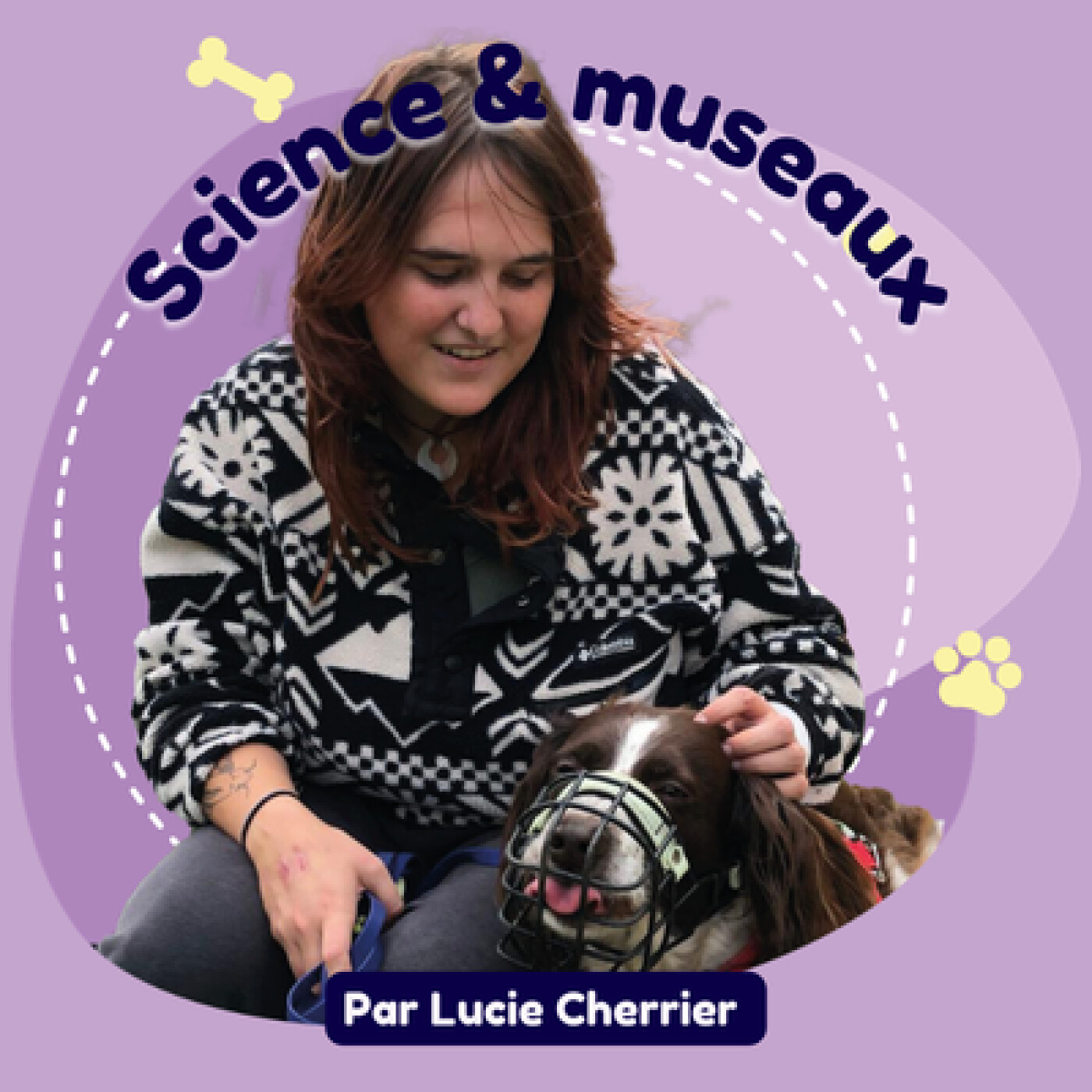
Sciences & Museaux
by lucie cherrier
Hello & Bienvenu !Science & Museaux est un podcast de vulgarisation scientifique sur la matière chien. Chaque semaine je démystifie des études et recherches pour que tu comprennes mieux ton clebs.Hébergé par Ausha. Visitez ausha.co/fr/politique-de-confidentialite pour plus d'informations.
-
6
Episode 5 : Les styles parentaux
Études citées :Baumrind, D. (1966). Effects of authoritative parental control on child behavior. Child Development, 37(4), 887–907.Baumrind, D. (1971). Current patterns of parental authority. Developmental Psychology Monographs, 4(1), 1–103.Van Herwijnen, I. R., van der Borg, J. A. M., Naguib, M., & Beerda, B. (2018). The existence of parenting styles in the owner–dog relationship. PLOS ONE, 13(2), e0193471.Powell, L., Edwards, K. M., McGreevy, P., Bauman, A., Podberscek, A., Neilly, B., Sherwood, J., & Stamatakis, E. (2019). Companion dog acquisition and mental well-being: A community-based three-arm controlled study. BMC Public Health, 19, 1428.Rehn, T., & Keeling, L. J. (2011). The effect of time left alone at home on dog welfare. Applied Animal Behaviour Science, 129(2–4), 129–135.Siniscalchi, M., d'Ingeo, S., & Quaranta, A. (2018). Orienting asymmetries and physiological reactivity in dogs' response to human emotional faces. Learning & Behavior, 46(4), 574–585.Ryan, S., Bacon, H., Dwyer, C. M., Fairley, S., Kent, J., McKenna, P., McMillan, F., & Mills, D. (2019). Neuroscience and the human–animal bond. Frontiers in Veterinary Science, 6, 489.Ståhl, A., Lundqvist, C., & Temrin, H. (2012). Human personality and dog behaviour: Does owner personality influence dog behaviour in a social test situation? Anthrozoös, 25(4), 457–469.Tu peux suivre le podcast et mon travail de consultante en comportement canin sur instagram @sciencesetmuseaux ( https://www.instagram.com/sciencesetmuseaux?igsh=MXU4N3owbHJlNGVuZQ%3D%3D&utm_source=qr ) et aller plus loin avec mon blog https://sciencesetmuseaux.com/blog/-1. Tu peux aussi me soutenir sur Tipeee à partie d'1€ par mois https://fr.tipeee.com/sciences-et-museaux !Podcast produit par Lucie Cherrier.Hébergé par Ausha. Visitez ausha.co/politique-de-confidentialite pour plus d'informations.
-
5
Épisode 4 : Morphologie & langage
Études citées :Andics, A., Gábor, A., Gácsi, M., Faragó, T., Szabó, D., & Miklósi, Á. (2016). Neural mechanisms for human-like processing of vocalizations in dogs. Science, 353(6303), 1031–1034. https://doi.org/10.1126/science.aaf3777Hubkirk, R., Smith, J., & Johnson, L. (2024). Facial expressivity in brachycephalic dog breeds: Implications for human interpretation. Journal of Veterinary Behavior, 55, 45–58. https://doi.org/10.1016/j.jveb.2024.01.004Martvel, S., Lee, K., & Thompson, R. (2025). Morphological selection and its effect on canine communication. Animal Behavior and Cognition, 12(3), 201–219. https://doi.org/10.26451/abc.12.03.01.2025Quaranta, A., Siniscalchi, M., & Vallortigara, G. (2007). Asymmetric tail-wagging responses by dogs to different emotive stimuli. Current Biology, 17(6), R199–R201. https://doi.org/10.1016/j.cub.2007.02.008Tu peux suivre le podcast et mon travail de consultante en comportement canin sur instagram @sciencesetmuseaux ( https://www.instagram.com/sciencesetmuseaux?igsh=MXU4N3owbHJlNGVuZQ%3D%3D&utm_source=qr ) et aller plus loin avec mon blog https://sciencesetmuseaux.com/blog/-1. Tu peux aussi me soutenir sur Tipeee à partie d'1€ par mois https://fr.tipeee.com/sciences-et-museaux !Podcast produit par Lucie Cherrier.Hébergé par Ausha. Visitez ausha.co/politique-de-confidentialite pour plus d'informations.
-
4
Épisode 3 : La domestication du chien
Axelsson, E., Ratnakumar, A., Arendt, M., Maqbool, K., Webster, M. T., Perloski, M., Liberg, O., Arnemo, J. M., Hedhammar, Å., & Lindblad-Toh, K. (2013). The genomic signature of dog domestication reveals adaptation to a starch-rich diet. Nature, 495(7441), 360–364. https://doi.org/10.1038/nature11837Hare, B., Rosati, A., Kaminski, J., Bräuer, J., Call, J., & Tomasello, M. (2009). The domestication hypothesis for dogs’ skills with human communication: A response to Udell et al. (2008) and Wynne et al. (2008). Animal Behaviour, 79(2), e1–e6. https://doi.org/10.1016/j.anbehav.2009.06.031Larson, G., & Fuller, D. Q. (2014). The evolution of animal domestication. Annual Review of Ecology, Evolution, and Systematics, 45(1), 115–136. https://doi.org/10.1146/annurev-ecolsys-110512-135813McMillan, F. D., Serpell, J. A., Duffy, D. L., Masaoud, E., & Dohoo, I. R. (2013). Differences in behavioral characteristics between dogs obtained as puppies from pet stores and those obtained from noncommercial breeders. Journal of the American Veterinary Medical Association, 242(10), 1359–1363. https://doi.org/10.2460/javma.242.10.1359Serpell, J. A. (2021). Commensalism or cross-species adoption? A critical review of theories of wolf domestication. Frontiers in Veterinary Science, 8, Article 662370. https://doi.org/10.3389/fvets.2021.662370Tu peux suivre le podcast et mon travail de consultante en comportement canin sur instagram @sciencesetmuseaux ( https://www.instagram.com/sciencesetmuseaux?igsh=MXU4N3owbHJlNGVuZQ%3D%3D&utm_source=qr ) et aller plus loin avec mon blog https://sciencesetmuseaux.com/blog/-1. Tu peux aussi me soutenir sur Tipeee à partie d'1€ par mois https://fr.tipeee.com/sciences-et-museaux !Podcast produit par Lucie Cherrier.Hébergé par Ausha. Visitez ausha.co/politique-de-confidentialite pour plus d'informations.
-
3
Épisode 2 : La co-évolution chien-humain
Études citées :Bergström, A., Frantz, L., Schmidt, R., Ersmark, E., Lebrasseur, O., Girdland-Flink, L., Lin, A. T., Storå, J., Sjögren, K., Anthony, D., Antipina, E., Amiri, S., Bar-Oz, G., Bazaliiskii, V. I., Bulatović, J., Brown, D., Carmagnini, A., Davy, T., Fedorov, S., … Skoglund, P. (2020). Origins and genetic legacy of prehistoric dogs. Science, 370(6516), 557–564. https://doi.org/10.1126/science.aba9572Chambers, J., Quinlan, M. B., Evans, A., & Quinlan, R. J. (2020a). Dog-human coevolution: Cross-cultural analysis of multiple hypotheses. Journal of Ethnobiology, 40(4), 414–433. https://doi.org/10.2993/0278-0771-40.4.414Freedman, A. H., Gronau, I., Schweizer, R. M., Ortega-Del Vecchyo, D., Han, E., … Novembre, J. (2014). Genome sequencing highlights the dynamic early history of dogs. PLoS Genetics, 10(1), e1004016. https://doi.org/10.1371/journal.pgen.1004016Miklósi, Á. (2015). Dog behaviour, evolution, and cognition (2nd ed.). Oxford University Press.Nagasawa, M., Mitsui, S., En, S., Ohtani, N., Ohta, M., Sakuma, Y., Onaka, T., Mogi, K., & Kikusui, T. (2015a). Oxytocin-gaze positive loop and the coevolution of human-dog bonds. Science, 348(6232), 333–336. https://doi.org/10.1126/science.1261022Range, F., Marshall-Pescini, S., Kratz, C., & Virányi, Z. (2019). Wolves lead and dogs follow, but they both cooperate with humans. Scientific Reports, 9(1). https://doi.org/10.1038/s41598-019-40468-yRomero, T., Nagasawa, M., Mogi, K., Hasegawa, T., & Kikusui, T. (2014). Oxytocin promotes social bonding in dogs. Proceedings of the National Academy of Sciences of the United States of America, 111(25), 9085–9090. https://doi.org/10.1073/pnas.1322868111Tu peux suivre le podcast et mon travail de consultante en comportement canin sur instagram @sciencesetmuseaux ( https://www.instagram.com/sciencesetmuseaux?igsh=MXU4N3owbHJlNGVuZQ%3D%3D&utm_source=qr ) et aller plus loin avec mon blog https://sciencesetmuseaux.com/blog/-1. Tu peux aussi me soutenir sur Tipeee à partie d'1€ par mois https://fr.tipeee.com/sciences-et-museaux !Podcast produit par Lucie Cherrier.Hébergé par Ausha. Visitez ausha.co/politique-de-confidentialite pour plus d'informations.
-
2
Épisode 1 : La dominance chez le chien
Études citées :American Veterinary Society of Animal Behavior. (2014). AVSAB position statement on dominance. https://avsab.org/wp-content/uploads/2018/03/Dominance_Position_Statement_download-10-3-14.pdfBlackwell, E. J., Casey, R. A., & Bradshaw, J. W. S. (2016). Response to Schilder et al. University of Bristol. https://research-information.bris.ac.uk/ws/files/69362154/Response_to_Schilder_et_al_revised_submitted.pdfBradshaw, J. W. S., Blackwell, E. J., & Casey, R. A. (2009). Dominance in domestic dogs: Useful construct or bad habit? Journal of Veterinary Behavior, 4(3), 135–144. https://doi.org/10.1016/j.jveb.2008.08.004Eaton, B. (2013). Dominance : mythe ou réalité ? Éditions du Génie Canin. (Ouvrage original publié en 2008 sous le titre Dominance: Fact or fiction?, Hubble & Hattie)Kubinyi, E., et al. (2021). Dogs are more pessimistic if their owners use two or more aversive training methods. Scientific Reports. https://doi.org/10.1038/s41598-021-97743-0Mech, L. D. (1999). Alpha status, dominance, and division of labor in wolf packs. Canadian Journal of Zoology, 77(8), 1196–1203. https://doi.org/10.1139/z99-099Society for Personality and Social Psychology. (2020, December 17). Study challenges dominance theory in dogs. ScienceDaily. https://www.sciencedaily.com/releases/2020/12/201217095536.htm Tu peux suivre le podcast et mon travail de consultante en comportement canin sur instagram @sciencesetmuseaux ( https://www.instagram.com/sciencesetmuseaux?igsh=MXU4N3owbHJlNGVuZQ%3D%3D&utm_source=qr ) et aller plus loin avec mon blog https://sciencesetmuseaux.com/blog/-1. Tu peux aussi me soutenir sur tipeee https://fr.tipeee.com/sciences-et-museaux à partir d'1€ par mois !Podcast produit par Lucie Cherrier.Hébergé par Ausha. Visitez ausha.co/politique-de-confidentialite pour plus d'informations.
-
1
Épisode 0 : Présentation
Tu peux suivre le podcast et mon travail de consultante en comportement canin sur instagram @sciencesetmuseaux ( https://www.instagram.com/sciencesetmuseaux?igsh=MXU4N3owbHJlNGVuZQ%3D%3D&utm_source=qr ) et aller plus loin avec mon blog https://sciencesetmuseaux.com/blog/-1. Tu peux aussi me soutenir sur tipeee https://fr.tipeee.com/sciences-et-museaux à partir d'1€ par mois !Podcast produit par Lucie Cherrier.Hébergé par Ausha. Visitez ausha.co/politique-de-confidentialite pour plus d'informations.
We're indexing this podcast's transcripts for the first time — this can take a minute or two. We'll show results as soon as they're ready.
No matches for "" in this podcast's transcripts.
No topics indexed yet for this podcast.
Loading reviews...
ABOUT THIS SHOW
Hello & Bienvenu !Science & Museaux est un podcast de vulgarisation scientifique sur la matière chien. Chaque semaine je démystifie des études et recherches pour que tu comprennes mieux ton clebs.Hébergé par Ausha. Visitez ausha.co/fr/politique-de-confidentialite pour plus d'informations.
HOSTED BY
lucie cherrier
Loading similar podcasts...
URL copied to clipboard!