
PODCAST · business
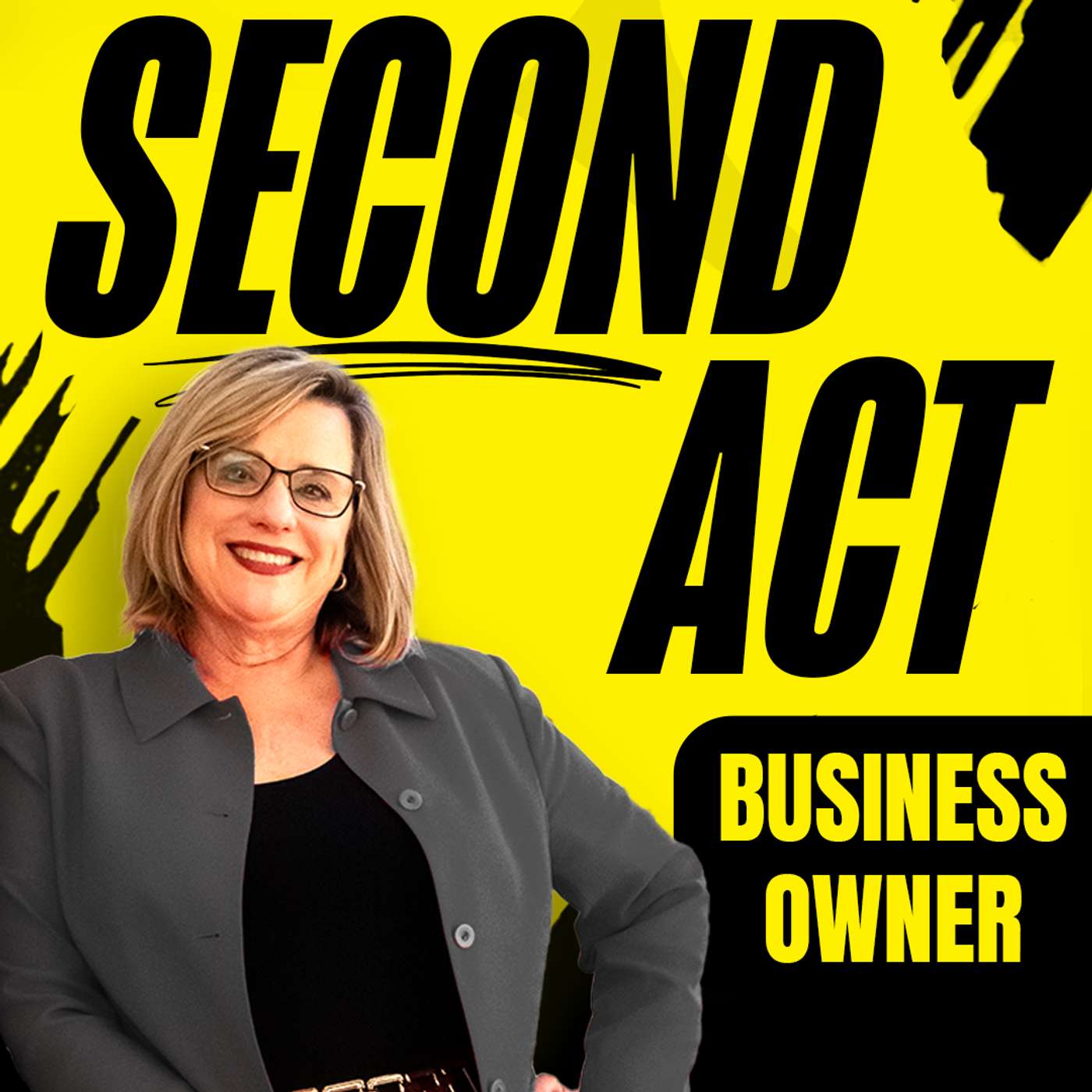
Second Act Business Owner
by Lee Gray
Your Second Act isn't just about starting over; it's about starting smarter. You’ve left the safety of a structured career to follow your passion, and while the opportunity is exciting, the uncertainty is real. You have the vision and the drive, but without a roadmap, that leap of faith can quickly feel like a freefall.Welcome to Second Act Business Owner, the podcast dedicated to ensuring your new venture lands on solid ground.Hosted by Lee Gray—an award-winning ActionCOACH, certified executive trainer, and serial entrepreneur—this show is for the courageous professionals who are trading corporate stability for entrepreneurial freedom. Lee understands that being an expert in your field doesn’t automatically make you an expert in running a business.Each week, we strip away the fluff to provide the real-world MBA training you need to turn chaos into clarity. From navigating the emotional rollercoaster of ownership to mastering the mechanics of profit, Lee brings the structure and s
-
10
The Power of Process in Sales
Do you actually have a sales process — or are you just winging it? If you can't explain your sales process step by step, you're leaving money on the table. Control in your business starts with a clear, defined, and repeatable sales process — one that's been written down, tested, tracked, and measured. Whether you're a solopreneur just getting started or you've been at this for years, this episode will challenge you to get honest about where your process stands and give you the tools to improve it starting today.HighlightsIf you don't have a sales process, you don't have control — and most business owners mistake a process problem for a sales problemEvery business, regardless of size, needs a consistent and documented sales process to get consistent resultsYou must track every step of the sales process — not just total sales — so you know exactly where things are breaking downYour process will evolve over time, and that's a good thing — but you can't improve what you haven't definedThe real shortcut in sales is completing the sales process, not skipping steps in itA real estate company with a 33-step sales process shows just how powerful a thorough follow-up system can beA documented sales process makes it possible to coach a new salesperson and pinpoint exactly where they need helpMarketing and sales are not the same thing — marketing brings people to the door, sales takes them through itYou already have a sales process; it just hasn't been written down yetChapters0:34 — Welcome and Big Question1:47 — Why Sales Needs Process3:01 — Track Every Step3:46 — Evolve and Follow the System6:13 — Real Estate 33-Step Example7:47 — Scale With Coaching and Systems8:33 — Define Your Process10:35 — Sales vs. Marketing12:22 — Final Challenge and WrapWant to get more help from Lee with your business? Visit her website: https://leegray.actioncoach.com/This show is part of the ICT Podcast Network. For more information, visit ictpod.net.
-
9
Demystifying Business Structures and Entities for Entrepreneurs
What's actually stopping you from starting your business? For most second act entrepreneurs, it isn't the idea — it's the paperwork. Specifically, that one question: What entity should I form? In this episode, we break it all down so you can stop overthinking it and start moving.We walk through the five most common business structures for new entrepreneurs — Sole Proprietorship, C Corporation, Partnership, LLC, and the S Corporation tax election — in plain, simple language. No legal jargon, no overwhelm. Just the essentials you need to have an informed conversation with your CPA or attorney. Plus, I share a real-world story about a consulting business owner named Amy who saved thousands of dollars a year simply by making the right tax election at the right time in her business growth.The bottom line? Your business structure can evolve. Don't let it stop you from getting started.HighlightsThe five most common business structures every second act entrepreneur should knowWhy a sole proprietorship may be fine to start — and when you should move beyond itHow a C Corporation works and one niche reason a second act owner might choose it (hint: it involves rolling over 401k funds)Why partnerships require a written operating agreement — no matter how strong the friendshipWhat makes the LLC the most popular structure for small business ownersThe difference between an LLC and an S corporation (spoiler: the S corp isn't a structure, it's a tax election)Amy's story: how electing S corp status saved her several thousand dollars in taxes when her consulting business hit $120,000 in profitWhy you should talk to your CPA about the S election no later than year two — or sooner if your first year is highly profitableHow to form an LLC: articles of incorporation, operating agreement, EIN, and filing fees — most of it doable onlineThe reminder that business structure is important, but it is not what makes your business successful — creating value and serving people isChapters0:34 — Choosing Your Entity1:19 — Keep It Simple2:36 — Sole Proprietorship Basics3:30 — C Corporation Overview4:40 — Partnership Pros and Cons5:42 — LLC: Why It Works6:25 — S Corp Tax Election7:33 — Amy's S Corp Story9:55 — When to Switch11:36 — Forming an LLC: Steps12:25 — Final Takeaways13:11 — Reviews and Support14:18 — Don't Overcomplicate ItResources MentionedIRS — For obtaining an EIN (Employer Identification Number): https://www.irs.gov/businesses/small-businesses-self-employed/apply-for-an-employer-identification-number-ein-onlineWant to get more help from Lee with your business? Visit her website: https://leegray.actioncoach.com/This show is part of the ICT Podcast Network. For more information, visit ictpod.net.Note: This episode does not constitute legal or tax advice. Consult a licensed CPA or attorney before making any decisions about your business structure.
-
8
Stop Overthinking | Your Business Plan Fits on a Napkin
What if the thing holding you back from your second act isn't a lack of ideas — it's a blank Word document waiting to become a business plan?That pressure to write a formal, polished business plan before you've even started is real — and it's stopping a lot of people in their tracks. The truth is, when you're just getting started, all you might need is a napkin and a pen. We dig into why the traditional business plan is overrated for second act beginners, what questions actually matter at this stage, and why clarity doesn't come before action — it comes because of it.HighlightsThe belief that you need a formal business plan could actually slow you down from starting your second actA "back of a napkin" plan may be exactly the right starting pointYour second act is about designing a life that makes you happy — not filling out spreadsheetsMoney matters, but "what would energize me?" is a more powerful first questionYour second act doesn't have to be big or dramatic — it can be simple, sweet, and completely your ownA real story about starting an ActionCOACH franchise without having everything figured outThe three questions that fit on a napkin: What do I like to do? Who do I want to help? How will I earn income?Momentum creates clarity — not the other way aroundChapters1:15 – Why Business Plans Stall You1:57 – The Napkin Plan Mindset2:31 – Design a Happy Second Act3:33 – Money, Legacy, and Energy4:21 – Second Act Options & Mythbusting5:27 – Minimum Steps to Start6:03 – My ActionCOACH Origin Story8:25 – Simple Questions to Clarify9:52 – Action Creates Clarity11:03 – Napkin Reminder and Wrap UpWant to get more help from Lee with your business? Visit her website: https://leegray.actioncoach.com/This show is part of the ICT Podcast Network. For more information, visit ictpod.net.
-
7
Unlocking Your Potential: The Formula for Life Success
What if the secret to achieving your biggest dreams came down to a simple math equation?Most of us stopped dreaming somewhere between the age of 14 and our first electric bill. We swapped out our astronaut dreams for something more "realistic" — and in doing so, we quietly let our dream muscle atrophy. This episode is about waking that muscle back up. I'm sharing a powerful framework called the Formula for Life Success — D×G×L×P×A — and walking you through each element so you can start doing the math on your own second act.HighlightsThe Formula for Life Success is a multiplier: Dreams × Goals × Learn × Plan × Action, each scored 1–10, with a maximum output of 100,000We dream boldly at age 6 — then life, bills, and other people's opinions shut it down; this episode is about reclaiming that 6-year-old mindsetIf you don't know a dream is possible, you can't even dream it — expanding your awareness expands your dream ceilingSMART goals get an upgrade: SMARTY adds Y = Your Why, the most powerful motivator behind any goalLearning is a force multiplier — the more you're willing to learn, the bigger your output in the formulaPlanning works best in layers: annual → quarterly → five weekly goals posted where you can see them every dayEven bumping your Dreams score up by just 2 points dramatically changes your total output — the math proves itChapters0:00 — Introduction1:15 — The DGLPA Success Formula2:17 — Scoring Your Dreams2:48 — Why We Stop Dreaming3:42 — Dream Bigger Like a Kid6:15 — Turning Dreams Into Goals6:31 — SMARTY Goals and Your Why8:58 — Learn What You Need11:12 — Planning and Taking Action12:46 — Calculate Your Multiplier14:05 — Final Challenge: Dream BigWant to get more help from Lee with your business? Visit her website: https://leegray.actioncoach.com/This show is part of the ICT Podcast Network. For more information, visit ictpod.net.
-
6
It’s Never Too Late | Inspiring Second Act Success Stories
What if the roadblocks you're facing right now are actually the launchpad for your greatest success? Today, I'm introducing you to four remarkable people who turned rejection, financial struggles, and career setbacks into legendary second acts—and they did it all after age 40. From a woman who built a billion-dollar empire at 45 after being repeatedly passed over for promotions, to a 65-year-old on social security who heard "no" over 100 times before creating a global brand, these stories prove that it's never too late to pursue your dreams. You'll discover why persistence beats polish, how to transfer your existing skills into something new, and the single decision that separates dreamers from doers. If you've been thinking about your second act—whether for one year or 50 years—this episode will show you that you're not starting late, you're starting ready.HIGHLIGHTS• Mary Kay Ash founded her company at 45 after being repeatedly passed over for promotions in a male-dominated workplace• Colonel Sanders was 65, on social security, and heard "no" over 100 times before KFC became a success• Vera Wang launched her fashion business at 40 after failing to make the Olympics and being passed over for editor at Vogue• Julia Child didn't start her chef career until age 49, bringing French cooking to American homes despite widespread skepticism• Second acts aren't about starting over—they're about repurposing your existing skills and experience• Persistence beats polish every time when pursuing your dreams• The key to a second act isn't doing, it's deciding—making the commitment to move forward• Success is usually just on the other side of a roadblockCHAPTERS00:00 - Introduction: Second Acts & Roadblocks01:30 - Mary Kay Ash: Building a Values-First Company at 4503:45 - Colonel Sanders: Persistence After 100+ Rejections05:30 - Vera Wang: Turning Setbacks into a New Career at 4007:15 - Julia Child: Passion-Fueled Reinvention at 4909:00 - Your Takeaway: 'They Didn't Start Late—They Started Ready'10:00 - Final Challenge & Encouragement: Decide Your Second Act TodayRESOURCES MENTIONED• Mary Kay Company: https://marykayglobal.com/our-founder-mary-kay-ash/• KFC (Kentucky Fried Chicken): https://www.kfc.com/aboutWant to get more help from Lee with your business? Visit her website: https://leegray.actioncoach.com/This show is part of the ICT Podcast Network. For more information, visit ictpod.net.
-
5
Building Connections for Business Growth | Networking for the Second Act
What if the secret to growing your second act business isn't hiding behind your computer screen, but actually getting out and meeting people face-to-face? I know networking can feel uncomfortable—even for extroverts like me—but it's absolutely essential for building a thriving second act. The truth is, your business won't flourish through emails and algorithms alone. It needs real human connections. In this episode, I'm sharing practical strategies to make networking less intimidating and more effective, including the three simple questions you can ask at any event to start meaningful conversations. Whether you're just starting your second act or looking to grow, these networking tips will help you build the relationships that matter most.HIGHLIGHTS• You already have more networking contacts than you realize—your dentist, attorney, neighbors, kids' sports teams, and more• Networking is about building relationships, not making sales—avoid "commission breath" at all costs• Three essential questions to ask at any networking event: What brings you here? What do you do? What's going on in your industry?• Consistency beats charisma every time—showing up regularly is more important than being the loudest person in the room• Five networking events and three coffee meetings per week is the ideal goal for growing your second act• Networking shortens your learning curve by connecting you with experienced business owners who can help you avoid costly mistakes• Getting out of your house and interacting with people creates momentum and energy that keyboard work simply can't provideCHAPTERS[0:00] Everyone's Favorite Thing: Networking[0:51] The Importance of Networking in Your Second Act[1:59] Leveraging Your Existing Network[2:42] Building Relationships, Not Transactions[3:14] Effective Networking Strategies[4:13] Making Meaningful Connections[7:02] Consistency Over Charisma[9:47] Maximizing Networking Opportunities[10:21] Learning from Networking Experiences[11:57] The Power of Networking in Business Growth[13:43] Conclusion and Final ThoughtsRESOURCES MENTIONED• LinkedIn (for connecting with networking contacts)Want to get more help from Lee with your business? Visit her website: https://leegray.actioncoach.com/This show is part of the ICT Podcast Network. For more information, visit ictpod.net.
-
4
From Gratitude to Greatness | Changing the Way You Think
Can you really rewire your brain for success just by changing how you think? The answer is yes, and it starts with two simple but powerful practices: gratitude and “I Am” statements. As second act business owners, we face unique challenges—fear, uncertainty, and the weight of starting over. But what if I told you that gratitude isn't just a feel-good practice, but a scientifically proven tool that can make you 25% happier, improve your sleep by 30%, and literally change the neural pathways in your brain? Today, I'm sharing practical strategies that have transformed my own coaching journey and the lives of my clients. From the five-things-at-bedtime practice to the gratitude jar exercise, and the surprisingly effective I Am statements that manifested every single goal I wrote down, you'll learn how to replace fear with gratitude and create the second act you've been dreaming of.HIGHLIGHTS• People who practice gratitude weekly are 25% happier and more optimistic• Gratitude improves sleep quality by 30% by creating a more restful state• You cannot be fearful and grateful at the same time—gratitude replaces fear• The simple power of saying "thank you" throughout your day raises your gratitude vibration• I Am statements work: every single goal written as an I Am statement has manifested• The gratitude jar exercise: 52 weeks of gratitudes you'll forget 75-85% of without recording them• Living in the United States already gives us countless things to be grateful for that we take for granted• Gratitude can change your story and how your second act unfoldsCHAPTERS00:00 - Welcome and Introduction01:15 - The Power of Gratitude03:45 - Personal Stories and Examples of Gratitude06:30 - Daily Gratitude Practices08:45 - The Impact of Gratitude on Your Second Act10:30 - Gratitude Activities and Exercises12:15 - Introduction to I Am Statements14:00 - Combining Gratitude and I Am Statements15:30 - Conclusion and Final ThoughtsWant to get more help from Lee with your business? Visit her website: https://leegray.actioncoach.com/This show is part of the ICT Podcast Network. For more information, visit ictpod.net.
-
3
Effective Time Management Techniques for Prioritizing Growth
What if you could gain back an entire day every week just by changing how you manage your time? As second act business owners, we don't have the luxury of decades to figure things out—we need to make every moment count. Today I'm sharing the exact frameworks and tools I use with my coaching clients to help them reclaim 20% of their week and focus on what truly matters: revenue-generating activities. You'll learn how to identify where your time is actually going (spoiler: it's probably not where you think), create a default calendar that works with your life instead of against it, and master the art of deciding what deserves your attention and what doesn't. Time is the one resource you can never get more of, so let's make sure you're investing it wisely in building your second act business.HIGHLIGHTS• The Eisenhower Matrix breaks down tasks into four quadrants: urgent and important (do first), important but not urgent (schedule), urgent but not important (delegate), and neither urgent nor important (eliminate)• The Three Ds strategy—Do, Delegate, Dump—gives you a simple framework for handling everything that lands on your plate• A default calendar isn't about perfection; it's a flexible tool that helps you allocate time to key business categories like operations, sales, networking, and product development• Tracking your time in 15-minute increments for just one week can boost your productivity by 25%• Spending 30-40% of your time on revenue-generating activities is the key to building a business you can sell within 10 years• By eliminating quadrant three activities (urgent but not important), you can reclaim 20% of your week—that's 52 extra days per yearCHAPTERS0:00 - Importance of Time1:24 - Identifying and Prioritizing Your Time2:32 - Understanding the Eisenhower Matrix6:48 - The Three Ds: Do, Delegate, Dump7:38 - Creating a Default Calendar14:42 - Maximizing Revenue Generating ActivitiesRESOURCES MENTIONED• Seven Habits of Highly Effective People by Stephen Covey• Default Calendar Template: https://goleegray.actioncoachlp.com/download-hereWant to get more help from Lee with your business? Visit her website: https://leegray.actioncoach.com/This show is part of the ICT Podcast Network. For more information, visit ictpod.net.
-
2
Embrace Your Second Act with Coach Lee Gray
Are you ready to become the star of your own second act? What if the experience you’ve gained so far is exactly what you need to launch a business you love—and get paid for it? Let’s explore how to turn your passion, skills, and life lessons into a thriving new chapter.HighlightsWhy your experience makes you uniquely qualified for your next ventureThe difference between a hobby and a business that excites you (and pays you)How to discover what you love, what you’re good at, and what the world needsThe power of your network and finding the right support for your journeyMy personal story: from corporate to multiple businesses to business coachingPractical steps to identify your “superpower” and visualize your future successTips for building momentum, overcoming imposter syndrome, and embracing the entrepreneurial bugChapters00:00 – Welcome & Purpose of the Show00:35 – Why the Second Act Business Owner Podcast Exists01:37 – What to Expect: Money, Fun, and Your Second Act01:56 – Today’s Agenda: Three Key Things & “Home Fun” Assignments01:56 – Embracing Your Experience and Passion02:40 – Doing What You Love (and Getting Paid)04:46 – My Second Act Story: From Corporate to Entrepreneurship07:12 – The Ikigai Framework: Love, Skill, Need, and Money09:53 – Building Your Support Network & Community11:52 – Finding Your Superpower & Visualization Exercise14:10 – The Entrepreneurial Bug & Closing Thoughts15:10 – What’s Next: Mindset, Strategy, and SystemsResources MentionedBNI (Business Network International) – Networking group: https://www.bni.comWant to get more help from Lee with your business? Visit her website: https://leegray.actioncoach.com/This show is part of the ICT Podcast Network. For more information, visit ictpod.net.
No matches for "" in this podcast's transcripts.
No topics indexed yet for this podcast.
Loading reviews...
ABOUT THIS SHOW
Your Second Act isn't just about starting over; it's about starting smarter. You’ve left the safety of a structured career to follow your passion, and while the opportunity is exciting, the uncertainty is real. You have the vision and the drive, but without a roadmap, that leap of faith can quickly feel like a freefall.Welcome to Second Act Business Owner, the podcast dedicated to ensuring your new venture lands on solid ground.Hosted by Lee Gray—an award-winning ActionCOACH, certified executive trainer, and serial entrepreneur—this show is for the courageous professionals who are trading corporate stability for entrepreneurial freedom. Lee understands that being an expert in your field doesn’t automatically make you an expert in running a business.Each week, we strip away the fluff to provide the real-world MBA training you need to turn chaos into clarity. From navigating the emotional rollercoaster of ownership to mastering the mechanics of profit, Lee brings the structure and s
HOSTED BY
Lee Gray
CATEGORIES
Loading similar podcasts...
URL copied to clipboard!