
PODCAST · business
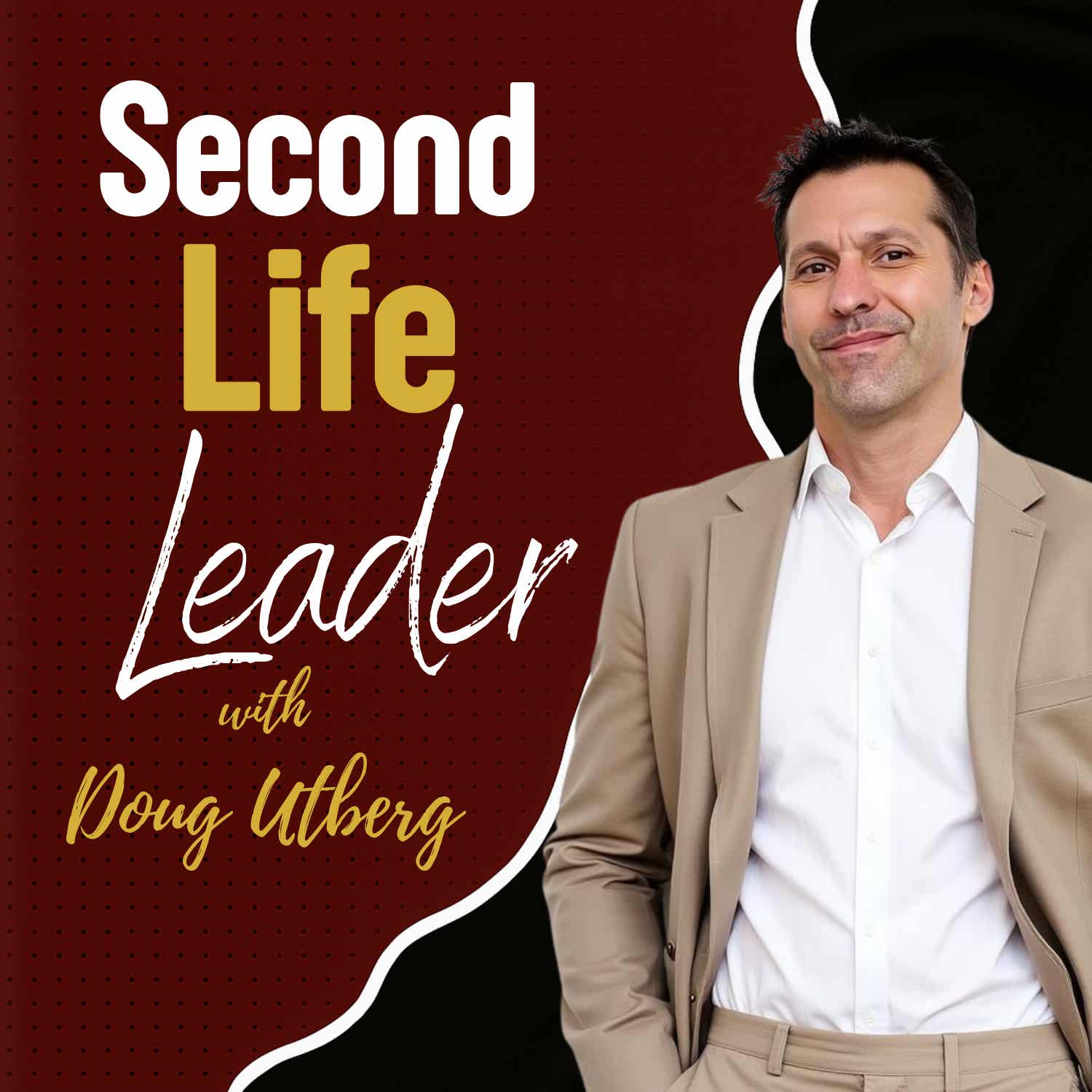
Second Life Leader
by Doug Utberg
From Setback to Sovereignty.This platform is for founders, executives, and rebuilders who’ve been knocked down by layoffs, burnout, betrayal, or failure—and refuse to stay down.I’m Doug Utberg.I rebuilt my career, my finances, and my identity from zero, and now I have raw conversations with leaders who’ve walked through fire and rebuilt stronger.Every episode cuts directly into the moments that forge a leader:Career reinvention and self-leadershipBurnout recovery and nervous system restorationEthical entrepreneurship in a post-growth worldSystems thinking, AI, and automation for sovereign executionNo hype.No guru scripts.Just clarity, truth, and the architecture required to rebuild a life—and a company—that cannot be taken from you.🔧 CFO Operator ClinicIf you lead a finance function, this is where we dismantle the chaos and build real structure:KPI treesUniversal journalsTransformation architectureDecision systemsSemantic-layer designThis is the tactical advantage mo
-
405
The Art of Saying No!
Lisa Leveille joins me to unpack a different kind of leadership challenge—one that quietly burns people out long before they realize it: the inability to create boundaries.We started with a simple observation.The more capable you are, the more responsibility people hand you.And in leadership roles—especially in finance—that responsibility expands fast. HR, operations, procurement, reporting, strategy, hiring, vendor management. Eventually, everything starts flowing toward the same person.That’s where the real problem begins.Lisa brings perspective from years as a CFO in the construction industry—a traditionally male-dominated environment where proving yourself often means carrying more than your actual role was ever designed to hold.This isn’t a conversation about productivity hacks.It’s about understanding when “being helpful” quietly becomes unsustainable.We dig into the difference between bluntly saying no versus tactfully creating boundaries, why leaders need self-sufficient teams, how strategic thinking is developed, and the hidden cost of constantly becoming the default person for everything.And maybe most importantly—why good leadership isn’t about controlling everything yourself.It’s about building people who no longer need you for every decision.TL;DRThe more capable you are, the more responsibility people will give youSaying no is a leadership skill—not a personality flawBoundaries protect both performance and sustainabilityGood leaders build self-sufficient teams, not dependencyPeople don’t always remember how much is already on your plateStrategic thinking comes from understanding second-order consequencesTransitioning responsibilities properly matters more than egoLeadership without wellness eventually breaks downMemorable Lines“You have to learn how to say no—or you’ll drown in tasks.”“People don’t remember everything they’ve already put on your plate.”“Anyone can say no. The art is preserving the relationship.”“You can’t pour from an empty cup.”“Good leadership means building people who don’t depend on you for everything.”“The textbook answer isn’t always the right answer.”GuestLisa Leveille — CFO in the construction industry, leading shared services across finance, HR, and operations in a traditionally male-dominated spaceFocused on leadership development, strategic thinking, and building sustainable teams through mentorship and operational clarityWhy This MattersMost burnout doesn’t happen all at once.It happens gradually.One extra responsibility.One more meeting.One more department.One more thing “only you can handle.”And because capable people usually want to help, they rarely notice the accumulation until performance, energy, or clarity starts slipping.The problem is—organizations reward reliability.So the more dependable you become, the more likely you are to become the default solution for everything.That works… until it doesn’t.Eventually, leaders have to decide:Am I building systems that scale?Or am I becoming the system myself?That’s why conversations like this matter.Because leadership isn’t just about carrying more.It’s about knowing what to keep, what to delegate, and what to say no to before everything starts breaking underneath the weight. This is a public episode. If you would like to discuss this with other subscribers or get access to bonus episodes, visit www.dougutberg.com
-
404
The Great Midwest Comeback (And Why People Always Come Back)
Cody Kopas joins me to unpack a different kind of pattern—one that doesn’t show up in headlines, but quietly shapes careers, families, and entire regions: why people leave the Midwest to grow… and then come back to build.We started with a simple observation.For decades, talent has flowed out of the Great Lakes region—into coastal cities, into capital-heavy ecosystems, into faster-moving opportunities. But many of those same people return years later, often at a completely different stage of life.That gap—between where opportunity exists and where people ultimately want to live—is where this conversation sits.Cody brings perspective from finance, startups, and operating roles, combined with firsthand experience of leaving for opportunity and returning for something different: family, community, and long-term alignment.This isn’t a conversation about tactics.It’s about the patterns people recognize later:“I always thought I’d stay—but something pulled me back.”We dig into why the Midwest produces high-performing talent, how coastal ecosystems accelerate skills, the reality behind remote work, and why the next wave of opportunity may shift back toward physical-world innovation—manufacturing, supply chains, and hard tech.And maybe most importantly—what actually drives where people choose to build their lives.TL;DRYou can leave for opportunity—but you may come back for lifeThe Midwest doesn’t lack talent—it exports itCoastal ecosystems multiply skills, but not always long-term alignmentRemote work creates flexibility, but also new risk during layoffsAI is compressing software advantages, increasing competitionHardware, manufacturing, and supply chains are becoming more strategic againPeople don’t just optimize for career—they eventually optimize for lifeMemorable Lines“People leave for opportunity. They come back for life.”“You don’t lose culture—it stays with you.”“AI accelerates operators, it doesn’t replace them.”“Hardware is hard—and that’s exactly why it matters.”“You can build anywhere if you’re actually a builder.”GuestCody Kopas — Operator focused on hard tech, manufacturing ecosystems, and the future of the Great Lakes regionExperience across finance, startups, and operational roles, with a focus on building and supporting innovation tied to physical-world systemsWhy This MattersMost people don’t make career decisions purely based on logic.They follow opportunity early—where skills grow fastest, where capital exists, where momentum is highest.But over time, the variables change.Family becomes a factor.Community starts to matter.Stability and meaning begin to outweigh pure growth.What worked in one phase no longer fits the next.The problem is—most people don’t realize this until they’re already deep into that transition.So they move toward opportunity without questioning where they actually want to build their life.And then eventually, they feel the pull back.Not because they failed.Because their priorities changed.That’s why this conversation matters.Because the goal isn’t just to chase opportunity.It’s to understand the cycle—and make decisions with more awareness of where it leads. This is a public episode. If you would like to discuss this with other subscribers or get access to bonus episodes, visit www.dougutberg.com
We're indexing this podcast's transcripts for the first time — this can take a minute or two. We'll show results as soon as they're ready.
No matches for "" in this podcast's transcripts.
No topics indexed yet for this podcast.
Loading reviews...
ABOUT THIS SHOW
From Setback to Sovereignty.This platform is for founders, executives, and rebuilders who’ve been knocked down by layoffs, burnout, betrayal, or failure—and refuse to stay down.I’m Doug Utberg.I rebuilt my career, my finances, and my identity from zero, and now I have raw conversations with leaders who’ve walked through fire and rebuilt stronger.Every episode cuts directly into the moments that forge a leader:Career reinvention and self-leadershipBurnout recovery and nervous system restorationEthical entrepreneurship in a post-growth worldSystems thinking, AI, and automation for sovereign executionNo hype.No guru scripts.Just clarity, truth, and the architecture required to rebuild a life—and a company—that cannot be taken from you.🔧 CFO Operator ClinicIf you lead a finance function, this is where we dismantle the chaos and build real structure:KPI treesUniversal journalsTransformation architectureDecision systemsSemantic-layer designThis is the tactical advantage mo
HOSTED BY
Doug Utberg
CATEGORIES
Loading similar podcasts...
URL copied to clipboard!