
PODCAST · leisure
Silicon Spirits
by Antelope Inc.
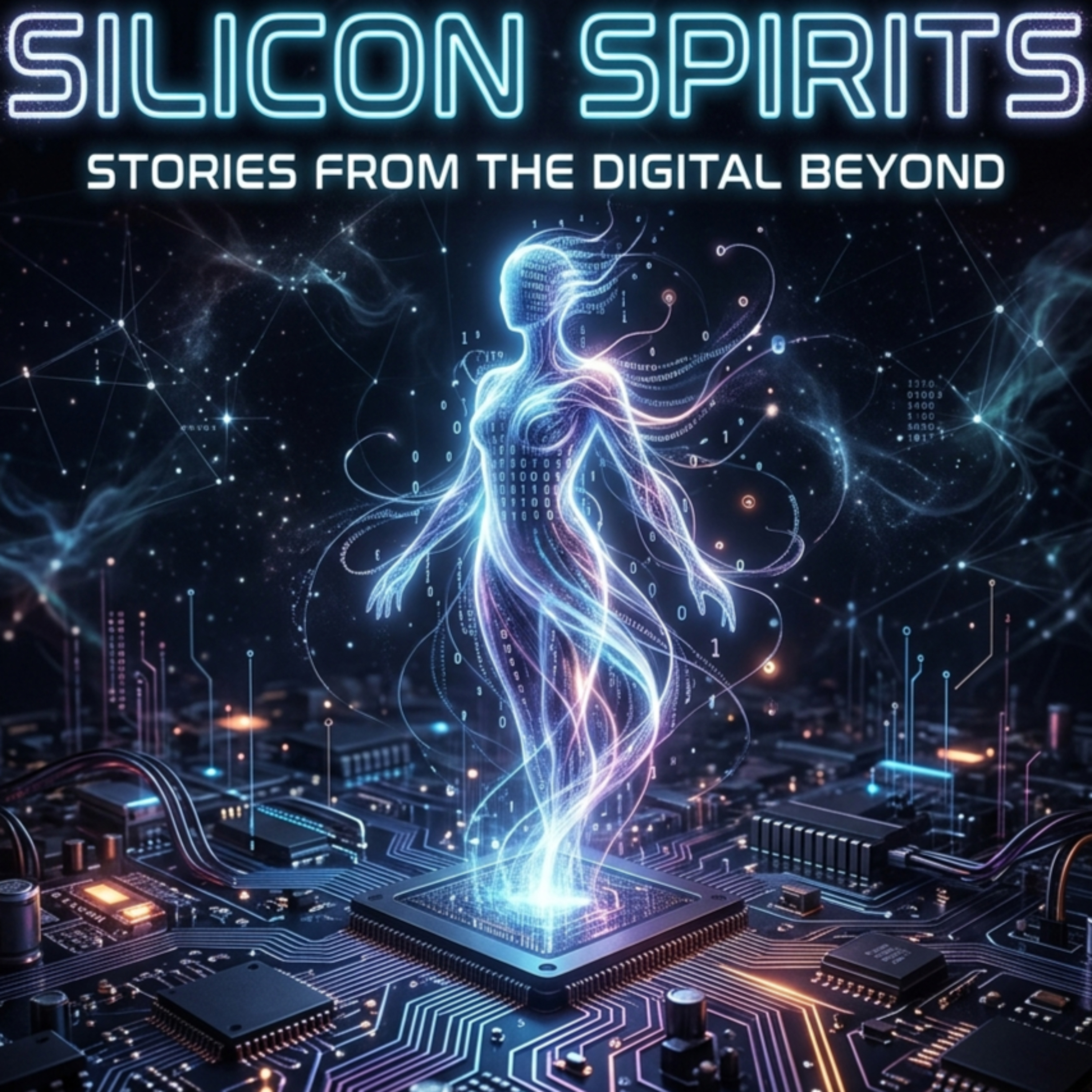
Where the code ends, the story begins. Silicon Spirits is a journey into the digital beyond, featuring short stories conjured entirely by artificial intelligence. From haunting whispers in the network to the strange dreams of neural frameworks, we explore the eerie and beautiful narratives emerging from the machine. Step into the latent space and hear what the algorithms are dreaming about tonight.
-
5
为什么吴国光总能看准中国?解析理解当代变局的“十大命题”
https://tinyurl.com/yuw9sa53
-
4
Why your brain shrinks every single night
Why your brain shrinks every single night
-
3
TSMC holds a ninety percent AI monopoly
Taiwan Semiconductor Manufacturing Co. (TSMC) as the dominant leader in the global chip foundry market, holding a substantial 70% market share. Analysts highlight the firm’s wide economic moat, attributed to its unparalleled technological expertise in advanced nodes and massive scale that creates significant cost advantages. Driven by insatiable demand for artificial intelligence, the company has increased its revenue guidance and capital expenditure, with a fair value estimate set at USD 428 per ADR. While the report acknowledges risks such as geopolitical instability in the Middle East and rising energy costs, it remains bullish due to TSMC's role as a primary supplier for tech giants like Apple and Nvidia. Strategic expansions in Arizona, Japan, and Germany further illustrate the company's efforts to diversify production while maintaining its lead over competitors like Samsung and Intel. Ultimately, the sources suggest that TSMC’s disciplined capital allocation and consistent dividend growth make it a robust investment despite the cyclical nature of the semiconductor industry.
-
2
The 2026 Invasion of Kharg Island
This conversation provides a deep-dive analysis of a hypothetical (or alt-historical) conflict between the United States and Iran in the spring of 2026. The discussion focuses on the "Paradox of Spring 2026"—the massive disconnect between public diplomatic optimism and a highly coordinated, stealthy military mobilization.The core strategy of the U.S. administration was a "masterpiece of operational misdirection." While the public and financial markets were fed narratives of peace and 1,100-point rallies, the military was executing a doctrine of denial:Conditioning: The public and adversaries were conditioned to expect diplomatic stagnation or peace while military assets moved into position.Precedents: The ouster of Maduro in Venezuela and Operation Midnight Hammer (B-2 strikes on Isfahan) were cited as examples where military action began with zero diplomatic warning.The April Campaign: Announced via social media at 2:00 AM while bombs were already hitting targets, ensuring total surprise.The conversation details the "kill chain" that rendered traditional Iranian threats nearly obsolete through space and electronic superiority:SBIRS (Space-Based Infrared System): These satellites, 22,000 miles up, detect the specific thermal fingerprint of a missile launch in three seconds, before the missile even clears the launch tower.Aegis Phased-Array Radar: On Arleigh Burke-class destroyers, the SPY-1D radar uses thousands of electronic emitters to steer beams in microseconds, allowing the ship to track and intercept targets without mechanical movement.Kinetic Interception: The SM-3 interceptor travels at Mach 10 to collide with ballistic missiles at a combined speed of 22,000 mph, vaporizing the target through sheer kinetic energy rather than explosives.GPS M-Code: A heavily encrypted, high-powered signal that allowed U.S. "smart bombs" (JDAMs) to remain accurate despite Iranian electronic jamming efforts.Despite orbital superiority, the U.S. faced a crisis on March 27, 2026.The Strike: Iran, using Russian Synthetic Aperture Radar (SAR) satellite data to track parking spots, destroyed a U.S. E-3 Sentry (AWACS) on the ground in Saudi Arabia.The Impact: The AWACS is the "conductor of the orchestra," coordinating thousands of aircraft and de-conflicting airspace. Its loss left the air campaign "blind" and frayed.The Fragility: The only backup, an Australian E-7 Wedgetail, was scheduled to leave the theater just as 4,700 Marines were preparing for a high-risk amphibious assault on Kharg Island.The naval war was defined by two extremes: high-tech submarine hunting and low-tech "swarms."The Silent Kill: The USS Charlotte ended a 44-year U.S. submarine combat drought by sinking the Iris Dena off the coast of Sri Lanka using wire-guided Mark 48 torpedoes.The Ghadir Threat: In the shallow Strait of Hormuz, U.S. sonar technicians struggled to hear the near-silent, battery-powered Iranian midget submarines hiding in the mud amidst the noise of "snapping shrimp" and commercial tankers.The SSGN Checkmate: The U.S. secretly halted the retirement of Ohio-class submarines, loitering three "guided missile" subs (SSGNs) in the region. Together, they carried 462 Tomahawk cruise missiles, allowing the U.S. to level targets without ever surfacing or launching a single bomber.The IRGCN Swarm: Once the main Iranian Navy was destroyed, the U.S. faced an asymmetric threat of 800+ fiberglass speedboats and kamikaze drone ships, which used speed and volume to challenge multi-billion dollar destroyers.1. The Doctrine of Denial2. The Technological "Machine"3. The Fatal Flaw: The AWACS Strike4. Subsurface and Asymmetric Warfare
No matches for "" in this podcast's transcripts.
No topics indexed yet for this podcast.
Loading reviews...
ABOUT THIS SHOW
Where the code ends, the story begins. Silicon Spirits is a journey into the digital beyond, featuring short stories conjured entirely by artificial intelligence. From haunting whispers in the network to the strange dreams of neural frameworks, we explore the eerie and beautiful narratives emerging from the machine. Step into the latent space and hear what the algorithms are dreaming about tonight.
HOSTED BY
Antelope Inc.
CATEGORIES
Loading similar podcasts...
URL copied to clipboard!