
PODCAST · society
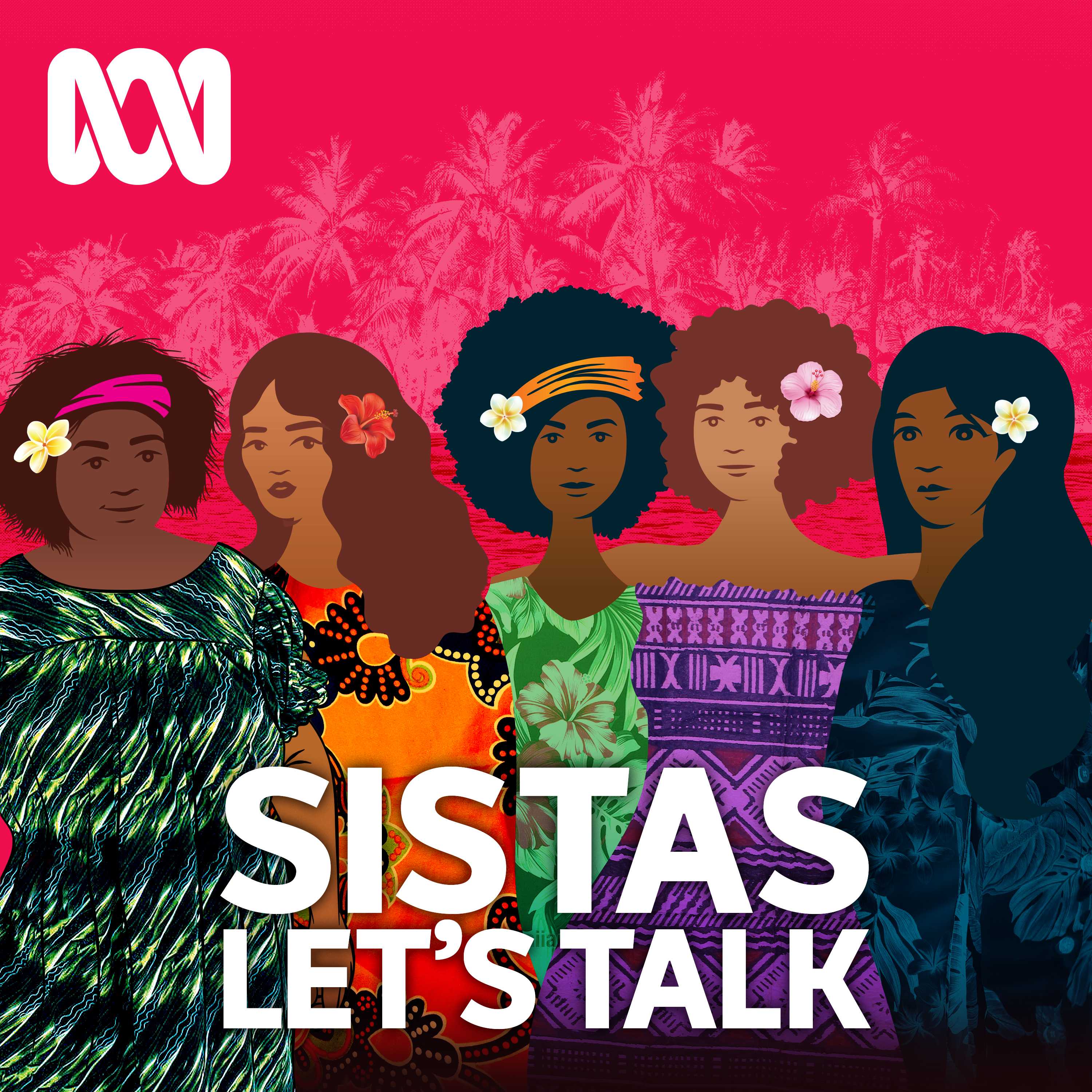
Sistas, Let's Talk
by ABC Radio Australia
Sistas, Let’s Talk is a show for women across the Pacific region. Each week, host Natasha Meten talks to inspirational women about the issues affecting them, and discusses how to navigate modern life as a Pacific Island woman.
-
250
Five years on: Sistas Let’s Talk looks back on five years of platforming Pacific women’s issues
Five years ago, Sistas Let's Talk began as a space for Pacific Island women to talk honestly about their lives. The joys, the struggles, the things they celebrate and the things they’re too often told not to say out loud. To mark this milestone, hosts Natasha Meten and Hilda Wayne go on a trip down memory lane to revisit some of the moments and episodes that serve as a reminder why Sistas Let’s Talk exists. Episodes revisited: Pacific Women Finding Love How to be an overbearing Aunty What is it like to be a conservationist in the land of a thousand tribes, Papua New Guinea? Tackling Emotional Abuse Pacific Women and the Spirit World Pacific period health: What happens when you can't access pads or clean water? Listen on ABC Radio Australia.
-
249
Why do so many Pacific men refuse to wear condoms?
HIV rates in Fiji and Papua New Guinea are soaring but the message about safe sex doesn’t seem to be getting through to a lot of men in the Pacific. Condoms are one of the most effective ways of preventing HIV and other sexually transmitted infections. But many women in the Pacific are finding their sexual partners don’t want to use a condom. Women report being accused of promiscuity, face intimidation and in some cases experience sexual violence after raising the issue of using a condom. This week on Sistas Let’s Talk we explore why some men refuse to wear condoms and the serious consequences this has for women. We speak with Dolores Devesi and Jessica Work from the International Planned Parenthood Federation in Fiji, and “Sarah” who shares her story anonymously after contracting HIV through unprotected sex. Listen on ABC Radio Australia.
-
248
Will banning polygamy in Papua New Guinea improve safety for women and children?
Polygamy is illegal in Papua New Guinea, but in practice it remains widespread—and is growing. Prime Minister James Marape has announced plans to strengthen the ban as part of a broader national effort to protect women, strengthen families, and restore respect for mothers and daughters across the country. Will the ban work? And how might it empower women in polygamous relationships to fight for their rights? These are the questions host Natasha Meten asks on Sistas Let’s Talk, in conversation with Sarah Garap, a Peace Fellow and community development facilitator from Jiwaka Province, and “Alice”, who speaks anonymously about growing up with a polygamous father. Listen on ABC Radio Australia.
-
247
How the Pacific drug crisis impacts women
The drug crisis across the Pacific is dominating our headlines. Countries like Fiji and Tonga have become gateways for moving drugs between Asia or the Americas to Australia and New Zealand. Some of these drugs end up on the streets in the Pacific, and for women and girls there's a secondary impact beyond that of addiction. Some are experiencing gender-based violence and family breakdown or ending up involved in sex work. Sistas Let’s Talk speaks to experts in Fiji and Tonga where the crisis has hit hard, about the impacts and supports available to women. Kalesi Volatabu, recovered drug user and founder of Drug Free World – Fiji Mele Prescott, Salvation Army Addiction Services, Tonga
-
246
From excitement to fear: What it’s like being pregnant for the first time
It’s hard to think of anything more exciting but also nerve wracking than being pregnant for the first time. Each stage is a new experience and a lesson in letting go of plans and control, and just trying to go along with what life delivers. Every woman is different and so is every pregnancy. This week on Sistas Let’s Talk, Natasha Meten explores first time pregnancy with a woman who’s experiencing it and a midwife who helps women through it. Grace Naleba, first time mother in Fiji Betsy Hamao, midwife with the Kiopan Hanahan Health Centre Antenatal clinic in the Autonomous Region of Bougainville Listen on ABC Radio Australia
-
245
Stigma kills: How Fiji’s HIV crisis impacts mothers and babies
Fiji has the world's fastest growing rate of HIV transmission and it's not only high-risk groups being impacted. Babies are being born with HIV through a process now called vertical transmission - where they get it during pregnancy or birth or breastfeeding. However, vertical transmission is very avoidable. The key is getting tested early and getting that lifesaving treatment, but to do that, first women need to overcome stigma and misinformation. This week on Sistas Let’s Talk Natasha Meten speaks to three women about the issue including a HIV positive mother who managed to avoid passing the disease on to her child. “Sarah” anonymous Fijian mother who is HIV Positive Renata Ram, UN AIDS Pacific HIV Advisor Kaylene Kalmos, the National HIV and STI Officer for the National HIV program in Vanuatu Listen on ABC Radio Australia
-
244
Positive bystanders: How to take action when you witness gender-based violence
Gender-based violence is happening throughout the Pacific but one thing that seems to be changing is how people react when they see it. While some people still stand by, afraid to get involved, others are speaking up and saying the violence is unacceptable. So how can you be a positive bystander without risking your own safety? Sistas Let’s Talk speaks to three women about stepping in and defending victims of abuse. Debbie Kaore, GBV survivor Shamima Ali, CEO of the Fiji Women’s Crisis Centre Susi Feltch-Malohifo'ou, Executive Director & Co-Founder, of Pacific Island Knowledge 2 Action Resources (PIC2AR) Listen on ABC Radio Australia
-
243
What GBV survivor support really looks like in the Pacific
Gender‑based violence remains a major issue across the Pacific, and while crisis support services exist, long‑term trauma care for survivors varies widely. So what happens after the immediate danger has passed? What does effective, culturally informed trauma support look like in places where health services are stretched? And how should care change to meet the needs of survivors from different backgrounds and communities? This week on Sistas Let’s Talk, host Natasha Meten speaks with two women offering powerful insights into GBV survivor care: Debbie Kaore, gender‑based violence survivor Associate Professor Yvonne Crichton-Hill, social work researcher at the University of Canterbury Listen now on ABC Radio Australia.
-
242
The power of friendship seeing women through the best and worst times
What does it mean to have a best friend? For Vaimo'oi'a Ripley and Julia Meredith it has meant having someone to laugh with, make mischief with and someone to turn to in the absolute best and worst moments of life. The pair have been best friends since primary school in Samoa and while they no longer live in the same city, they always know how to pick up where they left off. This week on Sistas Let’s Talk, Natasha Meten speaks to “Mo’o” and “Jules” about their powerful friendship. Listen to the full episode on ABC Radio Australia.
-
241
Trailblazers in lab coats: Meet the Pacific women changing lives through science
While there’s no shortage of Pacific women in sport, the arts and business to look up to, what about women in science? Globally, women make up less than a third of the STEM workforce, and Pacific women are even more underrepresented. Yet many are leading groundbreaking research that’s improving the health and wellbeing of their communities. In this episode of Sistas Let’s Talk, Natasha Meten speaks with three inspiring Pacific scientists who are creating real change: Professor Tu’uhevaha Kaitu’u-Lino from the University of Melbourne PhD candidate Liana Sabetian from the University of Auckland Samoan scientist Amy Maslen Miller Together, they share their journeys, their research and how science is strengthening the future of Pacific communities. Listen to the full episode on ABC Radio Australia.
-
240
Why singing brings joy: Pacific voices explain the power of music
Music and singing weave through everyday life across the Pacific, shaping our stories, celebrations and connections. For many, it’s more than just an expression; it's a source of joy. But what is it about lifting our voice in song that makes us feel so good? On Sistas Let’s Talk, Natasha Meten sits down with Papua New Guinean-Australian opera singer Heru Pinkasova and choir director and ethnomusicologist Rita Seumanutafa-Palala to explore the deep pleasures of singing: how it binds communities, lifts spirits and continues to evolve across generations. Listen to this episode on ABC Radio Australia.
-
239
Protecting the bubus: combating elder abuse in the Pacific
People in the Pacific are raising the alarm about elder abuse in the region. Worldwide one in six people over 60 have been abused, according to startling statistics from the World Health organisation. In Fiji last year, around 2000 cases of abuse were reported to the police, including physical, emotional and financial abuse. On Sistas Let’s Talk Natasha Meten spoke to three women trying to combat the scourge of elder abuse in their community. Sashi Kirin, the Minister for Women, Children and Social Protection in Fiji; Jullian Lava, who leads the women’s ministry at her local Seventh-day Adventist Church in Papua New Guinea; and Dr Juliet Boon from Auckland University of Technology, who conducted a study into elder about among New Zealand’s Pacific diaspora. Listen to this episode on ABC Radio Australia.
-
238
Beyond the bills: The grassroots push helping Pacific women rewrite their financial futures
When the average woman stretches her income across food, bills, and family responsibilities, is there anything left to save for the future? Across the Pacific region, organisations are proving the answer can be “yes”. With the right tools and a little financial literacy, women are learning how to grow their savings, build confidence and take control of their financial independence. On Sistas Let's Talk, Natasha Meten explores how three groups are helping women shift their mindset about money and create stronger financial futures. She speaks with Rebekah Maeniuta from the West ‘Are’Are Rokotanikeni Association in Solomon Islands, Adi Tafuna’i from Women in Business Development in Samoa, and Laumanu Mafi Tonga from the Pacific Islands Investment Forum’s Women in Super Network. Listen to this episode on ABC Radio Australia.
-
237
Hidden struggles: Confronting perinatal mental health challenges across the Pacific
You've probably heard of post-natal depression, but it’s just one of several mental illnesses that can affect women during or after pregnancy. Depression, anxiety, obsessive compulsive disorder and even psychosis can affect women at what should be one of the happiest times of their life. And in the Pacific, stigma and a lack of services can stop women from getting the help they need. On Sistas Let’s Talk, Natasha Meten speaks to three women about maternal mental illness: Ru Sevedredre, who experienced post-natal depression; Mercedes Swann, the founder of online maternal mental health support group Mama Talanoa; and Reshmi Singh, from the counselling service Empower Pacific. Listen to this episode from ABC Radio Australia.
-
236
Why is getting vaccinated a challenge across the Pacific?
Getting vaccinated is a simple step that prevents illnesses like measles, polio-virus and even cervical cancer. But in parts of the Pacific, not everyone is able or willing to access vaccines. Whether it's combating hesitation or limited access, health authorities are working hard to vaccinate as many people in the Pacific for as many preventable diseases as possible. What can women do to support the cause? In Sistas Let’s Talk, ABC Radio Australia's Natasha Meten talks about the life-saving importance of vaccines with Tonga’s chief medical officer for public health Dr Ofa Tukia, Madang town clinic’s nurse in charge Judy Alingou and Sister Litiana Volavola, the national program manager for immunisation in Fiji.
-
235
Being alone and being lonely aren't the same thing
Community and family are two of the most universal values in the Pacific, so it's almost impossible to imagine that anyone could feel lonely. However, people can be surrounded by family and still feel a sense of loneliness, and with so many people moving overseas or to the city for work, not everyone has family around anymore. So what should you do if you feel lonely, and if it goes on for too long, how serious can it become? Natasha Meten speaks to psychologist Anastasia Tuilagi, Reshmi Singh from Empower Pacific Counselling & Social Services and Reverend Sonja Hunter from All Saints Anglican Church.
-
234
Who is working to bring an end to child marriage in the Pacific?
Somewhere in the world, a girl is married every three seconds. The rates vary in the Pacific, however in Papua New Guinea 27 per cent of women aged 20 to 24 were married before they turned 18. And in some countries, like Solomon Islands, the legal age of marriage is 15 with parental or judicial consent. The organisation Girls Not Brides works around the world to put an end to child marriages. It says child marriage can disrupt a girl's education, lead to birth trauma and is often associated with gender-based violence. Sistas Let's Talk host Natasha Meten speaks with three women who have witnessed firsthand the impacts of child marriage in their communities. They include Jascinta Eket, a maternal health nurse who has spent more than three decades working in the Southern Highlands of Papua New Guinea; Joyce Koupere from World Vision Papua New Guinea; and Ellen Kahui, who is part of Save the Children’s Make it 18 campaign, lobbying for the legal age of marriage in the Solomon Islands to be raised to 18 for all girls.
-
233
Too many Pacific women die in childbirth. How can they be saved?
The rate of women who die during childbirth is alarmingly high in parts of the Pacific. According to World Population Review, the rate of maternal mortality in Papua New Guinea is 192 deaths in every 100,000 live births. That’s compared with a country like Australia, which is just three in every 100,000 births. The reasons for these deaths vary from geographic barriers and lack of medical services to cultural barriers. However, measures are being taken to address this limitation and help save the lives of women in the Pacific. Sistas Let’s Talk host Natasha Meten speaks to Marshall Islands health secretary Francyne Wase-Jacklick, Stevie Merino-Mesa from the Birthworkers of Colour Collective and midwife Cherolyn Polomon who started a Whatsapp group for hundreds of Papua New Guinea’s health workers to collaborate about maternal health.
-
232
The challenges of raising neurodivergent children in the Pacific
Understanding autism, ADHD and other neurodivergent conditions for kids in the Pacific can be a challenge for parents and their wider communities. These conditions are on a spectrum, meaning symptoms vary from mild to severe depending on the individual and the challenges they face. Children who can’t read social cues or become overwhelmed by their surroundings can be mistaken for being naughty. But the better people understand neurodivergence and accept the behaviours that come with the conditions, the easier life will be for families. Join Sistas Let’s Talk host Natasha Meten on ABC Radio Australia, as she speaks to three women about neurodivergence. Mother Betty Kolose-Pulefolau, whose adult son has autism, Fijian psychiatrist Violet Esarito and special education teacher Paulia Wingi.
-
231
Meet the next generation of Pacific women fighting for change
Sistas, Let’s Talk is Sabina Moce is only 24, but for the past decade the young Fijian woman has been a passionate advocate for people with disability. Sabina was born with albinism and growing up in Fiji with the condition led to bullying and exclusion from her community. This inspired her to speak up for those who aren't always given a voice. ABC Radio Australia’s Sistas Let’s Talk celebrates three young women who, like Sabina are advocates and ambassadors for causes they feel strongly about. Host Natasha Meten also meets environmental activist AnnMary Raduva from Fiji and Save the Children Ambassador on Climate Vepaiamele, who at just 16 was the youngest member of a delegation from Vanuatu to visit the International Court of Justice at the Hague in 2024. a show for women across the Pacific region.
-
230
What does a Vanuatu council’s ban on menstruating women selling food say about kastom, period hygiene and respect for women?
A controversial by-law banning women in a Vanuatu province from handling or selling food during menstruation has led to shock and community outrage. The law, passed by Shefa Provincial Government Council, threatened hefty fines and the loss of food stall permits for women who broke it. However, after Prime Minister Jotham Napat called on the council to revoke the by-law, the council apologised and promised to repeal it just days after it was passed. Sistas Let’s Talk examines the reaction to this by-law and asks: what does it say to women when an all-male council, without consultations, passes a law that would ban them from earning a living for a week each month. You’ll hear from Pacific Beat’s Aggie Tupou and journalist Lillyrose Welwel, Relvie Poilapa, who represents Vanuatu’s NGO Voes Blong Yumi, and Anne Pakoa who founded the Vanuatu Human Rights Coalition.
-
229
Pacific period health: What happens when you can't access pads or clean water?
Many women and girls in the Pacific don’t have access to pads, clean water or even the knowledge they need to practice proper menstrual hygiene. Poor menstrual hygiene can lead to urinary tract infections and the stigma and shame around periods is stopping girls from attending school. However, there are organisations trying to address the issue and improve women’s health. On ABC Radio Australia’s Sistas Let’s Talk, host Natasha Meten speaks to Anne-Shirley Korave from Queenpads, a social enterprise in Papua New Guinea that provides women with reusable pads and runs education programs on practicing good menstrual hygiene. And Ellice Mataki, the chief education officer for Solomon Islands Central Islands Province, oversees the rollout of water, sanitation and hygiene (WASH) facilities to give female school students access to a clean, private place to change their pads.
-
228
The dark side of connection: How cyber abuse impacts women and children
For musician Rosie Delmah, fame has been a double-edged sword. Rosie has been experiencing cyber bullying and sexual harassment for several years. In 2025, explicit deep fake images of her were created and spread across the internet, causing her to bravely speak out. And Rosie is not alone. Cyber abuse, particularly against women is rife and many countries, including Rosie’s home Solomon Islands, lack the cyber-crime laws to stamp out activities like online bullying, sexploitation, and harassment. Sistas Let’s Talk speaks to Rosie about her experience as well as Morina Rapasia, the Solomon Islands Country Coordinator with Childfund Australia, who has been rolling out Swipe Safe, an education program designed to keep the next generation of online users safe.
-
227
Fewer than 8 per cent of Pacific politicians are women, but more women are now putting their hands up
Like many women, Ruth Cross Kwansing spent a lot of time talking herself out of politics before eventually running in the Kiribati elections. She is now Minister for Women, Youth, Sports and Social Affairs. “It really is a better conversation when we have more balance in the voices available in developing solutions,” Ms Cross Kwansing says. While the number of female politicians in the Pacific is still as low as just 8 per cent, there are more women putting their hands up to run. The Autonomous Region of Bougainville saw a record number of women contest the 2025 elections, thanks in part to training run by Leitana Nehan Women's Development Agency. In the lead up to the election, the organisation ran training sessions to women in Bougainville who were interested in running for politics. In this episode, Sistas Let’s Talk speaks to agency co-founder Helen Hakena, along with Ms Cross Kwansing.
-
226
How Pacific men and boys are joining the fight against gender-based violence
How Pacific men and boys are joining the fight against gender-based violence
-
225
Ozempic isn’t the cure: Tackling Pacific obesity through education
Weight-loss drugs like Ozempic may be gaining popularity in Western countries, but in the Pacific, they’re not a viable solution, and experts say they’re not the right one either. High costs and limited availability make these medications inaccessible for many Pacific communities. Instead, health leaders are calling for a grassroots approach focused on education and lifestyle change. Countries such as Tonga, Samoa, and Nauru continue to grapple with some of the highest rates of obesity and non-communicable diseases (NCDs) in the world, including diabetes and heart disease. “The only thing we can afford is education ... and it has to start with the young ones,” says Tonga’s Health Minister, Dr Akau’ola. In this story, hear from epidemiologist Courtney Choy, who studies childhood obesity in Samoa, and Mele Mauala, who transformed her health by losing 37 kilograms in a year through diet and exercise.
-
224
What ovarian cancer taught me
When Tongan woman Alisi Jack-Kaufusi was diagnosed with ovarian cancer at just 24-years-old, she was in disbelief. The subsequent surgeries and treatments have taken their toll, but, after seven years living with the disease, Alisi is passionate about sharing her story to help raise awareness of ovarian cancer and ensure it gets more resources into research, treatment and prevention. This week's episode of Sistas, Let's Talk is a repeat of the show broadcast on 12th September 2024
-
223
‘Women are the seed keepers’: How empowering women is key to addressing climate change
Women are the backbone of society in Papua New Guinea, but when it comes to who has the power to make big decisions, particularly around resources, it's the men who dominate this space. Women are often excluded, dismissed or told to focus on domestic chores. But more and more organisations are actively working with women to empower them with leadership skills to help address climate change.This week's episode of Sistas, Let's Talk is a repeat of the show broadcast on 2nd October 2025
-
222
How living in the diaspora led this Elder to an Olympic icon
For arts scholar and curator, Aunty Sana Reana Balai, living as part of the Pacific Island diaspora in Australia offered her new opportunities – and challenges.Carving out a new life abroad where she rarely saw other Pacific Islanders, Aunty shares stories on how she kept herself grounded and connected to culture, whilst removed from her beloved homeland of Buka Island, in Bougainville.And how her yearning to see other Black people led her to an Olympic legend.This week's episode of Sistas, Let's Talk is a repeat of the show broadcast on 5th December 2025
-
221
How education changed Matilda Sweman's life
Matilda Sweman thinks deeply about education. Particularly for girls in Papua New Guinea.That's because she went to school just after her country gained independence, at a time when very few girls were being educated.She went on to become a primary school teacher in the East Sepik region for almost two decades, and now she's an author and a lecturer in teaching at the Papua New Guinea Education Institute.On Sistas Let's Talk, Natasha Meten speaks to Matilda Sweman about educating girls, working with limited resources and thanking her father for sending her to school.This week's episode of Sistas, Let's Talk is a repeat of the show broadcast on 28th November 2025
-
220
The crusade against sorcery-related violence in PNG
Women are increasingly becoming targets in sorcery accusation-related violence, and one woman has made it her life's mission to stamp it out. This week's episode of Sistas, Let's Talk is a repeat of the show broadcast on 28th September 2022
-
219
The benefits and challenges of educating girls in The Pacific
When you educate a woman you educate a nation, however, in many parts of the Pacific it's still difficult to access a good education, because of distance, or the cost, or even family obligations.And when parents have to choose whether their sons or daughters will go to school, girls are still missing out.Fortunately, that is changing as more young parents are graduating from high school and university and bringing their knowledge back to their villages and communities.This week Sistas Let's Talk speaks to business and training leader Susil Nelson-Kongoi, education analyst Anne Pakoa and university students Leah Lowonbu and Yuri Hosei about the importance and challenges of keeping girls in school.This week's episode of Sistas, Let's Talk is a repeat of the show broadcast on 7th November 2024
-
218
Caregiving is work: Why paid maternity leave is critical for child maternal health in the Pacific
Having time off after giving birth not only gives new mums time to physically recover and bond with their baby, but it has significant health, economic and community impacts.This week's episode of Sistas, Let's Talk is a repeat of the show broadcast on 27th February 2025
-
217
Is customary law appropriate when dealing with sexual and gender-based violence in the Pacific?
Our Pacific cultures are based on the community – and when it comes to meting out justice, customary law is often recognised within the legal system.This is where the whole family or village takes collective responsibility for an offender's actions and seeks to right the wrong directly with the victim and the victim's family.In fact, it's from these traditions that restorative justice has grown and is now successfully adopted across many parts of the western world.But what happens when it's a violent offence against an individual? And in particular women and children who often don't have a voice?Sistas, Let's Talk explores customary law and asks whether it's appropriate for dealing with sexual and gender-based violence.This week's episode of Sistas, Let's Talk is a repeat of the show broadcast on the 8th August 2024
-
216
Women in Sport: from grassroots to the world stage
Are more and more Pacific women getting off the sidelines and into the game? What drives them? How is sport an escape from the challenges they face as women? How important is it for girls in the Pacific to get involved in sport? We meet women from a range of countries, clubs and initiatives to learn about the opportunities created by sport, the barriers women and girls face in participation and the success stories from the grassroots to the world stage. This week's episode of Sistas, Let's Talk is a repeat of the show broadcast on the 31st August 2023
-
215
The meri blouse, urohs and island dress are now part of Pacific women's identity, but challenges loom
The urohs – a skirt with intricate embroidery – has cultural and economic significance to the women of Pohnpei in the Federated States of Micronesia.This passion is shared by many of us women across the Pacific, whether it's a mu'u mu'u, a meri blouse, a puletasi or an island dress.This clothing was introduced by missionaries for so-called modesty, but since then women have embraced it and made it their own.But as our fashion industry grows, so do the threats.Mass production overseas is creating a new challenge for the urohs, while other parts of the Pacific face the theft of motifs and icons.How do we protect this fashion that's become part of our culture?Hear from Dr Emelihter Kihleng, who did her PhD dissertation on the Pohnpei skirt and her first published collection of poems is entitled Urohs.This week's episode of Sistas, Let's Talk is a repeat of the show broadcast on the 1st August 2024
-
214
Tackling Emotional Abuse
The Pacific region, has some of the highest rates of gender-based abuse in the world.Far too many women suffer physical and sexual violence at the hands of a family member or a former spouse.But domestic abuse is not just physical. It can come in the form of emotional abuse — like controlling behaviour, isolation, and insults intended to damage a woman's state of mind.This week on Sistas Let's Talk, Natasha Meten speaks to survivor and advocate Alicia Sahib, human rights defender Anne Pakoa and Renata Netaf from the Bible Society of the South Pacific.This week's episode of Sistas, Let's Talk is a repeat of the show broadcast on14th November 2024
-
213
‘They're the custodians of stories and skills’: Why grandmothers are so important in the Pacific
Grandmothers are not only a great source of wisdom and traditional knowledge, they also play a nurturing and vital role in our lives.This week's episode of Sistas, Let's Talk is a repeat of the show broadcast on 6th February 2025
-
212
How do women in the Pacific manage financially after the of loss their spouse?
When the only social security available is the extended family, women can be left financially vulnerable with the death or divorce of their husband. This week's episode of Sistas, Let's Talk is a repeat of the show broadcast on 16th November 2022
-
211
The Pacific women filmmakers telling stories through their cultural lens
While the film industry is notoriously difficult for women and people of colour to break into, there are female filmmakers from the Pacific using the medium to tell important and beautiful Pacific stories.This week's episode of Sistas, Let's Talk is a repeat of the show broadcast on 16th January 2025
-
210
How does period pain hold women back?
Most women suffer from period pain, but the majority simply push through it. How different would women’s lives be if they gave period pain the care and treatment it deserves. This week's episode of Sistas, Let's Talk is a repeat of the show broadcast on 7th September 2023
-
209
Why is a first birthday so important in the Marshall Islands?
In the Marshall Islands, a baby turning one is a big celebration. It’s known as the kemem. The occasion is usually marked with a big gathering with lots of food and entertainment, perhaps a live band or a DJ along with traditional singing. There can be themes, rides and t-shirts bearing the baby’s face plus gifts for all the guests. But this tradition comes from an important place. Sistas, Let’s Talk learns about the customs and history when it comes to the kemem as well as post-partum practices of Marshallese women. This week's episode of Sistas, Let's Talk is a repeat of the show broadcast on 12th October 2023
-
208
Accessing birth control in the Pacific
Hilda Wayne explores why fewer Pacific Island women are using birth control today.This week's episode of Sistas, Let's Talk is a repeat of the show broadcast on 6th April 2022
-
207
How the Haus Meri in Papua New Guinea is being transformed to give women a political voice
Have you heard of the Haus Man? In Papua New Guinea, it's a ceremonial house for men only where rules are made to keep peace and harmony in the village.But if no women are allowed, how can these decisions be in the best interests of women? And could there be another way?The Haus Meri is an important space for women, and there's a growing movement to see it gain a political voice both at the community and the national level.In this episode, three women talk about how the old can blend with the new.This week's episode of Sistas, Let's Talk is a repeat of the show broadcast on 18th July 2024
-
206
What is perimenopause and why should we talk about it?
What do you know about perimenopause? I would guess not very much. And that’s because we never speak about it – and that’s not just in the Pacific. It’s worldwide. But Sistas, Let’s Talk is going to break it down for you and find out everything you need to know about the changes our bodies can go through in the lead up to menopause…. As well as why it’s so important to know about them.This week's episode of Sistas, Let's Talk is a repeat of the show broadcast on 19th October 2023
-
205
How to be an overbearing Aunty
Growing up in the Pacific Island culture, one of the many commandments we have to live by is to respect our elders. At times this means dealing with certain members of family that we just have to tolerate for the rest of our lives - - our overbearing aunties.But, of course, we do more than just, tolerate them. We adore them, we look up to them, and we love them. And most of all, we obey them. ABC broadcasters Seiuli Salamasina von Reiche and Agnes Tupou share what made their aunties so special and how being an aunty has shaped them. This week's episode of Sistas, Let's Talk is a repeat of the show broadcast on 17th October 2024
-
204
Having conversations about sex will change your life
For many girls in the Pacific, talking about menstruation, sex and childbirth is so taboo that their mothers are not the ones to explain it to them.But understanding sex is vital for so many reasons.If you don't know about sex, you can't know about sexually transmitted infections and unwanted pregnancies.So how can we encourage people to have more open conversations about sex?This week on Sistas Let's Talk, Natasha Meten speaks to Rachael Tommbe from the Meri Lida Project, a program that trains women in peri-urban communities to talk about sexual reproductive health, so that they can share this vital information with their peers in rural villages.She also speaks to Youth Nursing Officer Primrose Famane about why women should seek help if they experience painful sex.This week's episode of Sistas, Let's Talk is a repeat of the show broadcast on 21st November 2024
-
203
How do we raise boys to become good men?
With gender-based violence an inherent problem within many families and communities across the Pacific, how do we teach men to respect girls and women?This week's episode of Sistas, Let's Talk is a repeat of the show broadcast on 12th April 2023
-
202
Being the eldest sister in the Pacific
Hilda Wayne talks to Pacific Island women who are the eldest sister in their family about the challenges and rewards of this unique role.This week's episode of Sistas, Let's Talk is a repeat of the show broadcast on 21st June 2022
-
201
Can birthing traditions and modern medicine work together?
Bringing a baby into the world is one of the most important things a woman can do, and for millennia this experience has been shrouded in rituals designed to keep both the mother and baby safe.But in the 21st century, ancient birthing traditions have given way to lifesaving medical support.This week, Sistas Let's Talk examines the contrasting experiences of Pacific women in developing counties and colonised countries.In one place there are women who feel so disconnected from their culture that they seek out a traditional birthing experience, and in the other, the fight is to access modern medicine.This week's episode of Sistas, Let's Talk is a repeat of the show broadcast on 9th May 2024
No matches for "" in this podcast's transcripts.
No topics indexed yet for this podcast.
Loading reviews...
Loading similar podcasts...
URL copied to clipboard!