
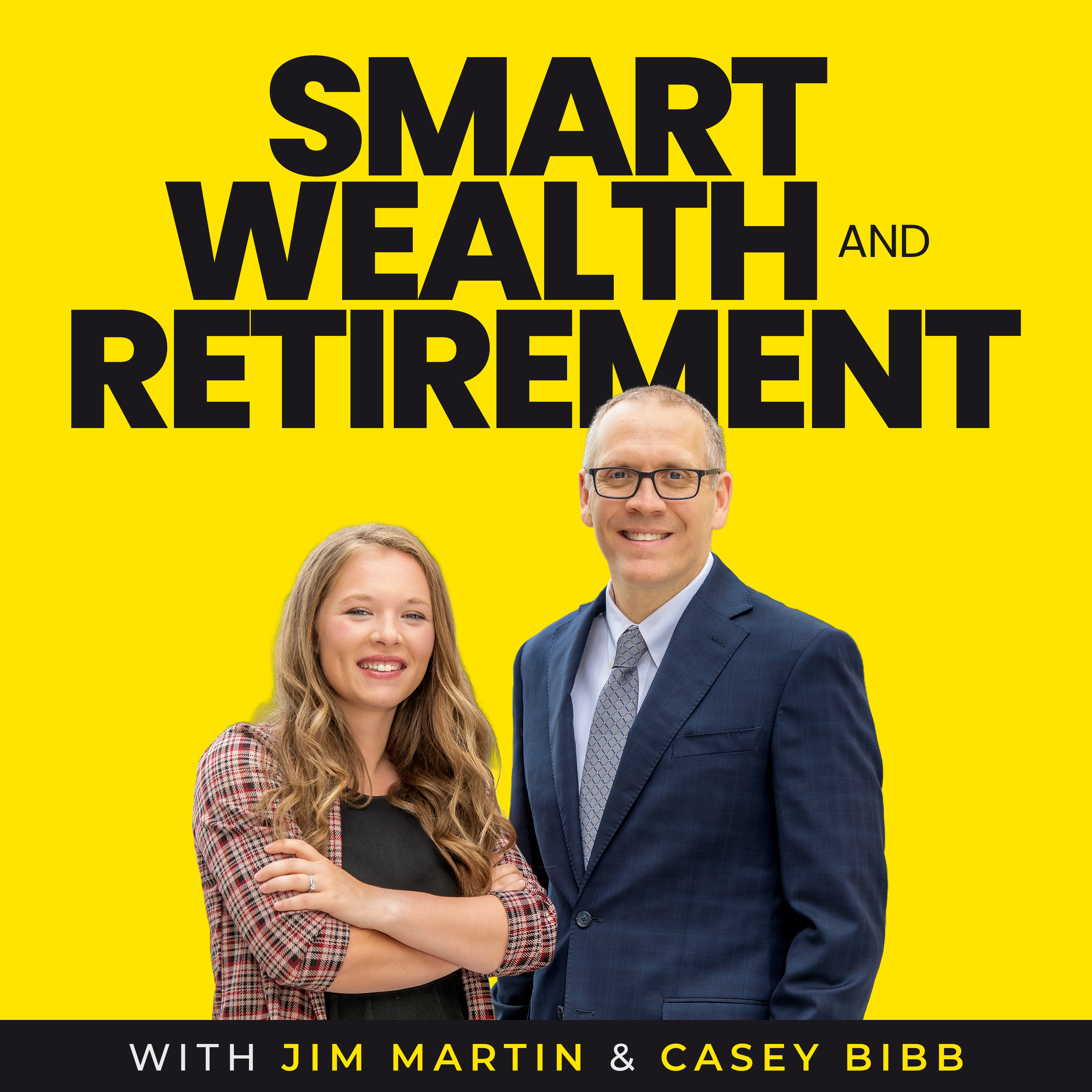
PODCAST · business
Smart Wealth and Retirement
by Jim Martin & Casey Bibb
A show designed to help retirees and pre-retirees live an awesome retirement.
-
100
How to Handle Health Insurance Before Medicare Kicks In
In this episode of the Smart Wealth & Retirement Podcast, financial advisors and retirement planners Jim Martin & Casey Bibb of Martin Wealth Solutions tackle one of the biggest challenges for early retirees: healthcare coverage before age 65. Jim and Casey explain why healthcare planning is often one of the most overlooked — yet critical — components of a successful retirement plan. They walk through the different coverage options available before Medicare eligibility, including COBRA, ACA marketplace plans, private insurance, and health-sharing alternatives. They also discuss how healthcare costs can impact retirement timelines, tax strategies, and income planning, helping listeners better understand how to prepare for this important gap period with confidence. http://retirewithmartin.com/ ← Learn about working with us www.planwellretirehappy.com Episode Breakdown 00:00 Introduction to Today’s Topic 01:30 Why healthcare before 65 is a major planning factor 03:02 The gap between retirement and Medicare eligibility 04:38 Option #1: COBRA coverage explained 06:14 Option #2: ACA marketplace plans 08:02 How subsidies and income affect ACA costs 09:46 Option #3: Private insurance alternatives 11:18 Health-sharing plans and considerations 12:54 Estimating healthcare costs in retirement 14:20 How healthcare impacts retirement timing 15:46 Tax planning strategies related to healthcare 17:08 Common mistakes early retirees make 18:36 Key takeaways and planning tips Disclaimer Opinions expressed herein are solely those of Martin Wealth Solutions, unless otherwise specifically cited. Material presented is believed to be from reliable sources, but no representations are made by our firm as to another parties’ informational accuracy or completeness. Content provided herein is for informational purposes only and should not be used or construed as investment advice or a recommendation regarding the purchase or sale of any security. There is no guarantee that any statements, opinions or forecasts provided herein will prove to be correct. All information or ideas provided should be discussed in detail with an advisor, accountant or legal counsel prior to implementation. Past performance may not be indicative of future results. Indices are not available for direct investment. Any investor who attempts to mimic the performance of an index would incur fees and expenses which would reduce returns. Securities investing involves risk, including the potential for loss of principal. There is no assurance that any investment plan or strategy will be successful.
-
99
Should You Stop Maxing Out Your 401(k)?
In this episode of the Smart Wealth & Retirement Podcast, financial advisors and retirement planners Jim Martin & Casey Bibb of Martin Wealth Solutions challenge a piece of conventional wisdom many investors follow without question: always max out your 401(k). Jim and Casey explain that while contributing to a 401(k) is often a smart move, it isn’t always the best move depending on your situation. They walk through scenarios where prioritizing flexibility, tax diversification, liquidity, or alternative investment strategies may make more sense than fully maxing out a retirement account. This episode helps listeners think more strategically about how their dollars are allocated — and whether blindly following common advice could actually limit long-term financial flexibility. http://retirewithmartin.com/ ← Learn about working with us www.planwellretirehappy.com Episode Breakdown 00:00 Introduction to Today’s Topic 01:28 Why “max your 401(k)” is common advice 02:56 When maxing out your 401(k) makes sense 04:30 The downside of over-concentrating in retirement accounts 06:08 Liquidity and access considerations 07:46 Tax diversification and future tax uncertainty 09:20 Balancing pre-tax vs after-tax savings 10:54 Alternative uses of excess savings 12:22 Building flexibility into your financial plan 13:56 Situations where reducing contributions may be beneficial 15:28 Coordinating 401(k) strategy with overall goals 17:02 Key takeaways and practical considerations Disclaimer Opinions expressed herein are solely those of Martin Wealth Solutions, unless otherwise specifically cited. Material presented is believed to be from reliable sources, but no representations are made by our firm as to another parties’ informational accuracy or completeness. Content provided herein is for informational purposes only and should not be used or construed as investment advice or a recommendation regarding the purchase or sale of any security. There is no guarantee that any statements, opinions or forecasts provided herein will prove to be correct. All information or ideas provided should be discussed in detail with an advisor, accountant or legal counsel prior to implementation. Past performance may not be indicative of future results. Indices are not available for direct investment. Any investor who attempts to mimic the performance of an index would incur fees and expenses which would reduce returns. Securities investing involves risk, including the potential for loss of principal. There is no assurance that any investment plan or strategy will be successful.
-
98
Are You Prepared for a 40% Market Drop?
In this episode of the Smart Wealth & Retirement Podcast, financial advisors and retirement planners Jim Martin & Casey Bibb of Martin Wealth Solutions discuss how investors can prepare mentally and financially for significant market downturns. Jim and Casey walk through four important questions every investor should ask themselves before a major market decline occurs. They explain why emotional reactions during market volatility can lead to costly decisions and how thoughtful preparation can help investors stay disciplined when markets become turbulent. By focusing on long-term strategy, risk tolerance, and proper planning, this episode helps listeners evaluate whether their current portfolio and retirement plan are built to withstand a significant market correction. http://retirewithmartin.com/ ← Learn about working with us www.planwellretirehappy.com Episode Breakdown 00:00 Introduction to Today’s Episode 01:28 Why market declines are inevitable 02:54 Why investors struggle during downturns 04:18 Question #1: How much volatility can you truly tolerate? 06:12 Question #2: Do you have a clear long-term plan? 08:04 Question #3: Is your portfolio properly diversified? 09:48 Question #4: Do you understand your time horizon? 11:36 The danger of emotional investing during downturns 13:14 How preparation improves investor behavior 14:50 Stress-testing your retirement plan 16:20 Key takeaways for market resilience Disclaimer Opinions expressed herein are solely those of Martin Wealth Solutions, unless otherwise specifically cited. Material presented is believed to be from reliable sources, but no representations are made by our firm as to another parties’ informational accuracy or completeness. Content provided herein is for informational purposes only and should not be used or construed as investment advice or a recommendation regarding the purchase or sale of any security. There is no guarantee that any statements, opinions or forecasts provided herein will prove to be correct. All information or ideas provided should be discussed in detail with an advisor, accountant or legal counsel prior to implementation. Past performance may not be indicative of future results. Indices are not available for direct investment. Any investor who attempts to mimic the performance of an index would incur fees and expenses which would reduce returns. Securities investing involves risk, including the potential for loss of principal. There is no assurance that any investment plan or strategy will be successful.
-
97
Should You Put Gold in Your IRA?
In this episode of the Smart Wealth & Retirement Podcast, financial advisors and retirement planners Jim Martin & Casey Bibb of Martin Wealth Solutions discuss a question many investors hear when markets feel uncertain: Should you own gold inside your IRA? Jim and Casey break down the appeal of gold and other precious metals, especially during times of market volatility, inflation concerns, or economic uncertainty. They explain why gold is often marketed as a “safe haven,” but also discuss its limitations, lack of income generation, and how it fits — or doesn’t fit — into a diversified retirement portfolio. Rather than chasing headlines or fear-driven strategies, this episode focuses on thoughtful portfolio construction and helping investors understand whether gold truly plays a meaningful role in long-term retirement planning. http://retirewithmartin.com/ ← Learn about working with us www.planwellretirehappy.com Episode Breakdown 00:00 Introduction to Today’s Episode 01:30 Why gold gets attention during uncertain markets 03:02 The history of gold as a store of value 04:40 Why some investors want gold in their IRA 06:18 Gold vs. productive investments 08:00 The problem with “fear-based” investing 09:46 Diversification and asset allocation considerations 11:32 Inflation protection: myth vs reality 13:10 Liquidity and practical considerations 14:56 Marketing tactics often used around gold investments 16:22 When precious metals might make sense in a portfolio 18:00 How gold fits into a balanced retirement plan 19:46 Questions to ask before investing in gold 21:08 Key takeaways and final thoughts Disclaimer Opinions expressed herein are solely those of Martin Wealth Solutions, unless otherwise specifically cited. Material presented is believed to be from reliable sources, but no representations are made by our firm as to another parties’ informational accuracy or completeness. Content provided herein is for informational purposes only and should not be used or construed as investment advice or a recommendation regarding the purchase or sale of any security. There is no guarantee that any statements, opinions or forecasts provided herein will prove to be correct. All information or ideas provided should be discussed in detail with an advisor, accountant or legal counsel prior to implementation. Past performance may not be indicative of future results. Indices are not available for direct investment. Any investor who attempts to mimic the performance of an index would incur fees and expenses which would reduce returns. Securities investing involves risk, including the potential for loss of principal. There is no assurance that any investment plan or strategy will be successful.
-
96
4 Ways People Fail at Retirement (And How to Avoid Them)
In this episode of the Smart Wealth & Retirement podcast, financial advisors and retirement planners Jim Martin & Casey Bibb of Martin Wealth Solutions discuss four common ways people unintentionally fail in retirement — and how thoughtful planning can help avoid these pitfalls. They explore how poor preparation, unrealistic spending expectations, tax surprises, and emotional investing decisions can derail even well-funded retirement plans. Jim and Casey walk through the real-world mistakes they see retirees make and explain how proactive planning, disciplined investing, and a well-structured income strategy can help retirees stay on track. This episode offers practical insight for anyone approaching retirement who wants to avoid common financial traps and build a retirement plan designed to last. http://retirewithmartin.com/ ← Learn about working with us www.planwellretirehappy.com Episode Breakdown 00:00 Introduction to Today’s Episode 01:32 Why some retirements fail despite good savings 03:10 Failure #1: Taking too much too soon 05:28 How income planning differs from saving 07:18 Failure #2: Ignoring taxes in retirement 09:46 How taxes can quietly erode retirement income 11:32 Failure #3: Letting emotions drive investment decisions 13:52 The impact of panic selling and market timing 15:24 Failure #4: Poor investor behavior 17:48 Balancing lifestyle goals with financial sustainability 19:42 How proper planning helps prevent these mistakes 21:08 Key takeaways for building a stronger retirement plan 22:40 Conclusion and final thoughts Disclaimer Opinions expressed herein are solely those of Martin Wealth Solutions, unless otherwise specifically cited. Material presented is believed to be from reliable sources, but no representations are made by our firm as to another parties’ informational accuracy or completeness. Content provided herein is for informational purposes only and should not be used or construed as investment advice or a recommendation regarding the purchase or sale of any security. There is no guarantee that any statements, opinions or forecasts provided herein will prove to be correct. All information or ideas provided should be discussed in detail with an advisor, accountant or legal counsel prior to implementation. Past performance may not be indicative of future results. Indices are not available for direct investment. Any investor who attempts to mimic the performance of an index would incur fees and expenses which would reduce returns. Securities investing involves risk, including the potential for loss of principal. There is no assurance that any investment plan or strategy will be successful.
-
95
What to Do With Your Old 401(k): Your Options Explained
In this episode of the Smart Wealth & Retirement Podcast, financial advisors and retirement planners Jim Martin & Casey Bibb of Martin Wealth Solutions break down one of the most common retirement planning questions: What should you do with your old 401(k) after leaving a job? Jim and Casey walk through the four primary options — leaving it with your former employer, rolling it into a new employer’s plan, transferring it to an IRA, or cashing it out. They explain the pros and cons of each choice, including tax implications, investment flexibility, fees, and long-term planning considerations. This episode helps listeners understand how to make an informed decision that aligns with their broader retirement goals, rather than defaulting to a choice without fully understanding the impact. http://retirewithmartin.com/ ← Learn about working with us www.planwellretirehappy.com Episode Breakdown 00:00 Introduction: The old 401(k) dilemma 01:46 Why this decision matters more than you think 03:22 Option 1: Leave it with your former employer 05:40 Pros and cons of staying in the old plan 07:48 Option 2: Roll it into a new employer’s 401(k) 10:02 When consolidation makes sense 12:04 Option 3: Roll it into an IRA 14:28 Investment flexibility and control 16:32 Fee considerations and hidden costs 18:40 Option 4: Cashing out — and why it’s risky 20:54 Taxes and penalties explained 23:06 Common mistakes to avoid 25:14 Coordinating your 401(k) with your retirement income plan 26:23 Key takeaways and final thoughts Disclaimer Opinions expressed herein are solely those of Martin Wealth Solutions, unless otherwise specifically cited. Material presented is believed to be from reliable sources, but no representations are made by our firm as to another parties’ informational accuracy or completeness. Content provided herein is for informational purposes only and should not be used or construed as investment advice or a recommendation regarding the purchase or sale of any security. There is no guarantee that any statements, opinions or forecasts provided herein will prove to be correct. All information or ideas provided should be discussed in detail with an advisor, accountant or legal counsel prior to implementation. Past performance may not be indicative of future results. Indices are not available for direct investment. Any investor who attempts to mimic the performance of an index would incur fees and expenses which would reduce returns. Securities investing involves risk, including the potential for loss of principal. There is no assurance that any investment plan or strategy will be successful.
-
94
6 Retirement Moves to Make Right Now
In this episode of the Smart Wealth & Retirement Podcast, financial advisors and retirement planners Jim Martin & Casey Bibb of Martin Wealth Solutions outline six strategic retirement moves you can make immediately to strengthen your financial future. Jim and Casey explain that successful retirement planning isn’t about timing the market or reacting to headlines — it’s about making proactive, disciplined decisions. From evaluating your savings rate and tax strategy to reassessing risk and income planning, they walk through practical steps that can meaningfully improve your retirement outlook. Whether you’re approaching retirement or already there, this episode provides clear, actionable guidance to help you make smarter financial decisions right now. http://retirewithmartin.com/ ← Learn about working with us www.planwellretirehappy.com Episode Breakdown 00:00 Introduction: Why taking action now matters 01:38 Move #1: Revisit your retirement timeline 03:20 Move #2: Increase or optimize your savings rate 05:06 Move #3: Improve tax efficiency before retirement 06:54 Move #4: Stress-test your income plan 08:40 Move #5: Reassess your portfolio risk and allocation 10:26 Move #6: Reduce or eliminate unnecessary debt 12:14 How small adjustments create long-term impact 14:00 Avoiding common retirement planning mistakes 15:50 Prioritizing which move to tackle first 17:42 Balancing growth with protection 19:30 Building flexibility into your plan 21:20 Key takeaways and practical next steps 23:48 Final thoughts and encouragement Disclaimer Opinions expressed herein are solely those of Martin Wealth Solutions, unless otherwise specifically cited. Material presented is believed to be from reliable sources, but no representations are made by our firm as to another parties’ informational accuracy or completeness. Content provided herein is for informational purposes only and should not be used or construed as investment advice or a recommendation regarding the purchase or sale of any security. There is no guarantee that any statements, opinions or forecasts provided herein will prove to be correct. All information or ideas provided should be discussed in detail with an advisor, accountant or legal counsel prior to implementation. Past performance may not be indicative of future results. Indices are not available for direct investment. Any investor who attempts to mimic the performance of an index would incur fees and expenses which would reduce returns. Securities investing involves risk, including the potential for loss of principal. There is no assurance that any investment plan or strategy will be successful.
-
93
Should you buy an annuity ? What Retirees Need to Know
In this episode of the Smart Wealth & Retirement Podcast, financial advisors and retirement planners Jim Martin & Casey Bibb of Martin Wealth Solutions break down one of the most debated topics in retirement planning: annuities. Jim and Casey explain what annuities are, how they work, and the different types available — including fixed, indexed, and variable annuities. They discuss the potential benefits of guaranteed income, tax deferral, and downside protection, along with the trade-offs such as fees, liquidity limitations, and complexity. Rather than taking a blanket “for” or “against” stance, this episode focuses on helping listeners understand when annuities may fit into a broader retirement income strategy — and when they may not. http://retirewithmartin.com/ ← Learn about working with us www.planwellretirehappy.com Episode Breakdown 00:00 – Introduction: Why annuities spark strong opinions 01:40 – What is an annuity? 03:18 – Different types of annuities explained 05:12 – The appeal of guaranteed income 07:04 – How annuities generate retirement income 08:56 – Tax deferral and long-term planning 10:38 – Fees and cost considerations 12:20 – Liquidity restrictions and surrender periods 14:06 – Who annuities may be appropriate for 16:02 – Situations where annuities may not make sense 18:14 – Comparing annuities to other income strategies 20:04 – Common misconceptions about annuities 22:10 – Questions to ask before purchasing 24:18 – Key takeaways and final thoughts Disclaimer Opinions expressed herein are solely those of Martin Wealth Solutions, unless otherwise specifically cited. Material presented is believed to be from reliable sources, but no representations are made by our firm as to another parties’ informational accuracy or completeness. Content provided herein is for informational purposes only and should not be used or construed as investment advice or a recommendation regarding the purchase or sale of any security. There is no guarantee that any statements, opinions or forecasts provided herein will prove to be correct. All information or ideas provided should be discussed in detail with an advisor, accountant or legal counsel prior to implementation. Past performance may not be indicative of future results. Indices are not available for direct investment. Any investor who attempts to mimic the performance of an index would incur fees and expenses which would reduce returns. Securities investing involves risk, including the potential for loss of principal. There is no assurance that any investment plan or strategy will be successful.
-
92
10 Smart Money Moves the Wealthy Make
In this episode of the Smart Wealth & Retirement Podcast, financial advisors and retirement planners Jim Martin & Casey Bibb of Martin Wealth Solutions break down 10 strategic money moves commonly used by wealthy individuals — and how everyday investors can apply the same principles. Jim and Casey explain that building wealth isn’t about flashy investments or insider tips. Instead, it often comes down to disciplined habits, intentional tax planning, risk management, diversification, and long-term thinking. They walk through practical steps listeners can implement, regardless of income level, to strengthen their financial foundation and retirement readiness. This episode focuses on smart decision-making, avoiding common pitfalls, and building a strategy that supports sustainable wealth over time. http://retirewithmartin.com/ ← Learn about working with us www.planwellretirehappy.com Episode Breakdown 00:00 – Introduction: What wealthy investors do differently 01:42 – Move #1: Prioritize long-term planning 03:16 – Move #2: Focus on tax efficiency 05:02 – Move #3: Diversify strategically 06:46 – Move #4: Manage risk intentionally 08:34 – Move #5: Control lifestyle inflation 10:18 – Move #6: Maintain liquidity and flexibility 12:06 – Move #7: Invest consistently 13:52 – Move #8: Avoid emotional investing 15:36 – Move #9: Use professional guidance strategically 17:26 – Move #10: Think in decades, not years 19:12 – Why discipline matters more than income 21:04 – Common mistakes people make trying to “get rich” 23:02 – Applying these principles at any wealth level 25:06 – Key takeaways and action steps 27:18 – Final thoughts and closing Disclaimer Opinions expressed herein are solely those of Martin Wealth Solutions, unless otherwise specifically cited. Material presented is believed to be from reliable sources, but no representations are made by our firm as to another parties’ informational accuracy or completeness. Content provided herein is for informational purposes only and should not be used or construed as investment advice or a recommendation regarding the purchase or sale of any security. There is no guarantee that any statements, opinions or forecasts provided herein will prove to be correct. All information or ideas provided should be discussed in detail with an advisor, accountant or legal counsel prior to implementation. Past performance may not be indicative of future results. Indices are not available for direct investment. Any investor who attempts to mimic the performance of an index would incur fees and expenses which would reduce returns. Securities investing involves risk, including the potential for loss of principal. There is no assurance that any investment plan or strategy will be successful.
-
91
Should You Work Part-Time in Retirement?
In this episode of the Smart Wealth & Retirement Podcast, financial advisors and retirement planners Jim Martin & Casey Bibb of Martin Wealth Solutions explore a question many retirees wrestle with: Should you work part-time in retirement? Jim and Casey break down the financial and lifestyle implications of part-time work after leaving a full-time career. They discuss how part-time income can affect Social Security benefits, taxes, Medicare premiums, and long-term retirement sustainability. They also talk about the non-financial side — including purpose, fulfillment, flexibility, and avoiding burnout. Whether you’re considering consulting, seasonal work, passion projects, or simply keeping busy, this episode helps you think through how part-time work fits into a well-structured retirement plan. http://retirewithmartin.com/ ← Learn about working with us www.planwellretirehappy.com Episode Breakdown 00:00 – Introduction: The idea of working in retirement 01:34 – Why more retirees are considering part-time work 03:10 – Financial benefits of working part-time 05:02 – How part-time income affects retirement withdrawals 06:46 – Social Security earnings limits explained 08:38 – Tax considerations and income stacking 10:20 – Medicare premiums and income-related adjustments 12:08 – Lifestyle benefits: purpose and structure 13:56 – Potential downsides and burnout risk 15:40 – When part-time work makes strategic sense 17:26 – How to incorporate part-time income into your plan 19:18 – Questions to ask before committing 20:30 – Key takeaways and final thoughts Disclaimer Opinions expressed herein are solely those of Martin Wealth Solutions, unless otherwise specifically cited. Material presented is believed to be from reliable sources, but no representations are made by our firm as to another parties’ informational accuracy or completeness. Content provided herein is for informational purposes only and should not be used or construed as investment advice or a recommendation regarding the purchase or sale of any security. There is no guarantee that any statements, opinions or forecasts provided herein will prove to be correct. All information or ideas provided should be discussed in detail with an advisor, accountant or legal counsel prior to implementation. Past performance may not be indicative of future results. Indices are not available for direct investment. Any investor who attempts to mimic the performance of an index would incur fees and expenses which would reduce returns. Securities investing involves risk, including the potential for loss of principal. There is no assurance that any investment plan or strategy will be successful.
-
90
How to Retire and Travel Without Running Out of Money
In this episode of the Smart Wealth & Retirement Podcast, financial advisors and retirement planners Jim Martin & Casey Bibb of Martin Wealth Solutions explore what it really takes to retire with travel as a top priority. Jim and Casey discuss why travel-focused retirements require intentional planning around income, cash flow, taxes, healthcare, and flexibility. They explain how travel goals can change spending patterns, why budgeting for experiences looks different than traditional retirement assumptions, and how to build a plan that supports both adventure and long-term financial security. Whether travel is an occasional goal or the centerpiece of your retirement lifestyle, this episode helps listeners understand how to plan realistically so travel enhances retirement — without creating financial stress later on. http://retirewithmartin.com/ ← Learn about working with us www.planwellretirehappy.com Episode Breakdown 00:00 – Introduction: Why travel is a top retirement goal 01:44 – What “retiring to travel” really looks like 03:28 – How travel changes retirement spending patterns 05:16 – Budgeting realistically for travel 07:08 – Income planning for flexible lifestyles 09:02 – Cash flow timing and liquidity considerations 10:58 – Taxes and travel-heavy retirement plans 12:44 – Healthcare planning while traveling 14:36 – Domestic vs. international travel considerations 16:24 – Longevity planning and pacing your travel goals 18:10 – Common mistakes travel-focused retirees make 20:04 – Building flexibility into your retirement plan 22:02 – Key questions to ask before retiring to travel 24:06 – Final thoughts and encouragement Disclaimer Opinions expressed herein are solely those of Martin Wealth Solutions, unless otherwise specifically cited. Material presented is believed to be from reliable sources, but no representations are made by our firm as to another parties’ informational accuracy or completeness. Content provided herein is for informational purposes only and should not be used or construed as investment advice or a recommendation regarding the purchase or sale of any security. There is no guarantee that any statements, opinions or forecasts provided herein will prove to be correct. All information or ideas provided should be discussed in detail with an advisor, accountant or legal counsel prior to implementation. Past performance may not be indicative of future results. Indices are not available for direct investment. Any investor who attempts to mimic the performance of an index would incur fees and expenses which would reduce returns. Securities investing involves risk, including the potential for loss of principal. There is no assurance that any investment plan or strategy will be successful.
-
89
Weatherproofing Your Retirement: How to Prepare for Life’s Financial Storms
In this episode of the Smart Wealth & Retirement Podcast, financial advisors and retirement planners Jim Martin & Casey Bibb of Martin Wealth Solutions discuss what it really means to “weatherproof” your retirement plan. Jim and Casey explain why retirement success isn’t about predicting the future — it’s about building a plan that can withstand market volatility, unexpected expenses, health issues, tax changes, and major life transitions. They walk through the key components of a resilient retirement strategy, including income diversification, risk management, flexibility, and proactive planning. This episode helps retirees and pre-retirees understand how to create a retirement plan that remains strong and steady, even when conditions change. http://retirewithmartin.com/ ← Learn about working with us www.planwellretirehappy.com Episode Breakdown 00:00 – Introduction: What does it mean to “weatherproof” retirement? 01:38 – Why uncertainty is inevitable in retirement 03:12 – Market volatility and income planning 05:02 – Preparing for unexpected expenses 06:56 – Healthcare, long-term care, and rising costs 08:58 – Inflation and purchasing power over time 10:46 – Diversifying income sources 12:42 – Risk management and portfolio structure 14:38 – Flexibility as a retirement planning advantage 16:26 – Common mistakes that weaken retirement plans 18:20 – Stress-testing your retirement strategy 20:08 – Practical steps to build resilience 22:06 – Key takeaways and next actions Disclaimer Opinions expressed herein are solely those of Martin Wealth Solutions, unless otherwise specifically cited. Material presented is believed to be from reliable sources, but no representations are made by our firm as to another parties’ informational accuracy or completeness. Content provided herein is for informational purposes only and should not be used or construed as investment advice or a recommendation regarding the purchase or sale of any security. There is no guarantee that any statements, opinions or forecasts provided herein will prove to be correct. All information or ideas provided should be discussed in detail with an advisor, accountant or legal counsel prior to implementation. Past performance may not be indicative of future results. Indices are not available for direct investment. Any investor who attempts to mimic the performance of an index would incur fees and expenses which would reduce returns. Securities investing involves risk, including the potential for loss of principal. There is no assurance that any investment plan or strategy will be successful.
-
88
How to Plan for Retirement If You’re Single or Widowed
In this episode of the Smart Wealth & Retirement Podcast, financial advisors and retirement planners Jim Martin & Casey Bibb of Martin Wealth Solutions address the unique challenges and considerations that come with retiring single or after the loss of a spouse. Jim and Casey discuss how retirement planning can change when you’re relying on a single income stream and making decisions on your own. They cover important topics such as Social Security strategies, income planning, tax considerations, estate planning updates, and managing risk — all while navigating the emotional side of major life transitions. This episode is designed to help single and widowed retirees move forward with clarity, confidence, and a plan that supports both financial security and peace of mind. http://retirewithmartin.com/ ← Learn about working with us www.planwellretirehappy.com Episode Breakdown 00:00 – Intro: Retirement planning when you’re on your own 01:52 – Why retiring single or widowed requires a different approach 03:26 – Emotional and financial shifts after loss or separation 05:12 – Income planning with a single household budget 07:08 – Social Security considerations for single and widowed retirees 09:12 – Survivor benefits and claiming strategies 11:18 – Managing taxes with one income stream 13:06 – Estate planning updates and beneficiary reviews 15:02 – Risk management and insurance considerations 17:06 – Building a reliable retirement income plan 19:04 – Common mistakes single and widowed retirees make 21:10 – Creating a trusted support team 23:04 – Practical steps to regain confidence and control 25:12 – Key takeaways and encouragement 27:00 – Final thoughts and closing Disclaimer Opinions expressed herein are solely those of Martin Wealth Solutions, unless otherwise specifically cited. Material presented is believed to be from reliable sources, but no representations are made by our firm as to another parties’ informational accuracy or completeness. Content provided herein is for informational purposes only and should not be used or construed as investment advice or a recommendation regarding the purchase or sale of any security. There is no guarantee that any statements, opinions or forecasts provided herein will prove to be correct. All information or ideas provided should be discussed in detail with an advisor, accountant or legal counsel prior to implementation. Past performance may not be indicative of future results. Indices are not available for direct investment. Any investor who attempts to mimic the performance of an index would incur fees and expenses which would reduce returns. Securities investing involves risk, including the potential for loss of principal. There is no assurance that any investment plan or strategy will be successful.
-
87
Should You Really Max Out Your 401(k)?
In this episode of the Smart Wealth & Retirement Podcast, financial advisors and retirement planners Jim Martin & Casey Bibb of Martin Wealth Solutions tackle a popular piece of financial advice: “Always max out your 401(k).” Jim and Casey explain why this rule of thumb can be helpful in some situations — but harmful in others. They walk through how tax brackets, employer matches, cash flow needs, future tax uncertainty, and account diversification all play a role in determining whether maxing out a 401(k) actually makes sense for you. This episode encourages listeners to move beyond blanket advice and instead focus on intentional retirement planning that aligns savings strategies with long-term goals, flexibility, and tax efficiency. http://retirewithmartin.com/ ← Learn about working with us www.planwellretirehappy.com Episode Breakdown 00:00 – Introduction: The “max out your 401(k)” question 01:30 – Why this advice is so commonly given 03:02 – The benefits of maxing out a 401(k) 04:58 – Employer match vs. full max contributions 06:22 – Tax brackets and future tax uncertainty 08:10 – When maxing out doesn’t make sense 10:06 – Balancing retirement savings with cash flow 12:02 – 401(k)s vs. Roth and taxable accounts 14:04 – Flexibility and access to funds before retirement 16:06 – Building a diversified savings strategy 18:00 – Closing and final thoughts Disclaimer Opinions expressed herein are solely those of Martin Wealth Solutions, unless otherwise specifically cited. Material presented is believed to be from reliable sources, but no representations are made by our firm as to another parties’ informational accuracy or completeness. Content provided herein is for informational purposes only and should not be used or construed as investment advice or a recommendation regarding the purchase or sale of any security. There is no guarantee that any statements, opinions or forecasts provided herein will prove to be correct. All information or ideas provided should be discussed in detail with an advisor, accountant or legal counsel prior to implementation. Past performance may not be indicative of future results. Indices are not available for direct investment. Any investor who attempts to mimic the performance of an index would incur fees and expenses which would reduce returns. Securities investing involves risk, including the potential for loss of principal. There is no assurance that any investment plan or strategy will be successful.
-
86
The Retirement Tax Window: Preparing for 2025 Filing and Planning Ahead for 2026
In this episode of the Smart Wealth & Retirement Podcast, financial advisors and retirement planners Jim Martin & Casey Bibb of Martin Wealth Solutions break down key tax planning considerations for retirees coming out of 2025 and heading into 2026. Jim and Casey discuss why taxes remain one of the biggest — and most controllable — risks in retirement. They cover topics such as changing tax brackets, required minimum distributions (RMDs), Roth strategies, capital gains planning, and how proactive tax decisions can significantly improve long-term outcomes. Rather than focusing on predictions, this episode emphasizes flexibility, planning, and awareness, helping retirees and pre-retirees understand where opportunities and pitfalls may exist in the coming years. http://retirewithmartin.com/ ← Learn about working with us www.planwellretirehappy.com Episode Breakdown 00:00 – Introduction: Why tax planning matters more in retirement 01:36 – Why retirees need to think differently about taxes 03:02 – Current tax brackets and why future changes matter 04:56 – The role of RMDs in retirement tax planning 06:42 – Roth conversions: when they make sense (and when they don’t) 08:34 – Managing taxable vs. tax-deferred accounts 10:18 – Capital gains planning and investment taxation 12:04 – How Social Security benefits are taxed 13:52 – Medicare premiums and tax-related surcharges 15:24 – Coordinating income sources to reduce tax drag 17:06 – Common tax planning mistakes retirees make 18:56 – Action steps to consider for 2025–2026 20:24 – Final thoughts and closing Disclaimer Opinions expressed herein are solely those of Martin Wealth Solutions, unless otherwise specifically cited. Material presented is believed to be from reliable sources, but no representations are made by our firm as to another parties’ informational accuracy or completeness. Content provided herein is for informational purposes only and should not be used or construed as investment advice or a recommendation regarding the purchase or sale of any security. There is no guarantee that any statements, opinions or forecasts provided herein will prove to be correct. All information or ideas provided should be discussed in detail with an advisor, accountant or legal counsel prior to implementation. Past performance may not be indicative of future results. Indices are not available for direct investment. Any investor who attempts to mimic the performance of an index would incur fees and expenses which would reduce returns. Securities investing involves risk, including the potential for loss of principal. There is no assurance that any investment plan or strategy will be successful.
-
85
Do You Really Need a Financial Advisor? Here’s How to Decide
In this episode of the Smart Wealth & Retirement Podcast, financial advisor and retirement planner Jim Martin of Martin Wealth Solutions is joined by special guest Linwood Fraher to tackle a common question many investors and retirees wrestle with: When does it make sense to hire a financial advisor? Jim and Linwood discuss the moments in life when DIY investing can become risky — such as major life transitions, retirement planning, tax complexity, or managing emotions during volatile markets. They explain what a good advisor actually does beyond picking investments, how fiduciary advice differs from sales-driven guidance, and how working with the right advisor can bring clarity, confidence, and coordination to your entire financial life. Whether you’re managing things on your own or already working with an advisor, this episode helps you evaluate when professional guidance can add real value. http://retirewithmartin.com/ ← Learn about working with us www.planwellretirehappy.com Episode Breakdown 00:00 – Introduction: The question of hiring an advisor 00:49 – Meet Jim Martin & special guest Linwood Fraher 01:44 – Why so many people try to manage finances on their own 03:18 – Life events that often trigger the need for advice 05:06 – Retirement planning complexity vs. DIY investing 06:58 – Taxes, income planning, and coordination challenges 08:52 – Emotional decision-making and market volatility 10:46 – What a good financial advisor actually does 12:34 – Fiduciary advice vs. product-driven sales 14:28 – How an advisor adds value beyond investments 16:22 – Signs it may be time to get professional help 18:20 – Questions to ask before hiring an advisor 20:16 – Red flags to watch out for 22:18 – Key takeaways and next steps Disclaimer Opinions expressed herein are solely those of Martin Wealth Solutions, unless otherwise specifically cited. Material presented is believed to be from reliable sources, but no representations are made by our firm as to another parties’ informational accuracy or completeness. Content provided herein is for informational purposes only and should not be used or construed as investment advice or a recommendation regarding the purchase or sale of any security. There is no guarantee that any statements, opinions or forecasts provided herein will prove to be correct. All information or ideas provided should be discussed in detail with an advisor, accountant or legal counsel prior to implementation. Past performance may not be indicative of future results. Indices are not available for direct investment. Any investor who attempts to mimic the performance of an index would incur fees and expenses which would reduce returns. Securities investing involves risk, including the potential for loss of principal. There is no assurance that any investment plan or strategy will be successful.
-
84
Retiring Before 60: What It Really Takes to Make It Happen
In this episode of the Smart Wealth & Retirement Podcast, financial advisors and retirement planners Jim Martin & Casey Bibb of Martin Wealth Solutions break down what it truly takes to retire before age 60 — and why it’s more about planning and discipline than luck or extreme investing. Jim and Casey discuss the key building blocks of early retirement, including savings rates, tax strategy, healthcare planning, income flexibility, and lifestyle design. They also address common misconceptions about retiring early, the trade-offs involved, and how to build a plan that supports long-term sustainability rather than short-term freedom. Whether early retirement is a firm goal or simply a possibility you want to keep open, this episode provides a realistic framework to help you decide if retiring before 60 is achievable — and what steps to take next. http://retirewithmartin.com/ ← Learn about working with us www.planwellretirehappy.com Episode Breakdown 00:00 – Introduction: Why retiring before 60 appeals to so many people 01:38 – What “retiring before 60” really means 03:06 – The biggest misconceptions about early retirement 05:02 – Savings rate vs. rate of return 06:58 – Tax strategy and account positioning 08:56 – Healthcare planning before Medicare 10:48 – Income flexibility and withdrawal planning 12:42 – Lifestyle expectations and trade-offs 14:28 – How early retirement changes risk management 16:16 – Common mistakes early retirees make 18:06 – Key questions to ask if early retirement is your goal 20:01 – Final thoughts and encouragement Disclaimer Opinions expressed herein are solely those of Martin Wealth Solutions, unless otherwise specifically cited. Material presented is believed to be from reliable sources, but no representations are made by our firm as to another parties’ informational accuracy or completeness. Content provided herein is for informational purposes only and should not be used or construed as investment advice or a recommendation regarding the purchase or sale of any security. There is no guarantee that any statements, opinions or forecasts provided herein will prove to be correct. All information or ideas provided should be discussed in detail with an advisor, accountant or legal counsel prior to implementation. Past performance may not be indicative of future results. Indices are not available for direct investment. Any investor who attempts to mimic the performance of an index would incur fees and expenses which would reduce returns. Securities investing involves risk, including the potential for loss of principal. There is no assurance that any investment plan or strategy will be successful.
-
83
Caring for Aging Parents Without Sacrificing Your Retirement
In this episode of the Smart Wealth & Retirement Podcast, financial advisors and retirement planners Jim Martin & Casey Bibb of Martin Wealth Solutions discuss the growing reality many families face: supporting aging parents while protecting your own retirement plan. Jim and Casey walk through the emotional, financial, and logistical challenges that arise when parents begin needing help. They cover how to start difficult conversations, understand care options, coordinate finances, and avoid common mistakes that can strain relationships and derail long-term plans. The conversation offers practical guidance for navigating caregiving responsibilities with clarity, compassion, and confidence. http://retirewithmartin.com/ ← Learn about working with us www.planwellretirehappy.com Episode Breakdown 00:00 – Introduction: When caring for parents becomes part of your plan 02:02 – Why more families are facing caregiving decisions 03:34 – The emotional impact of helping aging parents 05:22 – Starting the conversation with Mom & Dad 07:14 – Understanding care options: in-home, assisted living, and beyond 09:26 – Financial considerations families often overlook 11:42 – Coordinating siblings and shared responsibilities 13:58 – How caregiving can affect your own retirement goals 16:04 – Planning ahead to avoid crisis-driven decisions 18:22 – Legal and documentation considerations 20:14 – When professional help may be needed 22:06 – Common mistakes families make 24:10 – Key takeaways for caregivers and planners Disclaimer Opinions expressed herein are solely those of Martin Wealth Solutions, unless otherwise specifically cited. Material presented is believed to be from reliable sources, but no representations are made by our firm as to another parties’ informational accuracy or completeness. Content provided herein is for informational purposes only and should not be used or construed as investment advice or a recommendation regarding the purchase or sale of any security. There is no guarantee that any statements, opinions or forecasts provided herein will prove to be correct. All information or ideas provided should be discussed in detail with an advisor, accountant or legal counsel prior to implementation. Past performance may not be indicative of future results. Indices are not available for direct investment. Any investor who attempts to mimic the performance of an index would incur fees and expenses which would reduce returns. Securities investing involves risk, including the potential for loss of principal. There is no assurance that any investment plan or strategy will be successful.
-
82
When One Spouse Is Ready to Retire — and the Other Isn’t
In this episode of the Smart Wealth & Retirement Podcast, financial advisors and retirement planners Jim Martin & Casey Bibb of Martin Wealth Solutions tackle a sensitive — but very common — retirement challenge: when one spouse is ready to retire and the other isn’t. Jim and Casey discuss why this situation happens more often than people expect and how differences in identity, purpose, finances, and timing can create tension. They explore the emotional and practical considerations behind staggered retirements, how income planning changes when only one spouse stops working, and why communication and clarity are critical before making any big decisions. If you or your spouse are approaching retirement and feeling unsure about taking that step together, this episode offers thoughtful guidance to help couples move forward with confidence and alignment. http://retirewithmartin.com/ ← Learn about working with us www.planwellretirehappy.com Episode Breakdown 00:00 – Introduction: When retirement timing isn’t aligned 01:46 – Why this issue comes up so often with couples 03:12 – Emotional reasons one spouse may not want to retire 05:08 – Identity, purpose, and work beyond the paycheck 07:06 – Financial concerns behind staggered retirements 09:02 – How income planning changes when one spouse retires 11:14 – Social Security and benefit timing considerations 13:06 – Communication mistakes couples often make 15:02 – How to start the retirement conversation productively 17:04 – Planning options when spouses retire at different times 19:10 – Real-life client examples and lessons learned 21:12 – Final thoughts and closing Disclaimer Opinions expressed herein are solely those of Martin Wealth Solutions, unless otherwise specifically cited. Material presented is believed to be from reliable sources, but no representations are made by our firm as to another parties’ informational accuracy or completeness. Content provided herein is for informational purposes only and should not be used or construed as investment advice or a recommendation regarding the purchase or sale of any security. There is no guarantee that any statements, opinions or forecasts provided herein will prove to be correct. All information or ideas provided should be discussed in detail with an advisor, accountant or legal counsel prior to implementation. Past performance may not be indicative of future results. Indices are not available for direct investment. Any investor who attempts to mimic the performance of an index would incur fees and expenses which would reduce returns. Securities investing involves risk, including the potential for loss of principal. There is no assurance that any investment plan or strategy will be successful.
-
81
7 Retirement Investment Myths That Could Cost You
In this episode of the Smart Wealth & Retirement Podcast, financial advisors and retirement planners Jim Martin & Casey Bibb of Martin Wealth Solutions take on some of the most common — and dangerous — investment myths that can derail retirement plans. Jim and Casey break down widely held beliefs about risk, market timing, diversification, income investing, and “playing it safe” in retirement. They explain why these myths persist, how they can quietly hurt long-term outcomes, and what a smarter, more disciplined investment approach looks like as you near or enter retirement. If you’ve ever felt uncertain about how to invest once retirement is on the horizon, this episode provides clarity and perspective to help you make confident, informed decisions. http://retirewithmartin.com/ ← Learn about working with us www.planwellretirehappy.com Episode Breakdown 00:00 – Introduction: Why retirement investment myths are so common 01:42 – Why misinformation spreads in investing 02:10 – Myth #1: “The Stock Market is too risky in retirement” 05:03 – Myth #2: “Bond are always safe” 06:03 – Myth #3: “You can just live off dividends and interest” 08:34 – Myth #4: “Can you time the Market?” 10:12 – Myth #5: “Past performance predicts future results” 12:20 – Myth #6: “Fees don't matter if performance is good” 13:48 – Myth #7: “You don't need professional help - You can do it yourself” 16:40 – How to protect yourself from investment myths 21:06 – What smart investing really looks like in retirement 23:10 – Key takeaways and final thoughts Disclaimer Opinions expressed herein are solely those of Martin Wealth Solutions, unless otherwise specifically cited. Material presented is believed to be from reliable sources, but no representations are made by our firm as to another parties’ informational accuracy or completeness. Content provided herein is for informational purposes only and should not be used or construed as investment advice or a recommendation regarding the purchase or sale of any security. There is no guarantee that any statements, opinions or forecasts provided herein will prove to be correct. All information or ideas provided should be discussed in detail with an advisor, accountant or legal counsel prior to implementation. Past performance may not be indicative of future results. Indices are not available for direct investment. Any investor who attempts to mimic the performance of an index would incur fees and expenses which would reduce returns. Securities investing involves risk, including the potential for loss of principal. There is no assurance that any investment plan or strategy will be successful.
-
80
Should You Own Bonds in Retirement? Here’s What to Know
In this episode of the Smart Wealth & Retirement Podcast, financial advisors and retirement planners Jim Martin & Casey Bibb of Martin Wealth Solutions break down one of the most confusing — yet essential — components of retirement planning: bonds. Jim and Casey explain what bonds are, how they generate income, and why they behave differently from stocks. They dig into interest rates, bond ladders, risk vs. reward, and why bonds can either stabilize a retirement portfolio or hold it back depending on how they're used. Whether you're already retired or planning ahead, this episode clarifies the role bonds should play in your long-term income plan — especially in today’s evolving interest-rate environment. http://retirewithmartin.com/ ← Learn about working with us www.planwellretirehappy.com Episode Breakdown 00:00 – Introduction: Why bonds matter in retirement 01:36 – What exactly is a bond? 02:58 – How bonds generate income 04:26 – Why bonds behave differently from stocks 05:58 – Interest rates and how they affect bond values 07:46 – The role bonds play in stabilizing a retirement portfolio 09:30 – When bonds can actually hurt your retirement plan 11:12 – Understanding bond duration and risk 12:58 – The pros and cons of bond ladders 14:40 – How to know if you have the right amount of bonds 16:12 – Bonds vs. CDs vs. annuities — what’s the difference? 17:48 – Practical tips for building a bond strategy Disclaimer Opinions expressed herein are solely those of Martin Wealth Solutions, unless otherwise specifically cited. Material presented is believed to be from reliable sources, but no representations are made by our firm as to another parties’ informational accuracy or completeness. Content provided herein is for informational purposes only and should not be used or construed as investment advice or a recommendation regarding the purchase or sale of any security. There is no guarantee that any statements, opinions or forecasts provided herein will prove to be correct. All information or ideas provided should be discussed in detail with an advisor, accountant or legal counsel prior to implementation. Past performance may not be indicative of future results. Indices are not available for direct investment. Any investor who attempts to mimic the performance of an index would incur fees and expenses which would reduce returns. Securities investing involves risk, including the potential for loss of principal. There is no assurance that any investment plan or strategy will be successful.
-
79
The Biggest Retirement Mistakes—and How to Avoid Them
In this episode of the Smart Wealth & Retirement Podcast, financial advisors and retirement planners Jim Martin & Casey Bibb of Martin Wealth Solutions break down some of the most common — and costly — mistakes people make leading up to and during retirement. From emotional investing and improper risk management to underestimating taxes, Social Security timing, and overspending early in retirement, Jim and Casey explain why these issues show up so often… and what you can do to stay clear of them. They share real-world client experiences, discuss the habits that lead to long-term success, and offer practical steps to help retirees and pre-retirees avoid unnecessary stress, poor decisions, and financial regret. http://retirewithmartin.com/ ← Learn about working with us www.planwellretirehappy.com Episode Breakdown 00:00 – Introduction: Why retirement mistakes happen 03:05 – Mistake #1: Overspending early in retirement 06:14 – Mistake #2: Not having a written plan 08:10 – Mistake #3: Not investing your age 10:34 – Mistake #4: Working longer than you really needed to 13:29 – Mistake #5: Ignoring taxes until it's too late 14:23 – Mistake #6: Delaying big decisions 16:50 – Mistake #7: Not reaching out to our team 17:40 – Q&A with Casey 20:45 – Key takeaways & closing thoughts Disclaimer Opinions expressed herein are solely those of Martin Wealth Solutions, unless otherwise specifically cited. Material presented is believed to be from reliable sources, but no representations are made by our firm as to another parties’ informational accuracy or completeness. Content provided herein is for informational purposes only and should not be used or construed as investment advice or a recommendation regarding the purchase or sale of any security. There is no guarantee that any statements, opinions or forecasts provided herein will prove to be correct. All information or ideas provided should be discussed in detail with an advisor, accountant or legal counsel prior to implementation. Past performance may not be indicative of future results. Indices are not available for direct investment. Any investor who attempts to mimic the performance of an index would incur fees and expenses which would reduce returns. Securities investing involves risk, including the potential for loss of principal. There is no assurance that any investment plan or strategy will be successful.
-
78
Staying Sane in a Nervous Market: How Smart Investors Keep Their Cool
In this episode of the Smart Wealth & Retirement Podcast, financial advisors and retirement planners Jim Martin & Casey Bibb of Martin Wealth Solutions talk through one of the biggest emotional challenges retirees face: staying calm during market volatility. Jim and Casey unpack why markets feel so unpredictable, the psychological traps investors often fall into, and the practical steps you can take to keep your financial plan on track when headlines turn scary. They also share real client experiences, lessons learned from previous downturns, and the mindset shifts that help long-term investors stay confident rather than reactive. Whether you're retired or nearing retirement, this episode provides clarity and reassurance for navigating uncertain times with a steady hand. http://retirewithmartin.com/ ← Learn about working with us www.planwellretirehappy.com Episode Breakdown 00:00 – Introduction: Why markets feel more “nervous” lately 02:04 – What a “nervous market” really means 03:30 – Why volatility feels worse than it actually is 05:22 – Emotional traps investors fall into 07:10 – Recency bias, fear, and market overreactions 09:18 – What history tells us about volatile periods 11:26 – How long-term investors can stay grounded 13:14 – Building a plan that can weather any market 15:06 – Why staying invested matters more than timing 17:20 – Real client stories from past downturns 19:02 – Practical steps to stay calm and make smart decisions 21:18 – How to evaluate your portfolio during volatility 22:42 – Final thoughts and encouragement Disclaimer Opinions expressed herein are solely those of Martin Wealth Solutions, unless otherwise specifically cited. Material presented is believed to be from reliable sources, but no representations are made by our firm as to another parties’ informational accuracy or completeness. Content provided herein is for informational purposes only and should not be used or construed as investment advice or a recommendation regarding the purchase or sale of any security. There is no guarantee that any statements, opinions or forecasts provided herein will prove to be correct. All information or ideas provided should be discussed in detail with an advisor, accountant or legal counsel prior to implementation. Past performance may not be indicative of future results. Indices are not available for direct investment. Any investor who attempts to mimic the performance of an index would incur fees and expenses which would reduce returns. Securities investing involves risk, including the potential for loss of principal. There is no assurance that any investment plan or strategy will be successful.
-
77
Your 10-Step Year-End Financial Checklist
In this episode of the Smart Wealth & Retirement Podcast, financial advisors and retirement planners Jim Martin & Casey Bibb of Martin Wealth Solutions walk through a practical, easy-to-follow year-end financial checklist to help you finish the year strong and set up a successful year ahead. Jim and Casey cover ten items every household should review before December 31st — They explain why each step matters, what most people overlook, and how small adjustments now can make a big impact on your long-term retirement plan. Whether you’re nearing retirement or still building toward it, this is a simple and actionable guide to making sure your financial life is aligned and prepared for the coming year. http://retirewithmartin.com/ ← Learn about working with us www.planwellretirehappy.com Episode Breakdown 00:00 – Introduction: Why year-end planning matters 01:34 – What to review before December 31 03:18 – Checklist Item #1: Review your tax situation 04:24 – Checklist Item #2: Take your RMDs 05:06 – Checklist Item #3: Maximize retirement contributions 05:56 – Checklist Item #4: Harvest gains & losses wisely 07:20 – Checklist Item #5: Give strategically 08:15 – Checklist Item #6: Review your portfolio & rebalance 09:05 – Checklist Item #7: Check beneficiaries & estate documents 10:10 – Checklist Item #8: Review your insurance coverage 10:45 – Checklist Item #9: Review long-term care insurance 11:05 – Checklist Item #10: Set next year's financial goals 13:10 – Q&A with Casey 15:25 – Final thoughts & takeaways Disclaimer: Opinions expressed herein are solely those of Martin Wealth Solutions, unless otherwise specifically cited. Material presented is believed to be from reliable sources, but no representations are made by our firm as to another parties’ informational accuracy or completeness. Content provided herein is for informational purposes only and should not be used or construed as investment advice or a recommendation regarding the purchase or sale of any security. There is no guarantee that any statements, opinions or forecasts provided herein will prove to be correct. All information or ideas provided should be discussed in detail with an advisor, accountant or legal counsel prior to implementation. Past performance may not be indicative of future results. Indices are not available for direct investment. Any investor who attempts to mimic the performance of an index would incur fees and expenses which would reduce returns. Securities investing involves risk, including the potential for loss of principal. There is no assurance that any investment plan or strategy will be successful.
-
76
Long-Term Care 101: What You Need to Know Before You Retire
In this episode of the Smart Wealth & Retirement Podcast, financial advisors and retirement planners Jim Martin & Casey Bibb of Martin Wealth Solutions dive deep into one of the most important — and often misunderstood — parts of retirement planning: long-term care. They break down what long-term care really means, how it fits into a retirement plan, and the pros and cons of having insurance versus self-funding. Jim and Casey explore the emotional and financial impact of care decisions, discuss the difference between traditional and hybrid policies, and share real-life examples from clients who’ve faced these challenges firsthand. Whether you’re in your 50s, nearing retirement, or already retired, this episode offers practical insight into protecting your assets and your loved ones while maintaining peace of mind. http://retirewithmartin.com/ ← Learn about working with us www.planwellretirehappy.com Episode Breakdown 00:00 – Introduction: Why long-term care planning matters 02:12 – What “long-term care” actually covers 04:05 – How rising healthcare costs affect retirees 06:14 – Why planning early can make a big difference 08:02 – The pros of long-term care insurance 10:26 – Common drawbacks and misconceptions 12:45 – Comparing traditional vs. hybrid policies 15:04 – When self-funding may make more sense 17:10 – How long-term care can impact your income plan 19:22 – Real-life client examples and lessons learned 23:02 – Key takeaways and next steps Disclosure Opinions expressed herein are solely those of Martin Wealth Solutions, unless otherwise specifically cited. Material presented is believed to be from reliable sources, but no representations are made by our firm as to another parties’ informational accuracy or completeness. Content provided herein is for informational purposes only and should not be used or construed as investment advice or a recommendation regarding the purchase or sale of any security. There is no guarantee that any statements, opinions or forecasts provided herein will prove to be correct. All information or ideas provided should be discussed in detail with an advisor, accountant or legal counsel prior to implementation. Past performance may not be indicative of future results. Indices are not available for direct investment. Any investor who attempts to mimic the performance of an index would incur fees and expenses which would reduce returns. Securities investing involves risk, including the potential for loss of principal. There is no assurance that any investment plan or strategy will be successful.
-
75
Rental Properties in Retirement: Smart Investment or Stress Trap?
In this episode of the Smart Wealth & Retirement Podcast, financial advisors and retirement planners Jim Martin & Casey Bibb of Martin Wealth Solutions explore whether owning rental properties is a smart move during retirement. They discuss the pros — such as steady income, appreciation, and diversification — along with the cons that retirees often overlook, including taxes, maintenance headaches, liquidity issues, and tenant risk. Jim and Casey share real-life stories from clients who’ve both succeeded and struggled with investment properties, and they examine alternatives like REITs and other passive income options that offer exposure to real estate without the stress of being a landlord. If you’ve ever wondered whether real estate belongs in your retirement plan, this conversation offers a balanced look at the opportunities and pitfalls — so you can make decisions that align with your goals, not just the headlines. http://retirewithmartin.com/ ← Learn about working with us www.planwellretirehappy.com Episode Breakdown 00:00 – Introduction: Is real estate the right move in retirement? 02:06 – The appeal of rental income for retirees 04:25 – The realities of being a landlord 06:40 – Taxes, repairs, and cash flow surprises 08:58 – When rental properties become more work than reward 11:10 – Client story: managing multiple rental homes 13:18 – Evaluating the opportunity cost of real estate ownership 15:06 – REITs and other alternatives to direct property management 17:45 – How to know if real estate fits your retirement plan 20:12 – Final thoughts and key takeaways Disclaimer Opinions expressed herein are solely those of Martin Wealth Solutions, unless otherwise specifically cited. Material presented is believed to be from reliable sources, but no representations are made by our firm as to another parties’ informational accuracy or completeness. Content provided herein is for informational purposes only and should not be used or construed as investment advice or a recommendation regarding the purchase or sale of any security. There is no guarantee that any statements, opinions or forecasts provided herein will prove to be correct. All information or ideas provided should be discussed in detail with an advisor, accountant or legal counsel prior to implementation. Past performance may not be indicative of future results. Indices are not available for direct investment. Any investor who attempts to mimic the performance of an index would incur fees and expenses which would reduce returns. Securities investing involves risk, including the potential for loss of principal. There is no assurance that any investment plan or strategy will be successful.
-
74
Do You Really Need $1.5 Million to Retire? Breaking Down the Myth.
In this episode of the Smart Wealth & Retirement Podcast, financial advisors and retirement planners Jim Martin & Casey Bibb of Martin Wealth Solutions tackle one of the most common retirement questions — “Do I really need $1.5 million to retire comfortably?” Jim and Casey break down where that number comes from, why it’s often misunderstood, and what truly determines how much you need. They discuss the key variables that shape your retirement number — lifestyle, spending habits, healthcare, taxes, and longevity — and explain how income planning can often matter more than your total account balance. Whether you’re just starting to save or approaching the finish line, this episode helps you replace the guesswork with a plan that fits your real life — not a headline. 👉 http://retirewithmartin.com/ ← Learn about working with us 👉 www.planwellretirehappy.com Timestamps: 00:00 Introduction: The $1.5 Million Question 00:48 Meet the Hosts – Jim & Casey 01:35 Where the $1.5M Rule Comes From 03:22 Why “One-Size-Fits-All” Doesn’t Work 05:10 Lifestyle & Spending: The Real Drivers of Your Number 07:00 How Location and Cost of Living Impact Your Plan 08:45 The Importance of Income Planning Over Total Savings 10:58 Understanding Taxes, Inflation, and Longevity Risks 13:42 Real Client Story: Living Well Below $1.5 Million 16:05 How to Calculate Your Personal Retirement Number 18:10 Common Mistakes People Make When Estimating Needs 19:35 Final Thoughts: Confidence Over Comparison Disclaimer Opinions expressed herein are solely those of Martin Wealth Solutions, unless otherwise specifically cited. Material presented is believed to be from reliable sources, but no representations are made by our firm as to another parties’ informational accuracy or completeness. Content provided herein is for informational purposes only and should not be used or construed as investment advice or a recommendation regarding the purchase or sale of any security. There is no guarantee that any statements, opinions or forecasts provided herein will prove to be correct. All information or ideas provided should be discussed in detail with an advisor, accountant or legal counsel prior to implementation. Past performance may not be indicative of future results. Indices are not available for direct investment. Any investor who attempts to mimic the performance of an index would incur fees and expenses which would reduce returns. Securities investing involves risk, including the potential for loss of principal. There is no assurance that any investment plan or strategy will be successful.
-
73
Healthcare in Retirement 101
In this episode of the Smart Wealth & Retirement Podcast, financial advisor and retirement planner Casey Bibb of Martin Wealth Solutions is joined by special guest Theresa Martin to discuss one of the most underestimated parts of retirement planning — healthcare costs. Together, they unpack what retirees often overlook when it comes to planning for rising medical expenses. Casey and Theresa dive into the differences between Medicare Parts A, B, C, and D, the gaps that can catch retirees off guard, and how to prepare for both routine and unexpected healthcare needs. They also explore long-term care options, the benefits of HSAs, and how proactive planning can help protect your nest egg from medical surprises. If you’ve ever wondered how much to budget for healthcare in retirement — or how to make sure your plan covers more than just the basics — this conversation offers practical insight and clarity. 👉 http://retirewithmartin.com/ ← Learn about working with us 👉 www.planwellretirehappy.com Timestamps: 00:00 Introduction & Episode Setup 00:35 Meet the Hosts — Casey & Special Guest Theresa Martin 01:20 Why Healthcare Costs Matter in Retirement 03:05 Medicare Basics: Parts A, B, C & D 05:10 Coverage Gaps & Supplemental Options 07:05 Long-Term Care: What to Know & When It Makes Sense 09:00 HSAs & Tax Angles Before/After 65 10:35 Building a Healthcare Budget Inside Your Plan 12:20 Real-Life Example & Lessons Learned 14:10 Action Steps & Common Pitfalls to Avoid 15:30 Final Takeaways & Where to Get Help Opinions expressed herein are solely those of Martin Wealth Solutions, unless otherwise specifically cited. Material presented is believed to be from reliable sources, but no representations are made by our firm as to another parties’ informational accuracy or completeness. Content provided herein is for informational purposes only and should not be used or construed as investment advice or a recommendation regarding the purchase or sale of any security. There is no guarantee that any statements, opinions or forecasts provided herein will prove to be correct. All information or ideas provided should be discussed in detail with an advisor, accountant or legal counsel prior to implementation. Past performance may not be indicative of future results. Indices are not available for direct investment. Any investor who attempts to mimic the performance of an index would incur fees and expenses which would reduce returns. Securities investing involves risk, including the potential for loss of principal. There is no assurance that any investment plan or strategy will be successful.
-
72
Hidden Retirement Risks: How to plan for them.
In this episode of the Smart Wealth & Retirement Podcast, financial advisors and retirement planners Jim Martin & Casey Bibb of Martin Wealth Solutions tackle the question that keeps many investors up at night — “What if ....?” They unpack the “what ifs” that often cloud retirement planning — market volatility, inflation, healthcare costs, and unexpected life changes. Jim and Casey share how proper planning can turn uncertainty into confidence through diversification, income planning, and risk management. They also discuss how retirees can prepare emotionally and financially for market fluctuations, and why the right strategy matters more than trying to time the market. This conversation offers a calm, rational look at how to protect your retirement plan when the future feels uncertain. 👉 http://retirewithmartin.com/ ← Learn about working with us 👉 www.planwellretirehappy.com Timestamps: 00:00 Introduction: The “What If” Scenarios of Retirement 01:03 Meet the Hosts – Jim & Casey 02:00 The Fear of Retiring Before a Market Drop 04:28 How Diversification Protects Income 07:40 Building a Retirement Plan That Survives “What Ifs” 10:52 Inflation, Healthcare, and the Unexpected Costs of Retirement 13:17 The Emotional Side of Market Volatility 15:30 Real-Life Client Example: Staying the Course During a Downturn 18:45 Why Planning Beats Prediction 21:12 Final Thoughts & Takeaways Opinions expressed herein are solely those of Martin Wealth Solutions, unless otherwise specifically cited. Material presented is believed to be from reliable sources, but no representations are made by our firm as to another parties’ informational accuracy or completeness. Content provided herein is for informational purposes only and should not be used or construed as investment advice or a recommendation regarding the purchase or sale of any security. There is no guarantee that any statements, opinions or forecasts provided herein will prove to be correct. All information or ideas provided should be discussed in detail with an advisor, accountant or legal counsel prior to implementation. Past performance may not be indicative of future results. Indices are not available for direct investment. Any investor who attempts to mimic the performance of an index would incur fees and expenses which would reduce returns. Securities investing involves risk, including the potential for loss of principal. There is no assurance that any investment plan or strategy will be successful.
-
71
Downsizing in Retirement: Smart Move or Mistake?
In this episode of the Smart Wealth & Retirement Podcast, financial advisors and retirement planners Jim Martin & Casey Bibb of Martin Wealth Solutions dive into one of the biggest lifestyle and financial questions facing retirees — when and how to downsize. They explore the emotional and financial sides of moving to a smaller home, freeing up cash flow, and simplifying life in retirement. Jim and Casey walk through key considerations such as market timing, tax implications, and the impact of housing costs on your long-term plan. They also share real client stories of those who downsized successfully (and those who wish they’d done it sooner), along with practical guidance on how to decide whether now’s the right time to make the move. Whether you’re thinking about selling your family home, relocating to a lower-cost area, or exploring retirement communities, this episode will help you make an informed decision that supports both your heart and your balance sheet. 👉 http://retirewithmartin.com/ ← Learn about working with us 👉 www.planwellretirehappy.com Timestamps: 00:00 Introduction: The Emotional Side of Downsizing 01:08 Meet the Hosts – Jim & Casey 02:25 Why Downsizing Comes Up So Often in Retirement Planning 04:47 The Financial Math Behind a Smaller Home 07:32 Tax Considerations When Selling Your Home 09:45 Real Client Story: Moving to Simplify Life 12:58 Hidden Costs and Pitfalls to Avoid 15:40 Market Timing: Sell Now or Wait? 18:12 Lifestyle Shifts After Downsizing 20:55 Final Thoughts: Clarity Over Comfort Opinions expressed herein are solely those of Martin Wealth Solutions, unless otherwise specifically cited. Material presented is believed to be from reliable sources, but no representations are made by our firm as to another parties’ informational accuracy or completeness. Content provided herein is for informational purposes only and should not be used or construed as investment advice or a recommendation regarding the purchase or sale of any security. There is no guarantee that any statements, opinions or forecasts provided herein will prove to be correct. All information or ideas provided should be discussed in detail with an advisor, accountant or legal counsel prior to implementation. Past performance may not be indicative of future results. Indices are not available for direct investment. Any investor who attempts to mimic the performance of an index would incur fees and expenses which would reduce returns. Securities investing involves risk, including the potential for loss of principal. There is no assurance that any investment plan or strategy will be successful.
-
70
Why a Roth IRA Might Hurt Your Retirement (Yes, Really)
In this episode of the Smart Wealth & Retirement Podcast, financial advisors and retirement planners Jim Martin & Casey Bibb challenge the idea that Roth IRAs are always the best solution. While Roth accounts offer incredible benefits like tax-free growth and no required minimum distributions, they also come with risks and timing issues that can derail your retirement plan. Jim and Casey share real-life examples, including a client who paid unnecessary taxes after converting too much too fast. Together, they unpack situations where a Roth may not make sense — such as when future tax rates are lower, when you don’t have cash to cover conversion taxes, or when healthcare and Medicare surcharges come into play. Listeners will walk away with a deeper understanding of how to evaluate Roth conversions and contributions strategically — as part of a broader financial plan, not just because “everyone’s doing it.” 👉 Learn more at retirewithmartin.com 👉 Visit planwellretirehappy.com ⏱️ Episode Breakdown 00:00 – Introduction: The other side of the Roth story 00:55 – Client Story: Mr. Reynolds’ $500,000 Roth conversion gone wrong 04:30 – The Importance of Tax Timing and why conversions should be done gradually 06:18 – Reason #1: Expecting lower taxes in retirement — when a Roth may not make sense 08:40 – Reason #2: You don’t have extra cash to pay conversion taxes 10:52 – Reason #3: Roth conversions can impact Medicare and Social Security taxes (IRMAA) 13:24 – Reason #4: You may not have enough time for the Roth to pay off 15:46 – Reason #5: Charitable giving — why Roths don’t help charities or QCDs 18:05 – Reason #6: If you’re child-free, legacy benefits may not apply 20:40 – Reason #7: High-income earners may not benefit from Roth contributions 23:16 – Reason #8: Already diversified with tax-free income sources (munis, life insurance, Roth 401k) 26:00 – Final Thoughts: It’s not about following trends — it’s about personalized planning 27:55 – Q&A: • Should you convert a little each year or all at once? • What if tax rates go up later — will I regret not converting? 30:50 – Closing Thoughts: Use math, not emotion, when making conversion decisions 32:00 – Wrap-Up & Disclosures: Visit martinwealth.com for more information ⚠️ Disclaimer Opinions expressed herein are solely those of Martin Wealth Solutions, unless otherwise specifically cited. Material presented is believed to be from reliable sources, but no representations are made by our firm as to another party’s informational accuracy or completeness. Content provided herein is for informational purposes only and should not be used or construed as investment advice or a recommendation regarding the purchase or sale of any security. There is no guarantee that any statements, opinions, or forecasts provided herein will prove to be correct. All information or ideas provided should be discussed in detail with an advisor, accountant, or legal counsel prior to implementation. Past performance may not be indicative of future results. Investing involves risk, including the potential for loss of principal. There is no assurance that any investment plan or strategy will be successful.
-
69
How will falling rates impact your retirement?
Ready to connect with us? Visit: martinwealth.com In this episode of the Smart Wealth & Retirement podcast, financial advisors and retirement planners Jim Martin & Casey Bibb of Martin Wealth Solutions break down how the Federal Reserve’s interest rate decisions ripple into retirement planning. They explore why rising or falling rates matter for bond investors, mortgage holders, and retirees living on fixed income. Jim and Casey also share insights on how rate policy impacts inflation, portfolio stability, and the timing of Social Security and pension decisions. Whether you’re approaching retirement or already living in it, this conversation offers strategies to help you adapt your plan during shifting economic conditions. Want to work with us? Visit: http://retirewithmartin.com/ Learn more: martinwealth.com 00:00 Introduction: Why the Fed Rate Matters 01:12 Meet the Hosts – Jim & Casey 02:05 The Federal Reserve’s Role Explained 04:28 How Rising Rates Impact Borrowing and Mortgages 07:14 The Link Between Interest Rates and Inflation 09:45 What Retirees Need to Know About Bonds and Fixed Income 13:22 Portfolio Allocation During Rate Changes 16:41 Social Security Timing and Rate Considerations 19:15 Case Study: Retiree Adjusting to Higher Rates 22:40 Practical Steps to Stay Financially Flexible 26:00 Conclusion and Final Thoughts Opinions expressed herein are solely those of Martin Wealth Solutions, unless otherwise specifically cited. Material presented is believed to be from reliable sources, but no representations are made by our firm as to another parties’ informational accuracy or completeness. Content provided herein is for informational purposes only and should not be used or construed as investment advice or a recommendation regarding the purchase or sale of any security. There is no guarantee that any statements, opinions or forecasts provided herein will prove to be correct. All information or ideas provided should be discussed in detail with an advisor, accountant or legal counsel prior to implementation. Past performance may not be indicative of future results. Indices are not available for direct investment. Any investor who attempts to mimic the performance of an index would incur fees and expenses which would reduce returns. Securities investing involves risk, including the potential for loss of principal. There is no assurance that any investment plan or strategy will be successful.
-
68
Estate Planning 101 for Your 50s & 60s
Ready to connect with us? Visit: martinwealth.com In this episode of the Smart Wealth & Retirement podcast, financial advisors and retirement planners Jim Martin & Casey Bibb of Martin Wealth Solutions unpack the essential elements of estate planning every retiree should have in place. From wills and trusts to healthcare directives, powers of attorney, and beneficiary designations, Jim and Casey explain why these documents matter, common mistakes they see, and how proper planning can save your family time, money, and heartache. With real client stories and practical takeaways, this episode will help you take control of your legacy with confidence. Want to work with us? Visit: http://retirewithmartin.com/ Learn more: www.planwellretirehappy.com 00:00 — Introduction & Why Estate Planning Matters Jim & Casey set the stage: estate planning isn’t just for the wealthy. Why retirees often overlook this step until it’s too late. 03:10 — Wills: The Foundation of an Estate Plan What a will does (and doesn’t) accomplish. The risks of dying without one. 07:25 — Trusts: Control and Probate Avoidance How trusts provide privacy and efficiency. When it makes sense to use one vs. relying solely on a will. 12:15 — Healthcare Directives & Living Wills Documenting your wishes before a crisis occurs. How this protects your loved ones from difficult decisions. 16:40 — Powers of Attorney: Financial & Medical The difference between financial and medical POAs. Why not having them can stall critical decisions. 20:55 — Beneficiary Designations: The Overlooked Detail Why your 401(k), IRA, and insurance beneficiary forms can override a will. Real-world example of a costly mistake from outdated paperwork. 25:30 — Common Mistakes & How to Avoid Them Failing to update documents after life changes. Assuming “one and done” instead of ongoing maintenance. 29:45 — Final Thoughts & Next Steps A 5-document checklist for every retiree. Encouragement to work with an estate planning attorney and advisor together. Want to work with us? Visit us on YouTube: https://www.youtube.com/@MartinWealth Learn more: martinwealth.com Opinions expressed herein are solely those of Martin Wealth Solutions, unless otherwise specifically cited. Material presented is believed to be from reliable sources, but no representations are made by our firm as to another parties’ informational accuracy or completeness. Content provided herein is for informational purposes only and should not be used or construed as investment advice or a recommendation regarding the purchase or sale of any security. There is no guarantee that any statements, opinions or forecasts provided herein will prove to be correct. All information or ideas provided should be discussed in detail with an advisor, accountant or legal counsel prior to implementation. Past performance may not be indicative of future results. Indices are not available for direct investment. Any investor who attempts to mimic the performance of an index would incur fees and expenses which would reduce returns. Securities investing involves risk, including the potential for loss of principal. There is no assurance that any investment plan or strategy will be successful.
-
67
Can You Retire on $750K? How long will it really last?
Want to work with us? Visit: martinwealth.com Retirement planning can feel overwhelming — especially when you’re trying to figure out if your nest egg will actually last. In this episode, Jim Martin and Casey Bibb of Martin Wealth Solutions break down what life looks like if you retire with $750,000 saved. They walk through the timeline year by year, showing how income, Social Security, investments, and spending all come together. You’ll hear about the “Go-Go Years,” “Slow-Go Years,” and “No-Go Years” — and why understanding these phases is critical for planning smarter, spending confidently, and avoiding the fear of running out of money. What You’ll Learn in This Episode 📊 How $750K can realistically provide income in retirement 🕒 Why the first 10 years matter most for your retirement timeline 💵 How Social Security fits into your income picture 🔄 The 3 phases of retirement (Go-Go, Slow-Go, No-Go) and how spending shifts in each ⚖️ The importance of balancing risk and protection in your portfolio 🧾 Key tax considerations that can help stretch your savings further Why It Matters Most people wonder: “Do I have enough?” This episode gives you a clear framework to evaluate your own retirement savings and avoid overspending early. It’s not just about the size of your nest egg — it’s about how you use it over time. Want to work with us? Visit us on YouTube: https://www.youtube.com/@MartinWealth Learn more: martinwealth.com Opinions expressed herein are solely those of Martin Wealth Solutions, unless otherwise specifically cited. Material presented is believed to be from reliable sources, but no representations are made by our firm as to another parties’ informational accuracy or completeness. Content provided herein is for informational purposes only and should not be used or construed as investment advice or a recommendation regarding the purchase or sale of any security. There is no guarantee that any statements, opinions or forecasts provided herein will prove to be correct. All information or ideas provided should be discussed in detail with an advisor, accountant or legal counsel prior to implementation. Past performance may not be indicative of future results. Indices are not available for direct investment. Any investor who attempts to mimic the performance of an index would incur fees and expenses which would reduce returns. Securities investing involves risk, including the potential for loss of principal. There is no assurance that any investment plan or strategy will be successful.
-
66
Smart 401(k) Moves for Your Final Working Years
In this episode of the Smart Wealth & Retirement podcast, financial advisors and retirement planners Jim Martin & Casey Bibb of Martin Wealth Solutions take a close look at your 401(k) options and how to maximize them for retirement success. They break down 2025 contribution limits—including catch-up provisions for those over 50—while comparing employer-sponsored 401(k)s with alternatives like IRAs, SEP IRAs, SIMPLE IRAs, and even ordinary taxable investment accounts. Jim and Casey share real-world stories from clients, highlight common mistakes, and provide practical strategies to help you build a retirement plan that truly works for you. Want to work with us? Visit: http://retirewithmartin.com/ Learn more: www.planwellretirehappy.com 00:00 Introduction and Welcome 01:02 Why 401(k)s Are a Cornerstone of Retirement Planning 02:40 2025 Contribution Limits & Catch-Up Provisions 05:10 Employer Matches: Don’t Leave Free Money Behind 07:45 The Roth vs. Traditional Decision 10:20 Alternatives Beyond the 401(k): IRAs, SEP IRAs, SIMPLE Plans 14:55 Taxable Investment Accounts and Flexibility in Retirement 18:22 Common Mistakes Pre-Retirees Make with Their Savings 21:05 Real-World Stories from Client Experiences 24:50 Putting It All Together: Building a Retirement Savings Strategy 27:33 Closing Thoughts and Next Steps Opinions expressed herein are solely those of Martin Wealth Solutions, unless otherwise specifically cited. Material presented is believed to be from reliable sources, but no representations are made by our firm as to another parties’ informational accuracy or completeness. Content provided herein is for informational purposes only and should not be used or construed as investment advice or a recommendation regarding the purchase or sale of any security. There is no guarantee that any statements, opinions or forecasts provided herein will prove to be correct. All information or ideas provided should be discussed in detail with an advisor, accountant or legal counsel prior to implementation. Past performance may not be indicative of future results. Indices are not available for direct investment. Any investor who attempts to mimic the performance of an index would incur fees and expenses which would reduce returns. Securities investing involves risk, including the potential for loss of principal. There is no assurance that any investment plan or strategy will be successful.
-
65
Simplifying Retirement: How to Make Money and Life Less Complicated
Visit us on YouTube: https://www.youtube.com/@MartinWealth Learn more: martinwealth.com Retirement doesn’t have to be complicated. In fact, the more complex your money and your life become, the more stress, confusion, and mistakes creep in. In this episode of the Smart Wealth and Retirement podcast, Jim Martin and Casey Bibb break down how to simplify retirement — both financially and personally — so you can spend less time managing the details and more time enjoying what matters most. Jim and Casey share why the happiest retirees aren’t the ones juggling dozens of accounts, spreadsheets, and investment products. Instead, they’ve learned to keep their plans clear, organized, and easy to follow. From consolidating accounts to streamlining portfolios, automating income, and reducing clutter in both paperwork and life, this episode is all about cutting through the noise. The conversation also goes beyond dollars and cents. You’ll hear how simplifying your calendar, your commitments, and even your home can bring peace of mind and create space for the relationships, hobbies, and experiences that make retirement meaningful. What you’ll learn in this episode: Why consolidating accounts can reduce confusion, risk, and even fees How to streamline your investments so they actually serve your income needs The power of automating withdrawals and RMDs to avoid stress and penalties How proactive tax strategy can prevent costly surprises later on Why decluttering paperwork, schedules, and even your home leads to more freedom The benefits of a simple, one-page financial plan over an 84-page binder you’ll never read Retirement isn’t about doing less or shrinking your life — it’s about focusing on what really matters and removing what doesn’t. By simplifying your money and your days, you gain the clarity and confidence to live fully, without second-guessing every move. If you’re ready to make your retirement less complicated and more fulfilling, this episode will show you the first steps. Want to work with us? Visit us on YouTube: https://www.youtube.com/@MartinWealth Learn more: martinwealth.com 00:00 Introduction and Welcome 01:02 Why 401(k)s Are a Cornerstone of Retirement Planning 02:40 2025 Contribution Limits & Catch-Up Provisions 05:10 Employer Matches: Don’t Leave Free Money Behind 07:45 The Roth vs. Traditional Decision 10:20 Alternatives Beyond the 401(k): IRAs, SEP IRAs, SIMPLE Plans 14:55 Taxable Investment Accounts and Flexibility in Retirement 18:22 Common Mistakes Pre-Retirees Make with Their Savings 21:05 Real-World Stories from Client Experiences 24:50 Putting It All Together: Building a Retirement Savings Strategy 27:33 Closing Thoughts and Next Steps Opinions expressed herein are solely those of Martin Wealth Solutions, unless otherwise specifically cited. Material presented is believed to be from reliable sources, but no representations are made by our firm as to another parties’ informational accuracy or completeness. Content provided herein is for informational purposes only and should not be used or construed as investment advice or a recommendation regarding the purchase or sale of any security. There is no guarantee that any statements, opinions or forecasts provided herein will prove to be correct. All information or ideas provided should be discussed in detail with an advisor, accountant or legal counsel prior to implementation. Past performance may not be indicative of future results. Indices are not available for direct investment. Any investor who attempts to mimic the performance of an index would incur fees and expenses which would reduce returns. Securities investing involves risk, including the potential for loss of principal. There is no assurance that any investment plan or strategy will be successful.
-
64
The 8 Retirement Mistakes That Could Derail Your Plan
In this episode of the Smart Wealth & Retirement Podcast, financial advisors and retirement planners Jim Martin & Casey Bibb of Martin Wealth Solutions share the 8 things you should stop doing if you want a stress-free, confident retirement. They highlight the bad habits and costly mistakes that can quietly derail your financial plan — from ignoring inflation to putting off Social Security decisions — and offer practical ways to get back on track. Jim and Casey explain why avoiding these missteps can save you time, money, and worry, and they provide real-world strategies you can apply today to strengthen your retirement outlook. Want to work with us? Visit: http://retirewithmartin.com/ Learn more: www.planwellretirehappy.com 00:00 Introduction and Welcome 00:41 Why It’s Not Just What You Do — But What You Avoid 01:38 Mistake #1: Waiting Too Long to Start Planning 04:02 Mistake #2: Spending Without a Clear Retirement Budget 06:17 Mistake #3: Over-reliance on Social Security 09:04 Mistake #4: Ignoring Taxes in Retirement 12:15 Mistake #5: Investing Emotionally Instead of Strategically 16:02 Mistake #6: Carrying High-Interest Debt Into Retirement 19:43 Mistake #7: Underestimating Healthcare & Long-Term Care Costs 23:12 Mistake #8: Failing to Work with a Professional Advisor 26:25 Closing Thoughts and How to Get Started Opinions expressed herein are solely those of Martin Wealth Solutions, unless otherwise specifically cited. Material presented is believed to be from reliable sources, but no representations are made by our firm as to another parties’ informational accuracy or completeness. Content provided herein is for informational purposes only and should not be used or construed as investment advice or a recommendation regarding the purchase or sale of any security. There is no guarantee that any statements, opinions or forecasts provided herein will prove to be correct. All information or ideas provided should be discussed in detail with an advisor, accountant or legal counsel prior to implementation. Past performance may not be indicative of future results. Indices are not available for direct investment. Any investor who attempts to mimic the performance of an index would incur fees and expenses which would reduce returns. Securities investing involves risk, including the potential for loss of principal. There is no assurance that any investment plan or strategy will be successful.
-
63
The SmartWealth System: A Roadmap for Your Retirement
In this episode, financial advisors and retirement planners Jim Martin & Casey Bibb of Martin Wealth Solutions introduce listeners to the Smart Wealth System, their step-by-step approach to building a retirement plan that creates clarity and confidence. They explain how the system helps identify goals, eliminate confusion, and provide a roadmap toward financial independence. Jim & Casey also share real-life examples of how clients have used the Smart Wealth System to make smarter decisions with their investments, taxes, and retirement income planning. Want to work with us? Visit: http://retirewithmartin.com/ Learn more: www.planwellretirehappy.com 00:00 Introduction to the Smart Wealth System 01:03 Meet the Hosts 02:15 Why Retirement Planning Needs a System 04:22 The Key Pillars of the Smart Wealth Process 08:30 Real-Life Client Success Story 11:10 Common Pitfall`s Without a Retirement Plan 13:54 How the System Helps Reduce Taxes & Risks 17:28 Creating Clarity and Confidence for Retirement 19:55 Final Thoughts and How to Get Started Opinions expressed herein are solely those of Martin Wealth Solutions, unless otherwise specifically cited. Material presented is believed to be from reliable sources, but no representations are made by our firm as to another parties’ informational accuracy or completeness. Content provided herein is for informational purposes only and should not be used or construed as investment advice or a recommendation regarding the purchase or sale of any security. There is no guarantee that any statements, opinions or forecasts provided herein will prove to be correct. All information or ideas provided should be discussed in detail with an advisor, accountant or legal counsel prior to implementation. Past performance may not be indicative of future results. Indices are not available for direct investment. Any investor who attempts to mimic the performance of an index would incur fees and expenses which would reduce returns. Securities investing involves risk, including the potential for loss of principal. There is no assurance that any investment plan or strategy will be successful.
-
62
How Much Risk Is Right in Your 50s & 60s?
In this episode, financial advisors and retirement planners Jim Martin & Casey Bibb of Martin Wealth Solutions discuss how taking on too much risk in your investments can jeopardize your retirement. They explore how to identify if you’re overexposed, the dangers of chasing big returns, and why understanding your personal risk tolerance is essential to long-term success. Jim & Casey share stories from client experiences, explain how different asset classes respond to market shifts, and give practical tips for aligning your portfolio with your retirement goals. You’ll also hear strategies for building a balanced plan that can weather both bull and bear markets—without losing sleep along the way. Want to work with us? Visit: http://retirewithmartin.com/ Learn more: www.planwellretirehappy.com 00:00 Introduction and Welcome 00:51 Meet the Hosts 01:32 Why “Too Much Risk” Is a Common Problem 03:05 How to Know If You’re Overexposed in Your Portfolio 06:14 The Lure and Danger of Chasing High Returns 09:48 Understanding Your Personal Risk Tolerance 12:22 Market Volatility and How Different Assets Behave 15:39 Client Story: Learning the Hard Way 18:15 Aligning Risk Levels with Your Retirement Timeline 21:07 Building a Balanced, Resilient Portfolio 24:10 Final Thoughts and Takeaways Opinions expressed herein are solely those of Martin Wealth Solutions, unless otherwise specifically cited. Material presented is believed to be from reliable sources, but no representations are made by our firm as to another parties’ informational accuracy or completeness. Content provided herein is for informational purposes only and should not be used or construed as investment advice or a recommendation regarding the purchase or sale of any security. There is no guarantee that any statements, opinions or forecasts provided herein will prove to be correct. All information or ideas provided should be discussed in detail with an advisor, accountant or legal counsel prior to implementation. Past performance may not be indicative of future results. Indices are not available for direct investment. Any investor who attempts to mimic the performance of an index would incur fees and expenses which would reduce returns. Securities investing involves risk, including the potential for loss of principal. There is no assurance that any investment plan or strategy will be successful.
-
61
Social Security Questions Answered for Retirement: Part 2
In this episode, financial advisors and retirement planners Jim Martin & Casey Bibb of Martin Wealth Solutions continue their deep dive into Social Security, focusing on strategies to maximize your benefits. They discuss the importance of understanding your full retirement age, the impact of claiming early or delaying, and how spousal and survivor benefits can play into your plan. Jim & Casey also cover taxation of benefits, coordination with other income sources, and key mistakes to avoid. This episode offers practical, clear guidance to help you make the most of your Social Security decisions. Want to work with us? Visit: http://retirewithmartin.com/ Learn more: www.planwellretirehappy.com 00:00 Introduction to Today’s Topic 00:38 Review of Social Security Basics from Part 1 02:14 Full Retirement Age and Its Impact 04:56 Early Claiming: Pros, Cons, and Long-Term Effects 08:20 Delaying Benefits for Higher Payouts 11:05 Spousal and Survivor Benefits Explained 15:32 Taxation of Social Security Benefits 18:45 Coordinating Social Security with Other Income 22:10 Common Mistakes and How to Avoid Them 25:54 Final Thoughts and Next Steps Opinions expressed herein are solely those of Martin Wealth Solutions, unless otherwise specifically cited. Material presented is believed to be from reliable sources, but no representations are made by our firm as to another parties’ informational accuracy or completeness. Content provided herein is for informational purposes only and should not be used or construed as investment advice or a recommendation regarding the purchase or sale of any security. There is no guarantee that any statements, opinions or forecasts provided herein will prove to be correct. All information or ideas provided should be discussed in detail with an advisor, accountant or legal counsel prior to implementation. Past performance may not be indicative of future results. Indices are not available for direct investment. Any investor who attempts to mimic the performance of an index would incur fees and expenses which would reduce returns. Securities investing involves risk, including the potential for loss of principal. There is no assurance that any investment plan or strategy will be successful.
-
60
Making Social Security Work for You - Part 1
In this episode, financial advisors and retirement planners Jim Martin & Casey Bibb of Martin Wealth Solutions dive into one of the most important—and often misunderstood—topics in retirement planning: Social Security. They cover when to take it, how spousal and survivor benefits work, and the impact of early versus delayed claiming. Jim & Casey also bust some common myths and walk through real-life scenarios that help you think strategically about how Social Security fits into your broader retirement income plan. Want to work with us? Visit: http://retirewithmartin.com/ Learn more: www.planwellretirehappy.com 00:00 Introduction: The Importance of Social Security Planning 01:10 Meet the Hosts: Jim Martin & Casey Bibb 01:45 Why Timing Matters for Social Security 03:20 Misconceptions About Taking Benefits Early 06:08 Full Retirement Age Explained 07:44 Delayed Credits: Why Waiting Can Pay Off 09:16 Spousal Benefits and Eligibility Rules 13:10 Survivor Benefits: What Widows and Widowers Need to Know 15:43 Real-Life Client Example: Strategic Claiming 18:22 How Social Security Fits Into a Broader Retirement Plan 22:18 Wrap-Up and Key Takeaways Opinions expressed herein are solely those of Martin Wealth Solutions, unless otherwise specifically cited. Material presented is believed to be from reliable sources, but no representations are made by our firm as to another parties’ informational accuracy or completeness. Content provided herein is for informational purposes only and should not be used or construed as investment advice or a recommendation regarding the purchase or sale of any security. There is no guarantee that any statements, opinions or forecasts provided herein will prove to be correct. All information or ideas provided should be discussed in detail with an advisor, accountant or legal counsel prior to implementation. Past performance may not be indicative of future results. Indices are not available for direct investment. Any investor who attempts to mimic the performance of an index would incur fees and expenses which would reduce returns. Securities investing involves risk, including the potential for loss of principal. There is no assurance that any investment plan or strategy will be successful.
-
59
The Truth About Annuities: What Retirees Need to Know
In this episode, financial advisors and retirement planners Jim Martin & Casey Bibb of Martin Wealth Solutions unpack one of the most misunderstood tools in retirement planning: annuities. From fixed to indexed to variable annuities, they walk through what each type does, how they work, and where they might fit in a retirement strategy. If you’ve ever wondered whether an annuity is right for you—or if the bad press is warranted—this episode brings clarity and balance to the conversation. Want to work with us? Visit: http://retirewithmartin.com/ Learn more: www.planwellretirehappy.com 00:00 Intro: The Annuity Debate 01:42 What Is an Annuity, Really? 03:28 The Insurance Component Explained 06:17 Why Annuities Are Misunderstood 08:55 Fixed Annuities vs. CDs: Pros and Cons 10:40 Fixed Indexed Annuities: How They Work 13:50 The Role of Riders and Guarantees 17:08 Annuity Fees and Liquidity Trade-offs 20:25 When an Annuity Might Make Sense 22:41 Case Study: A Real-Life Example 26:00 Is an Annuity Right for You? Opinions expressed herein are solely those of Martin Wealth Solutions, unless otherwise specifically cited. Material presented is believed to be from reliable sources, but no representations are made by our firm as to another parties’ informational accuracy or completeness. Content provided herein is for informational purposes only and should not be used or construed as investment advice or a recommendation regarding the purchase or sale of any security. There is no guarantee that any statements, opinions or forecasts provided herein will prove to be correct. All information or ideas provided should be discussed in detail with an advisor, accountant or legal counsel prior to implementation. Past performance may not be indicative of future results. Indices are not available for direct investment. Any investor who attempts to mimic the performance of an index would incur fees and expenses which would reduce returns. Securities investing involves risk, including the potential for loss of principal. There is no assurance that any investment plan or strategy will be successful.
-
58
Strategies for Steady Income After You Retire
In this episode of the Smart Wealth Podcast, financial advisors and retirement planners Jim Martin & Casey Bibb of Martin Wealth Solutions unpack one of the most pressing questions for new retirees: “How will I replace my paycheck?” They break down how to turn your retirement savings into a reliable income stream that lasts, while minimizing taxes and avoiding common mistakes. Jim and Casey discuss essential topics like income buckets, required minimum distributions (RMDs), annuities, and tax-efficient withdrawal strategies. If you’re approaching retirement—or already there—this episode will help you build a paycheck plan you can count on. Want to work with us? Visit: http://retirewithmartin.com/ Learn more: www.planwellretirehappy.com 00:00 Introduction: The Paycheck Gap in Retirement 00:39 Why You Need a Paycheck Replacement Plan 01:32 The Value of a Retirement Income Plan 02:48 How Most People Withdraw Their Money—and Why It’s Risky 04:03 Understanding the Different “Buckets” of Money 06:32 Tax-Efficient Withdrawal Strategies 09:13 Building in Flexibility and Liquidity 10:50 Do You Need an Annuity? 12:16 Managing Sequence of Return Risk 13:45 Required Minimum Distributions (RMDs) Explained 15:14 Don’t Just Wing It—Have a System 16:33 Final Thoughts and Encouragement Opinions expressed herein are solely those of Martin Wealth Solutions, unless otherwise specifically cited. Material presented is believed to be from reliable sources, but no representations are made by our firm as to another parties’ informational accuracy or completeness. Content provided herein is for informational purposes only and should not be used or construed as investment advice or a recommendation regarding the purchase or sale of any security. There is no guarantee that any statements, opinions or forecasts provided herein will prove to be correct. All information or ideas provided should be discussed in detail with an advisor, accountant or legal counsel prior to implementation. Past performance may not be indicative of future results. Indices are not available for direct investment. Any investor who attempts to mimic the performance of an index would incur fees and expenses which would reduce returns. Securities investing involves risk, including the potential for loss of principal. There is no assurance that any investment plan or strategy will be successful.
-
57
How Working with a Fiduciary Can Save Your Retirement
In this episode of the Smart Wealth & Retirement podcast, financial advisors and retirement planners Jim Martin and Casey Bibb of Martin Wealth Solutions explain the crucial differences between fiduciaries and other financial advisors. They discuss the importance of working with a fiduciary, how it impacts your retirement planning, and the essential questions you should ask to ensure your advisor is acting in your best interest. Want to work with us? Visit: http://retirewithmartin.com/ Learn more: www.planwellretirehappy.com 00:00 Introduction and Episode Overview 00:43 Understanding Fiduciaries 02:03 Case Study: Susie's Annuity 03:20 The Importance of Fiduciary Duty 08:46 Questions to Ask Your Advisor 14:25 Final Thoughts and Call to Action 16:06 Disclaimer and Legal Information Disclaimer: Opinions expressed herein are solely those of Martin Wealth Solutions, unless otherwise specifically cited. Material presented is believed to be from reliable sources, but no representations are made by our firm as to another parties’ informational accuracy or completeness. Content provided herein is for informational purposes only and should not be used or construed as investment advice or a recommendation regarding the purchase or sale of any security. There is no guarantee that any statements, opinions or forecasts provided herein will prove to be correct. All information or ideas provided should be discussed in detail with an advisor, accountant or legal counsel prior to implementation. Past performance may not be indicative of future results. Indices are not available for direct investment. Any investor who attempts to mimic the performance of an index would incur fees and expenses which would reduce returns. Securities investing involves risk, including the potential for loss of principal. There is no assurance that any investment plan or strategy will be successful.
-
56
5 Investments Every Retiree Should Know About
In this episode of the Smart Wealth & Retirement Podcast, financial advisors and retirement planners Jim Martin & Casey Bibb of Martin Wealth Solutions break down five key types of investments you should understand before retiring. They explore the roles of stocks, bonds, real estate, annuities, and cash equivalents in building a resilient retirement portfolio. Jim and Casey explain how each investment works, the risks and rewards involved, and how to align them with your goals. Whether you're a conservative investor or willing to take on more risk, this episode helps you make more informed financial decisions as you approach retirement. Want to work with us? Visit: http://retirewithmartin.com/ Learn more: www.planwellretirehappy.com 00:00 Welcome and Introduction 00:35 Why Knowing Your Investments Matters 01:22 #1: Stocks – Growth and Volatility 03:30 #2: Bonds – Income and Stability 05:45 #3: Real Estate – Passive Income and Property Ownership 08:21 #4: Annuities – Predictable Income with Caveats 10:55 #5: Cash and Cash Equivalents – Liquidity and Safety 12:48 Diversification and Building a Balanced Strategy 14:06 Final Thoughts and Recap 15:22 How to Learn More and Get in Touch Disclaimer: Opinions expressed herein are solely those of Martin Wealth Solutions, unless otherwise specifically cited. Material presented is believed to be from reliable sources, but no representations are made by our firm as to another parties’ informational accuracy or completeness. Content provided herein is for informational purposes only and should not be used or construed as investment advice or a recommendation regarding the purchase or sale of any security. There is no guarantee that any statements, opinions or forecasts provided herein will prove to be correct. All information or ideas provided should be discussed in detail with an advisor, accountant or legal counsel prior to implementation. Past performance may not be indicative of future results. Indices are not available for direct investment. Any investor who attempts to mimic the performance of an index would incur fees and expenses which would reduce returns. Securities investing involves risk, including the potential for loss of principal. There is no assurance that any investment plan or strategy will be successful.
-
55
The Simple Steps to Becoming a Millionaire
In this episode, financial advisors and retirement planners Jim Martin and Casey Bibb discuss the practical steps and habits that everyday millionaires use to achieve financial freedom. They debunk common myths about wealth, emphasizing simple strategies such as consistent saving, living below your means, long-term investing, business ownership, and cautious real estate investment. Additionally, they highlight what to avoid, such as high interest debt and market timing. Practical tips and personal anecdotes illustrate how to start building wealth today, regardless of your current financial situation. Want to work with us? Visit: http://retirewithmartin.com/ Learn more: www.planwellretirehappy.com 00:00 Introduction and Setting the Stage 00:15 The Reality of Millionaires 00:41 Dreams of Winning the Lottery 02:24 Common Traits of Millionaires 06:05 Pathways to Wealth 13:49 What Millionaires Avoid 17:12 Steps to Start Building Wealth 19:18 Conclusion and Final Thoughts Disclaimer: Opinions expressed herein are solely those of Martin Wealth Solutions, unless otherwise specifically cited. Material presented is believed to be from reliable sources, but no representations are made by our firm as to another parties’ informational accuracy or completeness. Content provided herein is for informational purposes only and should not be used or construed as investment advice or a recommendation regarding the purchase or sale of any security. There is no guarantee that any statements, opinions or forecasts provided herein will prove to be correct. All information or ideas provided should be discussed in detail with an advisor, accountant or legal counsel prior to implementation. Past performance may not be indicative of future results. Indices are not available for direct investment. Any investor who attempts to mimic the performance of an index would incur fees and expenses which would reduce returns. Securities investing involves risk, including the potential for loss of principal. There is no assurance that any investment plan or strategy will be successful.
-
54
Retire Smart: The First-Year Retirement Checklist
In this episode, financial advisors and retirement planners Jim Martin & Casey Bibb of Martin Wealth Solutions reveal the five critical moves every new retiree should make in their first year. From building a retirement paycheck and spending plan to evaluating tax strategies and updating estate documents, Jim and Casey offer practical steps to help retirees transition with confidence and clarity. Plus, they share powerful client stories, emotional insights, and tips for creating purpose and joy in your new lifestyle. If you're newly retired—or getting close—this episode is your roadmap for year one. Want to work with us? Visit: http://retirewithmartin.com/ Learn more: www.planwellretirehappy.com 00:00 Welcome and Episode Intro 01:18 Replacing Your Paycheck with Purpose 03:10 How to Build a Tax-Efficient Retirement Paycheck 06:04 Planning for the Surviving Spouse 07:55 Creating a Spending Plan in Retirement 10:45 Understanding Fixed, Flexible, and Fun Expenses 13:18 Client Story: From One Cruise to Two 16:03 Avoiding Overspending in Year One 17:50 Evaluating Your Tax Strategy 21:22 The Power of Roth Conversions and RMD Planning 24:01 Estate and Healthcare Planning in Retirement 27:48 Why End-of-Life Planning Is a Gift 30:11 Retirement Isn’t Just Financial—It’s Emotional 33:17 Finding Purpose and Passion Post-Retirement 36:04 Client Story: From Boredom to Fulfillment 38:15 Listener Q&A: Social Security and Overspending 41:12 The Value of Flexibility and Having a Guide 43:00 Final Thoughts and C.S. Lewis Wisdom 44:02 Thanks for Listening and How to Connect Disclaimer: Opinions expressed herein are solely those of Martin Wealth Solutions, unless otherwise specifically cited. Material presented is believed to be from reliable sources, but no representations are made by our firm as to another parties’ informational accuracy or completeness. Content provided herein is for informational purposes only and should not be used or construed as investment advice or a recommendation regarding the purchase or sale of any security. There is no guarantee that any statements, opinions or forecasts provided herein will prove to be correct. All information or ideas provided should be discussed in detail with an advisor, accountant or legal counsel prior to implementation. Past performance may not be indicative of future results. Indices are not available for direct investment. Any investor who attempts to mimic the performance of an index would incur fees and expenses which would reduce returns. Securities investing involves risk, including the potential for loss of principal. There is no assurance that any investment plan or strategy will be successful.
-
53
How Much Should Be in Your 401(k) by Age? Let’s Compare
In this episode, financial advisors and retirement planners Jim Martin & Casey Bibb of Martin Wealth Solutions unpack the latest insights on how Americans are saving for retirement—and what that means for you. They highlight a record-setting year for 401(k) contributions, compare generational saving trends, and share five powerful ways pre-retirees can boost their retirement readiness. From maximizing employer matches to choosing between Roth and Traditional strategies, Jim and Casey walk listeners through simple, effective ways to take control of their financial future. Want to work with us? Visit: http://retirewithmartin.com/ Learn more: www.planwellretirehappy.com 00:00 Introduction and Celebration 00:14 Understanding Retirement Savings 00:41 The Comparison Trap 01:30 House Renovations Update 01:53 Record 401k Savings Rates 02:45 Wealth Smart Process 05:47 Generational Savings Insights 09:23 Savings Rates by Age 10:15 Celebrating Gen Z's Financial Achievements 10:31 Five Powerful Ways to Catch Up on Retirement Savings 10:46 Maximizing Contributions and Catch-Up Strategies 11:50 Roth vs. Traditional: Be Intentional 12:15 Don't Leave Match Money on the Table 12:33 Simplify and Stress Test Your Retirement Plan 13:40 Dos and Don'ts of Retirement Planning 16:07 Addressing Listener Questions and Concerns 19:50 Final Thoughts and Encouragement Disclaimer: Opinions expressed herein are solely those of Martin Wealth Solutions, unless otherwise specifically cited. Material presented is believed to be from reliable sources, but no representations are made by our firm as to another parties’ informational accuracy or completeness. Content provided herein is for informational purposes only and should not be used or construed as investment advice or a recommendation regarding the purchase or sale of any security. There is no guarantee that any statements, opinions or forecasts provided herein will prove to be correct. All information or ideas provided should be discussed in detail with an advisor, accountant or legal counsel prior to implementation. Past performance may not be indicative of future results. Indices are not available for direct investment. Any investor who attempts to mimic the performance of an index would incur fees and expenses which would reduce returns. Securities investing involves risk, including the potential for loss of principal. There is no assurance that any investment plan or strategy will be successful.
-
52
No: The Secret Weapon in Smart Retirement Planning
This episode discusses the importance of saying no as an act of self-protection and boundary-setting in retirement. Financial advisors and retirement planners Jim Martin & Casey Bibb emphasize focusing on core values and maintaining financial sustainability. They cover practical scenarios such as resisting pressure from family, avoiding high-risk investments, managing time commitments, preventing overspending, and discerning conflicting financial advice. Listeners are encouraged to create a plan that aligns with their priorities, empowering them to say no when necessary, and ultimately enabling a happy and sustainable retirement. http://retirewithmartin.com/ <- Learn about working with us www.planwellretirehappy.com 00:00 The Power of Saying No 00:09 Balancing Family Expectations in Retirement 00:39 Setting Boundaries for a Fulfilling Retirement 03:17 Top Five Things to Say No To in Retirement 03:37 Helping Adult Children Without Sacrificing Your Retirement 04:31 Avoiding High-Risk Investments 06:00 Managing Your Time and Commitments 08:03 Financial Planning for Sustainable Retirement 09:28 Navigating Conflicting Financial Advice 11:21 Cautionary Tales and Life Changes 12:37 Saying No with Confidence and Without Guilt 14:10 Empowering Boundaries with a Financial Plan 16:02 Q&A: Handling Family Conflicts and Guilt 19:51 Final Thoughts and Contact Information 20:42 Disclaimer and Legal Information Opinions expressed herein are solely those of Martin Wealth Solutions, unless otherwise specifically cited. Material presented is believed to be from reliable sources, but no representations are made by our firm as to another parties’ informational accuracy or completeness. Content provided herein is for informational purposes only and should not be used or construed as investment advice or a recommendation regarding the purchase or sale of any security. There is no guarantee that any statements, opinions or forecasts provided herein will prove to be correct. All information or ideas provided should be discussed in detail with an advisor, accountant or legal counsel prior to implementation. Past performance may not be indicative of future results. Indices are not available for direct investment. Any investor who attempts to mimic the performance of an index would incur fees and expenses which would reduce returns. Securities investing involves risk, including the potential for loss of principal. There is no assurance that any investment plan or strategy will be successful.
-
51
Mastering RMDs: Smart Strategies for Your Retirement Nest Egg
In this episode, financial advisors and retirement planners Jim Martin and Casey Bibb of Martin Wealth Solutions delve into the complexities of Required Minimum Distributions (RMDs) for retirement accounts like traditional IRAs and 401(k)s. They discuss the timing, calculation, and strategies for managing RMDs to avoid surprise tax bills and unnecessary withdrawals. The discussion includes real-life client scenarios and emphasizes the importance of strategic planning, early Roth conversions, and qualified charitable distributions. The goal is to prepare listeners approaching retirement to manage RMDs efficiently and minimize tax impacts. http://retirewithmartin.com/ <- Learn about working with us www.planwellretirehappy.com 0:00 Introduction to Required Minimum Distributions (RMDs) 01:11 Understanding the Basics of RMDs 02:13 Client Stories and Real-Life Examples 04:07 Strategic RMD Planning 06:14 Rules and Regulations of RMDs 10:56 Tax Opportunities and Charitable Distributions 11:50 The Importance of Giving 12:36 Understanding RMDs and Tax Implications 14:04 Strategies to Reduce Taxable Income 15:45 Navigating RMD Penalties and Corrections 17:49 Common RMD Questions Answered 19:25 Final Thoughts and Planning Ahead 20:11 Podcast Closing and Disclaimers Opinions expressed herein are solely those of Martin Wealth Solutions, unless otherwise specifically cited. Material presented is believed to be from reliable sources, but no representations are made by our firm as to another parties’ informational accuracy or completeness. Content provided herein is for informational purposes only and should not be used or construed as investment advice or a recommendation regarding the purchase or sale of any security. There is no guarantee that any statements, opinions or forecasts provided herein will prove to be correct. All information or ideas provided should be discussed in detail with an advisor, accountant or legal counsel prior to implementation. Past performance may not be indicative of future results. Indices are not available for direct investment. Any investor who attempts to mimic the performance of an index would incur fees and expenses which would reduce returns. Securities investing involves risk, including the potential for loss of principal. There is no assurance that any investment plan or strategy will be successful.
We're indexing this podcast's transcripts for the first time — this can take a minute or two. We'll show results as soon as they're ready.
No matches for "" in this podcast's transcripts.
No topics indexed yet for this podcast.
Loading reviews...
ABOUT THIS SHOW
A show designed to help retirees and pre-retirees live an awesome retirement.
HOSTED BY
Jim Martin & Casey Bibb
CATEGORIES
Loading similar podcasts...
URL copied to clipboard!