
PODCAST · business
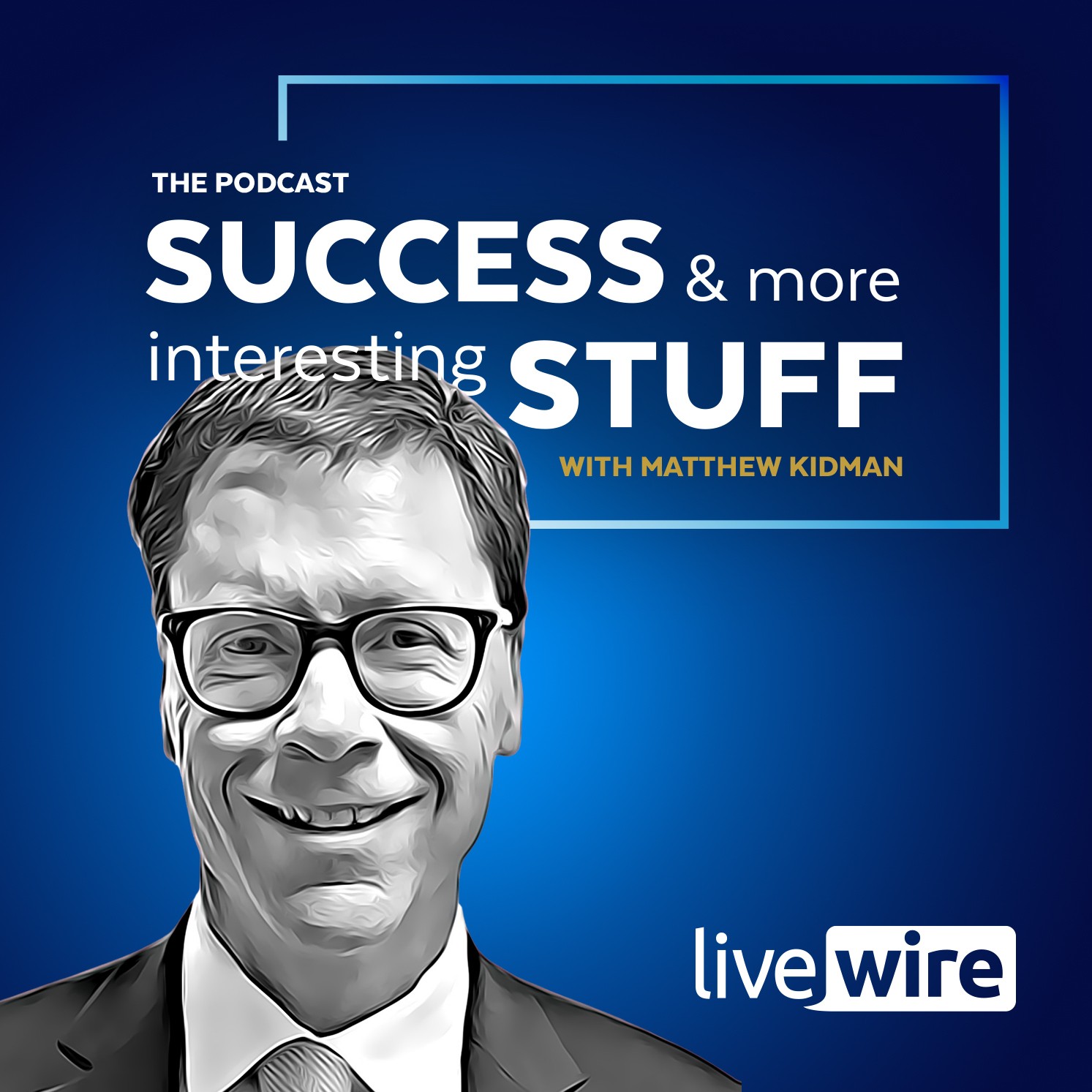
Success and More Interesting Stuff
by Livewire Markets
Success and More Interesting Stuff gives you a front row seat to hear the incredible stories of some of Australia’s leading business, sport and investing icons. Go beyond the headlines for an up close and personal look at what it takes to make it to the top.
-
67
Manny Pohl: Is Growth still the right bet?
Manny Pohl may well be the 'father of growth investing' in Australia, but his journey began thousands of miles away as an electrical engineer in South Africa. From a chance meeting on the Gold Coast to co-founding the $17-billion-dollar powerhouse Hyperion Asset Management, Manny has spent decades proving that 'quality growth' is the ultimate winning strategy. But in a new era of rising interest rates and AI disruption, the old rules are being rewritten. In this episode, Matthew sits down with the founder of ECP Asset Management to discuss the early experiences that shaped his philosophy, the evolution of the Australian market, and why he’s doubling down on growth in an age of uncertainty.
-
66
Dr Don Hamson: The pivot that built a $25bn business
In this episode of Success and More Interesting Stuff, we sit down with Dr Don Hamson, founder of Plato Investment Management. Hamson built a $25 billion fund manager, but it started with a problem. His original long/short strategy was disrupted during the GFC when regulators banned short selling. What followed was a shift towards income, built around a simple idea. In Australia, franking credits matter, particularly for retirees. That focus became the foundation of Plato’s business. Today, Hamson runs a global investment firm with a systematic approach to investing, focused on consistency, risk management and long-term outcomes. In this conversation, we unpack that pivot, how he thinks about building portfolios, and why process matters more than prediction over time.
-
65
Why Jillian Broadbent believes reform, not rhetoric, will drive Australia forward
Jillian Broadbent has worked at the heart of Australia’s financial and policy institutions for decades. She began at the Reserve Bank under Nugget Coombs, helped build Bankers Trust during deregulation, and later served three terms on the RBA board through the Asian and global financial crises. She also chaired the Clean Energy Finance Corporation from inception and served as Chancellor of the University of Wollongong. In this episode, Broadbent reflects on central banking, board life, clean energy finance and why Australia still needs meaningful economic reform.
-
64
This ain’t junk! Why GYG’s Steven Marks refuses to compromise on quality
Guzman y Gomez Founder & co-CEO Steven Marks joins Matthew Kidman to discuss his decision to leave Wall Street, the tough early years building GYG, why quality is non-negotiable, and what comes next as the business expands into the US.
-
63
Gold, AI and the risks investors can’t ignore heading into 2026
To mark the 50th episode of Success and More Interesting Stuff, Matthew Kidman is joined by Chris Judd, Jun Bei Liu and Dr Shane Oliver for a panel discussion focused on four timely issues facing markets as we approach 2026.
-
62
Mark Landau's best investment decision
Mark Landau’s best investment decision wasn’t a stock pick — it was meeting his future business partner, Rafi Lamm. Together they built L1 Capital from scratch into a $17 billion fund manager. In this episode, Landau reflects on the lessons from success, setbacks, and starting again as a listed company.
-
61
Alexis George: Rebuilding AMP
From small-town Bega to the boardrooms of London and Hong Kong, Alexis George built a global career before taking on one of the toughest jobs in Australian business — rebuilding AMP. In this episode, she shares her story, the lessons she learned abroad, and how she’s reshaping AMP’s culture and strategy for the future.
-
60
Viktor Shvets: The end of cycles and the cost of progress
Viktor Shvets on the end of cycles, the rise of the cloud of finance, and why politics may now be the greatest market risk. At Livewire Live 2025, Viktor Shvets delivered one of the most anticipated keynotes of the event. Over four decades, he has built a reputation as one of the sharpest minds in global finance, unafraid to challenge consensus. In this episode, Viktor explains why the old rules of cycles and mean reversion no longer apply, how financial markets have drifted into a “cloud of finance,” and why inequality and politics may prove the greatest risks ahead. It is a conversation that unsettles, but also clarifies what really drives markets today.
-
59
Paul Moore: The only true arbitrage in markets is time
Four decades into his career, Paul Moore seems to be just getting started. Two years ago, he made the bold decision to vend his business, PM Capital, into Phil King’s Regal Partners. Many thought this was an exit plan for Moore. Instead, it proved to be the tonic he needed. PM Capital has since become a growth engine inside Regal, with close to $5 billion under management and performance that continues to deliver. In this episode of Success and More Interesting Stuff, Paul shares what keeps him motivated, why he believes the only true arbitrage in markets is time, and how he is positioning portfolios in today’s unpredictable environment.
-
58
Simon Conn’s guide to surviving the small cap 'torture chamber'
The professional investment game is relentless. No matter where you are in the world, you cannot escape the endless procession of markets. Sure, you can go on holiday and attempt the concept of relaxation, but each morning when you wake up, Wall Street has just closed. It’s impossible not to sneak a peek. Each month your numbers are measured against the market and your peers. There is no hiding. After 27 years and more than 50 reporting seasons, one of the mainstays of the Australian share market, IML’s Simon Conn, is stepping aside for a well-earned break. It might be permanent. It might be a refresh. Only time will tell. Conn joined IML back in 1998 - teaming up with market legend and past guest Anton Tagliaferro. Before long, Conn found himself overseeing the tough end of town - small caps. In those 27 years he has seen the rise of the internet, the smartphone, the GFC, COVID, and now the AI revolution. Through all of that, investors like Conn have been told it’s a new world. Concepts like ARR, PCV and the Rule of 40 have taken hold, while old measures like PE ratios have been pushed aside for revenue multiples. Meanwhile, the Small Ords index has underperformed for decades. It all sounds like a torture chamber, but somehow Conn has come through it, delivering 12 percent returns for more than two and a half decades. In this episode of Success and More Interesting Stuff, Conn shares the lessons he learned over his career and how he adapted his approach as markets evolved and over the past three decades.
-
57
Nick Griffin on finding stocks that can double earnings in 5 years
Nick Griffin’s path to fund management may have seemed preordained, his father worked in the industry, but his journey has been anything but ordinary. After completing a commerce degree, Griffin missed out on a graduate role with one of the big four accounting firms. That setback led him to the Commonwealth Bank’s investment team, where he cut his teeth before embarking on a backpacking trip that ultimately set the trajectory for his career. Landing in London, Griffin took on a role as an oil and gas analyst and soon found himself in Edinburgh, the traditional home of UK fund management. It was there he immersed himself in the world of long-term capital, working closely with some of the oldest and most respected investment houses in Europe. Eventually, Griffin returned to Australia and joined K2 Asset Management, where he ran the firm’s global fund. Then, in 2017, he co-founded Munro Partners with a clear mission, back companies set to double their earnings in five years or less by riding powerful structural tailwinds. In this episode of Success and More Interesting Stuff, Griffin shares how he built Munro from $20 million to more than $5 billion in FUM, the key signals he looks for in structural winners, and what comes next for AI, healthcare, and defence investing.
-
56
Jake Klein: The West is ill-prepared for what lies ahead and the gold price reflects this
Jake Klein left a high-flying banking career to chase a hunch about gold, and it paid off in spades. From pioneering mining ventures in China to building Evolution Mining into a $16 billion powerhouse, Klein has made a habit of spotting value where others see risk. In this episode of Success and More Interesting Stuff, he shares how growing up in South Africa shaped his thinking, why Western democracies are unprepared for what’s coming, and what the gold price is really telling us.
-
55
How Fidelity’s Paul Taylor stays ahead of the market
We're often told that beating the market over the long term is impossible. A lucky year or two? Maybe. But doing it for more than two decades? That’s supposed to be out of reach. Paul Taylor has defied that logic. Managing a concentrated portfolio of 30 to 50 local stocks through everything from the GFC to the COVID crash. It sounds exhausting - but he shows no signs of slowing down. In today’s turbulent market, Taylor’s perspective is more relevant than ever. In this episode of Success and More Interesting Stuff, he shares the key ingredients for long-term success, explains why failure is inevitable in stock picking, and offers his view on why the current obsession with tariffs and trade tensions will ultimately be seen as little more than short-term noise. It’s a rare opportunity to hear from one of Australia’s most consistent and enduring investors.
-
54
Bob Desmond: Patiently picking the eyes out of quality global growth stocks
Go back 20 years and consensus said that managing international equity portfolios from Australia was just too difficult. Bob Desmond and his team at Claremont Global are proving that is yesterday’s thinking. Starting from scratch in 2012 the business has grown to over $1 billion and the style of picking the eyes out of quality growth has been able to outpace global markets. Desmond grew up in Rhodesia, the southern African country that was renamed Zimbabwe in 1980. He studied economics in Western Australia before heading back to his homeland to start working in markets. Life became difficult under the Mugabe regime and Desmond packed his bags and headed to London where his world view opened before his eyes. It was here that he developed his quality growth strategy for stocks. Always keen to relocate to Australia, Desmond got the green light for his migration in 2008 just in time to sidestep the worst of the GFC. He kicked off his career at financial group Evans and Co. Four years later Desmond and his colleagues set up Claremont Global. Desmond has used his vast experience garnered on three continents to identify the best growth stocks on the globe. He does not believe in too much diversification and thinks excessive trading is counterproductive. Tune in to the latest episode of Success and More Interesting Stuff to learn about Desmond's unique style of investing and some of the companies in the concentrated Claremont Global Fund.
-
53
Dr Philip Lowe: Interest rates alone can’t conquer Australia’s cost of living crisis
Australia is obsessed with interest rates like no other country, and it is distracting us from tackling more pressing challenges, like productivity, that would have a greater impact on the cost of living crisis facing many Australians. That's the view of former Reserve Bank Governor Dr. Philip Lowe, who spent 43 years working at the RBA, including 7 years in the top job from 2016 to 2023. Dr Lowe believes the current policy settings from the RBA are suitably restrictive with risks remaining and the battle to tame inflation hasn't been won. Lowering interest rates may ease some of the pain households are feeling, but it isn't the silver bullet many perceive it to be. In this episode of Success and More Interesting Stuff, Dr Lowe discusses the lessons through his RBA journey and shares his thoughts on some of the pressing economic issues of 2025.
-
52
Inside Chris Corrigan's fierce battle to reform the Australian waterfront
Chris Corrigan has had his fingerprints all over corporate Australia for more than 50 years now. The boy from Bowral joined stockbroking firm Ord Minnett in the late 1960s to get the ball rolling. When Ords formed a joint venture with US fund manager Bankers Trust in the early '70s, Corrigan jumped in boots and all. He saw an opportunity to derail the establishment life insurance companies that dominated the Australian landscape. A disruptive force, Corrigan steered BT Australia to the top of the mountain before he started to get restless for his next adventure. Leaving BT in the late '80s, he formed his own investment vehicle, Jamison Equity, picking off opportunities as they arose. During the 1990s, a chance to buy into port operator Patrick Stevedores arose. Stevedoring had been a tough business in Australia, hamstrung by militant unions. Corrigan thought he would give it a go, and before long it was his sole focus. The election of the Howard government in 1996 was the green light he needed to challenge the Maritime Union of Australia front on. He restructured the business and went about removing union workers. A decision by the High Court forced the MUA to the trade table, and a significant agreement was struck that improved Australia's container movements forever. The battle was on the front page every day, and Corrigan took a major personal hit, but eventually got his way. In this episode of Success and More Interesting Stuff, Corrigan shares the story behind the growth of an Australian investment powerhouse and his fierce battle to reform the Australian waterfront.
-
51
Success and More Interesting Stuff is back in 2025
Success and More Interesting Stuff is back in 2025 with new episodes being released on the first Tuesday of each month. We're excited for the year ahead and would love for you to subscribe to the podcast.
-
50
How Joe Aston went from the back page to bestseller
Welcome to the final episode of Success and More Interesting Stuff for 2024. In this episode, we’re closing out the year with a guest who knows how to deliver a knockout punch. Joe Aston spent 12 years as co-writer of the AFR’s Rear Window column, transforming it from a finance industry gossip page into a hard-hitting, no-holds-barred must-read. With a sharp wit and a fearless approach, Aston took on everyone from prime ministers and billionaires to untouchable institutions. In October 2023, Aston signed off from Rear Window with a bang, exposing Qantas and its CEO Alan Joyce for their conduct during the COVID pandemic. But Aston didn’t stop there. Instead of taking a break, he penned the bestseller The Chairman’s Lounge, a deep dive into how Qantas fell from national sweetheart to corporate villain. Before journalism, Aston cut his teeth in politics, working with Joe Hockey and Liberal Party icon Bruce Baird. He also spent time inside the walls of Qantas, gaining firsthand insights that would shape his future career. It’s a conversation you won’t want to miss as we wrap up an incredible year. I hope you enjoy this podcast and I look forward to bringing you more episodes of Success and More Interesting Stuff in 2025.
-
49
Inside Barry Irvin's fight for Bega and his life
Bega Cheese turned 125 this year. It started as the Bega Co-operative Creamery Company in 1999, and for over a century, things were pretty quiet. That all changed in 2000 when a young dairy farmer, Barry Irvin, took the reins as chairman. From then on, it’s been a whirlwind of growth and transformation. In 2011, Irvin took Bega to the Australian stock market, and under his leadership, the company made several key acquisitions. Today, Bega isn’t just a dairy business. It’s a major player in Australian food, owning brands like Vegemite, Peanut Butter, Dare Milk, and Yo Plait. Now, Bega has a market cap of around $1.6 billion. But Barry Irvin’s story is about more than business success. He’s faced significant personal challenges too. His son, Matthew, was born with profound autism. Irvin became a key figure in Giant Steps, a nonprofit supporting children with autism. In 2019, Irvin faced his own health battle, being diagnosed with bowel cancer. Despite a tough fight, he beat the disease and returned to lead Bega once again. In this episode of the Success and More Interesting Stuff podcast, I chat with Barry Irvin about his journey, both personal and professional. It’s a story of resilience, leadership, and the determination to succeed.
-
48
Former Wallaby David Lyons' game-changing investments in Ag
David Lyons has travelled around the world chasing a rugby ball. From the time he started to take the game seriously as a 15-year-old he was earmarked for success. Twice he toured Europe with the Australian schoolboys, opening his eyes to a world significantly larger than the one he experienced growing up in the NSW country town of Molong. Lyons played 46 tests for the Wallabies over 8 years including two World Cups and a British Lions tour. At just 28 years he picked up his ball and moved to Wales for a few seasons before settling in France for a longer stint. It was in Europe that he started to plan for his future. He studied at Oxford and in Monaco. This set him up for a career in finance. Heading back to Australia, Lyons picked up a role at KPMG before eventually deciding to pitch his own tent. In 2021 he joined with some other like-minded professionals and launched AAG Partners. The group specialises in the agriculture sector. Acutely aware from his farming days in Molong of the financial volatility in the agricultural industry, he has deliberately sought out ways to deliver higher returns with less risk. In this podcast, Lyons talks about the journey from rural NSW to representing Australia at an elite level on the global stage. He also shares his passion for continuous learning and how this is helping to uncover new opportunities through his agriculture investment firm AAG Partners. 0:00 - Introduction 1:30 - Growing up in Molong 7:00 - A passion for agriculture and entrepreneurship 9:15 - Building a career in Rugby 16:02 - What it takes to be truly great in any field 21:52 - Going global and moving to Europe 26:13 - Continuous learning and development 28:29 - Returning to Australia 29:30 - Starting AAG Partners 34:45 - A formula for higher returns for less risk in agriculture 39:45 - A revolution in cotton farming
-
47
The former rugby league player who now runs a $1.5 billion business
Sometimes, misfortune can lead to opportunity. Wes Maas was an aspiring young rugby league player trying to establish himself in the NRL. The kid from Dubbo had boundless energy and in his spare time, he worked in an equipment hire business. A football injury not only meant he was out of action on the field, but it also took him out of the hire yard and into head office. It was here that his world opened up. The family-run business was successful. It concentrated heavily on return on total assets. Wes was quick to catch on. It wasn't long before he threw in his NRL dream and headed back to Dubbo for a fresh start. Still in his early 20s, Wes spent his savings on a bobcat and borrowed twice that amount to buy a tipper. Suddenly, he was running his own business. Never happy to rest on his laurels, Wes expanded his fleet of equipment. He was keen to diversify and soon started an equipment hire business, leaning on his knowledge from his time in Sydney. While Dubbo may seem to some to be a remote place to build an empire, Wes saw its potential. He was able to buy a quarry under the nose of an international giant. Then, his world expanded. Property development and civil works followed in 2020. Wes looked to float the business on the share market, in the hope that a capital raise would help it grow even further. Maas Group (ASX: MGH) listed and started to expand. Today, this former rugby league player runs a $1.5 billion business and he has amassed a personal fortune in the hundreds of millions of dollars. The group has assets throughout regional New South Wales, Victoria, and Queensland, with Dubbo right in the middle. Still, only in his 40s, Wes' journey has a long way to go. In this podcast, Wes takes investors through his early days as an aspiring rugby league player and the early days of running his own business - back when his family referred to him as "Neville No-Trade". He also shares some of the plans the Maas Group team has for the future, and some of the greatest moments in the journey so far. https://www.livewiremarkets.com/wires/the-former-rugby-league-player-who-now-runs-a-1-5-billion-business Timecodes: 0:00 - Intro 1:54 - Early rugby days 4:18 - Major lessons Wes took away from this time 5:12 - Overcoming injury and why everything happens for a reason 7:17 - Learning the equipment hire game on the job 9:49 - Moving home to Dubbo 11:12 - Starting his own business 17:02 - Building an achievable long-term business plan 20:27 - Scaling the business 24:09 - Expanding into building materials 29:12 - Listing on the ASX and COVID experience 34:32 - Rising rate environment and impact on Maas Group 36:34 - Importance of "steady" not "rapid" growth 38:20 - Growth plans for the future 39:16 - What happens when an acquisition doesn't work 40:12 - Importance of good people 41:17 - Areas that are exciting over the next five years 43:46 - How Wes defines success
-
46
No shortcuts! How Ian Macoun built a $100 billion funds management behemoth
It is rare for a person to spend the first half of their working life in the public service and then pivot to build a multi-billion dollar financial business. Making the story even more remarkable is that this person grew up in regional Queensland - where financial products are hardly the main course of the local economy. Ian Macoun, the Managing Director and Founder of Pinnacle Investment Management (ASX: PNI) was born in Rockhampton - a city best known for its cattle production. He left town to work for the Queensland Treasury before being poached as a 33-year-old to run the newly constructed Queensland Investment Corporation (QIC). It was here that he was introduced to the world of investing. With QIC up and running, Macoun headed to Sydney, joining the private sector. A stint at Westpac opened his eyes to the opportunity in funds management and in 2000, he struck out with Mike Crivelli forming Perennial Funds Management. It wasn't long though, and Macoun was thinking of an alternative funds management model. Taking minority ownerships in multiple managers, providing the onerous back office functions and accessing the key ingredient for any fund manager - funds. He discovered this opportunity at stockbroker Wilsons Advisory. Macoun teamed up with Steve Wilson to change his fledgling Hyperion Funds Management arm into a multi-manager model. This was the birth of Pinnacle Investment Management. Today, Pinnacle has been spun out of Wilson's and has 16 affiliates with a staggering $110 billion of total funds under management. It is growing rapidly and Macoun believes $200 billion is not out of the question. In this episode of Sucess and More Interesting Stuff, Macoun opens up about his early years and upbringing, shares how he came up with the Pinnacle model and outlines his plans for the future. Note: For disclosure purposes, the funds associated with Matthew Kidman own shares in Pinnacle Investment Management. https://www.livewiremarkets.com/wires/no-shortcuts-how-ian-macoun-built-a-100-billion-funds-management-behemoth/
-
45
Hungry for profit, patient for growth: Bellroy’s motto for sustainable growth
Traditionally, on the show, we talk to people involved in some shape or form with the share market. Today, we are excitedly going off-piste and delving into the unlisted world in one of Australia's outstanding success stories. In 2008, Lina Calabria and two partners decided to start nine separate businesses as consultants. They had plenty of bright ideas and thought that creating a portfolio of companies, while unorthodox, was a low-risk path to success. Within a few years, they selected Bellroy, an accessories business that specialises in male wallets, as the pick of the bunch. From humble beginnings, Bellroy, named after combining Bell's Beach and Fitzroy, has grown into a global brand with more than $130 million in sales. Bellroy sells in dozens of countries and has created its own category called Carry. In other words, they design products you carry around, such as slim wallets, backpacks, work bags, duffel bags, totes, passport holders, and phone cases. It's niche but nicely profitable. Today, Calabria sees a great opportunity to expand Bellroy in both products and countries, and she believes doubling and possibly tripling the business is a realistic goal. Click on the player below to hear how Calabria and the team at Bellroy created their own category and navigated the trails of COVID-19 to build a business making a name on the global stage.
-
44
Meet the small company prospector who unearthed gems like Afterpay and Bellamy’s
Stockbroking is a dangerous game. Investors depend on your advice, but the smallest slip-up can see the relationship turn nasty. As a result, most brokers tend to be as conservative as possible; not Hugh Robertson. Robertson a 40-year veteran of the stockbroking scene in Melbourne, thrives at the risk end of the curve, specialising in micro and small cap stocks. He works like a gold prospector out in the field with his metal detector looking for the next big discovery. His list of wins includes Monadelphous (ASX: MND), Service Stream (ASX: SSM), Bellamy’s (ASX: BAL), Hub24 (ASX: HUB), Afterpay and PSC Insurance (ASX: PSIN). He found most of those companies well before they'd been researched by the investment community and, in some cases, even before they listed on the share market. Robertson has a unique style. He does not rely on numbers to make his decisions. To make matters harder, he has always found reading difficult. Instead, following his natural instincts, he garners information by getting to know people. His conversations are endless and his intuition for what might work is uncanny. Most investors would've run into Robertson on Collins Street, with a cigarette in one hand and his mobile phone in the other, on the scent of the next big thing. That doesn't mean he gets all his stock calls right – far from it. Like anyone dealing in small companies, there are always disappointments. His troubled children include Envirosuite (ASX: EVS) and Maggie Beer (ASX: MBH), but the ledger sits firmly in the positive. Interestingly, Robertson is comfortable sitting on the boards of the companies he backs. Some people in the investment community would describe this as unorthodox, but Robertson likes to make sure he knows the people running the companies he's recommending to his clients. And if the company heads down the wrong path, he's prepared to make the changes required to right the ship. His other great love is the land. Like most Collins Street farmers, it has been a rocky road. Early setbacks, though, have subsequently led to some prize properties in rural Victoria and probably the best garden in the state. In this episode of Success and More Interesting Stuff, I speak with Hugh about his path to stockbroking, his passion for prospecting and some of the incredible stories he has brought to the market. Hugh also shares a few of the emerging companies catching his eye right now.
-
43
How WiseTech's Richard White built a 26-bagger growth darling
Richard White always wanted to be a rockstar. He was still young when it dawned upon him that it might be more profitable and realistic to become a tech titan instead. Sounds simple enough, but the journey has taken many twists and turns. Over 40 odd years, White thought life was perfect, hanging out in a rock band and rubbing shoulders with the likes of ACDC and The Angels. Unfortunately, he was going broke. A problem solver, he pivoted and thought repairing guitars for established rock stars was a way to make an interesting living. The business was a resounding success, but it wasn't perfect. It couldn't be scaled. And another salient lesson was learned. Nexy, a lighting business was built and sold, and then a stint in the computer hardware distribution game rounded out some much-needed business skills. In between ventures, White took on some consultancy work. Just by chance, some of his clients were in the freight forwarding game and White, ever alert, identified things could be done a lot better. So he got to work again and started writing software. Even though he had little practical training, he had twigged the entire freight forwarding industry needed a hand, and he took his products and started selling them more broadly. It is rare that one individual can write the software and then sell it. That was way back in the late 1980s. During the 1990s, his business became the platform for many major transport companies. Not satisfied, White decided to disrupt his own business. In the early 2000s, he rebuilt his product suite before forging into North America and Europe with a name changed to WiseTech. The company followed its customers and spread its tentacles around the globe. In 2016, White decided to list on the ASX. He thought publicly traded shares would give him the currency he needed to buy the missing bits to cement a global empire. And he was right. Close to 50 acquisitions later, WiseTech owns the space. The share price has risen a staggering 26 times from $3.35 to $90. Today WiseTech is valued at $30 billion and is the largest software company listed on the ASX. According to White, the music is still playing. And WiseTech has a few hit songs to knock out yet. Note: This podcast was recorded on Wednesday 24 April 2024. Timecodes: 0:00 - Intro 2:29 - Richard's favourite musicians 4:27 - Richard's on his enduring love for music 6:46 - The influence of Richard's upbringing on his career 11:17 - The importance of being able to put ideas into practice 13:58 - How Richard taught himself how to build hardware 16:01 - On sales (and lessons learnt from his previous businesses) 17:18 - Why cash is king 19:36 - The importance of persistence 21:59 - How Richard identified a problem he could solve in freight forwarding 26:14 - Why good sales is actually marketing 27:42 - The beginnings of WiseTech 30:38 - On the importance of education and how it helped grow WiseTech 32:46 - Taking WiseTech global 34:35 - External investment in the company and an IPO 40:16 - On signing DHL pre-IPO 41:37 - Dealing with volatility: commentary on the 2019 short attack and early COVID-19 struggles 44:45 - WiseTech has acquired 49 companies since listing 45:48 - Why people are a business's most important intellectual property 49:13 - Educating the next generation (and why "STEM" isn't working) 52:08 - The DNA of WiseTech Global today... 53:09 - ... And what could disrupt that 55:38 - Richard on his succession/retirement and legacy
-
42
Alex Vynokur bet his house on ETFs now his firm is challenging the global behemoths of index investing
A revolution has taken place in share investing since the turn of the century. American firms have led the charge with the likes of Vanguard and Blackrock taking passive investing around the globe. Disenchantment with active fund managers has seen funds flow into the passive sector, accelerated by the emergence of exchange traded funds, or simply ETF’s. In Australia, the revolution arrived late. Active managers held sway for many years before eventually the dam wall broke. The American behemoths came hard, but they didn’t have it their own way. Aussie startup Betashares grew out of the GFC and took up the fight. Cobbled together by Alex Vynokur, an immigrant from the former Soviet Union, it wasn’t long before Betashares captured the attention of market participants around the country. 15 years on and Betashares has more than 90 ETF’s, $37 billion assets under management and 150 employees. It is the second largest ETF provider in the Aussie market and in 2023 managed to rank number one for inflows with 37 per cent market share. As a 16-year-old Vynokur and his family left the Ukraine as the walls of the former Soviet Union came crumbling down. Alex had no English and had to start from scratch. He caught on quickly and in a few short years was studying Law at UNSW. A brief stint working as a lawyer was followed by a job at finance house Pengana with Malcolm Turnbull and Russell Pillemer. He deduced that not all active managers were able to beat the market. Around the same time, he latched onto the emergence of ETFs. Mortgaging his house and taking time for a fact-finding tour of the US saw him kick off Betashares. In this episode of Success and More Interesting Stuff, Alex discusses his view on the future of both passive and active investment styles, the incredible growth of Betashares and his passion for making an impact on war-stricken Ukraine.
-
41
Australia has 12 million empty bedrooms... So could this company crack the housing crisis code?
Affordable housing seems to be an elusive goal in Australia. However, Lifestyle Communities (ASX: LIC), which is celebrating its 21st birthday in 2024, might have just cracked the code. The company’s land rent model is spreading across Victoria at an ever-increasing rate. To date, more than 30 villages within driving distance of Melbourne have been built or are in the planning stage. In total, more than 5,700 homeowners have been accommodated with many more to come. Lifestyle Communities started life modestly. At the helm was property veteran James Kelly ably assisted by his partners Bruce Carter and Dael Perlov. The company debuted on the ASX four years later, quietly backdooring into a listed cash box. Over the next 17 years, only the insiders and some unsuspecting investors have enjoyed the stunning 2,500% return. Today the company has a market value of $1.7 billion. Like most successful businesses the original idea was a simple one. Make housing affordable for empty nesters in their late 50s and early 60s. Sell your home and move into a brand-new village nearby. Buy the home and rent the land, having enough capital left over to live a comfortable life. "In Australia, every night, we have 12 million empty bedrooms, which speaks volumes to this empty nester challenge that Australia faces," Kelly says. "We should have a 'last home buyers' grant. We know that first-home buyers' grants typically go into the builder's pocket when the government hands those out when there's a downturn in housing. But a 'last home' buyers grant would actually encourage people to get out of their homes, downsize and free up housing stock for the next generation." Today, Kelly, at 64 years old, is a prime candidate to be a Lifestyle Communities customer. I get the feeling though that he is still happy to keep the accelerator to the floor. I first met James not long after the company listed on the ASX in 2006. He has always been an engaging, upbeat individual, defying the typecast property developer image. In this podcast, he takes investors through the journey, and shares what keeps him inspired after 21 years in the business. Note: This episode was recorded on Wednesday 28 February 2024. Timecodes: 0:00 - Intro 2:33 - From an idea in a cafe to a $1.8 billion company - coming up with the Lifestyle Communities concept 5:36 - The transformation of the retirement industry 7:17 - Early financing struggles and selling the concept 11:28 - The intrinsic desire to be part of a community 13:03 - James Kelly's upbringing, family life and first foray into property 16:03 - The lasting impact and legacy of property investment and development 17:14 - The key to successful property development 19:04 - Experiences that created the leader James Kelly is today 25:52 - The importance of pricing risk as a busy owner 29:22 - The Lifestyle Communities model and its first development 34:09 - Backdoor listing on the ASX 37:18 - Lifestyle's most recent capital raise and plans for the future 40:38 - The transformation of Lifestyle's share register 41:56 - The opportunity in Generation X 45:56 - Why leaders/managers should focus on being kind 47:46 - How to solve Australia's housing crisis 50:32 - Why James Kelly won't be retiring any time soon
-
40
Kerr Neilson: This opportunity will drive the next decade of growth
Over the last four years, Success and More Interesting Stuff has been privileged to host some of the legends of the Australian equity market. Arguably though no one has had more of an impact on the industry than Kerr Neilson. Originally from South Africa, Neilson landed on Australian shores in 1983 where he joined the ranks of Bankers Trust. BT was on the rise and Neilson stood out among the pack. After just two years, he was placed in charge of the retail business. Under his leadership, it became the growth engine of the firm managing money around the globe. BT’s mercurial handling of the 1987 crash saw Neilson’s retail arm of the company hit its stride, garnering billions of dollars to manage. Stellar performance and a growing reputation as a canny operator saw Neilson build a name for himself. In 1993, Neilson decided to go it alone forming Platinum Asset Management. As one BT operative described on the day of his departure, “the trading room floor at BT felt like it was hosting a funeral.” Counting George Soros’ Quantum Fund among its original investors, Platinum got off to a flying start. Pitching itself as a global investor, the company powered through the next decade reaching $26 billion of funds under management. In 2007, Neilson and his team decided to float Platinum. It was good timing, with the market nearing a peak before the Global Financial Crisis. Neilson ran Platinum for another decade before handing the reins to Andrew Clifford. In 2022, he decided to depart the Platinum board, ready for the next part of his journey. In this episode of Success and More Interesting Stuff, Neilson shares some of the major moments that shaped his career trajectory, some of his biggest wins during this time, as well as why his inventive ancestors taught him the "importance of being in the game - whatever the new game is" - and right now, he believes that is AI. He also addresses some of the major changes that he hopes are on the horizon for Platinum investors - and shares why he still believes he has a responsibility to shareholders even after all this time. Note: This interview was recorded on Thursday 8 February 2024.
-
39
How Olev Rahn helped Bankers Trust survive the 1987 crash (and how he sees markets in 2024)
In 1987, Olev Rahn was pounding the streets of New York's financial district, meeting with Wall Street's best strategists. Rahn, who was running BT Financial's institutional business Pendal, felt distinctly uneasy about the exuberance gripping financial markets. It felt like a giant bubble, and the deeper he dug, the more convinced he became that a reckoning was just around the corner. Rahn's instincts proved spot on as markets cratered on what has since become known as Black Monday. Combining put options and futures selling saw BT breeze through the '87 crash while others crumbled. From that moment, BT was the main game in town. Billions flowed into the coffers, and it was the number one place to work in Australia. Rhan remained key until BT Australia was sold to the principal group for 2.1 billion in 1999. In this episode of Success and More Interesting Stuff, Rahn discusses the growth of BT Financial in Australia, the key figures that were instrumental in building the firm, and how the firm navigated the 1987 crash. Rahn also shares his views on markets in 2024 and why he is happy to have some cash at hand. Time stamps 0:00 - Introduction 3:10 - Early life and leaving Estonia 8:15 - Developing an interest in economics 9:49 - An opportunity with Ord Minett and the XYZ method of research 15:13 - A move to London on the back of booming markets 20:03 - A call with Chris Corrigan and bringing active management to Australia 25:05 - Good performance leads to rapid growth Keating 30:41 - Kerr Neilson and Jillian Broadbent join BT as it becomes a powerhouse 34:15 - 1987 and the era of corporate excess 38:54 - The strategies Olev Rahn used to protect BT from the crash of 1987 42:00 - The signs of exuberance prior to the 1987 crash 47:39 - A golden era for Bankers Trust 50:00 - Olev Rahn’s views on markets in 2024
-
38
How ’The Speculator’s Diary’ got Ben Griffiths got hooked on small caps (and why he thinks we’re in a ’pause rally’)
Every year, fund manager Eley Griffiths invites stockbrokers from across the country to a lavish dinner. In the cutthroat world of the share market, stockbrokers rarely get treated by their clients. Eley Griffiths, the $1.2 billion small company manager known affectionately as EGG, is a rare breed. The fact that EGG is currently celebrating its 20th year is a testament to the value that everyone contributes to the process of grinding out returns in the volatile small company market. It is a deliberate strategy and reflects the founder's personality. Ben Griffiths is a 30-year-plus veteran of the market. The son of a comedian, Griffiths has always loved an audience, and appreciated their participation in the show, whether it be the speech at the annual dinner, or the day-to-day process of picking stocks. Leaving school, Griffiths found himself on the trading floor of the ASX. He's old enough to remember the 87 stock market crash. From this came many lessons, including a desire to switch to funds management. He found a home as a dealer at Mercantile Mutual and was planted in the middle of a treasure trove in the form of Greg Matthews, David Paradice, Peter Mellett, and John Morgan. He progressed from dealer to analyst, and then portfolio manager. At the turn of the century, he had a brief stint at BT where he worked with Brian Eley, and before long the two had hatched a plan to form EGG and do it their way. Looking back over 20 years, there were some difficult times. The first 12 months were a real grind, and then years later, Eley became seriously ill before passing away in 2018. Through all this EGG has moved forward with Griffiths at the helm. In the 20th year, the group is branching out into the mid-cap fund. No doubt there are plenty more returns, and broker dinners to be had. Time stamps 5:00 The highs and lows of 20 years in small caps 9:50 The powerful role of Ben Griffiths’ grandmother 13:15 Working on the trading floor in the 1980s 20:15 His move into institutional broking 26:40 “A richer training ground you could not have hoped for” 32:00 A “blank sheet” opportunity at BT 42:30 Reflections on Lehman Brothers’ collapse 48:00 The loss of Brian Eley 52:00 His market outlook for 2024.
-
37
Graham ‘Skroo’ Turner shares the highs and lows of Flight Centre and his 50 years in travel
Graham "Skroo" Turner grew up in splendid isolation. His family owned an orchard in Southeast Queensland, and he rode a pushbike to school, which was so small it only required one teacher. Even when he went to university, he avoided humans and decided to study vet science. Skroo, now seventy-four years old, still sits atop of Flight Centre (ASX:FLT), Australia's largest travel agency, which operates in twenty-four countries. He is the fearless leader of thousands of employees and has a unique management technique that has allowed the company to scale well beyond its humble beginnings. While Flight Centre was officially born in the early 1980s in Australia, its predecessor, Top Deck, kicked off in 1973, dreamt up over a beer with some friends at Oktoberfest in Munich, Germany. The Top Deck story is legendary in Australian corporate history, with Skroo and his clan driving buses out of London to all parts of the globe, including Afghanistan and Morocco. He was back in London a few weeks ago to celebrate the 50th birthday of Top Deck and enjoy a beer with some of the old crew who shared his sense of adventure. Skroo has come a long way in the 50 years and has run into a few potholes and even roadblocks. There was 9-11, The GFC, and of course the COVID-19 virus that induced a near-death experience for Flight Centre. Somehow he has battled through and still seems to enjoy it. In fact, not much has changed. He still looks and sounds like an orchard farmer from Queensland, retaining his laid-back manner that disguises an entrepreneur with a mean competitive streak. In this episode of Success and More Interesting Stuff, Turner talks about growing up on a farm, how he began his career in tourism, his unique approach to management as well as the highs and lows of Flight Centre’s journey. Time stamps 0:00 - Introduction 1:50 - 50-years since the launch of Top Deck 4:56 - Growing up in isolation and breeding a sense of adventure 8:59 - Travelling through Europe sows the seeds of a travel business 16:10 - The first Flight Centre stores and rapid growth 24:20 - Flight Centre lists on the ASX 26:08 - The ‘Families, Villages and Tribes’ approach to management 30:43 - Don’t sweat the small stuff and the alchemy of growth 34:56 - The enormous cost of COVID-19 for Flight Centre 40:26 - The future for airline travel in Australia 46:08 - Making Flight Centre relevant for young people 47:42 - Succession
-
36
The CEO who kicked the incumbents to the curb (and delivered investors a +4000% return in the process)
It's been just over a decade since Andrew Alcock took a risk on a small up-and-coming investment platform. The gamble has certainly paid off. Since joining the firm in July 2013, HUB24's (ASX: HUB) share price has skyrocketed around 4200% - turning an ASX-listed microcap into a market-leading 30-bagger. In the early months of 2013, HUB24 was on its knees. The company experienced a boardroom battle, an emergency capital raising, and a lack of leadership. Born out of the stockbroking outfit InvestorFirst, the company was losing millions of dollars a year and its future was doubtful. The boardroom bloodbath saw founder Otto Buttula depart, and Bruce Higgins installed as the new chairman. The company looked externally for a fresh start - and a CEO who could bring new ideas and a large dose of optimism. In a bold decision, they landed on Alcock, an unknown quantity to the listed market. At the time, Alcock was running the AMP-owned planning group Genesys Wealth Advisers. HUB24’s share price in July 2013 was hovering around $1 a share and the company had just posted a loss of $9.7 million with funds under advice of just $479 million. Alcock obviously knew the industry better than most and saw a bright future for HUB24. Fast forward a decade and things have changed. HUB24, along with its close rival Netwealth, have ushered in a new breed of financial platforms, leading the charge against the incumbents – MLC, BT, and ironically, AMP. Today, HUB has over $80 billion in funds under advice and in FY23 it booked a net profit of just under $60 million. The company’s share price trades at around $33 with a market capitalisation of $2.8 billion. Alcock who, as a youngster on Sydney's North Shore dreamed of playing the keyboards in a band, has clocked up 10 years in charge of HUB24 - and he believes the next decade looks even brighter for the investment platform. Along with his right-hand man Jason Entwistle and a burgeoning team, there is a belief that the surge towards the top of the charts will continue. In this episode of Success and More Interesting Stuff, Alcock openly shares his inspirational journey to the top, some of the challenges along the way, as well as some of the exciting initiatives for HUB24 in the future. Note: This interview was recorded on Thursday 23 November 2023. Timecodes 0:00 - Intro 2:01 - HUB24's recent record-breaking results 3:34 - A deep dive into Andrew's beginnings 4:40 - Andrew's two early ambitions: medicine and music 5:50 - Life growing up on Sydney's North Shore in a family of six kids 10:10 - Bible college, marriage at 21, and the beginnings of a career in tech 14:40 - How Andrew was introduced to the finance industry 17:24 - Andrew's first gig as a CEO (and why he is all fight, no flight) 21:15 - A foray into financial advice at Genesys Wealth 22:54 - On what attracted him to take the opportunity at HUB24 28:53 - The first few months in the role 32:21 - How the industry has changed since then 34:22 - On the benefits of having a rival in Netwealth 35:44 - Why it's important to have a vision (but set realistic goals along the way) 37:43 - The Royal Commission into misconduct in the banking, superannuation and financial services industry (and the beginnings of a "revolution" at HUB24) 40:23 - The attributes of a good leader 44:59 - What keeps Andrew up at night 47:18 - On Bruce Higgins's retirement from the chair of HUB24 49:04 - What investors can expect from HUB24 over the next decade 52:50 - How HUB24 is using AI to improve efficiency for advisers and investors 55:38 - How investors should measure HUB24's success 58:32 - On coming out publicly and the importance of being authentic
-
35
Stick to your knitting: Anton Tagliaferro’s secret to high conviction investing
Anton Tagliaferro grew up in Malta, playing football and studying with the dream of someday becoming a doctor. This was pushed aside, however, when political unrest in his native country led him to leave for London, where he ended up studying accounting. Soon after graduating, Anton discovered the world of funds management and was hooked on the idea immediately. Through taking advantage of chance opportunities, Anton was able to migrate into an equities manager role, where he began building a personal brand as a reliable investor. After receiving encouragement from clients, Anton struck out on his own and founded Investors Mutual Limited in 1998. The timing put Tagliaferro and his team at the formation of the tech bubble. "We set up, and the first six months things were going ok. And then the tech boom comes along," he recalled. Bolstered by a background in accounting, and some unorthodox methods of avoiding the pressures of the crowd, Tagliaferro avoided falling into the common pitfalls of Dot-com stocks. "Every single piece of rubbish with technology in the name was running, and all the while every decent company was being sold down," he said. This led to several years Anton described as the most brutal in the business, as indices bloated with overvalued tech stocks, leaving his value portfolio in the dust. He persevered, however, and when the tech bubble eventually burst, his fund's fortunes flipped and would end up drastically outperforming the market overall. This demonstration of high conviction investing, in the face of much criticism, built Tagliaferro and IML a reputation in the market, and their funds under management grew accordingly. Recently, Anton has been able to move into retirement, which he now spends contributing to the development of soccer in Australia. That being said, he still keeps an eye on the markets and hasn't ruled out a return to the industry. "If I was starting a boutique fund manager today, and I might start one next year, I haven't decided yet, I'd focus on international equities," Anton said. "I think the Australian market - the amount of superannuation, the amount of money chasing a handful of stocks... it's such a concentrated index - and if you look at the quality below the top 20, I've gone through it a thousand times, I'm still going through it, and you take out the REITs and resources, there are very few good quality industrials in Australia." In this podcast, Anton shares his origin story, his serendipitous journey into funds management, and the challenges he has faced along the way. He also provides his view on the current market landscape and opens up about his plans for the future. Timecodes: 0:00 - Introducing Anton 2:12 - Growing up in Malta, early career path through accountancy 9:10 - Getting a start in London 13:36 - Coming to Australia 16:17 - Grabbed by the stock market 18:25 - How do you get into Funds Management 21:00 - Lucking into an equities manager position at Perpetual 28:50 - Perpetual launches a fund 31:25 - Move to County and lessons from institutional investors 34:20 - Investing philosophy 37:00 - "It's time to set up your own thing" 39:25 - Hardest time in Anton's career 41:45 - Collapse of the tech boom 45:20 - What drove performance 50:15 - What's the state of markets at the moment 56:26 - What's next?
-
34
Meet the man who turned Nick Scali into a 10-bagger
Nick Scali is a furniture powerhouse. Since listing in May 2004, the store count has grown from 10 to 107 without having to tap shareholders for additional capital. Who knew Australians had such an insatiable appetite for leather lounges? Equally as impressive as store growth are the financial returns investors have enjoyed. Since listing, sales have increased by 1,068%, net profit has increased by 1,407%, and the dividend has increased by 1,263%. From a listing price of $1 to the current share price of $10.79, Nick Scali (ASX:NCK) has been a 10-bagger for shareholders who have stayed the course. The driving force behind this impressive story is Anthony Scali, son of founder Nick, an ambitious Italian immigrant who came to Australia in 1955 at just 18. After a brief stint selling televisions in Melbourne, Nick moved to Sydney and opened his first store in 1962 on the Hume Highway in Ashfield. Anthony Scali worked in the family business from a young age and progressively played a more significant role in the running of the growing retailer. He officially took over the CEO role when the company was listed on the ASX and says he has no plans on stepping aside and has eyes for further expansion into the UK. In this episode of Success and More Interesting Stuff, Anthony talks about the mindset and approach that has created one of Australia’s most iconic retailers. Time codes: 00:00 - Introduction 01:56 - The Nick Scali advertisements 02:47 - Slow and steady growth 04:15 - Why investors are cautious on retailers 05:25 - The start of Nick Scali 08:43 - Nick Scali’s business philosophies 12:16 - How Anthony got started in the furniture business 14:01 - Moving from niche to mainstream offerings 15:31 - Lessons in debt and property 18:32 - Nick Scali (ASX:NCK) lists on the ASX 20:41 - Passing the CEO baton from Nick to Anthony 24:07 - Growing the family business 26:21 - The initial plan for store growth 27:50 - The ingredients for success in retail 35:25 - The Nick Scali niche - quality and value 37:55 - Anthony Scali’s approach to management 40:45 - Anthony Scali sells down some of his shareholding 43:54 - The vision for Nick Scali in Australia and New Zealand 45:49 - Taking the Nick Scali concept to the UK 49:32 - The outlook for the Australian market 50:57 - Antony Scali on succession planning but no plans to retire 53:45 - Property investments still intriguing, even after the 1990s experience
-
33
“It was horrific.” How Robert Kelly overcame adversity to build a $6 billion business
By the time most people reach their mid-forties, they are thinking about an exit strategy for their working life. That was not the case for Robert Kelly AM, who, in 1975, after a series of harrowing business experiences, was dusting himself off and preparing to start all over again. Kelly is the Founder, Managing Director and CEO of Steadfast (ASX: SDF), the ASX-listed insurance broking firm with a market capitalisation of ~$6 billion. Insurance is a harsh industry where the big players compete on price and price alone. Steadfast, under Kelly’s stewardship, has taken a different path choosing to focus on relationships and networks to win the loyalty of their clients. “It is sold on relationships and advice. If you keep selling on price, you’re a commodity, just like a cup of coffee. We have a relationship, and the relationship will win through” - Robert Kelly AM The strategy has proven successful, and Steadfast commands more than one third of Australia’s intermediated insurance market. It appears that the job is not done and at age 76 Kelly recently renewed his contract as Steadfast Managing Director and CEO until 2026. In this episode of Success and More Interesting Stuff, Mathew Kidman explores the highs and lows of Kelly’s business career, including the life-changing advice he received from Rugby League legend Jack Gibson.
-
32
Trailer: “It was horrific.” How Robert Kelly overcame adversity to build a $6 billion business
The latest episode of Success and More Interesting Stuff introduces one of the most enterprising and successful people on the corporate landscape. Robert Kelly had a chequered career in the 1970s and 80s that included a failed business, driving taxis and dealing with some of Sydney’s more colourful identities. In 1996, aged 48 and running his own insurance broking firm, Kelly decided it was time to put the foot to the floor. He, along with some other like minded insurance brokers, thought forming a buying group to help deliver cheaper insurance rates for its members was a good idea. They called it Steadfast. Most good idea only come to fruition due to tireless endeavour. Kelly criss-crossed the country convincing Insurance brokers they should become a Steadfast member. He was obviously a sharp salesman. From humble beginnings, Steadfast now has over $11 billion of gross written premium from its members and accounts for more than a third of Australia’s intermediated insurance market. The company’s market capitalisation is approximately $6 billion. Kelly is hardly calling it quits though. At the age of 76, the Steadfast board recently extended his tenure as CEO of the group until 2026. That should give him time to take Steadfast into the US market, a stated objective of the organisation. One can only guess how big that arm of the business will become.
-
31
Breaking big stories: Tony Boyd’s Chanticleer playbook
We have a treat for you today. Historically the show has focused on outstanding investors and leading executives. Today, we are delving into the other cog of the share market machine - the fourth estate, or as most of us know it, the media. Tony Boyd has been a finance journalist for more than 40 years. The latest 13, he's been writing the preeminent finance column in Australia, Chanticleer. Affectionately known as 'The Chook', the Chanticleer column has held pride of place on the back page of the Australian Financial Review since 1974. The Chook columnists include such luminaries as Robert Gottliebsen, Ivor Ries and Alan Kohler. No one, though, has lasted as long as Boyd. Writing Chanticleer is a monumental task. 1250 words on the issues of the day, every day. It might sound simple enough, but to be cutting edge and relevant all the time takes an extraordinary person. Not only do you need to know the full spectrum of company issues, but you must talk to the key people involved. Conversations with the top echelon of corporate Australia is only reserved for the respected few. Boyd started out as a copy boy at Rubert Murdoch's News Limited. From there, he enjoyed stints in Europe, and Japan, and edited sections on banking and IT. A short secondment to investor relations saw him return to the fourth estate to write Chanticleer in 2010. At the end of March this year, Boyd put down his pen for the last time. Tune in to the latest episode of Success and More Interesting Stuff via the player below or through your preferred podcasting platform. Timestamps 0:00 - Introduction 2:41 - Meeting the demands of a daily business column 7:00 - Early years, education and growing up in Sydney 11:40 - Developing an interest in newspapers and publishing 14:15 - Starting as a copy boy with News Limited 22:22 - A trip to London as a finance correspondent 30:34 - The first time Alan Kohler offered Tony a job 36:06 - A brief career change and the second time Alan Kohler offered Tony a job 39:25 - Tony’s approach to writing opinion and the first time a banker lied to him 42:10 - Rejoining the Australian Financial Review 43:28 - The responsibility of writing Chanticleer 47:05 - The best story Tony covered 49:36 - Interviewing the big names including a run in with Kerry Stokes 54:45 - The role of the Chanticleer column in Australian business 1:01:45 - Closing remarks and the next chapter
-
30
25 years and counting: How this “market animal” has consistently beaten the market
It's been 25 years since the first days of Ausbil Investment Management, and Executive Chairman, CIO and Head of Equities Paul Xiradis is still one of the first to arrive at the office. The self-confessed "market animal" lives and breathes investing. But few know the making of X, as he is now universally known. The eldest son of Greek immigrants, Xiradis always knew the value of entrepreneurial spirit - having keenly watched his father run several fish shops growing up. While Xiradis admits these years were "never easy", they instilled in him a desire to one day run a business of his own. "I was an ok student, I wouldn't say I was outstanding. But equally, I didn't have a lot of time to devote to my studies either. I was helping out the family businesses most afternoons and weekends. In fact, all weekends were spent helping the family," Xiradis recalls. "So when I left school, it was an opportunity for me to really excel and work for myself in the sense of achieving my own results." And excel he would. Xiradis, unlike many Australian fund managers today, has truly worked his way up the ranks of the industry. He started out as a bank teller and would go on to gain experience in nearly every facet of finance - including personal banking, investment property, equities, fixed income, and broking. Unsurprisingly, this early education has shaped the investor Xiradis is today. For instance, during the crash of 1987 (Black Monday), when several of Xiradis' colleagues left him "holding the baby", he grasped one of investing's greatest lessons. "I learnt that you really want to be managing the portfolio rather than the portfolio managing you. And what I mean by that is if you are forced to sell, or the liquidity or quality isn't there, it just ends in disaster," he says. "I have never been able to achieve it since, but I outperformed the benchmark on a 12-month basis by over 30% because I was invested in quality [companies] and no penny dreadfuls." This focus on quality, on both top-down and bottom-up analysis, has helped Xiradis and the Ausbil team achieve truly eye-watering returns over the past 25 years (his flagship fund has beat the benchmark by more than 2% since 1997) - and has transformed $10 million of seed funding into a nice $15 billion in funds under management today. In the final episode of SAMIS, you'll learn all about Xiradis' journey from Bankstown to Sydney's Bridge Street, as well as some of his best learnings from a career of consistently beating the market. Time codes 0:00 - Intro 4:19 - Early life 8:06 - Early exposure to business 10:13 - Challenges growing up 12:52 - Unconventional career beginnings 15:50 - Mentors in finance 18:38 - Lessons from the crash of ‘87 24:05 - Striking out independently 30:20 - Early days of Aubil 36:15 - Growing pains of Ausbil 41:32 - Portfolio management lessons 46:17 - Future of Ausbil and Paul
-
29
Meet Paul Xiradis: Chief Investment Officer and Head of Equities at one of Bridge Street’s most famous money managers
For 25 years, Paul Xiradis has been the CIO and Head of Equities at one of Bridge Street’s most famous money managers - Ausbil Investment Management. Xiradis is the last link to the original foundation group of Ausbil. And as executive chairman, he’ll continue to have plenty on his plate from a leadership perspective when CEO Ross Youngman retires later next year. But Xiradis’ story is far more than his 25 years at Ausbil. It’s a story of migrant triumph, hard work, and persisting on when others have fallen by the wayside. Now, in this final episode of the current series of Success and More Interesting Stuff, the veteran investor shares insights from his life before and during an illustrious career in the markets.
-
28
How Dawn Kanelleas perfected the science of small-cap investing
Dawn Kanelleas has always been academically competitive. The daughter of socially progressive Greek immigrants, she knew, even from a young age, that she was destined to break the social norms of the time. And so, she decided academics would be a suitable path, donning a laboratory coat for a degree in the male-dominated world of science and later a research position at Oxford University. Luckily, for many of her investors today, this didn't stick. Backed with a PhD in rare earths, Kanelleas would go on to hold a litany of positions over nearly 15 years before becoming a senior portfolio manager at Colonial First State during the GFC. Today, she heads up First Sentier Investors' small and mid-cap coverage and oversees billions of dollars in the process. But it's her desire to "win" that has truly helped her succeed in the world of finance. Over the past decade, Kanelleas has delivered staggering returns in the small-cap arena, far outperforming the S&P/ASX Small Ordinaries Index. In this episode of SAMIS, you'll learn all about Kanelleas' journey to where she is today, her scientific strategy for success in small caps, as well as the other passions that have shaped the woman she is today. Time codes 0:00 - Introduction 3:34 - Early life 12:35 - Journey into academia 21:50 - Return to Australia 25:25 - Starting in finance 36:45 - Financial lessons 52:00 - Passions outside finance
-
27
Meet Dawn Kanelleas: The small cap investor who thrives on competition
If I asked you to describe the background of a professional investor, I’m willing to bet you would not have picked someone who has a PhD in chemistry. But that’s exactly who Dawn Kanelleas is. After running through the full gamut of the University of Sydney’s prestigious science program, she pivoted to a career in finance. But it wasn’t smooth or consistent sailing - and one look at her LinkedIn could tell you that. In this edition of Success and More Interesting Stuff, Kanelleas sits down with me to discuss the transition from science and academia to finance and finally her current role - small and mid cap investing at First Sentier Investors.
-
26
The boy from Adelaide who rescued Australia’s failing property sector
The Australian commercial property sector was in a mess in the mid-1990s. The industry was stuck in illiquid structures and investors were unable to withdraw their money. Then, budding investment banker Andrew Pridham entered the picture. He believed listing property assets was the best way out of the disaster. It worked. At just 28 years old, he was a managing director and head of global property at UBS in London. Pridham returned to Australia seven years later to set up his own shop. That company was eventually bought by Wall Street behemoth JP Morgan. And being the restless person he is, Pridham pivoted again just as his 30s gave way to his 40s. This time, he convinced a former American UBS colleague Ken Moelis to create Moelis Australia with the two becoming the largest shareholders. Moelis Australia would expand rapidly beyond investment banking to become a mini-Macquarie Bank. Today, it’s worth $818 million and is listed on the ASX. Now retired for good, he joins me on the latest episode of Success and More Interesting Stuff to discuss his life in investment banking and what matters next. Time codes 0:00 - Intro 4:24 - Early life 12:49 - Early career in finance 16:32 - Risk in financial markets at the time 19:07 - Recession and investement banking 22:47 - Coming out of a recession, and into the golden era of property 25:58 - Moving to the international scene 30:34 - Joining the swans, and lessons in leadership 35:18 - Striking out independently 51:13 - Listing on the ASX, and the future of MA Financial 1:01:18 - Values of the Swans 1:09:31 - Outro
-
25
Meet: Andrew Pridham - real estate guru, serial entrepreneur, author and Chairman of the Sydney Swans
Not many investment bankers can claim to have a Wikipedia profile, but Andrew Pridham can. In a career spanning more than 30 years, Pridham has covered everything from M&A at J.P. Morgan to real estate investing at UBS. Since 2009, he’s run his own shop in conjunction with US-based Moelis & Company and since 2013, he has served as chairman of the Sydney Swans. Now, Pridham sits down with me on the latest edition of Success and More Interesting Stuff to discuss his lifetime in financial markets and how joining the board of Swans helped shape the way he leads his investment team.
-
24
Maggie Beer’s recipe for turning passion (and paté) into profit
How’s this for an honours list? Winner of the Gourmet Traveller Restaurant of the Year Senior Australian of the Year Honorary Doctorate from the University of South Australia Author of 11 books Star of multiple cooking shows Order of Australia (AM) Officer of the Order of Australia (AO) Public company name with multiple products to her credit Maggie Beer is an icon of the Australian food industry. Her larger-than-life personality and likeability have endeared her to a range of Australians from budding chefs to aged care occupants. Maggie has backed her own skills and played an important role in encouraging people across this country to try their hand in the kitchen. She also can take credit for introducing the verjuice to the Australian kitchen. She also happens to be the only Australian with a self-named public company. Not bad for someone who left school at 14 years old. Now, Beer sits down with me for the latest edition of Success and More Interesting Stuff. We discuss her life before food, those first years operating the (now) world famous Farm Shop in South Australia, and what lies ahead for this Australian treasure. TIME CODES 0:00 - Intro 3:00 - Early life 18:40 - Early career 28:20 - Entrepreneurship in the food industry 38:40 - Transition to the financial world 48:10 - Other passions
-
23
Meet Maggie Beer - she has an incredible story to tell
Cooking from the heart is the humble and simple philosophy of one of Australia’s most well-known personalities. In a career spanning four decades - and in spite of zero formal training - Maggie Beer has become a beloved figure on our screens and gained a presence in many an Australian kitchen or bookshelf. Even I was surprised to learn this first lady of Australian food’s career did not begin until she was in her 40s! Now, Beer sits down with me for the latest edition of Success and More Interesting Stuff. We discuss her life before food, those first years operating the (now) world famous Farm Shop in South Australia, and what lies ahead for this Australian treasure.
-
22
Leo Barry was a star of ”the big dance”, now he’s making a mark in small caps
Leo Barry was everywhere during AFL Grand Final week this year. With a Sydney Swans scarf draped around his neck, you could be mistaken for thinking he is employed full time in the club’s marketing department. In truth, Barry always has a lot on his plate. From the moment he was drafted by the Swans, he has been on the run. The Swans relocated him to Sydney, placing him in boarding school out of the limelight of Melbourne. Soon enough, he cracked the big time, becoming a premiership player and an All-Australian defender. But away from the football pitch, “Leaping Leo” was preparing for his next career. A career that has ultimately led to him part-managing some $500 million in funds across the ASX small cap universe. In this edition of Success and More Interesting Stuff, Leo and I discuss what happened next and how he transformed himself from a football legend to a finance superstar. TIME CODES 0:00 - Intro 1:54 - Move from football to finance 6:53 - Early life 14:22 - Lessons from a career at the swans 24:05 - Beginning of career in finance 33:36 - Lessons from a career in finance 47:40 - Future of Leo and Fairview 51:21 - Outro
-
21
Meet Leo Barry and his passion for sport and small caps
The full episode comes out on Wednesday 28th December.
-
20
The man trusted by Kerry Packer, Solomon Lew and Barbra Streisand (yep, seriously!) for stock market guidance
Even after 55 years as a stockbroker, Brent Potts is still going strong. Every day, Potts arrives at his desk to talk to the smartest investors around. He never misses lunch with clients or colleagues. So much so that even in spite of the Coronavirus, he organised for a local Japanese restaurant to deliver food to his workplace (and for that matter, all his colleagues) at Blue Ocean Equities. Over the past half-century, his client rolodex has included Nine's Kerry Packer, Premier Investments' Solomon Lew, ex-Adsteam boss John Spalvins, and even Barbra Streisand. Potts has seen just about everything in the Australian market. Through the 1980s, his business partner was the flamboyant Rene Rivkin. Since then, he has built several broking businesses of his own. Each time he sells, he starts again and constructs another operation. He also tends to back his ideas with his own money - something that has served him and his clients well over the years. In our latest edition of Success and More Interesting Stuff, you’ll hear from Brent first-hand about his career, his take on modern investing, and the future of his storied life. Time-Codes 0:00 - Intro 2:00 - Early life 4:40 - Early career 11:35 - Finance in the 1970s 14:14 - Relationships with key clients 29:20 - Lessons from the 1987 collapse 33:12 - Starting over 36:57 - Brokerage in modern finance 41:20 - The importance of workplace culture 45:35 - Differences in finance from the ’70s to today 50:10 - Lessons from the market 55:45 - Future of Brent Potts
-
19
Meet legendary stockbroker Brent Potts
Brent Potts is a legend of the Australian stockbroking industry and after 55 years he is still going strong. Potts has seen just about everything in the Australian market and has some colourful stories to tell. The full interview with Brent Potts goes live on Tuesday 20th December.
-
18
How Domino’s boss Don Meij built a $5.7bn global pizza powerhouse from the suburbs of Brisbane
None of it really makes sense. A young man from Queensland teaching the world about Pizzas. Don Meij was born in Rockhampton, Queensland, moving around as a child before landing at Redcliff in North Brisbane. He trained to be a teacher but somehow got hooked on being the best Pizza delivery person in the district. The next step was to become a franchised shop owner of a small chain called Silvio’s-dial-a pizza. Silvios merged with Domino’s Pizza within a few years, and Meij was at the helm in Australia. A meteoric rise from a delivery boy. Don, though, was just getting started. Domino's was cooking its competitors; in 2005, the company was listed on the ASX. Meij and his ambitious team, with the support of its major shareholder, fast food king Jack Cowin, were preparing to take on the world. Today, Domino's Pizza (ASX:DMP) is an ASX 100 company valued at more than $5.7 billion and has a growing global footprint. While it has been a whirlwind ride, there has also been some indigestion. Battles with disgruntled franchisees and the emergence of multiple food delivery companies have tested the leadership of Meij. Now he has global inflation to contend with. Never to shy away from a challenge, Meij seems as energetic as ever.
No matches for "" in this podcast's transcripts.
No topics indexed yet for this podcast.
Loading reviews...
ABOUT THIS SHOW
Success and More Interesting Stuff gives you a front row seat to hear the incredible stories of some of Australia’s leading business, sport and investing icons. Go beyond the headlines for an up close and personal look at what it takes to make it to the top.
HOSTED BY
Livewire Markets
CATEGORIES
Loading similar podcasts...
URL copied to clipboard!