
PODCAST · arts
The Amis Papers
by Martin Locock
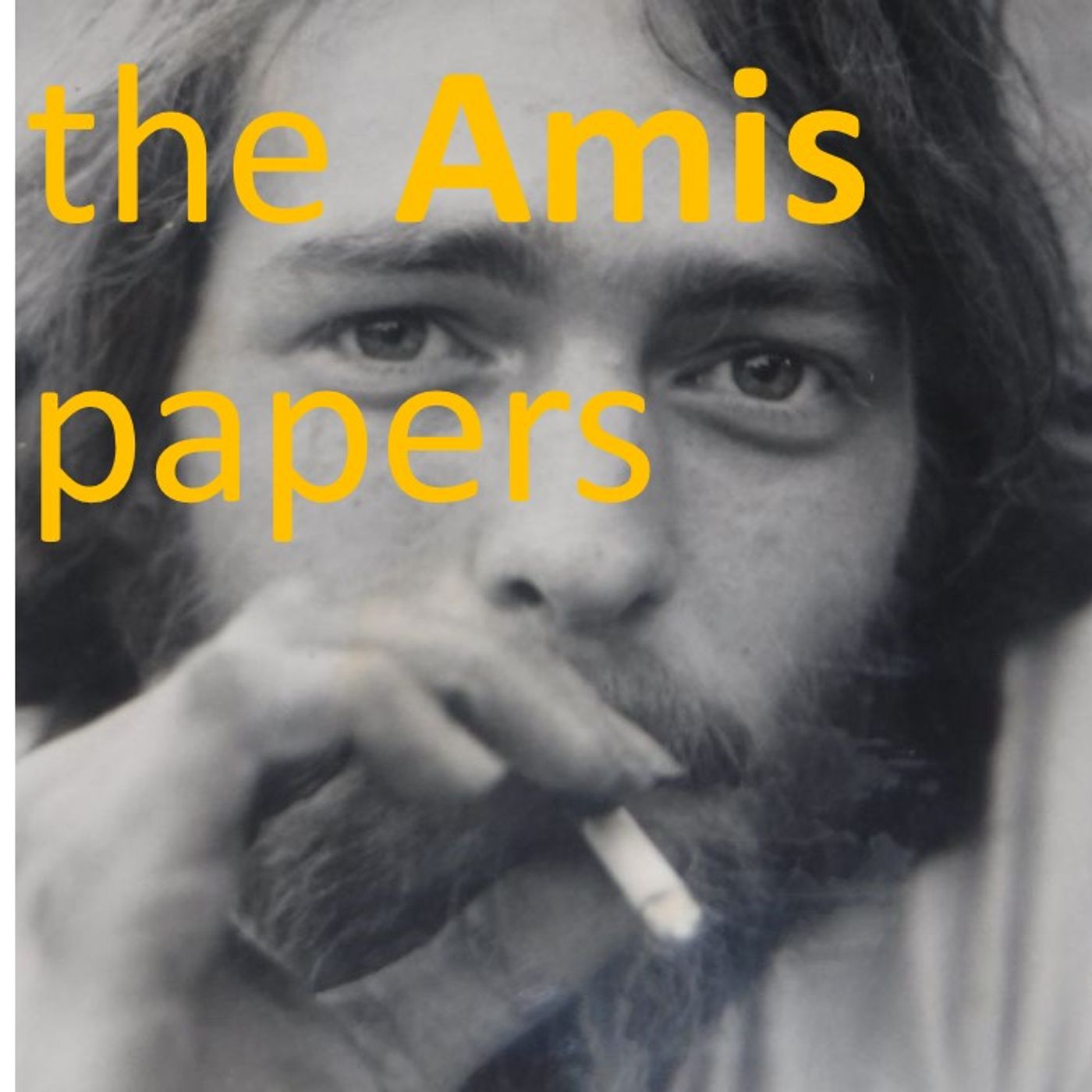
The Amis papers is a podcast reviewing Martin Amis's fiction one book at a time, from the Rachel Papers to Inside Story, and Kingsley Amis's fiction from Lucky Jim to The Biographer's Moustache.The podcast is hosted by Martin Locock, a poet and author, who likes most of the Amis's work.
-
36
Ep36 S2Ep14 Ending Up (1974)
Five old people live in Tuppenny Halfpenny Cottage and spend their time dealing with health problems, the prospect of death, and their irritating housemates. A black comedy which leaves few characters from its aim (apart from what is probably the only positive depiction of an advertsising executive in literature). Language note: includes a homophobic slur and racist attitudes1989 TV adaptation with John Mills and Lionel Jeffries
-
35
Ep35 S2Ep13 The Riverside Villas Murder (1973)
In 1936, among the residents of the modest houses of Riverside Villas is 14 year old Peter Furneaux, obsessed by model aircraft, jazz and the mysterious world of sex. Amis builds a murder mystery around an evocation of very particular time, place and social context, taking the opportunity to parody the tropes of the crime novel while drawing heavily on autobiography and taking consequences seriously.Content note: the podcast discusses child sexual abuse and includes ethnic slursThings mentioned:George Orwell The Decline of the English murder (1946) R C Sherriff The Fortnight in September (1931)There is a radio dramatisation of the story https://youtu.be/FS2jO7vCZeE?si=ADA3UGJmwKy8YmMM
-
34
Ep34 S2Ep12 Girl, 20 (1971)
A morality tale set in late 60s London, often praised as a satire of young people these days and their older cheerleaders, but in fact an exploration of Henri de Montherlant's philosophy of the self-sufficient man who only engages with romance as a passing diversion. Note on sound quality: heavy rain at times.Note on content: includes a discussion of racial slursLinksHenri de Montherlant The Girls translated by Terrence Kilmartin De Beauvoir and Montherlant More about The Girls Deep Purple Concerto for Group and Orchestra
-
33
Ep33 S2Ep11 The Green Man (1969)
One of Amis's best novels, worth reading, and worth reading unspoiled. Maurice Allington, alcoholic and adulterer, runs a country pub near Cambridge abounding in ghosts and the presence of the supernatural entity the Green Man. In this discussion I highlight Amis's adoption of the M R James approach to writing about ghosts, the dubious antiquity of pub names and the 'green man' sculptural motif, and whether seeing ghosts would prove the existence of the afterlife. Amis again tries to explain the appeal of womanising, while noting that some womanisers don't seem to like women at all. Amis writes perceptively about the impacts of alcoholism and infidelity, leading me to define the Kingsley syndrome: “the ability of a novelist to understand and depict the negative consequences of a character’s behaviour without leading to the novelist altering his own behaviour” The presence of a threesome in the plotline is perhaps surprising when two years earlier David Crobsy thought he was being young and radical in proposing one in 'Triad', confirming that every younger generation thinks they invented sex.I also look at the TV adaptation by Maclolm Bradbury (author of The History Man) which is perhaps less worthy of your time. Part 1 Part 2 Part 3
-
32
Ep32 S2Ep10 I Want It Now (1968)
Amis presents a fairy tale in which a Sleeping Beauty is saved by love, dressed up as a satire of the ultra rich and 1960s talk shows. Ronnie Appleyard, ambitious and selfish, meets Simona Quick, listless heiress, and struggles to prise her away from the influence of her autocratic mother Lady Baldock, while visiting Greece and the southern United States. Ronnie finds his usually weakly-held convictions tested by the behaviour of the wealthy and overt racism and he stands up for right against his better interests. Content note: discussion of sexual assaultAs a bonus (of sorts) this episode includes a reading of my long short story, Change and Decay, which examines the murky ethics underlying an aristrocatic family.
-
31
Ep31 S2Ep9 Colonel Sun (1968) and The James Bond Dossier (1965)
This episode looks at Amis's contributions to the James Bond literature - Colonel Sun, his continuation of the Fleming series, set in the Greek islands, and a critical review of Fleming's work as a whole. I discuss whether the novel works as a Bond book (yes), whether Amis fans will find much of his usual pleasures (no) (and on the way manage to get E M Forster's definition of story and plot confused, and examine the theory that Amis was choosing less personal projects at this time because of the turmoil of his private life). The James Bond Dossier is more interesting, addressing head-on the criticisms levelled at Fleming's work as appealing to male reader's wish fulfilment and full of pornography and sadism, and Amis makes a good case that these are largely unfounded; he is on weaker ground arguing that what the critics really disliked was that Bond was presented as patriotic, uncomplicatedly pro-West and brave. Amis also slyly uses his defence of genre writing to implicitly argue that popular literature deserved more respect than polite literature.Sources mentionedDear Philip, Dear Kingsley- The Letters between Kingsley Amis and Philip Larkin (Radio play) Amis, Amis & Bond Radio documentary
-
30
Ep30 S2E8 The Anti-Death League (1966)
A change in approach, with a sort-of thriller in the near future, following an experimental army unit preparing to use a secret and terrible weapon. But much of the story is about love, and Amis abandons irony while exploring whether the existence of God can be reconciled with the existence of suffering. ReferencesR D Laing The Divided Self (1961)John Robinson Honest to God (1963)Dylan Thomas "A Refusal to Mourn the Death, By Fire, of a Child in London"Father Ted "That would be an ecumenical matter"Wee Gwen (British Tactical Nuclear weapon)
-
29
Ep29 S2E7 The Egyptologists (1965)
What is the Metropolitan Egyptological Society and why does it discourage public and media enquiries? It is impossible to answer this question without spoilers so I've included a warning at the point where all is revealed. I discuss the co-author Robert Conquest, how the protagonists got stuck in unfulfilling marriages, whether womanisers like women as much as they claim to, the surprising availability of would-be mistresses, and what George Orwell reads into Donald McGill's seaside postcards. ReferencesRobert Conquest: The Great TerrorThe New Oxford Book of Light Verse (1978) edited by Kingsley AmisGeorge Orwell The art of Donald McGillE Buckland The World of Donald McGill 2006 interview with Hilly Kilmarnock
-
28
Ep28 S2E6 One Fat Englishman (1963)
The adventures, mainly amorous, of Roger Micheldene, soaked in sin, fat, rude, and angry, in suburban America, as he tries to persuade Helene Bangs to leave her husband for him. Many readers mistake the target for the satire: it is Micheldene and the society that produced him that Amis is critiquing, although he does share some of his prejudices (especially about literature). The discussion muses on the improbable social and sexual success of Micheldene despite his lack of redeeming behaviour, parallels with the author's own life, and Amis's atheism and attitude to Christianity.Content note: quotations with the f wordLinksDavid Lodge review
-
27
Ep27 S2E5 Take A Girl Like You (1960)
Kingsley Amis's longest, and some say his best, novel, recounts the tortuous relationship of innocent Jenny Bunn and lascivious Patrick Standish as they negotiate societal mores and personal boundaries in a pre-Pill world. In this episode I explore the source and meaning of the epigraph "Go, gentle maid, go lead the apes in hell", whether the book can be read as an indictment of the male gaze, what the old website Hot Or Not tells us about Pretty Privilege, what Amis means when a character says that they are too busy trying to not be a nasty man to worry about being a bad man, and similarities with the plot of Samuel Richardson's Clarissa. Content note: discussion of sexual assault and consentReferences:Song of the Wanderer by Harry JamesWord Histories: Meaning and origin of 'to lead apes in hell'Ernest Kuhl "Shakspere's "Lead Apes in Hell" and the Ballad of "The Maid and the Palmer" John Davies of Hereford "A Contention betwixt a wife, a widow and a maid"Philip Larkin reads his poem "Lines on a young lady's photograph album"Take a Girl Like You (1970 film)Take a Girl Like You (2000 series) Part 1 Part 2 Part 3
-
26
Ep26 S2E4 I Like It Here (1958)
Amis complains about going abroad and foreigners (and expats) while his main ire is aimed at the literature tradition of English writers imbuing Mediterranean cultures with a deep understanding inaccessible to those without the means to travel. Amis's least favourite novel, based largely on his own experiences when the family spent 3 months in Portugal as a conidtion of Lucky Jim winning the Somerset Maugham first novel prize. His satire is aimed at a style of writing that doesn't really exist any more, leaving the pleasures of the book fleeting and inconsequential.
-
25
Ep25 S2E3 That Uncertain Feeling (1956)
The tale of 'Unlucky John', trapped in an unsatisfying job and home life in Swansea, offered an escape route through an affair with a bored wife and her hard-partying friends. In this episode I discuss the parallels with Amis's own life, whether anxiety about mortality is a plausible excuse for infidelity, and why farce requires sympathy with the protagonist to be funny. Language note: I include a quote from the book that uses the term 'faggot' - this isn't used as a gay slur.
-
24
Ep24 S2Ep2 Lucky Jim (1954)
A detailed look at Kingsley Amis’s first published novel, covering the role of luck, whether as an Angry Young Man he wants systematic change or just a better place for himself, and the characteristic KA internal monologue reflecting moral ambiguity and confusion as a new form of expression. Also discussed are the song from which the title derives, the long shadow of military service, whether relationships at the time included sex, a comparison of Christine with Rachel in The Rachel Papers, and whether Amis’s view of universities and the value of research are consistent or well-founded. Content note: discussion of suicide Links Oh Lucky Jim! songAngry Young MenNewport medieval ship
-
23
Ep23 S2E1 Kingsley Amis intro and biography
Moving onto the work of Kingsley Amis, some recommendations on where to start (Lucky Jim and The Old Devils), a discussion of his biography and political development, and the value of his work as a social history of the 50s-70s.Books mentioned:Zachary Leader The Life of Kingsley AmisThe Letters of Kingsley Amis
-
22
Ep22 The Rub of Time (2017) and final thoughts
Martin Amis's final collected journalism volume has its interesting moments, including a tempering of his love of Nabokov, doubts about Jeremy Corbyn, and thoughts on Larkin and Germany, which I contrast with Barbara Pym's as described in Paule Byrne's biography The Adventures of Miss Barbara Pym . In this episode I also look back on the novels as whole, including a discussion of Shifts by Christopher Meredith and how its portrayal of working class characters compares with Amis, Amis's ways of ending his books, and the recurrent device of playing with the status of the text to create more distance between the author and the events portrayed, rejecting the model of Thackeray's Vanity Fair with its overt treatment of the characters and puppets.And finally, having covered all of Martin's novels, I discuss what will happen next: moving onto Kingsley Amis's books.Content note: brief refercnes to child sexual abuse and suicide
-
21
Ep21 Inside Story (2020)
We reach Amis's last book, an exercise in autofiction that combines autobiography, a discussion of Philip Larkin's politics and love life, moving accounts of the deaths of Christopher Hitchens and Saul Bellow, and a fictitious years-long frustrating affair with Phoebe Phelps. If that sounds like a mess then you're not wrong, but there are some very good bits. I explore his advice to writers which seems to boil down to "don't write like me", and also reflect on his comments on his early novels, in particular The Rachel Papers, which turns out to be much less fictional than it appeared.Also mentioned are the Philip Larkin Society's podcast Tiny In All That Air, The Martin Chronicles podcast, and My Martin Amis podcast.
-
20
Ep20 The Zone of Interest (2015)
Amis's contribution to the Careers Fair of Auschwitz stays mainly with the guards, exploring the lives and morals of those engaged in delivering the Final Solution. I discuss why Shakespeare and Auden seem out of place, and Amis's view of the significance of 1942. Jenny Frazer The fictionalising of Auschwitz The Tobolowsky Files episode 34: a good day in Auschwitz
-
19
Ep 19 Lionel Asbo (2012)
Another attempt at a state-of-the-nation comic novel, but this time feeling detached, as if Amis is no longer up to date with British society. In this discussion I refer to "Who let the dogs out?" by the Baha Men, Evelyn Waugh's Vile Bodies (1930), whether Mean Mr Mustard makes sense as an 80s nickname, and Lionel Blair's cultural footprint. Amis is groping towards a point about nature and nurture and whether it is possible to escape the criminal underclass, but this is thin gruel.Also mentioned: The Martin Chronicles podcast
-
18
Ep18 Pregnant Widow (2010)
A long hot summer in Italy - it's 1970 and Keith Nearing is 20, working his way through the canon and thinking about sex with his companions. A sprawling novel about the reconfiguration of social mores in the aftermath of the sexual revolution - not for nothing does it start with Larkin's Annus Mirabilis. In this discussion I highlight Katha Politt's criticisms of the depiction of female characters, the slightly uncertain period detail, parallels to Adrian Mole, Lucky Jim and Jenny Bunn from Take a Girl Like You (1960), and end by exploring whether Amis was right to complain about critics seeing it as autobiographical.Content note: mentions of sexual assault
-
17
Ep17 House of Meetings (2006)
Amis's short Russian novel takes us through history from Stalinism to Putin's failed state, while following a lifelong love triangle between two brothers and Zoya. Content note: the book and the podcast include descriptions of sexual assault and reference self harm. I mention Adam Curtis's Russia 1985-1999: Trauma Zone (available in the UK on BBC iPlayer) and Kingsley Amis's novel Jake's Thing as a book that is enjoyable to read.I spend some time trying to tease out Amis's moral point, that a person, people or nation without conscience cannot survive, but am uneasy with its application to the narrator.
-
16
Ep15a Heavy Water (1998)
Amis's second short story collection is diverse in subject, style and antiquity - including a science fiction story that reveals that Earth is unimportant and doomed, a fantasy where poets make big money film deals and screenwriters starve, and a commentary on the way that society has left the old rules of status and masculinity behind, featuring Big Mal Bale who reappears in Yellow Dog. There are short funny stories too.Mentioned in this episode:Extract from Experience (2000)Another review of the book Another reviewContemporary reviews Mason’s Life by Kingsley Amis
-
15
Ep16 Yellow Dog (2003)
The publication of Yellow Dog was greeted with dismay by the papers, writers and fans. "Embarrassingly bad" was the memorable description by novelist Tibor Fischer. Tibor Fischer review Parts are aggressively unpleasant- the tedious brutality of old-style London gangsters, the extravagant cynicism and hypocrisy of the tabloid journalists, and the grimy business of the pornography industry, but looked at in the right light it is a comprehensive and nuanced exploration of masculinity in the late 20th century, arguing that we must outgrow our instincts to create a society for all. On the way I discuss 90s laddism and the prevalence of 'ironic' sexism, Humbert Wolfe's view of the British press Epigram to The Uncelestial City (1930) and whether the strength of the critical response was driven by Amis's shift in politics after 9/11.
-
14
Ep14 Film - Out of Blue (based on Night Train)
Carol Morley's 2018 film adaptation of Night Train places the action in New Orleans. The podcast discusses how the book's mystery has been altered to make it more of a conventional noir, why it was filmed in 'Covid style' with empty rooms and few people, and why the viewer may find the ending unsatisfying. Worth watching if you like the book; there is a spolier section at the end of the episode in case you plan to do so.
-
13
Ep13 Night Train (1997)
We jump across the Atlantic to a modern noir, with a disillusioned alcoholic cop investigating the death of her beautiful and successful friend. A comic novel light on jokes, with an emphasis on the meaninglessness of existence and the impossibility of happiness. The podcast ponders whether a work that shows the police as bigoted, lawless and incompetent counts as "copaganda", where the phrase "the sense of an ending" comes from and what it means, and whether the ending is as bleak as it seems.Content note: discussion of suicide and child sexual abuse.
-
12
Ep12 The Information (1995)
We reach the halfway point of Amis's fiction, a long meditation on the realities of the writer's life and the futility of revenge. Some poetic allusions to Philip Larkin's The Trees and Wendy Cope's Tumps (typically useless male poets), and the mystery of what a planesaw is, enliven Amis writing at the top of his game on the sad and depressing life of Richard Tull, a novelist whose early promise has evaporated into hackwork.
-
11
Ep11 Time's Arrow (1991)
Amis follows a Nazi doctor from his death as a respectable suburban physician in America back through New York to Portugal, Rome, and wartime Germany. On the way we discover the strangeness of eating and relationships told backwards, the significance of 1960, and whether those guilty of monstrous crimes are monsters or ordinary people.Diane LeBlond 2013 Etudes britanniques contemporaines “Martin Amis and ‘theNature of the Offence’: from Expressions of Outrage to the Experience of Scandal”
-
10
Ep10 London Fields (1989)
Content note: the novel raises issues of sexual violence, domestic violence, child abuse, child sexual exploitation and disordered eating.Looking at Amis' London novel, or his darts novel, or his millenial novel (in the end-of-the-world sense not the avocado-toast-and-can't-buy-a-house sense). And the 2018 film based on it. On the way I discuss the strange parochialism of the metropolitan writer, how many levels of unreliable narration are present, and whether Amis hates the working class or just happens to write about its worst examples.I also mention:Roger Lewis The Life and Death of Peter Sellers,Susie Thomas on class and gender The Martin Chronicles podcast
-
9
Ep9 Einstein's Monsters (1987)
This episode discusses Amis's first short story collection, loosely themed on nuclear war and its aftermath, and concludes that the stories are unsatisfying. On the way I discuss what Amis might learn from Scooby Doo about narrative, the art of the literary backhanded compliment, and whether the Nuclear Age presents different challenges to the Age of Anxiety.There is a brief mention of schizophrenia and suicide.
-
8
Ep8 Money (1984)
A detailed discussion of one of Amis's best books, exploring the strange appeal of John Self, what it is that the character Martin Amis takes from him as reward for winning a game of chess, and why Self's limited reading includes the obscure Shakespeare play Timon of Athens. The podcast covers the novel's treatment of themes including suicide and physical and sexual violence.BBC interview 1984 with dramatisation featuring Mel Smith as Self The Guardian 100 best novels: MoneyFacebook page for the podcast
-
7
Ep7 Film - Saturn 3 (1980)
A look at the science fiction Garden of Eden/ Frankenstein/ mad robot film Saturn 3 for which Amis wrote a screenplay, although nothing in the finished script bears much evidence of his style. It's chief interest is as raw material for the novel Money.Something is wrong on Saturn 3 websiteIndustry Podcast episode on John BarryWe Hate Movies podcast episode 127: Blame It On Rio
-
6
Ep6 Films - Rachel Papers and Dead Babies
A look at some of the film versions of Amis's books as a prelude to Saturn 3: Rachel papers (1989) and Dead Babies (Mood Swingers) (2000) https://www.youtube.com/watch?v=uAJqCZQ2Yrs ,
-
5
Ep5 Other People (1981)
Is Other People more of a mystery than the author intended? I present the evidence that Mary is dead, is in hell, or is in a life loop with a chance of redemption. Plus Amis's further thoughts on literature and life, and the emergence of the mature Amis style.Facebook pageBooks that matter review of Other People"Narrative and Narrated Homicide in Martin Amis's Other People and London Fields," from Critique 37 (1995). By Brian Finney, California State University, Long Beach.In Camera (No Exit) 1964Craig Raine “A Martian sends a postcard home”Allusions to Larkin in Amis’s work
-
4
Ep4 Success (1978)
This episode discussed Success, a tale of two brothers and sister trying to adapt to the adult world, by way of unreliable narration, urban landscapes, childhood trauma and attempted hedonism. Links are made to the world of work as described in Joseph Heller Something Happened , and textual parallels to TS Eliot The Wasteland and Philip Larkin ‘Going’, ‘High Windows’, and ‘This be the Verse’.https://www.facebook.com/AmisPapershttps://martinamisweb.com/discussion.shtml https://www.independent.co.uk/news/uk/home-news/an-amis-who-lives-in-his-own-world-1620442.html https://lareviewofbooks.org/article/the-age-of-acceleration-an-interview-with-martin-amis/ https://www.standard.co.uk/hp/front/martin-amis-how-the-sexual-revolution-helped-destroy-my-sister-sally-6790757.html
-
3
Ep3 Dead Babies (1975)
This episode explores Amis' second novel Dead Babies, an account of a drug- and sex-fuelled weekend at an Oxfordshire rectory which conceals a serious moral purpose. The podcast considers what the title means, why Quentin's reading helps explain the book's thesis, what Menippus has to tell us about the aftermath of free love, unexpected links to Philip Larkin, and a surprising postcript on the origin of the term 'blinkie'. Also mentioned is the podcast The Martin Chronicles and the research of Joanna Stolarek.
-
2
Ep2 The Rachel Papers (1973)
This episode looks at The Rachel Papers (1973) and explores what Charles Highway's tragic flaw is, what the Rachel papers are, and why Charles admires Norman so much. Contains some explicit language from the book.
-
1
Ep1 Introduction to Martin Amis
This episode provides some context: a brief biography of Amis, my experience as a fan since the 1980s seeing his reputation rise and fall, and a reader's guide for those new to his work suggesting which to read first and which to avoid.
No matches for "" in this podcast's transcripts.
No topics indexed yet for this podcast.
Loading reviews...
ABOUT THIS SHOW
The Amis papers is a podcast reviewing Martin Amis's fiction one book at a time, from the Rachel Papers to Inside Story, and Kingsley Amis's fiction from Lucky Jim to The Biographer's Moustache.The podcast is hosted by Martin Locock, a poet and author, who likes most of the Amis's work.
HOSTED BY
Martin Locock
Loading similar podcasts...
URL copied to clipboard!