
PODCAST · education
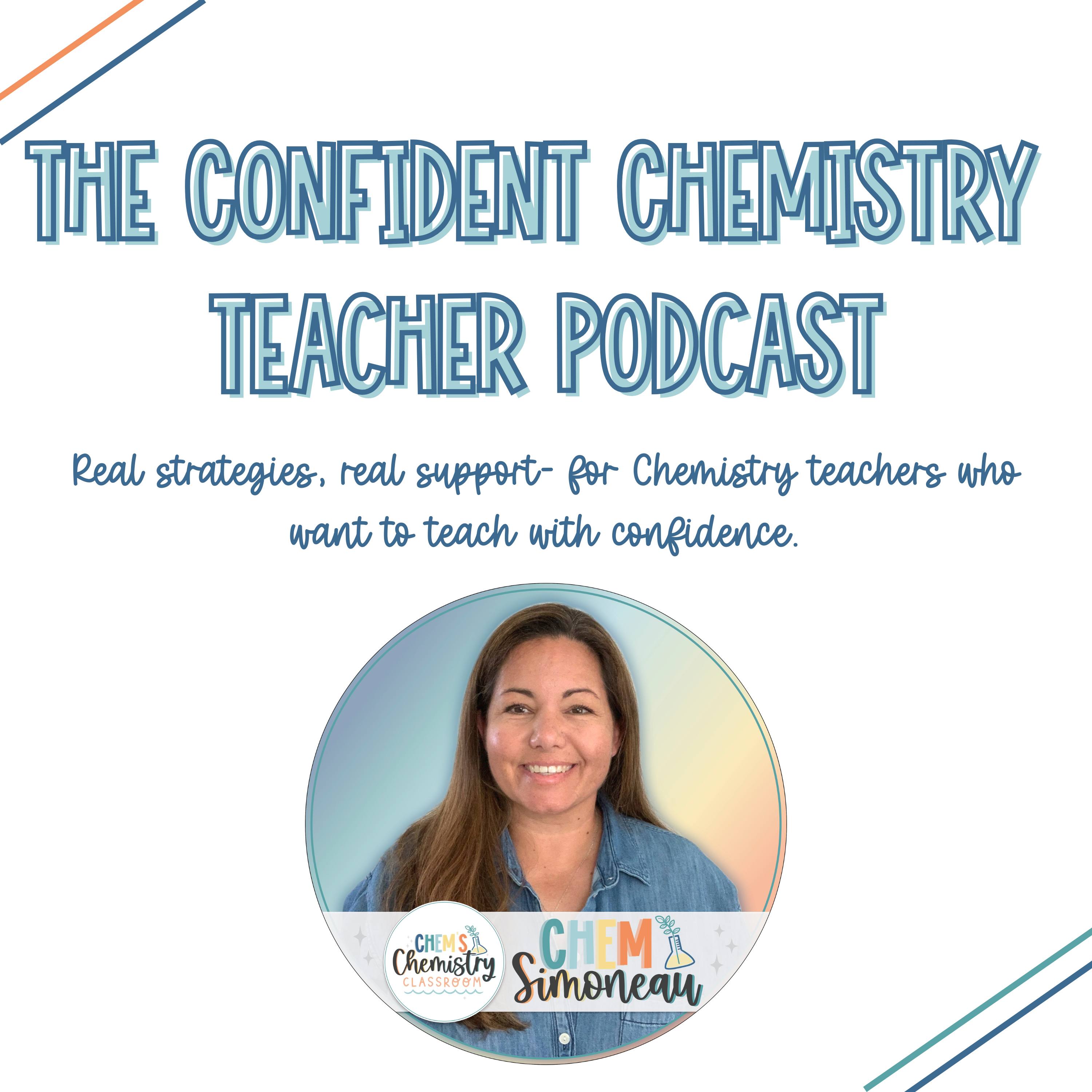
The Confident Chemistry Teacher
by Chem Simoneau
Helping high school chemistry teachers teach with confidence, run labs like a pro, and simplify their classroom with practical strategies that save time.
-
29
Episode 28: Summer Goals That Actually Work (Without Burning Yourself Out)
If you ended this school year feeling behind, scattered, or like you were constantly playing catch-up… this episode is for you. I’m walking you through exactly how I’m planning my summer—so I can feel organized, prepared, and in control going into next year (without trying to do everything). 🧠 In This Episode, You’ll Learn: ✨ How to Turn a Stressful Year into a Clear Plan Why I started with my biggest pain points (new school, new classes, no prep time 😅) and used those to guide my summer goals. 📋 A Simple Weekly Structure That Actually Works How I’m organizing my time with: Deep work mornings Lighter afternoons Dedicated days for school, business, and home Weekends that actually include rest and fun 🧪 My Step-by-Step Summer Plan System How I’m breaking it down so it doesn’t feel overwhelming: Weeks 1–2: Map out units, topics, labs, and assessments Weeks 3–4: Build a clickable lab & activity spreadsheet Weeks 5–6: Clean out and organize materials (goodbye transparencies 👋) ⚖️ Why “Progress Over Perfection” Matters The goal isn’t a perfect classroom—it’s being proactive instead of reactive. 🤖 How I Used ChatGPT to Plan My Summer How talking through my ideas helped me simplify, prioritize, and actually stick to a plan. 🔥 Teacher Tip of the Week Don’t try to do everything this summer. 👉 Pick 3–4 life buckets (school, home, health, business, etc.) 👉 Choose ONE main focus 👉 Break it into 2-week chunks Because let’s be honest—life happens. And your plan needs to allow for that. 🎯 Try This Take 10–15 minutes and ask yourself: What made this year feel hard? What do I not want to feel next year? What’s one thing that would make the biggest difference? Start there. Not with a giant to-do list. 📣 What’s Coming Next In June, I’ll be going LIVE on Tuesday nights to walk you through: Planning your year Organizing your curriculum Building systems that actually stick Stay tuned for details! 🧪 Join the Waitlist for The Confident Chemistry Teacher Lab Membership is opening in October 🎉 I’m looking for 20–25 founding members who want: Ready-to-use labs, organized systems, and ongoing support 👉 Join the waitlist to get first access + founding member pricing 💬 Let’s Connect If this episode helped you, send it to a teacher friend who’s feeling overwhelmed right now 💛 And come hang out with me: Instagram: @chemschemistryclassroom Website: chemschemistryclassroom.com 🎙️ Closing Thought You don’t need a perfect plan. You just need a plan that helps you feel a little more prepared and a lot less stressed going into next year.
-
28
Episode 27: The Root Beer Lab- From Sublimation to Ocean Acidification | Fun Earth Day Lab
🎧 Episode 27: The Root Beer Lab – From Sublimation to Ocean Acidification If your students love lab days…but struggle to connect them to actual chemistry concepts, this episode is for you. Today I’m walking you through one of my all-time favorite labs...making root beer with dry ice 🍺 (don’t worry…no fermentation happening here 😄). It might feel a little “fluffy” at first, but I promise—there is some really solid chemistry packed into this activity. We’re talking phase changes, intermolecular forces, acids and bases, and even ocean acidification—all in one engaging lab your students will remember. 🧪 In This Episode, You’ll Learn: 🧊 Sublimation in Action How I use dry ice and “spooky fog” to help students see phase changes instead of just memorizing them 📊 Making Phase Diagrams A simple way to compare water vs. carbon dioxide, so students understand why CO₂ skips the liquid phase at normal pressure 🧠 Intermolecular Forces (Without the Eye Glaze 😅) How I connect weak London dispersion forces to what students are actually observing in the lab 🥤 Why Soda Is Acidic (and Why That Matters) Using carbonic acid to connect CO₂ + H₂O to real-world examples like flat soda—and ocean acidification 🌍 Real-World Connections That Stick How this lab leads naturally into a conversation about carbon sinks, ocean chemistry, and impacts on marine life 🛠️ Lab Tips & Teacher Moves From my “witch’s brew” stirring moment 🧙♀️ to managing dry ice safely and efficiently in class 🎁 Resources & Links 🧪 Free Root Beer Lab Slides & Worksheet I’m sharing the exact materials I use in my classroom—grab them in the show notes and try it out yourself! 🌍 It’s All About Carbon Activity (TPT) If you want to go deeper with carbon cycles and real-world connections, this is a great extension for your students 🧪 Join the Lab Membership Waitlist This lab is a perfect example of the kind of ready-to-run, classroom-tested resources coming to the Confident Chemistry Teacher Lab Membership this October 👉 Join the waitlist to get first access (and founding member pricing!) 💡 Teacher Tip of the Week: Dry ice doesn’t melt… it disappears 👀 If you buy 5 pounds the night before, you might walk into school with only 2 pounds left by first period. Save yourself the stress and call ahead—have your store hold it for you the morning of your lab. 🎙️ Coming Next Week… Next episode, I’m switching gears a bit and sharing how I’m planning my summer goals—both for my classroom and my business. If you’ve ever felt like summer flies by and you didn’t get done what you wanted to get done…this one’s for you. 💛 As always… Keep inspiring, keep experimenting, and keep being awesome in your classrooms. 🌐 Website: chemschemistryclassroom.com👩🏫 Join our community: The Confident Chemistry Teacher Facebook Grouphttps://www.facebook.com/groups/767528946010479/ 📸 Come say hi on Instagram: @chemschemistryclassroom🛒 Grab resources on TPT: Chem’s Chemistry Classroom
-
27
Episode 26: Why I Teach Environmental Chemistry (Even When It’s Not in the Standards)
Episode 26: Why I Teach Environmental Chemistry (Even When It’s Not in the Standards) Let’s be honest…this time of year can feel a little chaotic. Testing is coming, students are getting a little squirrely 😅, and it’s easy to feel like you just need to “stick to the standards” and push through. But this is actually one of my favorite times of year to teach something a little different. In this episode, I’m sharing why I teach a standalone Environmental Chemistry unit around Earth Day (April 22nd)—even though it’s not technically required—and why it ends up being one of the most meaningful units of the year for my students. 🧪 In This Episode, I Share: 🌍 Why This Unit Matters (More Than You Think) Why this is the time of year students start asking, “When am I ever going to use this?” How environmental chemistry helps answer that question in a real and relevant way 🧪 The Ozone Layer (A Win for Science) How I use the ozone layer to show students a problem we actually solved Easy connections to catalysts and reaction chemistry Why this topic shows up again in AP courses 🌊 Acid Rain & Ocean Acidification Real-world examples students immediately understand (food webs, oceans, even statues!) How I use this as either an introduction to pH or a meaningful application Helping students see why “small” pH changes actually matter 🍺 The Root Beer Lab (Student Favorite) A fun, memorable lab tied to ocean acidification How I pair it with a short video to deepen understanding Why this is one of those labs students actually remember ☀️ Greenhouse Effect Lab A super simple setup using beakers, plastic wrap, and thermometers How students can actually see heat being trapped Easy way to reinforce variables and experimental design 🔥 Sneaky Content Review (Without Feeling Like Review) Bringing in thermodynamics (like how water holds heat) Reinforcing key chemistry concepts in a way that feels relevant—not repetitive 🎁 Resources Mentioned 🎬 Freebie: Environmental Movie Reflection Sheet If you’re showing any environmental videos, this makes it way more than just a “movie day.” 👉 Grab it here: [link] 🛍️ Classroom Resource: Carbon Cycle Activity A simple, ready-to-use activity using NPR clips to help students understand carbon and bonding. 👉 Grab it here: [link] 🧪 Coming Soon: Lab Membership (Launching October 1) 👉 Join the waitlist here: [link] If you love labs like the ones in this episode but want everything organized and ready to go… That’s exactly what I’m building inside the Lab Membership—complete labs, setup support, and classroom-tested systems. 🎧 What’s Coming Next Next week, I’m breaking down one of my favorite activities from this unit—the Ocean Acidification + Root Beer Lab—so you can easily bring it into your classroom. 💬 Final Thought This unit isn’t about adding “one more thing” to your plate. It’s about giving students a moment where they finally think: 👉 “Oh…this actually matters.” And honestly…those are the lessons they remember. 🎧 Enjoying the podcast? Make sure to follow/subscribe so you don’t miss future episodes! 🌐 Website: chemschemistryclassroom.com 👩🏫 Join our community: The Confident Chemistry Teacher Facebook Group https://www.facebook.com/groups/767528946010479/ 📸 Come say hi on Instagram: @chemschemistryclassroom 🛒 Grab resources on TPT: Chem’s Chemistry Classroom
-
26
Episode 25: Managing Lab Materials Without Losing Your Mind
🎙Managing Lab Materials Without Losing Your Mind Lab days are powerful. They’re hands-on. They deepen understanding. Students love them. But let’s be honest… they can also feel chaotic and overwhelming. In this episode, I’m sharing the exact systems I use to manage lab materials in my chemistry classroom so I can coach instead of react. After 18 years of teaching, I still get a little lab-day anxiety, but strong systems protect my patience, energy, and classroom flow. If lab days feel stressful for you, this episode will help you simplify and regain control. 🔬 In This Episode, You’ll Learn: How I reduce decision fatigue before labs Where I store chemicals vs. classroom materials How I organize lab containers by quarter Why I create one labeled container per lab The simple labeling trick that saves me hours each year How I structure my lab cart (top, middle, bottom tiers) My aluminum foil cart hack (this one is gold ✨) How I hold students accountable for cleanup When I switch to lab station “checkout boxes” How I reset between periods quickly Why I always prep backup solutions How systems protect your patience and energy 🛠 My Core Lab Management Philosophy The more specific the system, the smoother the lab. When materials have a place: Students know where to find them. Students know where to return them. You stop making last-minute decisions. You stay calm and focused on instruction. Strong systems allow you to coach instead of manage chaos. 🎁 Free Resource Mentioned If you'd like some ready-to-use tools to support your lab days, grab my free: 🧪 Lab Day Starter Kit It includes: Lab group accountability tracker Practical classroom tools Simple systems to improve lab flow 👉 Download HERE 🎯 Start Small. Don’t overhaul everything at once. Start with ONE improvement: Decide where balances always go. Create one labeled lab container. Save your labels instead of rewriting them. Try the aluminum foil cart reset system. Small systems compound over time. If you have a lab organization tip that works in your classroom, I would love to hear it! Connect with me and share your strategies. As always — Keep inspiring. Keep experimenting. And keep being awesome in your classroom. 🧪✨ Website: chemschemistryclassroom.com Facebook Group: The Confident Chemistry Teacher Facebook Group Instagram: @chemschemistryclassroom TPT: Chem’s Chemistry Classroom
-
25
Episode 24: How I Run POGIL Activities
Episode Intro In this episode of The Confident Chemistry Teacher Podcast, I’m sharing exactly how I run a POGIL in my chemistry classroom — from setup to grading. You’ll discover how to get students collaborating instead of waiting for answers, and leave with strategies to make group work productive and manageable. Key Takeaways By the end of this episode, you’ll learn how to: ● Decide when to use a POGIL (and when not to) ● Set clear expectations so groups stay on task ● Use roles to encourage participation and accountability ● Grade POGIL activities without creating extra work Standards Connections ● Performance Expectations: HS-PS1-7 Use mathematical representations to support the claim that atoms, and therefore mass, are conserved during a chemical reaction ● Science & Engineering Practices: Analyzing data, constructing explanations, engaging in argument from evidence ● Crosscutting Concepts: Patterns, cause and effect 🎁 Free Resource POGIL Quick Start Pack – A simple checklist and printable job cards so you can run your first POGIL with confidence. 👉 Link to POGIL Quick Start Pack webpage For more information or to join the Confident Teacher community check out: Website: chemschemistryclassroom.com Facebook Group: The Confident Chemistry Teacher Community https://www.facebook.com/groups/767528946010479/ TPT Store: Chem’s Chemistry Classroom
-
24
Episode 23: Inside the Unit- Moles | Teaching Conceptual Thinking and Math Skills
Episode Intro In this episode of The Confident Chemistry Teacher Podcast, I’m taking you inside my mole unit — not as a day-by-day plan, but through the thinking and teaching decisions behind it. The mole unit is one of the first truly skill-heavy units students encounter in chemistry, and it can feel overwhelming for both students and teachers. I share how I introduce the mole conceptually, how I scaffold practice, how I check for mastery along the way, and how I help students build confidence before the test. My goal is always the same: helping students actually learn chemistry, not just survive the unit. Key Takeaways By the end of this episode, you’ll hear how to: Frame the mole as a skill-based unit, not a memorization unit Help students visualize the scale of the mole before jumping into math Scaffold mole conversions so students don’t shut down Balance independent practice with more active, collaborative practice Use mastery checks to guide instruction before the unit test Reinforce the importance of showing work and using units How I Introduce the Mole Unit I begin the unit by helping students understand scale. Before touching conversions, I want them to grasp how large Avogadro’s number really is. I use a short video, How Big Is the Mole?, to help students visualize scale. We discuss why chemists need a way to count particles they can’t see. I connect atomic mass units to grams to show why mass is the bridge between the microscopic and real-world chemistry. To make this concrete, I use a “measuring by mass” activity with paperclips, which helps students understand how counting by mass works in a tangible way. Teaching & Practicing Core Mole Skills Even though this is a math-heavy unit, I rely on explicit modeling through Google Slides. My slides focus on how to think through problems, not just the answers. I typically teach skills in this order: Molar mass Mole-to-gram and gram-to-mole conversions Moles to representative particles and liters Multi-step (double conversion) problems Percent composition, empirical formulas, and molecular formulas Throughout the unit, I remind students that dimensional analysis is a tool, not a trick — something they already know how to use. Practice: Boring Practice + Fun-ish Practice Because chemistry skills require repetition, I intentionally plan for both types of practice. Independent practice: Worksheets for building confidence Quiet work time so students can’t rely on neighbors Active or “fun-ish” practice: Rock–Paper–Scissors review Whiteboarding Small-group and partner practice Practice tests in mixed-ability groups This balance supports both skill mastery and student engagement. Mastery Checks (Before the Test) Instead of waiting until the unit test to find gaps, I use short mastery checks throughout the unit. Each mastery check is only a few questions. Students receive feedback quickly. Retakes are built in when students show effort These checkpoints: Create urgency Prevent last-minute cramming Help me adjust instruction with warm-ups, extra practice, or short videos Labs & Hands-On Learning Labs in the mole unit help students connect math to real substances. Some of my favorites include: Counting by measuring mass (early in the unit) Avogadro and the Mole lab using real substances Extension activities like Mole Olympics or sewing a mole These activities don’t replace instruction — they enhance understanding and make the unit more memorable. Assessment & Grading Philosophy My assessments are a mix of multiple choice and free response, with a strong emphasis on showing work. I use a consistent grading approach: Credit for showing work Partial credit for reasonable answers Points for units and significant figures Using the same expectations from the start helps students understand what matters and builds confidence over time. Final Takeaway The goal of the mole unit isn’t just passing a test — it’s helping students believe they can do hard, skill-based chemistry. When students leave this unit knowing they can: Set up conversions Use units correctly Explain their thinking …it sets them up for success in stoichiometry and beyond. Closing As always, thank you for listening to today’s episode. Teaching chemistry can feel overwhelming, and my hope is that this episode gave you one idea, one strategy, or one small shift you can take back to your classroom. If you found this episode helpful, please share it with another chemistry teacher who might need some encouragement. And until next time — keep inspiring, keep experimenting, and keep being awesome in your chemistry classroom. Happy teaching. 🧪 Mole Unit Resources (Optional Support) If you’re teaching the mole unit right now and want some ready-to-use resources, here are a few free activities and some from my Teachers Pay Teachers store that align with what I shared in this episode: Measuring by Mass Activity (Paperclip Model) (Free) – helps students understand how chemists count particles using mass. Mole Conversion Google Slides Presentation– includes step-by-step directions for solving mole problems, fill-in notes, and 5 short video lectures. Mole Conversion Worksheets, Quizzes, and Warm-ups – structured practice and quick assessments to build confidence before the test. (Use what works for your classroom — these are simply tools I use to support the strategies discussed in this episode.)
-
23
Episode 22: Small Tweaks I'm Making to My Chemistry Teaching in 2026
Episode Intro In this episode of The Confident Chemistry Teacher Podcast, I’m sharing the key systems and teaching practices I’m focusing on in 2026 to help me feel more organized, reduce decision fatigue, and actually enjoy the spring semester with my students. Like many teachers, I’ve felt overwhelmed this year — new responsibilities, new classes, and the constant pressure to keep up with curriculum pacing. Instead of trying to do everything, I’m intentionally focusing on a few core systems that support both student learning and teacher sustainability. If you’re feeling stretched thin right now, this episode is meant to remind you that you’re not alone — and that small, intentional shifts can make a big difference. Key Takeaways By the end of this episode, you’ll hear about: How creating structured weekly routines can reduce decision fatigue and improve student behavior Why I’m committing to a monthly checklist system to stay organized and prepared How modeling expectations more intentionally leads to smoother lessons and labs Why being intentionally positive with students matters — especially during challenging semesters Teaching Systems & Practices Featured 🧪 1. Structured Weeks I’m moving toward a more predictable weekly structure: Monday: Notes and light practice Tuesday & Wednesday: Activities or labs Thursday: Review, notebook organization, and practice test work Friday: Quiz or test This structure helps me prioritize essential content, reduces planning stress, and gives students clear expectations. 📋 2. Using a Monthly Checklist To manage everything on my plate, I’m leaning into a monthly checklist broken into four sections. Instead of trying to do everything at once, I focus on one section per week and use staff development days strategically. I’ve also committed to staying one extra afternoon a week (Thursdays) for focused planning, grading, and lab prep — so work doesn’t spill into every evening or weekend. 🎯 3. Modeling More for Students This semester, I’m being more intentional about: Modeling procedures Modeling lab techniques Modeling notebook setup If students don’t do something correctly, I’m having them go back and repeat it. I’ve learned that when I’m frustrated later, it’s usually because I skipped modeling earlier. 🌱 4. Being Intentionally Positive I’m working on using more positive language and recognition in my classroom, including: Verbal praise for effort and growth Calling out groups who are working well Stickers on assessments Small academic rewards The goal is to help students build confidence so that external motivation can eventually turn into internal motivation. What’s Coming Next on the Podcast As the year continues, I’ll be sharing: How I plan chemistry units using these systems Deeper explanations of why I structure lessons the way I do Episodes on labs like my dry ice root beer lab, gas laws activities, and other high-engagement chemistry experiences My goal is to help you adapt strategies — even if you don’t teach the exact same labs or units. Final Encouragement If you’re feeling overwhelmed, remember: You don’t need to do a thousand new things You don’t need a complete overhaul. One intentional system can make a big difference Closing As always, thank you for listening to today’s episode. Teaching chemistry can feel overwhelming, but I hope this episode gave you one idea, one strategy, or one small shift you can take back to your classroom. If you found this episode helpful, please share it with another chemistry teacher who might need some encouragement. And until next time — keep inspiring, keep experimenting, and keep being awesome in your chemistry classroom. Happy teaching.
-
22
Episode 21: How I Review for Semester Exams
🎙️ Ep. 21 – Simple Semester Exam Review Strategies that Keep Students Engaged Episode Intro In this episode of The Confident Chemistry Teacher Podcast, I’m sharing my favorite strategies for reviewing before semester exams — without losing your sanity or your students’ attention. You’ll discover how to keep students engaged during review days, balance independent and active learning, and design meaningful practice materials that actually prepare them for success. By the end of this episode, you’ll learn how to: ✅ Create and organize a semester exam review that balances student independence and active learning. ✅ Use warmups, practice tests, and collaborative review games to reinforce essential skills. ✅ Set up simple systems to reduce teacher burnout while still helping students feel prepared and confident. ✅ Incorporate technology (like ChatGPT!) to build custom practice tests when you don’t have access to a test generator. Activities / Labs Featured: Warmup Questions – Short, high-impact review problems that align with the semester exam format. Practice Test Creation – How to build a student-friendly practice test using ChatGPT screenshots. Partner or Group Review Games – Examples include quiz-quiz-trade, whiteboarding, slide decks, and rock-paper-scissors review. Task Cards Around the Room – Engaging movement-based review with problem sets and friendly competition. Graphic Organizers & Flip Books – Tools for helping students visualize key unit relationships and concepts. Next Episode Teaser Next time, I’ll be sharing what I do each day for my mole unit. Don’t miss it! For more information or to join the Confident Chemistry Teacher community, check out: 🌐 Website: chemschemistryclassroom.com 👩🏫 Facebook Group: The Confident Chemistry Teacher Community 🧪 TPT Store: Chem’s Chemistry Classroom
-
21
Episode 20- Inside the Unit: Chemical Nomenclature
🧪 Ep. 20 – Inside the Unit: Chemical Nomenclature Episode I In this episode of The Confident Chemistry Teacher Podcast, I’m walking you through how I teach one of the foundational chemistry skills—chemical nomenclature. You’ll hear how I structure the unit, keep students engaged, and help them build confidence while naming and writing chemical formulas. Key Takeaways By the end of this episode, you’ll learn how to: • Determine when to teach nomenclature in relation to bonding • Use bonding types to scaffold naming conventions • Help students understand ionic vs. covalent (molecular) formulas • Incorporate practice, movement, and humor to boost retention • Simplify acid naming and choose what’s worth assessing Activities / Labs Featured • PBS Ionic Bonding Tutorial – Simple, visual simulation that helps students conceptualize ionic bonding. • PBS Covalent Bonding Tutorial – Companion activity for understanding molecular bonding. • Science Spot “Bond with a Partner” Cards – Hands-on pairing activity using laminated ion cards to build formulas. • Quiz-Quiz-Trade Cards – Peer-to-peer naming & formula practice with movement and repetition. • Whiteboarding Practice – Whole-class and partner work reinforcing compound types and naming steps. Standards Connections Performance Expectations: HS-PS1-2: Construct and revise an explanation for the outcome of a reaction based on the outermost electron states of atoms. Science & Engineering Practices: • Analyzing and interpreting data • Developing and using models • Asking questions Crosscutting Concepts: • Patterns (identifying ionic vs covalent naming structures) • Structure and function (relationship between atomic structure & bonding behavior) 🎁 Free Resources PBS Interactive Ionic & Covalent Bonding Worksheets – Perfect scaffolding for introducing bonding types before naming. Heads up — I didn’t create the PBS resources, so they’re a little plain. When I make something for TPT, trust me — it gets a full glow-up. PBS Ionic Bonding Tutorial 👉https://docs.google.com/document/d/1Dvrn6fgvqFzggFO_f-wCk4D6HO1SoMm4jlVTlKLaG_4/copy PBS Molecular Bonding Tutorial 👉https://docs.google.com/document/d/1QhFUbaCSCGm9OaPg7nfU2jAy3IRJZElonNgDH18GMAg/copy 🧪 TPT Resources Chemical Nomenclature Presentation- Ionic and Molecular Compounds Google slides, prerequisite worksheet, ion card activity, and instructional videos 👉 https://www.teacherspayteachers.com/Product/Chemical-Nomenclature-Presentation-Ionic-and-Molecular-Compounds-13254935 Ionic Nomenclature Worksheets & Quizzes (Naming & Formula Writing) 👉 https://www.teacherspayteachers.com/Product/Ionic-Nomenclature-Worksheets-Quizzes-Naming-Formula-Writing-13263301 Molecular Nomenclature Worksheets & Quizzes 👉 https://www.teacherspayteachers.com/Product/Molecular-Nomenclature-Worksheets-Quizzes-Naming-and-Formula-Writing-13272491 Mixed Ionic and Covalent Nomenclature Worksheets and Quizzes 👉 https://www.teacherspayteachers.com/Product/Mixed-Ionic-and-Covalent-Nomenclature-Worksheets-and-Quizzes-13362589 Next Episode Teaser Next time, I’ll be sharing how I help students review for tests, quizzes, and end-of-semester exams—especially timely as finals approach! For more information or to join the Confident Teacher community, check out: Website: chemschemistryclassroom.com Facebook Group: The Confident Chemistry Teacher Community https://www.facebook.com/groups/767528946010479/ TPT Store: Chem’s Chemistry Classroom https://www.teacherspayteachers.com/store/chems-chemistry-classroom
-
20
Episode 19: When Graduation Is the Goal (and Learning Isn’t)
Episode Intro In this episode of The Confident Chemistry Teacher Podcast, I’m sharing a real and honest reflection about what happens when graduation rates take priority over student learning. You’ll hear the behind-the-scenes challenges of adjusting to a new school environment, supporting struggling students, and finding your balance between accountability and empathy. You’ll walk away with practical classroom management strategies, structure ideas, and tools that help you refocus your students on learning — even when motivation feels low. Key Takeaways By the end of this episode, you’ll learn how to: Identify the subtle system pressures that can shift focus from learning to passing. Add structure and consistency through visual reminders and predictable routines. Support unmotivated or transient students with simple, proactive communication systems. Track behavior and engagement data to strengthen parent communication and accountability. 🎁 Free Resource Behavior Posters https://drive.google.com/drive/folders/1q6jykZf0FlE7Qcsr4Q0Oih_SAuNO4EoJ?usp=sharing Behavior Tracker https://docs.google.com/presentation/d/1-vahPQdnSUDNV9i8nbAAMgqJHdm6dMaZAN8MjwCnTu4/copy The Lab Day Starter Kit – Make your lab days run smoother with this free set of teacher-tested tools: sign-up sheets, joke cards, and a pre-lab prep checklist that helps you stay organized and confident. 👉 https://learn.chemschemistryclassroom.com/lab-day-starter-kit
-
19
Episode 18: Inside the Unit- Periodic Table Trends
🎙️ Episode: My Go-To Periodic Table Unit -Activities, Trends, and Timing Tips A practical walkthrough of my Periodic Table unit—history hooks, must-teach trends, hands-on labs, and lots of low-prep practice to cement understanding. Episode Description In this episode, I run through exactly how I teach the Periodic Table in Chem I and Honors: how I hook students with music and history, scaffold core periodic trends (atomic radius, ionization energy, electronegativity, ionic radius), and build fluency with smart practice and a few fan-favorite labs. You’ll hear when and why I bring back electron configurations, how I use Coulomb’s Law to make trends click, and the specific resources I pull in (POGILs, Flinn activities, and quick videos) to keep the unit moving without overwhelm. Whether you’re about to start Periodic Table or already past it, grab ideas to pin for next year—plus a couple of time-saving grading and pacing moves. Key Takeaways Start with a hook: A song + a short Mendeleev history video builds buy-in fast. Teach the “big three” trends first: atomic radius, ionization energy, electronegativity; add ionic radius (and electron affinity if time). Revisit electron configurations: Use the table layout to reinforce patterns students already learned in the electrons unit. Use Coulomb’s Law as the backbone: Keep focus on nuclear charge and distance to explain trends consistently. Hands-on > heavy lecture: “It’s in the Cards,” POGILs, and a simple reactivity lab (alkaline earth metals) anchor the concepts. Reps matter: Build in multiple rounds of “which is bigger/smaller?” practice to cement intuition before assessment. Pacing tip: Some activities now take two days—spreading them out lowers stress and raises understanding. Assessment flow: Practice test → Unit test; hand out the next unit’s prerequisite sheet on test day to keep early finishers engaged. Resources Mentioned Periodic Table Song https://youtu.be/rz4Dd1I_fX0?si=0gWuX15YbijZrk3F TED-Ed: Mendeleev & the Periodic Table https://youtu.be/fPnwBITSmgU?si=LLjxiFUzig005e1K Periodic Table Basics notebook activity (Science Spot) https://sciencespot.net/Media/ptablebasics.pdf Sodium in water demonstration video (safe classroom alternative) https://youtu.be/dmcfsEEogxs?si=bhJP_FlqlX8uCwIu
-
18
Episode 17: Inside the Lab- Isotope Marshmallow Activity
Welcome back to the Confident Chemistry Teacher Podcast! Episode Summary In this episode, I’m breaking down one of my favorite quick-and-fun isotope activities — the Marshmallow Isotope Lab! This hands-on lab helps students visualize isotopes by building models of hydrogen’s three isotopes using mini marshmallows and toothpicks. It’s simple, colorful, and perfect for reinforcing the difference between ions and isotopes in a memorable way. I’ll walk you through: ✅ Why this lab helps students truly see isotopes instead of just reading about them 🍬 How to organize the materials (and yes — students can eat the leftovers!) 🧠 Common student mistakes to watch for and how to correct them ✏️ How to use the included reading passage for literacy practice and ACT-style prep 👩🏫 Ways to scaffold the activity so every student participates and learns ⏰ How to fit it into a 30-minute class period You’ll also hear a few updates on my upcoming Confident Chemistry Lab Membership (launching this January!) and a quick peek into my current teaching reality — classroom renovations, freshmen energy, and all. 🧪 Teacher Tip of the Week When introducing ions and isotopes, remind students that: “Ion” is the smaller word — it deals with the smaller subatomic particle (electrons). “Isotope” is the larger word — it deals with the larger subatomic particle (neutrons). This quick mnemonic helps them remember the difference every time! 🧰 Classroom Logistics Recommended group size: 3–4 students Average class time: ~30 minutes Materials: Mini marshmallows (different colors), toothpicks, paper plates Pro tip: Have students bring in marshmallows — saves your budget and builds buy-in! 🔗 Resources Mentioned 👉 Download or view the Marshmallow Isotope Lab HERE 🎧 Listen & Subscribe Catch this episode on Apple Podcasts, Spotify, or Kajabi — and don’t forget to leave a review! 💌 Stay Connected If you’re not already on my email list, make sure you join so you’ll get future lab ideas, freebies, and chemistry teacher tips right in your inbox. Join the Confident Chemistry Teacher Community → https://www.facebook.com/groups/767528946010479
-
17
Episode 16: Inside the Unit- Electrons
Episode Summary Hey Chemistry Friend! In this episode of The Confident Chemistry Teacher Podcast, Chem walks you through her Electrons Unit — from the evolution of atomic models to light and energy calculations, and finally, electron configurations. You’ll hear how she sequences lessons, which labs and demos make the biggest impact, and how she builds connections between math skills, color emissions, and atomic structure. Whether you’re teaching high school Chemistry or honors-level students, you’ll get ideas to simplify your planning and make this concept-packed unit more engaging and hands-on! In This Episode, You’ll Learn: ⚛️ Why Chem teaches atomic history here (instead of during the Atoms unit) to deepen understanding. 💡 How she introduces light and energy equations (c = λv and E = hv) using fireworks as the anchoring phenomenon. 🔥 Favorite labs like the Flame Test Lab using soaked coffee stirrers and the Spectroscope Lab for visualizing emission spectra. 🧮 Tips for tackling math struggles early, including calculator practice and spacing out light calculations for extra review time. 🧠 How to teach electron configurations using both orbital diagrams and periodic table patterns. 📚 Optional extensions for advanced students, like quantum numbers. 🎥 Recommended videos: TED-Ed’s What is Light? and How Do We See Color? Labs & Activities Mentioned POGIL: Electron Energy and Light POGIL: Electron Configurations Flame Test Lab (using metal chlorides) Spectroscope Lab with gas tubes or diffraction slides Card Sort for Atomic Model Development (Mrs. Razz, TPT) Google Slides presentations and practice worksheets Teacher Tip of the Week 💬 “If you haven’t yet, invest in a classroom set of scientific calculators! Teaching the light equations gets so much smoother when everyone’s using the same model.” Connect & Share Have your own favorite way to teach electrons or a cool simulation for orbital filling? Chem would love to hear it! Message her on Instagram @chemschemistryclassroom or join the Confident Chemistry Teacher Community on Facebook. Next Episode Preview Stay tuned for Inside the Unit: Periodic Table Properties — where Chem breaks down how she teaches atomic radius, ionization energy, and electronegativity in a clear and visual way. 🎁 Freebies Electron Configuration Google Slides Presentation Lab Day Starter Kit TPT Resources Light and Energy Bundle
-
16
Episode 15: How I Use Google Slides to Organize Lessons, Provide Additional Resources for Students, and Save Time Planning
Sometimes the simplest tools make the biggest impact. In this episode, I’m sharing one of my favorite organization hacks: the daily Google slide. Each day of the school year gets its own slide with the date, learning intentions, success criteria, warm-up, agenda, and links to resources. It’s a straightforward system, but the benefits are huge—for me, my students, parents, co-teachers, and even admin. What You’ll Learn in This Episode: What goes on a daily slide (date, objectives, warm-ups, agenda, and more). Why slides beat paper planners, calendars, and even LMS systems for accessibility and efficiency. How daily slides support students with special needs and English learners by giving them digital access and translation tools. Time-saving tricks for linking assignments and resources directly into slides. Ways parents, co-teachers, and admin benefit from having a simple, clear record of classwork and assignments. Tips for creating, editing, and reusing slides week to week and year to year. Resources & Links Mentioned in This Episode: Daily Google Slides Template Click HERE Lab Day Starter Kit – Free Resource Click HERE Daily Google slides keep everyone on the same page, cut down on repeated tasks, and give my students confidence and independence. Whether you’re new to teaching or a seasoned pro, this is a tool worth trying. As always—keep inspiring, keep experimenting, and keep being awesome in your classrooms. Woot! Woot!
-
15
Episode 14: Inside the Unit: Atoms
Episode Summary In this episode, Chem walks through a practical sequence for teaching Atoms—from subatomic particles to isotopes and average atomic mass—plus why some topics don’t live in this unit (history of the atom, moles) and where to spiral in ions and the octet rule. You’ll get easy-to-run activities (Google Slides checks, PBS ChemThink, isotopes/average-atomic-mass activities), labs, and clear expectations for Chem 1 vs. Honors. Freebie Links: Atomic Structure Review & Practice worksheet PBS ChemThink worksheet
-
14
Episode 13: Parent Communication: A 6-Step Email & Call System (with Templates!)
Parent communication isn’t anyone’s favorite part of the job (hi, same 🙋♀️), but it can be calm, professional, and effective. In this episode, I share a simple 6-step framework I use for emails and phone calls so conversations stay factual, collaborative, and student-focused—without eating your whole prep period. You’ll also hear practical examples, boundary tips, and how to document contacts the smart way. You’ll learn why consistent, professional communication is essential for protecting instructional time and fostering strong relationships. The 6-Step Framework: State the facts, not your emotions. Be specific and quantifiable (e.g., “out of seat 4 times today,” “2 missing assignments”)—avoid labels. Describe why the behavior is a problem. Connect to learning: missed practice, skills not developing, and disruption to peers. Share what you’ve already tried: Seat changes, 1:1 check-ins, tutoring/retakes, reminders—show interventions in place. Invite collaboration with the parent. Ask what they’ve noticed and what’s worked before; position yourselves as a team. Explain next steps, Counselor/nurse/dean referral when appropriate; clarity here increases follow-through. End with teamwork and care. Thank them, restate shared goal, and commit to follow-up—especially when things improve. Confidentiality note: Don’t include other students’ names in communications. Pro Tips Mentioned: Document everything: quick spreadsheet + your district system (e.g., Infinite Campus). Call vs. email: A 5–10 minute call can save a 20-minute email—use an index card with the 6 steps as a mini script. Boundaries: Don’t check/respond outside contract hours. If you draft after hours, schedule send for the next school day. Build positives: Aim for two positive postcards per week and track in a Google Doc so praise is spread around. “Professional over perfect”: Clear, caring, and consistent beats word-smithing for an hour. Free Resources Parent Communication Call/ Email Script: Modify to fit your needs or use as a contact tracker. 👉 Download it HERE Parent Email Templates (3 pack): Phone use • Disruptive behavior • Low grades — short, sweet, and aligned to the 6 steps. 👉 Download it HERE Lab Day Starter Kit: Checklist, Google Slides template, station laugh cards, and signup sheet. 👉 Grab it HERE Links & Mentions Join the Confident Chemistry Teacher Facebook group: Click HERE Share this episode with a teacher friend who’s navigating parent emails this week.
-
13
Episode 12: How the Lab Day Starter Kit Makes Labs Run Smoother
In this episode of The Confident Chemistry Teacher Podcast, I’m sharing how I used the Lab Day Starter Kit in my own classroom and why it made a “simple” lab run smoother and more meaningful for both me and my students. I’ll walk you through each piece of the kit, show how it supported my Cooling Rate of Hot Water Lab, and give you practical tips for making your own lab days less stressful. By the end of this episode, you’ll learn how to: Use the Lab Day Checklist to plan ahead and save brainpower on lab day Support students (and yourself!) with a Google Slides template for organization and clarity Add humor and structure with Lab Station Laugh Cards Track groups, cleanup, and teacher questions with the Lab Station Signup Sheet Activities / Lab Featured Cooling Rate of Hot Water Lab – Students transfer hot water, measure cooling rates in different beakers, practice with thermometers, and build graphing skills Standards Connections HS-PS1-3: Plan and conduct investigations to gather evidence of physical and chemical properties. Science & Engineering Practices: Collecting data, graphing results, and constructing explanations. Crosscutting Concepts: Cause & effect. 🎁 Free Resource Grab the Lab Day Starter Kit – includes a lab checklist, editable Google Slides template, joke-filled station cards, and a station signup sheet to keep labs organized and stress-free. 👉 https://learn.chemschemistryclassroom.com/lab-day-starter-kit 🧪 Paid Resource Want ready-to-run labs each month? The Confident Chem Lab Membership launches this October with student handouts, teacher guides, quizzes, videos, and PD support. Stay tuned! Next Episode Teaser Next time, I’ll be sharing strategies for handling parent communication without losing your cool.
-
12
Episode 11- Inside the Lab: Matter and Change Station Lab
Ep. 11 – Inside the Lab: Matter & Change In this episode of The Confident Chemistry Teacher Podcast, I’m kicking off a new series: Inside the Lab. Today, I’m taking you inside my Matter & Change Lab—an 8-station activity that gives students confidence, reinforces key vocabulary, and sets safety expectations early in the year. I’ll highlight my 4 favorite stations and share teacher hacks that make setup, timing, and safety a whole lot smoother. Key Takeaways By the end of this episode, you’ll learn how to: Reinforce Chemistry vocabulary with hands-on practice Use station labs to build early lab confidence and safety habits Incorporate skills like stopwatch use, Bunsen burner setup, and conductivity testing Adapt a multi-station lab for large classes and 2-day pacing Activities / Stations Featured Alka-Seltzer Reaction – Stopwatch skills + surface area observations Calcium Chloride + Baking Soda + Indicator – Evidence of reaction: gas, color, and temperature change Burning Magnesium – Bunsen burner practice + safety with bright light Conductivity Test (Salt vs. Sugar) – Ionic vs. molecular properties in action Other stations include evaporating salt water, filtering, magnet separation, and balance practice Standards Connections HS-PS1-3: Plan and conduct investigations to gather evidence of physical and chemical properties Science & Engineering Practices: Making observations, analyzing data, using lab tools Crosscutting Concepts: Cause & effect; patterns 🎁 Free Resource Grab the Lab Day Starter Kit – includes a checklist, lab station joke cards, a sign-up sheet, and editable Google Slides to make your labs run smoother from start to finish. 👉 https://learn.chemschemistryclassroom.com/lab-day-starter-kit 🧪 Paid Resource The Confident Chem Lab Membership launches this October! Each month includes a ready-to-run lab with student handouts, teacher guides, quizzes, and setup videos—plus PD and Q&A support. Keep an ear out for more details! Next Episode Teaser Next time, I’ll be sharing how I used the Lab Day Starter Kit to help make what seems like a simple and boring lab into a meaningful learning experience for my students and how it helped me prepare and organize for a great lab day.
-
11
Episode 10: 3 Ways AI Saved Me Time & Improved My Lessons This Week
AI is everywhere right now, but what does it really look like in a high school classroom? In this episode of the Confident Chemistry Teacher Podcast, I’m sharing 3 practical ways I use ChatGPT to save time, reduce stress, and support student learning — including one that completely surprised me. Here’s what you’ll hear: Parent emails made easier — how I use ChatGPT to polish tone, grammar, and professionalism (especially when I’m frustrated 🙃). Better post-lab questions — how I generate new, customized questions and answer keys that connect more closely to my lesson goals. Student skill supports — how ChatGPT helped me create simple “how-to” lab cards for rulers, balances, and cylinders when my Biology students needed extra scaffolding. Whether you’ve been curious about AI or you’re already experimenting with it, these teacher-tested tips will give you simple entry points you can try right away. ✨ Links & Resources: Grab the free Lab Day Starter Kit — packed with ready-to-use tools like lab slides, laugh cards, a sign-up sheet, and a teacher checklist — so you can save time, cut stress, and run labs with confidence. (If you already grabbed another freebie, you can use the same email address. Follow me on Instagram: @chems.chemistry.classroom
-
10
Episode 9: Inside the Unit- Matter & Change
In this episode of The Confident Chemistry Teacher Podcast, I’m taking you inside the Matter & Change unit—one of the most important foundations for the rest of the year. This unit helps students: Build vocabulary they’ll use in every future Chemistry topic Practice classification skills through hands-on activities Gain lab confidence while still early in the year See the difference between physical vs. chemical properties and changes I also share how I structure this unit in my own classroom, when I like to teach it in the sequence (sometimes 2nd, sometimes 3rd), and why it’s so valuable for setting expectations and giving students an early win. Activities Featured in This Episode Vocabulary T-Charts – Students classify examples and develop their own definitions before we formalize the terms. (🎁 Grab my free T-Chart slides in the show notes!) Matter Worksheet – A quick reinforcement of key vocabulary. Physical & Chemical Properties/Changes Card Sort – Simple, hands-on sorting that builds confidence. “Goody Brittle” Lab – A tasty activity where students identify physical and chemical changes in real life. Matter & Change 8-Station Lab – Students rotate through lab skills while applying new vocabulary (more details in a future episode!). Chromatography Lab – One way I introduce separatory techniques, though I’m still looking for better resources here. Standards Connections: HS-PS1-2: Construct and revise explanations for chemical reactions using atomic and molecular structures. HS-PS1-3: Plan and conduct investigations to gather evidence of physical and chemical properties. Science & Engineering Practices: Modeling, analyzing data, and constructing explanations. Crosscutting Concepts: Patterns, cause & effect. 🎁 Free Resource: Scientific Math Starter Kit – includes a sig fig poster, slides, and activities to boost your math unit. T-Chart Slides: Grab the activity I use to help students develop Chemistry vocabulary on their own. 🧪 Paid Resource: Scientific Measurement Bundle on TPT – editable slides, fill-in notes, quiz-quiz-trade cards, a sig fig cheat sheet, and 3 teacher-created videos. 🎁 Free T-Chart Slides: Grab the activity I use to help students develop Chemistry vocabulary on their own. Next time, I’ll be sharing the ways ChatGPT has made my teaching life easier—from lesson planning to lab prep. Don’t miss it!
-
9
Episode 8: 3 Lab Shifts I Made to Improve Student Learning
In this episode of The Confident Chemistry Teacher Podcast, I’m sharing three powerful lab shifts that helped my students learn more deeply from hands-on activities—and stopped them from just “going through the motions.” From rethinking your lab timeline to using quizzes and videos strategically, these small changes make a big impact on engagement and retention. You'll hear: Why I no longer squeeze labs into one class period, How lab quizzes improve accountability, What kinds of videos I create for better student prep and review. Plus, I share how these strategies connect to my upcoming Confident Chemistry Lab Membership launching in October! 👉 Want to share your favorite lab shifts? DM me on Instagram @chemschemistryclassroom or send me an email—I'd love to feature your ideas! FreebiesConfident Chemistry Teacher Systems Checklist Year-at-Glance Planner Lab Station Laugh Cards Scientific Math Starter Kit...I should have called this one the make your Scientific Math Unit Cooler Kit Lab Reflection Sheet
-
8
Episode 7: What I Do on the First Day in Chemistry Class
Today we’re hitting pause on the lab shifts and diving into something timely — your very first day with students. If you’ve ever dreaded starting the year with a dry syllabus read-through or found yourself doing all the talking, this episode is for you. I walk you through my Models in Science lesson — an interactive, movement-based activity that gets students collaborating, thinking scientifically, and laughing together. We’ll talk about how this lesson sets expectations, introduces scientific modeling (a major NGSS practice), and builds class community from the moment they walk through the door. This has been my go-to first-day lesson in Chemistry for over seven years, and I’m breaking it all down for you. 🧪 In This Episode, You’ll Learn: Why I don’t go over the syllabus on day one How I use call cards to connect and gather info about students The exact activity I use to introduce scientific modeling How ambiguous terms like “Ford” and “Pluto” help us discuss why models change My TPT Store Chem's Chemistry Classroom Free Year-at-a-Glance Planner Free Lab Station Laugh Cards Scientific Math Kit
-
7
Episode 6: Inside the Unit: Scientific Math- How I Use Sig Figs, Density, and Real-World Connections to Build Chemistry Confidence
🎙️ Episode 6: Inside the Unit – Scientific Math How I Use Sig Figs, Density, and Real-World Connections to Build Chemistry Confidence Show Notes: In this episode, I break down my Scientific Math unit—a standalone unit designed to give students the foundational math skills they need to succeed in Chemistry. I’ll walk you through: Why I teach Scientific Math as a standalone unit, how I tackle topics like sig figs, scientific notation, and density My favorite labs, demos, and student engagement strategies Why this unit helps calm chaos before we even hit stoichiometry What to do when students "should already know" but... don’t 👀 Whether you're looking to tighten up your pacing or add more real-world hooks (hello, ocean currents and NGSS), you’ll find lots of actionable ideas you can try right away. 🎁 Freebie Alert: Get the Scientific Math Starter Kit! I’ve bundled up some of my favorite resources for this unit so you don’t have to start from scratch. 👇 Grab the Scientific Math Starter Kit – it includes: ✅ Sig Fig Rules Poster ✅ Quiz-Quiz-Trade game cards for significant figures ✅ A mini Google Slides lesson on ocean currents + density ✅ A printable sig fig and density worksheet 🔗 Click here to grab the kit (email opt-in)
-
6
Episode 5: Classroom Jobs in High School Chemistry- How Student Jobs Can Empower Your Students and Streamline Your Day
How Student Jobs Can Empower Your Students and Streamline Your Day Show Notes: Student jobs aren’t just for elementary school — they’re a game-changer in high school Chemistry too! In this episode, I share how assigning classroom roles has helped me manage chaos, build community, and empower students in meaningful ways. From emergency roles to door monitors and celebration managers, I walk you through: Why student jobs work (even with high schoolers!) The 11 jobs I use in my classroom (and why) Tips for introducing and rotating jobs throughout the year How classroom jobs can support lab safety, routines, and classroom management Whether you want to build leadership, reinforce your routines, or just need help passing out papers, this episode gives you everything you need to get started. 🧪 Free Downloads Mentioned: Editable Classroom Job Chart Student Job Application Confident Chemistry Year-at-a-Glance Planner Lab Station Laugh Cards 🎧 Prefer to read instead? Check out the blog post for this episode for a summary and links to everything mentioned.
-
5
Episode 4: Inside the Unit: Lab Safety & First Lab Days- How I Teach Procedures, Set Safety Norms, and Start Labs with Confidence
🎧 Episode 4 – Inside the Unit: Lab Safety & First Lab Day How I Teach Procedures, Set Safety Norms, and Start Labs with Confidence Show Notes: Labs are where the magic happens in Chemistry — but only when students understand the importance of safety, expectations, and responsibility. In this episode of The Confident Chemistry Teacher Podcast, I'm walking you through exactly how I set the tone for a safe, engaging, and well-run lab experience from the very beginning of the school year. Whether you're a first-year teacher or a seasoned pro looking to streamline your systems, you'll walk away with concrete ideas you can implement right away. We’ll cover: ✅ My Top 10 Lab Safety Rules (and where to get the poster!) 🧪 Why I always start the year with the Flinn Safety Contract 👩🔬 3 classroom jobs that directly support lab safety 🔍 How I use the Safety First POGIL to build routines and introduce group roles 🧰 A hands-on lab equipment intro activity students actually enjoy 🔄 Lab safety routines that stick all year long 🟠 Why the Penny Lab is my favorite first lab — and how it ties into your entire year 💡 BONUS: My plan to add student lab reflections this year (and how they can help AP Chem kids prep for the exam) Whether you’re planning your first lab or your fifteenth year of lab safety, this episode will help you build systems that support both curiosity and caution — all year long. 📝 Links & Resources Mentioned: Top 10 Lab Safety Rules Printable Poster https://docs.google.com/presentation/d/1xsFwjMrN0VINNWQb0n_QKFpfT5CAXEdlcEoqXf8q1F0/copy Flinn Scientific Safety Contract https://www.flinnsci.com/api/library/download/80efae9513b548d6999c31d38ac36abe?srsltid=AfmBOoqbmoiYpTUvcCdR5KsHSWQj8xGvL88Q4DygI-TR5tS5pnqBC6kF Student Lab Reflection Sheet https://docs.google.com/presentation/d/1Veof8ZT_W8_2Yh0HLNq0UV8dGR_6Fs6iMjHGRJsDu7M/copy
-
4
Episode 3: How I Plan My Year as a Chemistry Teacher- A Flexible Framework for Mapping Out a Meaningful School Year
🎧 Episode 3 – How I Plan My Year as a Chemistry Teacher- Flexible Framework for Mapping Out a Meaningful School Year Show Notes: Does planning the school year feel overwhelming? Or maybe you're a planner at heart but want to streamline the process? Either way, this episode is packed with real-world strategies to help Chemistry teachers create a year-long plan that works — even with labs, assemblies, testing days, and surprise pumpkin explosions. 🎃 In this episode of The Confident Chemistry Teacher Podcast, I’m breaking down exactly how I plan my school year — from gathering key calendars to mapping out units, labs, and celebrations. You’ll hear how I balance academic standards with real-life teaching challenges like ordering supplies, sharing lab space, and adjusting for “No School November.” You’ll learn: 📅 Why I always start with district, school, and celebration calendars (yes, even holidays like Mole Day and Pi Day!) 🧪 How I block out realistic time for labs — including set-up, clean-up, and reflection 🧠 Why reading standards in your own words helps with long-term pacing 🧻 The real reason I start on paper but move everything to a digital Google Sheet planner ⏳ Why leaving a “buffer week” might be the smartest planning tip you’ll hear all year 💡 BONUS: Ideas for fun science holidays and how to work them into your curriculum without falling behind Whether you're a first-year teacher or fine-tuning your 15th year, this episode will help you create a roadmap that works for you — with margin for the unexpected and space for the fun. 🧰 Mentioned in This Episode: ✅ Free Digital Chemistry Year-at-a-Glance Planner 🎥 Related Instagram Reel: How I Plan My Year
-
3
Episode 2: Inside the Unit: Nature of Science in Chemistry – Week 1 and 2 Activities that Build a Strong Foundation
In this episode of The Confident Chemistry Teacher Podcast, we’re kicking off a new series called Inside the Unit — and we're starting with how I teach the Nature of Science and Introduction to Chemistry in the first two weeks of school. I’ll walk you through my exact game plan for this foundational unit, from setting classroom expectations to reviewing variables, lab procedures, graphing, and even the difference between qualitative and quantitative observations. You'll hear how I integrate interactive notebooks, POGL activities, and even lab safety without overwhelming students — plus why I save the heavy math for later. I’ll also share two of my go-to labs (penny lab + melting ice lab), how I use modeling on Day 1, and why these two weeks are so important for setting the tone for the rest of the year. Whether you're a first-year teacher or a seasoned pro, this episode is packed with strategies to help your students feel successful from the start. 🎧 Mentioned in this episode: • Lab Station Laugh Cards – Download your free set in the show notes • My favorite POGL Chemistry resource • How I teach lab safety and equipment expectations
-
2
Episode 1: What I Wish I Knew My First Year Teaching Chemistry
Feeling overwhelmed as a new Chemistry teacher? You’re not alone—and you don’t have to do it all. In this kickoff episode of The Confident Chemistry Teacher Podcast, I’m sharing the 7 things I wish someone had told me when I started teaching Chemistry. From making answer keys and reviewing middle school content, to setting boundaries and being honest with your students, this episode is packed with practical advice and encouragement, whether you're brand new or just need a reset. 🎁 Don’t miss the free Lab Station Laugh Cards to bring a little humor to your next lab day! https://learn.chemschemistryclassroom.com/lab-station-joke-cards-opt-in
-
1
Episode 0: Welcome to The Confident Chemistry Teacher Podcast
🎙️ Episode 0: Welcome to The Confident Chemistry Teacher Podcast Welcome to The Confident Chemistry Teacher Podcast! I’m Chemberyle — pronounced Kimberly — and I’m so glad you’re here. In this short intro episode, I’ll share who I am, what this podcast is all about, and how it can support you as a Chemistry teacher. Whether you're in your first year or your fifteenth, this space is here to help you teach with clarity, confidence, and (maybe) a little fun along the way. ✨ Here’s what you’ll hear in this episode: Who this podcast is for What kind of content you can expect My mission to help Chemistry teachers feel less overwhelmed and more supported If you’re looking for real strategies, lab tips, time-saving systems, and someone who gets what it's like to teach high school Chemistry — you’re in the right place. 🔗 Links & Resources: 🧪 Download the free Confident Chemistry Year-at-a-Glance Planner: https://learn.chemschemistryclassroom.com/confident-chemistry-teacher-year-at-a-glance-planner 💻 Visit my website: https://chemschemistryclassroom.com 📸 Follow on Instagram: @chemschemistryclassroom
We're indexing this podcast's transcripts for the first time — this can take a minute or two. We'll show results as soon as they're ready.
No matches for "" in this podcast's transcripts.
No topics indexed yet for this podcast.
Loading reviews...
Loading similar podcasts...
URL copied to clipboard!