
PODCAST · society
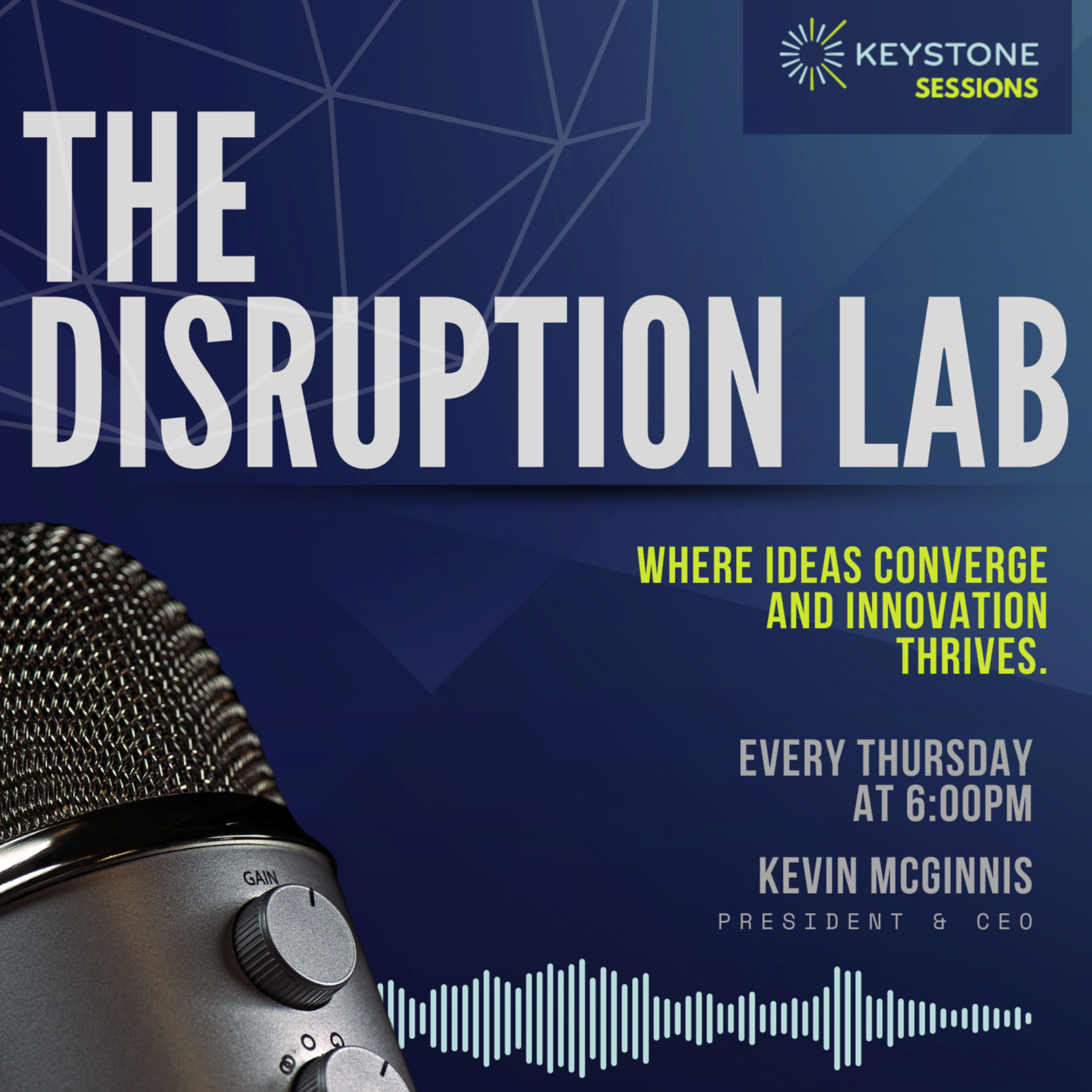
The Disruption Lab
by Kevin McGinnis
Step into the world of innovation with The Disruption Lab live podcast, where groundbreaking ideas and strategic insights come to life. Hosted by Kevin McGinnis and filmed in front of a live studio audience at Keystone Sessions, each episode brings you face-to-face with the visionaries reshaping industries and pioneering new paths in entrepreneurship.Whether you’re an entrepreneur, innovator, or professional eager to fuel your growth and unlock strategic collaboration, The Disruption Lab delivers the tools, stories, and wisdom from top industry disruptors and founders. Join us as we explore the minds of industry leaders to inspire and equip the next wave of disruptors.
-
66
The Quiet Revolution: Why Animal Health Is America's Overlooked Superpower
Most people don't realize that the food on their table and the medicine keeping their pets alive flow through a system few understand. Kim Young, President of KC Animal Health Corridor, has spent 15 years at the center of that system building Kansas City's Animal Health Corridor into a $90 billion global industry hub while the rest of America wasn't looking. Animal health isn't about farmers or veterinarians. It's about infrastructure, capital allocation, regulatory strategy, and how disruption actually spreads through systems that have existed for over a century. It's about innovation that touches AI, biotech, satellite technology, and protein security—all while competing against a region obsessed with whatever's shiny and new. In this episode, Kim reveals why the most sophisticated biotech companies in America are clustering in Kansas City—not Silicon Valley. She explains the consolidation reshaping the industry, the venture capital blind spot that's leaving early-stage founders underfunded, and why the next generation of talent doesn't want to work in animal health because no one's told them it exists. But more importantly: she makes the case for why Kansas City's greatest economic advantage isn't what we're chasing—it's what we're taking for granted.
-
65
The Growth That Counts
Why high-growth entrepreneurship is a different kind of economic infrastructure — and why most regions don’t have a strategy for it. I recently published an essay arguing that every startup is a headquarters. The data behind that claim is compelling — young firms create virtually all net new jobs, innovation-economy wages run double the national median, and every one of those jobs generates five more in the surrounding community. But data doesn’t tell you what the distinction between high-growth and small business entrepreneurship actually feels like from inside an ecosystem. This episode goes deeper into the pattern I keep seeing: we talk about entrepreneurship as one thing, fund it as one thing, and measure it as one thing. It isn’t. And until we design for the difference, we’ll keep underbuilding the part that drives regional economies.
-
64
They Were Wrong by 50% Every Time — Inside the Invisible Crisis Running America's Food Supply Chain
Across agriculture, mining, and construction, billion-dollar supply chains still run on a phone call and a guess. Someone walks outside, eyeballs a pile of feed, and tells the truck dispatcher what they think is left. They're wrong by 30 to 50 percent — and that error ripples into spoiled inventory, empty feedlots, and hundreds of thousands of dollars in losses. Warren Wang and his co-founder Cole built Rebulk to fix that. Using lidar, computer vision, and edge-connected hardware, they're giving operators real-time inventory visibility for bulk materials that have never fit inside a barcode or a box. Their first proof of concept? Packing peanuts from Office Depot dumped on the ground. In this episode, host Kevin McGinnis sits down with Warren to trace the arc from a failed social media transcription startup to a Y Combinator-backed company with Cargill as a pilot customer — all while raising their pre-seed entirely from Kansas City investors. Warren opens up about the identity crisis that nearly derailed the pivot, what it took to build trust inside a tech-skeptical industry, and why he and Cole chose to come back to the Midwest instead of staying in San Francisco. Recorded on the same day Warren became a U.S. citizen, this conversation is about more than supply chain software. It's about conviction, belonging, and building something generational.
-
63
From the Capitol to the Startup: Why a State Senator Quit Politics to Fund Founders
Travis Fitzwater spent 12 years in the Missouri legislature building the policy infrastructure behind the state's innovation economy — the Right to Start Act, the Office of Entrepreneurship, STEM workforce mandates. Then, instead of running for reelection, he walked away from the chamber to lead the Missouri Technology Corporation, the state-backed venture fund he once helped govern from a board seat. In this live taping of The Disruption Lab, host Kevin McGinnis sits down with Fitzwater to unpack the tension between building systems from the outside and operating them from the inside. They explore why entrepreneurship remains one of the most bipartisan policy issues in the country yet still struggles to compete for attention against corporate recruitment incentives and tax credit packages. Fitzwater talks honestly about what it means to invest taxpayer dollars in startups, why MTC's thesis looks different from a traditional VC, and how a $95 million federal infusion creates both opportunity and urgency for long-term sustainability. The conversation also gets personal — from a five-way primary where every ally disappeared, to the Friday pizza nights that keep his family grounded, to a leadership philosophy rooted in service over self. Whether you're a founder navigating the ecosystem, a policymaker thinking about economic development, or someone trying to understand how innovation actually gets funded in middle America, this one's worth your time.
-
62
The Mayor Who Refuses to Play Small: Rebuilding Trust in an Underestimated City
What does it take to lead a community that's spent decades being treated like a stepchild? In this episode of The Disruption Lab, host Kevin McGinnis sits down with Mayor Christal Watson — the first Black woman to lead Kansas City, Kansas and Wyandotte County — for a candid conversation about trust, resilience, and the quiet work of rebuilding institutions from the inside. Recorded in front of a live studio audience, Mayor Watson opens up about inheriting a city wrestling with fractured trust and an "imposter syndrome" she's determined to dismantle. She shares the unfiltered reality of walking into the job mid-Chiefs stadium negotiation with no playbook, why she believes small business is infrastructure, and how outdated technology is quietly holding local government back. From faith and family to data-driven decisions and regionalism, Mayor Watson brings an energy and honesty that cuts through political performance — and a rare look at what it takes to change culture inside a system built to resist it.
-
61
Inside the Food Access Model Cities Are Getting Wrong: Corner Stores, Redlining, and Feeding a City
Most people who see a broken food system either accept it or complain about it. Max Kaniger did something different — he walked into 70 corner stores and got told no by every single one before finding a partner willing to take a chance on fresh produce. Today, Kanbe's Markets operates in 125 locations across the Kansas City metro, covers 260 square miles, and rescued 1.7 million pounds of food last year. And the model wasn't built on new infrastructure — it was built on trust, existing ecosystems, and a Google Sheet that eventually hit 700,000 lines before it broke. In this episode, host Kevin McGinnis sits down with Max to unpack what happens when federal safety nets disappear overnight, why cities keep getting food access wrong, and how a consignment model designed to eliminate risk for store owners created something most grocery chains never could — real community buy-in. They go deep on the operational complexity behind a four-tier produce sorting system, the personal cost of walking away from a seven-figure contract, and why food as medicine might be the next wave — if nonprofits can move fast enough to outrun the for-profit players circling the space. This is a conversation about systems, survival, and what it actually takes to feed people.
-
60
Stop Calling It Charity. Affordable Housing Is Infrastructure.
What if everything you think you know about homelessness is wrong? Forty to fifty percent of people experiencing homelessness in America are employed. They're working. They're contributing. And they still can't afford a place to live. That single fact dismantles most of the narratives we tell ourselves about who this crisis affects — and who's responsible for solving it. Jarrod Sanderson is the Executive Director of The Way Home, a Kansas City-based organization working at the connective layer between developers, funders, city systems, and community — not to run programs, but to redesign the conditions that keep affordable housing stuck in small-ball thinking. In this episode, Jarrod challenges the framing that has quietly defined this issue for decades: that affordable housing is a charitable cause. His argument is more urgent and more disruptive — it's economic infrastructure. And until we treat it that way, the people who actually make cities function — teachers, nurses, city workers, first responders — will keep getting priced out of the places they serve. This is a conversation about systems, capital, coordination, and what it actually takes to build a city that works for everyone — not just the people who can already afford it.
-
59
The Money Isn’t the Problem
Everyone assumes that underinvested communities, early-stage ecosystems, and emerging innovation hubs need more money. More grants. More venture. More philanthropic dollars. But the evidence from 50+ conversations on this show tells a different story. The communities and companies that are actually building durable growth aren’t the ones that raised the most capital. They’re the ones where the capital was designed — with the right governance, the right accountability, and the right timeline.
-
58
From Grammy Stages to Kansas City Creative Economy
Jo Blaq left Kansas City because the infrastructure for a music career didn't exist. He went to LA, built one anyway — Grammy nominations, Ariana Grande, Justin Bieber, private jets — and then came back. Now he's building what he calls ground zero for creatives, a multimedia creative hub in the Crossroads designed to change the equation: world-class tools, real career pathways, and a community built to keep Kansas City's talent home instead of exporting it. This is creative infrastructure as economic development — and Jo believes Kansas City is ready. https://www.distrkct.com/home
-
57
The Bottleneck Is Never What You Think It Is
After 50+ conversations on The Disruption Lab, one pattern keeps surfacing: the thing that slows down innovation is almost never the technology. It’s the invisible friction — trust gaps, procurement processes, cultural resistance, systems not designed to absorb change at the speed it arrives. In this solo episode, Kevin McGinnis connects threads across the show’s catalog — from clinical trials to community development to AI-driven workforce transformation — and names the structural problem nobody wants to talk about. We don’t have an innovation shortage. We have an absorption problem.
-
56
95% of It Goes Through China — And We Can't Do Anything About It
The U.S. offshored its critical minerals processing decades ago. Now 95% of the world's nickel runs through China — regardless of where it comes out of the ground. Jamie Andes and William Highsmith from Critical Materials Crossroads break down what that dependency actually means, why Kansas City has the infrastructure and history to lead the reshoring effort, and what a $160 million NSF Engines grant could catalyze for a region sitting on $3-4 billion in economic potential. This is supply chain as national security — and the clock is running.
-
55
The #1 Bottleneck in Drug Development Isn’t Science
Why do new drugs and medical breakthroughs take so long to reach real people? In this episode of The Disruption Lab, we sit down with Kyle McAllister, founder of trially, an AI-driven clinical trials company, to unpack the uncomfortable truth: the biggest bottleneck in clinical trials isn’t innovation — it’s patient recruitment. And in many hospitals, that process still looks like teams of research staff manually reading patient charts line-by-line to find eligible participants. Kyle shares how his “lived experience” inside electronic health records (EHRs) and hospital data systems pushed him to build a company that helps research teams identify qualified trial candidates faster — and then actually engage them through AI-powered calling, texting, and email outreach that can screen patients using complex clinical criteria. But this isn’t a hype episode. We talk about the real friction: trust, data security, procurement, and the fear of change in one of the most regulated industries on the planet. Kyle also gets personal about the emotional whiplash of entrepreneurship, learning not to take rejection personally, and why founder fellowship (and Kansas City’s ecosystem) matters more than people realize. If you’re interested in AI in healthcare, clinical trials innovation, health tech startups, or how founders sell into high-risk enterprise systems, this conversation will give you a real behind-the-scenes look at what it takes to modernize medicine without breaking trust. In this episode, you’ll learn: Why patient recruitment is the #1 reason clinical trials move slowly How AI can scan millions of patient records to match trial eligibility criteria What hospitals struggle to believe when an AI startup claims it can “do it faster” Where AI helps most — and where precision and error margins still matter How to build trust in healthcare tech (because “healthcare builds at the speed of trust”) The founder lessons: feedback, faster decision-making, and imposter syndrome 🎧 Listen now and see why the future of clinical trials might depend less on laboratories… and more on better systems.
-
54
The Overlooked Mental Health Barrier No One Talks About: Pets, Trauma & A 100% Return-Home Solutionn
What if one of the biggest barriers to escaping abuse or entering mental health treatment wasn’t money, fear, or access? In this live episode of The Disruption Lab, we sit down with the co-founders, Matt Krentz and Andy Bond, of BestyBnB, a fast-growing social impact startup that’s tackling one of the most overlooked barriers in domestic violence, behavioral health, substance use recovery, and houselessness: pet ownership during crisis. Here’s the staggering truth: Up to 50% of domestic violence survivors who call a hotline hang up when they learn they can’t bring their pet. And it doesn’t stop there. Across mental health services, substance use treatment programs, veterans services, and housing agencies, pets are quietly preventing people from accessing care. So what’s the solution? Besty BnB built a HIPAA-compliant, highly confidential marketplace platform — often described as an “Airbnb for pets” — that connects crisis service providers with vetted community foster homes. The result? People can enter treatment knowing their pets are safe, anonymous, and guaranteed to be returned. In this conversation, we explore: Why pet ownership is a major but underreported barrier to mental health treatment and domestic violence escape How technology can bridge the gap between human social services and animal welfare The complexity of building a two-sided marketplace in trauma-informed systems Why fresh eyes can lead to breakthrough social innovation How this platform is achieving a 100% return-to-owner rate The impact on treatment completion, behavioral health outcomes, and shelter systems What it really takes to build a profitable, mission-driven social enterprise We also dive into the emotional realities of building a company that operates at the intersection of trauma response, animal welfare, and crisis care — and how purpose-driven entrepreneurship fuels resilience. This episode is for: ✔ Social entrepreneurs ✔ Behavioral health leaders ✔ Domestic violence advocates ✔ Animal welfare professionals ✔ Startup founders building marketplace models ✔ Anyone interested in innovation that actually saves lives If you care about mental health access, domestic violence prevention, crisis care reform, or scalable social impact technology, this conversation will completely shift how you think about barriers to care. Because sometimes the smallest overlooked barrier is the one keeping people from safety.
-
53
Building in Public: How Radical Transparency Is Changing Real Estate, Cities, and Power
What if the fastest way to build better cities wasn’t behind closed doors—but out in the open? In this episode of The Disruption Lab, we sit down with Zach Molzer, Founder of Molzer Development, who is challenging every traditional rule of development by building in public—documenting projects in real time, sharing wins and failures openly, and inviting the community into the process instead of shutting them out. From revitalizing historic buildings to navigating city approvals, investor trust, and public scrutiny, this conversation explores how transparency can become a strategic advantage—not just in real estate, but in entrepreneurship, leadership, and civic innovation. We unpack: Why most developers avoid transparency—and why building in public actually reduces risk How storytelling creates trust with cities, investors, and communities before projects open What happens when development is done with neighborhoods instead of to them How startup-style thinking can transform legacy industries like real estate The real trade-offs founders make when moving fast, staying visible, and leading in public This episode is for founders, developers, city leaders, and anyone curious about how openness, accountability, and community-first thinking can accelerate progress and reshape power dynamics. If you’ve ever wondered whether transparency slows things down—or speeds everything up—this conversation might change how you build.
-
52
What Happens to Work When AI Knows Almost Everything? (And What That Means for You)
What happens to work, dignity, and human purpose in a world where AI can write, diagnose, advise, and automate faster than most people ever could? In this episode, we sit down with Ed, a longtime social enterprise leader and Goodwill CEO, to unpack one of the most urgent questions of our time: How do we prepare people for the future of work without leaving the most vulnerable behind? Drawing from his lived experience as a Hurricane Katrina survivor, social entrepreneur, and workforce development leader, Ed shares why AI isn’t just a technology shift — it’s a human reckoning. We explore: Why AI literacy is becoming as essential as financial and digital literacy How Goodwill is using AI to expand agency, not eliminate jobs What “work” means when expertise is democratized Why co-creation matters more than top-down tech adoption The ethical lines we shouldn’t cross — even if we can How AI can restore time, dignity, and mobility for people facing poverty, disability, or reentry after incarceration This conversation goes far beyond hype. It’s about real people, real systems, and the responsibility leaders have when technology moves faster than policy, culture, or ethics. If you’re a: Workforce or nonprofit leader Entrepreneur navigating AI disruption Educator or policymaker Professional wondering how AI will affect your career Or simply trying to understand what the future holds This episode will change how you think about AI, work, and what it means to be human. Because AI isn’t coming. It’s already here — and the choices we make now matter.
-
51
Building Autonomy and AI for National Security in Kansas City
Artificial intelligence and autonomy are no longer future concepts in national security—they’re shaping real-world decisions, operations, and outcomes today. But while AI technology is advancing rapidly, the real challenge lies in data, culture, trust, and speed of adoption. In this special episode of The Disruption Lab, we explore Building Autonomy and AI for National Security in Kansas City, featuring leaders from the U.S. military, academia, advanced manufacturing, and the AI industry. Together, they offer an inside look at how AI and autonomous systems are being developed, tested, and deployed across defense and intelligence—and what’s still holding progress back. This conversation brings together: COL Dave Wright, Chief Data Officer, U.S. Army Combined Arms Command at Fort Leavenworth Col. Chris Hogan, Commander of the 184th Intelligence, Surveillance, and Reconnaissance Group, Kansas Air National Guard at McConnell AFB Matthew Hizer, Director of Operations, Global Security at the Kansas City National Security Campus (KCNSC / Honeywell FM&T) Dr. Michael J. Pritchard, PhD, Senior Faculty in Machine Learning & Autonomous Systems at Kansas State University Salina Aerospace & Technology Campus Jon Kramer, Chief Technology Officer at Torch.AI Throughout the episode, the panel discusses: Why AI in defense is fundamentally a data and systems integration problem How autonomy is changing intelligence, manufacturing, and battlefield decision-making The cultural and organizational barriers slowing AI adoption The importance of human trust, human-in-the-loop systems, and risk tolerance What the U.S. can learn from global competitors and real-world conflicts like Ukraine This special episode was presented by AFCEA Kansas City, with a special thank-you to our moderator Molly Christie, Public Sector leader at Unstructured.io, for leading a thoughtful and timely discussion. If you’re interested in AI in defense, national security innovation, autonomous systems, military AI, or the future of warfare, this episode offers a rare, behind-the-scenes perspective from those building and deploying these systems today.
-
50
If Your Team Isn’t Listening, It’s Not Them—It’s This One Leadership Mistake
We have more ways to communicate than ever… so why does it feel like nobody is actually hearing each other? In this live episode of The Disruption Lab, Kevin sits down with communication strategist and executive coach Eric Morgenstern to break down what’s really going wrong in leadership communication—and how to fix it fast. From workplace trust issues to pitch coaching for startup founders, Eric shares the frameworks he’s used with hundreds of leaders to help them get clearer, sound more confident, and move people to action. You’ll hear why great communication isn’t about what you want to say—it’s about what the other person needs to hear. Eric explains why listening is the skill most leaders are losing, how trust has shifted in the last 10–15 years, and what it takes to sound authentic when your online presence meets your in-person presence. Plus: practical tools you can use immediately—like the “What / So What / Now What” message structure, the three magic feedback questions, and the simple word swaps that remove “wimpy language” without coming off arrogant. If you’re a leader, founder, manager, or anyone who needs to communicate clearly in a noisy world—this episode will change how you show up. In this episode, we cover: Why listening (not talking) is the leadership superpower Recipient-oriented communication: how to say it so they can actually hear it How to build trust in a world where trust is low by default Why your written voice and spoken voice must match (or people don’t believe you) “What / So What / Now What”: the simplest way to explain any initiative The “wimpy words” that quietly destroy credibility—and what to say instead A clean feedback framework: what went great, what went poorly, what was missing Perfect for: leaders, entrepreneurs, startup founders, corporate teams, pitch competition contestants, and anyone trying to communicate with clarity and confidence.
-
49
The Truth About Gentrification: Can Development Help Without Displacement?
What if gentrification isn’t the real problem? In this episode of The Disruption Lab, host Kevin McGinnis sits down with Erik Murray, founder of Eastside Innovations, to unpack how we can invest in historically overlooked “east side” communities without pushing people out. From Kansas City, Kansas to Oakland, California, Erik traces how industrialization, segregation, and policy decisions created “east side disparity”—and how clean energy, innovation districts, and community-led development can turn that into east side prosperity. If you’ve ever wondered how to do real estate development, impact investing, or community revitalization in a way that actually benefits local residents, this conversation is a masterclass. In this episode, you’ll learn: Why “east side communities” exist in so many cities (East Oakland, East Palo Alto, East Kansas City, etc.) and how industrial smokestacks, redlining, and segregation shaped them. How to invest in underserved neighborhoods without fueling displacement—and why Eric believes everyone deserves “nice stuff,” not just luxury zip codes. What a P4 model (public–private–philanthropic partnership) is and how blending capital can reduce risk for investors and create better outcomes for communities. How clean energy and sustainable housing can lower total cost of living, not just rent—think no electric bills, better construction, lower insurance, and access to transit. Why not all money is good money and how Eric uses a strict “no asshole rule” to choose investors and partners aligned with community-first values. Erik also shares real stories from projects like Indian Springs / Midtown Station in KCK, his decade in Oakland learning from Black Panther leaders and social justice organizers, and the hard lessons from deals that fell apart—COVID-era hotels, bad capital partners, and policy shifts that pulled millions away from East Side communities. Whether you’re a developer, impact investor, policymaker, startup founder, or community leader, this episode answers big questions like: How do you de-risk community development projects for private capital? Can impact investing still deliver competitive returns? What does prosperity actually look like for East Side neighborhoods? How can clean energy and innovation districts be tools for equity, not exclusion? If you care about city-building, inclusive innovation, and the future of our neighborhoods, you won’t want to miss this one.
-
48
From Grants to Growth: How KC GIFT Is Rewriting the Rules of Economic Development
What happens when community capital and culture move in lockstep? In this live episode of The Disruption Lab, we sit down with Brandon Calloway to unpack how KC GIFT is revitalizing Kansas City’s East Side by funding Black-owned businesses—and how his creative venture, Blurred Media, is rewriting who gets represented in anime and manga. It’s a masterclass in practical impact: passion meets logic, storytelling meets metrics, and neighborhood change happens with residents, not to them. You’ll hear how KC GIFT’s focused model works—51% Black-owned in the target area, at least 3 months of revenue, a clear plan for growth and job creation—plus the rigorous backend: legal and accounting hygiene, quarterly reporting, and a full year of bookkeeping, coaching, and marketing support. We also dive into the power of narrative (“storytelling is our stock price”) and why real economic development is algebra—sometimes even calculus. Along the way: the Troost Avenue 20-mile walk that turned into citywide buzz, the rise of individual giving as a modern philanthropy engine, and what leaders learn when they scale without losing trust. Why listen (and share): Proven outcomes: ~$1.96M granted to 79 businesses, 153 new jobs, and ~209% average revenue growth a year after funding. Playbook you can copy: A repeatable grant + services model that ties dollars to jobs—not just headlines. Capital x Culture: How media representation and access to capital fight the same systemic barriers. Actionable leadership: Saying no, building systems, integrating AI into small-biz ops, and keeping focus. Perfect for founders, funders, ecosystem builders, and anyone serious about inclusive economic development, entrepreneurship in Kansas City, and creative industries that move markets.
-
47
AI Isn’t Killing Us—We Are: How to Use Robots Without Losing Your Mind (or Your Community)
Are robots and AI actually making us smarter—or just outsourcing our brains? In this conversation with John McElligott, we unpack why technology isn’t the story—people are. From the first “tech” (domesticated wolves) to today’s cognitive offloading to phones and ChatGPT, we explore how to adopt AI, robotics, and automation without erasing what makes us human: wisdom, empathy, and culture. You’ll hear how “Artificial Western Intelligence” bakes in our online conflict, why fear stalls innovation in mid-America, and how to flip the script with human-centered automation that creates jobs, connection, and real outcomes. We get practical—covering quick-win community pilots (like an AI art challenge that quietly teaches NLP), the data center jobs myth (and what to negotiate instead), and the next leap: real-time translation that must include cultural context, not just words. What you’ll learn (answer targets): How to spot when tech is using you—and how to reset it as a partner Why fear vs. incentive messaging should change by community—and when to use each What “Artificial Western Intelligence” means and how to build values-aware AI The truth about data centers: low jobs, high leverage—what to demand locally Simple pilots to teach AI skills fast (without jargon) and build public buy-in If AI is racing ahead, our empathy has to keep pace. This episode shows how to design for human connection at scale—so we don’t automate ourselves out of a future worth having.
-
46
The Power of People: How Benny Lee Built Global Companies—and a Legacy of Giving
What does it take to build a life — and a legacy — from scratch? In this live episode of The Disruption Lab, Kevin McGinnis sits down with Benny Lee, engineer, entrepreneur, and philanthropist, to explore his remarkable journey from Taipei to Kansas City, where he turned bold ideas into thriving businesses and transformed success into community impact. Benny shares how relationships, resilience, and ethical leadership shaped every step of his career — from his early startup struggles to supporting world-class musicians through Park University’s International Center for Music. He opens up about his biggest failures, what resilience really means, and the philosophy that one success can outweigh ten setbacks. Whether you’re an entrepreneur, innovator, or dreamer, this episode offers a masterclass in perseverance, purpose, and giving back. You’ll walk away inspired to rethink what success looks like — and how your own story can make a lasting difference. 🎧 Tune in to learn: How Benny built multiple companies from the ground up — starting with nothing but grit and connection. The role of ethics, humility, and trust in sustainable leadership. Why failure isn’t the opposite of success — it’s part of the equation. How Kansas City became an unexpected hub for innovation and entrepreneurship. Why Benny believes giving back is the ultimate form of success.
-
45
Smart Cities 101: How Tech, Safety & Equity Are Redefining Urban Life
What if a city could completely reimagine how technology shapes daily life—not just for convenience, but for public safety, economic growth, and citizen trust? In this episode of The Disruption Lab, we sit down with Mike Grigsby to uncover how Kansas City became a national model for smart city innovation—from the groundbreaking Google Fiber launch to the streetcar project that redefined what technology can mean for a community. You’ll hear how public-private partnerships, smart infrastructure, and digital equity programs are reshaping the way governments serve their people. We explore: The surprising story of how digital exclusion affects more than just low-income families Why body-worn cameras and smart safety tech require careful trust-building with citizens How cities can avoid being reactive and start investing in long-term innovation Why the future of connected communities depends on collaboration across every department Whether you’re a civic leader, entrepreneur, or just curious about how tech will change the way you live in your city, this episode reveals the behind-the-scenes of building smarter, safer, and more connected communities.
-
44
Inside the Nation’s First Wellness Court - From Punishment to Possibility
What if “public safety” didn’t start with punishment—but with support? In this episode, Judge Courtney pulls back the curtain on how a municipal court in Kansas City is flipping the script with Wellness Court, alternative dockets, and a totally different mindset: rehabilitation over incarceration. From walk-in dockets and evening hours to community resource fairs and elective programming (yes—yoga, knitting, cooking with family, and gym memberships), you’ll hear how small design choices rebuild trust, reduce barriers, and actually change outcomes. We also dig into data and AI—how better note-capture and analytics can finally measure success beyond recidivism, unlock grants, and spotlight real progress like stability, sobriety, and employment. If you’ve ever thought “the system is too rigid to change,” this conversation will challenge that belief—and give you a front-row look at what modern, human-centered justice can be. You’ll learn: What a Wellness Court is and how it merges drug + mental health courts to serve real people, not case numbers. Why jail time doesn’t deliver true public safety—and what does. How alternative dockets (DV compliance, diversion, community court) tailor accountability without fear. How trust-building tactics (no-custody walk-ins, evening access) boost court appearance rates. Practical ways courts can use AI + data to track outcomes that matter (not just reoffense). The vision for a Community Resource Center that co-locates services next to the courthouse. If you’re a policymaker, practitioner, or just curious about justice system innovation, this episode shows what’s working—and how any city can start.
-
43
The Viral Razor from Shark Tank: How Go Nuts Is Changing Men’s Grooming Forever
What happens when you take a taboo topic, flip the script, and turn it into a global lifestyle brand? In this episode of The Disruption Lab, Craig Moore sits down with Landon McKinnis, founder of Go Nutz, the spherical razor that landed him a deal with Daymond John on Shark Tank and is now shaking up the men’s grooming industry. Landon shares how he spotted an underserved market, designed a safer electric razor that cuts out pain and risk, and built a brand around humor, innovation, and lifestyle. From going viral on social media to struggling with inventory, from speaking his vision into existence to chasing legacy status alongside giants like Gillette and Wahl—this is the real story behind disrupting an industry nobody wanted to touch. You’ll learn: How letting competitors go first can actually set you up to win. Why humor and branding can break down taboo barriers in marketing. The ups and downs of going viral (and why Shark Tank came at the right time). What it takes to balance self-doubt with an unshakable “why.” If you’ve ever wondered what it really takes to go from side idea to household name—or how to build a product people can’t stop talking about—this conversation will pull back the curtain.
-
42
Turning 381 Million Tons of Plastic Waste Into Fashion: The Salubata Story
Can sneakers really solve plastic pollution? In this episode of The Disruption Lab, guest host Craig Moore sits down with Yewande Akinse, co-founder and COO of Salubata, the startup turning recycled plastic waste into modular, fashion-forward sneakers. You’ll hear how her lived experience with flooding in Lagos inspired a global mission, what it took to transform a failed prototype into nearly $1M in revenue, and why modular shoe design is shaking up an industry dominated by Nike and Adidas. We’ll explore: The biggest myths about sustainable fashion (and how Salubata is breaking them) How one imperfect prototype unlocked grants, investors, and Techstars Why innovation is survival in the legacy footwear market What’s next: athletic shoes, kids’ lines, and even carbon-capturing sneaker technology If you’ve ever wondered how sustainability, style, and entrepreneurship collide—or what it takes to truly disrupt a legacy industry—this episode delivers the answers.
-
41
The Future of Voting: Can Civic Tech and AI Save Democracy?
Can technology actually rebuild trust in democracy—or is it just making things worse? In this episode of The Disruption Lab, we sit down with Mychal Shaw, founder of Uwazi, a civic tech platform using AI to cut through misinformation, improve civic literacy, and make everyday engagement in democracy simple, clear, and accessible. We explore: Why voter apathy and civic illiteracy are bigger threats than low turnout. How AI can provide clarity on policies, elections, and even misinformation from TikTok and social media. The idea of “trust as infrastructure” and how transparency can close participation gaps. How civic tech can empower the next generation of voters before they even turn 18. What it takes to build a sustainable, mission-driven startup in one of the hardest spaces—politics and government. If you’ve ever wondered whether technology can actually heal polarization—or if AI can create smarter, more confident voters—this conversation will challenge how you think about democracy’s future.
-
40
From Wall Street Dreams to Regenerating Cities: How Capital Can Heal Communities and the Planet
This week on The Disruption Lab, we dive into the question: What if money could do more than just make profit? What if it could restore communities and ecosystems at the same time? Our guest, Brian Weinberg, Managing Director at Foundation for Regeneration, shares his powerful journey from chasing a Wall Street career to living in South America, where firsthand exposure to poverty shifted his worldview forever. That experience sparked a lifelong mission to use capital differently — first through microfinance, then impact investing, and now through place-based regeneration in Kansas City’s Blue River Valley. In this episode, you’ll discover: Why witnessing poverty in South America changed Brian’s path forever. How microfinance and impact investing paved the way for modern regeneration models. The untapped billion-dollar opportunities in the circular economy. Why Kansas City’s Blue River Valley is ground zero for testing regenerative development. The hardest leadership lesson Brian learned (and why resilience is everything). Whether you’re an entrepreneur, investor, policymaker, or simply someone curious about creating a future where business, community, and ecology thrive together — this conversation will challenge how you think about capital and impact.
-
39
The Startup Taking On the Autism Resource Crisis (And Winning)
When Antoinette’s children were diagnosed with autism—four years apart—she was handed the same outdated “resource packet” both times. Nothing had changed. Instead of waiting for the system to improve, she decided to build the solution herself. In this episode of The Disruption Lab, recorded live with an audience, Antoinette shares how she went from zero tech background to launching Nru, a digital health platform designed to connect the dots between medical, educational, and therapy resources for families of neurodivergent children. You’ll hear how she’s tackling fragmented systems, why she built mental-health-focused features like daily “inch stone” journaling, and how she balances sharing her family’s story without compromising their privacy. We also dig into the surprising role community programs and mentors played in accelerating her journey, and what it really takes to design technology with empathy. Whether you’re a parent, caregiver, educator, or founder, this conversation offers an unfiltered look at turning lived experience into lasting impact—and why the autism resource gap might finally have a solution.
-
38
How a Streetcar, a Park, and a Crazy Idea Changed a Whole City
What does it really take to turn a struggling downtown into a vibrant, diverse, and connected economic engine? In this episode of The Disruption Lab, we sit down with the leader who helped Kansas City pull off one of the most dramatic urban turnarounds in America. Discover the inside story of how Kansas City’s downtown went from urban blight to boom town—including the pivotal role of the streetcar, public-private partnerships, and a relentless focus on data and community connectivity. We talk candidly about the biggest challenges, the risks that paid off, and why building a truly inclusive city is about more than just flashy development. You’ll learn: The early decisions and “aha moments” that changed Kansas City’s trajectory Why transit, like the downtown streetcar, was a game-changer for investment and culture How connecting neighborhoods fuels growth, diversity, and resilience The surprising data strategies used to prove impact and secure support What it takes to keep a city moving forward—despite resistance and generational change If you’re curious about what’s possible in city-building, want to understand how to measure real impact, or simply love stories of people betting big on their hometown, this episode is for you. Hit play to find out how Kansas City’s downtown comeback happened—and what your city can learn from it.
-
37
The Startup Fix No One Talks About: Why Community Beats Capital
What happens when a former underestimated tech founder takes the reins of one of the Midwest’s top entrepreneurial networks? In this raw and powerful episode, Melissa Vincent, Executive Director of Pipeline Entrepreneurs, shares how her lived experiences with bias, exclusion, and early failure became fuel for transforming the startup landscape across Kansas, Missouri, and Nebraska. Melissa opens up about the hard lessons from her early ventures—including being overlooked as a CEO and navigating a co-founder embezzlement—and how those moments inspired a relentless commitment to inclusion, authenticity, and access. You’ll hear how she doubled Pipeline’s revenue by eliminating membership fees, launched the wildly successful Pathfinder program for untapped entrepreneurs, and built a culture rooted in vulnerability and trust. We also dive deep into: Why “serial entrepreneurs” are the economic backbone we’re not talking about What really creates lasting impact in founder communities (hint: it’s not tech) The policy shifts and capital mindset the Midwest still needs And why authenticity—not AI—is the future of leadership Whether you’re building a company or an ecosystem, this episode is a masterclass in turning purpose into power—and reshaping what startup success really looks like.
-
36
Why These Founders Are Betting on Startups to Fix Their Countries (Inside the global shift toward entrepreneurship)
In this special live edition of The Disruption Lab recorded at Keystone Sessions, we’re joined by four powerhouse entrepreneurs from around the world—each reshaping the future of work, innovation, and inclusion in their countries. Meet: Tao Hsu (China) – Co-founder of Baocase, building a gig economy platform with dignity and digital trust. Lucy Llonna Larbi (Germany) – Founder of AiDiA, empowering Afro-German entrepreneurs and changing the face of innovation in Europe. Sirwan Ahmed Qader (Iraq) – Educator and entrepreneurship advocate creating pathways for students beyond traditional employment. Wangiwe Joanna Kambuzi (Malawi) – Founder of Emerge Livelihoods, bridging the gap between digital inclusion and youth employment. In this episode, they reveal: The moment they knew this work was their calling What’s broken in their startup ecosystems—and how they’re fixing it How they’re rewriting the rules of entrepreneurship in places where the odds are stacked against them Why visibility, mindset, and access matter more than funding Whether you’re a startup founder, policy maker, or just someone who believes in the power of ideas, this episode will challenge what you think entrepreneurship looks like—and who gets to lead it. Tap play and meet the disruptors shaping the future—across borders, against the grain.
-
35
Why the $1.8T Construction Industry Is Finally Ready for Disruption (and How AI Will Lead It)
Is it finally time for construction to catch up with tech? In this episode of The Disruption Lab, we sit down with Usman Wajid, founder of Block & Mortar, to talk about why construction—one of the world’s largest and slowest-moving industries—is at a critical turning point. With billions on the line and Boomers retiring fast, Uzi shares how AI isn’t just a buzzword—it’s the bridge between outdated workflows and a faster, smarter future. From the massive knowledge gap to why legacy tools like Procore are leaving developers behind, this episode dives deep into how startups can build real solutions by actually listening to their users. We also explore how to scale enterprise AI, what most founders get wrong when selling into traditional industries, and why Kansas City might just be the next big startup hub. If you're curious about: What construction really needs from AI How to build tech people will actually use Why the next billion-dollar startup might not come from Silicon Valley… You won’t want to miss this.
-
34
You’re Not Failing—You’re Just the First One to Try: What Founders Get Wrong About Doubt
Ever launched something new and immediately questioned everything? Wondered if the doubts in your head were louder than the market feedback? In this raw solo episode, we dive deep into the emotional side of entrepreneurship—the stuff nobody puts on a pitch deck. We're talking about fear, uncertainty, self-doubt, and imposter syndrome—not as flaws, but as part of the journey when you're doing something bold and new. You’ll hear real stories from the front lines of innovation, plus reflections on: Why fear and doubt might mean you're ahead of your time—not wrong How imposter syndrome can actually point you in the right direction Ways to "test" your internal fears like you would a product prototype Why grace—not just grit—might be your most important founder skill If you’ve ever wrestled with quiet fears while building loud ideas, this episode is your permission slip to keep going. Listen now and rethink how you define validation. Because maybe the biggest risk isn’t launching your idea—it’s not believing in it. If you're looking for resources or support for your startup, check out the Keystone Innovation District at keystonedistrict.org.
-
33
Why 76% of OTs Want to Be Entrepreneurs (And What’s Broken in Clinical Care That’s Pushing Them There)
In this powerful episode, Dr. Brandy Archie (OTD, OTR/L, CLIPP) —occupational therapist and founder of AskSAMIE and OT Connected—shares the heartbreaking moment that launched her mission to reimagine aging in place. From broken healthcare systems to the hidden realities of home care, Brandy opens up about what most people get wrong about independence, how insurance often fails families, and why the future of care depends on bold entrepreneurs and tech-driven solutions. You’ll learn: Why 76% of OTs want to be entrepreneurs—but only 4% actually are The everyday products and decisions that make or break life at home How Brandy built not one, but two companies serving caregivers, families, and therapists The overlooked cost of caregiving—and how it affects everyone What tech founders without a tech background need to know If you're a caregiver, healthcare professional, or just someone who wants to live (or help others live) better at home—this episode will change how you see care forever. Listen now to hear how one simple home visit sparked a national movement.
-
32
She Turned Her Wedding Returns Into a High Growth Venture (And It’s Genius)
What do DIY wedding centerpieces, Amazon returns, and climate action have in common? For Send Back founder Shaniqua Jones-Williams—the answer was everything. In this electrifying episode of The Disruption Lab, we sit down with the 2025 Aspen Fellow and rising logistics entrepreneur to unpack how an overstacked return pile in her living room sparked a national reverse logistics platform with a mission. You’ll hear how Shaniqua: Went from plus-size shopper frustrations to building a circular economy tech startup Tackles America’s return crisis while partnering with nonprofits to reduce landfill waste Navigated early-stage funding, non-technical founder challenges, and startup scaling Plans to build the largest Black female-owned logistics company in the world Brings radical transparency, community, and soul to every decision Whether you've got a return graveyard in your trunk or dreams bigger than your zip code, this episode is packed with insight, inspiration, and straight-up innovation.
-
31
Why Building Something That Last Feels So Messy (And What That Actually Means)
Are you building something new and wondering why it feels so overwhelming? In this solo episode of The Disruption Lab, Kevin McGinnis, President and CEO of The Keystone Innovation District, shares the four powerful (and often painful) lessons he’s still learning as a founder, leader, and ecosystem builder. This isn’t another highlight reel. It’s an honest look at what no one tells you about momentum, clarity, and the emotional toll of innovation. Kevin unpacks why chaos might be a sign you’re on the right path, why the loudest voices aren’t always the most impactful, and how empathy—not hype—is the real secret to lasting success. Whether you're an entrepreneur, changemaker, or just navigating big decisions, this episode will challenge how you think about progress, leadership, and what it means to truly build something that matters. In this episode, you'll learn: Why success and chaos look identical at the start How to stop mistaking noise for meaningful traction Why outdated systems hold back real innovation The surprising power of empathy in business What it means to lead while still learning If you’ve ever asked yourself, “Am I doing this right?”—this one’s for you.
-
30
Why Innovation in Government Feels Impossible — And What Actually Works
Why does it feel like nothing ever changes in local government—even when the ideas are good? In this episode of The Disruption Lab, civic innovation expert Ashley Hand shares what really gets in the way of smarter cities and how to move big ideas forward in a system built to say no. From leading smart city projects in LA and Kansas City to launching public-private partnerships and opening an elementary school from scratch, Ashley has seen it all. She dives into why bureaucracy isn’t always the enemy, how to work with the system instead of against it, and the biggest myths people believe about tech, transportation, and public service. You’ll learn: Why most smart city tech fails (and what to do instead) How to actually pitch innovation to City Hall (and who to call first) The one thing cities should never deploy without a clear policy What every startup should know before approaching government How public service can be joyful—even now Whether you’re a policymaker, founder, or just frustrated by the slow pace of change, this episode offers a refreshing, practical, and hopeful take on building better cities from the inside out.
-
29
How One Scientist Is Turning a $20B Pollution Problem Into a Climate Solution
Most people have never heard of refrigerants—but they’re one of the most dangerous climate pollutants on Earth. In this live episode of The Disruption Lab, we sit down with Kalin Baca, PhD scientist turned climate tech founder of Icorium, who’s on a mission to stop these super pollutants from quietly warming the planet. Kalin breaks down how refrigerants—used in everything from air conditioners to data centers—have global warming potentials thousands of times higher than carbon dioxide… and why almost no one is talking about it. She also shares how her startup is disrupting the $20B+ refrigerant industry by building separation tech that could eliminate the need for incineration and enable a true circular economy for cooling. We explore: The science behind refrigerants and why they matter more than ever How Kalin went from lab researcher to founder through NSF’s iCorps What it takes to launch a deep tech company in a traditionally stagnant industry Why refrigerant demand is rising globally—and why this matters for the future of climate How Icorium’s innovation could transform the way we manage industrial emissions If you care about climate innovation, deep tech startups, or how to take hard science to market—this is an episode you don’t want to miss.
-
28
The Biggest Lie in Entrepreneurship—and The Brutal Truth About Starting a Business
What happens when you follow all the rules, invest $350,000 of your own money, and still end up broke? Dr. Donnetta Watson—known as The Launch Strategist—did exactly that. In this powerful live episode of The Disruption Lab, she opens up about the moment that changed her life, the cultural myths holding Black entrepreneurs back, and why mindset—not money—is the real foundation for wealth. You’ll learn the hard truths most business schools don’t teach: Why "using your own money" is one of the worst startup mistakes The #1 reason most Black-owned businesses remain unfundable How to build a business that’s actually bankable What it takes to go from hustle to legacy How to change your money mindset and access capital—even if you're starting with nothing This isn’t just another motivational story—it’s a masterclass on sustainability, systems, and financial empowerment. If you’re an entrepreneur, aspiring founder, or ecosystem builder, this episode is a must-listen. Plus, hear how Dr. Watson is building a 25,000 sq ft center to incubate real, fundable Black businesses—and why place and visibility matter more than ever.
-
27
How a Small Bank is Quietly Disrupting Big Finance
What happens when a former Wall Street investment banker takes over a small community bank in Kansas—and decides to shake up the entire financial industry? In this episode of The Disruption Lab, we sit down with Matt Michaelis, CEO of Emprise Bank, to uncover how he's transforming a legacy institution into a tech-forward, innovation-focused force in fintech—without losing the soul of community banking. You’ll hear: Why personalized banking is the future (and what big banks are getting wrong) How embedded finance is reshaping everything from Uber to restaurants The truth about fintech saturation—and where the real opportunity lies Why Kansas City is becoming a growth hub for finance, tech, and startups What civic leaders can actually do to support entrepreneurship Whether you’re a founder, fintech builder, or civic changemaker, this episode pulls back the curtain on what it really takes to innovate in one of the world’s oldest industries.
-
26
Businesses that heal: How Social Ventures Can Rebuild Divided Communities
What if the best way to fix a broken community isn’t charity or government programs—but business? In this powerful episode of The Disruption Lab, Father Justin Matthews—Orthodox priest, entrepreneur, and founder of Thelma’s Kitchen—reveals how social entrepreneurship is becoming a radical tool for equity, healing, and community transformation. We dive into the real stories behind his journey from rock musician to nonprofit leader, how a pay-as-you-can restaurant is bridging racial and economic divides in Kansas City, and why mixing profit with purpose might be the most sustainable path forward. We also unpack: Why philanthropy alone can’t scale impact How to measure real social ROI (and why it matters) What business leaders need to understand about trauma, trust, and leadership today How social entrepreneurs can avoid the “greenwashing trap” and stay mission-aligned Why Father Justin believes we’re entering a golden age of purpose-driven business Whether you're a founder, investor, or community builder, this conversation will reshape how you think about capitalism, justice, and what it truly means to love your neighbor. Listen now to learn how breaking bread might just be the most innovative business strategy of our time.
-
25
Solving Healthcare’s Billion-Dollar Problem: Meet the Founder Changing Medical Injections Forever
Ever wonder what it takes to transform a simple idea into a groundbreaking medical innovation? In this episode of The Disruption Lab, host Kevin McGinnis sits down with Nick Love MD, MBA and co-founder of Love Life Sciences, who shares his remarkable journey from medical student to leading a cutting-edge medical device startup. Driven by personal experience—his mother's life-saving clinical trial with breast cancer—Nick uncovers exactly how he navigated the complex landscape of healthcare innovation to create Unipen, a patient-centered auto-injection device improving medication adherence and patient comfort. Listen in to discover: How Nick’s emotional turning point inspired him to leave the traditional medical school path—skipping residency to pursue entrepreneurship. Why patient feedback, rather than big pharma interests, was key to designing their revolutionary injection device. The hidden opportunities in underserved healthcare markets and how Love Life Sciences tapped into them. Practical fundraising strategies for medtech startups—and why incremental milestones are crucial. Why building a supportive entrepreneurial ecosystem matters more than you think. Whether you're a healthcare professional, entrepreneur, or simply curious about how ideas become disruptive innovations, this conversation will leave you inspired and informed. Tune in now to learn how thinking differently about patient care and market opportunities can revolutionize an entire industry!
-
24
$11 Million Mistake to Startup Success: How DevStride's Founder is Fixing Project Management
Ever had a costly mistake become your greatest teacher? Phil Reynolds, the serial entrepreneur behind BrightCore and DevStride, did—and it cost him $11 million. In this candid episode of The Disruption Lab, Phil opens up about how losing a major deal due to poor team coordination led him to create DevStride, a platform designed to solve project management nightmares. We dive into Phil’s fascinating journey of bouncing back from failure, his strategies for building successful global remote teams, and why empathetic leadership beats micromanaging every time. Plus, Phil shares his unconventional views on raising capital, the surprising role AI will play in project management, and why running out of money isn't always the worst-case scenario. Whether you’re navigating startup chaos, scaling your business, or just looking to avoid costly project pitfalls, this episode is packed with valuable insights from someone who’s been through it all. Key takeaways include: How to build a team culture that retains talent beyond just money Why the future of project management needs AI—but still depends on human judgment Fundraising tips for founders, including when (and if!) to take outside capital What Phil learned from his biggest mistakes and how they shaped his success today Tune in now and learn how to turn your setbacks into successful startups.
-
23
Can Journalism Survive? Inside the Fight to Rebuild Trust & Save Local News
Is local journalism dying—or is it being reborn? In this compelling episode of The Disruption Lab, host Kevin McGinnis sits down with Stephanie Campbell, CEO of The Beacon, to explore the critical state of journalism today. From plunging public trust and misinformation to disappearing local newsrooms, Stephanie reveals how adopting entrepreneurial strategies might just save independent journalism. Listen as she uncovers: Why trust in media is declining—and what we can do about it. The surprising ways AI is both threatening and helping the news industry. How nonprofit journalism models are reinventing local news delivery. Why hyper-local storytelling is essential to community engagement. The entrepreneurial mindset journalists must adopt to thrive. If you've ever wondered what's really happening behind the scenes in the world of journalism, or how communities can reclaim reliable news, this episode is a must-listen. Tune in now—and discover how local journalism can not only survive but thrive in a world of disruption.
-
22
This AI Skeptic Built One of America's Fastest-Growing Tech Communities: How to Use AI Without Losing Your Humanity
What happens when a self-proclaimed AI skeptic decides to dive in headfirst? In this episode of The Disruption Lab, host Kevin McGinnis sits down with Chris Kovac, marketing expert and co-founder of the Kansas City AI Club, to unpack how one blog post changed everything—and how he turned curiosity into a movement. You’ll hear how Chris went from dismissing AI to becoming a national leader in AI community-building, what’s really happening behind the scenes in Kansas City’s tech ecosystem, and how marketers, entrepreneurs, and everyday people are using tools like ChatGPT, Claude, and Perplexity to 10x their creativity and productivity. We explore the ethics, infrastructure challenges, and jaw-dropping possibilities of AI, plus real-life success stories of founders and innovators solving actual problems with this technology. Whether you’re an early adopter or AI-curious, this episode offers fresh insights, a few reality checks, and a lot of inspiration.
-
21
"Why Traditional Crime Prevention Is Failing — And What Actually Works, According to People Who’ve Lived It"
What if everything we think we know about crime prevention is wrong? In this powerful episode, we sit down with two grassroots leaders who’ve been directly impacted by the justice system—and are now leading a movement to change it from the inside out. They share why most public safety strategies fail, how "credible messengers" are reshaping violence prevention, and why innovation in this space starts with courage, not credentials. From AI tools that simplify expungement to data-driven storytelling that finally gives grassroots organizations a seat at the table, this conversation is a masterclass in what real impact looks like. If you’ve ever wondered why violence persists despite endless policies, or how real change actually happens in underserved communities, this episode will flip your perspective. We cover: Why lived experience is the most valuable qualification in public safety How grassroots organizations are rewriting the rules on data and outcomes What ecosystem building really means—and why nonprofits get it wrong The difference between innovation and invention in justice reform How AI, reentry tools, and collaborative leadership are shifting the narrative
-
20
He Rode With Truckers to Fix a Broken $18B Industry—Here’s What He Learned
What would make someone leave a comfortable life to ride cross-country with truck drivers and fix one of the most outdated systems in America? In this episode of The Disruption Lab, founder and Executive Chairman of Super Dispatch, Bek, shares the wild, human-centered origin story of how he disrupted the chaotic auto transport industry from the inside out. You’ll hear how he went from helping his cousin haul cars to building one of the most trusted platforms in logistics—all by starting with curiosity, empathy, and zero industry experience. Bek breaks down how he earned trust in a tech-resistant field, why his naivety was his greatest strength, and the cultural shifts that helped an old-school industry finally embrace innovation. Whether you’re a startup founder, product builder, or just obsessed with behind-the-scenes business moves, this conversation is packed with wisdom, war stories, and lessons you won’t hear in a traditional MBA. In this episode: How Bek realized the auto transport industry was broken Why diving in without experience was an advantage The trust-first strategy that got drivers to adopt new tech What most founders get wrong about hiring early The power of relationship-driven growth in legacy industries Why grit, not funding, made the biggest difference
-
19
Are We Failing the Future? What Students Really Need to Succeed Today
What if the biggest barrier to preparing future leaders isn’t the students—but the systems trying to serve them? In this episode of The Disruption Lab, host Kevin McGinnis sits down with Megan Sturges, President & CEO of Junior Achievement of Greater Kansas City, to explore how we can reimagine education to actually prepare students for the real world—not just standardized tests. Megan shares powerful, personal stories of impact—including how a pair of 8th-grade twins used Junior Achievement to launch lifelong dreams—and breaks down the six must-have competencies every student needs in today’s economy, from critical thinking to cultural agility. You’ll hear why collaboration is the most underrated skill in entrepreneurship, how real-world learning is reshaping confidence in the classroom, and why we can’t keep relying on passionate individuals to hold broken systems together. Whether you’re a founder, educator, policymaker, or parent, this episode will challenge how you think about workforce development, youth empowerment, and the future of learning. Listen in to discover: Why “soft skills” are now power skills—and the real currency of the future How Junior Achievement is turning simulation into transformation What most education systems get wrong about scale and sustainability The overlooked connection between instant gratification and generational debt Why giving students a platform is the key to unlocking hidden leadership Recorded live at Keystone Sessions. Brought to you by the Keystone Innovation District.
-
18
He Built a $100M Business from ‘Lost’ Packages—Here’s How
What if the secret to building a thriving business was hiding in packages the world forgot? In this episode of The Disruption Lab, host Kevin McGinnis sits down with Dee Pack, CEO of Cargo Largo, a company that turned undeliverable shipments and surplus inventory—what most consider waste—into a high-growth enterprise processing over 30,000 shipments a week. You’ll learn how Dee transformed a niche supply chain challenge into a scalable business model through incremental innovation, proprietary tech, and a deep commitment to culture and community. From developing a custom inventory control system before barcodes were the norm, to launching a backpack program for homeless students, this episode is packed with lessons in leadership, logistics, and long-term vision. Whether you’re into supply chain disruption, operational innovation, or building businesses from scratch, this episode will change how you see “waste” forever. Listen in to discover: •Why “undeliverable” doesn’t mean “worthless” •How Cargo Largo prices 100,000 unique items a week using custom tech •The leadership system that keeps culture and accountability aligned •Why community impact isn’t an afterthought—it’s a business strategy Recorded live at Keystone Sessions. Brought to you by the Keystone Innovation District.
-
17
Why Building in Public is the Ultimate Growth Hack (Even If It’s Uncomfortable)
What if sharing your startup journey before you have everything figured out is the key to success? In this episode, we sit down with Tony Caudill, founder of Duesy, to talk about why building in public isn’t just a trend—it’s a game-changer for founders. He gets real about: Why your startup’s biggest competitive advantage isn’t the tech—it’s YOU. The hardest part of posting every day (and why he still does it). How building in public led to unexpected investor and customer opportunities. The mental toll of entrepreneurship—and how to navigate it. Why most fintech solutions overcomplicate things (and how Duesy is doing it differently). If you’re a founder, creator, or just someone trying to grow something meaningful, this episode is packed with insights on how authenticity, community, and execution drive success. Listen now and learn why being uncomfortably open might just be your startup’s secret weapon!
We're indexing this podcast's transcripts for the first time — this can take a minute or two. We'll show results as soon as they're ready.
No matches for "" in this podcast's transcripts.
No topics indexed yet for this podcast.
Loading reviews...
ABOUT THIS SHOW
Step into the world of innovation with The Disruption Lab live podcast, where groundbreaking ideas and strategic insights come to life. Hosted by Kevin McGinnis and filmed in front of a live studio audience at Keystone Sessions, each episode brings you face-to-face with the visionaries reshaping industries and pioneering new paths in entrepreneurship.Whether you’re an entrepreneur, innovator, or professional eager to fuel your growth and unlock strategic collaboration, The Disruption Lab delivers the tools, stories, and wisdom from top industry disruptors and founders. Join us as we explore the minds of industry leaders to inspire and equip the next wave of disruptors.
HOSTED BY
Kevin McGinnis
CATEGORIES
Loading similar podcasts...
URL copied to clipboard!