
PODCAST · health
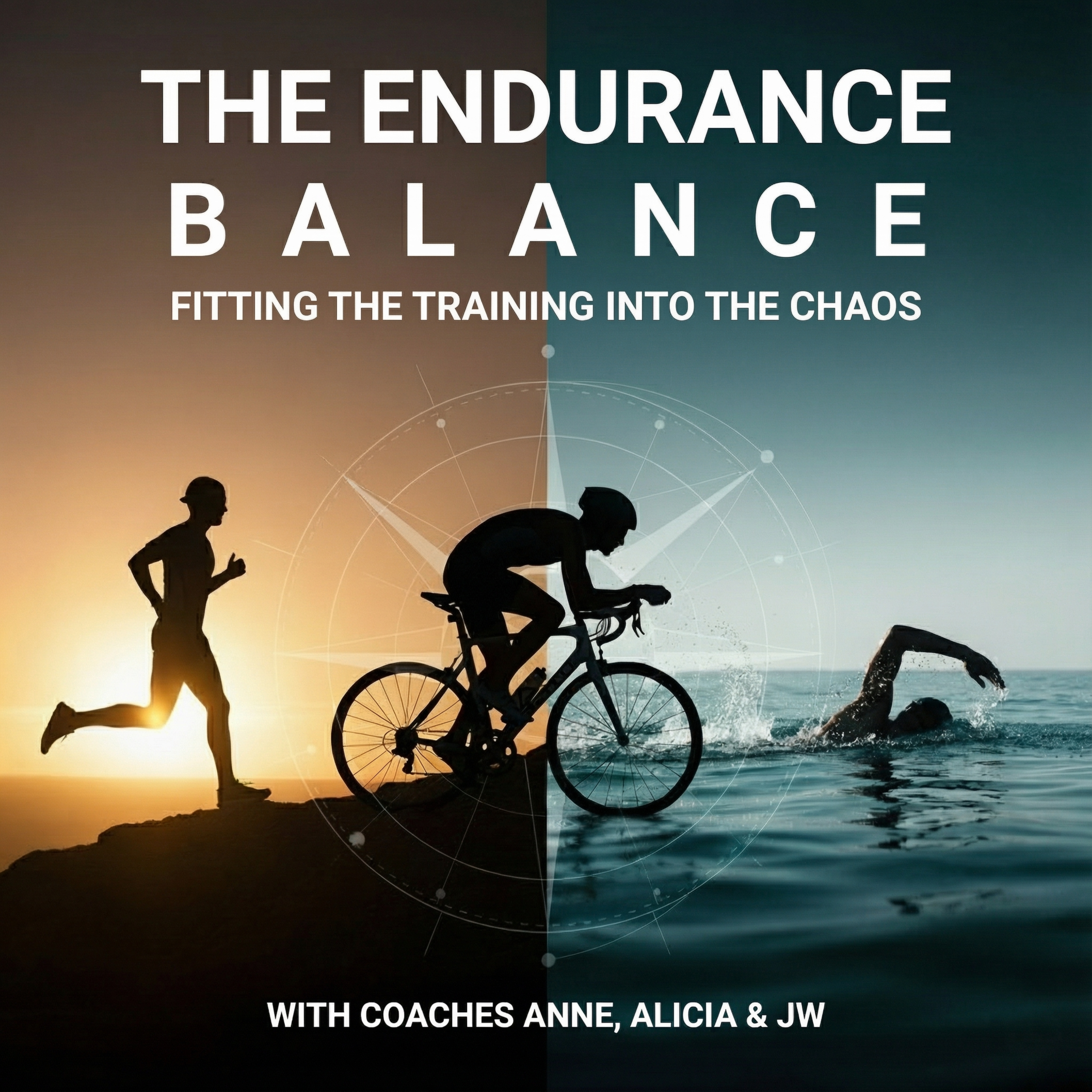
The Endurance Balance
by JW McKenna, Alicia Phillips, and Anne Sharkey
Alone we can do so little; together we can do so much. Welcome to The Endurance Balance, where we focus on fitting the training into the chaos.Join coaches JW McKenna (Ultra/Science), Alicia Phillips (Strength/Community), and Anne Sharkey (Nutrition/Masters) for an unfiltered look at endurance training. We combine the science of 80/20 running and triathlon with honest conversations about real life.Each episode features open dialogue, expert insights, and answers to your specific training questions. Whether you're chasing a Boston Qualifier or your first 5K, we’ve got your back.
-
14
Meal Prep for Endurance Athletes: Real Food Strategies for Busy Lives | Ep 11
Welcome back to The Endurance Balance!In this episode, we move from the trail to the kitchen to tackle the constant struggle of fueling the machine without losing your mind. Between hitting your splits and making it to the school play on time, who has hours to spend in the kitchen? We’re throwing away the complicated meal plans and bringing you into our real-world kitchens to break down nutrient-dense, homemade fueling options that actually fit into the chaos of an everyday endurance athlete's life.Coach JW, Coach Alicia, and Coach Anne break down the "Barcode Rule" for identifying processed junk, explain the science of training your gut for high carbohydrate intake, and share practical strategies for batch-prepping for a family of six. We explore the transition from expensive, chemical-heavy gels to simple, real-food substitutes like salted potatoes and rice bites. Plus, we dive into the latest science on protein needs and why health must always come before the number on the scale.In this episode:The Training Log: Anne’s Dragon Boat experience and Alicia’s recent marathon coaching successes.The Barcode Rule: How to focus on real food building blocks to repair the "chassis" of the machine.Training the Gut: Why you need 6 to 10 weeks to safely ramp up your carbohydrate intake for race day performance.Real Food vs. Pre-Packaged: Why "chemical fatigue" from gels is real and how to fix it with homemade portables.Redefining Weight Loss: Shifting the focus from being "light" to being healthy enough to perform.Takeaways:Skip the Gel: Your GI tract will thank you. Try moving toward real food like salted potatoes for long training efforts.Batch Prep is Survival: Don't lose your Sunday to the kitchen; focus on multi-purpose ingredients that feed the family and the athlete.Baseline Nutrition Matters: If it has a barcode, it’s processed. Focus on repairing the machine with high-quality nutrients first.Fit the Training Into the Chaos: Your nutrition shouldn't be an extra source of stress—keep it simple, keep it real, and keep it fueling the work.Connect with Us:If you have questions about your own training or nutrition, drop us a DM!Follow us on Instagram: @theendurancebalanceSubscribe & Review:If you enjoyed this episode, please hit subscribe and leave us a review. It helps us reach more athletes trying to fit the training into the chaos!(00:00) Welcome to Endurance Balance: Fueling the Chaos(02:59) Coach Anne's Dragon Boat Experience(05:58) Alicia's Marathon Coaching Success(11:50) Practical Nutrition Insights for Athletes(21:58) Navigating Meal Prep for Endurance Athletes(35:16) Simplifying Cooking for Busy Lives(41:17) Real Food vs. Pre-Packaged Meals for Performance(48:18) Fueling Strategies for Endurance Training(51:16) The Science of Carbohydrate Intake(55:07) Protein Needs and Daily Nutrition(01:01:11) Redefining Weight Loss and Health(01:07:27) Final Thoughts and Homework: Skip the Gel
-
13
Should You Train When Sick: The Make-Up Session Trap Explained | Ep 10
Welcome back to The Endurance Balance! In this episode, we tackle the massive guilt that hits when sickness derails your training schedule. Your head is pounding, your throat is scratchy, and your calendar is turning a terrifying shade of red - welcome to the messy reality of being an everyday endurance athlete.Coach JW, Coach Alicia, and Coach Anne break down why forcing a "make-up" session is the absolute fastest route to injury. We explore the "neck down" rule for training through illness , explain how cramming missed workouts artificially spikes your Acute to Chronic Workload Ratio (ACWR) , and debunk the myth of how fast you actually lose your fitness. Plus, we share strategies for flexing your training plan during vacations so you can actually enjoy your time off.In this episode:The Training Log: Updates on spring break, HYROX simulations, and managing a stressful work week.The "Neck Down" Rule: How to determine if you should run through a head cold or stay on the couch.The Make-Up Session Trap: Why stacking missed workouts doubles your risk of injury.The Physiology of Sickness: Why training on a taxed Central Nervous System results in zero physiological adaptation.Detraining vs. Deconditioning: Understanding why an elevated heart rate after a few days off is just a fluid shift, not a loss of true fitness.Takeaways:You Don't Owe Your Training Anything: Training is something you earn by being healthy enough to do it.Do Not Cram Workouts: Spiking your fatigue score artificially will shift you rapidly toward injury.Baseline Fitness is Sticky: It takes 10 to 14 days to see true physiological deconditioning (like mitochondrial decay), so missing three days won't break your race.Fit the Training Into the Chaos: Whether it's a family vacation or a bad cold, it's okay to intentionally dial back or skip a session.Connect with Us:If you have questions about your own training, drop us a DM!Follow us on Instagram: @theendurancebalanceSubscribe & Review:If you enjoyed this episode, please hit subscribe and leave us a review. It helps us reach more athletes trying to fit the training into the chaos!Chapters:(00:00) Intro & The Hook: The Messy Reality of Sickness (00:55) The Training Log: Spring Breaks and HYROX (17:48) The "Neck Down" Rule for Training (25:55) Why You Don't Owe Your Training Anything (28:39) The Make-Up Session Trap and ACWR (45:07) Flexing Your Plan for Vacations (59:56) The Timeline of Detraining and Fitness Loss (01:10:14) Final Thoughts and Homework: Audit Your Calendar
-
12
The 120g Carb Club: Training Your Gut for Elite Performance | Ep 9
Welcome back to The Endurance Balance!In this episode, we move past 'surviving' the race and dive into the elite math of performance. Your legs are ready, but is your gut?Coach JW, Coach Alicia, and Coach Anne open their own pantries for a "Cupboard Tour," revealing exactly what they use to fuel and hydrate out on the course. We break down the 120g carb club, the 800mg sodium floor, and a three-step caffeine protocol that acts as your secret weapon against the 'brain block' that tells you to quit when the race gets dark.Please note: We are not registered dietitians or doctors. The nutrition, hydration, and supplement strategies discussed in this episode are based on our own personal usage and coaching experience.In this episode:The Cupboard Tour: A look inside the coaches' bins at products like Precision Fuel & Hydration, Honey Stinger, and Lifetime's Hydrate.The Math of Performance: Understanding the 800mg to 1000mg sodium floor and why water alone isn't enough to keep you hydrated.The 1-Liter Limit: Why drinking more than one liter of fluid per hour can lead to a sloshy, GI disaster.Training the Gut: How to safely build your gut's tolerance up to 90g-120g of carbohydrates per hour.Caffeine Execution: A specific 3-step caffeine protocol to block the brain's quit signals during dark moments.Takeaways:Train Your Gut: You must practice your fueling strategy early in training, taking 6 to 10 weeks to properly train your gut to handle high carb loads.Respect the Fluid Limit: Your body can generally only process about one liter of fluid per hour.Avoid the Slosh: Trying to over-hydrate beyond that one-liter limit won't fix dehydration and will just leave water sitting in your stomach.Caffeine is a Secret Weapon: Caffeine crosses the blood-brain barrier to block the receptors that send the "I want to quit" signal to your muscles.Connect with Us:If you have questions about your own training, drop us a DM!Follow us on Instagram: @theendurancebalanceSubscribe & Review:If you enjoyed this episode, please hit subscribe and leave us a review. It helps us reach more athletes trying to fit the training into the chaos!Chapters:(00:00) Intro & The Hook: Is Your Gut Ready?(02:55) The Training Log: Dragon Boats and Athlete Wins(19:25) The Cupboard Tour: What Top Coaches Use to Fuel(33:20) Hydration vs. Water: Why Pure Water Takes Up Valuable Real Estate(54:15) The Sodium Floor and the 1-Liter Limit(01:05:54) The 120g Carb Club and Training Your Gut(01:08:28) The 3-Step Caffeine Protocol for Mental Grit(01:14:28) Final Thoughts and Homework: Audit Your Carbs
-
11
Race Nutrition: Hydration, Cramp Prevention & The Taper Explained | Ep 8
Welcome back to The Endurance Balance!In this episode, we explore the mental and physical chaos of the taper. The hay is in the barn and the fitness is built, but why are you suddenly terrified and feeling muscles you never knew you had?Coach JW, Coach Alicia, and Coach Anne open the training log to discuss the transition into race week and how to fit race-day logistics into the chaos of everyday life. We dive into the science of race prep—from effective carb loading and hydration techniques to the great cramping debate (is it nutrition or genetics?). We also explore the real-world application of bicarbonate supplements and why carbon-plated shoes feel like a 2-4% boost.Please note: We are not registered nutritionists or dietitians. The nutrition, hydration, and supplement strategies discussed in this episode are based on our own personal usage and coaching experience.In this episode:The Taper: Preparing for race day and managing the mental game.Taper Tantrums: Understanding phantom injuries and trusting the drop in volume.Carb Loading & Hydration: How to fuel effectively without the race-morning bloat.Cramp Prevention: Breaking down the science of cramping—nutrition vs. genetics.Supplements & Gear: The truth about bicarbonate and carbon-plated shoes.Takeaways:Trust the Rest: Dropping volume during taper week is critical; phantom pains are often just your body repairing itself.Hydration is Dynamic: Adjust your fluid and electrolyte intake as your training volume drops.Test Your Tech & Fuel: Practice carb loading in training, and never try supplements like bicarbonate or new carbon shoes on race day without testing them first.Connect with Us:If you have questions about your own training, drop us a DM!Follow us on Instagram: @theendurancebalanceSubscribe & Review:If you enjoyed this episode, please hit subscribe and leave us a review. It helps us reach more athletes trying to fit the training into the chaos!Chapters:(00:00) The Taper: Preparing for Race Day(21:49) Understanding Phantom Injuries During Taper Week(34:18) Strategies for Effective Tapering(35:56) Tapering Strategies for Race Preparation(38:52) Carb Loading and Hydration Techniques(42:51) Understanding Cramping: Nutrition vs. Genetics(55:38) Electrolytes and Hydration in Endurance Sports(01:02:52) The Role of Supplements in Athletic Performance
-
10
Nervous System Resets: Post-Race Recovery & CNS Fatigue Explained | Ep 7
Welcome back to The Endurance Balance! In this episode, we explore the critical role of the central nervous system in recovery after endurance events. Your legs might feel fine, but why can't you sleep? Coach Anne opens the training log with an unexpected pivot into an 8-week Intro to Dragon Boat Racing. Coach Alicia shares her official conditioning journey into Hyrox. Coach JW gives a massive shoutout to Jack, a young kidney cancer survivor who crushed his 2K race goal , and dives into why a human coach reading your body's signals will always beat AI.Then, we answer a listener question from Bron about Nervous System Resets. We break down the difference between localized muscle damage and systemic CNS fatigue , why your body thinks you've been running from a bear for 15 hours , and how a fried CNS sabotages your digestion and future training.In this episode:The Training Log: Dragon boats, Hyrox doubles, and finding the limit.The Listener Question: Diving deep into Central Nervous System fatigue and the Fight or Flight response.Rest & Digest: Active techniques to signal to your body that it is safe to heal.The Masters Perspective: How aging and menopause artificially elevate cortisol and alter recovery timelines.Hydration Truths: Why Coach Anne says plain water is actually dehydrating.Takeaways:Active Resets: You can't just lay on the couch. A 1-hour walk in the days post-race tells your nervous system the threat is gone.Water is NOT Hydrating: Drinking plain water dilutes the fuel you put in your body. Always add electrolytes or a pinch of salt.Watch the Check Engine Light: Monitor your resting heart rate (RHR). If it is elevated by 5 to 10 beats per minute, your CNS has not reset.The Ultimate Weapon: Quality sleep recalibrates the HPA axis. You can't rush the repair process.Connect with Us:If you have questions about your own training, drop us a DM! Follow us on Instagram: @theendurancebalanceSubscribe & Review:If you enjoyed this episode, please hit subscribe and leave us a review. It helps us reach more athletes trying to fit the training into the chaos! Chapters:(00:00) Intro & The Training Log: Dragon Boats and Hyrox (16:19) Coaching Insights: AI Limitations & Pacing Strategies (29:39) The Listener Question: Nervous System Resets Explained (35:33) Post-Race Blues & The Fight or Flight Response (47:11) The HPA Axis, Masters Athletes, & Cortisol (56:00) Hydration Rule: Why Plain Water Isn't Enough (01:03:18) Homework: Audit Your Sleep & Resting Heart Rate
-
9
The Data Trap: The Truth About Wearables & The Naked Run (Part 2) | Ep 6
Welcome back to The Endurance Balance!In this episode, we pick up exactly where we left off last week. Coach Anne dropped the million-dollar cliff-hanger question about balancing wearable tech with our own intuition, and today, Coach Alicia is delivering the answer.We are going to war with the "Data Trap." Does your watch owe you an apology? From waking up to an "Unproductive" status on your Garmin to obsessing over Sleep Scores and HRV, we break down when your data is helping you and when it is actively sabotaging your training.Then, things get heated with the Great Headphone Debate. Coach Anne takes a hard stance on ditching the music to build mental resilience and "force bathing" in the discomfort, while Coach Alicia defends the "one earbud" compromise. Finally, Coach JW assigns everyone this week's homework: The "Naked Run."In this episode:The Answer: Alicia responds to Anne’s question about trusting your gut versus trusting the gadget.The "Unproductive" Trap: Why Garmin’s metrics (Sleep Score, HRV, Training Status) are often just "bumper rails" and why they shouldn't dictate your self-worth.The Headphone Debate: The mental grit required to run in silence versus the reality of getting through a long, boring training run.The "Naked Run" Challenge: The specific assignment every athlete needs to complete this week to reset their internal pacing.Takeaways:Trust the Body, Not the Battery: If you feel fully recovered and ready to go, but the data says you're "Strained," trust your body. Your watch does not know everything.Metrics are Bumper Rails: Use your HRV and Sleep Scores as early warning signs for illness or overtraining, not absolute laws that rule your day.RPE is King: On highly technical trails or during high-stress life periods, Rate of Perceived Exertion (how hard it actually feels) is significantly more reliable than wrist-based heart rate.Build Mental Grit in Silence: Removing your headphones forces you to sit with the discomfort. If you can't run with your own thoughts for an hour, you aren't ready for the mental dark place of an ultra.Connect with Us:If you are taking on the Naked Run Challenge or fighting with your Garmin this week, drop us a DM!Follow us on Instagram: @theendurancebalanceSubscribe & Review:If you enjoyed this episode, please hit subscribe and leave us a review. It helps us reach more athletes trying to fit the training into the chaos!Chapters:(00:00) Intro: Picking up the conversation(00:45) The Answer: Alicia responds to Anne on Wearable Tech(16:50) The Metrics: Escaping the "Unproductive" Garmin Trap(23:45) Hot Take: The Great Headphone Debate(31:30) Homework: The "Naked Run" Challenge
-
8
The Triple Threat: Surviving Multi-Race Blocks & The "Walk Away" Rule (Part 1) | Ep 6
Welcome back to The Endurance Balance!In this episode, we are in the thick of the "Winter Grind." The holidays are over, the days are short, and the motivation to lace up is battling against the urge to stay under the duvet.Coach Alicia opens up about her battle with the "Check Engine Light"—that feeling when the winter blues and training fatigue start to flicker on the dashboard. Meanwhile, Coach Anne is having a mild identity crisis, trading the open road for the Peloton App to keep the spark alive post-Key West. We discuss why switching up the stimulus might be the only way to survive February.Coach JW finally leads the deep dive into the "Sinister Triple"—the logistical nightmare of racing three ultra-marathons (or Ironmans) in a six-week block without ending up in the training morgue. We break down the "Walk Away" rule for B-races, why your fitness must drop between events, and why the most important workout you do between races is a 1-hour walk.Finally, we tackle the difference between being "Hurt" and being "Injured." In a multi-race block, you will never feel 100%, but knowing when to push through the discomfort and when to pull the plug is the difference between a finish line and a DNF.Note: This is Part 1 of a special two-part series. We end this episode on a cliffhanger as Coach Anne asks the million-dollar question that sparks a debate on Wearable Tech (coming next Friday in Part 2).In this episode:The Winter Grind: How to handle the mental slump of February training when the "Check Engine Light" starts flickering.The Sinister Triple: The specific logistical strategy for surviving 150km+ of racing in a 6-week window.Repair vs. Build: Why you must stop trying to "gain fitness" between races and focus entirely on "repairing the chassis."The "Walk Away" Rule: The controversial strategy of starting a B-Race with the full intention of DNF-ing if things go sideways.Active Recovery: Why sitting on the couch is the worst thing you can do after an ultra, and why the "1-Hour Walk" is mandatory.Takeaways:Recovery is the Training: When racing back-to-back, you aren't training to get faster; you are training to heal. If you try to build fitness, you will break.The "Zero Day" Audit: Look at your calendar. If you have major events close together, you must schedule your recovery days now, or your body will schedule an injury for you later.Motion is Lotion: After a massive endurance effort, sedentary rest locks up the gears. You need low-impact movement (walking, swimming) to flush the system.Differentiate Hurt vs. Injured: "Hurt" is soreness, blisters, and fatigue—you can race on that. "Injured" is structural damage—that is a hard stop.Winter requires Variety: If the treadmill is killing your soul, change the modality. It is better to Hyrox, Peloton, or swim than to burnout on running before the season starts.Connect with Us:If you are planning a "Sinister Triple" or battling the winter blues, drop us a DM!Follow us on Instagram: @theendurancebalanceSubscribe & Review:If you enjoyed this episode, please hit subscribe and leave us a review. It helps us reach more athletes trying to fit the training into the chaos!Chapters:(00:00) Intro: The Winter Grind & The "Check Engine Light"(02:57) The Training Log: Alicia’s Motivation & Anne’s Peloton Pivot(11:53) Topic: The "Sinister Triple" (Logistics of 3 Ultras in 6 Weeks)(22:30) Strategy: The "Walk Away" Rule for B-Races(33:58) Mental Grit: "Are you Hurt or are you Injured?"(42:00) Protocol: The Mandatory 1-Hour Walks & Active Recovery(56:01) Cliffhanger: Coach Anne asks the Million-Dollar Question...
-
7
The Bigfoot & The Pecker: Surviving Snowshoe Racing and Multi-Day Challenges | Ep 5
Welcome back to The Endurance Balance!In this episode, we go from the frozen tundra to the humid tropics as we break down the art of surviving extreme conditions and back-to-back race weekends.Coach Anne recaps her "Big Pecker Challenge" in Key West (a 5k, 10k, and Half Marathon in 3 days), sharing how she managed recovery amidst 30mph winds and humidity. Meanwhile, Coach Alicia takes us into the deep freeze of Northern Michigan for the "Bigfoot" Snowshoe race, proving that -4°F is perfect racing weather if you have the right layers.Coach JW pushes back the discussion on the "Sinister Triple"—how to tackle three ultra-marathons in six weeks without ending up in the training morgue to episode 6. We discuss the "Walk Away" rule for B-races, why recovery is the training during a triple block, and the physiological markers you can't ignore.Finally, we tackle the logistics of the "Bucket List." From the Boston Marathon to the Western States lottery, we share strategies on how to get into those sold-out races, including the power of volunteering and treating registration day like race day.In this episode:Fire & Ice Reports: Comparing recovery needs for humid multi-day road racing vs. sub-zero snowshoe sprinting.The Pacing Debate: Should you "empty the tank" at the finish line, or pace for the experience? The coaches debate race execution.Survival Mode: How to manage the physiological damage of back-to-back A-Races (Sleep, Nutrition, Hydration).Registration Hacks: Strategies for lotteries, qualifiers, and why volunteering is your golden ticket to sold-out events.Gear Check: From Normatec boots for recovery to goggles for snowshoeing.Takeaways:Respect the "Check Engine" Light: When racing back-to-back, your sleep, nutrition, and hydration markers dictate when you can return to training.The "Walk Away" Rule: If you are racing a Triple, you must be willing to DNF a B-race to save your chassis for the A-race.Volunteering = Entry: For many major trail series, volunteering this year guarantees your entry for next year. It’s the best way to bypass the lottery.Treat Registration Like Race Day: Set alarms, use multiple devices, and have your payment info ready. Sold-out races don't wait for you to find your wallet.Weather is the Equalizer: Whether it's 30mph winds in Florida or -20°C in Canada, everyone is facing the same elements. Adjust your pace, not your attitude.Connect with Us:If you are chasing a specific bib or battling extreme weather in your training, drop us a DM!Follow us on Instagram: @theendurancebalanceSubscribe & Review:If you enjoyed this episode, please hit subscribe and leave us a review. It helps us reach more athletes trying to fit the training into the chaos!Chapters:(00:00) Intro: Fire, Ice, and Back-to-Back Racing(01:57) The Training Log: Anne’s "Big Pecker" Challenge in Key West(06:43) Recovery Hacks: Normatec Boots & Tart Cherry Juice(17:03) The Pacing Debate: Empty the tank or finish with a smile?(30:28) Tapering: When to cut the strength training before an A-Race(41:03) Alicia’s Snowshoe Race: Racing at -4°F & Layering Strategies(58:12) Topic: Scoring the Bib (Lotteries, Volunteering & Registration Hacks)(01:11:40) The "Sinister Triple": Surviving 3 Ultras in 6 Weeks(01:16:32) Homework: Audit your Bucket List & Registration Dates
-
6
Blueprinting 2026: Race Selection, Periodization & The Art of the Annual Training Plan | Ep 4
Welcome back to The Endurance Balance! In this episode, Coach JW, Coach Alicia, and Coach Anne move from building the "Chassis" to creating the "Map".Most New Year’s resolutions fail by February because there is no roadmap. Today, we break down how to blueprint your entire racing year so you can stay consistent when the initial motivation fades. We discuss the art of "fitting the training into the chaos," getting family buy-in, and why your plan is just a piece of paper until you execute it.We also catch up on Coach Anne’s windy forecast for Key West, Coach Alicia’s upcoming snowshoe race (and trip to the Azores!), and why Coach JW turned a Costco trip into a speed workout.In this episode:The Blueprint: How to map out your Annual Training Plan (ATP) without getting lost in the data.Race Selection: Defining A, B, and C races—why you leave it all on the table for one, and use the others for "dress rehearsals."The Circle of Success: Why getting buy-in from your significant other and family is the most critical part of your training plan.Recovery & Hacks: The benefits of Tart Cherry Juice, the "mandatory walk" rule, and checking your internal "check engine light" (Sleep, Nutrition, Hydration).Data vs. Feel: Why technology fails and why you need to master Rate of Perceived Exertion (RPE).Takeaways:The "Circle of Success" is non-negotiable: You need support from your spouse, family, and care team (RMT/Chiro) to succeed.Know your Race Tiers: An A-Race requires full recovery; B and C races are for testing gear, gut training, and fitness checks.Don't fear the "Post-Race Blues": Structured recovery (like a mandatory walking week) helps reset the mind and body.Tech isn't everything: GPS watches fail and batteries die; knowing your body's RPE is your best backup plan.Fit the training into the chaos: Sometimes the workout is a 20-minute grocery run or a hike with the kids.Recovery Markers: Before returning to intensity, check that your Sleep, Nutrition, and Hydration have returned to baseline.Connect with Us: If you have questions about your training, nutrition, or balancing the chaos, leave us a comment! We will be answering listener questions in future episodes.Follow us on Instagram!Subscribe & Review: If you enjoyed this episode, please hit subscribe and leave us a review. It helps us reach more athletes like you!Chapters:(00:00) Intro: Mapping the Athlete’s Year & Avoiding Resolution Failure(06:03) Check-ins: Key West Winds, Snowshoe 5Ks & Costco Speed Runs(07:53) Nutrition Hack: The benefits of Tart Cherry Juice(17:56) Goal Setting: How to pick your races & "Scary Goals"(29:37) The Strategy: Defining A, B, and C Races(32:43) Recovery: The "Mandatory Walk" & The 3 Markers (Sleep, Nutrition, Hydration)(45:19) The "Circle of Success": Getting family buy-in(50:05) Data vs. Feel: The "Old Lady" approach vs. RPE(01:02:06) 2026 Goals: What the coaches are racing this year(01:20:10) Homework: Create your blueprint & DM us!
-
5
The Chassis & The Schedule: Bone Health, Super Shoes & AM vs. PM Training | Ep3
Welcome to 2026! In this first episode of the year, Coach JW, Alicia, and Coach Anne focus on "The Chassis and The Schedule".We dive deep into why your bones might be a ticking time bomb and how to reverse issues like osteopenia through strength training and plyometrics—even if you are in your 70s.We also debate "Super Shoes" (and why you shouldn't break them in), the benefits of barefoot lifting, and the pros and cons of training in the morning versus the evening.In this episode:The Chassis: Why strength training is non-negotiable and how to "shock" your bones for density.The Gear: The debate on carbon-plated "Super Shoes" and why we lift weights barefoot.The Schedule: Managing cortisol, sleep, and why we take a hard stance against fasted training.Reflections: The team shares what running has given them in the past year.Takeaways:Bone health is crucial for performance and training.Strength training should be included in every athlete's routine.Fitting training into a busy schedule is a common challenge.Community support enhances the running experience.Nutrition and hydration are key to performance.Training in the morning can improve sleep quality.Fasted workouts may not be beneficial for most athletes.It's important to train your gut for race day nutrition.Running can provide a sense of identity beyond just being a parent.Reflecting on personal growth through running is valuable.Connect with Us:If you have questions about your training, nutrition, or balancing the chaos, leave us a comment! We will be answering listener questions in future episodes. Follow us on Instagram! Subscribe & Review:If you enjoyed this first look into our world, please hit subscribe and leave us a review. It helps us reach more athletes like you!Chapters:(00:00) Intro: The Chassis and The Schedule(02:50) Check-ins: Avoiding the "Stomach Bug" & Key West Training(11:54) Bone Density: Osteopenia warnings & Box Drops(14:52) Strength Training: Why 70-year-olds need to lift heavy(35:47) Gear Talk: Super Shoes & "Adapting" vs. "Breaking In"(43:33) Gym Tips: Why you should lift barefoot(45:33) AM vs. PM Training: Cortisol and Sleep(51:27) Nutrition: Why you should stop fasted training(01:06:02) Question of the Week: What has running given you?
-
4
Fueling Your Endurance: The Essential Role of Nutrition in Athletic Performance | Ep 2
"Sleep is free fitness." "Cortisol gets a bad rap." "Fuel the engine, feed the engine."Summary:In this episode of Endurance Balance, Coaches JW, Anne, and Alicia delve into the critical aspects of nutrition for endurance athletes, emphasizing the importance of fueling the body properly. They discuss the significance of sleep, the role of cortisol, and the necessity of regular blood work to monitor health metrics. The coaches share personal stories and insights from their training logs, highlighting wins and learning opportunities. They also explore the impact of iron and vitamin D on performance, and the strategic use of caffeine in training and racing. Overall, the conversation underscores the holistic approach needed for optimal athletic performance.Takeaways:Nutrition is crucial for endurance athletes, focusing on more than just macros.Sleep is a vital component of recovery and performance.Blood work can reveal important health metrics for athletes.Cortisol is necessary but can become problematic if levels are too high.Iron deficiency can significantly impact performance and energy levels.Vitamin D plays a critical role in overall health and athletic performance.Athletes should focus on performance metrics rather than weight.Caffeine can enhance performance but should be managed carefully.Regular blood work is essential for monitoring health as an athlete.Balancing training stress with recovery is key to long-term success.Blood Work Recommendations by Coach Alicia - link to the document here (make a copy to save it)Connect with Us:If you have questions about your training, nutrition, or balancing the chaos, leave us a comment! We will be answering listener questions in future episodes. Follow us on Instagram! Subscribe & Review:If you enjoyed this first look into our world, please hit subscribe and leave us a review. It helps us reach more athletes like you!Chapters:00:00 → Fueling the Engine: The Importance of Nutrition01:57 → Training Logs: Wins and Learning Opportunities11:51 → How We Met: The Coaches' Journey18:47 → Nutrition for Endurance Athletes: Key Considerations42:27 → Cortisol: The Stress Hormone and Its Role01:09:08 → Blood Work: Understanding Your Health Metrics
-
3
Meet the Coaches: Who are JW, Anne, & Alicia? | Ep. 1
Welcome to the very first episode of The Endurance Balance! If you are looking for a rigid, robotic training podcast, this isn't it. Join Coach JW, Coach Anne, and Coach Alicia for a relaxed, real-world conversation about fitting endurance training into the chaos of everyday life.In this premiere episode, we break the ice by introducing who we are—from ultra-running in the Canadian snow to triathlon training in the Florida humidity, and managing fitness as a military spouse and mom of four. We dive into our "coaching superpowers," share our personal training wins (and struggles) of the week, and reveal the framework you need to set better goals for the year ahead.In this episode, we cover:Meet the Coaches: From former swimmers and hockey players to endurance specialists, get to know the voices behind the mics.Superpowers: How we use science, nutrition, and adaptability to help athletes succeed.Weather Wars: How to adapt your training whether you are freezing in Canada or melting in Florida heat (plus tips on heat acclimation!).The "Chaos" Factor: Real talk on fitting 10+ hours of training into a life filled with kids, work, and travel.The 4 F's: Alicia’s secret quadrant for planning your year: Fitness, Family, Fun, and Financial.Quotes from the Episode:"If you become just a mom, you start to lose who you are... don't lose the hobby." - Coach Alicia"I'm good at organizing chaos." - Coach JW"I can count on two fingers how many races went to Plan A... nothing ever goes the same way as it does in training." - Coach AnneConnect with Us: If you have questions about your training, nutrition, or balancing the chaos, leave us a comment! We will be answering listener questions in future episodes. Follow us on Instagram! Subscribe & Review: If you enjoyed this first look into our world, please hit subscribe and leave us a review. It helps us reach more athletes like you!Chapters"00:00 Introduction to Endurance Balance Podcast02:59 Coaching Backgrounds and Personal Journeys06:02 The Importance of Hobbies and Identity09:01 Training Stories and Experiences11:50 Year-Round Training and Off-Season Strategies14:54 Heat Training and Acclimatization Strategies23:32 Heat Acclimation and Training Strategies26:35 Fitting Training into a Busy Life31:12 The Importance of Consistency and Adaptability33:55 Finding Joy in Endurance Sports40:08 Setting Goals with the Four F's
-
2
Trailer: Welcome to The Endurance Balance
Fitting the Training into the Chaos. Real life is messy. Your training doesn't have to be. [U+3164]Welcome to The Endurance Balance, a new podcast from Coaches Anne Sharkey, Alicia Phillips, and JW McKenna. In this show, we break down the 80/20 philosophy, answer your training questions, and help you fit the training into the chaos of everyday life. [U+3164]Hosted by: Coach Anne Sharkey, Coach Alicia Phillips, and Coach JW McKenna. [U+3164]Subscribe now to catch Episode 1!Credits & Legal: [U+3164] Intro/Outro Music: "Energetic Indie Rock (Jump!)" by AlexGrohl [U+3164] Source: Pixabay.com [U+3164] License: Royalty-Free Commercial License held by Redde1594 / The Endurance Balance [U+3164] Certificate ID: 112179
No matches for "" in this podcast's transcripts.
No topics indexed yet for this podcast.
Loading reviews...
ABOUT THIS SHOW
Alone we can do so little; together we can do so much. Welcome to The Endurance Balance, where we focus on fitting the training into the chaos.Join coaches JW McKenna (Ultra/Science), Alicia Phillips (Strength/Community), and Anne Sharkey (Nutrition/Masters) for an unfiltered look at endurance training. We combine the science of 80/20 running and triathlon with honest conversations about real life.Each episode features open dialogue, expert insights, and answers to your specific training questions. Whether you're chasing a Boston Qualifier or your first 5K, we’ve got your back.
HOSTED BY
JW McKenna, Alicia Phillips, and Anne Sharkey
Loading similar podcasts...
URL copied to clipboard!