
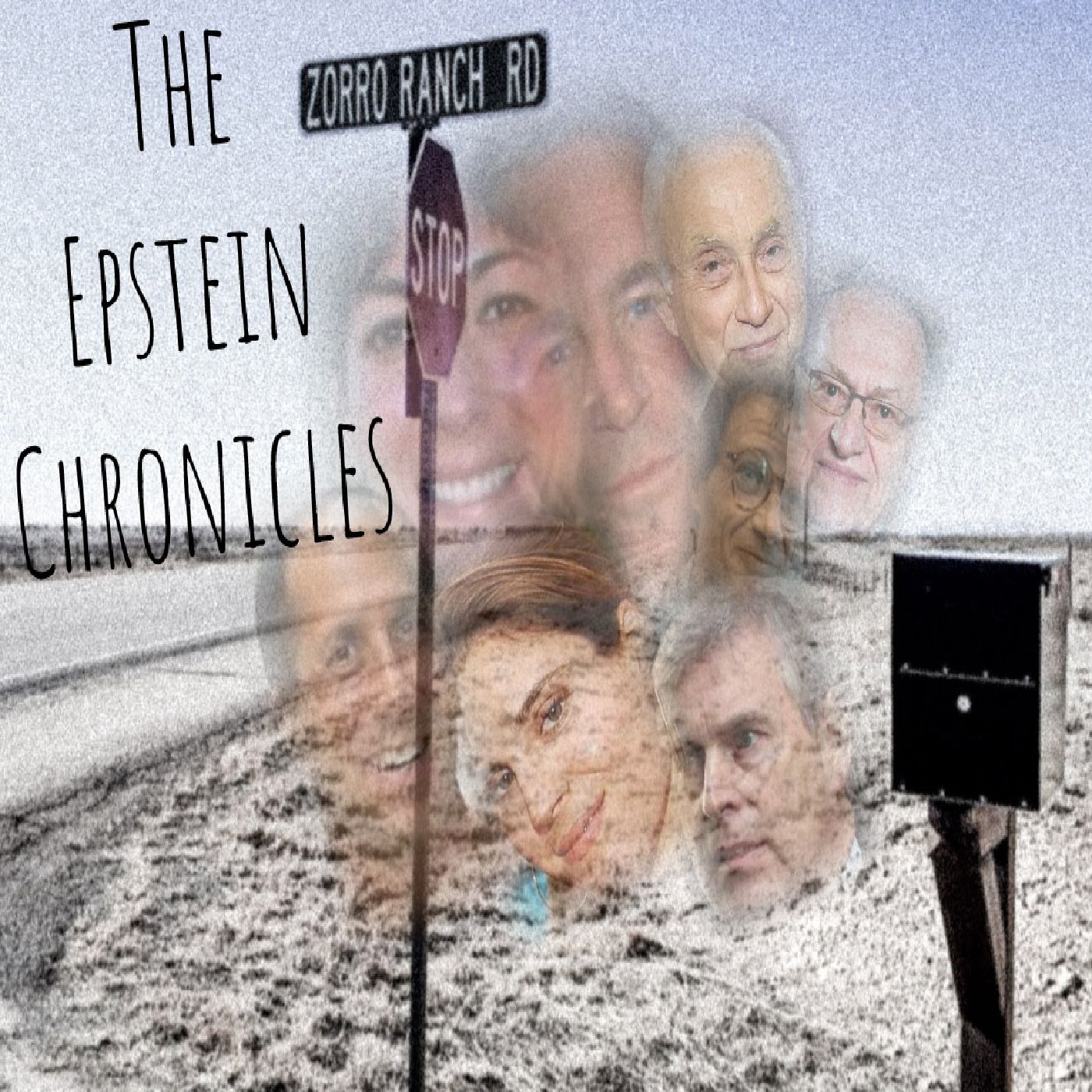
PODCAST · news
The Epstein Chronicles
by Bobby Capucci
Jeffrey Epstein was a multi millionaire who had political and business ties to some of the most rich and powerful people in the world. From businessmen to politicians at the highest levels, Epstein broke bread with them all. Yet for years the Legacy media and the rest of high society looked the other way and ignored his behavior as multiple women came forward with allegations of abuse. Even after he was convicted and subsequently received a sweetheart deal those same so called elites welcomed him back with open arms. Now after his death and the arrest of Maxwell, the real story is starting to come together and the curtain has begun to be drawn back and what it has revealed is truly disturbing. From Princes to Ex Presidents, the cast of scoundrels in this play spans continents and political affiliations leaving us with a transcontinental criminal conspiracy possibly unlike any we have ever seen before. In this podcast we will e
-
1000
Howard Lutnick And The Transcript From His Epstein Related Congressional Hearing (Part 3) (5/14/26)
The transcripts from Howard Lutnick’s closed-door appearance before Congress painted a picture of a witness trying to minimize both the depth and duration of his relationship with Jeffrey Epstein while lawmakers confronted him with records suggesting far more contact than he had previously acknowledged. Lutnick repeatedly described his interactions with Epstein as “inconsequential,” insisting he only met with him a handful of times and claiming he cut ties after a disturbing 2005 interaction inside Epstein’s Manhattan townhouse. According to the testimony, Lutnick said Epstein made sexually suggestive comments about massages during that visit, which he claimed immediately disgusted both him and his wife. However, members of the House Oversight Committee confronted him with emails, schedules, and business records showing contact continuing years after Epstein’s 2008 conviction, including meetings at Epstein’s townhouse, discussions involving a shared business venture, and a 2012 lunch visit to Epstein’s private island alongside Lutnick’s familyThe transcripts also showed lawmakers growing increasingly frustrated with what they viewed as evasive answers and shifting explanations from Lutnick as more documentation was placed in front of him. Democrats in particular accused him of misleading the public for years about the true extent of the relationship, especially after previously portraying Epstein as little more than a casual acquaintance. Lutnick attempted to explain away the continued contact by claiming the encounters were brief, social, or business-related and that he never witnessed any criminal behavior or saw underage girls around Epstein. He also reportedly walked back previous public comments suggesting Epstein blackmailed powerful people, telling lawmakers he had only been speculating and had no firsthand knowledge of such activity. Republicans on the committee largely defended Lutnick and argued Democrats were trying to weaponize the hearing politically, while critics argued the testimony further demonstrated how many powerful figures continued associating with Epstein long after his criminal conduct was already publicly known.to contact me:[email protected]:HGO126550 Lutnick Draft-pdf2_Redacted-Update_RedactedV3.pdfBecome a supporter of this podcast: https://www.spreaker.com/podcast/the-epstein-chronicles--5003294/support.
-
999
Howard Lutnick And The Transcript From His Epstein Related Congressional Hearing (Part 2) (5/14/26)
The transcripts from Howard Lutnick’s closed-door appearance before Congress painted a picture of a witness trying to minimize both the depth and duration of his relationship with Jeffrey Epstein while lawmakers confronted him with records suggesting far more contact than he had previously acknowledged. Lutnick repeatedly described his interactions with Epstein as “inconsequential,” insisting he only met with him a handful of times and claiming he cut ties after a disturbing 2005 interaction inside Epstein’s Manhattan townhouse. According to the testimony, Lutnick said Epstein made sexually suggestive comments about massages during that visit, which he claimed immediately disgusted both him and his wife. However, members of the House Oversight Committee confronted him with emails, schedules, and business records showing contact continuing years after Epstein’s 2008 conviction, including meetings at Epstein’s townhouse, discussions involving a shared business venture, and a 2012 lunch visit to Epstein’s private island alongside Lutnick’s familyThe transcripts also showed lawmakers growing increasingly frustrated with what they viewed as evasive answers and shifting explanations from Lutnick as more documentation was placed in front of him. Democrats in particular accused him of misleading the public for years about the true extent of the relationship, especially after previously portraying Epstein as little more than a casual acquaintance. Lutnick attempted to explain away the continued contact by claiming the encounters were brief, social, or business-related and that he never witnessed any criminal behavior or saw underage girls around Epstein. He also reportedly walked back previous public comments suggesting Epstein blackmailed powerful people, telling lawmakers he had only been speculating and had no firsthand knowledge of such activity. Republicans on the committee largely defended Lutnick and argued Democrats were trying to weaponize the hearing politically, while critics argued the testimony further demonstrated how many powerful figures continued associating with Epstein long after his criminal conduct was already publicly known.to contact me:[email protected]:HGO126550 Lutnick Draft-pdf2_Redacted-Update_RedactedV3.pdfBecome a supporter of this podcast: https://www.spreaker.com/podcast/the-epstein-chronicles--5003294/support.
-
998
Howard Lutnick And The Transcript From His Epstein Related Congressional Hearing (Part 1) (5/14/26)
The transcripts from Howard Lutnick’s closed-door appearance before Congress painted a picture of a witness trying to minimize both the depth and duration of his relationship with Jeffrey Epstein while lawmakers confronted him with records suggesting far more contact than he had previously acknowledged. Lutnick repeatedly described his interactions with Epstein as “inconsequential,” insisting he only met with him a handful of times and claiming he cut ties after a disturbing 2005 interaction inside Epstein’s Manhattan townhouse. According to the testimony, Lutnick said Epstein made sexually suggestive comments about massages during that visit, which he claimed immediately disgusted both him and his wife. However, members of the House Oversight Committee confronted him with emails, schedules, and business records showing contact continuing years after Epstein’s 2008 conviction, including meetings at Epstein’s townhouse, discussions involving a shared business venture, and a 2012 lunch visit to Epstein’s private island alongside Lutnick’s familyThe transcripts also showed lawmakers growing increasingly frustrated with what they viewed as evasive answers and shifting explanations from Lutnick as more documentation was placed in front of him. Democrats in particular accused him of misleading the public for years about the true extent of the relationship, especially after previously portraying Epstein as little more than a casual acquaintance. Lutnick attempted to explain away the continued contact by claiming the encounters were brief, social, or business-related and that he never witnessed any criminal behavior or saw underage girls around Epstein. He also reportedly walked back previous public comments suggesting Epstein blackmailed powerful people, telling lawmakers he had only been speculating and had no firsthand knowledge of such activity. Republicans on the committee largely defended Lutnick and argued Democrats were trying to weaponize the hearing politically, while critics argued the testimony further demonstrated how many powerful figures continued associating with Epstein long after his criminal conduct was already publicly known.to contact me:[email protected]:HGO126550 Lutnick Draft-pdf2_Redacted-Update_RedactedV3.pdfBecome a supporter of this podcast: https://www.spreaker.com/podcast/the-epstein-chronicles--5003294/support.
-
997
The House Oversight Committee Releases The Howard Lutnick Deposition Transcript (5/14/26)
Commerce Secretary Howard Lutnick testified behind closed doors before the House Oversight Committee about his relationship with Jeffrey Epstein, where lawmakers pressed him over inconsistencies between his past public statements and newly released Epstein files. Lutnick claimed he only met Epstein three times over roughly fourteen years and described the encounters as “inconsequential,” insisting he cut ties after Epstein made what Lutnick described as a disturbing sexual remark during a 2005 visit to Epstein’s Manhattan townhouse. According to Lutnick, Epstein referenced getting “the right kind of massage,” which immediately unsettled both him and his wife. However, committee investigators confronted him with records showing continued contact after that incident, including meetings, business dealings, and a 2012 lunch visit to Epstein’s private island with his family.Lawmakers from both parties sharply criticized Lutnick’s testimony, with several Democrats accusing him of being evasive and repeatedly changing his story as more documents became public. The testimony revealed that Lutnick and Epstein were involved in the same advertising startup venture as late as 2014, despite Lutnick’s earlier claims that he severed ties years before. Questions also centered on why Lutnick visited Epstein’s island after Epstein’s 2008 conviction and why his previous public comments appeared to minimize the relationship. Lutnick maintained that he never witnessed misconduct, never saw underage girls around Epstein, and did not fully understand the extent of Epstein’s criminal behavior at the time. The hearing has intensified political pressure surrounding the broader Epstein investigation, with some lawmakers calling for Lutnick’s resignation while the White House continues to publicly support him.to contact me:[email protected]:Lutnick testified he knew little about Epstein, his next-door neighbor - CBS NewsBecome a supporter of this podcast: https://www.spreaker.com/podcast/the-epstein-chronicles--5003294/support.
-
996
Prince Andrew, Sandringham, and Another Ugly Allegation (5/14/26)
A newly updated edition of royal biographer Prince Andrew Andrew Lownie’s book Entitled: The Rise and Fall of the House of York contains allegations that Prince Andrew violently kicked one of his Labradors during a pheasant shoot at Sandringham after the dog grabbed a sausage roll from a guest. According to the account, the dog snatched the food from the guest’s hand, prompting laughter from those nearby before Andrew allegedly reacted by kicking the animal in the head hard enough to leave it whimpering on the ground. The guest reportedly confronted Andrew over what was described as “disgusting” behavior toward the dog, which allegedly triggered an angry response from Andrew insisting the dogs belonged to him and that he could treat them however he wanted.The story quickly became part of the wider portrait being painted of Andrew in the updated biography, which depicts him as increasingly isolated, bitter, entitled, and detached from public reality following years of scandal surrounding his association with Jeffrey Epstein. The book claims that several people present sided with the guest who challenged Andrew, and even alleges that Prince Philip later privately told the guest that both he and Queen Elizabeth agreed Andrew “needed a good scolding from time to time.” The allegations arrive as Andrew remains deeply toxic to the monarchy’s public image, with Buckingham Palace continuing to distance itself from him following the collapse of his royal standing and ongoing scrutiny surrounding his past behavior and personal associations.to contact me:[email protected] a supporter of this podcast: https://www.spreaker.com/podcast/the-epstein-chronicles--5003294/support.
-
995
Mega Edition: Jes Staley And His Epstein Related Legal War With JP Morgan (5/14/26)
The legal battle between Jes Staley and JPMorgan Chase erupted after lawsuits accused the bank of enabling Jeffrey Epstein’s sex-trafficking operation for years while he remained a wealthy client. Staley, who had been one of JPMorgan’s top executives and Epstein’s main private banking contact, quickly became central to the litigation because of his close personal relationship with Epstein. The U.S. Virgin Islands and Epstein accusers alleged that JPMorgan ignored repeated warning signs about Epstein’s conduct because he brought the bank wealthy clients and influence, and they argued Staley played a key role in protecting the relationship. Court filings and internal emails revealed Staley exchanged hundreds of messages with Epstein, visited his properties, and allegedly pushed internally to keep Epstein as a client despite compliance concerns and growing fears tied to human trafficking allegations. JPMorgan responded by attempting to shift much of the blame onto Staley personally, filing claims against him seeking accountability for any damages the bank suffered from the lawsuits.The fight became increasingly bitter as both sides tried to avoid taking sole responsibility for the scandal. JPMorgan argued Staley concealed the true nature of his relationship with Epstein and acted outside the bank’s knowledge, while Staley’s lawyers countered that the bank itself had extensive awareness of Epstein’s activities and continued banking him anyway because of the profits and elite connections involved. The litigation exposed embarrassing internal communications, including emails provided by JPMorgan that later became central to UK regulators’ investigations into Staley’s conduct. In 2023, JPMorgan ultimately reached settlements with both the U.S. Virgin Islands and Epstein victims while also resolving its claims against Staley, effectively ending the direct courtroom war between them. Even after the settlements, however, the fallout continued to haunt both sides, as the disclosed emails and testimony fueled regulatory cases, shareholder lawsuits, and public scrutiny over how deeply Epstein had embedded himself within major financial institutions and how aggressively senior executives like Staley fought to preserve those relationships.to contact me:[email protected] a supporter of this podcast: https://www.spreaker.com/podcast/the-epstein-chronicles--5003294/support.
-
994
Mega Edition: How Barclays Was Dragged Into The Epstein Storm (5/14/26)
Barclays became deeply entangled in the Jeffrey Epstein scandal because of the close and long-running relationship between its former chief executive, Jes Staley, and Epstein himself. Staley, who previously spent decades at JPMorgan before taking over Barclays in 2015, had maintained extensive contact with Epstein even after Epstein’s 2008 conviction for soliciting a minor. The controversy exploded after Epstein’s 2019 arrest and death, when regulators and investigators began scrutinizing whether Barclays and Staley had misled shareholders and financial authorities about the true nature of their relationship. Barclays initially told the UK Financial Conduct Authority that Staley did not have a close relationship with Epstein and that their contact had ended before Staley joined Barclays, but thousands of emails and other evidence later suggested the relationship was far more personal and continued much later than publicly acknowledged.The fallout dragged Barclays into years of legal, regulatory, and reputational damage. The FCA eventually fined and banned Staley from holding senior roles in the UK financial sector after concluding he had misled regulators about his ties to Epstein. Court proceedings and lawsuits revealed communications in which Staley referred to Epstein as family and “one of my deepest friends,” while shareholder lawsuits accused Barclays leadership of downplaying the relationship to protect the bank’s image and stock price. Additional scrutiny came from lawsuits tied to JPMorgan’s handling of Epstein’s accounts, where Staley’s role as a former executive became central to allegations that powerful financial institutions ignored warning signs surrounding Epstein for years. As more records surfaced, Barclays faced mounting criticism over its vetting of senior leadership and whether executives and board members took the Epstein issue seriously enough when Staley was running one of Britain’s biggest banks.to contact me:[email protected] a supporter of this podcast: https://www.spreaker.com/podcast/the-epstein-chronicles--5003294/support.
-
993
Mega Edition: Why Would Les Wexner Give Jeffrey Epstein The Keys To The Kingdom? (5/13/26)
Jeffrey Epstein’s relationship with Les Wexner was not just financial—it was the foundation of Epstein’s rise from a mysterious money manager to a figure embedded in the world of extreme wealth and power. Wexner, the billionaire founder of L Brands and longtime CEO of Victoria’s Secret, granted Epstein unprecedented access to his fortune, his homes, and his reputation. Epstein was given power of attorney over Wexner’s finances, a level of trust so unusual it raised questions about the true nature of their bond. This arrangement allowed Epstein to control massive sums of Wexner’s wealth, acquire luxury properties, and build the image of legitimacy he later used to lure victims and cultivate influence..Yet Wexner has long insisted that he, too, was deceived by Epstein, claiming that Epstein stole money and betrayed his trust. That narrative, however, collapses under scrutiny. Maria Farmer’s testimony places abuse at Wexner’s heavily guarded Ohio estate, and Epstein’s use of Wexner’s assets—such as the Manhattan townhouse he effectively gifted him—suggests far more than a duped investor. The fact that Wexner enabled Epstein’s ascent, while escaping the same level of media and legal accountability as other Epstein associates, underscores how wealth and influence insulated him. Their relationship was not incidental; it was the keystone that transformed Epstein from a grifter into a predator with access to the corridors of power.to contact me:[email protected] a supporter of this podcast: https://www.spreaker.com/podcast/the-epstein-chronicles--5003294/support.
-
992
The Epstein Failure That Makes Dan Bongino’s Tough Guy Act Ring Hollow
Dan Bongino’s podcasting comeback is being sold like a heroic return, but it reads more like a retreat dressed up as defiance. For years, he built an audience by pounding the table about Epstein, corruption, and elite protection, casting himself as the guy who would never bend, never sell out, never shut up. Then he took a leadership role inside the very institution that sat on Epstein, protected him, slow-walked accountability, and still refuses full transparency. When that moment demanded courage, confrontation, and follow-through, Bongino delivered silence, excuses, and eventually an exit. No bombshells. No whistleblowing. No scorched-earth truth. Just a quiet pivot back to podcasting, followed by a shrug and an implicit “it’s complicated.” The tough talk evaporated the second it required actual risk.What makes the whole act collapse is that Bongino now postures like nothing changed, as if the audience is supposed to forget the standard he set for everyone else. He didn’t expose a cover-up. He didn’t force disclosures. He didn’t resign in protest while naming names. Instead, he came back and redirected his anger toward safer targets while avoiding the one issue that defined his credibility. The Epstein failure isn’t a footnote, it’s the test he failed in real time. You can’t spend years branding yourself as the last honest man standing and then expect applause for returning to the mic empty-handed. The tough guy persona only works if it survives contact with power, and in the Epstein moment that mattered most, it folded completely.to contact me:[email protected] a supporter of this podcast: https://www.spreaker.com/podcast/the-epstein-chronicles--5003294/support.
-
991
Secret Deals and Silent Men: Maxwell Alleges Epstein’s Network Was Shielded
Ghislaine Maxwell has filed new legal claims asserting that dozens of individuals connected to Jeffrey Epstein were shielded from prosecution through “secret settlements” with federal prosecutors. In her recent habeas corpus petition, Maxwell alleges that 29 men associated with Epstein—including 25 who reached undisclosed deals and four potential co-conspirators known to investigators—were never indicted or publicly identified. She argues these concealments violated her constitutional rights and undermined the fairness of her 2021 sex-trafficking trial, asserting that she would have called such individuals as witnesses had she known of them. Maxwell’s filing presses that the Justice Department’s handling of these agreements and the slow pace of releasing Epstein-related files under the Epstein Files Transparency Act warrant reconsideration of her conviction.A central piece of Maxwell’s broader legal strategy also revisits the 2007 non-prosecution agreement that federal prosecutors made with Epstein in Florida, which she and her lawyers have argued should have extended immunity to co-conspirators like herself. Maxwell previously asked the U.S. Supreme Court to consider whether that agreement legally barred her prosecution, but the Court declined to hear her appeal. Her latest claims blend allegations of secret deals with assertions that prosecutorial practices—particularly around the non-prosecution agreement and undisclosed co-conspirators—constitute new evidence of fundamental trial flaws, which she says justify vacating her sentence.to contact me:[email protected]:Stunning Epstein twist as Ghislaine Maxwell claims 29 friends cut 'secret deals' with DOJ | Daily Mail OnlineBecome a supporter of this podcast: https://www.spreaker.com/podcast/the-epstein-chronicles--5003294/support.
-
990
A Comprehensive Look At The DOJ's Decision To Meet With Ghislaine Maxwell (Part 2)
The DOJ’s decision to meet with Ghislaine Maxwell after years of declaring the Epstein investigation closed is being met with deep skepticism. Critics argue that the timing—coinciding with mounting public and congressional pressure over the Epstein cover-up—suggests this is less about justice and more about optics. Maxwell is a convicted perjurer and trafficker with zero credibility, and any cooperation from her at this late stage is likely viewed as self-serving. The DOJ’s sudden willingness to hear her out, despite previously insisting there was no further evidence, raises serious doubts about their motivations and whether this is merely a distraction tactic designed to pacify outrage.Rather than pursuing unprosecuted co-conspirators or unsealing the trove of sealed Epstein files, the DOJ has opted for a tightly controlled, low-risk meeting with a disgraced inmate already behind bars. This move is seen by many as classic “bread and circus”—a gesture meant to create the illusion of accountability without threatening the powerful or reopening the case in a meaningful way. Unless the government follows this meeting with real indictments, transparency, and bold legal action, the public will continue to view it as hollow theater—a last-ditch attempt to salvage credibility in a case defined by betrayal, secrecy, and elite protection.to contact me:[email protected] a supporter of this podcast: https://www.spreaker.com/podcast/the-epstein-chronicles--5003294/support.
-
989
A Comprehensive Look At The DOJ's Decision To Meet With Ghislaine Maxwell (Part 1)
The DOJ’s decision to meet with Ghislaine Maxwell after years of declaring the Epstein investigation closed is being met with deep skepticism. Critics argue that the timing—coinciding with mounting public and congressional pressure over the Epstein cover-up—suggests this is less about justice and more about optics. Maxwell is a convicted perjurer and trafficker with zero credibility, and any cooperation from her at this late stage is likely viewed as self-serving. The DOJ’s sudden willingness to hear her out, despite previously insisting there was no further evidence, raises serious doubts about their motivations and whether this is merely a distraction tactic designed to pacify outrage.Rather than pursuing unprosecuted co-conspirators or unsealing the trove of sealed Epstein files, the DOJ has opted for a tightly controlled, low-risk meeting with a disgraced inmate already behind bars. This move is seen by many as classic “bread and circus”—a gesture meant to create the illusion of accountability without threatening the powerful or reopening the case in a meaningful way. Unless the government follows this meeting with real indictments, transparency, and bold legal action, the public will continue to view it as hollow theater—a last-ditch attempt to salvage credibility in a case defined by betrayal, secrecy, and elite protection.to contact me:[email protected] a supporter of this podcast: https://www.spreaker.com/podcast/the-epstein-chronicles--5003294/support.
-
988
Inside The OIG Interview: The Testimony Of An Unnamed CO/Lieutenant (Part 1) (5/13/26)
In a sworn interview with DOJ Office of Inspector General investigators conducted on June 14, 2021, an unnamed lieutenant and former correctional officer from MCC New York was questioned as part of the investigation into Jeffrey Epstein’s death and the broader security failures surrounding his incarceration. The interview began with investigators explicitly stating that the probe focused not only on Epstein’s death itself, but also “everything that surrounds that time,” including job performance failures and security breakdowns. The correctional officer agreed to a voluntary interview under oath and spent much of the early questioning outlining his career history, including prior work as a New York City probation officer, a brief stint with New York State corrections, and his transfer to MCC New York in 2013 after beginning his BOP career at Allenwood in Pennsylvania.The deposition is another piece of the sprawling federal effort to reconstruct exactly what happened inside MCC New York before Jeffrey Epstein was found dead in his cell on August 10, 2019. Investigators were clearly trying to map out the staffing structure, chain of command, and personnel who were present during the chaotic period surrounding Epstein’s incarceration, including after his first alleged suicide attempt.to contact me:[email protected]:EFTA00111284.pdfBecome a supporter of this podcast: https://www.spreaker.com/podcast/the-epstein-chronicles--5003294/support.
-
987
How Jeffrey Epstein Allegedly Used Elite Financial Services to Move Women (5/13/26)
Newly released emails and financial records show that Jeffrey Epstein’s office relied heavily on the ultra-exclusive American Express Centurion “Black Card” program to quietly arrange travel for dozens of women, many of them from Eastern Europe, while maintaining extreme secrecy around the bookings. The records reveal that Epstein’s longtime assistant, Lesley Groff, repeatedly instructed American Express staff to keep flight information hidden, remove email addresses from confirmations, and ensure that travel details were tightly controlled. The documents also describe how fake or temporary itineraries were allegedly arranged for visa purposes, allowing women to secure travel documents using reservations that were later canceled. Internal communications show at least one Amex representative acknowledging that some of the requests were “against Amex policy,” while still offering ways to accommodate them.The records provide a rare inside look at how Epstein allegedly used elite financial services and concierge-style corporate relationships to facilitate the movement of women across borders for years after his 2008 Florida conviction. Emails describe flights being coordinated between cities such as Moscow, Minsk, Miami, Palm Beach, Paris, and New York, with Groff at times referring to groups simply as “the girls.” The documents also show how obsessed Epstein’s office was with secrecy, with repeated panic over flight confirmations accidentally being sent to the wrong people. The reporting further highlights how Epstein remained an enormously valuable client for American Express despite being a convicted sex offender, generating massive spending volumes and holding multiple Centurion cards tied to associates and entities connected to his operation. Critics quoted in the coverage argued that the travel patterns, fake itineraries, and visa-related booking requests should have raised obvious red flags about possible trafficking activity long before Epstein’s 2019 arrest.to contact me:[email protected]:Jeffrey Epstein America Express: How he moved women around the world with his credit cardBecome a supporter of this podcast: https://www.spreaker.com/podcast/the-epstein-chronicles--5003294/support.
-
986
Cynthia West Accuses Thomas Massie of Trying to Silence Her (5/13/26)
Cynthia West is a former girlfriend of Kentucky Congressman Thomas Massie who has recently gone public with allegations that Massie attempted to quietly pay her $5,000 to drop a complaint she filed against Representative Victoria Spartz. According to the allegations, West became frustrated with what she viewed as hypocrisy from Massie, especially as he publicly positioned himself as a champion of transparency surrounding the Epstein files while allegedly trying to silence her behind the scenes. West claims the relationship with Massie began after he contacted her on social media following the death of his wife in 2024, and she says the alleged hush-money offer came after she informed him she intended to pursue complaints against Spartz. Massie declined to directly address the accusations and instead pointed critics toward attacks on West’s credibility connected to prior divorce proceedings.The accusations are surfacing at an especially volatile moment for Massie, who has become one of the highest-profile Republican voices demanding the release of the Epstein files and accusing the Department of Justice of withholding information tied to the Epstein Files Transparency Act. Massie has been locked in an increasingly bitter political war with Donald Trump and pro-Israel political groups ahead of a massively expensive Republican primary fight in Kentucky. West said she ultimately decided to speak publicly because she believed Massie’s rhetoric about accountability did not match his private conduct. The controversy has now added another layer of chaos to an already brutal campaign cycle in which Massie has been targeted politically over both his Epstein-related activism and his frequent public breaks with Trump and Republican leadership.to contact me:[email protected]:Who is Cynthia West? Thomas Massie Accusations Explained - NewsweekBecome a supporter of this podcast: https://www.spreaker.com/podcast/the-epstein-chronicles--5003294/support.
-
985
Jeffrey Epstein’s House Arrest Abuse Claims Strike at the Heart of the NPA (5/13/26)
At a House Oversight Committee field hearing in Palm Beach, a survivor identified only as Roza gave emotional testimony describing how Jeffrey Epstein allegedly raped and abused her while he was already under house arrest in Florida following his 2008 plea deal. Roza said she was brought to the United States from Uzbekistan at age 18 by Jean-Luc Brunel, the longtime modeling scout closely tied to Epstein, after being promised a glamorous modeling career. Instead, she testified that she was pulled into Epstein’s orbit and subjected to sexual abuse while federal authorities were supposedly monitoring him under one of the most controversial plea agreements in modern criminal justice history. Roza also told lawmakers she believes she never should have qualified for the visa she was granted, raising additional questions about how Epstein and his associates were allegedly able to move vulnerable young women across borders with so little scrutiny.During her testimony, Roza sharply criticized both the justice system and federal officials for what she described as repeated failures to protect victims and preserve their privacy. She condemned the government for exposing survivors’ identities through poorly redacted document releases connected to the Epstein files, saying the mistakes retraumatized women who had already spent years trying to rebuild their lives. The hearing itself became part of the broader congressional effort examining how Epstein continued operating his trafficking network despite prior convictions, extensive allegations, and years of warnings. Lawmakers used the testimony to highlight what they described as systemic institutional failures surrounding Epstein’s case, including the non-prosecution agreement that allowed him to avoid far more serious federal consequences while continuing to abuse girls and young women even during periods when he was supposedly under court supervision.to contact me:[email protected]:Epstein survivor says the billionaire raped her while he was under house arrest | The IndependentBecome a supporter of this podcast: https://www.spreaker.com/podcast/the-epstein-chronicles--5003294/support.
-
984
Fact, Fiction or Prison Mythology? The Tartaglione-Epstein Claims. (5/13/26)
Nicholas Tartaglione, Jeffrey Epstein’s former cellmate at MCC New York, is now claiming that Epstein returned to their shared cell in 2019 “visibly shaken” after allegedly being pressured by prosecutors to cooperate against Donald Trump in exchange for leniency. According to Tartaglione’s version of events, Epstein was taken from the cell early in the morning by guards, questioned for hours, and later returned anxious and withdrawn while describing an alleged offer involving reduced charges and a transfer out of MCC. Tartaglione claims Epstein believed prosecutors wanted damaging information tied to Trump and that the pressure campaign left him rattled. However, these allegations rely almost entirely on Tartaglione’s own recollection years after the fact, with no publicly produced documentation, recordings, or corroborating testimony confirming that such a deal or conversation ever occurred.That lack of evidence is especially important given Tartaglione’s own background and credibility issues. Tartaglione is serving multiple life sentences for the murders of four men and has spent years portraying himself as the victim of a corrupt prosecution while repeatedly inserting himself into the Epstein narrative. He has denied assaulting Epstein despite prior reports that Epstein expressed fear of him and accused him of attacking him during the first alleged suicide incident. The timing and framing of these new claims are also difficult to ignore, as Tartaglione continues trying to recast himself as a whistleblower rather than a convicted killer. While the allegations undeniably add another bizarre layer to the already chaotic story surrounding Epstein’s confinement at MCC, there is currently no independent evidence proving prosecutors attempted to pressure Epstein into manufacturing information about Trump or that the conversations occurred exactly as Tartaglione now describes them.to contact me:[email protected]:Epstein left ‘visibly shaken’ after undergoing ‘pressure’ campaign involving Trump: report - Raw StoryBecome a supporter of this podcast: https://www.spreaker.com/podcast/the-epstein-chronicles--5003294/support.
-
983
Mega Edition: Nicholas Tartaglione Is Found Guilty Of Multiple Homicides (5/13/26)
The federal murder trial of Nicholas Tartaglione unfolded over several weeks in White Plains, New York, with prosecutors presenting him as a violent ex-cop who used his law enforcement background to run a cocaine trafficking operation through intimidation and murder. The government argued that Tartaglione believed one of the victims, Martin Luna, had stolen drug money from him, leading to a deadly ambush in 2016. Jurors were shown surveillance footage, cellphone location data, forensic evidence, and testimony from cooperating witnesses who described how Luna and three other men were lured to a bar before being brutally killed. Prosecutors said Tartaglione personally participated in the beatings and murders before burying the bodies on his property in Orange County. The defense tried to attack the credibility of government witnesses and argued that Tartaglione was being unfairly blamed by cooperating criminals seeking lighter sentences, but the prosecution steadily built a timeline that jurors ultimately accepted.The trial became even more high-profile because of Tartaglione’s later connection to Jeffrey Epstein at the Metropolitan Correctional Center in Manhattan, where the two briefly shared a jail unit before Epstein’s death. That association kept Tartaglione’s name circulating in national media coverage long after the murders themselves. After deliberations, the jury convicted Tartaglione on every major count, including murder, kidnapping, narcotics conspiracy, and murder-for-hire related charges. Federal prosecutors described the killings as calculated executions driven by greed and paranoia, while the judge condemned the sheer brutality of the crimes during sentencing. In 2024, Tartaglione received four consecutive life sentences plus additional prison time, ensuring he will spend the rest of his life in federal custody without any realistic possibility of release.to contact me:[email protected] a supporter of this podcast: https://www.spreaker.com/podcast/the-epstein-chronicles--5003294/support.
-
982
Mega Edition: The Murder Trial Of Nicholas Tartaglione (5/13/26)
Nicholas Tartaglione, a former Briarcliff Manor police officer in New York, stood trial in federal court for the 2016 kidnapping and murders of four men tied to a drug-trafficking dispute in Orange County, New York. Prosecutors argued that Tartaglione orchestrated the killings after accusing one of the victims, Martin Luna, of stealing hundreds of thousands of dollars connected to a cocaine deal. According to the government’s case, Luna was lured to a bar under false pretenses, beaten and strangled, while the three other men who accompanied him were executed because they witnessed the murder. Their bodies were later buried on Tartaglione’s property in shallow graves. The prosecution relied heavily on surveillance footage, cellphone records, cooperating witnesses, and testimony from associates who described Tartaglione as the leader of a violent narcotics operation.The trial drew national attention not only because of the brutality of the crimes, but because Tartaglione had previously shared a jail cell with Jeffrey Epstein at the Metropolitan Correctional Center in Manhattan shortly before Epstein’s death in 2019. Defense attorneys attempted to portray Tartaglione as a scapegoat and challenged the credibility of cooperating witnesses, but after years of delays, a federal jury convicted him on all counts in April 2023. In June 2024, U.S. District Judge Kenneth Karas sentenced Tartaglione to four consecutive life sentences, condemning the murders as exceptionally cruel and calculated. The case has remained intertwined with public fascination over Epstein because of Tartaglione’s later claims about Epstein’s alleged suicide attempt and the discovery of a handwritten note he said Epstein left behind in their shared cell.to contact me:[email protected] a supporter of this podcast: https://www.spreaker.com/podcast/the-epstein-chronicles--5003294/support.
-
981
Mega Edition: How Jeffrey Epstein Ushered In The Fall Of Victoria's Secret (Part 1) (5/12/26)
Jeffrey Epstein’s relationship with Les Wexner, the longtime CEO of L Brands and the architect of Victoria’s Secret’s rise, was a slow-acting poison that ultimately helped unravel both the man and the brand. Epstein gained extraordinary control over Wexner’s finances in the 1990s, wielding power that allowed him to cultivate influence far beyond what his background should have permitted. By embedding himself so deeply in Wexner’s inner circle and finances, Epstein’s presence tainted Wexner’s empire. When Epstein’s predatory behavior and sex trafficking network came to light, questions inevitably turned to how he had managed to accumulate such wealth and power. Wexner’s long-standing ties to him made it impossible to avoid scrutiny, and the public began to see Victoria’s Secret not only as a lingerie company but as part of a much darker web of manipulation and exploitation.The damage didn’t stop at Wexner’s personal reputation. Victoria’s Secret, once a symbol of glamour and unattainable beauty standards, began to collapse under mounting scandals and changing cultural tides. Epstein’s alleged use of Victoria’s Secret branding to lure and groom young women into his orbit cast an especially damning shadow over the company. As survivors and investigators pointed out these links, the brand’s image of empowerment and fantasy shattered, accelerating its decline in an already shifting retail landscape. Wexner ultimately stepped down from L Brands, leaving behind a legacy forever stained by his association with Epstein. The downfall of both the mogul and his lingerie empire was not simply about changing tastes—it was about exposure, complicity, and the corrosive impact of having Epstein at the center of power.to contact me:[email protected] a supporter of this podcast: https://www.spreaker.com/podcast/the-epstein-chronicles--5003294/support.
-
980
Survivors Speak Out as the DOJ Fumbles the Epstein Document Release
Survivors of Jeffrey Epstein’s sex-trafficking network and their lawyers have blasted the U.S. Department of Justice over its release of around 3 million documents related to the case, calling the handling shoddy and harmful. Attorneys like Sigrid McCawley and Jennifer Freeman described “ham-fisted redactions” that repeatedly revealed victims’ identities, re-traumatized survivors, and obscured the roles of alleged abusers and enablers. They argue that instead of transparency, the release exposed survivors while shielding powerful individuals mentioned in the files, contravening both the spirit of the Epstein Files Transparency Act and the congressional deadline to publish the records. Lawyers and survivor groups insisted that the document dump was more performative than accountable, and some bipartisan lawmakers demanded access to unredacted files to properly assess the Justice Department’s compliance.The survivors’ representatives also accused the government of one of the largest law enforcement failures in U.S. history, saying the release failed to protect those harmed while leaving alleged facilitators unnamed and unprosecuted. They pointed out that Epstein and Ghislaine Maxwell’s strategy of providing girls to elite figures for leverage over them was confirmed in the documents, reinforcing long-standing survivor claims. Bipartisan pressure is building in Congress to review unredacted files and ensure oversight, while DOJ officials have pledged to correct redaction mistakes and defend their process, insisting victims’ identifying information was intended to be withheld.to contact me:[email protected]:https://www.theguardian.com/us-news/2026/feb/01/jeffrey-epstein-files-sex-trafficking-survivorsBecome a supporter of this podcast: https://www.spreaker.com/podcast/the-epstein-chronicles--5003294/support.
-
979
How Power, Loyalty, and Donations Became Les Wexner’s Shield Against Epstein Allegations
Gordon Gee framed his defense of Les Wexner as a matter of loyalty, philanthropy, and presumed ignorance, insisting that Wexner was blindsided by Jeffrey Epstein and had no meaningful awareness of the abuse orbiting his former confidant. Gee leaned heavily on Wexner’s decades of charitable giving and institutional support, portraying him as a benefactor whose generosity and civic engagement should outweigh uncomfortable questions. In doing so, Gee treated proximity to Epstein as an unfortunate coincidence rather than a relationship that lasted years, involved extraordinary financial power, and raised obvious red flags long before the public reckoning.What makes Gee’s defense so troubling is not just what he said, but what he refused to confront. By defaulting to character references and donation tallies, Gee sidestepped the basic issue of responsibility that comes with wealth, access, and sustained association. His comments implied that elite benefactors deserve the benefit of the doubt denied to everyone else, and that institutional gratitude can substitute for scrutiny. Instead of demanding accountability proportional to influence, Gee lowered the bar, effectively arguing that if someone gives enough money and claims shock afterward, the questions should stop. For critics, that posture doesn’t protect the truth—it protects the donor class, and it reinforces the very culture of deference that allowed Epstein’s network to operate in plain sight for so long.to contact me:[email protected]:Former OSU President Gee defends Les Wexner amid probe into billionaire's ties to Epstein | WOSU Public MediaBecome a supporter of this podcast: https://www.spreaker.com/podcast/the-epstein-chronicles--5003294/support.
-
978
That Time Prince Andrew Missed His Daughters Birthday To Hang Out With Epstein
Prince Andrew’s decision to skip his own daughter Princess Eugenie’s eleventh birthday in order to remain with Jeffrey Epstein stands as one of the clearest illustrations of how distorted his priorities had already become long before the scandal exploded publicly. While his wife and daughters traveled to Disneyland for a family celebration, Andrew chose to stay behind in Florida at Epstein’s mansion after days spent socializing with Epstein and Ghislaine Maxwell. This was not a work obligation, a diplomatic emergency, or a matter of state. It was a voluntary choice to abandon a milestone in his child’s life to continue the company of a man who was already known within elite circles for troubling behavior and dubious dealings. The image is stark: a prince of the realm missing his daughter’s birthday because the pull of Epstein’s world mattered more than family, duty, or basic judgment.What makes the episode especially damning is not just the neglect, but what it reveals about Andrew’s character and values. This was not an isolated lapse, but part of a broader pattern in which Epstein’s access, wealth, and social utility repeatedly took precedence over responsibility and common sense. Andrew later insisted he ended the friendship in 2000, yet this incident occurred after that supposed break, exposing the claim as fiction and reinforcing how deeply embedded he remained in Epstein’s orbit. Skipping a child’s birthday is small compared to the allegations that followed, but symbolically it captures the core of Andrew’s downfall: entitlement over accountability, indulgence over obligation, and a willingness to trade family, reputation, and eventually his royal role itself for proximity to a predator whose protection he seemed determined to preserve.to contact me:[email protected]:Prince Andrew Skipped Eugenie's 11th Birthday to Party with Epstein: ReportBecome a supporter of this podcast: https://www.spreaker.com/podcast/the-epstein-chronicles--5003294/support.
-
977
Buried in Plain Sight: How the Epstein Files Keep Disappearing Every Time Tragedy Strikes
The Epstein story is being slowly smothered not because the facts disappeared, but because attention did. A fresh tragedy dominates the news cycle, soaking up oxygen the way breaking disasters always do, leaving no room for unresolved scandals that demand patience and persistence. Wall-to-wall coverage shifts emotional bandwidth away from accountability and toward shock, grief, and immediacy. The result is predictable: Epstein coverage slips from front-page urgency to background noise. Panels that once debated co-conspirators now debate optics and timing. Editors quietly decide that a dead story with no “new hook” can wait another day, then another week. Public outrage doesn’t vanish, it just gets deferred. That delay is fatal to complicated accountability stories that rely on sustained pressure. The files remain sealed not because the public stopped caring, but because caring requires focus. Distraction does the work that censorship never could.That dynamic plays directly into the hands of everyone who benefits from the Epstein story staying buried. Powerful institutions don’t need to argue against disclosure when the public is too exhausted to demand it. Silence becomes procedural instead of sinister, framed as backlog, process, or sensitivity. Each new tragedy gives cover to stall, redact, and delay without looking defensive. The longer the pause, the easier it is to claim the moment has passed. Survivors are told, implicitly, to wait their turn while history moves on without them. Accountability is treated as optional, something to revisit once the chaos settles, knowing full well it never really does. This is how uncomfortable truths die in modern America: not with denial, but with neglect. The Epstein files don’t stay sealed because they lack importance. They stay sealed because distraction is policy, and it’s working.to contact me:[email protected] a supporter of this podcast: https://www.spreaker.com/podcast/the-epstein-chronicles--5003294/support.
-
976
Inside The OIG Interview: The Testimony Of An Unnamed R&D Officer From MCC (Part 9) (5/12/26)
An unnamed correctional officer assigned to the Receiving and Discharge unit at the Metropolitan Correctional Center in New York was interviewed by the Department of Justice Office of Inspector General on July 15, 2021 as part of the federal investigation into the death of Jeffrey Epstein while in custody. The interview was formally recorded by OIG special agents, who identified themselves on the record before questioning the officer inside an executive office at MCC. The officer’s identity was redacted throughout the transcript, consistent with many of the prison staff interviews conducted during the wider review into Epstein’s incarceration and death in August 2019.The interview was part of the OIG’s broader effort to reconstruct conditions inside MCC and determine what failures occurred in the lead-up to Epstein’s death. Investigators questioned prison personnel across multiple departments as they examined issues including inmate monitoring, staffing shortages, housing procedures, missed rounds, and internal recordkeeping practices at the jail. The testimony from the unnamed R&D officer became one piece of the larger federal review into how MCC operated during the period Epstein was detained there, as scrutiny intensified over the breakdowns and inconsistencies uncovered during the investigation.to contact me:[email protected]:EFTA00115477.pdfBecome a supporter of this podcast: https://www.spreaker.com/podcast/the-epstein-chronicles--5003294/support.
-
975
The Investigation Into Jeffrey Epstein Expands In New Mexico And Colombia (5/12/26)
The investigation into Jeffrey Epstein’s activities in both Colombia and New Mexico has expanded dramatically in recent months as newly released files and renewed public pressure have forced authorities to revisit areas that critics say were ignored or minimized for years. In Colombia, a court has now ordered immigration authorities to turn over travel and entry records connected to both Epstein and Ghislaine Maxwell after questions intensified surrounding their ties to former Colombian president Andrés Pastrana and other elite figures in the country. Newly released DOJ files reportedly contain references to meetings, flights, and visits involving Epstein’s network in Colombia, including claims that Maxwell traveled there multiple times and interacted with politically connected individuals. Colombian journalists and investigators have increasingly pushed for transparency, arguing that Epstein’s reach into Latin America may have been far deeper than previously acknowledged and that the public deserves access to the full scope of those connections.Meanwhile, in New Mexico, the long-neglected focus on Epstein’s Zorro Ranch has exploded into a full-scale state-level investigation involving law enforcement searches, a legislative “truth commission,” subpoena powers, cadaver dogs, drones, and renewed criminal inquiries. Authorities in New Mexico reopened investigations after millions of newly released Epstein files contained fresh allegations tied to the ranch, including accusations of trafficking, abuse, and claims that potential burial sites may exist on or near the property. Critics have pointed out that unlike Epstein’s Manhattan mansion or Little Saint James, Zorro Ranch was never properly searched during the height of the federal investigations, despite repeated allegations from survivors who said abuse occurred there. Now, state investigators, lawmakers, and outside legal teams are attempting to piece together decades of activity at the ranch, with officials openly acknowledging that the scope of what occurred in New Mexico may have been far larger than originally understood.to contact me:[email protected]:Epstein files: Colombia court orders full disclosure about visits by Epstein, MaxwellNew Mexico lawmakers want answers about what happened at Epstein's Zorro RanchBecome a supporter of this podcast: https://www.spreaker.com/podcast/the-epstein-chronicles--5003294/support.
-
974
House Democrats Hold Palm Beach Field Hearing on Jeffrey Epstein Investigation (5/12/26)
Today’s field hearing in Palm Beach is being held by Democrats on the House Oversight Committee as part of the broader congressional investigation into Jeffrey Epstein, his criminal network, and the institutional failures that allowed him to operate for years in Palm Beach County. The hearing is taking place near Epstein’s former Palm Beach mansion and is centered heavily on survivor testimony, expert witnesses, and renewed scrutiny of the infamous 2008 non-prosecution agreement that allowed Epstein to avoid federal charges while serving an unusually lenient county jail sentence with work release privileges. Ranking Member Robert Garcia has framed the hearing as an effort to revisit “ground zero” of the scandal and examine how local prosecutors, federal authorities, and powerful institutions failed to stop Epstein even after extensive allegations had already surfaced publicly.The hearing is technically a “shadow field hearing,” meaning it is being conducted by the minority party rather than as a formal full committee proceeding, so witnesses are appearing voluntarily and there is no subpoena power or sworn testimony requirement. Still, Democrats are using the event to keep public pressure on the broader Epstein investigation, especially amid ongoing disputes over the release of Epstein-related files and accusations that authorities minimized or contained the scope of the scandal for years. Several lawmakers and survivors are expected to focus on Palm Beach’s role in the original investigation, the recruitment of underage girls in the area, and the long-running failures of accountability surrounding Epstein and his associates.Become a supporter of this podcast: https://www.spreaker.com/podcast/the-epstein-chronicles--5003294/support.
-
973
Jeffrey Epstein, Treasury Officials, and the Early Cryptocurrency Questions Around Iran (Part 2) (5/12/26)
A recent investigation by Drop Site News claims that Jeffrey Epstein was consulted by officials within the U.S. Treasury Department during the Obama administration as policymakers grappled with the growing role of cryptocurrency in sanctions enforcement and negotiations involving Iran. According to the report, Treasury officials sought Epstein’s perspective on emerging technologies like Bitcoin and blockchain at a time when concerns were growing about how digital currencies could be used to evade U.S. sanctions or finance illicit activity. The article argues that Epstein’s involvement reflected his deep connections within elite financial and political circles, even after his 2008 conviction in Florida. The report also frames Epstein as someone attempting to position himself at the intersection of finance, intelligence, geopolitics, and emerging technology, particularly as cryptocurrency began reshaping global financial systems.The investigation further ties the discussion to broader concerns about Iran’s use of cryptocurrency to bypass Western sanctions and move money outside traditional banking systems. The article notes that Iranian-linked entities, including groups tied to the Islamic Revolutionary Guard Corps, have increasingly relied on crypto infrastructure and foreign exchanges to conduct transactions shielded from U.S. enforcement mechanisms. Against that backdrop, the report portrays Epstein’s interactions with Treasury officials as part of a much larger and more complicated web involving sanctions policy, blockchain technology, global finance, and geopolitical maneuvering. The piece also situates these revelations within Drop Site’s larger series examining Epstein’s alleged connections to intelligence figures, foreign governments, and international financial networks.to contact me:[email protected]:Epstein Advised U.S. Treasury on Crypto During Obama’s Iran Sanctions PushBecome a supporter of this podcast: https://www.spreaker.com/podcast/the-epstein-chronicles--5003294/support.
-
972
Jeffrey Epstein, Treasury Officials, and the Early Cryptocurrency Questions Around Iran (Part 1) (5/12/26)
A recent investigation by Drop Site News claims that Jeffrey Epstein was consulted by officials within the U.S. Treasury Department during the Obama administration as policymakers grappled with the growing role of cryptocurrency in sanctions enforcement and negotiations involving Iran. According to the report, Treasury officials sought Epstein’s perspective on emerging technologies like Bitcoin and blockchain at a time when concerns were growing about how digital currencies could be used to evade U.S. sanctions or finance illicit activity. The article argues that Epstein’s involvement reflected his deep connections within elite financial and political circles, even after his 2008 conviction in Florida. The report also frames Epstein as someone attempting to position himself at the intersection of finance, intelligence, geopolitics, and emerging technology, particularly as cryptocurrency began reshaping global financial systems.The investigation further ties the discussion to broader concerns about Iran’s use of cryptocurrency to bypass Western sanctions and move money outside traditional banking systems. The article notes that Iranian-linked entities, including groups tied to the Islamic Revolutionary Guard Corps, have increasingly relied on crypto infrastructure and foreign exchanges to conduct transactions shielded from U.S. enforcement mechanisms. Against that backdrop, the report portrays Epstein’s interactions with Treasury officials as part of a much larger and more complicated web involving sanctions policy, blockchain technology, global finance, and geopolitical maneuvering. The piece also situates these revelations within Drop Site’s larger series examining Epstein’s alleged connections to intelligence figures, foreign governments, and international financial networks.to contact me:[email protected]:Epstein Advised U.S. Treasury on Crypto During Obama’s Iran Sanctions PushBecome a supporter of this podcast: https://www.spreaker.com/podcast/the-epstein-chronicles--5003294/support.
-
971
Mega Edition: Sarah Kellen Vickers And The Never Ending List Of Accusations (5/12/26)
The relationship between Jeffrey Epstein and Sarah Kellen Vickers has long been viewed by critics, survivors, and investigators as one of the clearest examples of how Epstein’s operation depended on loyal and deeply embedded facilitators. Kellen was not described in allegations and civil litigation as some distant employee who occasionally answered phones. Instead, she was repeatedly portrayed as one of the key administrators inside Epstein’s world, allegedly helping coordinate schedules, arrange massages, communicate with young women, and manage the daily logistics surrounding Epstein’s homes and activities. Survivor accounts and court filings over the years consistently placed her near the center of the machinery that kept Epstein’s operation running smoothly. Unlike casual acquaintances or peripheral staff members, Kellen allegedly occupied a position of trust and operational importance, functioning almost like a gatekeeper within Epstein’s inner circle. Critics argue that her proximity to Epstein over such a long period makes claims of ignorance extremely difficult to accept, especially given the sheer number of allegations, lawsuits, and witness statements that repeatedly tied her to the broader structure surrounding Epstein’s abuse network.What continues to fuel outrage is that despite being named repeatedly in litigation and public accusations, Kellen never faced criminal prosecution alongside Epstein or Ghislaine Maxwell. Much of that protection stemmed from the infamous 2007–2008 non-prosecution agreement in Florida, which controversially extended immunity to unnamed co-conspirators connected to Epstein. Over time, Kellen and her defenders have attempted to frame her primarily as another victim of Epstein’s manipulation and control, but many critics remain deeply skeptical of that narrative. They point to the allegations describing her as an active participant in maintaining the operation’s structure rather than someone trapped helplessly inside it. For many observers, Sarah Kellen Vickers represents one of the clearest symbols of the accountability gap at the heart of the Epstein scandal: a figure repeatedly accused of helping facilitate Epstein’s activities who nevertheless avoided the kind of scrutiny, prosecution, and public reckoning that eventually reached Maxwell.to contact me:[email protected] a supporter of this podcast: https://www.spreaker.com/podcast/the-epstein-chronicles--5003294/support.
-
970
Mega Edition: Jeffrey Epstein And The Co-Conspirators Who Dodged Justice (5/12/26)
The non-prosecution agreement negotiated for Jeffrey Epstein in 2007–2008 fundamentally altered the trajectory of the entire Epstein investigation and continues to complicate efforts at accountability, especially in Florida. The agreement, brokered by federal prosecutors in the Southern District of Florida, allowed Epstein to avoid federal sex trafficking charges despite a growing body of evidence and extensive allegations involving underage girls. Instead of pursuing a sweeping federal case, prosecutors permitted Epstein to plead guilty to far lesser state charges while also securing extraordinary protections for unnamed “potential co-conspirators.” That immunity language became one of the most controversial aspects of the deal because it appeared to shield other individuals connected to Epstein’s operation before many of their names were even publicly known. Critics have argued for years that the agreement effectively froze the scope of the investigation at the exact moment it should have been expanding, limiting prosecutors’ ability to aggressively pursue broader conspiracy charges tied to recruitment, facilitation, and trafficking allegations.The fallout from the NPA has haunted investigators and victims ever since because it created years of legal confusion over who exactly was protected and to what extent those protections remained enforceable. In Florida especially, the agreement became a legal minefield that complicated future prosecutions, civil litigation, and investigative efforts involving Epstein’s associates. Defense attorneys repeatedly pointed back to the NPA as a shield against broader scrutiny, while survivors and their advocates argued the deal represented a catastrophic failure of the justice system. The controversy deepened further because victims themselves were never properly informed about the agreement before it was finalized, leading to years of litigation challenging how the deal was negotiated behind closed doors. Even after Epstein’s later arrest in New York, the legacy of the Florida agreement continued to loom over the case, shaping debates about accountability, prosecutorial misconduct, immunity protections, and whether the government intentionally narrowed the scope of the investigation to contain political, financial, and institutional fallout tied to Epstein’s network.to contact me:[email protected] a supporter of this podcast: https://www.spreaker.com/podcast/the-epstein-chronicles--5003294/support.
-
969
Mega Edition: Joe Rogan And His Jeffrey Epstein Commentary (5/11/26)
Joe Rogan has spoken extensively about Jeffrey Epstein across various episodes of his podcast, The Joe Rogan Experience. Rogan has often expressed skepticism and outrage over the circumstances surrounding Epstein's wealth, his crimes, and his mysterious death. He frequently discusses the alleged connections between Epstein and powerful figures in politics, business, and entertainment, questioning how Epstein managed to escape scrutiny for so long. Rogan has described Epstein as emblematic of a deeply corrupt system, suggesting that his private island, "Lolita Island," and the activities there reflect a broader web of influence and exploitation. He has also raised doubts about the official narrative of Epstein's death, often referencing conspiracy theories that allege foul play, including claims that Epstein was murdered to prevent him from revealing information about high-profile individuals.Rogan's commentary often ventures into the implications of Epstein's connections and their impact on public trust in institutions. He has discussed Epstein's ties to figures such as Bill Clinton, Donald Trump, and Prince Andrew, highlighting the lack of accountability for those who may have been complicit or associated with Epstein's actions. Rogan has criticized mainstream media for not investigating these connections more thoroughly, framing the Epstein case as indicative of systemic corruption and elite impunity. Overall, Rogan's discussions on Epstein emphasize the bizarre and unsettling nature of the case, reflecting broader concerns about secrecy and unchecked power among the world's elite.to contact me:[email protected] a supporter of this podcast: https://www.spreaker.com/podcast/the-epstein-chronicles--5003294/support.
-
968
The Fall Guy Strategy: How DOJ Buried the Truth About Jeffrey Epstein's Sweetheart Deal (Part 2)
The official story has always painted Alex Acosta as the man solely responsible for Jeffrey Epstein’s non-prosecution agreement, but that version is designed to mislead. Acosta was a mid-level figure, a convenient scapegoat set up to absorb public outrage while the real decisions were made in Washington. Attorney General Michael Mukasey, Deputy Attorney General Mark Filip, and other senior DOJ brass were the ones who met with Epstein’s powerful legal team, signed off on the immunity clause, and ensured the deal protected not only Epstein but his co-conspirators. Acosta merely carried out orders that had already been determined above him, and when the truth started to unravel, he was offered up as the fall guy to shield the institution.The failure to subpoena everyone involved—from state prosecutors to Main Justice leadership—reveals that Congress is more interested in theater than accountability. By focusing blame on Acosta, the system preserved itself, kept survivors from the truth, and avoided admitting the uncomfortable reality that DOJ itself bent the law to protect a billionaire predator. True justice requires putting every official who touched the deal under oath, including Mukasey and Filip, to expose how the NPA was engineered. Until that happens, the scandal remains unresolved and the cover-up intact, with Acosta remembered not as the architect of Epstein’s freedom, but as the shield sacrificed to keep the powerful safe.to contact me:[email protected] a supporter of this podcast: https://www.spreaker.com/podcast/the-epstein-chronicles--5003294/support.
-
967
The Fall Guy Strategy: How DOJ Buried the Truth About Jeffrey Epstein's Sweetheart Deal (Part 1)
The official story has always painted Alex Acosta as the man solely responsible for Jeffrey Epstein’s non-prosecution agreement, but that version is designed to mislead. Acosta was a mid-level figure, a convenient scapegoat set up to absorb public outrage while the real decisions were made in Washington. Attorney General Michael Mukasey, Deputy Attorney General Mark Filip, and other senior DOJ brass were the ones who met with Epstein’s powerful legal team, signed off on the immunity clause, and ensured the deal protected not only Epstein but his co-conspirators. Acosta merely carried out orders that had already been determined above him, and when the truth started to unravel, he was offered up as the fall guy to shield the institution.The failure to subpoena everyone involved—from state prosecutors to Main Justice leadership—reveals that Congress is more interested in theater than accountability. By focusing blame on Acosta, the system preserved itself, kept survivors from the truth, and avoided admitting the uncomfortable reality that DOJ itself bent the law to protect a billionaire predator. True justice requires putting every official who touched the deal under oath, including Mukasey and Filip, to expose how the NPA was engineered. Until that happens, the scandal remains unresolved and the cover-up intact, with Acosta remembered not as the architect of Epstein’s freedom, but as the shield sacrificed to keep the powerful safe.to contact me:[email protected] a supporter of this podcast: https://www.spreaker.com/podcast/the-epstein-chronicles--5003294/support.
-
966
Sandringham Clears Its Rats and Rehouses a Two-Legged One Named Andrew
As workers continue preparing Marsh Farm on King Charles’s Sandringham estate for Andrew Mountbatten-Windsor’s impending relocation, a pest control van from Command Pest Control was recently spotted at the property — a sign that staff are dealing with the kinds of rodents and other critters that often invade old country homes, especially in winter when rats and mice seek warmth indoors. Command Pest Control, which holds a Royal Warrant, specializes in removing unwanted pests like rats, mice, squirrels, and wasp nests, and sightings of the vehicle underscore the basic, unglamorous work involved in readying the modest five-bedroom farmhouse for the disgraced royal’s arrival.The moment is rich with unintended symbolism: as a man once enveloped in royal privilege is being moved into a far humbler estate residence, pest controllers are literally hunting rats at the place he’s set to occupy. That juxtaposition has not been lost on observers, who note the irony of a two-legged “rat” of scandal and controversy — Andrew, whose reputation has been shredded by his links to Jeffrey Epstein — being housed among four-legged rats, the kind property managers are actively trying to evict. It’s a vivid, almost satirical image of how drastically his circumstances have changed, from Windsor grandeur to rural pest preparation.to contact me:[email protected]:Ratcatcher pest firm is spotted outside Andrew Mountbatten-Windsor's new Sandringham home - while former prince rides horse near Royal Lodge as he prepares to move out | Daily Mail OnlineBecome a supporter of this podcast: https://www.spreaker.com/podcast/the-epstein-chronicles--5003294/support.
-
965
The Push To Refurbish Ghislaine Maxwell's Image Kicks Into Overdrive
Ghislaine Maxwell is not a misunderstood socialite or a victim of circumstance—she is a convicted child trafficker who played a central role in one of the most grotesque abuse networks in modern history. Despite overwhelming evidence, multiple survivor testimonies, and a guilty verdict, there is a growing effort—from media figures like Greg Kelly to outlets like Newsmax—to subtly rehabilitate her image, casting her as either a reformed figure or a potential source of truth. This revisionism is not only insulting to survivors, but it also signals a broader campaign to erase accountability and soften the reality of what Maxwell did. Her actions weren’t peripheral—they were essential to the machinery of Epstein’s exploitation, and any attempt to paint her as anything less than complicit is an act of betrayal.The Department of Justice floating the idea of using Maxwell as a cooperative witness only compounds the insult, suggesting the same system that failed to protect victims for years now wants to prop up one of their abusers as an instrument of justice. This is not accountability—it’s legacy management dressed in a badge. Anyone involved in this whitewashing campaign, whether in government or media, becomes an enabler by default. The line is clear: you either stand with the survivors and the truth, or you stand with the cover-up. And if you choose to rehabilitate Ghislaine Maxwell in any form, you’ve chosen your side—and it is not justice.to contact me:[email protected] a supporter of this podcast: https://www.spreaker.com/podcast/the-epstein-chronicles--5003294/support.
-
964
Inside The OIG Interview: The Testimony Of An Unnamed R&D Officer From MCC (Part 8) (5/11/26)
An unnamed correctional officer assigned to the Receiving and Discharge unit at the Metropolitan Correctional Center in New York was interviewed by the Department of Justice Office of Inspector General on July 15, 2021 as part of the federal investigation into the death of Jeffrey Epstein while in custody. The interview was formally recorded by OIG special agents, who identified themselves on the record before questioning the officer inside an executive office at MCC. The officer’s identity was redacted throughout the transcript, consistent with many of the prison staff interviews conducted during the wider review into Epstein’s incarceration and death in August 2019.The interview was part of the OIG’s broader effort to reconstruct conditions inside MCC and determine what failures occurred in the lead-up to Epstein’s death. Investigators questioned prison personnel across multiple departments as they examined issues including inmate monitoring, staffing shortages, housing procedures, missed rounds, and internal recordkeeping practices at the jail. The testimony from the unnamed R&D officer became one piece of the larger federal review into how MCC operated during the period Epstein was detained there, as scrutiny intensified over the breakdowns and inconsistencies uncovered during the investigation.to contact me:[email protected]:EFTA00115477.pdfBecome a supporter of this podcast: https://www.spreaker.com/podcast/the-epstein-chronicles--5003294/support.
-
963
The Core Four and the Federal Deal That Changed the Epstein Case Forever (5/11/26)
One of the most controversial aspects of the Jeffrey Epstein scandal is the role played by the women often referred to as Epstein’s “core four”: Nadia Marcinkova, Adriana Ross, Lesley Groff, and Sarah Kellen Vickers. All four were identified over the years in lawsuits, witness statements, and investigative reporting as possible co-conspirators who allegedly helped manage or facilitate parts of Epstein’s operation. Their names repeatedly surfaced in connection with scheduling, recruitment, logistical support, and maintaining the structure surrounding Epstein’s abuse network. Despite this, none of them were criminally charged alongside Epstein, largely because of the sweeping 2007–2008 non-prosecution agreement in Florida that granted immunity not only to Epstein, but also to unnamed co-conspirators connected to him. Critics have long argued that the agreement functioned less like a normal plea deal and more like a protective shield designed to limit the scope of the investigation and contain fallout around the broader network tied to Epstein.Over time, several of these women have attempted to frame themselves primarily as victims of Epstein’s manipulation and control. While there is a stronger argument for Nadia Marcinkova given her age and circumstances when she allegedly entered Epstein’s orbit, critics remain deeply skeptical of similar claims from the others, particularly because many survivor accounts portrayed them not as passive bystanders, but as active participants in the operation’s day-to-day functioning. Sarah Kellen Vickers and Lesley Groff especially have been repeatedly described in civil litigation and testimony as central administrative figures within Epstein’s world. The broader controversy stems from the belief that prosecutors intentionally narrowed the scope of accountability by focusing primarily on Epstein and later Ghislaine Maxwell, while other alleged facilitators avoided criminal prosecution entirely. For many observers and survivors, that failure continues to symbolize the deeper institutional shortcomings and selective accountability that have defined the Epstein case from the beginning.to contact me:[email protected] a supporter of this podcast: https://www.spreaker.com/podcast/the-epstein-chronicles--5003294/support.
-
962
House Investigators Grapple With Sarah Kellen’s Role in Epstein’s Operation (5/11/26)
Members of Congress continue to intensify their investigation into the handling and release of the Jeffrey Epstein files, with lawmakers from both parties increasingly framing the issue around justice for survivors and whether the Department of Justice deliberately narrowed the scope of accountability. The ongoing congressional inquiry has focused heavily on redactions, withheld materials, and the broader question of whether powerful individuals connected to Epstein received institutional protection. Lawmakers including Representatives Ro Khanna and Thomas Massie have publicly accused the DOJ of concealing names and information that they argue should have been disclosed under the Epstein Files Transparency Act. Members of the House Oversight Committee have repeatedly argued that survivors were failed not only by Epstein himself, but by the system that allegedly protected associates, minimized allegations, and controlled the release of information.The congressional push has also reignited public anger over the original non-prosecution agreement and the government’s handling of Epstein’s broader network. Lawmakers and survivor advocates have argued that releasing documents means very little without actual accountability for those who allegedly enabled or participated in Epstein’s operation. Several members of Congress have criticized what they describe as a piecemeal and overly managed disclosure process, pointing to continued redactions, missing context, and claims that investigators may have intentionally limited the blast radius surrounding the case. The broader debate unfolding in Washington is no longer just about Jeffrey Epstein as an individual predator, but about whether federal authorities protected a wider ecosystem tied to wealth, influence, and political power while survivors spent years fighting to have their voices taken seriously.to contact me:[email protected]:Victim or co-conspirator? House investigators grapple with the role of Epstein's assistant. - POLITICOBecome a supporter of this podcast: https://www.spreaker.com/podcast/the-epstein-chronicles--5003294/support.
-
961
Jeffrey Epstein’s Post-Conviction Reinvention Through Global Institutions (Part 2) (5/11/26)
The newly released emails and internal communications detailed by Fortune paint a picture of Jeffrey Epstein using the prestige of the International Peace Institute and its connections to the United Nations and the Gates Foundation to expand both his influence and his personal network long after his 2008 conviction. According to the report, Epstein allegedly helped facilitate nearly $1 million in donations from Leon Black to IPI, while simultaneously leveraging relationships within the organization to secure jobs, introductions, and visa recommendation letters for several young women connected to him. Emails released by the DOJ reportedly show Epstein embedding himself into philanthropic and diplomatic circles despite already being a registered sex offender, using respected institutions as a shield for reputation laundering and access.The report also highlights how Epstein allegedly cultivated close ties with IPI leadership, particularly former president Terje Rød-Larsen, while presenting himself as a high-level connector capable of bringing in wealthy donors and elite contacts. Women who later spoke publicly described being drawn into Epstein’s orbit through promises of education, careers, travel opportunities, and professional advancement tied to these institutions. The article argues that Epstein weaponized the credibility of globally recognized nonprofits and philanthropic networks to maintain social legitimacy and control over vulnerable women, even as public knowledge of his criminal history continued to grow.to contact me:[email protected]:How Jeffrey Epstein leveraged a U.N.-affiliated nonprofit—and the Gates Foundation—to control women | FortuneBecome a supporter of this podcast: https://www.spreaker.com/podcast/the-epstein-chronicles--5003294/support.
-
960
Jeffrey Epstein’s Post-Conviction Reinvention Through Global Institutions (Part 1) (5/11/26)
The newly released emails and internal communications detailed by Fortune paint a picture of Jeffrey Epstein using the prestige of the International Peace Institute and its connections to the United Nations and the Gates Foundation to expand both his influence and his personal network long after his 2008 conviction. According to the report, Epstein allegedly helped facilitate nearly $1 million in donations from Leon Black to IPI, while simultaneously leveraging relationships within the organization to secure jobs, introductions, and visa recommendation letters for several young women connected to him. Emails released by the DOJ reportedly show Epstein embedding himself into philanthropic and diplomatic circles despite already being a registered sex offender, using respected institutions as a shield for reputation laundering and access.The report also highlights how Epstein allegedly cultivated close ties with IPI leadership, particularly former president Terje Rød-Larsen, while presenting himself as a high-level connector capable of bringing in wealthy donors and elite contacts. Women who later spoke publicly described being drawn into Epstein’s orbit through promises of education, careers, travel opportunities, and professional advancement tied to these institutions. The article argues that Epstein weaponized the credibility of globally recognized nonprofits and philanthropic networks to maintain social legitimacy and control over vulnerable women, even as public knowledge of his criminal history continued to grow.to contact me:[email protected]:How Jeffrey Epstein leveraged a U.N.-affiliated nonprofit—and the Gates Foundation—to control women | FortuneBecome a supporter of this podcast: https://www.spreaker.com/podcast/the-epstein-chronicles--5003294/support.
-
959
Mega Edition: Alan Dershowitz Hits The Circuit To Talk About Jeffrey Epstein (5/11/26)
After Jeffrey Epstein’s death in 2019, Alan Dershowitz rapidly became one of the most visible public defenders of the broader Epstein narrative on television, podcasts, radio shows, and opinion programs. Rather than quietly distancing himself from a scandal that had consumed much of the public conversation, Dershowitz aggressively inserted himself into the media cycle, appearing across cable news networks and talk shows to defend his own reputation, attack accusers, criticize journalists, and frame himself as a victim of false allegations connected to Epstein’s crimes. Time and again, he positioned himself as both legal analyst and participant, blurring the line between objective commentary and personal damage control. Critics have long argued that Dershowitz’s media blitz was less about uncovering truth and more about managing fallout from his own years-long association with Epstein, especially as court documents, flight logs, testimony, and civil litigation continued drawing renewed attention to the social and legal network surrounding Epstein after his death.What has frustrated many observers is that Dershowitz never truly disappeared from the conversation. Years later, he still regularly appears on television, podcasts, and political talk programs discussing Jeffrey Epstein, the investigations, the release of court files, and the motivations of Epstein’s accusers and critics. Instead of treating the matter with restraint, Dershowitz has often approached the media campaign with a combative posture, repeatedly revisiting old grievances while portraying himself as unfairly targeted by the public and press. To critics, the spectacle has come to symbolize one of the most uncomfortable aspects of the Epstein saga: the ability of powerful, well-connected figures to remain fixtures in elite media circles despite longstanding public controversy surrounding their relationship with Epstein. The result is a strange dynamic where one of Epstein’s most famous former defenders continues to occupy airtime discussing the scandal almost as if he were merely a detached observer rather than someone deeply intertwined with the story itself.to contact me:[email protected] a supporter of this podcast: https://www.spreaker.com/podcast/the-epstein-chronicles--5003294/support.
-
958
Mega Edition: Prince Andrew Gets Disinvited From A Whole Host Of Events (5/11/26)
Prince Andrew saw his standing within the royal family collapse dramatically in the aftermath of the Jeffrey Epstein scandal, and one of the clearest public signs of that fall came when he was quietly pushed aside from major royal ceremonies tied to the Order of the Garter. After years of mounting public outrage over his friendship with Jeffrey Epstein and the disastrous fallout from his BBC Newsnight interview, Andrew increasingly became viewed as a liability to the monarchy itself. Reports surrounding Garter Day celebrations made it clear that senior royals and palace officials were deeply concerned about the optics of allowing Andrew to appear prominently alongside working members of the royal family during one of the monarchy’s most symbolic public events. The situation became so toxic that even ceremonial traditions like the ringing of bells and public processions became politically sensitive, with concerns that Andrew’s presence would overshadow the institution and reignite public anger about Epstein and the unanswered questions surrounding Andrew’s relationship with him.The decision to sideline Andrew from portions of the celebrations was widely interpreted as an effort by the palace to create distance between the disgraced prince and the rest of the royal family. While palace statements often framed the moves in careful diplomatic language, the reality was difficult to ignore: Andrew had become radioactive in public life. Critics argued that the monarchy spent years protecting him before finally realizing the Epstein scandal had permanently damaged his public image beyond repair. Once a senior royal with military honors, international influence, and a central role in royal ceremonies, Andrew was reduced to an embarrassing presence whose attendance at public events risked drowning out everything else. The exclusion from Garter Day festivities became symbolic of his broader exile from royal life — a visible reminder that the Epstein scandal did not merely tarnish Andrew’s reputation, but fundamentally altered his place inside the monarchy itself.to contact me:[email protected] a supporter of this podcast: https://www.spreaker.com/podcast/the-epstein-chronicles--5003294/support.
-
957
Mega Edition: Virginia Roberts And Alan Dershowitz Mutually Agree To Drop Their Lawsuits (5/11/26)
Alan Dershowitz became embroiled in a years-long legal war with Virginia Giuffre after Giuffre publicly accused him of sexually abusing her when she was a teenager allegedly trafficked by Jeffrey Epstein and Ghislaine Maxwell. Dershowitz fiercely denied the allegations from the beginning and responded with an aggressive legal and media counteroffensive, accusing Giuffre and her attorneys of fabricating claims against him. What followed was an ugly, highly publicized legal battle involving defamation suits, motions, sealed documents, depositions, and repeated public attacks from both sides. The litigation became deeply intertwined with the broader Epstein scandal itself, especially as previously sealed records and testimony from related cases continued surfacing in federal court. Over the years, the dispute evolved into one of the most visible side battles orbiting the Epstein saga, with Dershowitz insisting he was the victim of false accusations while Giuffre maintained that she had told the truth about what happened to her.In 2022, after years of scorched-earth litigation, both sides abruptly agreed to settle and drop their claims against one another. The resolution stopped short of a courtroom victory for either side and instead ended with a carefully worded joint statement acknowledging that Giuffre may have misidentified Dershowitz and that she accepted he had always maintained his innocence. Dershowitz immediately portrayed the settlement as a total vindication, using it as proof that the allegations against him had collapsed, while critics noted that the agreement was not a formal exoneration or factual finding by a court. Giuffre, for her part, avoided admitting intentional falsehood and instead framed the settlement around the possibility of mistaken identity based on information she said had been provided to her over the years. The entire saga left behind a bitter and deeply polarizing legacy, with supporters of both sides claiming victory while the broader questions surrounding Epstein’s network and the people orbiting it continued to dominate public attention.to contact me:[email protected] a supporter of this podcast: https://www.spreaker.com/podcast/the-epstein-chronicles--5003294/support.
-
956
All Roads To Full Jeffrey Epstein/Ghislaine Maxwell Transparency Lead Directly To The NPA
In November 2020, lawyers representing a Jeffrey Epstein victim filed a legal motion demanding that the U.S. Department of Justice release previously concealed information related to Epstein’s secret 2007 non-prosecution agreement. The motion centered around a troubling gap in documentation—specifically, missing emails from then-U.S. Attorney Alex Acosta’s office during the period when the controversial plea deal was negotiated. Victims’ attorneys argued that these missing records could reveal undisclosed communications, potential misconduct, or improper coordination between Epstein’s defense team and federal prosecutors.The legal team emphasized that the absence of this material undermined public trust and cast doubt on the government’s narrative surrounding Epstein’s prosecution. “I think it calls into doubt everything that we've been told about the case,” said one of the attorneys, urging the DOJ to come clean about the full extent of its dealings with Epstein. The motion underscored the growing belief among survivors and their advocates that the original agreement—which allowed Epstein to avoid federal charges and protected unnamed co-conspirators—was not just flawed, but potentially the product of behind-the-scenes corruption or manipulation that still has not been fully disclosed.to contact me:[email protected]:Lawyers for Epstein victim seek 'previously concealed information' from Justice Department - ABC NewsBecome a supporter of this podcast: https://www.spreaker.com/podcast/the-epstein-chronicles--5003294/support.
-
955
The Great Betrayal: Trump, Epstein, and the Death of Accountability
The fight for transparency in the Epstein case has reached a breaking point, and it’s become impossible to ignore the role Donald Trump is playing in concealing the truth. Despite campaigning on promises to expose Epstein’s network and deliver justice, Trump has instead publicly dismissed the entire scandal as a “hoax,” undermining survivors and derailing efforts to uncover the truth. His refusal to release the Epstein files—paired with the delusion of his most devoted supporters, who treat him like a messianic figure—has turned political discourse into religious fanaticism. Families have fractured, friendships have collapsed, and critical thinking has evaporated as millions defend Trump not with facts but with blind faith. The cult-like devotion has transformed disappointment into national dysfunction, replacing accountability with worship and truth with propaganda.For the survivors of Epstein’s crimes, Trump’s betrayal is devastating. They were told to trust him, to believe that justice was coming, and instead were publicly humiliated and dismissed by the very man they believed was fighting for them. His administration promised action but delivered nothing except excuses and obstruction. Meanwhile, Trump supporters continue to deny his documented connections to Epstein and Ghislaine Maxwell, acting as though he was some undercover hero rather than a participant in the same elite circles. The result has been enormous damage to the pursuit of accountability: a swamp deeper and more toxic than ever, protected by people more interested in defending their idol than defending the truth.to contact me:[email protected] a supporter of this podcast: https://www.spreaker.com/podcast/the-epstein-chronicles--5003294/support.
-
954
A Tale Of Wasted Privilege: Starring Prince Andrew
Prince Andrew is the ultimate cautionary tale of wasted privilege. He was born with every advantage imaginable—castles, titles, taxpayer-funded luxury, and a job description so easy it bordered on parody: wave, cut ribbons, attend parades, and stay out of scandal. That’s all it would have taken to coast quietly into old age as a harmless relic of the monarchy. But instead, Andrew chose arrogance, sleaze, and stupidity. From clinging to Jeffrey Epstein after his conviction, to babbling about sweat conditions and Pizza Express alibis on Newsnight, to humiliating himself with excuses that became memes, he torched his reputation with breathtaking incompetence. Where A Bronx Tale’s Sonny mourned wasted talent, Andrew embodies wasted privilege—proving that even the most cushioned life can collapse when handled by a fool.Now stripped of duties and titles, Andrew haunts royal estates like a ghost, exiled by the very institution built to protect him. He isn’t remembered as a naval officer, a duke, or even “the Queen’s favorite son”—he’s remembered as a global punchline. His disgrace isn’t Shakespearean tragedy but slapstick farce: a man who could have lived in effortless dignity but instead chose degeneracy and delusion. His legacy is forever tied to sweatless denials, pizza defenses, and the Epstein scandal—his crown of privilege melted down into a crown of mockery.to contact me:[email protected] a supporter of this podcast: https://www.spreaker.com/podcast/the-epstein-chronicles--5003294/support.
-
953
Ghislaine Maxwell Demands Immunity From Congress Before Appearing Before Them
Ghislaine Maxwell, currently serving a 20‑year sentence for sex‑trafficking convictions, signaled willingness to testify before Congress—but only on a strict set of terms. In a letter to House Oversight Committee Chair Rep. James Comer, her attorney David Markus spelled out that Maxwell would require formal immunity from prosecution, advance access to all deposition questions, a venue outside of prison, and a delay in testimony until after her appeal, including a potential Supreme Court review, is resolved. Markus even floated the possibility of presidential clemency, stating that under such conditions, Maxwell would be “willing—and eager—to testify openly and honestly, in public, before Congress.” Otherwise, she plans to invoke her Fifth Amendment rights and refuse to answer questionsHowever, the Oversight Committee promptly rejected her request to be granted immunity. In a response to Maxwell’s letter, the committee reaffirmed that it will not consider offering congressional immunity as a precondition for her testimony and has declined to accommodate her other stipulated conditions. With Maxwell’s cooperation effectively hinging on assurances that lawmakers have refused to entertain, the invitation to testify remains in a legal and political stalemate.Also:President Trump stated that he severed ties with Jeffrey Epstein after discovering that Epstein had repeatedly “stolen” young women who worked at the spa in Trump’s Mar‑a‑Lago resort—referring specifically to employees being “taken out of the spa, hired by him.” Trump said this betrayal prompted him to ban Epstein from the club, and when asked about Virginia Giuffre—one of Epstein’s most well-known accusers—he replied that he believed she worked at the spa and was among those “stolen,” despite having “no complaints” about Mar‑a‑Lago herself. to contact me:[email protected]:Ghislaine Maxwell wants immunity or a pardon before congressional deposition - CBS NewsBecome a supporter of this podcast: https://www.spreaker.com/podcast/the-epstein-chronicles--5003294/support.
-
952
Inside The OIG Interview: The Testimony Of An Unnamed R&D Officer From MCC (Part 7) (5/10/26)
An unnamed correctional officer assigned to the Receiving and Discharge unit at the Metropolitan Correctional Center in New York was interviewed by the Department of Justice Office of Inspector General on July 15, 2021 as part of the federal investigation into the death of Jeffrey Epstein while in custody. The interview was formally recorded by OIG special agents, who identified themselves on the record before questioning the officer inside an executive office at MCC. The officer’s identity was redacted throughout the transcript, consistent with many of the prison staff interviews conducted during the wider review into Epstein’s incarceration and death in August 2019.The interview was part of the OIG’s broader effort to reconstruct conditions inside MCC and determine what failures occurred in the lead-up to Epstein’s death. Investigators questioned prison personnel across multiple departments as they examined issues including inmate monitoring, staffing shortages, housing procedures, missed rounds, and internal recordkeeping practices at the jail. The testimony from the unnamed R&D officer became one piece of the larger federal review into how MCC operated during the period Epstein was detained there, as scrutiny intensified over the breakdowns and inconsistencies uncovered during the investigation.to contact me:[email protected]:EFTA00115477.pdfBecome a supporter of this podcast: https://www.spreaker.com/podcast/the-epstein-chronicles--5003294/support.
-
951
Jeffrey Epstein’s Brother Challenges the Authenticity of the Jailhouse Note (5/10/26)
Mark Epstein is publicly challenging the authenticity of the newly unsealed handwritten note that was allegedly written by his brother Jeffrey Epstein following the July 2019 jail incident involving former cellmate Nicholas Tartaglione. According to Mark Epstein, the language and phrasing in the note appear too similar to jokes and expressions Jeffrey previously used in old emails, particularly a line referencing “The Little Rascals.” Mark argues that anyone with access to the Epstein files and previously released emails could have copied Jeffrey’s writing style and manufactured a convincing fake. He specifically pointed to the phrase “Whatcha want me to do — bust out cryin!!” as something pulled directly from Jeffrey’s past communications, insisting the similarities actually raise more suspicion rather than proving authenticity.The alleged note was reportedly discovered by Tartaglione after Epstein’s first reported suicide attempt in July 2019, weeks before Epstein’s death at MCC New York in August of that year. However, the document never appeared in major DOJ investigative releases or official summaries surrounding Epstein’s death, only surfacing years later through litigation connected to Tartaglione’s criminal case. Mark Epstein has continued to reject the official suicide ruling entirely, maintaining that his brother was murdered and that the circumstances surrounding both the note and the jailhouse events remain highly questionable. The controversy surrounding the note has only intensified because the document remained sealed for years, was authenticated only through Tartaglione’s legal team, and emerged long after public scrutiny surrounding Epstein’s death had already exploded into one of the most debated cases in modern American criminal history.to contact me:[email protected]:Jeffrey Epstein Brother Says 'Suicide Note' Is Forgery - Business InsiderBecome a supporter of this podcast: https://www.spreaker.com/podcast/the-epstein-chronicles--5003294/support.
No matches for "" in this podcast's transcripts.
No topics indexed yet for this podcast.
Loading reviews...
ABOUT THIS SHOW
Jeffrey Epstein was a multi millionaire who had political and business ties to some of the most rich and powerful people in the world. From businessmen to politicians at the highest levels, Epstein broke bread with them all. Yet for years the Legacy media and the rest of high society looked the other way and ignored his behavior as multiple women came forward with allegations of abuse. Even after he was convicted and subsequently received a sweetheart deal those same so called elites welcomed him back with open arms. Now after his death and the arrest of Maxwell, the real story is starting to come together and the curtain has begun to be drawn back and what it has revealed is truly disturbing. From Princes to Ex Presidents, the cast of scoundrels in this play spans continents and political affiliations leaving us with a transcontinental criminal conspiracy possibly unlike any we have ever seen before. In this podcast we will e
HOSTED BY
Bobby Capucci
CATEGORIES
Loading similar podcasts...
URL copied to clipboard!