
PODCAST · science
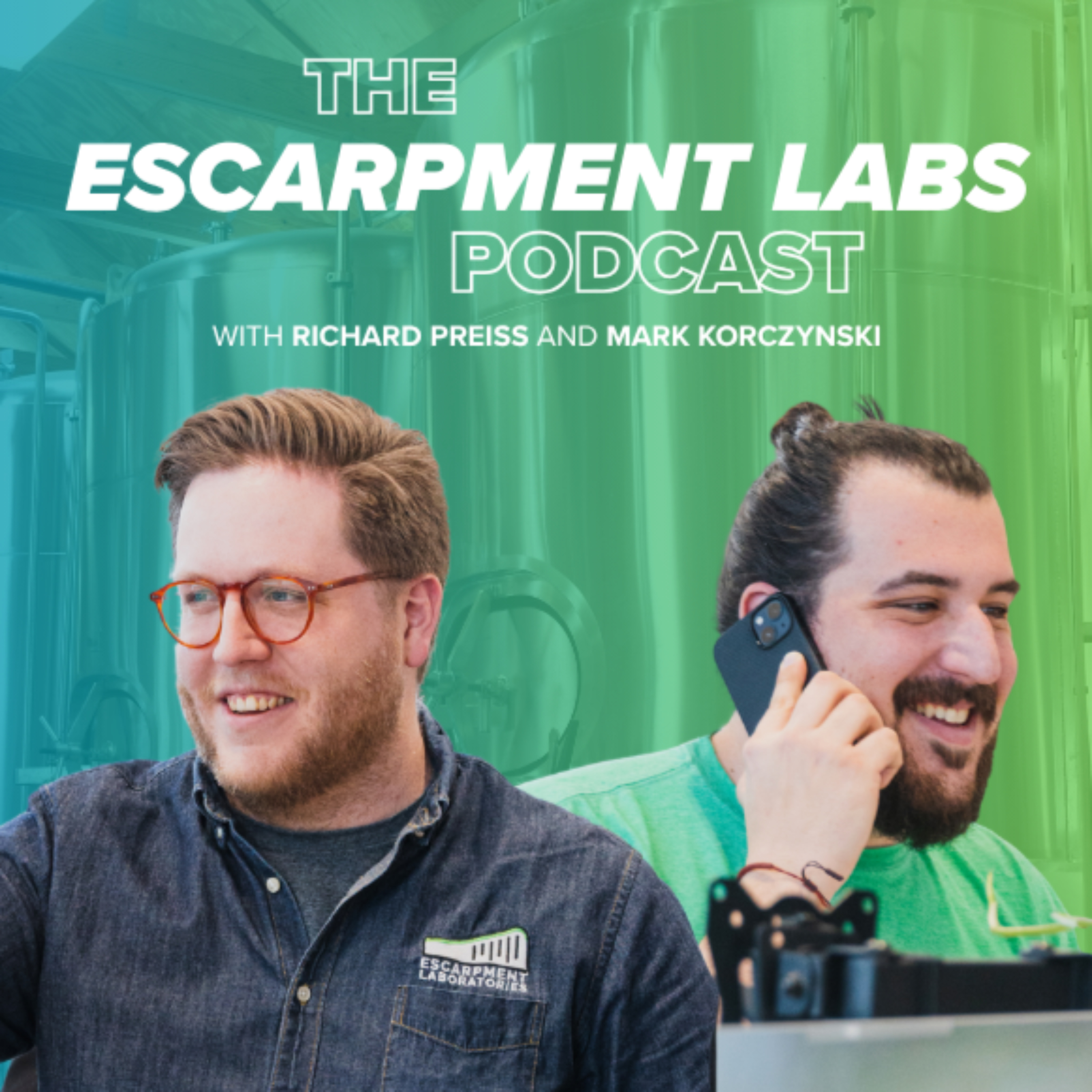
The Escarpment Labs Podcast
by Escarpment Labs
Welcome to The Escarpment Labs Podcast— a weekly podcast that brings you deeper into the science and strategy behind exceptional fermentation. Hosted by Sales Coordinator Mark Korczynski and CEO Richard Preiss, each episode explores popular topics from Escarpment’s blog and Knowledge Base with fresh insight, research updates, and brewer-focused tips.Whether you're a homebrewer looking to level up or a professional chasing consistency and flavour precision, this show has something for every fermentation nerd. New episodes every Tuesday!
-
37
Battle of the Pomona vs. Suava: A Hop-Headed R&D Tasting
Ever wonder what happens when Vinnie from Russian River sends you a care package of hops? You brew a side-by-side trial, obviously.In this episode, Richard and Mark are joined by Escarpment’s own Production Manager and brewing veteran, Pat Wynn-Williams, for a deep dive into the glass. We’re tasting through an R&D American Pale Ale split between two heavy-hitters that we developed in the dry yeast world: LalBrew Pomona™ and WLP079 Suava™.We get into the technical weeds (so you don’t have to) to discuss:Flavour Profiles: Which strain brings the peach and which brings the tropical punch?The Haze Factor: Understanding the biotransformation and haze stability of these strains.Recipe Tweaks: Why you might want to reach for Phantasm when brewing with Suava to unlock those elusive thiols.Beyond the IPA: Why these yeasts shouldn't be "pigeonholed" and which alternative styles they shine in.(Note: We’ve done our best to keep the professional sensory slurping to a minimum for your listening comfort!)Featured in this Episode:Learn more about LalBrew Pomona by visiting here.Learn more about WLP079 Suava Ale Yeast by visiting here or by listening to last week's episode, "From Farmhouse to Fermentor: The Story Behind WLP079 Suava Ale Yeast"Want to dive more into increase thiol expression? We have Phantasm available for purchase through our website!
-
36
From Farmhouse to Fermentor: The Story Behind WLP079 Suava Ale Yeast
For over a century, brewing has relied on a narrow band of industrial yeast monocultures.But outside the lab, a different story has been quietly unfolding.In this episode of The Escarpment Labs Podcast, we explore the “living reservoir” of yeast diversity preserved by farmhouse brewers across Northern and Eastern Europe—and why it matters more than ever.We cover:What defines the newly identified “European Farmhouse” genetic groupWhy farmhouse yeast is far more than just kveikInsights from our 2024 research paper and newly published work from leading yeast researchersHow traditional brewing practices preserved genetic diversity lost in industrial brewingThe behind-the-scenes story of WLP079 Suava Ale Yeast—a farmhouse-derived strain refined through modern science and brought to market through a unique three-way collaborationThis episode connects history, genetics, and modern brewing—showing how the past is shaping the future of yeast.Featured in this Episode:To learn more about WLP079 Suava Ale Yeast, visit our website. Read the 2024 article, European farmhouse brewing yeasts form a distinct genetic group, written by Richard Preiss, Eugene Fletcher, Lars Marius Garshol, Barret Foster, Emine Ozsahin, Mark Lubberts, George van der Merwe & Kristoffer KrogerusDistinctive domestication of farmhouse beer yeasts preserved pre-industrial genetic and phenotypic diversity.
-
35
CBC Spotlight: Inside Nine Mile Brewing (with John Leingang)
Specially recorded for the Craft Brewers Conference (April 20-22nd, 2026), this special episode of The Escarpment Labs Podcast features a conversation with Richard Preiss and John Leingang, Head Brewer of Nine Mile Brewing Co. in Bloomington, MN.With over a decade in the Minnesota craft beer scene—spanning everything from pouring pints to leading production—John brings a practical, taproom-first perspective on brewing.We cover:The story behind Nine Mile Brewing Co. and its place in the Twin CitiesJohn's experience using the newly released WLP079 Suava strain (referenced on the pod as EXP-666!)How they’re using LalBrew® House Ale across multiple brands—and repitching it for consistencyA cross-border collaboration with the Canadian 9 Mile legacyThe realities and constraints of running a taproom-focused breweryPractical advice for brewers balancing creativity, efficiency, and customer expectationsThis episode is all about brewing in the real world—where process, people, and pints all have to line up.Featured in this Episode:Learn more about WLP079 Suava™, a experimental Saccharomyces cerevisiae strain developed through a joint effort between Escarpment Labs, Lallemand Brewing, and White Labs to provide brewers with a high-quality solution for modern hop-forward styles. Pre-orders now open!Dive into LalBrew House Ale and the true versatility of the strain (Red IPA, anyone?).
-
34
Taproom-Focused Brewing: Creativity Without Chaos (with Niko Tonks & Steve Finnie)
How do you stay creative without losing control of your process?In this episode of The Escarpment Labs Podcast, we sit down with Steve Finnie and Niko Tonks from Little Thistle Brewing and Double Elbow Beer to explore how a taproom-focused brewery balances innovation with operational reality.From experimental releases to consistent core beers, this conversation dives into how decisions actually get made on a working brewhouse floor.We cover:The story behind Niko’s residency brand Double ElbowUsing American-grown noble hops in lager productionA four-generation trial of LalBrew Pomona™ across multiple stylesWhat changes (and what doesn’t) across repitchesHow taproom breweries navigate constraints, tradeoffs, and customer expectationsBuilding a beer program that works for both creativity and consistencyIf you’re brewing for a taproom—or trying to balance new ideas with repeatable results—this episode offers a practical, behind-the-scenes look.Featured in this Episode:For more information on LalBrew Pomona™ and the versatility and flavour it could bring to your beer, visit here.Learn more about Yakima Chief Hops' Krush Brand, here.Learn more about the concentrated hop oil, Hyperboost, here.
-
33
Mind the Yeast: Rethinking English Strains
This episode drops on April Fools Day—but the lessons are no joke.In this solo episode of The Escarpment Labs Podcast, Richard reflects on a recent trip to England, including presenting at BeerX in Liverpool, visiting modern brewer Azvex, and touring the historic Fuller’s Brewery.From traditional cask ale to modern hazy beers, English brewing offers a pragmatic, process-first approach that still has a lot to teach today’s brewers.In this episode, we explore:The diversity of English yeast families—and why they behave so differentlyHow traditional fermentation shaped highly flocculent and chain-forming strainsWhat changed when breweries moved to conical fermentorsWhy UK brewers are comfortable using “hazy” strains across multiple stylesHigher dissolved oxygen practices—and what we can learn from themWhy “supplier equivalent” yeast strains are rarely identicalIf you’ve ever struggled to get English yeast to behave—or wondered why British beers feel so effortlessly drinkable—this episode connects the dots between yeast, process, and tradition.Featured in this Episode:Learn more about Vermont Ale, English Ale I and II, and Foggy London Ale through our British Strain collection
-
32
Dry Yeast FAQ: What Every Brewer Should Know
Dry yeast has come a long way—but not all strains (or packs) are created equal.In this solo episode of The Escarpment Labs Podcast, Richard answers some of the most common questions brewers have about dry yeast—what it does well, where it falls short, and how it compares to liquid cultures in modern brewing.We cover:How big the dry yeast industry really is—and why it dominates globallyThe relationship between Escarpment Labs and Lallemand BrewingWhy not all yeast strains can be driedThe real benefits of dry yeast (and when it shines)The limitations—especially when it comes to strain selection and lager yeastWhether you’re choosing between dry and liquid, or just want to better understand what’s in that foil pack, this episode gives you a clear, practical breakdown.Featured in this Episode:To learn more about LalBrew dry yeast products, visit here.
-
31
Repitching Yeast (Pt 3): Consistency, Savings and Scale
You’ve started repitching. You understand cell health. Now it’s time to eliminate the last 5%: troubleshooting and buy in from ownership and finance.In the final episode of our Repitching Series, we move into advanced troubleshooting, optimization, and financial modelling — because repitching isn’t just a technical decision. It’s an operational one.We cover:How to identify and eliminate the final 5% of inconsistencyHow to model real financial savings for your brewery owner or leadership teamHow to use Settled Yeast Volume (SYV) as a simple, field-ready consistency checkWhen to adjust pitch rate based on stress conditionsHow to get the entire production team aligned around one repeatable systemIf you want repitching to move from “brewer experiment” to “brewery standard,” this episode shows you how.Featured in this Episode:Check out our Yeast Management & Repitching Guide (available for free download!)Download our free guide to Accurate Cell Counting in the Brewery here.Going to the 2026 Craft Brewers Conference in Philadelphia this April? Join us before the conference on April 19th for a special yeast-focused seminar on biotransformation. This educational session for professional brewers brings together leading experts in fermentation from Escarpment Labs, White Labs, and Lallemand Brewing to help you better understand how yeast selection can influence biotransformation and shape the final beer. Learn more and reserve your free spot here.
-
30
Brewing Better Hazies: Inside Willibald’s Process (with Head Brewer Justin Clouthier)
What does it take to brew award-winning hazy IPAs with half the dry hops most breweries use?In this episode of The Escarpment Labs Podcast, we sit down with the Head Brewer of Willibald Farm Distillery & Brewery—and former Homebrew Lead at Escarpment Labs—to talk about the process behind their standout hazy beers.We cover everything from the unique role water plays in their brewing approach to how careful yeast management drives flavour and consistency.In this episode we discuss:How water chemistry shapes the character of Willibald’s beersTheir strategy for harvesting and repitching yeast in hazy IPA productionWhy they use roughly half the dry hop rate of many breweries—and still achieve huge aromaWhy New Zealand hops play such a central role in their hop programHow yeast strains like Foggy London Ale, LalBrew Pomona, and LalBrew House Ale influence flavour expressionWhen and why they retire a yeast pitchBrewing award-winning hazy IPAs in CopenhagenAdvice for brewers looking to improve their hazy beersWe also tease an upcoming collaboration brew: EXP-666.If you’re brewing hazy IPAs—or trying to make them more consistent—this conversation is packed with practical insights.
-
29
Training for Gold: How Lab Evolution Builds Better Yeast with Eugene Fletcher
What does yeast have in common with Olympic athletes?They don’t just show up and perform. They train.In this episode of The Escarpment Labs Podcast, we sit down with former Escarpment Labs R&D Lead and current Assistant Professor of Molecular Biology at Carleton University, Dr. Eugene Fletcher, to break down the science of Lab Evolution — and how it’s shaping the future of brewing.Eugene helped bring strains like KRISPY, Pomona, and TERPS to market. Now, he’s researching how brewer’s yeast can be evolved to break down plastic waste and turn it into biofuels.In this episode, we cover:What lab evolution actually is — and why it’s like Olympic trainingHow it differs from simple repitchingHow Pomona evolved from “okay” to a global strain partnershipWhy Saccharomyces is uniquely adaptableLab evolution vs. GMO: advantages and tradeoffsThe story of a Ghanaian strain sourced from traditional brewingWhat modern brewers — and even the non-alcoholic category — can learn from West African fermentationIf you’ve ever wondered how yeast adapts to hops, malt, pressure, or entirely new environments, this episode pulls back the curtain.Featured in this Episode:For more information on Eugene and his current research, visit https://carleton.ca/biology/people/eugene-fletcher/Learn more of the details behind products developed by Eugene at Escarpment Labs here: KRISPY, LalBrew Pomona™, TERPS
-
28
Repitching Yeast (Pt 2): The Healthy Fermentation Formula
You’ve started repitching. Now let’s make it consistent.In Part 2 of our Repitching Series, we move beyond the basics and introduce the core science behind repeatable, high-quality repitching: The Healthy Fermentation Formula.Because pitch rate alone isn’t enough.In this episode, we break down why traditional “cells per mL per degree Plato” thinking is incomplete — and why Cell Health and Wort Stress are just as critical to fermentation success.We cover:The full formula:Healthy Fermentation = (Cells Pitched × Cell Health) ÷ Wort StressWhat “Cell Health” really means (and how to observe it without a lab)The three biggest stressors: gravity, nutrient deficiency, and inhibitorsEarly harvest vs. post-cold-conditioning harvest — and why timing mattersWhy 2–5 PSI of CO₂ head pressure is non-negotiable during harvestHow to upgrade your brink (and why stainless wins long-term)The simplest microscope-free measurement tool: Settled Yeast Volume (SYV)If Part 1 helped you start repitching, this episode helps you stop guessing.Featured in this Episode:To follow along, you can download our 93-page comprehensive guide on Yeast Management & Repitching, here.
-
27
Hop Creep Isn't a Myth: Science, Risk, and Real Solutions with Jessica Young
Hop creep has gone from an academic curiosity to a real, costly problem for brewers — but what’s actually happening inside the tank?In this episode of The Escarpment Labs Podcast, we sit down with Jessica Young, PhD candidate at UC Davis (Food Science, Brewing) and former Cellar, Quality, and Sensory Manager at Bearded Iris Brewing, to break down hop creep straight from the science.In recognition of International Day of Women and Girls in Science (Wednesday, February 11), this episode highlights the vital role women scientists play in advancing brewing knowledge and solving real-world industry challenges.We cover:What hop creep actually is (and what it isn’t)Why it’s showing up more often nowHow hop variety and hop product type influence riskWhether starch from hops can become soluble in beerHow harvest timing may affect enzymatic potentialPractical mitigation strategies brewers can use todayWhy yeast cropping and mid-fermentation dry hopping matter more than you thinkIf you dry hop aggressively, care about stability, or want science-backed answers, this is a must-listen.
-
26
Repitching Yeast (Pt 1): How to Start Without a Lab
As brewers look to cut costs and improve consistency, yeast repitching is one of the highest-ROI process upgrades you can make.In this beginner-focused episode of The Escarpment Labs Podcast, Mark and Richard break down why repitching works — and more importantly, how to start repitching without a lab, microscope, or complicated equipment.We cover the non-negotiable fundamentals:How to choose a healthy “source batch” (freshness matters more than you think)The simplest harvest setup (a sanitized hose + a humble bucket)The single most important step to prevent off-flavours and repitch disastersIf you’ve been repitch-curious but unsure where to start, this episode is your green light.Featured in this Episode:Follow along with our "Yeast Management & Repitching Guide" here. We've created this guide to be a comprehensive resource to learn how to repitch the right way — saving money, improving consistency, and keeping your beer quality high.Learn more about our Yeast Quality Control
-
25
Cutting Through the Noise: Fermentation Tools That Actually Work
What should a brewer do when seltzers keep going sideways—or when they just want a reliable, no-drama house ale?In this episode of The Escarpment Labs Podcast, Mark and Richard cut through the noise to talk about the products and technical resources from Escarpment Labs that actually solve real process problems.We break down how new releases like LalBrew® House Ale, Pink Boots Yeast, Seltzer Lightning, and our Non-Alcoholic Strain (LSB8001) are designed to make brewing more predictable, more consistent, and less stressful—without sacrificing flavour.We also dive into our newest Yeast Nutrition & Repitching Guides, sharing the two non-negotiable checks every brewer should be making, and preview what’s coming next in our Experimental Strain Program.If you’re tired of firefighting fermentations and ready to make your process easier, this episode is for you.
-
24
Brew Year's Resolutions: 5 Ways to Improve Your Fermentation
What should every brewer’s Brew Year’s Resolution be for 2026?In this episode of The Escarpment Labs Podcast, Mark and Richard talk about what really moves the needle in fermentation: process refinement over novelty.We break down the five most impactful resolutions brewers can make this year—from mastering yeast nutrition and controlling pH, to dialling in pitch rate, oxygen, and strain-specific stress limits. These aren’t flashy changes—but they’re the ones that turn inconsistent beers into reliable, repeatable “clone” batches.If you’re ready to stop chasing fixes and start brewing better beer on purpose, this episode is your new blueprint.Yes, there are quite a number of Star Wars references in this episode. No, we absolutely couldn't help ourselves.Featured In This Episode:Season 1, Episode 2 | Pitch Perfect: Mastering Yeast Pitch RatesSeason 1, Episode 3 | Breathing Life into Yeast: Oxygenation Best Practices for Better FermentationYeast Lightning: Stress less about your zinc levels and your yeast healthMilwaukee MW600 PRO Dissolved Oxygen Meter: It can be used to verify wort dissolved oxygen levels for optimal yeast health.
-
23
Yeastrodomus Beer Predictions for 2026
What if the future of beer looks less experimental — but also more thoughtful, more intentional, and more serious — than it has in years?In this special forecasting episode, Mark and Richard channel “Yeastrodomus” to predict the biggest brewing and culture shifts coming in 2026. From beer trends to consumer behaviour to brewing philosophy, we explore why the next wave of craft isn’t about novelty… but about mastery, experience, balance, and brand coherence.We dive into:Why the industry is shifting from constant reinvention to better-over-newHow the experience economy’s return will reshape taproomsThe rise of fruit beers that aren’t sours (finally!)Why pasteurization is no longer a dirty word in craftThe growth of staff-led side brandsThe visual language of animal beers, celeb beers, and semiotics on shelvesThe growing movement toward genre-less beerAnd why English pub vibes and session culture are coming back strong2026 won’t be boring — but it may be quieter, smarter, and more delicious than the last decade of hype cycles. Let’s look ahead.
-
22
Naughty and Nice: A Year of Fermentation Wins and Woes
If we graded the fermentation decisions made across hundreds of breweries this year… what would land on the nice list, and what would definitely land on the naughty list?In this special year-end episode, Mark and Richard look back at 2025 through the lens of customer troubleshooting data, industry trends, lab insights, and Escarpment’s own milestones — from our 10th anniversary and new product launches to global podcast stats and community wins.We break down the practices that led to the cleanest, most consistent beer of the year… and the shortcuts that consistently caused sulfur, haze, stalls, and headaches. From oxygen management and yeast health to propagation pitfalls and pH discipline, this episode is both a celebration and a reality check for brewers heading into 2026.Whether you’re looking to tighten up your fundamentals or avoid the “naughty list” entirely, this episode will help set you up for a more stable, more successful brewing year ahead.Featured in this Episode:Check out our episode, "Breathing Life into Yeast: Oxygenation Best Practices for Better Fermentation"Learn more information about our Yeast Nutrients: Yeast Lightning and Seltzer Lightning.Learn more about our exclusive strain Superlager, and check out others in our Exclusive collection.
-
21
Troubleshooting Sulfur in Lagers
Why do some lagers smell like rotten eggs, cooked corn, or burnt matches — and how do you actually fix it? In this episode, Mark and Richard walk through one of the most misunderstood (and most feared) parts of lager brewing: sulfur compounds.Using key insights from Nate’s recent video Advanced Lager Techniques: Navigating Sulfur in Lager, we explore:The difference between “good sulfur” and sulfur faultsThe five major sulfur compounds found in beerWhy yeast makes sulfur in the first placeHow to diagnose sulfur by aroma (your nose is your best instrument!)Process levers — oxygenation, FAN, pitch rate, temperature, spundingCleanup strategies that work (and when it’s too late)Sulfur is a normal part of lager fermentation — the goal isn’t zero sulfur, but controlled sulfur. This episode helps you understand which compounds belong, which don’t, and how to keep your lagers clean, complex, and stable.Featured in this Episode:To view our full lager collection (including Isar Lager, Biergarten Lager, and Premium Pils), click here.
-
20
Troubleshooting Unexpectedly Hazy Beer: Why Your Clear Beer Clouds Up
Why does a beer that should be brilliantly clear suddenly pour cloudy — even when you swear nothing changed in the process? In this episode, Mark and Richard dig into one of the most common (and frustrating) brewery questions: unexpected haze.Using key insights from our Knowledge Base article Troubleshooting Haze: Unexpected Hazy Beer, we break down the different types of haze, how to diagnose them quickly, and — most importantly — how to prevent them from happening in the first place.From yeast that won’t drop out, to protein–polyphenol complexes, to starch haze caused by mash drift, we walk through root causes and practical interventions at every stage of brewing.This episode gives you the clarity you’re looking for — literally.
-
19
Non-Alcoholic Beer: How to Start Safely and Actually Brew Something Drinkable
Brewing great non-alcoholic beer is not as simple as stopping fermentation early — and doing it safely requires a completely different mindset. In this episode, Mark and Richard walk through what NA beer actually is (legally!), why the category is exploding, and how craft breweries can make high-quality, microbiologically safe NA products using real fermentation.We break down the risks, the safest production paths, and why maltose-negative yeasts like Hanseniaspora uvarum and LoNa are changing the game. And yes — we explain why you must pasteurize.This episode follows along with our new Guide to Non-Alcoholic Fermentation — download it and learn step-by-step how to build safe, stable, drinkable NA beer.Featured in this Episode:H. uvarum (LSB8001): A non-alcoholic liquid strain developed by our partners at Le Labo Yeast & Brewing Solutions. Expect fruity, biotransformative, natural NA-friendly attenuation.LalBrew LoNa™: A dry strain by Lallemand Brewing, available through Escarpment Labs. It is the first maltose-negative Saccharomyces cerevisiae strain specifically developed using hybridization for brewing clean low-alcohol and non-alcohol beers (reduced worty flavors, POF-negative and H2S-negative).YOPS™: A new product derived from yeast fermentation from EvodiaBio, designed to enhance non-alcoholic and low-alcoholic flavour profiles with a natural soltuon. . It's user-friendly, coming in a liquid, ready-to-use format, which will help you achieve the perfect aroma in every batch.
-
18
Mid Strength Beers: Big Flavour Without Big ABV
What if your taproom’s best-performing new beer next year isn’t a double IPA, but a 3.5% crusher that customers can’t stop ordering?In this episode, Mark and Richard dive into the rise of mid-strength beer — flavourful, balanced, and built for today’s drinkers. From brewing science to taproom strategy, we break down why these beers are gaining traction and how to make them shine.You’ll learn:What defines a mid-strength beer and why the term matters.The brewing challenges at lower ABV (and how to solve them).Strategies for yeast, hops, and body to keep flavour big and drinkability high.Why moderation and “second pint culture” are the next wave in craft beer.Whether you’re exploring table saisons, hoppy pub ales, or crushable lagers, this episode will inspire you to think small — and brew big.Mentioned in this Episode:Our Knowledge Base article, "Yeast Attenuation"Beer and Brewing Podcast on Beer Trends with Kate Bernot Our blog article with a recipe for "Stay Classy: A Low ABV Hydra Hazy".Phantasm: Thiol Precursor | Available through Escarpment LabsAB Vickers ISY Enhance | Available through Escarpment Labs Escarpment Labs Strain Catalogue to find the strains mentioned in this episode (Foggy London Ale, LalBrew Pomona, LalBrew Windsor, Hydra, Superlager, Superfog, etc.)
-
17
High Gravity Fermentations: Avoiding Stuck and Stalled Ferments
Big beers demand big planning. In this episode, Mark and Richard tackle the challenges of high-gravity fermentations — where yeast faces the toughest conditions and even small mistakes can lead to stuck or stalled ferments.Drawing from real troubleshooting experiences (including a triple IPA gone rogue), we explore why high gravity stresses yeast, what’s happening inside the cell, and how to prevent fermentation collapse before it starts.You’ll learn:Why oxygenation and nutrient balance matter more than ever.The role of zinc, magnesium, and sterol reserves in stress tolerance.How to prep yeast and choose the right strain for strong wort.What to do (and not do) if fermentation stalls.Whether you’re brewing a 10% barleywine or pushing the limits with an imperial stout, this episode will help you get to full attenuation — without the panic.Featured in this Episode:Effects of magnesium on yeast stress tolerance (Walker, 1994)Oxygen and sterol synthesis in brewing yeast (Verbelen et al., 2009) Products: Yeast Lightning for beer specific nutrients, our Kveik Strains like Voss or Hornindal for barley wines, LalBrew® House Ale for Imperial Stouts, and West Abbey Ale for High Gravity Belgium beers.
-
16
Why pH Is the Most Important Measurement in a Brewery?
What if the secret to more consistent, stable, and better-tasting beer isn’t a new yeast strain or a fancy sensor — it’s just controlling your pH?In this episode, Mark and Richard break down why pH is the quiet backbone of brewing, tying together mash performance, fermentation health, hop creep, stability, and even how your dry hop behaves. From mash targets and pH drops during fermentation to how pH changes with dry hopping and packaging, we walk through the key checkpoints brewers should measure and actually act on.We also tackle the classic homebrew debate: pH strips vs. pH meters — and why stepping up to a proper meter can transform your consistency.If you’re serious about taking your beer from good to great, this episode will convince you that pH is the number you can’t afford to ignore.Featured in the Episode:Our Fermentation Enhancers Collection, including YOPS™ and ISY Enhance™Blog Post: Crispy Brewing with Kveik - Mind the PH GapKnowledge Base: pH Changes by Beer YeastsYouTube: Fundamental Principles of Brewing Great LagersBlog Post: Unlocking the Secrets of Brewing Crispy Lagers
-
15
Mixed Fermentation Manifesto, Pt. 2: Microbes, Flavour & Ingredients
Now that we’ve built the foundation of process and philosophy, it’s time to meet the culture itself — the community of microbes that defines mixed fermentation.In Part 2 of our Mixed Fermentation Manifesto series, Richard dives deep into the living side of the art: Saccharomyces, Brettanomyces, Lactobacillus, Pediococcus, and the wild microbes that make mixed-culture beer what it is. We explore how these organisms interact, what flavours they bring, and how to feed and guide them toward balance instead of chaos.You’ll also hear practical insights on water, grains, hops, fruiting, and blending — everything that shapes the long, evolving story of flavour in mixed fermentation.Because in the end, the goal isn’t acidity or funk — it’s harmony.Featured in the Episode:Learn more about our Brett & Sour Collection by visiting our website.The following resources have been used: Milk The Funk Wiki, Milk The Funk Podcast
-
14
Mixed Fermentation Manifesto, Pt. 1: Process and Philosophy
Mixed fermentation isn’t a style — it’s a philosophy. In this episode, Richard kicks off our two-part Mixed Fermentation Manifesto series by exploring what it means to brew with multiple microbes working together. From fast-turn mixed cultures to long-aged sours, we look at how balance, not chaos, defines great mixed fermentation.You’ll hear about process foundations — creating “food for the culture,” managing raw grains, oxygen, time, and patience — and why successful mixed fermentation is more about nurturing an ecosystem than following a recipe.We’ll also walk through a few practical examples (including the Infinite Improbability Drive method) and talk through vessel choice, blending philosophy, and why time itself might be the most important ingredient.Next week is Part 2 ! We'll dive deeper into the microbes behind the magic — who’s living in your beer, and how to build the flavours you want.
-
13
Cold and Steady: Pitch Rate, Flavour, and Fermentation at 8°C
Brewing lagers at 8°C — just like old-world brewers — is making a comeback. But how do you balance tradition with modern efficiency?In this episode, Mark and Richard unpack a study testing four lager strains at three different pitch rates to see how fermentation performance and flavour hold up under cold conditions. From the surprising strain-dependent results to practical recommendations for brewers, this is your guide to brewing clean, crisp lagers at low temperatures without sacrificing time or quality.Featured in the Episode:To read the blog post mentioned in this episode ("Lager Yeast: Impact of Pitch Rate on Efficiency and Flavour in Cold Fermentation" please click here.To explore some of the products that we mentioned, you can check out our Lager Strain Collection.
-
12
Think Foam Positive: How Yeast Shapes Beer Foam
Foam isn’t just a pretty pour — it’s a story about yeast, beer quality, and brewing science. This week, Mark and Richard dive into the fascinating world of foam: what it’s made of, how yeast helps (and sometimes hurts) it, and why your beer’s head says more about quality than you might think. Learn about the genes that make lager yeast foam-positive, how foam impacts aroma and mouthfeel, and why healthy yeast is your best bet for perfect pour performance.Whether you’re brewing lagers or pushing from good to great, this episode will help you think foam positive!Featured in this EpisodeTo learn more about foam and yeast's role in foam, visit:Our blog post, 'Think Foam Positive (All About Beer Foam) here.Or our YouTube video, 'Stay Foam Positive | Efficiency & Flavour Toolkit Series' here.Also check out the article, "Cloning and Characterization of the Beer Foaming Gene CFG1from Saccharomyces pastorianus" here.
-
11
Munich, Copenhagen, and the Long Journey of Lager Yeast
Lager yeast didn’t just appear fully formed — its story was written across Europe. In this solo episode, Richard takes us on a journey through Munich and Copenhagen, two cities central to the history of lager brewing.From tasting Augustiner Helles at the source, to unpacking the Hofbräuhaus origin hypothesis, to Carlsberg’s revolutionary work with pure yeast culture, and the global rise of 34/70, this episode explores how evolutionary bottlenecks and brewing traditions shaped the yeast behind the world’s most popular beer style.We also look ahead — why Frohberg strains dominate today, and what the future might hold for the next chapter in lager yeast evolution.Featured in this Episode:To learn more about LalBrew® House Ale, visit escarpmentlabs.com/products/lalbrew-house-aleFor more on the history of Lagers, visit these resources:Hutzler et al. (2023). A new hypothesis for the origin of the lager yeast Saccharomyces pastorianus. FEMS Yeast ResearchHutzler et al. (2019). Resurrection of the lager strain Saccharomyces pastorianus TUM 35. BrewingScienceCarlsberg: The Pursuit of the Perfect Beer
-
10
Turbocharging Lagers: The Role of Zinc and Magnesium in Yeast Health
What if that sluggish fermentation or unexpected haze in your lager isn’t about your yeast strain or your malt, but about two overlooked minerals: zinc and magnesium?In this episode, we dig into why zinc and magnesium are essential for healthy fermentations, crisp finishes, and consistent flocculation. From their biochemical roles in yeast metabolism to real-world troubleshooting tips, we break down how these overlooked minerals can make or break your lager.You’ll learn:Why zinc is critical for alcohol dehydrogenase, flocculation, and fermentation speed.How magnesium stabilizes ATP, enzymes, and cell walls for yeast health.Practical dosing strategies — and why more isn’t always better.When and how to use balanced nutrients like Yeast Lightning.Whether you’re brewing with adjuncts, soft water, or pushing lager fermentation under pressure, zinc and magnesium might be the missing keys to dialling in your beer.Featured in this Episode:For our previous episode on Acetaldehyde, check out Episode 6, "Them Apples: Acetaldehyde in Beer".To calculate how much zinc to add, visit our Knowledge Base article "Best Practices - Zinc Addition".
-
9
Arcane Lager Techniques: Decoction, Yeasting the Mash, and More
When our blog post on “Arcane Lager Brewing: Yeasting the Mash” went brewing-viral this summer, we realized just how much curiosity there is around old-school lager techniques. So in this episode, we’re taking it further. From decoction mashing to flotation to the much-debated yeasting the mash, we explore how seemingly “arcane” brewing methods actually solved real problems with yeast nutrition, fermentation performance, and beer stability. Turns out, tradition still has plenty to teach modern brewers.Featured in this Episode:To learn more about Keptinis with Lars Marius Garshol, visit his blog post "Figuring out how to brew keptinis" at https://www.garshol.priv.no/blog/410.htmlTo read our blog post, "Arcane Lager Brewing: Yeasting the Mash", visit https://escarpmentlabs.com/blogs/resources/arcane-lager-brewing-yeasting-the-mashTo watch our video on "Clarity & Lager Theory" with Nate Ferguson, visit https://youtu.be/Hi14xKl1lBI
-
8
Isar Lager Under the Microscope: What 28 Breweries Taught Us
Why is Isar Lager becoming the “house strain” for so many breweries? In this episode, we dig into what we learned from 28 breweries fermenting with Isar Lager. From fermentation speed to nutrient use, malt choice, oxygenation, and yeast storage, we share surprising insights that help brewers fine-tune their process. Plus: how Isar stacks up against the world-famous 34/70, and why nutrients like Yeast Lightning can be game-changers for consistent fermentations.Whether you’re running ultra-cold ferments, dialling in a Czech Pils, or just want faster turnarounds, this data-driven deep dive will help you unlock the clean, malt-forward character Isar Lager is known for.Featured in this Episode:To read more about this study (including all the data and breakdowns), visit our blog post by the same name, "Isar Lager Under the Microscope: What 28 Breweries Taught Us"
-
7
Them Apples: Acetaldehyde in Beer
Green apple, raw pumpkin, or even latex paint — acetaldehyde is one of the most common brewing off-flavours, but it doesn’t have to show up in your beer. In this episode of The Escarpment Labs Podcast, Mark and Richard unpack why acetaldehyde forms, why lagers are especially sensitive, and how yeast health, oxygenation, and nutrients all play a role in cleaning it up. You’ll also hear best practices for prevention, Richard’s rant on dry lager yeast, and answers to common questions from brewers.Featured in the Episode:To read our blog, "Acetaldehyde: How to Prevent That Green Apple Off-Flavour" visit https://escarpmentlabs.com/blogs/resources/acetaldehyde-how-to-prevent-that-green-apple-off-flavourTo watch our video on "Controlling Beer Off Flavours" at https://www.youtube.com/watch?v=OIQQpYFJ5SI
-
6
Lager Strain Showdown: How to Find Your Perfect Yeast
Not all lagers are created equal — and neither are lager yeasts. In this episode of The Escarpment Labs Podcast, we break down our lager strain lineup and help you find the perfect match for your goals, whether that’s a fast-turnaround crispy pils, a patient and traditional Czech-style lager, or a hop-forward modern Cold IPA. Learn about strain personalities, thiol expression, cold fermentation considerations, and how to choose yeast that sets your lagers apart.Featured in the Episode:For our full Lager Collection, visit escarpmentlabs.com/collections/lagerTo read our blog, "Isar Lager Under the Microscope: What 28 Breweries Taught Us", visit escarpmentlabs.com/blogs/resources/isar-lager-under-the-microscope-what-28-breweries-taught-usTo watch our YouTube channel, including the variety of new videos on lager science and brewing, visit https://www.youtube.com/playlist?list=PL552d9ljGZG0A7_N07tWahRnuzGiqfhjH
-
5
Too Dry, Too Sweet, or Just Right? Mastering Beer Attenuation
Why does my beer finish sweeter than expected? In this episode, we explore the science and art of attenuation — the key to achieving the perfect balance between dryness and sweetness in your beer. We’ll cover how attenuation is measured, the role of mash conditions, the influence of yeast strains, and how factors like temperature, pH, and nutrition impact fermentation results. You’ll also learn troubleshooting tips, the value of forced fermentation tests, and best practices for achieving predictable, consistent attenuation every time.At Escarpment Labs, we’re passionate about supporting brewers at every stage of their craft. Explore our blog, Knowledge Base, and YouTube channel for more educational resources, and check out our full range of liquid and dry yeast, yeast nutrients, and lab supplies to help you brew with precision and confidence.
-
4
Breathing Life into Yeast: Oxygenation Best Practices for Better Fermenation
Oxygen is essential to great fermentation — but getting it wrong can throw off your entire batch.In this episode, Mark and Richard explore how oxygen impacts yeast health and performance, why when and how you oxygenate really matters, and what tools brewers can use to dial it in. From shaking a carboy to inline sintered stones and DO meters, this one’s packed with tips for brewers at all levels.Learn how to avoid sluggish ferments, off-flavours, and repitching issues — and breathe new life into your fermentation process.
-
3
Pitch Perfect: Mastering Yeast Pitch Rates
What’s the big deal with pitch rate — and why does it confuse so many brewers?In this episode, Mark and Richard break down what pitch rate really means (beyond the numbers) and why it’s one of the most critical levers in fermentation. From underpitching risks to strain-specific stress tolerance, we’ll help you navigate the numbers, avoid common pitfalls, and dial in your approach whether you're brewing 20 litres or 20 hectolitres.We also explore how pitch rate can be used intentionally to shape beer character — and what makes strains like Kveik so unique when it comes to pitching flexibility.
-
2
Under Pressure: The Science of Pressure Fermentation
In our very first episode, we're diving into a trend that’s gaining momentum in both pro and homebrew circles: pressure fermentation.What is it? Why are more brewers trying it? And how can it improve your beer?Mark and Richard unpack the science and strategy behind fermenting under pressure — from the basics (spunding valves, CO₂ buildup) to the real-world benefits (faster turnarounds, cleaner profiles, and natural carbonation). Plus: tech tips, yeast considerations, and why this method might be a game-changer for lagers, NEIPAs, and beyond.Whether you're pressure-curious or already experimenting, this episode will help you ferment with confidence.For more information on this topic, visit:Our Knowledge Base article, "Pressure Fermentation and its Impact on Yeast"Our YouTube video, "Brewing Great Lagers: Advanced Techniques and Fermentation Tips"To explore products, blog posts and even more information about brewing & fermentation, visit escarpmentlabs.com.
-
1
Introducing 'The Escarpment Labs Podcast"
The Escarpment Labs Podcast is your new brew day companion. Every Tuesday, Mark and Richard go beyond the blog and dive into the details of yeast, fermentation, and all things beer science — with insights for pros and homebrewers.
We're indexing this podcast's transcripts for the first time — this can take a minute or two. We'll show results as soon as they're ready.
No matches for "" in this podcast's transcripts.
No topics indexed yet for this podcast.
Loading reviews...
ABOUT THIS SHOW
Welcome to The Escarpment Labs Podcast— a weekly podcast that brings you deeper into the science and strategy behind exceptional fermentation. Hosted by Sales Coordinator Mark Korczynski and CEO Richard Preiss, each episode explores popular topics from Escarpment’s blog and Knowledge Base with fresh insight, research updates, and brewer-focused tips.Whether you're a homebrewer looking to level up or a professional chasing consistency and flavour precision, this show has something for every fermentation nerd. New episodes every Tuesday!
HOSTED BY
Escarpment Labs
CATEGORIES
Loading similar podcasts...
URL copied to clipboard!