
PODCAST · history
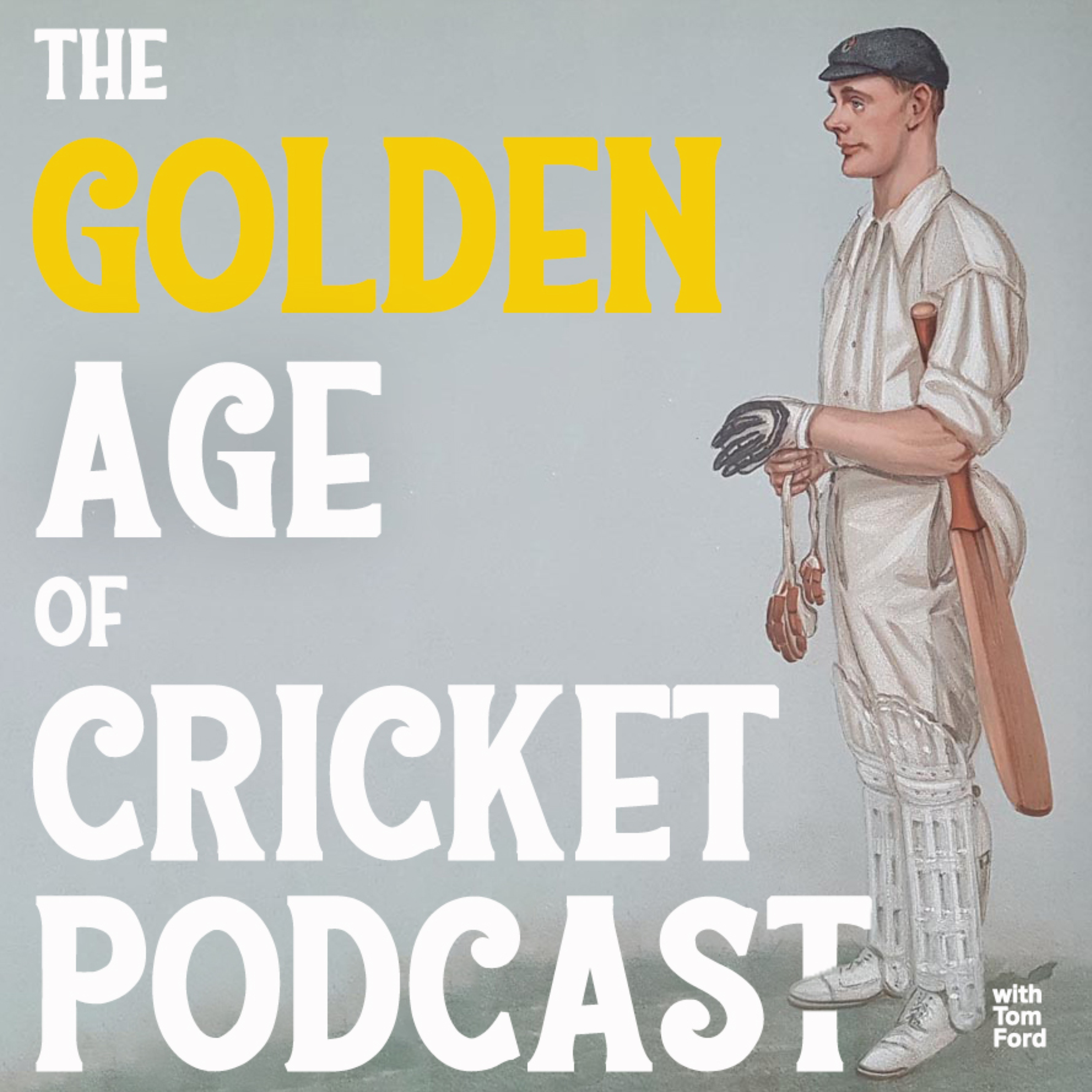
The Golden Age of Cricket Podcast
by Tom Ford
Loosely defined as the twenty five years immediately preceding the outbreak of the First World War, the so called ‘Golden Age’ (1890—1914) saw some of the most legendary cricketers of all time: WG Grace, Victor Trumper, CB Fry, Monty Noble, Wilfred Rhodes, Warwick Armstrong, KS Ranjitsinhji, Hugh Trumble, Sydney Barnes, Archie MacLaren, Clem Hill, Gilbert Jessop and many, many more.Join me, Tom Ford, as each episode I invite a guest to discuss a player, series or event from the Golden Age, in an attempt to resurrect this often forgotten chapter of cricket history. This is the antithesis of most cricket podcasts which focus on the modern game, and is for anyone interested in learning a little more about one of the most fascinating periods in the history of cricket.Save or subscribe to the podcast now so you’ll never miss an episode.FOLLOW ON TWITTER: @GoldenAgeCrickt [https://twitter.com/GoldenAgeCrickt]FOLLOW ON YOUTUBE: youtube.com/@goldenageofcricket [https://www.youtube.com/@gol
-
41
The Sydney Cricket Ground – Part 1 – with Geoff Armstrong
Consistently named one of the most beautiful sport venues in the world, the Sydney Cricket Ground is a beloved gem of Australia's habour city. Yet how many of us know its full history, stretching back to the mid-nineteenth century? How did the Ground transform from a piece of recreational military land to one of the splendours of Australian sport? A fascinating discussion about an important landmark in the history of cricket.DONATE: You can buy Tom Ford a coffee! Every donation helps with production and inspires Tom to keep the podcast going. You can donate from a little as $5. Visit: buymeacoffee.com/GoldenAgeOfCricketABOUT GEOFF ARMSTRONG: Geoff is one of Australia’s leading sport writers and historians. His first book was A Century of Summers, the centenary history of the Sheffield Shield, released in 1992. Two years later, he co-authored The People’s Game, a history of Australia in international one-day cricket. He has co-written or edited several cricket titles on famous cricketers, including Steve Waugh, David Boon, Bob Simpson, Mike Whitney, Ian Healy and Ricky Ponting. His latest publication reflects the splendour of the SCG: a stunning two-volume account of the ground, titled, A Thing of Beauty: The Founding of the Sydney Cricket Ground. Copies are available in Australia via the Stoke Hill Press website (stokehillpress.com), Roger Page Cricket Books and by order from most specialist bookshops. In the UK, the books can be purchased from the cricket bookseller JW McKenzie (mckenzie-cricket.co.uk).CREDITS: Presenter & Producer: Tom FordAll music used in podcast comes from the University of California Santa Barbara’s remarkable collection of wax cylinder’s from the late nineteenth and early twentieth centuries, which are free to download and use. You can donate to the upkeep of these recordings via their website.
-
40
Short Leg – Who was Bert Folkard? – Part 2
In the concluding episode on Bert Folkard (1878–1937), Tom is joined by co-authors Pat Rodgers and Peter Lloyd who discuss his style as both a batsman and bowler, his selection in the Australian squad of 1914, and his life and career after The Great War. A small but fascinating chapter in the grand history of cricket. ABOUT PAT RODGERS: Pat has taught History and coached cricket at schools in Sydney for over 35 years. In 2021, The Perplexing and Tragic Life of Jack Cuffe was published and earned critical acclaim. Books on Sydney-born working-class cricketers Alex Kermode and Arthur McBeath followed.ABOUT PETER LLOYD: Peter has written extensively on cricket, winning various awards for his research and prose. Most recently, in-depth biographies of three 'Golden Age' cricketers – Warren Bardsley, Monty Noble and Charlie Macartney – have stamped him as a social historian of the highest order.DONATE: You can buy Tom Ford a coffee! Every donation helps with production and inspires Tom to keep the podcast going. You can donate from a little as $5. Visit: buymeacoffee.com/GoldenAgeOfCricketCREDITS: Presenter & Producer: Tom FordAll music used in podcast comes from the University of California Santa Barbara’s remarkable collection of wax cylinder’s from the late nineteenth and early twentieth centuries, which are free to download and use. You can donate to the upkeep of these recordings via their website.
-
39
Short Leg – Who was Bert Folkard? – Part 1
In this episode, Tom is joined by co-authors Pat Rodgers and Peter Lloyd who have just published a gem of a biography on Bert Folkard (1878–1937), a Sydney cricketer during the Golden Age who, owing to personal and professional circumstances, never reached his full potential on the sporting field. His one chance at playing for Australia was dashed with the outbreak of the First World War in 1914. A small but fascinating chapter in the history of cricket. ABOUT PAT RODGERS: Pat has taught History and coached cricket at schools in Sydney for over 35 years. In 2021, The Perplexing and Tragic Life of Jack Cuffe was published and earned critical acclaim. Books on Sydney-born working-class cricketers Alex Kermode and Arthur McBeath followed.ABOUT PETER LLOYD: Peter has written extensively on cricket, winning various awards for his research and prose. Most recently, in-depth biographies of three 'Golden Age' cricketers – Warren Bardsley, Monty Noble and Charlie Macartney – have stamped him as a social historian of the highest order. DONATE: You can buy Tom Ford a coffee! Every donation helps with production and inspires Tom to keep the podcast going. You can donate from a little as $5. Visit: buymeacoffee.com/GoldenAgeOfCricketCREDITS: Presenter & Producer: Tom FordAll music used in podcast comes from the University of California Santa Barbara’s remarkable collection of wax cylinder’s from the late nineteenth and early twentieth centuries, which are free to download and use. You can donate to the upkeep of these recordings via their website.
-
38
Gilbert Jessop – Part 3 – with Simon Wilde
In the third and final part to the episode dedicated to Gilbert Jessop’s legendary innings at the Oval against the Australians in 1902, author Simon Wilde discusses how he analysed the number of minutes Jessop spent at the wicket, his re-evaluation of the number of balls he faced, what Jessop achieved in the backend of his career, and whether he thinks Jessop’s great record deserves to be broken. A fascinating discussion about one the most glorified players in the history of cricket. DONATE: You can buy Tom Ford a coffee! Every donation helps with production and inspires Tom to keep the podcast going. You can donate from a little as $5. Visit: buymeacoffee.com/GoldenAgeOfCricketABOUT SIMON WILDE: Simon has been cricket correspondent of the Sunday Times since 1998. He has written 12 books, three of which were shortlisted for the William Hill Sports Book of the Year. His most recent works have been the acclaimed England: The Biography, a history of the men’s national team, and The Tour, which chronicles the England team’s travels overseas since 1877, which won the MCC/Cricket Society Book of the Year prize. His new book - Chasing Jessop: The Mystery of England Cricket's Oldest Record - has just been published, and chronicles not only Jessop’s colourful career, but forensically dissects one of the most famous individual feats in the history of the game.CREDITS: Presenter & Producer: Tom FordAll music used in podcast comes from the University of California Santa Barbara’s remarkable collection of wax cylinder’s from the late nineteenth and early twentieth centuries, which are free to download and use. You can donate to the upkeep of these recordings via their website.
-
37
Gilbert Jessop – Part 2 – with Simon Wilde
In Part 2 of my chat with historian Simon Wilde, we discuss Gilbert Jessop's form leading into the famous Oval Test match of 1902, the affect rain had on the cricket that summer, the missing scorecards from the Oval Test, and whether Jessop was shortchanged in his innings because of an English cricket Law relating to boundaries. A fascinating discussion about one the most glorified players in the history of cricket.DONATE: You can buy Tom Ford a coffee! Every donation helps with production and inspires Tom to keep the podcast going. You can donate from a little as $5. Visit: buymeacoffee.com/GoldenAgeOfCricketABOUT SIMON WILDE: Simon has been cricket correspondent of the Sunday Times since 1998. He has written 12 books, three of which were shortlisted for the William Hill Sports Book of the Year. His most recent works have been the acclaimed England: The Biography, a history of the men’s national team, and The Tour, which chronicles the England team’s travels overseas since 1877, which won the MCC/Cricket Society Book of the Year prize. His new book - Chasing Jessop: The Mystery of England Cricket's Oldest Record - has just been published, and chronicles not only Jessop’s colorful career, but forensically dissects one of the most famous individual feats in the history of the game.CREDITS: Presenter & Producer: Tom FordAll music used in podcast comes from the University of California Santa Barbara’s remarkable collection of wax cylinder’s from the late nineteenth and early twentieth centuries, which are free to download and use. You can donate to the upkeep of these recordings via their website.
-
36
Gilbert Jessop – Part 1 – with Simon Wilde
There is perhaps no English cricketer who encapsulates the spirit of The Golden Age more than Gilbert Jessop. A wildly talented all-round Amateur from Gloucestershire, whose great, improbable batting at The Oval during the Fifth Test match of the 1902 Ashes not only won the match, but established a mythical-like status for himself and the Age, which has only grown in reputation since. To this day, his match-winning century remains the quickest by an Englishman in Test cricket. In Part 1, writer Simon Wilde joins Tom to discuss Jessop's early life, his famous 'crouching' batting style, his transition from fast bowler to big-hitting batsman, and his form leading into the 1902 Ashes series. A fascinating discussion about one the most glorified players in the history of cricket.DONATE: You can buy Tom Ford a coffee! Every donation helps with production and inspires Tom to keep the podcast going. You can donate from a little as $5. Visit: buymeacoffee.com/GoldenAgeOfCricketABOUT SIMON WILDE: Simon has been cricket correspondent of the Sunday Times since 1998. He has written 12 books, three of which were shortlisted for the William Hill Sports Book of the Year. His most recent works have been the acclaimed England: The Biography, a history of the men’s national team, and The Tour, which chronicles the England team’s travels overseas since 1877, which won the MCC/Cricket Society Book of the Year prize. His new book - Chasing Jessop: The Mystery of England Cricket's Oldest Record - has just been published, and chronicles not only Jessop’s colorful career, but forensically dissects one of the most famous individual feats in the history of the game.CREDITS: Presenter & Producer: Tom FordAll music used in podcast comes from the University of California Santa Barbara’s remarkable collection of wax cylinder’s from the late nineteenth and early twentieth centuries, which are free to download and use. You can donate to the upkeep of these recordings via their website.
-
35
Trumper's Final Tour – Part 2 – with Ric Sissons
In Part 2 of this episode dedicated to exploring Victor Trumper's final tour, historian Ric Sissons dissects the matches the Australians played, Trumper's legendary eighth-wicket partnership with Arthur Sims in which they hit 433 (Trumper knocked up 293 alone), and contemplates the legacy of the tour and its impact on New Zealand cricket before, during and after the First World War. DONATE: You can buy Tom Ford a coffee! Every donation helps with production and inspires Tom to keep the podcast going. You can donate from a little as $5. Visit: buymeacoffee.com/GoldenAgeOfCricketABOUT RIC SISSONS: Ric is the author of eleven other cricket books including The Players which won the English Cricket Society’s Silver Jubilee Literary Award, and Billy Murdoch: Cricketing Colossus with Richard Cashman, which won the Australian Cricket Society Literary Award. His previous book, When the Kangaroo met the Eagle: The 1913 Australian tour of Canada and the United States, with Peter Schofield, won the 2024 Australian Cricket Society Literary Award.CREDITS: Presenter & Producer: Tom FordAll music used in podcast comes from the University of California Santa Barbara’s remarkable collection of wax cylinder’s from the late nineteenth and early twentieth centuries, which are free to download and use. You can donate to the upkeep of these recordings via their website.
-
34
Trumper's Final Tour – Part 1 – with Ric Sissons
Little did cricket audiences realise at the time, but when Victor Trumper set sail for New Zealand in the early months of 1914, he was undertaking his final cricket tour. Along with fellow veterans Monty Noble, Frank Laver and Warwick Armstrong, and with a group of promising young players, Trumper played a dozen or so matches against some of New Zealand's finest cricketers, including what turned out to be his final first-class innings. Historian Ric Sissons returns to the podcast following the release of his latest book (co-authored with Peter Schofield), Trumper Across the Tasman: The 1914 Australian tour of New Zealand, to discuss the tour in detail.DONATE: You can buy Tom Ford a coffee! Every donation helps with production and inspires Tom to keep the podcast going. You can donate from a little as $5. Visit: buymeacoffee.com/GoldenAgeOfCricketABOUT RIC SISSONS: Ric is the author of eleven other cricket books including The Players which won the English Cricket Society’s Silver Jubilee Literary Award, and Billy Murdoch: Cricketing Colossus with Richard Cashman, which won the Australian Cricket Society Literary Award. His previous book, When the Kangaroo met the Eagle: The 1913 Australian tour of Canada and the United States, with Peter Schofield, won the 2024 Australian Cricket Society Literary Award.CREDITS: Presenter & Producer: Tom FordAll music used in podcast comes from the University of California Santa Barbara’s remarkable collection of wax cylinder’s from the late nineteenth and early twentieth centuries, which are free to download and use. You can donate to the upkeep of these recordings via their website.
-
33
Harry & Albert Trott – Part 3 – with Rick Smith
In this final chapter to the discussion on the Trott brothers, biographer Rick Smith and host Tom Ford discuss Albert's decline in form, Harry's release from the asylum, the brothers' respective statistics, and their separate, tragic deaths. DONATE: You can buy Tom Ford a coffee! Every donation helps with production and inspires Tom to keep the podcast going. You can donate from a little as $5. Visit: buymeacoffee.com/GoldenAgeOfCricketABOUT RICK SMITH: Rick Smith is a former A-Grade cricketer from Launceston who since his playing days, has been a cricket historian, writer and photographer. He is the author or co-author of more than 25 books and numerous articles on various aspects of cricket history, including Australian Test Cricketers and Great Days in Test Cricket. He has also written on various aspects of Tasmanian cricket and was co-author of the book Tigers Roar, celebrating the 150th anniversary of Cricket Tasmania. Rick’s book from 2010 Blighted Lives – the Story of Harry and Albert Trott won the Australian Cricket Society’s Literary Award, and he remains the only Tasmanian to have won this award.CREDITS: Presenter & Producer: Tom FordAll music used in podcast comes from the University of California Santa Barbara’s remarkable collection of wax cylinder’s from the late nineteenth and early twentieth centuries, which are free to download and use. You can donate to the upkeep of these recordings via their website.
-
32
Harry & Albert Trott – Part 2 – with Rick Smith
In Part 2 of this episode on the Trott brothers, Rick discusses Harry and Albert's falling out over team selection for the 1896 tour of England, Harry's captaincy style, Albert's relocation to Middlesex, his famous stroke over the members' pavilion at Lord's, and Harry's unfortunate time at Melbourne's Kew Lunatic Asylum.DONATE: You can buy Tom Ford a coffee! Every donation helps with production and inspires Tom to keep the podcast going. You can donate from a little as $5. Visit: buymeacoffee.com/GoldenAgeOfCricketABOUT RICK SMITH: Rick Smith is a former A-Grade cricketer from Launceston who since his playing days, has been a cricket historian, writer and photographer. He is the author or co-author of more than 25 books and numerous articles on various aspects of cricket history, including Australian Test Cricketers and Great Days in Test Cricket. He has also written on various aspects of Tasmanian cricket and was co-author of the book Tigers Roar, celebrating the 150th anniversary of Cricket Tasmania. Rick’s book from 2010 Blighted Lives – the Story of Harry and Albert Trott won the Australian Cricket Society’s Literary Award, and he remains the only Tasmanian to have won this award.CREDITS: Presenter & Producer: Tom FordAll music used in podcast comes from the University of California Santa Barbara’s remarkable collection of wax cylinder’s from the late nineteenth and early twentieth centuries, which are free to download and use. You can donate to the upkeep of these recordings via their website.
-
31
Harry & Albert Trott – Part 1 – with Rick Smith
The triumphant and tragic stories of Harry and Albert Trott are definitely worth re-telling, and biographer Rick Smith joins the podcast in an attempt to do so. In Part 1 of this episode, Rick discusses Harry and Albert's ancestry, their early days of cricket, Harry's ascension to international fame and Albert's remarkable Test debut in Adelaide during the famous 1894-95 Ashes series. DONATE: You can buy Tom Ford a coffee! Every donation helps with production and inspires Tom to keep the podcast going. You can donate from a little as $5. Visit: buymeacoffee.com/GoldenAgeOfCricketABOUT RICK SMITH: Rick Smith is a former A-Grade cricketer from Launceston who since his playing days, has been a cricket historian, writer and photographer. He is the author or co-author of more than 25 books and numerous articles on various aspects of cricket history, including Australian Test Cricketers and Great Days in Test Cricket. He has also written on various aspects of Tasmanian cricket and was co-author of the book Tigers Roar, celebrating the 150th anniversary of Cricket Tasmania. Rick’s book from 2010 Blighted Lives – the Story of Harry and Albert Trott won the Australian Cricket Society’s Literary Award, and he remains the only Tasmanian to have won this award.CREDITS: Presenter & Producer: Tom FordAll music used in podcast comes from the University of California Santa Barbara’s remarkable collection of wax cylinder’s from the late nineteenth and early twentieth centuries, which are free to download and use. You can donate to the upkeep of these recordings via their website.
-
30
Was it really a Golden Age? – Part 2 – with Tim Wigmore
In this episode, cricket journalist Tim Wigmore joins the podcast to discuss whether the so-called 'Golden Age of Cricket' was exactly that. We talk about the speed of scoring, the evolution of bowling, sticky wickets, racism and whether the Golden Age was a missed opportunity for the globalisation of the sport. Tim Wigmore is a sports writer for the Daily Telegraph (UK), and has also written for The Economist and ESPNCricinfo. He is the author of Crickonomics and Cricket 2.0: Inside the T20 Revolution, which won the Wisden Book of the Year in 2020. His latest publication is Test Cricket: A History, and is available here.Presenter & Producer: Tom FordDONATE: You can buy Tom Ford a coffee! Every donation helps with production and inspires Tom to keep the podcast going. You can donate from a little as $5. Visit: buymeacoffee.com/GoldenAgeOfCricketAll music used in podcast comes from the University of California Santa Barbara’s remarkable collection of wax cylinder’s from the late nineteenth and early twentieth centuries, which are free to download and use. You can donate to the upkeep of these recordings via their website.
-
29
Was it really a Golden Age? – Part 1 – with Tim Wigmore
In this episode, cricket journalist Tim Wigmore joins the podcast to discuss whether the so-called 'Golden Age of Cricket' was exactly that. With host Tom Ford, Tim examines the status of Test cricket prior to the First World War, the evolutions that occurred during that period, and the role technology played in popularising Test cricket. Tim Wigmore is a sports writer for the Daily Telegraph (UK), and has also written for The Economist and ESPNCricinfo. He is the author of Crickonomics and Cricket 2.0: Inside the T20 Revolution, which won the Wisden Book of the Year in 2020. His latest publication is Test Cricket: A History, and is available here. Presenter & Producer: Tom FordDONATE: You can buy Tom Ford a coffee! Every donation helps with production and inspires Tom to keep the podcast going. You can donate from a little as $5. Visit: buymeacoffee.com/GoldenAgeOfCricketAll music used in podcast comes from the University of California Santa Barbara’s remarkable collection of wax cylinder’s from the late nineteenth and early twentieth centuries, which are free to download and use. You can donate to the upkeep of these recordings via their website.
-
28
The 1912 Triangular Tournament – Part 2 – with Patrick Ferriday
In Part 2 of this episode dedicated to the 1912 Triangular Tournament between England, Australia and South Africa, historian Patrick Ferriday shares his thoughts on the strengths of each team, the factors for the tournament's failure, and whether such a series would work in the twenty-first century. ABOUT PATRICK FERRIDAY:Born in London, he lived for many years in West Berlin but returned to England to work as a racing commentator in the early nineties. Since 2011 he’s written four books and published a number of others, via his own publishing group – Von Krumm Publishing. He now lives in Brighton where, in 2021, he wrote and published the long-awaited biography – Wilfred Rhodes: The Triumphal Arch. It was in this context he last joined the podcast in 2023.Presenter & Producer: Tom FordDONATE: You can buy Tom Ford a coffee! Every donation helps with production and inspires Tom to keep the podcast going. You can donate from a little as $5. Visit: buymeacoffee.com/GoldenAgeOfCricketAll music used in podcast comes from the University of California Santa Barbara’s remarkable collection of wax cylinder’s from the late nineteenth and early twentieth centuries, which are free to download and use. You can donate to the upkeep of these recordings via their website.
-
27
The 1912 Triangular Tournament – Part 1 – with Patrick Ferriday
The 1912 Triangular Test Tournament (featuring England, Australia and South Africa) was the first (and last) of its kind. The pet project of South African tycoon Abe Bailey (1864-1940), the tournament was hampered by a series of problems, including poor scheduling, absent star players and very, very wet weather. Posterity has always viewed the tournament as a failure, but was there anything to salvage? Returning guest Patrick Ferriday joins the podcast to discuss one of the more peculiar Test series of the Golden Age.ABOUT PATRICK FERRIDAY:Born in London, he lived for many years in West Berlin but returned to England to work as a racing commentator in the early nineties. Since 2011 he’s written four books and published a number of others, via his own publishing group – Von Krumm Publishing. He now lives in Brighton where, in 2021, he wrote and published the long-awaited biography – Wilfred Rhodes: The Triumphal Arch. It was in this context he last joined the podcast in 2023. Presenter & Producer: Tom FordDONATE: You can buy Tom Ford a coffee! Every donation helps with production and inspires Tom to keep the podcast going. You can donate from a little as $5. Visit: buymeacoffee.com/GoldenAgeOfCricketAll music used in podcast comes from the University of California Santa Barbara’s remarkable collection of wax cylinder’s from the late nineteenth and early twentieth centuries, which are free to download and use. You can donate to the upkeep of these recordings via their website.
-
26
W. G. Grace – Part 3 – with Richard Tomlinson
In this final installment of my chat with historian Richard Tomlinson, author of Amazing Grace - The Man Who Was W.G. (2015), we discuss Grace's love of sports outside of cricket, particularly lawn bowls and golf, his colossal statistics with both bat and ball, and his legacy today. ABOUT RICHARD TOMLINSON:Richard Tomlinson is a British historian and journalist whose biography of W.G. Grace was published in 2015 on the 100th anniversary of the great cricketer’s death. In Amazing Grace – The Man who was W.G., Richard set Grace’s on-field achievements in the context of his life and times as arguably the most famous celebrity in the English-speaking world.Presenter & Producer: Tom FordDONATE: You can buy Tom Ford a coffee! Every donation helps with production and inspires Tom to keep the podcast going. You can donate from a little as $5. Visit: buymeacoffee.com/GoldenAgeOfCricketAll music used in podcast comes from the University of California Santa Barbara’s remarkable collection of wax cylinder’s from the late nineteenth and early twentieth centuries, which are free to download and use. You can donate to the upkeep of these recordings via their website.
-
25
W. G. Grace – Part 2 – with Richard Tomlinson
Part 2 of the episode dedicated to the latter stages of the life and career of the most famous cricketer of all time – W. G. Grace. In this episode, biographer Richard Tomlinson discusses Grace’s relationship with his cricket-playing daughter Bessie, his disastrous final Test match in 1899, and his move from the Gloucestershire County Cricket Club to the newly formed London County Cricket Club. ABOUT RICHARD TOMLINSON: Richard Tomlinson is a British historian and journalist whose biography of W.G. Grace was published in 2015 on the 100th anniversary of the great cricketer’s death. In Amazing Grace – The Man who was W.G., Richard set Grace’s on-field achievements in the context of his life and times as arguably the most famous celebrity in the English-speaking world.Presenter & Producer: Tom Ford DONATE: You can buy Tom Ford a coffee! Every donation helps with production and inspires Tom to keep the podcast going. You can donate from a little as $5. Visit: buymeacoffee.com/GoldenAgeOfCricketAll music used in podcast comes from the University of California Santa Barbara’s remarkable collection of wax cylinder’s from the late nineteenth and early twentieth centuries, which are free to download and use. You can donate to the upkeep of these recordings via their website.
-
24
W. G. Grace – Part 1 – with Richard Tomlinson
W. G. Grace, quite simply, was cricket in the 19th century. So large was the figure of Grace - both physically and figuratively - that he was known throughout the British Empire simply by his initials, W.G., and it’s believed at one point he was even more famous than Queen Victoria. With his large, domineering physique and his idiosyncratic beard, WG Grace dominated the sport of cricket like no one before or since - including Donald Bradman - and was central to transforming the sport from a leisurely British pastime to an international spectacle. In Part 1, we look at existing Grace literature, his expanded waistline, the infamous tour of Australia in 1891-92 and the tragic life of his oldest son, W. G. Grace, Jnr. ABOUT RICHARD TOMLINSON:Richard Tomlinson is a British historian and journalist whose biography of W.G. Grace was published in 2015 on the 100th anniversary of the great cricketer’s death. In Amazing Grace – The Man who was W.G., Richard set Grace’s on-field achievements in the context of his life and times as arguably the most famous celebrity in the English-speaking world. Presenter & Producer: Tom FordDONATE: You can buy Tom Ford a coffee! Every donation helps with production and inspires Tom to keep the podcast going. You can donate from a little as $5. Visit: buymeacoffee.com/GoldenAgeOfCricketAll music used in podcast comes from the University of California Santa Barbara’s remarkable collection of wax cylinder’s from the late nineteenth and early twentieth centuries, which are free to download and use. You can donate to the upkeep of these recordings via their website.
-
23
Charlie Macartney – Part 2 – with Peter Lloyd
In Part 2 of this episode focusing on the rise of Australian batting legend Charlie Macartney, biographer Peter Lloyd—who was a previous guest on the Podcast in discussion about Monty Noble—explains Macartney's inconsistent form, his close relationship with Noble, and how his statistics compare to other Golden Agers, including Victor Trumper.DONATE: You can buy Tom Ford a coffee! Every donation helps with production and inspires Tom to keep the podcast going. You can donate from a little as $5. Visit: buymeacoffee.com/GoldenAgeOfCricketABOUT PETER LLOYD: Three biographies of Golden Agers in, and it appears that Peter Lloyd has found his voice. Pictorial narratives which were driven by his passion and commitment (do not be confused about that despite what others might suggest) and his fine writing were but a mere precursor to his true calling: in-depth stories about the lives of complex people who all happened to be extraordinarily capable cricketers. Charlie Macartney may have bridged the Golden Age and the post-Great War eras but he was a force of nature on the sporting field from a young age. His biography goes so much further than has been attempted before. It is, as one critic has already suggested, as revealing about global migration and colonial and early 20th Century Australia as it is about the individual known throughout the annals of cricket as the 'Governor General'.CREDITS: Presenter & Producer: Tom FordAll music used in podcast comes from the University of California Santa Barbara’s remarkable collection of wax cylinder’s from the late nineteenth and early twentieth centuries, which are free to download and use. You can donate to the upkeep of these recordings via their website.
-
22
Charlie Macartney – Part 1 – with Peter Lloyd
Perhaps best remembered today as the swashbuckling, aggressive batsmen of the 1920s, Charlie Macartney's rise to the Australian Test team occurred well within the period of the so-called Golden Age. He was one of a handful of international cricketers who transcended the First World War, playing for his country both before 1914 and after 1918. Biographer Peter Lloyd—who was a previous guest on the Podcast in discussion about Monty Noble—sheds light on Macartney's early career, his cricketing pedigree and his battle with mental health. DONATE: You can buy Tom Ford a coffee! Every donation helps with production and inspires Tom to keep the podcast going. You can donate from a little as $5. Visit: buymeacoffee.com/GoldenAgeOfCricketABOUT PETER LLOYD: Three biographies of Golden Agers in, and it appears that Peter Lloyd has found his voice. Pictorial narratives which were driven by his passion and commitment (do not be confused about that despite what others might suggest) and his fine writing were but a mere precursor to his true calling: in-depth stories about the lives of complex people who all happened to be extraordinarily capable cricketers. Charlie Macartney may have bridged the Golden Age and the post-Great War eras but he was a force of nature on the sporting field from a young age. His biography goes so much further than has been attempted before. It is, as one critic has already suggested, as revealing about global migration and colonial and early 20th Century Australia as it is about the individual known throughout the annals of cricket as the 'Governor General'.CREDITS: Presenter & Producer: Tom FordAll music used in podcast comes from the University of California Santa Barbara’s remarkable collection of wax cylinder’s from the late nineteenth and early twentieth centuries, which are free to download and use. You can donate to the upkeep of these recordings via their website.
-
21
Short Leg – Clem Hill's 188 v England at the MCG in 1897/98 – Part 2
With Part 2 of this episode of 'Short Leg', Tom Ford concludes the re-telling of Clem Hill's famous innings at the MCG against England in 1898, in which he scored a match saving, series-winning score, with the help of off-spinner Hugh Trumble. DONATE: You can buy Tom Ford a coffee! Every donation helps with production and inspires Tom to keep the podcast going. You can donate from a little as $5. Visit: buymeacoffee.com/goldenageofcricketCREDITS:Presenter & Producer: Tom FordAll music used in podcast comes from the University of California Santa Barbara's remarkable collection of wax cylinder's from the late nineteenth and early twentieth centuries, which are free to download and use. You can donate to the upkeep of these recordings via their website [https://cylinders.library.ucsb.edu/].
-
20
Short Leg – Clem Hill's 188 v England at the MCG in 1897/98 – Part 1
This episode of 'Short Leg' – discusses one of the most famous and, arguably, greatest Test innings of the Golden Age. Not yet 21, Clem Hill rescued Australia from a monumental batting collapse on Day 1 of the Fourth Test in Melbourne of the 1897/98 Ashes series. Along with Hugh Trumble, the pair put on a record 7th wicket stand to turn the innings, match and series. DONATE: You can buy Tom Ford a coffee! Every donation helps with production and inspires Tom to keep the podcast going. You can donate from a little as $5. Visit: buymeacoffee.com/goldenageofcricketCREDITS:Presenter & Producer: Tom FordAll music used in podcast comes from the University of California Santa Barbara's remarkable collection of wax cylinder's from the late nineteenth and early twentieth centuries, which are free to download and use. You can donate to the upkeep of these recordings via their website.
-
19
Sydney Barnes – Part 2 – with Andy Searle
In Part 2 of this chat with biographer Andy Searle, we discuss what Sydney Barnes did outside of cricket, his demolition of the Australians in the 1911-12 Ashes tour, his mind-boggling feats in South Africa in 1913-14, why he never played another Test after the First World War, and what his legacy is today. DONATE: You can buy Tom Ford a coffee! Every donation helps with production and inspires Tom to keep the podcast going. You can donate from a little as $5. Visit: buymeacoffee.com/GoldenAgeOfCricket ABOUT ANDY SEARLE:Andy Searle is, arguably, the most prolific publisher of cricket books in the UK. A graduate in history from the University of Lancaster, he specializes in the Victorian and Edwardian era. A cricket tragic from the age of five, despite his family having little or no interest in the sport, he has spent the last 50 plus years as scorer, player, administrator, writer, journalist and reporter on his favourite pastime. As someone who became a victim of class distinction during his early playing career, Sydney Barnes became an early hero of his. For the last ten years he has lived in the Balkan mountains in Bulgaria - where he has helped to establish a cricket club - with his large family of dogs, cats, goats, chickens and pigs. An accomplished wicketkeeper/batsman, he still thinks that one day the England selectors will turn to him, despite being 63 years of age. In 1997, Andy published his book 'S.F. Barnes: His Life and Times'.CREDITS:Presenter & Producer: Tom FordAll music used in podcast comes from the University of California Santa Barbara's remarkable collection of wax cylinder's from the late nineteenth and early twentieth centuries, which are free to download and use. You can donate to the upkeep of these recordings via their website.
-
18
Sydney Barnes – Part 1 – with Andy Searle
Of all the cricketers who played during the so-called Golden Age, none incite the intrigue in fans today quite like Sydney Francis Barnes. He was a tall, fit opening bowler blessed with a catalogue of unplayable deliveries. Those writers in the mid 20th century who looked back on this period with rose coloured glasses, often found the cantankerous, win-at-all-costs attitude of Barnes to be at odds with the supposed spirit of the age. For Edwardian Britain, which elevated the amateur gentleman to a lofty playing status, Barnes’ professional attitude to playing - and ultimately not playing - first-class cricket led him to have more than a couple of run ins with authority. Today, we’ll attempt to better understand the personality and cricket career of a man who is still regarded as one of the greatest bowlers of all time.DONATE: You can buy Tom Ford a coffee! Every donation helps with production and inspires Tom to keep the podcast going. You can donate from a little as $5. Visit: buymeacoffee.com/GoldenAgeOfCricketABOUT ANDY SEARLE:Andy Searle is, arguably, the most prolific publisher of cricket books in the UK. A graduate in history from the University of Lancaster, he specializes in the Victorian and Edwardian era. A cricket tragic from the age of five, despite his family having little or no interest in the sport, he has spent the last 50 plus years as scorer, player, administrator, writer, journalist and reporter on his favourite pastime. As someone who became a victim of class distinction during his early playing career, Sydney Barnes became an early hero of his. For the last ten years he has lived in the Balkan mountains in Bulgaria - where he has helped to establish a cricket club - with his large family of dogs, cats, goats, chickens and pigs. An accomplished wicketkeeper/batsman, he still thinks that one day the England selectors will turn to him, despite being 63 years of age. In 1997, Andy published his book 'S.F. Barnes: His Life and Times'. CREDITS:Presenter & Producer: Tom FordAll music used in podcast comes from the University of California Santa Barbara's remarkable collection of wax cylinder's from the late nineteenth and early twentieth centuries, which are free to download and use. You can donate to the upkeep of these recordings via their website.
-
17
Billy Murdoch – Part 2 – with Richard Cashman & Ric Sissons
In Part 2 of this episode on Australian cricket legend Billy Murdoch, Tom and Murdoch's biographers, Richard Cashman and Ric Sissons, discuss his captaincy tactics, his friendship with WG Grace, his legacy and delayed inclusion in the Australian Cricket Hall of Fame.Richard Cashman is a sports historian based at the University of Technology Sydney. He is the author of 12 cricket books as well as his memoirs, Cackyhander: Writing on Cricket, Sports History and the Olympic Games. He has won the Australian Cricket Society Literary Award on three occasions: for his book on Australian cricket crowds, and his biographies of Fred Spofforth & Billy Murdoch, the latter co-written with my other guest.Ric Sissons grew up in England, playing and watching cricket in Derbyshire. He is the author of eleven cricket books including The Players, which won the English Cricket Society’s Silver Jubilee Literary Award in 1988. His most recent books are: The Glory & The Dream: The 1903-04 MCC Tour of Australia and the so-called Golden Age; J T Tyldesley in Australia; And – with Peter Schofield – When the Kangaroo met the Eagle. The 1913 Australian tour of Canada and the United States.In 2019, Richard and Ric published Billy Murdoch: Cricketing Colossus. Visit Walla Walla Press for a copy.If you'd like to support Tom and this podcast, you can donate $5 by buying him a coffee. Visit: https://www.buymeacoffee.com/GoldenAgeOfCricketCREDITS:Presenter & Producer: Tom FordAll music used in podcast comes from the University of California Santa Barbara’s remarkable collection of wax cylinder’s from the late nineteenth and early twentieth centuries, which are free to download and use. You can donate to the upkeep of these recordings via their website.
-
16
Billy Murdoch – Part 1 – with Richard Cashman & Ric Sissons
Billy Murdoch was a colossus of Australian cricket in the 19th century. He captained Australia in its first victory on English soil giving rise to the Ashes, and as a stylish but determined batsman, he scored the first triple century in Australia and the first Test double century. He’s often been called Australia’s answer to W.G. Grace. But he courted controversy too. Bankrupted in his 20s, he secretly married the daughter of Victoria’s wealthiest gold miner without his permission. He emigrated to England in 1890, as he and his wife aspired to make it in Edwardian society, often living beyond their means. He even played a solitary Test for England in South Africa. But what do we make of Murdoch’s cricketing legacy today, and is he unfairly forgotten?In this episode, we look at the backend of Murdoch's life & career as it falls within the 'Golden Age', and for the first time on this podcast I welcome two guests to discuss a subject: Richard Cashman is a sports historian based at the University of Technology Sydney. He is the author of 12 cricket books as well as his memoirs, Cackyhander: Writing on Cricket, Sports History and the Olympic Games. He has won the Australian Cricket Society Literary Award on three occasions: for his book on Australian cricket crowds, and his biographies of Fred Spofforth & Billy Murdoch, the latter co-written with my other guest.Ric Sissons grew up in England, playing and watching cricket in Derbyshire. He is the author of eleven cricket books including The Players, which won the English Cricket Society’s Silver Jubilee Literary Award in 1988. His most recent books are: The Glory & The Dream: The 1903-04 MCC Tour of Australia and the so-called Golden Age; J T Tyldesley in Australia; And – with Peter Schofield – When the Kangaroo met the Eagle. The 1913 Australian tour of Canada and the United States.In 2019, Richard and Ric published Billy Murdoch: Cricketing Colossus. Visit Walla Walla Press for a copy. CREDITS:Presenter & Producer: Tom FordAll music used in podcast comes from the University of California Santa Barbara’s remarkable collection of wax cylinder’s from the late nineteenth and early twentieth centuries, which are free to download and use. You can donate to the upkeep of these recordings via their website.
-
15
Short Leg – 1st Test of 1894/95 at the SCG, Australia v England – Part 2
This episode of 'Short Leg' is Part 2 of Tom looking back on the famous 1st Test at the SCG of 1894, in which Australia hosted Andrew Stoddart's England side. The match is often credited with being the first great match of the new era, and one that saw many new records established.CREDITS:Presenter & Producer: Tom FordAll music used in podcast comes from the University of California Santa Barbara's remarkable collection of wax cylinder's from the late nineteenth and early twentieth centuries, which are free to download and use. You can donate to the upkeep of these recordings via their website.
-
14
Short Leg – 1st Test of 1894/95 at the SCG, Australia v England – Part 1
This episode of 'Short Leg' – a new series of short episodes re-living the great matches, innings or moments of the Golden Age – discusses the famous 1st Test at the SCG of 1894, in which Australia hosted Andrew Stoddart's England side. The match is often credited with being the first great match of the new era, and one that saw many new records established. CORRIGENDUM: Thanks to my friend Roy Pierce for pointing out that Andrew Stoddart was not the first and only Englishman to captain both the national cricket and rugby sides. A.N. 'Monkey' Hornby also achieved this rare feat. I stand corrected. CREDITS:Presenter & Producer: Tom FordAll music used in podcast comes from the University of California Santa Barbara's remarkable collection of wax cylinder's from the late nineteenth and early twentieth centuries, which are free to download and use. You can donate to the upkeep of these recordings via their website.
-
13
'Tibby' Cotter – Part 2 – with Max Bonnell
In Part 2, Max discusses Tibby's prowess as a batsman, his involvement in the infamous 'Big Six' dispute of 1912, his career as a stretcher bearer in the First World War, and the mystery surrounding his death at the Battle of Beersheba in October 1917. ABOUT MAX BONNELL:Max is a lawyer and writer from Sydney. He has published around 20 books on sports history and legal topics. He played grade cricket for about 20 years for Western Suburbs and Sydney University, plus a season in the Birmingham League. Max is a life member of the Sydney University Cricket Club and the Sydney Cricket Association. In 2012, Max co-authored (with Andrew Sproul) a biography on today’s subject, titled: Tibby Cotter: Fast Bowler, Larrikin, Anzac.CREDITS:Presenter & Producer: Tom FordAll music used in podcast comes from the University of California Santa Barbara's remarkable collection of wax cylinder's from the late nineteenth and early twentieth centuries, which are free to download and use. You can donate to the upkeep of these recordings via their website.
-
12
'Tibby' Cotter – Part 1 – with Max Bonnell
If cricket fans know one thing about Albert 'Tibby' Cotter, it's likely to be that he was the only Australian Test cricketer to have died in combat during the First World War. But as his biographer Max Bonnell explains, there was much more to the life and career of the Australian fast bowler. In Part 1, Max details Tibby's early life, his rise to international fame, his habit of bowling short-pitched deliveries to the English, and his rather unorthodox bowling action.ABOUT MAX BONNELL:Max is a lawyer and writer from Sydney. He has published around 20 books on sports history and legal topics. He played grade cricket for about 20 years for Western Suburbs and Sydney University, plus a season in the Birmingham League. Max is a life member of the Sydney University Cricket Club and the Sydney Cricket Association. In 2012, Max co-authored (with Andrew Sproul) a biography on today’s subject, titled: Tibby Cotter: Fast Bowler, Larrikin, Anzac.CREDITS:Presenter & Producer: Tom FordAll music used in podcast comes from the University of California Santa Barbara's remarkable collection of wax cylinder's from the late nineteenth and early twentieth centuries, which are free to download and use. You can donate to the upkeep of these recordings via their website.
-
11
'Ranji' – Part 2 – with Simon Wilde
In the second part of my chat with The Sunday Times cricket correspondent, Simon Wilde, we discuss Ranjitsinhji's batting style and how he changed the appearance of 'batsmanship', the fluctuating fortunes of his only Test tour - that to Australia in 1897-98, his dramatic drop in form in 1902, and his less than successful return to cricket in 1920 with only one eye. ABOUT SIMON WILDE:Simon Wilde has covered five cricket World Cups and more than 250 England Test matches as the cricket correspondent of The Sunday Times. He has written 12 books, including the bestselling England: The Biography, which chronicles the story of the men's national team since 1877, and his latest publication is The Tour: The Story of the England Cricket Team Overseas 1877-2022. His biography Ranji: The Strange Genius of Ranjitsinhji was shortlisted for The William Hill Sports Book of the Year Award.CREDITS:Presenter & Producer: Tom FordAll music used in podcast comes from the University of California Santa Barbara's remarkable collection of wax cylinder's from the late nineteenth and early twentieth centuries, which are free to download and use. You can donate to the upkeep of these recordings via their website.
-
10
'Ranji' – Part 1 – with Simon Wilde
Cricket correspondent for The Sunday Times, Simon Wilde, joins the podcast to discuss the life and career of the so-called 'Father of Indian Cricket' – K.S. Ranjitsinhji. Born in India in 1872, 'Ranji' – as he was universally known – arrived in England in 1888 to further his education, but took the cricket world by storm with his unorthodox but highly effective batting style. At the height of his success, he was as famous as W.G. Grace. But despite his 'magical' ability in the eyes of the British, he was plagued by many off-field issues throughout his cricket career, including financial complications and fighting for his right to become the princely ruler of a state in India. ABOUT SIMON WILDE:Simon Wilde has covered five cricket World Cups and more than 250 England Test matches as the cricket correspondent of The Sunday Times. He has written 12 books, including the bestselling England: The Biography, which chronicles the story of the men’s national team since 1877, and his latest publication is The Tour: The Story of the England Cricket Team Overseas 1877-2022. His biography Ranji: The Strange Genius of Ranjitsinhji was shortlisted for The William Hill Sports Book of the Year Award. CREDITS:Presenter & Producer: Tom FordAll music used in podcast comes from the University of California Santa Barbara’s remarkable collection of wax cylinder’s from the late nineteenth and early twentieth centuries, which are free to download and use. You can donate to the upkeep of these recordings via their website.
-
9
Warwick Armstrong – Part 2 – with Gideon Haigh
Gideon Haigh joins host Tom Ford in discussing the life and career of Australian cricket giant Warwick Armstrong. In Part 2, they dissect Warwick's Test debut, his adoption of leg theory on English wickets, and his numerous run-ins with the cricket establishment. ABOUT GIDEON HAIGH:Gideon Haigh has written close to 50 books and contributed to more than 100 publications, including The Times of London, The Guardian, The Times of India and The Australian. His 2001 biography The Big Ship: Warwick Armstrong and the Making of Modern Cricket was awarded the Jack Pollard Trophy.CREDITS:Presenter & Producer: Tom FordAll music used in podcast comes from the University of California Santa Barbara’s remarkable collection of wax cylinder’s from the late nineteenth and early twentieth centuries, which are free to download and use. You can donate to the upkeep of these recordings via their website.
-
8
Warwick Armstrong – Part 1 – with Gideon Haigh
Leading cricket writer Gideon Haigh joins the podcast. When it comes to giants of Australian cricket, there are few who stand larger than Warwick Armstrong. Described as the ‘WG Grace of the Antipodes’, he was an all-round phenomenon, who’s stature in cricket - both physically and figuratively - has rarely been surpassed. Emerging in the first years of the 20th century, he defied many of the game’s oldest laws and customs, played cricket to win regardless of its spirit, and stood firm against an emerging dictatorial cricket Establishment. When he retired after leading the all-conquering 1921 Australians in England, he was universally praised as a ‘champion of the game’. But it’s his early years as a lanky, defiant allrounder in the Golden Age of Cricket which concerns this podcast.ABOUT GIDEON HAIGH:Gideon Haigh has written close to 50 books and contributed to more than 100 publications, including The Times of London, The Guardian, The Times of India and The Australian. His 2001 biography The Big Ship: Warwick Armstrong and the Making of Modern Cricket was awarded the Jack Pollard Trophy.CREDITS:Presenter & Producer: Tom FordAll music used in podcast comes from the University of California Santa Barbara’s remarkable collection of wax cylinder’s from the late nineteenth and early twentieth centuries, which are free to download and use. You can donate to the upkeep of these recordings via their website.
-
7
C. B. Fry – Part 2 – with Iain Wilton
There are few cricketers from the Golden Age who remain such an enigma as C. B. Fry. Captain of the England cricket team, footballer, world-record long jump holder, classicist, politician, naval captain, novelist, journalist, academic - there was no end to his talent. He even came close to becoming the King of Albania. English commentator John Arlott described him as 'probably the most variously gifted Englishman of any age.' On more than one occasion during his playing career, he was the undisputed best batsman in the world; yet he never toured Australia as a player, had questionable ties to some senior figures in Nazi Germany, and was troubled throughout his life by mental health issues, probably ignited by a less than ideal domestic setting.In Part 2, Tom is joined by biographer Iain Wilton, and they discuss Fry’s relationship with some senior figures in Nazi Germany and how this might have been influenced by his younger brother Walter's death during the Great War, his mental health, his remarkable batting statistics, and his overall cricket legacy. ABOUT IAIN WILTON:Iain has enjoyed a varied professional career in fields of politics, statistics and sport, including six years as the MCC's Head of Communications, at Lord's. He's now in the process of making a career change, after completing some professional exams to become an independent financial adviser, based in the Essex/Suffolk area, where he now lives with his family. More than 20 years after his biography C. B. Fry – King Of Sport was first published, Iain is now hoping to write, much later than planned, a second cricket book - this one focusing on the first Cricket World Cup, back in 1975.Iain's early research and interviews are going well but, if any of 1975's competitors are listening, he says that he'd absolutely love to hear from you! Please contact Tom at [email protected] and he'll pass the email on.CREDITS:Presenter & Producer: Tom FordAll music used in podcast comes from the University of California Santa Barbara’s remarkable collection of wax cylinder’s from the late nineteenth and early twentieth centuries, which are free to download and use. You can donate to the upkeep of these recordings via their website.
-
6
C. B. Fry – Part 1 – with Iain Wilton
There are few cricketers from the Golden Age who remain such an enigma as C. B. Fry. Captain of the England cricket team, footballer, world-record long jump holder, classicist, politician, naval captain, novelist, journalist, academic - there was no end to his talent. He even came close to becoming the King of Albania. English commentator John Arlott described him as 'probably the most variously gifted Englishman of any age.' On more than one occasion during his playing career, he was the undisputed best batsman in the world; yet he never toured Australia as a player, had questionable ties to some senior figures in Nazi Germany, and was troubled throughout his life by mental health issues, probably ignited by a less than ideal domestic setting.In Part 1, Tom is joined by biographer Iain Wilton, and they discuss Fry’s early life, his writing and batting style, and his relationship with his wife, Beatrice.ABOUT IAIN WILTON:Iain has enjoyed a varied professional career in fields of politics, statistics and sport, including six years as the MCC's Head of Communications, at Lord's. He's now in the process of making a career change, after completing some professional exams to become an independent financial adviser, based in the Essex/Suffolk area, where he now lives with his family. More than 20 years after his biography C. B. Fry – King Of Sport was first published, Iain is now hoping to write, much later than planned, a second cricket book - this one focusing on the first Cricket World Cup, back in 1975.Iain's early research and interviews are going well but, if any of 1975's competitors are listening, he says that he'd absolutely love to hear from you! Please contact Tom at [email protected] and he'll pass the email on. CREDITS:Presenter & Producer: Tom FordAll music used in podcast comes from the University of California Santa Barbara’s remarkable collection of wax cylinder’s from the late nineteenth and early twentieth centuries, which are free to download and use. You can donate to the upkeep of these recordings via their website.
-
5
Wilfred Rhodes – Part 2 – with Patrick Ferriday
Part 2 of our discussion on the life and career of cricket colossus Wilfred Rhodes (1877–1973). This episode dissects his transition from bowler to batsman (and then back to bowler), his domestic life, his famous return to the Test side for the final match of the 1926 Ashes series, and his retirement years.ABOUT PATRICK FERRIDAY:Born in London, he lived for many years in West Berlin but returned to England to work as a racing commentator in the early nineties. Since 2011 he’s written four books and published a number of others, via his own publishing group – Von Krumm Publishing. He now lives in Brighton where, in 2021, he wrote and published the long-awaited biography – Wilfred Rhodes: The Triumphal Arch.CREDITS:Presenter & Producer: Tom FordAll music used in the podcast comes from the University of California Santa Barbara’s remarkable collection of wax cylinder’s from the late nineteenth and early twentieth centuries, which are free to download and use. You can donate to the upkeep of these recordings via their website.
-
4
Wilfred Rhodes – Part 1 – with Patrick Ferriday
Records are made to be broken, but in all likelihood, those belonging to Wilfred Rhodes (1877–1973) will stand for eternity. His 4204 wickets across 1110 First-Class matches must be incomprehensible to modern cricketers, who split their time and effort across multiple formats. He played his first Test in 1899 alongside WG Grace and his last in 1930 at a time when Bradman was taking all before him. At 52 years & 165 days, he still holds the record for being the oldest person to play a Test Match. But his career was much more than just longevity and gigantic numbers. ABOUT PATRICK FERRIDAY:Born in London, he lived for many years in West Berlin but returned to England to work as a racing commentator in the early nineties. Since 2011 he’s written four books and published a number of others, via his own publishing group – Von Krumm Publishing. He now lives in Brighton where, in 2021, he wrote and published the long-awaited biography – Wilfred Rhodes: The Triumphal Arch.CREDITS:Presenter & Producer: Tom FordAll music used in the podcast comes from the University of California Santa Barbara’s remarkable collection of wax cylinder’s from the late nineteenth and early twentieth centuries, which are free to download and use. You can donate to the upkeep of these recordings via their website.
-
3
Monty Noble – Part 2 – with Peter Lloyd
To mark his sesquicentenary (28 January 2023), we release Part 2 of this episode on the life and career of Montague Alfred Noble (1873–1940), middle-order batsman, early exponent of swerve bowling, and Australia’s twelfth Test captain. Once again, biographer Peter Lloyd joins host Tom Ford to discusses Monty's life and career, including Noble’s qualities as a captain, his relationship with cricket crowds, the SCG Grandstand named in his honour and his legacy today. Furthermore, we dissect Noble’s Test, First Class and Grade statistics in detail.Peter’s self-published Limited Edition book Monty Noble: Cricketing Nobility (2022) was much sought after. Good luck finding a copy!ABOUT PETER LLOYD:After a long and wide-ranging career as an academic and consultant in public health, drew on his life-long passion for cricket literature and turned to writing. In 2020 and 2021, in collaboration with Peter Schofield, he produced two self-published pictorial narratives on Victor Trumper and Don Bradman, with the former awarded runner-up in The Australian Cricket Society Book of the Year. Turning to the 'Golden Age’, in 2021 Peter self-published a biography of the NSW left-handed opening batsman Warren Bardsley, which was subsequently announced last August as the ACS Book of the Year.CREDITS:Presenter & Producer: Tom FordAll music used in podcast comes from the University of California Santa Barbara’s remarkable collection of wax cylinder’s from the late nineteenth and early twentieth centuries, which are free to download and use. You can donate to the upkeep of these recordings via their website.
-
2
Monty Noble – Part 1 – with Peter Lloyd
To mark his 150th birthday (28 January 2023), we launch the podcast with a double episode on the life and career of Montague Alfred Noble (1873–1940), middle-order batsman, early exponent of swerve bowling, and Australia’s twelfth Test captain. For this episode, biographer Peter Lloyd joins host Tom Ford to discusses the challenges he faced writing the first full-length account of Noble’s life, his early cricket career, the various controversies surrounding Noble’s bowling action, and how exactly we should address him (Monty? Alf? Mary-Ann? MAN?).SUPPORT the Podcast by buying Tom a coffee here: https://www.buymeacoffee.com/GoldenAgeOfCricketIn Part 2, Peter discusses Noble’s qualities as a captain, his relationship with cricket crowds, the SCG Grandstand named in his honour and his legacy today. Furthermore, we dissect Noble’s Test, First Class and Grade statistics in detail. Peter’s self-published Limited Edition book Monty Noble: Cricketing Nobility (2022) was much sought after. Good luck finding a copy!ABOUT PETER LLOYD:After a long and wide-ranging career as an academic and consultant in public health, drew on his life-long passion for cricket literature and turned to writing. In 2020 and 2021, in collaboration with Peter Schofield, he produced two self-published pictorial narratives on Victor Trumper and Don Bradman, with the former awarded runner-up in The Australian Cricket Society Book of the Year. Turning to the 'Golden Age’, in 2021 Peter self-published a biography of the NSW left-handed opening batsman Warren Bardsley, which was subsequently announced last August as the ACS Book of the Year.CREDITS:Presenter & Producer: Tom FordAll music used in podcast comes from the University of California Santa Barbara’s remarkable collection of wax cylinder’s from the late nineteenth and early twentieth centuries, which are free to download and use. You can donate to the upkeep of these recordings via their website.
-
1
Trailer
Welcome to ‘The Golden Age of Cricket’, a podcast which explores one of the most fascinating eras in the history of the game. Loosely defined as the twenty five years immediately preceding the outbreak of the First World War, the so called ‘Golden Age’ (1890—1914) saw some of the most legendary cricketers of all time: WG Grace, Victor Trumper, CB Fry, Monty Noble, Wilfred Rhodes, Warwick Armstrong, KS Ranjitsinhji, Hugh Trumble, Sydney Barnes, Archie MacLaren, Clem Hill, Gilbert Jessop and many, many more. Join me, Tom Ford, as each episode I invite a guest to discuss a player, series or event from the Golden Age, in an attempt to resurrect this often forgotten chapter of cricket history. This is the antithesis of most cricket podcasts which focus on the modern game, and is for anyone interested in learning a little more about one of cricket’s most fascinating periods. Save or subscribe to the podcast now so you’ll never miss an episode.
No matches for "" in this podcast's transcripts.
No topics indexed yet for this podcast.
Loading reviews...
ABOUT THIS SHOW
Loosely defined as the twenty five years immediately preceding the outbreak of the First World War, the so called ‘Golden Age’ (1890—1914) saw some of the most legendary cricketers of all time: WG Grace, Victor Trumper, CB Fry, Monty Noble, Wilfred Rhodes, Warwick Armstrong, KS Ranjitsinhji, Hugh Trumble, Sydney Barnes, Archie MacLaren, Clem Hill, Gilbert Jessop and many, many more.Join me, Tom Ford, as each episode I invite a guest to discuss a player, series or event from the Golden Age, in an attempt to resurrect this often forgotten chapter of cricket history. This is the antithesis of most cricket podcasts which focus on the modern game, and is for anyone interested in learning a little more about one of the most fascinating periods in the history of cricket.Save or subscribe to the podcast now so you’ll never miss an episode.FOLLOW ON TWITTER: @GoldenAgeCrickt [https://twitter.com/GoldenAgeCrickt]FOLLOW ON YOUTUBE: youtube.com/@goldenageofcricket [https://www.youtube.com/@gol
HOSTED BY
Tom Ford
Loading similar podcasts...
URL copied to clipboard!