
PODCAST · business
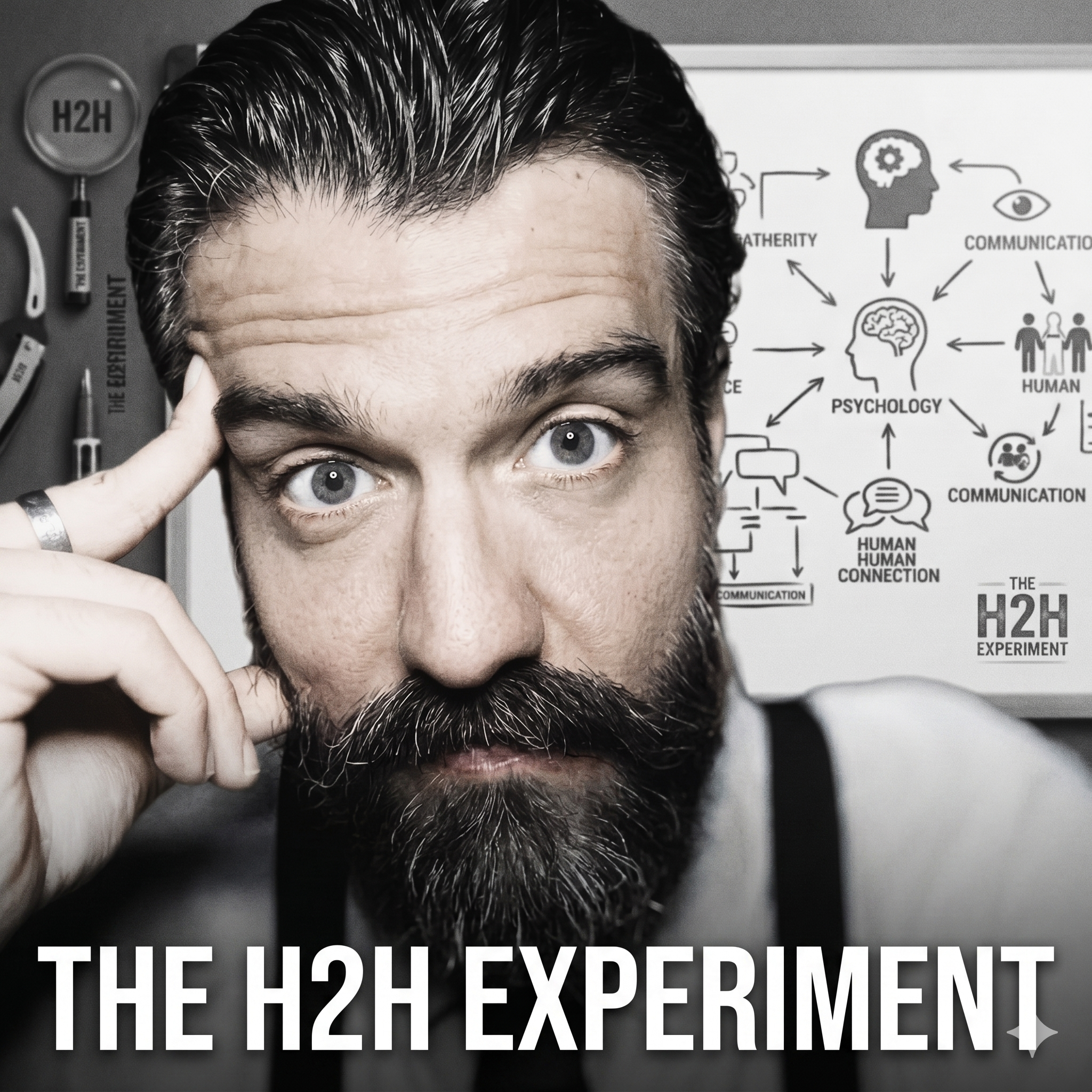
The H2H Experiment
by Joao Pereira | The H2H Experiment
Welcome to The H2H Experiment—a podcast dedicated to exploring the fascinating depths of Human Experience. Ever wondered how the wisdom of ancient Stoics like Seneca and Marcus Aurelius can transform modern leadership? Or how quantum physics might explain our connections and interactions in the workplace? Here, we don't shy away from big questions—we embrace them. If you're curious, open-minded, and passionate about making meaningful transformations. You're in the right place.
-
58
Who Writes the Rules of Space? Why Should You Give a Damn About It?
SummaryThis episode explores the geopolitical and leadership implications of the current space race, highlighting the roles of private companies, China, and the US, and emphasizing the importance of strategic foresight and accountability in space and organizational leadership.Key topicsThe three space races and their different goalsPrivate space companies and their strategic powerChina’s long-term space strategy and geopolitical ambitionsUS space policy and governance challengesThe importance of long-term thinking and accountability in space and leadershipTitlesThe New Space Race: Power, Rules, and Leadership in the 21st CenturyWho Writes the Rules of Space? A Leadership PerspectiveSound bites"Who should decide the rules of Outer Space?""SpaceX’s decisions altered the course of a war""The US is facing a governance crisis in space"Chapters00:00 The fundamental questions of space governance03:17 The private space race led by Elon Musk07:42 China’s disciplined space program and ambitions10:00 US space policy, delays, and governance issues12:00 Why leaders overlook space risks: neurological biases14:10 Who has the right to write space rules?15:53 The implications of private actors’ ambitions in space17:35 Space infrastructure as strategic power19:54 Connecting space to organizational leadership21:44 Thinking in long timescales for strategic advantage23:00 The accountability gap in space and leadership24:37 The long game audit: future-focused leadership exercises24:52 The real story: power and rules in the space race26:01 Leadership in times of civilizational disruptionKeywordsleaderhip podcast, self-improvement podcast, self-awareness podcast, space race, leadership, geopolitics, space law, private space companies, China space program, US space policy, strategic foresight, accountability, space governance
-
57
How Western Education Was Designed to Build Employees, Not Humans
SummaryJoão Pereira explores the origins of the modern education system, its impact on leadership and creativity, and offers actionable strategies to break free from conditioned organizational behaviors. This episode challenges leaders to rethink how they foster curiosity, innovation, and genuine human potential.Key topicsThe origins of the modern education system and its designNeuroscience of curiosity and intrinsic motivationThe impact of standardized testing and grading on creativityMicrosoft's cultural overhaul and the shift to a growth mindsetPrussian military roots of the classroom modelThe destructive effects of the 'banking' model of educationStrategies to redesign meetings and performance reviewsThe importance of questioning and Socratic dialogue in leadership TakeawaysThe Prussian model of education was deliberately designed to produce obedient, useful citizens, not curious thinkers.Standardized testing and grading undermine intrinsic motivation and creativity.The neuroscience shows that external evaluation suppresses the brain's natural curiosity and exploration.Microsoft's shift from stack ranking to a growth mindset led to a $2.2 trillion increase in market value.Leadership conditioned by the classroom model limits innovation and authentic engagement.Re-designing organizational meetings to prioritize questions over answers fosters a thinking organization.Auditing your organization's culture can reveal classroom-like dynamics that stifle creativity.Creating conditions for curiosity and questioning is essential for human and organizational growth.Sound bites"Do schools kill creativity?""A growth mindset can transform organizations.""Create conditions where curiosity can thrive."Chapters00:00 The Problem with Conventional Leadership01:56 The Historical Roots of Education Systems09:10 The Neuroscience of Curiosity and Compliance16:22 The Impact of Education on Leadership21:29 Transforming Organizational Culture26:13 The Call to Action for LeadersResourcesH2H Experiment on LinkedIn - https://www.linkedin.com/company/the-h2h-experiment/?viewAsMember=trueHX Revolution Book Series on Amazon - https://www.amazon.com/stores/Joao-Pereira/author/B0FTVYH4V1?ref=sr_ntt_srch_lnk_1&qid=1777205294&sr=8-1&shoppingPortalEnabled=true&ccs_id=e42377f8-ad76-46b0-b70b-2aa5c4589804LinkedIn - https://www.linkedin.com/in/jmnovellinoKeywordseducation system, leadership, creativity, organizational culture, neuroscience, innovation, systemic change, curiosity, performance review, growth mindset; self-development podcast, leadership podcast, self-improvement podcast, self-awareness podcast
-
56
The Algorithm Is Manipulating Your Team
SummaryJoão Pereira exposes the manipulation of social media platforms and political operatives, revealing how psychological operations influence leadership and organizational culture. This episode offers insights into recognizing and fighting back against these systemic influences to foster genuine collaboration and truth.Key topicsSocial media as psychological operations infrastructureAlgorithmic optimization for outrage and engagementPolitical manipulation and psychographic micro-targetingNeurological effects of algorithmic content on tribal identityStrategies to recognize and counter systemic manipulation takeawaysSocial media platforms are built for profit, weaponized for power.Outrage and fear drive engagement, not truth or community.Political operatives use data to micro-target and manipulate voters.Neuroscience shows tribalism is neurologically reinforced by algorithms.Leadership must name systemic manipulation and build shared reality.Sound bites"Stop and listen—this is not a theory.""Tribalism is deliberately manufactured.""Truth is boring; outrage is profitable."Chapters00:00 The Uncomfortable Truth of Leadership02:24 The Psychological Operations at Play05:12 The Mechanics of Outrage and Manipulation07:53 The Neurological Impact of Political Content10:24 The Historical Context of Manufactured Enemies13:10 The Modern Political Landscape and Its Tactics15:46 Case Study: The Impact on Organizations17:58 Strategies for Leaders to Combat Division20:49 The H2H Experiment: Practical Actions22:54 The Call to Action for LeadersResourcesThe HX Revolution Book Series - https://www.amazon.com/dp/B0FL15LBB4?binding=kindle_edition&searchxofy=true&ref_=dbs_s_aps_series_rwt_tkin&qid=1776593142&sr=8-1João Pereira on LinkedIn - https://www.linkedin.com/in/jmnovellinoThe H2H Experiment Website - https://theh2hexperiment.comKeywordssocial media manipulation, psychological operations, leadership, tribalism, algorithmic engineering, political influence, organizational culture, truth, resilience, information warfare, leadership podcast, self-improvement podcast, self-development podcast, concious leadership
-
55
The CEO's Delusion
SummaryThis episode explores the psychological biases that distort leadership perception, focusing on confirmation bias and desirability bias. Host João Pereira reveals how these biases impact decision-making, shares personal stories, and offers practical exercises rooted in Stoic philosophy to foster radical self-awareness and clearer leadership.Key topicsConfirmation bias as a defense mechanism protecting egoDesirability bias rooted in emotional vulnerabilitiesThe biological basis of cognitive biases and amygdala hijackPractical exercises to challenge biases, including future failure autopsiesThe importance of fostering a challenge culture that rewards truth takeawaysLeaders often see a funhouse mirror of reality, filtered by biases.Confirmation bias leads to ignoring red flags and reinforcing ego.Desirability bias causes leaders to believe in false narratives to avoid pain.The brain's primary goal is safety, not objective truth.Practicing Stoic exercises can help strip away biases and see reality clearly.Sound bites"Leaders see a funhouse mirror of reality.""Confirmation bias is the defense of ego.""We are biologically addicted to being right."Chapters00:00 The Greatest Lie in Leadership03:13 Understanding Cognitive Biases06:54 The Neuroscience of Truth and Deception10:36 The Stoic Approach to Reality12:01 A Personal Story of Desirability Bias13:34 Breaking Free from Biases15:12 The Red Team Experiment16:50 The Courage of True LeadershipKeywordsleadership, cognitive biases, confirmation bias, desirability bias, self-awareness, Stoic philosophy, decision-making, organizational culture, the h2h experiment, self-development podcast, human resources podcast, self-improvement podcast
-
54
The $2 Hot Dog That Broke the Corporate Rulebook
SummaryJoão Pereira challenges traditional corporate paradigms by advocating for trust-based leadership, unreasonable hospitality, and dismantling bureaucracy to unleash human potential in organizations.Key topicsThe impact of industrial-era management on modern organizationsThe concept of unreasonable hospitality and its applicationThe limitations of command and control leadershipThe role of trust as an operational technologyPractical steps to dismantle bureaucracy and empower teams takeawaysYou cannot write an SOP for human magic.Trust is the ultimate human performance multiplier.Empowering teams with autonomy unleashes creativity and care.Dismantling bureaucracy requires a leap of faith from leaders.The future of leadership is trust and inspire.Sound bites"You cannot write an SOP for human magic.""You cannot command empathy or boldness with rules.""Give your team a trust budget before they earn it."Chapters00:00 The Hidden Cost of Company Policies00:48 The Human Cost of Bureaucracy01:38 The Origins of Modern Organizational Control03:27 The Industrial Revolution's Impact on Management06:18 Service vs Hospitality: Creating Loyalty07:32 Unreasonable Hospitality in Action10:31 Leadership in the Age of Trust11:46 The Limitations of Command and Control12:49 Trust as an Operational Technology14:52 A Personal Lesson in Trust and Empathy16:46 The Paradox of Control and Trust17:56 Empowering Teams with Trust19:11 The Trust Experiment: Giving Autonomy20:08 The Power of Human Intuition21:14 From SOPs to Unreasonable Hospitality22:14 Join the Movement: Trust and Human-Centric LeadershipKeywordsLeadership, Trust, Unreasonable Hospitality, Bureaucracy, Humanocracy, AI, Organizational Culture, Trust and Inspire, Human Potential, Business Transformation, Leadership podcast, self-development podcast, self-improvement podcast, human resources podcast
-
53
The Prison of "Perfect"
SummaryThis episode explores the deep psychological and philosophical roots of the false self, the labels we carry from childhood, and how these influence our leadership and personal authenticity. Join João Pereira as he shares personal stories and insights on shedding these labels to live more freely and authentically.Key topicsThe concept of the false self and true selfThe impact of childhood labels on adult leadershipExistential philosophy and bad faith in leadershipThe psychological cost of living inauthenticallyPractical steps to shed labels and embrace authenticity Chapters00:00 The Invisible Scripts of Our Lives02:56 The Formation of Identity05:43 The Tragedy of the False Self09:18 Burnout and Bad Faith in Leadership11:37 Personal Struggles with Labels15:03 The Courage to Be Unlabelable15:38 The Label Burn Experiment17:33 Embracing Our True SelvesKeywordsself-awareness, leadership, psychology, philosophy, authenticity, labels, false self, personal growth, existentialism, burnout, leadership podcast, self-improvement podcast, self-development podcast, human resources podcast
-
52
The Terrifying Truth About Success
SummaryThis episode explores the psychological and philosophical underpinnings of leadership, focusing on how our perceptions and limiting beliefs shape our experience of success, stress, and reality. Host João Pereira delves into the neuroscience of dissatisfaction, the concept of constructed reality, and practical exercises to rewire our mindset.Key topicsHedonic treadmill and dopamine cycleLimiting beliefs and psychological filtersConstructed reality and perceptionNeuroplasticity and mindset rewiringPractical perception exercises for leaders guest nameTitlesRewire Your Leadership Mindset in 30 MinutesThe Hidden Filters That Shape Your Reality sound bites"You see the world as you are""The summit is just a mirage""Your filters are not permanent"Chapters00:00 The Illusion of Success and Happiness02:26 Understanding the Hedonic Treadmill06:07 Perception and Reality: The Filters We Use11:51 Personal Story: The Treadmill of Achievement14:46 Rewiring Your Perception16:35 The Camera Lens Audit Experiment18:55 The True Nature of LeadershipKeywordsleadership podcast, perception, limiting beliefs, leadership podcasts, human resource podcast, self-improvement podcast, personal growth podcast, neuroscience, reality, self-development podcast, emotional intelligence, neuroplasticity, stress management, personal growth
-
51
The Illusion of Urgency | How the Addiction to Speed is Killing Our Focus
Breaking Free from Hurry Sickness: How Leaders Can Reclaim Focus and ImpactIn this episode, João Pereira exposes the pervasive addiction to speed and urgency in modern workplaces. He breaks down the neuroscience behind hurry sickness, reveals the organizational costs of constant rushing, and offers practical strategies for leaders to slow down intentionally. This isn't just about reducing stress—it's about transforming leadership into a depth-driven craft that fosters true long-term impact.Key Topics:The neurological basis of hurry sickness: adrenaline, cortisol, and dopamine cyclesThe ancient Greek concepts of chronos (clock time) vs. kairos (deep time) and their relevance todayThe organizational fallout: how urgency skews priorities and erodes strategic thinkingA personal confession: the trap of motion without progress and the cover of hyper-responsivenessThe courage to slow: practical steps to disrupt chemical addiction and embrace deliberate leadershipThe power of strategic delay: experimenting with intentional silence before respondingLeadership’s real value: depth of thought versus speed of responseTimestamps:00:00 - The addiction to checking phones and rushing in the workplace00:25 - How busyness is often mistaken for importance00:51 - The illusion of urgency and its roots in corporate culture01:19 - The dark neuroscience of adrenaline, cortisol, and dopamine in hurry sickness02:26 - The biological cost: cognitive tunneling and loss of strategic capacity03:35 - The distinction between chronos (clock time) and kairos (deep time)04:49 - How urgency commodifies our presence and diminishes leadership depth06:41 - Organizational costs: urgent vs. important and performative productivity07:09 - The destructive spiral of firefighting culture08:45 - Personal story: the myth of productivity through hyper-responsiveness09:14 - Recognizing avoidance of deep work through rush behaviors10:10 - The necessity of the courage to slow and the emotional regulation it requires11:11 - Practical exercise: implementing strategic delay to break addiction12:24 - The challenge: withholding from instant response and embracing silence13:40 - The core leadership lesson: protect attention, prioritize depth over speed14:09 - Join the movement of intentional, human-centered leadership14:43 - Resources: the HX Revolution book series & community platformsConnect with João Pereira and explore practical frameworks to lead with depth and clarity. Slow down intentionally—lead consciously.
-
50
The Virus of Whining | How Constant Complaining Decays the Soul and the System
The conversation explores the destructive power of whining, the neuroscience of complaining, the philosophy of ressentiment, the difference between fixed and growth mindsets, reclaiming emotional agency, the 24-hour no whine challenge, and the importance of leadership in maintaining a high frequency culture. Key takeaways include the impact of whining, the necessity of holding a high frequency in leadership, and the influence of emotional contagion on organizational culture.TakeawaysWhining is a destructive forceLeadership requires holding a high frequencyEmotional contagion affects organizational cultureChapters00:00 The Destructive Power of Whining08:25 The Philosophy of Ressentiment17:53 Reclaiming Emotional Agency
-
49
The High Cost of Being Nice | Why Your Kindness is Actually Cruel
SummaryIn this episode, João Pereira explores the detrimental effects of pathological niceness in leadership, emphasizing the importance of honesty and clarity over comfort. He discusses how a culture that prioritizes harmony can lead to mediocrity and the avoidance of necessary confrontations. Through personal anecdotes, he illustrates the consequences of failing to provide clear feedback and the difference between being nice and being kind. The episode concludes with a practical exercise aimed at encouraging leaders to confront uncomfortable truths for the benefit of their teams.TakeawaysPathological niceness is a survival mechanism disguised as virtue.Prioritizing niceness over clarity protects the ego, not the team.A culture valuing harmony over truth breeds mediocrity.Bad ideas are supported in nice cultures, leading to wasted time.High performers leave nice cultures that tolerate low standards.Innovation requires the collision of opposing ideas.Silence breeds resentment and passive aggression.Kindness is about the receiver's growth, not the giver's comfort.Leaders must be mirrors, showing the truth without apology.Choosing clarity over comfort fosters true psychological safety.Sound bites"How often do you stay silent in a meeting?""Being nice is easy; being kind is hard.""Choose clarity over comfort."Chapters00:00 The Trap of Pathological Niceness01:33 The Cost of Niceness in Leadership04:08 The Dangers of Polite Silence06:33 Personal Experience: The Consequences of Being Nice08:49 Distinguishing Kindness from Niceness10:18 The H2H Experiment: Unspoken Truth AuditKeywordsleadership, niceness, kindness, communication, feedback, team culture, psychological safety, conflict avoidance, honesty, personal growth
-
48
The Silent Symphony | How Invisible Cues Impact Your Team
The conversation delves into the invisible neurobiology of leadership, the mechanics of the human body in leadership, the language of quantum leadership, the energetic field of leadership, the architect of resonance, and the power of presence. It emphasizes that leadership is felt, not just heard, and that presence is a silent symphony.TakeawaysLeadership is felt, not just heardPresence is a silent symphonyChapters00:00 The Invisible Neurobiology of Leadership06:57 The Energetic Field of Leadership11:59 The Power of Presence
-
47
The Architecture of Belief | Why Leaders Must Be Storytellers
SummaryIn this conversation, João Pereira explores the critical role of storytelling in leadership and organizational culture. He emphasizes that while data and logic are essential, they often fail to inspire action. Instead, storytelling engages the emotional and sensory aspects of the brain, fostering connection and alignment within teams. Pereira discusses the neuroscience behind storytelling, the types of stories leaders should cultivate, and the importance of narrative in both in-person and remote settings. He also addresses the ethical considerations of storytelling, urging leaders to be authentic and vulnerable in their narratives to build trust and connection.TakeawaysData leads to conclusions, but stories lead to action.The human brain is wired for narrative, not data.Emotion is the glue that binds memory and meaning.Leaders must take responsibility for the narrative.Storytelling is essential for team alignment and culture.Vulnerability enhances credibility in leadership.Effective communication requires emotional engagement.In a hybrid world, storytelling becomes even more critical.Leaders should cultivate origin, value, and future stories.The intent behind storytelling must be authentic and truthful.Chapters00:00 The Power of Storytelling in Leadership03:10 Understanding the Science Behind Storytelling08:02 The Consequences of Avoiding Storytelling09:34 The Emotional Connection in Leadership12:45 Transforming Communication Through Storytelling14:48 Types of Stories Every Leader Should Tell18:03 Storytelling in a Remote World19:07 The Ethics of Storytelling in Leadership20:02 The Experiment: From Reporting to Narrating21:36 Redefining Leadership Through Storytelling
-
46
The Noise Addiction: Why "Busy" is a Trauma Response
SummaryIn this conversation, João Pereira explores the detrimental effects of busyness on leadership and productivity. He discusses the neuroscience behind attention and burnout, emphasizing the importance of silence and reflection in effective leadership. Pereira introduces the concept of the 'motion trap,' where constant activity leads to a false sense of progress, and advocates for the art of the pause to foster deeper thinking and innovation. He concludes with a practical experiment aimed at cultivating stillness and clarity in a fast-paced world.TakeawaysDid that silence just make you uncomfortable?Busyness is not productivity.You are biologically locking yourself out of the part of your brain that actually leads.You are moving so fast that you feel like you are making progress, but you're really just vibrating in place.A leader who is addicted to urgency creates a team that is addicted to anxiety.Between stimulus and response, there is a space.Leadership is the art of the pause.You don't need more time. You need more stillness.Stop hiding in the grind.The silence is where the questions live.Chapters00:00 The Illusion of Busyness02:38 Neuroscience of Attention and Burnout05:28 The Motion Trap and Its Consequences07:50 The Power of Silence and Reflection11:10 The Art of the Pause13:54 The Experiment of Stillness
-
45
The Chemistry of Trust: Why Your Brain Craves Vulnerability
SummaryIn this episode, João Pereira explores the intricate relationship between leadership, trust, and vulnerability. He discusses the biological underpinnings of trust, emphasizing the importance of authenticity in leadership. Through personal anecdotes and scientific insights, he illustrates how vulnerability can foster connection and enhance team dynamics. The episode culminates in a practical experiment designed to encourage leaders to share their authentic selves with their teams, ultimately aiming to create a more psychologically safe and collaborative work environment.TakeawaysHow much energy do you burn every day just pretending to have it all together?We are wired for connection.Trust is not a logical decision.Vulnerability is the courage to act without a guarantee of the outcome.Leadership is all about resonance.You are the tuning fork.Psychological safety is the secret ingredient of high performance.It takes massive courage to say, I don't know, or I need help.Vulnerability is the bridge and your team is waiting for you to cross it.You cannot build connection with your armor on.Sound bites"We are wired for connection.""You are the tuning fork.""Trust your biology."Chapters00:00 The Burden of Leadership Expectations03:18 Understanding the Neuroscience of Trust10:41 The Power of Vulnerability in Leadership17:10 Redefining Vulnerability and Strength23:49 The 2-Minute Truth Experiment28:44 Building Connection Through Authenticity
-
44
The Hero Trap: Why Your Need to Save the Team is Holding Them Back
SummaryIn this episode, João Pereira delves into the concept of the 'hero trap' in leadership, where leaders often feel the need to be indispensable, jumping into crises and taking control rather than empowering their teams. He discusses how this mindset can stifle growth and innovation, creating a dependency on the leader that ultimately hinders the team's development. By examining philosophical and psychological perspectives, João highlights the importance of stepping back and allowing team members to take ownership of their work, which fosters a culture of growth and autonomy.João shares personal experiences of recognizing his own tendencies to be the hero and the transformative impact of physically distancing himself from his team. He emphasizes that true leadership involves creating an environment where team members can thrive without constant intervention. The episode concludes with a practical experiment for leaders to intentionally reduce their presence, encouraging them to trust their teams and embrace the discomfort that comes with letting go of control.TakeawaysThe hero trap is the belief that you must be essential for your organization to succeed.When you are the hero, you become the bottleneck for your team's growth.True leadership is about creating a culture where the team doesn't need saving.Sound bites"You must be the strongest person in every room.""If you are the smartest person in the room, your organization is in trouble.""Your job is to build a culture where the day doesn't need saving."Chapters00:00 Introduction to the Hero Trap02:04 Philosophical Insights on Leadership03:34 Psychological Perspectives on the Hero Trap05:56 Personal Reflections on Leadership08:36 The Architecture of Silence in Leadership10:21 The Unavailability Test: An Experiment for Leaders11:30 Conclusion: Building a Culture of Growth
-
43
The Silent Break | Why Your Best People Are Cracking, Not Quitting
SummaryIn this episode, João Pereira explores the concept of 'quiet cracking,' a silent form of disintegration that high performers experience while appearing to thrive. He contrasts this with burnout, emphasizing the neurological underpinnings of stress and performance. Through personal anecdotes and scientific insights, he provides actionable steps for leaders to identify and address quiet cracking in themselves and their teams, advocating for a shift towards sustainable performance and well-being in the workplace.TakeawaysResilience is often mistaken for high performance.Quiet cracking is a silent form of disintegration.High performers may be suffering internally while appearing fine.Allostatic load refers to the wear and tear on the body from chronic stress.Burnout is characterized by hypoarousal, while quiet cracking is hyperarousal.Chronic stress can degrade the prefrontal cortex, affecting decision-making.Leaders should conduct an 'Energy Leak Audit' to identify at-risk individuals.Asking the right questions can reveal hidden stressors.It's essential to create a safe environment for vulnerability.Sustainable impact should be prioritized over mere performance.Chapters00:00 Understanding Quiet Cracking vs. Burnout03:15 The Neuroscience Behind High Performance and Stress08:18 Personal Experience: The Illusion of High Performance10:35 Identifying and Addressing Quiet Cracking in Teams
-
42
The Observer’s Tax: Why Your Attention Might Be Freezing Your Team’s Potential
SummaryIn this episode, João M N Pereira explores the concept of the 'observer's tax' in leadership, arguing that constant observation and check-ins can hinder creativity and innovation within teams. He draws parallels with quantum mechanics, specifically the quantum Zeno effect, to illustrate how excessive oversight can freeze progress and create psychological barriers. Through personal anecdotes and practical advice, he encourages leaders to adopt a non-interfering approach, allowing team members the space to innovate and grow without the pressure of constant scrutiny.TakeawaysThe act of checking in can hinder team progress.Constant observation creates psychological safety issues.Leadership should focus on creating space for innovation.The quantum Zeno effect illustrates the dangers of micromanagement.Teams need freedom to explore creative possibilities.Observation can be an intervention rather than support.Leaders should reflect on their need for control.Micromanagement is often driven by personal anxiety.Creating a vacuum allows teams to thrive.Trust is essential for effective leadership.Chapters00:00 The Observer's Tax: A New Leadership Paradigm04:00 Quantum Mechanics and Leadership: The Zeno Effect07:54 The Psychological Cost of Constant Observation12:07 Personal Reflection: The Impact of Micromanagement14:03 The Quantum Pause: An Experiment in Non-Interference17:51 Creating Space for Growth: The Role of Leadership
-
41
Invisible Burdens | How Unspoken Guilt Influences Leadership, Team Dynamics, and Organizational Culture
SummaryIn this episode, João Pereira explores the complex relationship between guilt and leadership. He discusses how guilt often masquerades as responsibility, influencing decisions and behaviors in teams and organizations. The conversation emphasizes the importance of distinguishing between guilt and responsibility, advocating for emotional maturity and clarity in leadership. By transforming guilt into valuable information, leaders can foster healthier team dynamics and personal growth.TakeawaysGuilt often masquerades as responsibility in leadership.Guilt is a relational emotion, not a personal one.It evolved as a survival mechanism in social contexts.Guilt can shape behaviors and decisions unconsciously.In teams, guilt becomes a social currency that leads to burnout.Leaders driven by guilt create confusion and lack clarity.Responsibility creates agency, while guilt creates obligation.Guilt can lead to self-punishment and chronic overwork.Transforming guilt into information is key to emotional maturity.Leadership is about clarity, not carrying emotional weight.
-
40
The Illusion of Self-Awareness in Leadership
SummaryIn this episode, João Pereira explores the dangerous illusion of self-awareness in leadership, emphasizing that true self-awareness is not merely about understanding one's intentions but about recognizing one's impact on others. He discusses the Dunning-Kruger effect, emotional immaturity, and how power dynamics can obscure leaders' self-perception. The conversation highlights the importance of confronting uncomfortable truths and the need for honest feedback in fostering emotional maturity. Pereira also introduces the 'Impact Audit' experiment, encouraging leaders to seek genuine feedback from their teams to enhance their self-awareness and leadership effectiveness.TakeawaysSelf-awareness is not just self-narration.Emotional maturity requires confronting uncomfortable truths.Power can reduce empathy and increase self-focus.Leaders often lack awareness of their own immaturity.Honesty feels unsafe in many leadership environments.Emotional growth happens through confrontation, not just knowledge.Feedback is crucial for self-awareness and growth.Innovation is stifled when teams manage leaders' emotions.The journey of self-awareness is ongoing and requires courage.Leadership reveals who you truly are under pressure.Chapters00:00 The Illusion of Self-Awareness in Leadership01:48 Understanding Emotional Immaturity04:46 The Impact of Power on Leadership08:28 The Cost of Honesty in Leadership10:53 The H2H Experiment: Impact Audit12:43 The Journey of Growth and Conscious LeadershipSound Bites"Are you truly self-aware?""Power hides emotional immaturity.""Growth always begins with friction."
-
39
Raising the Bar | The Leader’s Sacred Duty to Grow People
SummaryIn this conversation, João M N Pereira explores the profound responsibilities of leadership, emphasizing the importance of stewardship over mere supervision. He shares personal experiences that shaped his leadership philosophy, advocating for the necessity of challenging individuals to unlock their potential. The discussion highlights the significance of creating agreements rather than imposing instructions, fostering a culture of ownership and accountability. Ultimately, the conversation underscores that true leadership is about guiding individuals towards their best selves, even in the face of discomfort.TakeawaysLeadership is about stewardship, not supervision.Raising the bar is an act of love, not pressure.Growth requires discomfort and challenge.Agreements create ownership and accountability.Leaders must confront their own discomfort to help others grow.Expectations shape performance; raise the bar for growth.Leadership is a partnership in development.Self-governance is crucial for personal growth.True leaders challenge others to reach their potential.Leadership shapes lives, not just outcomes.Chapters00:00 The Essence of Leadership: Stewardship vs. Supervision04:39 Personal Journey: Learning to Lead Through Challenge07:39 The Power of Agreements in Leadership09:17 The Psychology of Growth: Expectations and Performance11:00 Facing Discomfort: The Leader's Challenge11:52 The Agreement Intervention: A Practical Exercise12:07 Conclusion: The Sacred Responsibility of LeadershipKeywordsleadership, stewardship, personal growth, agreements, expectations, psychological growth, discomfort, challenge, development, accountability
-
38
The 7 Conversations Every CX Leader Must Have Monthly
In this episode of the H2H experiment, João M N Pereira emphasizes the importance of genuine conversations in shaping customer experience (CX). He outlines seven essential conversations that CX leaders must engage in monthly, covering leadership, operations, marketing, sales, customer support, HR, and product development. Each conversation serves to align different aspects of the organization, uncover friction, and enhance the overall customer experience. The episode concludes with a challenge to implement these conversations to foster alignment and trust within the organization.
-
37
You Don’t Have Communication Problems — You Have Courage Problems
In this episode, João M N Pereira challenges the common belief that organizations face communication problems, arguing instead that the real issue lies in a lack of courage. He explores the psychological and neurological reasons behind why individuals avoid difficult conversations, emphasizing that fear of honesty and emotional risk often leads to communication breakdowns. Pereira shares personal experiences and insights on how cultivating courage can transform communication within teams, ultimately fostering a healthier organizational culture. He concludes with a practical exercise to help listeners confront their fears and embrace honest dialogue.
-
36
You Say You Want Change | But You’re Addicted to Your Own Suffering
In this episode, Joao Pereira delves into the concept of being addicted to one's own suffering. He explores the psychological and biological reasons behind why people cling to familiar pain rather than embracing change. Through personal anecdotes and philosophical insights, Joao challenges listeners to confront their own patterns of suffering and offers practical steps to break free from these cycles.TakeawaysYou're not tired of your suffering; you're attached to it.Humans cling to familiar misery more than unfamiliar possibility.Change requires the death of who you were.Leaders fear psychological death more than misery.Emotional suffering releases stress hormones, creating addiction.The brain becomes addicted to the predictability of suffering.Freedom requires stepping into the unknown.Transformation begins with grief and letting go of old identities.Growth feels like ego death, which is why it's resisted.Change doesn't begin with desire; it begins with honesty.
-
35
The Psychology of Customer Trust
SummaryIn this conversation, João M N Pereira delves into the critical role of trust in customer experience. He emphasizes that trust is not merely a feeling or a brand promise, but rather a behavior that forms the foundation of customer relationships. Pereira highlights how companies often undermine trust in subtle ways, impacting their overall customer engagement and loyalty.TakeawaysTrust is not a feeling.Trust is behavior.Trust is the nervous system of your relationship with customers.Companies often break trust in small moments.Building trust requires consistent behavior.Trust is essential for brand loyalty.Understanding trust can enhance customer experience.Trust impacts customer engagement.Brands need to be aware of trust dynamics.Trust should be a core focus for businesses.TitlesThe Heart of Customer Experience: TrustUnderstanding Trust in Brand RelationshipsSound bites"Trust is behavior.""Trust is not a feeling.""Trust is the nervous system of your relationship."Keywordscustomer experience, trust, brand loyalty, relationship management, customer behavior
-
34
The Flow State of Leadership
Keywordsleadership, flow state, neuroscience, ego, presence, creativity, mindfulness, collective flow, psychological safety, H2H experimentSummaryThis conversation explores the concept of the flow state in leadership, emphasizing the importance of presence, creativity, and the role of ego. It delves into the neuroscience behind flow, the philosophical insights from ancient wisdom, and practical techniques for accessing flow in both individual and team settings. The discussion highlights how true leadership emerges from a state of flow, where control is transcended, and collaboration flourishes.TakeawaysFlow state allows for effortless leadership and creativity.Excessive control hinders intuition and adaptability.Neuroscience shows that flow quiets the prefrontal cortex.Ego is the greatest obstacle to achieving flow.Presence is essential for accessing the flow state.Mindfulness practices enhance the ability to be present.Collective flow leads to enhanced team performance.Psychological safety fosters creativity and trust in teams.Flow is not just for artists; it's a natural state of being.True leadership is about being present, not controlling outcomes.TitlesUnlocking the Flow State in LeadershipLeading with Presence: The Flow StateSound bites"Flow is the highest form of intelligence.""Presence is not something you try to achieve.""True leadership is not about doing more."Chapters00:00 The Flow State of Leadership01:24 The Myth of Effort in Leadership03:15 Neuroscience of Flow06:10 Ego and Flow07:35 Philosophical Insights on Flow09:11 Accessing the Flow State11:18 Collective Flow in Teams12:53 H2H Experiment: Flow Triggering14:24 Conclusion: Leadership in Flow
-
33
The Masks We Wear | Leadership and the Archetype of the Persona
SummaryIn this episode, João M N Pereira explores the concept of the persona, the masks we wear in society, and the implications for leadership. He discusses the paradox of the persona, how it can protect us but also imprison us, and the importance of authenticity in leadership. The conversation delves into the shadow aspects of our identity that we often suppress and how integrating these parts can lead to more authentic leadership. The episode concludes with a practical exercise to help listeners reflect on their own masks and the importance of presence over performance.TakeawaysThe persona is the social face we wear to meet expectations.Identifying with the persona can lead to a loss of self.Authenticity is often punished in leadership cultures.The shadow consists of parts of ourselves we suppress.Integrating the shadow is essential for wholeness.Conscious leaders lead from connection, not ego.Real meaning in life comes from authenticity, not applause.The mask can be useful, but it should not define us.Self-awareness is the highest form of intelligence in leadership.Leadership is about becoming whole, not perfect.
-
32
The Self and the Universe | Leadership Through the Id, Ego, and the Big Other
SummaryIn this episode, João M N Pereira delves into the complexities of the self, exploring the interplay between the id, ego, and superego through the lenses of Freud, Jung, Lacan, and Alan Watts. He emphasizes the importance of self-awareness in leadership and the need to integrate our inner architecture to lead authentically. The conversation culminates in a practical exercise aimed at shadow integration, encouraging listeners to reflect on their true nature and the essence of conscious leadership.TakeawaysWho are you really?The purpose of struggles is to dissolve the illusion of self.Truth is found in integration, not consensus.The psyche is a cosmic structure, a map of consciousness.The id is the memory of existence, not just instinct.The ego is a mask, not the true self.Growth begins when the ego dies, leading to awakening.Conscious leadership evolves systems rather than destroying them.Awareness contributes to the expansion of collective consciousness.You are the universe becoming aware of itself.Chapters00:00 Exploring the Self: Who Are You?02:00 The Mind's Architecture: Freud, Jung, and Lacan08:55 Consciousness and Collective Evolution10:30 Holistic Leadership: Integrating Inner and Outer Worlds11:34 The H2H Experiment: Shadow Integration Practice13:25 The Journey of Awareness: Remembering Your True Self
-
31
The Stoic Leader: Mastering the Inner Fortress | Ancient Wisdom for Modern Leadership Series
SummaryIn this episode, João M N Pereira explores the ancient philosophy of Stoicism and its relevance to modern leadership. He emphasizes the importance of self-mastery, emotional intelligence, and the dichotomy of control in navigating the challenges leaders face today. Through the lens of Stoicism, he discusses key concepts such as amor fati, the four virtues, and the principle of memento mori, providing practical exercises for listeners to apply these teachings in their lives. The episode concludes with a call to embrace clarity and strength in the face of external chaos.TakeawaysYour greatest challenge as a leader is within your mind.Real power comes from mastering yourself, not controlling others.You cannot control what happens to you, only how you respond.Leadership today is a storm; who stabilizes you?The Stoics believed in focusing on what you can control.Emotional mastery is key to effective leadership.Amor fati means embracing life as a teacher.The four virtues of Stoicism guide ethical leadership.Memento mori reminds us to focus on what truly matters.Stoicism offers clarity and strength in chaotic times.Mastering the Inner Storm: Stoicism for LeadersThe Power of Self-Mastery in Leadership"You cannot control what happens to you.""This is not fatalism, it's freedom.""The Stoic doesn't run from emotion."Chapters00:00The Inner Challenge of Leadership01:36Understanding Stoicism: History and Philosophy04:34The Dichotomy of Control07:52Emotional Mastery and Leadership08:22Amor Fati: Embracing Your Fate09:51The Four Stoic Virtues10:35Memento Mori: The Urgency of Life13:11Practical Stoicism: The Circle of Control14:29Conclusion: Mastering the Storm Within
-
30
Buddhist Wisdom for a Busy Mind | Ancient Wisdom for Modern Leadership Series
SummaryIn this episode of the H2H experiment, João Pereira explores the teachings of Buddhism and their relevance to modern leadership. He discusses the importance of the middle way, mindfulness, non-attachment, and compassion in effective leadership. The conversation emphasizes practical applications of these ancient teachings in the workplace, encouraging leaders to cultivate awareness, balance, and empathy in their approach.TakeawaysBuddhism teaches the importance of the middle way in leadership.Mindfulness is essential for effective communication and presence.Non-attachment allows leaders to act with intention without desperation.Compassion is a biological leadership intelligence that fosters safety and creativity.Control is often a disguise for fear in leadership.True wisdom lies in creating enough order for clarity and space for flow.Leaders should pause before reacting to criticism or challenges.Listening fully builds trust and connection with team members.Detaching from outcomes allows for better focus on the process.Buddhist teachings can transform modern leadership practices.Chapters00:00 Introduction to Ancient Wisdom for Modern Leadership00:00 Exploring Buddhism and the Middle Way03:14 Mindfulness and the Monkey Mind05:47 Non-Attachment and Compassion in Leadership07:11 Bringing Ancient Teachings to the Workplace08:33 The H2H Experiment of the Week09:14 Conclusion: The Path to Conscious Leadership
-
29
Hermetic Wisdom for Modern Times | Ancient Wisdom for Modern Leadership Series
In this episode of the H2H Experiment, João M N Pereira introduces a new series titled "Ancient Wisdom for Modern Leadership." The series explores how timeless philosophies from ancient civilizations like Egypt, Greece, India, and Rome can inform contemporary leadership practices. The episode delves into Hermeticism, focusing on the teachings of Hermes Trismegistus, a legendary figure believed to embody wisdom from both Egyptian and Greek traditions. The discussion highlights the seven Hermetic principles, such as mentalism, correspondence, polarity, rhythm, and neutrality, and their relevance to leadership. João emphasizes the importance of mindset, balance, and responsibility in leadership, drawing parallels between ancient wisdom and modern scientific understandings. The episode concludes with practical exercises for listeners to apply these principles in their leadership journey.
-
28
The Voice in Your Head | Why Self-Talk Shapes Leadership
In this episode of The H2H Experiment, we explore the hidden power of self-talk in leadership. From neuroscience and neuroplasticity to the psychology of affirmations and inner dialogue, discover how the stories you tell yourself shape your confidence, decisions, and impact on others — and learn practical ways to rewrite the script in your head.
-
27
Leading Beyond Fear | How the Fear of Loss Shapes Leadership
In this episode of The H2H Experiment, we explore how the fear of loss, often expressed as fear of failure or rejection, unconsciously shapes leadership decisions. Drawing on psychology, neuroscience, and evolutionary biology, we uncover why fear activates the same brain pathways as physical pain, how childhood experiences reinforce avoidance patterns, and why leaders often rationalize fear-driven choices as strategy. Most importantly, we discuss how to move beyond fear: by shifting focus from avoiding negative outcomes to intentionally building the future you want. With practical insights and a unique HX experiment, this episode equips leaders to manage fear through conscious exposure, strengthen courage, and lead with vision instead of avoidance.#TheH2HExperiment #Leadership #Fear #Courage #Neuroscience #HumanExperience #FutureOfWork #Psychology #HX #TheHxRevolution
-
26
Storytelling | The Leader’s Superpower
Since the dawn of humanity, storytelling has been the invisible force connecting leaders and followers, shaping values, and igniting movements. In this episode, we’ll explore why stories are the most powerful tool leaders have to inspire action and build trust, featuring neuroscience insights, business examples, and practical application. Expect an H2H experiment to help you bring the magic of storytelling into your own leadership journey.
-
25
Bright Lies and Dark Shadows in Leadership
Dive into the hidden dangers of toxic positivity and fear-based leadership. Our hosts tackle how these forces stifle authenticity and performance—and what courageous, compassionate leadership looks like instead.
-
24
Ancient Stories, Modern Leadership
Joao explores five powerful biblical stories—David and Goliath, Solomon’s Judgment, the Tower of Babel, Joseph’s journey, and Moses’ leadership—to uncover timeless lessons for today’s leaders. Through engaging examples and practical insights, this episode reveals how ancient wisdom can shape modern leadership and human experience. Stay tuned for our Weekly H2H Experiment to put these lessons into practice.
-
23
Compassion Over Empathy in Leadership
In this episode, Joao explores why true leadership requires not just understanding others but acting compassionately for sustainable success. Featuring insights on the pitfalls of empathy-only leadership, the power of compassionate action, and a practical challenge for listeners to bridge empathy and action at work.
-
22
Authenticity in the Workplace Echo Chamber
Joao and Diana unpack the paradox of authenticity in corporate settings, diving into the hidden costs of self-censorship and filtered feedback. The episode explores psychological impacts, leadership blind spots, and concrete strategies for building trust and psychological safety. Featuring the 'H2H Experiment of the Week' to inspire real-world change.
-
21
The Rational Illusion
Joao unpacks why even the smartest people make irrational business decisions and how understanding human nature can reshape outcomes. Through real-world experiments, pricing tricks, and a unique weekly challenge, he explores the power and pitfalls of predictable irrationality in organizations.
-
20
Peter Pan Syndrome at Work | When Neverland Meets the Office
Dive into Peter Pan Syndrome and discover why some adults resist responsibility. Joao explores the roots, signs, and impacts of this behavior in life and leadership, offering real-world examples and practical strategies. This episode shines a light on how self-awareness can turn perpetual childhood into personal growth.
-
19
The Workplace Family Illusion
Is your office really a family, or is it something else entirely? In this episode, Joao unpacks the hidden risks behind the 'we're like a family here' mantra and explores healthier, more honest ways to build workplace belonging, without the emotional manipulation.
-
18
Quantum Connections
Dive into the intriguing parallels between quantum mechanics and human relationships. We unpack concepts like entanglement and superposition to reveal how science inspires deeper, more mindful human connections.
-
17
The Corporate BS of Meritocracy
Joao unpacks the persistent myth of meritocracy in organizations, revealing how hidden biases and systemic inequalities shape success. From historical roots to practical strategies for inclusion, this episode challenges listeners to rethink what truly drives opportunity and leadership.
-
16
Stories That Shape Us
This time, we delve into how the narratives we inherit—from ancient tribal instincts to modern workplace hierarchies—shape human experience and organizational life. Discover how leaders can harness storytelling to foster inclusion, innovation, and resilience in today’s world.
-
15
Homo Sapiens | Are We Truly Sapiens?
Joao dives solo into the evolutionary journey of human wisdom, from fire and myths to our next psychological leap. Explore how ancient brains, cultural revolutions, and modern pressures shape who we are—and who we could become.
-
14
Empathy Overload | When Empathy Backfires
Empathy is often seen as a leadership superpower, but what happens when it goes too far? In this episode, we dive into the pitfalls of excessive empathy, reveal the science behind emotional overload, and share practical strategies for leaders to sustain compassion without burning out.
-
13
Mr. Hyde, The Hulk and Cain | Facing the Shadow Within
This episode delves into the hidden forces that shape our emotions and leadership. Through iconic tales and real-life examples, we uncover why acknowledging our inner darkness is crucial to authentic human experience.
-
12
The DNA Pianist | How Your Office Shapes Genes, Brains, and Potential
Explore how epigenetics shapes our health, performance, and resilience at work. Joao invites Diana to uncover how our environments—physical and social—can turn genes on or off, affecting everything from stress to productivity. Real-world examples and actionable strategies reveal how leaders can build workplaces that benefit both body and mind.#TheH2HExperiment #Epigenetics #WorkplaceWellness #TeamPerformance #LeadershipResponsibility #Neuroscience
-
11
Human by Design | Reclaiming Ourselves Through AI
João takes listeners on a journey through how AI is reshaping our understanding of human experience in work, personal growth, and customer engagement. Discover practical applications, ethical challenges, and the promise of AI as a partner in making us more human, not less.
-
10
Imposter Syndrome | The Secret Saboteur
We dive into the roots and realities of impostor syndrome, exploring its impact on personal and professional life. Through stories, psychology, and practical strategies, this episode unpacks why so many high achievers quietly struggle—and how authenticity can become their greatest ally.
-
9
Whispers Within | How Your Inner Stories Craft Your Life
Dive into how the stories we create shape our decisions, relationships, and realities—at work and in life. This episode unpacks the science and power behind personal and collective narratives, and how we can rewrite them for better outcomes.
No matches for "" in this podcast's transcripts.
No topics indexed yet for this podcast.
Loading reviews...
ABOUT THIS SHOW
Welcome to The H2H Experiment—a podcast dedicated to exploring the fascinating depths of Human Experience. Ever wondered how the wisdom of ancient Stoics like Seneca and Marcus Aurelius can transform modern leadership? Or how quantum physics might explain our connections and interactions in the workplace? Here, we don't shy away from big questions—we embrace them. If you're curious, open-minded, and passionate about making meaningful transformations. You're in the right place.
HOSTED BY
Joao Pereira | The H2H Experiment
CATEGORIES
Loading similar podcasts...
URL copied to clipboard!