
PODCAST · history
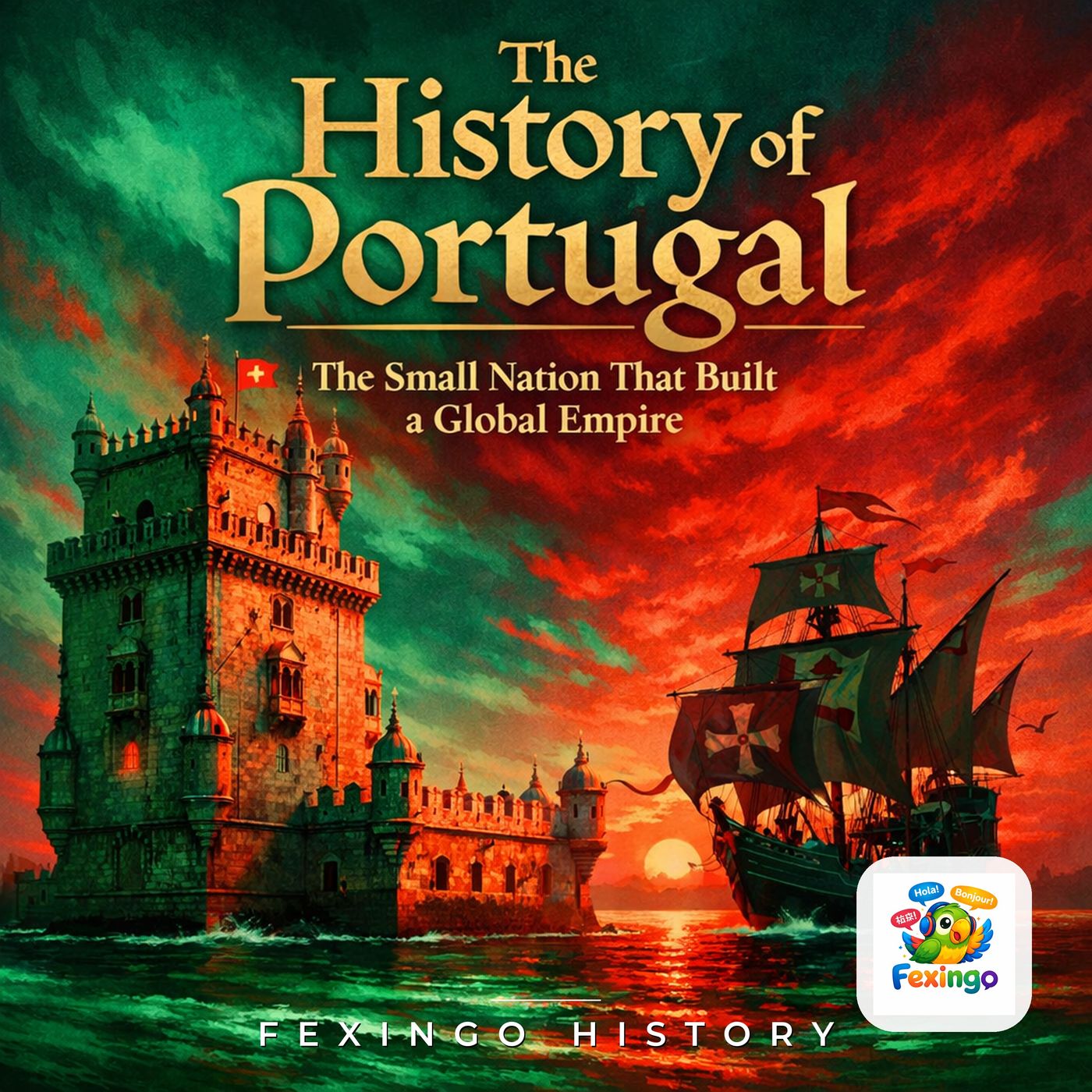
The History of Portugal: The Small Nation That Built a Global Empire — Fexingo History
by Fexingo
How did a small, sun-scorched nation on the edge of Europe become the continent's first global empire? From the reconquest of Lisbon in 1147 to the Carnation Revolution of 1974, Portugal's story is one of improbable ambition, breathtaking discovery, and profound cultural fusion. Join hosts Lucas and Luna as they trace the rise of the Kingdom of Portugal under the Burgundian dynasty, the Age of Discoveries that sent explorers like Vasco da Gama around Africa to India, and the creation of a maritime empire stretching from Brazil to Macau. They delve into the Treaty of Tordesillas, the spice trade monopoly, and the brutal realities of the slave trade that made Lisbon a wealthy capital. Along the way, they explore the avis dynasty's golden age, the devastating Lisbon earthquake of 1755, the rise of the Portuguese Empire in Africa under Salazar's Estado Novo, and the long shadow of colonialism that continues to shape Portuguese identity and its relationship with the Lusophone world. With a
-
35
Portuguese China: Macau, Pirates, and the Canton System — Fexingo History
When Portuguese traders first reached the coast of Ming China in 1513, they walked into a world they barely understood. For decades they tried to force their way into the lucrative Canton trade, only to be expelled, defeated, and eventually confined to a tiny peninsula called Macau. This episode follows the Portuguese in China from the disastrous embassy of Tomé Pires to the establishment of Macau's Senado da Câmara and the rise of the Canton system. We explore the complex relationship between the Portuguese and Ming authorities, the role of pirates like the Hoklo fleets, and how Macau became a vital link in the global silver trade. Along the way, we meet figures like Leonor de Sousa, the Portuguese widow who negotiated the first legal lease of Macau, and the Jesuit missionaries like Matteo Ricci who built bridges to the Ming court. It's a story of culture clash, adaptation, and the birth of a unique Eurasian society that lasted until 1999.#PortugueseChina #Macau #MingDynasty #CantonTrade #TomPires #LeonorDeSousa #MatteoRicci #JesuitsInChina #JorgeLvares #Lampacau #Hoklo #TamO #SenadoDaCMara #CarreiraDaIndia #SilverTrade #History #FexingoHistory #Portugal #PortugueseEmpire #AgeOfDiscoveryBecome a supporter of this podcast: https://www.spreaker.com/podcast/the-history-of-portugal-the-small-nation-that-built-a-global-empire-fexingo-history--6985259/support.
-
34
The Portuguese in Ming China: Macau and the Canton Trade — Fexingo History
In Episode 23 of The History of Portugal, Lucas and Luna dive into the tangled story of how a small Portuguese foothold on the Pearl River Delta grew into Macau, the longest-lasting European colony in China. We trace the first Portuguese landing at Tamão in 1513, the disastrous embassy of Tomé Pires that ended in a Beijing prison, and the 'luso-Chinese' accommodation that allowed traders to settle on a barren peninsula in exchange for tribute and cooperation with the Canton system. We meet the merchant-mandarin Leonor de Sousa, who negotiated the first legal trading rights; the corrupt haishidao (maritime defense intendants) who turned a blind eye; and the Chinese pirates who both threatened and collaborated with the Portuguese. We explore the unique hybrid society that emerged — where Jesuits studied Confucianism, Macau's Senate governed under Ming sovereignty, and the carreira da Índia brought silver from Japan and pepper from Malacca. No other episode covers the Ming dynasty, the Canton system, or the everyday reality of Macau's first century.#Macau #MingDynasty #CantonTrade #TomPires #LeonorDeSousa #TamO #PearlRiverDelta #JesuitsInChina #CarreiraDaNdia #PortugueseChina #SilverTrade #Haishidao #SenateOfMacau #LusoChinese #AgeOfDiscovery #History #FexingoHistory #ColonialHistory #Portugal #PortugueseEmpireBecome a supporter of this podcast: https://www.spreaker.com/podcast/the-history-of-portugal-the-small-nation-that-built-a-global-empire-fexingo-history--6985259/support.
-
33
The Last Samurai: Portugal's 1637 Shimabara Uprising — Fexingo History
In 1637, a rebellion of Japanese Christians and disaffected samurai in the Shimabara domain brought the Portuguese presence in Japan to a bloody end. Led by the teenage charismatic Amakusa Shiro, the rebels held out for months in Hara Castle against a 125,000-strong Tokugawa army. Lucas and Luna explore the uprising's roots in persecution under shogun Tokugawa Iemitsu, the role of Portuguese Jesuit missionaries, and the brutal suppression that followed. They discuss the siege tactics, the rebels' desperate faith, and the aftermath: the final expulsion of the Portuguese and the imposition of sakoku, Japan's 250-year isolation. The episode delves into the complexities of the Shimabara Rebellion, where economics, religion, and samurai honor collided, and considers whether it was truly a Christian revolt or a peasant uprising with religious overtones. Drawing on primary accounts from Dutch traders at Hirado and the letters of the Portuguese, Lucas and Luna piece together the tragedy that sealed Japan's closed country policy for over two centuries.#ShimabaraRebellion #AmakusaShiro #HaraCastle #TokugawaIemitsu #JapaneseChristian #PortugueseJapan #Sakoku #NanbanTrade #JesuitMissionaries #Kirishitan #Samurai #PeasantUprising #Nagasaki #DutchEastIndiaCompany #Hirado #17thCenturyJapan #History #FexingoHistory #Portugal #PortugueseEmpireBecome a supporter of this podcast: https://www.spreaker.com/podcast/the-history-of-portugal-the-small-nation-that-built-a-global-empire-fexingo-history--6985259/support.
-
32
Portugal in Japan: The Nanban Trade Legacy — Fexingo History
In this episode, Lucas and Luna explore the brief but transformative era of Portuguese-Japanese relations, known as the Nanban trade period (1543–1639). They dive into the introduction of the arquebus to Japan, the role of the Jesuit missionary Francis Xavier, and the complex dynamics with daimyo like Oda Nobunaga and Toyotomi Hideyoshi. Lucas explains how the Portuguese brought not only guns but also Christianity, which initially flourished before facing brutal persecution under the Tokugawa shogunate. The conversation covers the Shimabara Rebellion, the sakoku isolation policy, and the tragic fate of the Kakure Kirishitan (hidden Christians). They also discuss the tragic fates of the Tenshō embassy and the Keichō mission, including the samurai Hasekura Tsunenaga's journey to Europe. Lucas highlights how Portuguese influence lingered in Japanese culture—from the word 'tempura' to the art of nanban screens—and how the Dutch eventually replaced the Portuguese as Japan's sole Western trading partner. The episode paints a vivid picture of cultural exchange, conflict, and legacy.#NanbanTrade #PortugalJapan #FrancisXavier #ArquebusJapan #OdaNobunaga #ToyotomiHideyoshi #ShimabaraRebellion #Sakoku #KakureKirishitan #HasekuraTsunenaga #KeichoMission #TenshoEmbassy #TempuraHistory #NanbanScreens #JesuitJapan #16thCentury #History #FexingoHistory #Portugal #PortugueseEmpireBecome a supporter of this podcast: https://www.spreaker.com/podcast/the-history-of-portugal-the-small-nation-that-built-a-global-empire-fexingo-history--6985259/support.
-
31
The Portuguese in Japan: A Hundred Years of Trade and Conflict — Fexingo History
In this episode, Lucas and Luna dive into the fascinating story of the Portuguese presence in Japan during the 16th and 17th centuries. They explore how the arrival of Portuguese traders and Jesuit missionaries in 1543 sparked a cultural and technological exchange that reshaped Japan. The discussion covers the introduction of firearms (arquebuses) at Tanegashima, the Nanban trade period, the complex relationship between the Jesuits and Japanese daimyos, and the eventual backlash that led to the brutal Shimabara Rebellion and Japan's isolationist Sakoku policy. The episode highlights key figures like Francis Xavier, Oda Nobunaga, Toyotomi Hideyoshi, and Tokugawa Ieyasu, and examines how the Portuguese were ultimately expelled, leaving a legacy of hidden Christians (Kakure Kirishitan) and a lasting impact on Japanese culture.#Portuguese #Japan #Nanban #Tanegashima #FrancisXavier #Jesuits #Arquebus #ShimabaraRebellion #Sakoku #Kirishitan #KakureKirishitan #Macau #Nagasaki #Daimyo #TokugawaIeyasu #ToyotomiHideyoshi #History #FexingoHistory #Portugal #PortugueseEmpireBecome a supporter of this podcast: https://www.spreaker.com/podcast/the-history-of-portugal-the-small-nation-that-built-a-global-empire-fexingo-history--6985259/support.
-
30
The Portuguese in Japan: A Hundred Years of Trade and Conflict — Fexingo History
In this episode of The History of Portugal, Lucas and Luna explore Portugal's remarkable century-long encounter with Japan, from the accidental landing on Tanegashima in 1543 to the brutal suppression of Christianity and the final expulsion in 1639. They discuss how the Portuguese introduced firearms to Japan, transforming its warfare and politics, and how Jesuit missionaries like Francis Xavier found surprising success among feudal lords. The conversation also covers the shogunate's growing suspicion of foreign influence, the Shimabara Rebellion sparked by Christian peasants, and the sakoku isolation policy that cut Japan off from the world. Along the way, they touch on the cultural exchange that gave Japan tempura and the word 'pan' for bread, and the tragic fate of the Kakure Kirishitan who hid their faith for centuries.#PortugueseInJapan #Tanegashima #Nanban #FrancisXavier #Sakoku #ShimabaraRebellion #KakureKirishitan #JesuitMissions #Macau #Nagasaki #TokugawaIeyasu #Firearms #Tempura #ChristianityInJapan #16thCentury #HistoryOfJapan #FexingoHistory #Portugal #History #PortugueseEmpireBecome a supporter of this podcast: https://www.spreaker.com/podcast/the-history-of-portugal-the-small-nation-that-built-a-global-empire-fexingo-history--6985259/support.
-
29
Portugal's Forgotten Empire: The Spice Route That Changed Europe — Fexingo History
In this episode, Lucas and Luna dive into the story of how Portugal's control of the spice trade in the 16th century transformed European diets and economies. They explore the journey of pepper and cinnamon from the Malabar Coast to Lisbon, the role of the Casa da Índia, and the lasting impact on global commerce. Learn about the feitorias, the carreira da Índia, and the monopoly that made Portugal a superpower. The hosts also touch on the black pepper trade with the Zamorin of Calicut, the rise of Antwerp as a distribution hub, and how spices funded Portugal's imperial ambitions. This episode goes beyond the famous explorers to reveal the economic engine of the empire.#SpiceTrade #CasaDaIndia #Pepper #Cinnamon #MalabarCoast #Calicut #Zamorin #CarreiraDaIndia #Feitoria #Antwerp #Lisbon #PortugueseEmpire #16thCentury #GlobalTrade #History #FexingoHistory #Portugal #Colonialism #AgeOfDiscovery #VascoDaGamaBecome a supporter of this podcast: https://www.spreaker.com/podcast/the-history-of-portugal-the-small-nation-that-built-a-global-empire-fexingo-history--6985259/support.
-
28
The Portuguese Restoration War: How a Coup Restored a Kingdom — Fexingo History
Portugal's 60-year union with Spain ended not with a war, but with a palace coup. In 1640, a group of Portuguese nobles stormed the royal palace in Lisbon and placed the Duke of Braganza on the throne as King João IV. This episode of The History of Portugal dives into the events of December 1, 1640, the ensuing Restoration War, and the key figures who fought to re-establish Portuguese independence. We explore the political backdrop of Habsburg rule, the role of the Portuguese nobility, and the decisive battle of Montes Claros in 1665 that secured victory. Join Lucas and Luna as they unravel the complexities of a rebellion that reshaped Portugal's destiny.#PortugueseRestorationWar #JoaoIV #DukeOfBraganza #RestorationOfIndependence #1640Coup #MontesClaros #HabsburgRule #PortugalHistory #EuropeHistory #17thCentury #BraganzaDynasty #FilipeI #WarOfIndependence #PortugueseNobility #LisbonPalace #IberianUnion #FexingoHistory #History #Portugal #PortugueseEmpireBecome a supporter of this podcast: https://www.spreaker.com/podcast/the-history-of-portugal-the-small-nation-that-built-a-global-empire-fexingo-history--6985259/support.
-
27
Pedro Álvares Cabral and the Accidental Discovery of Brazil — Fexingo History
In 1500, Pedro Álvares Cabral set sail for India, but a dramatic westward swing brought him to the coast of Brazil—a land already inhabited by millions. This episode unravels Cabral's voyage, the Tupiniquim people who greeted his fleet, and how Portugal transformed a chance landing into a colonial empire. We explore the Treaty of Tordesillas, the first Mass on Brazilian soil, the extraction of pau-brasil, and the early clashes with French interlopers. Lucas and Luna discuss whether Cabral really 'discovered' Brazil or merely stumbled upon it, and what that means for history's narrative.#PedroLvaresCabral #DiscoveryOfBrazil #PortugueseEmpire #AgeOfDiscovery #Tupiniquim #TreatyOfTordesillas #PauBrasil #VascoDaGama #CaboFrio #PortoSeguro #FirstMassInBrazil #Butantan #FexingoHistory #History #Colonialism #IndigenousPeoples #Navigation #GlobalTrade #Portugal #PrinceHenryTheNavigatorBecome a supporter of this podcast: https://www.spreaker.com/podcast/the-history-of-portugal-the-small-nation-that-built-a-global-empire-fexingo-history--6985259/support.
-
26
The Lisbon Rebuilding: Portugal's Grid City Revolution — Fexingo History
In 1755, a devastating earthquake and tsunami leveled Lisbon, but from the rubble rose a vision of modernity. In this episode, Lucas and Luna explore the Marquês de Pombal's radical rebuilding plan—the Baixa Pombalina. They uncover how Portugal, led by its formidable prime minister, imposed a grid of wide, symmetrical streets, complete with early seismic engineering like the 'Pombaline cage' wooden frames. The conversation delves into the social upheaval: the relocation of the poor to outlying districts like Alcântara, the destruction of the Jewish quarter and its displacement to the new, regulated Rua da Prata. They also reflect on how the earthquake reshaped Portuguese thought, challenging religious fatalism and paving the way for Enlightenment ideals. A forgotten figure appears: the architect Eugénio dos Santos, whose daring plans were realized despite immense opposition. This episode reveals how Lisbon's downtown became a laboratory for urbanism, influencing later reconstructions from London to San Francisco.#LisbonEarthquake #MarquSDePombal #BaixaPombalina #SeismicEngineering #UrbanPlanning #Enlightenment #PortugalHistory #AlcNtara #RuaDaPrata #EugNioDosSantos #PombalineCage #1755Earthquake #Tsunami #GridCity #History #FexingoHistory #PortugalEmpire #18thCentury #Portugal #PortugueseEmpireBecome a supporter of this podcast: https://www.spreaker.com/podcast/the-history-of-portugal-the-small-nation-that-built-a-global-empire-fexingo-history--6985259/support.
-
25
The Treaty of Tordesillas: How Spain and Portugal Split the World — Fexingo History
In 1494, just two years after Columbus stumbled upon the Americas, Portugal and Spain signed a treaty that carved up the non-European world between them. This episode dives into the backroom negotiations, papal politics, and bitter rivalries that produced the Treaty of Tordesillas. Lucas and Luna explore how Pope Alexander VI's initial bulls gave Spain too much, how Portugal's King João II pushed back, and why a line 370 leagues west of the Cape Verde islands ended up shaping the destinies of Brazil, Africa, and Asia. They discuss the flawed geography of the era—how no one knew where the line actually fell—and the treaty's long legacy, from Portuguese claims in Brazil to the eventual irrelevance of a document that tried to divide the unexplored globe. Along the way, they touch on key figures like the Spanish monarchs Ferdinand and Isabella, the Portuguese king, and the Spanish-born pope who tried to keep the peace between two Catholic powers. It's a story of ambition, cartography, and the audacity of drawing lines on a map you've never seen.#TreatyOfTordesillas #Portugal #Spain #AgeOfDiscovery #Columbus #PopeAlexanderVI #KingJohnII #FerdinandAndIsabella #InterCaetera #Brazil #CapeVerde #History #FexingoHistory #GlobalHistory #Colonialism #Exploration #Diplomacy #Cartography #PortugueseEmpire #VascoDaGamaBecome a supporter of this podcast: https://www.spreaker.com/podcast/the-history-of-portugal-the-small-nation-that-built-a-global-empire-fexingo-history--6985259/support.
-
24
Portugal's Window to the World: The Azores and Madeira — Fexingo History
In this episode, Lucas and Luna explore how Portugal's discovery and settlement of the Azores and Madeira in the 15th century transformed a small European kingdom into an Atlantic power. They discuss the voyages of João Gonçalves Zarco and Tristão Vaz Teixeira, the introduction of sugarcane and the 'sweet wine' of Madeira, the role of the islands as a stopping point for explorers and slave ships, and the tragic first contact with the Guanches in the Canary Islands. The episode covers the impact of the Treaty of Alcáçovas (1479), the development of a unique island society, and how these islands became a model for later colonial ventures in the Americas and Asia. Lucas details the ecological changes brought by settlers and the strategic importance of the Azores in transatlantic navigation, including its role in the Portuguese 'Sea of Shadows' and later as a hub for whaling. The conversation highlights the human cost of colonization and the blending of cultures that shaped the Atlantic world.#Azores #Madeira #Portugal #AgeOfDiscovery #JoOGonAlvesZarco #TristOVazTeixeira #Sugarcane #MadeiraWine #AtlanticHistory #Colonialism #Guanches #CanaryIslands #TreatyOfAlcOvas #Whaling #HistoryOfPortugal #EuropeanHistory #FexingoHistory #MaritimeHistory #History #PortugueseEmpireBecome a supporter of this podcast: https://www.spreaker.com/podcast/the-history-of-portugal-the-small-nation-that-built-a-global-empire-fexingo-history--6985259/support.
-
23
The Portuguese Slave Trade: Empire Built on Human Cargo — Fexingo History
In this episode, Lucas and Luna explore the dark engine of Portugal's global empire: the slave trade. They trace its origins from the first African captives brought to Lisbon in 1444, through the development of the sugar plantation system on São Tomé, to the transatlantic slave trade that shipped millions to Brazil. Lucas explains the role of the Casa da Índia and the monopolies that made the trade a state enterprise, the brutal conditions on slave ships like the São João Bautista, and the moral debates among figures like Padre António Vieira. The conversation also covers the maroon settlements (quilombos) and the eventual abolition efforts led by figures like Joaquim Nabuco. Specific names and terms include: Gil Eanes, Lançarote de Freitas, Henry the Navigator, São Tomé, Cap Vert, Mina, Luanda, Benguela, Salvador da Bahia, Rio de Janeiro, Casa da Índia, Contrato de Escravos, quinto, almojarifazgo, São João Bautista, Ilhéus, Palmares, Zumbi, Mestre António, Padre António Vieira, Joaquim Nabuco, Lei Áurea, 1888.#Portugal #History #SlaveTrade #PortugueseEmpire #AtlanticSlaveTrade #SOTom #Brazil #Luanda #Slavery #Colonialism #Palmares #Zumbi #JoaquimNabuco #LeiUrea #CasaDaIndia #MiddlePassage #FexingoHistory #Podcast #AgeOfDiscovery #VascoDaGamaBecome a supporter of this podcast: https://www.spreaker.com/podcast/the-history-of-portugal-the-small-nation-that-built-a-global-empire-fexingo-history--6985259/support.
-
22
Pestana's Last Stand: Portugal's Forgotten Brazilian Rebellion — Fexingo History
In this episode of The History of Portugal, Lucas and Luna explore the Beckman Revolt, a colonial uprising in Maranhão that nearly cost Portugal its Amazon foothold. In 1684, wealthy sugar planter Manuel Beckman led a rebellion against the monopoly of the Companhia do Comércio do Maranhão, which controlled trade and enslaved Indigenous people. The rebels seized the city of São Luís, expelled the Jesuits for defending Indigenous rights, and established a short-lived government. Lucas unpacks the economic desperation behind the revolt—how falling sugar prices and brutal slave raids created an explosive mix. He also reveals the role of Beckman's brother, Tomás, and the family's Jewish heritage, which authorities used to smear the rebellion. The conversation covers the crown's brutal suppression, the execution of the Beckman brothers, and the surprising legacy of the revolt in paving the way for the eventual abolition of the Jesuit missions. With vivid details of Amazonian geography and the politics of the Estado do Grão-Pará e Maranhão, this episode sheds light on a pivotal but little-known chapter of Portuguese colonial history.#BeckmanRevolt #ManuelBeckman #MaranhO #Brazil #CompanhiaDoComRcioDoMaranhO #Jesuits #IndigenousSlavery #ColonialBrazil #PortugueseEmpire #SOLuS #EstadoDoGrOParEMaranhO #SugarCrisis #Amazon #JesuitMissions #TomSBeckman #History #FexingoHistory #ColonialResistance #Portugal #AgeOfDiscoveryBecome a supporter of this podcast: https://www.spreaker.com/podcast/the-history-of-portugal-the-small-nation-that-built-a-global-empire-fexingo-history--6985259/support.
-
21
The Portuguese Inquisition: Faith, Fear, and Empire — Fexingo History
In this episode, Lucas and Luna explore the Portuguese Inquisition, established in 1536 under King João III. They discuss its origins in the wake of the Reconquista and the forced conversions of Jews in 1497, the role of the Dominican order, and the infamous auto-da-fé ceremonies. The conversation covers the tribunal's methods—denunciation, secret trials, and torture—as well as its targets: New Christians, heretics, and even intellectuals like the playwright António José da Silva. They touch on the Inquisition's censorship of books and its control over cultural life, and highlight the eventual decline under the Marquês de Pombal in the 18th century. The episode provides a nuanced look at how the Inquisition shaped Portuguese society and its lasting legacy.#PortugueseInquisition #AutoDaFe #NewChristians #JoaoIII #DominicanOrder #AntonioJoseDaSilva #MarquesDePombal #Censorship #Torture #Heresy #Judaism #Reconquista #16thCentury #17thCentury #18thCentury #Lisbon #History #FexingoHistory #Portugal #PortugueseEmpireBecome a supporter of this podcast: https://www.spreaker.com/podcast/the-history-of-portugal-the-small-nation-that-built-a-global-empire-fexingo-history--6985259/support.
-
20
The Battle of Alcácer Quibir: Portugal's Catastrophic Crusade — Fexingo History
In 1578, a young, impetuous Portuguese king named Sebastião led a massive crusading army into North Africa, aiming to conquer the Saadian Sultanate of Morocco. The result was the Battle of Alcácer Quibir (also known as the Battle of the Three Kings), a devastating defeat that killed Sebastião and much of the Portuguese nobility, and led directly to the end of the Aviz dynasty and sixty years of Spanish Habsburg rule. This episode explores the religious zeal that drove Sebastião, the complex geopolitics of Morocco involving the Saadian sultan Abd al-Malik and his deposed uncle Abu Abdallah, the battle itself at Wadi al-Makhazin near Ksar el-Kebir, and the bizarre aftermath where Sebastião's body was never clearly identified, spawning a myth that he would return on a foggy day to save Portugal—the Sebastianismo myth that persisted for centuries. We also discuss the impact on Portugal's empire, including the loss of independence and the subsequent decline of its Asian trade.#BattleOfAlcCerQuibir #SebastiOOfPortugal #SaadianSultanate #AbdAlMalik #AbuAbdallah #Morocco #Crusade #ThreeKings #WadiAlMakhazin #KsarElKebir #AvizDynasty #IberianUnion #Sebastianismo #PortugueseHistory #16thCentury #Battle #History #FexingoHistory #Portugal #PortugueseEmpireBecome a supporter of this podcast: https://www.spreaker.com/podcast/the-history-of-portugal-the-small-nation-that-built-a-global-empire-fexingo-history--6985259/support.
-
19
The Battle of Diu That Made Portugal Master of the Indian Ocean — Fexingo History
In 1509, a small Portuguese fleet under Francisco de Almeida crushed a combined Mamluk-Gujarati-Ottoman armada off the coast of Diu, forever changing the balance of power in the Indian Ocean. This episode dives into the forgotten but pivotal Battle of Diu: why it happened, the ingenious Portuguese tactics (including the use of carracks and broadsides against traditional dhow warfare), and how it opened the door for Portugal to dominate spice trade for a century. We also explore the backroom politics in Cairo and Calicut, the role of the Mamluk Sultan Al-Ashraf Qansuh al-Ghawri, and the controversial legacy of Almeida himself—who died just months later in a skirmish at the Cape of Good Hope. Essential listening for anyone interested in naval history, early modern globalization, or the rise of European colonialism.#BattleOfDiu #FranciscoDeAlmeida #MamlukSultanate #GujaratSultanate #OttomanEmpire #PortugueseEmpire #IndianOcean #NavalHistory #SpiceTrade #AgeOfDiscovery #Cochin #Calicut #Zamorin #AlAshrafQansuhAlGhawri #HusseinAlKurdi #MalikAyyaz #History #FexingoHistory #Portugal #VascoDaGamaBecome a supporter of this podcast: https://www.spreaker.com/podcast/the-history-of-portugal-the-small-nation-that-built-a-global-empire-fexingo-history--6985259/support.
-
18
Africa's Unconquerable Queen: Nzinga of Ndongo and Matamba — Fexingo History
In this episode, Lucas and Luna explore the extraordinary life of Queen Nzinga of Ndongo and Matamba (present-day Angola), a 17th-century African ruler who defied Portuguese colonialism for decades. They discuss her diplomatic cunning—including her famous 1622 audience with the Portuguese governor where she refused to sit on the floor, forcing him to provide a chair—and her strategic alliances with the Dutch and neighboring kingdoms. The conversation also touches on the complexities of the Atlantic slave trade, Nzinga's military leadership, and her later embrace of Christianity as a political tool. Lucas corrects the common myth that Nzinga was a towering Amazon warrior, instead presenting a nuanced portrait of a shrewd politician who used every tool available to preserve her people's sovereignty. The episode highlights the forgotten histories of African resistance to European empire-building, and raises questions about how Portugal's global empire depended on complex relationships with African powers.#QueenNzinga #Ndongo #Matamba #Angola #PortugueseEmpire #AtlanticSlaveTrade #17thCentury #AfricanHistory #Colonialism #Diplomacy #Luanda #DutchWestIndiaCompany #CapuchinMissionaries #Resistance #History #FexingoHistory #Portugal #WomenInHistory #AgeOfDiscovery #VascoDaGamaBecome a supporter of this podcast: https://www.spreaker.com/podcast/the-history-of-portugal-the-small-nation-that-built-a-global-empire-fexingo-history--6985259/support.
-
17
Prince Henry the Navigator Myth vs Reality — Fexingo History
In this episode, Lucas and Luna dig into the legacy of Infante Dom Henrique — better known as Prince Henry the Navigator. Was he really the visionary who launched Portugal's Age of Discovery? They explore the myth and the man behind it: his role in the conquest of Ceuta, his sponsorship of voyages down the African coast, and his governorship of the Order of Christ. They discuss the Escola de Sagres — long romanticized as a naval academy but likely more legend than fact. They look at the actual mariners, like Gil Eanes, who rounded Cape Bojador in 1434, and the economic motives — gold, slaves, and spices — that drove exploration. They also touch on the darker side: the first enslaved Africans brought to Lagos in 1444 and the papal bulls that sanctioned Portuguese expansion. By the end, a clearer picture emerges of a prince who was more a medieval crusader than a modern scientist, yet whose patronage irrevocably changed the world.#PrinceHenryTheNavigator #InfanteDomHenrique #EscoladeSagres #CapeBojador #GilEanes #Ceuta #OrderOfChrist #AgeOfDiscovery #PortugueseEmpire #LagosSlaveMarket #PapalBull #RomanusPontifex #Caravel #Madeira #PortoSanto #History #FexingoHistory #PortugalHistory #Portugal #VascoDaGamaBecome a supporter of this podcast: https://www.spreaker.com/podcast/the-history-of-portugal-the-small-nation-that-built-a-global-empire-fexingo-history--6985259/support.
-
16
The Battle of Ceuta: Portugal's Imperial Dawn — Fexingo History
In this episode, Lucas and Luna explore the pivotal 1415 conquest of Ceuta, the fortified Muslim port on the North African coast that launched Portugal's overseas empire. They examine King João I's political motives—securing his new dynasty's legitimacy after the 1383-1385 crisis—and the strategic importance of controlling the Strait of Gibraltar. The conversation delves into the roles of Prince Henry the Navigator and his brothers, the brutal sack of the city, and the long-term consequences: the establishment of North African garrisons (praças), the strain on Portuguese resources, and the unintended catalyst for Atlantic exploration. Lucas explains how Ceuta opened the door to the slave trade, sugar plantations in Madeira, and the eventual rounding of Cape Bojador. They also discuss the contested narratives: was Ceuta a crusade, a commercial venture, or a dynastic gamble? The episode ends by reflecting on how this single battle set Portugal on a centuries-long path of global expansion and its mixed legacy of violence and innovation.#Ceuta #Portugal #PrinceHenryTheNavigator #KingJoaoI #BattleOfCeuta #Morocco #StraitOfGibraltar #AgeOfDiscovery #15thCentury #Crusade #PortugueseEmpire #NorthAfrica #HenryTheNavigator #PraAs #Madeira #SugarPlantations #History #FexingoHistory #VascoDaGama #TreatyOfTordesillasBecome a supporter of this podcast: https://www.spreaker.com/podcast/the-history-of-portugal-the-small-nation-that-built-a-global-empire-fexingo-history--6985259/support.
-
15
Portugal's Jewish Legacy: From Golden Age to Inquisition — Fexingo History
In this episode, Lucas and Luna explore the profound impact of Portugal's Jewish community, from its flourishing under early monarchs to its tragic dissolution during the Inquisition. They discuss the rise of Jewish scholars and financiers who shaped the court of King Dinis, the pivotal role of figures like Isaac Abravanel in the Age of Discovery, and the brutal campaigns that led to forced conversions, massacres, and the Diaspora. The conversation also touches on the cultural remnants like the Judiarias (Jewish quarters), the architectural legacy in Tomar's Synagogue, and the enduring influence of the Portuguese Jewish diaspora in Amsterdam and beyond. Lucas balances historical facts with human stories, such as the 1506 Lisbon Massacre and the crypto-Jews who secretly kept their faith. This episode offers a nuanced look at a chapter often overshadowed by Portugal's overseas empire, revealing how the nation's identity was deeply intertwined with its Jewish heritage.#PortugueseJews #Inquisition #IsaacAbravanel #1506Massacre #CryptoJews #Judiarias #TomarSynagogue #KingDinis #AgeOfDiscovery #SephardicDiaspora #PortugalHistory #EuropeanHistory #ReligiousPersecution #Lisbon #ForcedConversion #JewishHeritage #FexingoHistory #History #Portugal #PortugueseEmpireBecome a supporter of this podcast: https://www.spreaker.com/podcast/the-history-of-portugal-the-small-nation-that-built-a-global-empire-fexingo-history--6985259/support.
-
14
The Lisbon Earthquake of 1755: Faith, Science, and Rebuilding — Fexingo History
In 1755, Lisbon was the glittering capital of a global empire—then the ground shook. Over the course of a single morning, a massive earthquake, a tsunami, and a firestorm reduced much of the city to rubble and killed tens of thousands. In this episode, Lucas and Luna explore the disaster that shattered Portugal's confidence, sparked a theological crisis across Europe, and gave rise to the modern science of seismology. They follow the Marquis of Pombal's astonishingly modern relief and rebuilding effort—including the world's first coordinated disaster response, the reconstruction of downtown Lisbon with earthquake-resistant buildings, and the psychological blow that helped end Portugal's Golden Age. Along the way, they discuss Voltaire's critique of optimism, the political fallout for the Catholic Church, and how a national trauma can reshape a country's identity. This is a story of catastrophe, resilience, and the dawn of Enlightenment thinking in Portugal.#LisbonEarthquake1755 #MarquisOfPombal #EnlightenmentPortugal #PortugalHistory #Lisbon #DisasterHistory #Seismology #Voltaire #Tsunami #Rebuilding #18thCentury #Candide #PombalineBaixa #Earthquake #History #FexingoHistory #EuropeanHistory #NaturalDisaster #Portugal #PortugueseEmpireBecome a supporter of this podcast: https://www.spreaker.com/podcast/the-history-of-portugal-the-small-nation-that-built-a-global-empire-fexingo-history--6985259/support.
-
13
The Small Nation That Built a Global Empire – Portugal's Rise — Fexingo History
In this pilot episode of The History of Portugal, Lucas and Luna begin at Belém Tower, the iconic fortress that once guarded Lisbon's harbor and launched ships toward unknown horizons. They explore how a tiny, windswept kingdom on the edge of Europe became the first global empire, driven by a mix of crusading zeal, commercial ambition, and technological daring. Lucas introduces key figures like Prince Henry the Navigator, who never sailed but sent others to map the African coast; King João I, who secured Portugal's independence at the Battle of Aljubarrota; and the explorers who rounded Cape Bojador and opened the sea route to India. They discuss the caravel, a revolutionary ship that combined lateen sails from Arab dhows with European hull designs. The episode also touches on the Treaty of Tordesillas, which divided the non-Christian world between Portugal and Spain, and the human cost: the beginning of the Atlantic slave trade. Lucas and Luna tease future episodes covering the Lisbon earthquake, the rise of the Portuguese Empire in Brazil, Africa, and Asia, and the country's eventual decline. This episode sets the stage for a nation that punched far above its weight.#History #FexingoHistory #Portugal #BelMTower #AgeOfDiscovery #PrinceHenry #Caravel #BattleOfAljubarrota #TreatyOfTordesillas #CapeBojador #AtlanticSlaveTrade #GlobalEmpire #EuropeanHistory #Exploration #Navigation #Lisbon #PortugueseEmpire #MaritimeHistory #VascoDaGama #PrinceHenryTheNavigatorBecome a supporter of this podcast: https://www.spreaker.com/podcast/the-history-of-portugal-the-small-nation-that-built-a-global-empire-fexingo-history--6985259/support.
No matches for "" in this podcast's transcripts.
No topics indexed yet for this podcast.
Loading reviews...
ABOUT THIS SHOW
How did a small, sun-scorched nation on the edge of Europe become the continent's first global empire? From the reconquest of Lisbon in 1147 to the Carnation Revolution of 1974, Portugal's story is one of improbable ambition, breathtaking discovery, and profound cultural fusion. Join hosts Lucas and Luna as they trace the rise of the Kingdom of Portugal under the Burgundian dynasty, the Age of Discoveries that sent explorers like Vasco da Gama around Africa to India, and the creation of a maritime empire stretching from Brazil to Macau. They delve into the Treaty of Tordesillas, the spice trade monopoly, and the brutal realities of the slave trade that made Lisbon a wealthy capital. Along the way, they explore the avis dynasty's golden age, the devastating Lisbon earthquake of 1755, the rise of the Portuguese Empire in Africa under Salazar's Estado Novo, and the long shadow of colonialism that continues to shape Portuguese identity and its relationship with the Lusophone world. With a
HOSTED BY
Fexingo
Loading similar podcasts...
URL copied to clipboard!