
PODCAST · business
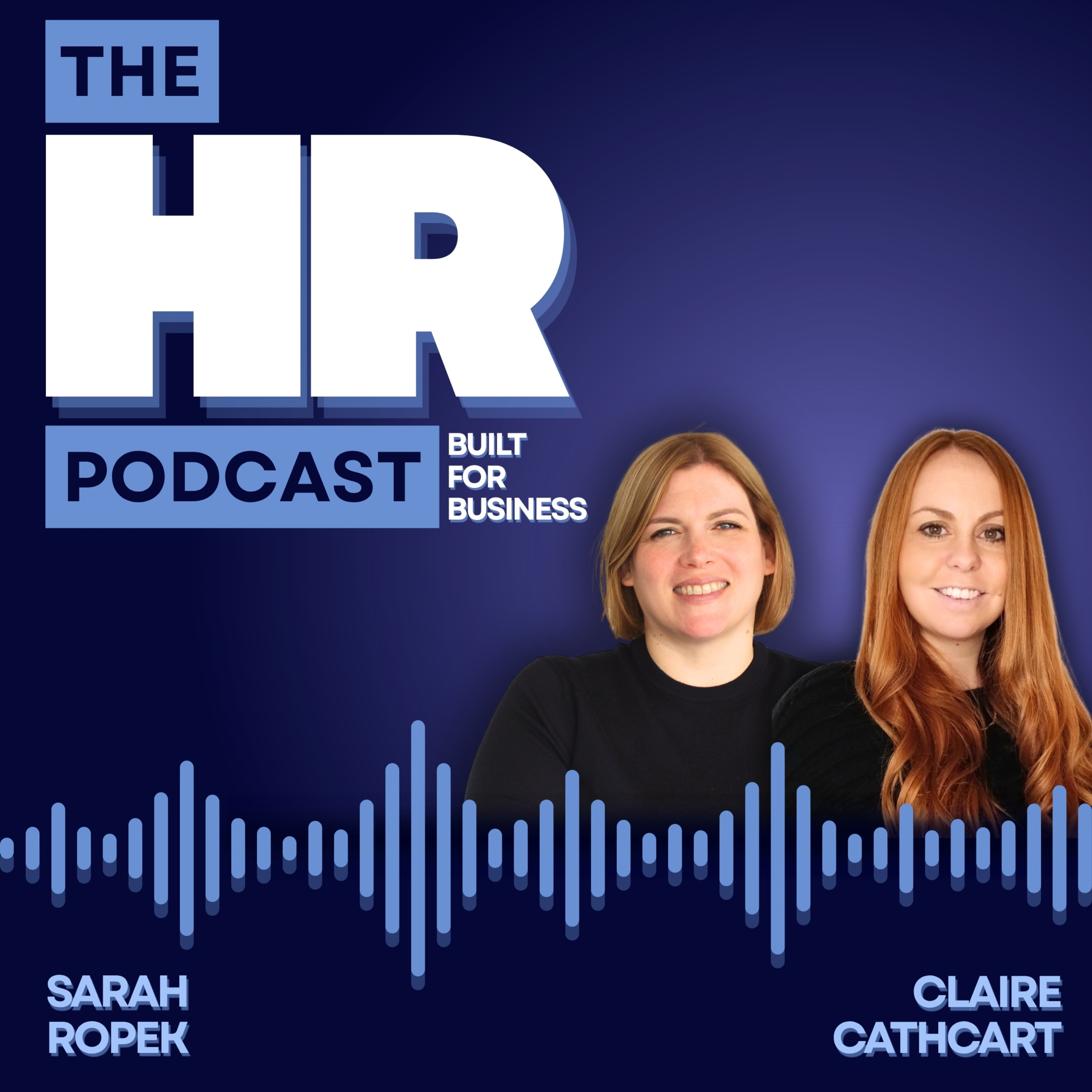
The HR Podcast | Built for Business
by Sarah Ropek & Claire Cathcart | HR Advice for Business Owners &HR Professionals
Practical HR advice for small business owners, managers and HR professionals in the UK. Each episode covers the employment law, people management and workplace challenges they actually face - from disciplinaries and dismissals to hiring, redundancy, performance and culture. Whether you're dealing with a difficult employee, building your first HR process, or trying to stay on the right side of employment law, you'll find straight-talking guidance here. Honest, practical conversations with the people who deal with this stuff every day. Hosted by Sarah Ropek and Claire Cathcart
-
22
Why Are My Job Applicants Ghosting Me?
Why Candidates Are Ghosting You (And What To Do About It)Candidates ghosting your recruitment process? This episode covers why it happens, what your hiring process signals, and how to fix candidate experience. Listen now.If candidates are disappearing after interview invitations — or not showing up on day one — the instinct is to blame applicants. But 56% of UK employers admit they're likely to ghost candidates themselves. If it's happening to you consistently, your hiring process is telling people something you don't intend.In this episode, Claire and Sarah cover why candidate ghosting has become so common, what drives it on both sides, and the specific things — a clunky assessment, slow responses, a bad Glassdoor profile — that make people disappear before they've even met you.Candidate ghosting is a symptom, not the problem. It's usually telling you something about the experience you're creating — often before a candidate has spoken to anyone in the business.Employers ghost candidates just as much. If you want people to treat your process with respect, the standard has to start with you. Auto-regrets, timely updates, and brief feedback after interview cost very little.Too many stages and awkward assessments drive drop-off. If candidates are disappearing at a specific stage, that stage is worth reviewing. Streamline before blaming the market.The gap between offer and start date is high-risk. Keep candidates warm and communicate regularly — this is where many no-shows originate.Your Glassdoor profile matters. Candidates research you after being invited to interview. Respond to reviews — positive and negative — to show you're a listening organisation.Some ghosting reflects the current job market. People apply speculatively, circumstances change, and they stay put. Not all of it is about your process — but it's worth checking.Candidates who interviewed deserve feedback. A brief personalised email explaining why they weren't successful costs nothing and leaves a lasting impression, even in rejection.[00:01] Why candidate ghosting is increasing[02:29] Are job adverts even real vacancies?[05:44] Speculative applications in a tough market[08:09] How your process causes drop-off[11:46] Glassdoor and employer brand[13:08] Assessments and multi-stage design[16:43] What candidates deserve after interview[18:28] What ghosting is really telling youResourcesCIPD 2024 research — new starters failing to show up and early resignations data: cipd.orgCV Genius survey — 56% of UK employers admit ghosting candidates: cvgenius.comGlassdoor — employer reviews: glassdoor.co.ukcandidate ghosting UK, why candidates ghost employers, recruitment process improvement, candidate experience, employer communication hiring, Glassdoor employer brand, hiring drop-off, HR podcast UK, recruitment best practices, new starter no-show
-
21
Is Pet Bereavement Leave a Step Too Far?
Pet Bereavement Leave UK: Should You Offer It?No legal obligation exists for pet bereavement leave in the UK — but what should you actually do? Practical advice for small business owners handling this well. If an employee came to you tomorrow morning, red-eyed, and told you their dog had died — what would you do? There’s no legal entitlement to pet bereavement leave in the UK, but that doesn’t make the answer straightforward. In this episode, Sarah and Claire work through what small business owners should actually consider when a member of staff loses a pet: whether to offer time off, whether to pay for it, whether a formal bereavement policy helps or just creates rigidity, and why how you handle these moments says more about your culture than almost anything in your employee handbook. Practical, honest, and grounded in real HR experience — including a few stories you won’t forget.Key TakeawaysThere is no legal right to pet bereavement leave in the UK — but that doesn’t mean the right answer is automatically no. If someone is too distressed to function, sending them back to their desk helps no one. A formal pet bereavement leave policy isn’t always the answer. For smaller businesses especially, handling these situations case by case — with consistency and compassion — often works better than a rigid policy that invites gaming.Pay is the harder question. Whether time off is paidshould reflect the broader decisions you’re already making in your business — if dependency leave is unpaid, pet bereavement leave probably should be too.Flexibility matters more than a blanket rule. Somepeople need two days; others are back at their laptop the following morning. Asking “what do you need?” is often more useful than a policy that prescribes the answer.Consistency across managers is a genuine risk. Onemanager might give three days’ paid leave; another might tell someone to get on with it. HR should be involved to ensure comparable situations are handledcomparably.If you do have a bereavement policy, consider broadening it to encompass significant pet loss rather than creating a standalone policy — and avoid specifying exact days, which strips out the humanjudgement these situations need.Proof is a thorny issue. Unlike human bereavement,there’s no death certificate for a pet. The better safeguard is knowing your people well enough to spot when something doesn’t add up — not demandingevidence from someone who’s just lost an animal they loved. [00:00] Is pet bereavement leave a step too far?[00:49] What the data actually shows[01:05] The honest, human answer[03:15] Should there be a formal policy?[05:56] Flexibility over rigid rules[07:41] Does the type of pet matter?[12:14] Proof, evidence and trust[15:03] Small business vs large business approach[19:30] How to wrap your bereavement policy aroundthis The statistics cited come from:UK Pet Food — 60% of UK households own at least one pet(around 17 million homes)A survey of over 6,000 British adults — 43% supportstatutory paid pet bereavement leave; nearly one in four say employers definitely should offer itpet bereavement leave UK, compassionate leave small business, employee wellbeing UK, bereavement policy UK, HR advice for small business owners, pet loss at work, time off for pet death UK, UK employment law podcast, people management practical advice, HR podcast UK founders
-
20
Two Teams, One Culture. How do You Make it Work?
Culture Integration After a Team Merger: What Actually WorksMerging two teams with different cultures? This episode covers what leaders get wrong in M&A and how to make culture integration actually work. Listen now.If your business has just merged two teams — through an acquisition, a restructure, or a cost-saving consolidation — you already know the business case. What nobody prepares you for is how hard the people part is. Research from Ernst & Young and Harvard Business Review shows 70 to 90% of mergers and acquisitions fail or underperform, and cultural misalignment is one of the most cited reasons.In this episode, Claire and Sarah draw on real M&A experience to cover what goes wrong when two teams with different cultures are pushed together, why HR is almost always brought in too late, what leaders promise that they can't deliver, and why something as small as a set of cups can undo months of goodwill.Culture is almost never assessed during due diligence — and it should be. By the time most businesses think about cultural fit, they're already deep into consultation."Nothing will change" is rarely true, and always a problem. Promises made at CEO level filter down to employees who then feel misled when payroll dates shift, benefits change, or reporting lines move.The small stuff matters more than the big stuff. The million-pound deal gets signed in a boardroom. The culture falls apart over cups, car parking, and Friday finish times. Ignore these signals at your peril.HR needs to be in the room before the deal is done. The commercial case gets scrutinised. The people risks — ET claims, long-term absence, cultural incompatibility — rarely get the same attention until it's too late.Leadership alignment is non-negotiable. If leaders aren't giving consistent messages from day one, the teams beneath them will fill the silence with their own assumptions — and those assumptions are rarely positive.The first 90 days set the tone for everything. How leaders communicate, what they prioritise, and how quickly they tackle the us-versus-them dynamic will determine whether integration succeeds or quietly fails.Culture change takes months, not weeks. If you're measuring integration in weeks, you're measuring the wrong thing.[00:01] Why cultural misalignment causes M&A failures[01:24] Culture never assessed in due diligence[02:59] The promises leaders make that unravel[06:54] Big business buying small: the culture clash[08:16] Why HR is brought in too late[11:00] The cups story: small changes, big cultural weight[15:46] What actually drives successful integration[16:43] First 90 days and the danger of silenceculture integration after merger, M&A people challenges, team merger culture clash, business acquisition HR, organisational culture change, change management small business, merging teams different cultures, leadership alignment merger, HR due diligence acquisition, employee engagement restructure
-
19
What to do When Your Top Performer is Toxic
Toxic High Performer: What To Do When They Deliver But DestroyYour top performer hits every target but makes everyone else miserable. Here's how to handle a toxic high performer before it costs you the team. Listen now.If your best performer is also your biggest problem, you're not alone — and you're not imagining it. Toxic workplace culture costs the UK economy over £20 billion a year, and 27% of SME employees have quit because of it. When someone is brilliant at the job but brutal to work with, it creates one of the hardest calls a business owner or manager faces: do the numbers justify the damage?In this episode, Claire and Sarah work through exactly what to do when you've got a toxic high performer on your hands. You'll learn why hitting targets alone doesn't equal good performance, how to build the evidence you need before having the conversation, and what happens if the behaviour doesn't change. Whether you've been avoiding this situation for months or you're right in the middle of it, this episode will give you a clear, practical path forward.Hitting targets is only half of performance. What someone delivers and how they deliver it are both part of the picture. A toxic high performer who damages relationships and drives people out is not fully performing, whatever the numbers say.The commercial cost is real. Every good person who leaves because of one difficult colleague costs you recruitment fees, lost knowledge, and a signal to the rest of the team about what you're willing to tolerate.In small businesses, the impact lands harder. When your team is five to twenty people, one person's toxic behaviour shapes what everyone else thinks is normal. It becomes the culture.Evidence before the conversation. Vague feedback does not land with high performers. You need specific examples of behaviours, a clear picture of the impact, and an equally clear description of what good looks like going forward.Use what you already have. Competency frameworks, company values, and 360 feedback aren't just nice-to-haves — they give you documented standards to point to when the person says "but I'm generating the revenue."If the behaviour has been allowed for years, the individual deserves context. It's not fair to suddenly score someone down on behaviours they've never been pulled up on. Hold the mirror up, explain the impact, and give them a genuine chance to change.At some point, it becomes a choice. If genuine attempts to address the behaviour don't work, the question is what you're willing to accept in your culture — including the reality that anyone who works under that person is likely to leave within six months.[00:00] Is a toxic top performer really performing?[01:55] Why businesses avoid the conversation[05:30] What to do if they push back[07:19] Competency frameworks and 360 feedback[10:07] How to start tackling long-standing toxic behaviour[12:23] PIPs, documentation, and formal process[14:49] Small business vs big business: the difference[17:24] When behaviour doesn't change: the final decisionReferencesBreathe HR Culture Economy Report — referenced for UK toxic culture cost data and SME employee turnover statistics: breathehr.comtoxic high performer, managing difficult employees UK, toxic employee at work, high performer bad attitude, brilliant jerk workplace, HR advice for small business, managing toxic employees, performance management UK, toxic workplace culture, how to handle a difficult employee
-
18
How to Create an Inclusive Workplace
How to Create an Inclusive Workplace: The Small Things That Make a Big DifferenceEpisode SummaryInclusion isn't a policy document. It shows up in the small, everyday decisions — whether your team socials always end up at the pub on a Friday, whether there's somewhere quiet for someone to decompress or pray, whether a new mum returning from maternity leave has a private space to express milk. In this episode, Claire Cathcart and Sarah Ropek break down the practical, low-cost things that make people genuinely feel like they belong — and what you're communicating when you get them wrong.The stats: CIPD research shows employees who feel included are significantly more engaged and far less likely to leave. A Deloitte study found 39% of workers have altered their behaviour at work just to fit in.Inclusion isn't about big EDI strategies — it's the small things people actually notice day to day.Team socials matter. Always Friday at the pub? That excludes single parents, non-drinkers, carers, and people with religious commitments.The Christmas party question — would calling it a winter social open the door to more of your team?Food is inclusion too. Halal, gluten-free, dairy-free — if you can accommodate it, why wouldn't you?Neurodiversity requires individual conversations, not blanket policies. Ask people what works for them.Onboarding is your best opportunity to understand what someone needs before they start working around your defaults.Culture comes from the top. If leaders aren't modelling this, it won't embed across the organisation.Most of this costs very little. What it takes is awareness and a willingness to ask.Rethinking team socials — vary the format, time, and setting. Lunchtime events, non-alcohol-centred activities, and flexible timing open your social calendar to people who currently feel excluded from it — or attend out of obligation rather than choice.Neurodiversity in practice — noise-cancelling headphones, flexible break patterns, quiet spaces. None of these are radical. Ask individuals what they need rather than assuming one approach works for everyone.Onboarding — ask new starters early what they need to do their best work. Most won't raise it unless there's a safe space to do so. Building it into the offer stage is even better.Leadership — if leaders aren't modelling inclusive behaviour, it won't filter down. Curiosity matters more than policy.Audit your team socials — ask what people would actually enjoy, not what you assume.Create a quiet space — somewhere to pray, decompress, or express milk sends a clear message.Add a question to onboarding — "what do you need to do your best work here?"Check your event catering — halal and allergen-friendly options are easy when you ask upfront.Use surveys or focus groups to understand what your people actually value.CIPD Inclusion and Diversity research — cipd.orgDeloitte Inclusion research — deloitte.comClaire Cathcart — founder of the Elevate Hub, helping people professionals build strategic confidence and commercial impact.Sarah Ropek — fractional HR specialist supporting small businesses and start-ups with practical, fit-for-purpose HR.Got a question? Head to hrpodcast.co.uk to submit it for a future episode. Like, follow, and share if this was useful.Tags: inclusive workplace, workplace inclusion, how to make employees feel included, diversity and inclusion at work, inclusive culture, employee belonging, HR podcast UK, neurodiversity at work, team socials inclusion, HR for small business
-
17
What Managers Should Know About HR
Most managers are promoted because they're great at the job — then expected to just know the people stuff. In this episode, Claire Cathcart and Sarah Ropek cover the HR basics every manager actually needs, where the line sits between HR's job and the manager's job, how to make policies less overwhelming, and what happens when managers avoid people issues altogether.Giving good feedback is the most important HR skill a manager can have — every other people process depends on it.Document conversations from day one. If it's not written down, it didn't happen.Managers should own the conversations, not HR. HR guides, advises, and supports — but doesn't manage for them.Managers don't need to memorise every policy — they need to know where to find them and when to ask for help.Policy summaries and fact cards are far more useful than a 20-page document nobody reads.Avoiding people issues carries real risk. A manager's effectiveness is measured by how well their team delivers — not just their own output.If something feels tricky, call HR early. They would always rather know than find out later.The HR vs Manager divide — managers should lead conversations, investigations, and disciplinary hearings. HR prepares them, sits in for support, and keeps the process fair. Bringing HR into every performance conversation doesn't make a manager look capable — it undermines them.Making policies work in practice — two tools that actually help: a one-page policy summary covering the manager's key responsibilities, and FAQ-style fact cards based on questions HR gets asked repeatedly. The goal isn't for managers to know everything — it's for them to know when to pick up the phone.What happens when managers avoid people issues — if a performance problem has been running for a year and there are no documented conversations, HR has to start from scratch. Early, consistent action is always easier than a formal process later.Teach new managers to give feedback first — it underpins everything else.Document conversations as you go, even informal ones.Create a policy summary or fact card for the processes managers deal with most.Set a low bar for when managers should contact HR — before things feel formal, not after.Claire Cathcart — founder of the Elevate Hub, helping people professionals build strategic confidence and commercial impact.Sarah Ropek — founder of The Fractional HR Department supporting small businesses and start-ups with practical, fit-for-purpose HR.Got a question? Head to hrpodcast.co.uk and submit it for a future episode. And don't forget to like, follow, and share.Tags: manager training UK, employee performance management, documenting HR conversations, HR policies for managers, disciplinary process UK, HR for small business, new manager training, practical HR advice, employment tribunal risk
-
16
What's The Point of a Performance Improvement Plan?
In this episode, Sarah Ropek and Claire Cathcart explore why performance improvement plans (PIPs) have developed such a negative reputation and whether the problem is the process itself or how it’s used.Many employees see a PIP as a sign that their job is already at risk, but Claire and Sarah discuss why that perception exists and what often goes wrong in performance management before a formal process even begins.They talk about why managers frequently introduce performance improvement plans too late, the importance of having clear expectations and early performance conversations, and how better training for managers could transform the way underperformance is handled.The conversation also covers the legal and risk perspective for businesses, why documentation matters in performance processes, and how employment law changes may mean businesses rely more heavily on structured performance management in the future.Claire and Sarah also explore the difference between large and small businesses when managing underperformance, and whether performance improvement plans need a complete rebrand to become a genuine tool for supporting employees rather than simply managing people out.In this episode you’ll learn:Why performance improvement plans (PIPs) have such a bad reputationThe common mistakes managers make when handling employee underperformanceWhy early conversations and clear expectations are critical for performance managementHow businesses can reduce risk and ensure a fair performance management processWhether PIPs need a complete rethink in modern workplacesIf you have questions you’d like Claire and Sarah to discuss in future episodes, get in touch – they’d love to hear from you.
-
15
International Women's Day Special
International Women’s Day Special: Careers in HR, Confidence & Building Your Own BusinessIn this International Women’s Day episode, Sarah Ropek and Claire Cathcart step away from their usual Q&A format for a more personal conversation about their careers in HR, the decisions that shaped them, and why they both chose to start their own businesses.With more than 20 years of experience each, they reflect on working in both large corporate environments and smaller businesses, how career priorities evolve over time, and the realities women still face when balancing ambition, leadership, and family life.They also explore the role great leaders, mentors and coaching can play in career development, alongside honest reflections on confidence, imposter syndrome, flexible working, and career progression for women at work.Why choosing a great boss can be more valuable than chasing a big brand or job titleHow mentors, coaching and varied HR roles can accelerate career developmentThe ongoing challenges around flexible working and part-time rolesWhy authenticity is a powerful leadership skillHow to reframe imposter syndrome and self-doubt in your careerHR professionals developing their careersWomen navigating leadership and career progressionAnyone considering starting their own HR consultancyLeaders who want to better support women at workInternational Women’s Day • Women in HR • HR careers • Leadership development • Flexible working • Part-time roles • Mentorship • Coaching • Imposter syndrome • Women in leadership • Starting an HR business
-
14
The Expert Sessions: What Should I Know About The Employment Rights Act?
The Employment Rights Act is reshaping UK employment law in 2026 and 2027 - but what does this major legislation change actually mean for your business? In this episode of The HR Podcast Expert Sessions, Sarah Ropek and Nic Elliott break down the biggest employment law reforms in years. Discover what's coming first, including day-one statutory sick pay and the new Fair Work Agency, plus what's on the horizon with fire and rehire restrictions and the reduction of unfair dismissal qualifying periods to six months. Learn the practical implications of these employment law updates for HR teams and business leaders, including unintended consequences you need to watch for. Sarah and Nic share actionable steps employers can take now to prepare for the Employment Rights Act, from reviewing employment contracts and terms and conditions to building manager capability. Whether you're an HR professional, business owner, or employment law specialist, this conversation gives you the clarity and confidence to navigate upcoming workplace legislation changes. Ready to future-proof your HR practices? Listen now.Nic Elliott - LinkedIn
-
13
Why Do I Keep Hiring The Wrong People?
Hiring the wrong person can cost up to 3x their salary. This episode covers the real causes of bad hires and practical fixes for your recruitment process. Listen now.If you've ever looked at a new starter three months in and thought "this isn't who I interviewed," you're not alone. According to the REC, the wrong hire can cost up to three times their salary — and in a small business, the damage goes further than money.In this episode, Claire and Sarah work through where the recruitment process actually breaks down: rushing to fill a vacancy, skipping a proper person specification, relying on gut feel without testing it, and getting onboarding wrong once someone starts. You'll come away with practical steps to make better, more consistent hiring decisions.Most hiring mistakes start before the interview. A vague or absent job description means you don't know what you're looking for. A proper job description and person specification is the most important step before any role goes live.Don't just replace the person who left. Think about what the team actually needs now — not a carbon copy of whoever walked out.Hiring too fast is a real risk. Pressure to fill a seat quickly leads to cut corners. A slightly longer process almost always costs less than fixing a wrong hire.Gut feel is useful — but test it. Gut feel comes from experience, not guesswork. What makes it unreliable is ignoring red flags because you like the candidate. Back instincts up with structured questions and detailed notes.Get more people involved. Informal touchpoints — a phone screen with a different team member, greeting them on arrival — give a rounder picture without adding unnecessary interview stages.Promises of future promotion are risky. Hiring for potential only works with genuine development support. Vague timelines are a common reason good people leave early.Onboarding determines whether someone sticks. Explaining how the business works and what success looks like isn't optional — it's what turns a good hire into a lasting one.[00:01:05] The real cost of a wrong hire[00:01:28] What does a wrong hire actually look like?[00:04:05] Why job descriptions matter more than you think[00:06:20] How to structure the interview process[00:10:21] Why onboarding determines whether someone stays[00:11:57] The risks of hiring for future potential[00:15:56] Gut feel, interview notes, and bias[00:18:27] Practical steps to stop hiring the wrong peopleReferencesREC (Recruitment & Employment Confederation) — referenced for the cost of a wrong hire (up to 3x salary): rec.uk.comhiring mistakes UK, wrong hires small business, recruitment process UK, bad hire cost, culture fit hiring, job description person spec, onboarding new employees, hiring for potential, interview process UK, HR advice for founders
-
12
If My Managers Are Good, Why Do I Need HR?
Why HR Still Matters Even With Great ManagersGood managers don't remove the need for HR in small businesses. Here's what HR actually does, when to get support, and what the risks are if you don't. Listen now.Your managers are competent, your team is happy, one-to-ones are happening — so what exactly is HR adding? It's a fair question, and one Claire and Sarah hear regularly from small business owners. But good management and good HR aren't the same thing, and confusing the two can leave your business exposed in ways you'd never anticipate. In this episode they unpack the genuine role of HR in a small business, why the cost of not having it can far outweigh the cost of getting it in place, when the right time to bring in HR support actually is, and where the line sits between what your managers should handle and what needs proper HR expertise behind it.Great managers and HR serve genuinely different purposes — one does not replace the other. HR's role is to create and manage the processes, systems, and legal frameworks that allow people to do their jobs well. That's a specialism in its own right, just like finance or IT, and it shouldn't sit on a manager's plate on top of everything else they're already doing.The financial risk of skipping HR is real and growing. Employment tribunals are expensive before you even factor in legal fees — and with tribunal compensation awards increasingly uncapped, the downside of getting things wrong is only heading in one direction. One in four tribunals, according to Acas, could have been avoided with clearer processes.Seemingly innocent management decisions can create serious legal exposure. Asking a candidate in an interview whether they have children, or verbally declining a flexible working request in a corridor conversation, can both trigger claims. Managers shouldn't be expected to know all of this — that's what HR is for.There are three natural trigger points to bring in HR support: when you hire your first employee, when you introduce your first management layer, and when the volume of people activity — recruiting, onboarding, performance conversations — becomes too much to handle informally.The HR vs "People & Culture" naming debate is largely a distraction. Culture belongs to the whole business, not one function. HR's job is to shape and embed it through processes and systems — but the managers living it every day, in every conversation, are the ones who make or break it in practice.HR that hides behind policy and says "computer says no" isn't the right HR for a small business. The best HR support for growing businesses asks "what do you want to happen?" and works backwards from there — finding a path that's legally sound without being unnecessarily rigid.[00:00] Intro and today's question[01:01] What HR actually does — a working definition[03:38] The real cost of getting it wrong[05:10] Why you can't just train managers to replace HR[06:24] When should small businesses bring in HR support?[08:00] What happens when HR arrives and managers push back[11:37] Who actually owns company culture — HR or managers?[15:23] Long-term risks of delaying HR supportResourcesCIPD — cited for the statistic that 46% of managers don't feel confident handling employee relations issuesAcas — cited for the finding that one in four employment tribunals could have been avoided with clearer processesThe HR Podcast website — thehrpodcast.co.ukwhy do I need HR if managers are good, role of HR in small business UK, HR vs managers responsibilities, when to hire HR small business, employee relations support UK, employment tribunal risk small business, outsourced HR UK founders, HR podcast UK small business, people management advice UK, why HR matters for business growth
-
11
Why Aren't I Allowed to Contact a Team Member Who's Off Sick?
Can You Contact Employees on Sick Leave? UK Absence GuideThink you can't contact an employee on sick leave? You can — but how you do it matters. This episode covers UK absence management done right. Listen now.You can contact an employee who's off sick. That's the short answer — and it surprises more managers than it should. What you can't do is contact them in a way that feels pressuring, poorly timed, or comes from the wrong person. 33% of UK workers who've been off sick say they felt pressured to return early, and only one in four managers feel confident handling long-term sickness absence.In this episode, Claire and Sarah cover what reasonable contact looks like for short-term versus long-term absence, how to handle a fit note that says "no contact," what to do when absence follows a grievance, when to involve occupational health, and why the language you use in those first conversations matters more than most managers realise.You can contact employees on sick leave — the key word is reasonable. There's no rule banning contact. What gets managers into trouble is contacting too frequently, too formally, or through the wrong person.Set contact expectations on the very first call. If you don't agree a check-in frequency from the start, requesting weekly updates when a fit note arrives feels like a sudden shift in approach — and will unsettle the employee.Short-term and long-term absence need different approaches. A couple of days off doesn't need daily check-ins. Once fit notes start arriving, agree a sensible rhythm — fortnightly or monthly for serious conditions.Who contacts the employee matters as much as the contact itself. If there's a live grievance against the line manager, that manager must not be the one reaching out.A "no contact" fit note doesn't leave you completely in the dark. You can reach out through a trusted family member, or bring in occupational health to advise on the right approach.Share as little as possible with the rest of the team — and ask the employee what they're comfortable with first. Medical information is sensitive personal data.Absence triggers are benchmarks, not automatic escalation routes. The goal is always to understand what's behind the absence and support a return to work.[00:45] Can you contact someone off sick?[02:44] Handling a "no contact" fit note[04:13] Absence after grievance or performance issue[05:22] When to bring in occupational health[07:07] Short-term vs long-term: different approaches[08:51] Setting contact expectations from day one[10:23] What to tell the rest of the team[11:45] Absence triggers and using judgementcontacting employees on sick leave, managing sick leave employees, absence management UK, sickness absence law, fit note no contact, occupational health referral, long-term sickness absence, Bradford Factor small business, HR advice managers, employee sick leave rules
-
10
What's The Point of a Probationary Period?
Probationary Period Purpose: What UK Businesses Need to KnowIs your probationary period actually working? This episode covers what probation is for, how long it should be, and what changes in January 2027. Listen now.If your probation reviews get forgotten or treated as a formality, you're running a risk that's about to get significantly bigger. 22% of UK employees say they didn't receive any formal check-in during their probation, and most probationary issues stem from unclear expectations, not poor capability.In this episode, Claire and Sarah cover what a probationary period is actually for, how long it should last, whether internal promotions should trigger one, what happens when a review gets missed, and how the Employment Rights Act — coming January 2027 — changes the stakes entirely.Probation exists for both sides. It's a shared window for employer and employee to figure out if they're right for each other — with a mutual understanding that employment could end if it's not working.Six months is the preferred length — but January 2027 changes the maths. From that date, unfair dismissal rights kick in at six months. Reviews need to happen at four months, with a two-month extension option built in.Don't apply probation to internal promotions. If someone has over two years' service and is promoted internally, a formal probation period is legally and practically problematic. What happens if it doesn't work out?A missed review isn't a disaster today — but it will be. Currently, most missed reviews result in a quiet pass. Under the new rules, without documented performance conversations before six months, your options narrow significantly.Act on performance concerns early, not when you have enough evidence. Post-January 2027, there won't be time to gather data. If something feels off, the conversation needs to happen immediately.Extending probation can genuinely work. Employees who were borderline at six months and given extra time have gone on to be strong performers. The new legislation makes extensions riskier — which is a real loss.If you don't have a probation process, build one before 2027 — and pair it with a performance management process that works beyond the probationary period.[01:19] What is probation actually for?[02:26] How the Employment Rights Act changes things[05:38] Internal promotions and probation[07:19] How long should probation last?[11:16] What to do if you missed the review[13:00] Big vs small business: is it different?[15:34] Should you extend probation?[17:18] Final advice before January 2027probationary period UK, employee probation review, Employment Rights Act 2027, unfair dismissal six months, HR best practices UK, probation length UK, performance management probation, hiring and onboarding UK, HR podcast small business, probation process small business
-
9
Why Do I Always Get Resignations In January?
Why Employee Resignations Spike in January (And How to Stop Them)January resignations don't come from nowhere. This episode covers why staff leave after the holidays and which employee retention strategies actually work. Listen now.If you always seem to lose people in January, the decision to leave almost certainly wasn't made in January. LinkedIn and Indeed both show January is one of the busiest months for job seekers — but the thinking starts well before the holidays. 74% of UK employees say they felt disengaged at work over the past year, and one in three consider quitting in January.In this episode, Claire and Sarah unpack why staff turnover spikes at the start of the year, the role Christmas bonuses play in the timing of resignations, why exit interviews aren't the answer, and what managers can do in those first one-to-ones of January to make people reconsider.By the time someone resigns in January, you lost them months earlier. The Christmas break gives people space to act on a decision already made. The resignation letter is the last step, not the first.Bonuses delay resignations, they don't prevent them. If you pay a large annual bonus in December, people stay to collect it and resign in January. Staged bonuses paid across the year are a significantly stronger retention tool.Exit interviews tell you why people left — not how to stop it. The data is useful for spotting patterns, but by the time someone's in an exit interview, the conversation that might have changed their mind needed to happen months earlier.Career development conversations are your strongest retention lever. When people feel stagnant, they open job boards. Asking someone what they want from their development — and acting on the answer — is more effective than any retention initiative.Watch for disengagement before it becomes a resignation. Motivation drops visibly before someone hands their notice in. Managers who catch that shift early and have a direct conversation can often turn things around.Salary is a reason people leave — and a fixable one. Employees typically get bigger pay rises by switching jobs than by staying put. A regular market rate review and proactive action on anyone below range costs less than replacing them.Counter-offers rarely work. Once someone has another offer, the dynamic has shifted. Address pay before they start looking — not after.[01:05] Why January resignations aren't impulsive[02:13] How Christmas bonus timing drives January spikes[04:37] Why exit interviews aren't enough[05:03] Career development as a retention tool[06:32] Goal-setting conversations that actually help[13:29] The January one-to-one that matters most[15:42] Salary market reviews and proactive pay action[16:18] Why counter-offers are the worst position to be inemployee resignations January, why staff leave January, employee retention strategies, staff turnover UK, reducing January resignations, HR insights UK, career development retention, salary market review UK, exit interview limitations, HR podcast founders
-
8
Should I Bother Doing Exit Interviews?
Exit Interviews: Should You Bother and How to Make Them WorkExit interviews done badly are a tick-box exercise that changes nothing. This episode covers when they work, what to ask, and what to do with the data. Listen now.Exit interviews are one of those HR rituals everyone does but few use well. A 2023 CIPD study found 35% of UK employees were considering leaving within 12 months — poor management, lack of development, and feeling undervalued being the top reasons.In this episode, Claire and Sarah cover when exit interviews are worth doing, why people rarely tell the whole truth in them, why stay interviews may give better data, and what to never do with the findings once you have them.Only do exit interviews if you're going to act on them. Collecting data and filing it away is worse than not collecting it — it signals that feedback leads nowhere.Most people don't tell the whole truth in exit interviews. Unless someone is seriously aggrieved, leavers want a quiet notice period. The small things that really drove the decision rarely surface in a formal conversation.Stay interviews are more valuable than exit interviews. Talking to people during employment — asking what's working and what would make them stay — gets you the honest data while you can still act on it.Who conducts the interview matters enormously. Line managers shouldn't do their own team's exit interviews. An independent HR person creates the psychological safety needed for honest feedback, especially if management was part of the problem.The timing makes a significant difference. Exit interviews held close to the actual leaving date tend to yield more candid responses than those conducted the week after resignation.The three most common reasons people leave are management, lack of development, and feeling undervalued. These aren't surprises — but without tracking patterns, you can't confirm which is driving turnover in your specific business.Don't conduct exit interviews after dismissals. The feedback will be skewed by the circumstances of the exit, and the distinction between voluntary and involuntary leavers matters when you're trying to understand why people choose to go.[01:09] Why most exit interviews fail[02:15] The honesty problem with exit interviews[04:45] Why stay interviews may work better[07:21] Who should conduct the interview[07:34] Why timing changes the quality of feedback[10:38] Management style as a hidden reason for leaving[11:38] Lack of development and career progression[12:24] When not to do an exit interviewCIPD 2023 — 35% of UK employees considering leaving within 12 months: cipd.orgGlassdoor — employer reviews and reputation: glassdoor.co.ukexit interviews UK, should you do exit interviews UK, employee retention strategies, stay interviews vs exit interviews, why employees leave UK, poor management retention, HR podcast small business, exit interview best practice
-
7
I Promoted My Star Performer, Why Has It Gone Wrong?
Promoted Your Star Performer and It's Gone Wrong? Here's WhyOne in four high performers underperform after promotion. This episode covers the promotion pitfalls, how to prevent them, and what to do if it's already gone wrong. Listen now.Promoting your best person seems like an obvious call — until three months later it's clearly not working. According to the Harvard Business Review, one in four high performers are likely to underperform after promotion. Being brilliant at a job doesn't mean you're ready to lead others doing it — and that gap is where most promotion mistakes live.In this episode: why this is so common, the wrong reasons people get promoted, what good support looks like in those first months, and what your options are if it's gone wrong.Great individual contributors don't automatically make great managers. The skills that make someone a top performer are different from those needed to lead, delegate and develop others. Promoting on performance alone is a common and costly mistake.People often push for promotion because they want a pay rise, not because they want to manage. Have that conversation before promoting. Not everyone actually wants the people management responsibility.The internal promotion process matters as much as the decision itself. When someone is promoted over peers without a visible process, the team dynamic can undermine them from day one. A fair selection process builds legitimacy.Newly promoted managers need a 30-60-90 day plan. Internal promotions rarely come with a bedding-in period, yet the transition is often harder than an external hire.Feedback quality in those first months is critical. New managers don't know what they don't know. Specific, contextualised feedback is how you help them learn the job while they're in it.Secondments and acting-up arrangements are underused. Letting someone try the role before it's permanent lets both sides assess fit. Small businesses can adapt this easily.Demoting someone who doesn't perform after promotion is legally and humanly complicated. A performance management process applies just like any other employee. In practice, most people won't stay once demoted — which is why the original decision matters so much.[01:10] Why high performer promotions fail[01:56] The salesperson-to-manager trap[03:00] Why people push for promotion[03:45] The expert career path alternative[08:27] Overlooking management skills[11:15] Why feedback quality defines early success[12:27] 30-60-90 day plan for new managers[14:18] Demotions, secondments and next stepsResources MentionedHarvard Business Review — one in four high performers underperform after promotionpromotion pitfalls, high performer underperforms after promotion, internal promotion, managing former peers, new manager support, 30-60-90 day plan, secondment, HR podcast small business, star performer management
-
6
Should We Cancel The Christmas Party?
Should You Cancel the Christmas Party? Managing the RisksEmployment claims rise 30% in January — often from Christmas parties. This episode covers the risks, your liability, and how to celebrate safely. Listen now.The Christmas party is one of the most anticipated — and most reliably problematic — events in the workplace calendar. Employment claims rise by as much as 30% in January, often from social event incidents. A CIPD survey found over a third of HR professionals had dealt with misconduct arising from a work party.The answer is not to cancel — it's to go in with eyes open. In this episode: the risks you're responsible for, why the after-party is your problem too, how alcohol policy affects conduct, whether "Christmas party" is the right name, and what to do if your business has had a difficult year.You are responsible for the party — and the after-party. Once colleagues leave the official event and continue socialising, it's still a work-adjacent situation. Employer liability doesn't disappear automatically.Unlimited free alcohol, especially spirits, is the single biggest conduct risk. Limiting the bar — particularly spirits — reduces the likelihood of an incident without killing the atmosphere.Send pre-event comms, but write them warmly. An FAQ covering timings and behaviour standards can prevent serious consequences. It doesn't need to feel like the fun police — but do send it.Senior leaders must hold themselves to the same standards. Alcohol lowers barriers for everyone. Loose commitments to junior team members or behaviour that undermines your own expectations causes real problems.Consider whether "Christmas party" is the right name. If any of your team don't celebrate Christmas, the name can exclude. An annual or winter celebration achieves the same goal.Timing and format affect who actually shows up. Evening events with late finishes exclude parents and carers. Daytime events and per-head budgets tend to achieve better attendance across a diverse team.If you've had redundancies, make the event proportionate. A lavish party after a difficult year sends the wrong signal. A proportionate celebration says more about your culture than cancelling entirely.[02:29] What HR deals with post-party[02:56] Alcohol: free bar or limited?[05:34] The after-party and employer liability[06:53] Pre-event comms: why and how[09:21] Christmas party or winter celebration?[11:10] Redundancies and getting the tone right[12:25] Budget alternatives to the big party[14:56] Senior leader behaviour and standardsResources MentionedQ Law — employment claims rise up to 30% in January, often linked to work social eventsCIPD 2022 — over a third of HR professionals dealt with work party misconduct: cipd.orgChristmas party HR risks, employer liability work party, Christmas party policy, after party liability, alcohol at work events, inclusive workplace events, HR podcast small business, work party misconduct UK
-
5
Should I Stop My Employees From Having a Side Hustle?
Side Hustles at Work: Should You Stop Employees Having One?25% of UK workers now have a side hustle. This episode covers when it's a conflict of interest, when it's a benefit, and what your contracts should say. Listen now.A quarter of UK workers now have a side hustle — and that number is rising. Your instinct might be to shut it down, but a blanket ban could cost you good people.In this episode: when side hustles are a genuine conflict of interest and when they're a benefit, why Claire's own side hustle story ended in her leaving a job, what contracts need to say, and whether a case-by-case approach beats a restrictive policy.A blanket ban on side hustles is hard to enforce and could cost you good people. 25% of UK workers now have one. Refusing to engage won't make it go away — it'll just make people less transparent.The key questions are conflict of interest and productivity — not whether a side hustle exists at all. A weekend baking business is very different from quietly building a competing consultancy.A side hustle can be a sign someone isn't fully engaged in their main role. That's worth a conversation, not just a policy response. You may be about to lose them anyway.Contracts should require disclosure of other business interests — but the clause needs to be actively communicated, not buried in the small print. Most employees don't connect a new side hustle to what they signed at onboarding.A case-by-case approach is more defensible than a blanket rule. The same side hustle could be low risk in one role and a genuine conflict in another. Policy should reflect that.Many employees now see a side hustle as financial protection. Redundancies are rising, AI is changing roles, and people don't want a single income. Restricting this without good reason risks feeling punitive.Some businesses go the other way — and benefit from it. Google's 20% time and 3M's 15% time (which led to Post-it Notes) show what happens when you give people room to pursue ideas.[00:48] The scale of side hustles in the UK workforce[02:10] When a side hustle could benefit your business[04:15] When a side hustle becomes a business[07:20] What employment contracts should say about disclosure[10:55] Second jobs vs side hustles[14:30] The current market: why employees want financial protection[16:45] Businesses that encourage side projects[18:30] Case-by-case vs blanket ruleResources MentionedHenley Business School — 25% of UK workers now have a side hustle and the number is risingGoogle 20% time — policy allowing employees to spend 20% of work time on passion projects3M 15% time — policy that led to the invention of Post-it Notesside hustles employees UK, employee side hustle policy, conflict of interest employment, side hustle employment contract, employee productivity side hustle, HR podcast small business, restricting side hustles, second job policy UK, staff side business
-
4
Can I Replace My HR Department With AI?
Can AI Replace Your HR Department? What Businesses Need to Know55% of UK HR teams already use AI. But can it replace HR entirely? This episode covers what AI does well, where it falls short, and what to do next. Listen now.The question isn't whether AI is coming to HR — it's already here. 55% of UK HR professionals say their organisation uses some form of AI or automation in HR. But "replacing HR with AI" means different things to different people, and most businesses are either doing too little or misunderstanding what AI can't do.In this episode: what AI handles well in HR, where it gets things wrong, the data privacy risks, what happened when Sarah asked ChatGPT to shortlist candidates, and what HR might look like in the years ahead.The answer to "can AI replace HR?" is no — but that's not the right question. The better one: which tasks don't need a human, and what could your team do with that time instead?AI produces plausible-looking output that isn't always correct. An AI-generated employment contract may look professional but be missing critical clauses. HR expertise turns the output into something fit for purpose.AI shortlisted the wrong candidates when given transcripts, CVs and a job description. It picked the most experienced on paper — not the best fit. Human judgement on rapport and culture can't currently be replicated.Data privacy is the biggest barrier to AI adoption in HR. Putting personal employee data into open AI tools is a genuine risk. Businesses need tools with proper data controls before going further.Most businesses already use AI in HR without realising it. If you have a modern HR system, AI is likely powering automations in the background.HR AI roles are emerging that don't yet exist in most businesses. Titles like "HR AI Architect" signal where the function is heading — people who can evaluate, configure and audit AI tools within a people strategy.Don't replace human contact with AI chatbots for sensitive HR matters. When a chatbot poses as human and then can't handle real emotion, it damages trust. Some interactions need to stay human.[00:57] What people mean by "replacing HR with AI"[03:20] IBM's CEO and HR replacement headlines[06:17] The HR AI Architect role[06:40] Data privacy concerns stopping AI adoption[09:28] AI-generated contracts: the problem[09:50] ChatGPT shortlisting: what went wrong[16:09] How HR job descriptions must change[16:40] Auditing workflows before adoptingResources MentionedCIPD — 55% of UK HR professionals report their organisation uses AI or automation in HR processes: cipd.orgIBM — CEO announced replacement of hundreds of entry-level HR roles with AIChatGPT — used and tested throughout the episode for HR tasks: chat.openai.comAI in HR UK, replacing HR with AI, HR automation small business, ChatGPT HR tasks, AI employment contracts, future of HR technology, HR AI tools, people strategy AI, HR data privacy AI
-
3
How Do I Restructure Without Damaging My Culture?
How to Restructure Without Destroying Your Business Culture58% of employees say they feel less loyal to their company after a restructure — especially when communication was unclear or poorly handled. That statistic isn't just about the people who leave. It's about the ones who stay, watching how their colleagues are treated and deciding what it tells them about the business they're still in.In this episode, Claire and Sarah cover how to restructure without permanently damaging culture: why the consultation process matters more than most businesses realise, the risk of managers having off-the-record conversations with staff, when settlement agreements are worth considering, why pace is critical once you've made the announcement, and what you need to do for the people who remain once it's all over.Culture damage during a restructure comes largely from how people see others being treated. The employees who remain are watching. Fairness, honesty, and genuine consultation don't just protect those at risk — they protect your relationship with everyone else too.Meaningful consultation isn't a formality — it's where trust is built or destroyed. Employees should be able to ask what alternatives were considered. Sometimes they raise valid ideas businesses haven't thought of. Going in with a genuinely open mind is both legally safer and culturally smarter.Settlement agreements are an underused alternative to formal redundancy programmes. For small numbers of roles, an early conversation about an enhanced exit — before the process becomes public — can reduce emotional damage significantly and is often faster and cheaper than a full consultation.Once you announce a restructure, move quickly. Leaving a gap of weeks between the announcement and individual conversations allows anxiety to build, and your best people — the ones most employable elsewhere — will start looking. Keep pace.Off-the-record reassurances from managers cause serious problems. Well-intentioned as they are, informal promises made during consultation can't always be kept. If circumstances change, you've undermined trust twice — once with the process, once with the individual.Do it once and do it properly. Repeated small rounds of redundancy — or telling people "this is the last one" when it isn't — destroys morale more consistently than any single restructure. Plan thoroughly, act decisively, and don't go back in six months.The restructure doesn't end when the letters go out. The people who remain need space, conversation, and genuine attention to their wellbeing. Survivor syndrome is real — some will be anxious they're next. Creating space for those conversations is how you start to rebuild.[00:37] Can you restructure without damaging culture?[01:32] Why the consultation process protects remaining staff[03:20] Settlement agreements as an alternative approach[05:04] Org design before redundancy: the step most businesses skip[07:11] What meaningful consultation actually looks like[10:01] Off-the-record manager conversations: the risk[15:12] Why pace matters after the announcement[18:30] Supporting the people who remainResources MentionedYouGov survey — 58% of employees felt less loyal to their company after a restructure where communication was unclear: yougov.co.ukrestructuring without damaging culture, redundancy communication strategy, managing employee morale during redundancy, HR best practice redundancies, consultation process UK, settlement agreement redundancy, survivor syndrome redundancy, restructure announcement timing, HR podcast small business, redundancy programme planning
-
2
Why Does Everybody Hate HR?
Why Do People Hate HR? The Reputation Problem and How to Fix It42% of employees say they don't trust the HR team. That's the finding from a 2023 People Management poll — and if you've spent any time on LinkedIn recently, you'll have seen the sentiment playing out in real time. HR is accused of being the corporate police, of working for management, of hiding behind processes. Some of the criticism is fair. A lot of it isn't.In this episode: where HR's reputation problem comes from, why HR is blamed for decisions it doesn't make, how perception differs between small and large businesses, and what HR teams need to do differently to earn real trust.HR's reputation problem comes from being seen only when things go wrong. Redundancies, disciplinaries, grievances — these are when most employees encounter HR. That skews perception, even when HR's role is to make the process fairer.HR rarely makes the final call — but often gets blamed for it. Decisions to dismiss or restructure sit with managers and owners. HR advises. When leaders use HR as cover for their own decisions, it damages trust without justification.Employment law is not written by HR. HR professionals often look at legislation and think it makes little sense too. But navigating that framework is part of the job — not an indication HR invented it to be difficult.Small businesses often welcome HR more than large ones. In founder-led businesses, employees frequently have nobody impartial to turn to. HR is often seen as a relief — until it arrives with a redundancy or disciplinary process.The compliance-only HR function destroys trust. When HR is only visible for uniform policies and annual leave admin, people see a tick-box function. Visible involvement in wellbeing, development, and culture is what changes perception.HR is most trusted when consistent, visible, and honest. Being transparent about confidentiality limits, giving employees and managers the same quality of advice, and owning difficult conversations — these build the relationships that shift perception.Managers who work closely with HR tend to value it most. Distrust usually comes from one-off negative interactions. Regular, collaborative work — helping managers understand how and why decisions are reached — is the most effective antidote.[00:52] The 42% trust problem[02:20] Where HR's reputation comes from[04:53] HR in small vs large business[07:30] Can HR really be friends with employees?[09:27] When leaders scapegoat HR[13:32] Building trust as a strategic advisor[14:23] Compliance function vs culture champion[16:30] What HR must do differentlyResources MentionedPeople Management magazine 2023 poll — 42% of employees say they don't trust their HR team: peoplemanagement.co.ukwhy people hate HR, HR reputation problems, employee trust in HR, HR department perception, HR compliance vs strategy, HR in small business, HR profession challenges, HR culture champion
-
1
Should I Hire for Culture or Capability?
Hiring for Culture Fit vs Capability: How to Get the Balance Right89% of hiring failures are attributed to attitude and culture mismatch — not a lack of technical skill. So how do you hire for culture without just recruiting people who look and think like you?In this episode: whether you can genuinely hire for both, what "culture fit" means versus "culture add," how scorecards and panel processes reduce bias, and what happens when you hire for culture but don't invest in the capability gap you've accepted.You can't hire 100% on both culture and capability — and that's OK. Which matters more depends on the role. Clinical or technical roles have non-negotiable skill requirements; others allow more flexibility."Culture fit" is a problematic term — "culture add" is better. Hiring for fit often means hiring people like you. The better question: what does this person bring that we don't have? Diverse perspectives and working styles make teams stronger.Robust interview scorecards protect you from first-impression bias. People form opinions within seven seconds. Without a structured framework that maps behaviours to values — and their opposites — you'll hire on gut feel and end up with a team of clones.A panel approach gives you a rounder picture. Involving more than one or two people at different stages — including more junior team members — surfaces things the hiring manager misses. Someone who ignores the administrator but dazzles the founder tells you something important.Sharing some interview questions in advance gets better answers. If you want a candidate's best example, not a panicked improvised one, tell them in advance what you'll ask. You'll make a more accurate assessment of their capability and cultural alignment.Hiring for culture over capability only works if you can genuinely train the skill gap. If leaders don't have the capacity to develop technical skills, people hired for attitude will leave when the development doesn't come.Probation periods exist for exactly this reason. Most hiring mistakes become apparent within the first few months. A structured probation process lets you act quickly when the person who showed up isn't who was interviewed.[00:49] The 89% culture mismatch stat[04:18] Why scorecards matter[04:51] Culture fit vs culture add[06:13] The hiring clones risk[07:45] Panel interviews and informal settings[10:30] Sharing questions in advance[12:27] Probation as the safety net[13:31] Training managers on culture hiringResources MentionedInsights Discovery — personality profiling tool: insights.comhiring for culture fit vs capability, culture add vs culture fit, recruitment strategy small business, interview scorecard, culture fit hiring mistakes, probation period hiring, HR podcast UK, hire for attitude train for skill
-
0
How Can I Stop Being a Bottleneck?
How to Stop Being a Bottleneck in Your BusinessIf every decision, approval, or sign-off has to go through you, you're not leading — you're blocking. According to McKinsey, 61% of growing businesses cite unclear decision-making structures as a top barrier to scaling. And in most cases, the bottleneck starts at the top.In this episode: why bottlenecks happen in both small and large businesses, the difference between process and people bottlenecks, practical tools like delegation matrices and e-signing, what over-controlling behaviour really signals, and how to assess honestly whether you're the problem.Process bottlenecks and people bottlenecks need different solutions. A slow approval process needs a better system. A controlling leader needs a different conversation — one HR or a trusted advisor should be having.A delegation authority matrix is one of the most practical tools available. Mapping who can make what decisions — and at what level — removes ambiguity and stops the same approvals landing on the same desk every time.Over-controlling behaviour often isn't about the work — it's about trust. When a leader reviews every email and changes every document, the question HR needs to ask is: what's driving this? Trust deficit, habit, or a confidence gap in the team?Autonomy is directly connected to retention. If someone joins expecting decision-making authority and it's quietly removed, they'll leave — and probably won't mention it in the exit interview.Systems can help, but they can also entrench the problem. A project management tool that logs everything and routes it back for review becomes another form of micromanagement. The tool is only as useful as the culture around it.Bottlenecks damage motivation long before they cause a crisis. Most founders see a slow decline in team energy and initiative. People stop bringing ideas when they've learned nothing moves forward without endless sign-off.Self-awareness is the starting point. Before looking at process or systems: am I the bottleneck? Why? Do I need to be? Is this about control, team capability gaps, or something else?[00:50] Why unclear decisions slow growth[02:57] Process vs people bottlenecks[03:55] Authority to recruit example[06:00] Delegation authority matrices[07:58] HR as trusted advisor[10:15] Self-awareness and emotional intelligence[11:26] Autonomy, motivation, and team culture[12:53] When to critique vs let goResources MentionedMcKinsey — 61% of growing businesses cite unclear decision-making as a top barrier to scalingstop being a bottleneck, leadership bottleneck, delegation strategies managers, scaling without founder dependency, decision making authority matrix, micromanagement small business, HR trusted advisor, autonomy retention, bottleneck growth
-
-1
How Do I Choose The Right Benefits?
Sarah Ropek and Claire Cathcart discuss how you can choose the right benefits for your employees, whether you're a big business or small business.Let us know what you think - leave a comment or review.
-
-2
Do We Really Need To Do Appraisals?
In this episode, Sarah and Claire explore the purpose and impact of appraisals in today’s workplace. Are they still valuable, or have they become just another box to tick?They discuss what’s working, what isn’t, and how organisations can approach performance conversations in a way that feels more relevant, human, and effective.Whether you’re in HR, a people manager, or just curious about the future of workplace feedback — this episode offers practical insight and honest conversation.
-
-3
Can I Make My Team Return To The Office?
In this episode, Claire Cathcart and Sarah Ropek tackle one of the most common (and controversial) questions managers are asking right now: Can I make my team return to the office?We explore the legal, cultural, and people-first angles of returning to the workplace—from hybrid expectations and flexible working requests to what actually motivates people to come back in. Claire and Sarah share real-world examples, HR insight, and practical advice for leaders trying to balance business needs with employee experience.
-
-4
Why Can't I Just Fire Them?
It’s the question every HR professional gets asked — and the answer is rarely simple.In this first episode, Claire Cathcart and Sarah Ropek unpack what really goes on behind the scenes when someone asks, “Why can’t I just fire them?”We explore the differences between small and large business approaches, the risks involved, and how to handle those tricky conversations with confidence and clarity.Whether you're new to HR or a seasoned pro, this episode is packed with practical insight and real talk about doing HR the right way.
We're indexing this podcast's transcripts for the first time — this can take a minute or two. We'll show results as soon as they're ready.
No matches for "" in this podcast's transcripts.
No topics indexed yet for this podcast.
Loading reviews...
ABOUT THIS SHOW
Practical HR advice for small business owners, managers and HR professionals in the UK. Each episode covers the employment law, people management and workplace challenges they actually face - from disciplinaries and dismissals to hiring, redundancy, performance and culture. Whether you're dealing with a difficult employee, building your first HR process, or trying to stay on the right side of employment law, you'll find straight-talking guidance here. Honest, practical conversations with the people who deal with this stuff every day. Hosted by Sarah Ropek and Claire Cathcart
HOSTED BY
Sarah Ropek & Claire Cathcart | HR Advice for Business Owners &HR Professionals
CATEGORIES
Loading similar podcasts...
URL copied to clipboard!