
PODCAST · health
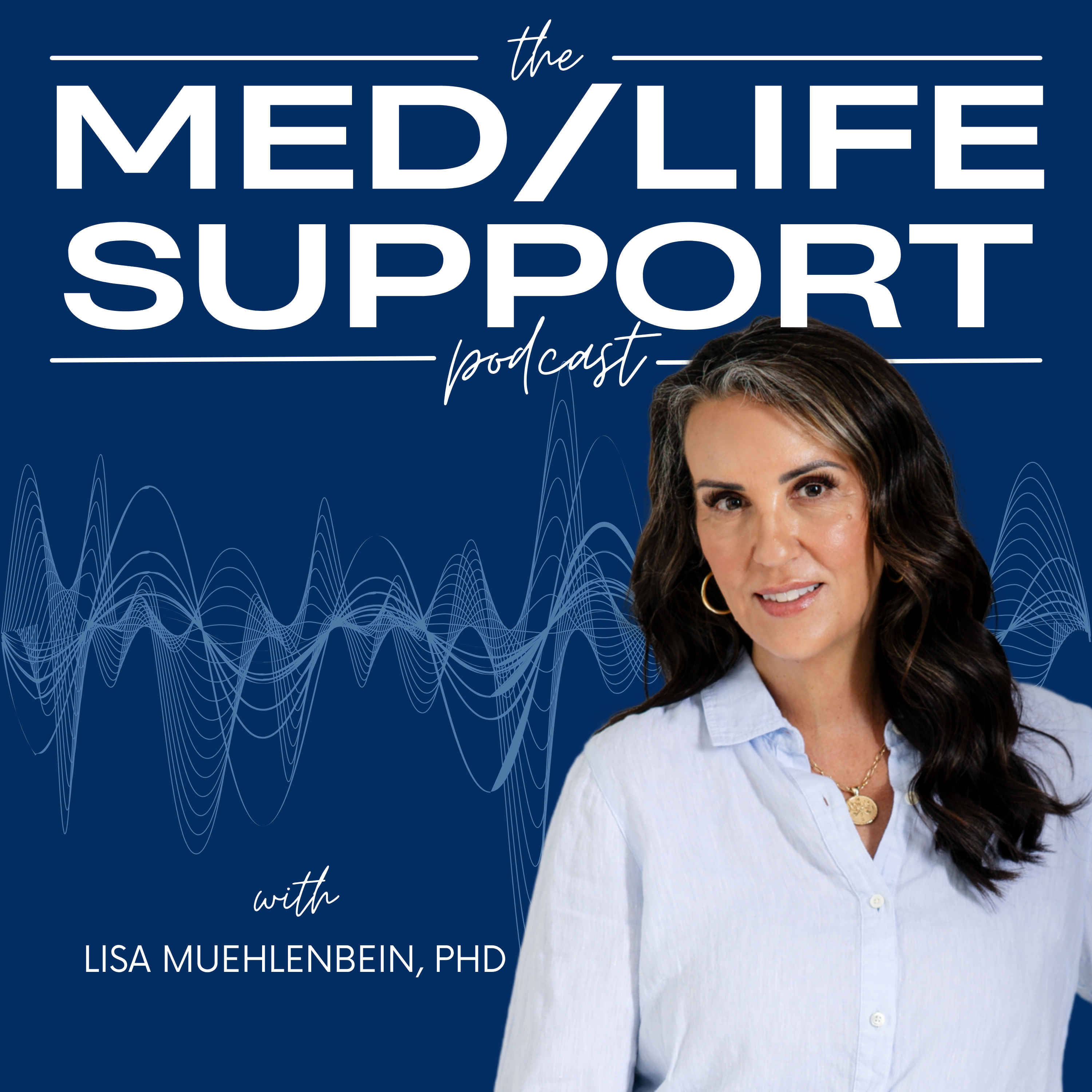
The MedLife Support Podcast
by Lisa Muehlenbein, PhD
Life in medicine is intense — and it doesn't just impact the physician, it ripples through marriages, partnerships, families, and even the organizations where physicians work. I'm Lisa Muehlenbein, PhD in Health Psychology, a wellness professional with over 30 years of experience and a physician spouse for more than 26 years, and I know firsthand how the pressures of medicine can take a toll on relationships. That's why I created The MedLife Support Podcast — candid conversations on life in medicine, relationships, and everything in between. Each week, I'll bring you no-nonsense solutions for burnout, boundaries, and better connection, grounded in research, real stories, and practical strategies you can use right away. Whether you're a physician, a spouse, or a leader who cares about the well-being of your people, this podcast is for you. Subscribe to The MedLife Support Podcast on Apple, Spotify, or wherever you listen — and remember to share it with another physician family or collea
-
30
29. How the ThinkTime Planner Helps Busy Families Reduce Overwhelm with Christine Howe
What if the answer to burnout, chaos, and constant overwhelm is not doing more — but thinking more clearly? In this episode of The MedLife Support Podcast, Dr. Lisa Muehlenbein sits down with Christine Howe, creator of the ThinkTime Planner, to talk about intentional planning, visual thinking, and how busy families can create more clarity, energy, and alignment even when life feels completely full. Christine shares her personal story of being a lifelong high achiever who eventually discovered that traditional planning systems did not work for the way her brain processed time, structure, and distraction. Through her background in counseling, her work with brain-injured patients, and her own lived experience as a mother overwhelmed by the demands of family life, she developed a planning approach designed to help people think more clearly, reduce decision fatigue, and move toward what matters most. Together, Lisa and Christine explore why traditional planners often fail people in high-pressure careers like medicine, where schedules change quickly, emotional energy is limited, and families are constantly forced to pivot. Christine explains how the ThinkTime Planner uses visual thinking, color, mind mapping, and weekly reflection to help people pause, identify priorities, and create a more values-based life instead of simply reacting to a constantly changing schedule. This conversation is especially relevant for physician families. When medicine creates unpredictability, overload, and chronic pressure, both physicians and spouses can feel like they are losing control over their time, energy, and even their identity. Christine offers a practical framework for reclaiming agency, preventing burnout, and building a life that supports both productivity and wellbeing. If you have ever felt like there are not enough hours in the day, or like traditional productivity advice does not fit the realities of med life, this episode offers a fresh and highly actionable perspective. In this episode, we cover: Why traditional planners often fail busy, high-achieving families What "think time" really means and why it matters How visual planning and mind mapping help reduce overwhelm Why physician families need flexibility, not rigid systems How to pivot when schedules change unexpectedly The difference between striving and thriving How intentional planning can support burnout prevention Why refueling matters just as much as productivity How to identify what is in your control and what is not Why "draw your dreams" can be a powerful way to reconnect with what matters most This episode is a helpful reminder that slowing down to think is not wasted time. In fact, it may be one of the most strategic and life-giving things a busy family can do. Note: Since this interview was recorded, Christine Wilson is now Christine Howe. Guest Bio Christine Howe is the creator of the ThinkTime Planner, a visual planning system designed to help high achievers reduce overwhelm, clarify priorities, and align their time with what matters most. With a background in counseling and a unique perspective shaped by both creativity and cognitive science, Christine helps brilliant but exhausted ADHD visionaries build their dreams without burning out. Guest Links Grab Christine's Free Training HERE Buy a Neuroplanner™ HERE and enter code MedLife at checkout for 10% off. Join the Neuroplanning Membership™ HERE.
-
29
28. How Storytelling Can Change Healthcare Culture with Tracy Granzyk
What happens when healthcare professionals finally have a safe place to tell the truth about what they have seen, carried, and survived? In this episode of The MedLife Support Podcast, Dr. Lisa sits down with Tracy Granzyk — award-winning filmmaker, writer, editor, communication strategist, and founding editor-in-chief of Please See Me — to explore the power of storytelling in healthcare. Together, they discuss why so many clinicians feel unseen, why silence is so deeply embedded in medical culture, and how personal narrative can create healing, connection, and culture change. Tracy shares how her work in life sciences, academic medical centers, patient safety, and health system leadership opened her eyes to the emotional cost of working in medicine. She explains how stories of medical harm, moral distress, burnout, and vulnerability often go untold because healthcare professionals do not feel safe speaking openly. That realization eventually led her to create Please See Me, a digital literary magazine designed to give clinicians, patients, caregivers, and families a place to be heard. This conversation goes far beyond storytelling as self-expression. Tracy and Lisa unpack how stories can become tools for healing, truth-telling, patient safety, and system-level change. They also discuss how burnout, error, and emotional distress do not stay inside hospital walls. These experiences ripple into marriages, families, and the broader healthcare ecosystem, affecting everyone connected to the physician or healthcare professional. If you have ever felt like medicine teaches people to endure instead of express, or if you have watched the ripple effects of burnout, stress, or patient harm touch an entire family, this episode offers both validation and hope. In this episode, we cover: Why storytelling matters in healthcare culture change How Please See Me became a safe space for clinicians, patients, and caregivers The connection between storytelling, healing, and being seen Why healthcare professionals often feel unsafe telling the truth How stories can help process burnout, moral distress, and vicarious trauma The ripple effects of medical harm and physician distress on families Why patient safety and physician wellbeing are deeply connected How narrative can support truth-telling, transparency, and more humane systems What happens when clinicians finally have permission to be human Why speaking up matters the moment a system makes you feel less than At its heart, this episode is a conversation about visibility, voice, and what becomes possible when people no longer have to carry their stories alone. Tracy's work is a reminder that stories do more than document pain — they can also create belonging, release, and real change. Guest Bio Tracy Granzyk is an award-winning filmmaker, writer, editor, and communication strategist whose work sits at the intersection of storytelling, healthcare, and culture change. She is the founding editor-in-chief of Please See Me, a digital literary magazine that creates space for healthcare professionals, patients, caregivers, and families to tell the stories that often go unseen. With a background spanning life sciences, patient safety, organizational culture, and digital media, Tracy helps clinicians, leaders, and organizations free the stories they have been carrying so those stories can reshape how care is delivered, experienced, and sustained. Guest Links Website: www.pleaseseeme.com LinkedIn
-
28
27. How Restorative Writing Helps Physicians Heal Burnout with Dr. Carolyn Roy-Bornstein
What if one of the most powerful tools for physician burnout is something as simple — and as profound — as writing? In this episode of The MedLife Support Podcast, Dr. Lisa sits down with Dr. Carolyn Roy-Bornstein, a board-certified pediatrician, writer in residence at the Lawrence Family Medicine Residency Program, and author of the newly released book, A Prescription for Burnout: Restorative Writing for Healthcare Professionals. Together, they explore how narrative medicine, reflective writing, and restorative writing can help physicians reconnect with meaning, process stress, and interrupt the emotional distance that burnout can create at work and at home. Dr. Roy-Bornstein explains that burnout is not always just a scheduling problem or a systems problem. Sometimes it is also about meaning lost, voice silenced, and suffering carried without a place to put it. She shares how writing can offer physicians a way to process trauma, name their emotions, reclaim agency, and reconnect with the reasons they entered medicine in the first place. In this conversation, Lisa and Carolyn discuss the science behind restorative writing, including how writing can improve emotional processing, help name feelings, and even support measurable physical healing. They also explore Maslach's three dimensions of burnout — emotional exhaustion, depersonalization or cynicism, and reduced personal accomplishment — and how reflective writing can gently address each one. This episode also offers an especially important perspective for physician spouses and medical families. Dr. Roy-Bornstein speaks to the invisible emotional weight physicians often carry home, why spouses may feel helpless in the face of burnout, and how writing and honest communication can help couples move toward connection instead of distance. If you are a physician, resident, or medical spouse who has felt the emotional heat of burnout, this conversation offers a different kind of prescription — one rooted in reflection, voice, perspective, and healing. In this episode, we cover: What narrative medicine is and why it matters for physicians How restorative writing differs from journaling or venting The science behind expressive writing and emotional labeling How writing can help physicians process stress, grief, trauma, and burnout Maslach's three dimensions of burnout and how they show up in medicine Why physicians may carry patients' suffering home without realizing it How burnout can affect marriages and family relationships How reflective writing can interrupt cynicism before it hardens into relational distance Why reclaiming your voice can be an act of resistance in a depersonalized healthcare system Small, doable ways busy physicians can start writing today This conversation is timely, practical, and deeply human — especially as Dr. Roy-Bornstein's new book, A Prescription for Burnout: Restorative Writing for Healthcare Professionals, offers healthcare professionals a meaningful tool for not just surviving medicine, but thriving within it. Guest Bio Dr. Carolyn Roy-Bornstein is a board-certified pediatrician, writer in residence at the Lawrence Family Medicine Residency Program, and author of A Prescription for Burnout: Restorative Writing for Healthcare Professionals. In her work with physicians and residents, she teaches narrative medicine and reflective writing as a way to help clinicians reconnect with meaning, empathy, and their deepest values, especially when the healthcare system feels dehumanizing. Guest Links Johns Hopkins University Press website www.CarolynRoyBornstein.com LinkedIn Advance Praise for A Prescription for Burnout "A Prescription for Burnout is a highly insightful and meticulously researched blueprint for incorporating creativity into one's daily life." — Jacob M. Appel, author of Who Says You're Dead? Medical and Ethical Dilemmas for the Curious and Concerned "Warm, wise, and practical, this book is a potent and effective prescription for doctors and nurses burned out by the depersonalized healthcare system and still reeling from the extraordinary stresses of the COVID-19 pandemic. " — Suzanne Koven, MD MFA, author of Letter to a Young Female Physician: Notes from a Medical Life "In A Prescription for Burnout: Restorative Writing for Healthcare Professionals, Dr. Carolyn Roy-Bornstein has written a meditative and practical book on what writing is good for. Finding the right words to tell the story, explain the self to oneself, create order out of confusion, clean the room of the mind—all can be, she reminds us, as beautiful, as satisfying, and as healing as a Mozart sonata." — Victoria Sweet, University of California, San Francisco "This is a deeply personal and also practical step-by-step approach to writing for people whose profession is healing others and who are looking to writing as a way to understand and care for themselves." — Perri Klass, MD, author of The Best Medicine: How Affliliate Link to Additional Books Mentioned in the Show: How Do You Feel?: One Doctor's Search for Humanity in Medicine by Dr. Jessi Gold
-
27
26. When Medicine Becomes the Third Party in Your Marriage: Trauma, Burnout, and Connection with Noël Lopez-Freeman, LMFT
What happens when medicine quietly becomes the third party in a marriage? In this powerful and deeply validating episode of The MedLife Support Podcast, Dr. Lisa Muehlenbein sits down with Noël Lopez-Freeman, LMFT — a licensed marriage and family therapist and longtime physician spouse — to unpack the emotional and relational toll that proximity to medicine can have on physicians, their partners, and their families. Drawing from both her personal experience as the wife of an emergency medicine physician and her professional work with physicians and their partners, Noël explains why so many medical families struggle with chronic stress, trauma responses, burnout, and emotional disconnection. She also shares why traditional therapy can sometimes miss the mark for physician couples and what culturally competent, medically informed support can look like instead. This conversation explores the difference between big T trauma, little t trauma, chronic stress, and burnout, along with the ways medicine can shape identity, relationships, and coping patterns over time. Noël offers practical insight into what coping skills actually are, what they are not, and how to recognize when it may be time to reach out for support. If you are part of a medical family and have ever felt overwhelmed, emotionally exhausted, disconnected in your relationship, or unsure whether what you're experiencing is "serious enough" to ask for help, this episode will help you feel seen, understood, and less alone. In this episode, we cover: How proximity to medicine can increase trauma, stress, burnout, and relational strain The difference between trauma, chronic stress, and burnout in medical families Why physician couples often need therapy that understands the culture of medicine How the Gottman Method can help rebuild emotional connection What real coping skills are — and what unhealthy coping can look like Why not every mental health struggle should immediately be labeled as mental illness How to know when it may be time to seek therapy, rest, or additional support A powerful reframe for separating your partner from the system of medicine One of the most important takeaways from this conversation is Noël's reminder that many of the struggles physician families face are not signs of personal failure. Often, they are understandable responses to deeply demanding and unsustainable circumstances. That shift in perspective can be life-giving. This episode is a must-listen for physician spouses, medical marriages, and anyone navigating the hidden emotional labor of life in medicine. Meet Noël Lopez-Freeman: As a Licensed Marriage and Family Therapist and the wife of a physician for over two decades, Noël is deeply familiar with the challenges that medical professionals, their partners, and their marriages face. With extensive experience as a therapist and clinical director in inpatient and intensive outpatient settings, Noël brings a depth of experience and expertise to her work. Now in private practice, Noël utilizes evidence-based therapeutic approaches to assist physicians and their partners in living more fulfilling and connected lives. Noël sees clients virtually in Texas, California, Florida and Iowa for individual therapy, marriage therapy, and marriage therapy intensives Guest Links: www.MarriageTherapyForMedicalProfessionals.com Download a free gift from Noël: Protecting What Matters Most: Caring for Your Marriage in the Midst of Medicine Read more work from Noël published on The MedCommons: How Stress and Trauma Shape Physicians Navigating Challenges as a Third Party in Your Physician Marriage Books Referenced in the Show: Self Compassion: The Proven Power of Being Kind to Yourself by Kristen Neff, PhD The Mindful Self-Compassion Workbook: A Proven Way to Accept Yourself, Build Inner Strength and Thrive by Kristen Neff, PhD Burnout by Emily Nagoski, PhD and Amelia Nagoski, DMA Learn more about The Dr. Lorna Breen Heroes Foundation
-
26
25. The Hidden Loneliness No One Talks About in Medical Families with Dr. James Ellis
We are celebrating Episode 25 today and we have an amazing show for you! The Hidden Loneliness No One Talks About in Medical Families featuring The Loneliness Doctor, Dr. James Ellis (@lonelinessdoctor) Loneliness isn't always loud. Sometimes, it shows up in the middle of full, busy, successful lives. In medical families, where demanding schedules, long hours, and emotional labor are part of everyday life, loneliness can quietly build—often unseen and unspoken. This episode is part of an ongoing conversation we've been having here on the MedLife Support Podcast. Back in Episode 4, I shared how loneliness emerged as a recurring theme in my dissertation research on physician families. Then in Episode 13, Dr. Emily Kent helped us understand the science behind loneliness and why connection is essential to both our emotional and physical health. But today, we're going deeper. In this episode, I'm joined by Dr. James Ellis—known online as @lonelinessdoctor—a clinical psychologist who specializes in understanding loneliness and helping people rebuild meaningful connection. Together, we unpack: Why loneliness can exist even when life looks "full" How high-achieving environments (like medicine) quietly contribute to isolation The difference between being alone and actually feeling lonely What loneliness is really trying to tell us Practical ways to begin reconnecting in your everyday life And if this conversation resonates, Dr. Ellis has created a powerful free resource to help you take the next step: We invite you to download his free guide: "How To Find Real Connection in a Lonely World" HERE. This guide includes his Friendship Formation Formula—a practical framework for building meaningful relationships. If you've ever felt isolated in a life that looks successful on the outside… this conversation will help you feel seen—and give you a way forward. After listening, share your biggest takeaway and tag @lonelinessdoctor and @themedlifematrix or @themedlifesupportpodcaston Instagram—we'd love to hear what resonated with you. Related Episodes Disucussed on this Show: Episode 4: Loneliness in Medical Marriages: Feeling Alone Together Episode 13: Loneliness in Medical Familis: Why Connection Matters More Than Ever with Emily Kent, PhD Meet Dr. James Ellis Dr. James Ellis is a clinical psychologist and leading voice in the study of loneliness, widely known as "The Loneliness Doctor." Based in New York City, Dr. Ellis specializes in helping individuals understand the root causes of loneliness and build meaningful, lasting connections. Through his clinical work, research, and widely followed social media presence, he translates the science of loneliness into practical, accessible insights. His work focuses on helping people recognize loneliness—even when life appears full—and take actionable steps toward deeper connection. Connect with Dr. Ellis: Website: https://www.lonelinessdoctor.com Instagram: @lonelinessdoctor Download the FREE Guide "How to Find Connection in a Lonely World." For more resources for physicians, their spouses and organizations on how to address and reduce the impact of physician burnout, visit The MedLife Matrix or follow Dr. Lisa in Instagram @themedlifematrix
-
25
24. What No One Tells You About Loving Someone in Medicine (And Why You Don't Have to Do It Alone) with Hayley Harlock
What No One Tells You About Loving Someone in Medicine (And Why You Don't Have to Do It Alone) with Hayley Harlock The invisible load of physician families, identity shifts, and building community when the system overlooks you. What does it really mean to love someone in medicine? Behind every physician is often a partner carrying an invisible load—navigating long hours, identity shifts, emotional strain, and a life that doesn't always look the way you imagined. And yet, so many physician spouses and families are doing it alone… or at least, it feels that way. In this deeply honest and validating conversation, I'm joined by registered social worker, physician spouse, and founder of The Flipside Life, Hayley Harlock. Together, we pull back the curtain on what life actually looks like behind a medical career—and why it's time to stop leaving physician families out of the conversation. Hayley shares her personal journey from "we're fine" on the outside to barely surviving behind closed doors, and how that experience led her to create a movement centered on connection, advocacy, and change. If you've ever felt like medicine has shaped not just your partner's career—but your identity, your relationship, and your family—this episode will remind you: you are not alone. In this episode, we cover: The invisible emotional and mental load carried by physician partners Why so many families feel like they're "barely surviving" (even when things look fine) The identity shifts that come with loving someone in medicine The power of community and shared stories in healing isolation Why "no one is coming to save us"—and how that truth is sparking leadership and advocacy How physician families are becoming a critical (and overlooked) part of system change This is more than a conversation—it's an invitation to feel seen, supported, and part of something bigger. Meet Hayley Harlock, founder of The FlipSide Life Hayley Harlock is a registered social worker, physician spouse, and the founder of The Flipside Life, an organization dedicated to supporting, connecting, and advocating for physician families at all stages of training and practice. She is a champion of physician families, as well as an advocate and medical educator committed to improving the well-being of those living alongside medicine. Through both her professional background and lived experience, Hayley has become a leading voice in this space. Hayley works directly with physician families through community initiatives, including connect calls and one-to-one support sessions. She also teaches medical students at McMaster University, where she holds a faculty appointment in the Department of Surgery. Her work spans consulting, research, and speaking, all centered on helping physician families feel seen, supported, and less alone—while advocating for their inclusion in conversations around physician well-being and system change. Connect with Hayley: Website: The FlipSide Life Instagram: @hayley.harlock and @_theflipsidelife Hayley has graciously extended a special $50 off promo code for listeners of The MedLife Support Podcast who are interested in purchasing a 12-month Connect Call Membership. This code is valid until June 30, 2026, so be sure to check that out soon! Lastly, I created a $50 off promo code for any of your listeners interested in purchasing a 12-month Connect Call Membership. The Connect Call Membership Promo Code: MedLifeSupport50
-
24
23. Physician Burnout Is Impacting Your Marriage: The Hidden Cost of Medicine with Erin Hurley, MD
Physician Burnout Is Impacting Your Marriage: The Hidden Cost of Medicine with Erin Hurley, MD Why physician families face unique challenges—and how to build sustainable meaning in medicine and at home. Physician burnout doesn't stay at the hospital—it follows you home. And for many physician families, the impact shows up not just in exhaustion, but in disconnection, identity drift, and relationships that slowly start to feel the strain. In this powerful conversation, I'm joined by Erin Hurley, MD. Erin is a physician, leadership coach, and founder of Transformational Doc—to explore what burnout really looks like inside medical marriages and families. After 25 years in pediatrics and leadership, Erin shares the truth so many physicians and their partners are living but rarely naming: the demands of medicine don't just affect the individual—they shape the entire ecosystem of a family. Together, we unpack: Why physician burnout is a relational and family issue, not just an individual one The concept of "ecosystem-level burnout" and how it shows up at home The hidden strain on medical marriages and long-term partnerships Why female physicians face unique and often invisible challenges How identity, purpose, and meaning evolve across a medical career What it actually takes to create a sustainable life in medicine—without sacrificing your relationships This isn't about quick fixes or surface-level self-care. It's about telling the truth about the cost of medicine—and starting to build something more sustainable, together. If you've ever felt like medicine is taking more than it gives—from your energy, your identity, or your relationships—this episode will help you put language to that experience and take your first step toward change. And if you're wondering where you personally fall on the burnout spectrum, you can take the Burnout Risk Assessment Quiz for physicians and their spouses at www.themedlifematrix.com Guest Bio: Erin Hurley, MD is a Physician Leadership Coach and founder of Transformational Doc. After 25 years in Pediatrics and high-stakes leadership roles, she now helps physicians close what she calls the "Sustainability Gap"—the growing divide between what medicine demands and what humans can sustainably deliver. She is the creator of The Flourish First Framework™, a model designed to help physicians reduce over-functioning, reclaim time, and build high-impact careers without self-sacrifice. Erin also serves as Board President of the Marion-Polk County Medical Society and is actively involved in national physician wellness initiatives. Through her work, speaking, and podcast, she is on a mission to help physicians flourish—both in their careers and in their lives. Guest Links Website: https://transformationaldoc.com LinkedIn: Erin Hurley, MD Podcast: Create Meaning in Medicine
-
23
22. When the Physician Becomes the Patient: Karen Wilkinson's Story of Crisis, Courage, and a Miraculous Second Chance
What happens when the physician — the one who diagnoses, treats, and reassures everyone else — suddenly becomes the patient? In this deeply personal episode of the The MedLife Support Podcast, Dr. Lisa speaks with Karen Wilkinson, author of On Borrowed Breath, about the unimaginable medical crisis that changed her family's life. Karen's husband, David, a practicing urologist, became critically ill with COVID. What began as what seemed like a routine illness quickly escalated into a life-threatening situation that required ventilator support and eventually a double lung transplant. For Karen, the experience meant navigating life-and-death decisions, advocating for her husband's care, and facing the profound emotional shift that occurs when the physician in the family suddenly becomes the patient. Karen shares the raw reality of that experience—how a medical crisis affects identity, marriage, finances, and faith. She also discusses the importance of preparation for medical families, including conversations about advance directives, finances, and end-of-life wishes that many couples never think to have until it's too late. Against extraordinary odds, David received a life-saving double-lung transplant and began the long journey of recovery—learning to breathe, walk, and regain his strength and his life again. This episode is a powerful reminder that medical families are not immune to crisis and that preparation, communication, and community support can make all the difference. In This Episode We Discuss • The moment Karen realized her husband's illness was more serious than expected • What it's like when the physician becomes the patient • The emotional and logistical challenges of ICU care and ventilator support • The process of qualifying for a double lung transplant • How serious illness reshapes identity, marriage, and priorities • Why physician families need to prepare for unexpected health crises • Life after transplant and redefining "normal" A Note About Organ and Tissue Donation David's recovery was made possible because of the generosity of an organ donor and donor family. Organ and tissue donation saves thousands of lives every year and provides hope to patients waiting for life-saving transplants. If you would like to learn more about becoming an organ donor or registering as one, visit: • https://www.organdonor.gov • https://www.donatelife.net One donor can save multiple lives and improve many more About Karen Wilkinson Eighteen years ago, Karen Campbell Wilkinson, a graduate of The Ohio State University, gave her husband, Dr. David Wilkinson, the choice to medicate her or give her sunshine. Since that statement was made, Karen and her husband of 30 years, have resided in sunny Naples, Florida, with their two sons, Jake and Isaac and a bonus son, Lukas from Lithuania and rescue dogs. Last year they added a bonus daughter when Jake married, Val. Having worked as a respiratory therapist for 15 years at Level One Trauma centers, she is experienced in the process of organ procurement and transplantation, as well as responding to emergent life and death decisions. Karen has since retired from healthcare and shifted into real estate. Both she and her husband, Dr. David Wilkinson welcome new physicians into the area and have extensive knowledge and experience finding residential and commercial real estate to set up a home and a practice. When Karen isn't searching for the just-right place to call home for her buyers, you'll likely find her in the garden—tending plants, composting, and checking on her worm farm—or on stage speaking about the critical importance of getting your affairs in order before the unexpected happens. And at day's end, she's happiest with her toes in the sand, soaking in one of Naples' stunning sunsets. Purchase On Borrowed Breath on Amazon Website: https://www.karencwilkinson.com Instagram: @karencwilkinson LinkedIn
-
22
21. Optimism Is Not Denial: A Smarter Way to Navigate Stress in Medicine with Charles Inniss, Jr. DPT, PCC, NBC-HWC
Optimism Is Not Denial: A Smarter Way to Navigate Stress in Medicine How Physicians and Medical Families Can Shift Energy Without Ignoring Realit Stress is part of medicine. Burnout is real. Systemic strain is real. But what about optimism? Is it naïve? Is it toxic positivity? Or is it something far more practical — a way of directing your mental energy when circumstances feel heavy? In Episode 21 of The MedLife Support Podcast, Dr. Lisa Muehlenbein speaks with Charles Inniss, author of Up Your Optimism Game, about how optimism functions not as denial — but as cognitive direction. This is not a conversation about "being more resilient." Physicians are already resilient. This is a conversation about: How language shapes energy Why pessimism and cynicism can quietly become habits The difference between "have to" and "get to" How optimism spreads in marriages and medical teams Why appreciation may be the most underused relational tool in medicine The power of five-minute micro-practices How to advocate for change without losing hope For physicians navigating systemic pressure and for spouses who feel the emotional ripple effects of medical life, this episode reframes optimism as something strategic, grounded, and deeply human. Stress may be unavoidable. But how we narrate it — and how we transmit it — is more flexible than we think. About Our Guest: Charles Inniss, DPT, PCC, NBC-HWC is a Professional Certified Coach through the International Coaching Federation who earned his Doctorate degree in Physical Therapy at Boston University. He's the author of "Up Your Optimism Game" which is a guide to help professionals turn their stress, depression, and anxiety into joy, happiness, and peace of mind so they can make the biggest positive impact at work, at home and in the world, without having to compromise their own mental health. Hope is one of his superpowers, and he's on a mission to make the world a healthier and happier place through speeches, workshops, and coaching. Charles reminds us that "The key to joy happiness, and peace, I humbly proclaim. Is figuring out how to up your optimism game." Charles' book Up Your Optimism Game releases March 24, 2026 and is available for pre-order now on Amazon. LinkedIn Website Email: [email protected]
-
21
20. Resilience, Self-Care & the Hidden Loneliness of Physicians with Stephanie Minter, DO
What does "resilience" really mean in medicine—and at what cost? In this powerful and deeply honest conversation, Dr. Lisa Muehlenbein sits down with Dr. Stephanie Minter, DO, to unpack the hidden emotional toll of practicing medicine in today's healthcare system. From the culture of "push through" resilience… To the confusion between self-care and real support… To the loneliness experienced by both single and partnered physicians… This episode explores what physicians actually need to build sustainable, meaningful lives in medicine. Dr. Minter shares her journey from massage therapist to osteopathic physician, and how her training in mind-body medicine shaped her perspective on: • Moral injury and burnout • Why "resilience training" misses the point • The stigma around physicians asking for help • Gender dynamics for female physicians • The emotional toll of carrying life-and-death decisions • Why doctors struggle to seek care themselves • The importance of community, grief planning, and honest communication • Creating a personal "disaster plan" for emotional overwhelm • What truly recharges a physician's battery You'll also hear an eye-opening discussion about healthcare business models, the corporatization of medicine, and what must change for the future of physician wellbeing. Whether you are: – A physician – A physician spouse – A healthcare leader – Or someone who cares deeply about the sustainability of medicine This episode offers both insight and hope. Because physicians are human too. And even the strongest among them need support. About Dr. Stephanie Minter Stephanie Minter is an Osteopathic physician, speaker, and wellness coach who knows what it's like to give everything to her patients, her work, and the people she loves, while slowly losing touch with herself. Her own experience with burnout and self-abandonment led her to integrate mindfulness, movement, nervous system regulation, and nature-based healing into her life AND her medical practice. After years of prioritizing others, she learned that a rewarding life required more than resilience - it required reconnection. Her current focus is helping high-achievers reconnect with themselves to release patterns of self-abandonment and unsustainable commitments, while creating lives rooted in clarity, authenticity, balance, and fulfillment. Podcast: Beach Vibes Healing Lives Substack: She Sells Refills by the Seashore LinkedIn
-
20
19. White Coats, Human Hearts: Why Doctors Need to Be Seen as Whole Humans with Kim Downey
White Coats, Human Hearts: Why Doctors Need to Be Seen as Whole Humans | With Kim Downey The hidden emotional weight physicians carry — and how storytelling can change the culture of medicine. What happens when the people we trust with our lives are silently struggling with their own? In this powerful episode of the MedLife Support Podcast, Dr. Lisa Muehlenbein sits down with Kim Downey — pediatric physical therapist, cancer survivor, founder of Stand Up for Doctors, and author of White Coats, Human Hearts — to talk about the emotional toll of medicine and why physicians must be seen as whole human beings, not just providers. After losing her radiologist to suicide during her own cancer journey, Kim began asking deeper questions about physician mental health, burnout, stigma, and the culture of silence in medicine. What she discovered sparked a movement to amplify the voices of doctors, healthcare professionals, and patients alike. In this episode, we explore: The hidden emotional weight physicians carry Physician suicide and the culture of silence in medicine Why storytelling is a powerful tool for healing and advocacy How families are impacted by the pressures of medical life What needs to change in healthcare culture to support doctor wellbeing If you care about physician mental health, healthcare reform, medical family life, or building a more compassionate medical culture, this conversation is essential listening. Because beneath every white coat is a very human heart. About Kim Downey Kim Downey is a pediatric physical therapist, cancer survivor, founder of Stand Up for Doctors, and author of White Coats, Human Hearts. After losing her radiologist to suicide during her own cancer journey, Kim became passionate about amplifying the voices of physicians and healthcare professionals who often suffer in silence. Through storytelling, advocacy, and community-building, she is working to humanize medicine and create space for honest conversations about physician wellbeing, mental health, and systemic change. Connect with Kim Downey Website Order the Book: White Coats, Human Hearts LinkedIn
-
19
18. Burnout Is a Symptom: Leadership, Agency, and Thriving in Medicine with Dr. Lillian Emlett
Burnout is often treated as the problem. But what if burnout is actually a symptom? In Episode 18 of The MedLife Support Podcast, Dr. Lisa Muehlenbein sits down with Dr. Lillian Emlett—academic physician and certified professional energy leadership coach—to challenge the way we think about physician wellness. With over 15 years in academic medicine and founder of Transforming Healthcare Coaching, Dr. Emlett shares why burnout is not a sign that a physician is broken, but a signal that something needs attention. In this episode, we explore: Why burnout is a symptom, not the root cause The difference between burnout, moral injury, depression, and anxiety Why both organizational AND individual factors matter The high-risk years for physician burnout (training + early practice) Why younger physicians are burning out at higher rates The danger of "I just need to be more resilient" thinking How awareness is the first step toward reclaiming agency The AND Framework: Awareness, New Action, Deliberate Practice Why leadership development is burnout prevention How coaching differs from traditional wellness programs Why telling your story is essential to rediscovering purpose Dr. Emlett also shares how physicians can move from analysis paralysis to aligned action, and why organizations must invest in leadership development at every level—not just the top. This conversation is a powerful reminder: Physicians are not broken. They are whole—even in burnout. And thriving in medicine begins with awareness. Listen now and reconnect with your energy, purpose, and agency. About Dr. Lillian Emlett: Dr. Lillian Emlett is an academic physician and certified professional energy leadership coach with over 15 years of experience in healthcare leadership, teaching, and mentoring . She is the founder of Transforming Healthcare Coaching, where she helps physicians, leaders, teams, and healthcare organizations align leadership and wellbeing to prevent burnout and cultivate sustainable careers. Her work focuses on awareness, energy leadership, deliberate practice, and empowering healthcare professionals to rediscover purpose and thrive. She also hosts the Transforming Healthcare Coaching Podcast. Connect with Dr. Emlett Website LinkedIn Transforming Healthcare Coaching Podcast Free Community: MedThrive Connect
-
18
17. Perfectionism in Medical Families: Breaking the Pressure to Be Flawless with Amna Shabbir, MD
Perfectionism in Medical Families: Breaking the Pressure to Be Flawless with Amna Shabbir, MD How socially prescribed perfectionism fuels burnout, isolation, and disconnection in medical families and what to do about it. Perfectionism is often praised in medicine. But what if the pressure to be flawless is quietly driving burnout, resentment, isolation, and emotional disconnection inside medical families? In this episode of The MedLife Support Podcast, Dr. Lisa sits down with Dr. Amna Shabbir—dual board-certified physician, TEDx speaker, founder of Success Curated, and host of the globally ranked podcast Success Reimagined—to unpack the hidden cost of perfectionism in high-achieving homes. Together, they explore: The three types of perfectionism (self-oriented, other-oriented, and socially prescribed) Why socially prescribed perfectionism is rising fastest—and most harmful How perfectionism becomes "emotional secondhand smoke" inside medical marriages The difference between excellence and perfectionism The subtle signs perfectionism is shifting into burnout Why isolation and resentment often go unnamed in physician families How to break free using Dr. Shabbir's Courage Bridge™ framework Dr. Shabbir also shares the moment with her daughter that forced her to confront perfectionism head-on and how redefining success changed everything. If you've ever felt pressure to hold it all together, keep up appearances, or meet expectations that were never explicitly stated but always present, this conversation is for you! Because thriving in medicine doesn't require perfection. It requires humanity. About Dr. Amna Shabbir: Dr. Amna Shabbir is a Dual Board-Certified Physician with advanced training in integrative well-being, leadership development, and behavior change science. Trained at Duke University and the Cleveland Clinic, she spent over a decade caring for individuals with complex chronic conditions and served as Consulting Associate Faculty at Duke University School of Medicine . She is a National Board-Certified Health & Wellness Coach (NBC-HWC), founder of Success Curated, and host of the globally ranked podcast Success Reimagined with Amna Shabbir, MD. Her TEDx talk, "Perfectionism Has a Solution – It's Not What You Think," introduces The Courage Bridge™—a framework for transforming perfectionism into sustainable success . Website: https://www.dramnashabbir.com/ TEDx Talk: https://www.youtube.com/watch?v=oNIzzM4Vg3s Podcast: https://dramnashabbir.transistor.fm/episodes LinkedIn: https://www.linkedin.com/in/amna-shabbir-md/ Instagram: https://www.instagram.com/dr.amnashabbir/
-
17
16. Why Home Matters for Health During Relocation in Medical Families with Kim Costa
Relocation is a defining feature of medical life. Physician families often move repeatedly for training, career opportunities, and call demands, yet the impact of these moves on health, relationships, and a sense of belonging is rarely discussed. In this episode, I'm joined by Kim Costa, founder of Lifestyle Foundations, creator of the Wheel House Framework, and author of Live in Your Wheel House. Kim brings both professional expertise and lived experience, having relocated more than twenty times herself. Through her work, she helps families understand how home, environment, routines, and relationships directly influence physical and emotional wellbeing, especially during seasons of transition. Together, we explore why relocation can quietly undermine stability for medical families, how home functions as more than a physical space, and how intentional choices around environment and community can help families feel grounded, supported, and connected, even when life feels unsettled. This conversation continues our broader exploration of loneliness, community, and belonging in medical families, offering a practical and compassionate lens on rebuilding stability during change. If you're new to the podcast, Episodes 1 -2 lay the foundation, and episodes 13–15 provide helpful context on loneliness, community, and relocation in medical families Connect with Kim: Website LinkedIn Purchase Kim's Book: Live in Your Wheel House
-
16
15. Relocation and Belonging: Supporting Medical Families Through Transition with Amanda Baron
Relocation is a defining feature of medical life. Nearly every physician family experiences multiple moves — for medical school, residency, fellowship, and career opportunities. While relocation can open doors professionally, it often brings a quieter cost: loneliness, disconnection, and the challenge of rebuilding community from scratch. In this episode, I'm joined by Amanda Baron, physician relocation specialist, realtor, physician spouse, and host of the Behind the White Coat podcast. Drawing from both lived experience and professional insight, Amanda shares how relocation impacts physician spouses and families, why loneliness frequently accompanies these transitions, and how community plays a critical role in restoring connection and belonging. We discuss the emotional and relational toll of repeated moves, the identity challenges many physician spouses face, and why small, intentional moments of connection matter — especially during seasons of change. This conversation continues our broader exploration of loneliness and community in medical families, offering a practical and human-centered look at how belonging can be rebuilt after transition. If you're new to the podcast, start with Episodes 1 and 2 to understand the foundation of the podcast, followed by episodes 13 and 14 to expland the discussion on loneliness and community in medical families. Hear the conversation I had with Amanda when I was a guest on Behind the Whitecoat here. To learn more about Amanda, visit: Website Instagram LinkedIn Behind the White Coat Podcast
-
15
14. Community as Care: Why Physician Families Need Community, Not Just Coping with Elizabeth Landry
Physician burnout is often discussed at the individual level, but far less attention is given to the relational and community contexts surrounding physicians and their families. In this episode, I'm joined by Elizabeth Landry, founder of The Med Commons, to explore why physician families need more than coping strategies; they need connection, belonging, and community that understands the realities of medical life. We discuss how isolation shows up for physician families, why informal support systems often fall short, and how intentional community spaces can function as a protective factor against burnout. Elizabeth shares insights from her work building community for physician families, as well as her own lived experience navigating the demands of medicine alongside family life. This conversation invites us to widen the lens on physician wellness beyond the clinic and into the communities that sustain families over time. Check out all that The MedCommons has to offer: The MedCommons Circle for Healthcare Organizations The MedCommons Circle for Physician Families The MedCommons Mastering your Move Registration 🎧 If you're new to the podcast, start with Episodes 1 and 2 to lay the foundation before listening further.
-
14
13. Loneliness in Medical Families: Why Connection Matters More Than Ever with Emily Kent, PhD
Loneliness in Medical Families: Why Connection Matters More Than Ever: How Stress, Belonging, and Social Connection Shape Health for Physician Spouses Loneliness is one of the most common — and least talked about — experiences in medical families. In this episode of The MedLife Support Podcast, host Dr. Lisa sits down with Dr. Emily Kent, an experimental psychologist, loneliness researcher, and physician spouse, to explore why loneliness shows up so often in life in medicine — and how it impacts both emotional and physical health. Building on themes first explored in Episode 4: Loneliness in Medical Marriages, this conversation deepens the discussion through a research lens. Drawing from Dr. Kent's work on loneliness, stress, and belonging, Lisa and Emily reframe loneliness not as weakness, but as a biological signal for connection. They discuss why physician spouses can feel lonely even in full, high-functioning lives, how chronic stress affects the body, and small, research-backed ways medical families can strengthen connection at home and in their communities. to go even deeper on the topic of loneliness in physician families, check out Episode 25 The Hidden Loneliness No One Talks About in Medical FAmilies with Dr. James Ellis (@lonelinessdoctor) Learn more about Dr. Emily Kent and her research: · LinkedIn · Google Scholar · Selected publications: Optimal Well-Being Interventions for Surgeons: Beyond Physiologic Needs Evidence-Based Recommendations and Emerging Novel Solutions to Reduce Burnout Loneliness is Associated with Decreased Support and Increased Strain Given in Social Relationships Surgeon Burnout and Relationships: A Missing Component in the Ongoing Conversation Subscribe for compassionate, research-informed conversations about physician burnout, marriage in medicine, and family well-being.
-
13
12. Relationships Under Burnout: What Holds and What Frays in Medical Marriages
Relationships Under Burnout: What Holds and What Frays in Medical Marriages How Awareness Changes Connection for Physician Familie Physician burnout doesn't impact marriages through one experience alone — it shapes relationships cumulatively over time. In this final episode of the series, host Lisa Muehlenbein, PhD explores relationships under burnout, integrating the themes that emerged from her doctoral research on Physician Burnout and the Marital Relationship: Spouse Perspective. This episode reframes relationship strain as a response to chronic overload, highlights the power of awareness, and invites couples to tend to their connection with compassion rather than self-blame. Subscribe to The MedLife Support Podcast for ongoing conversations about physician burnout, marriage in medicine, and family well-being. To read Dr. Lisa's dissertation, click HERE.
-
12
11. Pride in the Physician's Service: Holding Meaning and Strain Together
Pride in the Physician's Service: Holding Meaning and Strain Together Why Admiration and Exhaustion Often Coexist in Medical Marriages Pride and strain often coexist in medical marriages — yet they're rarely discussed together. In this episode of The MedLife Support Podcast, host Lisa Muehlenbein, PhD explores pride in the physician's service through the spouse perspective, drawing from her doctoral research on Physician Burnout and the Marital Relationship: Spouse Perspective. Dr. Lisa discusses how admiration, meaning, and respect for the work of medicine can exist alongside exhaustion, loss, and strain — and why making room for both experiences matters for relational health. Subscribe for compassionate, research-informed conversations about physician burnout, marriage in medicine, and family well-being. To read Dr. Lisa's full dissertation, click HERE.
-
11
10. Self-Care in Medical Families: When Care Has to Be Sustainable
Self-Care in Medical Families: When Care Has to Be Sustainable Why Traditional Self-Care Fails Physician Spouses—and What Actually Help Self-care is often recommended to physician spouses — but rarely in ways that are realistic or sustainable. In this episode of The MedLife Support Podcast, host Lisa Muehlenbein, PhD explores self-care through the spouse perspective, drawing from her doctoral research on Physician Burnout and the Marital Relationship: Spouse Perspective. Dr. Lisa discusses why traditional self-care messaging often fails medical families, how chronic stress depletes capacity, and why care must be reframed as responsive, compassionate, and possible. Subscribe for research-informed conversations about physician burnout, marriage in medicine, and family well-being. To read Dr. Lisa's full dissertation, click HERE.
-
10
9. Health Challenges in Medical Marriages: When Stress Shows Up in the Body
Health Challenges in Medical Marriages: When Stress Shows Up in the Body How Physician Burnout Impacts the Physical and Mental Health of Spouses Health challenges are a common — and often overlooked — experience for physician spouses. In this episode of The MedLife Support Podcast, host Lisa Muehlenbein, PhD explores health challenges through the spouse perspective, drawing from her doctoral research on Physician Burnout and the Marital Relationship: Spouse Perspective. Dr. Lisa discusses how chronic stress shows up in the body, why spouses often delay care, and why health symptoms are not a failure of resilience but a signal for compassion and attention. Subscribe for research-informed conversations about physician burnout, marriage in medicine, and family well-being. Click HERE to read Dr. Lisa's full dissertation.
-
9
8. Feeling Misunderstood in Medical Marriage
Feeling Misunderstood in Medical Marriage Why Physician Spouses Feel Invisible—Even When They're Trying to Explai Feeling misunderstood is one of the most emotionally draining experiences reported by physician spouses. In this episode of The MedLife Support Podcast, host Lisa Muehlenbein, PhD explores feeling misunderstood through the spouse perspective, drawing from her doctoral research on Physician Burnout and the Marital Relationship: Spouse Perspective. Lisa discusses why spouses often feel unseen by partners, family, and friends, the emotional cost of constantly explaining life in medicine, and why self-validation matters when understanding feels out of reach. Subscribe for compassionate, research-informed conversations about physician burnout, marriage in medicine, and family well-being. To read Dr. Lisa's dissertation in it's entirety, click HERE.
-
8
7. Helplessness in Medical Marriages: When There's Nothing Left to Fix
Helplessness in Medical Marriages: When There's Nothing Left to Fix: How Physician Burnout Leaves Spouses Carrying Powerlessness and Care at the Same Time Helplessness is one of the most quietly painful experiences in medical marriages. In this episode of The MedLife Support Podcast, host Lisa Muehlenbein, PhD explores helplessness through the physician spouse perspective, drawing from her doctoral research on Physician Burnout and the Marital Relationship: Spouse Perspective. Dr. Lisa discusses why helplessness is so common in medical families, how systemic burnout fuels powerlessness, and why helplessness often signals grief rather than failure. Subscribe for compassionate, research-informed conversations about physician burnout, marriage in medicine, and family well-being. Click HERE to read Dr. Lisa's complete dissertation.
-
7
6. Anger in Medical Marriages: What It's Really Trying to Tell You
Anger in Medical Marriages: What It's Really Trying to Tell You Why Suppressed Anger Is Common in Physician Families—and What's Underneath I Anger is one of the most misunderstood emotions in medical marriages—and one of the most common. In this episode of The MedLife Support Podcast, host Lisa Muehlenbein, PhD explores anger through the physician spouse perspective, drawing from her doctoral research on Physician Burnout and the Marital Relationship: Spouse Perspective. Lisa discusses why anger is often suppressed in medical families, how unmet needs and chronic imbalance fuel resentment, and why anger is best understood as information rather than failure. Subscribe for compassionate, research-informed conversations about physician burnout, marriage in medicine, and family well-being. To read Dr. Lisa's complete dissertation, click HERE.
-
6
5. Solo Parenting in Medical Families: Carrying the Load Alone
Solo Parenting in Medical Families: Carrying the Load Alone How Physician Burnout Turns Partnership Into Parallel Parenting Solo parenting is one of the most common — and least acknowledged — experiences in medical families. In this episode of The MedLife Support Podcast, host Lisa Muehlenbein, PhD explores solo parenting through the physician spouse perspective, drawing from her doctoral research on Physician Burnout and the Marital Relationship: Spouse Perspective. Lisa discusses how burnout turns partnership into parallel parenting, why imbalance often becomes normalized, and the emotional cost of carrying family life largely alone. This conversation offers validation, language, and compassion for spouses navigating parenting under chronic stress. Subscribe for ongoing conversations about physician burnout, marriage in medicine, and support for medical families. To read Dr. Lisa's complete dissertation, click HERE. The books mentioned in the show were: The Body Keeps the Score by Bessel Van Der Kolk, MD Your body Speaks Your Mind by Deb Shapiro
-
5
4. Loneliness in Medical Marriages: Feeling Alone Together
Loneliness is one of the most common — and least talked about — experiences in medical marriages. In this episode of The MedLife Support Podcast, host Lisa Muehlenbein, PhD explores loneliness as experienced by physician spouses, drawing from her doctoral research on physician burnout and the marital relationship from the spouse's perspective. Lisa discusses how burnout limits emotional capacity, why spouses often withhold their needs to protect their partner, and how loneliness can exist even in loving, committed relationships. This episode offers validation, language, and compassionate insight for medical families navigating disconnection at home. Subscribe for ongoing conversations about physician burnout, marriage in medicine, and support for physician families. If you are interested in reading Dr. Lisa's full dissertation, click HERE. Other Episodes of The MedLife Support Podcast that expand on this topic include: Episode 13 Loneliness in Medical Families: Why Connection Matters more than Ever with Dr. Emily Kent Episode 25 The Hidden Loneliness No One Talks About in Medical Families with Dr. James Ellia (@lonelinessdoctor)
-
4
3. Sacrifice and Loss in Medical Marriages: What Physician Spouses Give Up
Sacrifice and Loss in Medical Marriages: What Physician Spouses Give Up Sacrifice is often expected in medical families—but the cost of that sacrifice is rarely discussed. In this episode of The MedLife Support Podcast, host Lisa Muehlenbein, PhD explores sacrifice and loss as experienced by physician spouses, drawing from her doctoral research on physician burnout and the marital relationship from the spouse's perspective. Lisa discusses how loss can show up through career changes, identity shifts, emotional adaptation, and unacknowledged grief—and why naming these experiences is essential for maintaining connection and well-being in medical marriages. This episode is part of a multi-episode series examining how physician burnout impacts spouses and relationships at home. 🎧 Subscribe for compassionate, research-informed conversations about physician burnout, marriage in medicine, and sustainable support for medical families. Click HERE to read Dr. Lisa's complete dissertation.
-
3
2. FOUNDATION EPISODE: Physician Burnout Through the Spouse's Eyes: The 10 Themes That Emerged
Physician burnout doesn't just affect physicians—it crosses over into marriages, families, and relationships at home. In this episode of The MedLife Support Podcast, host Lisa Muehlenbein, PhD—health psychologist, nationally board-certified health and wellness coach, and physician spouse—introduces the findings from her doctoral research, Physician Burnout and the Marital Relationship: Spouse Perspective. Lisa shares the 10 themes that emerged from physician spouse narratives, including sacrifice and loss, loneliness, solo parenting, anger, helplessness, health challenges, self-care, pride in the physician's service, and the overall impact on relationships. This episode sets the stage for a 10-part series that brings compassion, clarity, and evidence-based insight to the often-unseen experiences of physician families. Subscribe for honest conversations about physician burnout, marriage in medicine, and how families can move beyond survival toward sustainable connection.
-
2
1. START HERE: How Medicine Impacts Relationships—and Why Physician Families Need Support Too
Physician burnout doesn't stay at work—it follows physicians home and reshapes marriages, partnerships, and family life. In this inaugural episode of The MedLife Support Podcast, host Lisa Muehlenbein, PhD—health psychologist, nationally board-certified health and wellness coach, and physician spouse of over 26 years—shares the personal and professional story behind the podcast and why physician families must be part of the burnout conversation. Drawing from more than 30 years in health and wellness and her doctoral research, Physician Burnout and the Marital Relationship: Spouse Perspective, Dr. Lisa explores how burnout impacts connection at home, why spouses and partners often carry invisible emotional labor, and what it truly takes to heal together in life in medicine.
-
1
Trailer: The MedLife Support Podcast- Relationships, Burnout & Thriving in Life in Medicine
Life in medicine is intense—and it doesn't just affect the physician. The long hours, call schedules, emotional weight, and burnout ripple through marriages, partnerships, families, and even healthcare organizations. Welcome to The MedLife Support Podcast, hosted by Dr. Lisa Muehlenbein, PhD in health psychology, nationally board-certified health and wellness coach, and spouse of a physician for nearly three decades. This podcast is a space for honest, compassionate conversations about life and medicine, physician burnout, relationships, boundaries, communication, and connection. Drawing from over 30 years in health and wellness—and doctoral research focused on physician burnout and the marital relationship—Dr. Lisa brings evidence-based tools alongside real-life conversations that meet you where you are. You'll hear from physicians, spouses, partners, and experts who aren't afraid to talk about the hard stuff: emotional exhaustion, guilt, resilience, love, and what it truly takes to heal and thrive together—inside and outside the hospital walls. If you've ever felt like something has to change, this podcast is for you. Because when one person burns out, the whole family feels it—but when healing begins together, everything changes. Subscribe on Apple Podcasts, Spotify, or wherever you listen. Visit The MedLife Matrix online or on Instagram @themedlifematrix or @themedlifesupportpodcast
No matches for "" in this podcast's transcripts.
No topics indexed yet for this podcast.
Loading reviews...
ABOUT THIS SHOW
Life in medicine is intense — and it doesn't just impact the physician, it ripples through marriages, partnerships, families, and even the organizations where physicians work. I'm Lisa Muehlenbein, PhD in Health Psychology, a wellness professional with over 30 years of experience and a physician spouse for more than 26 years, and I know firsthand how the pressures of medicine can take a toll on relationships. That's why I created The MedLife Support Podcast — candid conversations on life in medicine, relationships, and everything in between. Each week, I'll bring you no-nonsense solutions for burnout, boundaries, and better connection, grounded in research, real stories, and practical strategies you can use right away. Whether you're a physician, a spouse, or a leader who cares about the well-being of your people, this podcast is for you. Subscribe to The MedLife Support Podcast on Apple, Spotify, or wherever you listen — and remember to share it with another physician family or collea
HOSTED BY
Lisa Muehlenbein, PhD
Loading similar podcasts...
URL copied to clipboard!