
PODCAST · business
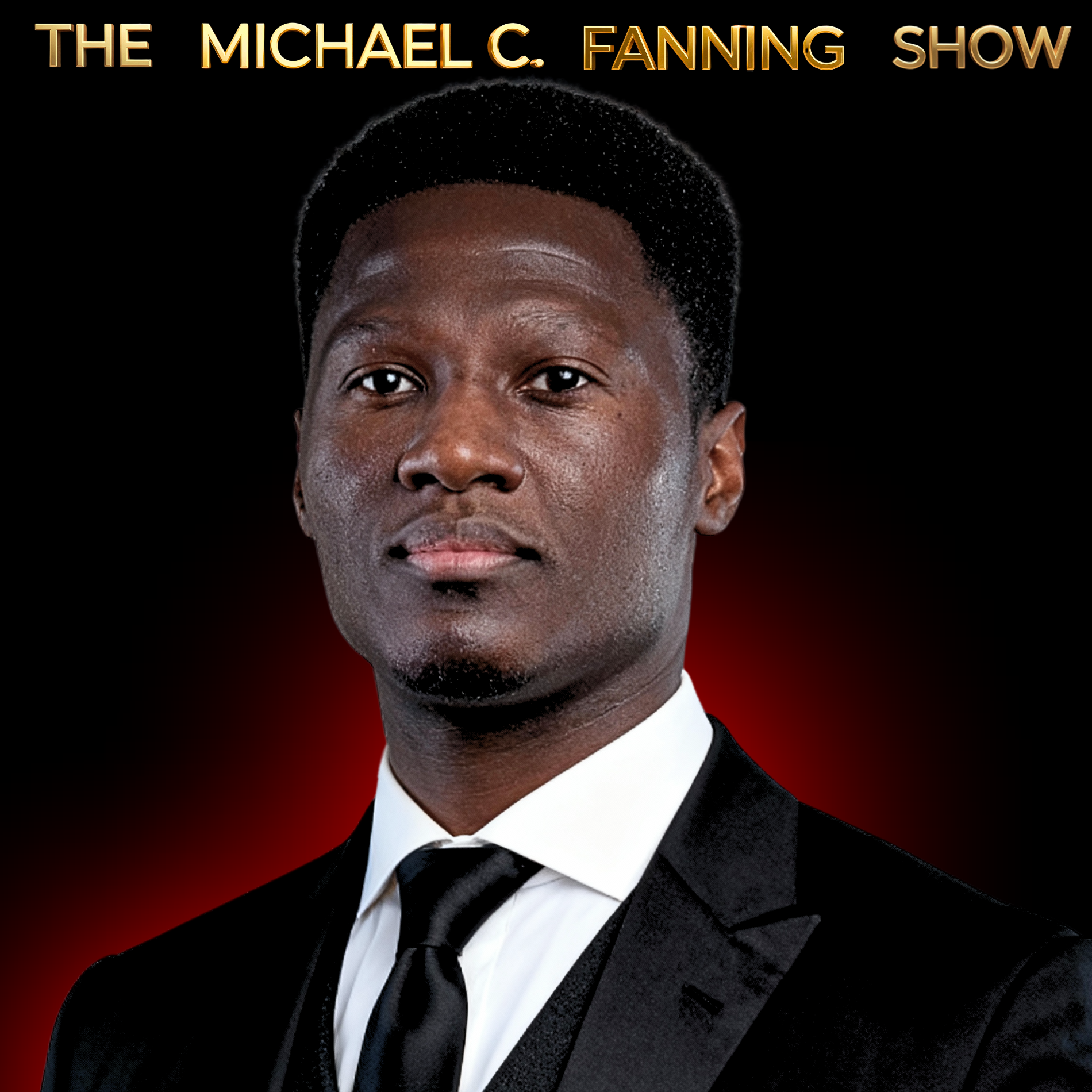
The Michael C. Fanning Show
by Michael C. Fanning
Welcome to The Michael C. Fanning Show — your new home for clear, practical, and empowering financial education. If you want to build wealth, understand money, and take control of your financial future, you’re in the right place. This community is yours! Join your community: www.michaelcfanning.com
-
7
SpaceX IPO: The Investment Opportunity of a Lifetime? | The Michael C. Fanning Show
This Episode is sponsored by EU Startup NewsSpaceX is reportedly preparing one of the most closely watched IPOs in years, with sources saying the company could file its prospectus in late May and begin an investor roadshow the week of June 8. The deal may also be unusually retail-friendly, with plans to reserve a large share for everyday investors and host about 1,500 of them at a June event.What the filing signalsThe timing matters because a public prospectus would move SpaceX from rumor to regulated disclosure, forcing the company to reveal financials, risks, and the structure of the offering. Reuters-linked reporting says the company is targeting a blockbuster raise of roughly $75 billion, which would imply a valuation as high as $1.75 trillion. That would make it a landmark market event, not just another tech listing.Why xAI changes the storyThe xAI acquisition adds a second layer to the IPO narrative: it suggests SpaceX is no longer just a rockets-and-satellites story, but part of a broader Musk-controlled AI platform. Reuters reported that the deal valued xAI at about $250 billion and SpaceX at about $1 trillion in the merger context, while other reports framed the combined valuation around $1.25 trillion. Strategically, the move could strengthen the equity story by linking launch infrastructure, satellites, and AI compute ambitions, but it also complicates valuation because investors will have to price a far more tangled business mix.How investors can get exposureInstitutional investors and accredited buyers can access SpaceX pre-IPO shares through private-market platforms when stock is available, including secondary marketplaces such as EquityZen and Forge, though access depends on existing shareholders selling and on SpaceX’s right of first refusal. For retail investors, the simplest pre-IPO route is indirect exposure through vehicles like ARK Venture Fund, which has held SpaceX as a major position and gives everyday investors a fund-based way to participate before a public listing. Once the IPO launches, retail access should broaden further, but that will depend on final allocation terms and underwriting structure.The "$10 billion problem" SpaceX is facingThe key question is not whether SpaceX can attract demand; it clearly can. The real issue is whether the xAI tie-up is a value-creating integration or a way to package Musk’s private empire into a more marketable public story ahead of a giant debut. If the filing lands in late May as reported, the market will soon learn how much of this IPO is about capital raising, how much is about liquidity, and how much is about building a public currency for Musk’s wider network.Join the community: https://www.michaelcfanning.com/
-
6
ELON MUSK: The Richest Man on Earth (PART 2) | The Michael C. Fanning Show
This Episode is sponsored by EU Startup NewsElon Musk’s Trillionaire Path Is Not About Cash — It’s About OwnershipFor years, people have talked about Elon Musk as if his wealth sits in a bank account, ready to be spent. But that misses the real story: Musk’s fortune is built on ownership, not salary, and the latest chatter around a SpaceX IPO makes that more relevant than ever.The market is now treating SpaceX like more than a rocket company. Reuters reported that SpaceX is weighing a June 2026 IPO at a valuation of roughly $1.5 trillion, while earlier reporting from CNBC and Fortune pointed to a possible public listing tied to a massive secondary share sale and a valuation surge.That matters because Musk’s net worth is largely tied to equity stakes in companies like Tesla and SpaceX, not liquid cash. In other words, his wealth grows when the value of the companies he owns grows, even if very little of that value is sitting in cash he can immediately spend.The Paper Billionaire ProblemThis is the part most people misunderstand.A billionaire is often “rich on paper” long before that wealth becomes liquid. The script gets this point right: ownership creates net worth, but net worth is not the same thing as cash. Public-market valuations, private-share sales, and future IPO pricing can make a founder look dramatically wealthier without changing the amount of cash in a personal bank account.That’s why Musk’s rise is tied to corporate structure as much as product innovation. If SpaceX goes public at a high valuation, the market could effectively reprice the value of everything connected to Musk’s empire.Why SpaceX Matters More Than TeslaTesla may still be the most visible part of Musk’s brand, but SpaceX is increasingly the asset that could define the next phase of his wealth. Reporting in early 2026 suggests SpaceX has been preparing for a public market debut that could become one of the largest IPOs in history.That would do two things at once:* Increase the market value of Musk’s ownership stake.* Reframe Musk’s wealth story from electric cars to aerospace, satellites, and private-market dominance.In simple terms, Tesla made Musk famous. SpaceX could make him a trillionaire.What This Means For Everyone ElseThe bigger lesson is not that everyone should chase billionaire-scale wealth. It’s that the wealthy are usually building equity, not trading hours for wages. Ownership — in a company, a fund, or an asset with appreciation potential — is what creates durable wealth.If you’re young and trying to build financial momentum, the script’s core message is worth keeping: become an owner, not just an earner. The practical version of that idea is to invest in assets that can compound, instead of only relying on income that resets every month.The Real QuestionThe real question isn’t whether Musk has “a trillion dollars in cash.” It’s whether the market will keep rewarding the assets he owns at a level high enough to push his net worth into trillionaire territory. Current reporting suggests SpaceX’s possible IPO could be the catalyst that makes that outcome much more plausible. Get full access to Michael C. Fanning at www.michaelcfanning.com/subscribe
-
5
ELON MUSK: The Richest Man on Earth (PART 1) | The Michael C. Fanning Show
This Episode is sponsored by EU Startup NewsElon Musk is once again dominating the financial headlines in 2026, with his estimated net worth climbing to $839 billion according to Forbes. The rise is being driven by Tesla’s continued importance, SpaceX’s possible IPO plans, and the expanding value of xAI following its reported merger with SpaceX.Reuters reported that SpaceX has been considering a June 2026 IPO at a valuation near $1.5 trillion, a move that could dramatically increase Musk’s paper wealth. At the same time, Tesla shareholders approved a massive compensation package tied to performance milestones in robotics and autonomy, creating another potential wealth catalyst.While trillionaire predictions are still speculative, Musk’s financial position is supported by real market developments, major corporate deals, and one of the largest pay packages ever approved. In 2026, the question is no longer whether Musk is wealthy enough to lead the billionaire rankings, but how far his private empire can still go. Get full access to Michael C. Fanning at www.michaelcfanning.com/subscribe
-
4
TRUMP: The Richest President in U.S. History (PART 3) | The Michael C. Fanning Show
This Episode is sponsored by EU Startup News Trump, Inc.: How a Personal Brand Became a Global Licensing MachineFounders obsess over product–market fit. Investors obsess over capital efficiency. Donald Trump quietly optimized for something else: brand–royalty fit—and turned his surname into a cash‑flowing, globally scalable licensing asset.Long before politics, the Trump Organization was already behaving like a family office wrapped around one asset: the Trump name. Real estate was the stage, but the real business model was much lighter—renting the brand to other people’s projects and collecting high‑margin fees while they carried the risk.1. From Over‑Leveraged Developer to Capital‑Light LicensorIn the 1980s and 1990s, Trump built wealth the old‑school way: heavily leveraged towers, casinos, and hotels—plus multiple bankruptcies when cycles turned. The pivot came when he realized that the market valued his perceived success as much as his square footage.By the mid‑2000s, while “The Apprentice” was peaking, Trump leaned into a simple model: developers raise hundreds of millions for a tower or resort, and he licenses the Trump brand and sometimes management—without taking on the same debt load. Forbes estimated that by that time, licensing income alone sat in the roughly 32–55 million dollars per year range, with billions of his claimed net worth tied to “real estate deals, brand, and branded developments.”For a founder or investor, this is the classic capital‑light pivot: move from owning everything on‑balance‑sheet to owning the brand layer that everyone else rents.2. The “Name First, Asset Second” PlaybookTrump buildings are often not “Trump‑owned” in the traditional sense. They’re owned by local partners who pay to drape his name across the facade. In Panama, Toronto, Istanbul, Vancouver, and beyond, the pattern repeated: the Trump Organization contributed branding, design standards, and sometimes management, while partners funded land, construction, and operations.One developer in Panama reportedly spent more than a third of a 220‑million‑dollar capital raise just to secure the Trump brand and related management—only to later go bankrupt, while Trump’s side had already collected branding and fee income. For Trump, each project was effectively a royalty stream on other people’s capex.The insight for builders: if your reputation is strong enough, you can flip from “we build the product” to “we certify and amplify other people’s products.”3. Media as an Unpaid Brand Accelerator“The Apprentice” didn’t just make for good television; it was a multi‑season infomercial for Trump as the archetypal billionaire operator. The show and its spin‑offs generated hundreds of millions in income and global exposure, but more importantly, it reset the public’s mental model: Trump as decisive, rich, and relentless—exactly the archetype developers and buyers were paying to borrow.As his media profile expanded, the Trump Organization expanded its licensing surface area—beyond towers and golf courses into products like Trump Steaks, Trump Vodka, home furnishings, and more. Many of these products were short‑lived, but strategically they reinforced the idea that “TRUMP” was a portable aura you could stick on almost anything.For investors, this is the power of a narrative flywheel: media builds myth; myth increases willingness to pay for the brand; brand licensing monetizes the myth.4. A Trademark Lattice Around One SurnameBehind the loud aesthetics sat something every serious investor should recognize: an IP strategy.By 2012, Trump had filed around 200 trademark applications tied to his name—covering everything from luxury property brands to steaks, beverages, and even beer. Today, the broader portfolio includes hundreds of Trump‑related marks registered or applied for across multiple classes and jurisdictions.This lattice lets the family office‑like structure do three things:* Slice rights by category (real estate vs. consumer goods vs. entertainment).* Slice rights by geography (U.S. vs. Indonesia vs. Middle East, etc.).* Enforce standards and economics deal by deal.Think of it as building a cap table for your name instead of your company.5. Global “White‑Label” Real EstateThe Indonesia play is a clean illustration. Near Lido Lake in West Java, a 700‑hectare development—resort, golf course, villas, and condos—was structured with local partners and Chinese financing, with Trump Hotels slated to manage and brand part of the project. Similar patterns appear in Ireland, Scotland, and Vietnam: regional partners handle most of the capital and political risk; the Trump Organization attaches the brand and participates in revenues.In aggregate, the Trump Organization has licensed its name to dozens of properties worldwide—golf courses, hotels, office towers, and resorts—creating a diversified book of royalty‑like flows linked to brand equity. That same approach has since extended into digital assets: Trump‑branded NFT collections sold out quickly and earned millions in primary sales plus ongoing secondary royalties, again monetizing the brand with almost no physical overhead.For global allocators, Trump’s model looks less like a traditional REIT and more like an IP‑anchored, geography‑agnostic royalty company.6. Using Politics to Reprice the Brand (Upside and Downside)Politics added volatility but also new surface area.On one side, controversy drove some consumer product partners away; analysts estimate that certain pre‑2016 licensing lines—ties, mattresses, apparel—lost him several million dollars per year. On the other, his presidency and then re‑election opened entirely new channels: digital media, crypto ventures, and politically adjacent businesses that have generated billions in proceeds and paper wealth since 2017, according to investigative and financial reporting.What matters for founders and investors is the meta‑lesson: when your brand is tied to a living person, reputational duration becomes a real asset class (and risk factor). The same divisiveness that scares away one set of counterparties can make you indispensable to another.7. Lessons for Founders and InvestorsIf you strip out the politics, Trump’s licensing machine offers a blunt, instructive framework:* Treat your name or company as IP, not just identity. Register it, defend it, and structure it so you can license by category and geography.* Climb the risk stack. Start owning the full stack if you must, but move as quickly as possible toward the brand/royalty layer where capital intensity is low and margins are high.* Use media to over‑capitalize your brand. Whether it’s a podcast, TV, or X feed, the goal is the same: make your name stand for something simple and monetizable.* Think like a family office, not just a startup. Centralize your brand and IP at the “holdco” level, then let operating companies and partners rent it.* Accept that brand is a balance sheet line. Reputational drawdowns will hit your deal flow; reputational upswings will reprice your royalty streams.For founders building personal brands and investors underwriting them, Trump’s empire is less a morality tale than a live case study: what happens when you treat a surname as an asset class—and build an entire licensing economy around it. Get full access to Michael C. Fanning at www.michaelcfanning.com/subscribe
-
3
TRUMP: The Richest President in U.S. History (PART 2) | The Michael C. Fanning Show
This Episode is sponsored by EU Startup News The Pivot to Power: Inside the Trump Dynasty’s New $6 Billion Nuclear Fusion GambleThe Trump Media and Technology Group (TMTG)—the parent company of Truth Social—is no longer just a media play. In a move that has stunned both Wall Street and the energy sector, the group announced a massive pivot: a $6 billion all-stock merger with TAE Technologies, a leader in the complex field of nuclear fusion.This strategic shift signals a transition for the Trump family from media moguls to “energy titans,” positioning them to capitalize on the skyrocketing power demands of the Artificial Intelligence (AI) boom.From “Likes” to Laser FusionWhile Truth Social was born out of necessity after Donald Trump was sidelined from major social platforms, the merger suggests the app was always part of a larger architecture. The deal with TAE Technologies—a company focused on clean, virtually limitless power—places the Trump dynasty at the center of the “hype trade” currently surrounding nuclear stocks.Analysts note that while TMTG has historically struggled with profitability, it excels at “drumming up retail investment”. By merging with a nuclear fusion firm, they are leveraging that market momentum to build what could eventually be a tens-of-billions-of-dollars energy empire by 2027.The Global Licensing MachineThe nuclear pivot is only one pillar of a broader wealth-building strategy. While serving his second term, the President’s family has overseen a dramatic expansion of the Trump brand across the globe:* Real Estate Dominance: New billion-dollar deals are rising in Oman, Dubai, Vietnam, and Saudi Arabia, including a massive “Trump Tower” in Jeddah.* Licensing Explosion: Income from licensing the Trump name—on everything from luxury towers to watches and even Bibles—reportedly jumped 17-fold in 2025 alone, rising from $50 million to approximately $800 million.* Zero-Cash Strategy: A fundamental shift has occurred: the family is no longer investing their own capital into these projects. Instead, they are being paid hundreds of millions simply for the use of their name, backed by international investors who see the President as an individual who “has whatever it takes to get things done”.A New Breed of “Energy Titan”The strategy appears to be a dual-track approach: maintaining the traditional real estate and licensing engine while aggressively moving into natural resources and advanced power. With a second-term focus on oil, gas, and now nuclear fusion, the Trump dynasty is signaling to the world that they are building a financial legacy that extends far beyond the ballot box.Whether the “hard science” and “complicated business” of nuclear fusion will pay off remains to be seen, but for now, the markets are watching closely as the Trump name moves from the smartphone screen to the power plant. Get full access to Michael C. Fanning at www.michaelcfanning.com/subscribe
-
2
TRUMP: The Richest President in U.S. History (PART 1) | The Michael C. Fanning Show
This Episode is sponsored by EU Startup News President TRUMP is the richest and wealthiest president in the whole history of the United States. Since the beginning of his second term in January 2025, Donald Trump’s net worth has seen a significant surge, with various reports indicating an increase well beyond the $1.4 billion mark. According to analysts at Bloomberg and Forbes, the growth in the Trump family’s wealth is primarily driven by a pivot into digital assets and strategic business maneuvers.Primary Drivers of TRUMP’s Wealth Increase* Cryptocurrency Ventures: The most explosive growth came from the launch of the Trump family’s crypto projects. World Liberty Financial, a venture involving the President’s sons, reportedly netted the family roughly $1 billion through token sales and fees. Additionally, the launch of the $TRUMP and $MELANIA meme coins just before and after the inauguration briefly reached multibillion-dollar market caps, significantly padding the family’s balance sheet.* Trump Media & Technology Group (TMTG): Despite Truth Social’s volatility and reported net losses of over $712 million in 2025, the parent company (DJT) remains a multi-billion dollar asset. A late 2025 merger with fusion technology firm TAE Technologies and plans for a Truth Social spin-off helped stabilize the valuation, keeping Trump’s stake valued at approximately $2 billion as of early 2026.* International Real Estate & Licensing: The presidency has reportedly sparked a “resurgence” in Trump-branded international deals. These, combined with the sale of high-margin items like “God Bless the USA” Bibles, watches, and guitars, added tens of millions in direct licensing income.Financial Snapshot (Estimates as of early 2026)GainTotal Net Worth: ~$6.5B – $7.3BIncrease Since Jan 2025: ~$3B+Key Crypto Assets: $2.4B (Cash & Tokens)Real Estate & Golf: $2.5BThe scale of this enrichment has drawn significant scrutiny from ethics experts, who point to the overlap between the administration’s pro-crypto policies—such as the GENIUS Act and the establishment of a Strategic Bitcoin Reserve—and the President’s personal financial interests in those same sectors.Feature: Senator Elizabeth Warren Get full access to Michael C. Fanning at www.michaelcfanning.com/subscribe
-
1
The New Resource Hegemony (Venezuela, Greenland): Investing in the U.S. Re‑Capture of Global Commodities | The Michael C. Fanning Show
This Episode is sponsored by EU Startup News The U.S. has quietly shifted from sanctioning foreign resource bases to administering them—turning Venezuela and Greenland into test cases for a new form of resource hegemony. This is less about ideology and more about balance-sheet strategy: Washington is increasingly treating oil, water, and minerals as extensions of U.S. financial power, not just inputs for domestic consumption.Why This Regime Change in 2026 Matters?For most of the 2010s and early 2020s, U.S. policy toward “problem states” was framed around exclusion: sanctions, secondary sanctions, and financial isolation. In 2026, the operating model is closer to active management—securing effective control over asset cash flows rather than keeping barrels and molecules off the market.Venezuela is the clearest example. Under the new Trump framework, Venezuelan crude exports are being channeled through U.S.-supervised accounts, with revenues escrowed for controlled uses and for settling selected claims. That transforms what used to be a binary “on/off” sanctions story into a directed supply story, particularly relevant for U.S. Gulf Coast refiners that were originally built to run heavy Latin American crude. Chevron, already the only major U.S. operator in the country, is in talks to extend and broaden its license and has indicated it can ramp Venezuelan output by roughly 50% within 18–24 months, subject to approvals.Greenland sits at the other pole—literally and strategically. While headlines focus on Arctic symbolism, the underlying U.S. interest is in water security, rare earths, and logistical control of northern shipping and surveillance corridors. In a world where water infrastructure funding is chronically underprovided and mineral supply chains are increasingly contested, an “Arctic Fortress” is as much a financial hedge as it is a military one.Directed Venezuelan Barrels and Chevron CapacityUS‑Linked Venezuelan Crude Exports and Chevron Production Capacity, 2024–2027E.One line shows indexed U.S.-linked Venezuelan exports; the other shows Chevron-operated production, rising ~50% by 2027E, consistent with management guidance conditional on license extensions.The above chart visually anchors the three following points:* Chevron is currently the marginal U.S. operator in Venezuela and the natural conduit for any scale-up of sanctioned barrels back into U.S.-aligned markets.* The U.S. can incrementally restore heavy crude flows to Gulf refiners without ceding political leverage, because revenues sit in U.S.-controlled structures.* The policy signal is that sanctions are now a design tool to re-route rather than simply suppress production.Tradeable Theme #1: Energy Majors and Refining‑Linked Cash FlowsFor listed energy majors, the opportunity is not just in upstream barrels but in integrated value chains that benefit from policy-stabilized feedstock. Therefore, Chevron (CVX) is structurally advantaged because:* It retains on-the-ground joint ventures with PDVSA under OFAC licenses, making it the only major with continuous operational knowledge of Venezuela’s upstream.* It is already in negotiations with U.S. authorities on an expanded license that would allow higher export volumes and sales not only to its own refineries but to third parties.For institutional portfolios, this suggests:* Overweight integrated majors with (a) Gulf Coast refining exposure and (b) political permission to handle Venezuelan or similar heavy crudes.* Underweight pure-play shale names where the marginal barrel is increasingly price‑taker rather than policy‑privileged.From a DCF perspective, the second-order effect is a duration extension on downstream cash flows. If heavy crude supply into U.S. refining hubs becomes more predictable under U.S.-directed arrangements, utilization and crack spreads are less sensitive to OPEC+ volatility.Tradeable Theme #2: Tankers, Midstream, and Caribbean Flow Re‑RoutingThe reactivation of Venezuela under U.S. management is also a logistics story. Policy that turns “blocked barrels” into escrowed barrels necessarily changes trade routes. Investors should focus on:* Tanker companies with established exposure to the Americas and Caribbean–Gulf routes rather than predominantly Russia or Middle East lanes.* Midstream and port operators positioned to handle higher volumes of heavy crude into U.S. Gulf Coast and possibly to Europe under U.S.-supervised contracts.The second‑order effect: as U.S.-directed Venezuelan barrels displace higher-cost or geopolitically exposed supply, regional ton‑mile demand in the Atlantic basin rises, supporting day rates even if headline global volumes appear flat. This is especially relevant if U.S. policy encourages stock‑building for strategic and political reasons, effectively using commercial storage and shipping capacity as an extension of U.S. foreign policy.Tradeable Theme #3: A “Backed” Dollar and Resource‑Linked USD PremiumThere is an emerging narrative that the U.S. dollar is being re‑anchored not just to Treasuries and financial depth, but to privileged access to strategic physical assets. Venezuela’s oil reserves and Greenland’s water and minerals effectively act as “shadow collateral”—they are not formally pledged, but U.S. influence over their monetization supports perceptions of U.S. solvency and optionality.For macro and FX desks, the investable takeaway is a structural long‑USD bias into 2026–2027, especially against currencies lacking commodity or security backing. U.S. control over the terms on which Venezuelan oil and, eventually, Greenland‑linked resources intersect with global markets reinforces:* Safe‑haven flows into the USD during geopolitical stress (e.g., the Maduro capture).* A persistent policy premium as markets price in the U.S. capacity to weaponize or stabilize key resource flows.USD Index vs. Resource‑Control NarrativeTradeable Theme #4: Water as Frozen Capital – Greenland and the Global Investment GapGreenland’s strategic value is less about near‑term oil and more about long‑dated claims on freshwater and critical minerals in an environment where water infrastructure is chronically underfunded. The World Bank, OECD, and global initiatives estimate that global water infrastructure needs amount to around 7 trillion dollars by 2030 and could rise toward 22 trillion dollars by 2050, far above current public commitments.For investors, the key point is not to treat “water” as an ESG side story but as a scarce infrastructure asset class where:* Required capex is massive and relatively inelastic.* Regulatory shifts increasingly favor projects that enhance resilience (storage, desalination, leakage reduction, recycling).* Sovereigns with physical water advantages—such as Arctic holdings—gain optionality in future cross‑border water and food arrangements.The Water Investment GapThe above chart legitimizes water as a macro‑scale capital deployment theme and frames Greenland as a high‑optionality call option on a future where bulk freshwater and related infrastructure carry explicit security premia.Downstream investable angles include:* Listed water infrastructure and technology companies (treatment, desalination, leakage analytics, metering).* Infrastructure funds and utilities with Arctic or Northern Europe exposure that may indirectly benefit from Greenland‑linked flows or policy.Risk and Scenario Section: Why This Is Not a One‑Way BetInstitutional LPs will expect a clear articulation of downside and timing risk. Key risk vectors:* Geopolitical pushback and legal friction* Denmark, Canada, and other Arctic Council actors can complicate the operationalization of Greenland‑linked projects, slowing permitting and infrastructure approvals.* China and Russia are unlikely to accept an uncontested U.S. “Arctic Fortress” and may respond asymmetrically, including cyber, lawfare, or counter‑alliances in other resource theaters.* Operational lag and capex absorption risk in Venezuela* PDVSA’s infrastructure has suffered years of underinvestment; restoring meaningful incremental production will require billions in capex and multi‑year execution.* Even with Chevron’s projected 50% capacity ramp in 18–24 months, the system-level reliability of Venezuelan exports will lag the policy narrative.* Domestic and local political risk* Venezuelan and Greenlandic domestic politics could turn against perceived external “management” if local populations see insufficient benefits relative to environmental and sovereignty costs.* U.S. domestic politics in 2028 and beyond could re‑open the question of how far Washington should go in entangling itself with foreign assets, affecting the durability of today’s frameworks.For portfolio construction, this argues for:* Positioning via liquid proxies (integrated majors, listed infrastructure, FX) rather than hard‑to-exit frontier assets.* Treating this as a multi‑year regime shift with scenario dispersion, not a 6–12 month trade.How to Express the Trade in a Professional PortfolioTo translate the thesis into institutional positioning, investors must consider:* Core: Overweight integrated energy majors with exposure to U.S.-aligned heavy crude and Gulf Coast refining (e.g., ExonnMobile, Chevron) funded against less policy‑levered upstream.* Satellite: Select positions in tanker and midstream names geared to Atlantic basin flows, with strict risk limits around spot rate volatility.* Macro overlay: Maintain a modest structural long‑USD tilt, particularly against currencies of import‑dependent economies vulnerable to resource and water insecurity.* Structural: Incremental allocation to listed water infrastructure and technology names, framed as a play on the global water investment gap rather than pure ESG branding.The opportunity here is not only in first‑order price moves in oil or water assets but in the second‑order effects: who controls the flows, who writes the contracts, and which balance sheets sit closest to Washington’s new model of resource hegemony. For allocators willing to underwrite geopolitical complexity, this is one of the few macro themes where security policy and cash‑flow visibility may move in the same direction.Thank you EU Startup News, Stallone Community and many others for tuning into my live video! Join me for my next live video in the app.Thanks for reading! Subscribe for free to receive new posts and support my work. Get full access to Michael C. Fanning at www.michaelcfanning.com/subscribe
No matches for "" in this podcast's transcripts.
No topics indexed yet for this podcast.
Loading reviews...
ABOUT THIS SHOW
Welcome to The Michael C. Fanning Show — your new home for clear, practical, and empowering financial education. If you want to build wealth, understand money, and take control of your financial future, you’re in the right place. This community is yours! Join your community: www.michaelcfanning.com
HOSTED BY
Michael C. Fanning
Loading similar podcasts...
URL copied to clipboard!