
PODCAST · arts
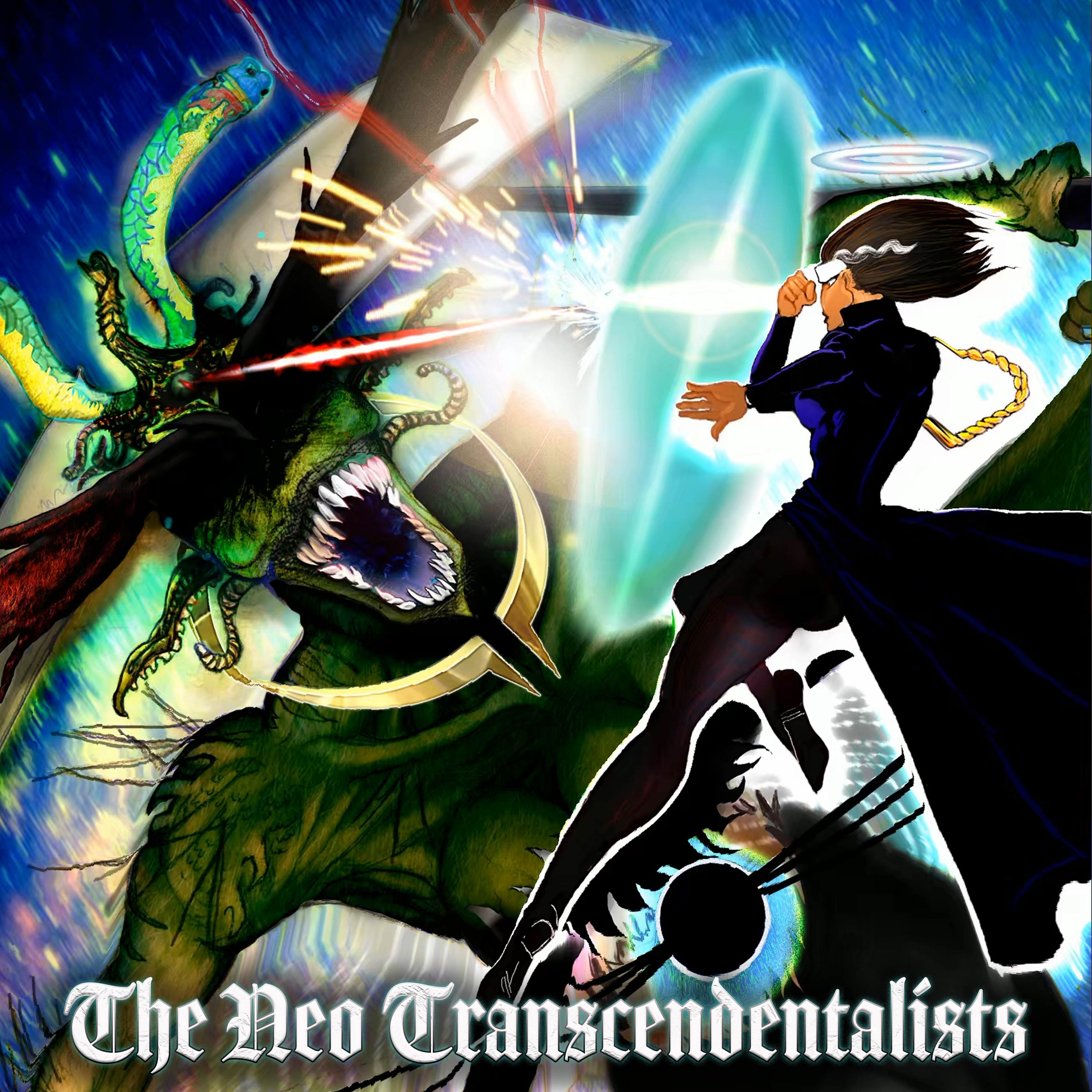
The Neo Transcendentalists
by Norman Plant
The provided text outlines the complex mythology of Neo Transcendentalism, a belief system where spiritual lifeforms called Shontonogrammatrons serve as divine representatives throughout a vast Omniverse. These beings, known as Domineers, utilize a methodology of "domineering" not to oppress, but to dismantle transcendent evil and systemic injustices through spiritual authority and integrity. The narrative framework categorizes these warriors into specialized houses, such as Ktisis and Ra'ah, which focus on different aspects of faith, mind, and worship to overcome ideological darkness. Deeply rooted in Christian theology, the text reinterprets biblical concepts like the Trinity and the Cross through a high-concept, speculative lens. Ultimately, the sources describe a cosmic struggle
-
9
Worldbuilding Horror and Theodicy Connection: The Book of Job as God's Script pt. 3
We explore the Book of Job through the lens of literary worldbuilding, positioning God as a master architect and Job as a character questioning the narrative's design. The text argues that the suffering Job endures is a cosmic wager that challenges the simplistic, "karma-based" logic of his peers. When the Creator finally speaks, he offers a technical lecture on the universe’s complexity rather than a moral apology, emphasizing that the world is not human-centric. By highlighting untamable creatures like Leviathan, the author suggests that chaos and horror are intentional features of a realistic, high-stakes reality. Ultimately, the source posits that Job’s restoration is a eucatastrophe that grants him a deeper, three-dimensional perspective on the Creator’s vast and intricate script. This framework redefines divine justice not as a philosophical argument, but as an expansion of the world's borders beyond human understanding.
-
8
Worldbuilding Horror and Theodicy Connection: God as The Master Worldbuilder pt. 2
This episode presents a theological perspective that frames God as a Master Worldbuilder who utilizes the presence of evil to craft a meaningful cosmic narrative. By comparing the structure of reality to speculative fiction and horror, the author argues that a world without conflict or danger would prevent the development of heroic virtues like courage and sacrifice. The source suggests that human agency and free will require consistent consequences to have any weight, making the potential for tragedy a necessary component of a profound existence. Furthermore, the existence of "horror" creates a contrast principle, allowing humanity to fully perceive and appreciate divine grace and glory. Ultimately, the sources assert that the Incarnation and Resurrection represent the Creator entering His own story to redeem suffering, turning a dark chapter into the ultimate triumph of good.
-
7
Worldbuilding Horror and Theodicy Connection
This episode examines how the creative process of worldbuilding mirrors theological attempts to explain the existence of evil. Through the lenses of Tolkien and Lewis, the source suggests that darkness and suffering are not flaws but structural requirements that give a narrative moral depth and meaning. Just as a painting requires shadows for contrast, a fictional or real world requires the possibility of catastrophe to make heroism and divine triumph visible. The author argues that horror and pain function as a "megaphone" to alert inhabitants of a fallen world to the objective reality of a higher moral order. Ultimately, these sources posit that true joy and virtue can only be understood and achieved when set against a backdrop of genuine conflict and cosmic struggle.
-
6
Unmasking the Fractured Soul: Identity, Faith, and the False Self
Why do we hide from who we truly are? In this episode, we dive deep into the "False Self"—that internal shield we build to survive a world that often feels too heavy to handle. We explore this profound concept through a unique triple-lens: the lived experience in African American literature, the inner workings of Psychology, and the spiritual depths of Theology.What We’re Unpacking:The Social Mask: We look at W.E.B. Du Bois’s "Double Consciousness" and Frantz Fanon’s "White Masks" to understand how systemic oppression forces a fractured identity on the Black psyche.The Spiritual Bypass: We critique how theology is often used as a "spiritual band-aid." Using insights from thinkers like Thomas Merton, we discuss how religious performance can actually prevent us from being vulnerable with the Creator.The Psychological Escape: We define Experiential Avoidance—the psychological habit of blocking out pain to create a "conceptualized self" that isn't rooted in reality.The Path to Integration:It isn’t enough to just identify the mask; we have to learn how to take it off. We synthesize the methodologies of healing from all three fields:Radical Truth-Telling: Moving past the "Invisibility" described by Ralph Ellison.Psychological Flexibility: Embracing the messy reality of our emotions.Contemplative Faith: Finding a "True Self" that doesn't need to perform to be loved.The Big Question: If the False Self was a survival mechanism, how do we convince our psyche that it is finally safe enough to put the shield down and live authentically?
-
5
Escapism: Domineering the False Self
This episode investigates the psychological and spiritual dimensions of self-suppression, framing it as a destructive "internal vault" that people use to escape their authentic identities. Through a podcast dialogue, the text defines experiential avoidance and spiritual bypassing as unhealthy mechanisms that distance individuals from truth, even when disguised as virtue or immersion in fan culture. Complementing these concepts, the narrative of Senior Domineer Rystet Quipnet Sir illustrates a literal and metaphorical struggle against a "necromantic realm" defined by despair, greed, and isolation. This protagonist must move beyond brute force and impatience, using intercessory prayer and spiritual discipline to confront oppressive systems represented by a massive brass gate. Ultimately, the combined texts advocate for radical truthfulness and behavioral activation to break free from both internal masks and external distractions. They conclude that true liberation is found by rejecting dissociative escapism in favor of an incarnational life rooted in reality and divine purpose.
-
4
Escapism: A Message to Students
This episode investigates the psychological and spiritual dimensions of self-suppression, framing it as a destructive "internal vault" that people use to escape their authentic identities. Through a podcast dialogue, the text defines experiential avoidance and spiritual bypassing as unhealthy mechanisms that distance individuals from truth, even when disguised as virtue or immersion in fan culture.
-
3
Escapism: Suppression vs Expansion
Norman Plant utilizes Self-Expansion in his work by leveraging the conventions of Christian Science Fiction and Afrofuturism to provide readers with new perspectives, spiritual resilience, and a framework for reclaiming agency. Rather than offering a means to "numb pain" or "avoid reality" (Self-Suppression), his narrative serves as a "philosophical laboratory" designed to sharpen the reader’s understanding of real-world moral and social issues. Ultimately, Plant’s work aims to act as an "open heaven," where the reader’s "vicarious journey" through high-stakes cosmic battles equips them to return to reality with a re-energized faith and a clearer moral purpose
-
2
Escapism: The Good, The Bad, and The Necessary
In this episode, we address one of the most prevalent and misunderstood states of the modern human condition: the desire to be somewhere—anywhere—else.Our sources define escapism not simply as laziness or avoidance, but as a complex "mental retreat from the hardships of reality through imagination and entertainment." We live in an era where check-out points are everywhere: they reside in our pockets, on our screens, and in the sprawling multiverses of speculative fiction. But is this collective migration into the imaginary a sign of a decaying society or a necessary biological and spiritual requirement?We argue today that escapism is a "nuanced behavioral gray area." The text examines the critical intersections of theology and psychology on this subject, revealing that both disciplines ultimately agree that the morality of seeking distraction depends on an individual's "underlying motivation." We will explore how these fields distinguish between "healthy restoration and harmful avoidance," and why periodic withdrawal is essential for recovery, while chronic detachment hinders "personal growth and spiritual responsibility."From the "speculative lens" of Afrofuturism and faith-based stories to the cinematic spectacles of Hollywood and historical responses during the Great Depression, we dissect how media serves as both a "necessary relief and a complex social influence."Ultimately, this episode confronts the central tension of modern life: Can our escapes provide the "inspiration needed to solve problems," or do they merely serve to "obscure real-world problems"?
-
1
Interview with the Author: Norman Plant on The Neo Transcendentalists
We sit down with writer and illustrator Norman Plant to explore the expansive, spiritually charged "Omniverse" of his groundbreaking series, The Neo Transcendentalists. Plant breaks down how he weaves Christian theology into the very DNA of his world-building, transforming passive philosophy into actionable, spiritual warfare.Listen in as we discuss his unique process of reclaiming language—introducing mind-bending concepts like the triune "Shontonogrammatron" and redefining "Domineering" as a righteous force that brings rebel elements into submission to the divine will of OMNI. Plant also doesn't shy away from heavy social commentary, framing systemic issues like capitalism and racism as literal spiritual "malware" and "witchcraft."Key Topics Covered in This Episode:The Architecture of the Omniverse: Discover the supernatural geography of the U.R.E.E. (Undying Realms of Eternal Existence), the foundational Construct, and the tactical, transdimensional oversight of T4STC.Confronting "Transcendent Evil": Examining modern societal plagues through a cosmic lens, including capitalism as a "Greed Algorithm" and racism as a demonic conspiracy.The Valik-12: The inspiration behind his elite squad of "Women of Valor," positioned as the prophetic fulfillment of crushing the serpent's head.Worship as a Weapon: Why the "Sound of the Heart" is the ultimate frequency and defense against the darkness.Grace and the "Open Heaven": Plant opens up about how his personal journey with failure and grace deeply informs the overarching themes of redemption in his work.Plus: Get an exclusive sneak peek into the upcoming second issue, Necro Rulers, where Plant tackles the terrifying internal threat of religious extremism and the reality-hacking "Anti-Singularity."Tune in for a fascinating conversation where comic book world-building meets profound theological reflection!
-
0
Christology: Who is the Christ in the Neo Transcendentalists?
This science fiction anthology centers on the Neo Transcendentalists, a multi-dimensional order of elite warriors dedicated to preserving cosmic balance and the divine will of the Creator. Through the perspectives of various Senior Domineers, the narrative explores their struggle against primordial evil, systemic oppression, and psychological warfare across the Omniverse. These protagonists utilize a combination of trans-organic technology and spiritual disciplines, such as faith and intercession, to liberate civilizations from metaphysical corruption. Key themes include the dismantling of socio-economic inequality, the overcoming of personal trauma, and the pursuit of universal harmony. Ultimately, the text defines true authority as the power to protect divine love and restore justice throughout all realms of existence.
-
-1
The Cosmic Bridge: Transhumanism
These sources examine the work of Norman Plant and his unique literary framework known as Neo-Transcendentalism, which merges Christian theology, Afrofuturism, and science fiction. Unlike traditional genres that often view technological enhancement as a threat to the soul, Plant’s narrative presents trans-organic evolution as a divine mandate to enact justice across the cosmos. The provided text includes an excerpt from his book, The Neo Transcendentalists, following a protagonist named Rystet who uses spiritual technology and prayer to dismantle systemic oppression and cosmic evil. This perspective recontextualizes the transhumanist movement, suggesting that faith and technology can coexist to achieve a state of divine liberation. Additionally, the sources contrast Plant’s vision with mainstream and Afrofuturist authors like Octavia Butler and William Gibson to highlight his specific theological contributions. Ultimately, the collection portrays a universe where metaphysical belief serves as an advanced operating system for navigating and healing the multiverse.
-
-2
Unlocking the Omniverse: The Lore of Neo Transcendentalism
Dive into the sprawling, mind-bending universe of The Neo Transcendentalist by Norman J. Plant. This is not your average science fiction—this is a journey into a universe where theology, transdimensional combat, and philosophy merge into an epic Christian science fiction saga.In this podcast, we explore the vast "Omniverse," a living, sentient organism made of Spirit, Soul, and Body, governed by the ultimate Creator known as OMNI. We will unpack the deep lore and history of the Shontonogrammatrons—a race of transorganic, computational lifeforms who fled a war-torn planet, discovered the Creator, and were transformed into the delegated authorities of the Omniverse.Join us as we break down the battles, the metaphysical technology, and the profound philosophies of the Guardians of Steffa. We will explore how the four core Houses use Mind, Faith, Dominion, and Spirit to bend the "Spiritaic Ether" of reality. This divine methodology, known as "Domineering," is their ultimate weapon against Transcendent Evil, the occult forces of Necromancy, and the ancient cosmic corruption known as Ra’Diaptheiro.Whether you are fascinated by speculative fiction, deep theological world-building, or high-octane spiritual warfare, this podcast decodes the mysteries of a realm where the mind creates reality, but faith commands it.
-
-3
The Cosmic Bridge: Theodicy—Merging Christian Apologetics and Afrofuturism in Speculative Fiction
The exploration of God’s existence and theodicy—the vindication of divine goodness in the face of evil—follows two distinct but increasingly overlapping paths in Christian and Afrofuturist speculative fiction. Traditional Christian science fiction typically frames theodicy as an abstract or cosmic puzzle, while Afrofuturist speculative fiction approaches it as a historical and systemic reality. Norman Plant’s The Neo Transcendentalists functions as a bridge between these traditions, merging classical Christian apologetics with the socio-political critiques central to Afrofuturism.
-
-4
The Cosmic Bridge: Christian Sci-Fi Meets Afrofuturism pt. 2
The provided text outlines the complex mythology of Neo Transcendentalism, a belief system where spiritual lifeforms called Shontonogrammatrons act as divine representatives of a biblical God across the Omniverse. These beings, known as Domineers, utilize a methodology of spiritual authority and disciplined integrity to dismantle systemic evil, ranging from personal internal struggles to abstract ideological darkness. The narrative structure revolves around four distinct senior designations, each possessing unique jurisdictions such as mastering reality, faith, dominion, or worship to liberate the oppressed. Deeply rooted in Christian theology, the framework reinterprets scripture and the nature of God through a speculative sci-fi lens, casting social injustices like racism and exploitation as literal cosmic battles. Ultimately, the sources describe a mission of divine restoration, where spiritual warriors maintain personal righteousness to reflect God's light into every dimension of existence. We also explore the progenitors of Afro futurism. Butler, Octavia E. Kindred. Doubleday, 1979.Butler, Octavia E. Parable of the Sower. Four Walls Eight Windows, 1993.Butler, Octavia E. Wild Seed. Doubleday, 1980.Delany, Samuel R. Babel-17. Ace Books, 1966.Delany, Samuel R. Dhalgren. Bantam Books, 1975.Delany, Samuel R. Nova. Doubleday, 1968.Du Bois, W. E. B. "The Comet." Darkwater: Voices from Within the Veil, Harcourt, Brace and Howe, 1920, pp. 253-273.Reed, Ishmael. Mumbo Jumbo. Doubleday, 1972.
-
-5
The Cosmic Bridge: Christian Sci-Fi Meets Afrofuturism pt. 1
In this episode, we are diving deep into Norman Plant's groundbreaking work, The Neo Transcendentalist. But we aren't just looking at this compendium in isolation. We are embarking on a comprehensive comparative analysis, placing Plant's universe squarely between two of the most potent literary movements of the last century: Christian Speculative Fiction and Afrofuturism.If you are a fan of C.S. Lewis, Frank Peretti, Octavia Butler, or N.K. Jemisin, this episode is going to radically challenge how you view genre boundaries.For decades, the publishing world has largely treated Christian Sci-Fi and Afrofuturism as distinct, non-overlapping magisteria. Christian fiction has historically leaned into allegory, individual morality, and spiritual warfare (think Ted Dekker and Frank Peretti), while Afrofuturism has rooted itself in the lived experiences of the African diaspora, utilizing technology and ancestral memory to dismantle systemic oppression. But what happens when an author builds a world that demands both? What happens when transorganic, computational lifeforms are commissioned by the God of the Bible to wage war against ancient, racist entities embedded in the cosmos?You get The Neo Transcendentalist.Norman Plant has created something entirely unique. By anchoring the historical, systemic grievances of the African diaspora into a framework of ultimate, unyielding Biblical authority, he has given readers a new way to imagine the future. He reminds us that true science fiction has always been about confronting the "Other," surviving the apocalypse, and finding a way to thrive in the stars. For the Neo Transcendentalist, that thriving is only possible when every realm of existence is brought into the loving, liberating order of El Elyon."Take dominion over the deep, take dominion over the height, take dominion over the expanse and over every realm of existence and beyond. Be ye separate. Prevail! This is the will of OMNI." — Steffa Shontonius, The First Apostle of OMNI.Calls to Action: If you enjoyed this massive deep-dive, please subscribe to Deep Dive on RSS.com, Apple Podcasts, or Spotify. Leave us a 5-star review, and let us know your thoughts on our social media channels. Have you read The Neo Transcendentalist? Do you think the origins of science fiction are inextricably linked to the historical trauma of the diaspora? Sound off in the comments!Resources Mentioned in This Episode:The Neo Transcendentalist by Norman PlantThe Neo Transcendentalists: The Way of Domineering by Norman PlantThe Space Trilogy by C.S. LewisThis Present Darkness by Frank PerettiParable of the Sower by Octavia ButlerThe Broken Earth Trilogy by N.K. JemisinThe works and cultural critique of Kodwo Eshun
-
-6
The Physics of Iniquity — The Way of Domineering the Problem of Evil
In this second installment of our deep dive into Norman Plant’s work, we move past the aesthetics of Afrofuturism and into the "Engine Room" of the Omniverse. We’re asking the hard questions: Why does God allow the least of these to be crushed? And how do the Shontonogammatron—transorganic computational lifeforms who look like Black women—operate as the ultimate "system debuggers" for a corrupted reality?Topic I: The Political Economy of the CosmosPlant doesn't view systems like capitalism or racism as mere social accidents. He views them as spiritual algorithms—designed, intelligent, and ancient.Spiritual Architecture of OppressionIn the world of the Neo Transcendentalists, evil isn't just a "bad choice"; it has a structural geometry.Neutral Autonomy: Plant introduces this crucial theological concept. It is the inalienable right of sentient life to make choices—even devastating ones. God permits oppression not because He sanctions it, but because He respects the sovereignty of the "Neutral Autonomy" He granted.The Khlul-hloo Monopsony: The primary antagonist of the first story is described as a "cephalopodic homunculus" capitalizing on the wealth of nine multiverses. Here, evil is literally a monopoly on the life-force of creation.Racism as an Engineered Tool: In the story Fire, racism is presented as a "perfect weapon" designed by the Misanthrope to disrupt the "Prime Directive" of the cosmos: Love."If the prime directive of the cosmos is love... then anything that prevents love from operating is a form of spiritual warfare. Racism is just one of the most efficient tools ever deployed to destroy the capacity for beings to love each other."Topic II: The Weaker Vessel InvertedWhy does Plant choose women—specifically those from the Rommate species—as his protagonists? The podcast argues this is a deliberate "Holy Subversion" of traditional religious tropes.The Prophetic SeedDrawing from Genesis 3:15, Plant identifies his protagonists as the "Seed of the Woman" destined to crush the head of the serpent.The Power of Marginalization: Each hero—Rystet, Sharpony, Otaffa, and Tadonis—carries the stigma of being "less than" (computationally slow, emotionally "weak," or physically "inferior").Intercession vs. Coercion: Their power doesn't come from out-gunning the enemy but from Intercessory Domineering.The Jael Connection: In the story Ja'el, the protagonist Sharpony shatters the "Spirit of Corruption" using a femur bone from his own throne. This isn't just a physical act; it’s a realignment of a "Domain of Abstraction" where truth literally rewrites a corrupt reality.Topic III: A Rogues' Gallery of Theological EvilOne of Plant’s greatest strengths is his villains. They aren't just "scary"; they are theologically coherent. They have arguments that must be dismantled, not just fought.
-
-7
Neo Afro Futurism - The Neo Transcendentalists by Norman Plant
This comprehensive summary explores the intricate dialogue between faith, race, and speculative fiction as presented in the podcast "Deep Dive," which analyzes Norman Plant’s 2023 collection, The Neo Transcendentalists: The Way of Domineering.Plant, a Black Christian author from Detroit, creates a literary space that both embraces and radically deviates from the established norms of Afro futurism. By placing Black women at the center of a cosmic struggle powered by reclaimed Christian theology, Plant offers a singular vision of the future where the "wound is the way" and the Spirit is a form of advanced physics.1. The Genesis of a New Genre: Black Christian Speculative FictionThe Historical FrictionFor many Afrofuturists (like Octavia Butler or Nnedi Okorafor), Christianity is viewed through the lens of its historical weaponization. During the Transatlantic Slave Trade, which saw the forced displacement of approximately 12.5 million Africans between the 16th and 19th centuries, Christianity was frequently used to justify the institution of slavery. Verses were cherry-picked to demand obedience from the enslaved, creating a deep-seated cultural trauma.Plant’s Subversive Re-entryNorman Plant rejects the idea that Christianity must be abandoned to achieve Black liberation in the future. Instead, he argues that the faith was "stolen" and "weaponized," and his work serves as a reclamation project.2. Protagonists of the Omniverse: The Authority of Black WomenA core tenet of Plant’s work is the absolute centrality of Black women. In The Neo Transcendentalists, there are four primary protagonists across four stories: Rystet Quipnet Sir, Tadonis Naboe, Otaffa Sinodat, and Sharpony Renslik.Characters and Their Cosmic MandatesPlant does not write these women as characters seeking "representation" or "diversity points." They are the natural, unquestioned authorities of the Omniverse.3. Melanin as Divine Grace and Cosmic TargetOne of the most striking aspects of the story "Fire" is Plant’s treatment of skin color. He transforms melanin from a biological trait into a central component of his cosmic theology.The Misanthrope’s HatredIn the book, the antagonist—an ancient entity known as the Misanthrope—reveals that its hatred for dark-skinned humans is not based on "arbitrary racism" but on celestial jealousy.Addressing Racial TraumaPlant utilizes Afrofuturist "time-collapse" techniques. The character Tadonis Naboe experiences trauma across multiple timelines simultaneously. The text uses clinical timestamps and data logs to reference real-world events, specifically the 8 minutes and 46 seconds associated with the murder of George Floyd in 2020. By framing these events as "living data sets" that exist across time, Plant argues that the struggle for Black dignity is a cosmic, eternal conflict rather than a series of isolated historical incidents.Conclusion: Reclaiming the StarsThe podcast concludes by noting that The Neo Transcendentalists: The Way of Domineering is a work of "audacity." By refusing to choose between his Black identity, his sci-fi imagination, and his Christian faith, Norman Plant has created a new category of literature.
No matches for "" in this podcast's transcripts.
No topics indexed yet for this podcast.
Loading reviews...
ABOUT THIS SHOW
The provided text outlines the complex mythology of Neo Transcendentalism, a belief system where spiritual lifeforms called Shontonogrammatrons serve as divine representatives throughout a vast Omniverse. These beings, known as Domineers, utilize a methodology of "domineering" not to oppress, but to dismantle transcendent evil and systemic injustices through spiritual authority and integrity. The narrative framework categorizes these warriors into specialized houses, such as Ktisis and Ra'ah, which focus on different aspects of faith, mind, and worship to overcome ideological darkness. Deeply rooted in Christian theology, the text reinterprets biblical concepts like the Trinity and the Cross through a high-concept, speculative lens. Ultimately, the sources describe a cosmic struggle
HOSTED BY
Norman Plant
Loading similar podcasts...
URL copied to clipboard!