
PODCAST · arts
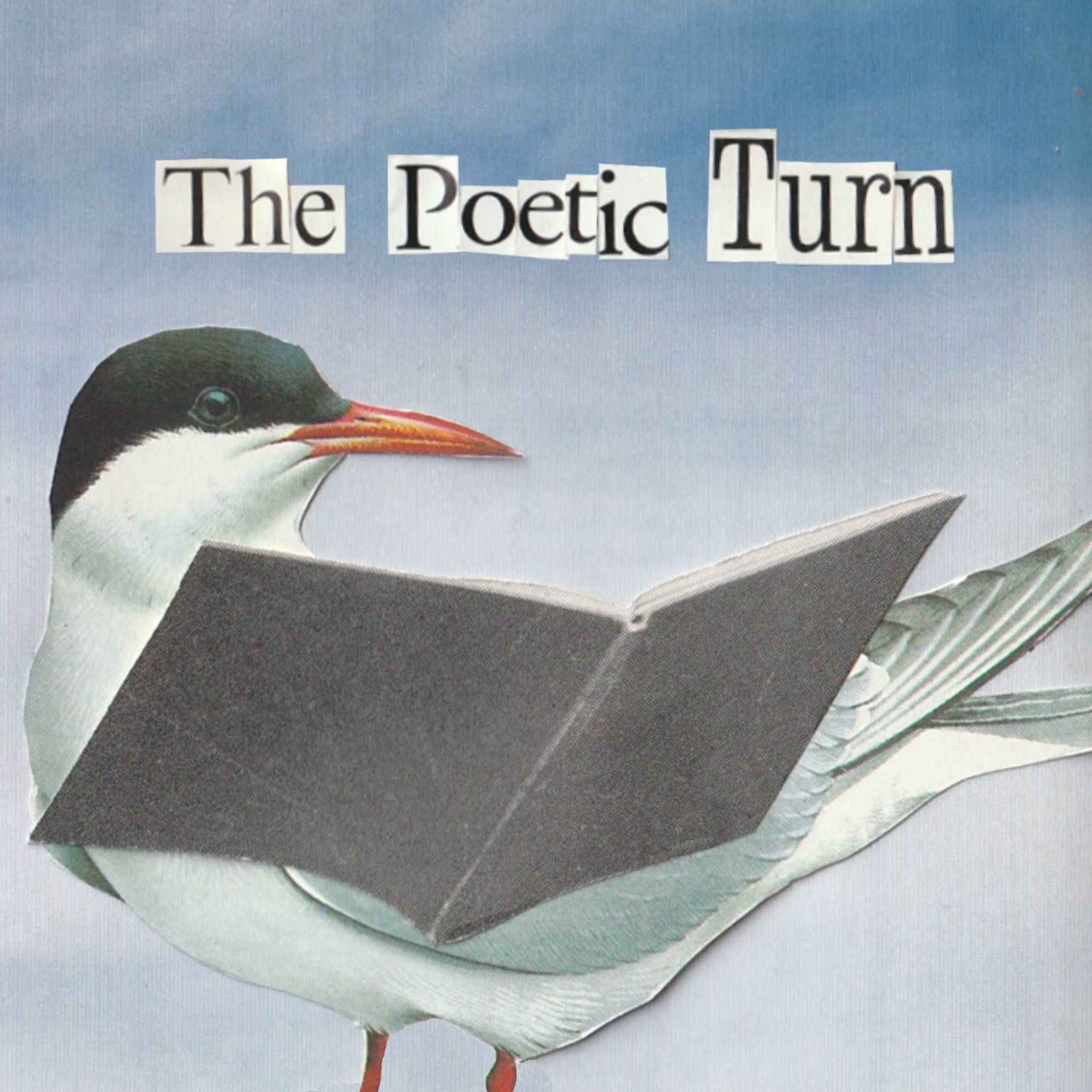
The Poetic Turn
by Darren Stephens and Evan Carlson
The Poetic Turn is a podcast hosted by Darren Stephens and Evan Carlson that explores poems and poetry through conversation—thoughtful, curious, and welcoming. Each episode invites listeners into close encounters with poems: how they work, why they matter, and what they can offer us.The show is for anyone who wants more poetry in their world. Whether you’re brand new to poetry, returning after a long absence, or already comfortable reading and discussing poems, The Poetic Turn meets you where you are—without gatekeeping, jargon for its own sake, or academic posturing. The goal is simple: to make poetry more approachable, more meaningful, and more present in everyday life.
-
18
Echo, by Mark Yakich, with an interview
The conversation with Mark Yakich delves into the emotional connection and playfulness of language in poetry. It begins with an introduction to Mark and his influence on the hosts, followed by a discussion on Mark's journey to poetry and the impact of poetry on his life. The exploration of Mark's work and the power of language in poetry are also highlighted, emphasizing the depth and emotional resonance of poetic expression. The conversation delves into the significance of re-reading poetry to deepen the connection and understanding of the verses. It explores the underrated nature of William Shakespeare as a poet and the choice of medium between prose and poetry. Additionally, it highlights the impact of reading poetry aloud and the nuances of language and line breaks in poetry.TakeawaysPoetry as a means of emotional connectionThe playfulness and depth of language in poetry Re-reading poetry enhances connectionThe depth of poetry requires multiple readingsChapters00:00 Introduction to Mark Yakich08:55 Exploring Poetry through Mark's Work18:11 The Power of Language in Poetry25:19 The Art of Re-reading Poetry37:00 Choosing the Medium: Prose vs. Poetry42:25 The Impact of Reading Poetry AloudPoetry: A Survivors GuideThe Poetry Reader: An AnthologyPoets mentioned:Vasko PopaZbigniew HerbertEvan's website: www.evancarlsonactor.comDarren's website: www.darrensvoice.comOur cover art is by Lara Johnson: @lara_johnson_art
-
17
I Am the People, the Mob, by Carl Sandburg
Explore profound themes in Carl Sandburg's poetry, in this case focusing on the collective power of the people and the importance of remembrance. This discussion delves into Sandburg's poetic definitions, historical context, and the enduring relevance of his work.keywords: Carl Sandburg, poetry, collective power, remembrance, American literature, poetry analysis, Chicago poetskey topics:Sandburg's definitions of poetryThe collective voice of the peopleThe importance of remembrance in historyImagery and language in Sandburg's poetryThe historical and cultural context of Sandburg's worktakeaways:Poetry offers a glimpse into the poet's world and the collective consciousness.Remembering history is crucial to prevent repeating past mistakes.Sandburg's poetry elevates the common people to the level of great historical figures.The imagery of storms and prairie symbolizes resilience and the passage of time.The act of forgetting is easy; the act of remembering requires effort and intention.Chapters00:00 Introduction to the Poetic Turn and Carl Sandburg02:05 Sandburg's Definitions of Poetry: A Glimpse into the Poet's Mind03:50 The Power of the Collective: 'I Am the People, the Mob'06:04 Imagery and Themes: Storms, Prairie, and Blood08:06 The Call to Remember: Lessons from History10:05 Historical Context: Lincoln, Napoleon, and American Identity12:09 Sandburg's Style: Free Verse and Long Lines14:16 The Urgency of the Message: Don't Forget15:54 The Role of the People in Shaping History18:11 The Power of Poetry to Inspire Collective Memory20:05 Conclusion: Embracing the Voice of the People and the Poet22:07 Final ReflectionsCarl Sandburg's 'Chicago Poems' - https://www.amazon.com/s?k=Chicago+Poems+Carl+SandburgA link to I Am The People, The MobCarl Sandburg reading a poem on The Ed Sullivan show! Evan's website: www.evancarlsonactor.comDarren's website: www.darrensvoice.comOur cover art is by Lara Johnson: @lara_johnson_art
-
16
The Fisherman, by William Butler Yeats
In the realm of poetry, few figures stand as tall as William Butler Yeats, whose works resonate with profound imagery and spiritual depth. In this post, we'll explore Yeats' poem "The Fisherman," a piece that not only showcases his literary genius but also reflects his complex relationship with art and its audience. William Butler Yeats was an Irish poet, dramatist, and one of the foremost figures of 20th-century literature. His work is deeply intertwined with Irish culture and mythology, often reflecting the political and spiritual turmoil of his time. Yeats believed poetry should evoke a trance-like state, merging the realms of the awake and the dream world.The poem The FishermanEvan's website: www.evancarlsonactor.comDarren's website: www.darrensvoice.comOur cover art is by Lara Johnson: @lara_johnson_art
-
15
Emily Dickinson - Three Poems
In this episode of The Poetic Turn, we dive into the poetry of one of America’s most renowned poets, Emily Dickinson. Known for her unique style and introspective themes, Dickinson’s work remains relevant and compelling. Across the centuries, Emily Dickinson’s poetry has continued to speak to us about the fundamental aspects of human existence. Her ability to distill complex emotions into simple yet profound language makes her work timeless. If you’re inspired to explore more of her poetry, check out collections available through the Gutenberg Project, which provides free access to many of her poems. Here’s a link to the poem THE BATTLE-FIELD.A link to Heart, we will forget him!And here’s Dickinson’s famous poem, THE SNAKE. This link also contains an image of the actual poem as written by Dickinson, which is interesting. A link to the Gutenberg Project page with hundreds of Dickinson poems. A link to the Nick Lowe song, Heart. Evan's website: www.evancarlsonactor.comDarren's website: www.darrensvoice.comOur cover art is by Lara Johnson: @lara_johnson_art
-
14
Austin Smith: the Poetry of Place
Austin Smith is the author of two collections, Flyover Country (2018) and Almanac (2013), both published by Princeton University Press. He has been awarded a Wallace Stegner Fellowship, a grant from the National Endowment for the Arts, and the Amy Lowell Poetry Travelling Scholarship. He is a Jones Lecturer at Stanford University.## Understanding the Connection: Why Poetry?Poetry often serves as a window into our emotions, allowing us to express what we feel but cannot articulate. In our conversation with Austin, he articulates the idea that poems are almost like monologues for readers, inviting them to inhabit the poem's world. This immersive experience is what makes poetry so compelling. ### The Role of Language in PoetryAustin emphasizes the significance of language in poetry, suggesting that it often achieves a kind of perfection that is harder to find in prose. The brevity of poetry allows for a concentrated expression of thought, where every word matters.### The Impact of Personal BackgroundGrowing up on a dairy farm in Northwestern Illinois, Austin's roots influence his work. He reflects on how his pastoral upbringing shapes his perspective and informs his poetry. Even as he now lives in San Francisco, the imagery and themes from his Midwestern background continue to resonate in his writing. Poetry is more than just words on a page; it’s a powerful medium that connects us to our emotions, experiences, and each other. As we explored with Austin Smith, the art of poetry has the potential to resonate deeply, inviting readers to engage in a dialogue with the text and with themselves.The poem The BrinkmeiersThe poem LambsAustin Smith’s Substack, which features new poetry regularly. Austin’s books can be found here and elsewhere: Almanac and Flyover Country.Evan's website: www.evancarlsonactor.comDarren's website: www.darrensvoice.comOur cover art is by Lara Johnson: @lara_johnson_art
-
13
The Beauty in Everyday Life: Insights from Dan Smart
Welcome to the latest episode of The Poetic Turn! Have you ever wondered how poets see the world differently? In this episode, we dive deep into the creative mind of Dan Smart, a prolific poet, who shares his experiences and insights on writing and the nature of poetry. From the beauty of everyday moments to the meditation of writing, this conversation reveals how poetry can help us discover a different way of engaging with the world. ## About Dan SmartDan Smart is a talented poet and writer based in Chicago, known for his ability to capture the essence of everyday life through his poetry. He has a popular blog where he shares his work, and his recent book, Flowers of Nonchalance, showcases his unique voice and perspective on the world. ## The Poet's Perspective on Everyday LifeIn our conversation, Dan shares how poets experience the world differently. "It's a noticing life," he explains. Poets like Dan are constantly seeking out beauty and surprise in the mundane. He describes writing poetry as a meditative practice, allowing him to pay careful attention to the world around him. This attentiveness not only enriches his creative process but also helps him navigate life’s anxieties. ## The Creative Process: From Observation to CreationDan emphasizes that poetry isn't just about capturing a moment; it's about exploring the deeper truths within those moments. He explains that ideas often come during the writing process itself, rather than as fully formed thoughts. This means that poets must be open to discovery, allowing their writing to evolve organically. ### Tips for Aspiring Poets1. Keep a Journal: Regularly jot down observations and feelings to spark creativity.2. Read Widely: Exposure to different styles and voices can inspire your own writing.3. Embrace Imperfection: Don’t aim for perfection; let your ideas flow freely and refine them later. In our discussion, we also explore a few of Dan's poems. "At the Crosswalk" captures the feeling of being small in a bustling city. The imagery he uses evokes a sense of freedom and wonder, reminding us that even in urban settings, nature plays a significant role in our experiences. And in "The Defense Rests," the poet, startled by nature's beauty, engages very directly with faith. ## ConclusionDan Smart’s insights into the world of poetry remind us that there is beauty in every moment if we choose to notice it. By cultivating mindfulness and creativity, we can enhance our lives and the lives of those around us through the art of poetry. If you're interested in exploring more about Dan and his work, check out his blog and Flowers of Nonchalance.The poem The Defense RestsThe poem At The CrosswalkDan Smart's blog Rhythm is the InstrumentEvan's website: www.evancarlsonactor.comDarren's website: www.darrensvoice.comOur cover art is by Lara Johnson: @lara_johnson_art
-
12
Regalito, with guest poet Diego Baez
In this episode, poet Diego Baez discusses the significance of poetry in fostering understanding across divides, shares insights into his creative process, and reads his evocative poem 'Regalito.' We explore themes of language, heritage, and the power of poetry to connect generations and cultures. keywordsPoetry, Language, Heritage, Cultural Identity, Creative Process, 'Regalito', Diego Baez, Poetry in Education, Bilingualism, Cultural Heritage key topicsThe role of poetry in fostering understanding and connectionThe significance of language and heritage in personal identityThe creative process behind writing 'Regalito' and other poems takeawaysPoetry helps bridge divides by highlighting similarities and shared human experiences.Language is a vital part of cultural identity and heritage, often passed down through family and community.The process of writing poetry involves both factual memory and poetic truth, which may not always align.Sharing poetry in educational settings can inspire and connect with young people, fostering a love for the art form. sound bites"Poetry feels natural and makes the most sense to me.""The best poems are true, even if they're not always factual.""There's not a word for that in Spanish."Chapters00:00 Introduction and Guest Introduction01:06 Poetry's Role in Bridging Divides03:23 The Personal Significance of Poetry05:38 Reading 'Regalito'07:11 Language, Heritage, and Cultural Identity09:56 Poetry in Education and Outreach14:39 Writing 'Regalito' and Creative Process19:19 The Significance of Heritage Languages24:59 Closing Remarks and Final Reading resourcesDiego Baez's Website, where you can find his book - https://diegobiaz.comDiamond Sharp - Super Sad Black GirlJordan Perez - Santa TarantulaEvan's website: www.evancarlsonactor.comDarren's website: www.darrensvoice.com Our cover art is by Lara Johnson: @lara_johnson_art
-
11
Edna St. Vincent Millay - Three Poems
The conversation delves into the exploration of poetry, focusing on the works of Edna St. Vincent Millay. It includes an analysis of her poems, the use of rhyme in poetry, and the technique of reading poems fast and slow to gain a deeper understanding. The discussion also touches on the exploration of limericks and poetry for young audiences.TakeawaysExploring the technique of reading poems fast and slow to gain a deeper understanding.Connecting poems by the same poet to identify themes and connections.The use of rhyme in poetry and its impact on the reading experience.Chapters00:00 Introduction to The Poetic Turn12:04 Analyzing the Poem 'Pity Me Not Because the Light of Day'18:54 Discussion of the Poem 'You Will Be Sorry for That Word'Edna St. Vincent Millay poems feaured in this podcast:First FigPity me not because the light of dayOh, oh, you will be sorry for that word!Information about The Uptown Poetry Slam can be found here. Here's Marc Kelly Smith is considered the founder of the slam poetry movement. Darren's website: www.darrensvoice.comEvan's website: www.evancarlsonactor.com Our cover art is by Lara Johnson: @lara_johnson_art
-
10
Demeter's Last Stand, by Joanne Diaz and an interview with Mike Theune
SummaryIn this episode of The Poetic Turn, hosts Darren and Evan engage with Professor Mike Theune to explore the concept of the poetic turn, particularly through the lens of the poem 'Demeter's Last Stand' by Joanne Diaz. They discuss the significance of the turn in poetry, its structural and emotional implications, and how it enhances reader engagement. The conversation delves into the myth of Demeter and Persephone, the mechanics of poetic turns, and recommendations for discovering impactful poetry.Read "Demeter's Last Stand" here (scroll down)Mike Theune's website, with much more about the poetic turn or volta: https://structureandsurprise.com. Another project of Mike's that has poems with interesting poetic turns, called VoltagePoetry.com.That famous Shakespearean sonnet with the easy-to-see poetic turn. The book by John Ciardi, How Does a Poem Mean?A link to the English Department at Illinois Wesleyan University, where Mike Theune and poet Joanne Diaz both teach. TakeawaysThe poetic turn is a significant shift in a poem's trajectory.Understanding the turn can enhance reader engagement with poetry.The volta is a crucial element in sonnets and other poetic forms.Poetic turns can be both structural and emotional.The turn often delivers a fitting surprise that resonates with the reader.The myth of Demeter and Persephone illustrates themes of loss and protection.Great poetry often features turns that surprise and engage the reader.Finding great poems involves exploring various poets and their works.The poetic turn can transform a simple narrative into a profound emotional experience.Chapters00:00 Introduction to The Poetic Turn01:10 Understanding the Poetic Turn03:35 Defining the Poetic Turn08:17 The Role of the Turn in Poetry12:24 Exploring John Ciardi's Insights16:10 The Structure of Poetry and Surprise18:21 Reading 'Demeter's Last Stand'23:24 Analyzing the Myth of Demeter and Persephone25:25 The Nuances of the Poetic Turn27:57 The Shift to Lyrical Mode29:13 Eternal Gratitude and Personal Reflection31:02 Fitting Surprise in Poetry34:04 The Poetic Turn: Crafting Meaning37:10 Exploring the Heart of Analysis39:50 Celebrating Poetic Voices48:20 The Power of Gratitude in Poetry49:33 Finding Great PoemsKeywordspoetry, poetic turn, volta, Demeter's Last Stand, literary analysis, poetry education, reader engagement, poetic structure, surprise in poetry, contemporary poetryDarren's website: www.darrensvoice.comEvan's website: www.evancarlsonactor.comOur cover art is by Lara Johnson: @lara_johnson_art
-
9
The Road Not Taken, by Robert Frost
The Poetic Turn podcast discusses the famous poem 'The Road Not Taken' by Robert Frost, exploring its deeper meaning and the misconceptions surrounding it. The hosts share their personal interpretations and insights, shedding light on the complexity of choices and the creation of meaning.TakeawaysChoices and their impactThe complexity of creating meaningChapters00:00 Introduction to The Poetic Turn Podcast07:09 The Deeper Meaning and the Poem's Context18:11 Reading and Reflecting on the PoemA link to The Road Not TakenA trailer for the film starring Andy Griffith, A Face In The CrowdDarren mentioned singing the poem's words in a choir when he was in high school! A link to a performance of the piece is here.
-
8
The Mummy in the Freeport Art Museum, by Austin Smith
In this episode of The Poetic Turn, hosts Darren Stephens and Evan Carlson explore the poem 'The Mummy in the Freeport Art Museum' by Austin Smith. They discuss the themes of humor, the Midwestern experience, and the importance of art in small towns. The conversation delves into the role of poetry in expressing personal and cultural narratives, as well as techniques for reading and interpreting poetry. The hosts emphasize their passion for poetry and their desire to share it with a wider audience.A link to The Mummy in the Freeport Art Museum.Here's a link to Austin Smith's book Almanac.TakeawaysThe hosts are passionate about poetry and want to share it with others.Austin Smith's poetry resonates with the Midwestern experience.Humor can be an effective tool in poetry.Art and museums play a vital role in small towns.Reading poetry can be approached like prose for a different perspective.Thematic analysis of poetry can reveal deeper meanings.The hosts aim to promote poetry without commercial influence.Every small town should have access to the arts.Poetry often explores personal and cultural narratives.Chapters00:00 Introduction to The Poetic Turn02:45 Exploring the Poem: The Mummy in the Freeport Art Museum05:30 Thematic Analysis of Austin Smith's Poetry08:23 The Role of Humor in Poetry11:00 The Importance of Art in Small Towns13:50 Reading and Interpretation Techniques15:42 Conclusion and Acknowledgments
-
7
The Chimney Sweeper, by William Blake
The conversation delves into the power of poetry as a means of social commentary and its impact on social change. It explores the personal connections to poetry and the discussion of William Blake's poem 'The Chimney Sweeper.' The hosts reflect on the impact of the poem and its relevance to contemporary issues, encouraging listeners to engage with poetry as a means of disruption and reflection.TakeawaysPoetry as a means of social commentaryThe impact of poetry on social changeChapters00:00 Introduction to Poetry and Age Perspectives02:42 Exploring 'The Chimney Sweeper' by William Blake05:33 The Plight of Chimney Sweeps and Historical Context08:14 Sentimentality and Religious Undertones in Poetry10:52 The Artistic Legacy of William Blake13:43 Reading and Reflecting on Poetry16:13 Conclusion and Call to ActionRead The Chimney Sweeper.
-
6
How to Sing, by Dan Smart and an interview
The conversation introduces Dan Smart, a poet, and musician, and delves into the importance of daily writing as a habit and the focus on the process over the outcome. It explores the life of a poet, the habit of writing poetry, and how repeated activity can create new neural pathways. Also discussed is the art of a life, the significance of line breaks in poetry and the value of surprise in poetic expression. Also explored is the dedication required to craft poetry on a daily basis.TakeawaysDaily writing as a habitThe importance of process over outcome The importance of line breaks in poetryThe significance of surprise in poetryChapters00:00 Introduction to Dan Smart05:51 The Life of a Poet12:11 Creating Neural Pathways18:06 Line Breaks and Poetry24:08 The Element of Surprise29:22 Diving into Short TextsA link to How to Sing is here: https://www.rhythmistheinstrument.com/search?q=how+to+singA link to Dan's blog Rhythm is the Instrument is here: https://www.rhythmistheinstrument.com
-
5
The Fish, by Elizabeth Bishop
The Poetic Turn podcast discusses 'The Fish' by Elizabeth Bishop, exploring its themes, emotions, and the impact of its powers of description. The hosts share their insights and encourage listeners to engage with the poem.TakeawaysPoetry as a form of observationThe emotional impact of poetryChapters00:00 Introduction and Podcast Subject07:29 Reading and Discussion of the Poem13:01 Building Tension and the Poetic Turn in the Poem18:33 Understanding and Enjoying PoetryA link to the poem is here: https://allpoetry.com/poem/8493567-The-Fish-by-Elizabeth-BishopTo purchase “Poems” by Elizabeth Bishop: https://bookshop.org/p/books/poems-elizabeth-bishop/fa7d36cd804bd33b?ean=9780374532369&next=t
-
4
In the Desert, by Stephen Crane
The conversation explores the value of poetry as a means of escape and reflection, delving into the works of Stephen Crane and his unique approach to poetry. The discussion highlights the impact of Crane's poems and their relevance in the context of modern poetry appreciation.TakeawaysPoetry as an escapeStephen Crane's unique approach to poetryChapters00:00 The Value of Poetry11:03 In the Desert by Stephen Crane18:24 A Man Saw a Ball of Gold in the SkyLink to The Desert: https://www.poetryfoundation.org/poems/46457/in-the-desert-56d2265793693The Black Riders, and Other Lines by Stephen Crane can be found here: https://www.gutenberg.org/ebooks/40786Darren and Evan have both worked with improv teacher Dave Razowsky. His book is A Subversive's Guide to Improv.
-
3
To Carelessness, by Kenneth Koch
The conversation delves into the significance of poetry in different stages of life, the power of poetry to evoke emotions and images, an exploration of the poem 'To Carelessness' by Kenneth Koch, and an analysis of the line breaks in the poem.TakeawaysPoetry as a Source of ConnectionThe Impact of Line Breaks in PoetryA link to the poem is here:https://writersalmanac.publicradio.org/index.php%3Fdate=2003%252F03%252F29.htmlTheater bookstore in Chicago that we mentioned is called The Understudy: https://www.theunderstudy.comLegendary improviser and director Mick Napier is mentioned. His website is https://www.micknapier.com Mick founded a great improv and comedy theater in Chicago called The Annoyance: https://www.theannoyance.comDarren's longtime friend Roberta is the retired librarian wno read a lovely children's picture book at a salon. The book was December, by Eve Bunting. Chapters00:00 The Significance of Poetry in Different Stages of Life07:14 Exploring the Poem 'To Carelessness' by Kenneth Koch14:09 Analyzing the Line Breaks in 'To Carelessness'
-
2
Welcome to The Poetic Turn - Poems by Billy Collins and Archibald McLeish
The conversation explores the idea of a poetry podcast, the concept of the poetic turn in poetry, the impact of poetry on perception, interpreting Ars Poetica, and the impact of wordless poetry. The key takeaways include the impactful and wordless nature of poetry and the concept of the poetic turn in poetry.TakeawaysPoetry as an impactful and wordless artThe concept of the poetic turn in poetryChapters00:00 Exploring the Idea of a Poetry Podcast07:57 The Impact of Poetry on Perception13:12 The Impact of Wordless PoetryA link to Introduction to Poetry is here: https://allpoetry.com/introduction-to-poetryA link to Ars Poetica, by Archibald McLeish is here: https://poets.org/poem/ars-poetica
No matches for "" in this podcast's transcripts.
No topics indexed yet for this podcast.
Loading reviews...
ABOUT THIS SHOW
The Poetic Turn is a podcast hosted by Darren Stephens and Evan Carlson that explores poems and poetry through conversation—thoughtful, curious, and welcoming. Each episode invites listeners into close encounters with poems: how they work, why they matter, and what they can offer us.The show is for anyone who wants more poetry in their world. Whether you’re brand new to poetry, returning after a long absence, or already comfortable reading and discussing poems, The Poetic Turn meets you where you are—without gatekeeping, jargon for its own sake, or academic posturing. The goal is simple: to make poetry more approachable, more meaningful, and more present in everyday life.
HOSTED BY
Darren Stephens and Evan Carlson
CATEGORIES
Loading similar podcasts...
URL copied to clipboard!