
PODCAST · health
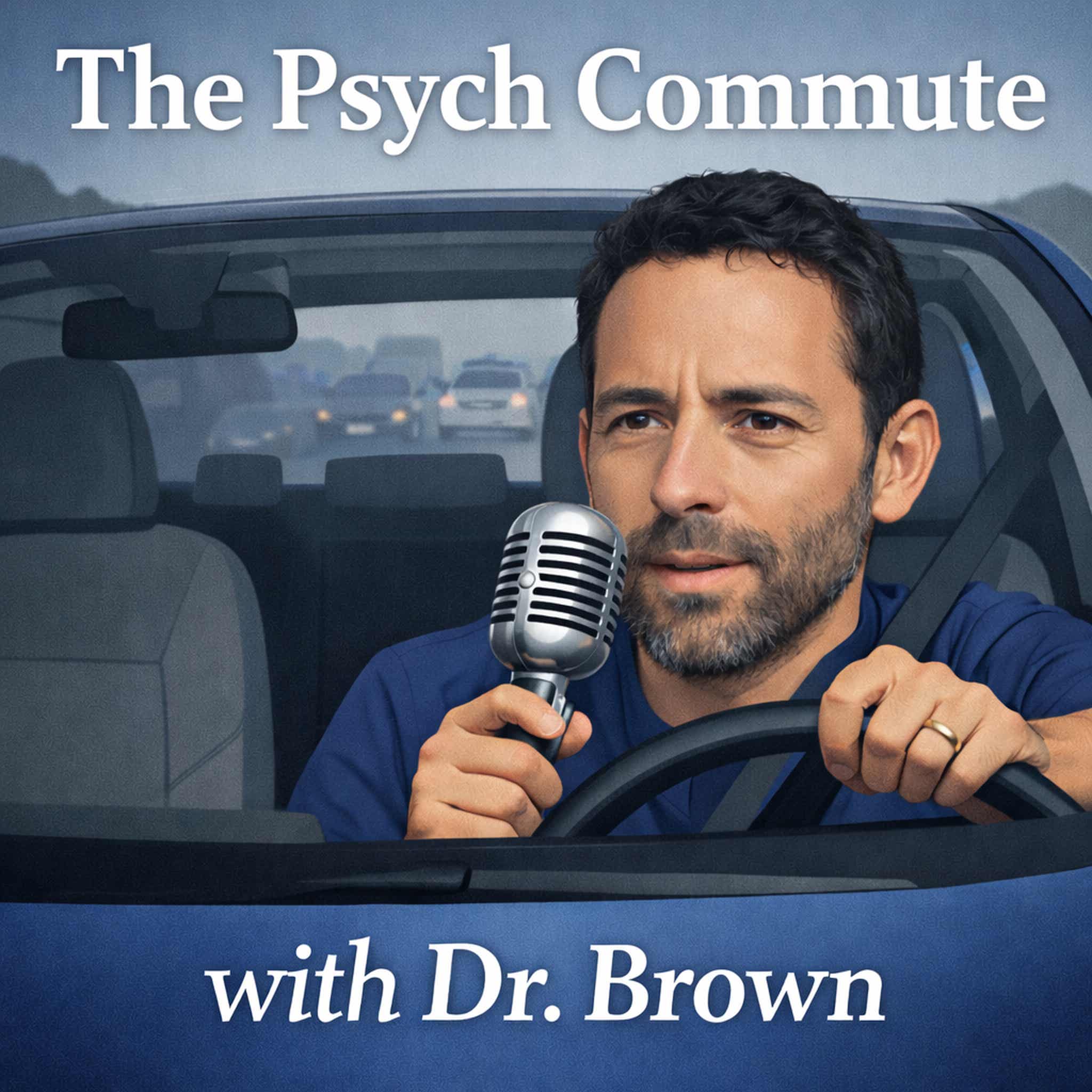
The Psych Commute with Dr. Brown
by Brandon Lee Brown, MD
Thoughts on psychiatry, medicine, neuroscience, artificial intelligence, problem-solving, and decision-making from a practicing physician, psychiatrist, and neuroscientist recorded during his commute from work. brandonbrownmd.substack.com
-
33
#31 - DEAPL for making clinical decisions
In this episode of The Psych Commute, Dr. Brandon Brown introduces a practical clinical decision-making framework: DEAL and its more detailed version, DEAPL, designed for moments of uncertainty when time and information are limited. Using a tense inpatient case of a severely dysregulated patient with seizure-like activity in a resource-constrained psychiatric setting, he walks through how to systematically define the problem, enumerate options, assess whether you have enough information, predict possible outcomes, and ultimately choose the path that minimizes downside risk. The episode highlights how even in the absence of definitive diagnostics, structured thinking can guide safe, rational decisions and offers a mental model clinicians can carry into any challenging situation. This is a public episode. If you would like to discuss this with other subscribers or get access to bonus episodes, visit brandonbrownmd.substack.com
-
32
#30 Why I write my notes backward
I write my notes backward.Not in the traditional SOAP format (Subjective, Objective, Assessment, Plan), but essentially in reverse:Assessment & Plan → Data (Subjective + Objective)So instead of SOAP, it’s more like AP–SO.This format isn’t unheard of in medicine. It’s fairly common in internal medicine. But in psychiatry, it’s unusual enough that when colleagues cover for me, they sometimes copy my note forward and rearrange it back into standard SOAP. So clearly this is either misunderstood or mildly offensive to some people.Let me explain why I do it this way.At the very top of my note, I put a brief reason for admission:John Doe is a 56-year-old male with a history of schizophrenia and hypertension admitted for acute exacerbation of psychosis in the setting of medication non-adherence.1. Running Hospital CourseNext, I maintain a running hospital course, updated daily.I’ll structure it by hospital day:* Hospital Day 1: Admitted for psychosis. Started risperidone 1 mg BID and amlodipine 5 mg daily.* Hospital Day 2: Continued disorganization and auditory hallucinations. Increased risperidone to 1 mg AM / 2 mg PM.Just one or two sentences per day.Why? Because at discharge, I can copy this running course directly into the discharge summary. In Epic, there’s a built-in AI summarization tool that converts it into paragraph form. So I’m essentially writing my discharge summary in real time, a little bit each day.It saves me a ton of cognitive load at the end.Problem-Based Assessment and PlanAfter the hospital course, I move directly into a problem-based plan.Each problem gets its own header:# Auditory hallucinations / disorganized thoughtUnder that:* Working diagnosis: Schizophrenia* If needed: Differential diagnosis* Workup (labs, studies)* Treatment planIf it’s straightforward, e.g. known schizophrenia with medication non-adherence, I keep it simple.If it’s undifferentiated, like:# Erratic behaviorThen I’ll structure it more explicitly:* Working diagnosis: Psychosis unspecified* Differential: Substance-induced psychosis, schizophrenia, schizoaffective disorder, acute mania, encephalopathy* Workup: labs, UDS, imaging if indicated* Treatment planIf it’s complex, I’ll add some prose explaining my reasoning, for clarity and for liability purposes. But I generally don’t write long narrative assessment paragraphs the way many psychiatry notes do.The problem list always includes:* The primary psychiatric problem(s)* Medical comorbidities * Risk assessment and mitigation (suicide precautions, fall precautions, etc.)* Discharge planningAnd yes, I start thinking about discharge on day one.Are they going back to a shelter? A group home? Do we need a substance use referral? Guardianship? Long-acting injectable planning?That’s all part of the plan.Then Comes the DataOnly after I’ve written the assessment and plan do I move to the data section.That includes:* Subjective* Objective* Labs* Vitals* Mental status exam* Physical examTo me, the subjective is just data. What the patient tells me is important, but it’s still data that feeds into the larger synthesis.I don’t start with a long narrative of what the patient said and then slowly build toward a conclusion. I already know what I’m treating and what decisions I’m making. The data supports that.Why This Works Better for Me1. It Reflects How I Actually ThinkWhen I see a patient, I’m already forming an assessment and plan in real time. The note should reflect that.Starting with the plan forces clarity:* What are the actual problems?* What am I doing about them?* What’s the working diagnosis?* What needs workup?Once that’s clear, the subjective and objective sections become focused. I’m not transcribing everything the patient says. I’m documenting what’s relevant to the clinical questions I’m answering.It’s a filter.2. It Improves ReadabilityLet’s be honest: most people reading notes want to know the bottom line.If you’re covering me tomorrow, you don’t want to scroll through three paragraphs of subjective narrative to find the risperidone dose change.You want the assessment and plan.So I put it at the top.3. It Keeps Me FocusedWhen I’m writing multiple notes in a row, it gets tedious and I lose my attention especially when starting with the subjective. If I start with assessment and plan, I’m forced to:* Confirm diagnoses* Adjust meds* Update orders* Address risk issues* Think about dischargeThat’s the high-value work.Once that’s done, filling in the data is relatively mechanical.It also helps me avoid missing order changes. Writing the plan first sometimes reminds me of something I forgot to put in.A Simple TemplateHere’s a simplified version of what this looks like in practice.Reason for Admission56-year-old male with schizophrenia and hypertension brought in by police for erratic behavior in public in the setting of medication non-adherence.Running Hospital Course* HD1: Admitted for erratic behavior, appears to be psychosis whether primary or secondary. Started risperidone 1 mg BID. Continued amlodipine 5 mg home med for HTN.* HD2: Persistent AH and disorganization. Increased risperidone to 1 mg AM / 2 mg PM.Assessment & Plan# Erratic behavior* Working diagnosis: Psychosis, unspecified* Differential: Substance-induced psychosis (UDS+ for cocaine), schizophrenia, schizoaffective disorder, mania, delirium, medical cause* Workup: CBC, CMP, TSH, UDS* Treatment:* Risperidone 1 mg AM / 2 mg PM* Monitor EPS, prolactin* Consider LAI prior to discharge# Hypertension* Continue amlodipine 5 mg daily# Risk Assessment / Mitigation* Suicide precautions: Q15 checks# Discharge Planning* Anticipated discharge to group home* Coordinate outpatient psychiatry follow-up* Evaluate for LAI prior to dischargeData (abbreviated)SubjectivePatient reports ongoing voices commenting on behavior. Denies SI/HI. Reports poor sleep.Objective* Vitals stable* Labs pending* MSE: Disorganized thought process, AH present, insight limited* PE: No rigidity in UE This is a public episode. If you would like to discuss this with other subscribers or get access to bonus episodes, visit brandonbrownmd.substack.com
-
31
#29 Simulated Case: Altered Mental Status
On this episode of The Psych Commute, we try something a quite different.Instead of discussing a random idea as I drive home as usual, we run a fully simulated inpatient consult using AI voice actors (but I wrote the script with no AI involvement).The patient: a 65-year-old nursing home resident with schizophrenia sent to the ED for “altered mental status.” The workup is normal. The ED thinks it’s psychiatric.From there, things start to get complicated.This episode focuses much less on interview technique and much more on clinical reasoning and management.I’m experimenting with this format, so I’d genuinely like to know if it’s useful, useless, or somewhere in between. This is a public episode. If you would like to discuss this with other subscribers or get access to bonus episodes, visit brandonbrownmd.substack.com
-
30
#28 Mapping Mental Illness in Genetic Space
Mapping Psychiatric Disorders with GWASI wanted to write record a brief episode about a paper I just read that came out in December 2025. The title is Mapping the genetic landscape across fourteen psychiatric disorders published in Nature.At a high level, this was a genome-wide association study (GWAS) looking across a large number of psychiatric diagnoses. The basic goal was to identify genetic variants that are correlated with different psychiatric disorders, and then see whether those disorders naturally cluster together in “genetic space.”They looked at fourteen psychiatric disorders, spanning both childhood-onset and adult-onset conditions, using a very large sample of over a million cases. The authors examined which alleles, particularly single nucleotide polymorphisms (SNPs), were most strongly associated with each diagnosis.Brief review of GWASThe goal of GWAS is to find genetic variants that are significantly more frequent in a particular condition compared to a control. Usually researchers are looking at variants in genes called single nucleotide polymorphisms or SNPs (pronounced snips), where a single DNA letter is different between different people, which could be enough to change the function of the gene.Most individual variants have very small effects, but when you look across many of them at once, patterns can emerge. GWAS is essentially a very large, statistical pattern-matching exercise across the genome.The five genetic clustersSo the researchers did a big analysis on these over a million cases to discover SNPs that were more common in these disorders compared to controls, and then asked whether these variants clustered in meaningful ways across diagnoses.For example, they might find that a SNP on gene X was more frequent in schizophrenia than controls, but is also found more commonly in bipolar disorder cases. So then by looking at which disorders shared a lot of these SNPs they could cluster them together.What they found were five broad factors, where disorders within each factor shared a high degree of genetic overlap.The first factor was labeled SB, standing for schizophrenia and bipolar disorder. That factor included diagnoses of schizophrenia and bipolar disorder grouped together.They also identified an internalizing factor. In psychiatric and psychological research, internalizing generally refers to patterns like negative affect, rumination, self-criticism, and inwardly directed distress. This is often contrasted with externalizing, which involves outwardly directed behaviors like impulsivity, aggression, or blaming others.A third factor was a compulsive factor, which included diagnoses such as OCD, Tourette syndrome, and anorexia.The fourth was a neurodevelopmental factor, including diagnoses like autism.The final factor was a substance use disorder factor, which included most of the specific substance use disorders such as cannabis use disorder, stimulant use disorder, nicotine use disorder, and so on.The p-factorOn top of these five factors, the authors also used a hierarchical model with a single node at the very top, which they called the p-factor. This idea isn’t new and has appeared in prior work. The p-factor represents genetic variants that seem to be shared across all psychiatric disorders, regardless of which specific cluster they fall into.So the structure looks something like this: a general p-factor at the top, five broad factors underneath it, and then individual diagnoses within each factor. Some genetic variants correlate broadly on all these tested disorders, while others are more specific to one factor.What do the genes actually do?The authors then asked a natural next question: what do these genes actually do, biologically? What kinds of proteins do they encode, and what processes are they involved in?Some of the findings were, in a way, reassuringly obvious. The substance use disorder factor, for example, included genes like alcohol dehydrogenase, which is directly involved in ethanol metabolism. There was also a SNP in a nicotinic receptor subunit.That fits common sense. Some people drink alcohol and feel terrible; they get no pleasure, and instead maybe some nausea or flushing. And people are unlikely to become addicted to something that feels bad. Other people find alcohol calming or even euphoric, which makes repeated use and addiction more likely. Differences in metabolism or receptor binding could plausibly contribute to that.Beyond substance use disorders, the findings were less straightforward. For the p-factor, the shared genes tended to be involved in very general biological processes, such as gene regulation. Nothing particularly specific or mechanistic stood out.For the schizophrenia-bipolar (SB) factor, there were genes involved in neuronal development, particularly excitatory neurons. The internalizing factor also showed some involvement of excitatory neuron genes, but the signal was less consistent. And for the compulsive factor, there wasn’t anything especially compelling in terms of functional interpretation.What does this mean for the DSM?One way to interpret these results is that the DSM may be splitting diagnoses too finely, drawing artificial boundaries between disorders that are not well supported biologically. Clinically, we already see this problem. At a single point in time, it can be genuinely difficult, or impossible, to distinguish bipolar disorder with psychosis from schizophrenia. The shared genetic signal between those diagnoses has been described before, and this paper reinforces that overlap.It naturally raises the question of whether these are truly distinct disorders, or whether they are different presentations of the same underlying condition.On the other hand, there’s an important limitation here. Psychiatric diagnoses are not static. People’s diagnoses change over time. Many clinicians have seen patients move from a bipolar diagnosis to schizophrenia, and then later back to bipolar disorder depending on who evaluates them and at what point in their illness.That diagnostic uncertainty inevitably contaminates genetic studies like this. It doesn’t invalidate the findings, but it likely distorts them to some degree.There’s one more point I’d emphasize. While there are clearly genetic risk factors for psychiatric conditions, I don’t think we’re going to find all the answers at the level of genes alone.If you think of the brain loosely as an information-processing system, an analogy that is not perfect, but still useful, consider this: take a very large, complex software program like Adobe Photoshop or Microsoft Excel that has millions of lines of code. Now run a million identical copies of that program on different computers.Some percentage of those programs will crash or behave unexpectedly. And the code is identical in every case. The failures happen because users push the software into regimes the original programmers didn’t anticipate.If you ran a GWAS on that situation, you wouldn’t learn much from the “code,” because the code is the same everywhere, even though failures still occur.I think something similar applies to psychiatric disorders. Genetics matter and may reveal some mechanistic vulnerabilities, but even genetically “normal” brains can experience psychiatric disorders when put in unexpected or extreme environments. So we shouldn’t expect gene-level analyses to give us a complete explanation of psychiatric illness. This is a public episode. If you would like to discuss this with other subscribers or get access to bonus episodes, visit brandonbrownmd.substack.com
-
29
#28 How I do my rounds for inpatient psych
I’ve worked in very high-volume settings. In a prior job, I did moonlighting where I would round on thirty-something patients per day, sometimes with ten or more admissions in a single day. Efficiency mattered a lot there, because otherwise you simply could not get through the work. I don’t recommend that kind of volume, by the way.Fortunately, academic medicine is more reasonable. I’m capped at twelve patients and have excellent social work assistance. What I want to focus on here are a few different rounding models I’ve tried, what’s worked for me, and a couple of simple frameworks I use regularly to stay systematic.I’ve tried three rounding models.The most common rounding model in my experience as a medical student and resident is where you show up in the morning, do a little pre-charting either that morning or the night before, then have a brief meeting where you get a nursing report. After that, you print your patient list and start seeing patients one by one. You might jot notes on your printout or try to keep everything in your head. Once you’ve seen everyone, you go back, put in consults, orders, and then spend the rest of the day writing notes and dealing with fires as they come up.I still do this sometimes. The problem for me is that I get very burned out writing twelve or more notes in a row. I lose focus quickly, it feels painful, and it’s not how I do my best work.The second model is seeing each patient one by one and finishing everything for that patient before moving on. That means seeing the patient, writing the note, putting in orders, and addressing whatever needs to be addressed right then. If the patient is calm enough, I’ll bring them into a room with a computer and type while we talk. If not, I’ll do it immediately afterward.This has actually become my preferred way of rounding. It does mean that I may not finish seeing patients until early afternoon, whereas with the first model you can often finish seeing everyone before lunch. But once I’m done, I’m done. Notes are in. Orders are in. There’s no looming pile of documentation waiting for me. Psychologically, that makes a big difference.There’s also a mixed model, which is probably my second favorite. In this approach, you do deeper pre-charting in the morning. You prep most of each note ahead of time, often everything except the subjective section. Based on the nursing report and the patient’s trajectory, you usually already know what you’re going to do with medications and orders, so you can often update those in advance as well. Then you round on all your patients. You still have notes to finish afterward, but much less work per note.My least favorite model is seeing everyone in the morning and then doing all the notes afterward. On one hand, it feels good to say you’ve seen all your patients. In a worst-case scenario, you can even finish notes at home. But for me, having a big block of notes waiting is draining and gets me burned out.A simple daily checklist: FLOP SENDRegardless of the rounding model, I try to be very systematic in how I approach each patient. I use a simple mnemonic I came up with called FLOP SEND.F is for flow sheets. In my EMR, that’s where vitals are recorded. I always check the most recent vitals and trends. Is my patient on clozapine becoming tachycardic? Is blood pressure creeping up?L is for labs. Are there any new results I need to act on?O is for orders. In my EMR, some orders are required to have an expiration date, so sometimes orders expire unintentionally. Consults fall off. Labs are due. I check that everything is current and put in new orders as needed.P is for problem list. I write problem-based notes, and it’s easy to forget things, especially chronic issues like hypertension, diabetes, and hypothyroidism. I make sure they’re all accounted for in my notes.S is for sleep. I think of sleep as a psychiatric vital sign. I always check how many hours the patient slept overnight. Minimal sleep is almost always something I need to address. Or sometimes hypersomnia is the problem.E is for events. Were there restraints, seclusion, emergency PRNs, or other significant overnight issues?N is for note. Just a checklist item to do my documentation.D is for discharge planning. I try to be thinking about discharge from day one. Where are they going? What aftercare will they have? How are we thinking about relapse prevention?They’re not necessarily in the perfect order, but as a checklist, FLOP SEND keeps me from missing the important things.A differential diagnosis framework: MINDSPACEThe last thing I want to share is a mnemonic I use for differential diagnosis on the inpatient unit when seeing new admissions.It’s called MINDSPACE.When someone is admitted to inpatient psych for “erratic behavior” (a common presentation for me), there are a lot of possible explanations. MINDSPACE helps me stay systematic.M is for mania or manic-depression, what we now call bipolar spectrum disorders.I is for intoxicant, meaning substance-induced conditions, including intoxication and withdrawal.N is for neurodegenerative or acquired brain disease, such as dementia or traumatic brain injury.D is for (neuro)developmental conditions, like autism.S is for schizophrenia spectrum disorders.P is for personality disorders.A is for adjustment disorders, where something bad has happened and the patient is having a severe but understandable reaction.C is for catatonia. Catatonia is always secondary to something else, but it’s common enough on inpatient units that I want it explicitly on my differential so I don’t miss it.E is for encephalopathy. This is where orientation, memory, or attention are impaired, and where I need make sure the patient really was “medically cleared.”This framework isn’t perfect. No framework is. More than one thing can be going on at once. But as a quick mnemonic to avoid diagnostic premature closure, it helps.That’s it. I hope some of this is helpful to someone out there. This is a public episode. If you would like to discuss this with other subscribers or get access to bonus episodes, visit brandonbrownmd.substack.com
-
28
#27 Focused Ultrasound in Psychiatry
I want to talk about focused ultrasound and its potential role in psychiatry. Right now, it is not an established psychiatric treatment, but it is being actively studied and I think there is a good chance it becomes part of our clinical toolkit in the next several years (albeit perhaps only at academic centers initially). Small clinical trials are already underway, and the technology itself is further along than many people realize.Let me start with the basics.Most of us are familiar with diagnostic ultrasound, where sound waves are sent into tissue and the reflected signals are used to build an image of internal structures. With focused ultrasound the goal is to concentrate ultrasound energy at a specific point in the brain. Once you can reliably focus that energy, you can either modulate neural activity at that point or, at higher intensities, create a lesion by heating and destroying tissue.Broadly speaking, there are two categories people talk about: low intensity focused ultrasound, often called LIFU, and high intensity focused ultrasound, or HIFU. There is not a universally agreed upon cutoff that separates the two. Some papers mention specific power levels like 100 watts as the boundary, but in practice the distinction is really about intent and biological effect. LIFU aims for reversible neuromodulation without permanent tissue damage. HIFU is used when the goal is thermal ablation and permanent lesioning.The reason I am especially interested in LIFU is that it may address some of the inherent limitations of TMS. TMS is a great tool, but it has an inherent physical tradeoff between depth and focality. The deeper you try to stimulate, the less focal the stimulation becomes. If we want to target specific circuits, focality matters a lot. With TMS, once you move beyond superficial cortex, you quickly lose precision.Focused ultrasound has the theoretical advantage of reaching deep brain structures while still maintaining millimeter scale focality. The exact focal size depends on a number of factors, including frequency and skull properties, but in general it can be more precise at depth than what we can do with standard TMS.One of the most interesting aspects of LIFU is that it can modulate neural activity without causing lesions. Interestingly, the exact mechanism for this is not known. Ultrasound is fundamentally a mechanical pressure wave, so the question becomes how mechanical energy influences neurons. There is evidence that mechanosensitive ion channels play a role. For example, certain potassium channels located at the nodes of Ranvier appear to respond to mechanical forces, which could alter neuronal excitability. That said, this is still an active area of research and there are likely multiple mechanisms involved.Depending on the stimulation parameters, LIFU has been shown to either enhance or suppress neural activity. Pulse duration, frequency, and intensity all matter. Many studies have demonstrated inhibitory effects, almost like creating a temporary functional lesion, but excitatory effects have also been reported. At this stage, the field is still mapping out which parameters reliably produce which outcomes.There is also a fascinating physics angle when focused ultrasound is used inside a strong magnetic field, such as in an MRI scanner. In that setting, the motion of charged particles induced by ultrasound can interact with the magnetic field to produce a small electrical effect. In simple terms, ultrasound physically moves ions, and in the presence of a magnetic field that motion can be converted into an electrical influence on neurons. This concept is sometimes referred to as transcranial magneto acoustic stimulation. A brief dive into the physics is worth it. The key idea comes from something called the Lorentz force, which describes how charged particles behave in electric and magnetic fields.F = q(E + v × B)F is the Lorentz force, which in this context is the force acting on a charged particleq is the charge of the particle (e.g. could be +1 or -1 or 0)E is the electric fieldv is the velocity of the charged particleB is the magnetic fieldYou do not need to follow the math in detail, but the equation gives us some helpful intuition if you just pay attention to cases where the force is 0 vs non-zero. If there is no charge, there is no force. If there is no electric field and no motion, there is no force. But if charged particles are moving in the presence of a magnetic field, they will experience a force, even in the absence of an electric field.In neurons, the charged particles are ions. In a strong magnetic field like an MRI scanner, there is usually no meaningful electric field being applied. But if we use ultrasound, we are physically moving those ions back and forth. That motion in the magnetic field can generate tiny forces on the ions, leading to local and small electrical effects. In other words, mechanical energy from ultrasound can be converted into electrical influences on neural tissue.The takeaway is that focused ultrasound in a magnetic field may offer a way to modulate neural activity through both mechanical and electrical mechanisms, which is part of what makes this technology so intriguing.It is not yet a clinical tool, but it highlights how versatile this technology might become.Another promising application of focused ultrasound is temporarily opening the blood brain barrier. When ultrasound is applied alongside microbubbles, it can safely and transiently increase the permeability of blood vessels in targeted brain regions. This allows medications that normally do not cross the blood brain barrier to enter the brain more easily. This approach is being actively studied in humans, especially in brain tumor treatment, though it is still largely investigational rather than standard clinical practice. There is also experimental work looking at targeted drug delivery where ultrasound helps release medications in specific regions, which could eventually have psychiatric applications.High intensity focused ultrasound is already in clinical use for certain neurological conditions. The most established example is the treatment of medication refractory essential tremor. In this case, focused ultrasound is used to create a small lesion in a specific thalamic target, typically the ventral intermediate nucleus. This is done with MRI guidance, and one of the remarkable features is that temperature can be monitored in real time using MRI thermometry. The tissue is gradually heated into a range that produces thermal ablation, usually in the mid to high 50s Celsius, while carefully observing both imaging and clinical effects.There has also been research using focused ultrasound lesioning for severe, treatment refractory psychiatric conditions. For example, capsulotomy targeting the anterior limb of the internal capsule has been studied in obsessive compulsive disorder and, to a lesser extent, major depressive disorder. These are small studies so far, but they are part of a broader resurgence of interest in carefully targeted neurosurgical interventions for psychiatric illness (“psychosurgery”).One practical limitation of focused ultrasound is skull anatomy. The skull can distort and absorb ultrasound energy, and not everyone is an ideal candidate. A measure called skull density ratio is often used to estimate how well ultrasound will transmit. Depending on specific intervention, roughly twenty percent of patients may not reach therapeutic temperatures with current technology for HIFU.Overall, I am very excited about focused ultrasound being used for psychiatric purposes. Focused ultrasound offers a combination of depth, focality, and flexibility that is hard to achieve with other noninvasive techniques. There is still a great deal we need to learn about optimal parameters, mechanisms of action, and long term safety. For now, it is something worth keeping an eye on. This is a public episode. If you would like to discuss this with other subscribers or get access to bonus episodes, visit brandonbrownmd.substack.com
-
27
#26 ECT for PTSD
Electroconvulsive therapy (ECT) is not FDA-approved for post-traumatic stress disorder (PTSD), and it doesn’t have an established clinical indication for PTSD in the way it does for severe depression, mania, catatonia, or treatment-resistant psychotic disorders. That said, over the past several years there has been mounting evidence suggesting that ECT may be helpful for some patients with particularly severe PTSD, especially when comorbid with major depression.There have been a few recent meta-analyses showing a beneficial signal. One open question is whether this effect is simply due to ECT treating comorbid depression, with downstream improvements in PTSD symptom scales, or whether ECT is directly affecting core PTSD pathology itself. That question isn’t settled. But many clinicians, myself included, suspect that there may be a more direct effect.Part of that suspicion comes from clinical experience. I’ve treated patients where the primary indication for ECT was major depression, but who also had severe, comorbid PTSD. In a few cases, patients told me something interesting: ECT didn’t help their depression very much, but it substantially improved their PTSD symptoms. They felt less anxious, less hypervigilant, and less easily triggered. For them, the main reason to continue ECT wasn’t mood improvement, it was relief from PTSD symptoms.At first, these were unusual isolated cases. But as I became more aware of the broader case literature, it started to feel less anomalous and more like a real signal worth taking seriously.So how could ECT plausibly help PTSD?At a very basic level, ECT is a highly non-specific brain intervention. You are passing an electrical current through large swaths of brain tissue and inducing a generalized tonic-clonic seizure. We know ECT affects synaptic plasticity and appears to stimulate neurogenesis in certain regions, particularly the hippocampus. Given how non-specific its effects are, it wouldn’t be surprising if ECT also modulates circuits involved in PTSD, including amygdala-centered threat and fear networks.This kind of non-specificity is actually the norm in psychiatry. Many of our treatments affect multiple circuits at once, which is why the same medications and interventions often work across diagnostic categories. One core feature of PTSD is overlearning or overgeneralization. A traumatic event becomes decoupled from its original context and generalized far beyond where it should apply. For example, a combat veteran who experienced an IED explosion may later experience intense fear responses in entirely different settings, back home, years later, triggered by something like fireworks. The brain has failed to properly contextualize the trauma as something that occurred in a specific time and place.That’s essentially a failure of contextual learning. Because the hippocampus plays a key role in contextualization, one speculative idea is that ECT’s effects on hippocampal plasticity might help loosen this pathological overgeneralization. This is admittedly a hand-wavy explanation, but it’s at least biologically plausible.Another mechanism that feels more immediately compelling to me involves the autonomic nervous system.During a typical ECT treatment, there is a characteristic triphasic autonomic response. First, there is parasympathetic activation, which can cause bradycardia or even brief asystole. That is followed by a sympathetic surge with transient but often marked hypertension and tachycardia. Finally, there is a return of parasympathetic activity that brings the system back toward baseline.Over the course of an ECT series, the brain adapts. Seizure threshold increases, and autonomic recovery tends to become faster. Clinically, this looks like the sympathetic surge shutting off more quickly and the parasympathetic system reasserting control sooner.PTSD is strongly associated with autonomic hyperactivation, particularly excessive sympathetic tone. If ECT enhances the nervous system’s ability to down-regulate sympathetic activation and restore parasympathetic balance, that could directly target a core physiological component of PTSD. This idea also aligns conceptually with other investigational PTSD treatments that target autonomic regulation, such as stellate ganglion block.There’s also a more indirect but important possibility: ECT may improve overall cognitive flexibility. If that’s the case, it could make patients more able to engage in and benefit from psychotherapy, which remains the most effective treatment modality for PTSD. In that sense, ECT wouldn’t be replacing psychotherapy, but potentially enabling it.So while ECT is not a first-line or standard treatment for PTSD, there is growing evidence, and plausible biology, suggesting it can be useful in severe cases, particularly when comorbid depression is present. At minimum, it’s something worth keeping in mind and discussing thoughtfully with patients when conventional approaches haven’t been enough. This is a public episode. If you would like to discuss this with other subscribers or get access to bonus episodes, visit brandonbrownmd.substack.com
-
26
#25 External combined nerve stimulator for depression, now approved
I recently read the randomized controlled trial for a new neuromodulation device called ProlivRX. It’s an external nerve stimulator that is now FDA approved for major depressive disorder in patients who are already on antidepressants and haven’t benefited from them.This comes on the heels of the recent FDA approval of the Flow Neuroscience FLX-100 transcranial direct current stimulation (tDCS) device for depression. It’s interesting that we’re seeing multiple new neuromodulation devices entering the space at the same time, and that both are home-based treatments.The randomized controlled trial was reasonably sized with 124 patients total. It was a blinded, sham-controlled, multi-site trial, and it was industry sponsored by the device manufacturer, NeuroLief, an Israeli company.The device stimulates branches of the trigeminal nerve along the forehead as well as occipital nerve branches at the back of the head. There has actually been another trigeminal nerve stimulation device that was FDA cleared for ADHD in the past. A more recent randomized controlled trial of trigeminal nerve stimulation for ADHD in children and adolescents was negative, it did not show benefit over placebo.In this trial, the authors point to studies suggesting that stimulating these nerves can affect brain circuits involved in mood regulation and attention networks. At some level, everything in the brain is connected, so stimulating one peripheral input is going to have downstream effects somewhere else. I’m not particularly impressed by that line of reasoning on its own, but it provides the rationale for why they tested this approach. Their specific hypothesis was that combining trigeminal and occipital nerve stimulation might be synergistic.The currents used in this trial were quite high compared to tDCS. Typical tDCS uses about 1–2 milliamps, whereas this device used currents in the range of roughly 6–18 milliamps. That’s a substantial difference, and it would definitely be noticeable to the patient. That said, the electrodes are spaced much closer together and the current is passing through superficial tissue rather than through the skull, as in tDCS. The device also uses a biphasic alternating current rather than direct current, so the electrical properties are quite different overall.The sham condition involved stimulation at a much lower current amplitude and lower frequency. Based on their blinding integrity testing, the blind mostly held. About 14% of participants in the active group correctly guessed they were receiving active treatment, and about 6% in the sham group correctly guessed they were in the sham condition. The authors modeled the effects of this partial unblinding and concluded that it did not meaningfully alter the primary outcome.The primary result was a statistically significant effect. The active treatment group had about an 8-point reduction on the Hamilton Depression Rating Scale, compared to about a 6-point reduction in the sham group. That works out to roughly a 2.6-point difference between groups. This translated into an effect size of around 0.7 to 0.8, which is surprisingly large given the relatively small absolute difference on the Hamilton scale.Effect sizes, of course, depend heavily on variability. My suspicion is that the trial design intentionally limited variability, shrinking the denominator in the effect size calculation and inflating the apparent magnitude. I’ll probably write more about this in the future, because this is a general issue with how effect sizes are interpreted. For context, typical SSRI trials show effect sizes around 0.3–0.4, so an effect size approaching 0.8 stands out—especially in a population that includes patients who have already failed antidepressant treatment. I can’t recall whether all participants met strict criteria for treatment-resistant depression, but at least a subset had failed two or more antidepressant trials.If you look at remission rates, the results are more modest. Remission was on the order of 20–30%, with somewhat higher response rates. Still, if those numbers hold up, a roughly 20% remission rate for a relatively benign, home-based treatment may be meaningful for some patients.The randomized portion of the trial lasted eight weeks, which is when the primary outcome was assessed. After that, the study continued in an open-label phase for an additional sixteen weeks. Once participants were unblinded, they continued treatment and showed incremental improvement over that longer period, which is encouraging.The treatment protocol involved using the device for 40 minutes at a time, twice daily, five to seven days per week.There were essentially no major device-related adverse events reported.So what do we make of all this? I’ve already hinted at some skepticism. Most psychiatric treatments—whether medications, ECT, or neuromodulation—do fairly nonspecific things. That’s likely why many treatments have efficacy across multiple diagnoses that probably involve very different underlying mechanisms. The brain is deeply interconnected, and almost any intervention will have widespread effects.This was an industry-sponsored trial, and while the authors offer putative mechanisms, the true mechanism is no clearer than it is for most psychiatric interventions. In terms of mechanism, the neuromodulation modality where we have the most hypothesis-driven, model-based understanding is probably TMS, where focal stimulation and functional imaging allow for more direct testing of circuit-level theories.Another important point is timing. The primary outcome wasn’t reached until week eight, with further gradual improvement afterward. This is not an acute treatment for severe or urgent depression. For someone who is severely ill or needs rapid symptom relief, options like ketamine, ECT, or aggressively titrated medications are likely more appropriate.That said, for patients with lower-urgency depression who are well resourced and can afford a device like this, it may be reasonable to try. If I were choosing between this device and a home-based tDCS device, I would personally lean toward tDCS, simply because there is a much larger research literature and somewhat more confidence about the circuits being targeted. Still, this appears to be a relatively harmless intervention. The worst-case scenario is mostly lost time and money.For low-urgency depression, it’s worth considering. And, as always, it’s helpful to have more tools in the toolkit. This is a public episode. If you would like to discuss this with other subscribers or get access to bonus episodes, visit brandonbrownmd.substack.com
-
25
#24 The First Non-Antipsychotic Antipsychotic
In this episode, I break down one of the most interesting new developments in schizophrenia treatment: a medication that treats psychosis without dopamine blockade. And it also works for negative symptoms.I’m talking about xanomeline–trospium, brand name Cobenfy, a muscarinic-based therapy that targets M1 and M4 receptors, avoids extrapyramidal symptoms and metabolic side effects, and is not technically classified as an antipsychotic by the FDA. I walk through the mechanism, the EMERGENT trial data, efficacy for both positive and negative symptoms, side effect profile, dosing pearls, and where this might fit clinically. This is a public episode. If you would like to discuss this with other subscribers or get access to bonus episodes, visit brandonbrownmd.substack.com
-
24
#23 Let's stop talking about neurotransmitters
We spend a lot of time explaining psychiatric medications in terms of neurotransmitters and receptors, but that may be the wrong level of abstraction. In this episode, I argue that psychiatric illness is better understood as a problem of brain circuits and information processing, not low-level mechanisms like receptors, and that this helps explain why treatments like ECT and clozapine work when others don’t. We should instead investigate how medications affect actual brain functioning at a circuit-level, and to do that we will have to think beyond neurotransmitters. This is a public episode. If you would like to discuss this with other subscribers or get access to bonus episodes, visit brandonbrownmd.substack.com
-
23
#22 FDA Approves At-Home Brain Stimulation for Depression
There’s a new FDA-approved treatment for depression that you can do entirely at home called the FL-100 device by Flow Neuroscience.In this episode, I talk about transcranial direct current stimulation, or tDCS, a low-level brain stimulation technique that’s been around for years but just received FDA approval based on a large clinical trial. I break down how it works, what the data actually show, how it compares to antidepressants, and why the results are both promising and a little confusing. This is a public episode. If you would like to discuss this with other subscribers or get access to bonus episodes, visit brandonbrownmd.substack.com
-
22
#21 Mental Status Exam
What exactly is the mental status exam, and why does it matter so much in psychiatry?In this episode, I walk through the mental status examination point-by-point. I cover what each section is really trying to capture, how much variation there is between clinicians, and how a well-written MSE should let you imagine what it was like to sit in the room with the patient.We talk through appearance, behavior, speech, mood and affect, thought process and content, perception, cognition, judgment, and insight, with concrete examples.Reach me at [email protected] This is a public episode. If you would like to discuss this with other subscribers or get access to bonus episodes, visit brandonbrownmd.substack.com
-
21
#20 The end of psych meds?
In this episode, I talk about some genuinely exciting developments in transcranial magnetic stimulation, including new accelerated and even one-day TMS protocols that may outperform traditional antidepressant treatments, both in efficacy and cost. Conventional TMS usually takes nine weeks of daily treatment but new advances are making a full course of treatment possible in a single day, with surprisingly high remission rates.I walk through how TMS works, why standard protocols have been so hard to scale, and what newer approaches like SAINT and one-day protocols using medication priming might mean for the future of mental health care. If these results hold up, they could dramatically change how we treat depression, anxiety, and possibly much more. This is a public episode. If you would like to discuss this with other subscribers or get access to bonus episodes, visit brandonbrownmd.substack.com
-
20
#19 Brief Psychotic Episodes
Can a panic attack trigger a full psychotic episode that resolves within hours?In this episode, we discuss apparently rare and fascinating clinical presentations where panic attacks appear to precipitate brief psychotic symptoms, including hallucinations, paranoia, and disorganized behavior, followed by rapid and complete recovery. We discuss the differential diagnosis for this presentation and how that might guide management. This is a public episode. If you would like to discuss this with other subscribers or get access to bonus episodes, visit brandonbrownmd.substack.com
-
19
#18 - thoughts on insomnia
Insomnia is one of the most common clinical problems in psychiatry, both as a symptom of primary psychiatric disorders like mood and anxiety disorders, and as a primary sleep disorder. In this episode I share my thoughts on how to manage insomnia in clinical practice and make some points about how we often give up too quickly on trazodone and how we can increase the adenosine in our brains.Note: I mistakenly said the pineal gland naturally produces “nanograms” of melatonin, but it is actually in the microgram range. Nonetheless, as alluded to in the episode, exogenous melatonin supplements can be 10-100x higher than natural melatonin amounts. This is a public episode. If you would like to discuss this with other subscribers or get access to bonus episodes, visit brandonbrownmd.substack.com
-
18
#17 - Clinical Reasoning Styles
How do you clinch the diagnosis efficiently? In this audio essay I review some of the main clinical reasoning styles that physicians of all specialties must use when presented with a new clinical case. Namely, we discuss inductive reasoning, deductive reasoning, and pattern-matching. Being able to identify which reasoning process you’re using in a case could save you from diagnostic errors. In a follow-up episode I will give some longer-form concrete examples. This is a public episode. If you would like to discuss this with other subscribers or get access to bonus episodes, visit brandonbrownmd.substack.com
-
17
#16 - How I do brief one-session psychotherapy
In this episode I introduce a condensed version of David Burn’s (author of the famous books Feeling Good and Feeling Great that popularize CBT) version of CBT that he calls TEAM CBT, where TEAM is an acronym that stands for Testing, Empathy, Assessment of resistance, and Methods. I use this approach with appropriate patients on the inpatient unit with good success and I have developed a worksheet for clinicians to use to structure the therapy session, which typically takes 15-20 minutes. You can find the worksheet here: https://drive.google.com/drive/folders/1MQ0m6vgM0aNJVVwxnAPOv2wytQstaRZX?usp=sharing This is a public episode. If you would like to discuss this with other subscribers or get access to bonus episodes, visit brandonbrownmd.substack.com
-
16
#15 - Aripiprazole
In this episode I give a broad overview of aripiprazole including details from the official prescribing information as well as weaving in my own clinical experience and opinions. I talk about my experience using aripiprazole off-label as monotherapy for severe depressive episodes. This is a public episode. If you would like to discuss this with other subscribers or get access to bonus episodes, visit brandonbrownmd.substack.com
-
15
#14 - Down Syndrome Regression Disorder
Down syndrome regression disorder (DSRD) is a condition in which a patient with Down syndrome has an unexplained regression of previously attained functional milestones, e.g. going from verbal to non-verbal. It is often associated with catatonia and thus can respond well to ECT and that is often where psychiatry gets involved. This is a public episode. If you would like to discuss this with other subscribers or get access to bonus episodes, visit brandonbrownmd.substack.com
-
14
#13 - Acute Mania
In this episode, I give some general thoughts on managing acute mania in terms of pharmacological treatments but also just on trying to find common ground with a patient who may or may not believe they have mania or bipolar disorder. This is a public episode. If you would like to discuss this with other subscribers or get access to bonus episodes, visit brandonbrownmd.substack.com
-
13
#12 - Clozapine
In this episode I briefly discuss my thoughts on clozapine. Clozapine remains psychiatry’s most effective yet most cautiously used antipsychotic. This episode reviews when to consider it, introduces the CLOSE mnemonic to remember its boxed warnings, and outlines standard-of-care dosing and monitoring strategies that support safe use. This is a public episode. If you would like to discuss this with other subscribers or get access to bonus episodes, visit brandonbrownmd.substack.com
-
12
#11 - The LETTER Framework for Teaching
In this episode, I talk about my framework for teaching/coaching trainees in bite sized pieces when you’re busy. This works for psychiatry but also for any medical specialty.I introduce a simple five-step framework I use when listening to trainees give case presentations — the LETTER mnemonic (Listen, Explore, Test, Teach, Encourage/Reinforce). It’s designed to help attendings and senior residents teach efficiently in small moments throughout the day, while strengthening learners’ clinical reasoning, risk assessment skills, and medical knowledge.Email me at [email protected] This is a public episode. If you would like to discuss this with other subscribers or get access to bonus episodes, visit brandonbrownmd.substack.com
-
11
#10 - Should I Let Them Go? Clinical Decision-Making in Psychiatry
In this episode, I break down how psychiatrists make clinical decisions especially in regards to involuntary holds when the clinical situation is not entirely clear. Drawing on real inpatient cases, I walk through how to use a “best-case vs. worst-case” framework to guide safe, defensible decisions. Please note this is for general education only and is not specific medical advice. Rules around involuntary holds and commitment vary significantly from state to state so you will need to make decisions with your specific state’s legal standards in mind. This is a public episode. If you would like to discuss this with other subscribers or get access to bonus episodes, visit brandonbrownmd.substack.com
-
10
#9 Process-Based Formulation: Seeing Psychiatric Disorders Through Causal Networks
In this episode I introduce what I call process-based formulation, a way of understanding difficult, “treatment-resistant” presentations by mapping causal loops and feedback processes, rather than hunting for a single diagnosis or cause. I contrast the classic medical model (differential diagnosis → one primary etiology → one treatment) with situations where suffering is maintained by self-perpetuating systems, like the simple loop of caffeine → insomnia → fatigue → more caffeine. I illustrate this with a real case of “treatment-resistant depression” that finally remitted when I stopped thinking in terms of labels and instead targeted a specific feedback loop, leading to an unconventional treatment. This is a public episode. If you would like to discuss this with other subscribers or get access to bonus episodes, visit brandonbrownmd.substack.com
-
9
#8 - Do Antidepressants Work in Bipolar Depression?
In this episode of Dr. Brown’s Psych Commute, I opine on a question that bears a lot of disagreement: do antidepressants actually work in bipolar depression, or are they useless or even dangerous?I walk through the two main camps you’ll hear in psychiatry:* Those who argue antidepressants don’t work at all in bipolar depression and only increase the risk of mania, mixed states, and rapid cycling.* Those who believe antidepressants can be useful when paired with a mood stabilizer or antipsychotic, but should never be used as monotherapy in known bipolar disorder.I discuss an interesting case that has shaped my opinion on the matter.Let me know what you think, email me at [email protected] This is a public episode. If you would like to discuss this with other subscribers or get access to bonus episodes, visit brandonbrownmd.substack.com
-
8
#7 - Interventional Psychiatry: From TMS and ECT to Ketamine, VNS, and Beyond
In this episode I step back from ECT specifically and give a broad, clinician-level overview of interventional psychiatry as a whole: what it is, how it differs from conventional psychiatry, and where the field may be going in the next decade.I start by contrasting conventional psychiatry with what I propose as a working definition of interventional psychiatry:An emerging subfield that encompasses invasive or non-standard medication delivery routes (like IV ketamine) and medical procedures designed to directly modulate neural circuits implicated in psychiatric disorders. We then discuss the established interventional psychiatry treatment modalities.Neuromodulation: TMS and ECTI start with the history of neuromodulation.I outline several leading hypotheses for how ECT works.We have evidence for all of these, but no single definitive causal mechanism.Ketamine & Esketamine (Spravato)I then move into interventions that are FDA-cleared but rarely used, or still investigational:* Vagus Nerve Stimulation (VNS) * External trigeminal nerve stimulation (FDA-cleared for ADHD)* Low-Intensity Focused Ultrasound (LIFU) * tDCS and Cranial Electrical Stimulation * Magnetic Seizure Therapy (MST) * Stellate Ganglion Block * Deep Brain Stimulation (DBS) * Ablative Psychiatric Neurosurgery Please email me with questions or comments or suggestions at [email protected] This is a public episode. If you would like to discuss this with other subscribers or get access to bonus episodes, visit brandonbrownmd.substack.com
-
7
#6 - Unipolar versus Bipolar Depression
I cover a significant challenge in clinical psychiatry: distinguishing and treating unipolar vs. bipolar depression. A recent inpatient case prompted me to revisit the question of whether an antidepressant-induced manic episode could have been predicted, and more broadly, whether our traditional diagnostic split makes sense at all.I walk through a real-world clinical scenario: a patient with many years of recurrent depressive episodes, no clear history of hypomania or mania, and no obvious risk factors, who flipped into a manic episode after being started on an antidepressant. I explore why the DSM categorization often collapses under closer biological and clinical scrutiny.Rather than viewing depression through a binary diagnostic lens, I argue for a risk-based, probabilistic, natural-course approach that better reflects the biology—and better protects patients from iatrogenic harm.This might be a bit controversial, let me know what you think by leaving a review or emailing me at [email protected] This is a public episode. If you would like to discuss this with other subscribers or get access to bonus episodes, visit brandonbrownmd.substack.com
-
6
#5 - ECT Part 3: Dosing, Parameters, and Electrode Placement Explained
In this third episode on electroconvulsive therapy, I dive into the details of how ECT is actually delivered at the machine level.I start by breaking down what the ECT device is really doing: delivering bidirectional square-wave pulses defined by four key parameters pulse width, frequency, train duration, and amplitude. I explain how these combine into total charge (in millicoulombs), how that relates to device “percent intensity,” and why ECT machines deliver far less energy than a typical cardioversion.From there, I walk through:* Brief vs ultra-brief pulse width (≥0.5 ms vs * Frequency (Hz) and train duration, and how these shape the density and length of the stimulus.* Electrode placements:* Bitemporal (fastest and often most effective in high-acuity inpatients)* Right unilateral (especially ultra-brief) as a more cognitive-sparing option* Bifrontal as a potential memory-sparing bilateral placement* LART (left anterior, right temporal) as a more experimental bilateral memory-sparing configuration* Why right unilateral is standard (left-hemisphere language dominance) and when left unilateral might make sense.I then go into how we actually choose the dose, contrasting three approaches:* Fixed high-dose for life-threatening or profoundly impaired states (e.g., severe catatonia where cognitive function is already essentially offline).* Formula-based dosing, using age and other demographics to estimate an initial dose.* Seizure thresholding / dose titration, which is now the standard of care: starting at a low setting, stepping up until a seizure occurs, and then treating at a multiple of that threshold.I talk through the typical dosing ranges:* For bitemporal ECT, treating at ~1.5–2.5× seizure threshold.* For right unilateral ECT, often needing ~6–10× seizure threshold to match bitemporal efficacy, while watching cognitive side effects.I also cover how I judge seizure quality in practice:* Minimum adequate motor seizure duration (roughly ≥15–20 seconds).* The distinction between motor seizure length and EEG seizure length.* EEG features: rhythmic high-amplitude activity, bilateral coherence, and especially post-ictal suppression — why a “flatter-than-baseline” EEG after the seizure is a good sign.Finally, I discuss how seizure threshold drifts upward over the course of a series, when and how to increase dose mid-course, and a practical way to structure acute, taper, and maintenance ECT (including when catatonia may not need maintenance, versus recurrent mood disorders that often do).Let me know what you think, email me at [email protected] This is a public episode. If you would like to discuss this with other subscribers or get access to bonus episodes, visit brandonbrownmd.substack.com
-
5
#4 - ECT Part 2: Start-to-Finish: How I Evaluate, Prepare, and Deliver Electroconvulsive Therapy
I give a full start-to-finish overview of how electroconvulsive therapy is delivered in real clinical practice. In the prior ECT episode, I focused on key concepts in ECT. Here, I zoom out and walk through the actual workflow: consultation, medical clearance, informed consent, anesthesia, seizure monitoring, and post-procedure recovery.I begin at the referral stage: how an ECT psychiatrist evaluates whether a patient has an ECT-responsive condition (severe unipolar depression, bipolar depression, mania, or catatonia), and how we assess medical risk. I explain what “pre-procedural clearance” really entails, when internal medicine is involved, and how risk tolerance differs between freestanding psychiatric hospitals and full medical centers.From there, I describe what patients can expect during the consult visit: medical review, physical exam, basic labs, EKG, optional chest X-ray, and baseline cognitive screening such as a MOCA or MMSE. I explain why documenting cognition before treatment is clinically important and offers medicolegal protection later if questions arise.Next, I walk through the procedural day itself:* patient check-in and nursing assessment* IV placement and pre-anesthesia review* EEG lead placement and cardiac monitoring* the procedural “timeout”* induction with methohexital and paralysis with succinylcholine* controlled bag-mask ventilation with hyperventilation (to lower seizure threshold)I explain the logic behind the cuff technique, why we tourniquet the right ankle, and how it helps confirm both seizure generalization and adequate depth of anesthesia.Finally, I describe how stimulus electrodes are applied, what the seizure looks like on motor and EEG channels, why the motor seizure ends before the EEG seizure, and what happens immediately afterward as patients emerge from anesthesia and transfer back to PACU.Let me know what you think, leave a review. Or email me at [email protected] This is a public episode. If you would like to discuss this with other subscribers or get access to bonus episodes, visit brandonbrownmd.substack.com
-
4
#3 - Electroconvulsive Therapy (ECT) Part 1: History, Mechanism, Indications, and Safety
In this first installment of the ECT series, I walk through the foundations of electroconvulsive therapy from the perspective of someone who practices it regularly in a busy clinical service. Despite decades of stigma and misunderstanding, ECT remains the most effective treatment in psychiatry for several severe and life-threatening conditions, and modern research has repeatedly demonstrated its safety.I start with a brief history, from ECT’s origins in 1938, to how the modern procedure works: inducing a generalized tonic–clonic seizure under general anesthesia using a short electrical stimulus. I also review what we know from animal studies, neuroimaging, and post-mortem human data: there is no evidence that ECT causes brain damage. Instead, its side effects, especially anterograde and retrograde amnesia, appear to stem from neuroplastic changes rather than neuronal injury.I then discuss the major indications for ECT:* Severe unipolar and bipolar depression* Psychotic depression* Catatonia (one of the most dramatic responders)* Acute exacerbations of schizophrenia or schizoaffective disorder* Mania, though less commonly treated because manic patients often decline the procedure and involuntary ECT is rare.I also explain why ECT is one of the safest procedures in medicine when performed properly. I describe the characteristic physiologic response: a brief parasympathetic surge during the stimulus (bradycardia or even a few seconds of asystole) immediately followed by a robust sympathetic surge during the seizure (often dramatic but transient increases in blood pressure and heart rate). I discuss when and how we pre-treat with labetalol, and why its mild anti-seizure effects require careful balancing.Finally, I cover procedure-related complications and how we manage them: prolonged seizures, tardive seizures, anesthetic choices (methohexital, propofol, ketamine, etomidate), and the pros and cons of different paralytics such as succinylcholine and rocuronium with sugammadex.Questions or comments? Email me at [email protected] This is a public episode. If you would like to discuss this with other subscribers or get access to bonus episodes, visit brandonbrownmd.substack.com
-
3
Episode 2 - Treatment-resistant depression
I take a closer look at treatment-resistant depression (TRD), what the term actually means, why it’s far less useful than people think, and how I approach severe depressive episodes in real practice.Most definitions of TRD frame it as unipolar major depression without psychotic features that has failed to remit after two adequate trials of first-line antidepressants. But as I discuss in this episode, this “two-step failure” model doesn’t tell us anything meaningful about biology, prognosis, or subtype. It simply reflects that our first-line medications (SSRIs, SNRIs, bupropion, mirtazapine) are not particularly effective to begin with. Data from STAR*D and other large trials reinforce this problem: even responders have high relapse rates.Instead of rigidly following algorithms designed around weak medications, I argue for a severity-based approach. On the inpatient unit, especially with suicidality or a recent suicide attempt, it often makes more sense to go directly to augmentation rather than waiting six weeks for an SSRI to maybe work. I talk through why agents like aripiprazole can produce meaningful clinical change within days, how I present options to patients, and why we should treat severe MDEs with the same urgency and multimodal strategy we routinely use for manic episodes.We also cover the broader therapeutic landscape: lithium augmentation, switching antidepressants, TMS, ECT, IV ketamine, intranasal esketamine, and psychotherapy, plus why I’m particularly optimistic about accelerated neuromodulation protocols like SAINT and emerging one-day TMS approaches. This is a public episode. If you would like to discuss this with other subscribers or get access to bonus episodes, visit brandonbrownmd.substack.com
-
2
Episode 1 - Catatonia - Psychiatry's most interesting condition
In this episode of Dr. Brown’s Psych Commute, I break down one of the most commonly missed syndromes in acute psychiatry: catatonia. Although many clinicians think of it as rare, catatonia occurs in roughly 10–20% of psychiatric inpatients, and in my day-to-day practice, that statistic holds up.I walk through the clinical signs that often get overlooked, how to use the Bush–Francis Catatonia Rating Scale, and why a proper lorazepam (Ativan) challenge remains the fastest and most reliable diagnostic tool. We also cover IV vs IM vs PO dosing, the timelines for reassessment, and why lorazepam’s pharmacokinetics make it the best choice.I also discuss how to titrate scheduled benzodiazepines, what “high-dose” really means in severe catatonia, and when it’s time to move to ECT. Patients with catatonia often respond dramatically to ECT within one to four treatments, a pattern very different from depressive indications.Finally, I talk about the differential diagnosis of catatonia. I also highlight excited catatonia, which is frequently mistaken for secondary agitation. Let me know what you think at [email protected]. This is a public episode. If you would like to discuss this with other subscribers or get access to bonus episodes, visit brandonbrownmd.substack.com
-
1
Introduction to Dr. Brown's Psych Commute
In this short introductory episode, I share what this new psychiatry podcast is all about and why I’m starting it. I’m Dr. Brandon Lee Brown, an inpatient psychiatrist in Houston with a background spanning outpatient and inpatient care, interventional psychiatry (TMS, IV ketamine, intranasal esketamine, ECT), and psychotherapy.My goal is simple: to record brief, high-yield reflections during my commute to or from work, covering cases, clinical patterns, and lessons I wish someone had told me when I was a trainee. Episodes will focus primarily on psychiatry, but will often touch on medicine more generally, neuropsychiatry, and the broader brain sciences.I’ll discuss real issues that come up on the unit, interesting clinical dilemmas, and ideas from the papers and books I’m reading. Whether you’re a psychiatrist, resident, medical student, or someone who wants to know more about the practice of psychiatry, this podcast is designed to be practical, candid, and grounded in daily clinical work.If you have questions or topics you’d like me to cover,you can reach me at [email protected]. This is a public episode. If you would like to discuss this with other subscribers or get access to bonus episodes, visit brandonbrownmd.substack.com
No matches for "" in this podcast's transcripts.
No topics indexed yet for this podcast.
Loading reviews...
ABOUT THIS SHOW
Thoughts on psychiatry, medicine, neuroscience, artificial intelligence, problem-solving, and decision-making from a practicing physician, psychiatrist, and neuroscientist recorded during his commute from work. brandonbrownmd.substack.com
HOSTED BY
Brandon Lee Brown, MD
Loading similar podcasts...
URL copied to clipboard!