
PODCAST · business
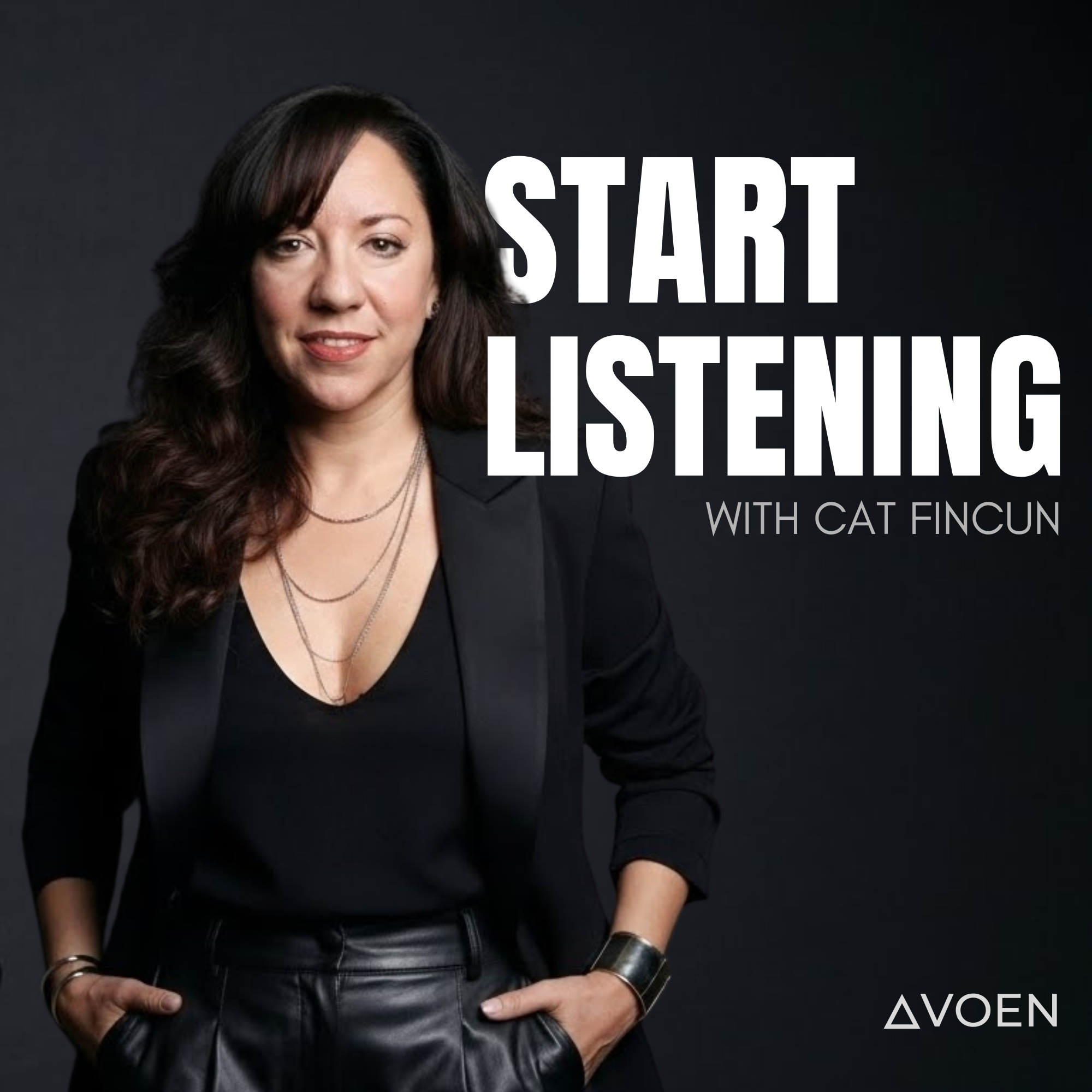
The Start Listening Podcast
by VOEN Consulting
Everyone's copying the same playbook. Start Listening is for founders who didn't. Host Cat Fincun talks to cult brand builders about tuning out the noise and trusting what they heard—customers, team, gut. Real decisions, not highlight reels.
-
6
Childfree Lives are no anomaly — Lady No Kids on the $15 Trillion Untouched Market
The room was full. Christine was nodding. And somewhere in the middle of a presentation about tax shelters for kids and leaving legacy for family, she realized she hadn't actually agreed with a single thing.That moment is the founding story of Lady No Kids — and the business case hiding inside it. Women living without children represent a market that could reach 40% of North American women by 2030. There is almost no infrastructure built for them. Not in finance, not in hospitality, not in consumer products, not in community. The conveyor belt of life — school, partner, suburbs, kids, community — drops these women off quietly and without warning. Christine Burns describes turning around in her 30s and realizing the erosion happened so slowly she didn't notice until it was gone.The businesses that will win this market aren't the ones that show up with a pink version of what they already make. They're the ones that understand what these women have already figured out how to do alone — and build for the gaps that remain. Finance without next-of-kin assumptions. Adult travel that is broader than honeymoon getaways. Community that forms around interest and not life stage. That's the infrastructure Christine is building. And it's the conversation most brands haven't had the wherewithal to start.If this is the conversation you've been needing to have, start here. thinkvoen.comWhere to find Christine and Lady No Kids: Instagram: @ladynokids_ LinkedIn: linkedin.com/in/christineelizabethburns/Website: lady-nokids.comSUBSCRIBE TO OUR SUBSTACK MAILING LIST:https://substack.com/@thestartlisteningpodcastThis episode was produced by Cat Fincun and VOEN Consulting.
-
5
Tracking Before Purpose — How a Grab Bag of Metrics Can Tell You a Story That Isn't True
The metrics being sold to you as success indicators were designed to be easy to show, easy to screenshot, and easy to feel good about. Feeling good and being healthy are not the same thing.More damaging than flattery metrics are the blame metrics. 10x the ROI per employee in the next 90 days — there's 30 to 70% untapped capacity sitting inside your current team right now." This is what's flooding founder feeds. Metrics that support finger pointing instead of revealing the missions to rally around. The marketing budget that gets cut because the impact on new customer acquisition or customer lifetime values weren't attributed to the effort. The engagement drop-off that blames the customer journey when the cost and audience aren't aligned. Metrics should be helping you steer, not flatter you into complacency or scare you into cutting the wrong things.This episode is the counter-argument. Cat walks through the five metrics most likely to be lying to your face — and introduces VOEN, four tenets for measuring what's actually real in a scaling brand. Ace Hotel built one of the most influential hospitality brands of the last 30 years and lost 40% of its portfolio because the vision was never structurally held. Independent bookstores survived Amazon by refusing to compete on Amazon's terms. The difference between those two outcomes isn't luck. It's what you're actually paying attention to.If this is the conversation you've been needing to have, start here. thinkvoen.comThe extended version — three metrics per tenet, how to collect each one, and Peloton as a cautionary tale — is on Substack.TOPIC AND GUEST SUGGESTIONS:Submit hereThis episode was produced by Cat Fincun and VOEN Consulting. It was edited by Angelina Gurrola.
-
4
The Judith on Building Culture, Paying People Right, and Growing on Your Own Terms
"You Can't Fake What We're Doing Here."The restaurant industry runs on fear. Fear of a bad month, fear of turnover, fear of what happens if you pay people what they're actually worth. Most operators make every decision from that place – they think they're maintaining the product but they're quietly hollowing it out. The customer feels it before the owner does.Jennie and Andrew built The Judith on the opposite premise — and then had to defend it, over and over, against every moment where the fear-based choice would have been easier. Living wage from day one. A hard cap on private events at peak revenue. No outside investors, no runway, no safety net. Just a 28-seat café in Cleveland that people come back multiple times a day to because they like being there.A woman drove up from Florida, found The Judith, and came back three times in two days. She made friends with the regulars at breakfast and ran into them again at dinner. That story does more for this place than any metric could.This is a conversation about what it actually costs to build something real — and why that cost is worth it.If this is the conversation you've been needing to have, start here. thinkvoen.comWhere to find the latest on Judith happenings:The Judith — thejudith.cafe / @thejudithcafeFor more on the Judith's approach read it on SubstackTOPIC AND GUEST SUGGESTIONS:Submit hereThis episode was produced by Cat Fincun and VOEN Consulting. It was edited by Angelina Gurrola.
-
3
The Evisceration Process — How to Know What Your Business Is Really Worth Before a Buyer Tells You
Most businesses never sell. The ones that do are almost always undervalued — not because the business wasn't good enough, but because the owner never built it to be bought.Brett Banchek started Fenwick Partners after trying to buy a business and realizing the same thing every serious buyer eventually realizes: the gap between what a business is worth and what it sells for isn't a negotiation problem. It's a structural problem. Revenue too concentrated in one customer. A key salesperson holding half the relationships. An owner whose institutional knowledge lives nowhere but their own head. These aren't fatal flaws — they're fixable. But only if you start early enough, and only if you're willing to go through what Brett calls the evisceration process first.This conversation covers what buyers are actually looking at, why culture is one of the most underrated valuation drivers in a small business, and why the "just go to the beach for six months and see what happens" approach to key man risk almost always ends badly.If this is the conversation you've been needing to have, start here. thinkvoen.comFenwick Partners resources:Assessment — https://exit.fenwickpartners.co/Contact Brett BanchekLinkedIn https://www.linkedin.com/in/brettbanchek/https://www.fenwickpartners.co/#heroMore on what buyers are actually looking for — and how to start building toward it — on Substack. TOPIC AND GUEST SUGGESTIONS:Submit hereThis episode was produced by Cat Fincun and VOEN Consulting. It was edited by Angelina Gurrola.
-
2
If You Think Corporate Bureaucracy is Bad You're Not Going To Want To Hear This
There Is a Five Thousand Year Old System Running You and Your Business Right Now.You started your company to be free. Free from someone else's agenda, someone else's timeline, someone else's definition of what your work is worth. That part's true.What's also true: the structure you stepped into is five thousand years old. And it has never needed your permission to reproduce itself.This episode traces the architecture — from the labor ration records of ancient Sumer to the mortgage on your building, from Hammurabi's debt codes to the personal guarantee you signed without reading the covenant provisions, from the factory floor of 1840 to the Slack notification you felt obligated to answer at 9pm. The mechanism doesn't die. It changes its name and finds a new population. The question isn't whether you inherited it. It's whether you've looked closely enough to see where it's running in your business right now.Three places to look this week. Your org structure. Your obligation structure. Your success metrics. If one of those made you pause — that's the one.If this is the conversation you've been needing to have, start here. thinkvoen.comTo relate this history into an every-day scenario play this storygame on SubstackTOPIC AND GUEST SUGGESTIONS:Submit hereThis episode was produced by Cat Fincun and VOEN Consulting. It was edited by Angelina Gurrola.
-
1
Trailer: Start Listening
Something's broken in business. Most people already know it. Not enough are saying it out loud — yet.This is Start Listening. Episodes coming soon.Go deeper: Substack
No matches for "" in this podcast's transcripts.
No topics indexed yet for this podcast.
Loading reviews...
ABOUT THIS SHOW
Everyone's copying the same playbook. Start Listening is for founders who didn't. Host Cat Fincun talks to cult brand builders about tuning out the noise and trusting what they heard—customers, team, gut. Real decisions, not highlight reels.
HOSTED BY
VOEN Consulting
CATEGORIES
Loading similar podcasts...
URL copied to clipboard!