
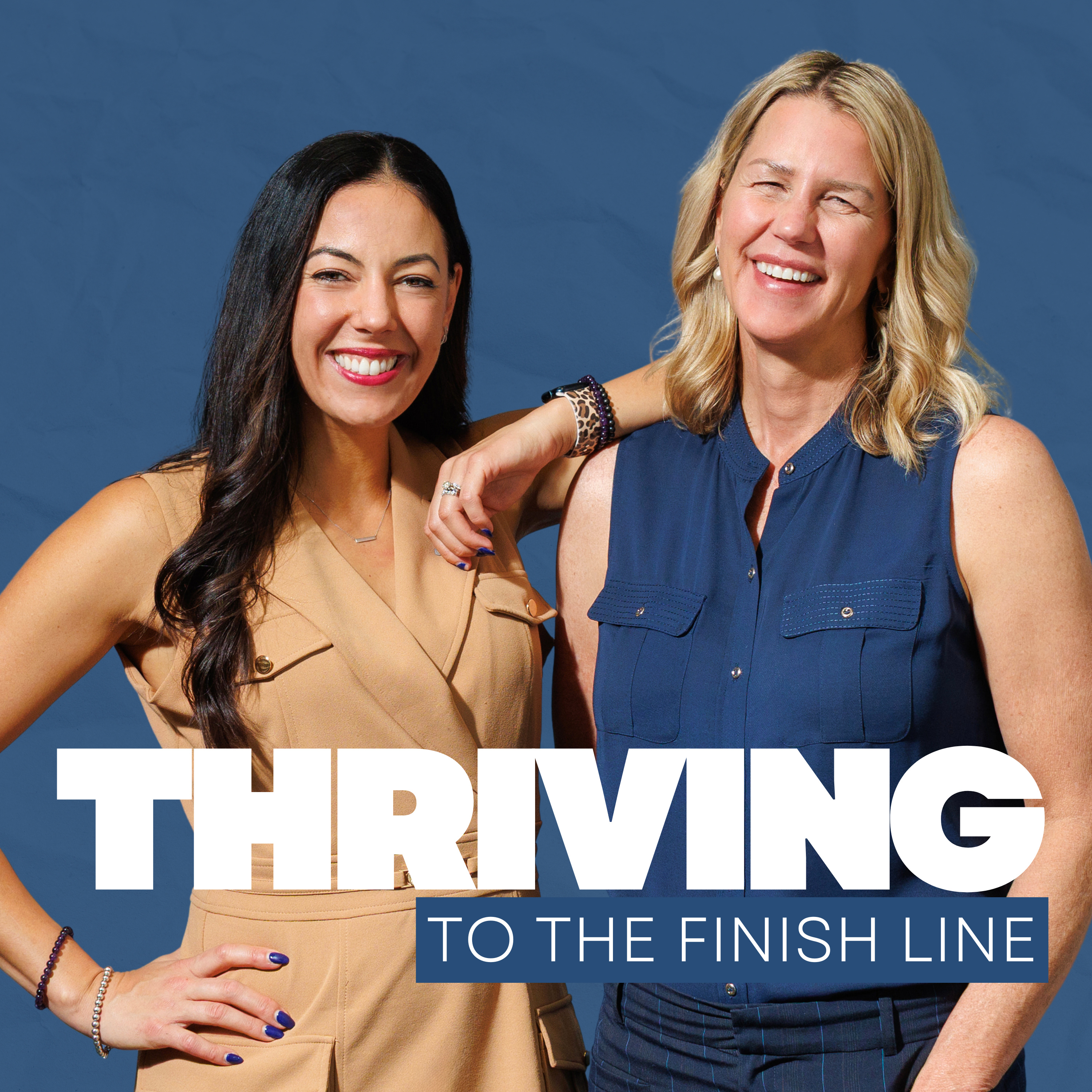
PODCAST · health
Thriving to the Finish Line
by The Miller Elder Law Firm
Join us for real, honest conversations with people who help others live well — sharing knowledge, resources, and perspectives to help you feel more prepared, informed, and less alone as you navigate aging, planning, and life’s big transitions.
-
13
Legacy Isn’t Just Wealth. It’s Impact.
What does it really mean to create a lasting impact in your community?In this Thrive Note, Genna sits down with Sherry Houston, Vice President for Advancement at Santa Fe College, to explore how education, opportunity, and giving can change the trajectory of an entire family.From supporting non-traditional students, ranging from dual-enrolled teens to an 80-year-old pursuing a nursing degree, to expanding workforce programs in fields like HVAC, construction, and law enforcement, Sherry shares how the Foundation is helping remove barriers and open doors for people at every stage of life.You’ll hear how a single $1,500 donation helped one student become the first in his family to avoid incarceration and instead serve his community as a law enforcement officer. It is a powerful reminder that legacy is not just about what you leave behind, but who you lift up along the way.This conversation reframes education, success, and giving, showing that meaningful impact often starts with access, belief, and the right opportunity at the right time.
-
12
Legacy in Action: Supporting Families, Strengthening Communities
In this episode of Thriving to the Finish Line, we sit down with Sherry Houston, Vice President for Advancement and Chief Philanthropy Officer at Santa Fe College, whose career has been defined by one thing: showing up for people when they need it most.From mental health advocacy to supporting families at the Ronald McDonald House, to advancing education and opportunity across North Central Florida, Sherry shares what it truly means to meet people where they are, especially during life’s most difficult seasons.Together, we explore:◼️ Why community and connection are essential to aging well◼️ The often overlooked challenges facing older adults, especially around isolation and purpose◼️ How staying active, mentally, physically, and socially, can shape how we experience the later chapters of life◼️ The role of lifelong learning, volunteering, and giving back in maintaining purpose after retirement◼️ Practical ways families and caregivers can support loved ones before a crisis occursSherry also shares powerful stories from her work, reminding us that sometimes the most meaningful support comes from the simplest acts such as listening, showing up, and making someone feel seen.This conversation is a reminder that thriving is not about avoiding life’s challenges. It is about building the relationships, purpose, and community that carry us through them.Connect with Sherry:◼️ LinkedIn: https://www.linkedin.com/in/sherryhouston/◼️ Santa Fe College Office for Advancement: www.sfcollege.edu/advancement/contact.html
-
11
What If We Got Hormone Therapy Wrong?
Hormone therapy has long been surrounded by caution, especially for women over 60. But what if the narrative we've accepted isn’t fully aligned with the data?In this Thrive Note, the conversation revisits one of the most influential studies in women’s health, the Women’s Health Initiative, and unpacks how its conclusions shaped decades of medical guidance. Dr. Anamaria Yeung and Dr. Rachel Coleman explore what the research actually showed versus how it was interpreted, highlighting a surprising reality: for many outcomes, hormone therapy did not increase risk in older women—and in some cases, offered meaningful benefits.From cardiovascular health to bone strength, sleep, and overall well-being, this discussion challenges long-held assumptions and opens the door to more nuanced, individualized decision-making.If you or someone you love is navigating menopause or post-menopausal health, this Thrive Note offers a fresh perspective grounded in data, not fear.🎧 Listen to the full conversation with Dr. Rachel Coleman and Dr. Anamaria Yeung: https://youtu.be/uNS7fwmLGqM
-
10
Thrive Note: The Weight of Caregiving
As we age, one of the most unspoken challenges families face is the expectation of caregiving—and who steps into that role.In this Thrive Note, Shannon and Betsy explore the emotional and practical weight of caregiving within families, especially when roles are assumed rather than chosen.From a physician husband navigating his wife’s long-term illness, to a daughter redefining how she can best support her parents, this conversation highlights a powerful truth: being a good spouse or child does not mean sacrificing yourself to become a full-time caregiver.Instead, it’s about understanding your strengths, setting boundaries, and allowing professionals to step in—so families can return to what matters most: being present with one another.This episode reframes caregiving not as an obligation, but as an opportunity to preserve dignity, relationships, and even moments of beauty in the hardest seasons of life.🎧 Listen to the full conversation with Betsy Pepine: https://youtu.be/INiZCXeYI_0
-
9
Thrive Note: Hormones, GLP-1s, and the Truth About Women’s Health After 40
This week’s Thrive Note is a reflection on a simple but powerful truth: there is no shortcut to long-term health.In this moment from our conversation with Dr. Rachel Coleman and Dr. Anamaria Yeung of Empower Lifestyle Medicine, we’re reminded that midlife—especially menopause—isn’t something to “get through”… it’s an opportunity to finally invest in yourself. But that investment requires something many of us hope to avoid: consistency, awareness, and real effort.From understanding how your body responds to things like glucose, to rebuilding strength through movement, to making intentional daily choices—it’s not about a quick fix or a single prescription. It’s about doing the work. And while that may sound daunting, it can also be empowering. Because when you begin to understand your body differently, you don’t just feel better… you feel stronger, more capable, and more in control of your health than you may have in years.This Thrive Note is a reminder: the goal isn’t perfection—it’s participation. Listen to the full conversation with Dr. Rachel Coleman and Dr. Anamaria Yeung: https://youtu.be/uNS7fwmLGqM
-
8
Thrive Note: Vaginal Estrogen and Women’s Health
Dr. Rachel Coleman and Dr. Anamaria Yeung of Empower Lifestyle Medicine unpack one of the most misunderstood topics in women’s health: vaginal estrogen.Often surrounded by fear and misinformation, vaginal estrogen is a localized therapy that supports vaginal and urinary health during menopause and perimenopause—without significantly impacting estrogen levels throughout the body. Backed by research, it has not been shown to increase risks like breast cancer recurrence, blood clots, or stroke for the vast majority of women.More importantly, this conversation challenges a larger issue in healthcare: the lack of open, informed discussions around hormone therapy. Every woman deserves a personalized, risk-benefit conversation—not a blanket “yes” or “no.”This Thrive Note is a reminder that menopause can be a time to better understand your body, advocate for your health, and make informed decisions that support your long-term well-being.
-
7
Menopause, Hormones, and Taking Your Health Back
What if many of the health struggles women face in midlife weren’t inevitable — but preventable?In this episode of Thriving to the Finish Line, Shannon Miller sits down with Dr. Rachel Coleman and Dr. Anamaria Yeung of Empower Lifestyle Medicine to explore how lifestyle medicine is transforming the way we approach aging, chronic disease, and menopause.Both physicians share their personal journeys from traditional medical practice into lifestyle medicine, a field focused on preventing and reversing disease through six foundational pillars: nutrition, sleep, movement, stress management, healthy relationships, and minimizing harmful substances.The conversation dives deep into some of the most misunderstood topics in women’s health, including:◼️ What lifestyle medicine actually is — and how it differs from conventional care◼️ Why menopause symptoms are often overlooked or misunderstood◼️ The science behind menopausal hormone therapy◼️ The long-lasting impact of the Women’s Health Initiative study on women’s healthcare◼️ The benefits of estrogen therapy for bone, cardiovascular, and mental health◼️ The role of testosterone therapy in womenWhy prevention, movement, and lifestyle change can dramatically improve quality of lifeDr. Coleman and Dr. Yeung also explain why their practice focuses on spending meaningful time with patients — something often missing in today’s healthcare system — helping people implement sustainable lifestyle changes rather than relying on quick fixes.Together, they challenge the idea that aging means decline and instead offer a hopeful message: midlife can be a powerful opportunity to reset your health, invest in yourself, and thrive in the decades ahead.Whether you're navigating perimenopause, supporting aging parents, or simply curious about how lifestyle choices shape long-term health, this conversation offers practical insight and empowering perspective.Learn more about Empower Lifestyle Medicine:https://www.empowerlifestylemedicine.com/
-
6
Breaking Boxes Around Aging, Caregiving, and Living Fully
What if aging didn’t mean getting smaller and caregiving didn’t require losing yourself?In this powerful and deeply human conversation, Shannon Miller sits down with Betsy Pepine, longtime Gainesville real estate leader, community advocate, and author of Breaking Boxes: Dismantling the Metaphorical Boxes That Bind Us, to explore what it truly means to thrive all the way to the finish line.Drawing from decades of guiding families through major life transitions, Betsy reframes real estate as stress management through life events—and opens up about her own journey caring for aging parents, navigating dementia, and redefining roles within family systems. Together, Shannon and Betsy challenge deeply ingrained expectations around caregiving, longevity, aging in place, and the belief that life must shrink as we grow older.This episode dives into:Why caregiving roles often need to be reimagined, not inherited by defaultHow boundaries can preserve relationships and dignity during illnessWhat it means to “grieve before the grief” and prepare emotionally for what’s aheadHow our homes can either support or hinder us as we ageAnd why sharing your truth—without dying with the music still inside—mattersAt its core, this conversation is about permission: permission to break boxes, to live expansively, to age with intention, and to design a life—and an ending—that honors who you truly are.Whether you’re a caregiver, an adult child, a professional working with aging families, or someone simply asking deeper questions about how to live well, this episode offers wisdom, validation, and a refreshing reframe on what thriving can look like at every stage of life.Follow Betsy :Instagram: https://www.instagram.com/betsypepineFacebook: https://www.facebook.com/bpepine/You can order "Breaking Boxes: Dismantling the Metaphorical Boxes That Bind Us" here: https://www.betsypepine.com/
-
5
Thrive Note: Understanding Lewy Body Dementia
Lewy body dementia is often spoken about in hushed tones—misunderstood, stigmatized, and too often treated as a diagnosis to avoid. In this Thrive Note, we unpack what Lewy bodies actually are, how they relate to Parkinson’s disease, and why the fear surrounding the diagnosis doesn’t tell the full story.From an elder law and medical perspective, the conversation explores why Lewy body dementia and Parkinson’s disease dementia are better understood as part of a continuum rather than rigid, separate conditions. We dive into the science behind Lewy bodies, including the role of alpha-synuclein, how these protein deposits form, and why the brain’s attempt to clear them matters more than the label itself.Most importantly, this episode challenges the troubling reality that individuals with Lewy body diagnoses are sometimes denied care. With the right treatment—medical, cognitive, and psychiatric—people living with Lewy body–related conditions can be supported, managed, and cared for with dignity.This is a clarifying, compassionate conversation aimed at replacing fear with understanding—and reminding us that exclusion, not diagnosis, is the real issue.
-
4
Thrive Note: Five Everyday Choices to Protect Your Brain
In this Thrive Notes episode of Thriving to the Finish Line, Dr. Okun reframes how we think about neurodegenerative disease—not as a fixed endpoint, but as a trajectory we can influence.Using a powerful analogy, he explains why prevention and risk reduction for brain health should be treated with the same seriousness as heart health or lung disease. From there, he shares his top five evidence-backed actions anyone can take—whether you have Parkinson’s or not—to support long-term brain health:Clean waterClearn airWash your foodExerciseRestorative sleepThese aren’t extreme interventions. They’re everyday decisions that compound over time.The takeaway is clear and hopeful: degenerative disease is not simply something that “just happens.” There are meaningful steps you can take—starting now—to change your trajectory.Follow Dr. Okun:Instagram: / michaelokun Facebook: / michael.okun1 LinkedIn: / michael-s-okun-97075565 You can order The Parkinson's Plan book here: https://pdplan.org/
-
3
Thrive Note: Rethinking Care Through a Universe Model
Dr. Michael Okun is a neurologist, movement disorder specialist, and national leader in Parkinson’s care, research, and education. His work focuses on reimagining how care is delivered for people living with chronic and neurodegenerative diseases.In this Thrive Notes episode, we reflect on Dr. Okun’s powerful shift away from the traditional “patient-as-the-center” model of care and toward what he describes as a universe model. In this framework, caregivers, clinicians, technology, support systems, and systemic barriers all play interconnected roles that must move in coordination—not isolation.This conversation explores caregiver strain, stigma, access, and the importance of rotating the right services in and out at the right time. What we’re learning is that thriving with chronic disease depends less on placing one person at the center, and more on how well the entire system adapts, supports, and moves together.Follow Dr. Okun:Instagram: https://www.instagram.com/michaelokun/Facebook: https://www.facebook.com/michael.okun1LinkedIn: https://www.linkedin.com/in/michael-s-okun-97075565/You can order The Parkinson's Plan book here: https://pdplan.org/
-
2
The Parkinson Plan: Why We’re Treating Chronic Disease All Wrong
What if Parkinson’s isn’t the problem, but the way we treat chronic disease is?Dr. Michael Okun, Director of the Norman Fixel Institute for Neurological Diseases at UF Health and National Medical Advisor for the Parkinson’s Foundation, discusses how current approaches to Parkinson’s care, including delayed diagnosis and fragmented systems, can negatively impact quality of life, and why earlier, coordinated, and evidence-based planning matters.Dr. Okun is a leading neurologist, researcher, and national advidsor in Parkinson’s care whose work focuses on prevention, interdisciplinary treatment, and improving long-term outcomes through data-driven care models.Dr. Okun explains: ◼️ Why Parkinson’s is more than a dopamine or brain disease ◼️ How early, evidence-based planning improves outcomes and quality of life ◼️ What research shows about medication timing and diagnosis ◼️ The Parkinson Plan and the 0–10–100 framework for prevention, access, and funding ◼️ Why caregivers, veterans, and environmental exposure must be part of Parkinson’s careThis episode reframes Parkinson’s as a condition that requires long-term, coordinated planning and offers a clearer, evidence-based path forward for patients, families, and professionals navigating chronic disease.00:00 Intro02:40 The Fixel Norman Institute06:06 A Model for Patient-Centered Care12:14 Navigating the Complexities of Parkinson's Diagnosis18:08 The Importance of Early Diagnosis and Treatment24:10 The 0-10-100 Plan: A Vision for Parkinson's Prevention30:12 Veterans and Parkinson's: Addressing the Epidemic36:03 The Role of Lifestyle in Managing Parkinson's DiseaseFollow Dr. Okun:Instagram: https://www.instagram.com/michaelokun/Facebook: https://www.facebook.com/michael.okun1LinkedIn: https://www.linkedin.com/in/michael-s-okun-97075565/You can order The Parkinson's Plan book here: https://pdplan.org/
No matches for "" in this podcast's transcripts.
No topics indexed yet for this podcast.
Loading reviews...
ABOUT THIS SHOW
Join us for real, honest conversations with people who help others live well — sharing knowledge, resources, and perspectives to help you feel more prepared, informed, and less alone as you navigate aging, planning, and life’s big transitions.
HOSTED BY
The Miller Elder Law Firm
Loading similar podcasts...
URL copied to clipboard!