
PODCAST · health
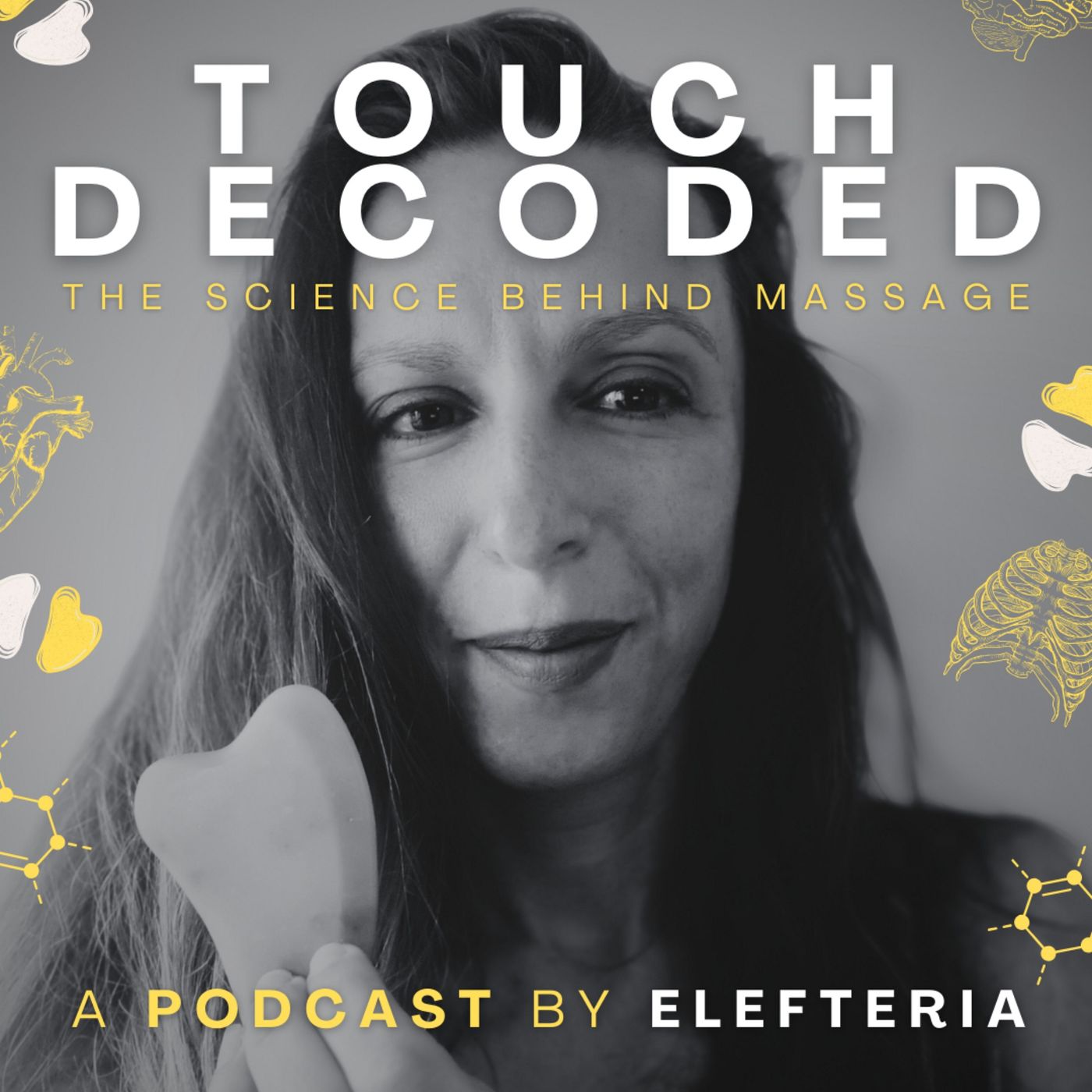
Touch Decoded | The Science Behind Massage
by Elefteria
The Science Behind Massage | Touch Decoded, is a podcast that bridges ancient wisdom, research and modern science to explore the art and science of massage therapy. Join Elefteria, an experienced massage instructor and holistic healing expert, as she delves into the mechanisms behind traditional and contemporary massage modalities. Perfect for massage professionals, anatomy nerds, physiotherapists, wellness enthusiasts, and anyone curious about the profound connection between body, mind, and healing touch. Subscribe now and discover the fascinating science behind the art of massage.Become a supporter of this podcast: https://www.spreaker.com/podcast/touch-decoded-the-science-behind-massage--6817401/support.
-
24
Why Massage Techniques Are Done In THIS Order & WHY??
In this episode, Swedish massage techniques, Swedish massage sequence, and the correct order of massage techniques are explained through nervous system physiology and tissue mechanics. If you practice massage therapy and have ever questioned how to structure a massage session, this episode addresses the clinical reasoning behind technique progression.Book an affordable massage class (includes certification): https://jointheflow.weebly.com/our-courses.htmlAmazon book on traditional Thai Massage: https://amzn.to/49mR6FqLet's connect: https://www.instagram.com/flowathensJoin this channel to get access to perks:https://www.youtube.com/channel/UCKwF_n9Vs-YtxEj5TRx7dwQ/joinEffleurage, petrissage, friction, deep gliding pressure — these are foundational Swedish massage techniques. But understanding massage therapy progression requires more than memorizing steps. It requires knowing how the autonomic nervous system responds to touch, how guarded tissue resists pressure, and why fascia mobilization depends on timing.In this episode, we explore massage assessment techniques, parasympathetic activation, tissue readiness, and the difference between deep tissue massage and properly sequenced Swedish massage. Why does deep work fail when preparation is skipped? Why does pressure sometimes increase resistance? And how does manual therapy science explain what experienced therapists feel under their hands?This podcast episode is for massage therapists, bodyworkers, manual therapists, and massage students who want stronger clinical massage reasoning and a clearer therapeutic massage framework. If you care about treatment planning, practitioner efficiency, and working with the nervous system instead of against it, this conversation will challenge how you think about session structure.Understanding the order of Swedish massage techniques changes how you approach deep tissue preparation, neuromuscular response, and overall therapeutic outcome.Subscribe for advanced massage therapy education, manual therapy principles, fascia-focused discussions, and the neurophysiology of touch.Chapters:00:00 Intro00:47 Why you have to relax first02:19 Going deeper - but why?06: 28 Why this sequence works?08:51 More of meBecome a supporter of this podcast: https://www.spreaker.com/podcast/touch-decoded-the-science-behind-massage--6817401/support.
-
23
On Which Side Should You Start Massaging And Why?
Ever feel like you are just guessing when you pick a spot to start a massage? In this episode of my Touch Decoded podcast, I am finally breaking down the right side to begin on (painful or non symptomatic) and the actual logic behind that choice. It is a common point of confusion, but once you understand the reasoning, your whole approach to a session starts to make way more sense.If you are ready to take it a step further, you can book an affordable massage class with certification here: https://jointheflow.weebly.com/our-courses.htmlIf you want to read more about traditional Thai Massage, check out this book: https://amzn.to/49mR6Fq (This is an affiliate link.)Let's keep the conversation going on Instagram: https://www.instagram.com/flowathensYou can also join this channel to get access to specific perks here: https://www.youtube.com/channel/UCKwF_n9Vs-YtxEj5TRx7dwQ/joinIf you have been wondering whether you should start massaging from the painful side or the "healthy" side, watch this video and learn the answer and its reasons.Whether you are a seasoned bodyworker, a manual therapist, or a student just getting into the field, you deserve a therapeutic massage framework that is actually effective. We are talking about how to plan treatments that make sense, how to improve practitioner efficiency, and most importantly, how to work with the nervous system rather than fighting against it. It is all about stepping up your game with a clearer, more intentional approach to myofascial release and clinical massage techniques.Make sure to subscribe for more deep dives into massage therapy for back pain, fascia-focused discussions, and the real science behind how the brain processes touch.Become a supporter of this podcast: https://www.spreaker.com/podcast/touch-decoded-the-science-behind-massage--6817401/support.
-
22
Iliopsoas Complex | Anatomy, Function & Myths
The iliopsoas complex is one of the most influential deep muscle groups in the body, and in this episode of Science Behind Massage we explore how it shapes posture, movement, and contributes to lower-back pain.For online massage courses : https://jointheflow.weebly.com/our-courses.htmlAmazon book series: https://amzn.to/4lalOGkLet's connect: https://www.instagram.com/flowathensJoin this channel to get access to perks:https://www.youtube.com/channel/UCKwF_n9Vs-YtxEj5TRx7dwQ/joinI cover the psoas major, psoas minor, and iliacus, explain why iliopsoas muscle pain occurs so often, and show how the iliopsoas bursa and surrounding fascia can create tension that affects the lower back, hips, and pelvis. As the primary hip flexors, these muscles are essential for lifting the thigh, stabilizing the pelvis, and maintaining everyday movement.We also go over the difference between an effective iliopsoas stretch and situations where the muscle is already overstretched and needs strengthening instead. I address the popular “muscle of the soul” idea, explaining what’s myth and what anatomy actually supports.What you’ll get from this video:- A science-based understanding of the iliopsoas complex and its role in lower-back pain- Clear explanation of psoas major and psoas minor function in hip flexion- Insight into how the iliopsoas bursa and fascia contribute to discomfort in the lower back, hips, and pelvis- Practical guidance on iliopsoas muscle stretch techniques and when strengthening is better- Clarity on the “muscle of the soul” myth versus anatomical reality- Tips you can apply in massage, bodywork, or personal mobility routinesIf this episode helped you, please subscribe, hit the like button, and share with colleagues. CHAPTERS00:00 Meet the Iliopsoas complex01:11 Anatomy of the iliopsoas complex03:27 Function of the iliopsoas complex06:10 Comparison with scalene muscles07:12 Psoas and sitting09:04 Pathologies10:08 Psoas and Thai Massage10:53 Is psoas the muscle of the soul?12:59 More of me!Become a supporter of this podcast: https://www.spreaker.com/podcast/touch-decoded-the-science-behind-massage--6817401/support.
-
21
The Science Behind Hot Stone Massage
In this episode of the "Science Behind Massage" podcast, we look at hot stone massage and what actually makes hot stone therapy feel so calming and effective.Book an affordable massage class (includes certification): https://jointheflow.weebly.com/our-courses.htmlAmazon book on clinical Hot Stone Massage Therapy: https://amzn.to/4oUbUL1Let's connect: https://www.instagram.com/flowathensJoin this channel to get access to perks:https://www.youtube.com/channel/UCKwF_n9Vs-YtxEj5TRx7dwQ/joinI explain how warm basalt stones influence muscle circulation, loosen protective tension, ease pain signals, and prepare the body for deeper hot stone massage techniques. You’ll hear the practical, science-based reasons why heat makes the tissues more responsive and why so many people describe a sense of “melting” during a session.This video is ideal for massage therapists, spa students, and anyone searching for clear information on hot stone massage benefits, heat therapy for muscles, and the science behind massage. Perfect if you want straightforward, evidence-grounded education without fluff.The above link is affiliate.Become a supporter of this podcast: https://www.spreaker.com/podcast/touch-decoded-the-science-behind-massage--6817401/support.
-
20
Vagus Nerve and Massage: Anatomy, Function, and the Body’s Healing Link
Can massage therapy really activate your vagus nerve and reset your nervous system? In this episode of The Science Behind Massage, I take you deep into the fascinating link between massage, Thai Bodywork, vagal tone, stress relief, and the body’s natural healing response.Book an affordable massage class (includes certification): https://jointheflow.weebly.com/our-courses.htmlAmazon book on clinical Thai Massage: https://amzn.to/47CkJTrLet's connect: https://www.instagram.com/flowathensJoin this channel to get access to perks:https://www.youtube.com/channel/UCKwF_n9Vs-YtxEj5TRx7dwQ/joinThe vagus nerve, also known as the tenth cranial nerve (CN X), connects the brain, heart, lungs, and digestive organs. It’s the main pathway of the parasympathetic nervous system, responsible for the “rest and digest” response. When this nerve is stimulated, it can lower heart rate, reduce inflammation, ease anxiety, and improve digestion—making it a key player in restoring balance to the body and mind.In this episode, you’ll learn:🧠 What the vagus nerve is and where it travels through the body💓 How it connects the brainstem to major organs like the heart, lungs, stomach, and intestines🌿 Why vagal tone is a marker of overall health and emotional regulation😮💨 How the vagus nerve affects stress, anxiety, asthma, digestion, and chronic pain💆♀️ How Thai massage techniques can help stimulate vagal activity and improve relaxation🫀 The science behind heart rate variability (HRV) and what it reveals about vagus nerve function🩺 How you can help your clients reset their nervous system through safe, intentional touchYou’ll also discover practical, evidence-based techniques for vagus nerve stimulation through massage:– Gentle neck and SCM work (where the vagus nerve runs close to the surface)– Circular massage behind the ears and along the jaw– Abdominal massage to support digestion and parasympathetic activation– Breathing methods, humming, cold-water exposure, and mindful movement to support vagal tone at homeUnderstanding how to work with the vagus nerve in massage therapy can transform your sessions. It’s not just about easing tight muscles — it’s about helping the body remember how to relax, recover, and heal. When you approach your clients with this knowledge, you’re influencing one of the body’s most powerful self-regulating systems.🎧 Listen now to learn how touch interacts with neuroscience and physiology, and why massage therapy for the vagus nerve is one of the most effective natural tools for restoring balance to the autonomic nervous system.If you’re a massage therapist, bodyworker, or wellness practitioner, this episode will expand your understanding of how the body’s electrical and emotional systems are intertwined — and how to support them through skillful touch.Become a supporter of this podcast: https://www.spreaker.com/podcast/touch-decoded-the-science-behind-massage--6817401/support.
-
19
Proprioception and Massage
What happens to your muscles during massage therapy? In this video, I explain how proprioceptors like muscle spindles and Golgi tendon organs control muscle length, tension, and movement, and how understanding them can make your massage therapy sessions more effective.Book an affordable massage class (includes certification): https://jointheflow.weebly.com/our-courses.htmlAmazon book on Thai Table Massage: https://amzn.to/41wruCQ Let's connect: https://www.instagram.com/flowathensJoin this channel to get access to perks:https://www.youtube.com/channel/UCKwF_n9Vs-YtxEj5TRx7dwQ/joinIf you are a professional physiotherapist or massage therapist, you’ll learn how to apply Thai massage stretches, deep tissue techniques, and slow, guided movements to help clients improve flexibility, release tight muscles, and prevent injury. You will also understand how proprioceptors function - the easy way! Even if you are a beginner in massage therapy, this video is perfect for you. We also break down the science behind muscle spindles and Golgi tendon organs, explaining how these sensory systems react during massage and stretching, and why they are essential for controlling reflexes, preventing overstretching, and optimizing client outcomes. Whether you’re performing Thai massage leg stretches, PNF techniques, or deep tissue work, understanding proprioceptors will transform your approach to therapy.You’ll see how proprioception, the body’s internal sense of position and movement, plays a critical role in rehabilitation, muscle recovery, and safe stretching.By the end of this video, you’ll have practical tips for resetting proprioceptor sensitivity, improving flexibility, and helping clients move more safely and effectively. If you want to enhance your massage therapy practice, increase your confidence in treating post-surgical patients, or refine your Thai massage techniques for better results, this video is a must-watch.Chapters:00:00 What Happens to Your Muscles During Massage Therapy Explained01:13 Knee Pain Recovery with Thai Massage: Real Client Case Study02:47 Understanding Proprioceptors: Muscle Awareness for Therapists04:03 Muscle Spindles in Massage Therapy: Stretch and Injury Prevention05:25 Golgi Tendon Organs: Force Sensing for Safe Muscle Work06:42 How Thai Massage Stretches Improve Flexibility and Proprioception07:45 Advanced Tips for Massage Therapists and Physiotherapists09:15 More of me!The above link is affiliate.Become a supporter of this podcast: https://www.spreaker.com/podcast/touch-decoded-the-science-behind-massage--6817401/support.
-
18
What are the Intermuscular Septa?
In this episode of Science Behind Massage, I break down the fascinating world of the intermuscular septa. These deep fascial partitions connect to bone, shape our fascial compartments, and guide the path of nerves and blood vessels. Understanding them changes how we see movement, stability, and even massage techniques.Book an affordable massage class (includes certification): https://jointheflow.weebly.com/our-courses.htmlAmazon book on Thai Table Massage: https://amzn.to/41wruCQ Let's connect: https://www.instagram.com/flowathensJoin this channel to get access to perks:https://www.youtube.com/channel/UCKwF_n9Vs-YtxEj5TRx7dwQ/joinThis is an anatomy video for massage therapists, massage students, and bodyworkers who want to deepen their knowledge of fascia, collagen, deep fascia, periosteum, and the role of septa in the human body. We’ll also explore how the Sen energy lines in Thai massage connect with these anatomical structures, linking tradition and science in a powerful way.You’ll learn about:- The structure and physiology of intermuscular septa- How septa form compartments in the arms, thighs, and lower legs- Their role in proprioception, circulation, and force transmission- Clinical relevance, including compartment syndrome- Practical connections between anatomy and Thai massage practiceIf you’re looking for clear, research-based massage anatomy education that goes beyond the surface, this episode is for you.Chapters:00:00 What Are Intermuscular Septa?01:13 Septa, Fascia, and Bone Connections02:47 Fascial Compartments and Their Functions04:03 Formation and Sensory Roles of Septa05:25 Clinical Relevance: Compartment Syndrome and Beyond06:42 Thai Massage Sen Lines and Septa Connections07:45 Research and septa10:35 More of me!The above link is affiliate.Become a supporter of this podcast: https://www.spreaker.com/podcast/touch-decoded-the-science-behind-massage--6817401/support.
-
17
The AMAZING similarities between plants & humans in anatomy and biology
Plants and humans might look worlds apart, but biologically, we share more than you think. In this episode of Science Behind Massage, I explore how our bodies echo plant structures—from cells and circulation to growth, reproduction, and even the chemistry of healing.Enroll in my yearly herbalism training (includes certification): https://jointheflow.weebly.com/herbal-medicine-training-en.htmlAmazon book on Clinical Aromatherapy: https://amzn.to/4fNX1WQ Let's connect: https://www.instagram.com/flowathensJoin this channel to get access to perks:https://www.youtube.com/channel/UCKwF_n9Vs-YtxEj5TRx7dwQ/joinAs a professional massage instructor with additional training in anatomy, physiology, and clinical herbal medicine (these were part of my complementary medicine training), I bring together the science of touch and the wisdom of nature to show how plants laid the groundwork long before humans appeared.You will learn about:- the similarities between plants and humans- the amazing symbiotic relationship between plants and humans! - Difference between human and plant cells- Similarities in anatomy, biology and responsesWe’ll talk about hierarchical organization, shared genetics, organ systems, and co-evolution—plus how these connections explain why plant compounds interact so well with the human body. If you’ve ever wondered why massage, herbal medicine, and biology feel so interconnected, this is your episode. If you are an anatomy, or biology nerd, hey this is made for you!Chapters:00:00 Plants as the Blueprint of Life01:30 Hierarchical Organization: From Cells to Organs02:10 Shared Genetics and Cellular Machinery04:16 Circulation and Respiration: Parallels in Flow06:29 Growth Zones: Meristems and Human Bones06:57 Reproduction: Seeds, Ovules, and Human Parallels08:00 Co-Evolution and Dependence Between Plants and Humans11:12 More of me!The above link is affiliate.Become a supporter of this podcast: https://www.spreaker.com/podcast/touch-decoded-the-science-behind-massage--6817401/support.
-
16
Massage and Levers: Anatomy in Motion
In this video, I take a deep look into how the three types of levers—first-class, second-class, and third-class—play out in real, hands-on massage work. Book an affordable massage class (includes certification): https://jointheflow.weebly.com/our-courses.htmlAmazon book on Gua Sha: https://amzn.to/4kXlGK9 Let's connect: https://www.instagram.com/flowathensJoin this channel to get access to perks:https://www.youtube.com/channel/UCKwF_n9Vs-YtxEj5TRx7dwQ/joinUnderstanding levers in massage therapy isn’t just for anatomy geeks—it’s essential for every massage professional who wants to work smarter, prevent fatigue, and maintain a long, sustainable career. Whether you're practicing Swedish massage on a table or Thai massage on a mat, your ability to use the body’s lever systems efficiently can make the difference between lasting five years in the field or thriving for decades.Drawing on my professional background as a massage therapy instructor trained in both Europe and in Chiang Mai, Thailand, I bring practical insight into how these biomechanical principles directly affect the quality of your touch, your ability to apply force effectively, and how much strain you put on your own joints and muscles.When I first trained in Swedish massage, I learned how to use forearms, thumbs, and body weight to create pressure. But it wasn’t until I studied Thai massage in Chiang Mai that I truly discovered what it means to use your own body as a tool. Pulls, lifts, compressions, and stretches suddenly made more sense when I realized I had been fighting against my own levers in many table-based techniques. That moment changed the way I moved forever. My biomechanics became more economical, more sustainable, and surprisingly more effective.This episode is especially useful for professional massage therapists, Thai massage practitioners, physiotherapists, and anyone working in the manual therapy or wellness field who wants to improve their understanding of functional anatomy and biomechanics. We go well beyond textbook definitions and explore real-world applications of leverage during massage therapy—from using your elbow in a seated effleurage stroke to repositioning a client’s limb during stretching.We’ll cover what each type of lever means in the context of human movement and massage:How a first-class lever, like when you balance your own weight while doing seated compressions behind a client, gives you control and balance.How a second-class lever, such as during certain Thai foot compressions, allows you to apply high force with less muscular effort—giving you the advantage when working with larger clients.And how the third-class levers, which dominate in most of our limb movements, can make small muscles do big jobs—creating strain if not used with bodyweight efficiency.The conversation around mechanical advantage is especially important here. You’ll learn how to position yourself so that your joints and limbs are supported by gravity and smart alignment, rather than relying solely on muscle power. These are not just academic ideas—they’re the key to minimizing fatigue, improving pressure control, and working with grace and power, even after hours of back-to-back sessions.We’ll also look at the difference between table-based and mat-based work. If you’re someone who wants to go beyond routine and really master the body’s natural mechanics, this episode is for you. It blends functional anatomy, practical biomechanics, and clinical insight, giving you tools you can take straight into your next session.Watch the full video to start using your own body more efficiently, reduce long-term strain, and refine your practice from the inside out. Don’t forget to subscribe to the channel so you don’t miss future episodes. Let’s keep the conversation about smart, sustainable, science-based bodywork going.Become a supporter of this podcast: https://www.spreaker.com/podcast/touch-decoded-the-science-behind-massage--6817401/support.
-
15
Swollen Ankles Explained: A Massage Therapist’s Guide
Are swollen ankles safe to massage? In this video, I talk about what massage therapists need to know when a client presents with ankle swelling - what causes it, when it's safe to treat, and when to refer out. Book an affordable massage class (includes certification): https://jointheflow.weebly.com/our-courses.htmlAmazon book on Gua Sha: https://amzn.to/4kXlGK9 Let's connect: https://www.instagram.com/flowathensJoin this channel to get access to perks:https://www.youtube.com/channel/UCKwF_n9Vs-YtxEj5TRx7dwQ/joinYou'll learn the difference between bilateral and unilateral swelling, how to recognize red flags, and how techniques like manual lymphatic drainage (MLD), Swedish massage, and Thai massage may help reduce fluid retention.Whether you're a student, practitioner, or bodywork educator, this is essential knowledge for offering safe and effective treatment. I also explain how circulatory and lymphatic systems interact during massage, and why the ankles are such a common site for fluid buildup.📌 Who this video is for:Physiotherapists, massage therapists, reflexologists, osteopaths, manual therapists, and anyone interested in foot biomechanics, gait analysis, and holistic pain relief.🔹 Subscribe to the channel for more massage tutorials🔹 Like and comment if this video helps you🔹 Share with colleagues or students in massage or sports therapy👍 Drop a comment with questions or techniques you’d like to see next.Become a supporter of this podcast: https://www.spreaker.com/podcast/touch-decoded-the-science-behind-massage--6817401/support.
-
14
How & Why Lymph Drainage Works
Discover how manual lymphatic drainage really works—and why every therapist should take it seriously. In this episode of Science Behind Massage, I break down the powerful effects of manual lymphatic drainage (MLD) on lymphedema, inflammation, muscle recovery, and rehabilitation.Book an affordable massage class (includes certification): https://jointheflow.weebly.com/our-courses.htmlAmazon book on Clinical Aromatherapy: https://amzn.to/3IBmeYa Let's connect: https://www.instagram.com/flowathensJoin this channel to get access to perks:https://www.youtube.com/channel/UCKwF_n9Vs-YtxEj5TRx7dwQ/joinYou'll learn the science behind arm lymphatic drainage massage, what happens during breast lymphatic drainage, and why MLD is essential for effective lymphedema treatment—especially after cancer surgery. I also explain how lymphatic massage helps flush out excess protein, inflammatory mediators, and post-exercise enzymes like creatine kinase and lactate.If you’re a massage therapist or physiotherapist looking to truly understand the body’s lymphatic system, this episode gives you a complete, research-based explanation of how and why MLD works - no fluff, just evidence and anatomy.📌 Who this video is for:Physiotherapists, massage therapists, reflexologists, osteopaths, manual therapists, and anyone interested in holistic pain relief.🔹 Subscribe to the channel for more massage tutorials🔹 Like and comment if this video helps you🔹 Share with colleagues or students in massage or sports therapy👍 Drop a comment with questions or techniques you’d like to see next.Become a supporter of this podcast: https://www.spreaker.com/podcast/touch-decoded-the-science-behind-massage--6817401/support.
-
13
The Windlass Mechanism | A Simple Explanation
𝐖𝐡𝐚𝐭 𝐢𝐬 𝐭𝐡𝐞 𝐖𝐢𝐧𝐝𝐥𝐚𝐬𝐬 𝐌𝐞𝐜𝐡𝐚𝐧𝐢𝐬𝐦? | 𝐅𝐨𝐨𝐭 𝐁𝐢𝐨𝐦𝐞𝐜𝐡𝐚𝐧𝐢𝐜𝐬, 𝐏𝐥𝐚𝐧𝐭𝐚𝐫 𝐅𝐚𝐬𝐜𝐢𝐢𝐭𝐢𝐬 & 𝐆𝐚𝐢𝐭 𝐄𝐱𝐩𝐥𝐚𝐢𝐧𝐞𝐝If you have ever asked, “Why does my arch hurt after walking?” or “What causes plantar fasciitis?”, this video gives you the answers from a clinical and manual therapy perspective.Book an affordable massage class (includes certification): https://jointheflow.weebly.com/our-courses.htmlAmazon book on Gua Sha: https://amzn.to/4kXlGK9 Let's connect: https://www.instagram.com/flowathensJoin this channel to get access to perks:https://www.youtube.com/channel/UCKwF_n9Vs-YtxEj5TRx7dwQ/joinIn this episode of Science Behind Massage, I explain the Windlass Mechanism — one of the most important biomechanical actions in the human foot. We’ll cover how it works, its connection to plantar fasciitis, flat feet, overpronation, toe-off in gait, and foot arch stability. You’ll also learn how this mechanism affects walking patterns, chronic foot pain, and even compensation patterns throughout the body.As a massage instructor trained in Thai massage & osteopathy, I share both the theory and the hands-on perspective. I also include a personal case that highlights how dysfunction in the Windlass Mechanism can lead to long-term problems if not properly addressed.📌 Who this video is for:Physiotherapists, massage therapists, reflexologists, osteopaths, manual therapists, and anyone interested in foot biomechanics, gait analysis, and holistic pain relief.🔹 Subscribe to the channel for more massage tutorials🔹 Like and comment if this video helps you🔹 Share with colleagues or students in massage or sports therapy👍 Drop a comment with questions or techniques you’d like to see next.Become a supporter of this podcast: https://www.spreaker.com/podcast/touch-decoded-the-science-behind-massage--6817401/support.
-
12
Gate Control Theory of Pain & Massage | Simple Explanation
In this episode of The Science Behind Massage, we explore the gate control theory of pain with a simple explanation that makes this important concept easy to understand - even if you're not a medical professional. Book an affordable massage class (includes certification): https://jointheflow.weebly.com/our-co...Amazon book on Gua Sha: https://amzn.to/4kXlGK9 Let's connect: / flowathens Join this channel to get access to perks: / @flowathens First proposed in 1965, the gate control theory of pain changed how science views pain, shifting the focus from damage alone to how the nervous system processes and filters pain signals.We’ll look at the role of the spinal cord - especially the dorsal horn - and explain how pain signals can be “turned down” through touch, pressure, and other sensory inputs. You’ll learn how this theory connects with massage therapy, and how therapists apply these principles to relieve pain naturally, without medication. We also link this with the psychology of pain and the broader biopsychosocial model.Whether you're a massage therapist, a student of health sciences, or just curious about how the body works, this is an easy and practical guide to the gate control theory of pain - explained clearly and backed by science.🔹 Subscribe to the channel for more massage tutorials🔹 Like and comment if this video helps you🔹 Share with colleagues or students in massage or sports therapy👍 Drop a comment with questions or techniques you’d like to see next.Become a supporter of this podcast: https://www.spreaker.com/podcast/touch-decoded-the-science-behind-massage--6817401/support.
-
11
The Biomechanics of Massage: Understanding Force and Leverage
In this episode, we’re talking about applying biomechanical principles in massage therapy, in order to optimize our massage techniques and prevent injury. Listen & learn!My courses and blog: http://jointheflow.netAmazon book on Gua Sha: https://shorturl.at/Y5ruBMerch: https://www.teepublic.com/user/elefteriaOnline education: https://flowcourses.eu/moodle/Become a supporter of this podcast: https://www.spreaker.com/podcast/touch-decoded-the-science-behind-massage--6817401/support.
-
10
Why Massage is a Powerful Analgesic | COX, Cytokines & Prostagladins
In this episode, we’re talking about pain & massage. Pain has a biochemical backbone, and at the center of it all are the cyclooxygenase enzymes, COX-1 and COX-2. But here’s the big question - can massage therapy influence these same pain pathways? Listen & find out!My courses and blog: http://jointheflow.netAmazon book on Gua Sha: https://shorturl.at/Y5ruBMerch: https://www.teepublic.com/user/elefteriaOnline education: https://flowcourses.eu/moodle/Let's connect: https://www.instagram.com/flowathenshttps://www.facebook.com/elefteria.flow?ref=hlJoin this channel to get access to perks:https://www.youtube.com/channel/UCKwF_n9Vs-YtxEj5TRx7dwQ/joinBecome a supporter of this podcast: https://www.spreaker.com/podcast/touch-decoded-the-science-behind-massage--6817401/support.
-
9
Neuroplasticity & Massage - How Bodywork Breaks the Pain Cycle
In this episode, we explore how neuroplasticity, the ability of neural networks in the brain to change through growth and reorganization, can play a huge role in massage therapy and therapeutic bodywork.My courses and blog: http://jointheflow.netAmazon book on Gua Sha: https://shorturl.at/Y5ruBMerch: https://www.teepublic.com/user/elefteriaOnline education: https://flowcourses.eu/moodle/Let's connect: https://www.instagram.com/flowathenshttps://www.facebook.com/elefteria.flow?ref=hlJoin this channel to get access to perks:https://www.youtube.com/channel/UCKwF_n9Vs-YtxEj5TRx7dwQ/joinNeuroplasticity refers to the brain's ability to reorganize and rewire its neural connections, enabling it to adapt and function in ways that differ from its prior state. This process can occur in response to learning new skills, experiencing environmental changes, recovering from injuries, or adapting to sensory or cognitive deficits. Such adaptability highlights the dynamic and ever-evolving nature of the brain, even into adulthood.Become a supporter of this podcast: https://www.spreaker.com/podcast/touch-decoded-the-science-behind-massage--6817401/support.
-
8
Why Gua Sha feels so D#$n GOOD - The Scientific Explanation
In this episode, we explore how gua sha, an ancient technique involving a scraping motion over the skin, can work at multiple levels to reduce pain. My courses and blog: http://jointheflow.netAmazon book on Gua Sha: https://shorturl.at/Y5ruBMerch: https://www.teepublic.com/user/elefteriaOnline education: https://flowcourses.eu/moodle/Let's connect: https://www.instagram.com/flowathenshttps://www.facebook.com/elefteria.flow?ref=hlJoin this channel to get access to perks:https://www.youtube.com/channel/UCKwF_n9Vs-YtxEj5TRx7dwQ/joinBecome a supporter of this podcast: https://www.spreaker.com/podcast/touch-decoded-the-science-behind-massage--6817401/support.
-
7
I Demystified Herbal Compress Therapy! 🔥 🌱
Discover the science behind Thai herbal compress therapy (Luk Pra Kob) - an ancient remedy backed by modern research! 🌿🔥 In this episode, we explore how heat and medicinal herbs like turmeric, ginger, camphor, and peppermint work together to relieve muscle pain, inflammation, and joint stiffness. My courses and blog: http://jointheflow.net Amazon books: https://amzn.to/3rfOaEH Merch: https://www.teepublic.com/user/elefteria Online education: https://flowcourses.eu/moodle/ Let's connect: https://www.instagram.com/flowathens https://www.facebook.com/elefteria.flow?ref=hl Join this channel to get access to perks: https://www.youtube.com/channel/UCKwF_n9Vs-YtxEj5TRx7dwQ/join We also break down a clinical study comparing Thai herbal compresses and Thai massage to ibuprofen for osteoarthritis pain relief. 💡 Learn how heat therapy improves circulation, relaxes fascia, and soothes the nervous system for deep relaxation and recovery. If you're interested in natural pain relief and holistic healing, this episode is for you! 👉 Subscribe for more science-based massage therapy insights! 📖 Read my book on Thai herbal compress therapy for in-depth recipes & techniques!Become a supporter of this podcast: https://www.spreaker.com/podcast/touch-decoded-the-science-behind-massage--6817401/support.
-
6
How Science PROVES Massage REALLY Works: Research & Results
How do researchers prove that massage therapy really works? In this episode of my "The Science Behind Massage" podcast, we explore the scientific methods used to study massage. Learn how pain, anxiety, mobility, and sleep improvements are measured, and what the latest research says about massage therapy’s effectiveness. If you’re interested in evidence-based massage, this is for you! My courses and blog: http://jointheflow.net Amazon books: https://amzn.to/3rfOaEH Merch: https://www.teepublic.com/user/elefteria Online education: https://flowcourses.eu/moodle/Become a supporter of this podcast: https://www.spreaker.com/podcast/touch-decoded-the-science-behind-massage--6817401/support.
-
5
Tok Sen | Vibrational Healing Explained
In this episode of my "The Science Behind Massage" podcast, we’re talking about the science behind Tok Sen, an ancient therapeutic technique rooted in traditional Thai medicine. My courses and blog: http://jointheflow.netAmazon books: https://amzn.to/3rfOaEHMerch: https://www.teepublic.com/user/elefteriaBecome a supporter of this podcast: https://www.spreaker.com/podcast/touch-decoded-the-science-behind-massage--6817401/support.
-
4
What is a MUSCLE KNOT (and how it is FORMED)?
Explore the intricate world of muscle knots - known also as trigger points! Discover the physiological secrets behind their formation, including the role of calcium ions, actin, and myosin. For massage & herbalism courses in Greece: http://jointheflow.netAmazon books: https://amzn.to/3uSyzy2Let's connect: https://www.instagram.com/flowathenshttps://www.facebook.com/elefteria.flow?ref=hlBecome a supporter of this podcast: https://www.spreaker.com/podcast/touch-decoded-the-science-behind-massage--6817401/support.
-
3
The Science Behind Thai Massage
Discover the science behind Thai Massage!Become a supporter of this podcast: https://www.spreaker.com/podcast/touch-decoded-the-science-behind-massage--6817401/support.
-
2
The science behind cupping - find why it is so EFFECTIVE
Discover the science behind cupping therapy and why it's so effective for muscle pain. Explore how suction impacts fascia, improves circulation, and stimulates mechanoreceptors for deep tissue relief. Learn the neurophysiology behind this ancient healing method with a modern twist!For massage courses : http://jointheflow.netAmazon books: https://amzn.to/3rfOaEHMerch: https://www.teepublic.com/user/elefteriaLet's connect: https://www.instagram.com/flowathenshttps://www.facebook.com/elefteria.flow?ref=hlJoin this channel to get access to perks:https://www.youtube.com/channel/UCKwF_n9Vs-YtxEj5TRx7dwQ/joinBecome a supporter of this podcast: https://www.spreaker.com/podcast/touch-decoded-the-science-behind-massage--6817401/support.
-
1
How Your Arm Fascia Connects to the Heart & Emotions
Did you know your arm fascia is connected to your heart and even influences your emotions? In this video, we explore the fascinating relationship between fascia in the arm, heart function, and emotional well-being. Discover how the interconnected web of fascia creates pathways linking our physical and emotional states, showing how body and mind are deeply intertwined.We’ll also dive into the Sen Line Kalathari from traditional Thai massage, an ancient energy line that parallels this connection. The Sen Line Kalathari is known to run through the arms, chest, and heart region, impacting both physical and emotional energy. Learn how these powerful systems in the body interact, and how understanding fascia and energy lines can benefit your health, posture, and emotional balance.Don’t miss this journey into the hidden connections of body and mind—one simple stretch could shift more than you think!Become a supporter of this podcast: https://www.spreaker.com/podcast/touch-decoded-the-science-behind-massage--6817401/support.
No matches for "" in this podcast's transcripts.
No topics indexed yet for this podcast.
Loading reviews...
ABOUT THIS SHOW
The Science Behind Massage | Touch Decoded, is a podcast that bridges ancient wisdom, research and modern science to explore the art and science of massage therapy. Join Elefteria, an experienced massage instructor and holistic healing expert, as she delves into the mechanisms behind traditional and contemporary massage modalities. Perfect for massage professionals, anatomy nerds, physiotherapists, wellness enthusiasts, and anyone curious about the profound connection between body, mind, and healing touch. Subscribe now and discover the fascinating science behind the art of massage.Become a supporter of this podcast: https://www.spreaker.com/podcast/touch-decoded-the-science-behind-massage--6817401/support.
HOSTED BY
Elefteria
CATEGORIES
Loading similar podcasts...
URL copied to clipboard!