
PODCAST · business
Training Impact Podcast
by LatitudeLearning
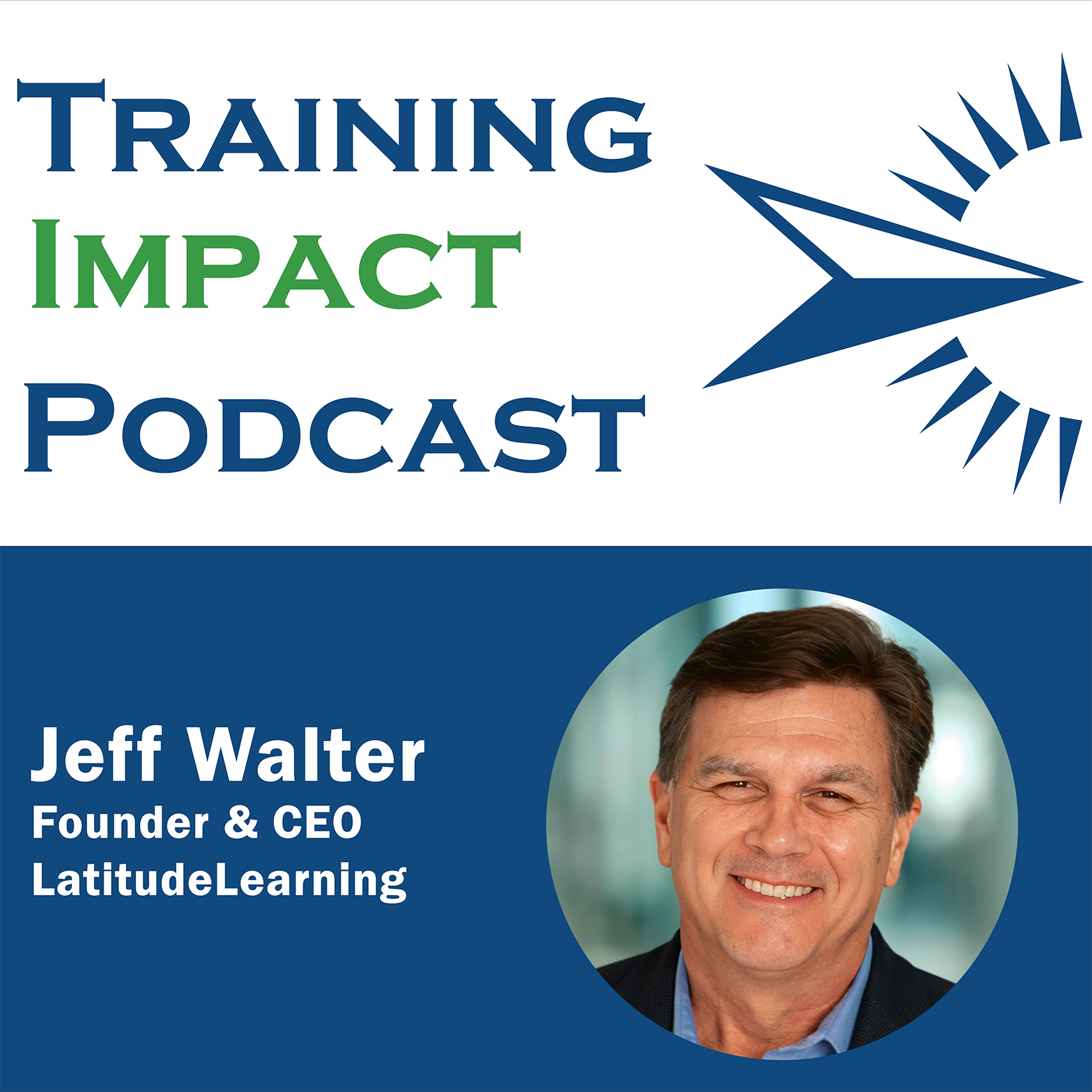
Training Impact PodcastScaling Channel Performance Through Learning and DisciplineGrowth does not create strength. It exposes weakness.The Training Impact Podcast explores what it truly takes to scale performance across franchise systems, dealer networks, resellers, service providers, and distributed partner ecosystems.Hosted by Jeff Walter, Founder and CEO of LatitudeLearning, this show goes beyond instructional design and course development. It examines the architecture required to build disciplined, high-performing channel networks.Most business leaders invest heavily in sales, marketing, and product innovation. Far fewer treat training as performance infrastructure. This podcast bridges that gap.Through executive conversations, strategic frameworks, and real-world case studies, we explore:How learning systems evolve from content libraries to measurable performance engines
-
57
55. FranServe: Escaping Career Frustration with a Brilliant Franchise Future
What if one small step could completely change your future? In this episode of the Training Impact Podcast, Jeff Walter speaks with Alesia Visconti, CEO of FranServe, about how franchising creates life-changing opportunities for aspiring entrepreneurs. Alesia shares her inspiring personal journey, the mission behind FranServe, and why so many people feel overwhelmed when exploring business ownership. She explains how FranServe helps candidates find the right franchise fit, build confidence, and move from uncertainty to action. You’ll also hear insights on women in franchising, transferable career skills, and why franchise ownership can offer freedom, growth, and purpose. If you’ve ever considered owning a business or reinventing your career, this episode is for you. Visit FranServe: https://www.franserve.com For more from the Training Impact Podcast, follow us on Social Media: https://t-sml.mtrbio.com/public/smartlink/trainingimpactpodcast
-
56
54. Blaze Pizza: Bold Reinvention Strategy That Transforms Franchise Growth
What does it really take to scale a modern franchise brand in a rapidly evolving market? In this episode of the Training Impact Podcast, Jeff Walter sits down with Kevin Moran, Chief Development Officer at Blaze Pizza, to explore how one of the most recognizable fast casual brands is reinventing itself for the next phase of growth. This conversation goes beyond traditional franchise development. Kevin shares how his career path, which spans finance, operations, and strategy, shaped a cross-functional approach to building and scaling businesses. Rather than staying in a single discipline, he developed a deep understanding of how every part of the organization connects. That perspective now plays a critical role in how Blaze Pizza evaluates franchise partners, designs support systems, and drives performance across its network. A central theme of the episode is what Kevin describes as Blaze 2.0. As customer expectations shift and digital ordering becomes a dominant channel, Blaze Pizza is rethinking its entire operating model. From store design and kitchen layout to labor strategy and customer flow, the brand is evolving to reflect how customers behave today, not how they behaved a decade ago. At the heart of this transformation is Ignite by Blaze, a live innovation restaurant where new ideas are tested in real-world conditions. This is not a theoretical exercise. It is a fully operational location where Blaze experiments with equipment, digital ordering systems, and service models while gathering direct feedback from customers. The result is a continuous learning environment that allows the brand to refine its strategy before scaling it across the franchise system. The discussion also explores the growing impact of digital ordering on restaurant operations. As more customers engage through online channels, brands must rethink how they balance in-store experiences with digital demand. Blaze Pizza is addressing this by separating workflows, improving efficiency, and reducing friction for both customers and employees. Kevin also shares valuable insights on international expansion. From understanding cultural preferences to navigating supply chain and regulatory challenges, he explains why global growth requires flexibility and strong local partnerships. Success comes from adapting the brand to fit the market while maintaining its core identity. Throughout the episode, one theme consistently emerges: curiosity. The willingness to ask better questions, explore how things work, and challenge assumptions is what drives innovation and long-term success. It is also what enables leaders to build stronger systems and more effective partnerships. This episode is especially relevant for franchise leaders, training professionals, and operations teams looking to scale performance in a complex and changing environment. For more from the Training Impact Podcast, follow us on Social Media https://t-sml.mtrbio.com/public/smartlink/trainingimpactpodcast For more information on Blaze Pizza, visit their website https://www.blazepizza.com/ #BlazePizza #FranchiseGrowth #RestaurantInnovation #FranchiseDevelopment #TrainingImpact #RestaurantStrategy #DigitalTransformation #FastCasual #BusinessGrowth #ScalingPerformance
-
55
53. Freddy Media: The Brutal Reality of Weak Marketing Execution
In this episode of the Training Impact Podcast, Jeff Walter sits down with Adam Gaedke of Freddy Media to explore how influencer-driven marketing is transforming the automotive industry—and what it means for dealers, brands, and channel performance. Freddy Media is redefining how companies connect with customers by leveraging a powerful network of social media influencers. Instead of relying on traditional advertising, they help automotive brands build trust, awareness, and demand through authentic, grassroots content that reflects real dealership experiences. Adam shares how Freddy Media partners with companies to not only market their products, but also help sell them into dealership networks. By combining deep automotive expertise with modern marketing strategies, they focus on driving adoption, increasing revenue, and improving the bottom line for their partners. A major theme in the conversation is trust. The automotive industry has long struggled with transparency, but influencer content—showing real service work, day-to-day operations, and honest interactions—helps break down those barriers. When customers engage with a dealership on social media before ever walking through the door, their confidence and buying experience fundamentally change. The episode also explores how platforms like YouTube are shaping the modern buyer journey. Today’s consumers start their research online, and content-driven strategies are becoming essential for capturing attention and guiding buyers through a more transparent path to purchase. Adam also discusses Freddy Media’s approach to growth—focusing on going deep with select partners rather than scaling broadly—ensuring meaningful impact and long-term success in the automotive space. If you’re in automotive, marketing, or any channel-driven business, this episode offers a practical look at how influencer networks, content, and trust can drive real performance. #AutomotiveMarketing #InfluencerMarketing #FreddyMedia #TrainingImpactPodcast #ChannelPerformance #DealershipMarketing #DigitalMarketing #CustomerExperience #SalesStrategy #ContentMarketing
-
54
52. Tote&Carry: The Explosive Growth Strategy That's Changing Influencer Marketing
What if your most effective growth channel wasn’t a franchise, dealer network, or sales team—but a network of influencers? In this episode of the Training Impact Podcast, Jeff Walter sits down with Emily Vernon, Head of Social Media at Tote&Carry, to explore how the brand is redefining channel development through ambassadors, affiliates, and creator-driven content. Tote&Carry has built a distributed ecosystem where influencers act as an extension of the brand, generating content across platforms like TikTok and Instagram to drive visibility, engagement, and revenue. This approach goes beyond traditional marketing and reflects a new model of partner enablement built on authenticity, experimentation, and relationships. Emily shares how influencer marketing can function as a scalable channel strategy, where repeated exposure across diverse voices builds trust and drives performance. She also explains why authentic, relatable content is consistently outperforming highly polished campaigns—and what that means for brands trying to connect with modern audiences. The conversation also explores how Tote&Carry structures its ambassador program, combining AI-driven discovery tools with direct outreach to build stronger, more aligned partnerships. Performance is measured through engagement, conversions, and revenue, creating a system that continuously evolves based on results. Another key theme is experimentation. Tote&Carry operates with a test-and-learn mindset, constantly refining its approach to creators, content, and messaging. This iterative model mirrors modern training and enablement strategies, where feedback loops and continuous improvement are critical to success. Emily also emphasizes the importance of seeing through the customer’s eyes, evaluating every touchpoint from the user perspective to improve alignment and drive better outcomes. This episode is especially relevant for learning and development leaders, training managers, and enablement teams looking to understand how distributed networks can be aligned and scaled effectively. To learn more about Tote&Carry, visit: https://www.totencarry.com/ For more from the Training Impact Podcast, follow us on social media: https://t-sml.mtrbio.com/public/smartlink/trainingimpactpodcast #ToteAndCarry #InfluencerMarketing #AmbassadorProgram #AffiliateMarketing #ChannelStrategy #PartnerEnablement #EcommerceGrowth #CreatorEconomy #TrainingImpactPodcast #LearningAndDevelopment
-
53
51. CCAR: Building a Safer Automotive Industry Through Training and Compliance
How does safety training protect an entire industry? In this episode of the Training Impact Podcast, Jeff Walter speaks with Katherine Henmueller, President and Chief Operating Officer of the Coordinating Committee for Automotive Repair (CCAR). The discussion explores how specialized safety and hazardous materials training helps prevent accidents across the automotive repair ecosystem. Founded in 1994 through an Environmental Protection Agency grant, CCAR has grown into a national safety advocate for the automotive industry. The organization develops eLearning programs that help repair shops, dealerships, logistics providers, and trade schools understand how to safely handle hazardous materials commonly found in automotive environments. Katherine explains how CCAR’s training programs focus on real world risks associated with chemicals, batteries, refrigerants, and other materials that technicians and service teams encounter every day. The training also helps organizations comply with Department of Transportation hazardous materials regulations, including the 49 CFR standards that govern safe packaging and transportation. One of the most interesting challenges discussed in the episode is the perception of compliance training. Because safety training is designed to prevent incidents, its success is often invisible. When it works well, accidents never happen, and workers simply assume safety systems are part of everyday operations. Jeff and Katherine explore how education helps technicians and automotive businesses understand the bigger picture of safety. By establishing consistent industry standards through training, CCAR helps make the entire automotive repair environment safer for workers and customers alike. The conversation highlights the broader role of learning in complex industries. Training is not just about knowledge transfer. In sectors like automotive repair, it functions as infrastructure that supports safety, compliance, and operational consistency. Learn more about CCAR and their safety training programs: https://www.ccar-greenlink.org/ For more from the Training Impact Podcast, follow us on Social Media: https://t-sml.mtrbio.com/public/smartlink/trainingimpactpodcast #TrainingImpactPodcast #CCAR #AutomotiveRepair #AutomotiveSafety #HazmatTraining #ComplianceTraining #AutomotiveIndustry #WorkplaceSafety #LearningAndDevelopment #CorporateTraining #SafetyTraining
-
52
50. CourseCREEK: The Powerful Impact of Turning Expertise Into Scalable Learning
How do organizations turn expert knowledge into scalable digital learning? In this episode of the Training Impact Podcast, Jeff Walter speaks with Robert Lunte, founder and CEO of CourseCREEK, about the process of transforming expertise into structured online learning programs. Robert shares his journey from internationally recognized voice coach to leading an eLearning development company. After creating his own digital courses, he discovered how powerful digital education could be for scaling knowledge and helping professionals reach far larger audiences. That realization led to the creation of CourseCREEK, a company focused on helping experts and organizations convert their knowledge into structured digital learning programs. The conversation explores why many professionals struggle to scale their expertise. Much of what they know exists as implicit knowledge inside their heads. Instructional design and course development help convert that knowledge into structured training programs that can be delivered consistently to learners anywhere in the world. Robert explains how CourseCREEK works with clients ranging from executive coaches to healthcare educators and corporate training teams. These organizations often possess valuable expertise but need help transforming it into engaging digital learning experiences. Jeff and Robert discuss the instructional design process used to develop effective courses. It often begins with gathering existing materials such as presentations, notes, documents, and videos. Instructional designers then organize the information into a storyboard that maps the learning journey, including modules, lessons, and engagement activities. This structured approach ensures that courses are not simply collections of content but carefully designed learning experiences that help learners absorb and apply knowledge. The conversation also explores the importance of engagement in digital learning. Modern learners benefit from a combination of multimedia elements such as video instruction, reading exercises, quizzes, and interactive scenarios that reinforce key concepts. By combining instructional design with modern learning technologies, organizations can create training programs that scale expertise, preserve knowledge, and deliver consistent education to large audiences. If you are responsible for learning strategy, course development, or digital education programs, this episode offers valuable insight into how organizations convert knowledge into scalable learning systems. 🌐 Learn more about CourseCREEK https://www.coursecreek.com/ For more from the Training Impact Podcast, follow us on Social Media https://t-sml.mtrbio.com/public/smartlink/trainingimpactpodcast #TrainingImpactPodcast #CourseCREEK #Elearning #InstructionalDesign #DigitalLearning #CorporateTraining #KnowledgeManagement #OnlineCourses #LearningLeadership
-
51
49. Immersivevision Technology: Solving the Hidden Gaps in Medical Training
In this episode of the Training Impact Podcast, Jeff Walter sits down with Steven King, President of U.S. Operations at Immersivevision Technology, to explore how immersive 3D visualization is transforming medical education and healthcare training. Steven shares the story of how he discovered the company’s groundbreaking virtual dissection table and helped bring the technology to the United States. The system functions like a seven-foot interactive tablet, allowing students and clinicians to explore the human body layer by layer through fully interactive digital cadavers. Learners can examine male, female, pediatric, and prenatal anatomical models while also accessing libraries of CT scans, MRIs, radiology images, histology slides, and clinical case studies. The conversation highlights how immersive tools like these move medical education beyond memorization and toward true comprehension. By allowing learners to explore anatomy in three dimensions and visualize spatial relationships between organs, arteries, nerves, and tissues, the technology supports deeper experiential learning and stronger clinical understanding. Jeff and Steven also discuss how immersive imaging can support real-world healthcare applications, including surgical planning. High-resolution scans can now be converted into detailed three-dimensional anatomical models, enabling clinicians to examine a patient’s anatomy before entering the operating room. These capabilities open the door to improved outcomes, better preparation, and reduced medical error. The episode also examines the challenges of introducing new technology into healthcare and education. While immersive training tools can dramatically improve learning outcomes, institutions must still address funding, curriculum integration, and faculty training. At the same time, today’s digital-native students expect highly interactive learning environments that match the speed and engagement of modern technology. Looking ahead, Steven shares his perspective on the future of immersive learning, the role AI may play in building new simulations and training environments, and why hands-on experiential practice will always remain central to developing skilled healthcare professionals. If you’re interested in the future of healthcare training, immersive simulation, and experiential learning, this conversation offers a fascinating look at how technology is reshaping the way medical professionals learn. To learn more about Immersivevision Technology and their immersive 3D medical imaging solutions, visit https://immersivelabz.com/ For more from the Training Impact Podcast, follow us on social media https://t-sml.mtrbio.com/public/smartlink/trainingimpactpodcast #TrainingImpactPodcast #MedicalEducation #ImmersiveLearning #HealthcareTraining #EdTech #SimulationTraining #MedicalTechnology #AnatomyLearning #RadiologyTraining #ExperientialLearning
-
50
48. Ford Saeks: Powerful Growth Strategy, AI Integration, and Performance-Driven Training
In this episode of the Training Impact Podcast, Jeff Walter talks with Ford Saeks, business growth accelerator, keynote speaker, and AI integration strategist, about what it really takes to drive measurable growth in today’s marketplace. Ford Saeks shares how organizations can bridge the gap between where they are and where they want to be through mindset clarity, disciplined strategy, and performance-driven training. The conversation explores AI integration, skill development, and why training must move beyond course completions to real business impact. They discuss how AI can support role play simulations, personalized learning, and smarter decision making, while keeping the human experience at the center. Ford Saeks also introduces his growth framework focused on message, market, and method, and explains why leaders must diagnose before they prescribe. If you lead training, manage a franchise system, or want to accelerate performance, this episode delivers practical insight you can apply immediately. For more from Ford Saeks visit https://profitrichresults.com/ #FordSaeks #TrainingImpactPodcast #AIGrowth #BusinessGrowthStrategy #FranchiseGrowth #ChannelEnablement #PerformanceDriven #LearningLeadership #GrowthMindset #AIIntegration
-
49
47. MSA Worldwide: Critical Role of Brand Standards in Franchise Training Success
In this episode of the Training Impact Podcast, Jeff Walter welcomes Marla Rosner of MSA Worldwide for a powerful discussion about the architecture behind effective franchise training. Many franchisors believe training begins with content delivery. MSA Worldwide takes a different view. Training begins with documentation. Without clear, well-structured brand standards, franchise systems struggle to scale consistently. Marla explains how MSA Worldwide helps franchisors convert founder knowledge into explicit brand standards manuals that align with legal agreements, operational requirements, and compliance expectations. She addresses a common misconception: that corporate training materials can simply be repurposed for franchisees. In reality, franchise training requires careful attention to the contractual relationship between franchisor and franchisee. The episode also explores: • The difference between corporate employee manuals and franchise brand standards • Why emerging franchisors must prioritize documentation early • How brand standards manuals become the backbone of franchise onboarding • The risk of outdated manuals in mature franchise systems • Why skimping on franchise training hurts both brand and franchisee performance With deep experience leading franchise training at Supercuts and now advising franchisors through MSA Worldwide, Marla offers practical insights for franchise executives seeking clarity, compliance, and scalability. If you are building, supporting, or scaling a franchise system, this episode provides a strategic framework for aligning brand standards and franchise training. Learn more about MSA Worldwide at https://www.msaworldwide.com/ For more from the Training Impact Podcast, follow us on Social Media https://t-sml.mtrbio.com/public/smartlink/trainingimpactpodcast
-
48
46. Brandon Hall Group: The Critical Truth About the Future of Human Capital Strategy
What does it really take to build a high-performing organization in today’s rapidly changing workforce landscape? In this episode of the Training Impact Podcast, Jeff Walter sits down with Michael Rochelle of Brandon Hall Group to explore the research shaping the future of human capital strategy. From AI-driven workforce disruption to persistent leadership gaps and the measurable impact of employee experience, this conversation goes beyond theory and into data-backed insights. Michael shares what Brandon Hall Group research reveals about skills transformation, integrated talent ecosystems, and why organizations that align learning to business strategy consistently outperform their peers. They discuss why AI adoption without workforce strategy creates risk, how leadership development must be embedded into enterprise systems, and why measurement must move beyond completion rates to real business outcomes. If you are a learning leader, executive, HR strategist, or talent development professional navigating growth, scale, or transformation, this episode delivers practical, research-based clarity. For more information on Brandon Hall Group, visit https://brandonhall.com/ For more from the Training Impact Podcast, follow us on Social Media https://t-sml.mtrbio.com/public/smartlink/trainingimpactpodcast #BrandonHallGroup #HumanCapitalStrategy #LeadershipDevelopment #WorkforceTransformation #AIInTheWorkplace #TalentManagement #EmployeeExperience #LearningAndDevelopment #HRStrategy #TrainingImpactPodcast
-
47
45. ASE Education Foundation: The Powerful National Standard Transforming Automotive Education
The automotive industry is evolving rapidly, and the need for highly skilled technicians has never been greater. In this episode of the Training Impact Podcast, Jeff Walter sits down with Virginia Oden, Assistant Vice President of ASE Education Foundation, to explore how national accreditation, advisory boards, and industry partnerships are closing the automotive skills gap. They discuss: • How ASE Education Foundation aligns career tech programs with real industry needs • Why accreditation serves as a powerful signal for employers • The critical role of advisory boards in workforce development • How modern technicians rely on advanced diagnostics and critical thinking • Why automotive careers demand STEM skills and lifelong learning • The resurgence of career and technical education If you care about workforce development, technician training, or building a stronger talent pipeline in the automotive industry, this episode is a must-listen. For more on ASE Education Foundation, visit: https://www.aseeducationfoundation.org/ For more from the Training Impact Podcast, follow us on Social Media: https://t-sml.mtrbio.com/public/smartlink/trainingimpactpodcast #ASEEducationFoundation #AutomotiveEducation #SkillsGap #WorkforceDevelopment #TechnicianTraining #CareerTech #AutomotiveCareers #ASEAccreditation #TrainingImpactPodcast #ExtendedEnterpriseLearning #STEMCareers #AutomotiveIndusty
-
46
44. ASE: Inside the Creation of the Definitive EV Safety Standard
In this episode of the Training Impact Podcast, Jeff Walter sits down with Corey Glassman to explore how ASE developed a national EV safety standard and what that means for technician certification and workforce readiness. As electric vehicles become mainstream, the automotive industry faces new safety challenges tied to high voltage systems, battery technology, and advanced diagnostics. Rather than reacting passively to change, ASE took deliberate action and developed a formal EV safety standard designed to define competence, reduce risk, and strengthen technician performance across the industry. Corey shares the story behind the creation of the EV safety standard, including why it was necessary, how it was structured, and how it now shapes certification pathways. The discussion highlights how clear standards reduce variability across service networks, improve safety outcomes, and elevate the professional identity of technicians working on electric vehicles. If you care about EV certification, technician development, automotive workforce strategy, or the future of service standards, this conversation delivers critical insight into how ASE is anchoring the industry during a major technological shift. To learn more about ASE certification and the EV safety standard, visit https://www.ase.com For more from the Training Impact Podcast, follow us on Social Media https://t-sml.mtrbio.com/public/smartlink/trainingimpactpodcast
-
45
43. Sales Xceleration: Creating a Clear Path to Sale for Sustainable Revenue Growth
What separates unpredictable revenue from scalable growth? In this episode, we explore how Sales Xceleration approaches sales leadership, structure, and long-term revenue stability for growth-stage organizations. The conversation centers on a common challenge: companies that have strong products and early traction but lack a defined, repeatable sales system. Many businesses begin with founder-led selling. Revenue grows through relationships, hustle, and product knowledge. But as the organization scales, that informal approach begins to break down. Forecasts become unreliable. Sales cycles stretch. Customer concentration risk increases. Growth slows despite strong effort. Sales Xceleration addresses this challenge by focusing on structure before tactics. The work begins with defining the Ideal Client Profile and clarifying the Universal Value Proposition. Early customers often reveal whether the assumed target market is correct or whether a more defined vertical opportunity is emerging. Without this clarity, sales activity lacks focus and consistency. From there, the organization develops a documented sales playbook. This includes clearly defined pipeline stages, structured qualification criteria, enablement tools such as case studies and demos, and CRM alignment to support visibility and accountability. The objective is simple: reduce friction in the sales process and shorten the time to close. A significant portion of growth-stage businesses rely heavily on founder-led sales. While this approach can drive early success, it introduces scalability risk. Customer relationships become concentrated. Revenue becomes dependent on a single individual. Transition planning and diversification become critical for long-term sustainability and eventual exit preparation. The episode also explores channel and reseller strategy. When expanding into new verticals or geographies, organizations must evaluate whether to build internal teams or leverage value-added resellers. Successful channel expansion depends on economics, enablement efficiency, and strong partnership communication. Resellers function as a revenue arm of the organization and must be treated accordingly. Underlying all of these themes is a consistent principle: sales performance is engineered, not accidental. Growth requires clarity of target, documented process, structured accountability, and leadership commitment. Whether operating within a direct sales model, a franchise system, or a distributed reseller network, disciplined sales architecture creates the conditions for predictable performance. If your organization is experiencing revenue volatility, founder dependency, or stalled expansion, this episode offers a practical perspective on building a structured, scalable revenue engine. For more from the Training Impact Podcast, follow us on Social Media: https://t-sml.mtrbio.com/public/smartlink/trainingimpactpodcast For more information on Sales Xceleration, visit their website - http://www.growthwiseconsultinginc.com/ #SalesXceleration #RevenueGrowth #SalesLeadership #B2BSales #SalesStrategy #PredictableRevenue #FractionalLeadership #ChannelSales #FounderLedGrowth #BusinessScaling #SalesManagement #SalesProcess #GrowthStrategy #DistributedSales #TrainingImpactPodcast
-
44
42. Design Interactive: How XRMentor Is Turning Skill Development into a Measurable Advantage
In this episode of the Training Impact Podcast, Jeff Walter sits down with Matt Johnston, Director of Commercial Solutions at Design Interactive, to explore how extended reality is transforming skill development. For years, learning and development has excelled at delivering knowledge at scale. Courses, videos, and LMS platforms have made information widely accessible. But building real-world skill remains the harder challenge. Watching someone perform a task is not the same as performing it yourself. That is where Design Interactive’s XRMentor platform comes in. Matt explains how immersive technologies such as virtual reality and augmented reality move training from passive consumption to active practice. Instead of simply viewing demonstrations, learners enter simulated environments where they can rehearse procedures, make decisions, and refine technique before stepping into real-world execution. The conversation dives into how organizations identify skill gaps using operational data, how immersive practice can compress time to proficiency, and how accelerating development impacts productivity and retention. Jeff and Matt also discuss the importance of capturing tribal knowledge before experienced workers retire and how extended reality tools allow organizations to preserve and share institutional expertise. They also explore the emerging role of artificial intelligence in analyzing performance patterns, identifying top-performer behaviors, and enhancing immersive learning systems. If you are responsible for workforce development, partner training, technical training, or operational performance, this episode provides a practical look at how immersive technology is moving beyond novelty and into measurable business impact. For more information on Design Interactive, visit https://designinteractive.net/ For more from the Training Impact Podcast, follow us on Social Media: https://t-sml.mtrbio.com/public/smartlink/trainingimpactpodcast #TrainingImpactPodcast #DesignInteractive #XRTraining #ImmersiveLearning #SkillDevelopment #ExtendedReality #WorkforceDevelopment #LearningAndDevelopment #PartnerTraining #PerformanceImprovement #XR #VirtualRealityTraining #AugmentedRealityTraining #AIinLearning #OperationalExcellence
-
43
41. ASE Test Prep: The Performance Edge Traditional Study Methods Lack
In this episode of the Training Impact Podcast, host Jeff Walter sits down with Carl Borsani of ASE Test Prep to explore what it really takes to prepare technicians for certification in a high-stakes, performance-driven environment. The conversation moves well beyond test questions and study tactics to examine how structure, discipline, and clarity shape learning outcomes in the automotive service industry. At the center of the discussion is ASE Test Prep, an organization purpose-built to help technicians succeed on ASE certification exams. What emerges is not just a story about test preparation, but a broader lesson in how focused training programs drive confidence, consistency, and professional credibility. Carl explains why ASE certification still matters in an industry defined by complexity. Modern vehicles rely on advanced electronics, software-driven systems, and evolving diagnostic standards. In this environment, informal learning alone is no longer enough. ASE certification establishes a shared benchmark for competence, signaling that a technician can reason through problems, interpret symptoms, and perform under pressure. A recurring theme in the discussion is test anxiety. Many technicians approach certification with hesitation, even when they have years of hands-on experience. Carl explains how uncertainty around exam structure often undermines confidence more than gaps in knowledge. ASE Test Prep focuses on eliminating that uncertainty by clarifying how exams are constructed, what they actually measure, and how technicians can prepare efficiently and deliberately. Jeff connects this insight to training design more broadly. When learners understand expectations and evaluation criteria, performance improves. Ambiguity erodes confidence. Structure restores it. The episode also explores the difference between exposure and mastery. Watching content or attending classes does not guarantee readiness. Certification exams and real-world repairs both demand application. Through structured practice, feedback, and explanation, ASE Test Prep reinforces diagnostic thinking that transfers directly back to the job. The conversation closes by examining the business impact of getting certification preparation right. Higher pass rates reduce retakes and downtime. Supported technicians are more engaged and more likely to stay. Certified teams deliver more consistent service and stronger customer outcomes. This episode offers a practical, grounded look at certification-driven training done right, with lessons that apply anywhere standards matter and performance counts. Learn more about ASE Test Prep: https://www.asetestprep.com For more from the Training Impact Podcast, follow us on social media: https://t-sml.mtrbio.com/public/smartlink/trainingimpactpodcast
-
42
40. Bojangles: Inside a Bold Training Shift That’s Driving Real Performance
Jeff Walter is joined by Lindsey Halson, Senior Director of Training and Development at Bojangles, to explore how the brand designs, delivers, and scales training for its field teams. This conversation goes well beyond content libraries and one-time onboarding programs. Lindsey outlines a fundamental shift in how Bojangles thinks about training itself. The objective is not simply to ensure people know how to do their jobs, but to help them want to do their jobs, continue growing in them, and understand how their daily behaviors directly influence team performance, hospitality, retention, and profitability. As Bojangles evolved, leaders recognized that traditional “show and tell” training was no longer enough. While task execution mattered, there was no shared learning strategy, no consistent way to measure impact, and no framework connecting training to real outcomes in the field. Over time, it became clear that hoping knowledge would stick was not a strategy. Instead, Bojangles rebuilt its approach around behavior-based leadership. Leaders are no longer evaluated on vague impressions or general effort. They are coached on a small, focused set of observable behaviors, including drive-thru execution, food quality standards, hospitality cues, situational awareness, and how often they actively coach their teams during peak periods. By narrowing the focus, leaders gain clarity on where to invest their attention and how to improve performance in real time. The discussion also highlights the role of structured observation in leadership development. Drawing from Lindsey’s background in education, Bojangles uses simple, one-page observation tools during the busiest moments of a shift. These observations provide objective feedback, helping leaders lift their heads, see the whole operation, and coach more effectively instead of staying locked into a single task. You will also hear how Bojangles accelerated learning by getting people hands-on faster, redesigned leadership development around role-based competencies, and rolled out training intentionally to ensure programs were proven before scaling to franchise locations. Rather than overwhelming the field, training is introduced in stages, refined based on impact, and aligned to what leaders actually need in their roles. The result is a training system that strengthens leadership confidence, improves retention, and drives more consistent performance across the operation. It is a clear example of how training, when treated as a system rather than an event, becomes a strategic advantage. To learn more about Bojangles and its commitment to operational excellence, visit https://www.bojangles.com.
-
41
39. Excel Truck Group: Breaks the Training Mold to Scale Performance
What does it really take to scale training in a high-risk, multi-location industry where mistakes are costly and downtime is not an option? In this episode of the Training Impact Podcast, Jeff Walter sits down with Tom Meyers of Excel Truck Group to explore how one of the nation’s largest commercial truck dealer networks approaches training as an operational system rather than a collection of courses. Excel Truck Group operates in an environment where technician performance, service accuracy, and operational consistency directly affect safety, customer trust, and business outcomes. Tom shares how Excel Truck Group has evolved its training strategy to support multiple roles, locations, and experience levels while maintaining high standards across the organization. Throughout the conversation, Jeff and Tom unpack what scalable training really looks like in practice, including: * Why role-based training matters in complex dealership operations * How training maturity changes as organizations grow * The difference between tracking training activity and measuring training impact * Why onboarding alone is not enough to support long-term performance * How training influences retention, culture, and operational confidence This episode is a practical look at how training becomes a strategic asset when it is aligned with real work, real outcomes, and real accountability. Whether you lead training, operations, or a distributed workforce, the insights from Excel Truck Group offer a clear blueprint for building training programs that scale without breaking the business. Learn more about Excel Truck Group: https://www.exceltruckgroup.com/ For more from the Training Impact Podcast, follow us on Social Media: https://t-sml.mtrbio.com/public/smartlink/trainingimpactpodcast
-
40
38. American Dream:The Unstoppable Power of Scale and Experience-Based Destinations
What does it really take to sell, support, and scale an experience-based destination at massive scale? In this episode of the Training Impact Podcast, host Jeff Walter sits down with Stan Kravitz, Director of Global Tourism Sales and Partnerships for American Dream, for a deep conversation on how one of the most ambitious destinations in the world thinks about partner enablement, channel strategy, and experience-driven growth. Stan begins by reframing what American Dream actually is. Rather than calling it a mall, he describes it as a retail-tainment destination, a place where shopping, dining, attractions, and entertainment combine into a single, immersive experience. That distinction matters because American Dream is not selling individual stores. It is selling an entire day, weekend, or trip, which fundamentally changes how partners must be trained and enabled to sell it. Throughout the episode, Jeff and Stan explore what it means to build a unified ecosystem across internal teams and external resellers. American Dream relies on a wide range of tourism channels, including online travel agents, group travel planners, and distribution partners, each with different audiences and selling motions. The challenge is not simply sharing product information. It is ensuring consistency, positioning, and readiness across the entire network. Stan shares how American Dream prioritized channels during tourism recovery, starting with online travel agents to generate early momentum, then expanding into broader distribution as brand awareness grew. Jeff reflects on this approach as a repeatable strategy: identify the customer, understand how they buy, and align partners accordingly. Over time, the destination shifted from pushing into channels to being pulled in by partners whose customers were already asking for American Dream by name. The conversation also dives into the realities of selling in a competitive tourism market like New York. Stan explains how long-standing industry relationships opened doors, but sustained performance depends on answering one key partner question: what’s new? From new attractions to refreshed offers, American Dream keeps partners engaged by continuously updating what they can promote and how they talk about the destination. One of the most actionable insights from the episode is Stan’s belief that the best enablement tool is firsthand experience. Getting partners into the building transforms how they sell. When resellers experience the destination themselves, positioning becomes easier and confidence increases. This is especially powerful given the breadth of American Dream’s offerings, which expanded from six attractions to more than twenty-five. Stan also explains how product differentiation changes the sales conversation. American Dream is weatherproof, allowing guests to surf, ski, ride coasters, and enjoy attractions regardless of conditions outside. For partners, that reliability reduces risk and makes the destination easier to sell. The episode closes with a strong message for training and enablement leaders. Stan rejects one-and-done training and instead frames enablement as an ongoing education loop. Partners need fresh content, updated imagery, clear bundles, transportation clarity, and continuous communication to stay effective. As Stan puts it, the company may sign the paycheck, but it is the customer who paid you. This episode is a practical, real-world example of extended enterprise training in action. It shows how experience-based organizations succeed not by pushing content, but by enabling ecosystems to confidently sell, support, and deliver on a shared promise. For more information about American Dream, visit https://www.americandream.com/ For more from the Training Impact Podcast, follow us on social media: https://t-sml.mtrbio.com/public/smartlink/trainingimpactpodcast
-
39
37. AC Inc.: Turning Field Support into a Strategic Growth Engine
In this episode of the Training Impact Podcast, Jeff Walter talks with Angela Cote, founder and CEO of AC Inc., about why field support is one of the most influential and least developed roles in franchising. Angela brings a rare, end-to-end perspective shaped by a lifetime in the franchise industry. She grew up in a franchise system that scaled to nearly 500 locations, spent years working directly in field support, and later operated as a multi-unit franchisee herself for close to two decades. That experience exposed a consistent challenge across franchise brands. Even with strong onboarding, solid systems, and well-documented operational playbooks, franchisee performance often stalls once the business is up and running. Jeff and Angela unpack why the issue is rarely the system itself. Instead, the gap shows up in how franchisees are supported day to day. Field support teams are expected to drive accountability, engagement, and growth, yet many are promoted into the role without being trained to coach business owners. As a result, support conversations often default to compliance and checklists rather than strategic guidance. Throughout the conversation, Angela explains the difference between consulting, training, and coaching, and why coaching is the missing capability in many franchise systems. Rather than solving problems for franchisees, effective coaching helps them think more clearly, prioritize their time, and take ownership of their results. This shift reduces dependence on head office and creates stronger, more confident operators. Angela also shares how AC Inc. helps franchisors equip field support professionals with the skills to build trust, establish credibility, and lead more productive coaching conversations. When field teams are trained to coach rather than police, franchisee engagement improves, relationships strengthen, and performance follows. This episode is especially relevant for franchisors, operations leaders, training and learning professionals, and anyone responsible for supporting franchisees, dealers, or partners across a distributed network. Learn more about AC Inc.: https://fieldcoachexperts.com/ For more episodes of the Training Impact Podcast join us here: https://www.latitudelearning.com/training-impact-podcast/
-
38
36. Matthew Reyes: Training, Motivation, and the Human Needs That Drive Performance
In this episode of the Training Impact Podcast, Jeff Walter welcomes Matthew Reyes for one of the most human-centered conversations the show has hosted to date. What begins as a discussion about customer experience and training quickly becomes a deeper exploration of motivation, habit formation, and why many training programs struggle to create lasting behavior change. Matthew brings more than two decades of experience leading large customer experience and support organizations at companies including Crunchyroll, Milestone, and eSignal. Throughout the conversation, he challenges a common assumption in learning and development. Training does not fail because people are unwilling to learn. It fails because organizations underestimate the role human needs play in performance, engagement, and consistency. Content alone does not create capability, and systems alone do not create commitment. Jeff and Matthew unpack what customer experience really means beyond software or interfaces. Customer experience is the full journey someone has with a brand, shaped by human interactions, support conversations, AI agents, partners, and frontline employees. Because many of those people do not work directly for the organization, training becomes the primary lever for consistency, trust, and quality across distributed environments. The conversation then shifts from traditional training design to motivation. Matthew explains why incentives and surface-level rewards miss the mark and why generational labels like “Gen Z challenges” often point to unmet needs rather than attitude problems. Short attention spans, desire for feedback, and emphasis on mental health are signals that traditional systems are no longer aligned with how people work. At the center of the episode is Matthew’s framework of six core human needs: safety and familiarity, variety, significance, connection, growth, and contribution. These needs are not hierarchical. They coexist, and when at least three are met consistently within a process, behavior becomes repeatable and habit-forming. Matthew shares how this insight emerged from studying engagement patterns in gaming and subscription environments and how the same principles apply to workforce development. Listeners will hear how these ideas translate into practical training design. From scaling teams rapidly to building train-the-trainer models, Matthew explains how effective programs focus on identity as much as skill. Learn-do-teach becomes a human system, where learning creates safety, doing drives growth, and teaching reinforces significance and contribution. The episode also explores individual adaptation and inclusion through a powerful example of redesigning work for an underperforming agent with ADHD and dyslexia. By adjusting workflows instead of forcing conformity, performance improved dramatically in days, not months. The conversation concludes with Matthew’s work mentoring men transitioning back into society after incarceration. The same framework applies. Before goals can be set, foundational skills like time management, self-measurement, and purpose must exist. By teaching personal KPIs and connecting actions to future identity, lasting change becomes possible. This episode reinforces a simple but often overlooked truth. Training is not primarily about delivering content. It is about designing environments that meet human needs so the right behaviors become repeatable. 🎧 Listen to the full episode here: https://www.latitudelearning.com/insights/portfolio/36-matthew-reyes/
-
37
35. MCP Emerson Canada: Turning Technical Training into Confident Field Performance
In this episode of the Training Impact Podcast, host Jeff Walter sits down with Kara Hale, Operations Director at MCP Emerson Canada, for a deep dive into what it really takes to scale complex partner operations across borders, brands, and retail channels. MCP Emerson Canada plays a critical role in helping U.S. and global consumer product brands enter and succeed in the Canadian market. With more than 50 brands across health, wellness, OTC, and consumer packaged goods, and distribution reaching roughly 5,000 retail locations nationwide, the operational complexity is significant. Kara walks through how MCP Emerson Canada acts as an extension of its brand partners, providing the regulatory expertise, supply chain infrastructure, and retail relationships required to operate successfully in Canada. The conversation begins with an overview of the Canadian retail landscape and why it differs so dramatically from the U.S. market. With only a handful of dominant national retailers, shelf space is scarce, competition is intense, and execution must be precise. Kara explains how MCP Emerson Canada navigates regulatory approval through Health Canada, manages import and logistics processes, and standardizes onboarding for brand partners so nothing falls through the cracks. From there, the discussion shifts to one of the most powerful differentiators in MCP Emerson Canada’s approach: consumer insights and data-driven decision making. Kara shares how the organization moved beyond simply representing products to actively guiding retailers with market intelligence. By analyzing macro consumer trends, category data, and point-of-sale information, MCP Emerson Canada helps retailers make smarter decisions about assortment, shelf space, and inventory turns. Jeff and Kara explore real examples of how secondary and tertiary trends shape demand. From shifts in travel behavior to the downstream effects of GLP-1 medications on OTC categories, Kara explains how insight-led presentations help retailers anticipate what consumers will need next. This approach not only improves shelf efficiency for retailers, but also strengthens brand performance and accelerates growth for MCP Emerson Canada’s partners. The episode also dives into operational scalability. Kara discusses the challenges of managing institutional knowledge when processes live in people’s heads, and how MCP Emerson Canada is working toward more automated, standardized workflows to support growth. She outlines plans to improve cross-functional handoffs between regulatory, sales, marketing, and supply chain teams, ensuring consistency as the organization continues to expand. Technology and data play a major role in this evolution. Kara introduces Emerson’s proprietary data platform, Omega, which brings together shipment data, POS data, and analytics into a single source of truth. The platform helps brand partners understand performance trends, identify supply gaps, and make more informed planning decisions across both U.S. and Canadian markets. Finally, the conversation looks ahead to the role of AI and automation. Kara shares how MCP Emerson Canada is thoughtfully applying AI to reduce manual, repetitive work while preserving human judgment where it matters most. From insight generation to workflow automation, the goal is not workforce reduction, but enabling teams to spend more time growing the business and less time managing friction. This episode is a candid, practical look at what partner enablement, data-driven operations, and scalable execution really look like behind the scenes. For anyone involved in partner management, consumer goods, retail operations, or extended-enterprise training and enablement, it offers valuable insight into how complexity can be turned into competitive advantage. 🎧 Learn more about the Training Impact Podcast: 👉 https://www.latitudelearning.com/training-impact-podcast/ Learn more about MCP Emerson Canada at https://www.mcpemerson.ca #TrainingImpactPodcast #MCPEmersonCanada #PartnerEnablement #ConsumerProducts #RetailStrategy #SupplyChain #OperationalExcellence #ExtendedEnterprise #DataDrivenDecisions #AIinBusiness #ChannelPartners #MarketInsights #CanadianRetail
-
36
34. Thryv: Unlocking Confident Small Business Growth Through Integrated Enablement
What does confident growth really look like for small businesses? In this episode of the Training Impact Podcast, Jeff Walter sits down with Matthew Gourgeot of Thryv to explore how small businesses adopt technology, build confidence, and scale without adding unnecessary complexity. While many platforms focus on features, this conversation highlights why enablement and education are just as critical as the software itself. Matthew shares how Thryv supports small business owners who are balancing sales, operations, marketing, and customer relationships all at once. Rather than overwhelming users, Thryv embeds guidance and learning directly into everyday workflows—helping owners move from reactive problem-solving to proactive growth. Together, Jeff and Matthew discuss why software adoption often stalls, how integrated enablement reduces friction, and why confidence is one of the most important outcomes of any training or technology investment. This episode is especially relevant for training leaders, enablement professionals, and anyone designing customer or partner-facing platforms that need to deliver real business impact. 🎧 Learn more about the Training Impact Podcast: 👉 https://www.latitudelearning.com/training-impact-podcast/ 🌐 Explore Thryv: 👉 https://www.thryv.com
-
35
33. Protein Bar & Kitchen: Scaling a Better-for-You Brand Without Sacrificing Quality
In this episode of the Training Impact Podcast, Jeff Walter sits down with Jimmy McFeeters to explore how Protein Bar & Kitchen has scaled thoughtfully while protecting food quality, brand culture, and operational clarity. While many franchise brands chase rapid expansion, Protein Bar & Kitchen has taken a different path—one rooted in intentional growth, experienced franchisee selection, and operational simplicity. Jimmy brings more than a decade of franchise development experience across multiple restaurant systems. Together, he and Jeff unpack what tends to break when brands grow too fast and what it takes to avoid those pitfalls. From real estate strategy and menu evolution to franchisee alignment and training, the conversation reveals the behind-the-scenes decisions that protect consistency as a franchise footprint expands. Listeners will hear how Protein Bar & Kitchen evolved from a compact urban protein shake concept into a scalable quick-service restaurant without compromising taste or efficiency. By avoiding grills, fryers, and high-heat equipment, the brand has reduced operational complexity, simplified training, and created a better working environment for staff—advantages that become especially important in high-volume, non-traditional locations like airports. Training plays a central role in the brand’s growth strategy. Rather than treating training as a one-time event, Protein Bar & Kitchen views it as a foundation for franchise success. Structured on boarding, ongoing field support, and operational reviews help franchisees execute with confidence while staying aligned with brand standards. The result is a system designed to support experienced operators and reinforce consistency across every location. The episode also explores why non-traditional locations have become a strategic advantage. Airport environments provide immediate volume, early brand validation, and operational insights that inform improvements across the broader system. Combined with growing consumer demand for protein-forward, convenient meals, this disciplined approach has helped the brand achieve strong same-store sales growth in a challenging restaurant landscape. This conversation offers valuable insights for franchisors, operators, and training leaders who want to scale without losing what makes their brand work. It’s a reminder that sustainable growth is built on discipline, clarity, and systems—not speed alone. 🎧 Listen to the full Training Impact Podcast: https://www.latitudelearning.com/training-impact-podcast/ 🔗 Learn more about Protein Bar & Kitchen: https://www.theproteinbar.com/
-
34
32. Secretsos: The Power of Operational Clarity
What happens when a business grows faster than its systems? In this episode of the Training Impact Podcast, Jeff Walter speaks with April Porter, co-founder of Secretsos, about why operational clarity is often the missing ingredient in organizations struggling to scale. Many companies invest heavily in people, technology, and culture, yet still experience friction, burnout, inconsistent execution, and stalled growth. April explains that these challenges are rarely caused by a lack of effort or talent. More often, they stem from unclear processes, undocumented expectations, and systems that have not evolved alongside the business. April shares how Secretsos helps organizations move beyond founder dependency and tribal knowledge by creating clear, documented operational frameworks. As companies grow, leaders often become bottlenecks, answering the same questions repeatedly and making decisions that could be handled by teams if the right systems were in place. This conversation explores how clarity allows leaders to step out of daily firefighting and focus on strategy, while giving employees the confidence to execute without constant oversight. A major theme of the discussion is the difference between control and clarity. April explains that effective systems are not about micromanagement or rigid rules. Instead, they provide shared understanding around how work gets done and why it matters. When expectations are clear, accountability feels fair rather than punitive, onboarding becomes faster and more consistent, and performance conversations shift from emotion to objectivity. Jeff and April also discuss the critical role documentation plays in training and development. When processes live only in people’s heads, training becomes inconsistent and heavily dependent on who is available to explain things. Documentation turns knowledge into an asset that can be reused, improved, and scaled. This creates a strong foundation for onboarding, role-based training, and ongoing development, especially in organizations that are adding new hires faster than leaders can personally train them. The conversation highlights how many performance issues are mistakenly labeled as people problems. Missed deadlines, quality issues, and disengagement often trace back to unclear workflows or conflicting expectations rather than a lack of motivation. April explains how Secretsos works with organizations to identify these breakdowns and build systems that support people instead of exhausting them. Listeners will also hear how operational clarity reduces burnout. When employees know what success looks like and how their work fits into the larger organization, they are more engaged and more effective. Clear systems allow teams to spend less time guessing and more time delivering meaningful results. This episode is especially relevant for business owners, operators, and learning and development leaders navigating growth, change, or complexity. It offers a practical perspective on how operations and training must evolve together to create sustainable performance. Learn more about Secretsos https://www.secretsos.com For more info about LatitudeLearning.com visit our site at www.latitudelearning.com
-
33
31. Adminify AI: The Strategic Advantage Behind Modern Channel Enablement
In this episode of the Training Impact Podcast, Jeff Walter sits down with Kevin Trost, Co-Founder and President of Adminify AI, to explore how artificial intelligence is changing the way businesses scale, engage customers, and support channel partners. Rather than focusing on AI hype or surface-level tools, this conversation digs into how AI assistants can function as a true execution layer inside a business. Kevin shares how Adminify AI helps organizations automate customer interactions across phone, text, web, and social channels while preserving transparency, personality, and trust. Jeff and Kevin discuss why speed to lead has become one of the most practical and immediate AI use cases, especially in industries like home services, franchising, and multi-location businesses. Kevin explains how AI ensures no customer inquiry is missed and how it can intelligently route conversations, summarize interactions, and hand off to humans only when necessary. One of the standout moments in the episode is a real-world example of an AI assistant navigating a complex customer objection without being explicitly trained for the situation. The story illustrates how modern AI can understand intent, identify concerns, and creatively problem-solve to achieve a defined business goal. The conversation also explores why AI should be treated less like traditional software and more like an employee. Kevin explains that organizations often abandon AI tools too quickly, forgetting that they are willing to spend weeks training human hires. When AI is trained intentionally and given clear goals, it becomes a long-term asset that works continuously without fatigue. For franchisors and channel-driven organizations, this episode offers practical insight into how AI assistants can standardize processes across locations, reduce risk for franchise owners, shorten training timelines, and create consistency without adding headcount at headquarters. Jeff and Kevin also discuss transparency in AI interactions, why customers prefer knowing they are speaking with an AI assistant, and how adding personality to AI experiences can improve engagement and trust. This episode is a must-listen for leaders in franchising, partner enablement, training, operations, and customer experience who want to understand how AI fits into the future of scalable business systems. To listen to more episodes of the Training Impact Podcast, visit https://www.latitudelearning.com/training-impact-podcast/ Learn more about Adminify AI at https://www.adminify.ai
-
32
30. Business Alliance, Inc. On Operational Excellence and Essential Franchise Validation
Most people assume franchising begins when an entrepreneur signs an agreement or opens their doors, but the real work happens long before that point. In this episode of the Training Impact Podcast, Jeff Walter talks with Jared Nassiff, Director of Business Development at Business Alliance, Inc., to uncover what truly happens behind the scenes of franchise development. Jared explains how Business Alliance helps candidates understand their goals, strengths, lifestyle preferences, and financial expectations before they ever meet a franchisor. For consultants, the job is not selling. It is alignment. When expectations, capabilities, and support systems match, long-term success becomes far more likely. A key theme throughout the conversation is readiness. Many emerging franchisors underestimate how much operational structure and training are required to scale. Strong brands document their processes, establish predictable workflows, and support their franchisees with onboarding, launch preparation, and ongoing learning. Jared also breaks down what separates high performing franchise brands. They communicate clearly, follow defined processes, invest in continuous improvement, and maintain transparency during the discovery process. These qualities are visible to consultants and candidates almost immediately. Training emerges as one of the strongest indicators of franchise readiness. Well designed training influences onboarding, customer experience, operational consistency, confidence, and long-term performance. It even impacts franchise validation when prospective buyers speak with existing operators. The takeaway is clear. Franchise success depends on alignment, clarity, and well organized systems. Brands that invest in documentation, transparent communication, and strong franchisee training outperform those that focus only on selling more units. Learn more at businessallianceinc.com Listen to more episodes at latitudelearning.com/training-impact-podcast/
-
31
29. Broken Yolk Cafe: What Every Franchisor Can Learn to Achieve Consistency
In this episode of the Training Impact Podcast, Jeff Walter sits down with Ed Powers, Director of Operations at Broken Yolk Cafe, to unpack how a beloved San Diego breakfast spot grew from a single Pacific Beach landmark into a multi-state franchise system. Ed’s career journey—from regional operations leader at Chili’s to helping build Broken Yolk’s franchise infrastructure—offers practical insight into what it really takes to scale a restaurant brand without losing its soul. Ed shares how the story of Broken Yolk Cafe begins with long lines, loyal customers, and steady demand that drew interest from would-be franchisees long before the company was ready. For years, the founder, John, resisted franchising despite constant inquiries. But over time, the opportunity became impossible to ignore. The question wasn’t whether people wanted more Broken Yolk locations—it was whether the business could scale without sacrificing the experience that made it iconic. When Ed rejoined the brand, Broken Yolk Cafe was still transitioning from a single-market favorite to a system ready for expansion. With 41 locations across seven states, the challenge became creating structure while protecting the local charm customers loved. Ed explains how his role shifted from daily restaurant oversight to building systems, supporting franchisees, and ensuring the brand’s consistency as new owners brought the concept to new markets. Scaling required solving real operational puzzles—product procurement across state lines, supply chain consistency, and maintaining quality standards as the footprint grew. Ed describes these challenges not as burdens but as opportunities to strengthen the system, streamline processes, and create a support model designed for long-term franchisee success. A recurring theme in the conversation is the importance of listening. With dozens of locations and a diverse franchisee base, there are always more ideas than resources. Ed emphasizes that the only way to prioritize effectively is through direct franchisee feedback—understanding what operators truly need, not just what seems helpful from corporate. Jeff connects this to his own experience in partner training: every idea sounds valuable until ten franchisees say, “That’s nice, but here’s what we really need.” This constant dialogue ensures that support programs actually solve problems, whether they involve training, staffing, menu execution, or operational efficiency. Ed and Jeff dive into the cultural side of scaling—how to maintain passion, pride, and consistency when expanding to new regions. They discuss real examples of franchise systems boosting learner engagement, including a program Jeff highlights that increased training completions by 60 percent through a creative cultural initiative. Ed notes that these efforts matter because stronger training and clearer expectations make every unit better, whether the team works directly for corporate or for an independent franchisee. Looking forward, Ed sees Broken Yolk Cafe continuing to expand toward the 50-unit mark and beyond, developing the systems, standards, and support structure needed to grow responsibly. With demand strong and brand recognition spreading far beyond San Diego, the next stage of growth is focused on strengthening franchise support, protecting product quality, and preparing operators for success in increasingly competitive markets. Ed’s story underscores a simple but powerful truth: scaling a franchise brand isn’t about speed—it’s about structure, support, and staying close to the people who run your restaurants. Broken Yolk Cafe’s growth has been fueled by operational discipline, a willingness to listen, and a commitment to preserving the experience that made the original location famous. For franchise leaders, this episode offers a grounded look at what it takes to grow without losing your identity. Learn more or visit a location near you at: 👉 https://www.thebrokenyolkcafe.com/
-
30
28. ASE: The Advantage of Essential Skills and Evolving Standards in Automotive Training
In this episode of the Training Impact Podcast, Jeff Walter sits down with Matt Shepanek of the National Institute of Automotive Service Excellence to explore how ASE shapes technician competence, shop performance, and customer trust across the automotive service industry. The National Institute of Automotive Service Excellence has long served as the gold standard for technician evaluation, and this conversation offers a behind-the-scenes look at how ASE continues to evolve as vehicles and technologies change. Matt explains how ASE develops its certifications, updates its assessments, and adapts to rapidly shifting vehicle technology. Today’s automotive landscape includes electric and hybrid vehicles, advanced diagnostics systems, sophisticated driver assistance technologies, and constantly updated digital platforms. This rapid evolution requires training programs that are accurate, structured, and aligned with real-world service demands. Matt details how ASE collaborates with technicians, educators, manufacturers, and service leaders to build assessments that reflect what technicians actually face in the field. Jeff and Matt also discuss how ASE certification strengthens career development by providing a clear, credible pathway for technicians who want to advance their skills and stand out in a competitive workforce. For employers, ASE certification brings consistency to shop performance and gives managers confidence in the skill levels of their teams. For customers, ASE represents trust. A shop displaying the ASE Blue Seal signals that it invests in training and that its technicians have demonstrated their competence through nationally recognized standards. The conversation also explores the future of technician readiness. As vehicles become more software-driven and diagnostic-heavy, technicians must blend mechanical knowledge with analytical and digital skills. Matt shares how ASE continually updates exam content to match industry needs and ensure technicians remain informed, capable, and confident. Jeff and Matt highlight how this level of rigor helps repair facilities reduce errors, improve workflow efficiency, and deliver a better customer experience. Another important topic in the episode is education and workforce development. Matt discusses ASE’s close partnerships with training institutions, technical schools, and employer-based academies. These relationships help build stronger pipelines of skilled workers and ensure that training aligns with the expectations of modern repair environments. As the demand for qualified technicians grows, standardized assessments and consistent training frameworks play a critical role in preparing the next generation. Whether you are an automotive technician, a shop owner, an educator, a franchise leader, or a training professional, this episode provides practical insights into how ASE standards influence performance, safety, and long-term industry health. The discussion shows why credible assessment and structured learning are foundational to technician success and why ASE remains so essential to the automotive service industry. Learn more about ASE at https://www.ase.com Listen to the full Training Impact Podcast episode at https://www.latitudelearning.com/insights/portfolio/28-ase/
-
29
27. Elevate Your Talent: Why Play Is the Essential Missing Link in Training Programs
In this episode of the Training Impact Podcast, host Jeff Walter speaks with Jolynn Ledgerwood, founder of Elevate Your Talent, to explore how creativity, neuroscience, and tactile learning can reshape the way teams solve problems. Elevate Your Talent helps organizations unlock deeper thinking, strengthen collaboration, and move beyond traditional training methods that rely heavily on lecture-based content and left-brain processing. Jolynn explains how hands-on engagement taps into a different part of the brain, enabling individuals to access more creative, intuitive, and innovative ways of thinking. Using LEGO Serious Play as a core methodology, Elevate Your Talent introduces a structured, research-backed technique that brings clarity into environments where teams often feel stuck, siloed, or overwhelmed by complexity. Many organizations turn to Elevate Your Talent during their most challenging moments because traditional brainstorming does not spark the insights they need. Jolynn describes how LEGO Serious Play activates the prefrontal cortex and unlocks what she calls eighty percent more brain power. When people use their hands to build models that represent ideas, obstacles, or aspirations, they separate personal emotion from the concept. This creates psychological safety and makes it easier to explore ideas honestly, challenge assumptions, and uncover insights that typically stay hidden. Jeff and Jolynn walk through real examples of how this approach has helped teams break down silos, navigate policy changes, visualize system-wide impacts, and strengthen communication across departments. Educators have used LEGO Serious Play to examine how new regulations affect classrooms and budgets. Corporate groups have applied it to solve workflow issues and uncover blind spots. Sales teams, often difficult to engage in training, stay more energized and focused when they have a tactile element that invites them into the discussion. The conversation also highlights how tactile learning fits naturally into external learning environments such as franchise networks, dealer programs, and channel partner ecosystems. Many franchise systems already rely on blended learning models that combine self-paced courses and instructor-led workshops. Adding a hands-on, exploratory layer gives franchisees and partner teams a way to articulate goals, identify concerns, and think strategically about their business operations. This aligns with extended enterprise training models where communication, clarity, and alignment matter as much as content. Toward the end of the episode, Jolynn reminds listeners that adults stop playing far too early in life. The loss of play can reduce creativity, strain resilience, and limit problem solving. Rediscovering play is not unprofessional. It is a strategic choice that allows individuals to bring their full cognitive and emotional capacity to their work. This episode offers a powerful look at how Elevate Your Talent uses creativity to transform learning experiences and help teams think differently, communicate more openly, and solve problems with greater insight. LEGO Serious Play is more than an activity. It is a structured, evidence-based framework that elevates engagement and leads to solutions that traditional approaches often overlook. Learn more about Elevate Your Talent: https://elevateyourtalent.co
-
28
26. Burn Boot Camp: The Powerful Playbook for Consistent Franchise Success
In this episode of the Training Impact Podcast, Jeff Walter sits down with Amber Burke, Chief Operating Officer of Burn Boot Camp, to explore how one of America’s fastest growing fitness franchises maintains its signature experience across more than 380 locations. What emerges is a closer look at how consistent training, thoughtful certification, and a philosophy centered on connection fuel both member transformation and system wide performance. Amber shares the origins and mission of Burn Boot Camp. The brand was created to give women and families a place to grow stronger physically, emotionally, and mentally. It pairs high energy group workouts with personal training level coaching, requiring more than choreography or general instruction. It depends on a system that ensures every workout reflects shared standards of safety, progression, and member engagement. A major driver of that consistency is the national programming model. Every location follows the same daily focus, progression, and coaching cues, all built around principles like progressive overload and movement integrity. Whether a member trains in Charlotte or California, they get the same elevated experience. This level of alignment allows the franchise system to scale without losing the essence of the product. That consistency only works with a strong training engine behind it. Every location must have a Burn Certified Lead Trainer, a role that goes far beyond technical coaching. Lead trainers complete an immersive onboarding experience at headquarters, where they learn how to translate Burn Boot Camp’s philosophy into high energy group environments with 40 to 120 members in a session. They are evaluated not only on fitness knowledge, but on how they build connection. Trainers are expected to know every member by name, deliver personal encouragement, and engage the room with intention. A detailed accountability checklist defines what great looks like inside a Burn Boot Camp session. This mix of structure and meaningful interaction creates an environment where members feel supported and inspired. Amber explains how Burn Boot Camp keeps locations aligned through a framework called the Blue Carpet Experience. This system tracks product quality, customer experience, and adherence to training standards. When performance indicators slip, headquarters may recommend refresher training, module based reeducation, or optional onsite coaching to help teams reset and regain momentum. The annual Franchise Summit also plays a major role. With more than 1,100 attendees, the summit offers immersive training for both fitness teams and franchise partners. High performers share insights, refine skills, and help move the brand forward. The summit reinforces a core belief inside Burn Boot Camp: training is not an event but an ongoing cycle of learning and improvement. Burn Boot Camp shows how franchise training becomes a strategic advantage when programming, certification, and culture align. The brand’s ability to deliver a personal, high quality fitness experience at scale is powered by strong training systems, consistent expectations, and a deep commitment to community. Learn more about Burn Boot Camp at https://burnbootcamp.com Explore more episodes of the Training Impact Podcast at https://www.latitudelearning.com/training-impact-podcast/
-
27
25. Design Pickle: Unstoppable Momentum Through Smarter, Scalable Design
n this episode of the Training Impact Podcast, host Jeff Walter sits down with Wyatt Borchetta Platt, Revenue Operations Leader at Design Pickle, to unpack how scalable creative systems and smarter processes help companies grow without sacrificing quality. Wyatt brings a rare blend of experience across sales ops, marketing, and cross-functional leadership. He explains how organizations can use structured creative workflows, automation, and data discipline to keep marketing moving at the speed of growth. From B2B SaaS and agencies to franchisors and enterprise brands, Wyatt breaks down why scalable creative support has become mission-critical. 🧩 Who Design Pickle Serves Wyatt explains that Design Pickle supports brands with high creative demand—B2B SaaS, enterprise teams, agencies, and growing franchise systems. Instead of juggling freelancers or variable agency costs, organizations get a flat-rate creative service for graphics, ads, videos, presentations, and branded assets. The result: consistent quality, predictable timelines, and a creative engine that scales with demand. 🚦 When Companies Should Bring in Creative Support Emerging brands often start with DIY design. But as they grow: • Franchisees need marketing support • Campaigns multiply • Digital ads expand • Timelines tighten Wyatt breaks down why this is the point where internal teams become overloaded—and why a dependable creative partner becomes essential. ⏱️ Time & Cost Efficiencies = Real ROI Success comes down to two levers: Saving time for leaders and teams Saving money by eliminating unpredictable creative costs Design Pickle handles production work so teams can focus on strategy, growth, and customer experience. 🤖 AI: “The World’s Smartest Intern” Wyatt shares how AI speeds up ideation and workflow—but why human creativity still matters. AI assists with drafts and variations, while designers handle quality, nuance, and brand protection. Hybrid = speed + craftsmanship. 🧪 Fixing Bot Traffic & Broken Funnels One of the episode’s most surprising topics: bot traffic. Wyatt explains how poor attribution, fake clicks, and automated traffic distort ad spend and conversion metrics. Better data, verification layers, and tighter conversion loops help teams reclaim wasted budget. 🚀 The Future of Creative Scale Wyatt believes the winning organizations will pair: • Creativity • Operational discipline • Clean data • Reliable systems Combined with Design Pickle’s scalable creative support, brands can run faster without losing consistency. 📘 Advice for Growing Franchisors Start with the fundamentals: • Know your CRM • Understand digital marketing • Build a repeatable brand system Once the foundation is set, a partner like Design Pickle accelerates everything from franchisee marketing to campaign execution. 🔗 Explore More 👉 Design Pickle: https://designpickle.com/ 👉 Training Impact Podcast (Full Episodes): https://www.latitudelearning.com/training-impact-podcast/
-
26
24. Dumpster Dudez: The Proven Training Framework Behind Rapid Growth
In this episode of the Training Impact Podcast, host Jeff Walter sits down with Willie Katinowsky, VP of Franchise Development of Dumpster Dudez, to explore how one of the fastest growing junk hauling and dumpster rental franchise systems built its momentum through simple operations, consistent execution, and a strong commitment to franchisee training. Willie explains that Dumpster Dudez didn’t grow by accident. From day one, the team focused on designing a model that was approachable, operationally clear, and easy to teach. Franchisees come from all walks of life, including corporate professionals, tradespeople, veterans, and first-time business owners, and the training system has to support everyone. That clarity and simplicity became a competitive advantage. Training That Meets Owners Where They Are Willie shares how the brand approaches training as both a relationship builder and a performance driver. New franchisees begin with foundational learning such as the brand promise, operational workflows, customer experience best practices, and the financial aspects of running a local service business. What comes next is equally important. Dumpster Dudez builds continued learning into its culture through operational reviews, coaching calls, playbooks, and proactive field support. Willie emphasizes that most franchisees don’t fail from lack of effort. They struggle when they don’t have clarity. Training exists to eliminate that friction. Scaling Requires Consistency, And Consistency Requires Training As the brand expanded beyond its early markets, the team strengthened its documentation, onboarding structure, technology integration, and franchisee support. Willie highlights that the company’s evolution mirrors the reality of many emerging franchisors. You start scrappy but eventually need systems that produce predictable outcomes at scale. Dumpster Dudez invests heavily in standard operating procedures, role specific training, hands on field coaching, ongoing business reviews, and peer learning. Willie notes that the goal is not just getting franchisees open. It is helping them grow sustainably. Training becomes a strategic pathway that lifts the entire network. Making the Brand Human One of the most compelling parts of the conversation is Willie's focus on authenticity. From branding to operations to how they support owners, Dumpster Dudez stays approachable, straightforward, and human. Franchisees aren’t treated like numbers. They are treated like partners. That tone carries directly into the training philosophy. Willie believes in equipping owners not just with checklists, but with confidence to solve real world problems, serve customers well, and build a reputation that reflects the brand values. A System Built for Scale The episode offers valuable insight for service brand leaders, L&D managers, and franchisors navigating growth. Willie reminds listeners that service businesses win on reliability, timeliness, and customer trust. None of that happens consistently without training that reinforces the fundamentals. Dumpster Dudez shows that even a simple business model can produce extraordinary results when backed by great people, a supportive culture, and a training system that grows with the franchise network. Summary This conversation is a reminder that scalable franchise brands are built with intention. Through thoughtful training design, strong franchisee relationships, and a commitment to operational excellence, Dumpster Dudez continues to expand while staying true to its friendly, approachable identity. Learn more about the company at https://www.dumpsterdudez.com Learn more about LatitudeLearning at https://www.latitudelearning.com/
-
25
23. KTA Financial Services: Building Trust Through Training and Transparency
🎙️ A Conversation with Emily George of KTA Financial Services 📈 Training Impact Podcast – Hosted by Jeff Walter When it comes to financial services, trust is everything. In this episode, Jeff Walter sits down with Emily George of KTA Financial Services to explore how a client-first philosophy, rigorous internal training, and a culture of transparency are redefining what financial stewardship looks like in a post-pandemic world. 💡 From Compliance to Confidence For Emily, financial education isn’t just for clients. It’s the foundation of KTA’s culture. Every team member, from new hires to senior advisors, participates in continuous learning focused on ethics, product knowledge, and communication. It’s not about checking compliance boxes. It’s about building confidence through empathy, clarity, and consistent service. 📊 Training That Scales with Trust As KTA has grown, its hybrid learning model combines on-demand eLearning with live mentoring and peer review. The result: training that scales without losing quality. Jeff highlights how this mirrors the Surefire Training Impact™ approach, aligning learning with measurable business outcomes. 💬 Empowering Clients Through Financial Literacy The conversation also explores how KTA extends its educational mindset to clients through webinars, workshops, and digital tools that simplify complex financial topics. By blending internal learning and client education, KTA has positioned itself as both advisor and educator. 🌱 Culture, Community, and Continuity At KTA, training isn’t an obligation; it’s an act of service. Emily explains how a culture of ongoing learning strengthens client relationships, reinforces ethical standards, and sustains long-term trust. 🎧 Final Takeaway When companies invest in their people not just to follow procedures but to understand purpose, the result is lasting impact. 👉 Learn more at www.ktafinancialservices.com 🎧 Watch or listen to the full episode at www.latitudelearning.com/training-impact-podcast
-
24
22. BlueStreak Learning: Proven Strategy for Powerful ROI in Partner Training
When BlueStreak Learning President Jennifer DeVries talks about extended-enterprise education, she isn’t talking theory—she’s talking measurable ROI. In this episode of the Training Impact Podcast, host Jeff Walter explores how DeVries built a company that treats learning as a business strategy, not an operational cost. Her philosophy is clear: training should perform like any other investment—delivering results, growth, and long-term value. Redefining ROI in Extended Enterprise Education For more than two decades, BlueStreak Learning has helped organizations design partner training and certification programs that generate measurable business outcomes. DeVries insists that every learning investment must connect directly to performance metrics such as sales growth, operational efficiency, and customer retention. If training doesn’t change behavior or results, she says, “it isn’t strategic—it’s just activity.” Turning Partner Training into Strategic Advantage Most companies treat education as an internal function. BlueStreak Learning extends that mindset to the broader ecosystem—franchisees, dealers, resellers, and customers—through a complete extended-enterprise strategy. By equipping external partners with the same knowledge as employees, brands improve consistency, customer experience, and profitability. Every stakeholder who represents the brand gains the tools to perform, creating measurable ROI from every learner touchpoint. Building Certification Programs That Prove Value Certification is the hallmark of BlueStreak’s approach. Each credential validates capability, accountability, and performance impact. Whether focused on compliance, technical mastery, or sales excellence, certification pathways are designed around business goals—giving learners a credential that means something and giving organizations proof that training drives results. Data-Driven Partner Training and Continuous Measurement Every program includes a data analytics framework that tracks completion rates, assessment scores, and post-training performance. Dashboards and reporting tie learning data directly to business outcomes, turning education into a measurable growth engine rather than a cost center. Learning Science Meets Extended Enterprise Strategy Behind every BlueStreak Learning program lies proven learning science—spaced repetition, retrieval practice, and scenario-based learning—to help learners move from awareness to application. These methods boost retention, confidence, and consistency across partner networks, ensuring that education produces performance. Certification as a Cycle of Continuous Improvement BlueStreak Learning treats certification as an ongoing process, not a one-time event. Regular feedback loops and content updates keep learning relevant as products, policies, and markets evolve. Through role-based learning paths and certification renewals, organizations maintain skill alignment and performance momentum over time. Proving ROI Through Extended Enterprise Education DeVries challenges organizations to measure training the same way they measure marketing or operations—by outcomes. When training supports sales enablement, customer satisfaction, and partner performance, it delivers exponential ROI. Effective partner education becomes a strategic asset that compounds over time. From Learning to Leadership: The BlueStreak Learning Model By combining data-driven design, performance alignment, and continuous improvement, BlueStreak Learning helps its clients evolve from ad-hoc courses to scalable training ecosystems. Its focus on partner enablement and measurable ROI ensures that learning drives profitability, customer loyalty, and long-term organizational growth. Training isn’t just education—it’s strategy. Learn more about Jennifer DeVries and BlueStreak Learning at www.BlueStreakLearning.com
-
23
21. The Secret Ingredient in Hungry Howie’s Success: Training That Sticks
The Secret Ingredient in Hungry Howie’s Success: Training That Sticks If you’ve ever walked into Hungry Howie’s whether it’s in Michigan, Florida, or Texas you know exactly what to expect: the smell of buttered crust, the energy of a team that knows its rhythm, and pizza made with the same consistency that’s defined the brand for 50 years. That kind of reliability doesn’t happen by accident. It’s built through training. In this episode of the Training Impact Podcast, host Jeff Walter, CEO of LatitudeLearning, talks with Al Newman, Director of Training at Hungry Howie’s Pizza, about how the company keeps that consistency alive across more than 500 franchise locations. From the Line to Leadership Al Newman didn’t start in a corporate office; he started behind the counter. Back in 1994, he ran Hungry Howie’s in Canton, Michigan, that doubled as a franchise training store. New franchise owners didn’t just watch, they worked full shifts beside him, learning every part of the business from scratch. That hands-on approach shaped the way Newman still thinks about training today. After 30 years and more than two decades leading the company’s training efforts, his philosophy hasn’t changed much: the best way to teach is to do it together. The E-DOR Method: Simple, Repeatable, and Human At Hungry Howie’s, training follows a simple process called E-DOR (Explain, Demonstrate, Observe, Reinforce). First, explain the task. Then demonstrate how it’s done. Observe the learner doing it and reinforce what they did right. “The key,” Al says, “is to catch people doing something right. Recognize them publicly and coach privately.” It’s a people-first approach that turns feedback into encouragement instead of criticism. The goal isn’t just perfect pizzas—it’s confident, capable teams who know they’re supported. Training That Grows with the Franchise Every Hungry Howie’s store uses a station-based certification program. Team members learn one role at a time; salads, make-line, delivery, front counter, and are signed off by a certified trainer once they’ve mastered it. That structure helps new employees ramp up faster and gives managers a clear view of who’s ready for more responsibility. Over time, certifications become stepping stones, from crew members to shift leader to assistant manager. It’s not just about building skills; it’s about building careers. Beyond Opening Day: Franchisees as Lifelong Learners Franchisees go through weeks of classroom and in-store training before they open, but the learning doesn’t stop there. Each new owner is paired with a Franchise Business Consultant (FBC) who provides field coaching long after the ribbon-cutting. These consultants, many of whom started as trainers or general managers themselves, offer the kind of advice that can only come from experience: how to run a rush, manage a team, and maintain the standard without burning out. As Al puts it, “Our job is to make every general manager’s job easier and more enjoyable.” Culture That Scales Ask Al what really drives Hungry Howie’s training program, and he’ll tell you it’s not technology or policy—it’s people. He believes in being friendly but not friends; in leading with empathy, but holding high expectations. That balance, paired with a clear structure and constant reinforcement, is what keeps the Howie’s culture strong even as the system grows. The result? A franchise network where every new store feels like it’s been part of the family all along. 👉 Listen to the full conversation on the Training Impact Podcast and learn more about the brand at Hungry Howie’s.
-
22
20. Inside Care Patrol: How Education and Empathy Transform Senior Care
When families face the emotional, time-pressured moment of moving a loved one into assisted or memory care, it’s rarely a business decision—it’s a crisis one. In this episode of the Training Impact Podcast, host Jeff Walter, CEO of LatitudeLearning, talks with Mike Lamkin, Director of Business Development at Care Patrol of Northern Indianapolis, about how empathy, education, and franchise-level training intersect to transform one of life’s hardest transitions into an informed and compassionate process. Care Patrol operates more than 200 locations across North America, helping families identify the right assisted-living, memory-care, or independent-living communities—at no cost to the client. Franchisees are paid by the providers in their network, which makes matching the right resident to the right facility not just a moral obligation but the foundation of their business model. Mike shares how his own family’s healthcare experiences guided him toward senior care and how the **Care Patrol framework—social preferences, clinical needs, finances, and timing—**drives every client conversation. This “motivational-interviewing” style of discovery helps advisors uncover what truly matters: whether it’s proximity to family, social connection, clinical capability, or budget. “The earlier we start these conversations,” Mike explains, “the more likely the decision is a choice rather than a crisis.” Behind the scenes, Care Patrol’s advisors complete the Certified Senior Advisor accreditation—a national certification developed with third-party partners and backed by Care Patrol leadership—to ensure every franchise maintains a consistent, ethical standard. But education doesn’t stop there. Advisors gain their deepest expertise the old-fashioned way: boots on the ground. They visit every facility, meet administrators face-to-face, and gather real-time insights that no online directory or AI tool can replicate. That field-based learning becomes the differentiator. It turns franchisees into trusted matchmakers—professionals who combine data with empathy, policy knowledge with personal connection. Jeff notes that this dual-track model—a standardized national baseline plus hyper-local experiential learning—reflects the best practices of extended-enterprise training: blending certification, field immersion, and continuous feedback loops. Mike also discusses how Care Patrol acts as an extension of the healthcare system, easing burdens on hospital discharge teams and social workers who simply don’t have the time or local visibility to vet every care option. By maintaining relationships with over 90 percent of facilities in their area, Mike’s team reduces hospital re-admissions, improves patient outcomes, and saves families from the “trial-and-error” approach that so often adds stress to already difficult situations. As the conversation evolves, Jeff draws parallels between Care Patrol’s matchmaking process and franchisee development across industries: the more accurately you align values, expectations, and environment, the stronger the long-term success. The takeaway: training isn’t just about compliance or skill—it’s about clarity, compassion, and cultural fit. In an era where AI, virtual tours, and automation are rapidly transforming healthcare decision-making, Care Patrol proves that high-touch still wins when high stakes are involved. Their blend of structured learning, ethical standards, and human connection provides a replicable model for any organization that needs to align knowledge, service, and empathy at scale. Final Insight: Great franchisors train for consistency—but great advisors, like those at Care Patrol, train for humanity. Whether you’re guiding a customer, a partner, or a patient, the true impact of training is measured not in checklists completed, but in lives improved. 👉 Learn more about Care Patrol and find a local advisor at carepatrol.com
-
21
19. Scaling Smart: How Bloomin' Blinds Trains Franchisees for Growth and Quality
In this episode of the Training Impact Podcast, host Jeff Walter, CEO of LatitudeLearning, sits down with Jake Wharton, Director of Franchise Growth at Bloomin’ Blinds, to unpack what it really takes to scale a franchise system—without losing the craftsmanship and care that made it successful in the first place. Bloomin’ Blinds is a fast-growing home service brand specializing in residential window coverings, with more than 150 units and 80 franchise owners across the U.S. But behind that growth is a methodical, data-informed training program that blends eLearning, field coaching, and performance metrics to develop both business acumen and technical mastery. Jake shares how his background in manufacturing and sales unexpectedly prepared him for franchising. “The biggest surprise,” he admits, “was how similar it was. Whether you’re supporting dealers or franchisees, success comes down to partnership and performance. We’re not trying to control them—we’re trying to equip them.” That partnership mindset defines Bloomin’ Blinds’ approach to training. New franchisees begin with a comprehensive six-week onboarding journey, including four weeks of self-paced eLearning followed by two weeks of hands-on training at the company’s Dallas headquarters. Once launched, franchisees enter a 12-week field coaching program designed to bridge theory and practice—focusing on skill development, local marketing, and customer engagement. “We can teach knowledge in a classroom,” Jake explains, “but we can only teach confidence in the field.” What sets Bloomin’ Blinds apart is how training continues beyond onboarding. Each franchise owner receives ongoing coaching tied to real business metrics—from reorder rates to customer reviews. When trends change, the data sparks a coaching conversation. “Even if a number isn’t perfect,” Jake says, “the trend always tells the truth. We’re focused on direction—whether you’re heading west toward your goal, or east away from it.” Jake also highlights how franchisees scale their teams through a structured learning path for technicians and sales staff. New hires shadow owners, complete focused eLearning modules, and attend in-person product training in Dallas. The company even measures the impact of “trained versus untrained” employees, noting that proper training correlates with better installation quality, higher Google ratings, and reduced rework costs. “Once owners see that connection,” Jake adds, “they stop viewing training as an expense and start seeing it as an investment.” As Bloomin’ Blinds continues to grow, data plays a central role in maintaining consistency. The brand’s performance dashboards flag anomalies in key indicators like customer satisfaction and operating margins. Jake envisions AI-driven analytics taking that a step further—automatically identifying when a franchise might need support before a human coach ever picks up the phone. “Imagine the system saying, ‘This location’s trending down in closing ratios—schedule a coaching call.’ That’s where we’re heading.” Walter notes how Bloomin’ Blinds has already achieved what many brands struggle with: connecting training to measurable performance outcomes. “Most companies stop at knowledge acquisition,” he says. “Jake’s program moves through skill development and into real performance improvement. That’s where training becomes a strategic asset.” Jake closes the conversation with advice for emerging franchisors aiming to scale: write everything down. “Process is the backbone of scalability,” he says. “When the founding team can hand off onboarding, training, and operations without losing quality, that’s when a franchise truly grows.” For more on Bloomin’ Blinds’ franchise opportunities and training philosophy, visit www.bloominblinds.com.
-
20
18. Creating Connection Through Content: The Brand Networks Approach
🎙️ Episode Summary: “Creating Connection Through Content: The Brand Networks Approach” In this episode of the Training Impact Podcast, host Jeff Walter welcomes Josh Gelfat, Vice President of Marketing at Brand Networks, for an insightful conversation on how digital marketing, automation, and education intersect to help businesses of all sizes thrive. Josh brings a unique perspective shaped by an eclectic career across agency, publishing, and tech environments—having worked with brands like Oreo and Chips Ahoy, led branded content initiatives at BuzzFeed, and helped global advertisers reach audiences at Twitter. That cross-industry experience informs his approach at Brand Networks, where marketing is not just about reach—it’s about empowerment through understanding. Josh shares how Brand Networks has evolved since its founding in 2007 as one of the first cross-platform ad technology companies. In the early days, the company served as a one-stop partner for major advertisers—helping nearly half of the Fortune 100 manage campaigns across multiple social networks before each platform had its own ad manager. Over time, the company expanded into new products that bridge enterprise marketing and human creativity. One of those products, Be an Influencer, began as a project for Walmart and now helps global brands like Starbucks activate their own employees as authentic content creators. The idea is simple but powerful: transform everyday team members into credible advocates who can create and share local-level content that aligns with brand guidelines. As Josh explains, this approach not only humanizes marketing but also supports internal learning—teaching employees to think like marketers, storytellers, and brand stewards. Jeff draws a parallel between that concept and learner-generated content in training programs: empowering individuals to teach, share, and model best practices from within. “It’s like employee training meets marketing enablement,” Jeff notes, “and the result is better engagement and stronger brand alignment.” Josh agrees, highlighting how Brand Networks’ platform ensures all user-generated content meets corporate standards through built-in brand-safety verification. From there, the discussion turns to Aimy—Brand Networks’ newest innovation. Aimy is a conversational AI assistant designed to help small businesses and franchises plan, buy, and manage digital ads across channels like Meta, Google, YouTube, and even streaming TV. For entrepreneurs who can’t afford a full marketing department, Aimy brings enterprise-grade capabilities into a simple chat interface. Josh emphasizes that accessibility is the mission: “Our goal is to give every business—whether it’s a national franchise or a local bakery—the tools to advertise effectively without needing to be a marketing expert.” To make that possible, Brand Networks is embedding education directly into the platform. Tutorials, conversational prompts, and help modules guide users step-by-step through unfamiliar concepts like impressions, reach, or click-through rates. That fusion of technology, training, and enablement resonates deeply with the Training Impact audience. As Jeff points out, Brand Networks isn’t just building products—it’s building confidence. The company’s success illustrates a broader shift happening across industries: when technology companies prioritize user learning, adoption accelerates, engagement improves, and impact multiplies. Josh closes by sharing his enthusiasm for where Brand Networks is headed. The company continues to expand its suite of localization tools, helping multi-location brands quickly adapt creative content for regional audiences—a challenge familiar to franchisors and partner-based organizations. The same mindset that drives Brand Networks’ product innovation—making complexity simple through education—is what makes its story so relevant to training leaders. This episode is a fascinating look at how a marketing technology firm became a model for user education and empowerment. It’s a reminder that every great technology—whether in advertising or training—succeeds not just because of what it does, but because of how well people learn to use it. 🔗 Learn more about Brand Networks at https://bn.co/
-
19
17. From Fit to Flourish: How Franchise Fastlane Connects Visionaries with Operators Who Thrive
In this episode of the Training Impact Podcast, host JeffWalter sits down with Patrick Sanchez, Vice President of BrandPartnerships at Franchise Fastlane, to unpack what makes a great franchise system work—not just on paper, but in practice. Patrick’s journey into franchising started on construction sites in Kansas and led to owning 12 nutrition stores across the western United States. That hands-on experience shaped his deep understanding of how training, systems, and leadership drive operational success. Today, at Franchise Fastlane, he helps franchisors build repeatable systems that turn local concepts into national brands. Patrick explains Fastlane’s dual-service model: a full-service sales engine for established brands ready to expand rapidly and a coaching-based, “done-with-you” model for emerging franchisors still building their foundation. Regardless of size, alignment is the goal. “We look for brands whose mission, vision, and values mirror ours,” Patrick says. “That way, when we bring in new franchisees, we know we’re helping them change lives, not just sell territories.” When Jeff asks what separates exceptional franchisors from the rest, Patrick points to the founder. Strong founders are gritty, passionate, and committed to supporting franchisees through challenges. Beyond personality, he outlines three fundamentals that sustain growth: Acquisition – How to identify the right customers and franchisees. Sales Execution – How to communicate value clearly and consistently. Fulfillment – How to deliver, hire, and innovate to maintain excellence. “If you can identify, sell, and fulfill effectively,” Patrick notes, “you can build a sustainable business in any sector.” Many emerging franchisors lack structure in those areas. That’s where Franchise Fastlane steps in—helping design the operational systems that make scaling possible. “We’re not cooks, cleaners, and dishwashers,” Patrick says with a smile. “We let franchisors focus on getting locations open and profitable while we focus on finding the right operators to join the team.” Each brand Fastlane represents goes through a rigorous evaluation process to ensure it meets high operational and leadership standards. The selection is deliberate: out of every 200 individuals who express interest in owning a franchise, only about 0.5% ultimately become the right fit. That level of precision protects both the franchisor and future franchisees, ensuring the long-term health of the system. Patrick and Jeff also explore how structured training programs sustain franchise performance. Early franchisors often overlook foundational tools like a Learning Management System (LMS), which provides scalable, self-guided training for franchisees and their staff. “When new owners can access recordings, best practices, and printable materials from one centralized hub,” Patrick says, “you’re setting them up for long-term success.” As systems mature, great franchisors evolve training into continuous improvement—supported by Franchise Advisory Councils (FACs) and Franchise Business Consultants (FBCs) who ensure corporate teams stay connected to day-to-day realities. Those who maintain corporate locations, Patrick adds, stay sharper and more adaptable when market conditions change. Jeff connects these insights to broader organizational learning. Whether in franchising, corporate education, or extended enterprise training, sustainable growth depends on three pillars: structure, feedback, and alignment. The franchisor-franchisee relationship isn’t transactional—it’s a partnership built on shared values and mutual accountability. Patrick’s advice to emerging franchisors is straightforward: build systems before you sell them. The clearer your processes, the easier they are to teach, replicate, and scale. “Culture isn’t accidental,” Patrick concludes. “It’s something you build intentionally—and the same goes for systems.” To learn more about Franchise Fastlane visit www.franchisefastlane.com
-
18
16. Building Learning Systems, Not Just Courses – Lessons from eLearningDOC
In this episode of the Training Impact Podcast, host Jeff Walter sits down with three powerhouse leaders from eLearningDOC—Angela Robbins, Toni DiMella, and Diana Brandon—to unpack how great learning design happens when creativity meets structure. Together, they explore what it takes to turn subject matter expertise, operational chaos, and big ideas into consistent, measurable, and scalable training programs. For nearly two decades, eLearningDOC has helped organizations build clarity through learning. But as Angela shares, their success didn’t come from producing more content—it came from documenting better processes. “We realized early on that companies don’t just need courses; they need systems,” she explains. “Without a structure for capturing knowledge, every new hire, trainer, or project becomes a game of telephone.” That philosophy is what sets eLearningDOC apart. Their approach blends instructional design, visual communication, and process improvement into a unified discipline they call “documented learning.” It’s not just about what people learn—it’s about how that learning lives, scales, and sustains over time. Toni expands on this by describing how eLearningDOC works as an extension of a client’s internal team. “We help clients extract expertise from their heads and translate it into repeatable, teachable assets,” she says. “When your training library reflects how your business actually runs, you get consistency, compliance, and freedom to grow.” From onboarding new employees to capturing tribal knowledge before it walks out the door, eLearningDOC’s projects serve industries ranging from healthcare to manufacturing to franchising—each with unique challenges but a shared need for operational clarity. Diana adds depth from the creative side, emphasizing the importance of visual storytelling in adult learning. “Most learners aren’t motivated by slides or lectures,” she notes. “They’re driven by connection, clarity, and confidence.” Her design-first mindset ensures every piece of learning content—from micro-modules to enterprise programs—supports those outcomes. Throughout the conversation, Jeff and the eLearningDOC team discuss the practical realities of scaling learning initiatives: how to make content flexible without losing control, how to align training with business goals, and how AI is beginning to accelerate both the creation and curation of learning assets. Angela shares examples of how eLearningDOC is already applying AI to streamline documentation and support SMEs in creating accurate, audit-ready training faster than ever before. The episode also delves into the leadership philosophy behind eLearningDOC’s all-woman executive team. Angela, Toni, and Diana talk candidly about building a culture of collaboration—balancing analytical precision with creative empathy—and how those dynamics shape the company’s approach to client relationships. Their partnership, built on trust and complementary strengths, mirrors the very process they advocate for clients: clear roles, shared purpose, and continuous learning. As the discussion wraps, Jeff reflects on the broader theme of documentation as strategy. Training doesn’t create impact in isolation—it creates impact when it’s integrated into the fabric of how an organization operates. eLearningDOC’s work proves that scalable learning begins with capturing what’s already working, refining it, and making it teachable. In summary: this episode is a masterclass in operationalizing learning. It shows how documenting processes, empowering teams, and designing for clarity can transform training from a reactive function into a true strategic asset. For L&D leaders navigating growth, compliance, or digital transformation, eLearningDOC offers a roadmap to do it with structure, creativity, and measurable impact. 👉 Learn more about eLearningDOC and their services at www.eLearningDOC.com.
-
17
15. Learning Designs: Apprenticeships Beyond the Trades
In this episode of the Training Impact Podcast, host Jeff Walter sits down with two seasoned leaders from Learning Designs, Inc. (LDI): Mary Carter, Founder and President, and Julie Hiatt, Manager of Business Development. Together, they explore how decades of experience in instructional design, workforce development, and corporate training can be applied to today’s biggest challenges—skills gaps, turnover, and preparing organizations for the future of work. Mary shares her journey from working in GM’s Department of Education and Training to launching Learning Designs. Her motivation was clear: she saw that outside consultants often had more influence than internal staff, and she wanted to make a broader impact by helping organizations from the outside in. That entrepreneurial leap gave birth to LDI, which has now partnered with industries ranging from automotive and energy to IT and workforce boards. Julie adds her perspective from nearly 30 years with the company. Starting at the front desk, she grew into leadership by embracing variety—managing projects, consulting with clients, writing proposals, and leading implementations. Her career path highlights one of the benefits of working in a smaller, nimble organization: the ability to wear many hats and contribute across functions. For Julie, what has kept her engaged is the chance to learn continuously while solving real client challenges. A major theme of the conversation is apprenticeships—both traditional and emerging. Mary and Julie explain how apprenticeship models, once largely associated with skilled trades, are now being applied to professional roles such as career counselors, IT specialists, and public workforce staff. By mapping competencies, creating structured curricula, and combining online coursework with supervised on-the-job training, LDI helps organizations create “learn and earn” pathways. This approach not only equips workers with skills but also lowers turnover, since employees feel invested in and valued by their employers. The apprenticeship discussion also raises important points about equity and access. Traditional licensure paths often require unpaid internships, making them inaccessible to many. By contrast, apprenticeships allow participants to earn wages while learning, a model that resonates with today’s workforce and helps close the skill gap. Julie shares her personal connection to the topic: her own son advanced through a sheet metal apprenticeship, demonstrating firsthand how effective these programs can be. The episode then shifts to communication and soft skills. Mary emphasizes that while technology, tools, and delivery methods evolve, core challenges like communication remain stubbornly persistent. Good instructional design requires matching methods to learning objectives: theory may be taught online, but practicing interpersonal skills often requires face-to-face interaction, coaching, and feedback. Julie builds on this by pointing to the potential of AI and avatar-based simulations to create safe spaces for practicing difficult conversations. They agree that the role of learning and development (L&D) is not just teaching new technologies, but guiding organizations through cultural change—helping employees understand the “why,” not just the “how.” Jeff, Mary, and Julie also explore the enduring tension between knowledge acquisition and skill development. L&D has long excelled at sharing knowledge, but helping learners translate it into real-world performance remains a greater challenge. Apprenticeships, coaching, and emerging technologies offer promising solutions. The conversation closes on a personal note, reflecting the human side of learning. Mary jokes about Julie’s endurance races, while Julie shares her experience running mountain marathons in Leadville, Colorado. Their stories underscore a broader truth: lifelong learning isn’t confined to the workplace—it’s a mindset that applies to every challenge, professional or personal. In summary: This episode is a masterclass in how thoughtful instructional design, modern apprenticeships, and a renewed focus on soft skills can help organizations thrive. Mary Carter and Julie Hiatt show that while training methods evolve, the fundamentals of engagement, practice, and relevance remain the same. For companies wrestling with turnover, workforce development, or cultural change, Learning Designs offers a proven partner ready to build solutions that last. 👉 Learn more about Learning Designs at www.learningdesigns.com
-
16
14. Powering Franchise Excellence: How Batteries Plus Trains Experts in Charge
In this episode of the Training Impact Podcast, host Jeff Walter sits down with Jason Moss, Vice President of Store Development and Training Operations at Batteries Plus, to explore how franchise training can drive business growth, brand consistency, and employee retention. Jason shares his unlikely path into training—beginning as an entrepreneur running a carpet cleaning and disaster recovery business, then moving into property management, real estate, and ultimately to Batteries Plus. That entrepreneurial foundation shaped his belief in the power of systems, processes, and training as the backbone of scalable businesses. Batteries Plus, founded in Wisconsin and now with nearly 750 locations (80% franchise-owned), is the nation’s largest specialty retailer for batteries, lighting, and related services such as device repair and key fob programming. Jason explains that while many customers come in for a simple product, they almost always need guidance: Which battery fits my ATV? Do I need OEM parts or aftermarket? What’s the lifespan of this power solution? Answering these questions with confidence is what sets Batteries Plus apart. Their motto, “Experts in Charge,” underscores the strategic role training plays in maintaining customer trust. Jason outlines Batteries Plus’ multi-layered training model: Franchisee Onboarding: Two weeks of instructor-led training at the dedicated Training Center in Pewaukee, Wisconsin—covering both commercial sales and retail operations. Owners often begin building B2B client relationships before their stores even open. Hands-On Support: New franchisees work alongside corporate stores, ambassadors, and field trainers who coach them through real transactions and technical skills. Associate Training: Delivered through Batteries Plus University, their updated LMS, blending eLearning modules, interactive activities, and on-the-job coaching guided by store managers. Associates progress through levels—Learn It, Master It, Expert—with plans to reintroduce visual status markers like pins or badges. Skill Development: Complex technical proficiencies, such as wiring golf cart batteries or repairing phones, are reinforced with practice, coaching, and now gamified challenges. Perhaps the most innovative initiative is the “Plus Games,” a system-wide competition blending sales metrics, online modules, and hands-on challenges. Modeled after March Madness brackets, stores competed locally, regionally, and finally at the national convention in Las Vegas. The result: a 60% increase in LMS engagement, stronger camaraderie across the network, and heightened motivation among associates. Jeff and Jason also discuss the unique challenges of franchise training: unlike employee training, franchisors can’t mandate completion. Success requires franchisee buy-in, involvement in content creation, and showing clear value. By involving owners in program design and using gamification, Batteries Plus turns training into a shared investment rather than a top-down directive. Looking forward, Jason highlights regional instructor-led sessions, manager-specific development tracks, and integrating AI tools directly into their POS system—allowing associates to access training content instantly at the point of sale. This innovation helps bridge the gap between learning and customer interaction. The conversation reinforces a key theme: training is not an overhead expense—it’s a strategic differentiator. By ensuring every franchisee and associate can deliver expert advice, Batteries Plus strengthens its brand promise, improves retention, and builds lasting customer loyalty. 👉 Learn more about Batteries Plus at www.batteriesplus.com.
-
15
13. Service That Sticks: Ray Miller on Embedding Customer Excellence
What does it take to truly transform an organization’s customer experience from the inside out? In this powerful episode of the Training Impact Podcast, host Jeff Walter sits down with Ray Miller, Managing Partner of The Training Bank—a globally respected expert in customer experience training and leadership development. With more than 35 years of experience helping organizations embed service excellence into their culture, Ray shares a masterclass on turning training into a strategic, profit-driving engine. Ray’s journey into the learning and development world began in an unlikely place: a small-town bank branch in Nova Scotia, where his early passion for sales, service, and a touch of amateur theater earned him the role of internal trainer. That initial spark ignited a lifelong mission to improve how organizations deliver customer experience—from the front line to the boardroom. He shares the story of how he helped one of Canada’s top five banks climb from last place in customer service rankings to first by driving top-down, well-integrated training programs that went far beyond smile training. “We didn’t just teach the ‘what,’” Ray explains, “We taught the ‘why’—and that’s what changed everything.” ✅ Customer Service Is an Inside-Out Process Most service breakdowns happen behind the scenes, not at the front line. Ray explains why internal alignment, interdepartmental partnerships, and upstream accountability are essential to creating exceptional customer experiences. ✅ Training Alone Won’t Create Change—Embedding Will The Training Bank’s programs include tools and frameworks for post-training implementation: 150 pages of action plans, peer group sessions, and manager-led integration techniques to ensure training sticks. ✅ Leadership Development Is Non-Negotiable Poor management undermines even the best training. That’s why The Training Bank focuses heavily on equipping leaders with the communication, feedback, and performance management skills needed to reinforce service behaviors. ✅ Customer Experience Is a Profit Strategy Customer satisfaction isn’t enough. You want customer loyalty and advocacy. Ray explains how strong service culture reduces churn, increases retention, and drives up per-customer profitability—even allowing brands to charge premium prices. ✅ Empowerment = Speed + Satisfaction Ray warns against over-engineered service scripts or rigid workflows. Empower employees with defined parameters and judgment, and you’ll gain speed, efficiency, and loyalty—both from customers and staff. ✅ AI Has a Place—But Also a Limit Ray shares candid thoughts on the role of AI in customer service, arguing that while it can streamline repetitive tasks, human empathy remains irreplaceable when solving customer problems or building trust. ✅ Training Is Cultural Transformation Real impact happens when training aligns with organizational values, is supported from the top, and is reinforced over time. “You can’t treat training like a task,” says Ray. “It’s a cultural shift—and it requires staying power.” From multinational financial institutions to local nonprofits, Ray shares success stories where organizations not only boosted customer satisfaction and loyalty but also saw dramatic improvements in employee retention, innovation, and internal collaboration. He also shares how The Training Bank’s work with marginalized communities and workforce development programs has created certified customer experience professionals who are entering the job market ready to make a difference—proof that service excellence can be taught and scaled for social good. Ray’s insights go far beyond platitudes. He offers actionable frameworks, proven methodologies, and decades of real-world results that show how training can drive performance, loyalty, and profitability. If you're looking to build a culture of service that lasts, this conversation is your playbook. 🖥 Learn more about The Training Bank and their programs at: www.thetrainingbank.com
-
14
12. Training Precision: How Ziemer Ophthalmic Raises The Bar For Medical Device Training
In this episode of the Training Impact Podcast, host Jeff Walter sits down with Bill Ryan, the Director of Technical and Clinical Education at Ziemer Ophthalmic Systems AG, a Swiss-based manufacturer of femtosecond lasers and diagnostic systems used in refractive and therapeutic eye surgeries. From LASIK flap creation to corneal transplants, these devices demand technical mastery—and Bill is the person behind ensuring that mastery happens. With decades of experience in medical laser technology, Bill walks us through his fascinating journey from electronics engineer to building a sophisticated, multilayered global training infrastructure for Ziemer’s distributors, internal service teams, and even end-users like doctors and clinical staff. 🚀 How Training Became a Strategic Differentiator at Ziemer Bill’s foray into training started with a practical need: no one was writing the service manuals. Over time, that tactical involvement grew into a strategic mission—to develop a training ecosystem that met rigorous regulatory standards, adapted to continuous product evolution, and supported global users across cultures, languages, and job functions. He explains how regulatory shifts in Europe forced medical device companies like Ziemer to move beyond “butts-in-seats” training to trackable, measurable, and version-specific certifications. In response, Bill built a system using LatitudeLearning’s LMS to ensure real-time tracking of: • Who received training • When it occurred • What version of the product or procedure was involved • Who delivered the training • Whether the trainee remains certified when products or procedures evolve This led to one of the episode’s biggest insights: Dynamic Certification. If the software or product changes, your certification may automatically expire until you re-train. It’s not just forward-thinking—it’s compliance-critical. 🌍 Building a Training Program That Scales Across Borders Ziemer’s learning audiences span internal service engineers, distributor technicians, product managers, and medical providers across five continents. Bill discusses the balancing act between creating robust technical training for those installing and servicing the devices—and efficient application training for doctors using the devices in real-world procedures. For example: • Service and Application Support staff are required to maintain certification via structured LMS paths. • Doctors and clinic staff are encouraged to complete self-directed eLearning ahead of on-site training, which can reduce classroom time and improve retention. • Sales and product managers have access to learning materials, but certification is optional unless their role requires technical or application-level interaction. He also dives into the challenges of global adoption, noting how different regions respond differently to online training. In some countries, pre-training is expected; in others, cultural norms or operational constraints make eLearning adoption slower. His takeaway: adoption requires not just a training system but a marketing mindset. 🔧 Tools, Tactics, and AI Innovation When it comes to content creation, Bill’s a powerhouse. He uses tools like: • Articulate Storyline (now enhanced with multilingual AI translation) • Camtasia and Snagit for creating didactic video content • Virtual avatars and AI-powered tools like HeyGen to scale course production while keeping a human feel His next frontier? Blending virtual spokespeople into Storyline-based modules to create a more engaging learner experience—while reducing production and update time dramatically. And speaking of updates, the AI-enabled translation and modular video creation help Ziemer stay responsive to product updates, compliance changes, and evolving learning needs—all without overhauling entire training modules. 🔄 Toward a Fully Integrated Learning Culture While his focus began in the service department, Bill sees the bigger picture: training isn’t just for compliance—it’s a business enabler. He advocates for breaking down departmental silos to centralize and optimize all learning across the company—whether it’s HR onboarding, QA compliance, or clinical insights. The end goal? A unified training ecosystem that makes it easier to scale, track, and optimize learning across the entire organization. 🎯 Final Takeaway Bill Ryan isn’t just building courses—he’s engineering a global learning ecosystem for high-stakes medical technology. From dynamic certifications and multilingual content to regulatory compliance and cultural adoption, Ziemer’s training program is a blueprint for how to make learning a strategic pillar of product success. To learn more about Ziemer Ophthalmic Systems AG and their innovations in refractive surgery and laser technology, visit: https://www.ziemergroup.com
-
13
11. The 10 Workstreams Behind Every High Impact Training Program
In this episode of the Training Impact Podcast, host Jeff Walter sits down with Matt Anderson, a 20-year veteran of LatitudeLearning and head of the delivery team, to tackle a critical topic for any learning leader: the workstreams that take a training program from vision to execution—and keep it thriving. As Jeff puts it, “This is where the rubber hits the road.” While past episodes have focused on planning and strategic alignment, this conversation shifts into doing. And in the world of enterprise learning—especially partner training—execution is everything. What Are the 10 Training Workstreams? Drawing on two decades of implementation experience, Jeff and Matt walk through ten essential workstreams. They’re grouped into three categories: Configuration Workstreams These foundational elements are defined during implementation but influence day-to-day operations for years. 1. Organizing Learners: Whether you're managing internal staff or external partners, defining learners by location, role, and affiliation is essential. Partner training adds complexity—users might work for multiple partners or in multiple roles, requiring flexible mapping and thoughtful audience definitions. 2. Organizing Training Content: Courses, certifications, resources, and skill profiles all require thoughtful categorization. The duo explores how structured taxonomies, tagging, and role-based learning paths make training discoverable and relevant. 3. Learner Experience: From branding the portal to supporting mobile access, user experience matters. Some clients even “embed” training in other systems to streamline access. Others go fully custom using APIs to control every aspect of the learner journey. Administrative Workstreams These workflows govern the ongoing operations of the training program. 4. Create and Update Content: Content creation is where many programs stall—but it doesn’t have to. Matt shares how AI and tools like Synthesia can dramatically reduce cost and effort, especially when it comes to updating content. 5. Manage User Access: In employee training, access is typically automated via HR systems. Not so in partner training. The conversation dives into options for self-registration, delegated user management, and deactivation strategies to keep directories clean. 6. Assign Training: Whether via self-enrollment, rules-based automation, or manager assignment, training must be pushed to the right people at the right time. For instructor-led training, features like interest lists and demand-driven scheduling optimize delivery. 7. Track Progress: Dashboards, reports, and compliance tracking all help measure learner progress. But more importantly, Jeff urges listeners to focus on interventions. What happens when learners fall behind? Who follows up, and how? Strategic Workstreams These define the why behind the training program and ensure it aligns with broader business goals. 8. Rewards and Recognition: For employees, the incentive might be continued employment. But for partners, it requires creativity—swag, badges, preferential treatment, and certified partner status all come into play. 9. Measure Success: While many stop at satisfaction surveys, the real value lies in linking training to business outcomes. Jeff shares how Net Promoter Scores (NPS) at the partner level can serve as a proxy for strategic impact. 10. Improve the Program: Too many programs stop at content updates. The most successful programs regularly assess which courses drive performance, then double down on what works—and sunset what doesn’t. Final Thoughts: Execution Drives Impact Jeff and Matt wrap the episode with a reminder: even the best training strategy is worthless without operational excellence. The 10 workstreams they’ve developed over decades aren’t just theoretical—they’re battle-tested frameworks that guide LatitudeLearning implementations every day. For anyone designing, delivering, or scaling a partner or extended enterprise training program, this episode is essential listening. It’s a masterclass in moving from strategy to results—and a clear roadmap to making training a growth engine, not just a compliance tool.
-
12
10. Behind the Smoker: How Embedded Training Powers Tickle My Ribs
In this episode of the Training Impact Podcast, host Jeff Walter sits down with Sean Morris, a veteran of the restaurant industry and founder of the emerging franchise concept Tickle My Ribs. Together, they explore how deeply embedded, skills-based training can transform franchise operations, reduce turnover, and create a culture of long-term excellence. Sean’s journey began in a family-owned Carolina barbecue chain, where hands-on learning was the norm. After spending 20 years in corporate roles with brands like Tia’s Tex-Mex, Red Robin, Buffalo Wild Wings, and Denny’s—eventually overseeing $60 million in annual revenue across eight states—Sean witnessed firsthand the disconnect between corporate training and operational success. He observed that corporate training programs often operated in silos, creating a gap between theory and execution. These programs leaned heavily on manuals, classroom learning, and unrealistic onboarding requirements, often culminating in chaotic store openings that required triple staffing just to tread water. Trainers frequently lacked in-store experience, and franchisees were expected to “train the trainer” without being certified themselves. In contrast, when Sean launched Tickle My Ribs, he drew on his roots—crafting a model that bakes training directly into operations. His approach emphasizes: Shoulder-to-shoulder skill development: New hires don’t just read a manual—they work side-by-side with certified teammates who coach them on real tasks like cutting lemons or plating dishes with precision and speed. Schedule-based training: Instead of attempting to cross-train everyone in every skill up front, employees are trained specifically for their shift responsibilities—open, mid, or close—allowing them to gain confidence and expertise gradually. POS-powered learning: Sean uses the point-of-sale system not just for transactions, but as a dynamic training tool. Chits include plating instructions, ingredient amounts, and layout positions (e.g., “pork 6 oz @ 6 o’clock”), reinforcing standards in real time. Live system updates: Menu or process changes are communicated directly to employees at clock-in via POS alerts, eliminating the need for costly rollouts or physical manuals. Proficiency checklists and certification: Employees progress from learners to certified operators by demonstrating mastery of core tasks, signed off by a manager. Those who excel can become certified trainers. Gamified achievement system: Inspired by martial arts and video games, Sean introduced visual rewards like red hats/shirts for trainers and embroidered patches for certified "smoke masters." These visible signals boost motivation, encourage mentorship, and promote healthy peer accountability. The result? Less turnover, more ownership, and a culture where every team member can see a clear path to growth. As Jeff highlights, this structure not only supports individual development but strengthens franchise operations as a whole—ensuring training is not an overhead cost, but a strategic asset. Sean also draws parallels between martial arts and operations training, emphasizing the difference between knowing something in theory and performing it proficiently under pressure. His martial arts background reinforces a simple truth: you don’t earn a black belt by reading a book. You earn it through practice, coaching, and progression. This episode is packed with insights for franchisors, training leaders, and anyone responsible for scaling frontline excellence. If your training is still stuck in binders and PowerPoints, Sean’s playbook offers a bold, better way—where skill development is continuous, contextual, and proudly worn on your sleeve (literally). Quote Highlights: “Training has to be baked into the cake—not sprinkled on after the fact.” “You don’t let someone fail and call it training. You train so they don’t fail.” “If I’m going to spend a dollar on training, I want two back—through retention, efficiency, or revenue.” Key Takeaways: Move from knowledge dumps to skill development. Leverage existing tools (like POS systems) to reinforce consistency. Create visible, meaningful incentives that boost motivation and reduce turnover. Treat certified trainers like internal brand ambassadors—not just shift leads. Summary: Sean Morris offers a blueprint for restaurant and franchise operators looking to rethink their training model. By shifting away from top-down information dumps and toward embedded, skills-based development, he’s creating a culture of accountability, pride, and operational excellence at Tickle My Ribs. His strategies tap into the human desire for mastery and recognition—reducing turnover while elevating performance across the board. To learn more about Sean’s work or to explore the Tickle My Ribs franchise opportunity, visit: 👉 www.tmrbbq.com
-
11
9. From the Heart of the Community: How Academy 4 Trains 6,500 Volunteers to Mentor One-on-One
In this inspiring episode of the Training Impact Podcast, host Jeff Walter sits down with Susan Demers, Manager of Learning and Development at Academy 4, a Texas-based nonprofit delivering one-on-one mentorship to fourth graders in Title I schools. The conversation redefines what "extended enterprise learning" means—moving beyond franchises and partners to focus on volunteer training in the nonprofit sector. Susan walks us through the remarkable scale of Academy 4’s program, which pairs one volunteer with every fourth grader in 60 schools, reaching over 6,500 students in the upcoming year. These aren’t group mentoring sessions—each child gets an individual mentor, creating powerful, lasting human connections that are rare in today’s education landscape. Mission Meets Method Founded in 2012, Academy 4’s mission is simple yet profound: Changing lives through relationships. Their model connects local churches with nearby schools, recruiting volunteers from within the community. Volunteers come from diverse backgrounds—retirees, professionals, local businesses, high school juniors and seniors—and all participate in structured mentoring once a month for 90 minutes. The result? A classroom full of fourth graders each receiving direct, individualized attention and leadership development. Teachers report transformative effects: formerly shy students engage and smile. Volunteers, in turn, often deepen their involvement, organizing clothing drives, school supplies, and other community support efforts. In essence, the program becomes a community-building engine far beyond the original scope of mentoring. Training the Volunteer Army To prepare this massive network of volunteers, Academy 4 developed a simple yet effective training course called “Academy 4 Basics”, hosted on the LatitudeLearning LMS. The course has three main goals: Introduce the organization and its mission. Explain logistics and mentoring expectations. Ensure compliance with child safety policies. The training is mobile-friendly, easy to complete, and requires annual recertification. Volunteers agree to clear guidelines—no phones during mentoring, designated restrooms only, and gender-sensitive pairings (e.g., male mentors only mentor male students). This creates a consistent, safe experience across all schools. Susan highlights the importance of usability for older volunteers, noting how LatitudeLearning helped streamline access and track completions. As the program grew from 6 to 60 schools, having a reliable LMS was crucial to managing volunteer compliance at scale. Tools of the Trade: Rise vs. Storyline As an experienced instructional designer, Susan shares her preference for Articulate Rise to create eLearning content. Unlike its more complex sibling Storyline, Rise allows her to quickly build interactive, responsive courses ideal for volunteer learners who just need the essentials—no frills, just facts, and engagement. She also notes the emergence of AI tools in eLearning, expressing interest in their future potential for nonprofits like hers. Beyond Mentoring: Scaling and Soft Skills Academy 4’s innovation doesn’t stop at fourth grade. Graduates can enter a fifth-grade program (Leaders V) where they in turn mentor first graders, reinforcing lessons through teaching. Academy 4 also runs 4Families, a parent engagement initiative delivered via churches. Training for all three programs runs through LatitudeLearning, ensuring centralized oversight and consistency. Internally, Susan is expanding professional development for Academy 4’s growing full-time and part-time staff. This includes workshops led by university professors and even a chatbot for difficult conversation practice, showcasing how even nonprofits can adopt cutting-edge L&D tools. Reflections and Relevance The episode closes with a humanizing look at Susan’s journey from journalism to L&D. Her storytelling instincts inform how she teaches and inspires—skills that echo in both her volunteer training and her love of history and genealogy. As Jeff points out, Susan’s work is a perfect example of how partner learning can transcend commercial goals and deliver profound social impact. Academy 4 is a case study in scaling training outside the enterprise, while still using best practices from the L&D playbook. From one-on-one mentoring to leveraging LMS tools, this episode shows that training isn’t just about instruction—it’s about transformation. Learn more about Academy 4: https://academy4.org/ Learn more about becoming a mentor at Academy 4: https://academy4.org/mentor
-
10
8. Soft Skills, Real Impact: The Vertus Approach to Conflict Resolution
In this powerful and thought-provoking episode of the Training Impact Podcast, host Jeff Walter sits down with Rubens Tilkian—trial lawyer, master coach, mediator, and founder of Vertus Conflict Solutions. With over 70,000 resolved agreements and more than 550 professionals trained, Rubens brings deep experience and personal insight into one of the most overlooked elements of organizational success: conflict resolution through proactive training. Rubens begins by reflecting on his legal background in Brazil, where even courtroom victories often left clients emotionally unsatisfied. This disconnect led him to an important realization: true resolution is not about winning a case, but about restoring agency to those involved. That insight became the foundation of Vertus, a Miami-based firm focused on preventing and resolving conflict before it disrupts teams, partnerships, and productivity. Rubens emphasizes that Vertus is more than a mediation service—it’s a proactive training organization that equips people with the emotional intelligence, communication tools, and self-awareness to manage interpersonal dynamics before they spiral. Whether in franchise systems, family businesses, or corporate teams, Vertus helps organizations identify conflict patterns early and train against them with precision. A central theme of the episode is the underinvestment in soft skills. Rubens shares that while 93% of employers value communication and emotional intelligence, only 35% invest in related training. The consequences? High turnover, siloed departments, and culture breakdowns. Together, Jeff and Rubens advocate for reframing soft skills as *strategic capabilities*—ones that drive retention, engagement, and business results when given proper attention. Rubens explains that at the heart of conflict resolution is self-awareness. From personal dissatisfaction to interdepartmental friction, people often carry unspoken assumptions, unprocessed emotions, and unproductive habits. Traditional HR mediation fails because employees rarely feel safe enough to speak truthfully. Vertus offers third-party facilitation in a psychologically secure setting—one where real breakthroughs happen. Through diagnostics, interviews, and tailored workshops, Vertus helps organizations tackle common pain points like low productivity, misaligned teams, and poor communication. Their training goes beyond theory and into practice, using tools such as the Enneagram and structured behavior feedback to create long-term transformation. Among the firm’s training offerings: Turning Conflicts into Opportunities – A foundational course focusing on self-awareness and the root causes of conflict. Navigating Life Conflicts – Builds on emotional regulation and helps participants develop practical communication skills. Mastering Negotiation – Prepares professionals for real-world negotiation, whether internal or external. Rewriting the Script of Your Life – A personal development journey that links emotional insight to career and relationship goals. Rubens also shares his personal journey of rebuilding Vertus in the U.S. after a successful legal career in Brazil. His story of professional reinvention speaks volumes about the resilience and adaptability his training encourages in others. It’s a message Jeff connects to deeply, reinforcing the core mission of the Training Impact Podcast: to position training—particularly partner and program-level training—as a lever for long-term business success. The episode ends with a powerful call to action. Conflict shouldn’t be addressed only in crisis. Like safety, ethics, or cybersecurity, conflict resolution should be an ongoing discipline woven into the fabric of the business. Training for it isn’t a luxury—it’s essential infrastructure for human-centered growth. Whether you're a franchisor, HR leader, executive coach, or team manager, this episode delivers insight into why emotional intelligence, self-awareness, and structured communication aren’t optional—they’re transformative. And Vertus Conflict Solutions offers a compelling model to make that transformation real. Connect with Rubens Tilkian of Vertus Conflict Solutions Instagram: @rubenstilkian and @Vertus.usa LinkedIn: www.linkedin.com/in/rubenstilkian Website: https://iVertus.com.br/en/ WhatsApp (786) 913-1033
-
9
7. IFA World Franchise Show: Turn Your Franchise Training into a Strategic Asset
In this powerful episode of the Training Impact Podcast, we spotlight Jeff Walter, Founder and CEO of LatitudeLearning, and his thought-provoking session at the 2025 IFA World Franchise Show. With over 20 years in Learning and Development, Walter brings clarity and urgency to a message franchisors need to hear: franchise training isn’t just a necessity—it’s a strategic weapon. Walter opens by challenging the conventional belief that training is simply a cost of doing business. He explains how many executive teams instinctively fund sales, marketing, and product development as strategic investments while relegating training to operational overhead. His argument is simple but compelling: training should earn its place as a strategic priority by delivering measurable return on investment. When training impacts revenue, profitability, retention, and efficiency, it stops being a checkbox and starts becoming a catalyst for growth. Throughout the episode, Walter walks us through the deeper benefits of a well-structured training program. From creating consistent customer experiences across locations to boosting loyalty, minimizing employee turnover, and increasing operational efficiency, he makes the case that great training doesn’t just support performance—it multiplies it. But strategy needs structure. That’s where Walter’s Training Program Roadmap comes in. This five-stage maturity model helps franchisors understand where their training programs are today—and how to evolve them. From informal, self-directed learning all the way to full alignment with organizational KPIs, Walter outlines the journey clearly. He emphasizes the importance of moving beyond static content and embracing role-based, blended learning solutions that drive behavior change and skill development. Listeners will also hear about one of the most common breakdowns in franchise systems: the disconnect between solid onboarding and underdeveloped ongoing employee training. Walter explains how franchisees, often left to their own devices, lack the structure and support needed to deliver effective training to new hires. The result is inconsistency, low retention, and missed opportunities for performance improvement. To address this, Walter shares a detailed case study from a power sports franchise that successfully built a scalable training program. With a mix of self-paced eLearning and instructor-led sessions, tiered certifications, and performance-linked incentives, the franchise saw dramatic improvements in both engagement and operational outcomes. Perhaps most importantly, they used Net Promoter Score (NPS) as a straightforward, actionable KPI to gauge training effectiveness. For emerging franchisors, Walter offers a phased roadmap to build and scale training alongside business growth. He explains what to prioritize from the first 10 units up to 100+ and beyond. As brands grow, the need for automation, certification tracking, and even advanced technologies like AI-powered coaching and simulation becomes critical. Walter emphasizes how these tools are no longer out of reach—they’re now practical investments for scaling franchise learning without sacrificing quality. Walter closes the episode with a clear message for L&D leaders: speak the language of executives. Show how training connects directly to business goals. Demonstrate impact. When you do that, training stops being seen as overhead and starts earning serious investment and strategic attention. Whether you’re a franchise exec, L&D lead, or business owner navigating scale, this episode is a masterclass in rethinking how training drives enterprise value. And don’t forget—listeners can access additional resources, best practices, and implementation frameworks mentioned in the episode through the QR codes and links provided. Tune in and discover how to turn your franchise training into the strategic asset your business
-
8
6. The Core Difference: Partner vs. Employee Training Explained
In this unique episode of the Training Impact Podcast, Jeff Walter takes listeners on a reflective hike through the woods of Northern Michigan to answer a deceptively simple question: What makes partner training different from employee training? What begins as a casual query from a colleague unfolds into an in-depth comparison that explores the core design, objectives, and administration of two fundamentally different learning models. Walter emphasizes the key distinction—focus. Employee training is inherently individual-centric, designed around onboarding, compliance, and career development. It presumes an established organizational structure where learners' roles, responsibilities, and reporting lines are well-known. Managers drive accountability, and learners’ progress is tracked through integrated HR systems. Employee training often relies on horizontal content—standardized modules that cover generic skills like communication, software use, or customer service, frequently sourced from third-party providers. In contrast, partner training is organizationally focused. It targets independent businesses—dealers, resellers, service providers—whose employees need the skills to sell, service, or use a company’s products effectively. These learners exist outside the direct employment structure, and as such, the training platform must support nuanced partner models, brand-specific content, and location-based certification tracking. Walter explains how partner training demands a system capable of managing thousands of partner locations, each with distinct hierarchies, product lines, and training needs. Success is measured not by individual completion, but by whether a location can be deemed a “certified partner”—defined by a matrix of certified individuals across sales, service, and management roles. The discussion also highlights the motivational differences. Employees are often compelled by job requirements, while partners require incentives—discounts, bonuses, recognition—to prioritize learning. Certification thus becomes central, serving as both a credential and a condition for enhanced partnership benefits. Access management is another vital distinction. While employee systems rely on HR integration for user creation, partner platforms must support self-registration, partner approvals, and automation to avoid administrative bottlenecks. Similarly, learners may wear multiple hats—a necessity for small businesses where one person might be a technician, sales rep, and service manager. An effective LMS must allow for such role fluidity. Finally, Walter stresses content creation. Partner training often demands proprietary, brand-specific materials that cannot be sourced from generic course providers. This means organizations must own the content development lifecycle to ensure accuracy and relevance. In summary, this episode unpacks how partner training requires a fundamentally different learning architecture—one centered on organizations, certifications, scalability, and flexibility. Walter uses this hiking meditation to underscore why the LatitudeLearning LMS is purpose-built for partner learning, not just an adaptation of employee-based models. This thoughtful walk through the complexities of extended enterprise training leaves listeners with a clear understanding of why purpose-built solutions matter—and how a well-designed partner training program can drive performance across the value chain. Chapters 00:00 Exploring Training Programs: Employee vs. Partner 05:18 Understanding Employee Training Programs 09:40 Diving into Partner Training Programs 14:32 Incentives and Engagement in Partner Training 18:01 User Management in Training Programs 22:55 Key Differences in Training Focus
We're indexing this podcast's transcripts for the first time — this can take a minute or two. We'll show results as soon as they're ready.
No matches for "" in this podcast's transcripts.
No topics indexed yet for this podcast.
Loading reviews...
ABOUT THIS SHOW
Training Impact PodcastScaling Channel Performance Through Learning and DisciplineGrowth does not create strength. It exposes weakness.The Training Impact Podcast explores what it truly takes to scale performance across franchise systems, dealer networks, resellers, service providers, and distributed partner ecosystems.Hosted by Jeff Walter, Founder and CEO of LatitudeLearning, this show goes beyond instructional design and course development. It examines the architecture required to build disciplined, high-performing channel networks.Most business leaders invest heavily in sales, marketing, and product innovation. Far fewer treat training as performance infrastructure. This podcast bridges that gap.Through executive conversations, strategic frameworks, and real-world case studies, we explore:How learning systems evolve from content libraries to measurable performance engines
HOSTED BY
LatitudeLearning
CATEGORIES
Loading similar podcasts...
URL copied to clipboard!