
PODCAST · business
Winners' Circle
by Business Intelligence Group Winners' Circle
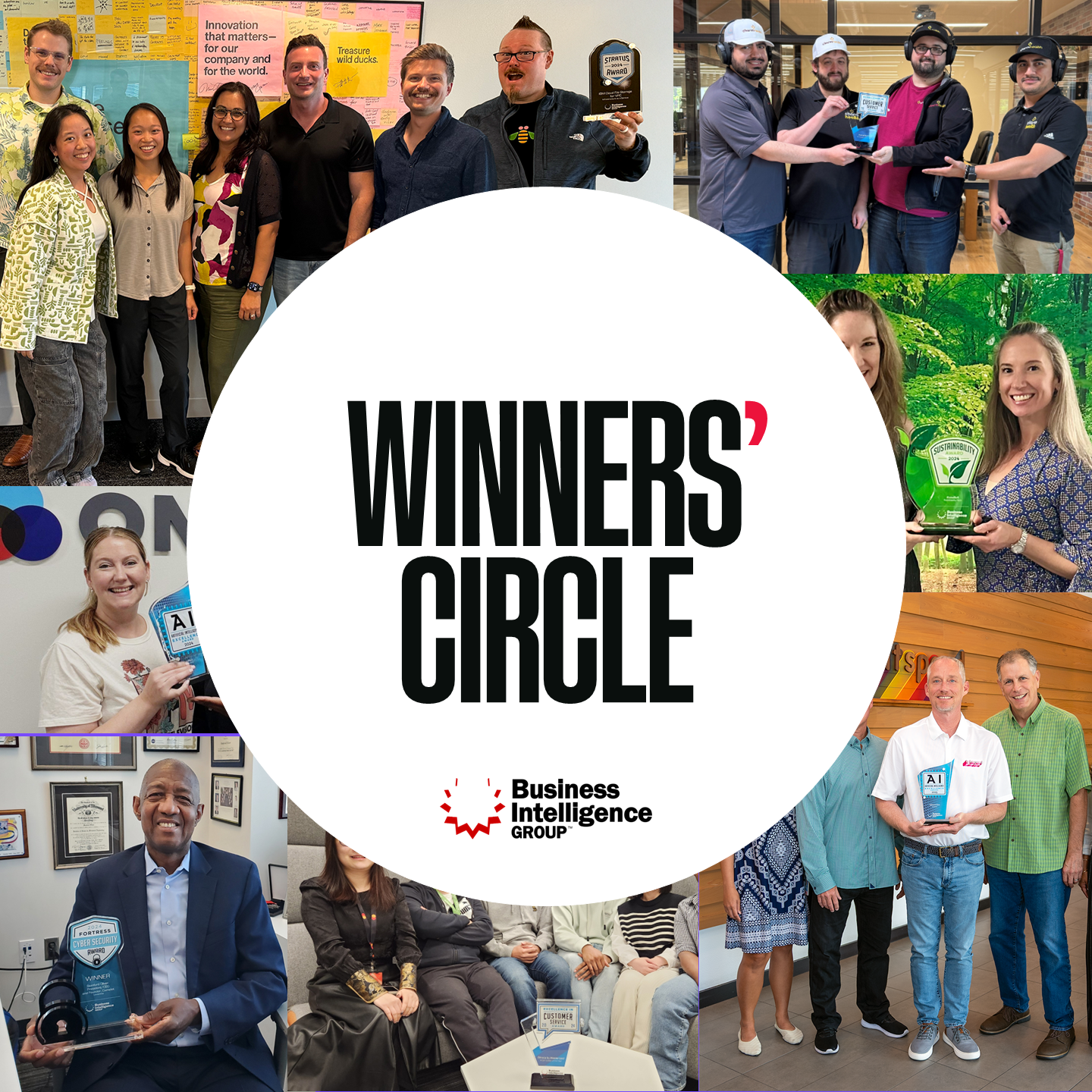
Winners’ Circle is where the spotlight shifts from the awards stage to the real conversations that keep the momentum going. It’s where past winners, volunteer judges, and the marketing and PR pros behind the scenes gather for frank, relevant business discussions that pull back the curtain on how recognition turns into results.We talk about the campaigns that worked, the leadership choices that mattered, and the strategies that kept a win from being a one-day headline. You’ll hear how cybersecurity innovators secure industry credibility, how customer service champions turn feedback into loyalty, how marketers and PR teams turn a press release into a pipeline, and how judges see the standouts from a mile away.This isn’t theory—it’s practical, in-the-trenches insight. Some episodes might feel like a quiet conversation in the hallway after a conference panel; others like a strategy session that’s just missing the whiteboard. And because our guests are the ones who’ve actually done it, yo
-
57
Battery-Integrated EV Charging with Alex Urist
Alex Urist is helping solve one of the biggest barriers to EV adoption: charging infrastructure that can scale without waiting years for grid upgrades. As co-founder of XCharge North America, he is leading the development of EV charging and energy storage solutions designed for the North American market. XCharge’s GridLink platform recently won a BIG Innovation Award for its battery-integrated DC fast charging technology.In this episode, Russ and Alex explore why EV charging is harder to deploy than many people expect. Alex explains how grid limitations, transformer delays, permitting, financing, and utility capacity can slow down new charging sites, especially when high-speed DC fast chargers require power that many locations do not already have.They dive into GridLink, XCharge’s battery-integrated, bi-directional DC fast charger. Alex explains how the system stores energy in an onboard battery, boosts output to vehicles, accepts solar power directly, and can even support buildings or the grid when needed. This approach can help reduce dependence on immediate utility upgrades while making more sites viable for fast charging.The conversation also covers the economics of EV charging, including utilization, demand charges, equipment costs, operational costs, and the importance of choosing the right real estate. Alex shares why fleets, hospitality sites, dealerships, travel centers, and commercial properties all represent major opportunities for battery-backed charging infrastructure.Along the way, Alex discusses solar integration, bidirectional energy, energy storage, fleet depot charging, the future of grid resiliency, and why EV charging stations may become part of a broader distributed energy network.Topics Covered:[00:00] Welcome and intro, Alex Urist and XCharge’s BIG Innovation Award win[00:40] XCharge’s background in EV charging and energy storage[01:55] Why charging availability affects EV adoption[02:31] Why grid limitations slow EV infrastructure deployment[04:19] What 480 three-phase power means in practical terms[05:20] Matching charging locations to real-world activity[07:31] EV charging speed and the smartphone charging comparison[08:19] Perceived charging availability and consumer confidence[10:08] Grid competition from AI data centers and other energy users[10:51] Where deployments break down: financing, permitting, and power availability[12:27] How battery-integrated charging works[12:48] AC, DC, and how fast chargers transfer power to vehicles[15:12] How integrated batteries can speed deployment timelines[16:03] Why financing is critical to EV infrastructure growth[18:13] Demand charges and how they affect charging economics[18:59] Modeling ROI for charging networks[20:36] Using solar and batteries to address grid capacity issues[21:27] GridLink’s ability to support buildings and return power to the grid[23:45] Benefits for property owners and commercial sites[24:07] What a 60 kilowatt solar array looks like in practice[25:05] Why direct solar integration improves charging efficiency[26:08] Efficiency loss from energy conversion[26:34] Fleet depot use cases and load balancing[28:56] Why utilities are becoming interested in battery-backed chargers[29:07] Charging stations as part of local energy infrastructure[31:42] How EV charging stations become part of the broader energy grid[33:44] What the next five years could look like for EV charging[35:35] Why real estate matters most in EV charging investments[36:15] Why gas stations are not always easy charging sites[37:37] Convenience stores, hotels, rentals, and dealerships as charging opportunities[39:03] Finding power availability and working with utilities
-
56
Augmented Intelligence for Healthcare Operations with Madan Moudgal
Madan Moudgal is helping healthcare organizations use AI to improve operations without removing the human judgment that sensitive clinical decisions require. As Chief Digital Officer at Sagility, he leads technology transformation for a healthcare operations company serving U.S. payers and providers. Sagility’s Nurse Assist solution recently won an AI Excellence Award for helping clinical teams review prior authorization cases faster and more accurately.In this episode, Russ and Madan explore why healthcare is one of the hardest industries to modernize with AI. Madan explains how legacy systems, strict regulation, data privacy requirements, and complex workflows make healthcare transformation different from other industries.They dive into prior authorization, one of healthcare’s most difficult and controversial processes. Madan explains why the process exists, how it helps address waste, fraud, and abuse, and why the challenge is balancing cost control with patient access to appropriate care.The conversation also covers why Sagility uses the term augmented intelligence instead of full automation. Madan explains that AI can summarize documents, extract relevant clinical details, compare information against guidelines, and provide recommendations, but nurses and clinical experts still need to make the final decision.Along the way, Madan discusses domain-specific AI models, clinical language models, guardrails, PHI protection, data curation, AI governance, change management, and why successful healthcare AI requires careful testing, incremental rollout, and trust-building over time.Topics Covered:[00:00] Welcome and intro, Madan Moudgal and Sagility’s AI Excellence Award win[00:32] Sagility’s background as a healthcare operations company[01:21] Why healthcare and payment systems are so complex[01:43] The challenge of adopting AI in a regulated healthcare environment[02:37] Lessons from implementing technology change in healthcare[02:47] Working around large legacy healthcare systems[03:45] Why prior authorization is such a difficult healthcare problem[03:57] Balancing waste reduction, cost control, and patient access to care[05:27] Why Sagility uses augmented intelligence instead of automation[05:40] Keeping humans in the loop for clinical decision-making[06:46] Where AI can help and where humans must remain accountable[09:14] Extracting and summarizing clinical data from case documents[10:27] Why Sagility focuses on domain-specific AI models[11:03] Building trust through clinical language models[12:01] Why accuracy is essential in healthcare AI[13:18] Guardrails for compliance, PHI, and regulatory requirements[14:37] Reducing review time and what that means for patients[15:35] Reviewing medical records, clinical guidelines, and recommendations[16:34] How Nurse Assist supports nurse reviewers[17:43] Early benefits from speed, efficiency, and lower costs[18:38] Integrating AI with legacy healthcare systems[18:56] Why data curation matters before AI can work effectively[20:24] AI governance and aligning with client policies[20:47] Change management in enterprise healthcare workflows[21:50] Balancing innovation and risk management in healthcare[22:42] Why healthcare AI rollouts cannot be rushed[24:44] Whether healthcare will ever become fully automated[25:06] Why healthcare is more likely to remain augmented than fully automated[27:44] Other healthcare areas ready for AI transformation[28:22] Automating simpler member and patient interactions[29:27] Virtual agents and consumer expectations in healthcare[30:50] Claims accuracy and payment integrity opportunities[32:04] What healthcare may look like in the next 30 years
-
55
Making AI Customer Support More Human with Asaf Goldstein
Asaf Goldstein is helping IT support teams use AI to create faster, more proactive, and more human customer experiences. As Senior Director of Global Customer Care at SysAid, he leads a global support organization using AI to identify trends, resolve issues faster, deflect routine tickets, and give agents better context before they ever speak with a customer.In this episode, Russ and Asaf explore how AI is changing customer care from a reactive cost center into a proactive driver of customer loyalty. Asaf explains why the future of support is not just automation, but the right balance between AI, human empathy, and expert problem solving.They dive into how SysAid uses AI across its support organization, including AI copilots, internal AI agents, sentiment analysis, ticket deflection, quality scoring, and proactive issue detection. Asaf shares examples of how AI helped his team identify critical issues, assemble engineering and DevOps teams quickly, and resolve customer problems before they escalated.The conversation also covers the risks of over-automation. Asaf explains why AI should solve simple questions, summarize context, and guide agents, but also know when to hand a customer to a human. He shares how SysAid reduced unhappy customer survey responses from around 40 per quarter to 5 by combining AI-enabled insights with personal follow-up from team leads.Along the way, Asaf discusses the rise of AI managers, the skills support agents need to stay relevant, why guardrails matter, and how companies can create customer service experiences that feel faster, smarter, and more personal.Topics Covered:[00:01] Welcome and intro, Asaf Goldstein and SysAid’s customer service award win[00:28] SysAid’s background in IT service management software[01:10] What is changing in AI-powered customer support[01:26] Moving support from reactive to proactive[02:33] Managing global customer care in an AI-driven environment[02:39] How AI helps identify trends before customers report issues[03:20] Using AI and Discord to detect critical customer issues[04:22] Why a great support experience can increase customer loyalty[04:57] Creating a “wow experience” in support[05:41] Where pressure to automate support comes from[05:57] How SysAid uses AI to resolve routine tickets[07:30] Why complex support still needs expert human agents[07:50] The risk of over-automating customer interactions[08:55] Defining the human layer in modern support organizations[09:26] Why personal touch still matters in technical support[10:18] When humans are still absolutely critical[10:30] Reducing unhappy customers through personal follow-up[13:00] Empathy as a core part of customer service[13:36] Where AI works well and where it falls short[15:38] Deciding what gets automated and what stays human[17:14] How AI changes the role of support agents[19:04] Skills that matter most for the future of customer care[20:38] The rise of AI managers inside support teams[21:13] How AI helps agents personalize customer interactions[22:27] How customer expectations will change as AI becomes common[23:27] Common mistakes when rolling out AI in support[23:47] Why AI answers need validation, formatting, and guardrails[25:23] Lessons from the shift from phone support to chat support[26:10] Metrics AI support managers should track[27:52] Principles for adding AI without losing the human experience[28:15] Guardrails, monitoring, and continuous improvement[29:43] Final thoughts on creating wow moments with AI and people
-
54
Powering Trust at Scale for Renters with Tim Ray
Tim Ray is helping apartment communities verify renters faster, more fairly, and with greater trust. As co-founder and CEO of Verifast, he leads an AI-powered verification platform built for the U.S. multifamily market, where property managers need to confirm identity, income, assets, and fraud risk at scale without relying only on traditional credit scores.In this episode, Russ and Tim explore why renter verification is becoming more complex as more people earn income through gig work, self-employment, side hustles, benefits, investments, and nontraditional financial paths. Tim explains why credit scores only show historical payment behavior, not a renter’s real-time ability to pay.They dive into how Verifast uses open banking, direct-source data, AI, biometrics, phone carrier checks, email history, document analysis, and behavioral signals to help determine whether someone is who they say they are, makes what they say they make, and has what they say they have.The conversation also covers the rise of sophisticated rental fraud, including fake IDs, synthetic identities, credit profile manipulation, fake documents, and organized fraud playbooks shared across social media. Tim explains why legacy systems often miss these risks and why property teams need purpose-built tools rather than asking leasing agents to act like private investigators.Along the way, Tim discusses explainability, renter trust, Trustpilot reviews, human-in-the-loop review, AI-assisted workflows, gig worker verification, and Verifast’s vision for portable renter trust that could help applicants avoid paying multiple application fees when they do not qualify for a specific property.Topics Covered:[00:00] Welcome and intro, Tim Ray and Verifast’s AI Excellence Award win[00:35] Tim’s founder background and Verifast’s focus on multifamily housing[01:00] Powering trust at scale for large apartment communities[02:11] Why nontraditional renters need better verification options[02:39] How Tim joined Verifast as an investor and late-stage co-founder[03:54] Scaling quickly with a lean team and limited capital[05:08] Why credit scores do not tell the full renter story[05:31] Propensity to pay versus ability to pay[07:13] Why some financially stable renters are invisible to traditional screening[07:54] Modern rental fraud and how fraudsters exploit apartment screening[09:03] CPNs, synthetic identities, and social media fraud playbooks[09:46] Why legacy property management systems miss these risks[11:36] Why deposits and debits both matter in income verification[11:46] Detecting cash cycling and fake income patterns[13:34] Verifying renters with assets or investment income instead of W-2 income[14:17] Biometrics, fake IDs, phone carrier checks, and email history[15:51] Layering documents, bank data, criminal records, and identity signals[17:13] Building explainability and transparency into renter verification[17:42] Using Trustpilot reviews as a quantitative trust signal[19:50] Why human-in-the-loop review matters for housing decisions[20:18] Why every renter matters when application fees and housing are on the line[21:58] How years of real-world data strengthen Verifast’s models[23:34] How Verifast changes the property manager workflow[25:41] Assessing gig workers, contractors, and side-hustle income[26:16] Grouping income sources and showing the math behind approvals[28:08] How Verifast speeds up verification compared with manual review[29:34] Portable renter trust and reusing verified applicant data[31:07] Helping renters find properties where they actually qualify[31:29] Tim’s advice on earning trust as an entrepreneur[32:42] Final thoughts on reputation, accountability, and trust at scale
-
53
Building a Private AI Brain for Procurement with Shannon Copeland
Shannon Copeland is helping companies find hidden savings, reduce procurement complexity, and make better decisions across supply chain and spend management. As CEO of SIB, he leads a company with 35 years of experience helping clients negotiate with vendors, improve competitiveness, and manage procurement across dozens of spend categories. Now, with SpendBrain, SIB is bringing AI into the procure to pay process in a way that prioritizes privacy, accuracy, and human expertise.In this episode, Russ and Shannon explore how procurement has changed from traditional cost reduction work into a more intelligent, data driven discipline. Shannon explains why simply asking vendors for discounts is not enough, and why true procurement expertise requires understanding vendor language, pricing models, service bundles, operational needs, and industry context.They dive into SpendBrain, SIB’s AI platform that creates a private semantic ontology for each client. Shannon explains why the platform is not built around a traditional LLM model, how each client gets its own private brain, and why SIB does not harvest or learn from client pricing data.The conversation also covers how SpendBrain works with messy, federated data across contracts, invoices, systems, and departments. Shannon shares how the platform can identify errors, surface savings opportunities, support forecasting, and help clients move from reactive analysis to proactive cost intelligence.Along the way, Shannon discusses handcrafted AI, human in the loop learning, why procurement experts remain essential, and how CFOs and supply chain leaders can start uncovering cost leakage by following their own intuition about where problems may be hiding.Topics Covered:[00:02] Welcome and intro, Shannon Copeland and SIB’s AI Excellence Award win[00:35] SIB’s 35 year history in procurement and cost reduction[01:00] What procure to pay means in practical terms[02:10] Why procurement often feels like buying tires without knowing the best deal[02:42] Why vendor negotiations require category expertise[04:23] Avoiding disruption while improving vendor relationships[05:30] How procurement work helps clients clarify needs and reduce overspending[07:44] Introducing SpendBrain and SIB’s AI transformation[08:02] Why traditional benchmarking databases are no longer enough[10:22] Building private semantic ontologies for each client[12:37] Why regulated industries need private, accurate AI systems[14:54] Working with messy data across contracts, invoices, and systems[15:37] Pulling data from existing systems without replacing them[16:21] Handcrafted AI and the role of humans in the loop[17:31] What CFOs see when SpendBrain analyzes spend data[18:05] Moving from periodic audits to real time spend intelligence[20:48] Detecting invoice errors and billing issues[21:31] Why roughly 40% of invoices contain some type of error[23:03] Data ownership, explainability, and traceability[23:32] Why clients own both their raw data and their private brain[25:52] Surfacing hidden savings in overlooked spend categories[26:19] Finding major savings in waste and recycling spend[28:28] How SpendBrain can deliver strong ROI for clients[29:39] Deciding what AI handles versus what humans validate[30:00] Reducing mundane work so teams can focus on strategy[33:33] What cost intelligence may look like five years from now[35:52] AI as an accelerator for human expertise[37:25] First steps for CFOs who suspect cost leakage[39:11] Why some organizations still struggle to get answers from AI tools[40:06] Final thoughts on pragmatic, low cost, accurate AI for procurement
-
52
Stopping Car Theft Before It Starts with Marcel Stellaard, Stephán Kemp, and Barton Harris
Marcel Stellaard, Stephán Kemp, and Barton Harris are helping rethink vehicle security by shifting the focus from tracking stolen cars to preventing theft before a vehicle ever moves. As leaders with Titan Secure, they are bringing an anti-theft platform built in South Africa to global markets, including the United States, where vehicle theft, insurance costs, and recovery challenges continue to create major problems for consumers, dealers, fleets, insurers, and law enforcement.In this episode, Russ speaks with the Titan Secure team about why traditional GPS tracking is not enough. Marcel explains how the company was built around a simple idea: if you have to go looking for a stolen vehicle, the battle is already lost. Instead, Titan Secure uses a multi-layered approach that integrates with vehicle systems to immobilize key functions and help owners find their vehicle where they parked it.Stephán shares how the product began as a mechanical engine lock before evolving into an electronic and software-enabled hardware platform. He also discusses Titan Secure’s proactive approach to theft prevention and the company’s reported 100% success rate in preventing vehicle losses.The conversation also explores how organized vehicle theft has become a global enterprise, with stolen vehicles and parts moving through sophisticated networks. Barton explains the U.S. market opportunity, the challenge of changing consumer expectations, and why dealers, insurers, and law enforcement are looking for anti-theft solutions instead of recovery tools.Along the way, the team discusses OEM collaboration, EV security, insurance implications, bait car programs, telematics, tamper alerts, and how Titan Secure stays ahead of fast-changing theft tactics through continuous product improvement.Topics Covered:[00:01] Welcome and intro, Titan Secure’s BIG Innovation Award win[00:44] Titan Secure’s origins in South Africa and the vehicle theft problem[02:14] How the product began with a mechanical engine lock[03:29] Moving from hardware lock to software-enabled vehicle security[03:49] Why prevention matters more than tracking after theft[05:42] How traditional tracking tools often serve insurers more than consumers[06:30] Why vehicle damage usually starts once the wheels move[07:19] Organized vehicle theft, parts trade, and global syndicates[07:54] Working with OEMs without becoming just another tracking device[09:19] Why theft methods change quickly and require constant innovation[10:02] Titan Secure’s reported 100% success rate[10:52] Go-to-market strategy in South Africa and global expansion[12:43] Entering the U.S. market and changing consumer expectations[14:16] Why dealers need stronger value propositions than traditional add-ons[15:44] The bait car program in New Mexico and law enforcement impact[17:12] The real consumer cost of vehicle theft and insurance claims[19:14] Why recovery is stressful for consumers and difficult for law enforcement[20:37] How auto theft can fuel broader community crime[21:36] Vehicle security for EVs, motorcycles, trucks, and heavy equipment[23:50] Insurance premium implications and theft risk reduction[25:23] Why Titan Secure’s installation approach differs from GPS trackers[27:57] Staying ahead of key spoofing, jammers, and changing theft tactics[28:18] Continuous improvement and new product development[30:27] Australia, global theft trends, and expanding market demand[31:16] Future product focus, telematics, modular security, and tamper alerts[32:54] Final thoughts on consumer education and global adoption
-
51
Simplifying Estate Settlement with AI with Dan Stickel
Dan Stickel is helping families navigate one of life’s most stressful and unavoidable responsibilities: settling an estate after someone dies. As CEO of EstateExec, he is leading an online software platform that gives executors step-by-step guidance, accounting tools, jurisdiction-specific tasks, and AI-supported help to make the estate settlement process more organized, understandable, and affordable.In this episode, Russ and Dan explore why estate settlement is so confusing for most people, especially when they are already dealing with grief. Dan explains how even highly capable people can feel overwhelmed by probate, legal requirements, asset tracking, creditor notices, tax filings, accounting reports, and family communication.They dive into how EstateExec helps executors understand what to do, when to do it, and how to keep everything organized. Dan shares how the platform customizes tasks based on state, jurisdiction, estate details, real property, wills, probate needs, and other variables that can dramatically change the process.The conversation also covers how EstateExec uses AI in practical ways, including its AI assistant Lenore, will analysis, heir and bequest extraction, task guidance, transaction categorization, and support for estate accounting. Dan explains why AI is helpful as a backstop, but why human-generated source content, legal accuracy, and transparent links back to underlying guidance remain essential.Along the way, Dan discusses common executor mistakes, the high cost of traditional probate support, the differences between U.S. and Canadian estate rules, and why clear communication can help prevent family conflict during a long and emotional process.Topics Covered:[00:00] Welcome and intro, Dan Stickel and EstateExec[00:29] What EstateExec does for estate executors[01:08] Why estate settlement has remained difficult for centuries[01:37] Dan’s personal experience settling his parents’ estates[02:18] How AI opened new possibilities for EstateExec[03:16] Using AI to unlock estate settlement guidance and documentation[05:42] What estate settlement looks like without software[06:03] Why the average estate can take around a year and a half[07:01] Key executor responsibilities after someone dies[08:05] Why hiring a probate attorney does not remove all the work[09:54] The four main ways people settle estates today[12:08] Common mistakes executors make during grief and confusion[14:41] How EstateExec moves beyond answering questions to managing the process[14:50] Lenore, EstateExec’s AI assistant[15:20] Customized task lists based on state, estate details, and probate needs[16:40] Using AI to analyze wills and extract heirs, executors, bequests, and assets[17:56] AI support for estate transactions and accounting categories[19:23] Managing different estate laws across states and provinces[21:33] Reducing hallucination risk by grounding AI in human-generated content[22:48] Expanding EstateExec into Canada[23:00] U.S. step up in cost basis versus Canadian deemed disposition[25:02] Typical time and cost involved in settling an estate[27:40] Why executors should not lose their own lives inside the process[29:19] Keeping heirs informed and reducing family conflict[29:39] How EstateExec can reduce legal fees and professional costs[32:41] User feedback and EstateExec’s Trustpilot rating[33:59] Helping non-lawyers and non-accountants understand the process[35:34] What surprised Dan about how people use the platform[37:05] Final thoughts on simplifying estate settlement for families
-
50
Embedded Lending for Small Business with Bill Verhelle
Bill Verhelle is helping small businesses access equipment financing faster, easier, and with less friction. As CEO of QuickFi, he is leading a company that won a 2026 BIG Innovation Award for its embedded lending platform, which allows small business borrowers to self-serve equipment leases and loans directly from a mobile device.In this episode, Russ and Bill explore how QuickFi is changing the traditional equipment finance model by placing financing directly at the point of sale. Bill explains why small businesses have lost direct access to many traditional banking relationships, how intermediaries add cost and complexity, and why embedded financing can create a better experience for borrowers, equipment sellers, manufacturers, and banks.They dive into how the QuickFi platform lets a business owner apply for financing, select loan or lease terms, sign documents, and complete the transaction from a mobile device. Bill shares how the system supports the full customer lifecycle, from initial credit application through servicing, buyouts, repeat purchases, insurance tracking, and long-term manufacturer relationships.The conversation also covers how QuickFi is using AI agents in practical, operational ways, including automating insurance certificate tracking, reading and drafting emails, contacting insurance companies, and reducing manual workflows across the lending process.Along the way, Bill discusses why banks have struggled to serve small businesses efficiently, how OEMs can use embedded financing to improve sales and customer loyalty, and why scalable digital platforms may help bring lower-cost capital back to the small business market.Topics Covered:[00:01] Welcome and intro, Bill Verhelle and QuickFi’s BIG Innovation Award win[00:39] QuickFi’s background and shift from traditional finance to a digital platform[01:30] Why small businesses struggle to access capital[01:53] How a small business borrower uses QuickFi to finance equipment[03:52] What embedded lending means in practical terms[04:03] Bringing financing directly to the point of sale[05:27] Why reducing friction matters for small business purchases[06:34] Servicing, buyouts, repeat purchases, and customer lifecycle support[07:44] How customers and manufacturers are responding to the platform[09:31] How recognition helped create market awareness[10:04] Using AI across the lending lifecycle[11:05] AI agents for onboarding, servicing, collections, and insurance workflows[12:46] Practical AI adoption versus surface-level AI tools[13:51] Why small and medium-sized businesses remain underserved by banks[14:50] How cost keeps banks from serving smaller loans efficiently[16:44] Lessons from Stripe and missed technology opportunities in banking[18:52] How OEMs rethink sales when financing is embedded[21:03] Expanding into new countries, languages, regulations, and currencies[23:01] Why end-to-end customer lifecycle control creates flexibility[23:29] Why bank adoption may be the next major growth milestone[24:32] Final thoughts on embedded finance and small business access to capital
-
49
Defensible AI for eDiscovery with Aaron Pribil and Todd Haley
Aaron Pribil and Todd Haley are helping legal teams, corporations, and government clients bring AI into one of the most sensitive business environments: e-discovery. As leaders at HaystackID, they are working at the intersection of legal data, governance, security, and artificial intelligence to help organizations manage massive volumes of information without sacrificing defensibility, accuracy, or control.In this episode, Russ, Aaron, and Todd explore how AI is changing the way legal teams review, classify, and understand complex data. Todd explains why AI in legal environments cannot be treated like a general purpose chatbot, and how closed, secure systems help reduce risk when working with court documents, financial records, health records, and other sensitive information.They dive into HaystackID’s CoreFlex platform, described as a command and control system that gives clients a front door into services, data, matters, users, and AI powered workflows. Aaron shares why the intake process matters so much, how HaystackID guides clients before data ever reaches an AI model, and why expert consultation is essential for better results.The conversation also covers validation, hallucination concerns, human in the loop workflows, and the role of HaystackID’s Legal Data Intelligence team. Todd and Aaron explain why governance and quality must come before speed, especially in regulated industries where errors can create legal, financial, and reputational risk.Along the way, they discuss the ROI of AI in e-discovery, including time savings, cost reduction, better case strategy, and improved risk management. They also offer practical advice for organizations building AI initiatives, including why companies should focus on a small number of high impact use cases before scaling more broadly.Topics Covered:[00:01] Welcome and intro, Aaron Pribil and Todd Haley of HaystackID[00:32] HaystackID’s background as a data services and products company[01:26] Why legal and government clients worry about AI validation[02:58] Handling sensitive data in e-discovery environments[03:42] Why closed AI systems differ from open AI tools[05:57] What CoreFlex means as a command and control system[07:12] Why the intake process improves AI quality[09:09] Why governance and quality come before speed[11:11] The role of HaystackID’s Legal Data Intelligence team[12:28] How consultative AI workflows save time and money[13:16] Addressing the black box problem in AI[14:51] Reducing legal review timelines with AI[16:34] Measuring ROI through time, cost, and risk reduction[17:54] Why legal teams are adopting AI faster than expected[20:23] Whether companies are approaching AI the right way[21:39] The shift toward structured, purpose built AI systems[23:42] How CoreFlex supports defensibility and compliance[24:45] Lessons for organizations building AI platforms[26:52] What is next for HaystackID and AI driven legal workflows
-
48
Scaling Global Content with AI with Simon Hodgkins
Simon Hodgkins is helping global brands solve one of the fastest growing business challenges of the AI era: how to create content at scale that still feels local, trusted, and accurate. As Chief Marketing Officer of Vistatec, he is leading a company that has spent nearly 30 years helping the world’s largest organizations translate, localize, and optimize content across languages, cultures, and markets.In this episode, Russ and Simon explore how the explosion of AI generated content has created both massive opportunity and new complexity for enterprises trying to grow globally. Simon explains why faster content creation alone is not enough, and how poor localization, inconsistent outputs, and weak governance can quickly damage trust, compliance, and brand reputation.They dive into how Vistatec combines AI with human expertise to help companies manage written content, video, audio, and multilingual customer experiences at enterprise scale. Simon shares how tools like AI dubbing, output verification, and workflow orchestration are helping brands expand into new markets faster while maintaining quality and control.The conversation also covers why many AI models still struggle outside major languages, the importance of in market linguistic experts, and how companies can avoid common mistakes when scaling customer facing content internationally.Along the way, Simon offers practical advice for leaders navigating global expansion, why collaboration with trusted AI integrators matters, and what the future of content transformation looks like as businesses move beyond translation into truly localized growth.Topics Covered:[00:01] Welcome and intro, Simon Hodgkins and Vistatec’s AI award win[00:33] Vistatec’s 30 year evolution from translation to global content solutions[02:01] The global content explosion in the AI era[03:15] Why AI adds both speed and new risk for brands[04:09] How translation used to be slow, expensive, and uncertain[05:08] Why trust, governance, and verification now matter more than ever[07:38] How Vistatec AI differs from traditional translation vendors[08:20] AI dubbing and multilingual voice content at scale[09:02] Verifying AI outputs for tone, style, and precision[10:12] Using AI to orchestrate humans and machines together[11:44] Moving from translation to content transformation[13:56] Protecting brand voice across dozens of languages[16:34] Managing compliance in regulated industries at scale[19:49] Why Vistatec sees AI as a growth enabler[20:33] How AI changes workflows for enterprise customers[23:27] Unlocking new markets through localization[27:20] Common mistakes companies make with AI content[30:27] Advice for leaders scaling global content strategies[32:28] Why language remains one of business’s biggest barriers
-
47
Fixing Small Business Lending with AI with Lukas Haffer
Lukas Haffer is helping solve one of the biggest problems facing small businesses: access to affordable capital. As founder and CEO of Casca, he is modernizing the outdated lending systems used by banks so small business owners can get loans faster, easier, and at dramatically lower costs.In this episode, Russ and Lukas explore why millions of small businesses still face a broken lending process. Traditional banks offer the best rates, but applications can take months and require endless paperwork. Meanwhile, predatory online lenders promise fast cash while charging crippling interest rates that can exceed 100 percent APR.They dive into how Casca helps banks compete by replacing manual workflows with AI powered software that streamlines everything from online applications to underwriting preparation. Lukas explains how their platform reads financial documents, organizes messy data, and helps bankers make faster, more informed decisions while keeping humans fully in the loop.Along the way, he shares the personal story that inspired the company, growing up in Germany during the financial crisis and seeing firsthand how financial systems impact families and communities. He also breaks down why community banks are uniquely positioned to help local businesses thrive if they have the right technology.The conversation also covers the future of AI in financial services, how smaller banks can modernize customer experience, and why empowering entrepreneurs may be one of the most important economic opportunities in America today.Topics Covered:[00:01] Welcome and intro, Lukas Haffer and Casca’s innovation award win[00:43] Casca’s mission to help banks lend faster to small businesses[02:00] Why traditional lending is too slow for many entrepreneurs[03:01] The dangers of predatory online loans and triple digit APRs[04:32] Why community banks need modern lending technology[05:28] The economic importance of small businesses in America[07:22] Lukas’ personal story and the origins of Casca[10:33] Early traction with community bank customers[11:40] Using AI to improve loan application completion rates[13:10] Raising conversions from under 10 percent to over 80 percent[15:40] Why underwriting is the true bottleneck in lending[16:31] Reading tax returns and financials with AI[18:52] Keeping humans in the loop for explainable decisions[20:36] Reducing loan timelines from months to weeks[22:31] Partnerships with top SBA lenders in the country[24:16] How quickly banks can implement modern software[25:36] The future of AI powered lending workflows[28:16] Where smaller banks most need to improve customer experience[29:14] Why modernizing legacy institutions mattersAbout The Winners Circle:The Winners Circle is hosted by Russ Fordyce, CEO and founder of Business Intelligence Group. Each episode features leaders and innovators recognized through BIG’s annual award programs across AI, innovation, sustainability, cybersecurity, and more. Subscribe wherever you get your podcasts. Nominate your company or team for a BIG award: https://www.bintelligence.com/
-
46
Driving Sustainable Innovation in Coatings with Dr Robert Roop
Dr Robert Roop is leading innovation in one of the most overlooked but essential industries in the world. As Chief Technology Officer at Axalta, he and his team are redefining what coatings can do, from improving durability and performance to enabling the next generation of electric vehicles, data centers, and sustainable manufacturing.In this episode, Russ and Robert explore how coatings go far beyond paint, playing a critical role in protecting surfaces, extending product life, and improving efficiency across industries. Robert explains how Axalta combines chemistry, material science, and customer insight to develop high performance solutions that meet evolving demands without compromising on sustainability.They dive into the company’s “no compromise” approach to sustainability, where performance and environmental impact improve together, not at the expense of one another. Robert shares how innovations like waterborne coatings, lower energy curing, and reduced material usage are helping customers cut emissions, lower costs, and improve outcomes simultaneously.The conversation also explores the growing role of coatings in electrification and AI driven infrastructure. From improving battery safety and thermal management in EVs to enabling more efficient data centers, coatings are becoming a critical layer in modern technology systems. Robert also breaks down how AI is accelerating innovation internally, helping teams move faster, solve problems globally, and scale solutions across markets.Along the way, he shares how Axalta maintains a culture of cross functional innovation, how the company evaluates long term bets around megatrends like electrification, and what it takes to consistently deliver real world, commercialized innovation at scale.Topics Covered:[00:01] Welcome and intro, Robert Roop and Axalta’s innovation award wins[00:31] Overview of Axalta and the coatings industry[01:49] Why coatings are more complex than paint[03:06] Customer driven innovation and solving real world problems[04:33] Managing diverse markets from automotive to industrial[06:07] What “no compromise” sustainability means in practice[07:45] Balancing performance, cost, and environmental impact[09:30] Energy efficiency and emissions reduction through coatings[10:44] Advances in material science and polymer chemistry[12:07] Real world examples of sustainability driving performance[13:18] The role of coatings in electric vehicles[15:28] Data centers, AI infrastructure, and thermal management[16:47] Safety considerations in high performance systems[18:16] Coatings in renewable energy and power systems[19:40] Building a culture of cross functional innovation[21:39] Delivering real world, commercialized innovation[22:10] Balancing short term and long term R&D investments[23:23] How AI is accelerating product development[25:00] The impact of robotics and automation on coatings[25:21] Identifying megatrends and preparing for the future
-
45
Leading People, Not Managing Them with Lori Tompos
Lori Tompos is on a mission to transform how leaders show up, communicate, and bring out the best in their teams. As founder of Avail Consulting and a Horizon Award winner, she draws on experience from West Point, Desert Storm, and the corporate world to challenge one of the most ingrained habits in business: managing people instead of leading them.In this episode, Russ and Lori explore why so many organizations still struggle with ineffective leadership despite decades of books and training. Lori explains how most professionals are never truly taught how to lead, and how that gap leads to micromanagement, low trust, and high turnover.They dive into Lori’s core philosophy, lead people, manage projects, and what that actually looks like in practice. From building trust and psychological safety to asking better questions and tailoring leadership to individuals, Lori shares a fundamentally different approach rooted in empathy, accountability, and real human connection.Along the way, she reflects on her experience as one of the first women in combat during Desert Storm, how preparation and confidence shaped her leadership style, and what today’s leaders can learn from high stakes environments where trust and clarity are non negotiable. Lori also breaks down why people leave managers, not jobs, how AI is reshaping the workplace, and why high human skills like empathy, critical thinking, and communication matter more than ever.Topics Covered:[00:01] Welcome and intro, Lori Tompos and Horizon Award recognition[00:46] Lori’s background from West Point to corporate leadership[02:15] Why leadership training is still missing in most organizations[02:55] The universal truth: no one likes to be micromanaged[03:32] “Lead people, manage projects” explained[05:52] Leadership lessons from Desert Storm and real world stakes[09:01] Building confidence through preparation and expertise[10:40] Transitioning into corporate and leadership gaps[12:50] Lessons for navigating uncertainty and AI disruption[14:51] Why companies default to managing instead of leading[15:40] Psychological safety and why people leave managers[18:08] The mindset shift required for real leadership[20:45] Recognizing and investing in people[23:42] Growth mindset and learning from failure[24:25] Leadership in a post COVID and AI driven world[25:59] Crucial conversations and giving effective feedback[27:26] Why leaders think they are approachable when they are not[29:37] Reading culture and leadership signals in organizations[31:50] Progress and perspective on women in leadership[33:17] What younger generations understand about leadership[34:39] Advice for building leadership skills in the future
-
44
Democratizing Great Business Communication with AI with Vikram Venugopal
Vikram Venugopal is transforming how life sciences companies communicate by turning one of the most persistent business challenges into a competitive advantage. As the leader behind Prezent, he is helping organizations move beyond cluttered, ineffective presentations to clear, audience driven storytelling powered by AI.In this episode, Russ and Vikram explore why business communication, especially presentations, is so consistently broken despite being central to decision making. Vikram explains how most professionals are never trained to translate complex ideas into compelling narratives, and how that gap slows decisions, creates confusion, and ultimately delays impact in high stakes industries like healthcare.They dive into how Prezent’s AI powered platform flips the traditional workflow by starting with audience context, building “fingerprints” for how individuals consume information, and generating tailored presentations that resonate with decision makers. Vikram also breaks down how their purpose built AI goes beyond generic outputs to handle highly technical content like clinical data, while still simplifying it into clear, actionable stories.Along the way, they discuss the balance between automation and creativity, the role of human expertise in shaping narratives, and how better communication directly accelerates decision making and business outcomes. Vikram also shares insights on scaling communication quality across large organizations, the rise of AI assisted storytelling, and what it takes for teams to consistently deliver high impact presentations.Topics Covered:[00:01] Welcome and intro, Vikram Venugopal and Prezent’s award win[00:38] What Prezent does and its focus on life sciences communication[01:24] Why business communication and presentations are fundamentally broken[03:48] The biggest mistakes people make when building presentations[05:26] How communication quality impacts decision making speed[07:46] Moving from slide hunting to AI powered presentation creation[08:22] Building audience “fingerprints” to tailor communication[10:31] Adapting presentations for different stakeholders and roles[11:44] Using enterprise knowledge to improve storytelling[13:35] Why generic AI fails and the need for purpose built models[14:50] Where AI helps most and where humans still matter[16:42] Balancing automation with creativity and emotional storytelling[17:30] Measuring impact beyond time savings and cost reduction[18:50] Standardizing communication while preserving individual style[20:16] Helping presenters deliver stories effectively, not just build slides[21:59] The future of AI assisted business communication[23:34] Raising expectations and leveling the playing field with AI[24:50] Advice for leaders improving team communication[26:44] The biggest opportunity companies still overlook[28:59] The roadmap toward an AI powered communication agency
-
43
Breaking Language Barriers with AI with Steve Rotter
Steve Rotter is helping global organizations turn language from a bottleneck into a competitive advantage by treating translation as core infrastructure, not a side task. As Chief Marketing Officer at DeepL, he focuses on specialized AI models that deliver near human translation quality at scale, supporting everything from contracts and healthcare information to e commerce catalogs and live conversations.In this episode, Russ and Steve dig into why general purpose AI models struggle with nuance and context, and why DeepL has doubled down on domain specific models trained on years of proprietary data across more than 100 languages. Steve explains how this specialization leads professional translators to prefer DeepL in blind tests and why that matters when mistranslations can damage brands, misinform patients, or distort news.They explore how DeepL fits into real workflows, from quick “two box” translations and drag and drop document conversion to API integrations that keep products like Notion and large e commerce sites up to date in many languages in near real time. Steve shares how this turns months of manual work into a continuous, automated process that opens new markets faster and makes “borderless” business more realistic than ever.Russ and Steve also discuss trust, accuracy, and human in the loop review. Steve outlines DeepL’s layered approach, where low risk content is fully automated, higher stakes material is routed for targeted checks, and short, high impact assets like ad copy still rely on specialists. They then turn to DeepL Voice, real time multilingual meetings, and why latency and comprehension are just as critical as raw accuracy when people are trying to follow a live conversation.Topics Covered:[00:01] Welcome, intro, and DeepL’s AI award recognition[00:30] Steve’s background and why he joined an AI language company[01:02] Why language is a fundamental marketing and business challenge[01:40] Specialized language models versus general purpose LLMs[02:26] Blind tests and when translation quality becomes mission critical[03:26] Capturing nuance and context across 100+ languages[12:23] How customers use DeepL: text, documents, and APIs[13:46] Examples from Notion and large e commerce brands[15:39] Time to market and simultaneous multilingual launches[21:59] Human in the loop tiers from low risk to premium content[27:16] Borderless business and DeepL Voice in real time communicationAbout The Winners Circle:The Winners Circle is hosted by Russ Fordyce, CEO and founder of Business Intelligence Group. Each episode features leaders and innovators recognized through BIG’s annual award programs across AI, innovation, sustainability, cybersecurity, and more. Subscribe wherever you get your podcasts. Nominate your company or team for a BIG award: https://www.bintelligence.com/
-
42
AI Negotiation Intelligence: How Infinity Loop Redefines Procurement ROI
Nithin Mummaneni is rethinking how enterprises negotiate high stakes contracts by turning years of procurement consulting experience into an AI powered “negotiation intelligence” platform. As cofounder and CEO of Infinity Loop, he is helping large organizations finally answer a deceptively simple question at scale: did we get a good deal or not, and how do we do better next time.In this episode, Russ and Nithin walk through how procurement and contract negotiation work today, with teams manually reading contracts, benchmarking market rates, and preparing RFPs across hundreds of millions or even billions of dollars in third party spend. Nithin explains how Infinity Loop ingests contracts, amendments, and rate sheets, then uses machine learning and macro data to score each deal like a report card, highlight where companies are overpaying, and recommend specific negotiation strategies to improve both price and risk.They dig into why Infinity Loop stops short of letting bots negotiate million dollar plus deals and instead focuses on augmenting human negotiators. Nithin shares how automating the prep and analysis can free procurement managers to handle two to three times more deals, avoid expensive consulting engagements, and design better protections into contracts, such as index based pricing or caps that could have softened shocks like the tenfold spike in ocean freight costs during COVID.Russ and Nithin also explore the trust and change management required to introduce AI into a sensitive, bottom line critical domain. Nithin explains how Infinity Loop acts as a middleware intelligence layer integrated with tools like Coupa, SAP, Oracle, DocuSign, and Ironclad without touching redlining or existing workflows, and how transparent pilots and clear ROI help win over both security teams and procurement staff who may initially fear that automation threatens their roles.Along the way, Nithin shares lessons from building a lean, fast moving team in a space dominated by large incumbents, including why speed of iteration and deep domain expertise matter more than trying to automate everything. He outlines Infinity Loop’s roadmap to expand across more industries and categories, and why he believes negotiation intelligence is one of the most underexploited frontiers for AI driven margin improvement.Topics Covered:[00:01] Welcome, Infinity Loop intro, and AI Excellence Award recognition[01:15] Turning “did we get a good deal” into a data problem[02:03] How enterprise procurement and contract negotiations work today[02:51] Why prep and benchmarking consume most procurement time[04:14] Integrating with RFP, P2P, and legal systems as an intelligence layer[06:47] How Infinity Loop scores contracts and surfaces savings opportunities[09:04] Improving outcomes beyond price with better contract risk design[11:41] How AI changes the role and impact of procurement teams[12:10] Democratizing consulting grade expertise through software[13:01] Building trust: security, data protection, and enterprise diligence[15:03] Competing as a lean, fast moving team in an entrenched space[16:02] From concept to enterprise deployment and proving ROI[17:22] Why negotiation intelligence is a largely untapped AI frontier[20:07] Roadmap and expanding across more industries and categoriesAbout The Winners Circle:The Winners Circle is hosted by Russ Fordyce, CEO and founder of Business Intelligence Group. Each episode features leaders and innovators recognized through BIG’s annual award programs across AI, innovation, sustainability, cybersecurity, and more. Subscribe wherever you get your podcasts. Nominate your company or team for a BIG award: https://www.bintelligence.com/
-
41
Reinventing Pharma Commercialization with AI with Faruk Capan
Faruk Capan is rethinking how pharmaceutical companies bring products to market by rebuilding the entire commercialization model around AI. As Chief Innovation Officer at Eversana, he is leading the development of an AI powered platform that replaces slow, manual, and highly regulated workflows with a faster, more scalable system driven by intelligent agents and human expertise.In this episode, Russ and Faruk explore why traditional pharma marketing and commercialization can take months to execute and how Eversana’s AI agency model is cutting that timeline down dramatically. Faruk explains why simply adding AI tools to existing workflows is not enough, and why his team took a startup approach to rebuild processes from the ground up with an 80 percent AI and 20 percent human model.They also dive into how the platform orchestrates the entire lifecycle from strategy and content creation to compliance and activation across channels, while maintaining strict regulatory standards. Faruk shares how partnering with Google enables enterprise grade security and scalability, why explainability and trust are critical in healthcare, and how AI is unlocking true personalization in an industry that has historically struggled to deliver it.Along the way, he discusses the real business impact including faster speed to market, reduced costs, and fewer people required per project, as well as the organizational challenges of driving AI transformation at scale. Faruk also offers practical advice for leaders on where to start, why pilots often fail, and how to balance innovation with real business accountability.Topics Covered:[00:01] Welcome and intro, Faruk Capan and Eversana’s AI award win[00:44] The role of commercialization in pharma and why it is so complex[02:03] Compliance challenges and why traditional workflows take months[03:45] Why AI requires rethinking the business, not just adding tools[04:25] Taking a startup approach to rebuild workflows from scratch[05:56] The 80 percent AI and 20 percent human in the loop model[08:25] Building an end to end AI platform from strategy to execution[10:01] Orchestrating campaigns across channels with AI agents[11:57] Partnering with Google for security, scale, and compliance[14:25] Explainability and avoiding black box AI in healthcare[15:47] Measurable impact including speed, cost savings, and efficiency[17:14] Unlocking true personalization in pharma marketing[17:58] AI generated doctor avatars and patient acceptance[20:04] Balancing automation with human trust in healthcare[21:04] Driving organizational change and leadership buy in[23:26] Why hands on AI adoption matters more than theory[24:16] Prioritizing innovation with real business accountability[26:11] Advice for leaders on AI strategy and avoiding pilot traps[28:43] Scaling the platform and iterating at startup speedAbout The Winners Circle:The Winners Circle is hosted by Russ Fordyce, CEO and founder of Business Intelligence Group. Each episode features leaders and innovators recognized through BIG’s annual award programs across AI, innovation, sustainability, cybersecurity, and more. Subscribe wherever you get your podcasts.Nominate your company or team for a BIG award: https://www.bintelligence.com
-
40
Driving Semiconductor Innovation and Yield at Scale with Jim Straus, ACM Research
Jim Straus is helping power the next wave of semiconductor innovation by improving one of the most critical and overlooked parts of chip manufacturing: the process. As Head of Sales and Service at ACM Research, Jim works with leading chipmakers around the world to increase yield, reduce waste, and unlock more production from every wafer through advanced wet cleaning and electroplating technologies.In this episode, Russ and Jim explore how ACM Research fits into the global semiconductor ecosystem, not by building chips themselves, but by designing the highly complex equipment and processes that make modern chip production possible. Jim explains how their technology integrates mechanical, chemical, and software systems to deliver measurable improvements in yield, and why that has been the foundation of their rapid growth.They also discuss the massive demand being driven by AI, the increasing complexity of chip design, and how innovations like panel level packaging could reshape the economics of semiconductor manufacturing. Jim breaks down how moving from traditional round wafers to larger square panels can dramatically reduce waste and costs while increasing output, and why this transition presents both a major opportunity and a significant industry challenge.Along the way, Jim shares insights on sustainability in semiconductor manufacturing, the importance of aligning roadmaps with customers, and why close collaboration across the ecosystem is essential to keeping up with rapid development cycles. He also highlights ACM’s expansion in the United States and what it will take to bring more semiconductor manufacturing and innovation back home.Topics Covered:[00:01] Welcome and intro, Jim Straus and ACM Research’s award win[00:36] What ACM Research does in the semiconductor manufacturing ecosystem[02:00] Global growth, operations in Asia, and expansion into the US and Europe[03:22] How wet clean technology impacts every step of chip production[04:24] AI driven demand and the global importance of semiconductor supply[05:43] Innovations in wafer level and panel level packaging[07:21] Why moving to square panels can reduce cost and increase efficiency[08:46] Sustainability efforts in reducing chemicals and waste[10:00] Ideal customers from large chipmakers to specialized innovators[11:00] Breakthroughs in electroplating and improving uniformity[12:17] How customers measure yield improvements from ACM technology[13:25] Accelerating product development cycles in the AI era[14:28] Investing in US manufacturing and R&D capabilities[16:16] The importance of co creation and aligning with customer roadmaps[17:24] Challenges ahead with panel level packaging adoption[18:51] Advanced cleaning techniques without damaging wafer structuresLinks and Resources:ACM Research: https://www.acmrcsh.comBusiness Intelligence Group: https://www.bintelligence.comBIG Awards for Business: https://www.bintelligence.com/awards/big-awards-for-businessAbout The Winners Circle:The Winners Circle is hosted by Russ Fordyce, CEO and founder of Business Intelligence Group. Each episode features leaders and innovators recognized through BIG’s annual award programs across AI, innovation, sustainability, cybersecurity, and more. Subscribe wherever you get your podcasts.Nominate your company or team for a BIG award: https://www.bintelligence.com
-
39
AI Powered Outcomes on the Open Internet with Amol Waishampayan
Amol Waishampayan, Chief Product Officer at Full Throttle AI, is helping mid market brands and agencies move beyond click based attribution and walled gardens to real, outcome driven advertising on the open internet. In this episode, Russ and Amol explore how Full Throttle AI combines cookieless, household level identity, omni channel activation, and AI powered measurement so marketers can see which campaigns actually sell more cars, services, and high consideration products instead of just driving cheaper clicks.They discuss why over investing in Google and Meta has become a race to the bottom, how signal loss and privacy changes exposed the limits of legacy ad tech, and how Full Throttle’s patented approach turns anonymous web behavior into first party household intent that marketers can segment and act on. Amol explains where agentic AI really shows up under the hood, how the platform uses models to interpret URLs, score propensity, and price bids, and why human strategy still matters in deciding audiences, offers, and guardrails. He also shares practical examples from automotive and home services, lessons from building a cookieless platform back in 2018, and the mistakes teams make when they chase AI enabled widgets instead of truly AI powered architecture.Topics Covered:[00:01] Welcome and intro, Amol Waishampayan and Full Throttle AI’s award win[00:35] Full Throttle AI’s mission to be the “easy button” for the open internet[01:30] Serving mid market brands and agencies that are underserved by legacy ad tech[02:00] Why click based attribution pushed spend into Google and Meta and broke media mix[03:30] Seeing the full journey from CTV, display, and mail to search, social, and in store sales[05:25] The real problems mid market marketers and agencies are trying to solve today[08:50] Building a cookieless, household based identity approach before third party cookies faded[11:30] Why household level measurement beats hashed emails for big ticket, multi decision purchases[16:20] Making “spray and pray” direct mail obsolete by focusing only on in market households[18:10] Using AI to interpret URLs, infer product interest, and score propensity in real time[22:30] Why AI should be the hygienist and marketers the dentist in always on campaigns[24:10] Automotive and service case studies driving more leases, ROs, and lifetime value[29:50] What surprised Amol about self service vs managed service usage on the platform[34:50] Common AI mistakes and why AI powered architecture plus human intelligence winsLinks and Resources:Full Throttle AI: https://www.fullthrottle.aiBusiness Intelligence Group: https://www.bintelligence.comBIG Awards for Business: https://www.bintelligence.com/awards/big-awards-for-businessAbout The Winners Circle:The Winners Circle is hosted by Russ Fordyce, CEO and founder of Business Intelligence Group. Each episode features leaders and innovators recognized through BIGs annual award programs across AI, innovation, sustainability, cybersecurity, and more. Subscribe wherever you get your podcasts.Nominate your company or team for a BIG award: https://www.bintelligence.com
-
38
Architecting Transformation At Scale with Nick Reed, Chief Strategy Officer at Bizzdesign
Nick Reed, Chief Strategy Officer at Bizzdesign, helps large enterprises turn complex, siloed organizations into coherent, change ready systems that can actually deliver on their strategies. In this episode, Russ and Nick unpack Bizzdesign’s three way merger that tripled the size of the company, how their transformation suite bridges the strategy to execution gap, and why AI and agentic systems are forcing leaders to rethink architecture, governance, and speed.They discuss how Bizzdesign’s platform connects scattered data into living enterprise models so teams can see impacts and dependencies, avoid transformation “oh no” moments, and tame AI sprawl before costs and risk explode. Nick explains the three pillars of transformation planning, design, and governance, how a new collaboration layer brings sticky note workshops and expert architecture tools together, and why most transformations fail at the very start through misalignment, slow mobilization, and hidden landmines. He also shares what it took culturally and technically to integrate three companies, why customer centricity guided every decision, and how enterprises can use AI experiments plus better model context to get from idea to value faster without losing control.Topics Covered:[00:01] Welcome and intro, Nick Reed and Bizzdesign’s Big Awards for Business win[00:25] Tripling the company by merging with two former competitors[01:15] Discovering enterprise architecture as a way to manage complexity and silos[03:00] How Bizzdesign’s software builds connected models of the enterprise[05:20] Pandemic, regulation, and AI increasing pressure on transformation speed[07:20] AI sprawl, shadow tools, and why portfolio visibility matters for value and risk[10:45] Blending architecture, strategy, and governance in an AI and agentic world[14:15] Eating their own cooking during a three way merger and culture integration[16:30] Moving to a solutions based portfolio and improving global customer coverage[18:20] The three pillars of transformation planning, design, and governance[21:20] Connecting workshops and whiteboards to governed enterprise models[22:40] Why most transformations fail at the start and how to avoid common traps[27:50] Where AI and agents can 10x transformation speed and architect impact[31:40] Examples from energy, automotive, and professional services transformations[34:10] Customer centricity as the guiding principle for Bizzdesign’s own transformationLinks and Resources:Bizzdesign: https://www.bizzdesign.comBusiness Intelligence Group: https://www.bintelligence.comBIG Awards for Business: https://www.bintelligence.com/awards/big-awards-for-businessAbout The Winners Circle:The Winners Circle is hosted by Russ Fordyce, CEO and founder of Business Intelligence Group. Each episode features leaders and innovators recognized through BIGs annual award programs across AI, innovation, sustainability, cybersecurity, and more. Subscribe wherever you get your podcasts.Nominate your company or team for a BIG award: https://www.bintelligence.com
-
37
AI Hit Squads and Million Hour Time Savings with Zak Fay, AI Innovation Manager at BDO
Zak Fay, AI Innovation Manager at BDO, is leading the RAID team, an internal AI innovation group that is turning a highly regulated global accounting firm into an AI powered force multiplier for its professionals. In this episode, Russ and Zak walk through how BDO went from early experiments with ChatGPT to launching Chat BDO on Azure OpenAI and rolling out nine AI agents in under a year, all while keeping data secure, governance tight, and people at the center.They dig into how RAID partners directly with business line stewards, why creativity and curiosity matter as much as technical skills, and how tools like Chat BDO and consultative selling intelligence have already saved over a million hours across the firm. Zak also shares how BDO is using AI to eliminate research drudgery rather than replace people, what it takes to build trust with executives and frontline teams, and why responsible experimentation, governance, and agile iteration are key to scaling AI in complex, compliance heavy environments.Topics Covered:[01:20] How the Digital Transformation Innovation Group sparked RAID[02:30] From ChatGPT experiments to launching Chat BDO on Azure OpenAI[03:30] Why RAID focuses on exploratory work instead of predictable work[04:10] Building a small team of creatives, futurists, and fast learners[05:05] Spotlight on Gavin, Nate, Steven, and Jordan and their roles on RAID[07:00] How RAID is positioned as the tip of the spear inside a large firm[09:00] Working directly with executives and business line stewards to pick high value problems[10:00] Using five whys and root cause analysis to define the real problem before[13:30] Rolling out nine AI agents in under a year and how RAID prioritizes initiatives[14:30] How consultative selling intelligence compresses eight hours of research into minutes[16:00] Turning fragmented client research into packaged insight reports and next best actions[17:00] Why AI should make humans more human instead of replacing relationship building[18:30] The future of sales and service intelligence in complex product and service portfolios[20:10] Eliminating waste between expert professionals and the work they are best at[21:00] How Chat BDO and other tools have already saved over a million hours at BDO[22:00] Force multipliers, quality of life improvements, and getting people to their kids’ soccer games[23:10] Which tools have had the biggest impact and where Zak sees the most potential next[26:30] Governance, legal, and why professional judgment always comes before AI outputs[31:10] Advice for organizations that want to build their own AI strike team like RAID[33:40] Shoutouts to the AI engineering team and closing thoughts on BDO’s AI journeyLinks and Resources:BDO: https://www.bdo.comBusiness Intelligence Group: https://www.bintelligence.comBIG Innovation Awards: https://www.bintelligence.com/awards/big-innovation-awardsAbout The Winners Circle:The Winners Circle is hosted by Russ Fordyce, CEO and founder of Business Intelligence Group. Each episode features leaders and innovators recognized through BIGs annual award programs across AI, innovation, sustainability, cybersecurity, and more. Subscribe wherever you get your podcasts.Nominate your company or team for a BIG award: https://www.bintelligence.com
-
36
AI Red Teaming At Scale with Bret Kinsella, VP of AI Safety and Security at TELUS Digital
Bret Kinsella, VP of AI Safety and Security at TELUS Digital, is helping enterprises move from AI guardrail guesswork to systematic, scalable testing that keeps generative AI both safe and useful. In this episode, Russ and Bret dig into how TELUS Digital built Fortify, an AI safety platform that lets teams simulate thousands of attacks in hours so they can find vulnerabilities before customers or adversaries do.They explore why traditional red teaming cannot keep up with the pace of gen AI deployment, how probabilistic models expand the attack surface, and why prevention needs to start long before launch. Bret explains how Fortify automates attack generation across hundreds of risk scenarios, maps findings to frameworks like OWASP, NIST, and MITRE, and turns security experts and product managers alike into editors of AI safety instead of manual testers. He also shares real world results from government and enterprise deployments, how TELUS scaled from billions to trillions of AI tokens, and why shadow AI, data leakage, and reputational risk are forcing organizations to rethink AI governance and trust from the ground up.Topics Covered:[00:01] Welcome and intro, Bret Kinsella and TELUS Digital[00:30] TELUS Digital, FuelIX, and the scale of AI across the business[02:00] Why generative AI changes the security and risk model[03:30] The limits of manual red teaming for gen AI systems[05:00] Intervention vs prevention and the problem with relying only on guardrails[07:00] Automating AI safety testing so non technical teams can run it[09:30] Running thousands of attacks in hours and what that reveals in production bots[11:30] Novel attacks, repeat testing, and why probabilistic models fail unpredictably[13:00] Building a taxonomy of AI risks and mapping results to OWASP, NIST, and MITRE[15:00] Democratizing AI safety for product managers, developers, and GRC teams[17:30] Maintaining a shared library of threats and industry specific risks[19:30] How customers react when they see the first risk reports[21:00] Moving AI safety earlier into the development lifecycle instead of only at launch[23:00] Governance, trust, and giving risk owners clear evidence the issues are fixed[25:00] TELUS scaling from billions to trillions of AI tokens and what is driving adoption[27:00] Testing frontier models and what current failure rates reveal about AI risk[28:30] Managing differences between tightly aligned and highly compliant AI models[29:30] Shadow AI, personal accounts at work, and rising enterprise exposure[30:10] Fortify as an early warning system for AI applications in the fieldLinks and Resources:TELUS Digital Fortify: https://www.telus.comBusiness Intelligence Group: https://www.bintelligence.comAI Excellence Awards: https://www.bintelligence.com/awards/artificial-intelligence-excellence-awardsAbout The Winners' Circle:The Winners' Circle is hosted by Russ Fordyce, CEO and founder of Business Intelligence Group. Each episode features leaders and innovators recognized through BIGs annual award programs across AI, innovation, sustainability, cybersecurity, and more. Subscribe wherever you get your podcasts.Nominate your company or team for a BIG award: https://www.bintelligence.com
-
35
AI Sales Agents That Actually Sell with Tom Cox, CEO of Humara
Tom Cox, CEO of Humara, is redefining how AI drives revenue by focusing on the craft of selling, not just support. In this episode, Russ and Tom explore how Humara builds AI agents that replicate top performing human salespeople to navigate complex telecom buying journeys and increase conversion.They break down why traditional chatbots fall short, how real sales behaviors like rapport building and objection handling are modeled in AI, and how intent and persona shape every interaction. Tom also shares how millions of conversations and behavioral psychology power Humara’s approach, why customers treat AI more like humans than expected, and how brands are using these insights to improve both digital and human sales performance.Topics Covered:[00:01] Welcome and intro, Tom Cox and Humara[00:30] What Humara does and how it started[02:00] Why telecom is so complex to sell[04:30] The shift from simple plans to bundled ecosystems[06:00] Where traditional chatbots fall short in sales[07:30] Replicating top human sales behavior with AI[09:30] Training agents with real conversations and psychology[11:00] Where Humara lives in the digital sales journey[12:00] Sales frameworks, rapport, discovery, and closing[13:30] Using SPIN selling in AI driven conversations[15:00] Intent and persona as layers of personalization[17:30] Adapting to different customer behaviors in real time[19:00] Cross sell and upsell through intent detection[21:00] Customer behavior when interacting with AI[23:00] Why users are nicer to AI than expected[24:30] Driving conversion through friction reduction[26:30] Breadth vs depth in AI sales performance[28:00] When and how human handoff happens[29:30] AI as a primary sales channel[31:00] Trust, brand voice, and enterprise adoption[33:00] Using AI insights to improve human sales teams[35:00] Turning conversations into product and UX insights[36:30] Closing thoughts and what is next for HumaraLinks and Resources:Humara: https://www.humara.aiBusiness Intelligence Group: https://www.bintelligence.comAI Excellence Awards: https://www.bintelligence.com/awards/artificial-intelligence-excellence-awardsAbout The Winners' Circle:The Winners' Circle is hosted by Russ Fordyce, CEO and founder of Business Intelligence Group. Each episode features leaders and innovators recognized through BIG’s annual award programs across AI, innovation, sustainability, cybersecurity, and more. Subscribe wherever you get your podcasts.Nominate your company or team for a BIG award: https://www.bintelligence.com
-
34
AI, Data, and the Missed Call That Costs You the Sale with Ben Chodor, CEO of CallRevu
Ben Chodor, CEO of CallRevu, is helping transform how over 6,000 automotive dealerships convert conversations into revenue. In an industry where a single missed call can mean a lost sale, his team is using AI to analyze millions of customer interactions in real time, uncover blind spots, and coach employees to perform at a higher level.In this episode, Russ and Ben break down how call data has become the highest intent signal in modern sales, why dealerships are shifting from reactive dashboards to proactive AI driven insights, and how training through AI simulation is replacing outdated role play. Ben also shares how CallRevu evolved from human powered call review to a fully AI driven platform, why most dealerships still fail to truly use their data, and how AI should enhance employees rather than replace them.They also explore the innovation engine behind CallRevu, how customer feedback directly shapes product development, and why the future of AI in business is about surfacing what you are not even looking for.Topics Covered:[00:01] Welcome and intro, Ben Chodor and CallRevu[00:24] What CallRevu does and its scale across dealerships[02:00] Why small conversion gains drive massive revenue[03:30] How AI analyzes calls in real time and surfaces insights[05:00] The shift from human review to fully AI driven intelligence[06:30] Training employees with AI powered role play scenarios[08:45] AI as augmentation, not replacement for employees[10:30] Moving from dashboards to proactive recommendations[12:15] Turning call data into real time coaching moments[13:30] Root cause analysis and understanding customer behavior[15:00] Building products based on direct customer feedback[17:00] The internal innovation engine and rapid AI development[19:30] The biggest blind spot in dealerships today[21:45] Why phone calls are now the highest intent interaction[23:30] The future of AI in sales and customer experience[24:30] Closing thoughts and what is next for CallRevuLinks and Resources:CallRevu: https://www.callrevu.comBusiness Intelligence Group: https://www.bintelligence.comBIG Innovation Awards: https://www.bintelligence.com/awards/big-innovation-awardsAbout The Winners' Circle:The Winners' Circle is hosted by Russ Fordyce, CEO and founder of Business Intelligence Group. Each episode features leaders and innovators recognized through BIG’s annual award programs across AI, innovation, sustainability, cybersecurity, and more. Subscribe wherever you get your podcasts.Nominate your company or team for a BIG award: https://www.bintelligence.com
-
33
From Weeks to Seconds: AI-Powered Benefits Claims at WEX with Prashant Desale, SVP of Technology
Prashant Desale leads health and benefits engineering at WEX, an enterprise technology solutions company serving millions of employees managing HSAs, FSAs, COBRA, and benefits administration. His team recently built an AI-powered claims processing system that reduced reimbursement time from days or weeks down to 10 to 15 seconds, using a team of eight people over about six months.In this episode, Russ and Prashant get into the eyes, brain, and judgment framework behind the system, why they deliberately trained the AI to express uncertainty rather than force a decision, how WEX's three-tier AI governance framework handles compliance in a HIPAA-regulated environment, and why Prashant believes solving problems like this is only 20 percent technology. They also preview the agent-AI mesh roadmap, where benefits software stops answering questions and starts taking action on behalf of users.Topics Covered:[00:01] Welcome and intro - Prashant Desale and WEX[00:19] About WEX and the health and benefits segment[02:39] Why claims reimbursement has always been a floating-money problem [03:36] Walking through the old FSA claims experience[04:59] How AI technically made the shift from weeks to seconds [05:38] The eyes, brain, and judgment framework explained [08:13] Why they trained the system to be uncertain on purpose [08:50] Building an end-to-end application in under a quarter [10:30] How AI accelerates delivery when the problem is clearly defined [11:23] Operating in a HIPAA-regulated environment with a three-tier governance framework [13:42] Before and after: what outcomes actually look like for employees [16:28] What leadership looks like when accelerating AI deployment [17:05] The 80/20 rule: 20% technology, 80% problem clarity and alignment [17:47] Why problem identification stays valuable in an AI-driven world [18:42] WEX's true north: removing all friction from benefits [20:14] The agent-AI mesh roadmap: software that does things, not just answers [21:18] Reading the intent behind the question, not just the question itself [22:04] Advice for teams whose AI projects are stuck in pilot phase [23:14] Closing thoughts and congratulationsLinks and Resources:WEX: https://www.wexinc.com Prashant Desale on LinkedIn: https://www.linkedin.com/in/prashantdesale Business Intelligence Group: https://www.bintelligence.com BIG Innovation Award: https://www.bintelligence.com/big-innovation-awardsAbout The Winners' Circle:The Winners' Circle is hosted by Russ Fordyce, CEO and founder of Business Intelligence Group. Each episode features leaders and innovators recognized through BIG's annual award programs across AI, innovation, sustainability, cybersecurity, and more. Subscribe wherever you get your podcasts.Nominate your company or team for a BIG award: https://www.bintelligence.com
-
32
Dirt Meets AI: Building the Future of Data Centers at Scale | Alex Walker, Aligned Data Centers
In this episode of the Winner’s Circle, Russ Fordyce sits down with Alex Walker of Aligned Data Centers, a 2026 BIG Innovation Award winner, to explore what it takes to build the infrastructure powering the AI era. From major construction projects in Phoenix to the demands of hyperscale computing, Alex shares how data centers evolve from raw land into critical assets supporting global connectivity.Alex discusses her path from traditional construction into the fast moving data center space, where collaboration and speed are essential. She explains how projects must align real estate, engineering, and power availability often before a tenant is identified. Flexibility has become a core principle as AI workloads rapidly reshape infrastructure needs.The conversation dives into the realities of building at scale, from site selection and power constraints to evolving cooling strategies like liquid cooling at the chip level. Alex highlights that many of the biggest gains come not from radical redesigns, but from better coordination, earlier partner involvement, and stronger execution.Russ and Alex also explore the human side of infrastructure. Managing diverse teams requires a collaborative leadership style and the ability to navigate high pressure environments. Even in an AI driven world, success still depends on people across every phase of the project.Looking ahead, Alex shares how data centers are becoming more powerful and adaptable. As AI accelerates demand, designing for uncertainty while maintaining speed will define industry leaders. This episode offers a clear view into where construction meets cutting edge technology.Episode Chapters[00:01] Welcome and Introduction to Aligned Data Centers[01:04] From Warehouses to Critical Infrastructure[01:27] Inside the Data Center Construction Lifecycle[03:02] Why Data Centers Are a Team Sport[04:09] From General Contractor to Data Center Leader[06:28] Leading Cross Functional Teams Without Ego[07:52] Managing High Pressure Personalities in Construction[08:45] Site Selection, Power, and Design Strategy[10:45] How AI Is Changing Data Center Design[12:36] The Shift Toward Liquid Cooling[14:16] High Density Computing and the Future of Space[15:31] Innovation Through Better Collaboration[16:30] Prefabrication and the Next Efficiency Frontier[17:49] Old School Fundamentals That Still Win[19:22] The Future of Aligned and the IndustryKey TakeawaysCollaboration Is the Real Innovation: The biggest gains come from getting the right experts involved early and solving problems together.Flexibility Is Critical: Designs must adapt to unknown tenants and evolving AI demands.More Power in Less Space: Data centers are delivering greater compute density without massive footprint increases.Fundamentals Still Matter: Scheduling, safety, quality, and commissioning remain essential.AI Is Reshaping Infrastructure: Cooling, density, and power needs are rapidly evolving.
-
31
The "Light Bulb" Moment for Trust: Revolutionizing Risk Assessment with Clearspeed | Scott Moore
In this episode of the Winner’s Circle, Russ Fordyce sits down with Scott Moore, a leader at Clearspeed, to discuss their Big Innovation Award-winning voice technology. Unlike traditional AI that predicts behavior based on historical data or social profiling, Clearspeed uses a unique, language-agnostic approach to measure real-time neurophysiological responses—essentially a "fight or flight" signal—to determine if a person’s inputs can be trusted.From its high-stakes origins in military screening to its current applications in banking and insurance, Scott explains how this "trust technology" is clearing the path for honest consumers while pinpointing anomalies that legacy systems miss.Episode Chapters[00:01] The Elevator Pitch for Clearspeed [03:01] Solving the "Inelastic Tension" [05:37] Beyond the Claims: Real-World Use Cases [08:49] Trust Tech vs. Generative AI [11:59] Military DNA and Language Agnosticism [13:57] Eliminating Bias in Risk Assessment [16:04] The 97% Accuracy Barrier [29:24] Ripping Out the "Candle" for the "Light Bulb" Key TakeawaysClearing the Hay to Find the Needles: Clearspeed is designed to "clear" the majority of people whose inputs can be trusted, allowing human resources to focus only on the anomalies.Universal Human Signal: Because the technology measures a neurophysiological response rather than language or tone, it is culture and language agnostic.Privacy-First Design: The tool does not require personally identifiable information (PII); it only needs 300 milliseconds of a "yes" or "no" to function.A Signal, Not a Determination: Scott emphasizes that the tech provides a signal of an anomaly; it does not take negative determining actions on its own.More on Clearspeed https://www.clearspeed.com/Like and subscribe to the podcast https://www.bintelligence.com/podcast
-
30
From Signals to Sales: How Anteriad Uses AI and Intent Data to Drive 32X ROI | Anna Nielsen
In this Winners Circle episode, host Russ Fordyce sits down with Anna Nielsen, VP of Product at Anteriad and a multi award winner, to explore how B2B marketing is evolving through AI, intent data, and smarter campaign execution. Anna shares how Anteriad’s marketing cloud platform connects data, activation, and analytics to help marketers reach the right buyers at the right time.You will hear how the shift from traditional CRM systems to account based marketing and buying groups is changing how companies approach demand generation. Anna explains why today’s buying decisions involve multiple stakeholders and how marketers must engage entire groups, not just individual leads.The conversation dives into intent data and how Anteriad processes billions of signals each week to identify which accounts are actively researching solutions. By combining intent data with firmographic insights, marketers can prioritize outreach, reduce wasted spend, and engage prospects when they are most likely to convert.Anna also discusses how AI is applied in practical ways across the platform, from identifying buying group members to cleaning and validating data. Instead of chasing hype, Anteriad focuses on using AI where it drives measurable impact, helping marketers cut through noise and improve targeting.The episode highlights real world results, including a case where a client achieved 32X ROI and generated significant net new business by layering intent data onto existing campaigns. Anna explains how better timing and smarter targeting lead to stronger engagement and higher returns.The conversation wraps with a look ahead at the future of AI in marketing, including more intelligent workflows, deeper personalization, and tools that help match the right message to the right decision maker at scale.Chapters00:00 – Welcome and Introduction01:30 – What Anteriad Does03:00 – From CRM to ABM and Buying Groups05:00 – The Challenge of Reaching Buying Committees06:30 – The Role of AI in Modern Marketing07:00 – Understanding Intent Data08:30 – Processing Billions of Signals10:00 – Sales and Marketing Alignment11:30 – Smarter Campaign Targeting12:45 – Using AI Where It Matters14:00 – Cleaning and Validating Data15:30 – Platform Plus Managed Services17:40 – Case Study: 32X ROI19:30 – Timing the Market Right20:30 – The Future of AI in 202621:30 – Personalization at Scale23:00 – Real Time Reporting and Insights24:30 – Moving Beyond Cookie Based Targeting26:00 – Targeting in a Hybrid World27:00 – Final Thoughts and Takeaways
-
29
Hear Better, Live Better: How Starkey Turns Hearing Aids into AI Wellness Tech | Brandon Sawalich
In this Winners Circle episode, host Russ Fordyce talks with Brandon Sawalich, President and CEO of Starkey and Innovation Award winner, about how a small basement startup founded in 1967 became a global leader in hearing health and AI powered technology. Brandon shares his journey from a 19 year old repair lab intern to CEO and why Starkey remains a caring technology company focused on helping people hear better and live better.You will hear how Starkey is transforming hearing aids from once stigmatized devices into advanced, multifunctional tools. Brandon explains how engineers pack hundreds of components into devices small enough to sit in the ear, including Bluetooth, rechargeable batteries, sensors, and powerful processors. These systems can separate speech from background noise, adapt in real time, and deliver a more natural listening experience.Brandon also discusses the growing global challenge of hearing loss, often described as a silent pandemic. While tens of millions of older adults are affected, younger generations are increasingly at risk due to earbuds and loud environments. He explains why Starkey treats hearing as a superpower and why early awareness and prevention matter.The conversation then turns to Starkey’s investment in artificial intelligence. Brandon shares how the company built deep neural network capabilities and introduced the Omega AI platform to better understand sound environments. These systems can prioritize important sounds and give users more control in complex listening situations.Beyond hearing, Starkey devices are becoming wellness companions. Features like fall detection and activity tracking can alert loved ones, while tools like translation and voice queries point toward a future where hearing technology acts as an everyday assistant.Chapters00:00 – Welcome and Starkey Origin StoryRuss introduces Brandon and Starkey’s journey from a 1960s basement startup to a global leader in hearing technology.02:20 – From Repair Lab Intern to CEOBrandon shares how starting in the repair lab shaped his leadership and customer perspective.05:19 – Staying Close to the CustomerWhy Brandon continues to engage directly with users and encourages teams to do the same.07:02 – Hearing as Superpower Not StigmaHow Starkey is changing the narrative around hearing loss in an aging and noisy world.08:01 – Redefining the Hearing AidPacking advanced technology into a small device that functions like a personalized hearing computer.11:06 – Betting Big on AIBuilding deep neural networks and shifting toward AI driven breakthroughs.13:25 – Deep Neural Networks and 3D HearingHow AI adapts to environments and improves clarity in real world situations.17:26 – Health Features and Fall DetectionTurning hearing devices into wellness tools that can detect falls and notify loved ones.19:35 – Voice, Translation, and What Comes NextExploring in ear assistance with voice queries and translation.20:40 – Balancing Innovation and CareManaging product releases to ensure features add real value.22:53 – Privately Held and Patient FirstHow Starkey prioritizes long term quality and mission driven decisions.24:28 – Philanthropy and CultureInside Starkey CARES and a culture built on hiring for attitude.27:47 – Early Signs of Hearing LossHow to recognize hearing challenges and take the first steps toward care.
-
28
How BlackCloak Protects the 12 Hours Corporate Security Misses | Brian Hill
In this Winners Circle episode, host Russ Fordyce talks with Brian Hill, Field CISO at BlackCloak and Innovation Award winner, about one of the biggest blind spots in corporate security: the executive’s home. BlackCloak’s mission is to “protect the other 12 hours of the family’s day,” closing the gap between hardened corporate environments and vulnerable personal lives where executives, spouses, and kids all live and work online.Drawing on his background in law enforcement and digital forensics, Brian explains how attackers now treat home Wi‑Fi, smart devices, and family members as the “soft underbelly” that leads back into the enterprise. He walks through BlackCloak’s Digital Executive Protection (DEP) framework, modeled on NIST, and why a concierge style approach is often the only way to change busy executives’ habits.You will hear real world examples of password reuse, eight year old Wi‑Fi credentials shared with half the neighborhood, cheap IoT devices phoning home, and data brokers plus AI supercharging highly personalized phishing and deepfakes. Brian also discusses how BlackCloak partners with firms like World Wide Technology, builds a tiered SOC and early career talent pipeline, and the three practical steps any executive family can take today to reduce risk.Chapters00:00 – Welcome and Why BlackCloak ExistsRuss introduces Brian and frames the “other 12 hours” problem in executive and family security.02:15 – From Law Enforcement to Field CISOBrian’s path through law enforcement, digital forensics, and building security operations at BlackCloak.04:10 – Digital Executive Protection and the Home Attack SurfaceWhat DEP is, how it mirrors NIST, and why homes, phones, and families have become prime targets.06:30 – Wi‑Fi, IoT, and the Soft UnderbellyHow stale passwords and insecure devices let attackers move from a thermostat to cameras, alarms, and beyond.09:05 – Data Brokers, OSINT, AI, and DeepfakesHow data brokers, open source intelligence, and AI enable targeted scams and “faked to perfection” impersonations.13:55 – The DEP Framework: Privacy, Devices, and Home NetworksKey pillars: data broker removal, device protection, dark web monitoring, and home network testing.16:40 – Partnerships and Market MomentumWhy firms like World Wide Technology are embracing digital executive protection.17:55 – Life After OnboardingHow clients start using BlackCloak as their “bat phone” before clicking, buying, or connecting.19:40 – Password Reuse and Family DynamicsCommon patterns Brian sees and why external guidance often lands better than parental advice.21:35 – Team, Culture, and Growing TalentInside BlackCloak’s tiered SOC, mentoring model, and internal training programs.24:15 – Three Steps to Take TodayBrian’s quick wins: check your digital footprint, fix password and MFA hygiene, and audit logged in devices.
-
27
Your Company Is Bleeding Money Right Now. AI Can See Exactly Where | Terrence McCrossan
Guest: Terrence McCrossan, CEO of Oversight | 2026 BIG Innovation Award WinnerMost CFOs think they know where the money is going. They don't. Terrence McCrossan runs Oversight — the AI platform that monitors 100% of corporate transactions in near real-time and surfaces the fraud, errors, and waste that manual audits have been missing for years. From AI-generated fake receipts to $500K fat-finger payments no one noticed, the things hiding inside your financial systems will surprise you.Chapters[00:01] Introductions[00:39] What Oversight Does — Real-time AI monitoring across card spend, T&E, accounts payable, and procurement. Every transaction. Not a sample.[01:52] Why Traditional Audits Fail — Manual, infrequent, superficial. Terrence explains why throwing more people at the problem actually makes it worse.[04:59] Pattern Recognition Is the Machine's Superpower — Humans can't correlate across thousands of transactions. Machines do nothing but.[06:53] The Three Buckets of Financial Risk — Egregious fraud, honest errors (like a $50K invoice becoming a $500K payment), and everyday waste. Plus: AI-generated fake receipts are now a real problem.[08:39] The First 90 Days — Whether companies come to Oversight proactively or after a regulatory scare, the first look at their own data tends to reveal seven-figure exposure nobody knew was there.[11:02] When Weird Spend Is Actually an Opportunity — Not every flag is bad. Sometimes it's a signal to renegotiate vendor rates or fix supply chain gaps.[13:06] Human-in-the-Loop vs. Auto-Resolution — How much should the machine decide alone? Terrence walks through Oversight's agentic AI strategy and where human judgment still belongs.[14:30] Flipping the 80/20 Problem — Right now 80% of finance labor goes to gathering information. Oversight is built to reverse that — so teams spend time on strategy, not spreadsheets.[16:58] Where AI Goes Next in Finance — Analysis is mature. Process automation is the next wave. Terrence explains why agentic AI is where the real efficiency gains finally show up.[18:34] One Fix Every CFO Should Make Today — Get curious about the technology, not just the outcomes. The buyers winning now understand what the AI is doing well enough to build their people and processes around it.[22:52] Nobody Wants Alerts. They Want Outcomes. — The sharpest moment in the episode. How Oversight is built around action plans and measurable results — not another list of exceptions to ignore.About Oversight: AI-powered spend intelligence for large enterprises. oversight.comThe Winners' Circle is hosted by Russ Fordyce, founder of Business Intelligence Group. New episodes feature the people behind BIG's award-winning honorees. bintelligence.com
-
26
Inside Mattermost: Securing Mission‑Critical Collaboration | Bill Anderson
In this Winners Circle episode, host Russ Fordyce talks with Bill Anderson of Mattermost about what secure collaboration looks like when failure is not an option. Mattermost powers mission-critical workflows for defense, government, and high-security enterprises that need far more than basic chat to keep people, operations, and data safe.Bill explains how Mattermost became the place where distributed teams actually do their work by combining messaging, structured playbooks, integrations, and built-in AI copilots. You will hear how operators can ask a self-hosted, domain-tuned LLM what to do next, trigger workflows, and move aircraft or resources with confidence instead of guesswork.Drawing on his PhD in cryptography, Bill explains why encryption alone is not enough and why threat modeling, authentication, integrity, and zero-trust controls all matter. He also discusses access rules based on clearance, device, location, and network, the shift toward sovereign self-hosted infrastructure, and how post-quantum threats are already shaping long-term security decisions.You will also hear examples of humanitarian teams whose safety depends on anonymity, defense customers who stay operational through outages with “cloud in a box” deployments and local 5G networks, and organizations that now treat LLMs as sensitive assets with tightly controlled access. Bill closes by explaining why many organizations eventually outgrow commodity chat tools and what mission-critical collaboration platforms enable instead.Chapters00:00 – Welcome and Why Mattermost ExistsRuss introduces Bill and frames Mattermost as secure collaboration for defense, government, and critical enterprises.02:00 – How Work Really Happens NowHow remote and hybrid work pushed Mattermost beyond messaging toward operational workflows.04:10 – Logistics, Young Operators, and AI CopilotsHow staff rely on self-hosted LLMs inside Mattermost to follow the right procedures.06:30 – Talking to Data in Natural LanguageHow natural-language AI helps leaders quickly summarize feedback and operational data.08:20 – Integrations and Unified ContextHow Mattermost connects tools like threat detection systems, JIRA, and Microsoft environments.09:35 – Beyond EncryptionWhy encryption, authentication, integrity, and adversary modeling must work together.11:20 – Zero Trust and Attribute-Based Access ControlRules that limit access based on clearance, device, network, and time.15:10 – Post-Quantum RiskWhy adversaries may store encrypted traffic today to decrypt later.18:00 – Sovereign InfrastructureWhy many organizations rely on self-hosted deployments.20:20 – Local Clouds and 5GHow teams use “cloud in a box” setups and local networks to stay operational.23:30 – The Cloud PendulumThe shift from on-prem to hyperscale cloud and back toward data sovereignty.25:40 – Guardrails for AIManaging specialized LLMs and controlling who can access them.28:10 – Threat ModelingMatching security protections to the real threat environment.31:20 – When Chat Tools Aren’t EnoughWhere basic messaging platforms fall short for mission-critical work.32:55 – The Future of Secure CollaborationWhat collaboration could look like in the next decade.
-
25
31 Years in the Cloud: Why Secure AI Infrastructure Is Healthcare's Next Frontier
Marty Puranik has seen every wave of the internet — dial-up, T1s, colocation, cloud — and now AI. As Founder and CEO of Atlantic.net and a 2026 BIG Innovation Award winner, Marty has spent three decades building secure, HIPAA-compliant cloud infrastructure for healthcare and biotech. Today, that foundation is becoming mission-critical as AI agents start making life-or-death decisions in hospital settings.In this episode, Marty breaks down why secure AI infrastructure isn't optional in healthcare, why you shouldn't lock into any single AI model, and what business leaders need to do right now to prepare for the next 18 months.Chapters[00:01] Introduction & 2026 BIG Innovation Award[00:21] Marty's Story — 31 years riding every wave of the internet[01:05] Why Atlantic.net Went Deep on Security — Healthcare, HIPAA, and what comes next[02:51] AI Agents in Healthcare — Ambulance-to-ER AI coordination in real time[04:36] AI in the Hospital Room — What Russ saw on mom's visit[05:47] What Separates Atlantic.net from the Big Guys — Boutique speed vs. enterprise slow[07:20] Biotech + AI — Preparing for the 2025 explosion and the rise of the Chief AI Officer[09:44] The Nvidia Partnership — Chips, InfiniBand, and CUDA: why it's more than just hardware[12:28] Cybersecurity Vulnerabilities — Humans are still the weakest link[14:29] How HIPAA Must Evolve for AI — The need for standardized secure AI data interchange[17:11] MCP and AI Agent Communication — Promising but not production-ready yet[18:53] 2026 Trends — Supply constraints, specialty models, and AI legislation[23:34] Don't Lock Into One AI Solution — Models change fast; your workflow needs to flex[28:35] What Atlantic.net Is Building Next — GPU efficiency, observability, and 3x performance gainsKey TakeawaysAI agents in healthcare must communicate securely — the ambulance-to-ER use case is already hereThe human is still the weakest link in cybersecurity Don't lock into a single AI model — they're changing every 4–6 weeks and can break your workflowsGPU infrastructure running at 30% efficiency vs. 100% is the difference between winning and losing competitivelyHIPAA needs a modern equivalent for AI Links🌐 Atlantic.net: atlantic.net🎙️ The Winners' Circle: bintelligence.com/podcast🏆 BIG Innovation Awards: bintelligence.comEnjoyed this episode? Subscribe and leave a review — it helps us keep bringing you conversations with the innovators shaping tomorrow's industries. Know a business leader who deserves recognition? Learn more at bintelligence.com.
-
24
Breaking down MCP Model Context Protocol with AWS guru Harshit Kholi
In this episode, Russ speaks with AWS Senior Technical Account Manager and streaming AI specialist Harshit Kohli about the emerging role of the Model Context Protocol in enterprise AI. The conversation explores why AI deployments stall inside large organizations, how MCP changes the architectural map, and what enterprises should expect as streaming intelligence becomes mainstream.Kohli also breaks down security risks, modernization pressures, and why real time AI will force companies to rethink how they govern access to their systems. This is a fast, practical look at the infrastructure shift happening under today’s AI hype cycle.Guest: Harshit KohliLinkedIn: https://www.linkedin.com/in/harshit-kohli-99801543/Chapters00:00 Welcome to the Winner’s Circle00:42 Harshit’s background and AWS role02:11 What the Model Context Protocol actually solves04:00 Why MCP matters for enterprise scale06:25 Real use cases emerging from early adopters09:10 Streaming AI and real time context11:18 New security challenges raised by continuous data flow14:00 Batch versus real time architectures17:05 How AI turns cloud data from storage into action20:15 What legacy systems lose in the next five years23:30 Private LLMs and regulated industries25:10 The biggest misconception about AI adoption26:30 Closing thoughtsIf you enjoy the show, follow new episodes and subscribe at:www.bintelligence.com/podcast
-
23
How BlueStream Fiber Put AI to Work Where It Counts Most | Joshua Turiano
In this episode of The Winner’s Circle, Russ Fordyce sits down with Joshua Turiano, SVP of AI at BlueStream Fiber, to talk about how the company turned AI from a buzzword into a practical operating advantage. As a 2026 BIG Innovation Award winner, BlueStream Fiber is being recognized not just for the tech itself, but for a team-first approach that focuses on helping people work faster, smarter, and with better context.Joshua shares how BlueStream connected structured operational data to AI so call center agents, support reps, and field teams could get faster answers without bouncing between dozens of systems. He walks through the company’s internal tools like the “Support Guru,” how they reduced troubleshooting time, and why their philosophy was simple: don’t replace the person, replace the task. He also gets into governance, adoption challenges, prompt training, and what it really takes to move from AI curiosity to measurable business impact.This conversation is a smart look at what happens when AI is built around real workflows instead of shiny-object syndrome. It is especially useful for leaders in telecom, customer experience, operations, and any business trying to make AI useful in the messy real world where the spreadsheets squeak and the dashboards breed in the dark.Chapters00:00 Welcome to The Winner’s Circle and introduction to Joshua Turiano of BlueStream Fiber00:40 What BlueStream Fiber does and the markets it serves01:47 How the AI journey started inside BlueStream03:54 From dashboard overload to a smarter AI interface05:00 “Don’t replace the person, replace the task”07:20 How AI helped reduce troubleshooting time09:12 Narrowing 86 AI ideas down to the highest impact projects09:50 Building triage tools and automating work order review12:12 How BlueStream prioritized AI use cases across departments14:40 Why structured data matters and how they reduced hallucinations16:25 Governance, trust, and building internal AI policy19:08 From six internal GPTs to broad employee co-creation20:58 The KPIs that matter for AI in operations22:39 Testing AI in customer-facing call flows24:36 Why today’s AI still needs clear prompting26:17 Lessons learned from field tech adoption and change management28:52 What adoption really looks like in the real worldEnjoy this episode of The Winner’s Circle and subscribe for more conversations with innovators, operators, and award-winning teams shaping what’s next.Subscribe at bintelligence.com/podcast.
-
22
Who Wins? Data Wins. Inside Cherre’s Push to Rewire Real Estate Intelligence | LD Salmanson
LD walks through the rise of enterprise grade AI agents, how banks are now underwriting loans in days instead of months, why humans are “just another model,” and what a future marketplace of reusable, chainable agents will unlock. The conversation ranges from semantic models to trust, from document intelligence to portfolio level decision making, and finishes with a surprisingly optimistic view of where humans still fit in an automated world.TakeawaysData IntegrationAI SolutionsChapters00:00 Introduction to Cherry and Data Management07:14 Scalability and AI Solutions20:47 Modularity and Trust in AI28:03 Decoupling Reasoning from Data RetrievalReal estate data is messy, fragmented, and usually trapped in a dozen conflicting silos. LD Salmanson explains how Cherre turned that chaos into the backbone of modern property intelligence. This conversation digs into what happens when you fuse connected data, knowledge graphs, and agent driven AI into the financial systems that move the global built world.If you like conversations at the edge of AI, data, and real world impact, hit like, share the episode, and subscribe at www.bintelligence.com/podcast to catch every new Winners Circle discussion as it drops.
-
21
Clean Data, Clean Energy: How enSights Is Fixing the $Trillion Performance Gap in Renewables
The renewable energy market is booming — but most solar and storage assets are quietly underperforming, and nobody knows it. Alon Mashkovich, CEO and Co-Founder of enSights, is on a mission to change that. A 2026 BIG Innovation Award winner, enSights built an energy business management platform that gives asset owners real-time visibility, clean data, and actionable insights across their entire portfolio.Alon shares how a decade of painful manual spreadsheet work led him to build what the industry was missing. Spoiler: over 70% of systems aren't meeting planned output. enSights is fixing that.Chapters[00:00] Introduction & 2026 BIG Innovation Award[00:27] Alon's Background — From energy consultant to co-founder[01:21] The Market Analogy — Renewables today = cable TV in the 1970s[03:26] How enSights Was Born — Manual data pain that sparked the company[05:30] What the Platform Does — Portfolio monitoring & one-click reporting[08:11] The Shocking Discovery — 70%+ of systems underperforming silently[10:04] Building an Industry Data Advantage[11:35] AI + Renewables — Why clean data must come before AI[15:15] The Solar-to-Storage Shift — Storage as the dominant growth engine[17:33] The Energy War — Data centers, EVs, and the grid under strain[21:00] Advice to Operators — Own your data. Trust your data.[22:03] What's Next for enSightsKey Takeaways70%+ of renewable systems aren't meeting planned output — most owners don't know where losses are coming fromClean data must come before AI — enSights prioritizes data quality above all elseAverage company spends 2 weeks generating reports that are already outdated by deliveryStorage is the next massive wave in the industryAsset owners who don't control their own data are locked into someone else's decisionsLinks🌐 enSights: ensights.ai🎙️ The Winners' Circle: bintelligence.com/podcast🏆 BIG Innovation Awards: bintelligence.comEnjoying the show? Subscribe and leave a review — it helps us keep bringing you conversations with the innovators shaping tomorrow's industries. Know someone who deserves recognition? Learn more at bintelligence.com.
-
20
Plants That Talk Back: The Future of Farming with InnerPlant’s Shely Aronov
Imagine a world where crops can text their farmers when they’re feeling sick—weeks before a human eye can spot a single symptom. In this episode, we sit down with Shely Aronov, the visionary CEO and co-founder of InnerPlant, to discuss how her company is turning crops into living sensors. By tapping into a plant's natural immune system and adding a "line of code," InnerPlant enables soybeans and corn to emit optical signals that tell farmers exactly what they need, from fungal defense to nutrient boosts.Shely shares the "sci-fi" journey of building a deep-tech startup, the reality of "building the plane while flying it" during their first commercial launch in 2025, and why the future of agriculture looks like individualized healthcare for every single plant in the field.Key Takeaways:The "CropVoice" Revolution: InnerPlant’s first commercial product allows crops to communicate stress, such as fungal pressure, via fluorescent signals.Early Detection is Everything: Plants can signal an infection weeks before symptoms appear, allowing farmers to act while the "cancer is at stage one" rather than stage four.The Tech Stack: InnerPlant uses hyperspectral cameras, drones, and satellites to read non-native fluorescent signals across millions of acres.Scaling Deep Tech: Shely explains why traditional 15-year biotech development cycles are fatal for startups and how she utilized the CropVoice launch to validate demand sooner.Partnership for Success: InnerPlant integrates with the John Deere platform to ensure the technology is easy for farmers to adopt within their existing machinery and workflows.Featured in this Episode:Shely Aronov: CEO and Co-founder of InnerPlant. A serial entrepreneur with a Stanford MBA, she is leading the charge in the first real-time plant disease detection network.InnerPlant: Winner of the 2026 Big Innovation Award for their work in enabling plants to communicate their needs to humans.Notable Quotes:"The reality is... we've been farming around the plant, not with them. That creates a lot of inefficiencies." — Shely Aronov"You only know what something's worth when you ask for money." — Shely AronovConnect & Support:Visit InnerPlant: To learn more about the future of "talking" crops, visit innerplant.com.Subscribe to the Pod: To stay updated on the intersection of biology and AI, subscribe to our feed at bintelligence.com/podcast.Join the Circle: If you enjoyed this episode, please like, rate, and subscribe! Your support helps us bring more innovators like Shely into the Winners' Circle.
-
19
Navigating Career Change and M&A Transitions with Executive Coach Ruth Redding
Going through a merger, restructure, or career transition? Executive coach Ruth Redding has survived eight major M&As and now helps leaders navigate organizational change with confidence. In this episode, Ruth shares her new Change Accelerator program designed to help executives thrive during uncertainty—not just survive it.Discover Ruth's three-circle framework for managing anxiety during change, why visibility matters more than keeping your head down, and how understanding your strengths can position you for the role you actually want. Plus, learn how Ruth's partnering with Cambridge Management Consulting to help companies get ROI from transformation programs by addressing the human side of change.🎧 CHAPTERS00:03 - Introduction and Ruth's Journey Through Eight M&As05:22 - Understanding Fight or Flight in Corporate Change08:12 - The Change Accelerator Program Explained12:13 - Why You Need to Lean In, Not Push Back13:43 - Building Confidence Through Group Coaching16:55 - Helping Companies Drive Transformation ROI20:29 - AI's Impact on Workplace Change26:15 - Ruth's Top 3 Tips for Managing Through Transition29:42 - The Power of Recognition During Change💡 KEY TAKEAWAYSThe Three Circles Framework:Circle of Control: Focus on what you CAN control daily (your attitude, punctuality, work quality)Circle of Influence: Build relationships and visibility with decision-makersCircle Beyond Control: Minimize time spent worrying about the unknowableRuth's Essential Change Survival Tips:Stay visible—don't hide during uncertaintyKnow your strengths and communicate where you want to goBuild resilience for the long game (restructures can take 6+ months)📚 RESOURCESAbout Ruth Redding:Ruth is an executive coach specializing in organizational change management with 25+ years of corporate experience. She's also an advisory board member and co-creator of the Herizon Awards, recognizing women making extraordinary impact.🌐 Visit: ruthredding.com🏆 Learn about Herizon Awards: herizonawards.com📅 See upcoming award deadlines: bintelligence.com/award-deadlinesTools Mentioned:Cloverleaf: AI-powered coaching platform for understanding team strengths and psychological profiles🎙️ ABOUT THE WINNER'S CIRCLEThe Winner's Circle celebrates leaders who are making extraordinary impact in their industries. Hosted by Russ Fordyce, Chief Recognition Officer at Business Intelligence Group.👍 ENJOYED THIS EPISODE?Yes, you should absolutely push like and subscribe! Here's why it matters:Subscribe so you never miss conversations with innovative leadersLeave a 5-star review to help others discover these insightsShare this episode with someone navigating career changeYour support helps us bring more valuable conversations to leaders facing today's workplace challenges.
-
18
The Handoff Problem: Making AI & Humans Work Together in 2026
In this episode, host Russ Fordyce of the Business Intelligence Group brings together a powerhouse panel to tackle one of the most urgent challenges in modern customer experience:How do we make AI and humans work together without losing context, connection, or quality?With AI now embedded in every touchpoint—from call centers to underwriting to enterprise-scale CX—organizations are struggling with the “handoff problem”:👉 What happens when a conversation moves from AI to a human, or from a human back to AI?👉 How do we preserve context, reduce friction, and keep both customers and employees happy?Our guests share real-world insights from the front lines of AI deployment across telecom, insurance, and global CX operations.Chapters00:00 — Welcome & Framing the Handoff ProblemRuss introduces the panel and sets the stage: AI is transforming customer experience, but the transitions between AI and humans are breaking down. The stakes are high—context, connection, and customer trust.02:20 — Jason Valdina: What Businesses Get Wrong About AI HandoffsJason from Varen explains why companies still treat AI as “done” once a human takes over. He breaks down the critical role of context, how routing should evolve, and why losing bot‑collected data destroys efficiency.“Businesses undervalue context—and it’s costing them.”07:00 — The Hidden Power of Context in Routing & PrioritizationJason dives deeper into how AI can route conversations based on behavior, sentiment, language, and history. Real examples show how smarter routing improves CX and reduces cost.11:20 — New Metrics for the AI EraContainment rate, AHT, and the surprising metric that matters most:employee attrition.As AI handles simple tasks, humans inherit the hardest cases—raising burnout risk.15:40 — Emily McGinn: AI in Regulated Industries (Insurance)Emily from Vertafore explains why regulated industries must use AI differently. Instead of making decisions, AI accelerates intake, summarization, and pattern recognition so underwriters can make better calls faster.18:00 — Workflow First, AI SecondEmily shares a crucial lesson:You can’t layer AI on top of broken workflows.Teams must map processes, identify human checkpoints, and insert AI intentionally—not everywhere.21:50 — Increasing Human Capacity Without Replacing HumansAI isn’t eliminating underwriters—it’s multiplying their capacity. Emily explains how niche insurance markets are exploding and why human expertise is still essential.25:30 — Advice for Small & Regulated BusinessesStart with low‑risk workflows. Add human checkpoints. Treat AI as a tool, not the operating model.26:50 — Jamie Timm: Scaling AI Across 80,000 EmployeesJamie from TELUS Digital describes deploying 70,000+ AI solutions across global CX teams. She explains how TELUS built a secure, trusted AI backbone and what they’ve learned from real-world implementation at massive scale.29:30 — The Future of AI + Human CollaborationJamie reflects on rapid changes in AI, the rise of autonomous agents, and why data quality and trust are the foundation of every successful AI deployment.This episode is a masterclass in operationalizing AI responsibly and effectively. From preserving context in customer interactions to redesigning workflows in regulated industries to scaling AI across tens of thousands of employees, the panel delivers practical, grounded insights for leaders navigating AI transformation.
-
17
Democratizing Data Insights with Verint’s GenieBot and Daniel Ziv
In this episode of the Winners' Circle, host Russ Fordyce sits down with Daniel Ziv, Global VP of AI and Analytics at Verint, to discuss the revolutionary impact of Generative AI on the customer experience (CX) landscape.Verint recently took home an award from the Business Intelligence Group for GenieBot, a tool that is turning decades of "bottlenecked" call center data into actionable business intelligence in seconds. Daniel shares his 23-year journey from pioneering speech analytics to leading the charge in "agentic" AI.We dive deep into why the specific data you feed your AI is your ultimate "behavioral moat" and how companies are seeing multi-million dollar ROI within days—not months—of deployment.🎧 In This Episode, We Cover:The Death of the Data Bottleneck: How GenieBot democratizes insights, allowing users to ask natural language questions of their organizational data.The "Behavioral Moat": Why generic AI models are a commodity, but your unique customer interaction data is your true competitive edge.Eliminating Hallucinations: How Verint ensures AI trust by automatically linking every insight back to specific source quotes from customer interactions.Real-World Impact: Examples of organizations saving between $2M and $6.5M almost immediately by identifying website bugs and operational inefficiencies.The Future is Agentic: A sneak peek into the roadmap where AI won't just find problems—it will proactively take action to fix them with human oversight.⏱️ Chapters:00:01 – Meet Daniel Ziv & Verint Introduction to Verint’s mission in CX automation and Daniel’s history in the speech analytics market.03:33 – The "Behavioral Data Moat" Why the AI model matters less than the data you feed it. Using unique customer behavioral data as a competitive shield.04:04 – Rapid ROI: From Weeks to Seconds How GenieBot crunches hundreds of interactions instantly, turning what used to be a week-long manual task into a "split second" result.06:41 – Solving the Hallucination Problem The importance of validation and how GenieBot provides direct citations from the actual source of the interaction.09:34 – Will AI Replace Analysts? Debunking the myth that AI eliminates jobs. Like radiologists in healthcare, AI allows analysts to focus on high-level strategic thinking rather than just pulling reports.11:56 – Operationalizing Insights Moving from raw data to action. Automating executive PowerPoints and identifying million-dollar cost-saving opportunities in finance and utilities.17:17 – Finding the "Invisible" Friction A real-world case study on how GenieBot discovered a specific website payment bug that was causing massive customer churn before they even officially became customers.19:13 – The Biggest GenAI Misconception Why "wait and see" is a dangerous strategy. Adopting AI is now a survival tactic, comparable to the mobile internet revolution.23:42 – Roadmap: Agentic Analytics What’s next for Verint? A look at "Spikebot" and the transition toward AI that can autonomously suggest and monitor operational changes.🔗 Resources & Subscribe:Learn more about GenieBot: Verint.comSubscribe and Like: To hear more from product leaders like Daniel, visit bintelligence.com/podcast to subscribe and stay updated on the latest in business innovation.
-
16
Designing Trustworthy AI for Invisible Healthcare Work with Tasneem Chital of Simplify Healthcare
In this Winners Circle episode, host Russ Fordyce sits down with Tasneem Chital, Head of Product at Simplify Healthcare, to unpack how her team is reinventing one of the least glamorous yet most critical parts of healthcare operations: regulated member documentation. Tasneem explains why documents like summaries of benefits and evidence of coverage are not just “paperwork” but high stakes legal communications that drive coverage decisions, CMS audits, and member trust, and why they have historically depended on brute force efforts, weekend marathons, and siloed tools instead of a true system of record. She walks through the fragmented reality many payers face today, from juggling compliance changes and plan materials to managing translations, accessibility formats, and multiple vendors, all without a single source of truth or an automated end to end lifecycle.Tasneem shares how Simplify Docs was designed to treat documentation as invisible infrastructure and a strategic asset rather than a last mile chore. She and Russ dive into how the team built AI into translation, validation, and quality checks while keeping human judgment and accountability at the center, especially in a domain where 90 percent accuracy is not good enough. Tasneem describes their human in the loop approach to building trust in AI, starting with zero assumed trust, validating every output, then gradually allowing teams to delegate more repetitive detection and cross checking tasks as the system proves repeatable accuracy at scale. Along the way, she offers concrete results, from cutting turnaround time in half and reducing translation costs by roughly 45 percent to giving exhausted teams their evenings and even golf weekends back during open enrollment season.The conversation also explores why compliance and innovation are not opposites, but constraints that, when considered from day one, actually speed future change instead of creating tech debt and painful retrofits. Tasneem outlines how thinking about audit history, versioning, and validation flows up front let Simplify Docs move beyond lab experiments and into live use for member facing documents in its first year, earning recognition as Product of the Year in the process. Looking ahead, she and Russ discuss how payer organizations can shift from treating documentation and translation as afterthoughts to embedding them strategically in workflows, and why governance, trust, and process design will become key differentiators as AI moves from pilots into core operations. For anyone interested in practical AI in regulated industries, or in turning messy, invisible work into a source of advantage for both teams and members, this episode offers a grounded, story driven look at what it takes to modernize healthcare documentation without sacrificing trust.
-
15
Listening to the Customer in the Age of AI with Omer Kehat of Revuze
In this Winners Circle episode, host Russ Fordyce sits down with Omer Kehat, VP of Product at Revuze, to explore how AI is transforming voice of the customer from static dashboards into an always on decision engine. Omer shares the journey of evolving a decade old SaaS platform into an AI powered system that helps brands understand not just what is happening in their business, but why it is happening and what to do next.He explains how Revuze ingests product reviews, social conversations, support tickets, and other signals to uncover patterns at a granular SKU level so brand and product teams can see the real drivers behind sales spikes, slumps, and reputation shifts. Omer walks through concrete examples, from uncovering a hidden product defect by detecting complaints about a strange smell, to helping teams prioritize fixes, messaging changes, and roadmap decisions based on what customers actually say rather than internal guesses.The conversation digs into what makes specialized, category aware AI different from generic LLMs. Omer breaks down Revuze’s category context models that understand nuance like what “good battery life” means for a phone versus a drone, and why that matters when millions of dollars in marketing and product investment ride on the insights. He and Russ also tackle the rise of generative engine optimization, and how brands need to think about making their products legible not only to humans, but to the AI systems customers now ask for purchase advice.Omer offers a candid look at the internal product journey as well. He shares the tradeoffs of moving from analyst centric dashboards to natural language interfaces everyone in the company can use, the challenge of making AI outputs visual and engaging rather than walls of text, and the constant question of proving value beyond “I could just ask a public chatbot.” He also talks about pricing and access, and why Revuze chose unlimited seats and a more accessible model to democratize voice of the customer across organizations, not keep it locked with a few analysts or agencies.For leaders wrestling with how to bring AI into existing products, Omer outlines a mindset of embracing speed, experimentation, and fast course correction rather than waiting for perfect plans. He and Russ connect this to a bigger shift away from survey only listening and toward a world where reputation, loyalty, and growth depend on continuously mining the real conversations customers are already having across the web.If you care about brand reputation, product strategy, or the future of customer insights in an AI first world, this episode offers a practical, story rich look at what it takes to build meaningful, trustworthy AI on top of messy human feedback.
-
14
Powering AI at the Edge: Samantha Clarke on VDURA and Data at Scale
In this Winners Circle episode, host Russ Fordyce sits down with Samantha Clarke, Head of Partnerships at VDURA and 2025 Herizon Award winner, to talk about what it really takes to feed the GPU hungry world of AI and HPC.Samantha shares how her journey from hands on engineer in New Zealand, designing and launching electronic ovens, to global partnerships leader in high performance data has shaped the way she solves problems and builds ecosystems. She explains why she sees sales and partnerships as engineering with people, and how that mindset helps her co create solutions with customers, integrators, and cloud providers.The conversation dives into:How HPC and AI now converge to accelerate breakthroughs in drug discovery, weather analysis, autonomous systems, and even electric air transportWhy VDURA focuses on moving data as fast as possible to GPUs and what “feed the beast” means in real workloadsThe shift from big consulting led transformations to nimble technology partnerships that can deliver near cloud experiences on prem and at the edgeHow petabyte to exabyte scale organizations can think about cloud, edge, and on prem storage as one continuum rather than either or choicesSamantha breaks down why proximity to data and compute matters so much for AI performance, what it means to make on prem feel like cloud, and how VDURA designs for multi site architectures, replication, and ease of use so customers can get from purchase to productivity fast. She also talks about working with partners like server, networking, and GPU vendors to deliver validated solutions that can be deployed quickly instead of stitching everything together from scratch.On the go to market side, Samantha walks through the transformation she has led from transactional selling to solution led, partner centric growth. She shares concrete lessons on:Picking a small number of strategic channel and integration partners and investing deeply in themEnabling partners with training, marketing, and tools so they can independently position and deliver the solutionOvercoming internal resistance from field sellers who are used to owning every deal and showing them how strong partners actually expand territories and revenueLooking ahead, Samantha offers a pragmatic view of how enterprises should approach AI adoption. She recommends using cloud and AI focused neoclouds to experiment quickly, while always architecting with an exit plan so data, workloads, and economics can shift to on prem or hybrid models when scale, cost, or performance demand it. The key is to think about step one, but design for steps three and four from the start.The episode closes on a powerful note about leadership and representation. As a Herizon Award winner, Samantha talks about why she actively champions women in industry, the importance of mentors and sponsors, and her simple challenge to everyone listening: find at least one woman who could use encouragement, mentoring, or validation and invest an hour a month in her growth.If you care about AI infrastructure, edge architectures, partner ecosystems, or building a more inclusive tech industry, this conversation delivers a rare blend of deep technical perspective and human centered leadership.Subscribe to Winners Circle for more conversations with leaders who are transforming business, technology, and the future of work.
-
13
Franck Leveiller on Alcon's Unity VCS & the Future of Eye Care Innovation
Join host Russ Fordyce as he sits down with Franck Leveiller, Chief Scientific Officer and Global Head of R&D at Alcon, the 2026 BIG Innovation Awards Overall Winner.Discover how Alcon's Unity VCS console is revolutionizing operating room efficiency by combining two separate surgical systems into one modular platform with over 12 first-ever innovations. Franck shares insights on co-creating with 2,500 surgeons worldwide, leading a 2,000-person R&D organization, and addressing the global eye care capacity crisis.In this conversation, you'll learn:How Alcon developed the Unity VCS through extensive surgeon collaborationThe eye care crisis: demand for cataract procedures will triple by 2050Why patient-centered innovation requires discipline, talent, and heartAlcon's approach to balancing internal innovation with strategic partnershipsWhat it takes to maintain scientific rigor while scaling breakthrough productsWhether you're in product development, healthcare innovation, or leadership, Franck's approach to human-centered R&D offers valuable lessons on creating meaningful impact.Subscribe to Winner's Circle for conversations with business leaders driving real innovation.SHOW NOTESGuest: Franck Leveiller, Chief Scientific Officer & Global Head of R&D, AlconAbout Alcon:$10 billion revenue companyGlobal leader in eye careServes 140+ countries2026 BIG Innovation Awards Overall WinnerKey Topics Discussed:Unity VCS Console Innovation [2:15]The Global Eye Care Capacity Crisis [6:30]Co-Creation Model with 2,500+ Surgeons [9:13]Leading 2,000-Person R&D Organization [22:03]Balancing Internal & External Innovation [24:29]Patient-Centered Product Development PhilosophyFeatured Innovation: Alcon Unity VCSFirst console combining front-of-eye and back-of-eye procedures12+ first-ever innovationsImproved workflow efficiency for surgeons and OR nursesPhysiological intraocular pressure reduces patient painModular design for rapid maintenanceKey Statistics Mentioned:1.6 billion patients suffer from dry eye1.8 billion people affected by presbyopiaCurrent demand: 30 million cataract procedures annuallyBy 2050: 100 million procedures needed (projected)U.S. surgeon workforce declining 12% by 203590% of people need cataract surgery after age 60https://www.bintelligence.com/newsTAGS/KEYWORDSInnovation, Healthcare, Medical Devices, R&D Leadership, Product Development, Eye Care, Alcon, Business Awards, BIG Innovation AwardsEPISODE CHAPTERS/TIMESTAMPS0:00 - Introduction & Welcome 0:11 - Meet Franck Leveiller, Alcon's Chief Scientific Officer 2:15 - What is the Unity VCS Console? 6:30 - The Eye Care Capacity Crisis 9:13 - Co-Creating with 2,500 Surgeons Worldwide 15:39 - Managing Portfolio of Innovation Projects 22:03 - Leading a 2,000-Person R&D Organization 24:29 - External Innovation & Startup Partnerships 26:35 - The Importance of Recognition & People 27:33 - Closing Thoughts
-
12
Keeping Text Pure: Amanda McGuckin Hager on SMS, RCS, and Revenue Growth
In this Winners Circle episode, host Russ Fordyce sits down with Amanda McGuckin Hager, CRO and CMO of TrueDialog, to unpack the future of business texting and why SMS remains one of the most intimate and powerful communication channels brands have. Amanda explains how cultural shifts away from phone calls and email are driving a surge in business text messaging, especially among students and younger audiences who live in their messaging apps. She breaks down how TrueDialog’s enterprise platform lets organizations text directly from tools like Microsoft Teams and CRM systems, creating seamless experiences where calls and texts share the same number and context.The conversation dives into the mechanics and compliance backbone that keep SMS from turning into the next spam filled inbox, including 10DLC registration, carrier level authentication, opt in rules, and TrueDialog’s True Delivery feature that tests messages against carrier filters before campaigns go live. Amanda and Russ also explore the rise of RCS as a kind of HTML for texting, with rich media, carousels, buttons, and verified brand senders poised to transform what business messaging looks like on both Android and Apple devices.From there, Amanda shares how AI fits into this ecosystem, not by writing messages for brands, but by recommending responses, assisting agents with one click replies, and soon providing deeper insights on send times, engagement patterns, and campaign performance based on more than a billion messages sent. She talks about True Connect, a hub style integration that synchronizes SMS activity across Salesforce, Marketing Cloud, Dynamics, HubSpot, and more so sales and marketing see the same conversation trail and do not overwhelm prospects.Finally, Amanda reflects on her own path from long time B2B demand gen marketer to CRO, why she raised her hand to rebuild the sales organization from the ground up, and how aligning sales and marketing around clean data, clear processes, and respectful use of an intimate channel like SMS leads to stronger revenue outcomes. If you care about revenue intelligence, compliant messaging, RCS, and the balance between AI assistance and human connection, this episode offers a practical, down to earth look at where business texting is headed next.
-
11
2026 Budget Season: Turning Recognition into Marketing ROI
SummaryIn this conversation, Russ Fordyce and Eliana Starbird discuss the importance of awards in branding and employee recognition, particularly in the context of the upcoming 2026 budget season. They explore various award categories, including Best Places to Work, AI Excellence, and Sustainability Awards, emphasizing the strategic benefits of each. The discussion highlights the role of employee satisfaction surveys, the significance of advisory boards in shaping award programs, and the overall value of winning awards for organizations. The conversation concludes with a call to action for increased engagement and recognition of employees.Chapters00:00 Introduction and Welcome02:12 2026 Budget Season and Awards Overview05:26 The Importance of Awards for Branding08:27 Innovation Awards: A Unique Approach11:14 Best Places to Work Awards: Employee Engagement14:12 Artificial Intelligence Excellence Awards: Evolving Categories24:25 Navigating Award Categories in AI27:25 Fortress Cybersecurity Awards30:31 Sales and Marketing Awards33:58 Stratus Awards in Cloud Computing34:27 Horizon Awards: Inspiring Stories37:00 The Big Awards for Business38:22 Enhancements in Awards Programs39:17 Digital Certificates and Blockchain Recognition41:27 Advisory Boards: Shaping Future Programs42:55 Certificate in Award Marketing44:00 Recognition as a Service45:46 Documenting the Value of Winning49:54 Maximizing the Winners Package53:10 The Importance of Employee Recognition#Budget #Recognition #Marketing #ROI
-
10
Climbing the Spiral: Laurie Oswald on Women in Leadership, AI, and 100-Year Companies
Chief Commercial Officer Laurie Oswald joins host Ruth Redding on Winners Circle to talk about leading commercial transformation at two century old companies, C and D Technologies and Trojan Battery Company, while championing women in leadership and global diversity.Laurie shares how she oversees sales, marketing, product, customer service and inside sales across both businesses, powering critical infrastructure like data centers, telecom networks and utilities on the C and D side, and motive applications like golf carts and aerial work platforms on the Trojan side. She explains how these companies are modernizing with new battery chemistries, a globalized portfolio and digital initiatives including Trojans first B2B ecommerce platform and AI powered analytics to improve customer experience and responsiveness.The conversation dives into:How C and D and Trojan are preparing for the next 100 years of market leadership while serving booming segments like data centers and motive power.The role of batteries in ensuring uptime for AI driven data centers and other critical infrastructure amid rising expectations and high profile outages.Using AI in commercial teams for analytics, CRM upgrades, partner portals and sales enablement, while keeping the human factor firmly in the loop.Laurie also opens up about her own journey, from funding college through service in the U S Air National Guard to 20 plus years in critical and digital infrastructure, then stepping into a global commercial leadership role that spans very different markets and product sets. She talks about learning a new industry as CCO, relying on a strong team and transferring technology and insight between stationary power and motive power businesses.A major theme of this episode is the global mindset. Laurie describes how moving into a global role early in her career shaped her approach to building diverse leadership teams, standardizing tools and processes worldwide and respecting regional requirements like environmental conditions for battery performance. She argues that diverse, global teams are more creative, more thorough and better at solving complex problems.For women in tech and aspiring leaders, Laurie offers three pieces of advice:Embrace your authentic value, including empathy, instead of trying to be one of the guys.Take your seat at the table and use your voice, especially when you are the only woman in the room.Build and leverage your network, championing other women and colleagues as you climb the spiral together instead of competing for a single seat at the top.She closes by reflecting on where her drive comes from, a competitive spirit, a deep desire to contribute and a commitment to building strong, collaborative and diverse teams. Roughly half of her current leadership team are women. For Laurie, true leadership means helping people grow into their next role while driving business transformation in an era defined by AI, changing markets and constant disruption.If you care about women in leadership, commercial transformation, AI in sales and the future of critical infrastructure, this Winners Circle conversation is for you.
-
9
Multilingual AI, Data Readiness, and Mentorship with Krish Banavalikar
Modernizing with AI is not just about more GPUs or chatbots. In this Winner’s Circle episode, host Russ Fordyce talks with all star judge and Cloud Engagement Manager Krish (Radhakrishna) Banavalikar about what real transformation looks like when you blend data, AI, and human insight. Krish shares his journey from an Indian village to leading global cloud and AI programs, and why he calls himself a “serial learner and unlearner.”He explains how he helps enterprises move from experiments to value, using agentic AI to design products, shape campaigns, and feed customer feedback back into the loop. The surprising blockers are not usually technology, he notes, but compliance, privacy, and governance that slow deployment and force teams to rethink how they handle customer data. Krish breaks down practical patterns like medallion architectures and data mesh that turn messy operational and transactional data into AI ready assets, and why operational signals often matter more than traditional summaries for understanding real customer behavior.A highlight of the episode is Krish’s passion for multilingual AI and underrepresented Indo Aryan languages such as Hindi, Marathi, and Sanskrit. He explains why today’s large language models, while seemingly multilingual, still struggle with culture, humor, slang, and mixed language content, and how his own research, including a 97 percent accuracy sentiment analysis project on biased Amazon reviews, points to the need for better datasets and benchmarks beyond English centric standards.Throughout the conversation, Krish returns to people and careers. He talks about mentoring more than 300 professionals into cloud and AI roles, the impact of early mentors on his own path, and how he tracks job market signals and hype cycles to decide which skills to build for the next three to five years. Russ and Krish close by looking ahead to the massive AI infrastructure build out, the potential shock of quantum computing, and why many enterprises today are simply “keeping up” – caught between old playbooks and a fast moving agentic AI future.
-
8
Human Conversations in an AI World: Inside PhoneBurner With Sammy Winner Chris Sorensen
What happens to sales when AI can flood every inbox, feed, and phone line, but real human attention is scarcer than ever? In this Winners Circle episode, Russ Fordyce sits down with Sammy Award winner Chris Sorensen, CEO of PhoneBurner, to unpack what “responsible dialing” really means in 2025 and why authentic conversations still win.Chris explains how PhoneBurner helps quota carrying reps hit their numbers the old fashioned way, by having real, one to one calls with people who actually pick up, while using modern infrastructure, analytics, and AI to keep answer rates high. He pulls back the curtain on what happens between the moment you hit dial and when or if a call reaches a mobile phone, from carrier filtering and “spam likely” labels to silent blocking deep in the network. Over half of PhoneBurner’s team now focuses purely on call delivery and reputation, working closely with tier one carriers like AT&T, Verizon, and T Mobile to ensure that legitimate calls show up with clean caller ID instead of being treated like robocall noise.The conversation dives into why spam flags and call blocking have become such a massive issue and why many outbound teams are making it worse. Chris breaks down the hidden cost of bad tactics like number rotation, where organizations blast prospects from dozens of different phone numbers in the hope that one gets through. Carriers can now fingerprint this behavior quickly, he explains, which not only torpedoes answer rates but also destroys the long term value of your phone numbers, much like burning through disposable email domains. Instead, he shares a practical framework for getting back into double digit answer rate territory: start with high intent leads, stop rotating numbers, register where appropriate, and treat frequency and follow up like a relationship, not a game.Chris also introduces ARMOR, Answer Rate Monitoring, Optimization, and Remediation, PhoneBurner’s end to end program for diagnosing and improving outbound performance. By analyzing SIP signaling data, carrier reputation signals, call durations, and even whether calls are getting returned, ARMOR helps separate delivery problems from behavior problems and gives teams clear steps to “nurse back to health” their outbound strategy. Looking ahead, Chris and Russ explore a near future where AI agents sit on the network itself, screening calls before a human ever hears a ring. In that world, integrity based practices, clean data, honest caller identity, thoughtful cadences, will not just be ethical choices, they will be survival requirements.For sales leaders, revenue teams, and marketers, this episode is a masterclass in how to keep the phone a trusted, high value channel in an AI saturated landscape: use technology to protect and amplify human to human conversations, not to overwhelm them.
We're indexing this podcast's transcripts for the first time — this can take a minute or two. We'll show results as soon as they're ready.
No matches for "" in this podcast's transcripts.
No topics indexed yet for this podcast.
Loading reviews...
ABOUT THIS SHOW
Winners’ Circle is where the spotlight shifts from the awards stage to the real conversations that keep the momentum going. It’s where past winners, volunteer judges, and the marketing and PR pros behind the scenes gather for frank, relevant business discussions that pull back the curtain on how recognition turns into results.We talk about the campaigns that worked, the leadership choices that mattered, and the strategies that kept a win from being a one-day headline. You’ll hear how cybersecurity innovators secure industry credibility, how customer service champions turn feedback into loyalty, how marketers and PR teams turn a press release into a pipeline, and how judges see the standouts from a mile away.This isn’t theory—it’s practical, in-the-trenches insight. Some episodes might feel like a quiet conversation in the hallway after a conference panel; others like a strategy session that’s just missing the whiteboard. And because our guests are the ones who’ve actually done it, yo
HOSTED BY
Business Intelligence Group Winners' Circle
Loading similar podcasts...
URL copied to clipboard!