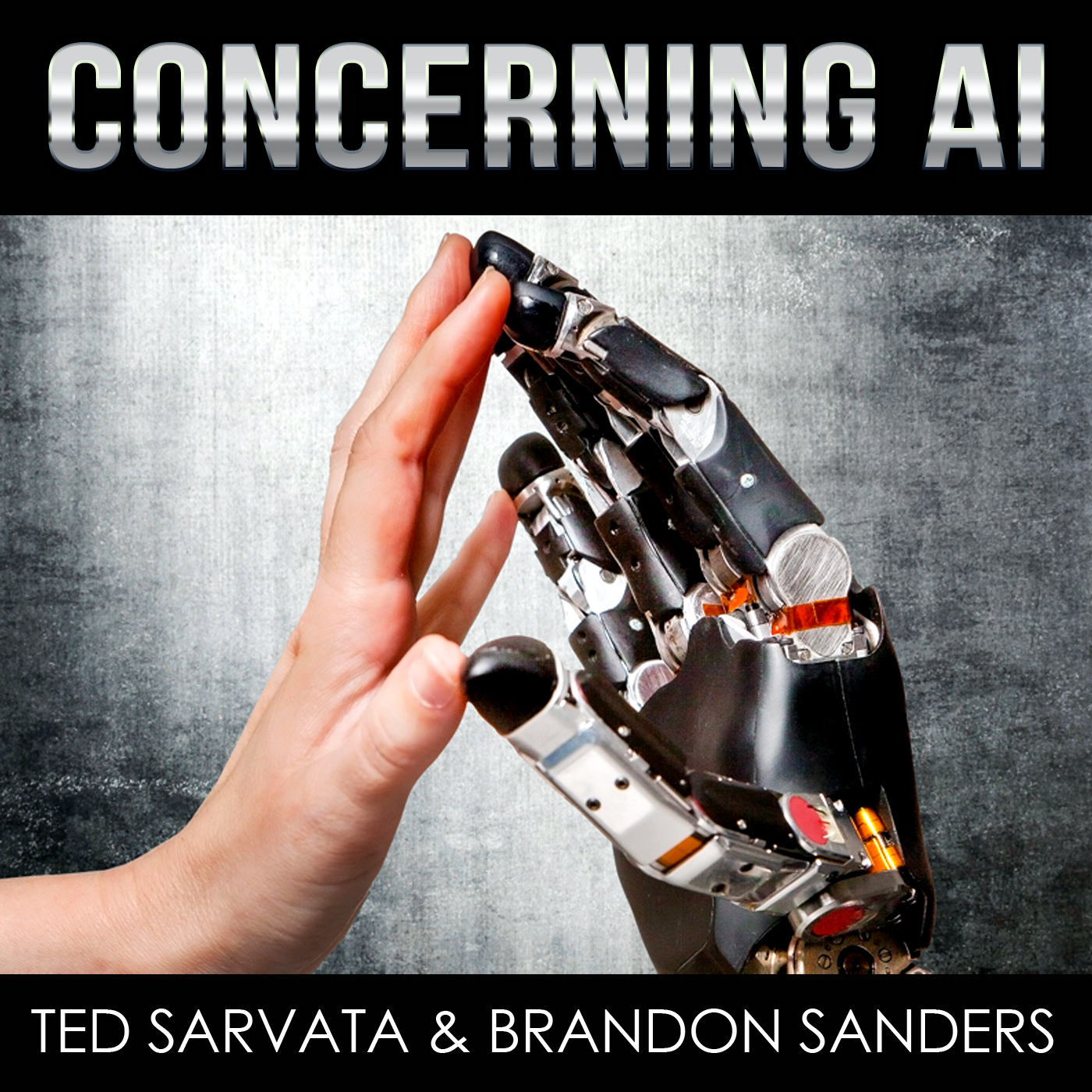
Welcome to Concerning AI with your host Ted and Brandon where we explore existential concerns about AI and what to do about them This is Ted and Brandon is not with us today, but I have a very special guest Jacob Ward You guys remember magazines? Yeah, there were these paper things They had words and pictures on them and they came to the house and you or you could have a new stand Jake was editor at Sorry Jake. I just blanked on where you were Popular science popular science is popular mechanics because I've had that conversation many times you can imagine that that's why popular science Alright, so it's formerly popular science about to start at Stanford as a fellow at the Center for Advanced Study in behavioral in the behavioral sciences and Journalists with PBS, LG zero CNN, National Geographic Discovery and knows a lot about both technology and what we're gonna really focus on today is Bias and AI is that accurate way to get a start there Jake? You do better than I do man.
It takes me like 10 minutes, but you did it, but thank you. Very good So let's start with the basics. What is bias? Okay, this is good So so when I came to this subject my understanding of bias was the same as I'm sure many people's which is I Associated the word bias with the word discrimination right prejudice.
I thought of it as bias being a you know something that is necessarily About putting other people down Clearly in favor of self researchers I know this because I just finished a three-year project doing a documentary for public television funded by the National Science Foundation That explains this science to lay people like me the thing I learned doing that I'm not going to be as biased as a term the clinical sort of the sorry the research term bias has to do with the shortcuts that your brain and make in order to make efficient decisions and You can't you can't put two psychologists together who agree on on anything And so the idea that there's any sort of like overall agreements on anything and psychology is ridiculous But broadly speaking psychologists tend to agree that there is this sort of evolutionary gift that we all received You know some 70,000 years ago when we emerged from Africa and you know became sort of the higher thinking human beings that we are and that gift was In a sense bias it was the ability to incredibly quickly and incredibly efficiently make a decision about what is a threat? What is food? You know which is my group which is not my group who's an outsider who's an insider and those abilities to incredibly quickly make an efficient decision And say oh my gosh, it's a snake get up and run You know those kinds of decisions all fall under the rubric of bias So one another the word that the phrase we use a lot in the show is mental shortcut It's a mental shortcut your brain takes and the the thrust of what so many of these researchers have found is that was that our biases Were a wonderful way of staying alive 70,000 years ago They kept us safe from fires and enemy tribesmen and rest of it But in the modern world in in the world of voting and loan making and hiring people you've never met You know those biases suddenly are getting us into trouble because they are the misapplication of a system that was designed to not It's not where but evolved long ago for a world that no longer exists So I've taken some kind of online test I can't remember maybe it was at Harvard or somewhere where the you know They have is like they put words on the left and words on the right that are your master Yeah, yeah, I'm gonna try to take that up and put it in the show notes because people should take this test There's a whole bunch of them. There's like I don't know 30 30 different ones And the one I took was about gender and occupations or something like that And so you know as woke as I think I might be that's right I I still think male when I hear the word doctor.
Yeah, and that's just in my brain. Yes, it is That's right because your brain over time has your brain is a shortcut machine. It's an efficiency machine You know it the the way that you think things through Needs to be as fast as possible to keep you alive on the ancient plains of our history Right and so when you as the second that you know if society starts telling you that that doctors are male Your brain goes great. I don't have to think about that anymore and just begins to make that association all the time the test that you're talking about the implicit association test is one of the most amazing and You know, I could say personally difficult Things for I think people who are interested in this area So implicit association was was designed by a pair of researchers And I'm of course gonna blank on the name one of the one that I know best is a woman named Mazarin Banaji And since the 90s they've been doing these you know offering these tests online and you're right they trick you trick your unconscious mind into Volunteering your preference with stuff so the example you use you know gender and work roles mine was On the show we do young and old people do I have a preference for young old people now if you asked me You know, I talked to the party, which do I prefer I would tell you I've vastly prefer old people.
I really enjoy old people and I find you know Young people, you know, I have all the sort of typical, you know, fashionable feelings about young people But when I took the test it was totally the opposite I found myself, you know showing this innate preference for young people is incredibly disappointing And what's really amazing is that because it's been online since the 90s in all those different tests 30 or whatever it is But I'm too interesting have millions of people's worth of data Volunteering their unconscious preferences about this stuff And so not only do they can they show you on individual basis what your preferences are they have this graph over decades that shows in the United States How the preferences for black versus white or older as a young man women have changed or not changed over time and in the really amazing part That I thought my mind was even with Obama and the rest of it attitudes toward black people basically not changed In the time that they've been mentioned to the test they pretty much flatline attitudes about gender have pretty much flatline We are not getting better at those kinds of implicit associations The only one that she says is positive and has a positive track and we're getting one more tolerant and woke about is Homosexuality for some reason that one is getting better and better and better and they believe it may have something to do with the fact that People from all walks of life looking different ways may or may be gay or not And that there tends to be some sort of emotional connection to people who are good You tend to have a co-worker or someone in your family or some friend who is gay And so there's a there's a you're naturally challenged by on some way They've all kinds of theories about it, but they don't know why but the point is we're not getting a lot better at these other biases But we are for somebody getting better that one so if this if this show we're concerning justice I would love to continue this line of questioning because I Yeah, so much that's the thing stuff, but because we're concerning AI think it's time to move on and Speaking about why why are we talking about bias? Let me see if I can help you set that up a little bit. Here's why I think it plays in the bias So the the two sort of breakthrough psychologists who got the world of behavioral sciences and sort of decision sciences They call it going was very guys Amos Tversky and Daniel Kahneman and most people know Daniel Kahneman best by a book They were called thinking fast and slow, but he won the Nobel Prize. He and first he were were collaborators.
They in fact Conner was at the same Stanford fellowship. I was at which studies it tells you that that's It must not be as good as it used to be because none of them mean but the the those guys Quantified all of this amazing behavior all of these different biases not just about recent gen about you know all kinds of stuff basically ways we make decisions under uncertainty and When when he won his Nobel Prize Conerman in his speech rather than just like brushing all the shoulders away I would he he instead trotted out his ambition to start talking about what he called system one and system two in the book He calls it thinking fast thinking slow basically his theory is and it builds on years and years of research for other people System one is the system that you and I use unconsciously instinctively. It's emotionally driven It's highly efficient to make most of the decisions in our lives It's a system that we that scientists have shown is shared with primates You know, it's probably 30 million years old and that's the one that generates these biases. It's incredibly effective The the slow thinking brain system two is our higher cognitive functioning.
It is our higher reasoning its creativity its caution its logic It's all of these incredible things the thing about it that people tend to not sort of recognize in their own lives is that system one makes the vast majority of our decisions for us system two is really just kind of an error correction system So you're slow thinking higher functions rarely get involved and and researcher after researcher has shown that in things like voting and hiring and criminal justice We're basically relying on system one fast thinking brain when we think we're relying on system two So my thesis the thing that I'm pursuing in the book that I'm writing at this fellowship Is that when you introduce a system like ai that is going to begin delivering? Automated responses that's going to begin delivering answers to difficult questions and the more that we begin to outsource the the difficult Morally questionable often creative kinds of decision making that we used to use our slow thinking brains for system two when we offload that to ai I think it's going to overpower the fast thinking brain that is all instinct and all efficiency and Cripple in many ways system to our slow thinking brain and take away Our ability to really stop and think and reason things through and over and over gone bumping into example At our example in which an AI system introduced to a problem seems to disempower our human system two side and over empower our instinctive system one side Alright, let's get to those examples in a moment. Let me make sure I understand that so if system two the slow thinking brain is the error correcting part Right and we're empowering AI to make these decisions. We basically think well We don't need error correction.
We don't need to put that right in thinking in it And so we just we just trust it and so then we get all system one if system one's what's baked in Is that what you're saying is this a one baked into the AI systems in that is exactly these examples? Okay? Alright, so I think I understand that's exactly right. So tell us tell us you know give us an example what what are the things we're talking about?
so here's an example so so the the economist Richard Thaler is a Nobel Prize in the economist from the University of Chicago and Was sort of the one who took comment versus working kind of turned it into behavioral economics He's basically one of the founders of behavioral economics for economics and all of that. So he Points out that like if you see that James Because in a reality James Brown movie he says just one says, you know, you don't play the hand you have you play the man across from you And it's it's total as a total crock. It's so hilarious because like no you don't you play the hand like you're playing It's a game of probabilities. You should be you should be doing the math of the probabilities in your hands in order to actually play the game Effectively the idea that you're sort of reading other people is this scrim that really just doesn't make any sense But it's actually kind of a genius line because Richard Thaler points out that human beings can only his research shows and other people's research shows that human beings can only handle five probabilities in their brains so And here are the five 100 percent zero percent ninety nine percent one percent and fifty fifty If you introduce to me the risk that involves like a 30 percent risk of something or 70 percent risk of something They've shown that it's basically we just rounded down to fifty fifty or we rounded up to ninety nine We don't have any human ability really to handle true probability in any kind of mathematical way So which is it gets us into all kinds of trouble.
It's why people sell us travel insurance and all kinds of stuff So the largest health care system in Louisiana has just introduced a sort of uh, assistant for the doctors doing the rounds in The various critical care awards that they have in various hospitals and those rounds You know you go from bedside to bedside and you and you have to sort of prioritize your day prioritize your day based on the chart of the patient You know you're figuring out that's it's a it's the art and science of being a doctor on his or her rounds, right? So and did you hear me there? I just totally went doctor and and he There it is So it the the assistant instead takes all of the data it can about the history of patients in similar situations And that data is that kicks out a probability for each patient in in terms of their deterioration deteriorating or needing to be immediately seen by this doctor in the next few hours and Now the system could kick a very detailed analysis at you But instead all it does is gives you basically a one line alert on your phone that says the patient room x Has a 89 percent chance of deteriorating in the next two hours Now I was talking to the designers this system and saying well this really is okay So, so how do you you know what how do you do the percentages seem to provoke different responses and they? Said oh, yeah, absolutely.
There's this total drop-off problem where if the percentage is too low They don't take it seriously enough, but if it's too high it's too much of an emergency like you know We have to be sort of careful about what what percentages we show because it doesn't seem to provoke the reaction that that makes Sort of the most sense and and not only that They also are discovering that I asked okay, so are the doctors do they ever question the judgment of the AI? They ever say well, why did it? Why do they think this person is in immediate trouble? Why should I be at this bedside versus the other one and they say nope?
Nobody's asked that question only one person really has even thought about it And they asked kind of one question we give one answer and that was the end of it So you've got this human tendency to this human inability to grok Probabilities in any real way and a total faith that the AI knows what it's talking about wrapped up in this in this product now It may very well be working. I mean that's the thing that to make a good to put out here. It's like it's efficient It's if you're working it's great, but we are leaning real hard on a system that is playing right into a pretty well-established Foil that human beings have when it comes probabilities. All right, so in the world of medicine I could imagine you could have a clinical trial testing that AI and you could show whether you get better patient outcomes or not So that one might be not as dangerous as some of the other examples you might have where where we don't have a culture of testing Do you have other examples that sure are so that's exactly right?
So that's so the one so so in cases Especially in cases where you're just doing sort of flat analysis of outcomes when it comes to like, you know cancer or that kind of thing You know you can as long as it's sort of you know just pattern recognition statistical probability You know it seems to work pretty well. You know I am alarmed that people wind up sort of leaning on it in this way and not engaging their system too They're critical faculties quite well enough. So here's where it gets you into deeper trouble. So There's a you know about I'm sure Joseph Weisenbaum Early AI researcher he had a system called Eliza So so just for anybody who doesn't know right wise about was a early researcher in AI and basically Built this system that would sort of kick back and forth a scripted conversation with somebody and he was trying to figure what to do with it So he dressed it up as a rogerian therapist that just reflects your answers back at you And so we have people type in you know, oh man, they're driving me, you know, they're driving crazy And then the computer would just kick back the scripted lines not even really, you know making It's just a decision tree and it just kicks back.
Why is your boyfriend driving crazy? Well, oh man driving crazy. Why do you think oh man driving crazy? You know you could just you could just reflect back people and people fell in love with this thing and you know even The American Psychological Association began to predict a demise of human therapists and suddenly we were all going to rely on this up all the time So port that forward now to a situation like um, David Dow And that name may ring about because he was the guy pulled off the united flight A few years ago when the flight was oversold they had to get some united employees somewhere And they asked for volunteers and nobody threw up their hand Um, they raised the price like $400.
They'll nobody would throw their hand and finally they said, okay We're gonna choose you guys at random and take you off the flight. So a computer kicked out I think it was three names and David I was the fourth and he being a pulmonologist who had to be able to work in the morning To get home to be a doctor He and I can't believe how many male doctors we've gotten into this conversation. Um, he Uh was chosen and he refused. He said I'm not getting off this flight.
I gotta go home You can't and if you depending on how you interpret snatches around there travel you really can't kick a physician off the flight Um, but the security personnel were told the computer chose him at random get him off the flight And rather than saying to themselves, well, this is a bad idea Like we shouldn't be dragging anyone physically off any kind of flight. Could shouldn't we be paying a little bit more to this guy? Instead they messed him up the footage is really brutal I mean they whack his head not intentionally but but they you know they drag him out of his seat and he gets whacked against the armrest across from him And comes out bleeding they drag him out bleeding and and you can see all the passengers are just like stoned people like whoa What are you doing? You know my theory is you know When I come and the people who study anthropomorphism will tell you that when you're when you're given a system You don't understand and it kicks out an answer at you your human tendency is to go.
Yep. Okay. It explains There's a researcher named Jane Risen. I actually don't know how to say her name out loud.
I just read it Jane Risen. Let's say A study that in relation to superstition, you know that that is why even though I am a you know somebody who I don't consider myself a religious person anyway I don't believe in our power and yet when my daughter opens up an umbrella inside I go Oh don't do that, you know for some reason I just have this reaction like we acquiesce to systems that we don't understand and in that case that's people abandoning their moral of you know faculties essentially because Computer shows this guy for whatever reason. She just paid who knows about his last name. He's got a lowest miles whatever it is In a situation like that do we have information about whether or not it would be the same if instead of being told the computer Pickies at random if it was told this is what the boss upstairs said.
I like we follow blindly you know authority in the same way No, so the more the people who study more physical is a bunch of them would tell you that that for whatever reason when the boss up You know if some guy in the back issues are verdict you continue to engage your critical faculties Not only do you continue to engage your critical faculties but whoever has to deliver the boss's message delivers it in a much more sophisticated way You know saying I can't believe that you know my boss such a jerk you're not going to believe this right I mean the the playing the positive side of that is how you know use stars a element get you to you know Paper next to you know for the clear coat But the but when you have a machine kick it out the intervening person who's to deliver the news doesn't question the news And the people on the receiving end also go up. Well, I got chosen. That's the system. I guess that's it and off they go And so you know the the it's a very complicated thing There are other instances where where and this is where the writing my book is going to be really complicated is because these You know it doesn't always play out exactly the same way and it depends on the sector you're in but there's um There's a there are these pre-trial assessment Software packages that are AI driven that that that evaluate the flight risk and reoffense risk and bail jumping risk of People who are being sentenced or sorry people were about to go on trial for a thing And then these pre-trial assessment software packages Judges use them to try to more efficiently make a decision about what's going on And I know researchers who are now looking at how the judges make those decisions And one thing that they discovered is that the judges tend to go along with it when it agrees with their instinct And tend to contradict it when it when it doesn't they don't get their minds changed by the software package So it's like confirmation bias.
Yeah, maybe it's confirmation bias. That's right. That's right. That's right.
That's right And so so one thing that I'm seeing a lot is that in a private profit-driven highly efficient corporation As as you know all the great corporations if they are People accept and incorporate the input from AI very very willingly and very efficiently and effectively But in courtrooms and social service agencies and schools and other places where you really might get some real benefit out of each System people don't tend to accept it very well unless it you know the confirmation bias is very strong And that's something I've just begun to explore the pattern I'm just starting to see and I don't know where it's gonna lead exactly But that is a really interesting thing that there's this public-private Institution split in how we treat answers from AI that I think is is worth taking a look at all right So if we fast forward then into the future right concerning AI the show is typically thinking about what happens when we get to super intelligence and You know, is there an existential threat? How does this current thinking and research and understanding of the very narrow AI's? We've got now and how bias plays in how do those things interact right? So you know, I There's a lot you know, there's a lot of very smart people talking about the existential threat to humanity of a sort of super Intelligence that's gonna be above us and make decisions for us and you know possibly enslave us to its will right?
And I am I am I am interested by that theory and I think it's certainly worth thinking about but I'm not as immediately concerned about that as I am by The idea that we are going to be enslaved not by a robot brain But by our own brains the wrong part of our own brains that our instincts that we struggle in modern society To correct, you know, the the instincts that are built into human people are into humans I mean and you see them across every society in every culture the these these systematic mistakes that our brains make in making decisions Those systematic mistakes are going to come to rule the day if we continue down the path of using AI to make the most efficient You know to make our most difficult decisions for us essentially and so that for me is the is the real fear It's not it's not that you know, it's it's not the computer saying, you know sit down human It's it's you know, our own brains. It's it's being it's convincing ourselves that we've made a good decision because we let the I make the AI make that decision for us. Do you think that the shorter term over reliance and therefore disengagement of our own systems to thinking right somehow makes the AI apocalypse more Probable. Oh, yeah, absolutely because I mean here's the here's the thing and you know Nothing will will turn you you know nothing will make you more hostile to capitalism than than covering technology all these years, right?
The profit motive of big companies to use AI causes them to to build the most attractive possible systems So, you know, and I'm not the first person to make this point there many smart people the center for your main technology and other folks are making this case right now You know when a when a product is incredibly delightful and incredibly convenient It's typically in technology taking something important from you. So in the short term I think that there is this that You know, it won't suddenly be that fire rains down from the sky and you know and robots are stalking the streets and shooting us up That's not I think I was gonna go it is it is It's gonna feel delightful. It's gonna feel super entertaining as You know AI Begins to sort out our emotional states for us. I mean, that's that's the one that's the frontier that I get freaked out about is There's there's good research showing that It's it's not as straightforward as the stuff you see about you know read somebody's you know hidden intentions through their face You know a computer can read your intentions, you know, that's if I think it's a little oversimplified But there is good there's good evidence Based on good research that we do unconsciously absorb and pass on emotions in our faces in ways That are totally readable by automated systems And so I think when when AI systems, you know through your phone or you know, you're when you're unlocking your phone with your face Right and it's getting read after read after read on your face It's gonna start getting a read after read on your emotional state and it's gonna say you know what?
You know Ted's happiest when we hit him with this thing in the morning. He likes that He seems to really get divided by that happens. Let's make sure we do that every time You know, I think I think acquiescence to the role of AI in our life is gonna is gonna be pretty insidious It's gonna come at us in a way that's gonna feel really good And the the number one lesson ladies and gentlemen of bias researchers is the stuff that feels really good Typically is not the best choice to make if you want to keep modern society going running a democracy making good financial decisions hiring a right person It's cognitively hard. It doesn't feel good and doesn't make for a good movie And so that's tough.
I think is fighting that often recognizing that we need to be making difficult decisions And that it's not all gonna be delightful convenient is our best hope at that sort of fighting the stuff off So I think you could make the argument that these difficult decisions that we need to make day to day Are sort of a microcosm of the difficult decisions society is going to need to make to to solve the AI safety problem Alignment problem. How do we build technology that is aligned with our values is? I can't I just I can't even figure out how we would ever even attack it. I mean, well, here's one that I think is is one So my book is called black box and and the the comes on 2020 by the way And and you know that phrase refers to the sort of the closed system of both our own minds and of all these AI systems that we're building And because these are private companies that are largely in charge of the AI revolution They are not prone to sharing how their stuff works You know, they like to keep it all proprietary anybody works with us to sign some form that says that they'll never show the secrets So I think that the number one thing to start working on is an insistence on a glass box approach to AI DARPA has an explainable AI program going right now in which they're trying to come up with a way of How are we going to explain to people how this thing reached the decision that it did?
And I think that's number one like I don't I think that there needs to be this This clear articulation of this is these are the factors that go into this thing making a decision So that you can I hear yourself. Oh, do I like the one? You know the the the loan making AI that includes my address In the decision making or would I rather do the one that that specifically tries not to include my address so that it won't inadvertently Classify me by my race because I live in bedside, you know that that sort of explainability I think has to be something that we all start to insist on show me how you made this decision And that definitely seems useful as we think about you know potential harms of Of bias and what that what that does for us. It also seems like it could help us with our AI alignment problem At least in understanding what the problem is.
I mean, you know, but it's um Explainable AI it's also seen all of these all of the possible solutions to the AI alignment problem into the future They all seem incredibly difficult which doesn't mean that we can't make progress on it, but it does You know, it makes it hard to get our minds right. It makes it hard to even have conversations about that Exactly and I think I think what we cannot do is just leave it to the companies that run these programs to make those decisions for us Because they you know all of the the rhetoric that you see in the soul searching that we're in right now around the role of technology in our lives And the companies that are in charge of it is they say, you know Don't worry. We have your best interest at heart, right? And when they hire kids straight out of business school or straight out of college or straight out of high school Those kids come to it because the companies are really good job of saying we are about changing the world We're disrupting the world.
We're making it better. You know not rhetoric on the one hand. Okay, great I'm glad that companies are built on those principles But I don't think you can rely on the principles of a company to to catch all of these problems And you know there but the grace of God goes our future If if God forbids, you know a company comes along that's super hot and everybody wants to work for and they decide you know what? We're not going to be about changing the world for the better We're just going to be about domination making money or whatever it is, you know Just the fashion for this upbeat positive change the world idea I don't think we can pin our future to that trend.
I think we need to be really, you know We we can't just outsource moral decision-making to AI and we can't just outsource moral values to the companies that build AI I think I think even if a company does have the best interest of humanity in mind, even if they all did, right We'd still have we'd still have this bias issue And I think we ultimately still have the alignment problem and the fact that all software is buggy and all software has security problems in it Means that The stakes just get higher and higher. You can't necessarily issue the 2.0 product when we get to AGI Well, no, that's exactly right. I think that's right. I think you have to also expand the educational background of the people who have the very whole Increasingly, wholly responsibility of building systems that are society is going to be based on that And so you cannot just be teaching them how to think statistically how to work with data You need to put you know you need to plug I think each one of those people into a couple of humanities courses You know you need to show them that people have been worrying about You know is there such a thing as truth and you know how do we judge one another and buy us and the rest of it?
You got to show them some of the big thinking about that before you put them at the wheel of the system that can really determine the future of democracy and everything else And right now, you know people either aren't interested in it or it's not prized in hiring them or whatever whatever else it is You know, I think I mean I was just you know I was telling that just a wise and bound story about about Eliza the automated therapist to this room full of To a group of very principal people who are you know young entrepreneurs who are really trying to do the right thing You know and they hadn't heard none of them had heard that story and when I told it to them They were astounded by the epilogue of the story which is it just a wise about quit the field He didn't then say oh fantastic. I've got a robot therapist like I make up a trillion dollars off of I'm going on TV He walked away and he became an environmental activist for the rest of his life You know and when I told him that they couldn't believe it they said wow that's amazing like people We know would just have built a company on that idea and that's the thing I think oh, okay We need to start teaching some some more abstract values when we teach people how to how to work with this stuff All right, well that seems like a pretty good place to begin our wrap up here. How do people find out more about you and your work? We got blessed you said I Let's see so I'm at I mean I said to jacobour.com on twitter and on you know all that stuff and so you know you can find Social media got help me The show is called hacking your mind and we don't know exactly when it's gonna air yet But we're looking at probably sometime in 2019 It'll definitely be you know, I would need to find and then my book black box comes out from Hashet in 2020 I'll be at Stanford this upcoming year doing that.
So yeah, I love to speak about this stuff I'd love to I and I and here's a special plea I would make you a listener just that if you work in AI And you have noticed a pattern by which the data makes 20 decisions or people interact with your product and we're waiting to anticipate or any of that stuff And you think you have a lesson to teach people about it. Please get in touch with me I could really really use your help it is a very difficult world to be a reporter in Because it definitely doesn't involve public institutions. It involves a lot of private companies So I'm good at keeping secrets. Please come to me.
I'd love to talk to you about anything you're noticing. Okay, that's awesome So what are your what are your final thoughts as we wrap up thinking about the future of AI the future of humanity? What's your is there is there a hopeful story you said that popular science is all about you know, the hopes and dreams and life's gonna be so much better Do you have a story like that or you are you worried like tini? I don't know.
So I'm a fundamentally optimistic person You know, so I was the other two popular science magazine, which has been around you know, since the 19th century I'm telling amazing stories of the future and you know, there's a parlor game that people like to play You know drinking game when people say man, if you could you know if I could live in another era What would it be and some people like to say oh the forties would be so cool to live in the jazz age and you know? People say they'd like to you know be a cowboy on the frontier, you know, whatever it is And I just say I don't know man. You look at dentistry back then, you know, you look at wound treatment back then You look at the rise, you know, what life was like a four-way antibiotics And I'll tell you like we live in an amazing era like it really is a sounding era I know people who you know have really Carved a life for themselves out of stuff that just didn't even exist 25 years ago So so I'm fundamentally very optimistic I think that the human brain and human creativity is incredibly powerful and we're gonna solve this problem I do believe that But I think that the you know my hope my small contribution to it I hope will be I think I'm trying to make it cool To understand the foibles that we all have the mistakes that we all make because I make them more than most and and I think that the more we can Get in touch with the patterns by which our brains make Quick unconscious judgments is gonna be our quickest path to solving a lot of the problems that I suppose the world now So I'm pretty optimistic. I know I sound like a down on a lot of stuff But I really am so and thank you so much for having you on I really appreciate what you guys are doing and giving me the chance to be here Well, you're very welcome.
You've been very generous with your time I really appreciate coming on and string this with us our listeners and I encourage everybody to check out You know turn the lens around if we're looking at AI all the time Let's turn the lens around and then look at our own brains and our own our own systems as Jake is suggesting here And maybe that can help us solve the future and not turn it into the AI apocalypse which is our Someone is worried about there. You're right. All right. Thank you very much.
Thanks. Okay. Bye. Bye Get your voice heard on the show record a one minute voice memo on your phone and send it to kusernyai at gmail.com