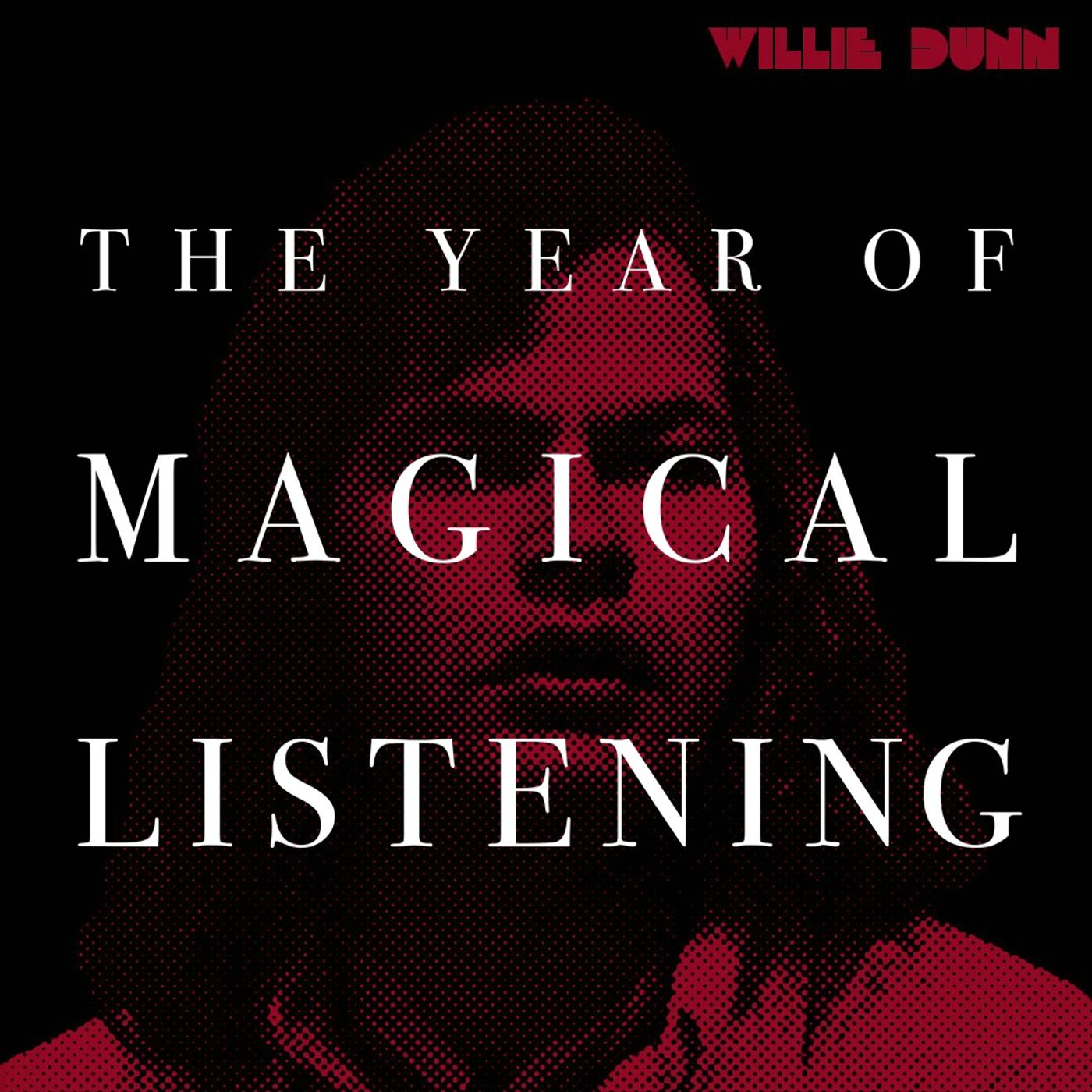
010 :: WILLIE episode artwork

EPISODE · Sep 30, 2021 · 8 MIN

010 :: WILLIE

from The Year of Magical Listening · host Willie Costello

FEATURING Songs by Willie Dunn, originally recorded and released in 1971 and reissued in 2021 on Creation Never Sleeps, Creation Never Dies from Light in the Attic Records. Listen / Buy direct"I Pity The Country""Charlie"TRANSCRIPT This is not my story to tell. The story is the singer's, and it's right there in these songs. It's a story of colonization, and a story of resistance. It's the story of an Indigenous Canadian folk singer, singing to the nation and never being heard.I'd prefer not to speak over this song. I'd prefer just to let you listen, to this singer and their words. But seeing as this is a show built upon the premise of me speaking over music, I will proceed, and tell you that what I love most about this song is how unsparing, and yet matter-of-fact, it is. Lyrically, the song is a catalogue of the sins and hypocrisies of the settler state: its lies, its greed, its acts of violence. But musically, the song is an unassuming folk ballad: soft spoken, slow moving, lightly plucked, pleasant, even, and most of all, calm. It's not the accompaniment you'd expect for a text so full of righteous condemnation. But as I've listened to this song over and over again, it has come to seem perfectly fitting. For the views it expresses are not just the singer's personal opinion or subjective experience. They are fact – the facts of settler colonialism, the facts of what it means to be Indigenous in this country. And facts don't need an emotional presentation; they just need to be said. And that's precisely what this song does. If the singer sounds dispassionate, that's because they're telling the truth.Still, you might think that some anger would do some good for the message – make it more apparent, less easy to disregard. But why see this as the song's problem and not, rather, the listener's? As if the burden were always on the oppressed to catch the oppressor's attention, and never on the oppressor to pay attention in the first place. And so I hear in this song's delivery also an act of protest, the singer's refusal to sing on the other side's terms. The facts are laid bare, for all to see. If some do not listen, that is on them.Most, of course, did not listen. We know because these songs were written and recorded five decades ago, and yet their singer remains in relative obscurity, and the political realities they describe remain sadly and remarkably unchanged – which gives these songs a tragic timelessness, even when they couldn't be more historically specific.Take, for instance, this song, which tells the story of Chanie Wenjack, a twelve-year-old Ojibwe boy who ran away from the school he was forced to attend, only to die one week later of exposure on the long walk home. In the most direct and obvious sense, this song is an elegy for this cruel and needless death. Yet in its quiet and measured sorrow, the song also keeps vigil for all the other lives lost and shattered by the residential school system, and also, to my ears, somehow reaches into the future and expresses grief for all the tragedies yet to come. For the fact that it would be another twenty-five years until the country's last residential school shut its doors. For the fact that this year, twenty-five years after that, the discovery of 1,397 residential school gravesites was met by this country with shock and, then, inaction. For the fact that to this day we still speak of "Seven Fallen Feathers" and the "Missing and Murdered". For the fact that the story of Chanie Wenjack is not a story of the past but of our continual present.This all may seem like a historical digression, but for me, this song cannot be heard apart from this history, which reverberates throughout. I feel like I can hear it in the singer's voice, the knowledge of what's to come and the knowledge that they will not be heard. For they've seen what's come before, and they've seen how no one's listened then. And yet, they sing on, for all those who need to hear it.** This episode was recorded on the traditional territory of the Ojibwe Anishinaabe people **

FEATURING Songs by Willie Dunn, originally recorded and released in 1971 and reissued in 2021 on Creation Never Sleeps, Creation Never Dies from Light in the Attic Records. Listen / Buy direct"I Pity The Country""Charlie"TRANSCRIPT This is not my story to tell. The story is the singer's, and it's right there in these songs. It's a story of colonization, and a story of resistance. It's the story of an Indigenous Canadian folk singer, singing to the nation and never being heard.I'd prefer not to speak over this song. I'd prefer just to let you listen, to this singer and their words. But seeing as this is a show built upon the premise of me speaking over music, I will proceed, and tell you that what I love most about this song is how unsparing, and yet matter-of-fact, it is. Lyrically, the song is a catalogue of the sins and hypocrisies of the settler state: its lies, its greed, its acts of violence. But musically, the song is an unassuming folk ballad: soft spoken, slow moving, lightly plucked, pleasant, even, and most of all, calm. It's not the accompaniment you'd expect for a text so full of righteous condemnation. But as I've listened to this song over and over again, it has come to seem perfectly fitting. For the views it expresses are not just the singer's personal opinion or subjective experience. They are fact – the facts of settler colonialism, the facts of what it means to be Indigenous in this country. And facts don't need an emotional presentation; they just need to be said. And that's precisely what this song does. If the singer sounds dispassionate, that's because they're telling the truth.Still, you might think that some anger would do some good for the message – make it more apparent, less easy to disregard. But why see this as the song's problem and not, rather, the listener's? As if the burden were always on the oppressed to catch the oppressor's attention, and never on the oppressor to pay attention in the first place. And so I hear in this song's delivery also an act of protest, the singer's refusal to sing on the other side's terms. The facts are laid bare, for all to see. If some do not listen, that is on them.Most, of course, did not listen. We know because these songs were written and recorded five decades ago, and yet their singer remains in relative obscurity, and the political realities they describe remain sadly and remarkably unchanged – which gives these songs a tragic timelessness, even when they couldn't be more historically specific.Take, for instance, this song, which tells the story of Chanie Wenjack, a twelve-year-old Ojibwe boy who ran away from the school he was forced to attend, only to die one week later of exposure on the long walk home. In the most direct and obvious sense, this song is an elegy for this cruel and needless death. Yet in its quiet and measured sorrow, the song also keeps vigil for all the other lives lost and shattered by the residential school system, and also, to my ears, somehow reaches into the future and expresses grief for all the tragedies yet to come. For the fact that it would be another twenty-five years until the country's last residential school shut its doors. For the fact that this year, twenty-five years after that, the discovery of 1,397 residential school gravesites was met by this country with shock and, then, inaction....

NOW PLAYING

010 :: WILLIE

0:00 8:33

No transcript for this episode yet

We transcribe on demand. Request one and we'll notify you when it's ready — usually under 10 minutes.

Big Old Life: Heather Blackbird interviews people on planet earth. Heather Blackbird loves asking questions. This podcast is a learning experience. Join me, Heather Blackbird, as I talk to people about their lives. Frequency of new episodes is a little all over the place and I'm learning as I go. Big Old Life is a small way of talking about the vastness of life, one person at a time. If you are reading this or found this podcast it's probably because someone you know gave you a link to it. :) Explicit Tales Of A Superstar DJ The Insomniac Spun seemingly out of nowhere from her complacent life in the corporate world, turned seemingly overnight from 16-Hour shift work and into the life of a literally starving artist and working musician, The Protagonist navigates her supposed rise to fame and superstardom on a journey through spiritual awakening, coming-of-age, and intimate self-realization--guided by an omnipresent force and equipped with the power of love, magic, and music. {Enter The Multiverse.} [The Festival Project] The Festival Project, Inc.™ is a multidimensional multimedia platform which encompasses exploratory and artistic social personifications and expressions on cosmic theory, spirituality, growth, health & wellness, philosophy and theoretic dynamics in entertainment such as music, design, film, television, radio, dance and festival culture, art, fashion, literature, and science. The Festival Project™ and its subsidiary Non-Profit, The Collective Complex © aims to challenge modern artistic and philosop Explicit Bitcoin Is Dead Trey Carson Welcome to Bitcoin is Dead, the ultimate Bitcoin variety show where host Trey takes you on a journey through the ever-evolving world of Bitcoin. Each episode brings new personalities, fascinating locations, and insightful conversations with politicians, educators, and innovators shaping the future of Bitcoin. Whether you're a seasoned Bitcoiner or just starting your journey, tune in for thought-provoking discussions, unique perspectives, and a deep dive into the ideas and people driving the Bitcoin revolution. Explicit The Sacred +Profane Podcast nephtaragrace The Sacred + Profane Podcast is a provocative conversation dedicated to cementing a better future for all. We specialize in unpacking the nuances of what is considered sacred and profane, particularly focusing on sex, death, and all that pertains to the circle of life. Our aim in focusing on such ”taboo” subject matter is to demystify what is unconscious, bring to light what has been known for centuries as ”the occult,” and empower the rapid transformation that is occurring on the Planet. Explicit

Frequently Asked Questions

How long is this episode of The Year of Magical Listening?

This episode is 8 minutes long.

When was this The Year of Magical Listening episode published?

This episode was published on September 30, 2021.

What is this episode about?

FEATURING Songs by Willie Dunn, originally recorded and released in 1971 and reissued in 2021 on Creation Never Sleeps, Creation Never Dies from Light in the Attic Records. Listen / Buy direct"I Pity The Country""Charlie"TRANSCRIPT This is not my...

Can I download this The Year of Magical Listening episode?

Yes, you can download this episode by clicking the download button on the episode player, or subscribe to the podcast in your preferred podcast app for automatic downloads.
URL copied to clipboard!