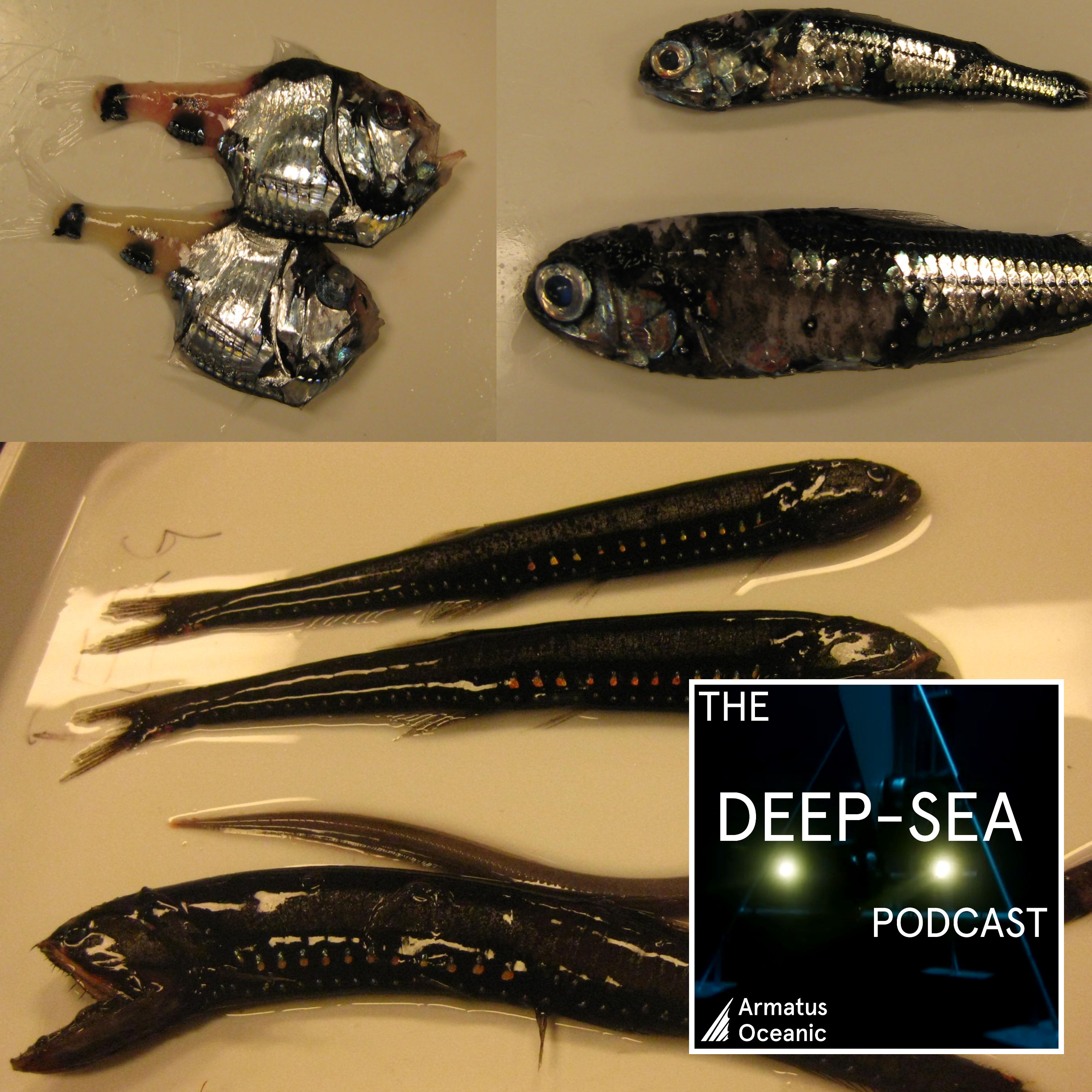
024 – The pelagic deep sea with Tracey Sutton
from The Deep-Sea Podcast Hosted by deepseapod
https://www.armatusoceanic.com/podcast/024-pelagic We have a confession to make. We talk a big game about how we are busting myths, tackling deep-sea tropes and showing the deep ocean as it really is… but we have been guilty of one of the big ones. The deep sea is not just the bottom! Most of the deep sea, in fact, most of the habitat of this planet is the huge open 3D environment of open water or ‘pelagic’ water. In this staggering volume the planets largest migration takes place twice a day. Animals are locked in an evolutionary arms race, using their own light to deceive and trick. Finding a meal is rare, finding a mate is rare and life is without boundaries. These factors have led to some truly wild evolution. We also tackle a couple of listener questions: Whatever happened to the word ‘nictoepipelagic’ which seems to have vanished from scientific writing? We also discuss parasites in the deep sea, how can they find a specific host when the animals are so spread out? We hear from Don about hunting for the 'deep scattering layer' (DSL) before we even knew what it was and find out where Larkin has been from her new vessel on the Gulf of Mexico. In recent news we cover Edith Widder and her new book Below the Edge of Darkness, underwater GPS through the power of a pong, following the yellow brick road to meet the deep-sea wizard and some lovely new footage of a highfin dragonfish. We also find ourselves talking about how the deep sea is portrayed in children’s books and learn that apparently zesty citrus and floral smells are associated with the deep ocean… who knew?! Feel free to get in touch with us with questions or you own tales from the high seas on: [email protected] We’d love to actually play your voice so feel free to record a short audio note! We are also on Twitter: @DeepSeaPod, @ArmatusO Facebook: ArmatusOceanic Instagram: @deepsea_podcast, @armatusoceanic Read the show notes and find out more about us at: www.armatusoceanic.com Glossary Abyssopelagic – open water 4-6 km (13,000 to 20,000 ft) deep Aphotic zone – depths deeper than life penetrates Bathypelagic – also known as the midnight zone, open water roughly 1-4 km (3,300-13,000 ft) deep Benthic – associated with the bottom, how we usually think about the deep sea Deep Scattering Layer (DSL) – a ‘false bottom’ created on sonar by huge numbers of open water animals Dragonfish – deep-sea predators of the family Stomiidae Dysphotic zone – the depth that light still penetrates but photosynthesis is becoming unviable Euphotic zone – the surface and well illuminated zone Hadalpelagic – open water >6 km deep Mesopelagic – also called the twilight zone, starts where 1% of light reaches and ends where there is none, roughly 200-1,000 m (656-3,280 ft) deep Myctophids – Lanternfish, fish responsible for the biggest carbon movements on the planet Nictoepipelagic – The wink on the open sea. Great word for these vertical migrators Pelagic – open ocean, away from the shore and the bottom Photic zone – the depth that light penetrates Vertical migration – the twice daily migration of deep-sea animals up to the surface to feed Links Tracey’s lab website The synthesis paper of a decade of research into the Deepwater Horizon disaster. Open access Carbon export model for mesopelagic fishes in the Gulf of Mexico Rosetta stoned by TOOL Youtube Spotify Edith Widder Eye in the ocean Edith’s new book Vox podcast Underwater GPS Yellow-brick Road Live stream Best-of reel Dragonfish and the Video Rainbowfish discovers the deep sea Deep Dive into Deep Sea Larkin’s YouTube channel and Instagram Credits Theme – Hadal Zone Express by Märvel Logo image Some of Thom’s pics from the Mid-Atlantic
Embed this episode
What this episode covers
The deep sea is not just the bottom! Most of the deep sea, in fact most of the habitat of this planet, is the huge 3D environment of open water.
No transcript yet.