
EPISODE · Dec 7, 2021 · 49 MIN
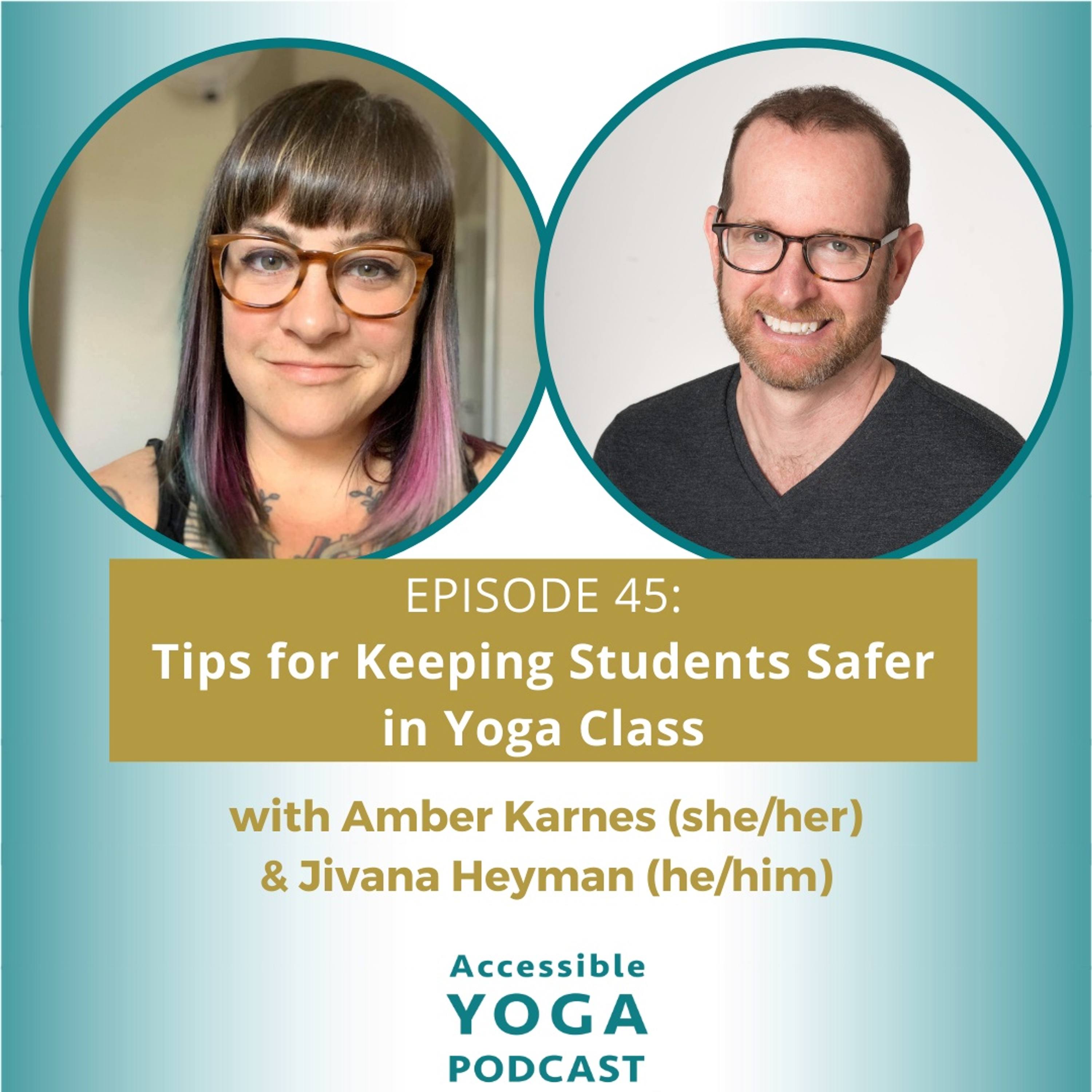
045. Tips for Keeping Students Safer in Yoga Class
from Accessible Yoga Podcast · host Jivana Heyman
In episode 45, Amber and Jivana share tips for keeping students safer in yoga classes. In this episode we’ll explore how the methods we use to teach can contribute to an environment of safety for our community. Amber and Jivana will discuss practical tools they use to help students tap into their personal power and listen to their bodies, rather than striving or competing to keep up with the rest of the class. We’ll talk about strategies for empowering students, how to bring in yoga philosophy and subtle practices to help students connect with their bodies, and we’ll give specific examples of language we use to create a culture of permission and agency for our students. In Episode 45: Amber & Jivana discuss their recent injuries and how they are relating to them Resource: Ann Swanson, Science of Yoga book Research on how props don’t automatically make students safer (https://www.ncbi.nlm.nih.gov/pmc/articles/PMC6664709/) The way we create the container for a class can help keep students safer We should teach our students what yoga really is (not just advanced asana) Honoring the wholeness of the yoga practice in our teaching helps people feel included, creates a sense of belonging, avoids cultural appropriation, and more Giving our students agency and personal power helps them find the appropriate place for their practice, rather than encouraging striving or conforming Resource: On agency and personal power - M. Camellia Explicit ways to create safety in class, including what we say out loud, establishing general guidelines & classroom norms How you perceive your role as a teacher, and how to speak on that to redistribute power Examples of specific language cues we can use to create safety and turn students’ attention inward Resource: On language and “verbalize to normalize” - Dianne Bondy What to do when students have conflicting needs Implicit ways of teaching the concept of agency and personal safety include valuing students who practice in a different way Teaching ahimsa and other concepts from yoga philosophy to reinforce this concept Teaching subtle practices, getting the mind involved takes the focus away from physical prowess Learning to listen to the body and cultivate the skill of interoception goes toward giving the student more agency as they understand what’s happening in their bodies How telling students to “stop when you feel pain” is limited when it comes to students with chronic pain or nervous system conditions Teaching this way is not just about making practices more physically gentle, it’s about getting to a more subtle level of experience by energetically working with the breath Resource: Matthew Sanford's DVD - Beyond Disability We review some techniques we use to help students recognize their “edge” or work with body sensations to find the edge Why identifying and working with our brain’s negative self-talk loop is important to keeping our students’ focus in the most helpful place How encouraging students to observe their thoughts and embody the witness allows for individual experiences This episode's supporting organization is Garden of Yoga. Learn more about becoming an Accessible Yoga Ambassador at the individual level or as a supporting organization at accessibleyoga.org/ambassador-program
Embed this episode
NOW PLAYING
045. Tips for Keeping Students Safer in Yoga Class
No transcript for this episode yet
Similar Episodes
No similar episodes found.
Similar Podcasts
No similar podcasts found.