
EPISODE · Feb 17, 2025 · 15 MIN
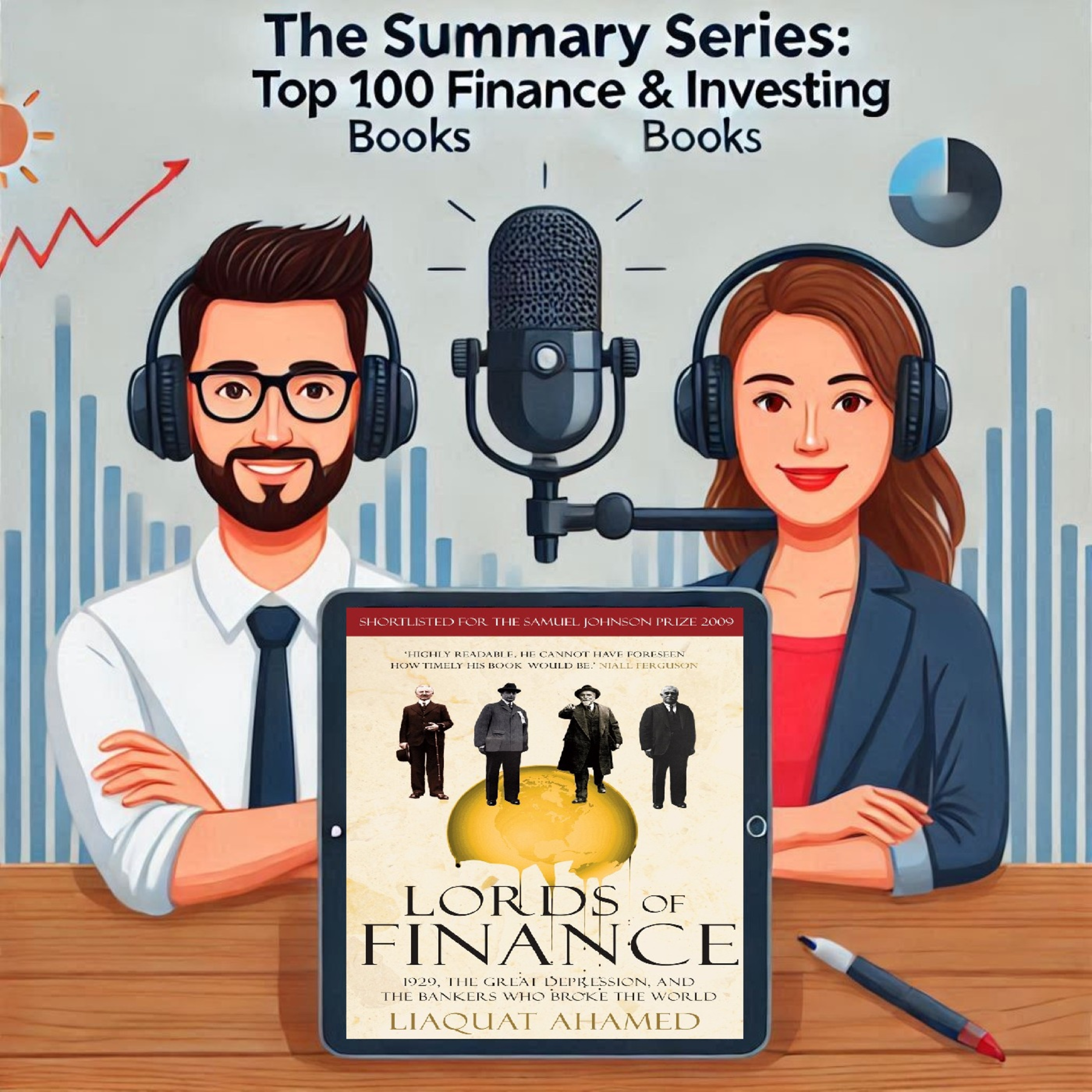
054-Lords of Finance: 1929, The Great Depression, and the Bankers who Broke the World by Liaquat Ahamed
from The Summary Series: Top 100 Finance and Investing Books · host Dominus and Sophie
Summary of Lords of Finance: 1929, The Great Depression, and the Bankers Who Broke the World by Liaquat Ahamed 📚 Buy this book on Amazon: https://amzn.to/3EpjoTZ 💻 Free month of Kindle Unlimited: https://amzn.to/3ZYVJAK 🎧 Grab audio version for free on an Audible trial: https://amzn.to/3PeeivQ "Lords of Finance" by Liaquat Ahamed is a deep historical analysis of the role central bankers played in the lead-up to the Great Depression of 1929. The book focuses on four key central bankers who controlled global monetary policy in the 1920s: Montagu Norman (Bank of England) Benjamin Strong (Federal Reserve, USA) Émile Moreau (Banque de France) Hjalmar Schacht (Reichsbank, Germany) These powerful men mismanaged economic policies, particularly by stubbornly sticking to the gold standard, which worsened the economic downturn and contributed to the collapse of the global economy. 🔹 Key Themes & Insights 1. The Gold Standard and Its Consequences In the 1920s, the global economy was tied to the gold standard, meaning countries backed their currency with gold reserves. Ahamed argues that the rigid commitment to gold forced central banks to make poor monetary decisions, such as raising interest rates when the economy needed stimulus. 🔹 The gold standard restricted governments from printing money, making economic recovery almost impossible. 🔹 As countries hoarded gold, they strangled economic growth instead of providing liquidity to businesses and consumers. 2. The Aftermath of World War I & Economic Imbalances World War I left Europe in economic ruin, with massive debts, particularly in Germany. The Treaty of Versailles (1919) imposed harsh reparations on Germany, forcing it to borrow money, print excess currency, and eventually cause hyperinflation. 🔹 The U.S. provided loans to Germany, which it used to pay Britain and France, who in turn paid back the U.S.—creating an unstable financial cycle. 🔹 Britain and France, struggling with war debt, also made poor financial decisions that led to growing instability. 3. The Stock Market Crash of 1929 & The Role of Central Bankers The 1920s economic boom in the U.S. led to excessive speculation in the stock market, driven by easy credit and low interest rates. However, in 1928-1929, the Federal Reserve, worried about inflation, raised interest rates sharply, causing a liquidity crisis. This triggered: ✔️ A stock market crash (October 1929) ✔️ Bank failures and mass unemployment ✔️ A global economic depression 🔹 The central bankers failed to act quickly, deepening the crisis. They refused to lower interest rates or provide stimulus, fearing it would weaken the gold standard. 4. The Great Depression and the Abandonment of the Gold Standard The Great Depression saw mass unemployment, economic collapse, and deflation. As a result, many countries finally abandoned the gold standard, allowing them to print money and devalue their currencies to revive their economies. 🔹 The U.S. under Franklin D. Roosevelt took bold steps in 1933 by devaluing the dollar and injecting liquidity into the economy, leading to a slow but eventual recovery. 🔹 Britain and other countries also left the gold standard, paving the way for modern monetary policies. 📖 Key Takeaways ✅ Rigid economic policies can make financial crises worse. ✅ The gold standard was a flawed system that restricted economic growth and deepened the depression. ✅ Central bankers hold immense power over the global economy—but their mistakes can have catastrophic consequences. ✅ The Great Depression was preventable, and better monetary policies could have softened its impact. 📝 Final Thoughts Lords of Finance provides a gripping narrative about how the world's most powerful bankers failed to prevent one of the worst economic crises in history. Ahamed’s book serves as both a historical lesson and a warning about the dangers of rigid economic thinking and poor monetary policy.
Embed this episode
Ready to play
054-Lords of Finance: 1929, The Great Depression, and the Bankers who Broke the World by Liaquat Ahamed
No transcript for this episode yet
Similar Episodes
No similar episodes found.
Similar Podcasts
No similar podcasts found.