Hey, what's up guys? Today's episode of the podcast is brought to you by Charlotte's Show Fars. One of the most common problems in the life of any Christian is experiencing a moment of victory but not having the capacity to display the proper amount of spiritual celebration. Many times the feeling of joy that accompanies your victory cannot be expressed through clapping, shouting, dancing, or jumping.
What else will do in these moments of triumph? A blast of the Show Fars. Charlotte's Show Fars are crafted to produce maximum loudness with minimal blowing effort, whether you're a young, vibrant believer with strong lungs or a seasoned saint with a hacking off. Charlotte's Show Fars are the product for you.
Large enough to proudly display during a worship service but small enough to carry in a purse or a small backpack, these Show Fars are the most portable ever created. Now made with new synthetic materials, all of Charlotte's Show Fars are TSA approved so that you can carry them on the plane when attending your next conference. For more information call 1-888-340-616-8875-341109 extension 68745. You're listening to the Miracle Word Podcast.
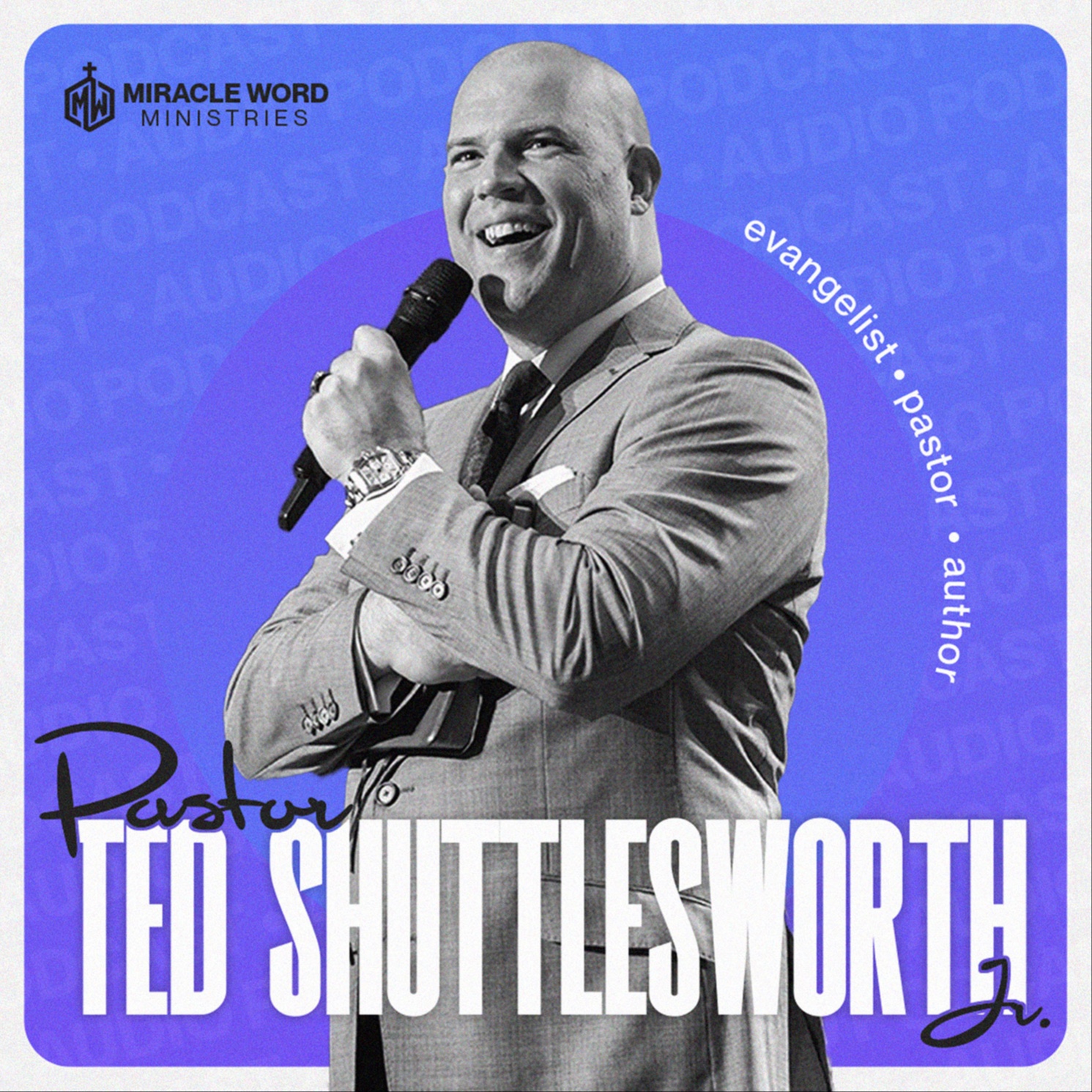
We believe that the Word of God gives you the power to experience never-ending increase in every area. If you're ready for revelation that will take you to the next level, you're in the right place. Here's your host, evangelist, author, and founder of Miracle Word University, 10 Sheltersworth, Jr. Hey, what is up everybody?
Welcome back again today to the podcast. It's Monday, podcast day. Happy to be back with you again. I'm here in North Carolina, King, North Carolina to be specific out in the middle of the woods right now.
And it's been a mighty move of God already. Yesterday, we had not only wonderful manifestations of gifts on the Spirit and the services, but miracles are already taking place. I'll post more about this later, a woman who was deaf and could hardly hear anything. She threw her own testimony, couldn't hear hardly anything without her hearing aids in.
She took them out last night, power of God hit her, and she was instantly healed by the power of God and she began to dance and cry. I mean, it was powerful. So it's amazing. God's moving mightily all around the world.
And I'm excited today. I've got something very interesting. I want to share with you. I saw on the title and I want to get right into it because this is such a massive thing that's discussed in the body of Christ.
There's such a division over it. And I can't really understand why. I mean, I understand why at the base level where, you know, the hearts of men and women, there's nobody in the flesh that wants to obey the Word of God. I mean, the Bible teaches us that very clearly that, you know, the flesh is constantly at war with the Spirit that's Galatians 5 17, if you take a note.
So I want to get into this today. And as you saw in the title of the podcast, I'm going to deal with should Christians really tithe today? I mean, is that something that's still relevant today? Many would argue it's an Old Testament principle and it doesn't.
It's not required of Christians in the New Testament. And so today I want to give you five things to look at from the scripture to take into account when you're looking at this subject of tithing as a believer. We want to look at God's nature. We want to look at how God never changes the Bible says, God is the same.
He said that in Malachi chapter three said, I'm the Lord your God, I do not change. The same is said about Jesus in the New Testament. Book of Hebrews, records, Jesus Christ is the same yesterday and today and forever. We don't serve a change in God who changes his mind or his nature or his character.
So it'll be interesting as we get into these things today and I'd love to hear from you guys by the way in the way of a message on Instagram or Twitter. You can send us an email at info at miracle word.com better yet. Send it to me directly, Ted at miracle word.com. If you'd like to write me on Instagram, it's at Ted shuttlesworth.
If you'd like to get ahold of me on Twitter, it's at T shuttlesworth and I'd love to hear from you guys. We've been having people write in by the way with suggestions for the podcast and I love that. I love to hear what you guys are thinking about and we're going to be covering some of those topics in the upcoming days. Let me also say that before we jump in, I really want to encourage you guys to get connected to miracle word university, which is our online courses as December rolls up here close to us.
We're about what a few days away from December. Now I'm going to be uploading a new course that's coming out this month and then in 2019 we're going full blast full steam ahead, if you will, new courses and I want to do something special for all of you guys that are listening to the podcast. We have three courses available right now that will really, really bless you. One on the power of the Holy Spirit and the baptism of the Holy Spirit.
It's called new metology one. That's just the study of the Holy Spirit. We have one that's on divine healing. By the way, each of these courses are about five hours of teaching through about 15 or 16 videos in each course.
We have a course on divine healing teaching you all about that subject from the Word of God. Then we have a course on answered prayer. I'm sure you've been in a position in your life where you feel like you've prayed and your answers have not come. In that course we teach how to biblically pray so that you can receive answers to your prayer and then we talk to you about there are hindrances or roadblocks to receiving answered prayer.
I know that these courses will bless you in a big way. Normally these courses are $69 a piece, which is very reasonable. Actually, I was looking at some of these courses people are offering. There's a guy that's selling a course that's $1,000.
One guy's selling a course that I saw on evangelism for $800. We make these very affordable because I want to get the Word of God into your spirit so that you can be equipped to do what you're called to do. It's only $69 a course. But for those that are watching or listening to the podcast, I want to give you a discount for being part of the podcast family.
When you go to miraclewordu.com, that's where MiracleWordUniversity is hosted, miraclewordu.com. You want to choose one or all of these courses. You can check out with the coupon code podcast and you'll receive a discount as you check out. You'll be able to get it even cheaper because you're part of the podcast family.
I love you and I want to say thanks for listening again to all of you. Let's jump in today. I want to listen. Here's the thing.
First, I want to pray because I understand that every week that goes by, more and more people are listening to the podcast. We're coming up now on 50,000 downloads of the podcast, which is a wonderful thing. More and more people are listening to it every single week. The Word's getting out.
Thank you guys, by the way, for sharing it. If you're listening today, share it on Instagram, stories, Instagram, Facebook, Facebook, on Snapchat, Twitter, whatever. Let people know you're listening and encourage them to listen because these will build you up for sure. But more and more people are listening and more that may not know me or our ministry directly, but maybe through a recommendation of somebody else.
So I want to pray that as we go through the Word of God today, every person that's listening to this, that you'll have an open spirit and an open mind and a spirit of wisdom and revelation as Paul prayed would come upon you to understand the Word of God like you never have before. So Father, in the name of Jesus, I pray for every person that's listening to this episode today that you give them a spirit of wisdom and revelation in the knowledge of you. Let this Word come alive in their heart today. Let them see things in the Word of God they've never seen before in Jesus' name.
Amen. Let me preface all these things by saying so that you understand where I'm coming from. We're talking about the subject of tithing, giving a tenth of your income to God. I want to preface by saying that you're listening to somebody that's talking that has done this for as long as I can remember without missing a beat.
Literally, I've been a tither. My wife as well has been a tither as long as we can remember, literally since I was a little child, any money that would come to me through birthdays or allowance or doing work, cutting the grass for other people, whatever, even a gift. It was always my practice as I was trained as a small child to tithe and then give offerings above and beyond the tithe to God. And so just to give you a heads up, you're listening to somebody that as a practice of my own life, I tithe on a consistent basis and I have always and I do mean always experienced the blessing of God in my life as a result of my dedication to the kingdom of God because the Word of God is true.
There's no way that you can make the Word of God false. And the Bible is very clear that when you're a person who dedicates themselves to the kingdom of God that the blessings of God will come upon your life. That's been a promise from the Old Testament all the way to the New Testament and the Bible is very clear in Matthew chapter 6 and verse 33 that if you will seek first or another way to say that would be prioritized, the kingdom of God and his righteousness that all these other things will be added into your life. Now, what are the things Jesus talking about?
He wasn't talking about spiritual things in Matthew chapter 6. He was talking about the natural things that people try to get, a place to live, clothes to wear, food to eat. He was talking about the natural things of life and he said, if you will put the kingdom first, then all the other things that people are dying to get and working three jobs to get, they'll just be added to you. They'll just be added to you.
And it doesn't matter. I mean, what you sow, the Bible says that whatever a person sows, that is the thing that he will reap a seed for produces after its own kind. So just a preface that you're listening to somebody that has proven this discipline from the Word of God for over 30 years. My wife has done the same and I have never once, never one time ever been at a disadvantage because I was a faithful tither or giver.
I've never been without. I have never lacked anything. My needs have always not only been met, but I've had more than enough to do what God's called me to do. And I've only ever increased because of obeying God's Word.
So I want you to know, I've never heard someone who is a tither, bad mouth tithing. I just want to start by saying that. I've never heard anybody who's a faithful tither that believes in it. I've never heard them behind the scenes say, man, you know, I tithe in everything, but I wish I didn't have to.
I could really use that extra 10%. You know, there's a lot of it. Never. I travel for a living, as you know, I talked to thousands and thousands of people every year, talk to many of them that are, you know, tithers and givers and generous.
I've never heard one person bad mouth tithing who tithes. I've only ever heard them talk about how it's benefited their life to obey the Word of God. And why am I talking about this? Because it's obviously something that needs to be talked about because if you will go back and just look at some of the statistics, I posted something last week with the statistics in when we were talking about, I mentioned that I posted that thing online about Christian how much they spend on coffee versus how much they give to the Lord.
And I was looking at some statistics when I was doing that and it blows my mind every and I know it's true, but it literally blows my mind every time there's a study done on giving and tithing in the church. And I see the results of how many people in the body of Christ are actually tithing. You know, when I see the numbers on paper from studies that are being done by church growth, teams and all this stuff, I'm like, it blows my mind literally tithers. This is a non-profit source that was done in 2018.
Literally tithers only make up 10 to 25% of any congregation in America. Now think about that. That to me, that number seems to be large and generous because other studies I've read have said that only 4 to 6% of Christians in America tithe on a consistent basis. And on average, Christians give 2.5% of their income to churches.
Think about that. The average Christian gives 2.5% of their income to the church currently. But listen to this, to see below your mind, during the Great Depression, they gave 3.3% of their income. So literally when there was nothing available, people were giving more now that there's an abundance, people are giving less.
And I don't think that that's surprising because, you know, the word of God prophesies that as the end of time comes, which were clearly living in the end of time, that the hearts of many or the love of many would grow cold, that people would fall away, that would meant there'd be an exodus that many would fall away from the faith. So I'm not surprised that these things are happening, but I am surprised that people who say they're sold out to God and love God with all their heart treat their giving so flippantly. And so I wanted to give you 5 things from the word of God to clearly show you that tithing is for today. It's not been abolished.
It was not just something for the Old Testament. And I want you to think about these in the context of Scripture because I feel, and when I finally get to the end, I think that the final point that I'm going to give you today is pretty irrefutable. I don't know how you get around this thought process, but we'll get into it. I want you to, and I really want you to take notes on this because I want you to keep it in your Bible.
I want you to keep it with you because I want to see you blessed. And by the way, if you're listening to this and you don't know me, you need to know that I'm doing this completely objectively as somebody who wants to see you blessed. I have no church. I do not pastor a church.
So I'm not doing this podcast vying for your tithes. I'm not asking you to tithe to me. That's not the purpose of this podcast. The purpose of this podcast is to show you through the word of God that every Christian, no matter what church you go to, should be tithing as a baseline.
That's just the beginning, by the way, which we'll get into in a minute, but it's just the beginning. It is not, you know, you haven't done some amazing feet, you know, if you tithe. You've not done some amazing, you know, you've not won some award for God because you're giving 10% of your income to the church. That's the baseline.
That's the simple thing that every Christian is supposed to be doing. So let's get into this. And five things I want you to take notes on this. I want you to keep this close to your heart because this will change your life.
I promise you, it's changed my mind, my wives, my wife's and I said, wives, like I have like a more with multiple wives changed all my wives lives, my wife's life. And we have one wife, by the way, if you're listening to this from Utah. Anyway, number one, the first thing that you need to know, people always argue, well, tithing is an old testament practice. Tithing is something that, you know, only it was under the law of Moses.
So it's something that was under the law. I want you to see number one, that there has always been something reserved for God alone since the beginning, even before it was referred to as a tithe. There has always, this is number one, been something reserved for God that men could not consume upon themselves, that they had no right to taking for themselves. It was reserved only for God.
Go all the way back to Adam, the first man. The Bible says that God, in fact, if you want to write the reference down, Genesis chapter 2, verses 15 through 17, God created Adam and he created the garden of Eden. And he filled it with fruit-bearing trees and plants. And he placed Adam in the garden.
And according to scripture, the reason he placed him there was not to just enjoy the benefits of the garden, but it was Adam's responsibility to work to tend the garden and to keep the garden. So it was Adam's responsibility to tend every tree in the garden of Eden. He had to work to upkeep the garden. But notice, God spoke to him and said, I'm going to place a tree here in the garden called the tree of the knowledge of good and evil.
And he said, you may not ever eat any fruit from this tree. So I want you to catch this. That was a tree reserved only for God. God placed it there purposely.
Now how easily, think about this, how easily could God have just created a garden and everything in it was Adam's? Easily. He could have easily done that, but he chose on purpose to create a tree in the garden that was reserved for himself, that Adam could not touch, that was off-limits, if you will. Now notice this, Adam was still required to work to tend that tree.
He was still required to work to make sure that tree produced the fruit that he was not allowed to eat. Isn't that interesting? That Adam was not, it's not like God had an out of bounds area of the garden where Adam couldn't set foot in it and that tree, God took care of the tree, God, the fruit was forgot. No, Adam was required to do work to tend that tree along with all the other trees, but couldn't eat any of the fruit of it.
I mean, that's a picture of you working and everything that comes into your life is not for you. You are required to work. I'm required to work, but everything that comes into my hand is not for me. From the beginning of time, there have been things that were reserved for God even before they were referred to as a tithe.
Go further. Look at the story of Noah. Noah's ark, everybody's familiar with that story, but when it was time for animals to go into the ark, everybody always says that Noah brought just pears, a male and female, onto the ark of each kind of animal. But that's not what happened.
If you read the story of what Noah was instructed to do by God, yes, there were male and female animals that went on the ark, but those were the unclean animals. One of the clean animals, those that were approved by God for eating and sacrifice, he was to bring seven pears of each one of those types of animals onto the ark. And notice that when Noah brought them onto the ark and after the flood receded and the ark touched down on the top of Mount Ararat and they got out, notice everything else in the world had died. All the animals were killed, dead, gone, and now Noah had to start over and replenish the earth.
So you would think in a moment like that, where there was nothing else available, no resources available, that you would want to conserve every resource that you had in that moment. And Noah was instructed by God. First thing he had to do was to build an altar and take some of those animals, which by the way were the only animals left on the earth that were for eating, only clean animals left in the whole world. And he only had seven pears of them, by the way, and he was instructed to build an altar and sacrifice to God and give God some of the things that were his resource.
Notice this, during the entire time on the ark, Noah was required to work to ten those animals. You think they honestly were on their 40 days, 40 nights as the rains were falling and then all the time, that was just the time that the rains fell. Then there was time that had to be taken as the waters receded. And what do you think that those animals were going to the bathroom all over the ark and not getting fed?
I mean he was feeding them, I don't know how in the world they must have had some serious technology as they built the ark where there was ways that could get the waste out of the ark during that time. But you know, Noah was working through that whole time to take care of those animals on the ark, but notice they weren't all for him. He had to work to take care of them, but when they got off the ark, there were some of those animals that were reserved for God himself. It didn't matter that Noah worked for them, they weren't all his.
And from the beginning of time, number one, there's always been something reserved for God even before it was referred to as a tithe or a tenth, God made sure that he gave us a precedent in his word to see that not everything that's released to the earth belongs to men, but there's always something that set aside for God himself. So that needs to be definitely kept in your mind and your spirit that this is the first, you know, this is the book of Genesis, by the way, God's setting a standard, he's setting a precedent. He's letting you know how he operates. And by the way, as we go through all these five, keep in mind, God doesn't change.
His nature doesn't change. His personality doesn't change. And neither does Jesus change. He's the same all the time.
He's eternally unchanging. So if this is how God operated then, he continues to operate that way. And let's ask the question, why does God do that? Is, you know, God doesn't need animals in heaven.
God doesn't need any of your resources. He doesn't need your money. God's sitting on a throne, feet arresting on streets of pure gold, the gate of the city is made of one pearl, the Bible teaches heaven is opulent. God doesn't need your money for himself.
Why does he require this from his people? Because he's always going to test us to see where our heart is in relation to him. Because the Bible teaches a very clear principle where your treasure is, there will your heart be also where your treasure is. I dealt with this last week that you can't serve God and money.
It's impossible to do that. You can't serve God and money. The Bible says you can't serve two masters. You will hate one and love the other.
And so God always will test your heart to see where your heart is as his child. Do you love him enough that you're willing to tithe and give to the kingdom of God? God loves a cheerful giver. Why does God love a cheerful giver?
Because it's a proof to him that you love him. Do you think when Christmas comes around that I give gifts to my wife resentfully? I can't believe another Christmas has come. My wife just celebrated her birthday this month.
Do you think I went out and got stuff for her resentfully? I can't believe it. Another birthday. Got to spend money on you again.
It seems like all I do is give you presents. It seems like all I do is take you to dinner. Take you to the movies. I'm so sick of this.
You know, Carolyn, do you realize I work hard for this money? You realize money doesn't grow on trees, babe. You realize, don't you? That, you know, no, I'm not like that.
Because when you love somebody, you love to give to them. You're excited to give to them. That's why the Bible says God loves a cheerful giver because it's proof to him how much you love him. Do you think I'm mad that I have to buy my kids Christmas presents?
Go out and buy you more. You got enough toys, in my opinion. Walk around this house. Have the toys you have.
Never even get cleaned up. They're just laying all over the place. You think I'm going to go buy you more toys? You got too much toys.
You got too much stuff. No, I'm excited to bless my children. I'm excited for Christmas to come and to wrap the presents and to have them under the tree. I'm excited to see their faces when they open the gifts because I love them so much.
I want to give to them. I want to bless them. And God knows that's the case because he created us in his image and in his likeness. So the fact that we love to give that's the same with God.
God loves to give. God loves to give. He loved the world so much he gave his only begotten son. God loves to give.
So he's testing our hearts constantly to see where we are in relation to him. Number two, tithing is something that occurred before the law of Moses was ever given. And by the way, this was no coincidence. This was no coincidence.
God understood. You know, all the word of God that we hold in our hand is the inspired, inerrant word of God, the Bible that you hold in your hand, the canon of scripture. It is inspired, the breath of God breathed it out into the writers. And every word of scripture is inspired by God.
There's only one time in the entire Bible that that word is used by Paul to Timothy as he's talking to him about the word of God and he uses the Greek word, theonostos, which is really to come. It's a compound word made up of two Greek words, Theo speaking of God and new stoser. Yeah, really is the same as we when we say new mythology. It's the word numa or newstos and it means the breath of God.
Pneumatology is the study of the wind or breath of God, which is the Holy Spirit. But Paul tells Timothy that the word of God is theonostos, it takes those two words and puts them together, God breathed, God breathed. The word of God is God breathed. It's only used one time in scripture to describe the word of God.
And why, you know, God knew that we would need his word and he gave it to us and put these things in scripture so that we would see clearly what he was doing from the beginning of time. He showed us number one that there's always been something reserved for him. Number two, just so that nobody could say that, you know, tithing was just part of the law, tithing is just part of the law, tithing is just part of the law, tithing is just part of the law. You hear that so much, it's like read your Bible, read your Bible because number two, tithing occurred before the law of Moses was ever given and PS, it's no coincidence.
God wanted to show us that it was something, I mean, literally, you know, tithing, which just means a 10th, by the way, tithe just means a 10th or 10%. So it's interesting because people say, what do you think it's a coincidence? The Bible says in Genesis chapter 14 and verse 20 that after Abraham came back with his men from battle, he meets a priest named Melchizedek. And we'll talk about that more a couple of points from now, but he meets this priest named Melchizedek who blesses him, which is huge, by the way, that's a massive point we'll get to in a moment.
The priest blessed Abraham and Abraham paid a tithe of all of the spoils. By the way, this was what we call a corporate tithe because Abraham had many men in his employment, his soldiers, I mean, carried his own personal army with him. All of those soldiers got to have a portion of the spoils of war, but before Abraham paid any of his men, before he paid spoils to any of his soldiers, he took a tenth of all of the spoils of war and paid a tithe to the priest named Melchizedek. This was before the Law of Moses was given.
What do you think? It was some massive coincidence that Abraham, under the inspiration of God, chose to give a tenth to the priest who later Hebrews, the book of Hebrews describes Melchizedek as being like Jesus Christ. I'll get into that. But you thought of these.
Wow, what a coincidence. Later, the Law of Moses, they had a tenth, they gave called the tithe. What a coincidence that hundreds of years before the Law, Abraham paid a tithe. No, it's not a coincidence.
It's God's design. Abraham was operating under God's design and paid a tenth as a foreshadowing. Before this was ever instituted, Abraham did it. Not only did Abraham do it, but Jacob, his grandson, promised to give God a tenth.
He vowed before the Law was ever given to give God a tenth. You know, this is not found in Scripture, but I'm going to give you something of an opinion for myself. That's why I'm giving you that heads up. It's an opinion.
I don't find it in Scripture. But I look down logically and you learn, you see learned behaviors that go from generation to generation because the Old Testament tells us nothing about Isaac tithing. But we see very clearly that Isaac was so willing to obey God's voice that when Isaac went into a land, he didn't go down to Egypt like his father Abraham. He went into another land that was in the middle of a famine, but he was so willing to obey the voice of God to not just go with tradition, but to actually be led by God's Spirit.
And God said to him, I'll be with you in this land that I'll take you to. And I want you to sow in a land of famine. He's like, seriously? Yes.
I want you to sow in a time of famine. And Isaac was so willing to do that even though it looked crazy. And the Bible says he reaped a hundredfold in that same year. So it's not like Isaac wasn't a giver, wasn't a sower.
He clearly was and was obedient to the voice of God. So it's my personal belief that this was not just something that Jacob saw his grandfather do, but it was something that he saw his father do. Again, that's not in Scripture. It's not found in the Bible.
But I'm speaking logically as learned behaviors go from generation to generation. And then Jacob get the idea to give a tithe or a tenth to God. You know, because the Bible tells us very clearly he did in Genesis 28 verses 20 through 22. Said, Lord, if you'll be with me, if you'll help me, if you'll bless me, I will, I vow to give a tenth to you.
And once again, people look at that and say, well, see, should we do what Jacob did? Should we only tithe if God promises to bless us? We don't have to do that now because God already promised to bless us. So it's not, you know, what we do for God is not require God promising to bless us or say, Lord, if you bless us in the future, God already promised to do that.
So that's not necessary now. But Jacob did it and said, Lord, I will, he's cutting into covenant with God. And God, if you'll do this, I will. And he said, I vow to pay a tithe to you.
I feel like it's something that was passed down, Abraham to Isaac, Isaac to Jacob, because Abraham did it and and Jacob promised to do it. So tithing occurred hundreds of years before the law of Moses was ever given before it was required before it was required. People who loved God and were in covenant with God were already doing it. And there's a reason that the Holy Spirit who inspired the Holy Word of God put those events in scripture before the law so that we could see them.
I mean, what's the point? What's, you know, you think God just flippantly put the Bible together? You think scriptures are just flippantly there? No, no, they were inspired and preserved through the ages for us to read and learn and be imparted to the principles of God.
And Adam and Noah reserved things for God. Abraham and Jacob paid tithes before the law was ever given. Number three, the third thing, of course, we could go into the fact that yes, the law of Moses was given and tithing was required under the law. That's all.
No, I mean, people talk about that nonstop. So I'm not going to get into the law because that's, that's something commonly known about people that talk about the tithe. Obviously we know it was commanded by the law of Moses. It was a requirement.
People did it. They tithe to the Levitical priesthood. All that can be studied out through Exodus Leviticus. You go through the Old Testament, you'll see that clearly.
But number three, third thing I want you to see today, Jesus affirmed tithing during his ministry on the earth, Jesus affirmed tithing during his ministry on the earth. Matthew 23, 23, Jesus is speaking to the religious leaders and he said, yes, you should tithe, but don't let the greater things go undone. So get that Jesus affirms tithing. He said, yes, you should tithe.
But don't let the greater things in the kingdom go undone. Well, there's a few things we can learn from this. Number one, we can learn that tithing is not one of the greater things of the kingdom. It's a baseline thing.
It's a basic thing. It cracks me up when, you know, it cracks me up when people act, they paid a tie. They act like they, you know, became a super Christian because they gave God 10%. It's a basic thing.
It's not a massive thing. It's a basic thing. And Jesus said that. Yes, you should tithe.
No question. But don't let the greater things in the kingdom go undone. So he actually rebuked them because what he was saying was you're so careful to tithe, even the small, smallest amount, even from your herb gardens. Herb herb, however you say it, somebody say herb, somebody's like, it's a first name herb from your gardens.
You tithe, even the smallest amount from there, but you let the greater things go on done. Yes, you should tithe, but don't let the greater things go undone. So number one, Jesus taught it was a baseline dedication to the kingdom. It wasn't the greatest thing you can do for God.
It's base. It's base. But number two, this, this is an interesting thing that I want to break down with you. And you're going to really need to listen close on this point.
We're talking about the fact that Jesus affirmed tithing during his earthly ministry. And I want to ask you a question and you really need to pay attention right here because this is not complex, but there's a lot for me to say. Think about this. Okay.
I'm going to read this to you. If God's desire was to abolish the practice of tithing after the Old Testament, then why would the Spirit of God inspire Jesus Christ to affirm tithing and canonize those words for all of eternity in the Holy Scripture? Okay. I'm going to stop there and say it again so that you really get this in your spirit because this is a huge point.
If God's desire was to abolish the practice of tithing after the Old Testament was over, then why would the Spirit of God inspire Jesus Christ to affirm tithing and then further canonize those words or put them in the scripture for all of eternity in the Bible? Let me go further. When Christ could have just as easily not mentioned tithing or spoke of a transition, which he did with other subjects, Jesus talked about a transition of what would take place from the old into the new in the kingdom with many other subjects. So why if it was God's desire to get rid of the tithing practice, then why didn't he allow Jesus by the inspiration of the spirit to speak about a transition that in the, why didn't he say this?
Yes, you're tithing now, but the day is coming when you will not no longer need to tithe because I will shed my blood and I will create a new covenant and we'll be in the kingdom of God and it'll be a new covenant under my, why didn't he say that? Why didn't Christ say that? Or, you know, if God didn't want to go that far with it, why didn't just God have him not mentioned tithing at all? Why have him affirm it?
Yes, you should tithe. See, because you understand, Jesus didn't come to destroy the law. Bible says he came to fulfill the law. So if it was truly God's desire to abolish the practice of tithing, I don't understand why he would have Jesus under the inspiration of the spirit of firm it through during his ministry on the earth, even one time.
So will Jesus only mention it one time? That's all it takes. What do you think Jesus has to say something seven times in the Bible for it to actually be valid? If it was only said one time the Bible, the Bible shall not kill.
Is that enough for you to not kill people? Literally. How many times does the Bible have to command something or say something for us to follow it once? That's it.
Once the Bible commands something, that's all unless it's changed by God. Or unless it's changed by Christ, it remains. It remains. So Christ affirmed tithing, number three, during his ministry on the earth, Matthew 23, 23, and God's desire was obviously not to abolish tithing or he wouldn't have had Christ affirm it.
Number four, very important. Number four, the practice of tithing is referred to again in Hebrews, chapter seven, when speaking to Christians, which took place by the way, a full 30 years after the resurrection of Christ, because most scholars believe that the book of Hebrews was composed at the end of AD 63, something maybe during AD 64, because of its terminology regarding the temple. So the book of Hebrews was probably written according to most scholars, 30 years after Christ's resurrection and ascension into heaven, which means Christianity had been around for a full lifetime when the book of Hebrews was written to these Jewish believers, probably in Jerusalem. So why if we've already had Christianity for 30 years that supposedly didn't need to continue in tithing?
Why does the writer of Hebrews, who some think is Paul, others think was a constituent of Paul writing to the Jews? Why does he go back and begin to talk about in Hebrews, chapter seven? Why does he go back in chapter seven and eight and talk about Melchizedek, who being a type of Christ, and Abraham once again, tithing to Melchizedek, and talk about the fact that today now people that are here receive tithes. He's talking about the fact that people are still receiving tithes, even in new covenant.
And he's talking to this isn't written to Jewish people who are operating under the law. This is written to Christians. Hebrews is written to Christians, not Jews. You know, I actually heard a guy say in his teaching that the book of Hebrews was written to Jews who were considering becoming Christians.
That's ridiculous. No, no intelligent person would make that argument after reading the book of Hebrews. It's clearly written to Christians. The entire book, you know, that's why they, you know, just on a side note here, that's when you're reading, you know, in Hebrews, chapter six or chapter 10, we're just talking about people that backslide and I can't, you know, if they've tasted of the world, and then the Holy Spirit thinks it's impossible to renew them to repentance and the Bible says that.
Is because it's talking about people that have not yet been saved, Jews that are considering becoming Christians. It's not what the Bible's doing. Hebrews is written to believers. It's written to believers and he's sitting here.
The writer is sitting here writing to believers and comparing Melchizedek from the book of Genesis to Jesus, the priest of Salem, actually breaks his name down. You know, and here's an interesting thought. You may want to just study this further. Think about it.
Many people believe that Melchizedek in the Old Testament is what we call a Christophony, which is an appearance of Christ before Christ was born in bodily form. Many people believe that. And I'll tell you why they believe it. Even let me just read you Hebrew seven.
You can listen to this. The Bible says, Melchizedek verses one of Hebrew seven. For this Melchizedek, King of Salem priest of the most high God met Abraham, returning from the slaughter of the kings and blessed him. And to him, Abraham apportioned a 10th part of everything.
Now listen to this. He is first by translation of his name, King of righteousness. That's what Melchizedek's name means, King of righteousness. And he's also King of Salem, which is King of peace.
What man on the earth has the right to be called King of righteousness or King of peace. But that was what Melchizedek's name was. Go further with it. The Bible says verse three, he is without father or mother or genealogy, having neither beginning of days nor end of life, but resembles the son of God.
He continues to be a priest forever. That's what the Bible says about Melchizedek, the priest in the Old Testament. And that's why some people believe that he was a Christophony, that he was an appearance of Jesus Christ before Christ came. And if you go further, I'll show you another reason why people believe that.
Verse four, see how great this man was to whom Abraham, the patriarch, gave a 10th of the spoils, exclamation point in the ESV. Verse five, and those descendants of Levi who received the priestly office, have a commandment in the law to take tithes from the people, that is from their brothers, though these, though these also are descended from Abraham. Now here's something so huge. Look at this.
Verse six, but this man who does not have his descent from them, talking about the Levites, received tithes from Abraham and blessed him who had the promises. Number seven is massive. It is beyond dispute that the inferior is blessed by the superior. So think about this for a second.
The Bible is clearly telling us here, Abraham was inferior to Melchizedek. Melchizedek was greater than Abraham. However, nothing else is really written about Melchizedek, but we have tons written about Abraham. And that's why the Bible mentions it once again here in Hebrews.
It says verse six, but this man, Melchizedek, who does not have his descent from the Levites, received tithes from Abraham and blessed him who had the promises. So the Bible even takes the time to reveal once again, listen, Abraham was God's covenant man on the earth. He's the one who had the promises of God. Nobody else was on Abraham's level.
Nobody else on the earth was on Abraham's level. He was God's covenant man, the father of many nations, the father of faith, who had the promises of God, who had by the way, an eternal covenant with God. I don't even have time to get into this. But when God cut covenant with Abraham, he put Abraham to sleep and walked in the pieces of the animal that were cut in half as a representation of eternal covenant.
That's what people do in the Old Testament as one of the ways they cut covenant, they cut an animal into two pieces, lay the two pieces on the ground. And then the two people would walk in a figure eight pattern around those pieces of the animal to signify an eternal covenant between the two. But when God made a covenant with Abraham, he put Abraham to sleep. And when Abraham woke up, God was by himself walking among the pieces of the animal to signify this thing I'm doing with you has nothing to do with you, but everything to do with me because it's going to be eternal so that when the New Testament comes, as Paul wrote in Galatians chapter three, through Christ, I'm going to make this covenant that I'm making with you available to New Testament believers, whether they're Jewish or Gentile, it does not matter.
This will be theirs as well. And that's why I'm making an eternal covenant. So God made an eternal covenant with Abraham, who was the greatest covenant man on the earth at the time, but the Bible still says he was inferior to Melchizedek. Who was this man?
Melchizedek that Abraham was inferior to paid tithes to who by the way has no beginning, has no end, no genealogy is the king of righteousness and the king of peace, according to scripture. Many believe it was an appearance of Christ before the New Testament. And the Bible is very clear goes on to talk about the fact that the priesthood changed and had to change in the New Testament. The priesthood is no longer from the Levitical tribe, but understand Jesus was not a Levite.
Jesus came from the tribe of Judah because he was a descendant of King David, who came out of the tribe of Judah. So Hebrews chapter eight talks about the fact that the priesthood had to change because the covenant changed. So now we don't pay tithes to the Levitical priests, but the Bible teaches that we pay. He said now he receives them in heaven.
And that's found once again in Hebrews chapter seven, verse eight, in one case, ties are received by mortal men, but in the other it's it's they're received by him who is testified that he lives continually. Hmm. So we see we don't do it the old way. The priesthood has changed now.
The priesthood is now set through the tribe of Judah. By the way, if you're a Christian, then you are all from the same tribe, which is the tribe of Judah. We are all descendants of Christ. Paul speaks about it and calls it the spirit of adoption that even if you weren't born Jewish, you were added to the family of God by the spirit of adoption.
And now every person in the body of Christ is from the tribe of Judah because Jesus Christ is the lion of the tribe of Judah. He came out of the tribe of Judah. He was a descendant of David. And I know this point seems a little bit complex, but to simplify the point I'm making is is that now we pay tithes directly to Jesus Christ, not to the tribe of Levi, but he receives them in heaven, Christ receives them in heaven.
So, you know, we talk about this man, Melchizedek. And there's a reason that the book of Hebrews mentions it and talks about tithing and the fact that people received them on the earth, but they're being paid to him directly in heaven. You know, what's the point otherwise? Why even talk to believers about it?
They should know if it was already, listen, if it was common knowledge by 30 years after the resurrection, that this was something that nobody needs to be doing. What's the point of even mentioning it? Why go into it? If 30 years later, people know for 30 years, we've known tithing is no longer something we do.
Then just it would be silent about the subject, but it's not. The New Testament mentions it once again. And then here we go. Number five, I want to talk about this because this will play in a little bit to the book of Hebrews and all the other four points, but it's very interesting.
Okay. Number five, one of the main arguments against tithing is that it was an old testament practice under the law of Moses, which is not relevant to New Testament believers. It's not relevant. Okay.
I want to give you a few things to think about on this point. Number one, there are still elements of the law that we follow today as New Testament believers. For example, the 10 commandments. You say, we don't follow the 10 commandments.
We only have one command and that's the commandment of love. Yes, I understand that. But once again, you've got to realize the Bible teaches Jesus didn't come to destroy the law, but to fulfill the law to fulfill it. The reason that the law of love is a greater law than the 10 commandments is because it envelops the 10 commandments in one commandment.
For example, if you love your neighbor as yourself, you're not going to steal from your neighbor. You're not going to kill your neighbor. You're not going to commit adultery with your neighbor's wife. You're not going to bear false witness against your neighbor or lie about them.
So all of the 10 commandments are contained within the new commandment of love, but we still follow the 10 commandments. You know, I still don't kill people. You realize, I still have no other gods before God. I don't commit idolatry.
So all of these things, we still follow these things. We still, and they were included in the law, but Jesus fulfilled the law, but doesn't mean he wiped out all of the things that they did in the Old Testament. Some of them he did fulfill. And I'm going to talk about that in a second.
Number two, as I mentioned a moment ago, he didn't come to destroy the law, but to fulfill the law. So anything, remember this, we started by saying God doesn't change. His nature remains the same. His methods, what he desires remains the same.
So for example, let's take a look quickly as we get ready to close the podcast. Let's get, let's look at four types of giving that took place in the Old Testament. So you think about this, anything no longer practiced in the New Testament, would have had to be fulfilled by the redemptive act of Jesus Christ. You understand that anything that's different now than it was in the Old Testament is only different because of what Jesus did on the cross.
That's it. That's the only thing that changed is whatever Jesus changed by his blood. Okay. So let's look at four and then there are more, but let's just look at four types of giving in the Old Testament and talk about them in relation to the New Testament.
Okay. Number one, what they called arms for the poor or giving to bless the poor. Okay. That was a type of giving in the Old Testament, blessing the poor.
Well, Jesus death, burial, resurrection and ascension did nothing to change the discipline of giving to the poor. Did nothing to change that. In the New Testament, we are still required as believers to bless the poor without question. If you're not doing anything to bless the poor, do something to bless the poor because it's commanded in scripture and nothing Jesus did on the cross, change that for anybody.
So there's one type of giving in the Old Testament that did not change because we got into the New Testament and Jesus shed his blood. Number two, what was called freewill offerings or now we just call it giving an offering, an offering from your heart where you decide to give something to God. Not a tithe talking about an offering, something that you freely give to God as an offering. That in the Old Testament was called a freewill offering.
It's things that people gave to God because they loved him and they chose to give it to him. Jesus died, bit was buried, was resurrected and that hasn't changed. We can see examples throughout the New Testament of people still doing that giving offerings to God. So Christ's death, burial and resurrection did nothing to change that type of giving from the Old to the New.
It's still the same today. Now, let's do another one. The atonement offering. This was an offering that had to be given for the covering of their sins.
So people were sinning, but they had to give blood sacrifices so that their sins could be covered by the blood of spotless bulls, goats or lambs in the old covenant. Well, here's something that Jesus did change because now when Christ, who was the eternal lamb of God, was crucified on the cross of Calvary, once and for all, he gave an eternal sacrifice for our sins forever. Meaning it is no longer necessary for us to sacrifice spotless bulls, goats or lambs for the covering of our sins. It's no longer necessary to do that because Christ is the eternal sacrifice.
So as we transition from the Old Testament into the New Testament, there's something. Now, I want you to get this because this is very, very, very important right here. Catch this. It's not that God no longer requires blood sacrifices.
That is not what happened. God didn't change his mind and say, OK, now I'm a different kind of God in the New Testament and I don't require blood sacrifices anymore. No. No.
What happened was Christ gave an eternal blood sacrifice in the New Testament. God still requires a blood sacrifice for the remission of sins, except now it's just the eternal blood of Jesus that stands before the throne of God as our sacrifice. So understand, God is still requiring the blood of Jesus for the remission of the sins of the world. So God didn't change.
He's still the same. It's just that Jesus did something eternal that takes the place of a lesser sacrifice, which is a natural bullgoder lamb. Christ became the eternal spotless lamb who was slain for the sins of the world. So now we no longer are required to give that type of an offering.
So now let's finish with this. Tithing in order for you to argue or for anyone to argue that tithing is no longer relevant for today. You would have to prove from scripture, which I guarantee you'll be unable to do. You have to prove from scripture that somehow Jesus Christ became the eternal tithe for all time on the cross, because if giving to the poor was not taken away, if giving free will offerings was not taken away, why?
Because Jesus did not become the eternal arm for the poor on the cross, nor did Jesus become the eternal free will offering for all believers. No, we don't have to give offerings anymore because Jesus became the offering. No, that's just not true. And it's insane to think that way.
Jesus did become the atonement offering. So now it's not required for us to do that. But show me in scripture, give me scripture and chapter and verse, build a doctrinal argument. You can't do it.
That somehow Jesus became the ultimate eternal tithe on the cross, now rendering it unnecessary in the New Testament community. You cannot do it. It is still required today as much as it was back then. It is something that has existed since the beginning of time.
It was not first seen in the law of Moses. It was seen before the law of Moses and it was seen in type and shadow as a reservation of things for God through Adam and Noah. We see it throughout the Bible. God's always looking to test the hearts of his children to see where they are in dedication to the kingdom.
Tithing is not done away with or abolished because we're in the New Testament. It is something that we all should still be doing. And that's before we give offerings to God. That's before we start to give free will offerings until you're giving a tithe.
You've not even begun to give offerings to God if you've not yet paid a tithe. So understand and it's, you know, the arguments people, you'd have to show me from the Bible because it's patently absurd that, you know, somehow tithing has been done away with in the New Covenant. I can't find a way, you know, intelligently to make that argument from the Bible and ignore what I want to because I have a love for God that makes me want to obey his word. And once again, remember these things were all put into place for our own benefit because God wants to bless us and we're not in a new covenant of promises.
We're in a new covenant of once again a covenant. A covenant is different than he promised. A promise is based on one person's word. A covenant is based on two entities words based on two.
God said, if you'll do this, I'll do this. That's what a covenant is. You know, salvation is not a promise. It's a covenant.
If you want to be saved, you have to confess with your mouth that Jesus is Lord and believe in your heart that God raised him from the dead. That's how you receive the covenant of salvation. It's something is required on your part. Same is true with receiving healing.
The Bible says in the book of James, is there any sick among you talking about the church? Let them call for the elders of the church. Who will anoint them with oil and pray the prayer of faith and the prayer of faith will save the sick and the Lord will raise him up. There's an actual method to receive healing from God.
It's a covenant. Same with being blessed financially. Give and it shall be given unto you. Good measure, press down, shake it together, running over, shall men give into your bosom.
Giving is a covenant. Healing is a covenant. Salvation is a covenant. Understand we are in a covenant with God which requires our interaction with his system.
And tithing is part of the covenant. It's just part that's never been abolished. It was instituted by God and it's never been removed from our dedication to God. If you're listening to the podcast, listen to this, this is something I've been doing, I pray that today's episode opens up your eyes to see.
It's time to do more for God, not less for God. Let God see the state of your heart by obeying his word and obedience to his word always brings the blessing to your life. Always. Obedience is the key to the blessing of God.
The Bible says in Isaiah chapter 1, if you're willing and obedient, you will eat the good of the land. I'm going to pray for everybody listening. Father in Jesus' name, let this word penetrate their heart and bring conviction to their heart for those that are not doing it, Lord. I pray you give them a conviction to begin to obey your word so that you can bring the blessing of heaven into their life.
For those that are doing it, Lord, I pray that you give them a new fire and a boldness to serve you and obey your word like never before. I ask you as we're coming into this final month of the year, Lord. Let a financial increase for your people come quickly. I pray that when we start 2019, we'll start with a full momentum that's already taken place that will hit the ground running on January 1, because the greatest days of our life are ahead of us, not behind us.
Our purpose continues to increase. Our path continues to get brighter in the mighty name of Jesus. We thank you for it. We give you all the praise and the glory in Jesus' mighty name.
Amen. Listen, don't forget. I want to encourage you guys to jump in and join me on Miracle Word University. You can check it all out at miraclewordu.com.
If you haven't done so already, share the podcast today. Let somebody know you're listening. I love you so much. I'll be back with you Wednesday for Worsher Wednesday podcast.
Don't forget until next time, goodness and mercy are following you for the rest of your life. I'll talk to you soon. We would love for you to join us in a live service. To find out when Ted Shuttlesworth Jr.
will be near you, please visit our website at www.miracleword.com.