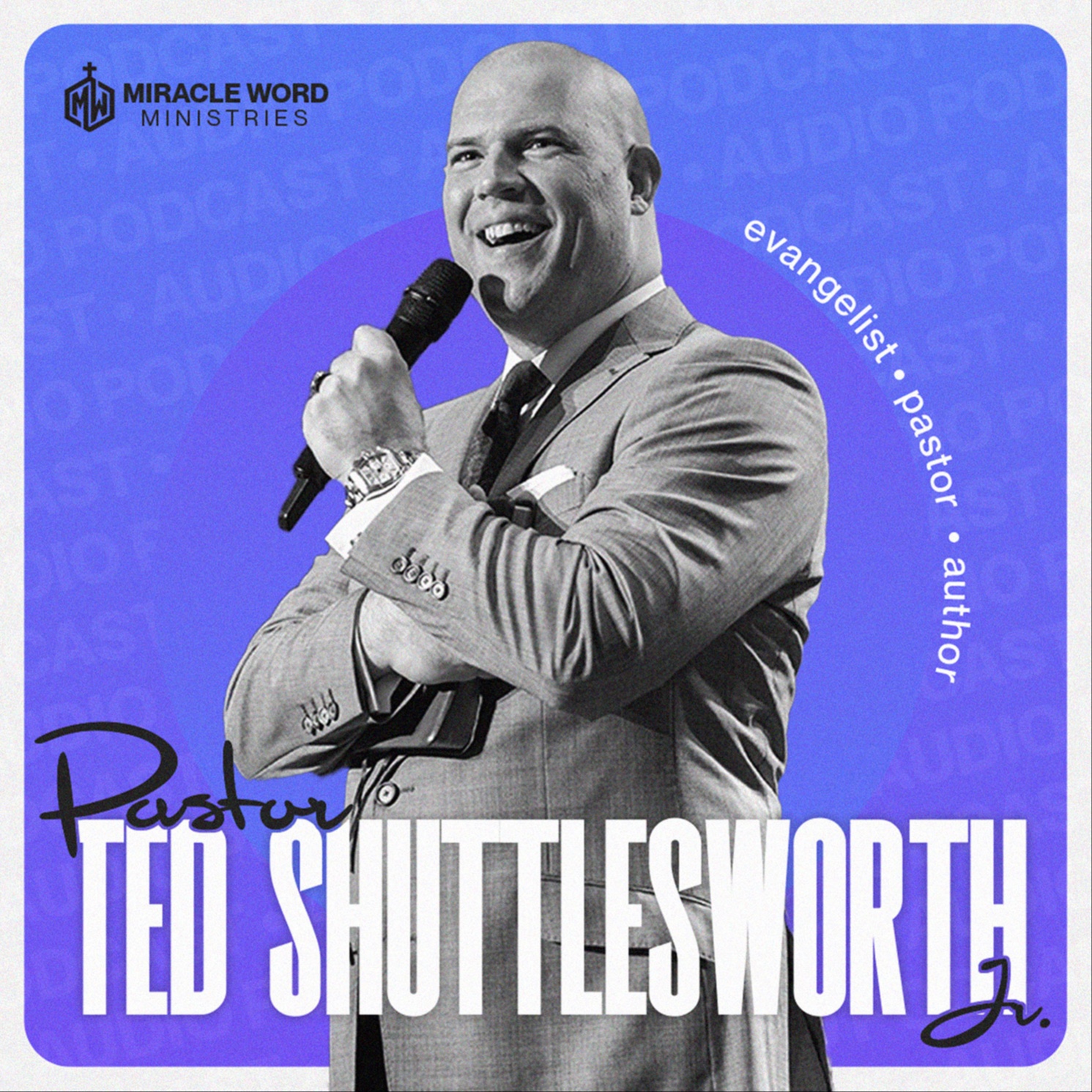
You're listening to the Miracle Word Podcast. We believe that the Word of God gives you the power to experience never-ending increase in every area. If you're ready for revelation that will take you to the next level, you're in the right place. Here's your host, evangelist, author, and founder of Miracle Word University, Ted Shuttlesworth, Jr.
Hey, what's up everybody? Welcome back to the podcast. Again today, Ted Shuttlesworth back with you again. Listen, it's the final episode of 2018.
And I'm excited to be with you again for this final episode of the year. We're going into 2019. It's gonna be phenomenal. And as I promised, I wanna give you an episode today on five simple tips for effective New Year's resolutions.
I know that we're coming into January 1st, and everybody gets introspective and optimistic about the next year. And everybody starts making goals and setting goals and making resolutions about how they're gonna change their life in the new year. And that's a good thing. I mean, without question, planning and goal setting is not only good, it's scriptural.
We should be trying to set goals and plan. And obviously our goals and our plans should align with God's plan for our life. Without question, you wanna make sure that you've found the plan of God for your life. And if you haven't yet done that, I wanna encourage you right off the bat that if you're not joining us, or if you hadn't planned on joining us for this new year, I wanna challenge you to join us for this 21 days of fasting and prayer that begins on January the 2nd.
And it's a perfect time. I mean, many people across the body of Christ are beginning their year with a fast. And if you've never done an extended fast before in your life, now's the time to start. Fasting is something that God, without question, has planned for his children.
It's something that Jesus considered to be a discipline that his followers would have. And the Bible teaches that. Matthew chapter six, Jesus is in a discourse about three subjects, fasting, prayer, and giving. And it's interesting to understand that even though it's God's expectation and Jesus expectation for his children to fast and pray, many people don't ever fast and pray in their life.
But I wanna encourage you in the beginning of this year to start setting not just your goal, but setting your affection on spiritual things. And there's no better way to realign yourself for the new year than fasting and prayer, making your flesh take a backseat to your spirit by fasting and praying. I just wanna encourage you, if you've never done that, make this the first year that you've done it and join us. We'll be getting on January the second and we're going all the way through the 22nd.
It's 21 days. If you've never done an extended fast and you're kind of unsure about it, maybe you work a really rigorous, stressful job, maybe you do construction. I wanna encourage you to join us on the, what we call the six to six fast or the sun up to sundown, some people call it. And that is basically nothing but water between six a.m.
and six p.m. And then once you hit six p.m. and you can take a meal before bed or whatever, but if you've never done it before. But if you have, if you've done some fasting, I would encourage you to just do a total fast of just liquids only for the second through the 22nd.
And believe God for increase in this new year. But today I wanna give you what I would consider to be five things to think about when you're setting these resolutions. Because it's interesting, I did a study on this recently and I wrote an article, it's wild. How many people set goals and then break them before the first month of the year is even over.
People are setting goals that supposedly are gonna carry them through their entire year, 12 months of life change. And a recent study showed that the average person breaks their workout goals before January even comes to an end. In fact, they narrowed it all the way down after pulling millions of people through a social media network that is involved with workouts and athletics called Strava. They found out that the majority of people were breaking their workout goals by January the 12th.
And they started labeling January the 12th, Quitters day because some people were breaking their goals by that time. I mean, can you imagine that the average person can't even stay consistent with their goals for two weeks of the first part of the year? That's insane to me. So I'm gonna talk to you about some things that I think will help you and some things you definitely need to be doing.
But if you're gonna set goals, plan to carry them out. Plan to fulfill the goals and the strategies that you're setting up for yourself. And there are things that you can do to make that easier. And actually, even though the title says that these are five simple tips for effective new year's resolutions, I'm actually gonna talk about 10 things.
I'm gonna give you five and then another five. Because if you've never heard about smart goals and if you have been in business for any period of time, you've probably heard this acronym, smart goals, that each one of those stands for something. And I wanna run through those quickly because I do feel like that those are extremely important when it comes to setting goals for yourself in the new year and plans for your life. And so I wanna just walk you through and I'm gonna take you through the five things from the Word of God today that will help you, I believe, with your goals.
But to cover these smart goals, what does it mean to set a smart goal? Well, the way that they have this set up, the first letter S stands for specific. And I totally believe in this. I'm very big on this.
You've got to be very specific when you're making goals. You can't say that in 2019, I'm just gonna be healthier. That's not a specific goal. There's no way that you'll carry that out in 2019.
You can't say, I'm gonna be healthier in 2019. The goal has to be very, very specific. So you have to break it down into the smallest possible denominator that you can for the goal. You can't just say, I'm gonna be healthier.
You have to make a plan and say, okay, how am I going to be healthier in 2019? Does that mean that I'm going to walk every day around the block? Does it mean I'm gonna run on a treadmill in the morning? Does it mean I'm going to cut my carbs down?
Does it mean that I'm, you know, you can go become very, very specific. The reason for that is because you're setting a target for yourself. And if you don't have a target, you don't even know if you can achieve your goal or not. And it really goes up and links with the second part of smart goals, they're not just specific, but the M stands for measurable.
Your goals are measurable. You should be able to look at your life after you've set your goals and be able to track. Am I hitting these goals? If you can't track it, then there's no reason to even set the goal.
If there's no analytics that you can look at and say, oh yeah, I've been accomplishing it. How can you, how could you start January one? Say, well, I'm just going to be healthier. If you don't set any actual goals to be healthier, how can you get to January 31st and say, well, did I accomplish my goal?
Well, how do you know? Do you just feel better? It's like, you can't know if you are healthier unless you're setting specific goals. So the goals have to be measurable.
You have to be able to look and get analytics. If you kept a journal or a diary of what you're doing, could you track your success or your failure throughout your year? And that's so very important. So that's why the goals have to be specific and they have to be measurable.
So for example, if you were going to say that, yes, I'm going to be healthier. And so my two main goals for doing that are, I'm going to start walking two or three miles a day around my neighborhood. And then I'm also going to cut my carbs back to 50 grams of carbohydrates a day. Well, now you have specific and measurable goals that you can track on a daily basis.
So at the end of every day, you can look back and see, did I walk three miles today? And did I eat more than 50 grams of carbohydrates? So did I read nine chapters of the Bible today? Did I pray for an hour today?
You know, setting up spiritual goals. You could say, well, I want to read the New Testament every month or I want to read the New Testament every quarter. You know, did I read my three chapters of the New Testament today that will allow me to read the New Testament every quarter? You know, did I do it or did I not?
Did I pray for at least an hour today? You know, you track these things. You can't just say I'm going to be more spiritual and I'll be more in tune with God. No, you've got to make these things specific and measurable.
Number three, the third, which is A, and it stands for attainable, attainable. You've got to set goals that are actually possible to achieve. If not, what you're doing is you're setting yourself up for frustration. You're really setting yourself up for frustration.
You don't want to make your goals too easy that you have them accomplished by the time you hit, you know, February, that's ridiculous. You want to set a goal for yourself that it's going to be, you know, it'll take hard work to achieve it. It'll take the help of God to achieve it. But you want to make something that you could actually achieve by the time the year is over.
You know, it's not, and everything's, trust me, when I say this, everything is relative. You know, I can't give you an example, say, well, you know, you shouldn't say, you know, I'm going to be a multi-millionaire by the time the year is over. Well, that might be actually an attainable goal for some people. So you have to take stock of your life and know where you're at.
And then say, I'm going to set a goal that yes, it's going to take work, but I know that I can achieve it if I work towards it and with the help of God, I know that I can achieve this goal. If you're not doing that, then you're going to do all of that work only to lead yourself to frustration. And that's a mistake because discouragement and frustration, see, if you're taking, if you're taking stock of yourself, if you're actually getting feedback from your own tracking of your analytics of what you're doing in your life, then you don't want to, you know, you don't want to be, you know, 30 minutes, 45 minutes, or excuse me, 30 days or 45 days into the year and be frustrated because you're not seeing the accomplishment that you expected. Well, what happened?
You set a goal for yourself that was too hard that you're not really accomplishing. And so what ends up happening is is people just quit altogether. And then, you know, they go back to how they were the previous year and the previous 10 years because they've not taken care to create goals and plans for themselves that are actually able to be achieved. And it's a massive mistake.
Many people, the reason they quit is not because, you know, they forgot to accomplish their goals or they didn't set good routines. The number one reason people quit is because they get frustrated. They get frustrated that they're not seeing the change that they want. And really, that has a lot to do with the type of goals that you're setting for yourself.
If they're not attainable, then you're gonna be very, very frustrated early on in your goal setting process. Number four, the R stands for relevant. This is actually a very important part of goal setting because we could set goals to do anything really. I find it interesting that when you look into Genesis chapter six, the Bible says that people had come from the East and made a plan to build a tower into the heavens.
And we know it is the Tower of Babel. And God said, if I don't go down there and confuse their language, they will accomplish exactly what they've planned to do. So God was actually saying that if He didn't come down and stop them by confusion, they would be able to do whatever they put their mind to do. And so it's interesting that there is power in every believer to accomplish amazing things.
You have the power and the ability to accomplish amazing things. Obviously those people weren't believers, they were actually pagans that were setting up false worship to false gods. But even they, by unity, had the ability to accomplish something supernatural and God had to stop them. So how much more do you and I have the ability to accomplish supernatural things with the help of the Holy Spirit?
So know this, you've got the ability to accomplish supernatural things. The danger that comes with that ability is trying to accomplish things that have nothing to do with God's purpose for your life. They have nothing to do with your calling. They have nothing to do with what God has purposed you to do.
And because achievement for the sake of achievement is stupid, it's a waste of your time, it's a waste of your energy. Let me give you an example. For me, and this makes people laugh, I use these kinds of illustrations, but I'm a minister of the gospel and I have a goal and a purpose on my life to preach the gospel, to see the sick healed, people delivered and changed the power of God, touching his people, see so many souls saved. So here's the thing, that's my main purpose, that's my main goal.
Everything I'm doing should push toward accomplishing that purpose or even the things that God has put in my life that are gifts that he's given me, for example, the ability to praise and worship, which is why we do things like the worship summit, to raise up worshipers and praises. Those all go in line with my purpose and with my calling. But see, I have the ability, I could do other things that could take time out of my life. And let me give you an example.
It's one thing to say, I'm going to take steps, as I said at the beginning of this podcast, I'm gonna take steps to be healthier or I'm gonna take steps to make sure that the temple of the Holy Spirit, which is your body, is taken care of in a way that's pleasing to the Lord. But then it's another thing to say, well, I'm gonna spend a good amount of time becoming a body builder. And so I'm going to spend hours and hours in the gym each week. I'm gonna spend time doing the research on it.
I'm gonna spend time doing the meal planning for it. I'm gonna spend time, you just go right through the, I'll tell you, I could accomplish that. Without question, I could accomplish that. But at what cost is the question?
At what cost am I accomplishing something great? How few people actually look like that? How few people actually look like the rock? Or Vin Diesel or Arnold Schwarzenegger in the 80s?
Very few people have the discipline and the ability to get to that place. I could get there, you could get there. But the question is at what cost? Because understand something, there's the most valuable currency in the world is time.
Think about that for a minute. The most valuable currency in the world is time. Money can be lost, money can be gotten back. Time can never be recovered.
Once it's gone, it's gone. And what you did with it, you will answer for it to God. So there's a lot of people that waste a lot of time. I'm not saying that every single minute of your day has to be filled with productivity.
There are times of rest. There are times to relax. I get that. But the point I'm making is that in your times of production, you can actually be producing the wrong thing.
Because maybe it's pleasing to you, but it has nothing to do with your purpose. So the R stands for relevant. And when you're creating a smart goal, you wanna create goals that are relevant to your purpose. Relevant to your, what God has set up for your life plan.
And he said in Jeremiah 2911, I know the plans that I have for you. So God has a plan for every believer to carry out on the earth. It's our responsibility to discover those plans of God and to walk in them prayerfully and diligently. And one of the greatest ways that we could ever discover those plans is by fasting in prayer, which is why I was encouraging you at the beginning of this episode, to join us for this time of fasting in prayer in January.
And if you've not yet discovered God's plan or purpose for your life, now is the time to get after it. Find out what it is and pursue it with everything you have in you. And let everything else fall to the wayside. You know, if you go back through, if you ever go back through to binge, listen to the podcast, you'll find an episode that I did that I talked about.
I described that when I went back to people that had changed their world, in fact, I believe the episode is called The Number One Secret that World Changers Live By. But I went back and any person that I ever met that had changed their generation changed their region, changed their world, I always ask them one question. If you could go back in time and you could tell the 30 year old version of yourself, one thing, what would it be? And 90 some percent of them gave me the exact same answer, which was find out God's plan for your life, discover it.
And then only do that for the rest of your life. And so what they're trying to get across to us is this, make sure everything you're doing, all the work you're accomplishing, all of that is relevant to the purpose of God that's in your life. So are your goals need to be relevant to the purpose and plan of God for your life? And finally, the T in Smart Goals stands for time-based.
Your goal should be time-based. And what I mean by that is you should have a timeline for your goal. The reason for this is because there are a lot of us that are procrastinators that could let goals run on forever and ever. You know, you could say, you know, I'd really like to lose 20 pounds.
And you know, three years from now, you're still losing the same 20 pounds. You've got to set a timetable for yourself so that you know by a deadline, when you've expected to accomplish what you're supposed to be accomplishing. And obviously in this episode, we're talking about how to accomplish things for this year. So, you know, obviously as you're looking forward, you're setting goals that you're saying by 2019's end, I would like to have these things accomplished in my life.
You know, we set things up, you know, even when it's some, you know, very basic things, like, you know, the study of God's Word. You know, you might set a goal, like I said, to read the Bible this year. You might set a goal to read the New Testament multiple times. That's why I give those goals to you in a way that you could write them down.
And then you have something to go by that's a plan or a strategy that will help you to accomplish that goal in a certain timeframe. And if you don't see, here's the problem. Many people don't do that. And as a result, as I said a moment ago, what ends up happening is these things drag on and on and on forever and ever.
And people find reasons, what they end up doing is people find reasons as to, or what I call excuses as to why they still haven't accomplished the goal that they set out to accomplish. And you know, it's like a guy I knew that he wanted to create music and stuff. And he bought all the tools. But every time I'd ask him, you know, is your album out yet?
Is your album out? He would always come back to me with another piece of gear that he was waiting to buy before he would produce his album. And so he made that his excuse that, you know, three, four years went by and all the brand new gear that he bought is now obsolete. You know, and he's still waiting for another piece of gear.
You cannot allow yourself to miss the production and accomplishment of your goal because you didn't set a proper timetable and a deadline. So your goals need to be specific. They need to be measurable. They need to be attainable.
They need to be relevant to your purpose and they need to be time based. Those, if you've never heard that broken down before on SMART goals, you need to hear it because it is very, very important as to what you're gonna accomplish in your life. And then I wanna give you five simple tips today that I believe will cause you to create effective New Year's resolutions and actually get these things rolling in your life. And obviously you want to custom fit those to the SMART parameters that we just went over.
But the first thing I wanna tell you, number one, if you're taking notes, forget the past. This is a huge tip when you're going into creating these new plans and these new purposes. And let me read you what Paul wrote to the Philippian church. He said, in Philippians 3, 13, 14 brothers, I do not consider that I've made it my own.
But one thing I do, forgetting what lies behind and straining forward to what lies ahead. Forgetting what lies behind and straining forward to what lies ahead. Paul had a very, very supernatural piece of insight here. This was inspired by the Holy Spirit that if you're going to be successful in what you've got planned for your life or what the Holy Spirit's led you to do, it is so vital that you forget what lies behind and strain forward.
I love the way the ESV words that straining forward to what lies ahead. Why is it important? Well, obviously he's giving us the word picture here. He's not just calmly walking into his future.
He's straining forward as he described in other parts of the epistles that he wrote that he likens your life in my life to erase. And he said, run that you may obtain a prize. So when he says we're straining forward, we're not calmly walking into the future. We're straining, we're running with everything we've got with momentum into what God has called us to do.
But notice the prerequisite here. He said, forgetting what lies behind and straining forward to what lies ahead. Remember that you cannot ever change what lies behind. But you can change what lies ahead.
Think about that. You cannot change what lies behind, but you can definitely change what lies ahead. And these next steps that you're getting ready to take for a new year, you have to keep that in mind. Because one thing, as I spoke about discouragement before, one thing that discourages people is many, many times people look at where they are in life and they're disgusted with it or they're discouraged about it.
And they continually rehearse the mistakes they've made that got them into that position. And the more they rehearse those mistakes, the more they rehearse the position, the more discouraged they become. And as a result, and I promise you, and you've probably been there too, people can get to the place where they feel like they've made so many mistakes and they've gotten themselves into such a mess that they think, well, what's the use and even trying to get out of this? What's the use of even trying anymore?
And that's a trick of the enemy, to keep you where you are, to keep you focused on things that are behind you. Those days are over. That's why I understand that January 1st is just another day. Nothing really changes on January 1st, from December 31st is just another day in the week.
But in your mindset, we have a new year that's beginning and that's why so many people feel provoked to do something, to make a change. Because as we start a new season, a new year, then you have a mindset that this is a fresh start. And I understand that. And that's how we need to be.
One of the first keys that we've got to have locked in is that I'm forgetting what lies behind. Here's the other thing. Not just forgetting what lies behind that was bad or that was discouraging. Forget the things that lie behind that were good.
Forget the things that lie behind that were good. In fact, did you know God spoke to his people in the book of Isaiah? And many of you may be familiar with this passage where God says to that, I am doing a new thing, can you not see it? But before he says I am doing a new thing, you know what he does?
He recounts to his people, all of the supernatural miracles that he accomplished on their behalf, all of the powerful things he did for them. And then in the new living translation, he says this, but forget all that. I am doing a new thing, can you not see it? What?
Yeah, God is saying, first of all, take them and remember all the powerful things I've done for you and now forget it. Because here's what happens to many people. You can get stuck in the past of things that were good, which is a mistake. You know, I'm sure if you've ever been back to your own hometown and you met up with people from high school that you used to know, there's always that person that's like still wearing their varsity jacket and still wearing their class ring and asking everybody, remember that member homecoming, remember how awesome homecoming was?
You remember when we won the championship or whatever it might be, they're stuck in the good things of the past. And it's not just the negative things that'll hold you back, good things can, because what ends up happening is you can rest on things that you've already achieved and think, well, man, yeah, we got it done. And now we're just kind of coasting. No, no, no, no, you're pushing for greater things than you've ever seen.
So forget the past. That's number one, you've got to forget it and strain forward towards the things that God has planned for the new year. One of the things that I made up in my mind last year was the previous me, the me from last year, will not out pray me in this year, will not out fast me in this year, will not out give me in this year, will not out study me in this year, the previous me will be at a lesser level than the next year me. And I'm gonna make up my mind that this year's gonna be the same.
2018, I'm not gonna give more in that year than I do in 2019. I'm not gonna pray more in that year than I do in 2019. I'm moving forward, I'm going to do more and I'm setting goals to make sure that I accomplish those things and that my life continues to get greater as I wait for the return of Jesus Christ. So forget the past number one.
Number two, write your goals down. Write them down. We dealt with this in the smart goals section, how they've got to be specific and measurable. But a scriptural principle here is write them down on paper or whatever, put them in your phone or your tablet, your computer, Habakkuk chapter two, verses two and three, the Bible says, and the Lord answered me, write the vision.
Make it plain on tablets so that he may run who reads it. For still the vision awaits, it's appointed time. It hastens to the end, it will not lie. If it seems slow, wait for it, it will surely come, it will not delay.
Write the vision down and make it plain so that he may run that reads it. You've got to make sure that your goals are clearly defined. And you can't clearly define something until you really write it down. It takes the ability to think about it and to clearly write it out and make it a written goal.
I find this interesting that this is a spiritual principle, but now even psychologists are finding that this is something that matters when it comes to people planning and making goals. In fact, I was reading a study, Dr. Gayle Matthews, who's a psychology professor at the Dominican University in California. She was studying the art and science of goal setting and she found that you actually become 42% more likely to achieve your goals if you'll just write them down on a regular basis.
42% more likely to accomplish them if you write them down. And she was studying hundreds of different people in this study. You've got to do what the Bible says and write the vision down and make it plain on tablets. You've got to do it, obviously, your tablets have come full circle, we used to be stone tablets, now we actually have digital tablets, but write them down and make sure you put them in front of you.
If you've got to make it the wallpaper on your phone so that every time you touch your phone and it lights up, you see your goals in front of your face. That's a good idea to have something like that. Put it on your tablet wallpaper, your phone wallpaper, make it the screen saver on your laptop. Whatever you've got to do, write them down.
If you've got to put it on the dashboard of your car, on the mirror in your bathroom, I would keep it in front of you on the refrigerator door, make multiple copies and just make sure that you understand these are my specific goals for the year and I will accomplish them. Written goals are accomplished more than unwritten goals. Number three, as I said a moment ago, and this ties right back into the relevance of your purpose, but base your goals on your purpose. That's number three, you've got to base your goals on your purpose.
The Bible says in Proverbs 29, verse 18, where there is no vision, the people perish. Where there is no vision, the people perish. If you've got no vision for your future, one translation says people will cast off restraint, they become unbridled, they just do whatever. People that have goals don't do whatever.
People that have a purpose don't do whatever. That's why I was actually watching an interview, I think it was on 2020 or 60 minutes, I can't remember which with Dwayne the Rock Johnson. And they wanted to ask an interview in the bout, his regimen for his workout and like what it takes for him, what does he have to eat on a daily basis to get his body looking like that? And I was blown away, and I think he would be too, because you don't imagine how much food those guys have to eat and what kind of food.
So like he actually had a massive table that was loaded down with plates and all of the food he would eat in one day. And he was taking the guy on a tour through what his diet looks like in a day, eating like 12 eggs for breakfast, eating like steak and pieces of chicken and fish and whatever, packing the protein in for his muscles to be able to rebuild larger and larger. And how much you need to go through the brown rice and all the different stuff, proper carbohydrates and proper proteins for his body and all this stuff, proper fats. And you realize how much food he had to eat and what kind of food.
So obviously, because when he's getting signed of these multi-million dollar deals to film these movies, they want him looking like that for the movie and obviously all the other things he's doing, there's a very specific goal to look like that. So that's why not everybody looks like that, is because it takes hard, hard, hard work and planning. Many people don't realize that you can work out hard daily. And if you're not eating the right things, it will literally hinder your ability to look the way you want to because your diet is out of whack.
And that's why it was interesting to me as he was going through that, what he had to eat in one day, it was unbelievable. But it lets you know that the goals are based on your purpose because that's what he wants to look like. He doesn't just go through the McDonald's drive through three times a day in order whatever he wants. No, his decisions are based upon the goal that he has for his life.
Base your goals and decisions on your purpose. It's on your purpose. So you have to actually live on purpose. That's something that if you've not discovered yet, you can be pulled in a thousand different directions and still be no further in your purpose.
That's why it's important. I did a podcast on this recently, How to Say No to the Right Thing so that you can say yes to the right things. And it's important that you're not, everything's not for you. Remember that, everything's not for you.
99% of things don't matter for you because they have nothing to do with your purpose. One of the best examples of this that I ever heard was from a fictional story. I was reading a Sherlock Holmes story once. For those of you that don't know the story of Sherlock Holmes fan, I love reading the old stories and watching the old movies.
But one of the things that I read in one of the stories was Dr. Watson was talking to Sherlock Holmes and he was talking to him about the news. And he had the paper open and he was talking to him about current events and he was talking to him about sports and things that were going on cricket matches. And Sherlock Holmes was telling like, yeah, I've never heard of that before.
Like where he was saying like, yeah, I don't know any of that. He's like, what do you mean? You've never heard of that or you don't know, you know, everyone knows these things. He said, I don't know them.
And he said, how can you not know them? And he said, the reason I don't know them is because in my mind, I've committed space for knowledge. And so I need to be an expert on what I need to know to be the greatest detective there ever was, is basically what he's saying. And he said that the way that I do that is by rejecting everything else that I don't need in order to make room for what I do need in my mind.
And the point I'm making here is everything is not for you. There's a lot of things you could do. There's only a few things you should do. So deciding to base your goals on your purpose is a massive, massive benefit when it comes to productivity and accomplishing what God's called you do.
Number four, decide to be diligent. This might sound like it's a given, but trust me when I tell you, it's not. It is not to be diligent towards what God's called you to do. So many people, that's why the Bible actually gives us instruction and encouragement.
Do not become weary in well-doing. There's many people that do. They get weary and well-doing. And as a result, they stop doing what they know they should be doing.
Very interesting, decide to be diligent. What does that mean? It means that you're never gonna stop doing what God's called you do. Now here's the thing, and I mentioned this a little bit earlier, there might be times, for example, you miss something.
Like for example, let's say you were reading, you had your Bible reading plan or something like that. And I know it happens to people. You get to the place where you, you know, something happens and you get busy and you miss a day. Let's say you miss a day of your Bible reading plan.
Do not be that person that because you missed the day and you're all ticked off, that you weren't diligent and you weren't consistent with your goals and now it piles up on you and you become frustrated and you just stop. Listen, tons of people do that. Or one of the mistakes that I used to make was that maybe I'd be traveling heavily or something like that. And I had my reading plan to read nine chapters a day.
And because I missed yesterday, you know, today to make up for it, I would do yesterday and today and it ended up being 18 chapters. Or imagine you miss two days and you're in your third day and now you're having to read 27 chapters to catch up and it becomes overwhelming. The more it stacks up, don't do that to yourself. Just say, the days are gone.
I'll hit it again next month. I'm just gonna do today. And if the days behind you is like I said at the beginning, you forget what's behind and you push forward. You say, well, I've got a new plan to get fit.
You know, I didn't walk three miles yesterday. I ate all these carbs, whatever. Don't try to walk double miles today. Don't try to do things that will make it so overwhelming for yourself that you don't complete it.
Just continue on with your regular routine and be consistent from here forward. Those days are over, those days are gone. Yep, you broke it, you ate more than 50 carbs, whatever. You didn't do your three miles of walking.
Start today and continue your routine. Don't stop and don't add things to your plate that would make you feel overwhelmed with your goals. Listen to this. The Bible says in Proverbs 6 and verse 6, go to the ant or consider the ant you slugger.
Consider her ways and be wise. So the writer of Proverbs is telling us here, if we'll study how ants live their lives, we'll become wise from the lesson we'll learn. What is it? In chapter 7, they don't have any chief, any officer, or any ruler, yet they prepare their bread in the summer and gather their food in harvest.
And then he's, you know, rebuking the slugger. How long will you lie there, slugger? How long will you arise from your sleep? A little sleep, a little slumber, a little folding of the hands to rest and poverty will come upon you like a robber and want like an armed man.
So what he's trying to say is here, nobody has to corral ants into doing their work. They understand, you know, obviously instinctively by the creation power of God, ants understand instinctively what they need to do to continue to be successful even to live. And they work without anybody having to drive them or stop by their desk and ask if they got it done. And are you working on this?
And they don't need 17 reminders a day. No, they understand that their own production and diligence is bringing their own success. And he said, if you'll study that and learn from it, you yourself will become wise. What is he saying?
Decide to be diligent, decide to hustle throughout your whole life. Don't be a self motivator. You don't need 13 people to remind you. You don't need somebody to get on your case every day.
That's a sign of immaturity. What you need is to make up your mind. I was talking with my cousin Jonathan the other day on a broadcast and we were talking about the fruit of the spirit. And I said one of the things that I truly believe is that the last fruit of the spirit is the most important, which is self control.
I truly believe self control is the most important fruit of the spirit because all of the fruit are choices that you have to make. Love is a choice, joy, peace. They're all choices that you've got to make. And if you don't have self control, you can't make those choices.
Because what ends up happening is when you should be walking in love towards somebody that spoke against you or talked about you or spread rumors about you, you don't have control. As a result, you do what your flesh wants to do. And so if you don't have self control, you can't walk in love. There might be times when you don't feel like being joyful or things have happened that are trying to steal your joy.
If you don't have self control, you'll become depressed. And so you understand that it's important. Self control is the most important, which when you're deciding to be diligent, self control is massive because I'm going to force myself to do these things that I know I should be doing. Doesn't always feel good.
It's not comfortable. In fact, if you're growing, it'll be uncomfortable because you'll have to get out of your comfort zone and do something to actually increase and to actually grow. Which leads me to number five. And I really believe that this will help you.
I was reading a book not long ago and they were talking about the subject of willpower. And willpower is not, we think we can just muster it up at any time, but studies have shown that's not true. Willpower is actually something that you have that's a limited resource. And you know as well as I do that as your day goes on, depending on what type of a person you are, as your day goes on, depending on if you're a morning person, a night person, whatever, your willpower will change.
So like if you're a morning person, you get up in the morning and you love it, you do all your best work in the morning, your most productive in the morning, your willpower is gonna be at the top in the morning. And that's why they tell people to do all of their most important work before lunch. Because that's when your willpower's the strongest, that's when you're the most productive. So if you accomplish the most important stuff, that's why they tell people in business, don't waste your time checking email, returning email, that's stuff that takes no willpower.
Do the stuff that's important, that takes willpower to do when you have it. And then after lunch as you're more tired and you're digesting your food and the workday's coming to an end, then do the stuff that you can kind of put into cruise control. If you're more of a night person like I am, your creative abilities come out at night, maybe your willpower is stronger at night, but you have to harness when you do have that willpower. And I think for most people, it is in the morning.
But you've got to number five, create a routine that you stick to. And that's so important, create a routine that you stick to. I thought it was very interesting. The most creative people in the world, actually I found this very interesting.
The most creative people in the world that we look to, to innovate and to do things for our culture and society that will change us. Like for example, Steve Jobs when he was alive. Very creative person, things like the iPhone would have never come about or the Macintosh, all those things that have kind of changed the generation, the iPod. I found it interesting that these guys do things to streamline not having to come up with solutions for stuff that doesn't matter.
So for example, they're not going to sit around for 30 minutes in the morning and think, what should I wear today? They're not going to use their willpower or their creative ability on coming up with an outfit. That's why Steve Jobs, if you ever looked at him, especially for the last half of his life, he just created a uniform for himself. So I'm sure that if you looked in his closet, he was like, you know, 90 Black Mok Turtle Neck and 90 pairs of Levi jeans and 14 pairs of New Balance Running Shoes.
But if you ever looked at him any time you ever saw him, he was in a Black Mok Turtle Neck, Levi's jeans and New Balance Running Shoes. He wasn't going to waste his creative ability or his decision making or his willpower on picking out outfits. And that's something that a lot of people do, is that, you know, that's why you look at some people and they're like, wow, we laugh and look at him. He was like, he must be a creative, you know, because people like their clothes don't even match or whatever.
It's like, no, it's just that many people aren't even going to spend the time thinking about things that don't matter and creating a routine for yourself is one of the best things you can do, because what ends up happening is, is that you jump into the routine and it becomes, you can put it into cruise control after a certain period of time, that you know what you're doing. You're getting up at a certain time every day. They tell you that if you're getting up, you should create that kind of routine that no matter if you're on or off, Saturday or Sunday, or through the days of the week, you're still keeping that, I wake up at this time routine. It gets your body into a system.
You go to bed at a certain time, you wake up at a certain time. And then as soon as you wake up, you jump directly into your routine, which is phenomenal. I'll be honest with you, the things that I'm going to work on improving, even in the new year, is to even become more routine based, so that the best things get done first. You know, anybody can fall into the trap of getting caught up in social media scanning for the first 30 to 45 minutes of the day.
You wake up in bed, grab your phone, and you're going through Instagram, Facebook, whatever, Snapchat. And create a routine. David said, in Psalm 63 and verse one, early will I seek thee, my soul thirsts after thee. So David was making up in his mind, I will early in the day seek the Lord.
It's gonna be the first thing I do in the day. So whatever it might be, create a routine for yourself. I encourage you to make prayer and the study of God's word the very first thing you do in the day. And maybe you're one of those people that you get up and you do your exercise, or maybe you go out running, or you go out walking before you go to work.
Put some earbuds in, open the Holy Bible app or whatever you have, and allow even your spirit to take in scripture, in audio version, you know. Put it on and let the Bible be read to you while you walk. I do that sometimes, read you while you run. Get the word of God into your spirit as you're doing two things at once.
But make prayer and make the study of God's word two of the most important things in your entire life and get them done first. Because what you'll find is that as you go throughout the day, obviously as you lose your willpower, you come to the end of the day, you feel less and less like spending an hour in prayer. You feel less and less like spending 30 to 45 minutes in the word, get them done first. They're the most important.
So do them first. I remember Lester, some are all the great missionary apostle would not even take a phone call in the morning from another minister to give them advice or anything until he had first prayed and got into the spirit that morning. Why? From his own mouth, he said, I don't even have anything to tell them unless the Lord speaks to me.
So why should I be trying to do things in my human wisdom and human strength? Get into the spirit first. Your days are actually guided by how you start them. That's why we have sayings.
Looks like somebody got out of the wrong side of the bed in the morning, whatever that stupid phrase is that I hate hearing people say, got up on the wrong side of the bed. What would happen to me? I don't even know what that even means. But we have that because how you start your day governs how the rest of your day many times goes.
Start it in the spirit and watch as your day goes in a spiritual direction. Don't start it in the flesh. Start it in the spirit by creating spiritual routines in the morning that will take you into a place where you can accomplish your goals. So number one, forget the past.
Number two, write your goals down. Number three, base the goals on your purpose. Number four, decide to be diligent that you're not gonna quit. You're going after it.
And number five, create a routine for your day and watch. I believe it, 2019 is not gonna be the year that you break your goals, that you break your resolutions, but you're gonna accomplish what God planned for your life. I wanna also encourage you, if you didn't get a chance to listen to last week where I was talking about 13 books you need to read in this new year, make that one of your goals to study the things of God, even from men of God that have written about them. Go back and listen to that episode if you haven't already and get these books.
I promise you they will change your level in 2019. I wanna pray for everyone of you listening before we get into 2019 that God would bless you and bring you into increase. Father, in the mighty name of Jesus, I ask you for everyone that's faithful to listen to these podcasts. I pray that 2019 would be the greatest year they've ever experienced in their life.
I pray Lord that you would give them a resilience and a resolve to accomplish their purpose and to do what you've called them to do. Lord, I pray that you would allow us to walk in self-control as a fruit of the spirit like we never have before and govern our days with wisdom and with power and in the Holy Spirit. We thank you for that. Let our path get brighter and brighter every day of this new year.
I thank you that increases taking place, doors are opening for us. It'll be the greatest year we've ever had in the mighty name of Jesus. We thank you for it and we give you praise in Jesus name. Amen.
I love you guys and I'll see you next year. We would love for you to join us in a live service to find out when Ted Shuttlesworth Jr. will be near you. Please visit our website at www.miracleword.com.