
EPISODE · Jul 23, 2025 · 20 MIN
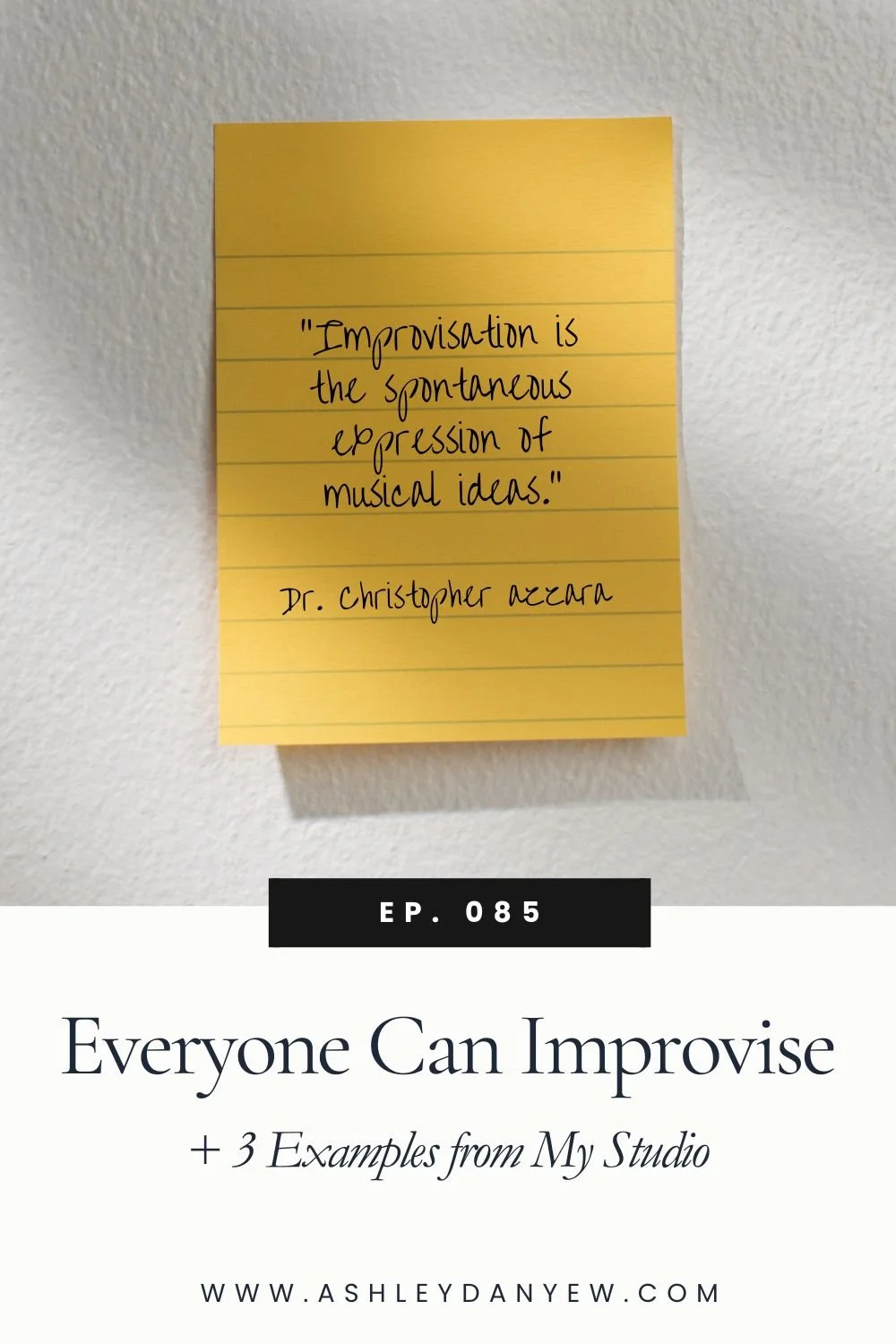
085 - Everyone Can Improvise (+ 3 Examples From My Studio)
from Field Notes on Music Teaching & Learning · host Ashley Danyew
When I was in grad school, I took an elective class on Improvisation. I remember shuffling into the 3rd-floor classroom that first day, pulling a blue chair into the semicircle like everyone else, unfolding the desk and preparing to take notes. Everyone was quiet. There was a palpable uncertainty among the group—all classical musicians by training. When had we ever been asked to improvise? No one wanted to be put on the spot.We started by talking about where to start with improvisation. “Improvisation is something we can all do,” our professor, Dr. Christopher Azzara began. “We’re born improvisers.”The challenge sometimes is trusting that creative process. Trusting that we have something interesting and musical to say.Improvisation is a skill like anything else; it can be learned and developed. Of course, there’s safety in writing it down, but learning the fundamentals of improvising and giving yourself time to experiment and practice this can be really fulfilling, especially in teaching.Today, I’m sharing a few simple ways to build improvisation into your teaching practice in meaningful ways, even if it’s new to you. You’ll learn what improvisation is and how to get started, how to find inspiration and musical ideas, and activities to do with your students in lessons. I’ll also share a few examples and recordings from my studio recently.For show notes + a full transcript, click here.Resources Mentioned*Disclosure: some of the links in this episode are affiliate links, which means if you decide to purchase through any of them, I will earn a small commission. This helps support the podcast and allows me to continue creating free content. Thank you for your support!Developing Musicianship Through Improvisation, Book 1(Azzara & Grunow)A Systematic Introduction to Improvisation on the Pianoforte(Czerny)Piano Safari Repertoire Book 1Ep. 066 - A Winter Improvisation Prompt for Elementary Piano StudentsPiano Safari Repertoire Book 2Lyric Preludes in Romantic Style(William Gillock)“Chromatic Monochrome” in Moving Pictures (Naoko Ikeda)Ep. 021 - How to Use Praise With IntentionEp. 036 - Let’s Talk About ImprovisingIf you enjoyed this episode, please leave a review in Apple Podcasts >>Find me on Instagram: @ashleydanyewWhenever you’re ready, here are three ways we can work together:1️⃣ Need fresh teaching ideas? Schedule a quick 25-min. call and we’ll brainstorm on a topic of your choice. Build an idea bank that you can pull from in the months to come.2️⃣ Have questions about teaching or managing your music career? Book a 60-min call and get personalized advice, creative ideas & step-by-step strategies on up to 3-4 teaching/business topics.3️⃣ Develop the skills and strategies you need to plan the year, refine your teaching methods, and manage your time more effectively with a suite of online courses and professional development trainings
What this episode covers
When I was in grad school, I took an elective class on Improvisation. I remember shuffling into the 3rd-floor classroom that first day, pulling a blue chair into the semicircle like everyone else, unfolding the desk and preparing to take notes. Everyone was quiet. There was a palpable uncertainty among the group—all classical musicians by training. When had we ever been asked to improvise? No one wanted to be put on the spot. We started by talking about where to start with improvisation. “Improvisation is something we can all do,” our professor, Dr. Christopher Azzara began. “We’re born improvisers.” The challenge sometimes is trusting that creative process. Trusting that we have something interesting and musical to say. Improvisation is a skill like anything else; it can be learned and developed. Of course, there’s safety in writing it down, but learning the fundamentals of improvising and giving yourself time to experiment and practice this can be really fulfilling, especially in teaching. Today, I’m sharing a few simple ways to build improvisation into your teaching practice in meaningful ways, even if it’s new to you. You’ll learn what improvisation is and how to get started, how to find inspiration and musical ideas, and activities to do with your students in lessons. I’ll also share a few examples and recordings from my studio recently.
NOW PLAYING
085 - Everyone Can Improvise (+ 3 Examples From My Studio)
No transcript for this episode yet
Similar Episodes
Apr 22, 2025 ·32m
Feb 27, 2025 ·0m
Sep 20, 2024 ·57m
Aug 7, 2024 ·16m