
EPISODE · Mar 26, 2025 · 24 MIN
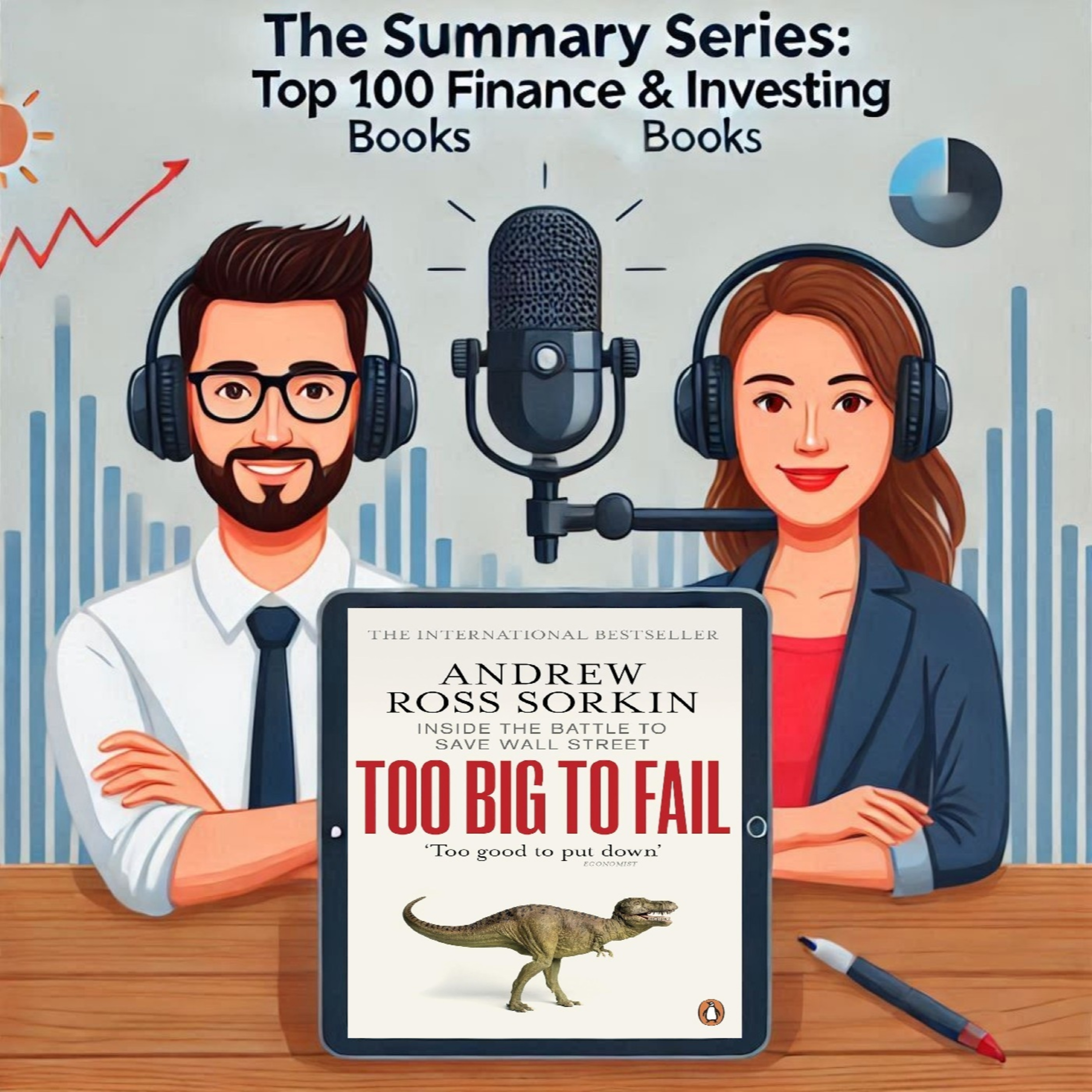
091-Too Big to Fail: Inside the Battle to Save Wall Street
from The Summary Series: Top 100 Finance and Investing Books · host Dominus and Sophie
# *Summary of *Too Big to Fail: The Inside Story of How Wall Street and Washington Fought to Save the Financial System – and Themselves* by Andrew Ross Sorkin*📚 Buy this book on Amazon: https://amzn.to/4icu1bX💻 Free month of Kindle Unlimited: https://amzn.to/3ZYVJAK🎧 Grab audio version for free on an Audible trial: https://amzn.to/3PeeivQ## *🔹 Key Themes & Insights*# *1. The Rise of the "Too Big to Fail" Banks*✔️ Before 2008, *Wall Street banks were making record profits by taking on excessive risk*, especially in subprime mortgages.✔️ *Lehman Brothers, Merrill Lynch, Goldman Sachs, Morgan Stanley, and Citigroup* had grown so large and interconnected that their failure could collapse the entire financial system.✔️ *Complex financial products (derivatives, mortgage-backed securities, and credit default swaps) spread risk across global markets*, creating hidden vulnerabilities.# *2. The Collapse of Lehman Brothers: The Turning Point*✔️ *Lehman Brothers, led by CEO Dick Fuld, struggled to find a buyer as its losses mounted.*✔️ The U.S. government, under *Treasury Secretary Hank Paulson and Fed Chairman Ben Bernanke*, decided *not to bail out Lehman*, believing it would set a dangerous precedent.✔️ On *September 15, 2008, Lehman Brothers declared bankruptcy*, triggering a global panic.✔️ *The failure of Lehman shattered confidence in financial markets, leading to a cascade of bank failures and stock market declines.*# *3. The Race to Prevent a Total Financial Meltdown*✔️ *AIG, the world’s largest insurance company, faced a liquidity crisis due to its exposure to credit default swaps.*✔️ *The government stepped in with an $85 billion bailout to prevent AIG’s collapse.*✔️ *Merrill Lynch, another struggling investment bank, was forced to sell itself to Bank of America.*✔️ *Goldman Sachs and Morgan Stanley were allowed to convert into bank holding companies*, giving them access to emergency funding from the Federal Reserve.# *4. The $700 Billion TARP Bailout: A Necessary Evil?*✔️ The *Troubled Asset Relief Program (TARP)* was created to inject capital into struggling banks.✔️ *Congress initially rejected the bailout*, leading to stock market crashes and heightened panic.✔️ After intense lobbying, *Congress approved the $700 billion TARP program*, saving banks but sparking public outrage.✔️ Many saw TARP as *a bailout for reckless bankers, rather than a solution for struggling homeowners and workers.*# *5. The Role of Government and Regulatory Failures*✔️ *The Federal Reserve and Treasury failed to anticipate the full scale of the crisis.*✔️ *Regulatory agencies ignored warning signs, allowing excessive risk-taking and financial engineering.*✔️ The crisis revealed *major weaknesses in the financial system*, leading to calls for stricter banking regulations.# *6. The Aftermath: Lessons from the Crisis*✔️ The *Dodd-Frank Act (2010)* introduced financial reforms to prevent future crises.✔️ *"Too Big to Fail" banks became even bigger*, as weaker institutions merged or were acquired.✔️ *Public trust in Wall Street and government was deeply damaged*, fueling anti-bank sentiment and movements like Occupy Wall Street.✔️ Many of the same risky practices that led to the crisis *still exist today*, raising concerns about future financial instability.## *📖 Key Takeaways*✅ *The 2008 crisis was fueled by excessive risk-taking, financial complexity, and regulatory failures.*✅ *The collapse of Lehman Brothers triggered a global financial panic.*✅ *The government was forced to intervene with historic bailouts to prevent total economic collapse.*✅ *TARP saved the financial system but sparked public outrage over Wall Street bailouts.*✅ *Despite reforms, many of the structural risks that caused the crisis still exist today.*
Embed this episode
NOW PLAYING
091-Too Big to Fail: Inside the Battle to Save Wall Street
No transcript for this episode yet
Similar Episodes
No similar episodes found.
Similar Podcasts
No similar podcasts found.