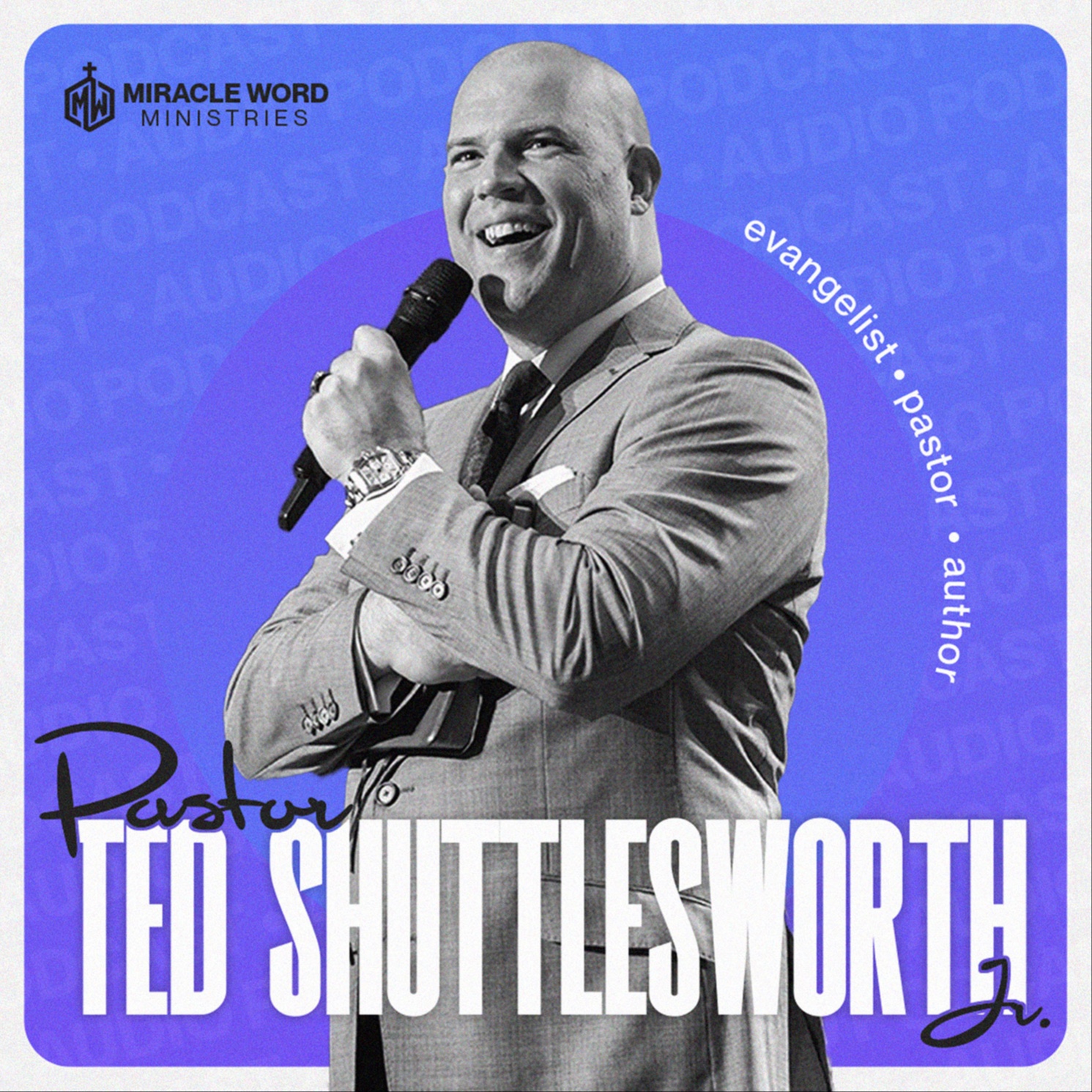
You're listening to the Miracle Word Podcast. We believe that the Word of God gives you the power to experience never-ending increase in every area. If you're ready for revelation that will take you to the next level, you're in the right place. Here's your host, evangelist, author, and founder of Miracle Word University, Ten Shuttlesworth, Jr.
Hey, what's up guys? It's Ten Shuttlesworth back with you on Worship Wednesday. Good to have you listening. And I'm really excited.
This is something, and it seems like I said that every week, but I really am. I love a podcast. And today I've got something for you that I think is gonna be, for me it caused me to be very introspective. I hope it does the same for you.
The introspection, by the way, is a good thing. Looking inward and evaluating where you are and where you're headed is an excellent thing. It's one of the things that successful people do often. What's working in my life?
What's not working in my life? What could I do better? How could I do it better? What can I establish as a routine that would make it better?
And this podcast, even studying for it, has definitely made me do that. Look inside and determine I could be doing things better. And so today I wanna talk to you about five worship-related things that I would do differently. If I looked back, I've been doing it for 20 years.
So I was looking back and thinking to myself, like, what would you do if you went back and started again and could literally tell yourself, if you could tell yourself what it would look like 20 years later, if you could give yourself warnings, if you could give yourself advice back, starting out, what would you have said? And I really came to the conclusion, there's five things that I would have told the young me as a worshipper in context of as a musician and a singer. So whether you're either one that you are, all five will apply to you today. So I wanna get into that.
I wanna start by just giving a quick shout out to Grace Houghton at World Harvest Church. You probably just jumped here in your name right there. But I appreciate the encouragement. She shot out some encouragement for the podcast today and meant a lot to me.
I always appreciate you guys that are listening to the podcast faithfully and it means a lot to you. And guess what? It means a lot to me too. And I wanna just say publicly, thanks Grace for shouting me out and thank you for the encouragement.
It means a lot. It really does and I appreciate it. Love you guys for listening. I really consider you part of the Miracle Word family and I love coming to you twice a week to be able to do it like this and just kind of give you inside information.
And I really appreciate all the people that write back and come in with suggestions, things you'd like to hear. I love the interaction. So thank you guys. And yeah, that's what I wanted to say.
It's just a very transparent moment guys. No, all right. Listen up in five worship related things that I would do differently. Now I started very green.
I knew nothing about worship. Literally it was something that the Holy Spirit gave me as a gift and I just had such a strong desire to be involved in praise and worship. I had such a strong desire to praise the Lord and to worship the Lord in this way by playing and singing that I just jumped right in. And really it was God that opened the doors for me to jump right in.
God, I definitely was faithful over a little to start because this is how I started is after I had hands laid on me by Brother R.W. Shambok to receive that gift. God had known in my mind. He didn't, if you've heard me ever give my testimony about this, he did not just allow me to have the ability to play and I had no idea what was going on.
He had known in my mind to learn. He had known in my mind to retain knowledge. So it really came down to a study to show yourself approved type of principle to where I had to press in with my gift and study and examine others and what they were doing. And I had a hunger to learn.
And the more I learned, it's just like God I've known in my mind, I never forgot it. So that's how it came about. But I had a hunger and a desire. I would come home.
I still have the very first keyboard that I ever was given by the Blay family in the Chicago area. They gave me a Roland D50 synthesizer, which now is like one of the greatest vintage synthesizers you can own between that and the Yamaha DX7. Those are like the two greatest vintage synths from the 80s that were on like every album that you bought in the 80s, had one of those two synthesizers making the tracks for the album. Really, really amazing.
So I literally still have that board with the memory card that has the sounds here at my house. It's amazing. And that's it only, but it only has like 64 sounds on it. It's crazy.
But anyway, I got that keyboard came back. And in West Virginia, I would put that up in my room. And every day when I get home from school, I would go up there, pop the headphones on and just play, play, play, play, play. And just had a desire to learn more and more and more chords, more songs, everything like that.
And then my youth pastor asked me to start a youth band for our youth group and with no experience, really God helped me to put that together. And I grabbed a drummer. I got my friend Adam played guitar. My friend Bill jumped on the bass.
And we just went at it. It was a four piece band. We had singers, I think we had a couple of singers. But we just went at it every week in youth group.
And they might have only been 20, 30 kids in attendance. But we were faithful, man, faithful to practice, to do what God called us to do and use our gifts for Him, staying up and cleaning up after. We were wrapping chords. I mean, we were properly wrapping chords, putting away sound equipment, staying late, setting up early.
So faithful over a little. And God knew that He could make me rule over much later on in life. You don't just jump into these things from nowhere. You have to have a faithfulness.
So I started that way. And I told you that story to start, just to let you know I was extremely green. You know, I knew nothing about anything, technical ability. I had none.
Like I didn't have any training. I've never had training. Everything that I have, the Lord has blessed me with. So I've had to, as I said, study the show myself approved, not just to play and to sing, but everything.
Music, theory, how to lead others, all these other things. I had to press in and study. God's helped me and God's an or me. But it's not like I went to a music school or had musical training from a university or anything, nothing like that.
So looking back, here's the advice that I would give myself. And then I would definitely give you, especially if you're just starting in the worship arena at your church or however you're doing it. Five things I would do. I would encourage you to write these down because these will definitely help you.
I've gotten into these as I've gone through the 20 years, but I definitely did not start with these back then. So number one, the very first thing that I would do differently in a worship related environment is that I would have established a warm-up routine early on, a warm-up routine. If you don't have a warm-up routine, I would seriously encourage you to get one. Like if you're a singer, you need to be definitely warming up your voice at a time.
It's crazy that I've sang for 20 years and it's got to be supernatural. Like I don't lose my voice. I've had people like Marvel at that fact that I could sing for an hour and then preach for another hour. And when I lay hands on people and declare over stuff for another 45 minutes, and my voice is just as strong.
I don't lose my voice, it's just supernatural. But where I suffered was I wasn't able to stretch my range as early on as I should have been. So early on, I was having several issues here and there where, and it wasn't just from singing, I'll get into this in a minute, but it wasn't just singing. It was also not putting myself in the position to sing the songs in the best key for myself.
So it wasn't just the fact that I was singing, it was causing my voice to get raspy. It was the fact that I was trying to do things with my voice that I could not do at the time. And I attribute that to lack of a warm-up routine. And it's really been good.
God puts people in your life to help you. And I really am thankful for Ms. Jennia Jackson who is the praise and worship leader here at Abundant Lake Church where we are. She's very disciplined and dedicated.
She's a technical master class. That's why we have her teaching at worship summit. But she recently really got on me about not having a steady warm-up routine. Of course, I don't need worship anywhere near as much as I used to when I was the music director at Dominion Christian Center.
But I'm still leading worship quite a bit. But she got on me. She was like, what warm-ups do you do? I was like, oh, none.
Like when I'm practicing the songs before the service, that's my warm-up. And she just shook her head and looked angry at me. No, she's not like that. But she was like, let me help you.
And she sent me a warm-up from Apple Music that she does all the time. And I started doing it a few weeks ago. And man, does that stretch you and get you totally prepared and ready. I felt before we even started practice, like I feel halfway through a service normally.
It's like, oh, my other voice has opened up. We're ready to roll. Like I felt like that at 8.30 in the morning before we even started practice. So I'm very, very surprised at myself, especially being a stickler for things that I didn't early on establish a warm-up routine for my own voice.
And it doesn't just warm your voice. But the other thing that can happen too is that it stretches your range, which I did not have it in early age and in early time. My range should have been being stretched much quicker. And it would have helped me too when doing songs, like one of the things that I would do is, and I think this was just a bad habit from starting out, playing by ear, is that I would always force myself to do the songs that we would do in the key that they were on the album in, instead of transposing the song to a key that I would sing it in.
I would just force myself to sing it in whatever key that somebody did their album in. And that was a mistake, obviously. And of course, the internet was not anywhere. It's like what it is right now, where you could just go on a website like multi-tracks or CCLI or any of these websites and download the chord chart and change it to your key or whatever.
So I just did that and it was a mistake because I was straining, like really, really, really hard to try to hit these notes and not have to sing harmony sometimes because I couldn't even reach the melody note and all this stuff, just destroying my voice. So I would have definitely never want to establish a warm-up routine for my voice and a warm-up routine for myself as a musician. So if you're a musician, you play the guitar, the bass, the drums, the keyboard, the xylophone, the kazoo, whatever you're on, develop a warm-up routine for your instrument as well. It'll be a massive help to you.
Get your fingers going. There's all kinds of things that you can do as a drummer. You can do paradiddles. I believe that's the correct term.
Paradiddles, you can do all kinds of different little warm-ups on the drums. You can do warm-ups with your fingers for bass and guitar and keys. There's all kinds of things you can get on the internet. But warm yourself up.
Be ready to roll. Don't make your first two songs of the service your warm-up. I mean, literally be ready to rock and roll before you do anything. And so I want to encourage you guys, if you don't have a warm-up routine for your voice or for your instrument, get one quickly and establish it, make it part of your life.
Number two, the second thing that I feel is very, very important that I should have, I think, developed earlier is establish a development plan. Establish a development plan. What do I mean by that? Well, without a doubt, you're gifted by God.
I mean, the gift that you're using for God was given to you by God. And so if he gives you a gift, he expects you to curate that gift. He expects you to advance and increase that gift. You can find that principle in Matthew chapter 25, where the Bible says that the master gave his three servants talents and one got five, one got two, one got one.
The master went away on a trip. When he came back, the one with five had doubled it to 10, the one with two doubled it to four, and the one with one buried it in the ground, and gave back exactly what he'd been given. And the master called him wicked. And so you can see that God doesn't want you to just maintain your gift.
He wants you to increase your gift. And so there needs to be a development plan in place in your life. If three years go by and you're still at the same skill level on your instrument as you were three years ago, there's a problem. There's a massive problem because you've become lazy with your gift.
That's gonna sound convicting to people listening. It's not condemning because I'm not your boss. I'm not your pastor. I'm not your music director.
So I have nothing to do with your development other than to encourage you to develop. But some of you that are listening to this are gonna start to feel convicted because you've not been putting in the time with your gift and you're just doing it when you get to church on the weekends, but throughout the week, there's nothing being done to push you to go further and to become greater. But that's not God's plan. Is that you increase steadily until Christ returns.
So if he's given you a gift, what are you doing to increase the gift? And nowadays, let me just say this, nowadays, it is easier than ever to increase your gift. We have so many free resources at our disposal. Literally I follow guys on Instagram, they're killer keyboard players.
I follow guys on YouTube with their own channels that are doing tutorials all the time. Facebook, I'm a part of Facebook, private groups. I mean, there's so many free resources that you can get where people will give you tutorials and show you how to do different things. And then there's paid resources where you invest in your gift.
Anything worth doing is worth doing well. Invest in your gift. There are courses, there's online courses. I remember I bought a keyboard masterclass, maybe five, six, seven years ago.
From a group that's out in California, I believe their YouTube channel is called Gospel Musicians. And they put out a keyboard masterclass that back then was on DVD as well as you get digital downloads where like relatively new, but I got the digital download. And it was the keyboard player from Bishop Charles Blake's church that was doing the masterclass and showing some things, transitions. I mean, I had to pay money, hundreds of dollars to get that, but it was worth every penny because here's one of the greatest keyboard players that we have that's been on all kinds of different albums that plays at one of the largest churches that understands what your gift is supposed to look like and to learn from somebody that's greater than you.
So I mean, whether you do something free, if you're not in the budget right now to pay for some kind of advancement and development, or whether you pay and do some kind of an online course or something, make a plan to develop your gift and go to the next level. How are you gonna develop your voice? How are you gonna increase your range? Are your runs gonna get better?
Is your pitch gonna get more true and better? You're gonna be holding it, is your stamina gonna get better? How about on your instrument? Is your understanding of music theory gonna get better?
You know, are your chords gonna become better? When I say better, there's reharmonizations that you can do, there's different types of voicings that you can play, there's all kinds of things you can do to get better. Are your fills gonna become more tasteful? Are you gonna learn how to play in the pocket more often?
There's so many things you can do to develop, what is your plan? What are you doing on a daily basis is the question that's scheduled in your calendar that you're gonna sit down, even if it's not on a daily basis, what are you doing on a weekly basis? Say you took two times a week to sit down and say, I'm gonna take two hours a week to develop my gift. So every Tuesday and every Thursday, the moment I get home from work or whatever, from seven o'clock to eight o'clock p.m.
I'm going on airplane mode and I'm gonna sit down at my instrument or with my vocals, sit down and begin to develop, develop, develop. And God's desire is that we develop and that we increase. So I would have done that earlier. See, mine was all based off hunger.
So the only reason I was developing at the rate I was is because I had a supernatural hunger and I was just excited. I was young, learning, learning my instrument, all this other stuff. But you know that the honeymoon effect can wear off and it becomes work. So what are you gonna do when the honeymoon effect wears off and the excitement is not like it was you first started picking up your instrument because that can happen.
So what are you gonna do? You're just not as excited anymore. I'm more excited about something else now. So I'm gonna pursue that.
No, you've gotta do it like it's a job and you've gotta press in towards it and you've gotta develop a plan so that your dedication and your discipline are causing you to move forward, not your emotions. Your emotions will fail you, but dedication and discipline will never fail you. So number two, establish a development plan. Number three, I would have been more prepared to lead others.
That's huge. I would have been more prepared to lead others. And one of the things I mean by that is that I would have examined myself more closely and looked for my weaknesses. What are my weaknesses?
Well, back then, to be honest with you, I was a much stronger musician than I was a singer. Definitely a much stronger musician and definitely didn't hear harmony parts the way that I should have. The problem with that was I was the music director over the band and choir and front lines and here's whatever. So it was my job.
And later I got, I just got more wise and later I just delegated that job to a lady and on our team that just had a better ear for vocals. But I just, I was not working like I should have been to prepare myself to lead others. You know, I would come in to our practices truthfully, semi unprepared, you know, because I'd come in and I'd still not be able to hear those harmony parts. And I would be unprepared.
I would have the stuff down for the band, but for the singers, it would be very vague. It would be spotty. I'm embarrassed if some of my singers are listening to this episode because you know, really what was going on now that's the awful truth has come out to the forefront. But truthfully, I would have been more prepared.
Yeah, I was in my young 20s when I started doing it. Actually younger than that, I would have come out and have been about 19 or 20 when I first started. And I was not prepared to lead others in that way. You know, I should have identified my shortcomings and worked hard to fix those things and then be prepared, ready to go.
It was very unprofessional. So I would definitely learn how to prepare myself to lead others better. And then it's not just technically leading others, but also think about the fact of leading others from a standpoint of if you wanna call it this, human relations or becoming a better leader with people's skills, you know, understanding how to deal with people. I've always been relatively good at that because I really love people.
I love being around people. So I haven't had to work hard to be a people person, but I would encourage those of you that are listening. If you're someone who's not, you know, you might be more socially introverted than extroverted, maybe a little bit more socially awkward. I've met those people too.
You have to look at your shortcomings and just recognize what they are and say, okay, what can I do to be more prepared to lead others on my team? You know, what can I recognize about myself that I need to work on so that maybe you're not a good communicator. And that's huge if you're a leader of a team. You've gotta be a great communicator.
And so I wanna encourage you, become introspective and say, how could I be more prepared or better prepared to lead others on my team? Because if you are a leader, you know, here's the other thing. Even if you're not a leader of your team, but you're a part of the team, act like a leader. And I don't mean try to take over.
I mean, be as prepared and professional as the leader would be. When you come to practice, you're not, they don't have to, you know, I can't believe you didn't listen to the tracks. You don't know the song we're gonna do. You didn't learn the chords.
No, be as prepared as the leader and be as professional as the leader is. You'll be surprised at how appreciative the leadership of your team will be that you are that way. It makes everything easier. So look at yourself and say, how can I be more prepared to lead others?
What can I say? What can I do? So that I'm more effective and fruitful within my teams. Number four, the fourth thing I would definitely have done differently is I would have started writing earlier and more often.
I would have started writing music earlier and more often. Now, I will say that I did start writing. I mean, my songs weren't good by any means, but I did start writing relatively early. Even back when we had the youth group band, I wrote a couple songs that we did with the youth.
I mean, they weren't awesome or anything like that. But I did step out to start writing relatively early, but I lean more towards the more often because the more often you do something, the better you're gonna get at it. The more faithful you are to a craft, practice makes better. So I would have definitely, I should have definitely taken more time to start writing or even found somebody that I have chemistry with that I could write with.
So for example, when I got to DCC, I spent more time writing from the year 2004 and onward. Because 2004 was truly the year I wrote my very first worship song that we did a lot in church. And from then on, I began to write songs and then connected with people who had ideas and that were collaborating with me. And there was a chemistry there and things begin to flow more freely.
And we start writing more often. I wish that I had started writing earlier and more often earlier on because something about writing your own worship, there's, I mean, it just, it injects your own personal anointing into what you're singing. There's just something, I can't truly explain it to you other than to say. I mean, go back and listen to my podcast on why you should be writing your own worship songs.
I really, really encourage you to go back and listen to that episode if you've not, because I'll explain more in depth what I mean. Cause it's very hard to explain. I think I did a better job on that podcast talking about why. But there's just something about when you are singing and worshiping in your local church with songs that you have written personally that came out of your church, that came out of possibly, you know, words that your pastor has preached or things that he's released to the congregation that sparked inspiration in your spirit.
It becomes a customized, tailor-made worship to your body of believers. And trust me when I tell you, it makes it that much more impactful. Because the body that's there where you are is gonna connect to it even more fully because it's customized to the word they're receiving and it's customized to the vision of that particular house that they're worshiping in. So I should have really valued that I think more often and earlier the ability to write and to just step out and begin to do it and produce, produce, produce.
I would rather err on the side of producing a ton of stuff, you know, writing a bunch of stuff and only 10% of it being good than I would to not hardly write anything. Because see, here's the thing is, truthfully, the more you do it and the more, and I'll give you a little bit of a side note here is don't surround yourself with yes men and yes women. And what I mean by that? It's a dangerous thing to just be around people who just compliment anything you do, anytime you do it.
You know, that's bad. It's bad news. Get opinions, like if you're writing something, I want people to criticize it. Like people probably laugh at me when I ask them questions, but like, you know, I literally will take something I've done and I'll show it to like 10, 12, 15 different people.
I'll be like, what sucks about this? What do you think sucks? It doesn't hurt my feelings at all. I wanna know what sucks.
If I'm writing a book, I wanna know what parts are boring. If I'm writing a song, I wanna know which parts sound horrible. I wanna know what part of my arrangement is horrible. It's like I was talking to my friend the other day.
I was making some beats and I was talking to a friend of mine. Marty, he's in a group called Social Club Misfits. And I was making some beats on my computer the other day and I was shooting him to him. But I wanted to give him true honest feedback.
And he's like, you know, he's like, you're really great at arranging music, you're really great at the musical side of things, but you're actual like beats, like your actual drums and your beats and the things you've chosen, the samples you choose from, they suck. Like your drums suck. So like, I wanna hear that stuff. Like I want to know that.
I don't want my friend to just like, yeah, man, really good job that I really love that. But in reality, I think like, man, this thing just sounds horrible. I don't want that. I want the criticism.
I want the truth so that I can improve. I can't improve what I don't know isn't good. You know, if I don't know it's not good, I can't improve it. If I think, if people are telling me, oh yeah, wonderful job, wonderful job, then I'm sitting there thinking, like, wow, even I didn't think it was that great.
So it's like, don't surround yourself with yes men and yes women, but surround yourself with people that will be honest with you and be like, okay, here's what I didn't like about it. Obviously respectfully, but you know, they're gonna tell you the truth, they're not gonna tell you it's awesome if it's not awesome. And that helps you, it hones your craft. And that's why those kind of people are so important, trusted people that will tell you the truth about what you're producing.
And then it goes back to the drawing board and you make it better, better, better. And so I would encourage you to start writing immediately and do it often. You know, start writing music, start writing chord charts, start writing lyrics, start writing melodies, all of that. Get busy doing it, God's got a gift in you and it's there for a purpose.
It's there for you to create things for the kingdom of God to worship the Lord and magnify Him. So let me go to number five and that's kind of a good transition because number five is I wish I would have done differently is stopped caring what other people thought so much. And I know that sounds funny because we just covered, you know, surrounding yourself with people who will tell you if stuff sucks. But it wasn't so much that.
It was more along the lines of I was more, I had trepidation about my ability to lead worship. And if you've read my book on Hang Your Harb or you've heard me give my testimony story about how I got into worship for a long time, you know, the enemy had me believe that, you know, I just wasn't great, I wasn't good. And I wasn't, you know, good enough to be leading. You know, I was a good keyboard player but my voice was horrible and I shouldn't be singing and all this other stuff.
And I would even tell people like, oh yeah, you know, like I'm a keyboard player that sings, you know, just I would say that because of how I felt about myself. Like you're not that great, you're not that good. And I mean, I'm not Mariah Carey or anything like that. But at the same time, God has given me a gift to use for him and I've used it.
But see, I don't know what happened. Maybe it was just my faithfulness to keep going, keep going, keep going. But I remember one Sunday when it happened, it was like, I always felt like there was this, like something, it's not that I didn't have breakthrough, it's not that we didn't see the anointing flow or any of that. It's just that I felt tight.
It's like I felt like something was tying me up. Like I was inside of some sort of invisible prison. And it was, you know, almost like I didn't want to step out. I'm trying to think of the best way really described this to you.
It was like, I was very cautious. I didn't let go and become free with my worship because I was so cautious that I would make a mistake or that I would sing a wrong note or I wouldn't sing a line or a run because I thought, oh, what if I screw it up? Or, you know, there was, there was like, it was that, it was a intimidation. And man, I remember the Sunday that that fell off of me.
And I no longer cared what anyone thought. I didn't care. And I'm telling you such a freedom came on me. It wouldn't have mattered to me.
Like literally I could get up and it's not that I'm not pushing for excellence. Please understand what I'm saying. Let's say I was getting up and singing solo. Like I could, let's say for example, I hit three wrong notes or whatever.
That used to like, to no end, I would beat myself up for the next three weeks. Like what the heck, you've got problems. You need to quit. It was like, to the point now I get up and sing three wrong notes and never think about it again.
I don't care. It was the anointing there where people touched, was the atmosphere set for miracles. That's what I'm looking at now. But I lost that like huge intimidation and care for what people thought are them judging me and a confidence like I've never had jumped onto my life.
I remember like it happened in the middle of a worship service on a Sunday in Virginia Beach. And I'd never felt like that before. And all of a sudden it jumped off my life. And I remember the freedom that came on me.
And I started singing. Like I mean, I started just going off. And I was like, man, I've never felt this free behind a keyboard before. And I just started going and going and going.
And I'm sure it was supernatural, but you've got to develop a mindset that you're not going to care about other people's criticisms. Now I'm talking about those that would, and the thing is, I had to like really realize this even back then was that, you know, most people aren't musicians. So if you hit a wrong note on your, you know, a wrong chord or something or, you know, most people don't even catch it. But you know, I just stopped caring.
Like what people thought about me leading worship or what I was going to do or where I was going with it. And there's, I'm telling you a freedom came upon me. Cause really, if we break it down, you know what that is? It's pride.
It's really pride that like I'm so amazing that I don't want anybody to think negatively about what I'm doing. It's pride. It's not about me anyway. It's not about you anyway.
It's about the gifts God put in us and what He's called us to do and His anointing on our lives. So if there's people that don't like it tough, if there's people that want to criticize tough, I'm sure there's people that can do it better than me. I know there are. I know there are.
But you know what I found out? God doesn't promote you based on your gifts. God promotes you based on your faithfulness. That somebody needs to hear that today.
God doesn't promote you based upon your gifts. He promotes you based upon your faithfulness. Are there people that are better keyboard players than me? Many of them.
Are there people that are better singers than me? Many, many, many people that sing much better than I do. But you know what? I've been faithful for 20 years, never stopped.
Never stopped. And every, and let me tell you another thing. Every time you know if you've been in any services where I leave praise and worship, anytime I get an opportunity to lead, I go 150% in. My clothes are soaked through dancing, shouting, praising, giving God all I've got.
So God knows a couple things about me. He knows number one, that I'm gonna be faithful and I'll never quit him. And number two, he knows that anytime he gives me an opportunity, I'll go all in. And number three, he knows that my gift is reserved only for him.
He knows that he'll never find me playing at a bar. He'll never find me playing at a coffee house. He'll never find me playing at some theme park to make money on the side in a subway in the, you never gonna see it. You never gonna pull some extra cash in.
My gift is reserved for God. He knows those three things about me. And because he does, he's the only one that can bring promotion and increase Psalm 75 verses six and seven. So because of that, God can freely promote me, knowing that he'll get all the glory, knowing that he'll get my gift to be reserved for him, knowing that I will always give him everything I've got and never hold back.
See, so God knows these things. And that's why he chooses to promote. Faithfulness, not gifting. Faithfulness, not gifting.
So I would encourage you, these are five areas I really want you to look at your life and ask yourself are these areas that I could be increasing? You know, do I have a warm-up routine? Do I have a development plan? Am I prepared enough where I need to be to lead others properly?
You know, am I writing? As God's giving me things to write, am I writing? Write more often and stop caring what other people think. People, if there's people that want to criticize, let them criticize.
There's all kinds of people that want to stop you from doing what God's called you. They've got nothing to say. If they could do it, they'd be in your shoes, but they're not. So just, you know what, turn a deaf ear to anything they have to say.
Don't read their Facebook posts. Don't read their Instagram comments. You know, get rid of that thought process. God will use you greatly.
I'm gonna pray for you at the end of this podcast that God would give you a hunger and a desire to increase what he's put in your life to the next level and to never stop moving forward. Father in Jesus' name for every one of these that are listening today, I pray that you would use them in such a mighty way in 2019 that their lives would never be the same and people would never be the same. Give us a hunger and a desire to go deeper in our gift and in worship and praise, use us in a mighty way to break the yoke of bondage off of others through the power of praise and worship. In Jesus' mighty name, we thank you and give you praise and glory.
Amen. Listen, this is so important. I want to tell you four weeks to sign off today. Worship, son, it's coming up.
We have VIP sessions, two of them this year, on two of the days. That's two hours, well, two sessions I should say, that are gonna take place in the lunch hour. And we're gonna be doing lunch for you. We're gonna be doing VIP, Q&A session, behind the scenes teaching that you're not gonna get in the conference.
So it's only $99 a person, but you've gotta get that price before March comes to an end because once April hits, those VIP tickets are going up to $149 per person. So we want to serve you guys the very best that we can. Go to southeastworship.com, sign up for worship summit 2019, right here in sunny South Florida, and grab those VIP passes. It's going to be a blast.
I can't wait to see you guys there. Listen, I love you. Don't forget until next week, goodness and mercy are following you for the rest of your life. I'll talk to you soon.
We would love for you to join us in a live service. To find out when Ted Shuttlesworth Jr. will be near you, please visit our website at www.miracleword.com.