Hello and welcome to Running Inside Out Podcast, where we talk about the races we've been in, the races we're not in, and getting outside to see what's going on inside the Rochester running scene. In this episode, Chris Patterson joins to tell us about his run at the Comrades Marathon four years ago when he was last on the podcast. Hold. No, actually, Chris is here to tell us, essentially, he's got an idea and a message about things that we can control. How can we sort of make things good for ourselves today and the people around us? What can we do when we wake up? What can we do before we go to bed? How do we keep ourselves fit and fiddle-like when we're running these days?
With that, let's get into the trails, training, food, friends, and yes, even feelings of runners just like you. Hey, Chris. Mr. O'Brien, it's great to be back. Yeah. Hey, so how was Comrades? Comrades was hot. It was very hot. I wore a hat for the first time and still the only time ever in a race. Now, if you've ever seen me in a hat, you'll understand why. And I mean, the hat with the bill on it, not a normal hat. You wear a hat as well as Bart Simpson does. Bart wears a nice sporty hat. Yeah, just about as well, I suppose. So what we're referring to is Chris was last on the podcast back before he and his...
wife, Heather went and ran comrades marathon. And we talked about, he talked about how we were going to do a post show, a post comrade show back then. And, you know, Chris and I, we, we don't return each other's calls very often. And so here we are four years later. So, or yeah, you know, actually it's about three years later. So that's great. And here he is. And we're going to talk about today. But I will put a link to Chris's original podcast. If anybody wants to hear what he was like as a little spry young June bug before his first trip to South Africa.
How's that? How's that as putting it off until another time? How's that? That's great. And just as a little foreshadow, we almost didn't make it to the starting line. The bus broke down. Oh, boy. You're really working that radio announcer voice, Chris. Good job. And it didn't even have brakes. It broke down without brakes. That's like a trick. Can use one of those sound effects now. Oh, okay. This one.
appropriate. All right. Um, okay. So anyways, um, lots of people are spending lots of time at home, um, away from their friends, maybe off of training plans because of weird schedules. Um, people aren't running, signing up for races. Um, not a lot of group runs going on these days. And, um, we were chatting and you said, that's all right. I got a plan. So, um, what are some of your thoughts as you think about your running? How do you sort of frame your running today?
That's a great question. So you know what they say about plans, and you can see the same sound effect again if you'd like. It's something that I learned a bit ago after my son was born is that what you consider to be important are the things that you just happen to have time for versus the things that you don't have time for, which also are conveniently the things that you may not hold to the same high level of importance. For me, that... turned into running or all the things that i need to do in order to continue to run well run high mileage and keep fit so in the last three weeks i have averaged higher mileage weeks than i have in two and a half years now why is that well i have been working a bit more diligently that last few months on weight training and doing all those physical therapy exercises i digged up from about three years ago and i don't know how i'd get through this pandemic without running every morning my goodness
To me, you always come back to the things you love, right? And isn't that the truth? So from a psychological perspective, what's changed? Well, I have a little bit more of a flexible schedule. I work from home not one day a week, two days a week, every day of the week, and I'm not alone. And that's my situation, right? I have my wife and son at home, but every person listening to this...
will have a different situation. It might be a little bit similar to someone else's, but everyone has a unique situation, right? Kids at home, no kids at home, a spouse, no spouse, girlfriend, maybe move back in with family, whatever it might be. It's not the same as it was six weeks ago. So this conversation is a bit different than it would have been, say, at the beginning of March when we were just getting a hold of the situation. We're now knee-deep in this. So we're all adapting, as humans ever want to do, to our new normal, our new environment. And one thing that I did,
was I took a step back after about a week of being home and almost feeling guilty for going out or doing anything, right? It's kind of how the culture is kind of built a bit. But am I satisfied with how things are going? Now, I kind of applied this to kind of a project management perspective on what I do in my day job, but looking at my lifestyle. So if I'm not okay with it, what am I not okay with? If I am okay with it, what am I okay with? How can I do more of that? Or how can I emphasize those types of things and then make a list? So I like to use an app called Trello.
to sort kind of my to-do list. So you have three different distinct categories. You have your convenient to-do list. So things you haven't started yet, but you need to do. You're in process. So you can kind of drag and drop whatever that was to your in process. And then when it's done, the most satisfying of all, you drag it to your finished category. So in this case, I was getting runs in at lunch. I was kind of just randomly doing things. And I said, well, I remember years ago, I used to be in some sort of routine where I would wake up and go for a run.
And have a really good day. Why did I stop doing that? And then I stopped putting myself down for all the reasons why I maybe stopped doing that. And then thought of, well, how can I get back to that? What can I do today to allow me to do that tomorrow? So the first thing, and again, it's not something that everyone can just decide to do, right? But is to go to bed earlier, right? The later I go to bed, the worse I sleep. So I know that if I go to bed early, I tend to have a better day the next day and tend to sleep better. Okay. Then.
I looked at the weather and I put out my clothes for the next day. Very simple things. I'm sure a lot of people listening to this do this and they're like, yes, you weren't doing that. Come on, Chris. Jeez. Well, it is. It is very easy to give advice that you don't necessarily, you know, I've said this for a while that I had to go back to all the things I used to know, right? Put your, put your shoes by the door, put your, get into your running clothes as soon as you possibly can have a route, make an appointment with a friend, like all those things that you know are motivational tricks. You get away from them. Once you're a big old experience, know everything kind of person.
which is what you're saying I'm not, but here's another wah-wah. I didn't say that. I'm saying we can tend to get away from these things, and it's a little bit of perspective that might get us back to those things that we know that are good for us. No, actually, you're exactly right. That's exactly what I think happened there, is that I just took it for granted and got away from it. So look at it as something that, okay, you can go to bed earlier, you can wake up maybe without an alarm, not...
be on four hours sleep and actually go for a run and recover properly between runs, right? What do you do before a marathon? What do you do before an ultra? You try to eat dinner early the day before, right? Okay, maybe do that. Why do I need to eat dinner at seven o'clock, eat dinner at five or five 30? Do those types of things. And then I woke up and I was looking forward to running and I ran and it was great. And I came home, got ready for my day and, you know, did my work from home gig. And, but no matter what happened during that day, my run was done, right?
So it's the old oxygen mask type thing. You have to take your own mask on the airplane before you can help the person next to you because if you try to help them out, you might get knocked out before you can help and then you're both goners. So you have to take care of your own, not just your physical health, but your mental health as well. And if you're listening to this, that probably involves running in some way. So target audience, right? So what can you do to not just, for example, get out there every day, but make sure you can continue to get out there consistently by doing appropriate
things in your training so making appropriate choices right so one thing that i found that happened with me is that i ran for i think nine days in a row which i look back i didn't take too long to look back but i don't have any record of me ever running that many days in a row before i it hasn't happened i've been running for a very long time and i i don't have a record of that happening why well just read the news and you know there's a lot to digest there so i think a lot of it was just trying to not get away, maybe, maybe a bit, but to be out in the morning, hear birds chirping, see a sunrise, you know, sneeze because of allergies and wish that I had taken my medicine sooner, right? Those types of things, but not just be stuck up in my house all day. I'm staring at a computer screen, right? So what can, and that's what this is about really. What can you do today to make tomorrow better than today? And this isn't some self-help thing or motivational thing. This is just looking at one or two things you can do today, taking a little bite-sized piece.
of your 24 hours of your day to change something that you didn't like about today to make it better tomorrow. And then continuing to do that over time should yield positive results, right? So stop beating yourself up as I did. I know just about everyone is, right? I'm not getting out there enough. I got to take care of my family, my job, you know, what's going on, right? Those types of things.
Take a deep breath and think about planning a run tomorrow. Where are you going to run? Hey, it's a runner's paradise out there right now. I got news for you. I'm running down roads that I would never consider running down on weekday mornings during rush hour, and I see five cars, and it's completely surreal. And that's a thing too, right? We're talking about being safe, making the right decisions, not running in groups, those types of things. So Chris, you had talked about holding yourself accountable, holding your friends accountable, kind of making appointments to meet up somewhere, right, and going for a run. Well, guess what? That's not happening right now.
So we need to hold ourselves accountable to do those types of things. And I think there's a benefit to that. I think the benefit is that when this is all over, when we get back to some sort of normalcy, which will happen at some point soon, we're all going to be better and stronger because of what we're going through now. So the question is, how much better will you be when you're in the tail end of your ultra or your 5K or your marathon? And you're not running with your running pals. You're not running in your group. It's just you and your legs that feel like lead.
you getting that other 5k to go over that next hill and then you're home free are you gonna walk or are you gonna run i'm gonna run all right well i thought it was a question i was just i'm getting rubbed up here i'm getting well that's and that's the idea right you want to be able to look back And this is a different type of training, right? There are no races coming up. And if there's a race coming up, chances are it's not going to be coming up very much longer, all right? So have the expectation that whatever is on your race calendar, not saying for sure, right? There's still a chance things could happen, and that would be wonderful and amazing if it did. But imagine that everything was canceled on your race calendar for 2020. Just imagine that. Your first feeling, shock. You probably already felt that with a race that you were planning on running soon or was already supposed to have been run that was canceled.
a feeling of what do I do now? Maybe it's, do I get my money back? Right. We've seen that those types of things. Sometimes events are going virtual events. They'll send you a medal in the mail and a shirt. And that's, you know, that's, that's, that's great. You know, a lot of.
These organizations that put on races are not the ones that put on Ironmans, right? They don't have the huge war chest of cash. They're these nonprofits that don't have a whole lot. So they're doing what they can. They're making exceptions on their policies as they're able to do what's right in the expectation that next year will be a better year for everyone and things will get back to normal. So you're not training for that race anymore. You're training for the long term. You're training for next year. So what are your motivations for that? If your motivation was a medal, well, you can still get that through a virtual race. That's fine.
If your motivation was posting on Instagram, well, you're not going to be able to get that at the finish line, right? You're not going to be able to get that finish line shot. If your motivation was to lose weight, be healthy for your family, be healthy for yourself, have more energy during the day, great. But I think it's worthwhile for us all to take a step back and ask why it is that we do what we do and figure out what that really is. And maybe we think we know and we just, we don't know it yet and we're going to figure it out at some point during this whole ordeal.
where we can't really see the people we normally see, meet up with the people we normally meet up with, go out for a drink with the people we normally go out with drinks with. It's just you. So what are you going to do to make the best of this? What are things that you can work on today over the next few weeks and months to be better when you can be in that race? And that's really what I wanted to talk about was, you know, is your motivation intrinsic? Does it come from within? You want to better yourself for you, your family? Or is it extrinsic? Is it to show other people what you did? Because that's typically the,
the more topical motivation that may be waning at some point here. Right. So the motivation really has to come from within. And I just came up with that recently. Right. I finally rediscovered my passion for running and it was always there. I was just had my eyes on other things and was thinking about other things and not frankly, not willing to commit to doing those things. It's, it's pretty mind blowing, but it took a pandemic for me to get the needle back in the running direction. And, you know, you try to find a silver lining on whatever you can.
and that's my silver lining here. Yeah, and I think one of the things is if you haven't found it, that's fine too, right? But if you're looking for it and you're being open to it, that's really where the opportunity is, right? Because it could be that you are just trying to live right now, right? You are just trying to scrape some money together and all that other stuff. Maybe you don't have a job and you aren't feeling really great right now. Well, that kind of sucks too.
But if you get the inkling and say, you know, I should go for a run, then like act on it. You don't have to run far. You don't have to run fast. And you don't really have to have any sort of big grandiose plans. Like I've been running out my door as soon as the mood strikes me. And like you said, I can run on roads that I couldn't run on before. I stopped running out my door because the roads got a little too dangerous and now they're okay, you know? So that's pretty great.
And so I feel like if you don't have a plan right now and you feel like you should or whatever, then give yourself a little bit of a breather. But if you have the inkling to go run, then just go. And if you run a mile and you decide that you need to go home and get back to life, then you ran a mile. Exactly. So the other thing that there was, we did mention the accountability thing a little bit. And I have seen...
a few friends that are still sending each other texts and still saying, Hey, I'm running for tomorrow. What are you guys doing? You know? And so I do still see, and that might be a helpful thing. You might get somebody else out of their funk by sending them a text message and saying, you know, okay, four miles. Um, I'm going four miles around my neighborhood. You should do two miles around your neighborhood. And a friend play that trick on me the other day. I'm running 10. So you need to do five. And I was like, so I did, you know, that, that can be a thing that helps. Did they run 10? Yeah. Cause that's okay. All right. They weren't full of it. Okay. All right.
I think give yourself some space is kind of a big deal, right? Right. And give yourself a break, right? We're all going through this. Everyone has their own story, their own struggles. And cut yourself some slack. Give yourself a break. Take a couple steps back. So what's one of the more fun places? You said it's a runner's paradise out there right now. What's one of the runs that you never thought you would run again that actually felt good and you were like, hey, look where I'm at?
So starting in Brighton, running down Winton Road towards 590, towards the interchange, is not a place you want to run at 7 or 7.30 in the morning on a weekday. No. No, unless there's a pandemic going on, in which case you see about five cars. That's amazing. It is amazing for all the wrong reasons, but you take advantage of it, and it's something I'll never forget, right? So, you know, knock on wood, this will never happen again.
So I would like to look at this as a distant memory of where I did the best I could. And that's, I think, a good point to go on to. Do the best you can, right? We're not all going to make perfect choices here. We're going to screw up. Maybe we already did. You're not going to make it out of bed every morning to go for a run. But do what you can to try to give yourself the best chance of success. And that's really what it's all about. You know, pandemic or no pandemic, just life in general. What can you do today to give yourself a better shot at having a good tomorrow? And that's just good life.
stuff right there, right? Is how can you make tomorrow a little easier today? Is it spending all night working on a project so that you don't have any gas in the tank tomorrow and you're running on Red Bull? I don't know, maybe not, right? So just try to take a step back and try to just put one foot in front of the other and get your running shoes on. Unless it's tomorrow where it's supposed to snow in the morning, maybe get some shorts on or maybe just get some shorts on anyway because it's spring, darn it. And get out there and run. Yeah, just go and go do a running thing.
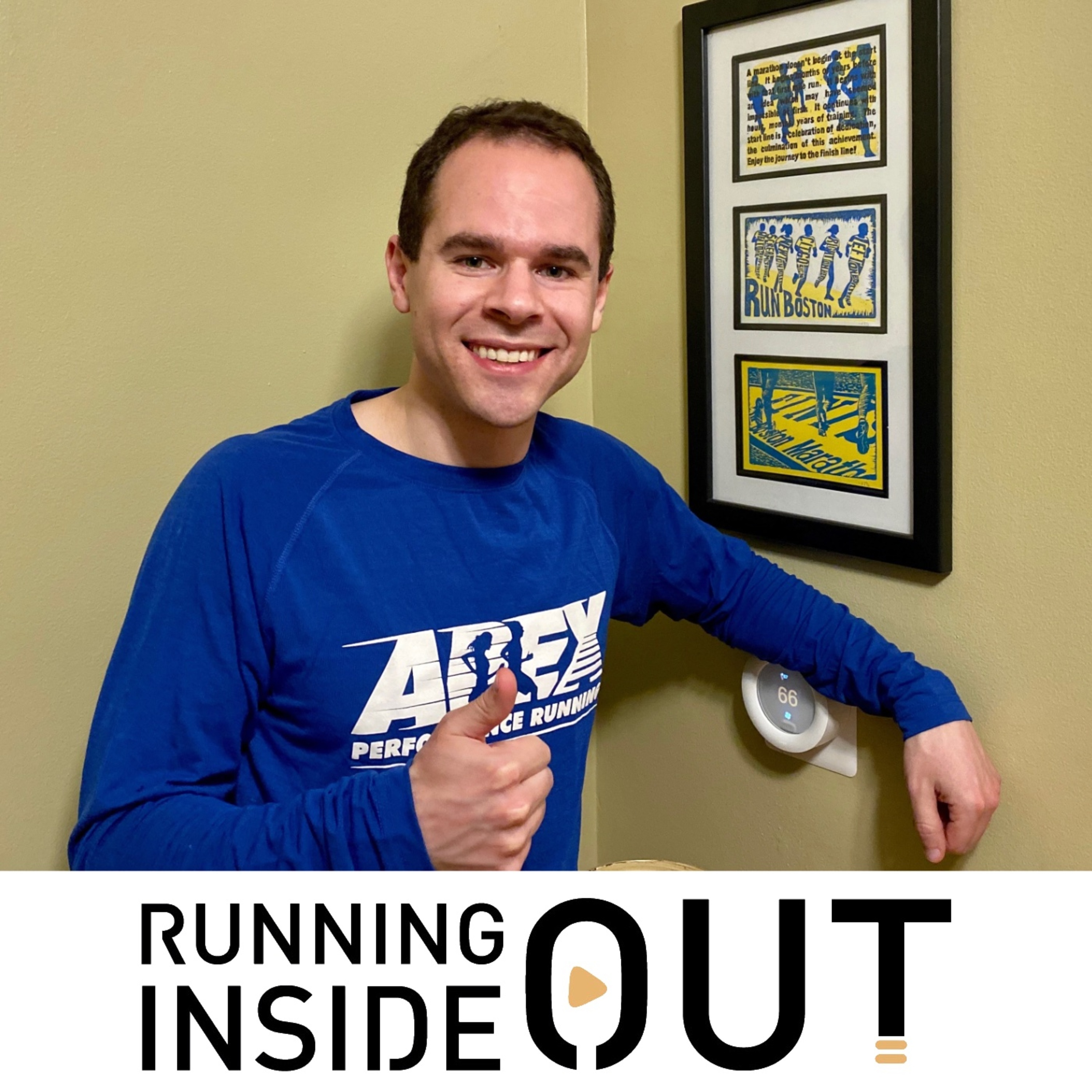
sure just do a running thing somewhere just not with somebody yeah so um you know uh Now, instead of like, you know, talking to the audience, you have, so one of the things that you have is you have a coaching business, right? And you have coaching clients and, you know, I put in the, in the show description, but you are a, you're certified from two coaching associations, right? Level one from USATF and level two from Roadrunners of America. You coach, you founded and coach Apex Performance Coaching. You have to have clients right now that are asking you questions. Is this what you're telling them?
The first thing I did as I'm getting texts from people saying, you know, Boston's postponed, this race is canceled, that race is canceled, these types of things, is I said, all right, we can't do anything about this, but now we can use this as an opportunity to work on things that we wouldn't have otherwise been able to work on because of your race coming up. So take a step back, work on the foundation, work on the basics, introduce new things, which you would never do in a typical training program when you're in the middle of the end. You always introduce new things in between training cycles or at the beginning of training cycles, whether it's strength training, different strength training, any types of new things. You don't introduce mid-training plan. It could work, but you're playing with fire a bit. So the first thing I did was say, I want you to stick with me, regardless of what situation you're in or not, where your psyche's at. I want you to stick with me.
If it means throwing you a few months of coaching pro bono, that's fine. I have a lot of clients that have been with me for a while, and I want to make sure that they're well taken care of. I also have new clients that I want to make sure are well taken care of. Also, by the way, not all clients have a race coming up, which I appreciate. They have the long term in mind, right? The adage is take seven years from when you start running to reach your quote-unquote running potential, right? So seven years of good training, which some people get in high school and college, other people get post-collegiate, right?
There's a lot of opportunity there, and it doesn't all come in the first year or two. You can only cut off a couple minutes on your 5K time so many times before it stops being easy, right? So it's something that you just got to keep going. Get over it. Your race is canceled. Well, guess what? Hundreds of thousands of other people's races are canceled, too. Everyone's not going to be sitting on the couch, you know, mope for a few days. Then get your butt up and get out there and get running and do it for yourself. Do it for when the race is postponed to. Do it for next year. Do it for future you. Do it for your family. Do it because you like to run.
There are so many more reasons besides the race that we go out for runs. So think of all of those, write them all down. And running really doesn't seem that bad anymore, does it? It's like, well, I don't have a race anymore to train for. What's the point? There's a lot of points. There are. It's a veritable porcupine of points right now for runners. I think, if anything, we're all in a house and everybody needs some alone time. And you getting the heck out of the house gives people in your house a break from you. Even if you're not, if you don't think you're getting a break from them, they're getting a break from you. So there's that too, you know.
Sure. One thing I do want to mention, which may not help with that last part, maybe a lunchtime run would, but is the most convenient way to deal with the current situation that we have and to try to do our part as runners so that we are good ambassadors for the community is to run when other people are not out. So I'm not saying that we can't be out during daylight hours. I'm saying that maybe when the sun rises. Maybe get out the door then before everyone crowds the trails and the sidewalks, right? And that way, you only have to change sides of the street a few times during your run. I've had some runs where I don't see anybody for an hour, and then at the very end, usually near Cobbs Hill, I'll see one or two people. And that's my run. No stress. I can enjoy the birds chirping. I can enjoy the adrenaline rush, right, the endorphin boost, and get back to my day. I don't have to worry about a mass. I don't have to worry about, you know, anything. It's just keeping it as simple as possible is the best recipe for success.
with getting out there and just with anything. The simpler you can make it, the more you can lead out a process, the better it will end up and the more successful you'll be at it to execute it. So the best advice I can give from personal experience, and really it is somewhat surreal. I don't know where all the runners are. I don't know where all the dog walkers are. There just aren't as many people out in the mornings. Go out in the morning. Enjoy what Mother Nature has to provide, whether it's in the elements or a nice sunrise or a nice windy day like we had today.
But just get out there and just keep it simple and get on with your day and do the best you can. Yeah. Why not? Why not? Yeah. I think, you know, I'm happy you're running again. I'm happy that you sound nice and healthy. Big, strong voice there. So that's pretty great, too. Yeah. And if I can get back to running, why can't anyone else get back to running? Or why can't you keep on running? Yeah. So, all right, man. Well, thanks a lot.
Thank you. Have a great night. Yeah, you too. I have to remember what day it is. I was going to say weekend. I don't know. Fridays have kind of lost their pizzazz and the weekends aren't really at the end. So it's weird. It is, but it's all right. All right, man. Well, thanks a lot. Have a good night. You too. See ya.
Well, there you have it. Friend, runner, coach, fellow motivational speaker, all-around good family man, Mr. Patterson. Just get out there and run. Give yourself a chance and do your best at it. You don't need to hit splits. You don't need to set PRs and put the world on fire. Just get out and run. Get yourself a good rhythm. Try to get on a schedule. I think that's one of the biggest things that we're all losing and looking for is that sense of normal schedule and rhythm.
try to see if you can carve something out that feels a little bit normal. And if running was your routine that you got away from, it's going to really go a long way towards making you feel normal. So as we mentioned, you can check out Chris at his website, Apex Performance Coaching, and there'll be a link to that in the show notes. We didn't get to talk about comrades. We weren't going to talk about comrades. Chris hasn't forgot about comrades. But thank you all for listening.
You know, subscribe, tell a friend to subscribe, help them subscribe, all those things. We are going to keep doing these. They're going to be a little bit weird because we're all remote, but they're fun. And it gives me an excuse to talk to other runners and gives you some runners to listen to. So episode 95 is in the can. And we're coming up on Rio's fifth birthday this June. So it's not going to be a big banger of a birthday because, well, here's where we are. But five years is coming up, which I honestly cannot believe.
So thank you all for sticking with me that long. There's very few people in my life that have listened to me for five years. So I appreciate you greatly. Thanks. I guess that's it for this one. Until next time, be thankful for what you've been given, be proud of what you've achieved, and let go of what you lost. See you out there soon.