
EPISODE · Sep 3, 2026 · 8 MIN
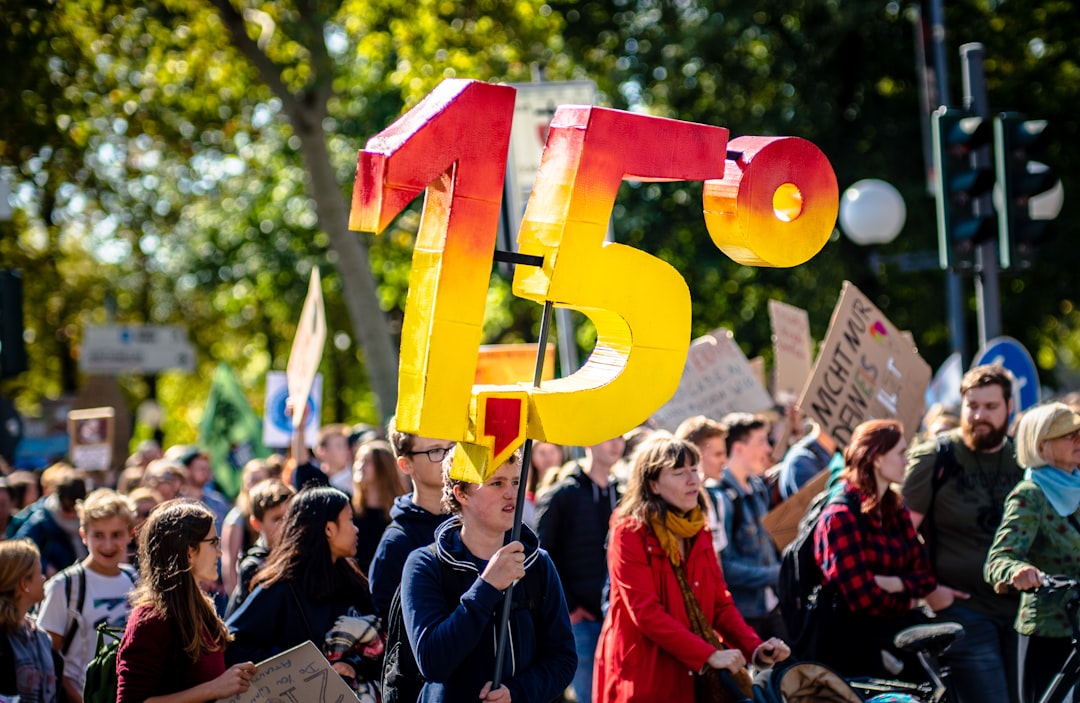
1.5 Degrees, Gone
from The Rest of the World Podcast · host Rudy Martinez and Rest of the World Report
Weekday morning and evening editions. Saturdays once. Good news on Sundays. All sources labeled.LIMITING OVERSHOOTFor the first time since the Paris Agreement was signed in 2015, a United Nations agency has formally declared its central target unreachable. The UN Environment Programme’s new report, “Limiting Overshoot,” states plainly that there is no longer any realistic pathway to keep global warming under 1.5 degrees Celsius. That threshold is measured above pre-industrial levels. UNEP Executive Director Inger Andersen did not soften the admission. “Obviously, yes, we have climate procrastinated,” she said.THE ADMISSION The math behind the report is unforgiving. To stay under 1.5 degrees, total global emissions from 2026 onward cannot exceed 130 billion tonnes of carbon dioxide. At current rates, that budget is nearly spent. The World Meteorological Organization now puts the odds at three in four. That is the likelihood that the five-year average from 2026 to 2030 will breach the Paris threshold outright. UNEP’s most optimistic remaining scenario has warming peaking around 1.8 degrees by mid-century, while under current government policies worldwide, the trajectory points to 2.6 degrees by 2100, nearly double the original target.The report does not counsel surrender. Its framework, called “overshoot, peak, and decline,” accepts that the world will cross 1.5 degrees. It argues for minimizing how far past it temperatures rise, and how long they stay there, before bringing them back down by the end of the century. UN Secretary-General António Guterres said, “humanity is speeding past the limit to avoid climate catastrophe.” The report warns that the longer and higher the overshoot runs, the greater the risk of crossing points of no return. These include the destabilization of major ice sheets, the degradation of the Amazon rainforest, and disruption of the ocean current system that regulates climate across the North Atlantic. Not every scientist finds the report’s framing adequate. Bill Hare, CEO of Climate Analytics, was more critical. He said UNEP has done a good job diagnosing the crisis but a much poorer one showing any way out of it.THE ROLLBACK No single government did this alone. But the United States has spent the past year and a half moving in the opposite direction from what the UNEP report calls for. Its choices carry outsized weight at this exact moment. The US officially withdrew from the Paris Agreement in January. The following month, the administration repealed the 2009 “endangerment finding.” That finding was the EPA determination that greenhouse gases threaten public health, and it had served as the legal foundation for most federal climate regulation since.The rollback extends well beyond symbolic withdrawal. A tracking analysis by the nonpartisan business group E2, based on research from BW Research, found 216 major clean energy manufacturing and power projects canceled, closed, or scaled back since January 2025. E2 estimates the toll at nearly 470,000 jobs and $68 billion in private investment. The group also estimates $90 billion in lost GDP during construction alone, plus a further $55 billion in annual economic activity that would have followed once the projects came online. The administration has paid companies directly to abandon offshore wind leases off the coasts of New York, New Jersey, and North Carolina. Seven states have sued over it. According to the Environmental Defense Fund, the administration has lost every legal challenge to these actions that has reached a decision so far. In August, the Interior Department imposed a new rule requiring wind and solar projects on federal land to match the energy output per acre of fossil fuel projects. That standard disqualifies many renewable proposals by design. The Treasury Department separately narrowed which wind and solar projects still qualify for federal tax credits, ahead of their accelerated expiration this year. The EPA has also delayed a rule limiting fine-particulate pollution from power plants and factories. By the agency’s own calculation, the ten-month delay adds pollution equivalent to 25 million additional gas-powered cars on the road. One independent analysis estimates the cumulative effect has set the US clean energy transition back five to ten years relative to where it would otherwise be.THE DEMAND At the same time the country is dismantling the supply side of its clean energy transition, it is driving an unprecedented surge in electricity demand through artificial intelligence. The United States hosts roughly 45 percent of the world’s AI data center capacity by power draw. That is more than any other nation by a wide margin. A single large AI facility can require 100 to 300 megawatts of continuous power, up to ten times what a conventional data center uses. Global data center electricity consumption stood at about 415 terawatt-hours in 2024. The International Energy Agency projects that figure will approach 1,000 terawatt-hours by 2030, driven overwhelmingly by AI. US data center power demand alone is projected to quadruple over that same period.That demand is not being met cleanly. The IEA estimates that roughly 40 percent of the additional electricity data centers will need through 2030 will still come from gas and coal. In Virginia, home to the densest concentration of data centers in the country, these facilities already consume 26 percent of all electricity used in the state. One energy company, Fuel Cell Energy, has partnered with a coal operator to power AI data centers using methane captured from coal mines. That is a direct, literal link between the AI buildout and fossil fuel extraction. Data centers still account for a modest share of global emissions today, under one percent. But independent analysts note they are one of the only sectors on Earth where emissions are projected to keep rising through 2030, even as most other industries are expected to decarbonize.🌍 TRANSLATOR’S NOTE: International coverage of the UNEP report has repeatedly returned to a detail that American coverage tends to treat as background rather than the point. The United States is the only country to have formally exited the Paris Agreement. At the same time, it is building the physical infrastructure most likely to keep global emissions rising this decade. That is not framed abroad as two unrelated policy stories happening to occur together. It is framed as a single American choice, made twice, in the same direction. Coverage tracking both the clean energy rollback and the AI buildout has noted that the rest of the world is absorbing the practical consequences of decisions made almost entirely inside Washington and Northern Virginia.🇺🇸 What American readers need to know: The UN just admitted the world’s most important climate target is gone. Your country is simultaneously the one government actively dismantling clean energy at scale and the single largest driver of the electricity demand growth putting new pressure on the grid. Both of those are policy choices, not accidents, and both were made in the same eighteen months.Sources: Nature (Andersen quote, report framing); CBC News (Guterres quote, overshoot pathway detail); Health Policy Watch (130 billion tonne emissions math, COP31 context); NBC News (Bill Hare critique); UNEP (tipping point risks, WMO probability figure); EDF Climate 411 (offshore wind lawsuits, legal record); Electrek (E2/BW Research job and investment figures); Climate Action Campaign (Interior project-density rule, EPA soot delay, Treasury tax credit guidance); Our Community Media (five-to-ten-year setback estimate); Brookings (global data center electricity projections); TTMS (Virginia electricity share); enkiai.com (US global AI capacity share, Fuel Cell Energy partnership); Carbon Brief (data center emissions share and trajectory)ALSO DEVELOPING:Iran: Iran’s Health Ministry says US strikes this week killed 18 people, including two women and a child, and injured 142 others. Trump said the US is ready to strike Iran “anytime we want.” He does not expect renewed fighting to last “too long.” Separately, two Filipino sailors were killed Monday when their tanker was struck in the Strait of Hormuz. Its Saudi operator confirmed the deaths Wednesday. Sources: Al Jazeera, CBS News.Israel/Lebanon/Gaza/West Bank: Israeli forces killed two Palestinian youths overnight during a settler raid near Al-Mughayyir in the West Bank, medics said. UN Secretary-General Guterres said Israel has killed more than 1,320 Palestinians and injured over 4,385 since the October ceasefire began. He called for an end to both Gaza strikes and West Bank settler violence. Sources: Haaretz, Middle East Monitor.Ukraine/Russia: Russian drones struck central Kyiv, injuring at least seven. Ukraine’s SBU said it disrupted an FSB plot to assassinate a Russian opposition figure visiting Kyiv. Zelenskyy warned that Russian airspace is becoming “de facto closed” to any airline or insurer still using it. The warning came after Putin accused Ukraine of “state terrorism.” The EU is weighing a Ukrainian request to help fund Patriot missile purchases, with a decision expected September 7. Sources: Kyiv Independent, Al Jazeera.NUMBERS AT PUBLICATION🇮🇷 Iran: 3,654 killed 🇱🇧 Lebanon: 4,346 killed, 12,301 wounded 🇮🇱 Israel: 1,200+ killed, ~5,400 wounded (includes 472 killed, 3,004 wounded in Gaza) 🇺🇸 US military: 18 killed, 687 wounded 🇵🇸 Gaza: 1,320 killed, 4,385 wounded since the October 10, 2025 “ceasefire” 🇵🇸 West Bank: 316 killed (incl. 73 children), 5,641 wounded (incl. 915 children), since January 2025 🛢️ Brent crude: $95.66/barrel (OilPrice.com) ⛽ US gas: $4.14/gallon (AAA)Sources: HRANA (Iran, 3,636 frozen base since April 7). We added 18 newly reported deaths per Iran’s Health Ministry, replacing an earlier ad-hoc estimate. Also: Lebanon MOPH, INSS (Israel), DCAS (US, disputed), OCHA and UN Secretary-General’s office (Gaza, updated), OCHA (West Bank, carried forward), OilPrice.com, AAA.“Whenever the people are well informed, they can be trusted with their own government.” — Thomas Jefferson, 1789 Get full access to The Rest of the World Report at www.restoftheworldreport.com/subscribe
Embed this episode
Ready to play
1.5 Degrees, Gone
No transcript for this episode yet
Similar Episodes
No similar episodes found.
Similar Podcasts
No similar podcasts found.