
EPISODE · Aug 31, 2026 · 10 MIN
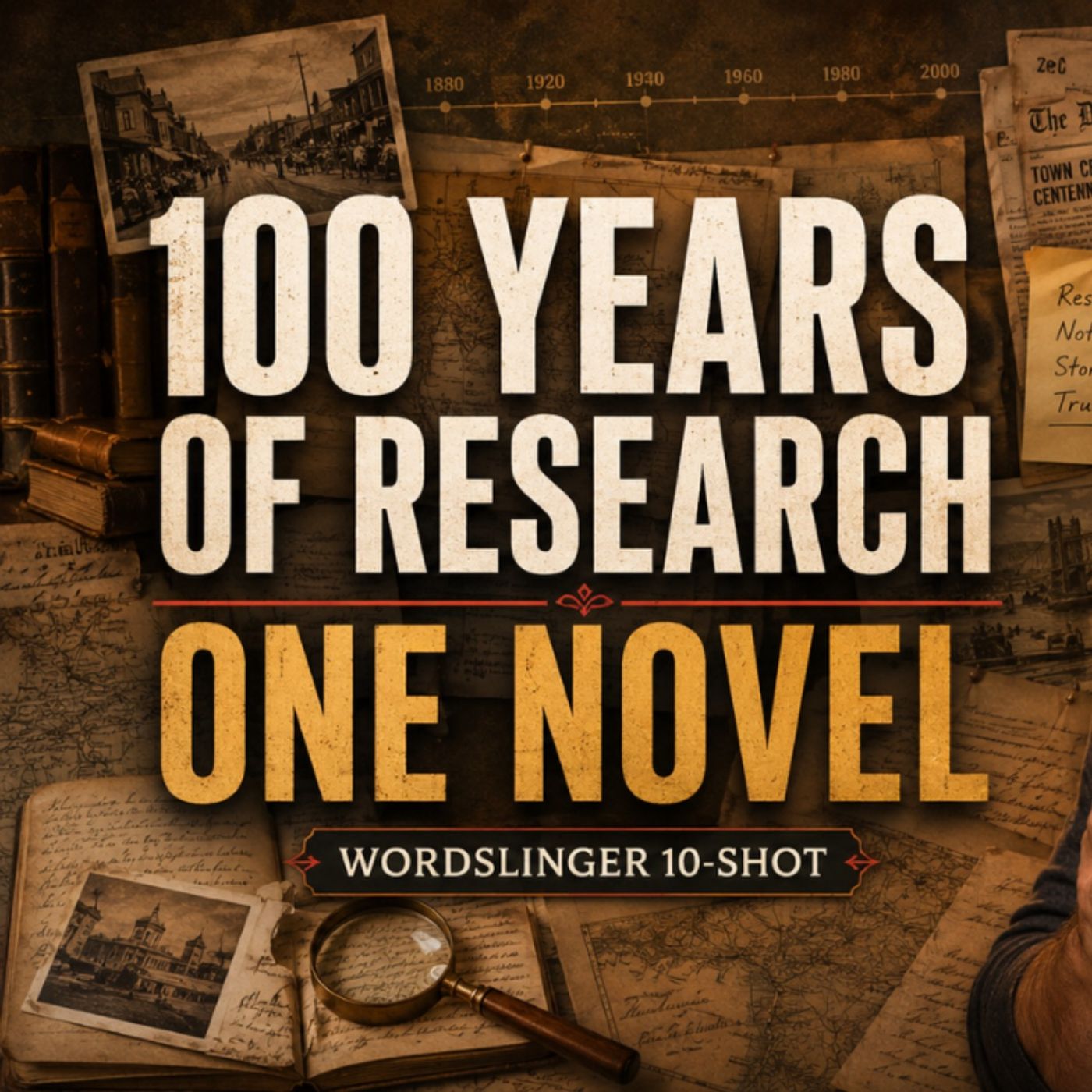
100 Years of Research, ONE Novel
from The Wordslinger Podcast · host J. Kevin Tumlinson
A WORDSLINGER 10-SHOT How do you take more than 100 years of history, documents, photographs, handwritten notes, newspaper clippings, and real-life events—and turn all of it into ONE compelling novel? In this Wordslinger 10-Shot, Kevin shares the process he’s using to research a new historical fiction project, including the most important decision he made early on: Don’t try to tell all the history. Find the human story that everything else can hang from. Kevin talks about choosing the right character as the emotional center of a historical novel, deciding what research actually belongs in the story, and using AI as a research assistant to transcribe old documents, organize information, build timelines, and identify connections across more than a century of events. AI can make research dramatically faster—but it doesn’t replace the writer. You still have to understand the material, verify the facts, make creative decisions, and ultimately turn all that information into a story readers actually care about. If you’re writing historical fiction, creative nonfiction, researching a novel, or simply drowning in notes and wondering how any of it becomes a book, this episode is for you. Visit the Knovelton Bookshop at knoveltonbooks.com GET 15% OFF YOUR ENTIRE ORDER AT CHECKOUT WITH CODE STORYCUTS Subscribe to the Wordslinger Show for practical, experience-driven guidance on writing, publishing, storytelling, creativity, and building a sustainable career as a writer. If you’re serious about your writing and publishing journey, you’re in the right place. TIMECODES 00:00 More than 100 years of history—and one novel 00:47 Finding the story inside all the research 01:44 Why writing the complete history doesn’t work 02:18 Finding the human character who carries the story 03:06 The first rule of writing historical fiction 04:16 How to turn enormous amounts of research into one story 05:21 Using AI to transcribe documents and build a timeline 06:22 Why writers still have to verify AI research 07:32 Where historical accuracy ends and fiction begins 08:57 The writer’s real job: conveying the emotion 09:50 Final thoughts on research, AI, and historical fiction FIND KEVIN: Find Kevin and his books:https://kevintumlinson.com Join Kevin on Substack:https://kevintumlinson.substack.com Wordslinger Podcast home page:https://wordslingerpodcast.com Visit the Wordslinger Show on YouTube:https://youtube.com/@wordslingershow SERVICES FOR AUTHORS: Polish your writing and make it ready for publishing with ProWriting Aid:https://tidd.ly/3NCdlk5 Publish your book to every major retailer online, get your book into print and ebook, and get support the whole way at Draft2Digital:https://draft2digital.com/wordslinger Find a virtual assistant to help you market your books (and more!) at AuthorAnchor:https://authoranchor.com Hosted by Simplecast, an AdsWizz company. See pcm.adswizz.com for information about our collection and use of personal data for advertising.
Embed this episode
What this episode covers
In this Wordslinger 10-Shot, Kevin shares how he’s tackling more than 100 years of history to build a single historical novel—by finding the human story that everything else can hang on. He also looks at how AI can help organize research, transcribe old documents, build timelines, and surface connections, while leaving the real work of judgment, fact-checking, and storytelling in the writer’s hands.
NOW PLAYING
100 Years of Research, ONE Novel
No transcript for this episode yet
Similar Episodes
Similar Podcasts
No similar podcasts found.