
EPISODE · May 20, 2026 · 23 MIN
1003-The Cutaneous Wound Response Program in PDAC Malignancy
from Paper Talk
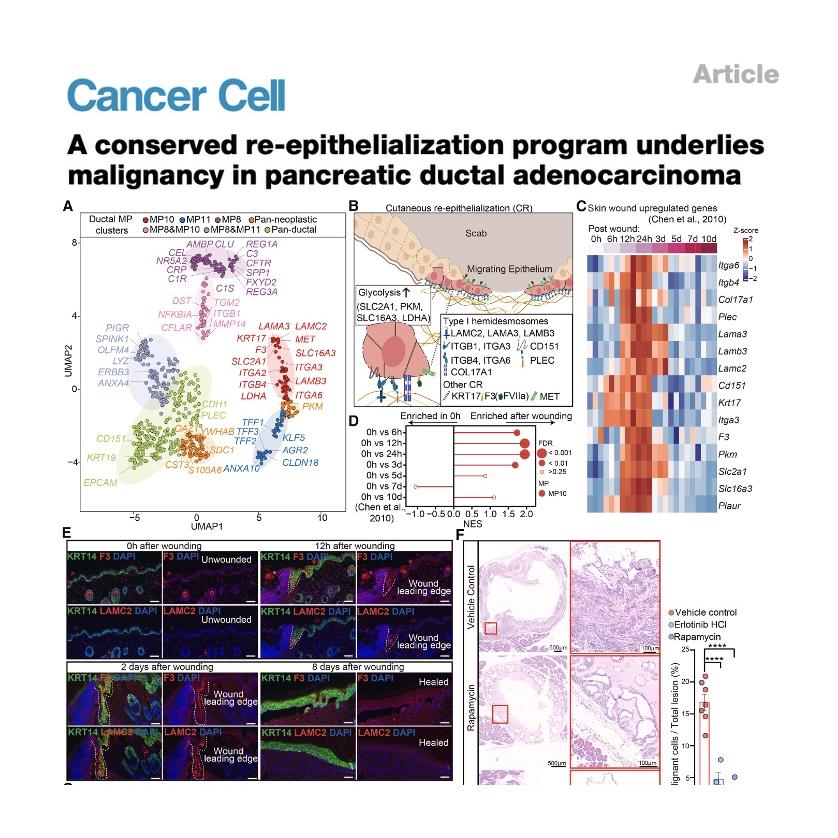
This research identifies a conserved genetic program called MP10 that drives the transition of benign pancreatic lesions into invasive pancreatic ductal adenocarcinoma (PDAC). Mirroring the process of cutaneous re-epithelialization used in skin wound healing, this program enables cancer cells to breach the basement membrane and infiltrate surrounding tissues. The transcription factor FOSL1 acts as a master regulator of this transition, while tumor suppressor genes normally serve as a critical checkpoint to keep these invasive cells in check. The study further reveals a wound-like feedback loop where specific myofibroblasts, known as CTHRC1high myCAFs, promote the malignant state through EGFR signaling. Distinct from traditional epithelial-to-mesenchymal transition, this lineage-specific migration program represents a targetable mechanism for halting pancreatic cancer progression.References:Zhuo M, Li Y, Zhang Y, et al. A conserved re-epithelialization program underlies malignancy in pancreatic ductal adenocarcinoma[J]. Cancer Cell, 2026.前往小宇宙评论区与主播互动
Embed this episode
Ready to play
1003-The Cutaneous Wound Response Program in PDAC Malignancy
No transcript for this episode yet
Similar Episodes
No similar episodes found.
Similar Podcasts
No similar podcasts found.