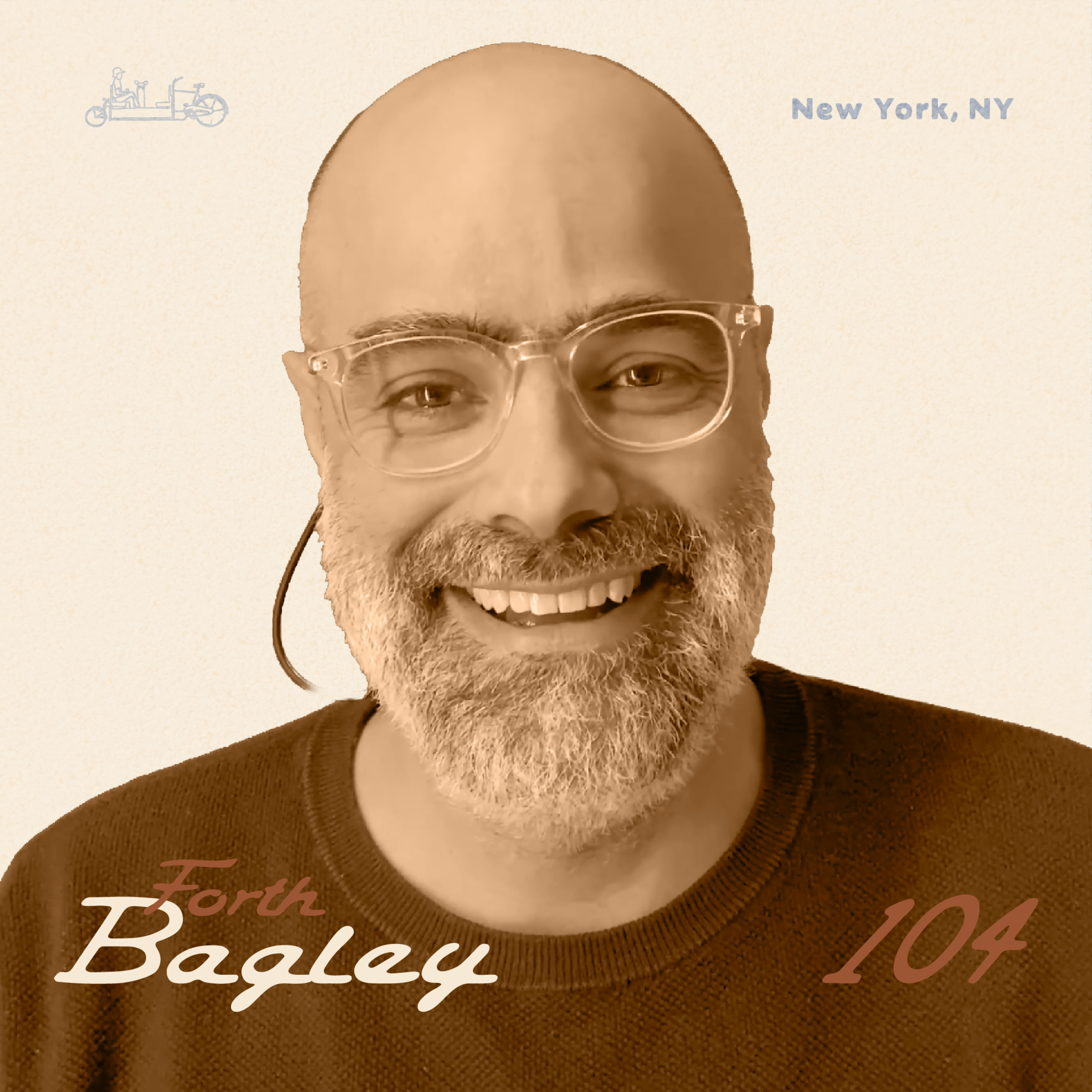
104 / Large-scale architecture's role & responsibility in urbanism / with Forth Bagley episode artwork

EPISODE · Mar 5, 2026 · 50 MIN

104 / Large-scale architecture's role & responsibility in urbanism / with Forth Bagley

from good traffic. · host Brad Biehl

Forth Bagley — Principal Architect at KPF (Kohn Pedersen Fox) — is in good traffic this week for a conversation about designing at scale, threading the needle between progressive design and commercial realities, and why tall buildings owe a responsibility to the cities they define. As an architect involved in transforming places from Covent Garden, to Changi Airport, to Hudson Yards, to Central Hong Kong, Forth brings a strong perspective on what it takes to actually get ambitious projects built, and what happens when iconic architecture becomes the backdrop for everything — good and bad — in a city.Forth walks through how KPF finds itself embedded in neighborhoods for decades, often through clients who follow them across continents — like the developer who hired them in Hong Kong, then brought them to Covent Garden in London to upgrade what had become a tourist trap into a lifestyle destination for everyday Londoners. He explains how Hudson Yards, the largest private development in North American history, required building over active rail lines, threading complicated funding mechanisms, and pulling back architectural ambition at the right moments to ensure the project could actually get built and generate the tax revenue New York desperately needed. The conversation touches on Bill Pedersen's theory that tall buildings become the church spires of modern cities — responsible not just to owners but to skylines, wayfinding, and civic identity — and the uncomfortable reality that a decade-long project can launch in 2008 and emerge into a completely different world of Uber, Amazon deliveries, and viral photography.We also touch on: Why built precedent matters more than renderings. Threading the needle between pushing boundaries and staying on budget. Half of all designs ending up on the cutting room floor. Tall buildings as wayfinding tools and civic markers. Architecture as public relations and its downsides. Why Hudson Yards saved New York from deeper fiscal crisis. Austin's Waterline and green terraces. Hong Kong's seamless infrastructure.Timeline:00:00 Intro.02:24 Introducing Forth Bagley from KPF.02:47 The architect's perspective on the show.03:12 KPF's mission: elevating basic building blocks.03:47 From single buildings to neighborhoods over 50 years.04:09 How KPF gets hired for major projects.05:12 Covent Garden: from Hong Kong client to London.06:34 Upgrading a tourist trap for everyday Londoners.07:19 Hudson Yards: largest private development in North America.08:47 Building over active rail lines.09:12 The West Side as a net negative on tax rolls.10:33 Why built precedent matters.11:55 Threading the needle between ambition and reality.13:22 Half of designs end up on the floor.14:38 The difference between getting built and not.18:45 Bill Pedersen's theory of tall building responsibility.21:17 Tall buildings as church spires and civic markers.24:33 Looking different from different points of view.26:58 The responsibility to the skyline.31:42 Hudson Yards and the iPhone problem.34:19 Starting in 2008, emerging into a different world.38:27 Hudson Yards and New York's tax revenue crisis.41:53 Public school kids educated because of the project.44:14 Architecture as public relations problem.45:02 When iconic buildings become protest backdrops.46:21 Making buildings harmonious with existing skylines.47:07 Hudson Yards preventing fiscal disaster.47:51 Austin's Waterline and green terraces.48:14 The commute question.48:51 JFK to Hong Kong W hotel without stepping outside.49:42 Hong Kong's seamless infrastructure systems.50:02 Wrapping up.Further context:KPF's work.On Instagram.

Forth Bagley — Principal Architect at KPF (Kohn Pedersen Fox) — is in good traffic this week for a conversation about designing at scale, threading the needle between progressive design and commercial realities, and why tall buildings owe a responsibility to the cities they define. As an architect involved in transforming places from Covent Garden, to Changi Airport, to Hudson Yards, to Central Hong Kong, Forth brings a strong perspective on what it takes to actually get ambitious projects built, and what happens when iconic architecture becomes the backdrop for everything — good and bad — in a city.Forth walks through how KPF finds itself embedded in neighborhoods for decades, often through clients who follow them across continents — like the developer who hired them in Hong Kong, then brought them to Covent Garden in London to upgrade what had become a tourist trap into a lifestyle destination for everyday Londoners. He explains how Hudson Yards, the largest private development in North American history, required building over active rail lines, threading complicated funding mechanisms, and pulling back architectural ambition at the right moments to ensure the project could actually get built and generate the tax revenue New York desperately needed. The conversation touches on Bill Pedersen's theory that tall buildings become the church spires of modern cities — responsible not just to owners but to skylines, wayfinding, and civic identity — and the uncomfortable reality that a decade-long project can launch in 2008 and emerge into a completely different world of Uber, Amazon deliveries, and viral photography.We also touch on: Why built precedent matters more than renderings. Threading the needle between pushing boundaries and staying on budget. Half of all designs ending up on the cutting room floor. Tall buildings as wayfinding tools and civic markers. Architecture as public relations and its downsides. Why Hudson Yards saved New York from deeper fiscal crisis. Austin's Waterline and green terraces. Hong Kong's seamless infrastructure.Timeline:00:00 Intro.02:24 Introducing Forth Bagley from KPF.02:47 The architect's perspective on the show.03:12 KPF's mission: elevating basic building blocks.03:47 From single buildings to neighborhoods over 50 years.04:09 How KPF gets hired for major projects.05:12 Covent Garden: from Hong Kong client to London.06:34 Upgrading a tourist trap for everyday Londoners.07:19 Hudson Yards: largest private development in North America.08:47 Building over active rail lines.09:12 The West Side as a net negative on tax rolls.10:33 Why built precedent matters.11:55 Threading the needle between ambition and reality.13:22 Half of designs end up on the floor.14:38 The difference between getting built and not.18:45 Bill Pedersen's theory of tall building responsibility.21:17 Tall buildings as church spires and civic markers.24:33 Looking different from different points of view.26:58 The responsibility to the skyline.31:42 Hudson Yards and the iPhone problem.34:19 Starting in 2008, emerging into a different world.38:27 Hudson Yards and New York's tax revenue crisis.41:53 Public school kids educated because of the project.44:14 Architecture as public relations problem.45:02 When iconic buildings become protest backdrops.46:21 Making buildings harmonious with existing skylines.47:07 Hudson Yards preventing fiscal disaster.47:51 Austin's Waterline and green terraces.48:14 The commute question.48:51 JFK to Hong Kong W hotel without stepping outside.49:42 Hong Kong's seamless infrastructure systems.50:02 Wrapping up.Further context:KPF's work.On Instagram.

NOW PLAYING

104 / Large-scale architecture's role & responsibility in urbanism / with Forth Bagley

0:00 50:28

No transcript for this episode yet

We transcribe on demand. Request one and we'll notify you when it's ready — usually under 10 minutes.

Tao Te Ching by Laozi (Author), Stephen Mitchell (Full Audiobook) Laozi Lao-tzu's Tao Te Ching, or Book of the Way, is the classic manual on the art of living, and one of the wonders of the world. In eighty-one brief chapters, the Tao Te Ching looks at the basic predicament of being alive and gives advice that imparts balance and perspective, a serene and generous spirit. This book is about wisdom in action. It teaches how to work for the good with the effortless skill that comes from being in accord with the Tao (the basic principle of the universe) and applies equally to good government and sexual love; to child rearing, business, and ecology.Stephen Mitchell's bestselling version has been widely acclaimed as a gift to contemporary culture. Changemakers Mastercard Welcome to Changemakers, a Mastercard storylab series about employees who have become a force for good in local communities. Join hosts Anthony Venutolo and Vicki Hyman in discovering who they are and how they are making a difference in the lives of people around the world. Well & Good with Art Green Roar Collective Well & Good is a meeting place where listeners can pick the brains of some of the world’s leading health and wellbeing authorities. Hosted by wellbeing advocate Art Green, we talk with a broad range of experts to learn wellness techniques in all different aspects of this fast-developing space. Exceptional guests break down scientific breakthroughs, lived experience and the latest research into relatable, actionable tips, arming listeners with the tools and knowledge to reach their health potential. The Ten Commandments Chad Boersema Many focus on MAKING disciples, we hope to help in the process of BEING a disciple of Jesus. Understanding the ten commandments can be a good place to reflect on, as they were one of Israel's first introductions to learning how to relate to God and live in His way. Jesus also references the commandments in his sermon on the mount saying, “...whoever does them [the commandments] will be called great in the kingdom of heaven.” (Matthew 5:19) Looking forward to exploring these with you! Thanks for listening!web - jesusdisciple.info facebook - facebook.com/jesusdisciple.info twitter - twitter.com/fellow_disciple instagram - instagram.com/jesusdisciple.info

Frequently Asked Questions

How long is this episode of good traffic.?

This episode is 50 minutes long.

When was this good traffic. episode published?

This episode was published on March 5, 2026.

What is this episode about?

Forth Bagley — Principal Architect at KPF (Kohn Pedersen Fox) — is in good traffic this week for a conversation about designing at scale, threading the needle between progressive design and commercial realities, and why tall buildings owe a...

Can I download this good traffic. episode?

Yes, you can download this episode by clicking the download button on the episode player, or subscribe to the podcast in your preferred podcast app for automatic downloads.
URL copied to clipboard!