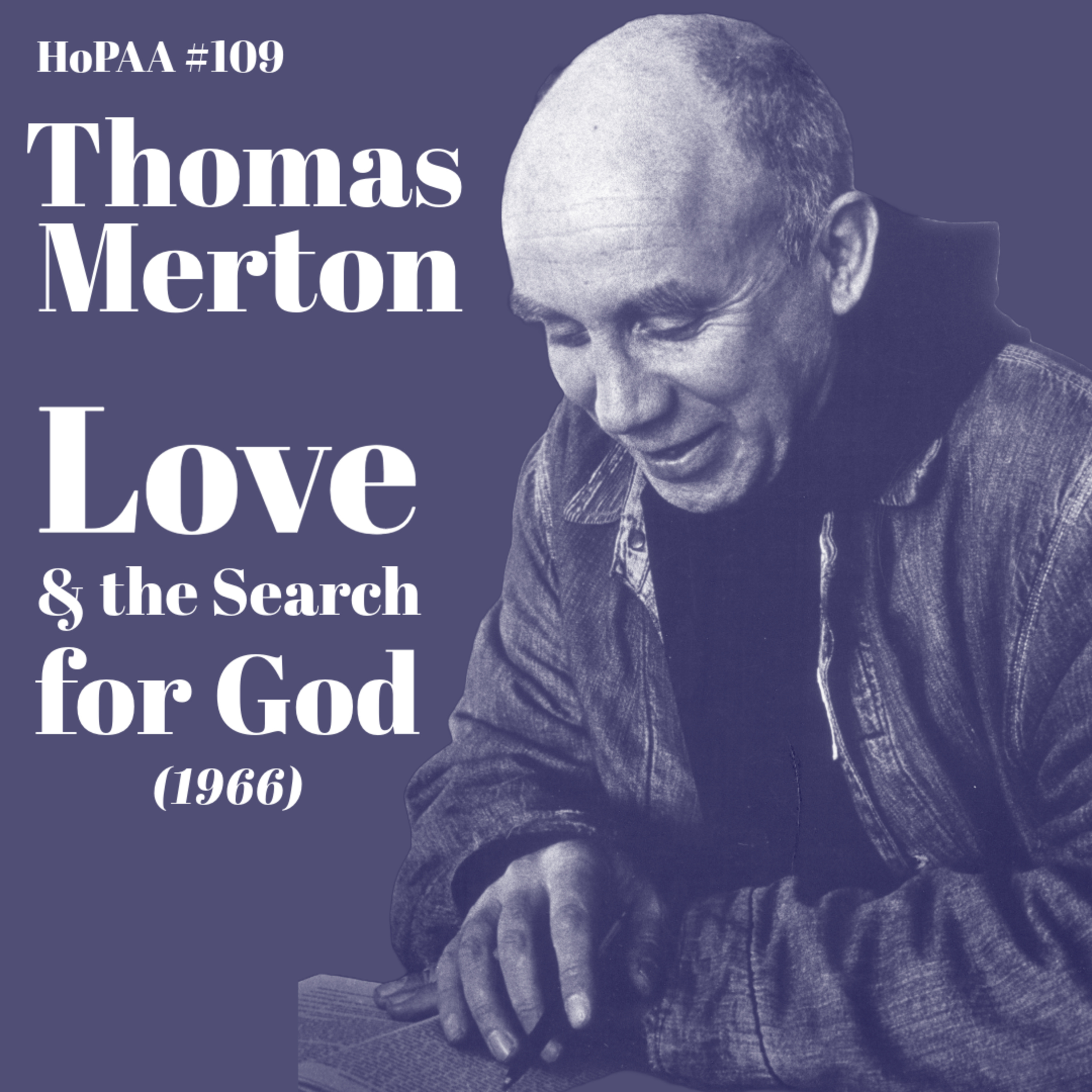
#109 - Love and the Search for God: Thomas Merton on Rilke, Monastic versus Lay Living, and Finding God episode artwork

EPISODE · Sep 7, 2024 · 59 MIN

#109 - Love and the Search for God: Thomas Merton on Rilke, Monastic versus Lay Living, and Finding God

from History of Philosophy Audio Archive · host William Engels

Come join my Patreon! https://patreon.com/HemlockPatreon Indeed, the truth that many people never understand, until it is too late, is that the more you try to avoid suffering, the more you suffer, because smaller and more insignificant things begin to torture you, in proportion to your fear of being hurt. The one who does most to avoid suffering is, in the end, the one who suffers the most: and his suffering comes to him from things so little and so trivial that one can say that it is no longer objective at all. It is his own existence, his own being, that is at once the subject and the source of his pain, and his very existence and consciousness is his greatest torture. This is another of the great perversions by which the devil uses our philosophies to turn our whole nature inside out, and eviscerate all our capacities for good, turning them against ourselves. -Thomas Merton, The Seven Storey Mountain, 1948 The Rainer Maria Rilke text that Merton references is Letter Seven from "Letters to a Young Poet" https://genius.com/Rainer-maria-rilke-letter-seven-annotated Later Merton cites Rilke's "Book of Hours" https://en.wikipedia.org/wiki/The_Book_of_Hours -//- Original Reference (Titled “Rilke and his search for God”) - https://merton.bellarmine.edu/s/Merton/page/AVnovices Publication Date - February 2nd, 1966 Thomas Merton - https://en.wikipedia.org/wiki/Thomas_Merton

Come join my Patreon! https://patreon.com/HemlockPatreon Indeed, the truth that many people never understand, until it is too late, is that the more you try to avoid suffering, the more you suffer, because smaller and more insignificant things begin to torture you, in proportion to your fear of being hurt. The one who does most to avoid suffering is, in the end, the one who suffers the most: and his suffering comes to him from things so little and so trivial that one can say that it is no longer objective at all. It is his own existence, his own being, that is at once the subject and the source of his pain, and his very existence and consciousness is his greatest torture. This is another of the great perversions by which the devil uses our philosophies to turn our whole nature inside out, and eviscerate all our capacities for good, turning them against ourselves. -Thomas Merton, The Seven Storey Mountain, 1948 The Rainer Maria Rilke text that Merton references is Letter Seven from "Letters to a Young Poet" https://genius.com/Rainer-maria-rilke-letter-seven-annotated Later Merton cites Rilke's "Book of Hours" https://en.wikipedia.org/wiki/The_Book_of_Hours -//- Original Reference (Titled “Rilke and his search for God”) - https://merton.bellarmine.edu/s/Merton/page/AVnovices Publication Date - February 2nd, 1966 Thomas Merton - https://en.wikipedia.org/wiki/Thomas_Merton

NOW PLAYING

#109 - Love and the Search for God: Thomas Merton on Rilke, Monastic versus Lay Living, and Finding God

0:00 59:20

No transcript for this episode yet

We transcribe on demand. Request one and we'll notify you when it's ready — usually under 10 minutes.

Ask A Spaceman Archives - 365 Days of Astronomy Ask A Spaceman Archives - 365 Days of Astronomy Podcasting Astronomy Every Day of the Year Eat to Live Jenna Fuhrman, Dr. Fuhrman Our health is our most precious gift and smart nutrition can change your life. Each month, join Dr. Fuhrman and his daughter, Jenna Fuhrman as they discuss important topics in the world of nutrition. Eat to Live will change the way you eat and think about food. French Your Way Jessica: Native French teacher founder of French Your Way Boost your French listening skills and test your comprehension with this one of a kind series of podcasts. Get the chance to listen to a real conversation between native speakers talking at normal speed AND customise your learning experience through carefully designed sets of questions (2 levels of difficulty) available for download at www.frenchvoicespodcast.com. All interviews also come with the transcript. French teacher Jessica interviews native speakers of French from around the world who share a bit of their life and passion. Where else would you meet in one same place a French yoga teacher based in Melbourne, a soap manufacturer from Provence, or a couple cycling around the world? That Hoarder: Overcome Compulsive Hoarding That Hoarder Hoarding disorder is stigmatised and people who hoard feel vast amounts of shame. This podcast began life as an audio diary, an anonymous outlet for somebody with this weird condition. That Hoarder speaks about her experiences living with compulsive hoarding, she interviews therapists, academics, researchers, children of hoarders, professional organisers and influencers, and she shares insight and tips for others with the problem. Listened to by people who hoard as well as those who love them and those who work with them, Overcome Compulsive Hoarding with That Hoarder aims to shatter the stigma, share the truth and speak openly and honestly to improve lives.

Frequently Asked Questions

How long is this episode of History of Philosophy Audio Archive?

This episode is 59 minutes long.

When was this History of Philosophy Audio Archive episode published?

This episode was published on September 7, 2024.

What is this episode about?

Come join my Patreon! https://patreon.com/HemlockPatreon Indeed, the truth that many people never understand, until it is too late, is that the more you try to avoid suffering, the more you suffer, because smaller and more insignificant things begin...

Can I download this History of Philosophy Audio Archive episode?

Yes, you can download this episode by clicking the download button on the episode player, or subscribe to the podcast in your preferred podcast app for automatic downloads.
URL copied to clipboard!