Pulling into my camp and parking area now on my second trip, I was both thrilled and relieved to find no other rigs or sign of people. I mean, after all, it's totally understandable that other hunters would stumble into this place and I'd overlap with their time in these mountains. Especially given that with our home balance now, Ali only able to watch our kiddo on weekends, I was now working with weekend time slots myself, and much of the beautiful El Cabotat that I'd honed in on is visible from the road, making it an easy target for casual passersby to stop and take into epic scenery and mosaic of timber transitions and tree lines, like a bikini car wash outside of frat house just begging to be gocked at and admired. But last season had established a baseline for what I'd come to expect as normal hunting pressure for the spot, and lack thereof was a major component of what I'd come to appreciate about this area, despite these vulnerabilities that I'd figured had been proven now as trustworthy.
Patterns are something that I'd always watch for when spending time in the same place over and over, and one observation that I'd made early on last season was the lack of mule deer. Now this came as no surprise given the ass kicking that mule deer heard suffered in the winter of 2016. The region and this drainage in particular had all the hallmarks of what I recognize as stellar big buck country, and over the course of last year I even stumbled upon a handful of old chalky drop antlers, confirming that bucks did indeed spend time in this area, if only during the spring, but I imagine that they were here also in the fall. The lack of deer was indeed striking.
In all of last season, I'm not sure I saw a single deer, maybe a doe or two, but nothing really comes to mind. So when I came upon a large set of deer tracks last season, they not only caught my eye, but also my attention and imagination. They were big tracks. A dandy buck.
This spell is one of the very few that must have survived the gnarly winter I noted in my head. I ran uphill diagonally along a steep game trail, wrapping around the bow of a razorback ridge line. Bitter brush, sage, and mountain mahogany stood tall and crisp, while mixed with large boulders and rock formations, jutting from the ground as espresso soil. At the time, I was on the heels and catching up to the bull eye, eventually aeroped, the quick glances at the set of tracks stuck firmly in my memory.
Now three or four times passing the same area this season, each time I eased over the rise which revealed line of sight to this junction of canyons. I'd watched closely before making my way in presence known, and each time I'd see the tracks again, fresh from the night before. One of these days I'll lay eyes on this buck, I said to myself, I'm sure of it. Now all week long I'd been anticipating what may unfold in front of the trail camera I'd place on the wall of a week prior, and making my way up Canyon that morning I pondered.
What or who would visit the wallow? Would I have footage of other hunters? If so, would they spot my camera, or possibly tamper with it, or even take it? Is there a chance I could get footage of any big, mature bulls?
I really wondered if or how big of bulls roamed this area. And most of all, I wanted to get another look at the big, non-typical bull that I'd had such a close encounter with last year. I never got a super clear look at him during that razor close encounter we shared last September, but I saw enough to instantly recognize his one-sided, multi-beam tangle of unique antler. It really took a sizable amount of discipline that morning to stick with the hunt that I'd planned, and not beeline directly for the trail cam.
But by the middle of the afternoon I'd finally made my way into the drainage, with a rock-capped dead end, and approached the wallow where I'd left my camera. First thing I noticed was that the camera was definitely moved, knocked loose from the wedged orientation that I'd left it in facing the wallow. So that confirmed that something had tampered with it. I also noticed that the wallow, which had been a symmetrical tub, was disrupted, excavated in a way that all the water had drained out, and it was now much less obvious as a wallow.
So there had been activity of some kind here since I'd left, and I was pumped at the thought of having it all captured on film. I removed my heavy pack and took a seat in the black shade of a massive spruce tree. I pulled a bag of cooked bacon from my food compartment and sucked down some water. Pulling my digital camera from its pouch, I located the extra memory card that I'd planned to swap with the one in the trail cam.
From over my shoulder, I heard something moving through the grass. Slowly, I turned my head to the left and saw a young black bear casually loping his way towards me. After I replaced the memory card in my camera, turned it to the video mode and pointed it at the bear. He was working right towards me, at 20, 15, 10 yards before I finally decided I didn't need him getting wind in my bacon.
I rose up and poked a proper fart sound right at him to get his attention. He whirled and blasted for cover with striking speed. Cool, I thought to myself. I'm sure I'll have some shots at him here on the trail camera, and now I'll have this supplemental footage too.
Brimming with anticipation, I opened the glass, removed the memory card, and placed it in the camera. I took a deep breath, closed my eyes, and hoped for a screen filled with tiny images as I pushed the review button. I opened my eyes to find exactly what I'd feared, lousy text reading, no images displayed on the screen. Terribly disappointed, although not at all surprised, I repacked my equipment and assessed where I would wander the remaining hours of daylight.
Had it been turned on properly? Did the video setting screw things up and not work? There was a memory card too slow for the video? Maybe somebody found it, and erased all of the images.
All kinds of scenarios ran through my head, and I tried hard to block the entire effort from my thoughts, and just stay focused on new and future opportunities for success. Well, pretty cool to have that footage of the bear. I almost wasn't there in time to even have that. But look, I recited while giving my shaky morale a pat on the back.
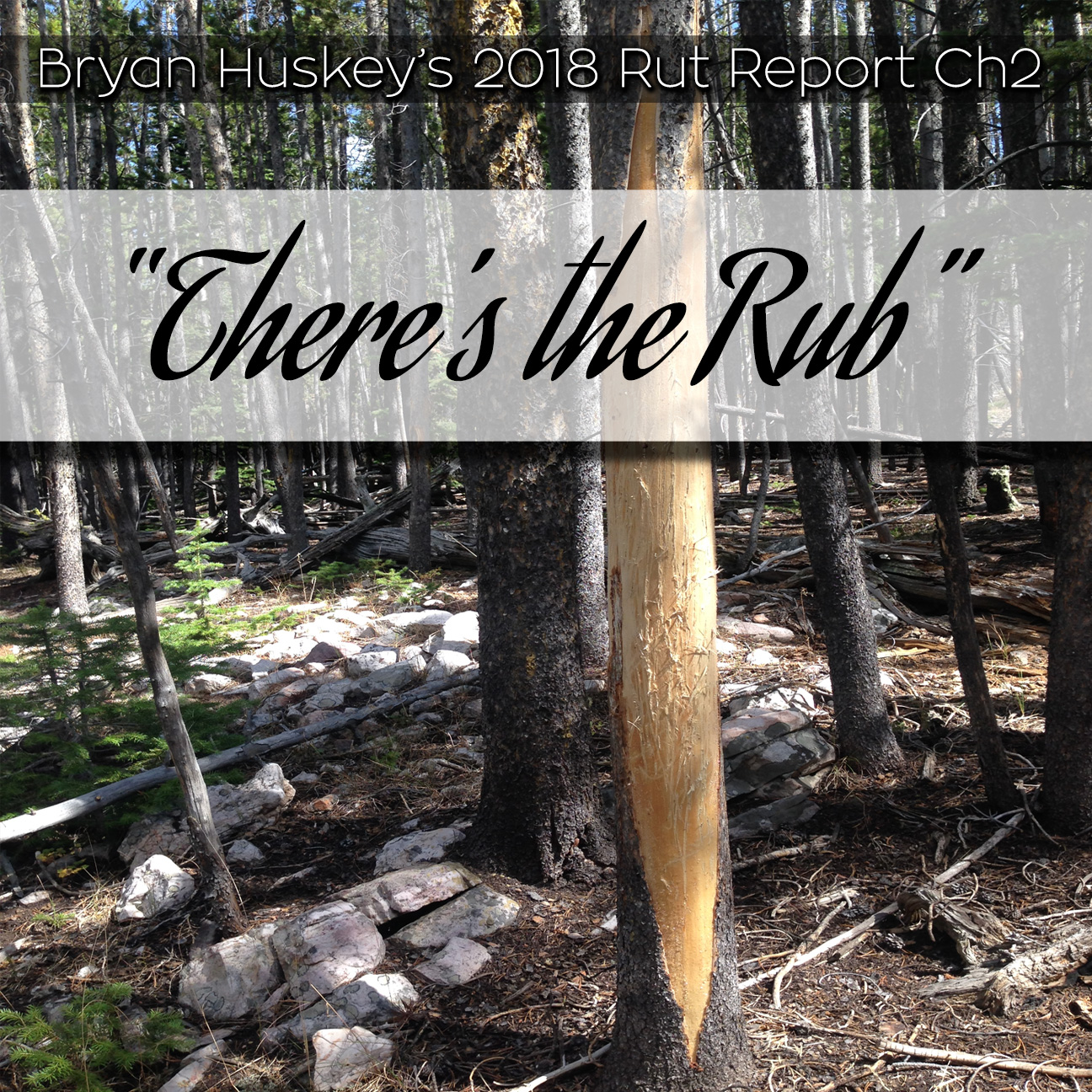
When it comes to elk sign, nothing is as fun and rewarding for me to find as rubs. Elk rubs are such visceral statements. They are a physical and visual mark of aggression that brings to mind all kinds of wild thoughts and imagination of what the bull looked like. Some rubs are a bit pathetic in results, and yet some are flat out striking and make my jaw drop in amazement.
I just love finding rubs. The kind I really look for are the ones that are ripped from trees the size of telephone holes. Yeah, that is impressive to see. I've only found a few like that in all my years in the woods, and man they are cool.
You must take a hell of a bull and attitude to push into a tree of that size and stability and say letter buck. Of course, the other great major of rubs are how high they reach. I'll screen the cheese dicks out of this early and clarify that a 15-foot tree that can be bent over to 4 feet off the ground does not constitute a magnum rub. However, when the tree is thick enough to be stout to where the high marks are relevant, that's when it's really cool to see.
Same goes for the ground too. Meaning if that rub is especially high marking while also marks all the way down near the ground, then I equate that to really long brow times. During my hunt in the opening days of the season, I finally found a rub with something I've been keeping my eyes open for for decades in the woods. Fresh rubbed velvet.
So many times I've examined fresh August rubs looking carefully for bits of fine bloody velvet, but oddly enough, I'd never found any until this season. Per usual, I was watching any fresh rubs I'd come upon this early season for signs of fuzzy brown velvet. And it was a horizontal branch rub that finally produced the goods. And to be honest, this whole deal with bold rubbing horizontal tree branches rather than juvenile tree trunks is a bit shady to me.
I mean, I've spent a lot of years studying critters and I swear that 15 years ago, I just don't remember ever seeing elk rubs on branches as opposed to trunks. Maybe they've been around me all the time and I never noticed, but I really find that hard to believe. Is it just me? Because now, let's say over the past six or seven years, I've come to notice these kinds of rubs all over and much, much more often.
I wonder if anybody else out there has noticed the same. I mean, what's the big secret with these tree branch rubs that I've been totally missing? Is the elk behavior actually changing? Or is there something that has been there all along and I've somehow not noticed?
I really don't know and find it perplexing. There are always specific features of rubs too that indicate special weapons were used. The rub is especially splintered. I imagine that like a deer, the bull has devil tines that protrude from the basis of his brow tines.
I've always wanted a bull with devil tines. A few years back, I was in an area where there was this strange characteristic, almost trademark rub. This bull most often gouged the bark of jack pine, typically 10 to 20 inches in diameter. Its rub section was marked almost as a diamond, with well-defined slices at the top and bottom creating crisp pointed poles of the rub.
It was so clean, I still question if it could have actually been a bull making these rubs. However, these rubs were very fresh and had fresh elk tracks clearly present at the base of each of these trees. However, another odd feature was that a massive area of the tree bark was totally stripped, yet there was little if any bark laying at the base of these trees, almost as if the critter had taken the bark with it. A non-typical bull, who's wracked was tangled and kept up to the majority of the strip bark.
A Sasquatch, Porcupine, I've considered all these possibilities and still think it was a freak non-typical bull. One of my friends still hunts this area and I hope that Sunday he'll find out. With sore and blistered feet, I staggered to my truck late that night, quite honestly contemplating how much fun it really was to embark on such long day hunts. The elk and the best areas to hunt were a good four miles in.
Add to that an average of five miles roaming the actual juicy spots and then the commute back to camp was just making days far more demanding than I was in shape for this season. I mean, I was surviving, but as I mentioned, I just wasn't in shape for fifteen mile days with a heavy pack up and down gobs of elevation. I grumbled that I needed to get better organized and commit to a longer chunk of time in the woods and stay up there in a spike camp. Camping at the truck is great, I really love it, but this amount of walking in and out every day was just bullshit.
While enjoying a fine dinner of cold cereal and fried chicken that night, I decided I should double check that memory card from the trail camera. It was on video mode and the cam may have recorded in a funky file format that my digital camera simply didn't recognize. So just before dozing off to sleep, I plugged it into my laptop and snapped to attention when hundreds of individual files loaded onto the screen. In fact, the camera had had functioned perfectly all along and I indeed had over 300 clips of various wildlife from the wallow.
With bright and beaming eyes, I scrolled through each file, discovering elk of all sorts and sizes, the ear, birds like crazy and wouldn't you know it, not a single hunter or bear?